All posts by pressva

Actor Tim Hildebrand tackles important social issues in powerful film ‘BID’

Originally from the small town of Caronport, Saskatchewan, Tim Hildebrand always knew he wanted to be an actor. He remembers being just six years old, seeing the older children acting in the school play, waiting for his chance to step onto the stage. When he finally got his chance, he put everything he had into that first performance, singing a solo titled “When I Get a Flying Machine.” The applause he received was euphoric, and the rest, as they say, is history. Now, years later, Hildebrand is an internationally sought-after actor, acting coach, and writer.

With an esteemed resume, including roles in the crime series Deep Undercover, the film Embrace, and Lady Labyrinth, Hildebrand has shown the world how exceptional he truly is. He tells every story with a purpose, captivating audiences with his heartfelt performances. This was certainly the case with the film BID, which was released earlier this year. BID is an extremely timely film, addressing the scandal of billions of dollars stolen from the Brazilian government by illegal construction scams, which led to the recent impeachment of president Dilma Rousseff, and criminal investigations of eight ministers, 24 senators and 39 lawmakers in the lower house of Congress.

“This project is of such importance…. it’s a big deal. This film is the first, as far as I know, to really explore that event in a fictional format. It’s a grassroots film bursting with the heart of the Brazilian people who want reform and change,” Hildebrand described.

Hildebrand was the lead actor in this film, shot in Curitiba, Brazil. He played Bernard Leone, an American contractor who travels to Brazil to compete for building projects. He begins the film as a gruff but naïve businessman, but that soon changes as he finds himself caught up in a game he’s not prepared for, against people who will stop at nothing. Bernard’s wife and children are kidnapped, and he has to make frantic choices to secure their release.

To capture such a demanding role, he used Strasberg’s relaxation and visualization techniques to “help warm up his emotions and get them a little closer to the surface.” As cameras were being placed and lit to shoot the scene, he would sequester himself to imagine or remember scenarios that stirred similar emotions to what he would be called on to perform in the film. From there, he used a “Meisner technique” of performing a high-stakes activity (in his case, rebuilding a shredded airline ticket moments in an imagined life-and-death scenario, moments before takeoff), competing against a stopwatch. He timed the exercise to be able to take the resulting emotions straight into filming.

This kind of painstaking craftsmanship fit the urgent importance of the film, which producers called a “battle cry against corruption.” Hildebrand wanted to give the performance of a lifetime.

“It feels sometimes like democracy has become a spectator sport. We gripe and complain from our armchairs, but nobody does anything. This film is a call to action. It’s a protest. It’s a mirror held up by Brazilians to themselves and it asks the questions ‘Is this what we want? Is this the best we can do?’ And I believe it also answers that question,” said Hildebrand. “A lot of crewmembers were emotional on set.  This is real life to them.  Their country is at stake.  And anytime you witness a strong person standing up for what’s right, there’s a domino effect. Courage begets courage.”

After shooting the film in fall of last year, BID premiered at Warner Brothers Studios to great acclaim, and is now being marketed to festivals around the world.  It has so far been accepted to Festigious and the Palm Springs Film Festival, already winning two awards at Festigious. Undoubtedly, it will be accepted to many more. None of this could have been possible without Hildebrand’s honest portrayal of Leone.

“Tim was extremely committed to the character from the beginning. Since we had started working in Los Angeles way before travelling to the location in South America, and he was the only North American actor on a Brazilian movie set, he asked me for visual references from the Brazilian actors that he would be interacting with as family. Photos that he could create backstories with, etc.  He also asked for the contacts of actors playing family members so he could start communicating with them and developing personal bonds. We used real facts, situations and feelings from Tim’s personal history to create several layers for his complex character,” said Raphael Bittencourt, the director of BID.

“Working with Tim is very rewarding. He’s very professional, very dedicated.  He’s an actor in constant search of the truth of his characters…always intense, deeply intuitive, and yet very technical when the situation asks for it.  At the same time, he’s kind and generous as a person. He really was there to help make a film, and not to perform, you know, on a catwalk with spotlights on himself. He was the consummate team player.  I wondered sometimes if the naturalism of his interaction with his onscreen family came from me, as a director, and the efforts I made to create a comfortable working environment, or if it came from him being a truly great actor who simply made my life much easier. Probably more of the second,” Bittencourt continued.

Every person that worked on the film, like Hildebrand, knew the importance of the story they were telling. This led to a unifying rally against the unforeseeable problems that seemed to plague the film early on. At one point, a large shipment of film equipment that was flown to Brazil from Los Angeles was lost by the airline in Sao Paulo, causing shooting to be delayed. Lawyers had to be called in to fight with the airline, whom the producers suspected of confiscating the property for profit. After much back and forth the airline admitted it had indeed confiscated the equipment, claiming it had done so because it suspected the BID team of planning to illegally film the World Cup. The producers had to travel from Curitiba to Sao Paulo to get it all sorted out. Once they had finally had the  equipment, they were informed that the main shooting location for the following two days had suddenly fallen through. While the producers scouted a new location, Hildebrand would not let the time be wasted, and used it to meet his cast-mates and rehearse some scenes that otherwise would have had to be performed cold. In terms of the quality of the performances, he thinks it all ended up actually working out for the best.

“We all had a sense when the film wrapped that we had been a part of something important, that the troubles had come to stop us in some cosmic way, but that we’d beaten them. It really brought everyone together,” he concluded.

Photo: Tim Hildebrand in the film ‘BID’ photo by Priscila Forone.
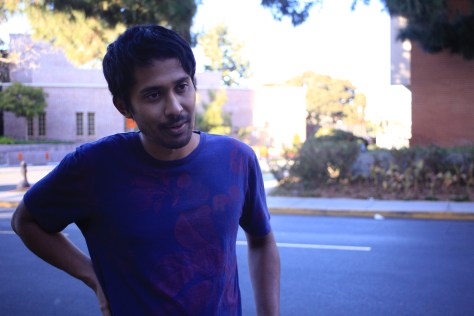
THE CREATIVE CONSCIENCE OF VISHNU PERUMAL

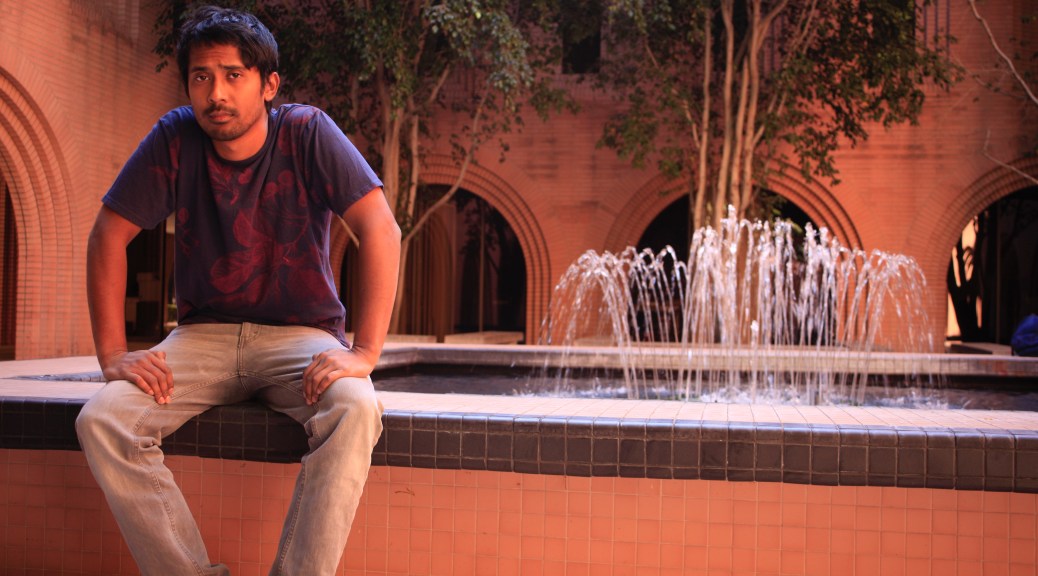
Storytelling has long been about taking one’s personal voyage and relating it in a way that almost everyone can connect to it. While Hollywood has been accused of homogenizing the film industry, some artists who convey these stories are attempting to give the public a glimpse into the lives of others who differ from the majority. It’s ironic that people are often apprehensive to accept differences in their own lives but are attracted to films which display those who possess this trait. Editor Vishnu Perumal learned to be comfortable with differences early in his life. This fact combined with his fascination of film laid out his path from childhood. He has pursued his vocation with fervor for as long as he can remember; the fruits of this labor have been numerous award-winning films and the respect of the Hollywood community. This is perhaps so apparent because Perumal is an artist who seeks out projects which he connects to emotionally and believes in passionately. It’s easy to chase fame or a fat paycheck but pursuing projects which make a clear and resonant statement about society’s potential to aid or hinder is often more challenging and unsettling. For someone like Vishnu, it is also a requirement.

Vishnu relates to being different. He grew up in a situation where it was expected that both himself and others would not have the same exact background and experience. This allowed him to have a perspective different from many people. Regardless of their point of origin, most people are comfortable and content being insulated from those who are different. Contemplating the motivations and life experiences of people who have had it worse than you or who have faced greater adversity is unsettling. For Vishnu, it has been a call to action; one which he has used his most important resource to empower…the role of editor.

Differing perspectives and diversity is an inherent part of this editor’s makeup. The son of an Indian father and an Indonesian mother, Perumal experienced different cultures in his own home and in his surroundings from an early age. He explains, “I moved a lot when I was growing up due to my father’s work. I was born in a small beach town in Malaysia called Kuantan. Later, our family moved to Jakarta, Indonesia. Jakarta is a really vibrant energetic city with a lot of culture. It’s big, bold, noisy, and colorful with great food and very friendly people. Growing up there, I remember it being slightly chaotic, especially the traffic. It was a large developing city that was growing rapidly and changing every year. From there, I moved to Singapore where I spent much of my Primary to early secondary school years. Singapore was the total opposite of Jakarta because it was extremely orderly, clean, and organized. I was astounded by how clean Singapore was and I remember trying to wrap my mind around the fact that it doesn’t have traffic jams. Like Jakarta however, Singapore was a vibrant city with a whole lot of mixing of cultures. Both places were located close to the beach so I would spend most of my weekends there. It was natural to me to witness different types of people enjoying the same activities; I never questioned it.”

Watching his father edit his own family movies on a Sony editing deck interested Vishnu in the process, soon to be followed by his interest in the work of Walter Murch (the editor of such films like Apocalypse Now and The Godfather). Murch inspired an approach to the possibilities of editing for Vishnu who recalls, “I was lucky enough to sit in on a guest lecture of his where he talked about the philosophy of transitions and editing. What I really loved about his lecture was that he wasn’t focused on any technical aspect, formula, or technique but rather he talked about the philosophy behind editing concepts and how they relate to the world. It was a lecture that sometimes delved into the spiritual and metaphysical and it made me look at editing in a whole new light.”

Carrying the torch of this idea for his generation, Perumal’s many award-winning productions give evidence that this editor is focused on making a statement with film. As with many of the most respected filmmakers, Vishnu’s work often displays the more unpleasant sides of humanity in hopes that the public will contemplate the plight of those who suffer. “Violet Hour” is the story of Tom Freed, a young black man who is at odds with what he feels is natural in terms of his own sexuality and what society deems acceptable. The film is a powerful statement about the psychological effects of what others use to subjugate those who differ from their own beliefs, opinions, and actions. Freed goes so far as to undergo conversion therapy in an attempt to conform but in the end takes action with a dire resolution. At the heart of the film is the question “What freedoms does our society truly offer?”; a sobering query. Perumal worked with director Mark Allen to create the conflict that the main character feels in his heart and communicate this in the timing and actions onscreen. Allen declares, “Working alongside Vishnu throughout the duration of the project was a wonderful experience. It is rare to find an editor with as much thoughtfulness, support, and passion. What he demonstrated for the project was evident in the final product and success of the film. Vishnu’s emphasis on storytelling provided the film with a powerful tone and ending. It was really pleasant to discover how easy it is to work with him. Because the story and the style of the film according to my vision was so specific and different, I was afraid that it would have taken considerable effort and time just to explain and push for the vision I intended. Fortunately, Vishnu understood and supported my vision 100% and fought to preserve that vision. He not only was able to maintain my vision for the film, but he was also able to incorporate his own creative ideas into the product, helping to brand the film as a creation of his own.” “Violet Hour” received a nomination at The San Francisco Black Film Festival for Best Film as well as an award for Best Narrative Short at the Princeton Film Festival.

Exploring the unsettling and frightening crime of sex trafficking, Vishnu edited the film “Only Light.” An increasingly widespread occurrence across many parts of the world, including the US, sex trafficking is something that often goes unnoticed and unrecognized in many communities, which is exactly the message communicated in “Only Light.” The two lead characters in the film are young women of the same age. Zora is a rebellious teen living in California who has a crush on her older male neighbor. Zora’s parents are wary of this, as well they should be. This neighbor has a girl named Laeticia locked up as a sex slave in his basement. Laeticia was kidnapped from her village in the Congo and transported to California where she moves in and out of lucidity in the basement. When she is ultimately freed by Zora at the end we sadly realize that this event is only a wishful dream that Laeticia has created in her own mind as she is still a prisoner. The film is highly disturbing and unfortunately somewhat based in reality. Perumal was eager to work on this film as he felt it was a story that needed to be displayed to viewers. “Only Light” was recognized at the One Lens Film Festival, Blackstar Film Festival, and L.A. Indie Film Festival. Zachary Skipp (Producer of “Only Light”) remarks, “Only Light was a film with many technical aspects (shooting in different mediums, various effects, etc.) that an average editor would find daunting to work with. Fortunately, we had an editor who was able to integrate himself into the many creative aspects of the post-production process, making him adaptable in almost any project he undertakes. I hired Vishnu as an Editor for ‘Only Light’ after seeing what he had done on previous films. His ability to understand and work with abstract and experimental forms of storytelling and mold them into a cohesive story is one of the many reasons why I brought him onto the project. Vishnu was deeply involved and began working early on in the project, starting in pre-production. For example: there were some effects and stylistic transitions that we wanted to accomplish, and Vishnu was very helpful in helping us figure out how to achieve the desired result, before heading into production.”

It seems contradictory that followers and leaders of religions become upset when religious leaders who are highly flawed are depicted or revealed for their baleful nature. One would think that these “believers” would want those who are not true to their teaching to be “cast into the light.” This seems the most benevolent thing to do in the parameters of their faith. Vishnu used his editing talents on a fictionalized tale that used actual footage and inspiration from the Reverend Jim Jones entitled “Devil I Know.” The disturbing life and events of Jones are well documented but “Devil I Know” creates a storyline inspired by what we know of his behavior to give a firsthand feeling of what it may have been like to be around him. Known for the People’s Temple mass suicide (in Jonestown, Guyana), his infidelities, and other abuses of power, the film takes an almost documentary style approach to portraying this complex and tragic figure. A vital contribution of Vishnu’s on this film was to edit and present the story out of chronological order; a method used to confuse the audience as well as affirm the idea that things are not always as they seem.

_MG_8622 (1)

The common thread of all these films is that they reveal to the audience that we should not be so assured that we understand the full truth. Well-known figures or private individuals may be dealing with many factors that we are unaware of. They may act in nefarious ways or society as a group may be overlooking the struggles they deal with. There is no way for anyone to truly know but artists and filmmakers like Vishnu Perumal keep us questioning the intent and the plight of others who are different from us. In doing this, they provide a service that few can…a conscience.

Actress Claire Stollery tells her story in award-winning film ‘Who is Hannah’

Who_Is_Hannah--Day_1--LowRes--33
Claire Stollery as Hannah in Who is Hannah

Claire Stollery was never interested in anything other than acting. As a child growing up in Calgary, she always had this one passion. As she grew and moved around Canada, what started out as a childhood dream started to become a reality. There is no doubt that Claire Stollery was meant to be an actress, and audiences everywhere know this every time they see her on the big and small screen.

As an actor, being vulnerable is pivotal to opening yourself up to a character. Connecting with the story and allowing your experiences to come through is vital when it comes to connecting with an audience. Stollery knows this well. She starred in the award-winning film Who is Hannah, that she also co-wrote, and allowed the events in her life to guide her character, creating a cathartic experience for the actress.

“This film was very close to me. I co-wrote it with a great comedian friend of mine, John Hastings. We wanted to collaborate and create a great dark comedy, but we didn’t know what we wanted to write about. One night after a show we were sitting in my cold car, a couple days before Christmas. I told him the story of how I had met my biological father in Los Angeles when I was 21. I found his number and left him a message, lying about my identity because I wasn’t sure he’d call me back if he knew who I was. In the end I came clean and we decided to meet up. When he arrived at the coffee shop, he ended up calling me while he was standing right beside me. We had no idea what each other looked like! It was like a meet-cute you’d see in a rom-com.  John couldn’t stop laughing of the horror and awkwardness of the situation. We decided then and there we would write a film exploring that scenario and what could go wrong when you don’t know what each other look like,” Stollery described.

Who is Hannah is the awkward and unlikely tale of how one girl meets her dead dad. Stollery plays Hannah, a role that was written with her in mind. Because she helped write the film, she already had the character’s voice inside her. Hannah is a girl who just wants to belong somewhere and know where she came from. She feels lost and incomplete because she’s never known the identity of her father – only known pieces from what her mother has told her. The problem is, she discovers everything her mother has told her about her father is the plot to Indiana Jones. When she finds out that her mother completely lied to her about her father’s identity and that he’s alive and lives in the next town, she has new hope for self-completion.

“I can’t really relate to Hannah’s feeling of incompleteness because I was lucky enough to have a dad growing up. My mom met my father who raised me when I was six months old. But even then, you always wonder what that other person is like. Are you like them? Do you look like them? There are always those thoughts at the back of your mind,” Stollery described. “Everyone wants to know where they come from. We want to know our history; it’s a universal desire. For those people who are searching for their identity, we wanted a film that let them know they are not alone. Since making the film I have had a lot of people write me or come up to me after screenings telling me about their experience or a friend’s experience of meeting a biological parent. There are a lot of those stories out there, but people don’t talk about them that often. There’s a lot of shame in having parents abandon their children. For the kid, it is a terrifying journey seeking out and meeting a parent for the very first time. You’ve imagined and built up this person your entire lifetime. There’s a lot of pressure for fantasy to match reality. It was important for John and me to write a film that finds the humour in such a bizarre but impactful moment in someone’s life.”

Behind The Scenes WIH
Behind the scenes of Who is Hannah

Because of Stollery’s deep understanding of her character, the film went on to do exceptionally well at many international film festivals. It was an Official Selection at The Atlantic Film Festival where it premiered last year, and then went on to be an Official Selection at The Hamilton Film Festival, The Toronto International Short Film Festival, Hollywood North Film Festival and The Toronto Independent Film Festival. At the Lakeshorts International Film Festival where it was also an Official Selection, Who is Hannah took home the Cinespace Jury’s Choice Award and the People’s Choice Award.

“When it finally premiered we were so happy people liked it and were laughing. Because we had been with it for so long, we had no idea if it was even funny anymore. And you start second guessing yourself and wondering, was it ever funny? Were we just delirious on set when we filmed it at 4 am?” said Stollery. “And it was amazing to receive the Jury’s Choice Award. They always have such talented and revered people on their jury, so their opinion meant a lot. I’m so tickled when anyone likes something I make. It was a great honour to receive it and even better feeling to receive the People’s Choice award. We didn’t know anyone at the screenings, and to have a room full of strangers resonate with your film was really a special moment for us. There really is nothing better than sitting in a theatre and listening to people laugh at something you wrote and eaves dropping on people saying good things about it afterwards.”

Part of what makes Stollery so good at what she does is her ability to improvise. Although this is sometimes not encouraged on set, the Director of Who is Hannah, Mark O’Brien, was all for it. He knew what Stollery was capable of, and knew what she could add to both the character and the film. His instincts were right.

“Claire is an extremely talented actress and writer. She’s a very open-minded artist who knows how to collaborate well, while at the same time making her work authentic and unique. She works hard, and that is a rarity in this business. There’s a lot of talk in the entertainment industry, but Claire goes out and gets it done. And really, that’s what you want most from someone you’re working with. And she does it well,” said O’Brien. “She’s a very natural actress, very real. Acting is a tough skill that can be improved through training, but I do believe that there must be some inherent talent in the person first. Claire has a foundation of incredible talent that will take her very far. Anyone who has the chance to work with her should count themselves lucky.”

It was more than just the story and character that Stollery could connect with, even the set meant something to her. They filmed in an old, abandoned farm house that the actress had actually grown up in, as well as a hotel that was the first place Stollery went to when she visited Toronto as a child.

“Even though the film is a comedy, it is rooted in real issues. There’s a fine line tonally with dark comedies. You don’t want to make it too comedic otherwise you lose the truth of the situations. But you don’t want to make it too dark, otherwise you lose the comedic release. It’s a balancing act doing those types of films” she said.

But the most important part of the process for Stollery was not the awards, accolades, or why she embarked on the project, it was what it turned into.

“Filming was therapeutic for me. I had just lost my father who raised me a couple years prior, we were filming in the house I grew up in, the story was loosely based on my experience with meeting my biological father. And I realized I never really talked about it with my father who raised me. I regret that I didn’t check in with him more about the whole situation and considered his feelings more. But he was great about it and knew it was something I needed to do. He didn’t interfere. Not to mention my mother wasn’t too happy I was making a film about a man who had left us, even though it was very loosely inspired by him. But that was how she saw it. So it’s safe to say there were a lot of emotions surrounding the project!” Stollery concluded.

Audiences can see Who Is Hannah at the end of this year on CBC.

ZHENG HUANG PRODUCES AN AWARD-WINNING FILM FROM THE HEART OF HIS FAMILY

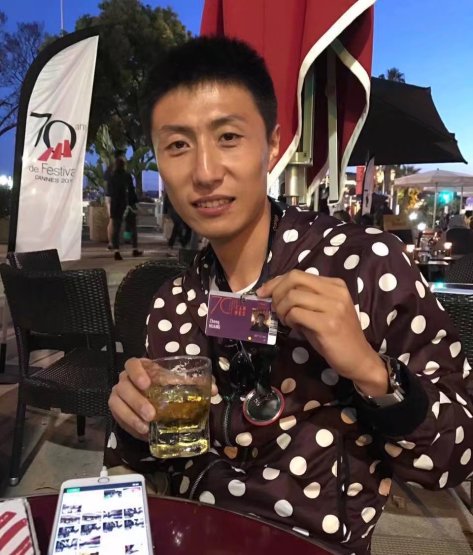
Of all the qualities that make up an artist, the most essential is heart. While knowledge, vision, and technical expertise are beneficial, passion is not to be underestimated when it comes to the tenacious mindset that drives an artist of almost any medium. Producer Zheng Huang’s connection to the location and story of the film “Lost” was deeply embedded in his heart. While he wore a multitude of hats for “Lost” (including writer and director) it was the role of producer which proved most taxing. It was Huang’s excellence as a producer that also led this film to such immense praise and eventually a spot at the world famous Cannes Film Festival. The film is epic, adventurous, and gripping for many reasons. Zheng was driven to create the film as a tribute and connection to his family’s homeland and to expose its beauty to the world. The lush grasslands, the exotic characters, and the endearing portrayal by the cast all appear to originate from the story which this producer was inspired to write, and was the only person capable of manifesting onscreen. “Lost” truly is a piece of Zheng Huang personified for all to see.

psb (1)


“Lost” was Zheng’s first high budget film to produce and he definitely felt the responsibility. Whether it was fear or passion, the fuel that pushed him towards excellence was the appropriate one. After the completion of the script, he flew to China and did location scouting in Inner Mongolia. It was an intensely emotional moment for him. Huang’s grandfather had died on the grasslands of Inner Mongolia and it was this which inspired the story. Zheng wanted to be in the grasslands; to feel them and to expose this feeling to the rest of the world in film. For two years he had seen the terrain, the people, and the story in his mind; a mixture of Chinese and American culture and individuals…and now he was seeing the nebulous form start to solidify in front of his eyes. While the story of “Lost” is not derived from his family, Huang understood that the feeling of the location and people who carry the spirit of both his grandfather’s life and his own. The film tells of an American boy named Michael who has lost his mother in Inner Mongolia. Mr. Wu, a native Mongolian, saved Michael and decides to adopt him. Mr. Wu teaches him Chinese and Mongolia culture. Michael’s real mom (Mary) searches for him for quite some time. Michael knows the truth that Mr. Wu hides this from him and Mary. Michael is angry but struggles with the decision to return to his birth family or not. While many films give a clear and imposed decision about situations like this, “Lost” accurately depicts the conflict that can be a part of real life when considering to whom have we bonded most strongly. Just as importantly, the story and the stunning visuals of this film portray the people and the culture of Inner Mongolia not as “others” but as those who share precisely the same emotions, virtues, and faults as those of any group of people on the planet, meaning that Zheng perfectly achieved the goal of his film. The process of creating this onscreen was earned.

E8162276-2944-4592-A15D-6F80DBF33E92

Every producer knows the challenging points for their project. Successfully and positively utilizing these is a badge of honor as well as an accomplishment for any professional in the field. For “Lost” the can easily be defined as: kids, animals, and nature. Due to the nature of the people in this part of the world, the actors needed to be able to ride horses. This is not exactly a skill that the majority of individuals possess these days. While some actors take quickly and easily to it, it only takes one intimidated thespian to derail the schedule. A dutiful producer, Huang prepared a week of riding lessons in advance to the shoot. A couple of actors were never quite at ease with the situation (or the animals) which necessitated a restructuring of the shot list and even some “cheat” shots.

Zheng admits that this film was his first time working with a child actor. The final performance by this youth in the film is exceptional but the producer concedes that it wasn’t exactly the same as dealing with most actors in his experience. He recalls, “He was great and is a very talented actor. I think it’s wrong to expect a young actor to have the same perspective as an adult. It was actually kind of miserable for part of the shoot, it was hot and he was being asked to do things that were difficult…I can completely understand his state of mind. Having been a young boy myself once I knew that there’s not much that pizza and some toys can’t fix when it comes to attitude. Regardless of the actor I’m working with, I find that if I can put myself in their shoes I can quickly find the proper motivation for them.”

One of the most striking traits of “Lost” is the visual component of the film. The beauty of the Inner Mongolian grasslands is as epic as any classic western from Hollywood’s heyday. A shrewd producer who is always cognizant of a film’s budget, Huang had his location manager contact his best friend (a herdsman named A De) about using his private 8,000-acre meadow. A De was so interested in the film being made that he offered the location up free of charge. As a thank you, Zheng gave him a supporting role in the film. In an effort to keep production value high and cost low, he also hired a crew from nearby Beijing (four hours away from the filming location). Casting locals rounded out this international production and provided the authenticity that Huang had envisioned. Since his early vision, it was these very people that he wanted to be seen in the film.

DT8A1862

“Lost” was much more than a film to Zheng. It was an Odyssey that connected him with the previous generations of his family. Through his talent, he was able to communicate to the rest of the world, via film, what it feels like to feel both afraid and comforted in a part of the world that few Westerners will ever see. It’s by seeing these types of stories that we realize how similar all people are at their core. The literal deluge of awards that “Lost” has received in addition to being an Official Selection of the Cannes Film Festival (2017 American Film Award, Award of Merit at the 2017 Best Shorts Competition, Official Selection of the Hollywood International Moving Pictures Film Festival, Multiple Platinum Awards at the International Independent Film Awards, and numerous others) is an assurance that the beauty of this film has touched many people in many different lands. While producer is only one of the roles which Zheng Huang performed for this film, it is likely the most applicable to his deep investment in it.

psb

RAFAEL THOMASETO BRINGS HIS HOLLYWOOD INSPIRATION FULL CIRCLE

Making a film can be like going on vacation. No, not in the sense that you relax but rather in the fact that you travel for different experiences. You might travel to Paris to walk the Champs- Elysees and attend the Louvre or you might go to Cabo Wabo to drink tequila and kite surf. Filmmakers are people like the rest of us and they are prone to experience making different genres of productions; it allows them to keep things fresh and interesting throughout their career. While producer Rafael Thomaseto has made many thoughtful and heart-wrenching films, he reveled in the making of “Inherent Greed” with its selfish and even maniacal characters. Like a Disneyland thrill ride for both the audience and those involved in making this production, it displayed some of the darker sides of humanity, scaring you while you still enjoy the break from reality.

Film has often been the intersection of humanity for many of us. While we can relate to the characters in many ways, they often seem willing to exceed the barriers that society or reality imposes on itself. For Thomaseto who grew up in Brazil, the lines between safety and danger were always clear. His family’s residence in a gated community allowed him the safety of a “normal” childhood but he was always aware that there were others who were not afforded this benefit. This perspective is a stark contrast to the main characters in “Inherent Greed”, the Duboff brothers. These siblings have been raised in a highly affluent family and been given every opportunity, yet they want more. While they are driven to crime by the thought of increasing wealth, Thomaseto was inspired to commit a small infraction by a film poster and Woody Allen. He explains, “When I was 13, I had an experience that shaped my vision of the cinema. In São Paulo, every Friday my mother would pick up me and my sister from school and we would meet my dad at a mall in the city for lunch and then an afternoon of shopping. I hated spending hours watching them spend money on clothes so I would immerse myself into movies. One particular time I was in line to buy popcorn and had already gotten my tickets to see a romantic comedy, but I noticed the poster for a movie called Match Point. For some reason this image stood out to me. I left the line and went to check the times of the movie and realized it was PG16. I didn’t care. I pretended I was going to the movie I had tickets for and entered a different room. I sat down in the first row and watched Match Point, written and directed by Woody Allen. It’s still my favorite movie and Woody became my favorite director and inspiration.”

“Inherent Greed” is a complex story of two brothers who have been raised with privilege and wealth but return this favor by murdering their own parents in hopes of seizing the family fortune. The main focus of the story concerns whether the two brothers can get away with their crime while avoiding public or legal scrutiny. While the opulence of the family in the movie is displayed via onscreen locations filmed in mansions and a ranch in Topanga Canyon, the independent film sized budget belies the images onscreen. Thomaseto confirms, “Smaller films often have very unique and original ideas and stories, which makes them very interesting. One of the greatest challenges for a producer is that these films don’t come with the financial backing of a big studio. I got hired only a few days before the official picture, and I was at the time working on the postproduction of a commercial for a brand called Clearasil. The budget of the commercial was probably 100 times bigger than what we had for “Inherent Greed.” Organization is a key element to making sure a production happens. Keeping a constant conversation within all the main and key roles on the project, such as executive producer, producer, director, cinematographer is essential. These are creative people; when allowed to use their talents…sometimes the best results have nothing to do with the financial component.” This perspective is part of what fueled Thomaseto’s documentary “Cycles of Existence” which attempts to understand how the homeless community finds happiness even though they have essentially no material possessions. The idea itself is diametrically opposed to the main characters of “Inherent Greed.”

Retribution, Karma, call it what you like…the Duboff brothers get what’s coming to them in a number of ways at the end of the film (yes, you’ll have to watch it yourself for the details). The concept of rewards happens for those behind the camera as well as those on camera. Many of the films Rafael has produced have appeared at the world famous Cannes Film Festival, including “Inherent Greed.” He relates, “Cannes has always been my favorite film festival and I have always been obsessed with the films that come out of there. Having the films I’ve worked on be a part of it gives me more strength and self-esteem to keep fighting in the entertainment industry for great work. Working in film isn’t as glamorous as people think but attending a festival like this is a step up for everyone’s career. It brings more visibility to the work of the film and the talents involved. You can enjoy the benefits of being a filmmaker, which means sitting down at a meeting during the festival and having rose wine surrounded by heads of production of the main film studios in the world. A sense of community and affirmation is the real payoff in this situation.” Louie Torrellas (CEO of Ambitious Media Productions) declares, “Any person who works in the film industry is highly aware of how difficult and overwhelming shooting a project can be. Being the head of a production, gives you even more responsibility and in my point of view, the producer is the boss and the most important role on a movie. Rafael’s work during the production of the film ‘Inherent Greed’ was nothing short of amazing. One of the executive producers on the film recommended him to my company, Ambitious Media (production company for the film). We hired him and he instantly took over the project and made it work. Rafael exhibits a proficiency and tenacity rarely seen in producers these days. I’m continually reminded what a genius move it was to hire him. The positive reactions to this film vet this decision in spades.”

Los Angeles Brazilian Film Festival

Producer Melina Tupa talks upcoming documentary ‘Slaves Among Us’

Melina Tupa always has always had two passions: film and journalism. Growing up, it never really occurred to her that there was a way to combine both of these things. Then, one fateful day, she had an epiphany that changed her life. She could be a documentary filmmaker. Being a journalist, she believes, gives her an extra responsibility as a film producer to pursue stories that are of public interest and that will help the communities she lives in. Since coming to that realization, Tupa has been committed to making impactful documentary films, and that is why she is so sought-after around the world for what she does.

Over the past few years, Tupa has delivered hard-hitting documentaries that share truths many are unaware of or afraid to talk about. When producing the PBS Frontline film Rape on the Night Shift, audiences everywhere became aware of the horrifying stories of many janitorial workers who have dealt with sexual assault. With her film The Search, she told the story of a grandmother’s search for her long-lost grandchild, which dives into the Argentinean “Dirty War.” All who work alongside Tupa are not only impressed, but also inspired by her commitment to her work.

“I had the honor of being a Consulting Producer with Melina on her documentary The Search. It was a pleasure working with Melina: she’s smart, driven, tenacious, creative, and yet is open to different perspectives and ideas that are not her own, which means that she is also confident. What makes Melina good, but great is a better word, is that she always has a big vision for her work,” said Director and Producer Spencer Nakasako.

Soon, audiences will once again have the chance to see Tupa’s formidable producing abilities in the upcoming Investigative Reporting Program (IRP) film Slaves Among Us. The documentary will expose the many layers of human trafficking, from the recruiter in the home country to the smuggler, trafficker and subcontractor that make it possible for major corporations to profit from forced labor in the United States. The documentary will tell the story of a group of teens from Guatemala who, with the inadvertent aid of the American government, fall into the hands of a criminal enterprise. This investigation will show who makes money off such victims and how the American consumer benefits from their mistreatment.

“I wanted to work on this project because I believed this was a very important story that needed to be widely known by the audience. The fact that in 2017 we still have forced labor is outrageous,” said Tupa.

Tupa was approached to work on Slaves Among Us after her success with the Investigative Reporting Program on the documentary Rape on the Night Shift. The producers of the documentary knew she had a very good reputation and she had an asset that was key to work on the field: she is bilingual in Spanish and most of the characters on this story are Spanish-speaking individuals. As a field producer, this was vital.

“I liked that I had direct contact with the sources of the story. I did old school reporting: just knocking on people’s doors and asking what they have seen or heard about the case. I was able to get to know the community I was reporting on thoroughly. And I was also able to gain the character’s trust. A lot of them are undocumented immigrants and many times they are afraid of telling wrongdoings because they are afraid of the retaliation they might get,” Tupa described.

Working in Ohio, Tupa reported on the trailer park where Guatemalans (adults and minors) trafficked to the United States were living. She was able to conduct interviews with more than thirty individuals there. She was able to secure three interviews (one in shadow, two full face) where the sources confirmed the story about the trafficking scheme she was after. She was also able to establish a connection with a very important source who had worked with the main characters of the story. This led to finding and securing and exclusive interview with one of the victims of labor trafficking.

Back at Investigative Reporting Program office, she worked as a Researcher. She found archival videos, photos and newspapers on the DeCoster Egg Farm violations, unaccompanied children entering the United States across the border, egg industry facilities, and the case of immigrant minors working on an egg farm. This information was pivotal to illustrate the story.

“I believe it is important to tell this story because nobody should be living in slave conditions in 2017. It’s important to let people know this is happening so this could result in a change of policy, for example, in unaccompanied minors entering the United States or for the poultry industry to have highest safety standards for its employees,” said Tupa.

Slaves Among Us is expected to be released in 2019. Based on Tupa’s track record, audiences can expect an outstanding film once again.


Photo by Vanessa Arango Garcia

Writer Guilherme Ribeiro has always aimed to make a difference in society

Guilherme Ribeiro has been writing since he was just a child. Growing up in Rio de Janeiro, Brazil, his marks in school were always best in the subjects of Portuguese, History and Geography, all writing based, constantly impressing his teachers with his compositions and use of words. It was always easier for him to write about something or draw a cartoon character rather than trying things in math or the sciences. Even at a young age, writing was his passion, and after getting his first computer at the age of eight, he started developing both his writing and online savvy. It was therefore a natural progression for him to eventually become an online content writer, and now he is one of Brazil’s best.

Ribeiro has impressed many with his writing in many mediums and genres. He has written news articles, travel blogs, and television documentaries. He has helped build up websites and has impressive social media knowledge. His work on the new music project Welocalize, as well as Mastercard Priceless Rio, Toxic Rio, and Globo TV network, just a few of the highlights of his esteemed career.

“I can see myself now in a highlight moment of my career. I found my way on writing about entertainment, music and content for e-commerce and I really believe that’s the way conventional writers will renew themselves and find another alternative to make money and get in touch with readers. I’m working for important clients, sometimes signing my name on articles, others just working with content editing, and creative input for online stores and apps,” said Ribeiro.

Before getting to this point, however, Ribeiro worked to earn the reputation he now has. Part of this involved his work with TV PUC and his award-winning show. The TV show Paternidade Ausente, Histórias Incompletas revealed an important issue for the Brazilian society and could open a discussion about paternity.

“Guilherme had good writing skills that could improve his journalistic knowledge during his time at TV PUC. He participated as a reporter in the most awarded TV show in TV PUC, so was an overall good and enriching experience,” said Carmen Petit, Ribeiro’s coordinator during his time at TV PUC.

According to the Brazilian Institute of Geography and Estatistic (IBGE), about 9 per cent of children born in 2008 were not registered. The following year, the Brazilian government undertook to zero the number of sub-registrations. They occur when a child is born and does not have the birth certificate made in the same year or within three months of the following year. The distance between the registries and the houses, a common problem in regions of North-Northeastern Brazil, helps to explain the occurrence of sub-registries. Another reason is the lack of knowledge of the free document. In addition, many children are late registered by the mother’s shame in assuming the father’s omission. Of every four birth certificates registered in the country, one does not have the father’s name. The percentage was estimated by the University of Brasilia (UnB), which crossed data of one hundred and eighty-three thousand certificates of notaries in the city and compared them with IBGE figures on children outside the marriage. Paternidade Ausente, Histórias Incompletas speaks about paternal recognition, paternity investigation, and the relationship between parents and children.

“This is such an important subject almost not explored by Brazilian media. When it was released, I was selected by my boss to be the reporter.  I was one of the producers and reporters, and we made the show from scratch, which was a huge thing for me at the time,” said Ribeiro. “We got so many good results. This TV show was the most awarded show in the history of TV PUC and I could believe I had future as a writer at this time. I learned a lot from my bosses and I wanted to use my skills and desire to make a difference and to create a good content for our society.”

As the reporter and producer of the TV show, Ribeiro was responsible for finding characters, collecting data from institutes, universities, doing the research, and helping to find the best lead for this compelling story. He wrote the script along with another reporter while being supervised by an editor chief. Content was aired by TV PUC in Pay TV, for educational and social communication purposes. The show is still available online, on the TV PUC website.

“When the show started winning awards, I felt I would have a promising future as a writer. We currently have four awards, two of them from a respectful academy for feature films in Brazil, Gramado Film Festival. It was such a pleasure to travel to this small town in the South part of the country to receive two awards, the Best Report of Brazilian University Television and the Best Video of the whole category of Brazilian University Television, both in the 18th edition of Gramado Cine Vídeo Festival in 2010,” Ribeiro described.

Now, almost eight years later with many successful projects on his resume, that initial success from his time at TV PUC was the beginning of Ribeiro’s outstanding career. He has always shown not only a dedication, but a passion for what he does, making him the extraordinary writer he is today.

Photo: Márcia Antabi (left), Guilherme Ribeiro (center), and Mariana Moreno (right) working with TV PUC

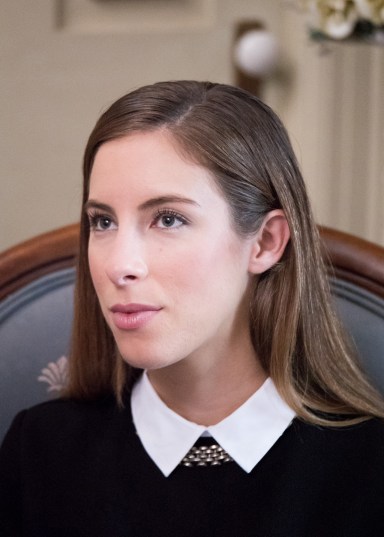
Photographer Jennifer Roberts creates visual masterpieces for ‘The Globe and Mail’

From the time Jennifer Roberts was a child, she was always artistic. Originally from the small town of Port Hope, Ontario, she would travel to Toronto with her parents to visit art galleries and cultural events. Even then, at a young age, she was captivated, and understood the power that it was to create something beautiful. It was only natural for her to want to do the same, and that is when she found her way to photography. Now, she is an internationally celebrated photographer.

Roberts is a renowned editorial photographer who specializes in portraiture and documentary stories, and also does work for commercial clients. Her documentary style works well for newspapers while my more produced portraiture work fits in magazines. She truly loves what she does, and everyone she works with impressed with her talents.

“I’ve commissioned Jennifer on various shoots for Maclean’s magazine over the last two years. She is an outstanding photographer and my go-to for any high-profile portrait or reportage assignments. I fully trust her professionalism and ability to give the magazine what it needs on every shoot we give her,” said Sarah Palmer, Contributing Photo Editor Maclean’s Magazine.

In addition to Maclean’s, Roberts has shown not only Canada, but the world what she is capable of with her work in The Wall Street Journal, as well as Canadian Business, MoneySense Magazine, and Getty, including her work for the 2016 International Film Festival, photographing Oscar-nominated actors. Her success has been outstanding, and she believes her career truly began when she started working for The Globe and Mail back in 2008.

“Working with one of Canada’s largest newspapers is exciting. Some of my favourite Canadian photographers are regular contributors to The Globe so it feels great to be in such fantastic company. The Globe photo editors provide a helpful amount of direction so I know what type of photography they need for their story. However, they also leave lots of room for the photographer to be creative and bring their story telling abilities to the shoots. Shoots for The Globe are often for really interesting national and international stories that I’m very proud to work on,” said Roberts.

Initially, Roberts was hired by The Globe and Mail for a four-month summer contract. Before this, she shot a documentary photo project about refugees in Myanmar living in Thailand, which highly impressed the newspaper, and they wanted her to join their team. She relocated to Vancouver, British Columbia for the job. When she completed my contract, she moved back to Toronto, but the newspaper didn’t want to let her go, and kept her very busy with freelance work. She has been shooting for them ever since.

“I feel lucky that even when my placement was over I was given regular assignments with The Globe. Being a regular contributor is very exciting as it leads to so many diverse projects. The Globe work has allowed me to shoot a variety of celebrities, to shoot major news events, to shoot beautiful interiors, amazing food and restaurants and meet so many different people for portrait shoots. Working as an editorial photographer means every day is different. I feel like I have the best job in the world,” she said. “Working as a freelance photographer for The Globe and Mail is always interesting. I started my career there doing a lot of news stories but I now tend to shoot more food, lifestyle and portrait work. I make decisions about how to frame and light things based on what the story is and conceptually what makes the most sense. It’s important to always be true to the story you’re telling. Sometimes what makes the best picture isn’t the best way of telling the story and telling a true story is always the most important,” she described.

Since that time, Roberts has done a variety or large and important projects for the paper, where her photography was essential to the project. She did a large portrait of “Project of Women” during the March on Washington, in Washington DC. on January 21, 2017, something that she considers the highlight of her career. It started as an Instagram story but because the portraits were so successful they ended up running on A1 (the cover) of the newspaper and as a massive two-page spread in the interior of the paper.

“It was an amazing time to be in Washington and meeting and photographing all the women out demonstrating was so powerful,” said Roberts.

Roberts has done many more projects for the paper. She recently shot celebrities like -Recent Actress Kate Mara, Actor Stephan James, and Novelist Lawrence Hill, known for The Book of Negroes. She regularly shoots many features, including “My Favourite Room” for the Style Section, as well as business portraits, portraits for the news section, and a weekly shoot for restaurant reviews for the Saturday Edition, the largest edition of the paper.

“I enjoy the pace of this work and the process of being able to conceptualize and light the scenes. I like how working with The Globe is always different and always interesting. One day I might be shooting a story for the Style section about a beautiful living room and the next day it might be a CEO in their office. I like how every day and every shoot is a new chance to be creative and think of innovative and true ways to best tell a story,” said Roberts.

Readers of The Globe and Mail can keep an eye out for the visual masterpieces that are Roberts’ photos.


Director and Producer Sonia Bajaj has fast success with new film ‘Bekah’

Sonia Bajaj realized her true calling while in Pune, India. During this period of transition, she was introduced to people from different cultural backgrounds and varied interests. She was in constant touch with daily happenings in the world and she also began to have a better understanding of art forms like music and literature. She was introduced to several films, television series and documentaries from all over the world, thereby exposing her to different styles of filmmaking. She began experimenting, and soon these experiments translated in experiences. She knew she had to be a filmmaker.

Originally from Mumbai, Bajaj has been able to travel the world doing what she loves. She thoroughly enjoys the aspects of making a film. As a producer, she is responsible for overseeing all five stages of filmmaking: development, pre-production, production, post-production and distribution. She creates a business plan, budget, and schedule, handle creative and business affairs, and gather cast and crew. But that is not all she does, she also is a successful director.

“While making multiple short films, I realized how thoroughly I enjoy myself during the entire process of making a film. Being a director is similar to being the captain on a ship. You have your entire team helping you, yet the responsibility of a successful sail lies entirely on your shoulders. When I direct a film, I have the opportunity to take the audiences to the world of my characters through my eyes. That’s what I like about being a director,” she said. “I look forward to narrating stories that touch the heart, that inspire an individual to overcome obstacles and live his dream, stories that educate and entertain.”

As both a director and producer, Bajaj has had a formidable career. She has worked on award-winning films such as Rose, Hari, The Best Photograph, A Broken Egg and Impossible Love. She is also the curator for the women in film series at Downtown Los Angeles Film Festival, where her responsibilities include reviewing and judging films around the globe. She has an esteemed reputation, and is respected by all she works with.

“Sonia is a professional and a pleasure to work with. She has a superb eye for truth when it comes to filmmaking and making an actor feel connected and safe on set. I would work with her again in an instant,” said Tony Ruiz, who worked alongside Bajaj on her film Rose.

With her new film Bekah, Bajaj is impressing both audiences and critics yet again. The film was just completed in May, and was first recognized at LA Shorts Awards where it won an award for Best Drama. Since that time, it has already been an Official Selection at the UK Monthly Film Festival, a Semi Finalist at Hollywood International Moving Pictures Film Festival and Los Angeles Cine Fest and a Finalist at Eurasia International Monthly Film Festival. It won the Award of Merit at Accolade Global Film Competition, the Gold Award at NYC Indie Film Awards, and the Platinum Award at Mindfield Film Festival, with many more film festivals expected for the powerful film.

“With Bekah, I had the opportunity to direct and produce the story of a young African American woman. Our entire cast comprised of African American Actors, and crew from different parts of the world, giving me the opportunity to work in a culturally diverse project. Our goal was to inspire and encourage our viewers through Bekah’s eyes. We’ve been successful in achieving that in a short span of time,” said Bajaj.

Bekah is the story of an idealistic young writer and college dropout who pursues her dream of becoming a full-time writer, motivated by the spirit of her deceased fiancé. She leaves her dysfunctional home and goes it alone facing a world that is less idealistic.

The story focuses on the struggles of a young writer trying to break into the real world. It’s a tale of overcoming the loss of love, by fulfilling a promise that was made. At the end, it becomes all about how families need to be connected and support each other.  We wanted to tell this story to encourage families to support each other, encourage youngsters to pursue their dreams despite the difficulties that they may face,” Bajaj described.

After looking at Bajaj’s success of her other films, the main lead and co-producer Charlie Cakes, also known as Charlotte Makala, asked her to be a part of the project, knowing her needed someone of her caliber to make the film the success it has already become. Looking at the diverse nature of the film, Bajaj instantly got on board. As they began producing the film, they realized that 80 per cent of the cast and crew were all women.

“This definitely was refreshing experience to produce a film made by women and about women,” said Bajaj. “The very fact that our team was so diverse, it was essential to have a director who wasn’t familiar with the culture of the characters. I had my own take to the production, which helped us to create a fresh outlook to the story we wanted to convey.”

There were many rehearsals, and script revisions, and Bajaj, both the director and producer of the film, experimented with different techniques before filming. This enabled her to create a fast-paced productive environment on set, allowing her to get all the shots she set out for in a skilled and quick manner.

“I enjoyed directing my actors in their accent. The lingos were so different that it was a learning experience to get out of my comfort zone, learn a different style of talking and build emotions out of that. It helped to broaden my horizon and work on building varied layers to the characters,” Bajaj described.

Bekah is just one of many films that Bajaj has put her winning touch on. She is a formidable director and producer, and one that audiences can expect to continue hearing about for years to come.

Australian Actress Sunny Koll helps sheds light on cyber-bullying in ‘Zach’s Story’

Sunny Koll doesn’t just tell stories, she embodies them. She brings a story to life. As an actress, she tries to find within her character a commonality, a humanity, that connects each of us together. From that connection, people are able to see themselves within the story. That is what makes her one of the best, and that is why she is recognized around the world for her talents.

This ability to connect with audiences transcends to every project Koll embarks on. She takes audiences with her on her path of ending human trafficking in the series Traffik, and in the comedic television show Flat Whites, viewers feel for her character Stacy, as she has been duped by the two main characters in their attempt to win her affections. However, in the film Zach’s Story, Koll not only connects with her audience, but she helps to tell the impactful story, raising awareness on the important and timely issue of cyber-bullying.

“The script was empowering for kids who have experienced cyber bullying. Within Australia, there has been a lot of action taken within schools to stop bullying and celebrate differences, as the Australian government is getting behind this, I really wanted to be a part of it,” said Koll. “I liked how important this project is. Today’s world moves at such a fast pace and there’s so much pressure on teenagers, I can’t even imagine what it’s like to have the speed of the internet added into the mix of bullying. I really liked that this campaign offers answers with how to deal with these situations, so you don’t feel alone, which only breeds more pain and long-term shame.”

Zach’s Story is part of the “ReWrite Your Story” campaign, an anti-cyberbullying campaign for the Australian Government Office of Children’s eSafety Commissioner. “Rewrite Your Story” consists of a series of short films focusing on different cyberbullying scenarios. Zach’s Story tells the story of Zach, a high school student who is being cyber bullied. The film highlights various ways a family unit can deal with these situations.

“The message is incredibly important. Bullying of any kind erodes self-esteem and is usually done to the most sensitive of people. The effects of bullying can take years to heal. The real tragedy is that the bullies themselves have something broken within them and are usually dealing with some horrific power plays of their own in their family homes and are only acting out to gain power somewhere else,” said Koll. “It’s very satisfying to know it’s reached so many people and that people want to make a change. It’s also so incredibly brilliant for Christopher Benz for taking out the Best Director’s Award in an Online Drama Project for his work on Rewrite Your Story at the Australian Director’s Guild Awards. He really is a brilliantly talented artist who continuously gives and works very hard, never resting on his laurels and I can’t wait to see what he brings out next. To also win Gold at the World Media Festival and the Bronze World Medal at the New York Festivals Television & Film Awards is so fantastic for him and his team at Brave TV.”

Zach’s Story premiered online, on the “Rewrite Your Story” site and on the “Rewrite Your Story” Facebook page. The Rewrite Your Story campaign has had almost one million views online with 133 thousand of them being for Zach’s Story. The film went on to win the Bronze World Medal at the New York Festival’s Television and Film Awards, and the campaign won the Gold Award at the World Media Festival 2017.

“It’s very satisfying to know it’s reached so many people and people want to make a change. To also win the Bronze World Medal at the New York Festivals Television & Film Awards, and for the entire Rewrite Your Story campaign, to win Gold at the World Media Festival, is fantastic as it means these topics are getting the air time they deserve,” said Koll.

Koll played the vital role of Leanne, Zach’s mother. Due to the cyber bullying, Zach was withdrawing, which caused concern for his parents. After his father discovered the cyber bullying pages, the parents worked together to create a safe family atmosphere where Zach could talk openly about his feelings and they could work out a plan of action. She’s doing her best to keep a normal relaxed home life, so Zach feels safe to express his feelings. For this role, Koll researched bullying in all its aspects, including the effects it has not only on the person being bullied, but also the entire family, as there can be radical changes within the person being bullied. This commitment to her performance was appreciated by all she worked with.

“Working with Sunny was a breeze. She is very much a team player and in tune with cast and crew. She’s also very open to direction, which is important. Sunny is a dedicated, passionate actress. She puts time into her preparation and turns up ready to work. She’s driven to create and combines working hard with natural ability, to find the layers, truth and need within each of her characters,” said Christopher Benz, Director of Zach’s Story.

The accolades and the awards, however, are not why Koll is proud to be a part of the project. For her, she wanted to educate, knowing that education can heal all parties involved with bullying. Showing young children that their actions can have such effects is important, as Koll knows firsthand.

“My uncle is a holocaust survivor, and regularly goes to schools to talk with the students. At one school a student approached him after his talk and said that his entire life he had treated people very badly and since hearing about the holocaust first hand wanted to make changes. It works out this boy was the school bully and nobody had been able to get through to him, but for whatever reason on this day in this moment he was reached and forever changed. This is what the power of continuing the message of compassion and acceptance does,” she said.

To learn more about the “ReWrite Your Story” campaign, and to watch Koll’s performance in Zach’s story, you can click here.