All posts by pressva

Canada’s Aida King is worried wife and stepmother in action flick ‘Hemorrhage’

Photo 2016-06-01, 5 13 11 PM
Aida King

Being Canadian of Filipino descent and growing up in a multicultural downtown Toronto urban neighborhood, Aida King uses her prominence as an actress to be a representative of a world population sector that is still well under-represented in the entertainment industry. Her unique appearance allows her to portray a variety of cultures and she aims to provide a deeper understanding of different ethnicities. Through the creative arts, she can provide a fresh perspective and not only entertain her audiences, but also educate. With every project she takes on, no matter the genre, she makes sure to understand her character and their background, as well as what drives them. It is such a devotion that makes her such an outstanding actress, and a leader in the industry in Canada.

Known for her versatility, King has worked on a variety of genres as an actress, showing that she is capable of anything. Whether bringing on the laughs in Desert Drive or keeping you on the edge of your seats in the thriller War of Mind, this actress knows exactly how to captivate an audience.

King not only impresses audiences, but also those she works with, as seasoned Producer and Director Josh Mitchell was so moved by the actress’ work in his film The Convicted, which went on to several prestigious international film festivals, that he immediately offered her more roles on his future projects. The two also worked together on the 2015 film Hemorrhage.

Hemorrhage tells the story of a brawling hockey player who suffers from his fourth concussion and is forced to retire. He connects with a shady old high school friend and starts flipping houses, but quickly finds himself face-to-face with a dangerous Mexican gang. When they rough up his wife and kidnap his son – the gloves come off and he takes matters into his own hands.

“Everyone thinks that a pro athlete leads only a glamourous life. That being said, not all are successful as the main stars that are showcased. So many of them face their own unique set of challenges, especially if their career gets cut shorter than expected. The movie is an age-old warning to be careful of whom you associate yourself with,” said King.

Playing the lead role of Ana Chaffe, King was ready to take on a little bit of an action hero. She was a wife and step-mother that was stereotypically cautious and suspicious of her husband’s questionable associates. She was very protective of him and had been worrying about his future, ever since he was forced to retire from his professional hockey career. Her instincts turn out to be correct as she later suffers from her stepchild being kidnapped and her husband under the control of a criminal. Ana’s worry provided pivotal foreshadowing in the film, building suspense and emotionally investing the audience.

“It was a rush to play such a strong character, fighting for her husband and step-child,” said King.

While shooting Hemorrhage, King was required to handle a gun for the first time in her career. Even though it was just a prop, she found the experience quite unnerving. She researched how to shoot a gun, and despite never actually doing so, perfectly executed the scene. This was made easier because of how comfortable she was on set, extremely familiar with the entire cast and crew. However, there was a lot of testosterone on the sports fuelled action film, she joked.

“It’s such an overall different frame of mind when you’re involved in an action focused film. I enjoyed this new approach and the comradery that goes along with it. It was a great time to channel in all great angry female roles that I have seen on TV over the years,” she said.

The trailer for Hemorrhageis featured on Daily Motion‘s website, and the full film is available via Vimeo on Demand since September 2015.

“I am very proud of its outcome. The reviews have been kind and we are grateful for it,” King concluded.


Written by Annabelle Lee
Canada’s Romaine Waite terrifies audiences in sci-fi horror flick ‘Antisocial’

WAITE_6
Canadian Actor Romaine Waite

Romaine Waite has always been an outgoing person, a trait he believes has helped him greatly as an actor. When he was a child, growing up in Canada, he participated in school plays and drama programs, not because he thought it would be his career, but simply because that is what he enjoyed. It wasn’t until his early twenties when he realized he could truly follow his passion, and the second he got his first professional part, he knew that acting was his calling.

“I’ve always had this innate ability to connect with people in some way, making people laugh or causing disruptions, depends on who you ask,” he joked.

Now, Waite is a celebrated actor. His work in television series such as Star Trek: Discovery,Frankie Drake Mysteries, and The Mistimpressed audiences in not only Canada, but the rest of the world. His versatility knows no bounds, and he is always looking for a new way to explore his talents.

“Romaine is great. He makes my job a lot easier. He is the consummate professional and a very dedicated and crafter artist. It is always pleasurable working with him,” said Alan Moy, Producer who worked alongside Waite on Murdoch Mysteries and Usher the Usher.

Waite recalls his first real taste of international success as the sci-fi horror flick Antisocial. The movie follows five university friends who gather at a house party to ring in the New Year. Unbeknownst to them, an epidemic has erupted outside, causing outbreaks around the world. With nowhere else to turn, they barricade themselves indoors with only their phones, laptops, and other tech devices. They use their devices to research the possible cause of this outbreak. Information and video footage over flow their computers as they descend further into the cause and the ensuing chaos. As the virus spreads, the mood in the house changes from fear to paranoia. Who is safe? Who can they trust? Reality becomes blurred as they slowly discover the source of the virus causing the sickness… and there is no going back.

“I thought the story was clever it takes something that everyone was familiar with, being social media, and took it to the extreme. If you take away the gore, it’s basically what we’re experiencing today. Snapchat, Instagram, etc. have become these tools that are allowing people to share every single aspect of their life. In a way, I think the film talks about a very important subject in our society — what are the effects of social media and what are the limits and consequences of sharing too much on social media,” said Waite.

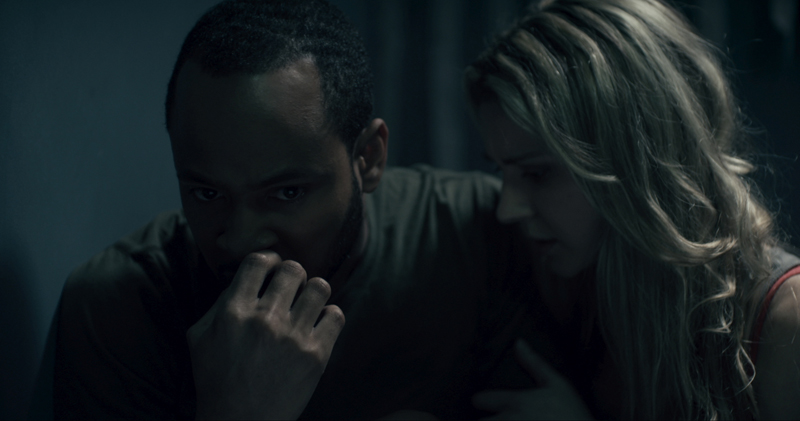
In the film, Waite plays Steve, one of the five friends gathering to celebrate New Year’s Eve. He was jovial and sincere university student. Audiences got to see him enjoy time with his close friends and girlfriend. Unfortunately, he was first in the house to experience the epidemic that trapped them in the house. This is pivotal, as Waite was responsible for getting the audience to truly understand the epidemic, and therefore the film. Within the film, Steve was the only individual who the audience was able to see go through a full transition. With this, the audience knew what the signs were and what would happen if another character was to get infected.

“It was really important to me that people felt the struggle of this character. As he tried to figure out what was happening to him without revealing anything to others in house. Through my portrayal, I hoped the audience would feel like they were a friend to my character and miss this him when he was gone,” Waite described.

The film had its premiere at the Fantasia Film Fest in Montreal back in 2013, and from there went to several high-profile international film festivals, including Calgary International Film Fest, Sitges International Fantastic Film Festival, Toronto After Dark Film Festival, and the Cannes Film Festival. From there, it was distributed through Monster Pictures on DVD, through Super Channel, and on iTunes. Such success could not have been possible without Waite’s portrayal of Steve, hooking audiences to the story early on.

“It’s always nice to see an indie film do well. It takes so many people and long days to make a film. To me the success is in completing the project. I am proud of everyone involved,” said Waite.

Antisocial was Waite’s first horror feature film, and five years later he still looks back and coals the experience amazing. At the time, he was still very curious about the process of filmmaking and how it all would come together, and he could not have been happier with the result. Everyone on set was professional and inspired, creating a contagious energy. He found himself watching everyone on set, from the cinematographer to the special effects make-up artist, taking everything in and reminding himself why he wanted to be an actor in the first place.

“I liked the comradery. Everyone was really passionate about the project. We were all stuck in a house for weeks. Friendships were built, and some good memories were made. I hadn’t done anything like that before. Overall it was a great experience,” he said.

Be sure to check out Antisocial to see Waite’s terrifying performance as Steve.

Using makeup to embrace womanhood with Allison Giroday

Allison picture sitting down
Allison Giroday, photo by Liz Rosa

There is a common understanding in the fashion industry that clothing, and makeup are products that you buy, but style is what you do with them. Style is eternal. It doesn’t fade when new trends emerge, or when old trends divulge. For makeup artist, Allison Giroday, style is inherent, running deep through her veins. She credits her love for fashion and makeup to the fact that she grew up in one of fashion’s most acclaimed decades: the 1990s. She recalls herself as a young girl, inspired by the token 90s bombshells she’d see on billboard signs and magazine covers. She even remembers her 13-year-old self, locking herself in her school bathroom, trying all sorts of tips and tricks to achieve Pamela Anderson’s signature smudged-eye and baby pink lip look.

“I thought those women were just the most beautiful women in the world and I would stare at their pictures, studying their makeup. I collected fashion magazines and watched Fashion File. I never anticipated that I’d be in the position I am, looking back on those days. Now, the greatest feeling in the whole entire world is when a client gets excited over the reflection she sees in my mirror. It doesn’t matter whether she gasps, smiles, tears up, or sits up taller, it brings me a pride like no other. Every woman deserves to feel beautiful, powerful, and confident. I love the fact that I get to be a part of that,” raved Giroday.

Fortunately for Giroday, she has been able to be a part of that journey for a number of different people, projects, and publications over the duration of her career. For instance, Giroday was referred to hit Canadian artist, Lights, in order to do her makeup for Canada’s largest, most prestigious music event, The Juno Awards. She has also worked for several other celebrities such as professional basketball player, Steve Nash, and successful rap artist, Lil John. Her work has even found its way into publications such as Glassbook Magazine, British GQ, Life & Style, Reader’s Digest, and several others. When founder and editor-in-chief of Mother Muse Magazine saw Giroday’s work, she knew she had to bring her on board for her publication.

Mother Muse is a fashion and lifestyle printed coffee table book, available worldwide, that focuses on the quality of slow living and modern motherhood. It is rich with artwork, articles, interviews, and editorials intended to inspire everyday women and everyday mothers to follow their passions and to live life to the fullest. Due to its heavy emphasis on style, Mother Muse is often full of unique images of models, beautiful color schemes, and several other style inspirations. It is important, therefore, that Mother Muse work with exceptionally talented artists to shoot images that will captivate their readers’attention at first glance.

They begin every shoot with a mood board selected and prepared by the editor with a description of the woman or women that will be featured. This is when Giroday begins to determine how best to match her model’s facial makeup with her other style and hair elements. In a constant determination to outdo her former self, Giroday places great emphasis on keeping her makeup looks current and ensuring that she doesn’t fall behind on the latest trends. With that, she conducts research in her own time to ascertain that she is providing her clients with the latest and greatest that the cosmetics industry have to offer.

“Success has the ability to breed complacency and that’s an easy trap for an artist to fall into because at that point, you stop continuing to grow. It’s important to want to stay inspired so that you never fall out of love with what you are doing. To me, the term makeup artist really is about the art. I don’t just apply makeup, I paint the canvas. My goal is to make my client feel like it’s the best makeup they’ve ever had and I’m so passionate about that,” noted Giroday.

In addition to her passion for makeup itself, Giroday loves working for Mother Muse, as it allows her to explore femininity with every shoot and to embrace the qualities of a goddess. She has crafted her talents so much over the years that she manages to evoke emotions of power and wisdom through the makeup looks she presents and with that, her work tends to flow seamlessly alongside the rest of the magazine’s team. She loves being able to work with other organized, motivated individuals to promote and celebrate the nuances of motherhood, and womanhood in general. What’s more, is that Giroday gets to see the final outcome of her work in print form, a dying art. She loves the fact that she can pick her work up, hold it beneath her fingers and touch it. The amount of dedication and love she puts into her work makes it all the more exciting when she gets to hold it in her hands.

Overall, Giroday considers herself fortunate to have had the opportunity to work with Mother Muse in the past. Every time she is brought on board for a project with them, she remembers exactly why she fell in love with their publication in the first place. She also takes great pride in knowing that Mother Muse has been covered internationally by Yahoo Australia, as well as the Daily Mail. It has also showcased the faces of popular celebrities like Selma Blair and Brie Bella. Next time you’re walking by a copy, pick one up and witness Giroday’s greatness with your own eyes.


Written by Sean Desouza

Producer Chenlin Qian sheds light on difficult teenage years and importance of family in new film

Chenlin Qian was just three years of age when she started playing the piano. Growing up in Shanghai, China, she always found that music was a way to release all of her emotions. As she aged, she found that different artistic mediums had this effect on people all over the world, and she began to explore them. That is how she found her way into filmmaking.

When watching the movie Amour, Qian was astounded by how moved she could be from a film. She noted the director’s choices and how he chose to display something as harsh and sad as death in a warm beautiful way. She realized that filmmakers had the power to completely influence their audiences, in an even more immersive way than music, and she found herself developing a new passion. She knew from then on that she wanted to make movies and has since become an award-winning producer.

“Film to me, is not a product, it’s more like a tool to help me to express myself to others,” she said.

Qian is now internationally sought-after for what she does. Her film Cowards saw great success at several prestigious film festivals, a pattern that continued for many of her other projects last year, including the drama Sixteen.

Sixteen tells the story of 16-year-old Jennifer, a girl with a perfect life who discovers her early pregnancy, breaks the image of a good girl and looks for her real self. Throughout Jennifer’s life, every choice is made by her parents. When she finds out she is pregnant, Jennifer decides to take control of her destiny, and be herself for once.

“It’s a movie about a teenager’s loss. Everyone has experienced this period of their life, it’s a time where we can so easily get lost. This story showcases the really sincere love of a family during a trying and difficult time,” said Qian.

Sixteen went on to win Best Short at the California International Shorts Festival, the Silver Award at the North America Film Awards, and Honorable Mention at the Los Angeles Film Awards. Such acclaim could never have been possible without Qian, who is said to have saved the project. Without her, the production was at risk of delays and losing money, but she knew just how to rectify the situation and produce an outstanding film.

“Although there is not a very happy beginning, there is a good ending of this film, and a story that needed to be told. It was really thanks to everybody who worked on this project, didn’t complain during the tight pre-production, and instead worked harder for the production to ensure everything went smoothly,” she said.

Yiyun Zhang, the Director of Sixteen, had previously worked with Qian on Cowards, and after it’s immense success, she hired the producer immediately to take part in her new film. Initially, a different producer was working on the film, but left with just two weeks left before shooting was supposed to start. When Qian came on board, she knew she had to work both quickly and efficiently to stay on schedule. From there, Qian began her work, and in just half a month, she began conducting auditions, finding locations and getting permits, organizing the crew, scheduling the shooting plan and getting insurance on sets and equipment. Qian also supervised the post-production for this project.

Last year was a busy time for Qian, who on top of working on Sixteen and Cowardsalso produced WhirlwindandTake Me Back. The latter was the producers first comedy, a refreshing change from the heavy topics and pointed dramas she often makes.

Take Me Back follows a pair of roommates who greatly dislike each other, but after a ridiculous body exchange, they start to understand each other’s lives. The film was nominated by Direct Monthly Online Film Festival and by Newark Short Film Contest.

“It’s a happy ending. I think this movie can bring the audience a positive attitude to life, when you don’t like someone, think and look in a different angle, maybe you will find the shining part of them. After seeing this short, you remember the happiness it brought to you but also you will start to ask yourself, those who I don’t like, do they have some good part I never discovered? If we exchanged bodies, would I do what he did or even worse than he did? I think, this movie can help us to understand other people’s actions. It takes the classic mantra of living in someone else’s shoes and makes it literal,” said Qian.

As Take Me Back was Qian’s first comedy, she conducted a lot of research to see what sort of tone needed to be set to make the film a success. She realized that the new genre was another way to get the audience to feel something while they watched, reminding her why she got into filmmaking in the first place.

“It’s fun to work with people who can bring others happiness. It brought me a fresh filmmaking take, reminding me that movies can not only talk about serious problems, but also can just entertain people,” she concluded.

Written by Annabelle Lee
Conducting a Reality Competition Interview for TV, a how-to by Supervising Producer Emma Greenhalgh

Being a reality producer certainly comes with a lot of preconceptions, but the reality of producing, in my experience, is actually a very warm and rewarding career.

My name is Emma Greenhalgh, and I’ve spent fifteen years producing on reality competition shows for TV. It’s fair to say I’ve produced and directed hundreds of people’s life stories along the way, whether it be with the Got Talent franchise, Dancing with the Stars, and more. It’s been my job to bring people’s personal stories, experiences and emotions to the nations TV screens as part of a carefully crafted TV show. The core of sharing these stories is an on-camera interview, the moment where our subject gets to share a piece of themselves with the show and in turn the nation. It’s an opportunity to open up, to explain the road that lead them to appearing on that show and essentially garner the sympathy or empathy of the viewer at home, and it’s my job to help them do this in the most effective way.

Interviewing for reality TV is something one learns over time. I think the biggest misconception is that contestants are told what to say by a team of producers no one ever gets to see, and whilst yes, we are working hard to bring your favorite shows to your TV screen, we are not telling contestants what to say…we are helping them structure their truth in a concise way to have maximum impact. The key to conducting this kind of interview is to take a story, a personal experience, and present that to an audience in not only the most relatable way possible, but also in a very short amount of time.

The foundation of this kind of interview really is listening. Sounds obvious, right? I have met many producers over the years who have gone in to their interview armed with a list of great questions and a plan of how they want the interview to go, but then forgetting that they have to listen and respond. Sure, ask your first question, make small talk to create a bond and put the person you’re interviewing at ease (they’ll likely be nervous) but from that point on you should be listening and responding. Hear the story you’re being told, enter the world of the person you’re interviewing, imagine how it might feel to have their life, to feel their feelings, to have seen what they’ve seen and feel what they feel. It’s surprising how often even the most hardened of interviewees can be telling you a story but the second you ask them how it feels, it leads them to emotionally connect with the experience again and the regaling of the story changes, now you have the connection and the true feelings.

Ensuring you understand how a person feels is the core of any successful interview and if I could only give one piece of advice that would be it. That said there are a number of ways you can ensure your interview for TV is as thorough and successful as it can be.

So, as you head in to a reality interview think about the following list:

Research your subject

  • Always go in to an interview knowing your interviewee’s background. Who they are, what their life has been like. Know their story in advance and how you want to tell it and have a clear idea of the structure.
  • Ideally talk to your subject in advance for a pre-interview conversation. If that’s not possible, then do your research and know as much as you can about them before you sit down.
  • Write your interview structure/questions in advance. This gives you a guideline to ensure that a) you hit all the beats and don’t miss anything and b) stops you veering off track. Of course, things may change in the interview, but that list of questions acts as your guide and will keep you from losing your way.

Start Light

  • This may seem obvious, but when you have a lot to cover in an interview and perhaps a short amount of time to get it all done, it can be tempting to get in to the heavy or core of a story straight away. This is not a good idea. Let’s face it an interview is a pretty unnatural situation. I always find it’s a good idea to have a chat off camera first, kind of outline what’s going to happen but generally just put them at ease, so they feel comfortable talking to you.
  • Once you begin the interview, always start with the light topics, who they are, where they’re from, their background, growing up etc. No one tells a story by going straight to the middle of the book, you need an introduction to ease in.

Sentence Structure

  • Always get the person to answer your question in a full sentence. The interviewers voice is rarely used. If you asked where a person grew up, if they simply answer ‘Denver Colorado’ there is no context for that answer or what you were asking. The person being interviewed needs to incorporate what was being asked in their response e.g. I grew up in Denver Colorado.

Stay Silent

  • A little less natural, but as you listen to what the person you’re interviewing says it’s important for you to remain silent. You need the audio of the interview to be clean. Thankfully, you can convey a whole range of emotions through your face without making a sound. Using your eyes and facial expressions you can easily nod, shake your head, be sympathetic, be surprised, laugh, but all without sound to encourage the person you are interviewing but not messing up your audio recording.

Be reactive and flexible

  • Often even with all the research and pre-chat before the interview starts, sometimes they just don’t go the way you expect them to. Maybe the timeline is different than you thought, maybe the person doesn’t feel the way you expected, maybe the person doesn’t want to talk about something you were hoping would be the heart of the interview, it happens. The key here is being reactive, being able to work around the hurdles, find a different story or change the direction of what you hoped to get and adapt to the new facts.

Engage and be empathetic

  • An interview shouldn’t just be a list of questions. It’s essentially a conversation. Don’t ask a question to hear an answer and then simply ask the next question on your list. React to the response, maybe it sparks another question, maybe it brings up something you never thought of, ‘hear’ what the person being interviewed says and respond to it, offer empathy, offer sympathy, ask more questions that feel natural. It’s important to remain human and imagine how it must feel for the person you’re talking to, give them space to feel and show that emotion within the interview

Respect

  • Respect the story, it’s someone’s life. Whether you are shocked, saddened, or find it funny, it’s important to respect the story and allow the person being interviewed to tell it their way in their words.

Pacing and Space

  • Don’t rush! This is both for the success of the interview and for post. Always allow room and space at the end of each response for the person to complete what they’re saying or feeling and for your editor to have a clean end before your voice starts again.
  • It’s also very important to allow the person you’re interviewing to talk at their own pace. If they clearly think something is funny, let them laugh, if they are super sad and start to cry, give them room to cry. You can of course be empathetic and sympathetic, but this is where you have to go against natural instincts a little. It may feel uncomfortable but it’s real and it allows the viewer at home to connect with the person.

Obviously there a so many variables when conducting an interview and no two interviews are the same, but ultimately an interview is a carefully crafted conversation where the interviewer is in control but the person being interviewed is still being given the opportunity to speak freely and honestly.

The best way to get better at TV reality interviews? Work in the field but ALWAYS work in the edit too. This way you can see precisely the mechanics and process of how the interview becomes the one-minute piece on TV. The best producers are those that work in both field and post, no question. Oh, and practice, practice, practice; like with anything, the more you do it, the better you will be.

Actor Kevin Dary talks new film ‘The Chop Shop’ and living his dream

0 20170718 Kevin Dary 21840
Actor Kevin Dary

Kevin Dary always knew he wanted to be an actor and has spent his entire life devoted to this artform. Every new character he plays allows him to explore a new part of himself. He knows that through his craft, he can heal wounds, spark new interests, or make one question their own behaviour, and he understands the responsibility behind this. He makes sure to put his entire heart into every project he does, and that is what makes him such a formidable actor.

Known for his versatility and dedication, Dary has worked on several award-winning films throughout his esteemed career, including Pandora’s Box, The Swampand Prego. Through each film, Dary conveys true depth and realism behind his characters. In his most recent film, The Chop Shop, he once again does just that.

The Chop Shop is a passion project made by award-winning director Eric Milzarski. It follows two brothers, Luther and Corey, who are drastic opposites. Luther owns a chop shop that is tied to a group of gangsters and tries to get his do-gooder brother involved. Luther gets beaten for not paying back money. After he finds comfort in his caring brother, Corey, either he must pay them back and risk jail or swallow his pride by turning legitimate.

“I love the idea of apparently terrible, sloppy people actually being a little better than you would expect. That’s why I think this story is important, because themes like forgiveness are universal, and I believe that messages that have a subtler delivery rather than being very on the nose have a stronger impact on audiences. It feels real, just like the world The Chop Shop is set in,” said Dary.

In Chop Shop, Dary plays Johnny, Luther’s right hand at the shop. He has been there since the beginning and he will be there until the end. He also trains the newest recruits. He is the catalyst for a pivotal scene in the story, when Luther has an argument with his brother trying to get him to join the shop, an incident with a rapidly spinning tire costs Johnny a thumb. Luther’s brother, who studied medicine, comes in and offers first aid. Luther jumps on the opportunity to convince him that he is definitely needed here. This moment is key in the film because this is when Luther’s brother starts heavily questioning his possible implication. It is also in that moment when the audience finally sees Luther’s true feelings for Johnny, and Johnny’s physical pain is now nothing compared to the disappointment and resentment he has for his boss. Dary knew the importance of the scene and that he had to deliver, and he impressed all he worked with.

Filming this scene involved a lot of preparation for Dary, first with makeup and visual FX to create the torn apart thumb, but more specifically with the Director, Eric Milzarski. They wanted to be absolutely sure that they could convey the idea of this pain being even stronger from Luther’s attitude towards Johnny in that terrible moment. Milzarski took the time to talk with Dary, one on one, before they even rehearsed this scene. It was an amazing moment of directing and collaboration between the two artists.

THE CHOP SHOP POSTER
The Chop Shop film poster

“Professional through and thorough, Kevin is the type of actor who welcomes harder roles. As his director on several projects, Kevin will workshop and make every character his own. Kevin is an old soul for today’s world. He will listen for hours, take notes about everything, and asking often the most bizarre questions that build his character. Between takes, he’ll quietly focus on little details like “how would my character hold his bottle?” Then the moment the cameras are on him, it’s truly magical,” said Eric Milzarski, Director of The Chop Shop.

The film premiered in September 2017 in Warner Bros Studios to a private audience of industry professionals. It is currently in the festival circuit, and so far has been in the official selection of The Grove Film Festivalin Jersey City, New Jersey, with a screening on March 28th, 2018, and of the Los Angeles Film And Script Festival, with a screening on April 22nd, 2018 at the Conplex Theater on Santa Monica Blvd. Among the prestigious upcoming film festivals, the project was submitted for is theG.I Film Festival inWashington, D.C, the largest in the Veteran community, of which Eric Milzarski is a proud member.

“Knowing the film has been so successful is both beautiful and heartwarming, because I know this project was made with so much passion towards involving audiences that seeing it succeed at that feels so right. I have heard from the director that the scene with Johnny is often the highlight during screenings, with strong response from the audience, who seem to suffer with and for Johnny in that moment. It’s amazing for an actor when you hear something like that,” said Dary.

Although Dary had little knowledge of what happens in a chop shop prior to getting this role, he made sure to study and understand the environment his character was living in. When filming in an actual auto centre, he talked to the workers and learned how to use the machines. This greatly helped make the environment familiar and made the actor feel that he belonged in there, so he could embrace it as Johnny.

The Chop Shopis the kind of project I love working on because it has an edgy feeling to it, but only to better serve a very relatable story about sibling love and relationships. It has elements of betrayal, deception, but also redemption and forgiveness,” said Dary.

Be sure to check out The Chop Shopand Dary’s enthralling performance.


Written by Annabelle Lee

Chen Xu gets his hands “dirty” while creating sound for ‘The Shaft’

In 1999, Chen Xu dedicated himself to watching approximately 1,000 movies in order to absorb as much information as possible about sound design and sound mixing within the film industry. Interestingly enough, the overwhelming lesson that he learned was that regardless of a film’s genre or budget, a good sound design could always supplement a film’s visual stimuli and boost the viewer’s imagination beyond this imagery. Sound design has the ability to change the entire viewing experience and Xu felt confident that he possessed the skill set and creativity to be able to take any visual film component and take it to the next level with the addition of his sound design. Since then, he has earned a substantial amount of recognition for his talents, not only in the form of awards, but also in sheer demand for his work. Fortunately for Xu, sound design and sound mixing are a lifelong passion and he is one of the few people in this world who can say that they get to do what they truly love and call it “work.”

“Sound is not as specific as the film’s picture; however, it tends to be integral to our subconscious mind. The delicate organization and arrangement of sounds can greatly enhance a movie. On the surface, it appears to be a mere aid to the picture but in reality, the space and importance of the sound creation typically accounts for over half of the film. This gives me a sense of freedom in my work to express my own creativity. That’s where I really like sound,” said Xu.

Throughout his remarkable career, Xu has used his sound design and sound mixing expertise to enhance the scripts of a number of renowned films such as A Simple Goodbye and The Wasted Times. For his work on The Summer Is Gone, Xu received a nomination for Best Sound Effects Award at the 53rd Golden Horse Film Festival. For Xu, however, receiving awards and nominations are simply a bonus to being able to mix and design sounds for a living. In fact, the true highlights of his career come to life when he gets to work on projects enriched with culture and meaning. This is why, in 2015, when Xu was approached about working on The Shaft, he could not refuse.

The Shaft, which has earned over a dozen international awards, follows three intertwined stories of a father, a son, and a daughter fighting to hold onto hope and family as they face the harsh realities embedded within life in a poor Western-Chinese mining town. The story illuminates a number of complicated relationships hidden beneath the community’s hardened exterior and when Xu first read the film’s script, he knew it was something he had to be a part of. Xu credits the film’s realistic script as being the main draw to accepting this challenge. This meant that for the film, Xu would be in charge of all sound-related work, from production mixer to sound design to final mixing during the film’s post-production phase.

What Xu hadn’t necessarily anticipated when accepting the opportunity to work on The Shaft, was just how harsh the conditions would be. Due to the fact that the film deals with miners, many scenes were shot deep underground and as a result, Xu was tasked with ensuring that the film’s sounds remained as clear as possible given the setting constraints. In addition, the actors insisted on shooting their own scenes despite dangerous conditions, and therefore, Xu had to accompany them in the mines to shoot their scenes. Oftentimes, he would be covered in particles of soot at the end of a shoot. To his director’s appeal, Xu masterfully captured the realistic texture of the town and the state of those living within its conditions through his sound mixtures. In addition, he chose to enhance the importance of the film’s sound design by only using music at the conclusion of the film. In addition, he managed to capture the unique, untouched atmosphere of Guizhou Province in China. Given the fact that Guizhou Province has not yet fully integrated into the fast-growing Chinese economy, he knew that it would be extremely important to ensure that audiences could grasp the authenticity of the film’s location.

Where some sound designers may have found themselves intimidated by the challenges presented when working on The Shaft, Xu found himself energized by the opportunity to experiment in new areas of his art form and to help his colleagues tell this story in the most interesting fashion possible. The film’s director, Zhang Chi, requested that Xu stray away from the typical, clear-cut sound design principles and create a more “dirty” sound arrangement. This, however, did not require Xu to simply arrange the film’s sound elements, but to do so in an intentionally disorderly manner. Chi felt as though this would help to enhance the film’s objectivity. He did not want to criticize the characters, nor did he wish to sympathize with them. He wanted to present the world with an understanding of the social realities embedded within the Chinese culture today and to do so in a way that would resonate with his audiences.

In the coming year, Xu will take charge of the sound mixing and design for two feature length films and hopes to continue spreading his talents throughout the sound editing industry for years to come. To anyone else looking to pursue a career in sound mixing and sound design, Xu offered the following advice:

“Sound design and mixing is a very creative but oftentimes relatively boring job. If you want to become a good sound designer, you must first be able to endure loneliness and genuinely love movies, so that you can always maintain the vitality of your creation,” told Xu.


Written by Sean Desouza

Star Wars Dreams are Reality for Actor Orion Lee

Star Wars

There are some films which immediately inspire awe and respect everywhere in the world. The Star Wars franchise is one of the most enduring and beloved of all. The world created by George Lucas has spanned four decades now and expanded the possibilities of transporting audiences to a different time and place. Being in these films is the tipping point for actors from being known in their own country to instant global notoriety. Orion Lee is fully aware that his role as officer Suday Bascus in Star Wars: The Last Jedi makes him the envy of Star Wars fans everywhere, as well as a member of a highly exclusive club of actors. This Walt Disney Pictures/ Lucasfilm production includes members of the original first film like Mark Hamill and Carrie Fisher along with the new generation such as Daisy Ridley, Adam Driver, Benicio Del Toro, and of course Orion. While the film’s multiple Oscar and BAFTA nominations, along with nearly $1.5 Billion in WW gross are momentous, it’s the fact that his character will live in the audience’s hearts for decades to come which is the most meaningful to Orion.

The Star Wars franchise is known for not only its iconic main characters but for the embrace of the supporting ones by fans of the films. It’s a badge of honor for them to be familiar with these characters, their backstory, and the actors who portray them. Orion’s presentation of Suday Bascus is that of a member of the First Order military. In the middle of an extensive battle with the Rebellion he is the vital link between captain and crew. Bascus and crew display the timeless scenario of warriors struggling for their lives and what they believe in, whether you agree with their cause or not. As their ship’s defenses go down, they are confronted with the very real possibility that this could be their end. Lee confirms that he didn’t start from zero in becoming familiar with the mindest of a soldier as he had appeared in Columbia Pictures’ Fury starring Brad Pitt, Michael Pena, and Shia LeBeouf. While he rewatched The Force Awakens to get the feeling of the First Order and what they stand for, there was one unexpected factor which benefited his performance that was not completely pleasant. Orion relates, “The First Order costumes had very high necks. As a side effect, if you stood in any other manner than completely and perfectly straight, you’d choke yourself. This was a very effective means of reminding all the cast the way they had to stand in a military context.” He adds, “Being immersed in the world of Star Wars can be jarring at points. The destroyer set is so detailed and complex yet the outside is just wooden slats so it’s funny being in the destroyer and then walking out to see the exterior so plain. Of course, the outside of the destroyer is surrounded by green screen so that the Rebellion bombers can be added in later by the fantastic VFX team.”

Orion thanks casting director Nina Gold (known for her work on Game of Thrones, Les Miserable, The Kings Speech, Jurassic World: Fallen Kingdom and the Star Wars series) for offering him the role without an audition. The role of Suday Bascus simultaneously made him a part of the largest Science Fiction Franchise in history and allowed him to work with acclaimed professionals like director Rian Johnson (Looper, Brick). Lee comments, “I love Rian’s other films. I was really impressed by how well versed he is in the Star Wars history. There was a moment where we were waiting for something technical and Rian was completely up for doing an improvisation to potentially add another scene into the movie. He works so nimbly and knew the universe so well that within a few minutes we had worked together to create a new scene and shot it. It was fantastically exciting to work with such a flexible and knowledgeable professional.”

Though he’s an adult and an accomplished actor with a very impressive resume of roles in well-known films and television programs, it’s obvious that Star Wars: The Last Jedi serves as that same childhood touchstone for this actor as it does for all of us. Orion relates, “As a child, I’d play Star Wars stories with friends, imagining myself piloting spaceships and using the power of the Force. To find myself as a part of creating the stories that will lead another generation to do this; It’s very special being part of that magic and that myth. The most challenging thing was actually balancing the excitement of being on the set of such an iconic story while keeping everything grounded at the same time. It’s easy to think of it as a game, remembering all the times in youth when you and your friends played Star Wars, but it resonates so profoundly with kids and adults because it deals with universal themes in a relatable down to earth way. I’d have to snap out of the ‘Oh my gosh this is so cool. Pew pew pew’ moments and get back to the acting work of the imaginary circumstances.”

British Actress Milanka Brooks brings on the laughs in TV Movie ‘Do Not Disturb’

As a child, Milanka Brooks found herself inspired by her late father, Harry Brooks. He was an actor, and the two would discuss theatre, film and television, and frequented the theatre together. Growing up, Milanka began seeing the theatre world as a magical space where real-time stopped and the world as she knew it only existed within the parameters of the stage. She knew from that young age that she would find herself on the same path as her father and that her future lied in acting.

Now, Brooks is an acclaimed actress, showing audiences in her home country of England and around the world just what a talent she is. Having recently starred in an episode of the popular Netflix original series Black Mirror, and the hit British television show Benidorm, the actress’ versatility is evident, and with her upcoming film Patrick being released later this year, she has no plans on slowing down.

One of Brooks’ most prolific roles was that of Svetlana in the movie Do Not Disturb. The film tells the story of Anna and John, who book into the Stratford-on-Avon hotel where they spent their honeymoon ten years earlier – separately, following Anna’s extra-marital fling, but they had paid for the room anyway. They decide to give their marriage another go but then Anna sees young Luke, the hungover best man from the previous night’s stag party, who mistakes her for a prostitute and whom she rings receptionist Sheila to get rid of. In the meantime, two real escorts arrive and assume that porter Neil is their client, to Sheila’s annoyance. Confusion arises when a blindfold Anna has sex with Luke by mistake and Neil ejects her husband John, believing him to be Luke. By the time Anna’s mother turns up there is much explaining to do.

Do Not Disturb Sian Gibson, Kierston Wareing, photo UKTV
Sian Gibson, Milanka Brooks and Kierston Wareing in Do Not Disturb, photo courtesy of UKTV

Do Not Disturb is a really fantastic romp made for audiences with a penchant for farce. Even when reading the script, I could feel the pace and energy of the film. It doesn’t shy away from being a purely energetic, entertaining spoof, full of thrills and turns that leave the audience feeling fully satiated by the end,” said Brooks.

The character of Svetlana is a very intimidating, confident and forceful escort from Russia. As one of the two escorts, Brooks’ character is hired to entertain the groom-to-be on his stag-do in a hotel in Stratford-Upon-Avon, a town that is definitely not known for this kind of behaviour. They storm in to the hotel and demand to be taken to his room. They end up entering the wrong hotel room and seducing the wrong man, which is the catalyst for the train of events to follow.

Svetlana came in to destroy what was already a fairly shattered environment, in Brooks’ opinion. The humor in the story came from a degenerate group of people, all finding themselves in the wrong place at the wrong time. Svetlana highlighted this by her stature, attitude and insolence of the whole situation.

“The men are quite paradoxically the scared characters in the story, and the women end up incredibly domineering and commanding. Sometimes I feel like this came a little too naturally,” Brooks joked.

Milanka press Do Not Disturb Catherine Tate, Miles Jupp, Steve Edge, Kierston Wareing, Dylan Edwards, Penny Ryder, Photo UKTV
Catherine Tate, Miles Jupp, Steve Edge, Kierston Wareing, Dylan Edwards, Penny Ryder, and Milanka Brooks in Do Not Disturb, photo courtesy of UKTV

Do Not Disturb also stars British icon Catherine Tate, which was the initial reason Brooks wanted to be a part of it. Working alongside such talented comedians inspired Brooks, saying the TV movie really felt like an ensemble piece from the beginning. Rehearsals consisted of a lot of improvisation and devising around the script. Writer and Executive Producer Aschlin Ditta was always open to the cast’s ideas and any amendments that complimented the story and supported the characters. This allowed the cast to really become comfortable with each other and their characters, playing off everyone’s comedic timing and creating laugh-out-loud funny scenes.

“Milanka is a very fine actress and comedienne and someone I would work with again without a second thought. As a performer she is brilliant and skilful, with a rare eye for both comedy and drama, and as a professional she is faultless. Milanka is incredibly thorough both in her preparation and execution, an exceptional talent, and while she undoubtedly delivers in performance she is also a team player who is a joy to be around. Her energy, talent, insight and humour make her an actress to grace any production,” said Aishlin Ditta, Writer and Executive Producer of Do Not Disturb.

A lot of Brooks’ performance was based on her on-screen relationship with fellow actress Kierston Wareing. The chemistry between the two, playing escorts, had to be comedic and believable to bring audiences in, so the two spent a lot of time getting to know each other outside of rehearsals and filming. The result was perfect timing between the two characters.

Working alongside such a stellar cast and crew, including Wareing, Ditta, and Tate is why Brooks enjoyed creating Do Not Disturb as much as she did. With such comedic energy all around, it was easy to see the humor of the story on set.

We ended up shooting in this beautiful country house a little outside of London. If any neighbors were watching they would have likely called the police given the absurd nature of a lot of people running in and out of rooms half dressed, but fortunately for us we were in the middle of nowhere,” she concluded.


Written by Annabelle Lee

Top photo by Faye Thomas

Editor Ran Ro tells her personal story in acclaimed film ‘In Between’

Korea’s Ran Ro remembers the first time she fell in love with the idea of filmmaking. It was when watching the iconic French film Amelie. As she took in the film, it was a different experience than simply watching a movie. In one scene in particular, the narrator lists out what Amelie, the protagonist, likes, as audiences see the visuals depicted by the narration. That moment sparked a fire inside Ro. She took in how the “mundane” aspects of a film could easily be ignored by the masses but can be captured so beautifully and significantly. It was then when Ro decided she wanted to be an editor. She loved the power that such small decisions could have over the telling of powerful stories, and she was ready to become a master of the artform.

Now, Ro is known for doing just what she admired when watching Amelie. Her attention to detail creates visual masterpieces, whether she be working on a minute long commercial or a feature film. Her work with brands such as Tastemade, BackBeatRags, and Elite Model Management captivated worldwide audiences, and when she embarked on her most personal project ever, the film In Between, she once again impressed.

“The underlying concept of the project was developed when I stumbled across a memorial park in Honolulu. I was supposedly at a place that represents the end of life, but all there was in front of me was empty scenery. Observing the sunlight landing on the unmoving landscape, I couldn’t help but feel oddly at peace. In comparison, I began to think about the emotional turbulence that one goes through in life. The script was written shortly after this experience, as a means of unravelling the curiosity that arose that day at the memorial park. My childhood experience of being raised by my grandmother became a central plot line of the main character of the film,” said Ro.

In Between tells the story of Tina, who in the middle of a suicide attempt on New Year’s Eve discovers a mysterious path inside her duvet cover, leading her to an ethereal space filled with an infinite number of lights. Not only did Ro edit the film, but she also wrote, directed, and produced it.

After premiering last year, the film saw immense success at several prestigious international film festivals. It won the Award of Excellence at Best Shorts Competition and was a semifinalist at the Los Angeles CineFest, the Los Angeles Independent Film Festival Awards, and the Hollywood Screenings Film Festival, to name a few.

“It is rewarding and also very encouraging to have seen the audience resonate with a story that involved my personal experience. It motivates me to create stories that are meaningful and that challenge me to be more curious and observant about things around me and about human emotions,” said Ro.

Music played a large part in the film, from the writing process all the way to editing. One of the music scores titled “Reoccurence” greatly inspired Ro, and she played it repeatedly throughout the production, allowing it to stimulate the rest of the cast and crew.

“During rehearsals with actors, I played the same music to match the pace of their dialogue and the rhythm of the music, knowing that I would be using that score when editing. Once the actors were tuned into the music, the whole scene fit into it – the very last dialogue ended with the last beat of the music,” she described.

Filming went very smoothly, which made the editing process almost effortless for Ro. She knew the exact pace and tone that she wanted for each scene after being involved in the writing and directing processes.

The film uses otherworldly places to visually portray metaphors on time and space. In one scene, this is exemplified when the protagonist crawls through an endless path underneath a duvet cover when time freezes during the New Year’s countdowns. She encounters a little girl who guides her to another otherworldly place, “The Gap”, a realm in between life and death where the souls reside.

The Gap was instrumental to the film, and it was conceptualized when Ro imagined an unperceivable place that exists in between every second. She thought of it as a place where all past moments exist. The main character in the film, who keeps her dear memories of her grandmother, reunites with a younger self of the grandmother in The Gap. This was Ro’s favorite scene in the entire film, and the one she felt the deepest connection with.

“I enjoyed seeing my vision come to life every step of the way from writing, casting to production. It was surreal but also very exciting to see what I envisioned actually happen right in front of me. I felt very grateful that the crew that I was working with truly understood my vision and used their talent to materialize it,” she concluded.

Be sure to watch the beauty of Ro’s work on In Between here.


Written by Annabelle Lee