Making it in Wardrobe: Film Costumer Lisa Sass

Costumer Lisa Sass
Costumer Lisa Sass shot by Veera Ovaska


Originally from Hanover, Germany, costumer Lisa Sass is one of the key figures who works tirelessly behind the scenes on film and television productions to ensure that all the actors on screen visually represent their characters down to the most minute detail.

Over the past five years Sass’s vast skill set as a costumer have landed her leading roles on a huge range of high profile productions including the Oscar Award nominated films Star Trek Beyond and Star Wars: The Force Awakens, the Golden Globe nominated film Furious 7 starring Vin Diesel (xXx) and the feature film War Machine starring Oscar Award winner Brad Pitt (World War Z), which was released last month.

While it hasn’t taken her long to establish a reputation that is strong enough to be sought out by some of the biggest film productions in the world, she definitely paid her dues along the way. The path to becoming a costumer for film and TV was something that actually began for Sass during childhood.

She explains, “I’ve always been a big fan of movies and TV series. I started drawing when I was about 4 years old, started copying cartoon and comic characters at some point and went to more realistic drawings from there. I made up stories and started creating my own characters and their clothes. Going into costume design combined my passion for film and creating characters.”

Sass’ role as a costumer is one that starts long before the cameras begin rolling and finishes long after the director says ‘that’s a wrap.’ While the costume designer ultimately decides what costume each character wears on screen, it’s the costumer’s job to breakdown the script scene by scene and create a look-book for every single character documenting the multitude of costumes they wear over the course of a production. Sass then goes to work compiling a massive wardrobe collection to fit the main characters, as well as everything worn by the background talent. But her job definitely doesn’t end there, if it did, things would be far too easy.

020_lisa9
Lisa Sass shot by  Veera Ovaska

In addition to altering the costumes to fit each cast member perfectly, she is the person who makes sure her department has everything they need to keep the cast comfortable, which can be include everything from a wet suit to be worn under the clothing if the character falls into a cold lake during a scene to heat tech clothing to keep the cast member warm when shooting in frigid temperatures. She is also responsible for aging the costumes and adding desired effects depending what happens to the character in a specific scene and how that carries over into their wardrobe, and much more.

Sass first immersed herself in the industry in 2010 when she joined the the wardrobe department of the hit series Tatort, which has won over 100 awards since it first began in the 1970s and is still airing today! After learning the ropes from seasoned costume designer and German Television Academy Award winner Monika Hinz on the series Tatort, Sass was ready to begin working on her own as a lead costumer.

Immediately after completing her bachelor’s degree in costume design she landed a spot as a costumer on the set of the 26-episode comedy series In Your Dreams, an Australian/German co-production. One of Sass’s major roles once a production begins shooting is monitoring the continuity of each character’s costume throughout every scene, a skill she quickly acquired thanks to the grueling attention to detail required by In Your Dreams.

She recalls, “We were shooting all episodes out of order so it was essential, that you were fit in keeping the continuity of the costumes. A TV series usually shoots a lot more scenes in a day than you would on a film because of time pressure so we sometimes shot 10 scenes out of 10 different episodes a day which means you have to change the casts costumes after every scene and have to make sure it is worn exactly like the scene before or after one that you might have shot a month ago or longer.”

Sass’s early work on the series In Your Dreams, although demanding, served as excellent preparation for the many jobs that flowed in subsequently after, such as the German crimes series Monaco 110 starring Bavarian TV Award winner Monika Baumgartner (The Nasty Girl), the Jupiter Award nominated romcom film Vaterfreuden, the crime film Die reichen Leichen. Ein Starnbergkrimi directed by 10-time Adolf Grimme Award winner Dominik Graf (The Invincibles) and the crime series SOKO 5113 starring Gerd Silberbauer.

In Your Dreams director Ralph Strasser says, “We had quite a large cast on the series, and it was imperative that they always looked immaculate on camera, so the demands on Lisa and her colleagues were often quite intense. The film set is a place where tensions frequently run high, but Lisa was always a friendly and good natured presence, doing what was required calmly and efficiently. Making ‘In Your Dreams’ was a very special experience in my career, largely due to the pleasure of sharing it with people like Lisa.”

After making a name for herself in the German film and television industry, Lisa Sass moved to Dubai where she began costuming for even bigger projects. There she was tapped as a lead costumer on the hit films Furious 7, Star Trek Beyond, Star Wars; The Force Awakens and War Machine.

Besides her unrivaled creativity, attention to detail and extensive wardrobe knowledge, one thing that has made Sass such a sought after costumer in the film industry internationally is the fact that costume designers can trust her to be prepared for any situation, and oftentimes that means having items on hand (that aren’t in the script) to keep the cast comfortable.

“It is not only important to dress the cast, it is also important to maintain comfort for the cast. There’s a lot of empathy and psychology at play but also simple things like providing warming jackets, heating insoles, warm blankets in between takes, umbrellas for rain or sun or fans on shoots in the desert. If the actors are happy, every shoot runs more smoothly and that can even mean a change of shoes in between takes or for a close up where you don’t see the difference,” explains Sass.

“This is all part of the job as a costumer behind the scenes for the things that you will not see on screen but is very important for the progress of the shoot.”

Aside from her key contributions to countless film and television productions, Sass has also been tapped to apply her skill as costumer on a plethora of major commercials for companies such as Nike, Nissan, Ultra Tech Cement, Lamborghini and others.

Earlier this year she was the costumer on the “What will they say about you?” commercial for Nike Middle East, which was geared towards women in the Middle East and created quite a buzz. The powerful and controversial commercial featured women athletes running through the streets, playing sports and being the epitome of strength, all the while wearing traditional Hijabs.

As someone who has made it to the top of the industry as an internationally sought after costumer, Sass is one person aspiring costumers should look to for advice if they are seriously considering making this a career.

Sass says, “The job needs a lot of empathy to work at your best in a team, adapt to the costume designer’s visions and be able to work with different people and personalities constantly. You have to be able to work well under pressure and think quickly on your feet and have a keen eye for details.”

Actor Tim Hildebrand tackles important social issues in powerful film ‘BID’

Originally from the small town of Caronport, Saskatchewan, Tim Hildebrand always knew he wanted to be an actor. He remembers being just six years old, seeing the older children acting in the school play, waiting for his chance to step onto the stage. When he finally got his chance, he put everything he had into that first performance, singing a solo titled “When I Get a Flying Machine.” The applause he received was euphoric, and the rest, as they say, is history. Now, years later, Hildebrand is an internationally sought-after actor, acting coach, and writer.

With an esteemed resume, including roles in the crime series Deep Undercover, the film Embrace, and Lady Labyrinth, Hildebrand has shown the world how exceptional he truly is. He tells every story with a purpose, captivating audiences with his heartfelt performances. This was certainly the case with the film BID, which was released earlier this year. BID is an extremely timely film, addressing the scandal of billions of dollars stolen from the Brazilian government by illegal construction scams, which led to the recent impeachment of president Dilma Rousseff, and criminal investigations of eight ministers, 24 senators and 39 lawmakers in the lower house of Congress.

“This project is of such importance…. it’s a big deal. This film is the first, as far as I know, to really explore that event in a fictional format. It’s a grassroots film bursting with the heart of the Brazilian people who want reform and change,” Hildebrand described.

Hildebrand was the lead actor in this film, shot in Curitiba, Brazil. He played Bernard Leone, an American contractor who travels to Brazil to compete for building projects. He begins the film as a gruff but naïve businessman, but that soon changes as he finds himself caught up in a game he’s not prepared for, against people who will stop at nothing. Bernard’s wife and children are kidnapped, and he has to make frantic choices to secure their release.

To capture such a demanding role, he used Strasberg’s relaxation and visualization techniques to “help warm up his emotions and get them a little closer to the surface.” As cameras were being placed and lit to shoot the scene, he would sequester himself to imagine or remember scenarios that stirred similar emotions to what he would be called on to perform in the film. From there, he used a “Meisner technique” of performing a high-stakes activity (in his case, rebuilding a shredded airline ticket moments in an imagined life-and-death scenario, moments before takeoff), competing against a stopwatch. He timed the exercise to be able to take the resulting emotions straight into filming.

This kind of painstaking craftsmanship fit the urgent importance of the film, which producers called a “battle cry against corruption.” Hildebrand wanted to give the performance of a lifetime.

“It feels sometimes like democracy has become a spectator sport. We gripe and complain from our armchairs, but nobody does anything. This film is a call to action. It’s a protest. It’s a mirror held up by Brazilians to themselves and it asks the questions ‘Is this what we want? Is this the best we can do?’ And I believe it also answers that question,” said Hildebrand. “A lot of crewmembers were emotional on set.  This is real life to them.  Their country is at stake.  And anytime you witness a strong person standing up for what’s right, there’s a domino effect. Courage begets courage.”

After shooting the film in fall of last year, BID premiered at Warner Brothers Studios to great acclaim, and is now being marketed to festivals around the world.  It has so far been accepted to Festigious and the Palm Springs Film Festival, already winning two awards at Festigious. Undoubtedly, it will be accepted to many more. None of this could have been possible without Hildebrand’s honest portrayal of Leone.

“Tim was extremely committed to the character from the beginning. Since we had started working in Los Angeles way before travelling to the location in South America, and he was the only North American actor on a Brazilian movie set, he asked me for visual references from the Brazilian actors that he would be interacting with as family. Photos that he could create backstories with, etc.  He also asked for the contacts of actors playing family members so he could start communicating with them and developing personal bonds. We used real facts, situations and feelings from Tim’s personal history to create several layers for his complex character,” said Raphael Bittencourt, the director of BID.

“Working with Tim is very rewarding. He’s very professional, very dedicated.  He’s an actor in constant search of the truth of his characters…always intense, deeply intuitive, and yet very technical when the situation asks for it.  At the same time, he’s kind and generous as a person. He really was there to help make a film, and not to perform, you know, on a catwalk with spotlights on himself. He was the consummate team player.  I wondered sometimes if the naturalism of his interaction with his onscreen family came from me, as a director, and the efforts I made to create a comfortable working environment, or if it came from him being a truly great actor who simply made my life much easier. Probably more of the second,” Bittencourt continued.

Every person that worked on the film, like Hildebrand, knew the importance of the story they were telling. This led to a unifying rally against the unforeseeable problems that seemed to plague the film early on. At one point, a large shipment of film equipment that was flown to Brazil from Los Angeles was lost by the airline in Sao Paulo, causing shooting to be delayed. Lawyers had to be called in to fight with the airline, whom the producers suspected of confiscating the property for profit. After much back and forth the airline admitted it had indeed confiscated the equipment, claiming it had done so because it suspected the BID team of planning to illegally film the World Cup. The producers had to travel from Curitiba to Sao Paulo to get it all sorted out. Once they had finally had the  equipment, they were informed that the main shooting location for the following two days had suddenly fallen through. While the producers scouted a new location, Hildebrand would not let the time be wasted, and used it to meet his cast-mates and rehearse some scenes that otherwise would have had to be performed cold. In terms of the quality of the performances, he thinks it all ended up actually working out for the best.

“We all had a sense when the film wrapped that we had been a part of something important, that the troubles had come to stop us in some cosmic way, but that we’d beaten them. It really brought everyone together,” he concluded.

Photo: Tim Hildebrand in the film ‘BID’ photo by Priscila Forone.

Speaking Visually: Cinematographer Andrea Gonzalez Mereles

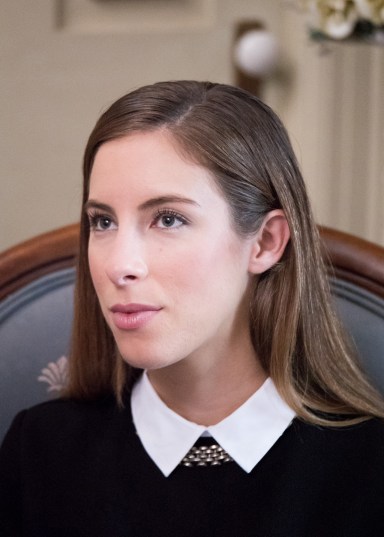
Andrea Mereles Gonzalez
Director Roberto Escamilla & Cinematographer Andrea Mereles Gonzalez

For the past five years cinematographer Andrea Gonzalez Mereles has been using her unparalleled skill behind the lens to create captivating visual stories for a plethora of films and television series.

Originally from Mexico City, Mereles has made a name for herself both at home, as well as in the U.S., due to her powerful work as the cinematographer behind films such as Roberto Escamilla’s (The One Who Couldn’t Love, Passion and Power) 2016 drama Changes, Bo-You Niou’s (Manners of Dying) drama The 12th Stare starring Christine Kellogg-Darrin (Shameless, The Neighbours) and many more.

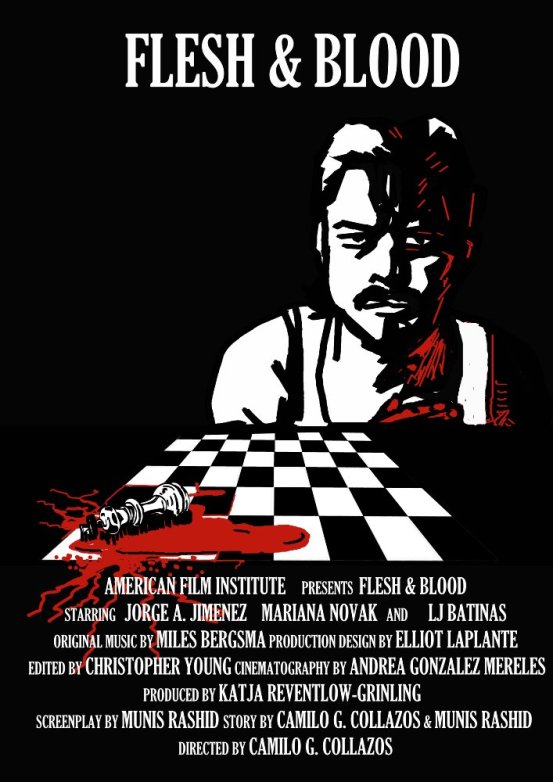
Mereles recently wrapped production on Camilo Collazos’ riveting 2017 drama Flesh & Blood starring multi-award winning actor Jorge A. Jimenez (Hermoso Silencio, Machete Kills), L.J. Batinas (Hawaii Five-O, Black Jesus) and Mariana Novak (Rose Colored, The Moleskin Diary).

Flesh & Blood revolves largely around the life of Rodrigo, played by Jimenez, an inmate who makes a deal to testify against a dangerous prisoner named Luis in exchange for early release via deportation.

While the deal includes an offer of witness protection for Rodrigo’s estranged daughter Laura, as she would most likely be targeted after Luis and his men on the outside find out what her father’s done, she’s far from a willing participant. Her reluctance puts Rodrigo in a tricky situation where he must try to convince a daughter he barely knows to give up her normal life in order to save them both before Luis finds out the extent of Rodrigo’s betrayal.

As the cinematographer of the film, Mereles’ brilliant use of lighting,  camera placement and methodical lens choices were tantamount to drawing audiences into the film and driving home the emotional aspects of Rodrigo’s story.

Flesh and Blood
Poster for the film “Flesh & Blood”

“We decided that we wanted the film to feel very personal and close to Rodrigo. This was his story and we were determined to capture this in the numerous visual aspects,” explains Mereles.

“Given that this was Rodrigo’s story I wanted the spectator to feel he was seeing the world through his eyes. This required a careful planning around camera placement, deliberated camera movement motivated by the main character’s internal and external motion and the use of anamorphic lenses.”

Through her lighting choices alone it’s easy to see that Mereles is an incredibly skilled cinematographer who knows exactly how to create a visual story that touches viewers on multiple levels and heightens the impact of the narrative unfolding on the screen. Using darker lighting to portray the gloomy nature of Rodrigo’s life in prison, and then using natural sunlight to brighten up the scenes and visually express the hope Rodrigo feels where his daughter Laura appears, Mereles juxtaposition of light and dark within the film emphasizes the dichotomy between Rodrigo’s current experience and the possibility of a brighter future.

“[Andrea’s] acute sensibilities with the film medium facilitate the understanding of the point of view and solidify the lives of the characters by enhancing the atmosphere around their universe or emphasizing their intentions,” explains Flesh & Blood director Camilo Collazos.

“She is a DP who is always prepared and is very accurate when reading the intentions of the voice guiding the storytelling. Her vision carries a charismatic, distinctive signature that allows the viewer to be in with the story and its world.”

The film, which premiered at the Mexican Embassy in Los Angeles as part of the Mexican Filmmakers Showcase on July 20th, 2017, was shot primarily at the Sybil Brand Institute in Los Angeles, the same location used for other hits films such as Blow, 21 Grams, Legally Blonde and Malcolm X.

Andrea Gonzalez Mereles
Cinematographer Andrea Gonzalez Mereles

Mereles, whose name was already well-known back home in Mexico by the time she moved to the U.S., has made extraordinary strides in Hollywood over the last few years thanks to her inimitable skill behind the lens and her unique creative vision. While she knew early on in life that she would go on to work in the film industry, what sparked her career as a cinematographer was when she was on set for the first time working as a camera assistant.

“I knew I wanted to be a filmmaker. My intention was to become a director and a screenwriter, but the first time I was on a movie set I realized that what I wanted to tell a story visually,” explains Mereles.

“For me cinematography means telling stories as a whole but also with every image. I’m passionate about constructing stories through lighting, composition and movement and creating emotions within the spectator. Cinematography is a journey I started a long time ago. It is a journey to tell stories but it’s also a journey to find answers; trying to understand what it means to be human.”

After the firm realization that cinematography was the one field that would fulfill her creative passions and utilize her wide range of talents, Mereles went to work honing her skills in the artform at some of the world’s most prestigious schools. Shortly after completing Maine Media Workshops’ cinematography residency, Mereles went on to complete her master’s degree in cinematography at the American Film Institute, a highly competitive conservatory program that boasts an impressive alumni list including filmmakers such as three-time Oscar nominee John Cassavetes, four-time Golden Globe Award nominee David Lynch, Oscar nominee Darren Aronofsky and many more household names. In 2014 Mereles was selected as a Fullbright Scholar, an international merit-based scholarship program that gives a limited number of individuals the opportunity to study abroad.

While Mereles’ training definitely boosted her technical skill as a cinematographer, it’s her innate creative vision that has led her to become a sought after figure in her field internationally.

Another one of Mereles notable film works as a cinematographer in 2017 was multi-award winning director Christopher de las Alas’ (For Ofelia, Coffee Run) adventure film Great Again, which premiered during the LA Film Festival’s Project Involve Showcase. Starring Jonah Aimz (Awaken, Instacurity), Tasha Dixon (NCIS, Guiding Light) and Jeff Hoffmaster (True Blood, I’m With the Band), Great Again follows Frank (Jeff Hoffmaster), a homeless main on a mission for vengeance against a group of people who, immersed in their own selfish problems, refuse to buy him a bottle of mouthwash at a local convenience store. After being mocked and pushed to the brink, Frank decides to play a little prank on those who snuffed him by announcing that he won the lottery and is ready to share his winning with them; but when they find out he’s lying, they don’t take it lightly.

Through her use of specific angles, shot pacing and lighting, Mereles once again nailed the mark with her seasoned skill as the cinematographer of the film to draw viewers into the emotional aspects of the main character’s journey.

She explains, “My main goal was to visually represent the hecticness that Frank undergoes after lying about winning the lottery.  The director wanted to visually make a difference between the before and after of the winning of the lottery. To achieve this, the moment when Frank wins the lottery was shot using a zolly, which is a dolly in combination with a zoom. The before was characterized by a static camera and the after with hectic zooms ins, pans and handheld camera.”

As a cinematographer, Andrea Gonzalez Mereles has carved out a prominent position for herself internationally as an artist behind the lens whose creative capacity and keen vision have given way to both the commercial success and emotional impact of a wide range of films. Up next for Mereles is the thriller film Plain Fiction directed by Cyrus Duff, which is due out in 2018.

THE CREATIVE CONSCIENCE OF VISHNU PERUMAL

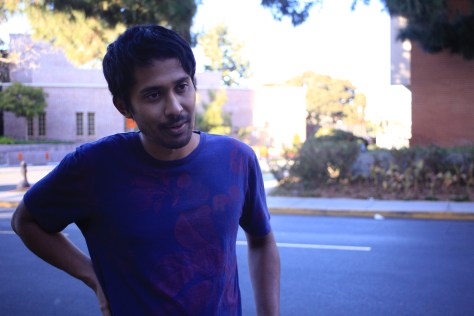
Storytelling has long been about taking one’s personal voyage and relating it in a way that almost everyone can connect to it. While Hollywood has been accused of homogenizing the film industry, some artists who convey these stories are attempting to give the public a glimpse into the lives of others who differ from the majority. It’s ironic that people are often apprehensive to accept differences in their own lives but are attracted to films which display those who possess this trait. Editor Vishnu Perumal learned to be comfortable with differences early in his life. This fact combined with his fascination of film laid out his path from childhood. He has pursued his vocation with fervor for as long as he can remember; the fruits of this labor have been numerous award-winning films and the respect of the Hollywood community. This is perhaps so apparent because Perumal is an artist who seeks out projects which he connects to emotionally and believes in passionately. It’s easy to chase fame or a fat paycheck but pursuing projects which make a clear and resonant statement about society’s potential to aid or hinder is often more challenging and unsettling. For someone like Vishnu, it is also a requirement.

Vishnu relates to being different. He grew up in a situation where it was expected that both himself and others would not have the same exact background and experience. This allowed him to have a perspective different from many people. Regardless of their point of origin, most people are comfortable and content being insulated from those who are different. Contemplating the motivations and life experiences of people who have had it worse than you or who have faced greater adversity is unsettling. For Vishnu, it has been a call to action; one which he has used his most important resource to empower…the role of editor.

Differing perspectives and diversity is an inherent part of this editor’s makeup. The son of an Indian father and an Indonesian mother, Perumal experienced different cultures in his own home and in his surroundings from an early age. He explains, “I moved a lot when I was growing up due to my father’s work. I was born in a small beach town in Malaysia called Kuantan. Later, our family moved to Jakarta, Indonesia. Jakarta is a really vibrant energetic city with a lot of culture. It’s big, bold, noisy, and colorful with great food and very friendly people. Growing up there, I remember it being slightly chaotic, especially the traffic. It was a large developing city that was growing rapidly and changing every year. From there, I moved to Singapore where I spent much of my Primary to early secondary school years. Singapore was the total opposite of Jakarta because it was extremely orderly, clean, and organized. I was astounded by how clean Singapore was and I remember trying to wrap my mind around the fact that it doesn’t have traffic jams. Like Jakarta however, Singapore was a vibrant city with a whole lot of mixing of cultures. Both places were located close to the beach so I would spend most of my weekends there. It was natural to me to witness different types of people enjoying the same activities; I never questioned it.”

Watching his father edit his own family movies on a Sony editing deck interested Vishnu in the process, soon to be followed by his interest in the work of Walter Murch (the editor of such films like Apocalypse Now and The Godfather). Murch inspired an approach to the possibilities of editing for Vishnu who recalls, “I was lucky enough to sit in on a guest lecture of his where he talked about the philosophy of transitions and editing. What I really loved about his lecture was that he wasn’t focused on any technical aspect, formula, or technique but rather he talked about the philosophy behind editing concepts and how they relate to the world. It was a lecture that sometimes delved into the spiritual and metaphysical and it made me look at editing in a whole new light.”

Carrying the torch of this idea for his generation, Perumal’s many award-winning productions give evidence that this editor is focused on making a statement with film. As with many of the most respected filmmakers, Vishnu’s work often displays the more unpleasant sides of humanity in hopes that the public will contemplate the plight of those who suffer. “Violet Hour” is the story of Tom Freed, a young black man who is at odds with what he feels is natural in terms of his own sexuality and what society deems acceptable. The film is a powerful statement about the psychological effects of what others use to subjugate those who differ from their own beliefs, opinions, and actions. Freed goes so far as to undergo conversion therapy in an attempt to conform but in the end takes action with a dire resolution. At the heart of the film is the question “What freedoms does our society truly offer?”; a sobering query. Perumal worked with director Mark Allen to create the conflict that the main character feels in his heart and communicate this in the timing and actions onscreen. Allen declares, “Working alongside Vishnu throughout the duration of the project was a wonderful experience. It is rare to find an editor with as much thoughtfulness, support, and passion. What he demonstrated for the project was evident in the final product and success of the film. Vishnu’s emphasis on storytelling provided the film with a powerful tone and ending. It was really pleasant to discover how easy it is to work with him. Because the story and the style of the film according to my vision was so specific and different, I was afraid that it would have taken considerable effort and time just to explain and push for the vision I intended. Fortunately, Vishnu understood and supported my vision 100% and fought to preserve that vision. He not only was able to maintain my vision for the film, but he was also able to incorporate his own creative ideas into the product, helping to brand the film as a creation of his own.” “Violet Hour” received a nomination at The San Francisco Black Film Festival for Best Film as well as an award for Best Narrative Short at the Princeton Film Festival.

Exploring the unsettling and frightening crime of sex trafficking, Vishnu edited the film “Only Light.” An increasingly widespread occurrence across many parts of the world, including the US, sex trafficking is something that often goes unnoticed and unrecognized in many communities, which is exactly the message communicated in “Only Light.” The two lead characters in the film are young women of the same age. Zora is a rebellious teen living in California who has a crush on her older male neighbor. Zora’s parents are wary of this, as well they should be. This neighbor has a girl named Laeticia locked up as a sex slave in his basement. Laeticia was kidnapped from her village in the Congo and transported to California where she moves in and out of lucidity in the basement. When she is ultimately freed by Zora at the end we sadly realize that this event is only a wishful dream that Laeticia has created in her own mind as she is still a prisoner. The film is highly disturbing and unfortunately somewhat based in reality. Perumal was eager to work on this film as he felt it was a story that needed to be displayed to viewers. “Only Light” was recognized at the One Lens Film Festival, Blackstar Film Festival, and L.A. Indie Film Festival. Zachary Skipp (Producer of “Only Light”) remarks, “Only Light was a film with many technical aspects (shooting in different mediums, various effects, etc.) that an average editor would find daunting to work with. Fortunately, we had an editor who was able to integrate himself into the many creative aspects of the post-production process, making him adaptable in almost any project he undertakes. I hired Vishnu as an Editor for ‘Only Light’ after seeing what he had done on previous films. His ability to understand and work with abstract and experimental forms of storytelling and mold them into a cohesive story is one of the many reasons why I brought him onto the project. Vishnu was deeply involved and began working early on in the project, starting in pre-production. For example: there were some effects and stylistic transitions that we wanted to accomplish, and Vishnu was very helpful in helping us figure out how to achieve the desired result, before heading into production.”

It seems contradictory that followers and leaders of religions become upset when religious leaders who are highly flawed are depicted or revealed for their baleful nature. One would think that these “believers” would want those who are not true to their teaching to be “cast into the light.” This seems the most benevolent thing to do in the parameters of their faith. Vishnu used his editing talents on a fictionalized tale that used actual footage and inspiration from the Reverend Jim Jones entitled “Devil I Know.” The disturbing life and events of Jones are well documented but “Devil I Know” creates a storyline inspired by what we know of his behavior to give a firsthand feeling of what it may have been like to be around him. Known for the People’s Temple mass suicide (in Jonestown, Guyana), his infidelities, and other abuses of power, the film takes an almost documentary style approach to portraying this complex and tragic figure. A vital contribution of Vishnu’s on this film was to edit and present the story out of chronological order; a method used to confuse the audience as well as affirm the idea that things are not always as they seem.

_MG_8622 (1)

The common thread of all these films is that they reveal to the audience that we should not be so assured that we understand the full truth. Well-known figures or private individuals may be dealing with many factors that we are unaware of. They may act in nefarious ways or society as a group may be overlooking the struggles they deal with. There is no way for anyone to truly know but artists and filmmakers like Vishnu Perumal keep us questioning the intent and the plight of others who are different from us. In doing this, they provide a service that few can…a conscience.

Actress Claire Stollery tells her story in award-winning film ‘Who is Hannah’

Who_Is_Hannah--Day_1--LowRes--33
Claire Stollery as Hannah in Who is Hannah

Claire Stollery was never interested in anything other than acting. As a child growing up in Calgary, she always had this one passion. As she grew and moved around Canada, what started out as a childhood dream started to become a reality. There is no doubt that Claire Stollery was meant to be an actress, and audiences everywhere know this every time they see her on the big and small screen.

As an actor, being vulnerable is pivotal to opening yourself up to a character. Connecting with the story and allowing your experiences to come through is vital when it comes to connecting with an audience. Stollery knows this well. She starred in the award-winning film Who is Hannah, that she also co-wrote, and allowed the events in her life to guide her character, creating a cathartic experience for the actress.

“This film was very close to me. I co-wrote it with a great comedian friend of mine, John Hastings. We wanted to collaborate and create a great dark comedy, but we didn’t know what we wanted to write about. One night after a show we were sitting in my cold car, a couple days before Christmas. I told him the story of how I had met my biological father in Los Angeles when I was 21. I found his number and left him a message, lying about my identity because I wasn’t sure he’d call me back if he knew who I was. In the end I came clean and we decided to meet up. When he arrived at the coffee shop, he ended up calling me while he was standing right beside me. We had no idea what each other looked like! It was like a meet-cute you’d see in a rom-com.  John couldn’t stop laughing of the horror and awkwardness of the situation. We decided then and there we would write a film exploring that scenario and what could go wrong when you don’t know what each other look like,” Stollery described.

Who is Hannah is the awkward and unlikely tale of how one girl meets her dead dad. Stollery plays Hannah, a role that was written with her in mind. Because she helped write the film, she already had the character’s voice inside her. Hannah is a girl who just wants to belong somewhere and know where she came from. She feels lost and incomplete because she’s never known the identity of her father – only known pieces from what her mother has told her. The problem is, she discovers everything her mother has told her about her father is the plot to Indiana Jones. When she finds out that her mother completely lied to her about her father’s identity and that he’s alive and lives in the next town, she has new hope for self-completion.

“I can’t really relate to Hannah’s feeling of incompleteness because I was lucky enough to have a dad growing up. My mom met my father who raised me when I was six months old. But even then, you always wonder what that other person is like. Are you like them? Do you look like them? There are always those thoughts at the back of your mind,” Stollery described. “Everyone wants to know where they come from. We want to know our history; it’s a universal desire. For those people who are searching for their identity, we wanted a film that let them know they are not alone. Since making the film I have had a lot of people write me or come up to me after screenings telling me about their experience or a friend’s experience of meeting a biological parent. There are a lot of those stories out there, but people don’t talk about them that often. There’s a lot of shame in having parents abandon their children. For the kid, it is a terrifying journey seeking out and meeting a parent for the very first time. You’ve imagined and built up this person your entire lifetime. There’s a lot of pressure for fantasy to match reality. It was important for John and me to write a film that finds the humour in such a bizarre but impactful moment in someone’s life.”

Behind The Scenes WIH
Behind the scenes of Who is Hannah

Because of Stollery’s deep understanding of her character, the film went on to do exceptionally well at many international film festivals. It was an Official Selection at The Atlantic Film Festival where it premiered last year, and then went on to be an Official Selection at The Hamilton Film Festival, The Toronto International Short Film Festival, Hollywood North Film Festival and The Toronto Independent Film Festival. At the Lakeshorts International Film Festival where it was also an Official Selection, Who is Hannah took home the Cinespace Jury’s Choice Award and the People’s Choice Award.

“When it finally premiered we were so happy people liked it and were laughing. Because we had been with it for so long, we had no idea if it was even funny anymore. And you start second guessing yourself and wondering, was it ever funny? Were we just delirious on set when we filmed it at 4 am?” said Stollery. “And it was amazing to receive the Jury’s Choice Award. They always have such talented and revered people on their jury, so their opinion meant a lot. I’m so tickled when anyone likes something I make. It was a great honour to receive it and even better feeling to receive the People’s Choice award. We didn’t know anyone at the screenings, and to have a room full of strangers resonate with your film was really a special moment for us. There really is nothing better than sitting in a theatre and listening to people laugh at something you wrote and eaves dropping on people saying good things about it afterwards.”

Part of what makes Stollery so good at what she does is her ability to improvise. Although this is sometimes not encouraged on set, the Director of Who is Hannah, Mark O’Brien, was all for it. He knew what Stollery was capable of, and knew what she could add to both the character and the film. His instincts were right.

“Claire is an extremely talented actress and writer. She’s a very open-minded artist who knows how to collaborate well, while at the same time making her work authentic and unique. She works hard, and that is a rarity in this business. There’s a lot of talk in the entertainment industry, but Claire goes out and gets it done. And really, that’s what you want most from someone you’re working with. And she does it well,” said O’Brien. “She’s a very natural actress, very real. Acting is a tough skill that can be improved through training, but I do believe that there must be some inherent talent in the person first. Claire has a foundation of incredible talent that will take her very far. Anyone who has the chance to work with her should count themselves lucky.”

It was more than just the story and character that Stollery could connect with, even the set meant something to her. They filmed in an old, abandoned farm house that the actress had actually grown up in, as well as a hotel that was the first place Stollery went to when she visited Toronto as a child.

“Even though the film is a comedy, it is rooted in real issues. There’s a fine line tonally with dark comedies. You don’t want to make it too comedic otherwise you lose the truth of the situations. But you don’t want to make it too dark, otherwise you lose the comedic release. It’s a balancing act doing those types of films” she said.

But the most important part of the process for Stollery was not the awards, accolades, or why she embarked on the project, it was what it turned into.

“Filming was therapeutic for me. I had just lost my father who raised me a couple years prior, we were filming in the house I grew up in, the story was loosely based on my experience with meeting my biological father. And I realized I never really talked about it with my father who raised me. I regret that I didn’t check in with him more about the whole situation and considered his feelings more. But he was great about it and knew it was something I needed to do. He didn’t interfere. Not to mention my mother wasn’t too happy I was making a film about a man who had left us, even though it was very loosely inspired by him. But that was how she saw it. So it’s safe to say there were a lot of emotions surrounding the project!” Stollery concluded.

Audiences can see Who Is Hannah at the end of this year on CBC.

ZHENG HUANG PRODUCES AN AWARD-WINNING FILM FROM THE HEART OF HIS FAMILY

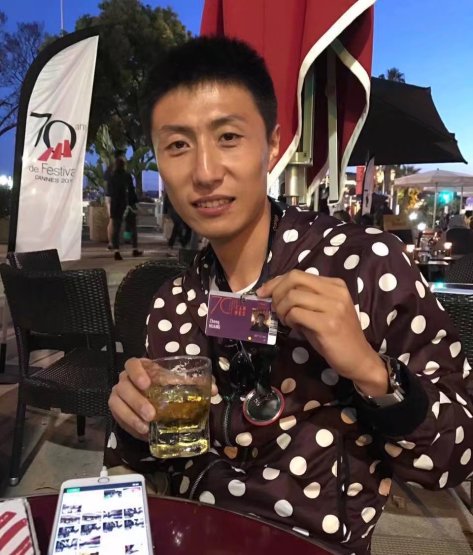
Of all the qualities that make up an artist, the most essential is heart. While knowledge, vision, and technical expertise are beneficial, passion is not to be underestimated when it comes to the tenacious mindset that drives an artist of almost any medium. Producer Zheng Huang’s connection to the location and story of the film “Lost” was deeply embedded in his heart. While he wore a multitude of hats for “Lost” (including writer and director) it was the role of producer which proved most taxing. It was Huang’s excellence as a producer that also led this film to such immense praise and eventually a spot at the world famous Cannes Film Festival. The film is epic, adventurous, and gripping for many reasons. Zheng was driven to create the film as a tribute and connection to his family’s homeland and to expose its beauty to the world. The lush grasslands, the exotic characters, and the endearing portrayal by the cast all appear to originate from the story which this producer was inspired to write, and was the only person capable of manifesting onscreen. “Lost” truly is a piece of Zheng Huang personified for all to see.

psb (1)


“Lost” was Zheng’s first high budget film to produce and he definitely felt the responsibility. Whether it was fear or passion, the fuel that pushed him towards excellence was the appropriate one. After the completion of the script, he flew to China and did location scouting in Inner Mongolia. It was an intensely emotional moment for him. Huang’s grandfather had died on the grasslands of Inner Mongolia and it was this which inspired the story. Zheng wanted to be in the grasslands; to feel them and to expose this feeling to the rest of the world in film. For two years he had seen the terrain, the people, and the story in his mind; a mixture of Chinese and American culture and individuals…and now he was seeing the nebulous form start to solidify in front of his eyes. While the story of “Lost” is not derived from his family, Huang understood that the feeling of the location and people who carry the spirit of both his grandfather’s life and his own. The film tells of an American boy named Michael who has lost his mother in Inner Mongolia. Mr. Wu, a native Mongolian, saved Michael and decides to adopt him. Mr. Wu teaches him Chinese and Mongolia culture. Michael’s real mom (Mary) searches for him for quite some time. Michael knows the truth that Mr. Wu hides this from him and Mary. Michael is angry but struggles with the decision to return to his birth family or not. While many films give a clear and imposed decision about situations like this, “Lost” accurately depicts the conflict that can be a part of real life when considering to whom have we bonded most strongly. Just as importantly, the story and the stunning visuals of this film portray the people and the culture of Inner Mongolia not as “others” but as those who share precisely the same emotions, virtues, and faults as those of any group of people on the planet, meaning that Zheng perfectly achieved the goal of his film. The process of creating this onscreen was earned.

E8162276-2944-4592-A15D-6F80DBF33E92

Every producer knows the challenging points for their project. Successfully and positively utilizing these is a badge of honor as well as an accomplishment for any professional in the field. For “Lost” the can easily be defined as: kids, animals, and nature. Due to the nature of the people in this part of the world, the actors needed to be able to ride horses. This is not exactly a skill that the majority of individuals possess these days. While some actors take quickly and easily to it, it only takes one intimidated thespian to derail the schedule. A dutiful producer, Huang prepared a week of riding lessons in advance to the shoot. A couple of actors were never quite at ease with the situation (or the animals) which necessitated a restructuring of the shot list and even some “cheat” shots.

Zheng admits that this film was his first time working with a child actor. The final performance by this youth in the film is exceptional but the producer concedes that it wasn’t exactly the same as dealing with most actors in his experience. He recalls, “He was great and is a very talented actor. I think it’s wrong to expect a young actor to have the same perspective as an adult. It was actually kind of miserable for part of the shoot, it was hot and he was being asked to do things that were difficult…I can completely understand his state of mind. Having been a young boy myself once I knew that there’s not much that pizza and some toys can’t fix when it comes to attitude. Regardless of the actor I’m working with, I find that if I can put myself in their shoes I can quickly find the proper motivation for them.”

One of the most striking traits of “Lost” is the visual component of the film. The beauty of the Inner Mongolian grasslands is as epic as any classic western from Hollywood’s heyday. A shrewd producer who is always cognizant of a film’s budget, Huang had his location manager contact his best friend (a herdsman named A De) about using his private 8,000-acre meadow. A De was so interested in the film being made that he offered the location up free of charge. As a thank you, Zheng gave him a supporting role in the film. In an effort to keep production value high and cost low, he also hired a crew from nearby Beijing (four hours away from the filming location). Casting locals rounded out this international production and provided the authenticity that Huang had envisioned. Since his early vision, it was these very people that he wanted to be seen in the film.

DT8A1862

“Lost” was much more than a film to Zheng. It was an Odyssey that connected him with the previous generations of his family. Through his talent, he was able to communicate to the rest of the world, via film, what it feels like to feel both afraid and comforted in a part of the world that few Westerners will ever see. It’s by seeing these types of stories that we realize how similar all people are at their core. The literal deluge of awards that “Lost” has received in addition to being an Official Selection of the Cannes Film Festival (2017 American Film Award, Award of Merit at the 2017 Best Shorts Competition, Official Selection of the Hollywood International Moving Pictures Film Festival, Multiple Platinum Awards at the International Independent Film Awards, and numerous others) is an assurance that the beauty of this film has touched many people in many different lands. While producer is only one of the roles which Zheng Huang performed for this film, it is likely the most applicable to his deep investment in it.

psb

RAFAEL THOMASETO BRINGS HIS HOLLYWOOD INSPIRATION FULL CIRCLE

Making a film can be like going on vacation. No, not in the sense that you relax but rather in the fact that you travel for different experiences. You might travel to Paris to walk the Champs- Elysees and attend the Louvre or you might go to Cabo Wabo to drink tequila and kite surf. Filmmakers are people like the rest of us and they are prone to experience making different genres of productions; it allows them to keep things fresh and interesting throughout their career. While producer Rafael Thomaseto has made many thoughtful and heart-wrenching films, he reveled in the making of “Inherent Greed” with its selfish and even maniacal characters. Like a Disneyland thrill ride for both the audience and those involved in making this production, it displayed some of the darker sides of humanity, scaring you while you still enjoy the break from reality.

Film has often been the intersection of humanity for many of us. While we can relate to the characters in many ways, they often seem willing to exceed the barriers that society or reality imposes on itself. For Thomaseto who grew up in Brazil, the lines between safety and danger were always clear. His family’s residence in a gated community allowed him the safety of a “normal” childhood but he was always aware that there were others who were not afforded this benefit. This perspective is a stark contrast to the main characters in “Inherent Greed”, the Duboff brothers. These siblings have been raised in a highly affluent family and been given every opportunity, yet they want more. While they are driven to crime by the thought of increasing wealth, Thomaseto was inspired to commit a small infraction by a film poster and Woody Allen. He explains, “When I was 13, I had an experience that shaped my vision of the cinema. In São Paulo, every Friday my mother would pick up me and my sister from school and we would meet my dad at a mall in the city for lunch and then an afternoon of shopping. I hated spending hours watching them spend money on clothes so I would immerse myself into movies. One particular time I was in line to buy popcorn and had already gotten my tickets to see a romantic comedy, but I noticed the poster for a movie called Match Point. For some reason this image stood out to me. I left the line and went to check the times of the movie and realized it was PG16. I didn’t care. I pretended I was going to the movie I had tickets for and entered a different room. I sat down in the first row and watched Match Point, written and directed by Woody Allen. It’s still my favorite movie and Woody became my favorite director and inspiration.”

“Inherent Greed” is a complex story of two brothers who have been raised with privilege and wealth but return this favor by murdering their own parents in hopes of seizing the family fortune. The main focus of the story concerns whether the two brothers can get away with their crime while avoiding public or legal scrutiny. While the opulence of the family in the movie is displayed via onscreen locations filmed in mansions and a ranch in Topanga Canyon, the independent film sized budget belies the images onscreen. Thomaseto confirms, “Smaller films often have very unique and original ideas and stories, which makes them very interesting. One of the greatest challenges for a producer is that these films don’t come with the financial backing of a big studio. I got hired only a few days before the official picture, and I was at the time working on the postproduction of a commercial for a brand called Clearasil. The budget of the commercial was probably 100 times bigger than what we had for “Inherent Greed.” Organization is a key element to making sure a production happens. Keeping a constant conversation within all the main and key roles on the project, such as executive producer, producer, director, cinematographer is essential. These are creative people; when allowed to use their talents…sometimes the best results have nothing to do with the financial component.” This perspective is part of what fueled Thomaseto’s documentary “Cycles of Existence” which attempts to understand how the homeless community finds happiness even though they have essentially no material possessions. The idea itself is diametrically opposed to the main characters of “Inherent Greed.”

Retribution, Karma, call it what you like…the Duboff brothers get what’s coming to them in a number of ways at the end of the film (yes, you’ll have to watch it yourself for the details). The concept of rewards happens for those behind the camera as well as those on camera. Many of the films Rafael has produced have appeared at the world famous Cannes Film Festival, including “Inherent Greed.” He relates, “Cannes has always been my favorite film festival and I have always been obsessed with the films that come out of there. Having the films I’ve worked on be a part of it gives me more strength and self-esteem to keep fighting in the entertainment industry for great work. Working in film isn’t as glamorous as people think but attending a festival like this is a step up for everyone’s career. It brings more visibility to the work of the film and the talents involved. You can enjoy the benefits of being a filmmaker, which means sitting down at a meeting during the festival and having rose wine surrounded by heads of production of the main film studios in the world. A sense of community and affirmation is the real payoff in this situation.” Louie Torrellas (CEO of Ambitious Media Productions) declares, “Any person who works in the film industry is highly aware of how difficult and overwhelming shooting a project can be. Being the head of a production, gives you even more responsibility and in my point of view, the producer is the boss and the most important role on a movie. Rafael’s work during the production of the film ‘Inherent Greed’ was nothing short of amazing. One of the executive producers on the film recommended him to my company, Ambitious Media (production company for the film). We hired him and he instantly took over the project and made it work. Rafael exhibits a proficiency and tenacity rarely seen in producers these days. I’m continually reminded what a genius move it was to hire him. The positive reactions to this film vet this decision in spades.”

Los Angeles Brazilian Film Festival

From Bollywood to Hollywood: Actress Karishma Bhandari

Karishma Bhandari
Actress Karishma Bhandari shot by John Clark

Born and raised in East London, actress Karishma Bhandari first made her mark in the Bollywood film industry back in 2012 when she landed the starring role of Sita in Southbank Centre Goes Bollywood.

Aside from being a skilled actress with magnetic appeal on screen, Bhandari’s extensive dance training gave her an added edge over the hundreds of other hopefuls vying for the role. Though she was only 19 at the time, Bhandari had already spent several years perfecting her craft at home in London. Her outstanding performance in the film Southbank Centre Goes Bollywood brought her widespread attention and ultimately proved to be the catalyst for the successful career she has today.

Directed by Encounters International Film Festival Award winner Aneil Karia, who also earned  the Grand Jury Prize Award from the Utah Arts Festival for her 2014 film Tag, the comedic adventure film Southbank Centre Goes Bollywood was commissioned for the Alchemy Festival, the UK’s largest festival of South Asian culture. The film followed Bhandari’s character Sita, Sheila played by Gurkiran Kaur (Oxasians, London Kahanis) and Rita played by Roshni Rathore (80’s Vampire Flick, Love Type D), three dance teachers at a local community centre who make it their mission to keep the centre open after a wealthy developer buys the property with the intention of closing it down in order to build a hotel. Chalk full of lively Bollywood dance routines, Southbank Centre Goes Bollywood’s endearing story about three young women battling the odds and fighting for what they believe in was a hit with viewers.

Karishma Bhandari
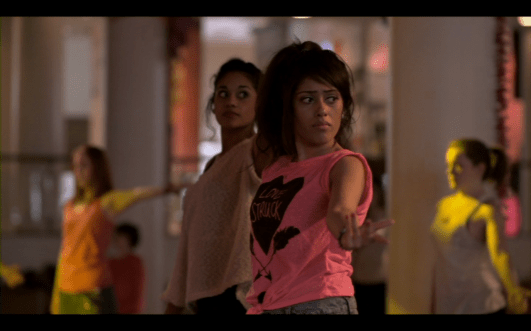
Still of Karishma Bhandari in pink in “Southbank Centre Goes Bollywood”

The first insight into the dynamic talent actress Karishma Bhandari has become known for, Southbank Centre Goes Bollywood proved Bhandari’s ability to portray a character who was the polar opposite of herself– a necessary skill for any true actor, and one that has undoubtedly led her to land leading roles in a wide range of films since.

Director Aneil Karia says, “Karishma’s passion is one thing that makes her stand out from the crowd, as well as her striking look and her warmth. It was a challenging, nuanced role in the film and she delivered a wonderful performance.” 

In 2016 Bhandari’s international reputation got an even bigger boost when she landed a lead role as Geeta in the Bollywood feature film Club Dancer directed by B. Prasad. The film follows Ria played by Nisha Mavani, an Indian girl who moves to the city where she tells her parents she’s landed a respectable job, however she is really a dancer in a club.

When her parents come for a surprise visit and find a man at her house who they assume is her boyfriend, but is actually a criminal who sought refuge from the police the night before, they immediately want them to get married. The man quickly disappears, but Ria finds another man, Amit, who’s identical to him and negotiates a deal with him to pretend to be her boyfriend in exchange for money, which he needs for his sister’s wedding. Bhandari’s character Geeta comes into play as the man’s soon-to-be-wed sister, a key character in the plot who helps further the love story that eventually develops between Ria and Amit, who’s played by Rajbeer Singh (Who’s There?, Ishq Junoon: The Heat is On).

Karishma Bhandari
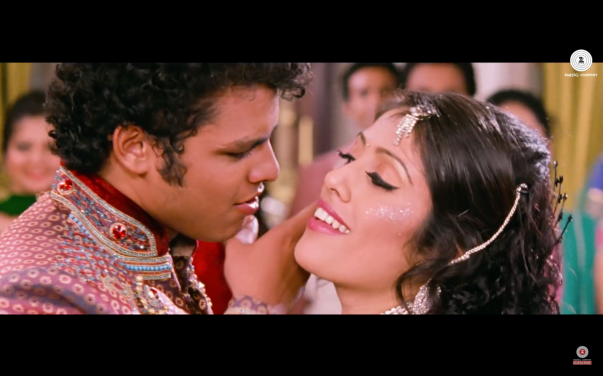
Still of Raja (left) and Karishma Bhandari (right) as Geeta in “Club Dancer”

In the film, which Bhandari traveled to India to shoot for several months, she acts alongside notable Bollywood stars such as Filmfare Award winner Shakti Kapoor (Hungama, Musafir, Raja Babu) and Stardust Award nominee Zarina Wahab (Vishwaroopam, My Name is Khan), as well as actress Judith Shekoni (The Twilight Saga Breaking Dawn Part 2, Ice, Ordinary Lies).

Although she was raised in London, Bhandari’s parents are originally from Punjab, India and she grew up speaking Punjabi– something that created a challenge for the actress as Club Dancer was made in Hindi. However, Bhandari trained diligently, learning a new language and adapting her accent for the role, and she seamlessly delivered her performance as if Hindi was her mother tongue.

One of the highlights of Bhandari’s performance as Geeta came towards the end of the film when she performed an intricate Bollywood dance routine, one that few other actresses could have pulled off with the same level of grace and style she brings to the screen.

Bhandari admits, “I had already had Bollywood dance training, but to do it on a massive set in front of a lot of people was challenging… We had rehearsals every day for about two weeks and when it came time for the shoot date I had the heaviest outfit to wear. It was a wedding song and I was literally covered in jewels, which made it difficult to dance, but I pushed through and made sure my movements were seen… the song was definitely the most memorable as it was amazing to see how it was edited together.”

Karishma Bhandari
Sill of Karishma Bhandari (center) surrounded by background actors in “Club Dancer”

Some of the other film credits Bhandari has become known for over the years include BAFTA nominee Jon Jones’ (Da Vinci’s Demons, Cold Feet) 2013 drama Lawless with National Television Award winner Suranne Jones (Doctor Foster), the Empire Award nominated comedy The Inbetweeners 2 with Simon Bird (Drunk History: UK, Friday Night Dinner) and James Buckley (Zapped, White Gold), Asko Pati’s (Love Station, Super Micchua) romantic action film Aashiqui: True Love with Ankush Hazra (Romeo Vs Juliet), the 2016 sci-fi drama The Conversations with Daniella Down (The Wedding Party), and more.

Having already made a name for herself in the UK and Bollywood, actress Karishma Bhandari is currently planning to make her move to the states where she will undoubtedly be in hot demand in Hollywood as well. Bhandari is currently in production with the upcoming series The Corner Shop where she plays the lead role of Maleeka, as well as the series Emergency: LA where she plays Nurse Persis Chadra. A supremely talented actress, we have no doubt that we will be seeing a whole lot more of Karishma Bhandari in the future!

Producer Melina Tupa talks upcoming documentary ‘Slaves Among Us’

Melina Tupa always has always had two passions: film and journalism. Growing up, it never really occurred to her that there was a way to combine both of these things. Then, one fateful day, she had an epiphany that changed her life. She could be a documentary filmmaker. Being a journalist, she believes, gives her an extra responsibility as a film producer to pursue stories that are of public interest and that will help the communities she lives in. Since coming to that realization, Tupa has been committed to making impactful documentary films, and that is why she is so sought-after around the world for what she does.

Over the past few years, Tupa has delivered hard-hitting documentaries that share truths many are unaware of or afraid to talk about. When producing the PBS Frontline film Rape on the Night Shift, audiences everywhere became aware of the horrifying stories of many janitorial workers who have dealt with sexual assault. With her film The Search, she told the story of a grandmother’s search for her long-lost grandchild, which dives into the Argentinean “Dirty War.” All who work alongside Tupa are not only impressed, but also inspired by her commitment to her work.

“I had the honor of being a Consulting Producer with Melina on her documentary The Search. It was a pleasure working with Melina: she’s smart, driven, tenacious, creative, and yet is open to different perspectives and ideas that are not her own, which means that she is also confident. What makes Melina good, but great is a better word, is that she always has a big vision for her work,” said Director and Producer Spencer Nakasako.

Soon, audiences will once again have the chance to see Tupa’s formidable producing abilities in the upcoming Investigative Reporting Program (IRP) film Slaves Among Us. The documentary will expose the many layers of human trafficking, from the recruiter in the home country to the smuggler, trafficker and subcontractor that make it possible for major corporations to profit from forced labor in the United States. The documentary will tell the story of a group of teens from Guatemala who, with the inadvertent aid of the American government, fall into the hands of a criminal enterprise. This investigation will show who makes money off such victims and how the American consumer benefits from their mistreatment.

“I wanted to work on this project because I believed this was a very important story that needed to be widely known by the audience. The fact that in 2017 we still have forced labor is outrageous,” said Tupa.

Tupa was approached to work on Slaves Among Us after her success with the Investigative Reporting Program on the documentary Rape on the Night Shift. The producers of the documentary knew she had a very good reputation and she had an asset that was key to work on the field: she is bilingual in Spanish and most of the characters on this story are Spanish-speaking individuals. As a field producer, this was vital.

“I liked that I had direct contact with the sources of the story. I did old school reporting: just knocking on people’s doors and asking what they have seen or heard about the case. I was able to get to know the community I was reporting on thoroughly. And I was also able to gain the character’s trust. A lot of them are undocumented immigrants and many times they are afraid of telling wrongdoings because they are afraid of the retaliation they might get,” Tupa described.

Working in Ohio, Tupa reported on the trailer park where Guatemalans (adults and minors) trafficked to the United States were living. She was able to conduct interviews with more than thirty individuals there. She was able to secure three interviews (one in shadow, two full face) where the sources confirmed the story about the trafficking scheme she was after. She was also able to establish a connection with a very important source who had worked with the main characters of the story. This led to finding and securing and exclusive interview with one of the victims of labor trafficking.

Back at Investigative Reporting Program office, she worked as a Researcher. She found archival videos, photos and newspapers on the DeCoster Egg Farm violations, unaccompanied children entering the United States across the border, egg industry facilities, and the case of immigrant minors working on an egg farm. This information was pivotal to illustrate the story.

“I believe it is important to tell this story because nobody should be living in slave conditions in 2017. It’s important to let people know this is happening so this could result in a change of policy, for example, in unaccompanied minors entering the United States or for the poultry industry to have highest safety standards for its employees,” said Tupa.

Slaves Among Us is expected to be released in 2019. Based on Tupa’s track record, audiences can expect an outstanding film once again.


Photo by Vanessa Arango Garcia

Writer Guilherme Ribeiro has always aimed to make a difference in society

Guilherme Ribeiro has been writing since he was just a child. Growing up in Rio de Janeiro, Brazil, his marks in school were always best in the subjects of Portuguese, History and Geography, all writing based, constantly impressing his teachers with his compositions and use of words. It was always easier for him to write about something or draw a cartoon character rather than trying things in math or the sciences. Even at a young age, writing was his passion, and after getting his first computer at the age of eight, he started developing both his writing and online savvy. It was therefore a natural progression for him to eventually become an online content writer, and now he is one of Brazil’s best.

Ribeiro has impressed many with his writing in many mediums and genres. He has written news articles, travel blogs, and television documentaries. He has helped build up websites and has impressive social media knowledge. His work on the new music project Welocalize, as well as Mastercard Priceless Rio, Toxic Rio, and Globo TV network, just a few of the highlights of his esteemed career.

“I can see myself now in a highlight moment of my career. I found my way on writing about entertainment, music and content for e-commerce and I really believe that’s the way conventional writers will renew themselves and find another alternative to make money and get in touch with readers. I’m working for important clients, sometimes signing my name on articles, others just working with content editing, and creative input for online stores and apps,” said Ribeiro.

Before getting to this point, however, Ribeiro worked to earn the reputation he now has. Part of this involved his work with TV PUC and his award-winning show. The TV show Paternidade Ausente, Histórias Incompletas revealed an important issue for the Brazilian society and could open a discussion about paternity.

“Guilherme had good writing skills that could improve his journalistic knowledge during his time at TV PUC. He participated as a reporter in the most awarded TV show in TV PUC, so was an overall good and enriching experience,” said Carmen Petit, Ribeiro’s coordinator during his time at TV PUC.

According to the Brazilian Institute of Geography and Estatistic (IBGE), about 9 per cent of children born in 2008 were not registered. The following year, the Brazilian government undertook to zero the number of sub-registrations. They occur when a child is born and does not have the birth certificate made in the same year or within three months of the following year. The distance between the registries and the houses, a common problem in regions of North-Northeastern Brazil, helps to explain the occurrence of sub-registries. Another reason is the lack of knowledge of the free document. In addition, many children are late registered by the mother’s shame in assuming the father’s omission. Of every four birth certificates registered in the country, one does not have the father’s name. The percentage was estimated by the University of Brasilia (UnB), which crossed data of one hundred and eighty-three thousand certificates of notaries in the city and compared them with IBGE figures on children outside the marriage. Paternidade Ausente, Histórias Incompletas speaks about paternal recognition, paternity investigation, and the relationship between parents and children.

“This is such an important subject almost not explored by Brazilian media. When it was released, I was selected by my boss to be the reporter.  I was one of the producers and reporters, and we made the show from scratch, which was a huge thing for me at the time,” said Ribeiro. “We got so many good results. This TV show was the most awarded show in the history of TV PUC and I could believe I had future as a writer at this time. I learned a lot from my bosses and I wanted to use my skills and desire to make a difference and to create a good content for our society.”

As the reporter and producer of the TV show, Ribeiro was responsible for finding characters, collecting data from institutes, universities, doing the research, and helping to find the best lead for this compelling story. He wrote the script along with another reporter while being supervised by an editor chief. Content was aired by TV PUC in Pay TV, for educational and social communication purposes. The show is still available online, on the TV PUC website.

“When the show started winning awards, I felt I would have a promising future as a writer. We currently have four awards, two of them from a respectful academy for feature films in Brazil, Gramado Film Festival. It was such a pleasure to travel to this small town in the South part of the country to receive two awards, the Best Report of Brazilian University Television and the Best Video of the whole category of Brazilian University Television, both in the 18th edition of Gramado Cine Vídeo Festival in 2010,” Ribeiro described.

Now, almost eight years later with many successful projects on his resume, that initial success from his time at TV PUC was the beginning of Ribeiro’s outstanding career. He has always shown not only a dedication, but a passion for what he does, making him the extraordinary writer he is today.

Photo: Márcia Antabi (left), Guilherme Ribeiro (center), and Mariana Moreno (right) working with TV PUC

International Entertainment, and the Talents that Leave us Buzzing….