All posts by pressva

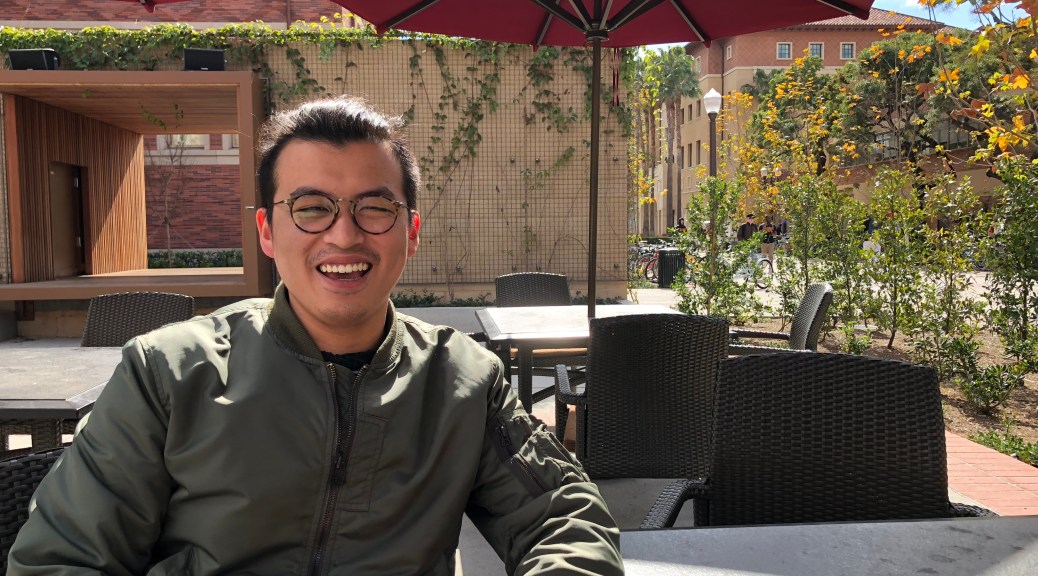
Samuel Lam captures heartbreak and comedy through song in new film

There is no greater feeling in the world for Samuel Lam than to hear his music played by other musicians. As a film composer, this is something he gets to experience on a regular basis, and why he loves what he does so much. Every musician adds their own personality into his music and interprets it differently in their own ways, and he believes that is the true artistry to his role, and every day he gets to work with musicians from all over the world.

Throughout his esteemed career, Lam has shown why he is such a renowned composer and orchestrator in China. With celebrated projects like Crazy Alien, Who Lives My Life?, Delay of Game, and more under his belt, he has continuously shown the world what he is capable of, and he has many more plans to keep doing so. He is currently working on several exciting new projects, including Paramount’s Playing with Fire, starring John Cena, Judy Greer and Keegan-Michael Key.

Lam’s new film My Ex-Girlfriend is a Shovel will be having its official world premiere later this month at the Palm Springs International Shortfest on June 21st, 2019. It is also an Official Selection in numerous film festivals, such as the Montana Film Festival, Calgary International Film Festival, Reel Shorts Film Festival, Creative Artist Agency Moebius 3, and the Bogotá Short Film Festival so far, with many more expected to come later this year.

“I am really glad that this film can reach out to so many audiences. It is a truly unique story, and I hope the audience will not only have a good laugh, but also be moved by the story. That is the real reward,” said Lam.

My Ex-Girlfriend Is a Shovel tells the compelling story of a woman named Coral after her girlfriend of three years breaks up with her. Coral soon realizes that her ex wasn’t actually a person, but was in fact a shovel. Ultimately, Coral must confront her shovel ex- girlfriend to be able to move on.

After Lam read the script, he was immediately interested and touched by it. The heart of the story is very relatable, and the director had his own unique way to tell the story.

“It is a story about a woman who is in love with a shovel, but the more honest answer is this is a film about the way we remember our exes, and the way we objectify the people who we loved and who have hurt us. So even though it is a comedy, it has an emotionally relatable side as well,” said Lam.

My Ex-Girlfriend is a Shovel obviously tells a very unique story, using an extreme and comedic way to portray the hardship of getting over a devastating breakup. The choice of music greatly affected the emotion and meaning conveyed by different scenes.

Dezi Gallegos, the director, had a very clear voice in his mind. Together, Lam and Gallegos spotted the film, which had already been filled with temporary music. They discussed the concept behind the film, and Lam pushed for the music to have a serious tone, even for the comedic parts, and maintain an indie feel within the score. For example, during a comedic montage sequence in the project, which is showing the memories of the main character with her girlfriend “Shovel”, instead of scoring the scene with comedy music, Lam took this scene very seriously, and scored the montage with a beautiful piano solo. As a result, not only do audiences have a good laugh during the screening because of the contrast, but they also have a bittersweet feeling from the momentous scene.

“Nothing makes me happier than writing music for an interesting story. It is a very fun collaboration, and the director gave me a lot of freedom on the music. My favorite part is seeing the reaction of the audience during the screening,” said Lam.

My Ex-Girlfriend is a Shovel perfectly captures what Lam is capable of as a composer, and is a can’t miss.


By Annabelle Lee

Director/Producer Jamly Yang shoots moving commercial for Nike

As an industry leading producer and director, whenever Jamly Yang steps onto a film set, she is a leader. She is in charge of both the artistic and business sides of the production, ensuring everyone works harmoniously to make the best piece of art possible. When directing, she is highly creative, looking at each shot from an artistic standpoint to make the film a success, and when she is producing, she ensures each project she embarks on reaches its maximum potential.

“The responsibility of a producer is not just making sure the production makes a profit, but also to have eyes for stories that can change people’s lives,” said Yang.

These stories are what Yang is known for and are evident in her films The Screenwriter in the Restroom, The Invisible Superman, The Milk Tea, and many more. She also brings that sense of storytelling to her commercials, and with award-winners like the Alpha Browser Commercial, Doritos Campaign, Folgers Coffee, and beyond, she knows how to make an advertisement that not only resonates with consumers, but also entertains.

Yang has worked with many renowned brands throughout her career, including Nike. Yang shot for the iconic sporting wear company back in 2017 for a campaign that went on to win Best Commercial at the San Francisco International New Concept Film Festival 2018.

“This is a trend in the commercial industry, using stories to sell products. It is a trend I both enjoy and believe in, and I love making commercials that move audiences not only to buy something, but also get them to feel something,” said Yang.

The commercial tells the story of three generations of a family. A man gave all the best to his son, and now that the son is a father, he tries to impart some of his own father’s wisdom to his son, and Nike is a part of that. It is a beautiful story.

“Most Nike commercials we see are all about strength and power, but how do you bring more customers who are not entirely about that lifestyle, but who are just normal people who need to exercise every day? You need a touching story. Everyone has a father, everyone runs. Everyone has something from their parents that they cherish. For this Nike commercial, it’s a pair of running shoes that ties to three generations,” said Yang.

The commercial was shot at Land’s End, one of San Francisco’s most iconic spots and a beautiful scenic backdrop for the video. Yang directed, produced, and wrote the commercial, handling the majority of the responsibilities from casting to distribution. She is thrilled to play such a large part in such a successful commercial, especially because she is and has always been a fan of Nike.

“Everyone likes Nike. It’s so iconic to the point where they almost don’t need commercials at all. It is more like a culture than just a sporting wear company, and that’s how Nike differs from other brands,” she concluded.

Check out Yang’s moving Nike commercial here.


By John Michaels

Producer Katy Lopes’ Brilliant, Engrossing ‘Inner Self’

Katy Lopes 1

By Jeff Monroe

Producer Katy Lopes has enjoyed significant professional success thanks to an extraordinary methodology, one that mixes her precisely ordered grasp on big picture logistics with a soulful, artistic need to explore and express the depth and nuance of the oft troubled human condition.

It’s a knock out combination which lends each of her productions a distinctive flair and appeal, and her current project, the engrossing film Inner Self perfectly crystalizes the Brazilian-born Lopes’ remarkable skills. An emotional tour de force, Inner Self is a passion project, one which her entire life has steadily built up to.

I was born and raised in Sao Paulo and grew up in a family with a strong artistic side,” Lopes said. “My mom was a theater actress and my dad worked as a music manager. When I was 11, my mom signed me up to acting school, where I spent seven years doing theater and also helping her manage entertainment events.”

Lopes grew up in the middle of a rich creative milieu, experiencing both sides of that world by acting onstage and organizing details in the back of the house. She quickly realized where her interests lay.

“I figured out that my passion was actually behind the scenes,” she said. “I was always fascinated by the production side.”

Lopes was just 18 but she plunged into professional life with full grown zeal.

“I decided to do my BFA in Radio and Television Broadcast,” she said. “I also started working in the industry, producing for ‘Panico na TV,’ one of Brazil’s most famous comedy TV shows. I had the most amazing and great experience of my life, in terms of professional and personal growth.”

Katy Lopes 2

The ambitious Lopes was balancing studies at Sao Paulo’s distinguished Universidade Anhembi Morumbi with her work on the series—and both proved invaluable.

“The great college I went to made me a better professional” she said. “But the best training I had was working and living the reality at ‘Panico na TV’ which taught me a lot of things about how to be a producer and also how not to be.”

Lopes’ acutely discerning perspective allowed her to gain critical knowledge at an accelerated pace, one which her professional career path easily matched; she relocated to Southern California where she earned a certificate in producing at the prestigious New York Film Academy.

With her degree in hand and based in the film epicenter, Lopes quickly began to establish herself as a force to be reckoned with. She produced a series of arresting short films (‘Blurred,’ ‘Blades,’ ‘Incomplete,’ ‘UnHappy,’ ‘Misfit’s Prick’), handily accomplishing everything from story and script development to budgeting, scheduling, location scouting and securing locations—the always demanding check list of requisite elements at which Lopes’ excels.

All of this led up to her most ambitious project to date, the altogether extraordinary ‘Inner Self,’ a film focused on an unusual and compelling subject—depression.

“Inner Self was an experimental project that inspired me,” Lopes said. “As the producer of this film, I want to depict the naked day-to-day truth of a young girl who suffers from severe depression.”

Lopes’ deftly handled examination of such raw psychological realities shrewdly mixes emotional subtlety and societal insight.

“Today’s social media generation ends up making it very difficult to identify depression as a disease,” she said. “The social mask teenagers wear also masks the problem, because they may show us a happy person with a happy life, but the problem is hidden inside, and they end up in a deep black hole of their inner, unrevealed self.”

Lopes aimed—and succeeded—in raising awareness and aiding the cause of suicide prevention with the engrossing production and the remarkable contributions of her marvelous star player.

“I was blessed to find an amazing and extremely talented young actress, Ester Vasquez,” Lopes said. “She brought so much life and value to this film and, in addition, she wrote a song especially for Sara, her character, who is a young musician that is trying to live her life with the disease.”

The actress was equally impressed with her producer. “Katy is a great producer because she is passionate and persistant,” Vasquez said. “she knows what she wants to achieve, has excellent pre-production organization She and smpathizes with her crew. By istening and treating everyone with respect, she makes us give the best of ourselves. Katy allowed me to freely explore my character while the camera was rolling—she let me improvise a song in the middle of the shoot! She truly values the people she’s working with.”

Lopes with Ester Vasquez

Lopes with Ester Vasquez

‘Inner Self’ is currently making the rounds of the festival circuit and has just been recognized as a semi- finalist at the prestigious Los Angeles Cine Fest.

“It’s been well received and people are very touched by the movie,” Lopes said. “After all, 99% of the population have someone close who suffers from depression or suicidal thoughts. As a producer and filmmaker, I feel completely responsible to try to influence this generation for the better.”

‘Inner Self’ epitomizes Lopes’ signature combination of prescient professionalism and socially conscious creativity, defining attributes with which she will continue to deliver even more significant creative contributions.

Producer and Director Yuanhao Du dives into mother/son relationships in new film

Filmmaking, for Yuanhao Du, is magic; it is the ability to turn the impossible, possible. As an industry leading producer and director, Du is an extraordinary magician. His ability to take words on a page and turn them into a beautiful cinematic production is unparalleled, and as his name continues to become more and more recognized around the world, his passion for what he does only intensifies.

Throughout his esteemed career, this Chinese native has continuously impressed international audiences with his work. Award-winning films like Patrick, On the Other Side, Off to Care, and more encapsulate what a talent Du is, often working as both producer and director for a single project, taking on a vast amount of responsibility to ensure each and every film he works on is a roaring success.

Du’s acclaimed hit A Mother’s Love is just another example of what this filmmaker is capable of. The film is about a young man and his control freak mother after she discovers the son’s one-night stand died on his bed. Together, they have to find a way to fix this catastrophic problem. The story dives into deep-rooted themes like responsibility and, of course, a mother’s love.

“I guess some people have those types of moms who always try to help you do everything and make all decisions for you. We love that but we also don’t like it. We enjoy doing things without taking any responsibilities, but at the same time, we also hate to be controlled by other people. If you want to control your own life, you have to take responsibility for yourself. We can’t run away from that, no matter what,” said Du. “All parents love their children. They would do anything to protect their kids from anything. However, if parents do that too often, it will cause their kids to become either spoiled or weak. Both of these things are not good for them when they grow up. So, parents accept the truth that eventually kids will have to take responsibility for themselves. This film explores that notion.”

Once Du found the script, he took the time to find the perfect team. He had already done the extensive preparations necessary to turn the script into a film, planning the shot list, storyboard, and researching the themes in other films and literature. Once he had that completed, finding his crew was seamless, as he knew just what to ask of each and every individual.

“I enjoyed the tension that we created. We challenged ourselves and pushed ourselves to be better filmmakers. I love creating a story and being part of story development, but this time I just got a final draft script. It’s quite interesting because as director I need to respect the script and also put my ideas, my point of view into it as that helps make a good movie,” he said.

A Mother’s Love premiered last year, and has recently started making its way to several renowned film festivals. It was an Official Selection at both the Jersey City Popup Film Festival and The Brightside Film Festival 2019, a Finalist at the ONIROS Film Awards and a Semi-Finalist at the Utah Film Festival. Although Du led the team, he remains humble in the wake of the film’s continued success.

“The biggest success is that everyone in my team knows each other well and that is the cornerstone of the whole production. Those experiments when preparing and shooting this project became a valuable resource for me when making even bigger projects in the future. At the same time, this project tested my limitations. It’s a good example to measure my directing and producing abilities,” he said.

A Mother’s Love shows the commitment and talent Du brings to every project he takes on, two fundamental aspects of filmmaking. He directs and produces because he loves it, and he knows that is the key to his success.

“If you just want to be famous, don’t become a filmmaker. There are many things you’ll need to do, and you always need to be ready for the coming challenge. Directing is not just a job, but also a big part of your life. You need to learn how to get those inspirations from your daily life and be ready for suffering when you don’t have inspirations. Your inspirations will come from your life, just be patient and pay attention to the little things. Learn everything you can about film, and always be a student to learn from every filmmaker you work with. Don`t be afraid to ask questions. Filmmaking is teamwork. Nobody really works for you; they work with you. Be nice to everyone, but also be strong as a leader,” he advised.


By John Michaels

Lucia Wang’s Free Ride

Free Ride

Audiences love a well-written story with twisting plots. These films are the result of layers upon layers of professionals both in front of and behind the camera. The path from the set to the silver screen is as complex as the actions and motives on screen. One of the professionals who gains the first glimpse to what “will be” is the on-set editor. Ziyang “Lucia” Wang was both editor and the on-set editor for the recently released comedy/crime film Free Ride. The fast pace of the film and its frequent use of VFX kept Wang on the edge of her seat in a manner similar to fans of this film. Even though it has barely had time to appear, Free Ride has already received awards from the Los Angeles Film Festival (Best Indie Short), the CineCina Film Festival, and the Transparent Film Festival (Best Comedy). Though not yet in wide release, Lucia offers an inside peek to the process of making this acclaimed film.

Free Ride is the type of film in which leaves you constantly guessing about who is the real danger. While transporting three dangerous mental patients to another state, the van driver loses one of them. During his search, he encounters a thief who is eluding the authorities. When the criminal offers the driver a cut off his loot, the actions and intentions of all involved parties becomes convoluted and suspect. Hot pursuit, questionable allegiances, and the X-factor of mental patients culminates in both nervous anticipation and hilarity.

One of the most enjoyable aspects of the story is its constantly twisting and uncertain direction, by design. “What’s going to happen next?” is the sign of good writing and good execution in a film. This requires an incredible amount of planning and Ziyang was a part of this from the earliest of preproduction meetings. From storyboard layout to final presentation, her editing expertise was a major benefit for director Yi Qu in achieving her vision for this film. The tone of the story could be described as a sarcastic black comedy influenced by No Country for Old Men and Hell or High Water. There’s a palpable undertone which alludes to the human condition of always wanting more contributing to one’s downfall. Ziyang relates, “Free Ride is not only a tense movie but has a lot of craziness and cynical perspective to it. As a road film, it contains a lot of location changes that we needed to cover in a short amount of time. Our director was very worried about this during the pre-production but I showed her some short clips to convince her that in the world of editing, we don’t have to show every line, every sentence, and every second; jump shots work perfectly, especially in a comedic piece.” This approach is perfectly displayed when the criminal first jumps into the van. Lines of dialogue overlap and the back & forth editing perfectly complements this frantic moment. The silence that follows delivered by the punchline of the driver asking the robber to buckle his seat belt is even more gratifying because of this. Yi Qu’s confidence in Wang’s editing was so great that she even conducted a reshoot based on the editor’s input. Ziyang states, “In the original version of there is a scene in which the driver decides to strike the criminal with a taser. I felt there was a lack of drama for this peak moment in the story. I asked for a separate insert shot of the taser hidden under the driver’s seat as a POV shot. I cut it in this way: the driver hops off the van, looks down, and cut to the taser to highlight it as an important prop. Then I cut back to the driver looking up with this taser already in his hand…and now the audience knows what he’s going to do. Subtle tweaks like this are important and this shot totally increased the tension.”

In a variety of ways, Ziyang Wang proves that she’s not there simply to cut what others imagine but to reimagine ways of helping their vision be achieved. She’s not clairvoyant, she’s an editor. As a professional who is focused on making the work of others looking better, Ziyang is creating a reputation that will see much more work heading her way.


Actor Evan Marsh talks the importance of storytelling and loving what you do

For Canada’s Evan Marsh, acting is, at its heart, storytelling. Whenever he embodies a new character, he focuses on the story in the script and the untold story of his character’s life and their world. It isn’t just about believably saying the words on a page, it is becoming someone entirely new, living what they are living and going through entirely new life experiences. With that singular goal in mind, Marsh has quickly risen to the top of Canada’s entertainment industry, becoming a celebrated actor in his home country.

Throughout his career, Marsh has shown audiences all over the world just what he is capable of. Whether he is acting as the comedic relief/heartthrob in the Netflix Original Northern Rescue, or antagonizing the hero in DC’s newest hit Shazam!, Marsh’s versatility and talent is always on full display.

“As a man who gets bored of repetitive things quickly, I think the main thing I love about acting is the excitement of ‘what’s next?’ No single production is the same and each experience is so very different from the next. I also love meeting new people so walking onto a set with 10 new cast mates and 100 new crew members is a dream come true,” said Marsh.

Marsh is always looking for unique and often untold stories to put his touch on, and he found that with the 2017 comedic drama The Space Between. Amy Jo Johnson’s debut feature film is a heartfelt comedy about a proud new father who learns that his wife took his infertility into her own hands with a 19-year old university student and sets out on a journey to find the biological baby-daddy.

“I like this story because it brings both comedy and drama to the screen in a very unique and interesting way. It deals with the very real problem that people deal with that is infidelity but manages to discuss it in a way that still ultimately warms the heart. Amy Jo Johnson is incredible at writing in a way that is bigger than life, but never has a false note and I think that is why I myself and so many others really loved the story of The Space Between,” said Marsh.

On top of its compelling story, Marsh was attracted to the film because of the likeness he shared with his character, Danny Baker. When he first read the script, he was shocked at their similarities and knew there was no one better to play the role. Johnson agreed.

Danny is a very gentle and innocent kid. He is very smart, and when audiences first meet him in university, he explains that he is on his way to becoming a doctor. He cares about his family and puts them before everything. This is all a surprise to the audience because as the lead is trying to find him, they are naturally picturing someone completely different.

“It could be argued that this story wouldn’t even be possible without the character of Danny Baker. When I first read the script, I was surprised at how significant of a role the character played to the entirety of the story as the entire cast are trying to locate Danny. As this is going on the audience is creating its own idea of who my character might be along the journey,” Marsh described.

Because the storyline revolved around his character, Marsh felt a tremendous amount of weight on his shoulders. He loved that feeling and it allowed him to test his ability in a way he hadn’t yet had the chance to do at the time for a feature film. He sat down with the writer and really figured out what she wanted from the character and was sure to bring her ideas and thoughts into his scenes.

“I enjoyed so much about this project, but in particular I enjoyed working with Amy Jo Johnson the director/writer. I believe that because she has held such a long successful career in front of the camera that she developed a great ability to talk to her actors on set and discuss where a scene should be going or why something may or may not be working. She also has an infectious joy that she carries with her every day that made working on this project so fun and rewarding,” he said.

The Space Between was released in theatres on July 6th, 2017. On top of resonating with its audience, it went on to win awards and recognition at many film festivals around the world. Marsh was thrilled to be such a vital part of the film’s commercial and critical success, and still feels grateful to this day.

“It is great knowing a project that read so beautiful in the early stages was able to keep its heart throughout all the filming, editing and cutting. I think each cast member did such a wonderful job bringing their characters to life without losing any of the larger than life comedic aspects and I believe that played a significant part in the film’s success,” he concluded.


Written by Sean Desouza
Photo by John Bregar

Kevin Clayette creates troublesome love triangle on Australian hit ‘Neighbours’

With every new role he takes on, Kevin Clayette gets to do something completely different and transform into someone brand new. For the actor, it is immensely fun, like playing make believe. He dives deep into his character’s back stories, journaling their thoughts and researching their backgrounds. With his characters, he gets to challenge himself, doing things that scare him and meeting new people, travelling to different places in time, adopting different cultures, and he loves every minute of it.

I play make believe for a living. I get to be the little five-year-old inside of me who didn’t care what other people would think. I get to be different people and to observe the world around me for a living. I am a storyteller,” said Clayette.

Throughout his esteemed career, Clayette has shown audiences all over the world just why he is such a renowned actor. He captivated audiences in the award-winning science fiction horror Doktor without uttering a single word and sang his way to fans hearts in the cult classic Emo the Musical.

Despite all of his success, Clayette claims the highlight of his career came back in 2016 when he was cast in the iconic Australian soap opera Neighbours. Australia’s longest-running drama series, Neighbours follows the lives and dramas of the residents of Ramsay Street, a quiet cul de sac in the fictitious Melbourne suburb of Erinsborough.

“I like that it’s one of those shows that doesn’t try too hard to be cool. It’s just really simple, it’s about the life of these characters who live on this street and what they go through. It’s obviously an important story because the show has been running for more than 30 years. I think people just find it really relatable which is amazing. We all need to recognize ourselves in something or feel inspired by something. Shows like this allow us to disconnect from real life for a moment. Neighbourshas also been known for dealing with important topics like bullying, depression, and much more,” said Clayette.

Playing the character of Dustin Oliver, Clayette had to transform into a homeless twenty-year-old who spent his life going in and out of foster homes. Dustin becomes best friends with Jack, a main character in the show, but quickly creates drama when he kisses Jack’s girlfriend Paige, creating a love triangle that completely captivated fans of the soap. Later on in the series, Dustin helps Jack remember who he is after he suffers from memory loss, allowing Clayette to become a fan favorite during his time on the show.

“I portrayed my character in many different ways ranging from a light charismatic side to a more dramatic and troubled persona,” Clayette described.

Even though his character is portrayed primarily as a good guy, Dustin has some anger issues because of his rough upbringing, and uses boxing as an outlet for stress relief. Clayette therefore had to learn boxing, which he had never done before, and utilize those new skills in choreographed fight scenes.

“It was truly incredible. When I first learned who I was going to play, I wanted to make it as believable as possible. I started thinking about my character’s background and researched on the show to get more context. Then closer to the shooting dates, I started receiving my scripts, which would have a lot more information about my character. I then proceeded to learn my lines thoroughly and put pieces of the puzzles together in regards to my backstory and who my character was. I loved the challenge,” he said.

Clayette loved every second of his time on Neighbours. Fans of the show still reach out to him, two years later, saying how much they loved his character and his acting on the show. He never grows tired of it and is still honored to have been part of such a wildly popular series.

‘It felt incredible. I’m following in the footsteps of many other amazing actors who were there before me. At the end of the day, I was only a piece in this gigantic machine, but I feel very honored that I was a part of it. The fact that I came from a tiny little French island in the middle of the Pacific, not speaking any English and managed to make it on there is something I’m very proud of,” said Clayette.

Undoubtedly, Clayette has had a career many can only dream of, and at just 25, audiences can continue to expect greatness from this extraordinary actor for years to come. He has many exciting projects in the works and has no plans on slowing down.

For those looking to follow in his distinguished footsteps, he offers some wise words:

“Be proactive about it and don’t let anyone tell you that you can’t do it. The former because luck is not something you want to rely on,” he advised. “There are so many actors out there, you have to create opportunities for yourself. The more you put yourself out there, the more opportunities will come your way. If acting is your dream, then you should not allow anyone to take that away from you. Believing in your dream and yourself is 50 per cent of the job.”


Written by Sean Desouza

Q&A with Leading Colombian Actress and ‘Therapy’ star Juliana Betancourth

Juliana Betancourth, industry-leading actress in Colombia, is known for her talent and versatility. She has starred in countless acclaimed productions, from Bite! to La Reina de Sur. Her most recent project, Therapy, allows worldwide audiences to once again appreciate her outstanding acting capabilities.

After the great reception that the short theater play Terapia had, winning several awards of the Short & Sweet: Hollywood 2017, an adaptation of the script was made. Betancourth in the lead role of Marina, is a self-sacrificing wife who during couples therapy is discovering disturbing secrets about her husband, which causes a turning point in the story to show us a darker side of this character. Each one has a secret to reveal that seems to indicate that there is no way to fix the marriage, but the perverse sexual hobbies and fetishes of both end up uniting them and committing the greatest monstrosities; impacting the life of the person who tried to help them: their therapist. Betancourth develops an exquisite multidimensional, sensual and violent character.

The film crew is composed of successful filmmakers in Los Angeles, such as director Jhonatan Tabares, director of photography Jaime Salazar, Producer Yaniv Waisman, among others. A group that has been developing different audiovisual pieces for the Latin American industry in Hollywood.

The premiere was at the Panamanian International Film Festival, where the film took home the top prize. It then did the same at the Panamanian International Film Festival 2018 and the ELCO Film Festival, with many more expected this year.

We had a chance to sit down with Betancourth to talk about the making of this critically-acclaimed film.

IFR: Why did you want to work on this project?

JB: I already had an emotional connection with the project, and with the character of Marina who had allowed me to access very deep places acting wise.

The premise of this artistic piece was wonderful. It had a completely unexpected turning point, which was exciting for me, and as an actress it allowed me to play practically two roles in one.

I also liked working with the team involved that was composed of producers, director, cinematographer, and actors whom I’ve always admired.

IFR: Why did you want to work on this project?

JB: Therapy started as a theater play, and was directed by Jhonatan Tabares. Due to the great success it had, the Super Hero Latina production company run by Tanya Mordacci wanted to turn it into a film.

Everyone involved in the project already knew my acting work. They had seen me in the lead role in the Virginia Casta movie, and many other projects that were seen in Mexico and the United States. Also, with Jhonatan, we had already worked on previous pilots for TV shows. He knew me personally. We had already worked together in the stage version of Therapy.  It is very important when accepting a project to not only like the script, but also the quality of people who are part of it.

IFR: What do you like about the story?

JB: The story of this project is one of the most interesting in which I have worked. It is fiction, but it is an experiment that brings us closer to the understanding of human psychology. To that infinite universe of our mind, of the decisions we make and our behavior towards society.

I love that the story is transgressive. That it is perpetuated in the mind of the audience. That they want to stop seeing it, but they cannot look away. I am fascinated by social experiments.

This is why the premise of this story is important, it is also not far from reality. Within our communities are these types of dangerous individuals that are the product of our shortcomings as a society; of our injustices and oppressions; but each viewer is free to draw their own conclusions.

IFR: What was it like working on this project?

JB: The process with the director Jhonatan Tabares was special. There were many hours of rehearsals, finding the characters, their motivations, their actions, and their arcs through the written words and physical work.

I studied the behaviors of the most dangerous serial killers in world history, especially couples like Charlene & Gerald Galician, Raymond Fernandez & Martha Beck, Bonnie & Clyde, among others. I wanted to know the reasons why they killed their victims, the way they did it, and the satisfaction they found in it.

One of the things that I liked most about this project was working alongside my colleagues Ramón Valdez and Fernanda Kelly, two great Mexican actors. Also, the producer Tanya Mordacci, producer Yaniv Waisman, and the always supportive Vange Tapia. Director of photography Jaime Salazar, still photo Elena Rojas, and all those who were part of this family made this an unforgettable experience.

IFR: What was your character like?

JB: Marina is a supposed self-sacrificing woman. A Latina who lives in the United States, and who depends economically and emotionally on her husband, but this is just an act and part of a macabre game she carries out with her partner. At the turning point, we will see the real Marina, a psychopath, who finds sexual pleasure in seeing her victims die.

It is a dark character, with complex psychology, special motivations and very different from conventional characters. Marina all the time is playing at being another woman different from who she is. She is a kind of actress, but her performances hide macabre intentions.

It was very interesting to work on this character because the unexpected turning point leaves the audience surprised based on how Marina was from the beginning.  She plays the role of a sheep beautifully, but in reality, she is a hungry wolf.

IFR: How did your character fit into the story?

JB: There are only three characters in the whole movie. Marina, although initially playing the role of victim in therapy with the couple’s psychologist, crying and accusing her husband of being abusive, ends up being the mastermind with a criminal plan.

Driven by her desires and impulses, she mentally dominates her partner to commit the homicides while she enjoys the process and destruction it causes. It is an incredibly complex character, one that generates uncomfortable feelings from the audience when they realize the true objective of the two main characters.

Without Marina, there is no Therapy.

IFR: What did you like about working on this project?

JB: Working on this project has been one of the best experiences of my life. Connecting with so many talented people, who have become my friends, and will be people I plan to work with again in my future projects. It was great to work and build this character, to keep experimenting until we found what worked best, and have direct and honest communication with the director.

Art projects fascinate me because it is not about business and how much money we can make, but more about character, story, and connections with the cast and crew to make a film or TV show that moves people and makes them think. That is always a beautifully motivating factor for me.

IFR: What else did you like about working on this project?

JB: We filmed in one location. The office of the psychologist. The final scene was exhausting and dramatic, that we could only film in two sequences. We both were spent when the director finally called cut.

In the play, there was no character of the psychologist. It was just a voice, and we broke the fourth wall when speaking to the voice, which made it feel like to the audience that we were speaking with them. In the film, Fernanda Kelly played the role of the psychologist, and she was marvelous in it. It was amazing to act opposite her, and it lifted our performances to another level.

IFR: How does it feel knowing the project has been such a success?

JB: I knew it would be a resounding success since I had first read the script, and saw the reaction when performing it as a theater piece. I fully trusted the director’s work, and my own. I had no doubt about the success it has had and will have for the next few years.

When you do a project, you do not think about prizes, you know if the project is good or not regardless of the recognition or criticism you receive, but I would be wrong if I said that it is not rewarding to receive the accolades.

Each time we have received these awards for Therapy I have celebrated them. I feel proud. It fuels my fire, and I long to do more great work with excellent projects.


Written by Annabelle Lee
Photo by Vinny Randazzo 

Photographer Adam Flipp talks shooting in freezing Tasmanian conditions for ‘Australia’s Next Top Model’

As a fashion photographer, Adam Flipp captures feelings and energy with his viewers that communicate a message and act as aspirational for a consumer. He uses art to evoke commercialism, using his unique eye to capture visual masterpieces that many of the world’s largest companies then use to market their products and brands.

Flipp has made a name for himself in Australia as a celebrated fashion and portrait photographer, working with some of the world’s most recognizable brands. He has travelled the world doing what he loves, shooting for Hewlett Packard, Johnny Was, Magic Millions, Nike, and many more throughout his well-established career.

Throughout the years, Flipp has also shot for many high-fashion projects, including the tenth season of the iconic series Australia’s Next Top Model. Australia’s Next Top Model is the extremely popular Australian version of America’s Next Top Model, on which Flipp performed a leading and critical role as a photographer. Flipp was a photographer in the models’ screen test challenge. After this, he shot the models in a session at Cradle Mountain in Tasmania. These shoots prominently featuring Flipp aired on Episode 5 of Season 10, which aired on television in Australia, New Zealand, and throughout Asia featuring world-renowned model Gemma Ward. He worked closely with stylist Jessie Heart, who asked Flipp to join the team.

FOX8_Australias_Next_Top_Model_Best_Shot_Ep5_Daisy@2x
photo by Adam Flipp

“Working in Tasmania was amazing and probably the coldest environment I’ve ever worked in. The grass crunched when you walked on it and seeing how determined the girls were to succeed in these punishing conditions was inspirational,” said Flipp.

Flipp has previously seen the show and aspired to be better than any of the other photographers they had. He had found previous seasons often had stiff photographers, and he didn’t want to come across as wooden and tight, because he knew it would make the aspiring models nervous. He therefore pretended that he wasn’t being filmed and focused on doing the job as if it was like any other fashion shoot he had conducted in his past.

“The location was amazing, and the crew were really cool. They were all true professionals,” he said.

The photoshoot challenge for Flipp’s episode was to send the girls into freezing cold conditions to model in swimwear and activewear. Therefore, Flipp had to get high results quickly, especially because the models were also inexperienced and had never been shot in these conditions before. Flipp managed to produce photos that captured the beauty of the freezing scenery and the essence of each model.

FOX8_Australias_Next_Top_Model_Best_Shot_Ep5_Sabine@2x
Photo by Adam Flipp

When Flipp first looked at the models, he was worried that the season would not produce a model worthy of the opportunities that the finalist receives for winning the show. However, the moment Flipp put his camera on Aleyna Fitzgerald, he knew she was the winner. He found that immensely rewarding, helping launch the career of someone so deserving. For the photographer, it felt like destiny.

“I love the fact that the end result of the show is that one of the models gets given the chance of building a really successful modelling career. In this case it was Aleyna Fitzgerald,” Flipp concluded.


Written by John Michaels

Jun Li Honestly Sees Son of Wanderer

Son of Wanderer

Movie fans across the world are familiar with the marquee names of actors. Directors and producers like Steven Spielberg, Stanley Kubrick, Jerry Bruckheimer, and Quentin Tarantino have also achieved the king of international notoriety that places them in the celebrity category. For each of these, there are legions of publicly unknown artists whose talent creates the stories that tug at our hearts, unearth laughter, and move us to appreciate the world we live in. Though the public may be unaware of these exceptionally skilled professionals, those who truly understand the storytelling process proclaim their contributions. Three-time Academy Award winning producer and writer Jana Sue Memel has produced more than twenty-five feature films as well as countless live action shorts airing in more than thirty countries. In discussing the film Son of Wanderer (on which she served as screenwriter) Memel points out, “The Camera Man position on a film is truly underappreciated. Jun Li was the camera operator/Steadicam operator for Son of Wanderer and his insightful contributions were a direct part of the recognitions the film has already received.” These recognitions include wins for the film at the London Independent Film Awards, Los Angeles Film awards, Rome Independent Prisma Awards, and others. While the producers, directors, and others are the brain which comprehends the story, professionals like Jun Li are the eyes which allow audiences everywhere to see first-hand the events which unfold on the screen. They are the windows to the movie’s soul. As the camera operator’s motto states “We see it first.”


Son of Wanderer is a story that allows us to see that holding back from those closest to us can cause a great divide. Mingzhe Li is a successful artist in the US but originally from China. He appears to have a great life with a beautiful and loving wife but he is estranged from his mother [Li]. When Li shows up unannounced at the couple’s San Francisco home, the motivation for this visit is kept secret. Through flashbacks we learn that Mingzhe’s father was a famous and talented artist in the 1970’s before the Cultural Revolution in China and alcohol led to his downward spiral. The family eventually dissolved and when her teenage son showed an inclination for art, Li quickly snuffed this notion. This planted the seed of resentment which would separate mother and child. In present day, Li finally informs her adult son that she has come to America to inform him of his father’s death. A torrent of emotion, years in the making, erupts and Li leaves for China at once. Only Li’s secret box contains the antidote to their discourse.


Director Chi Zhou and cinematographer Nan Li wanted to express the unusual coldness between mother and son in the movie, without the need for exposition. In many of the scenes, there is literally a divide between them. Jun’s skill with the Steadicam was heavily utilized in Son of Wanderer to obtain not only the composition but the feel which was so essential to this film. His carefully calculated movements with tight lock offs and use of negative space for both characters establishes a tone that belies its difficulty to create with a Steadicam. What might appear as dolly and track moves are in reality Jun’s skills operating at an exceptional level. He communicates, “I’m very delighted this film received so many cinematography awards. There are three main points made the look of this film. Because the theme of this story is a modern family drama, we based it in a realism style, emphasizing the saturation from very beginning. Secondly, in order to make each character stand out, we used a wide open lens for the whole shoot. The very shallow depth of field creates a grand cinematic look. Finally, the slow and gentle camera movements run through the entire film and transfer this sense of timing to the audience. All of these components were carefully crafted to help the viewer feel the emotions of our characters.” Camera operator/Steadicam operator Jun Li’s contributions to this production are key in presenting the story and its success. The verification of this is found in both the awards Son of Wanderer garnered as well as the deeply moving experience of watching this acclaimed film.