Tag Archives: Entertainment

Cinematographer Yang Shao personally connects to award-winning film ‘Once More’

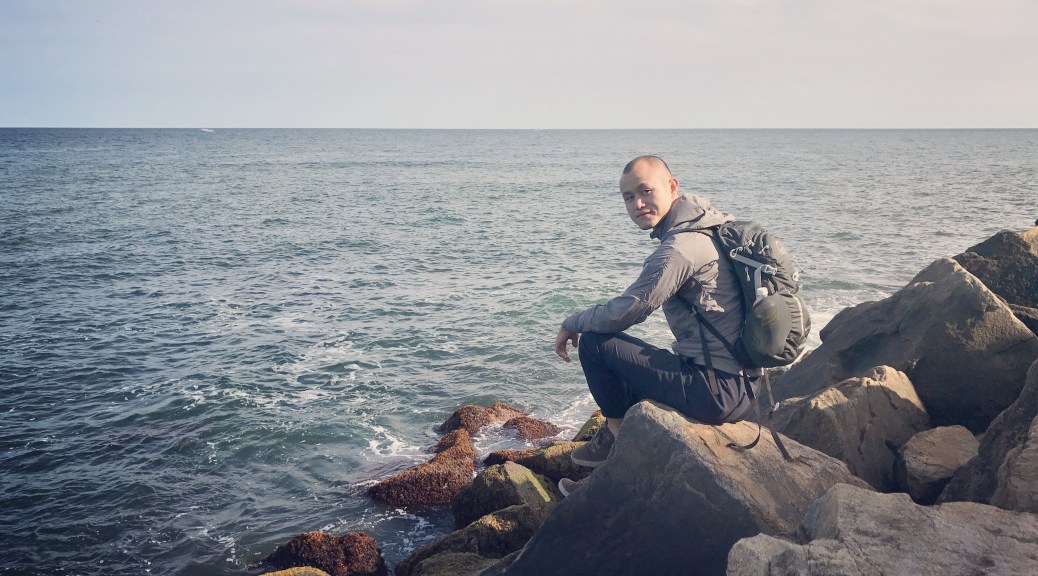
Growing up in Changzhou, a small town in the Eastern part of China, Yang Shao found himself drawn towards filmmaking. As a child, he would pick up his family’s handy-cam and experiment, filming everything he considered interesting. In such a way, he was destined to be a cinematographer. He always had a good eye for photography and frame composition, and when the average person would just see tall buildings while walking in the city, Shao saw letters, signs, magic. He spent his youth thinking of what angle every image he took in would look the best, and he still applies this mentality now, years later, as a celebrated cinematographer.

Shao has put his artistic touch on many film and television ventures. Projects such as A Better World, Life is Horrible, Under and The Great Guys have gone on to see international success with the help of his talents. Audiences can soon expect the same from his upcoming features: Need, In the Middle of the Night, and Excel on the Highway.

The highlight of his career, however, came just last year when Shao worked on the film Once More. It perfectly showcased his talent and passion for cinematography, as the Director and Producer were eager to let him explore his creativity. He was also eager to share the story with the world.

“I was really moved by the story this movie tells. I believe in the importance of telling good-hearted stories and this one is a perfect example of that kind of story. Also, we had an amazing team who was working on the project and working with those folks was really a pleasure,” said Shao.

Once More explores the tale of a psychologically collapsed dancer who failed in a renowned competition and broke his left leg. As the remedy to this life, he intends to commit suicide, but he is accidentally saved by a neighbor girl he was in secret love with. This subtlety encourages him to get back to the stage by dancing with the bum leg.

“At the present time with the #TimesUp movement showing the toxic environment in the film industry that was exposed in the recent year, I think there’s still a lot of room for masculine vulnerability. In fact, that kind of trait in men actually gives me hope in our future. And this movie is a good example of bright and pure emotions that are left in men’s souls. I believe in importance of bringing up the stories that have to be heard but at the same time I know that good-hearted and kind stories is what will make this world a better place,” said Shao.

Once More premiered in March 2017 at the Hollywood International Moving Pictures where it was a semi-finalist on the festival program. From there, it saw great success at many international film festivals, and Shao himself was recognized at many of them, winning Best Cinematography at the American Movie Awards, the Hollywood International Moving Pictures Film Festival, Top Shorts!, Festigious International Film Festival, Los Angeles Film Awards, and more. In total, the film brought Shao seven awards for cinematography, and also numerous awards for Best Film, Best Director and Best Producer. Such acclaim could never have been possible without Shao’s artistic eye.

“I always knew that Yang is a talented cinematographer and always wanted to work with him. He brought his outstanding skill-set to the project. I’m looking forward to working more with Yang,” said Kees Van Oostrum, Executive Producer of Once More.

It was Van Oostrum that approached Shao to be a part of the film. He knew Shao’s cinematography style and that he would be vital to the production. As the cinematographer, Shao chose to use more of the natural light because the story is very elevated by itself and a lot of artificial light would only have hurt the picture in his opinion. A large portion of the movie takes place in a theater, and he made a decision to use abstract lighting to highlight the emotional state of the character and emphasize the stress that the protagonist was going through.

Coming from the East, Shao shot the story with an Asian flavor, bringing the best traditions of the eastern cinematography combined with his extensive experience working in the film industry. This allowed him to obtain angles many would not have, and this tactic was fully supported by the Director, Rachel Zhou and main actor, Jaeme Velez.

“I think we found something very precious there on set. When people’s energies start to bounce around and more importantly play in the same key, that’s when the real magic happens,” said Shao.

Above all else, however, Once More was special for Shao because of the story. He saw himself in the main character, connecting to the protagonist’s artistic journey. It provided a beacon of hope during a difficult time for the cinematographer, and he will never forget what it gave him.

“His passion and will resonated with me on a deeper level. His struggle and obstacles that were on his way to his dream are similar to mine in a way, and to most of the artists’ paths. There was a time in my life where the only thing that was left was hope and big desire to create something larger than myself. And actually, this film came along right around that time. It was like a big sign telling me to keep going, and I think in the end it paid off really well,” he concluded.


Written by Annabelle Lee
China’s Aaron Wei on the importance of VFX and living his dream

Avatar, Star Wars, The Lord of the Rings. It isn’t difficult for cinephiles to think of how visual effects broadened their minds, transforming their favorite films and making the impossible, possible. In modern entertainment, it is an essential part of the filmmaking process, often in the most unobvious ways, cleaning up blemishes that makeup cannot, or adding a pivotal piece into the background.

“VFX visualizes the idea and surreal environment the writer has in mind. It enables so many possibilities, empowering the film production. VFX is the most direct way to translate the idea to the viewers. It is just stunning, period,” said Aaron Wei, Senior Compositor.

Wei is celebrated in both his home country of China and the United States for his work in Visual Effects. Using his skills to help make projects like The Americans, Unbreakable Kimmy SchmidtShades of Blue, and Gypsy the successes they have become, millions around the world have seen Wei’s work, and often didn’t even know it. He strives to make his work unidentifiable and natural, knowing that it will help audiences feel fully immersed in the story.

“Aaron is a passionate and talented artist. His enthusiasm and perseverance was evident in his approach to each project,” said Eran Dinur, Visual Effects Supervisor.

In addition to movies and TV shows, Wei enjoys using his skills on commercials. Companies like Toyota and Smart Car have benefitted from his artistic knowledge, and he loves being able to see his work on a YouTube ad or national television screens, which is just what working on commercials offers on a regular basis.

In China, Wei has worked with industry leading companies, like Canon. In 2013, he worked on the camera company’s commercial. He knew that for such a popular company, he had to ensure every shot was perfect so not to damage their reputation and to draw consumers to the product.

“We needed to composite a Canon camera bag on the model’s shoulder. The work was done by another artist, but I found the shadow casted by the bag put on her was not convincing. Then I took over, looked very closely at the real shadow on her clothes and creatively painted the shadow for the bag. Because I was trained as a painter for a long time, this task was not very difficult for me, but could be very challenging for others,” said Wei.

Wei also worked on a unique project titled The Soul of Dance to promote the work of the Tang Hui Studio Department back in China. It was creative work for building the company’s image, like an experimental lab.

“It’s like there’s no limit of what we can do. No clients’ requirement and no official deadline, it’s like a dream position. This project was one of many I have done in the studio,” said Wei.

Rather than using video editing software, Wei worked in Photoshop, using filters to create each key frame for the video, and then did the final assembling in After Effects. This approach was unconventional, but it worked. Even years later HuiTu image showcases this video as their iconic work in the company’s history.

Undoubtedly, Wei has had an extraordinary career, with many exciting projects lined up. For those looking to follow in his footsteps, he offers the following advice:

“Make sure you understand what the career you are heading into entails. I have seen people complaining about the job, saying things like ‘I don’t want to face the computer all day long in a dark room.’ Yes, that’s exactly what your life will end up being, so make sure you are okay with that. Understand your passion and personality. Before you pick up this job, do some research on the different departments in this industry. There are CG artists, producers, compositors, technical directors, creative directors, and so many more. You may excel better in one concentration than another,” he advised. “But most importantly, love what you do, and try harder. You may be asked to execute an idea that you do not necessarily agree with, and you may strongly believe your idea is better, but you have to give the higher-level executive what they want. You can certainly bring your idea up, but in the end, you are doing whatever your clients ask for, and they are always right.”

Canada’s Romaine Waite terrifies audiences in sci-fi horror flick ‘Antisocial’

WAITE_6
Canadian Actor Romaine Waite

Romaine Waite has always been an outgoing person, a trait he believes has helped him greatly as an actor. When he was a child, growing up in Canada, he participated in school plays and drama programs, not because he thought it would be his career, but simply because that is what he enjoyed. It wasn’t until his early twenties when he realized he could truly follow his passion, and the second he got his first professional part, he knew that acting was his calling.

“I’ve always had this innate ability to connect with people in some way, making people laugh or causing disruptions, depends on who you ask,” he joked.

Now, Waite is a celebrated actor. His work in television series such as Star Trek: Discovery,Frankie Drake Mysteries, and The Mistimpressed audiences in not only Canada, but the rest of the world. His versatility knows no bounds, and he is always looking for a new way to explore his talents.

“Romaine is great. He makes my job a lot easier. He is the consummate professional and a very dedicated and crafter artist. It is always pleasurable working with him,” said Alan Moy, Producer who worked alongside Waite on Murdoch Mysteries and Usher the Usher.

Waite recalls his first real taste of international success as the sci-fi horror flick Antisocial. The movie follows five university friends who gather at a house party to ring in the New Year. Unbeknownst to them, an epidemic has erupted outside, causing outbreaks around the world. With nowhere else to turn, they barricade themselves indoors with only their phones, laptops, and other tech devices. They use their devices to research the possible cause of this outbreak. Information and video footage over flow their computers as they descend further into the cause and the ensuing chaos. As the virus spreads, the mood in the house changes from fear to paranoia. Who is safe? Who can they trust? Reality becomes blurred as they slowly discover the source of the virus causing the sickness… and there is no going back.

“I thought the story was clever it takes something that everyone was familiar with, being social media, and took it to the extreme. If you take away the gore, it’s basically what we’re experiencing today. Snapchat, Instagram, etc. have become these tools that are allowing people to share every single aspect of their life. In a way, I think the film talks about a very important subject in our society — what are the effects of social media and what are the limits and consequences of sharing too much on social media,” said Waite.

In the film, Waite plays Steve, one of the five friends gathering to celebrate New Year’s Eve. He was jovial and sincere university student. Audiences got to see him enjoy time with his close friends and girlfriend. Unfortunately, he was first in the house to experience the epidemic that trapped them in the house. This is pivotal, as Waite was responsible for getting the audience to truly understand the epidemic, and therefore the film. Within the film, Steve was the only individual who the audience was able to see go through a full transition. With this, the audience knew what the signs were and what would happen if another character was to get infected.

“It was really important to me that people felt the struggle of this character. As he tried to figure out what was happening to him without revealing anything to others in house. Through my portrayal, I hoped the audience would feel like they were a friend to my character and miss this him when he was gone,” Waite described.

The film had its premiere at the Fantasia Film Fest in Montreal back in 2013, and from there went to several high-profile international film festivals, including Calgary International Film Fest, Sitges International Fantastic Film Festival, Toronto After Dark Film Festival, and the Cannes Film Festival. From there, it was distributed through Monster Pictures on DVD, through Super Channel, and on iTunes. Such success could not have been possible without Waite’s portrayal of Steve, hooking audiences to the story early on.

“It’s always nice to see an indie film do well. It takes so many people and long days to make a film. To me the success is in completing the project. I am proud of everyone involved,” said Waite.

Antisocial was Waite’s first horror feature film, and five years later he still looks back and coals the experience amazing. At the time, he was still very curious about the process of filmmaking and how it all would come together, and he could not have been happier with the result. Everyone on set was professional and inspired, creating a contagious energy. He found himself watching everyone on set, from the cinematographer to the special effects make-up artist, taking everything in and reminding himself why he wanted to be an actor in the first place.

“I liked the comradery. Everyone was really passionate about the project. We were all stuck in a house for weeks. Friendships were built, and some good memories were made. I hadn’t done anything like that before. Overall it was a great experience,” he said.

Be sure to check out Antisocial to see Waite’s terrifying performance as Steve.

Chen Xu gets his hands “dirty” while creating sound for ‘The Shaft’

In 1999, Chen Xu dedicated himself to watching approximately 1,000 movies in order to absorb as much information as possible about sound design and sound mixing within the film industry. Interestingly enough, the overwhelming lesson that he learned was that regardless of a film’s genre or budget, a good sound design could always supplement a film’s visual stimuli and boost the viewer’s imagination beyond this imagery. Sound design has the ability to change the entire viewing experience and Xu felt confident that he possessed the skill set and creativity to be able to take any visual film component and take it to the next level with the addition of his sound design. Since then, he has earned a substantial amount of recognition for his talents, not only in the form of awards, but also in sheer demand for his work. Fortunately for Xu, sound design and sound mixing are a lifelong passion and he is one of the few people in this world who can say that they get to do what they truly love and call it “work.”

“Sound is not as specific as the film’s picture; however, it tends to be integral to our subconscious mind. The delicate organization and arrangement of sounds can greatly enhance a movie. On the surface, it appears to be a mere aid to the picture but in reality, the space and importance of the sound creation typically accounts for over half of the film. This gives me a sense of freedom in my work to express my own creativity. That’s where I really like sound,” said Xu.

Throughout his remarkable career, Xu has used his sound design and sound mixing expertise to enhance the scripts of a number of renowned films such as A Simple Goodbye and The Wasted Times. For his work on The Summer Is Gone, Xu received a nomination for Best Sound Effects Award at the 53rd Golden Horse Film Festival. For Xu, however, receiving awards and nominations are simply a bonus to being able to mix and design sounds for a living. In fact, the true highlights of his career come to life when he gets to work on projects enriched with culture and meaning. This is why, in 2015, when Xu was approached about working on The Shaft, he could not refuse.

The Shaft, which has earned over a dozen international awards, follows three intertwined stories of a father, a son, and a daughter fighting to hold onto hope and family as they face the harsh realities embedded within life in a poor Western-Chinese mining town. The story illuminates a number of complicated relationships hidden beneath the community’s hardened exterior and when Xu first read the film’s script, he knew it was something he had to be a part of. Xu credits the film’s realistic script as being the main draw to accepting this challenge. This meant that for the film, Xu would be in charge of all sound-related work, from production mixer to sound design to final mixing during the film’s post-production phase.

What Xu hadn’t necessarily anticipated when accepting the opportunity to work on The Shaft, was just how harsh the conditions would be. Due to the fact that the film deals with miners, many scenes were shot deep underground and as a result, Xu was tasked with ensuring that the film’s sounds remained as clear as possible given the setting constraints. In addition, the actors insisted on shooting their own scenes despite dangerous conditions, and therefore, Xu had to accompany them in the mines to shoot their scenes. Oftentimes, he would be covered in particles of soot at the end of a shoot. To his director’s appeal, Xu masterfully captured the realistic texture of the town and the state of those living within its conditions through his sound mixtures. In addition, he chose to enhance the importance of the film’s sound design by only using music at the conclusion of the film. In addition, he managed to capture the unique, untouched atmosphere of Guizhou Province in China. Given the fact that Guizhou Province has not yet fully integrated into the fast-growing Chinese economy, he knew that it would be extremely important to ensure that audiences could grasp the authenticity of the film’s location.

Where some sound designers may have found themselves intimidated by the challenges presented when working on The Shaft, Xu found himself energized by the opportunity to experiment in new areas of his art form and to help his colleagues tell this story in the most interesting fashion possible. The film’s director, Zhang Chi, requested that Xu stray away from the typical, clear-cut sound design principles and create a more “dirty” sound arrangement. This, however, did not require Xu to simply arrange the film’s sound elements, but to do so in an intentionally disorderly manner. Chi felt as though this would help to enhance the film’s objectivity. He did not want to criticize the characters, nor did he wish to sympathize with them. He wanted to present the world with an understanding of the social realities embedded within the Chinese culture today and to do so in a way that would resonate with his audiences.

In the coming year, Xu will take charge of the sound mixing and design for two feature length films and hopes to continue spreading his talents throughout the sound editing industry for years to come. To anyone else looking to pursue a career in sound mixing and sound design, Xu offered the following advice:

“Sound design and mixing is a very creative but oftentimes relatively boring job. If you want to become a good sound designer, you must first be able to endure loneliness and genuinely love movies, so that you can always maintain the vitality of your creation,” told Xu.


Written by Sean Desouza

Editor Ran Ro tells her personal story in acclaimed film ‘In Between’

Korea’s Ran Ro remembers the first time she fell in love with the idea of filmmaking. It was when watching the iconic French film Amelie. As she took in the film, it was a different experience than simply watching a movie. In one scene in particular, the narrator lists out what Amelie, the protagonist, likes, as audiences see the visuals depicted by the narration. That moment sparked a fire inside Ro. She took in how the “mundane” aspects of a film could easily be ignored by the masses but can be captured so beautifully and significantly. It was then when Ro decided she wanted to be an editor. She loved the power that such small decisions could have over the telling of powerful stories, and she was ready to become a master of the artform.

Now, Ro is known for doing just what she admired when watching Amelie. Her attention to detail creates visual masterpieces, whether she be working on a minute long commercial or a feature film. Her work with brands such as Tastemade, BackBeatRags, and Elite Model Management captivated worldwide audiences, and when she embarked on her most personal project ever, the film In Between, she once again impressed.

“The underlying concept of the project was developed when I stumbled across a memorial park in Honolulu. I was supposedly at a place that represents the end of life, but all there was in front of me was empty scenery. Observing the sunlight landing on the unmoving landscape, I couldn’t help but feel oddly at peace. In comparison, I began to think about the emotional turbulence that one goes through in life. The script was written shortly after this experience, as a means of unravelling the curiosity that arose that day at the memorial park. My childhood experience of being raised by my grandmother became a central plot line of the main character of the film,” said Ro.

In Between tells the story of Tina, who in the middle of a suicide attempt on New Year’s Eve discovers a mysterious path inside her duvet cover, leading her to an ethereal space filled with an infinite number of lights. Not only did Ro edit the film, but she also wrote, directed, and produced it.

After premiering last year, the film saw immense success at several prestigious international film festivals. It won the Award of Excellence at Best Shorts Competition and was a semifinalist at the Los Angeles CineFest, the Los Angeles Independent Film Festival Awards, and the Hollywood Screenings Film Festival, to name a few.

“It is rewarding and also very encouraging to have seen the audience resonate with a story that involved my personal experience. It motivates me to create stories that are meaningful and that challenge me to be more curious and observant about things around me and about human emotions,” said Ro.

Music played a large part in the film, from the writing process all the way to editing. One of the music scores titled “Reoccurence” greatly inspired Ro, and she played it repeatedly throughout the production, allowing it to stimulate the rest of the cast and crew.

“During rehearsals with actors, I played the same music to match the pace of their dialogue and the rhythm of the music, knowing that I would be using that score when editing. Once the actors were tuned into the music, the whole scene fit into it – the very last dialogue ended with the last beat of the music,” she described.

Filming went very smoothly, which made the editing process almost effortless for Ro. She knew the exact pace and tone that she wanted for each scene after being involved in the writing and directing processes.

The film uses otherworldly places to visually portray metaphors on time and space. In one scene, this is exemplified when the protagonist crawls through an endless path underneath a duvet cover when time freezes during the New Year’s countdowns. She encounters a little girl who guides her to another otherworldly place, “The Gap”, a realm in between life and death where the souls reside.

The Gap was instrumental to the film, and it was conceptualized when Ro imagined an unperceivable place that exists in between every second. She thought of it as a place where all past moments exist. The main character in the film, who keeps her dear memories of her grandmother, reunites with a younger self of the grandmother in The Gap. This was Ro’s favorite scene in the entire film, and the one she felt the deepest connection with.

“I enjoyed seeing my vision come to life every step of the way from writing, casting to production. It was surreal but also very exciting to see what I envisioned actually happen right in front of me. I felt very grateful that the crew that I was working with truly understood my vision and used their talent to materialize it,” she concluded.

Be sure to watch the beauty of Ro’s work on In Between here.


Written by Annabelle Lee

Go behind-the-scenes of Korean hit ‘The Society Game’ with TV Exec Dan Cazzola

For Dan Cazzola, a career in television was always what intrigued him. He never had a back-up plan, and never needed one. Starting out as a producer, he found his calling, as every day he was doing something different and meeting new people; every day was a learning experience. Overseeing every aspect of a show, from beginning to end, was exciting to this Canadian native, and as a producer, he brought shows to success in both his home country and internationally.

Cazzola has now moved on from producing just one show and is currently the Vice President of International Development for Endemol Shine North America, the world’s largest television production group. Working on the corporate side allows him to lend his talent to a variety of current and upcoming shows. Having previously worked for Shine Group in the United Kingdom, he brings years of experience to his role.

“I worked with Dan over many years at Endemol Shine, and he is one of the hardest working people I have ever met. He continuously strived to make every single project we worked on top-notch, and always managed to succeed. On top of all this, he is an extremely positive force in the workplace, always encouraging everyone to do their best work. He is a leader, and I am happy to also consider him a friend,” said Fotini Paraskakis, Managing Director, Endemol Shine Asia.

One of Cazzola’s largest successes abroad was with his work on The Society Game, a South Korean reality TV series, which he co-created. The format was similar to Big Brother, where contestants are isolated from the outside world, but instead featured two teams competing against each other with the twist that one side had to live as a democracy and the other a dictatorship. It was a social experiment to see which society was more effective and which types of leaders would rise to the top and win the game. The show premiered on TVN in October 2016 as their tenth anniversary special series where it was extremely popular and was picked up for a second season.

When creating the idea for the show, Cazzola tried to think of a format that could take place in Korea but resonate with other countries. While brainstorming, he asked himself, what is something many people associate with Korea? His answer was the North and South divide. This is when inspiration struck to have a reality competition show with one team representing dictatorship and the other democracy to see which was ultimately better.

“My favorite thing about working on this project was that we actually shot it outside Seoul close to the border of North Korea. It was a constant reminder that the show we were filming actually was real life for these two countries. We would see the military helicopters flying over every morning and night and the rugged mountain range that we could see in every aerial shot was the physical barrier between us and the DMZ,” Cazzola described.

TV, as Cazzola says, is a universal language. However, its development greatly varies around the world. The Society Game was Cazzola’s first experience with the Korean market and television production in the country. Not only were there language barriers to overcome, but processes were different than what Cazzola was accustomed to. This provided a pivotal learning experience for Cazzola, who at the time had only worked on television programs in Europe and North America. Cazzola and his team set many strict targets and made sure everyone knew exactly what the plan was. In the end, they developed, filmed, and aired the show all within a mere nine months.

“I loved that I not only got to work on an exciting new reality format idea but that I learned all about Korea and how they make TV there. So much of TV can be inward facing and the best part of my role was that I learned how it all comes together there. I learned new ways of doing things and also saw great creativity from the team there. I had a huge amount of respect for them,” said Cazzola.

The Society Game was a large success for Cazzola, as it was his idea that sparked the hit. Now it is a successful format currently being adapted to sell around the world, and Cazzola’s understanding of various markets are one of his greatest assets when scoping out international formats for American television.

‘The Ballerina, The Shoemaker and His Apprentice’ takes audiences back in time with help of Meibei Liu’s editing

As a film editor, Meibei Liu sees herself almost as the conductor of an orchestra. She puts together endless footage and turns it into a piece of art, transforming a script into a true visual masterpiece. In many ways, she is like the doctor of a film; she removes what is unnecessary and replaces what needs work. Editing is putting the final pieces of the director’s puzzle together, and Liu not only understands that, but she also thrives because of it, and that is what makes her a good filmmaker.

Having worked on a variety of projects that have made their way to many prestigious film festivals around the world, Liu has made quite a name for herself as an editor. Such films include Dear Mamá, Headshot, Faith Need Not Change Her Gown, Pumpkin and Fried Noodle, and more. Recently, her film The Ballerina The Shoemaker and His Apprenticereceived nominations at the Oscar-Qualifying Hollyshorts Film Festival and LA Shorts Fest, Maryland International Film Festival, and Ouchy Film Festival in Switzerland, New Port Beach Film Festival where it was nominated for Short Film Award, The Grand Jury Award and Best College Film at The Next Generation Filmmaker Film Festival.

“I’m happy to hear that the film went all over the world for festivals and awards. I was glad that my changes made it into the film and was shown to people who speak different languages. It confirmed that emotions expressed and enhanced by editing can be identified by everyone, which made me believe that I should continue doing what I did for the film. I was glad that Eva asked me to go on board and be part of the project. That gave me a chance to show my attitude towards editing to people,” said Liu.

The film takes place in 1963 Hackney, England, and follows George Arkwright, a young man down on his luck, who must navigate the refined world of ballet pointe shoe making and redeem his value as the apprentice under the shadow of Mr. David Traynor, a talented but stuffy point shoemaker. George’s imagination turns into a reality when he becomes smitten with the Ballerinas the shoes are built for, one named Sylvia particularly, but soon learns this magical and seemingly distant world is not beyond the reach of affliction. Liu came on board half way through editing the film when the Director, Eva Ye, realized she needed expansive editing talent to turn her vision into a reality.

“Working with Meibei was great. She has a strong sensibility for impactful storytelling through an editing perspective. She often provides new perspectives to the story and is invested in trying different ways of getting the emotion across. Sometimes she is more willing to dig deep into the materials just to find something I didn’t even know existed. Her passion and dedication to editing is something I’ve seen rarely. And in many ways, she makes my work better,” said Ye.

Liu is able to address the problems of cuts quickly. When she reviewed the first cut that was made before she was brought on, she realized exactly how to transform the footage into what the director wanted and what audiences would connect with. She took what was a half-finished film and reworked it, making it better. She realized that the scenes were dragging; all of them could end earlier by cutting out some of the lines and actions. She stopped in the middle of the first scene and started the second scene earlier, helping to show the main character’s eagerness. Sometimes, however, she chose to extend a scene and have it linger longer to show the apprentice’s feeling of loss and disappointment. This film has very subtle emotions, and an editor’s vision and eye on digging out the emotions, and enhancing them by editing is vital. Being a very emotional person who is strong at noticing the emotional changes of people, Liu was the ideal candidate to take over as editor.

“It’s a story of dreaming. I believe this is a film that speaks to everyone in spite of when and where it happened. It’s a worldwide emotion that people all over the world can understand. I believe it is important to tell this kind of story, giving the audience a short period of time to experience something they can relate to,” Liu concluded.

The Ballerina, The Shoemaker, and His Apprentice is currently available on Amazon Prime Videos.


Written by Sara Fowler

Producer Kegan Sant talks award-winning film ‘The Bear’

Born in Trinidad and Tobago, Kegan Sant moved to Canada at just six months old. Growing up just outside of Toronto, Sant was constantly drawn to filmmaking. He has worked in varying capacities on set since he was only a teenager and enjoys shooting photography to keep the creative juices flowing. While trying out the many roles that a film set offers, there was one that spoke to him, and he ultimately decided there was only one option: he was meant to be a producer.

“As I worked through the different roles on set, I realized that my skill set led more heavily towards the management and overall execution of a project. I’m a big believer in knowing one’s strengths and weaknesses and always playing to your strengths; in this case, it set me down a path of working in production and ultimately producing. Being a professional comes with the job description and something I pride myself in – running sets with integrity and calm amidst the chaos,” said Sant.

Throughout his esteemed career, Sant has worked mostly in the commercial sector primarily dealing with advertising agencies to make commercials for brands. This includes large companies such as WestJet, Woods, the CFL, and TELUS. Each and every commercial he has taken on has received national recognition in some capacity, exemplifying just what makes Sant so formidable. However, his talents are not just limited to commercials, and his track record with films is no different.

In 2015, Sant began working on The Bear. Isolated, exhausted, alone: the dramatic thriller follows three miners in a remote Yukon mining camp in Canada’s far north who swap tall tales that lead to a violent showdown with the camp’s bitter owner. Part story of man in the wilderness, part neo-noir, The Bear takes the audience into the Canadian ‘heart of darkness’.

“I think this was an important Canadian story to tell and describes an environment that not many people think about but is a reality for many miners. I liked it because it was loosely based off someone the director had met working on a documentary many years ago and it allowed for different departments to flex their creative muscles. Being able to cast the characters the director had envisioned made the story come to life that much more for me,” said Sant.

After premiering at the 2015 Fort McMurray International Film Festival, where it won for ‘Best Direction’ and ‘Best Cinematography’, The Bear went on to several other prestigious film festivals around the world. It was also an Official Selection at the Yellowknife International Film Festival, Toronto International Short Film Festival, Edinburgh Short Film Festival, Atlantic Film Festival and Austin Short Film Fest. In 2017, it was then acquired by an online VOD distributor.

“I’m proud to know that the film has been so successful and screened around the world. It means that all the hard work myself and the crew put in, was worth it. It impresses me when I think about how many films are made all over the world and what the competition is like in festival screeners these days,” said Sant.

Sant was the team’s first choice for the producer of their film. Long Format Director, Warren Sonoda, knew Sant’s reputation for being able to assemble great crews and bring a high level of production value to the project. When the Director of the film, Peter Findlay talked with Sant about the project’s merits and goals, he felt at ease that Sant was the one who could make his first narrative project come to life.

Although he works on commercials more frequently, Sant knew he wanted to work on The Bear the moment he read the script. He was happy with the team, and admired Findlay’s commitment to the story. He couldn’t pass up the opportunity to help bring the project to life.

“I had the good fortune to work with Kegan as my producer on my award-winning film The Bear. I found Kegan to be extremely professional, creative, and always working calmly behind the scenes in the best interests of the production. What makes Kegan such an asset is that he has the steely focus it takes to deliver on time and on budget – and he also just flat-out loves telling stories. A great compromise between the art and business of filmmaking,” said Findlay.

When shooting, Sant and his team worked outdoors in a remote location. He extensively prepped, knowing that once out there, it would be difficult to change anything. Sant had to build a miner’s camp set from scratch and work with the Director of Photography to find lenses that worked to help it appear that the film was shot in the Yukon rather than rural Ontario.

On top of this, he also offered the director multiple options and a chance to exercise his creativity. Sant wanted to let Findlay feel like he wasn’t rushed, knowing the importance of allowing a director the freedom and flexibility to feel comfortable with their process. Findlay had no prior experience in the narrative world. He didn’t have the crew contacts or resources to bring the project to life in a way that it needed to be produced. Sant was able to introduce him to the right key crew for the job, specifically the cinematographer and production designer.

“I enjoyed working with an experienced director that came from a different world of storytelling – it was enlightening to see the differences in process and to learn from it as well. I could learn from him and likewise, he could learn from me. It was a great working relationship and I was able to hire the best crew for the job, giving some crew opportunities that they hadn’t had before to help build their reel and portfolio, in addition to creating a short on a cool subject,” said Sant.

The Bear is just one of Sant’s many successful films, and he looks forward to working on more in the near future. He is an extremely versatile producer and is constantly adapting to be successful. Audiences can continue to expect great things from him, and for those looking to follow in his footsteps, he offers insightful advice.

“I would tell aspiring producers that they need to get their hands dirty. Producing is not a glamorous job, but it is fulfilling. Work in a variety of capacities on set and make sure that production is what you want. Production manage before you produce; it will help you understand the crew and different departments and needs versus wants. Know your strengths and weaknesses; it will determine whether producing is for you or not. You have to have a thick skin…you will face much rejection in your life if you choose producing as a career path. You must learn to be empathetic, as you will be the boss of an eclectic group of professionals. They will have their quirks, they will have wildly different personalities and you’ll have to learn how to manage them, understand them and realize what you as a producer are willing and able to handle and what you are not. There are many production companies and crews in the industry – if one or two don’t work out, it doesn’t mean you should give up. Perseverance is key – it is the defining difference between you and everyone else who is not a producer,” he advised.


Pictured left to right: Kegan Sant, Peter Findlay, Rob Comeau on set of “The Bear”, photo by Stephanie Langzik
By Sean Desouza

Television Host Dan Babic strives to be in the one percent

ce3bd4_df340a97e5394f55aad74e917fab9f0d
Dan Babic on set

Working in a field as gruelling as the entertainment industry is no small feat. Where most individuals see a daunting career path, plagued by unstable income and fierce competition, Australian entertainer Dan Babic has only ever seen a breadth of opportunity. It has never been about a steady pay check, or a permanent “nine to five,” but rather about embracing the unknown and the diversity of challenges that entertaining unveils. When most parents ask their child about what they’d like to be when they grow up, they often expect to hear answers like “famous entertainer” and simply hope that the novelty will wear off with age. This, however, was not the case for Babic’s mother and father, as his unwavering desire to entertain has only grown stronger over the years.


“Less than one per cent of the world’s entire population are at the top of the entertainment industry. So, if you want to be part of the one per cent, you have to be prepared to do what only one per cent of people can do,” notes Babic. Unsurprisingly, he is prepared to do just that and more. His relentless desire to share his talents with the world push him to test his own limits and to bring the unique elements of his personality to the industry in ways that other television personalities haven’t before. The result is a seemingly effortless combination of humour and realism that flavour his work in a unique way that one can only truly understand by witnessing him in action. The success that this up-and-coming entertainer has achieved so early on in his career is a result of his natural affinity for entertainment and his drive to showcase himself as an authentic television personality.

In 2016, when Babic was approached to host Fashion One’s Design Genius, Babic couldn’t resist accepting. The series centres around a “fashion-packed” competition that challenges fashion designers to create original and inventive clothing and accessories. A show of this nature requires an effective host. A host who isn’t afraid to challenge its competitors, but who also has the capacity to empathize with the designers and capitalize on the genuine moments that a testing competition orchestrates.

“I wanted to work on Design Genius, as the success the show relied entirely on the host’s ability to captivate, engage and connect a culturally diverse audience of over 400 million people from 173 countries. I wanted to showcase my ability of to unifying individuals of all different backgrounds. The show sought a distinctive, unique personality to host and I knew this is something I have to offer. I knew that I would be an asset to the project. It required a host with the rare skill set needed to take the audience on a journey from beginning, through the middle, to the end in an improvisational, yet precise fashion. This isn’t something that every television personality is able to do, but it is the exact hosting style that I thrive in and so I knew from the start that I was the only person for the job. What’s more, is that I had always dreamed of working with the show’s producer, Tone Innset,” tells Babic.

Fortunately, the reputation that Babic has established for himself presents him as a top tier television host and personality. When producers or directors are searching for a host, his name comes to mind almost instantaneously. Innset’s knowledge of Babic’s talents made her eager to work with the entertainer and Design Genuis’ viewers reaped the benefits.

“Mr. Babic performed the leading role of host for the series Design Genius, where he garnered a substantial amount of praise for himself and the series. In his leading role, his responsibilities required him to complete a number of tasks, including introducing the series, the contestants, and their projects for each and every episode. His larger than life personality allowed him to attract audiences to the show simply by listening to him or watching him, as his exciting interactions with his co-hosts and contestants were often unconventional in the approach, confronting aggressive contestants, or heartily joking and laughing with his fellow hosts and judges. It is imperative for a host to have such a personality, and to utilize their skillsets as a performer to convey this to the audience. In addition to the typical duties of a host, he was also responsible for leading the show as a judge, and he decided which contestants advanced to the subsequent rounds, which contestants were eliminated, and which contestants broke the rules and must be disqualified. Dan has a unique ability to command attention from his audience and the other contestants, as well as his other judges, highlighting his domineering on screen personality, which translates into increased viewership for the series as a whole,” says Innset.

The show’s wide reach is a testament to Babic’s mastery of television hosting and flawless ability to captivate his audience. What’s most impressive, however, is Babic’s ability to remain humble in his rise of fame. In the wake of praise, Babic remains true to himself. “What I like most about being an on-camera personality is that it feels like home. It completely lights me up in every way possible. When I’m hosting a television show, I feel an overwhelming sense of comfort in knowing that I am doing exactly what I am meant to do. The pure joy it brings me extends to all aspects of my life and helps me become the best version of myself that I can be. Words cannot describe how much I love and live for what I do and I am beyond grateful that I get to experience that every single day with my work. It is such a rare thing and I never forget that but I know that my success comes from my persistence, my fearlessness, my hard work and by simply trusting my intuition,” Babic states.

Babic’s talents as an entertainer are unparalleled. Television show creators would be hard-pressed to find a host more dynamic and at ease in front of the camera than him. He was born to be on screen and anyone who has seen his work knows that great things are in store for his future audiences.

Shu Zhang brings authentic historical makeup to film Death in a Day

Born and raised in Hangzhou, China, Shu Zhang brings her heritage into her work as a makeup designer. She has worked and volunteered around the world, lending her skills to completely different projects time and time again, showing both her clients and those that see her work just how innately talented she truly is.

While working on the short film Death in a Day, Shu had a pivotal role as lead makeup artist and hair stylist. She aimed to give the actors authentic, historically accurate makeup, as the film takes place in the early 90s. Shu’s background in art history and period makeup made her integral to the authenticity of the production.

“The hero is the early 90s American immigrant. The look is totally different with the America born Chinese nowadays. I wanted to focus on her 90s traditional Chinese style, but also to show her makeup under the influence of 90s American style. So, I put her major look into the decade which is more nature in tone, a sculpted look with a more idealized face shape,” said Shu.

Death in a Day tells the story of Evan, a young Chinese boy who, after visiting his comatose father in the hospital, witnesses his mother’s struggle and must come to grips with the impending death falling upon their family. Death in a Day, which premiered in June last year, was announced as the Best Narrative Short at San Diego Asian Film Festival in 2016, and was officially selected for a number of film festivals, it received a huge response from there.

“It’s fun to get involved in this original concept movie. I always came with idea of my own, so I know how this is important to a director to make a film,” said Shu.

It took three months of pre-production and many meetings to work out the perfect makeup design. Shu then had to test the makeup on a couple of actors to make final decision.

The mother’s makeup throughout the entire film is very key to its success, and there are many close-up on her face. Her makeup had to look beautiful but also desperate to highlight the soul of story, and Shu was more than up to the task.

“Shu is good at researching and widely knowing the cosmetic market. She always finds the most suitable products based on actors’ situations. She is always the one to meet my requirement accurately and without fault. Shu can really create with makeup. Everyone knows how to put on lots of makeup on, but looking simple is even harder, and she can do that,” said Yuin Zhang, an investor and advisor of the film.

Yuin Zhang was extremely happy Shu’s work on the film, and invited her to join the feature film she is investing in, Venus by Water. She works for the largest film studio in China, Hengdian World Studio, which is often called the Hollywood of China.

The writer and director of the film, Lin Wang, was also extremely impressed with Shu’s work. The two had previously worked together for a photoshoot for the NBA, where Shu was the first ever Chinese makeup artist to do the makeup for NBA players. The two formed a friendship and business relationship from there.

“Lin Wang is creative, young, and talented director. I knew Lin would make an award-winning film. The script was originally written by just herself. I feel we focused on every detail to perfection: makeup, wardrobe, props and the set needed to be completely historically accurate, which led us achieve a higher artistic level. All our efforts have paid off,” said Shu.

Wang will also be directing Venus by Water, which will begin production later this year. Shu is constantly looking for opportunities to keep doing what she loves, because she is a true artist, and all those that view her work know this to be true.

“Makeup is art to me. Faces are perfect canvases. My inspirations come from art history and from fresh makeup products that come out. I love looking at people’s faces from different worlds, and transforming them. It’s always been the biggest part of my life,” she concluded.