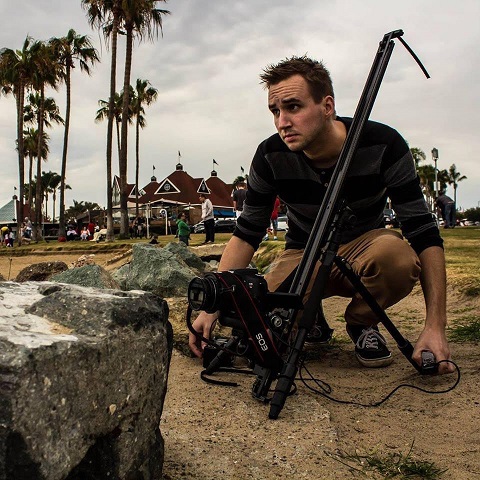
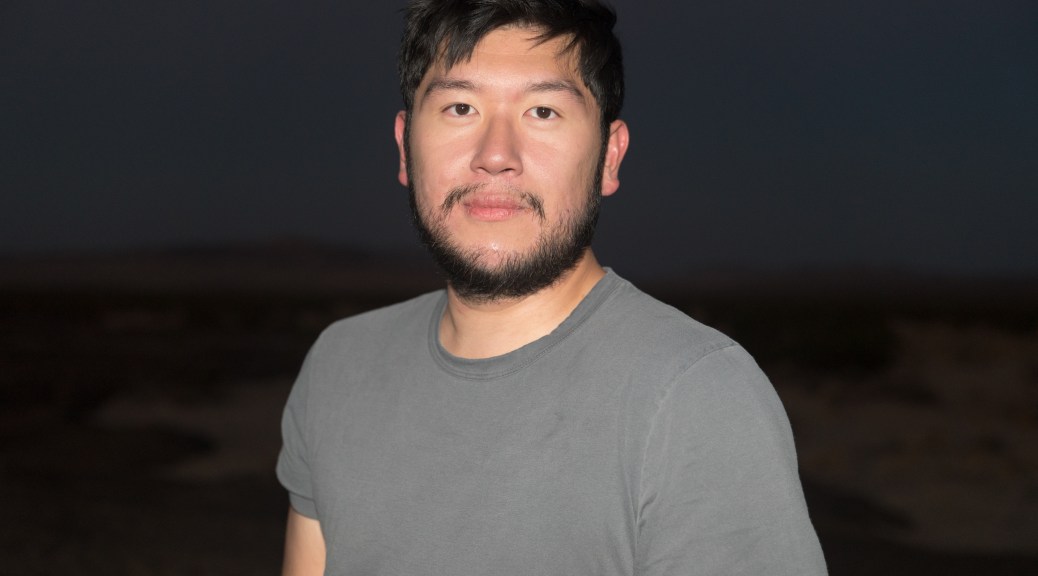
Calvin Khurniawan on the impressionistic art of cinematography

There is an age old saying that tells us “beauty is in the eye of the beholder.” For many different art forms, these words could not be truer. For instance, by nature, the art of cinematography is entirely subjective. What may appeal to one person, may disinterest another. What you consider beautiful, your peer may deem hideous. It all amounts to the different ways in which individuals perceive the world. In order to succeed as a cinematographer, therefore, an artist must be able to speak to multiple different audiences at once. They need to understand how to channel the vast array of emotions, thoughts, and experiences that life has to offer into their medium of choice. They require a different kind of creativity and they must use it to entertain audiences of all different sizes. They need to see the world the way that Calvin Khurniawan does and once they do, they need to share their artistry with people from all walks of life, challenging them to see their surroundings in new lights.

“It seems obvious, but if you ask ten different painters to paint a tree, you’ll wind up with ten different styles of paintings of the same tree. It truly comes down to an artisanal approach. No other cinematographer would be able to replicate and do the same thing as the other, even with the same material to focus on. Everyone will light and place the camera differently. For that reason, I would say that cinematography is an impressionistic art. It makes my job all the more enjoyable because I get to determine how I’d like to tell a story and then I get to bring it to life,” told Khurniawan.

Khurniawan’s unwavering passion for filmmaking extends back as early as his childhood and his perspective derives from years of immersing himself in the arts. At a young age, Khurniawan’s father allowed him to use the family camera to take photographs of their vacation and he became addicted to the feeling of seeing his photos once he had them developed. He began to notice the different ways to manipulate an image he’d like to depict and loved the depth of emotions he could capture. It wasn’t until he began taking videos with his first ever mobile phone that he realized how intrigued he was by filmmaking. From there, he never looked back. His work as a photographer and cinematographer has landed him success with a number of films, many of which he ended up winning awards. For instance, Khurniawan’s film Alchemist won Best Student Film at festivals like the Around the World International Festival, the Los Angeles Independent Film Festival, the New York Film Festival, and more. His other films, such as Antifilm and Kudeta, have also earned Official Selections at a number of prestigious festivals, as well as praise from his peers. He is a force to be reckoned with in the filmmaking industry and he has no plans of stopping any time soon.

In July of this year, Khurniawan collaborated with fashion guru Peggy Hartanto to bring Kudeta to life. The film juxtaposes modern choreography with modern fashion as it portrays Hartanto’s finesse in the fashion industry. The simplicity of her design doesn’t simply translate as modern, but rather it signifies a daring take on modern wear. Essentially, the basic idea of the film was to dress female warriors in dresses and present them like they hadn’t ever been seen before. It created an anti-thesis to fashion film and Khurniawan is drawn to the idea of bringing unexpected notions to life before his audiences. Prior to filming, however, Khurniawan was apprehensive given the amount of VFX shots that he would need to create. Rather than succumbing to the pressure, he dedicated every fiber of his being to learn how to use VFX to the best of his abilities and the result was profound. In fact, his mastery of VFX and his eye for filmmaking made him an instrumental key to the film’s success.

“It was truly challenging at first because I knew there were going to be a lot of VFX shots, but I trained and I took my time to understand the tools. I stayed up all night prior to each shoot in order to prepare so that I could be confident that I would capture the best content as possible,” recalled Khurniawan.

Another of Khurniawan’s favorite aspects of his profession is getting to collaborate with other top artists in the industry. For Kudeta, Khurniawan was fortunate enough to work with Hartanto and explore the world of modern fashion. He was also able to work with other designers and film enthusiasts on set. For instance, Kudeta’s production designer, Indrianty Lihardinata was humbled by the experience of working with Khurniawan for the film. Most artists who work with him are taken aback by the caliber of professionalism and expertise that he brings to the table when he works. According to Lihardinata, in fact, Khurniawan was the ideal combination of professional and enjoyable to create with.

“My favorite part about working with Calvin is his willingness to spend time with key departments to discuss the different aspects of the film. Kudeta was a fun one because it is a high-speed fashion film and so he would shoot everything in a high frame rate to accentuate the movement of the dancers. He is the coolest person to work with because he would take the time to frame every minor detail to ensure that it had a strong “wow” factor,” emphasized Lihardinata.

In all, Khurniawan takes great pride in the content he created for Kudeta. For this reason, he was even more pleased when Kudeta earned the recognition that it did so early on in its festival run. It was chosen as an Official Selection at both Tampa Bay Underground Film Festival in Florida, as well as the Short to the Point Festival in Bucharest and will likely go on to inspire even more audiences as time progresses. In the meantime, the esteemed cinematographer is excited to try his hand at creating a documentary. He believes that it will allow him to exercise his instinct as opposed to allowing technical elements to dominate his content. Stay tuned for more.


Photo by Joshua Kang

Sound editor Zheng Jia transports audiences to 1930s China in upcoming film ‘Luna’

LUNA WB premiere
Zheng Jia at Luna premiere

Zheng Jia did not always plan on being a sound editor. She spent most of her young life working towards a career in computer sciences. However, when she realized she wanted to pursue something different, she started exploring as many career options as possible, and filmmaking kept coming back to her. It gave her the power to tell stories, to change lives for the better, and to share her work with the world. After starting to watch films for more than simply entertainment, she began to realize the power of sound. It has the ability to completely transform a scene, to take it to a new level. She would be storytelling, bringing out emotions with her work, and she was intrigued. It was this realization that put Zheng on the path to greatness, as she is now an internationally sought-after sound editor.

With an outstanding reputation, Jia has come a long way from that girl who didn’t know what to do with the rest of her life. She has worked with some of the world’s largest production companies and on many popular film and television projects. She is currently working with NBC Universal on their long-running show Law & Order: SVU, and her esteemed resume features many more hits. Earlier this year, Zheng worked with Warner Brothers on the upcoming film Luna, and once again, she has proven what a force she is as a sound editor.

“It was an absolutely amazing experience working with Warner Brothers, and truly a privilege to be able to work with the most experienced post production crew, alongside close filmmaker friends. I got to experience the freedom of great communication and artistic collaboration with talented filmmakers that I’ve known for years, and also got to go through the strict disciplined post-production schedule and protocol through one of the most professional film studios. It was also a great feeling to know that the whole studio system was there supporting the entire journey for us filmmakers and we could always communicate and work closely together towards any potential issues and obstacles. Our main goal was always the same: to create great art,” said Jia

Luna is set in 1930s Shanghai, China. It follows the famous prostitute Luna, who offers to play a gambling game with an unexpected guest. As the attraction between the two builds, both of their undercover political identities unravel, leading to unexpected consequences.

Zheng’s worked as the dialogue editor for the film. She was in charge of the whole audio build-up from the human voice perspective. All the crowds in different locations (on the street, inside the brothel) needed to be created from scratch. Because of the unique texture of the story, everything needed to be in Mandarin with a certain accent and in the certain location. To do this, Jia collected many Mandarin sound footage from past projects and from her own personal collection, and put them together piece by piece in order to create the perfect tune for a 1930s Shanghai brothel back in that era, which was a key point of the whole story. Her work was invaluable.

“Working with Zheng was a great experience. Firstly, she gave us constructive suggestions on sound recording before we started shooting. The story takes place in 1930s Shanghai but we shot it on Warner Bros. back lot. To make the story sound real, we needed a lot of effects to recreate the environment of 1930s Shanghai. Finding them in the United States was nearly impossible, so Zheng got them from her own collection,” said Xu Zhang, Director of Luna. “She has a lot of experience, skill, and work ethic, which make her one of the best at what she does.”

Luna is Warner Bros. first production that is fully produced and presented in Chinese Mandarin, with with a Chinese main cast and crew, telling a Chinese story, with a strong Chinese female lead character. As a Chinese female filmmaker herself, there wouldn’t have been a better fit than Luna for Jia. After, Zhang and writer/editor Mei Liying approached her to be a part of their project, knowing that they needed a talented sound editor due to the nature of their film, Jia was immediately on board.

The film required not just a good sound editor, but one that also was fluent in Mandarin. Although that is the language of the film, the lead actress was not fluent. There were many takes with good acting, but not a completely authentic accent. This is where Jia’s extraordinary talents truly shine. She had to go through multiple takes to find lines that would match the performance, and string them together flawlessly. To do this, Jia had to have full knowledge of the certain dialect in that region in China, back in the day, in that specific location or situation, with the very specific crowds and groups and everything human voice related. Such a task is normally daunting and time consuming, but Jia turned everything around in two days.

“Especially for Western audiences and Western crew members including Warner Brothers studio producers and other staff, my work was their direct way of experiencing a world that is vastly different from the nowadays Western World, and that was immediately affecting their whole emotional experience when watching it. I worked closely with Xu and Mei in order to pick up and fix the subtlest places of the dialogue in creative ways in order to keep the performance authentic while still making sure that culturally or language-wise everything still made sense,” Jia described.

Besides the technical part of dialogue editing, Jia was in charge of creating the human voice environment for the crowded brothel, with different groups of people – men, women, laughter, flirting, drunk conversation, polite, higher-class small talk, etc. in order to make the whole story as authentic as possible. To achieve that, she went through all of her sound library collections, and even went out and recorded some authentic materials herself. Eventually, she was able to build up the whole brothel environment, and it sounds remarkable.

The film premiered at Warner Bros Studios in May. It will begin making its film festival run soon, and there is little doubt that not only will Luna be a tremendous success, but Jia’s sound editing will receive acclaim from both critics and audiences alike.

“This project itself was a great pleasure to work on. Xu and Mei created such a great story and characters that were so very intriguing and authentic, and as Chinese filmmakers, it was an absolute honor and great presentation to be able to work on a great project featuring strong female minority lead in a major Hollywood studio,” she concluded.

Audiences can also look forward to Jia’s work on the small-screen in the upcoming CW series Life Sentence. It’s a dramedy, very different from the sound editor’s previous work. Be sure to check it out next year.

Victor Gilbert reminds the world that a kiss should just be a kiss

victor
Victor Gilbert

From the time he was a baby, Victor Gilbert has been immersed into a world of full of films, acting, and make believe. Given the fact that his mother is a cinematographer, Gilbert has played child roles in several of her films and he has had the unique opportunity to test his acting skills against a number of different storylines and plots. Like most children, Gilbert loves to play pretend and he finds himself energized by the ability to play pretend for more than just enjoyment, but as a career. Playing a wide range of emotions interests him, and he thrives on the chance to explore playing different versions of “happy,” “sad,” or “mad.” For Gilbert, acting is all he’s ever known. It is a part of his family. He has grown with it and he wishes to continue to let acting grow with him for the rest of his life.

As he has aged, Gilbert has slowly branched away from filming with his mother and has begun working with esteemed production companies, directors, actors, and more. At the mere age of 10, Gilbert is taking the entertainment industry by storm and having earned such great success so early on in his life, it is intriguing to wonder where his talents will carry him next. One of his most notable works was for Netflix’s Hell on Wheels, where Gilbert played the son of a railroad worker called Jeff Strobridge, played by Reg Rogers. In this role, Gilbert had the chance to act alongside Rogers, Anson Mount, the series’ lead actor, as well as several other experienced professionals. It was a great way to expose himself to various acting styles and techniques, and since he was a recurring character, he had the opportunity to develop his character throughout each episode he acted in. Gilbert thoroughly enjoyed learning from the individuals he acted with, and submerged himself into the film’s extravagant, western-themed set. To this day, he considers it one of the highlights of his career.

Another of Gilbert’s more enjoyable projects evolved over the summer of 2016 when he aced the audition for, and won the role of Peter in the influential film, The Kiss. The Kiss tells the emotional story of a young boy, played by Gilbert, kisses another young boy at school. It is set in the 1950’s and unpacks a controversial dilemma for a mother who tries to understand what her child is going through. With the tag line, “a kiss should just be a kiss,” the film explores deep themes of love and homosexuality, and is gaining a substantial amount of praise from film festivals around the world. Being only 8 years old at the time of filming, Gilbert was unfamiliar with the emotional nature of the plot line and didn’t realize the importance of the topic in today’s society. Upon learning of meaning behind the film’s premise, Gilbert was eager to play such an impactful role. In fact, Gilbert’s character was pivotal to the The Kiss’ storyline and he set the tone for the entire film.

Gilbert credits his role in The Kiss as being the toughest he had ever played. Having to travel back in time to the 1950’s through the film’s costumes and set design was unlike anything Gilbert had ever done before. When filming, he had to act out emotionally charged scenes involving kissing another boy, being scolded by his mother, and portray feelings of fear, sorrow, and intimidation. Fortunately, Gilbert excels in any environment where he has to sell different emotions for the better of his character’s storyline. He has a remarkable ability to play multi-dimensional emotions and despite his age, he never struggled to explore a new emotion when asked. David Emmanuel, who both produced and acted in The Kiss, has nothing but respect for Gilbert’s natural affinity to play his characters as realistically and organically as possible. He was astonished to see an actor as young as Gilbert displaying qualities that even some of the most established professionals have not yet mastered.

“Victor had a very, – I cannot stress it enough – very difficult scene to act at such a young age. He had to pretend to have kissed a boy in school, to dress up, to wear lipstick, and more. Still, he did an amazing job and was so right for the role. He was extremely patient and open-minded for this movie. Not to mention, he was very professional on set for such a young age. He listened to the director very well and was open to giving his input whenever he didn’t feel comfortable,” noted Emmanuel.

If you ask Gilbert, however, the film simply helped him tell an important story to the world and he was happy to have had the opportunity. Even he himself was moved by his character’s strength and determination. To play such an integral character at such a young age is a rare feat for any child actor and he hopes to be able to do so again in future.

“I think the story of this film is important because there are tons of people who are still too shy to love another person of the same gender. I think these kinds of films help these people come forward. It is so important to respect people for who they are. Films have a big impact on people and they can influence generations,” told Gilbert.

Upon wrapping The Kiss, it made its way to several prestigious film festivals in Orlando, Los Angeles, Brazil, Cannes, Germany, Sweden, and many more. Gilbert, along with everyone else involved in the film, are excited to see where else The Kiss will go and how many more lives they can touch with this incredible story.

Video Editor Emeric Le Bars Has Time on His Side

Hollywood’s film community is populated by a host of specialized craftsmen and technicians, with many working behind the camera in unique, separate and distinct fields. These widely varying duties abound in the post-production stage of filmmaking and while many make limited contributions, others have a critical impact on a films audience. The editor is perhaps the single most significant of all post-production talent, with the ability to dictate the feel, pace and emotion of the finished product, and French-born video editor Emeric Le Bars is quickly proving himself as one of the best in the business.

While Le Bars has distinguished himself as an in-demand cutter with a solid reputation thanks to such as editing award winning features Lily’s Light and documentary Live Another Day, numerous episodes of TV series Say Hello, contributions to in-douse content for Smile TV and public television station PBS Socal, numerous freelance editing jobs and his own web series The French Touch. It’s a fast-growing body of work that ensures Le Bars status as a rising up and comer on a natural career path.

“As a youth, I was shooting a lot of small personal movies with friends and family,” Le Bars said. “And I started getting really good at video editing—the passion started there. Then when I went to college, I had classes and internships where I was doing a lot of video editing and camera work. I knew this was what I wanted to do in my life and moved from France to the United-States as soon as I graduated.”

Based in Hollywood, Le Bars keeps busy, thanks to his editing skills but has recently parlayed even more fascinating skill into a new facet of his career—time lapse photography, Time lapse, of course, is the sequential series of photos shot over a long period of time and compressed into a finished product that shows what was originally a gradual piece of action (a flower blooming, a dawn-to-dusk cityscape) at a dramatically accelerated pace. While the process sounds simple, it’s a discipline that requires comprehensive technical knowledge and painstaking attention to the camera’s mechanics to ensure a seamless final effect, and Le Bars is one of the best in the business.

“Time lapse photography is really a mix of photography and video editing,” Le Bars said. “That’s why I love it so much. I have a portfolio of more than 600 clips from all around the world. And time lapse has become a big part of my life—I now specialize in them, shooting for big companies like Skyspace LA, Google, Red Bull and, recently, on the Netflix original Real Rob.”

Le Bars’ previous work, and notable profile as a force to be reckoned with, made him a natural for the show (a charming fast paced series centered on comedian Rob Schneider’s day-to-day Hollywood life) which began to prominently feature his top quality time lapse.

“I had worked with Real Rob editor Darius Wilhere on The Hollywouldn’ts, a movie he directed,” Le Bars said. “He saw that I was also doing time lapse and asked me to edit a few for Real Rob. I wasn’t used to working on demand—usually I go out and shoot what I want, the way I want it. This time, I had to make sure I was doing what Rob Schneider wanted, make sure I am using the right interval for the subject, the right composition and the right shutter speed. The color correction is also very important as well because it has to be related to the subject is, Los Angeles, sunshine, palm trees.”

Characteristically, Le Bars nailed it: “Emeric is, without a doubt, in the top 1% of time lapse videographer-editors working in the world today,” Real Rob editor Darius S Wilhere said. “His work is gorgeous and the quality is evident to anyone who sees at it. It’s his attention to detail and his willingness to return to locations again and again until he has the exact right shot that communicates the beauty and power of a given location.”

“This level of work only comes from constant dedication to one’s craft for years and tens of thousands of hours. I applaud his diligence to the craft and look forward to working with him for many years to come. The director and producers were thrilled with his work and have asked me in advance to secure his services for season 3.”

“Rob Schneider and Netflix loved the shots,” Le Bars said. “My time lapse work ended up opening 8 episodes of season 2 and also as a few establishing shots in the episodes. It definitely is an amazing credit to have on my resume”

Having firmly established himself with a formidable catalog of professional achievements in just a few short years, the driven, ambitious Le Bars’ potential is unlimited.

“I have always been a big dreamer,” Le Bars said. “And every day I am thankful that I am where I always wanted to be, working in the field I always wanted to work in and that I am around so many creative people in the city of Angels. All of this helps me to create more and more content, to edit more and more time lapses and videos.

“Just follow your dreams in life. I know it’s easy to say, but if a young French man who came to the US with nothing and succeeds in the industry can do it, anyone can do it. Create a life that you will remember. Work hard for what matters to you, not to others.”


THE SWEET DREAMS OF RICARDO CAMPOS

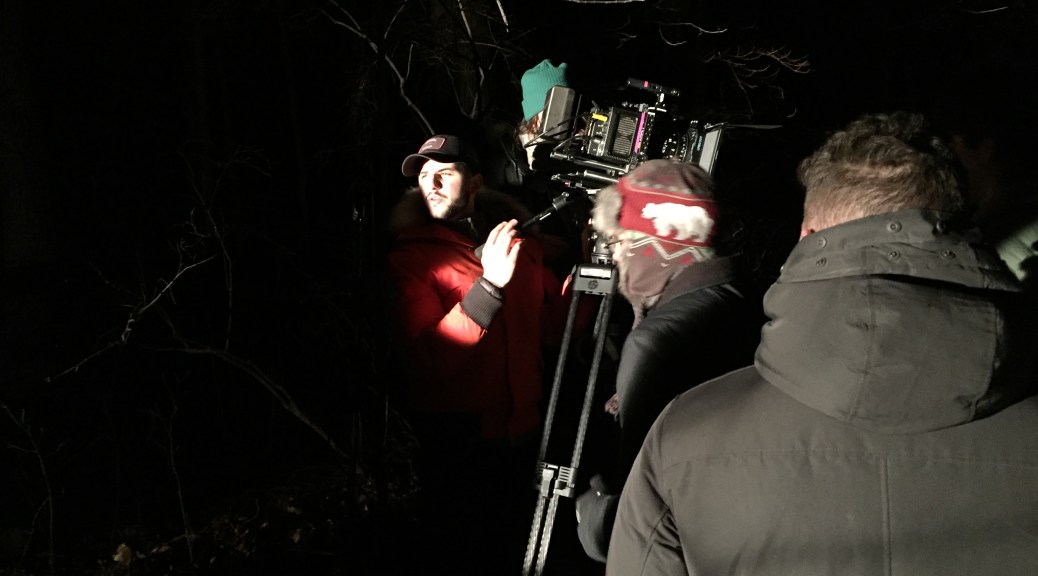
Artists suffer for their craft. For every self-important/self-indulgent creative type there are a thousand who are working in conditions that most of us would prefer to avoid. All of this is done for the sake of the creation of art. Cinematographer Ricardo Campos took this idea a bit too literally when working on the film “Sweet Dreams.” Because the story and the film’s cast and crew were so intriguing to him, he agreed to take on the DP position which was filmed in the North East of the US…overnight in the dead of Winter. A weekend shoot at the Beverly Hills Hotel this was not. While he admits that the experience was quite uncomfortable in terms of climate, the end product is what keeps him remembering more of the good than the bad. “Sweet Dreams” is dark and unsettling, which is an apt description of the physical sensation of making it.

The process of creating art can sometimes find itself positively correlated to the message it’s delivering. For a film such as “Sweet Dreams” this may not be a comfortable experience but channeling their emotions into their work is the positive manner by which artists deal with these occurrences. Like the postal service motto of old; neither rain, snow, freezing cold, or dark of night (all of which frequently occurred on this shoot) would deter Ricardo and the crew/cast of this film from their work. When the camera wasn’t rolling, it was quite common to find twenty or more people huddled together in a pop up tent with a heater. This energy and sense of desperation is palpable in the film. Eduardo Alcivar (director of “Sweet Dreams”) notes, “From the beginning of this project I knew it was going to be a difficult one to make but very rewarding. For starters, we began production on this show in the middle of winter in the North East which is as cold as it sounds. In addition to that, we were shooting overnight exteriors in the middle of the snowy woods so as you can imagine, things were a little more complicated than usual. I reached out to Ricky to shoot this project because he and I had been wanting to shoot a narrative piece together for a while and I thought that Sweet Dreams would be the perfect opportunity for that. He is a very driven professional. Once he understands what is needed there is no stopping him. He brought a high level of abilities and professionalism to the shoot that spoke to many of us.”

IMG_4607

The story of “Sweet Dreams” takes place over the course of one freezing night in the outskirts of New York. Two women, Carmen and Janie, are trying to discard a body. They are both call girls who work for a boss in the organ smuggling black market. Later that night when they find a suitable location and open the trunk to take the body out, they realize that the man inside is still alive. It becomes immediately clear to Janie that this man [Henry] and Carmen know each other and have been having a relationship. After a long argument in the snowy woods, and a message is sent to both of them by their boss with instructions to kill each other, both girls end up dead alongside Henry.

While everyone in the cast and crew had their hands full dealing with how the environmental conditions on set made them feel, Campos had to contend with how these factors affected what he was able to witness with the camera. Being aware of the possible outdoor conditions, Ricardo kept his lighting design decidedly simple but effective. A china ball on a boom was used as a floating key for the interiors. For the exteriors at the gas station scene, vapor lighting was used to match the practicals. Overall the lighting has a great deal of contrast and is punchy, as soft lighting would not be congruent with the feel of the film. Ricardo’s preference for natural organic imagery was the Alexa camera.

Fans clamored over this cutting and dark tale, which Campos confirms is always the goal. He concedes that he was quite happily surprised when the film was accepted to the 2017 Festival International de Cannes and was shown in the Short Film Corner. Cannes is perhaps the most prestigious festival on the planet and having your work accepted there communicates inclusion into a very noteworthy club. Ricardo states, “It was a huge honor to have the film show at the short film corner there. It was also amazing because it led to so much more work afterwards.”

Michael Whalley steals the heart of ‘Jean’ and audiences in new film

There is a camaraderie that comes from playing sports. Everyone has the same goal, they wear the uniform, they experience the same victories and failures as a team. For New Zealand’s Michael Whalley, he experiences that same solidarity from acting. He represents the team while still shining on his own. He works with that team spirit to achieve the best result possible. He loves to play, and considers acting a serious game, as each new project brings a new match and a different opponent. To use such a metaphor shows how much Whalley appreciates the intricacies of his craft, and this understanding translates to raw talent for this celebrated actor.

With an esteemed resume and unparalleled versatility, Whalley is an internationally in-demand actor. While working on many acclaimed films, such as the 2015 award-winning feature Psychoanalysis, he has shown the world what he is capable of. His work on Slow West, alongside Michael Fassbender and Ben Mendelsohn, received praise from audiences and critics, and this trend occurs with almost everything Whalley takes on.

“To think I could be paid for doing the very thing I wanted to do every day was such an incredible thought, so I sought to make that my reality,” said Whalley.

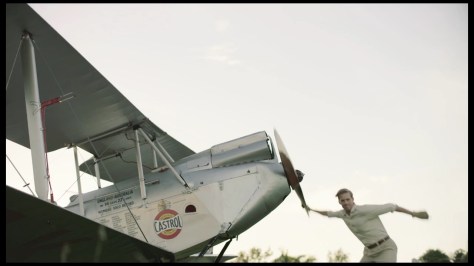
Earlier this year, one of Whalley’s newest films was once again a large success.  The actor played the leading character of Beverly Shepherd in the historical romance Jean. The film tells the story of Jean Batten, New Zealand’s greatest pilot, heroine, celebrity, and mystery. Beverly Shepherd is the romantic lead in the film. Beverly is a man with a strong moral backbone, a sense of fun for life and a determination to challenge for the things he wants in both affairs of his career and heart. Despite being the only son of wealthy Sydneysiders, he lacks the pretension of wealth. He can read people and knows instinctively if they are being untruthful. Independent and modern, he is attracted by Jean’s adventurous spirit and mystery. His greatest struggle is attempting to protect Jean from decisions that would put her in danger, only to have to accept that she isn’t someone who wants or needs protection. He knows he has to play a long game of love to not scare her away. Jean had lovers in her life, but Beverly is the one man who truly captures her heart. In the story, audiences see how headstrong Jean is with her life and career, and when Beverley sweeps in and shows her glimpses of recreation, fun and love, he innocently threatens her focus, creating Jean’s ultimate emotional conflict. Therefore, the filmmakers required a seasoned actor to play such a pivotal role in such an important story, and Whalley was the obvious choice, with the talent and passion to go with it.

JEAN 1 with Kate Eliot pic Ginnie Loane
Michael Whalley and Kate Elliot in Jean, photo by Ginnie Loane

“Especially in the past few years, it has been of growing importance to remind ourselves of the power women had in shaping the world. Too many films are one-sided in their portrayal of male heroes, and Jean was a heroine that defied the constraints of a male-driven world. The film, the first about Jean Batten, is a piece of entertainment, education and inspiration for New Zealand and the world to see. I had known of Jean Batten in the past, but this was a chance to see behind the tabloids and popular public image into the life of such a mysterious firebrand,” Whalley described.

After premiering earlier this year, the film has seen vast critical success. At the Film Awards New York 2017, Jean won an unprecedented nine awards, including “Best TV Movie” and “Best Drama Special”. These are immensely prestigious honors, as New York Festivals recognize only the best content from over 50 countries around the world. In addition, the film was successful commercially, airing on TVNZ, which reaches over 2 million people and has recently been acquired by distributor Banijay International for the ROW market. Such success could not have been possible without Whalley’s portrayal of Beverly.

“He brought a charm, wit and strength to the character of Beverly Shepherd that we could only imagine.” said the Producer and Writer of the film, Donna Malane.

Taking part in this period piece was enticing for Whalley, and as an actor he is always looking for new challenges and experiences to refine his talent. This story is set in the thirties, and Whalley researched the decade extensively to ensure he would completely transport audiences. Parts of this process were more fun than others, such as driving around an open top 1930s Model A Ford, and getting to know about the planes they were working with, which by a happy coincidence, were taught to Whalley by an old friend of his grandfather, Dennis. However, some parts of the preparation process were more grueling. Whalley had to take on the language, manner of speech and the classic nature of the period drama, and work to make that all ring true for his mouth, body and mind to create a genuine portrayal. To do this, Whalley infused his character with the parts of himself that fit best, which he tries to do for every role he can. This helps create an authenticity that captivates audiences, and what the actor is so well-known for.

Jean Ginnie Loane 2
Michael Whalley in Jean, photo by Ginnie Loane

Whalley says getting into the mindset of the time was made easier by the incredible costumes designed by Kirsty Cameron. As soon as he put on his gear, he felt clean, classic and upright. “Putting on my costume became a very important part of my morning ritual to get into Beverly’s shoes, literally,” he joked.

Improvisation also was a great tool for the actor when preparing for filming. During rehearsals with his co-star, Kate Elliott, they would have a series of improvisations around the scripted dialogue, which he says was a sure-fire way to find out what they knew or didn’t know about their characters and the world of the film. These exercises were helpful as the role of Beverly was a refreshing change for the actor, who often plays “punks and public nuisances”, and the character of Beverly is very dependable and ethical.

The actor also uses music frequently to prepare for roles. For Jean, Whalley made a playlist specific to what Beverly may have been listening to at the time, mixed with songs from Postmodern Jukebox to “get in the zone to play”, once again, similar to an athlete.

Undoubtedly, Jean is a must-see, and Whalley is enchanting in it, as he is so well-known to be. His passion for the story is evident, and his passion for what he does is even more so.

“This was a chance to act in an historical and important story in both New Zealand and International history. The true love of Jean Batten, at one point the world’s most famous and respected women. To play a character who had the charm, wit, intelligence and pilot skills to win the heart of the Lady that kept it locked away,” concluded Whalley.


Top photo by Ginnie Loane

HOW THREE RIVERS ACQUIRED ITS SUSPENSE

Screen Shot 2018-03-17 at 8.17.46 PM.png

Advertisers have become much more aware of the fact that interesting presentations equal more attention for their products as well as a longer life in terms of their production budget. To that end, shrewd and astute companies have given greater latitude to the artists they use in creating these promotions. Italian fashion company Golden Goose has utilized the duo of editor Aaron Bencid and director Marco Prestini in a trio of fashion films which are highly unusual, deeply narrative, and always compelling. It seems that the company subscribes to the idea that when you hire a professional, it’s with the understanding that you allow them to do what they know how to do best rather than telling them how you’d like it done. The director of Three Rivers for Golden Goose agrees with this as well as he states, “I was given a lot of creative freedom on this project and the only request made was to have three female characters. I used the opportunity to step out of my comfort zone and work on a narrative to portray the collection. I usually edit my own films but since I was piercing into new territory, I wanted to divide the labor with someone I knew I could trust so I asked my long-time collaborator and great editor Aaron Bencid. He definitely demonstrated a different sensibility and approach towards the project, which ultimately made it better. Working with him was a professional, intuitive, and overall well- rounded experience. A great thing about Aaron is that he’s not just someone who knows the ins and outs of the program, but he comes up with opinions and solutions of his own. He’s as good of a listener as he is an active participant during the editorial process.”

Screen Shot 2018-03-17 at 8.17.27 PM

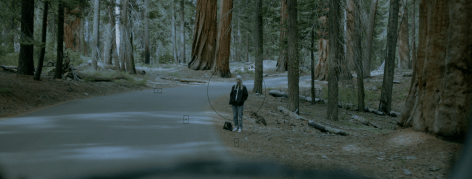
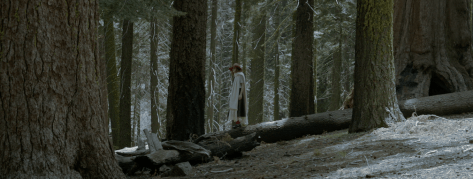
Bencid approaches every project whether it be film, television, web-based, promotional, etc., with the purpose of affecting the emotional impact of the production’s message. Three Rivers is a subtle drama with elements of suspense. An eerie and cryptic voiceover at the beginning hints to an uncertain world. The imagery is subtle yet powerful; its composition imposes a certain amount of anxiety. The character’s actions are purposely mysterious, inducing the audience into a sense of dread and confusion. The first visuals are that of the ancient sequoias; silent giants that for centuries have extended their presence towards the sky and the infinite. Birds sing amidst the foliage and forest community, where a road extends hiding in the trees. A black SUV approaches in the distance, dominated in every direction by the grandeur of the trees which overlook the black asphalt. Two women (Anna and Heather) have been traveling for hours towards the heart of the forest where, hidden among rocks and conifers, a small glass house is seen in the distance. This secret place far from the noise and the city is where as usual the two love to take refuge during the first days of autumn. Accompanying the duo is a mysterious hitchhiker they picked up on their drive to this remote location in the woods. The following morning, one of the girls is discovered missing.

Screen Shot 2018-03-17 at 8.18.16 PM

The setting for this story implies the same contrast that Golden Goose and their distressed fashion line is known for. The mystery and intrigue are compliments of the editor and director. The plot sets an obvious somber and eerie tone to which Aaron wanted to be faithful and magnify. His use of use of unnaturally long moments to induce a sense of awkwardness and uneasiness is reminiscent of Yorgo Lanthimos’ work (famed Greek director known for his creative vision in films like The Lobster, Dogtooth, Alps, and others). Bencid describes, “I never wanted the film to feel cutty. The mood of it was purposely slow and I wanted the film to flow like that in the edit. Involving too many cuts in a specific scene would overload it and disrupt its tone. This ended up being a main template; having the shots drag out instead of cutting it short. Remaining on certain shots for longer periods of time than normal helped me enhance the desired effect. I didn’t want the audience to realize when the cut came in, as if you were trapped in this loop; a loop that narratively parallels the ending of the film.”

Screen Shot 2018-03-17 at 8.18.33 PM

  Three Rivers was the recipient of copious accolades for its highly creative approach. Vimeo Staff Pick, winner of “Best New Creative Advertising Piece” (Interference Festival 2015), and Official Nominee “Best New Italian Fashion Film” (Fashion Film Festival Milano) were just a few of the many recognitions it received. What makes this all the more impressive is the fact that director and editor were on completely separate continents during the production of Three Rivers. Times zones and physical distance made it nearly impossible to communicate in real time, which led to email being a primary source of communication. It’s a very modern way of making films and the results of Three Rivers makes the very idea of this seem counterintuitive…almost impossible but yet it is very much accurate. Lending to the argument that Three Rivers is literally a piece of art rather than just a promotion was its screening at the Italian Museum Triennale under the exhibition “Il Nuovo Vocabolario Della Moda Italiana” 2015-2016. This is proof that Three Rivers and editor Aaron Bencid can proudly and literally be referred to as art and artist.

Screen Shot 2018-03-17 at 8.18.51 PM

NOT YOUR TYPICAL FUNNY MAN: JAMES PRESTON ROGERS

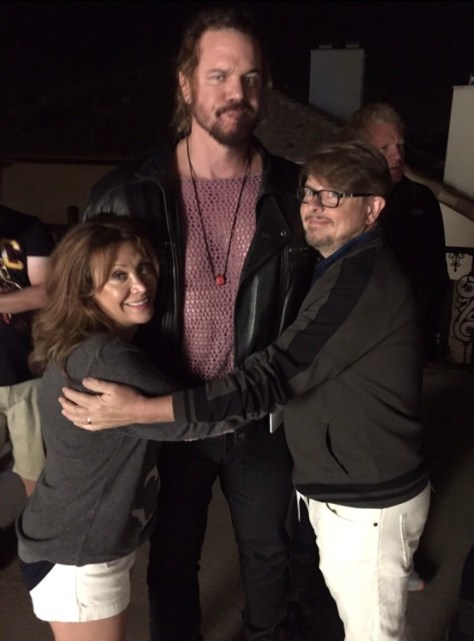
Actor James Preston Rogers is tight lipped about the plot details of the upcoming 2018 release Benjamin (Darius Films). What he is happy to speak about is his enjoyment of being in this film cast alongside so many comedic heavyweights. Rogers is so often noticed and cast for action roles (with a commanding physical presence of 280 lbs. and over six and a half feet tall) that displaying his comedic abilities alongside Kevin Pollak, Dave Foley, Rob Corddry, Peri Gilpin, Cheri Oteri, and numerous others was a joyful difference for him. His appearance as Ulf, a Russian semi-pro hockey player allowed James to stay close to the accent he had developed for the “Siberian” in “Frontier” (on Netflix) playing the nemesis of Jason Momoa’s lead character. The accent is as close as James gets in this film to any aspect of the melee that the Siberian or the combative aspect of Ulf’s hockey career in this comedic role. The inference of Roger’s commanding stature might be the premise of a fish out of water but James takes his place evenly matched alongside so many recognizable faces in the comedic acting world. As director and costar of Benjamin Bob Saget states, “Simply put, James is impressive. His comedy talent is obvious. He understood the role of Ulf and added great depth to it. It would have been easy to present the character as one dimensional but James portrayed Ulf as sincere, deep, and of course with the imperfections that make real people so funny. It was a pleasure to work with him and we were lucky to have him in the cast.”

Benjamin pic 5

Benjamin is the title of the film as well as the character which the story focuses upon. A teen who has decided to delve into drug use, a group of family and friends hold an intervention to dissuade him. During the act of revealing the skeletons in their own closets (in hopes of eliciting a similar response from Benjamin) these individuals all come to realize how they are perhaps living more chaotic lives than the young man they came to help. Rogers appears as the Russian hockey player/boyfriend of Benjamin’s mother Marley, played by Peri Gilpin (perhaps best known as Roz from TV’s “Fraiser”). ULF comes in as Marley’s boyfriend very supportive of her and her situation. Throughout the course of the story ULF realize that he doesn’t fit into this new world he has embarked on, and need to focus more on himself to make his dreams a reality. English is Ulf’s second language. He really loves hockey and Marley and will do anything for either of them as the wild side of the sport and this woman fulfill a part of him. Amongst all the other adults who appeal to Benjamin, Ulf is the character who is likely the most unlike them and therefore has an unexpected connection with the perspective of Benjamin.

Appearing as Ulf is the second time recently that James has appeared as a Russian (the first being in “Frontier”). The language and accent are nearly second nature to this Canadian born actor who spent his childhood and early adult years amongst a variety of cultures. His childhood friends in Toronto were German, Irish, English, Scottish, and originated from many other parts of the world. This was early training for his ears, training that Rogers put to good use in his acting career. In regards to his role in Benjamin, James describes, “The advantage I have over Russian actors is that English is my first language. You need to know that the script is written in English and is for an English audience looking for a Russian accent. It can be difficult for a Russian actor who learned English as a second language to hit all of the nuances of the jokes the writer is looking for. I’m sure it would be the same for me if I were in a Russian language film. Sometimes it’s about what you don’t say and let the space be taken up for the audience to complete the joke in their own mind. This comprehension gives me an advantage and I usually book these kinds of roles over the Russian actors. Like almost anything, you need to know your audience. If you put the accents on too heavy, you will lose your audience. You need to put on just enough and know the comedic timing for the joke to get across.”

Benjamin pic 1

Being cast alongside so many famous comedic actors might seem intimidating, and James admits that it was at first. However, the process became so enjoyable and satisfying that any insecurities took an immediate backseat to the experience. Rogers tells that the scripted and non-scripted jokes were plentiful and the conversations off camera were intelligent and enlightening; proof that like James himself, his costars are far from one dimensional. Rogers feels drawn to roles that (similar to career courses of larger actors like Dwayne Johnson and Jason Momoa) dispel the idea that an actor who is cast in action roles does not possess the ability to be equally gifted in comedy or drama. He confirms, “Just because are tall or in good physical shape doesn’t mean that we don’t have life experiences and emotions that equip us to communicate through the camera and onto an audience. Most well-known actors get painted with one brush and it’s very rare that we get to color outside the lines. I love seeing a comedic actor cast in a dramatic role and present another side of themselves. My father was hilarious and I think that part of that comedy gene exists in me. When I was in 10th or 11th grade we’d have these things called ‘cut-fests’ at school. You’d square off with someone and trade insults. People would cut class just to watch. It was all for laughs. Between my father and the cut-fest I was working on my comedy timing through my entire childhood, I just grew into being a big guy. Benjamin has given me the chance to show that training and the fact that I’m standing alongside some of the best comedic actors in the present day entertainment industry is beyond exciting.” James Preston Rogers has taken his rightful place as the physically and comedically impressive gentleman alongside his talented cohorts and can be seen doing so in Benjamin.

Anna Pniowsky masters different levels of fear to terrify audiences in ‘He’s Out There’

file 2016-12-02, 2 07 11 pm
Photo by Kevin McIntyre

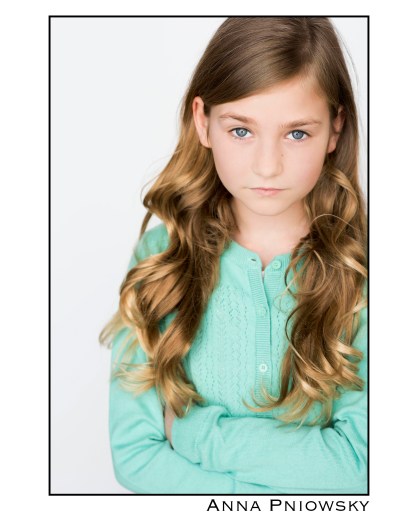
Even at the age of 12, Anna Pniowsky understands that choosing to pursue a career as an actress would not be worth doing for the wrong reasons. It is a cutthroat field to work in and if you wish to become an actress for glamor or fame, it is unlikely that you will be able to withstand the pressure and the challenges that you will be faced with. Pniowsky knows that becoming an actress involves a type of perseverance that most individuals will never require in their lifetimes. She is always on her game, ready for any audition, callback, or role that she is tasked with. On top of that, she has mastered the ability to look self-doubt in the face and turn it away. Her love for acting transcends any obstacle that she comes across and by believing in herself and surrounding herself with people who support her dreams, she has no doubt that she will be acting for years to come.

“If you feel that acting is truly in your blood, remember the well-known adage – it is a marathon, not a sprint. It takes a lot of auditions before you book something. You will feel self-doubt and you will want to give up, but if you truly love it, you can push forward. You just have to believe in yourself,” told Pniowsky.

Despite her age, Pniowsky has earned herself a breadth of experience and training in her field. Just this past year, she landed the lead role in a film written, directed, and starred in by Oscar-winning actor Casey Affleck. The film, Light of My Life, is a drama about a father (played by Affleck) and his daughter (played by Pniowsky) who live on the outskirts of a society that was destroyed by a pandemic ten years ago. Buzz about Pniowsky’s role in the film is already gaining traction as being a career-defining moment for the talented young actress and audiences everywhere are eager to see what happens when it premieres.

Prior to filming Light of My Life, Pniowsky won the role of Kayla in Sony Screen Gems’ horror film, He’s Out There. He’s Out There depicts the terrifying tale of a mother and her two daughters who take a vacation to a remote lake house and wind up being tormented by a murderer in the woods. In the film, Pniowsky acted alongside celebrated actress Yvonne Strahovski, as well as her little sister, Abby. She was paramount to the film’s storyline and appears in the entire duration of the film. In order to play her character as convincingly as possible, Pniowsky endeavored to master multiple different ways of appearing frightened. Since her character is scared throughout the entirety of the film, she felt it was very important to develop her character to be dynamic and she avoided appearing one-dimensional at all costs. With that, she developed various different levels of fear that she could transition back and forth between, depending on the intensity of the scene. In doing so, she created a character that audiences can relate to, and ideally, will identify with as they embark upon the journey that the film aims to take them on.

The film’s director, Dennis Iliadis, could not have been more pleased with Pniowsky’s performance. Knowing that the quality of the film rested entirely on the performance of his cast, he was determined to find actresses that could emulate the mood of the film directly into its audience. When asked about Pniowsky’s performance, Iliadis had the following to say:

“Anna was phenomenal to work with. For such a young age, she’s an actress of incredible intelligence, sensibility and instinct. I have never worked with a young actor or actress who is so hard working, disciplined and focused. We had a very emotionally demanding and technically difficult shoot but in those very challenging conditions, Anna gave a great performance in a role of strenuous physicality and very complex and heightened emotions. Even in the most difficult situations, Anna was always prepared, always ready to go. She really made the rest of us up our game.”

After wrapping He’s Out There, Pniowsky gained a new appreciation for the horror film genre. Most mainstream horror films today have one goal and that is to terrify an audience. It is rare, however, to be able to act in a horror film with an underlying moral compass. Pniowsky was fortunate enough to be able to identify the deeper meanings that the story tells. Not only is it a story that highlights the unrelenting strength of a mother’s love for her children, it also does an excellent job of emphasizing a journey of personal growth in Pniowsky’s character. She found herself inspired by the presence of strong, female characters in the film and feels that young girls can learn a lot from Kayla’s will and determination to survive. She loved seeing strong female characters taking charge and fighting hard for what they believe in. It is a message that women of all ages can carry with them beyond the film and into their own personal lives and Pniowsky was honored to be able to play a role in helping foster that movement.

FLIPPING THE SCRIPT WITH ROBERTO SAIEH

Honesty is one of the scariest things in our lives. At the same time, there can be no growth without it. One cannot move forward until acceptance of reality has occurred. This is both the core of the story of the film Asia A as well as the reason that director Andrew Reid worked with screenwriter Roberto Saieh on the project. Saieh has a talent for delivering a realistic perspective rather than the typical sanguine escapism which much of the industry is known for. While there is a time and place for both, the blunt actuality of Asia A (the title is derived from the American Spinal Injury Association classification of “A” for a person with no motor or sensory function preserved in the sacral segments S4-S5) causes it to stand out. Reid shares a strong connection to the storyline of the main character Marquise which made the film very personal for him. This makes it even more impressive that the director credits Roberto with flipping the story upside down in their initial meeting, a sure sign to him that this was the perfect screenwriter to help him create the intensity and realism that he demanded.

Asia A is the story of Marquise (played by London Brown of HBO’s “Ballers”), an athlete who has recently suffered a spinal cord injury which has changed his life dramatically. Without knowing whether this will be a lifelong change or a temporary one, Marquise is forced to deal with the uncertainty of his future and what he thinks it will look like. While the core of the idea may not be completely unique, the way in which the story is told is not the norm. This is not a film about events but rather about the characters and how their relationships are affected. The main character’s interaction with his (recent ex) girlfriend [Camilla] and his older hospital roommate [Noah, played by Emmy winner Pruitt Taylor Vince] present him with the choices of letting the actions of others determine his future or doing so for himself, during a very vulnerable and painful part of his life. Reid explains why he pursued Saieh to write the script stating, “Roberto’s creativity is what makes him unique from other writers. His goal is to create truly authentic stories that resonate with audiences. Storytelling is art, entertainment, and emotion all wrapped into one package and Roberto is a true storyteller. What ensures his success is his creativity and work ethic, which are unparalleled. Talent will get you into the room but it’s hard work that keeps you there.”

Roberto Sy-8914.jpg

An extremely benevolent impact of Roberto’s work in the eyes of the film’s director is that he flipped many of the key relationships in the film and by doing so changed the emotional kaleidoscope of it. A few expertly made adjustments completely transformed the way that the audience and even Reid was witnessing the characters and events. While most writers would fixate on what happened to Marquise, this writer focused on his response to them and those around him. Saieh came to this perspective by an unexpected association as he tells, “It occurred to me that Marquise, the main character, had to grieve the life he once had in order to accept the one before him. Using that as a starting point, I loosely modeled his journey based on the five stages of grief: Denial, Anger, Bargaining, Depression, & Acceptance; taking each as inspiration. It’s impossible for me to know what it feels like to be an Asia A patient but I have experienced different kinds of loss in my life. It is that sympathetic emotion that I overlaid onto the story and used to shape Marquise’s journey. I firmly believe that no matter what you’re writing about, as long as the emotional honesty is intact it will ring true.”

Although the injury happened directly to Marquise, the experience affects all of those around him and particularly those closest to him. In the original script, Noah is the hospital roommate of Marquise and becomes a protector to him. Wanting to present something with an inverse correlation to the norm, Roberto wrote Noah as crass and irreverent with an almost forced cheerfulness. Noah’s deceased wife pitied him and he used this as a crutch to combat the depression and anger of his situation. A diabetic, Noah is eating himself towards death and has already endured two leg amputations. Rather than a wise mentor, Noah becomes a textbook example of who Marquise does not want to become. Saieh describes, “To me, characterizing Noah this way seemed like a truer version of how people are lacking self-awareness and are self-victimizing while at the same time offering a harder-hitting narrative. I didn’t want to shy away from exploring the darker side of the themes. This isn’t the story of someone who successfully went through a similar experience and is now mentoring someone else through it. It’s the story of someone [Noah] who couldn’t do what life is asking of Marquise now.”

Further driving this point and doing so painfully for the film’s protagonist is the fact that his ex-girlfriend Camilla pursues what she believes to be the right thing in reuniting with Marquise. While the comfort of her support could be a band aid, Marquise is constantly confronted with the choices Noah has made and whether or not to face his difficulties alone but with honesty.

Roberto Sy-9225

Roberto began his writing career with Indie Dramas and desires to take this indie sensibility and attention to “character” that defined this early work to summer blockbusters and genre films. His fascination with romantic dramas comes from his belief that some of the worst wounds you can receive can be self-inflicted, which can seem even worse when they’re the right choice. This is perfectly stated in Asia A when Marquise rebukes Camilla’s offer in a self-aware understanding that her feelings resemble pity more than love. It’s a concept Roberto feels presents itself often in our lives. He remarks, “It’s a matter of digging into personal experience and those situations where you know a relationship is over but you also know it’s going to be up to you to end it because the other person, for whatever reason, isn’t willing to step up. Having the strength to self-inflict a necessary wound because it’s the only way to save yourself seems to be a recurring theme in some of my work; letting someone go, someone that you love to death, because they’re not right for you or because you know they will be your downfall. It wasn’t that much different writing Marquise in this situation, regardless of his status as a spinal cord injury patient.”

International Entertainment, and the Talents that Leave us Buzzing….