All posts by pressva

Producer Ricky Cruz brings out the laughs with quirky characters in award-winning new film

IMG_7851
Photo by Arthur Marroquin

Ricky Cruz found his way into producing in an unconventional way. Rather than spending his early years dreaming of working behind the camera, he did the exact opposite. It was his love of acting that led him into the film industry, starring in the popular 2010 South African film Spud alongside John Cleese and Troye Sivan. It was one of the more celebrated local films and an incredible experience to be a part of. Cruz loved every second of it; he believed acting was where he could best help people, by becoming a character the audience could project themselves onto.

After Spud, Cruz found himself working in local commercial campaigns, practical joke television series and National Geographic documentary specials. It was the rewarding experience of seeing something he was a part of come together as a final product that ultimately hooked him and helped him decide that he wanted to pursue a career in entertainment and filmmaking, however, the more exposure he had to film sets, the more he realized his true passion: producing. Since that time, he has become an in-demand producer in both his home country and abroad, with a passion for what he does that translates directly into every project he takes on.

Known for films such as the documentary Improv a Saving Grace and the romance Mixed Orders, Cruz is an extremely versatile producer. Branching into the comedy genre, Cruz has another hit on his hands with the flick The Neighbor. The film tells the story of an offbeat and strange character who tries to befriend a new neighbor before finding a friend just like him. It explores friendship and the importance of being you.

The Neighbor is very much my signature tone of a quirky character in an honest situation comedy, but the deeper level of the character actually being considered an outlier by other inhabitants of the immediate world, gave the film a subtle nuance of real loneliness and rejection, which are two very powerful and very well understood emotions. The Neighbor is a comedy sketch yearning to have its message received via unconventional comedy,” said Cruz.

Currently on the festival circuit, The Neighbor has already won an Award of Merit at The indieFEST 2018, an Honorable Mention at The London International Comedy Film Festival and took part in The Battle of the Sketches 2018. It was an Official Selection at Battle of the Sketches, Portland Comedy Film Festival and Rock and Roll Film Festival Kenya. With the onscreen comedy chops of Willem van der Vegt (Marvel’s Agents of S.H.I.E.L.D.) and writer Zain Ashar, the comedy short has proven its appeal. It was also one of two projects produced by Cruz that was accepted and won an Award of Merit at the indieFEST 2018.

“The fact that The Neighbor has been such a success makes me consider all the other original and creative characters that have originated from things like off-screen improv comedy or jokes between friends. I think the origin of these sorts of characters has a lot to do with their ability to resonate so profoundly with people. They are an exaggerated but honest piece of someone’s personality and because of the respective truth involved in their creation, people tend to relate very strongly to the character. There are so many other interesting character creations that similarly explore different parts of our personality and with The Neighbor’s success, it makes me seriously consider the prospect of utilizing these empathetic and exaggerated characters in their own respective short films or one that explores many of the mentioned characters in an ensemble driven piece,” said Cruz.

Cruz was ready to produce such a unique comedy. As he started in acting, he has vast experience with improv, making him the ideal producer for this film, knowing just how to embrace elements of improv for a familiar character. He knew what parts of the character needed to be showcased best to get audiences to relate and support such an absurd creation as well as where the character would need to be further developed.

“The project really is a showcase to display the type of message I want to spread with the type of characters and humor I want to use. It’s an example of a stage sketch and improv character that translates really well onto screen and acts as evidence that material discovered or created off screen should be mined and explored and adapted if possible because, such comedically conflicted characters are excellent vessels to relay important information and messages in a way that people can easily understand and enjoy. This film offers the ability to escape and comfort simultaneously and those have always been my favorite kinds of films because it is effortless therapy and can help like-minded audience members through turbulent times without them even realizing it,” he concluded.


Written by Annabelle Lee

Animator and Graphic Designer Andrea Mercado honors celebrated YouTubers with new film

As an animator, Andrea Mercado is tasked with bringing characters to life. It is one thing to make a character move, but something entirely different to make it look like it is truly alive. This is where she excels. She appreciates that the character needs to have physicality and transfer feelings to the audience, making sure they are always rooting for the protagonist, no matter how small a story. It is such a deep and thorough understanding of her craft that makes her a formidable leader in her industry, and her passion for what she does is evident in every project she takes on.

Often working on projects that inspire both herself and her audience, Mercado’s work as both an animator and graphic designer has been seen and appreciated by millions around the globe. She finds meaning in what she does with companies like NeuroNet, which manufactures learning software for children, and a recent mobile application she created for pediatricians that allows doctors to quickly find the best dosage of medicine for various conditions. She also helps to tell stories through her animation, whether for the web series Paradigm Spiral or girls video games for Driver Digital.

“I like bringing characters to life. I like knowing that people will see the animations and feel for the characters. More importantly, I like bringing joy into people’s lives, and animation is a nice way of doing that,” she said.

Recently, Mercado also debuted one of her passion projects, the film PINOF Animate! It is a film of her own creation, which features animations from various artists from around the world to recreate, shot by shot, PINOF 9. The reason for this project is to celebrate the 10th anniversary of the PINOF series, created by Mercado’s favorite YouTubers, Daniel Howell and amazingphil.

“We are just a bunch of artists from around the world who really like and admire two British dorks from YouTube,” said Mercado. “The film showcases talent from people from different ethnicities, ages and perspectives. Not all of them are professionals in the field. In fact, some of them are still in middle-school. I even received a message from one of the artists who worked with me, thanking me because now they know animation is something they are really passionate about and that a career in it is an achievable goal. At the end of the day, I think inspiring young people to follow their dreams and create their own projects is the most important thing that has come out of this project,” said Mercado.

Creating PINOF Animate! was the most fun Mercado has had working on any project in her career, but it was also very stressful. She had the opportunity to work with over 30 artists from around the world and before she could assign each of them their shots, she had to group the people based on their experience and quality of work. Advanced animators got longer shots, intermediate animators got shots that were only a few seconds long, and beginner animators got the shortest shots. She also received messages from artists who didn’t know animation but who wanted to join to project, so she gave them a few shots that would work perfectly as illustrated stills.

“Working with Andrea was a very relaxed and easy experience. She was very organized on this project, and kept the collaborators involved frequently updated with full transparency. She demonstrated full understanding if an artist was having trouble meeting their deadline. She also encouraged and supported the idea of artists showcasing to their social media any progress made along the way. I would definitely work with Andrea on any future projects,” said Victoria Putinski, Layout Artist at Wild Kratts Animation Studio who created several shots for the film.

Once PINOF Animate! was completed, Mercado uploaded it to YouTube. It did not take long for Daniel Howell and amazingphil to discover the film and tweet the link, which resulted in hundreds of thousands of viewers who quickly became fans of the unique project. Mercado was touched by such a response.

“It feels incredible. It was stressful and a lot of work, but in the end it paid off. All the fans that watched our video gave us amazing reviews and kept asking if we were going to do another one next year. Some people even emailed me saying they are ready to join the next project, even though I won’t be recruiting new talent until July. And of course, Phil Lester (amazingphil, one of the youtubers), linked our animation in one of his tweets and said it was amazing. Everyone started congratulating us and we felt very validated,” she concluded.

You can watch PINOF Animate! here.


Written by Annabelle Lee

Industry leading Casting Executive Helen Finnimore provides insight and advice

IMG_0477
Helen Finnimore

Helen Finnimore always envisioned working in the creative industry. As a child, growing up in Bristol, United Kingdom, she had a fascination with everything that happened behind the scenes. Even at a young age, she would sit and watch the credits at the end of a film or television program, seeing all the different roles it took to make a masterpiece. Now, years later, she still watches the credits, but she sees several familiar names among them, including her own.

In her youth, Finnimore joined the prestigious ITV Television Workshop in Bristol, England, their motto: “training tomorrow’s talent, today!” The workshop was established in 1985 and a resource offering experience for young people aged five to 25 in performance and production skills required for Film, Television, Theatre and Radio. Some very famous faces have walked through its doors! While at the workshop, she secured a children’s presenter role fronting a Channel 5 educational programme for two-five years olds called Look.

“In each programme I would pop up at a different location and chat about where I was and what I was up to,” said Finnimore.

Some 300 programmes later, as well as fronting the programme, Finnimore did everything on camera from feeding penguins, giraffes and lemurs and holding a lion cub to making Easter treats and Christmas crafts.

“I even got to travel to Wilmington in America and present an episode at Peggy Farrell costumes. I absolutely loved it, and it was here that gave me a real sense of what it’s really like in front of the camera,” she said.

Now, Finnimore is currently a Senior Casting Producer in the UK, and a leader in the industry behind the camera. Soon, she will be heading across the pond to Los Angeles to take on the role of Casting Executive for Lazy Bear Productions Inc., and she could not be more excited.

Lazy Bear Productions, based in Los Angeles, has headhunted Finnimore to work on a number of upcoming projects. One of which will be as a Casting Executive on Chatterbox, a new family primetime game show, and another of which is Off the Scale!, a large-scale entertainment show following a cappella groups around the United States. She will be working across both series, from pre-production through to filming.

“I’m looking forward to what the future has in store. 2019 is going to be an exciting year ahead as I’ve been approached by a television company in Los Angeles to work across and head up some of their new major projects, which I’m really excited about. Although I’ll never tire of working in casting in the UK, I am keen to broaden my horizons and pursue other opportunities,” said Finnimore.

While new opportunities and challenges lie in wait across the pond, Finnimore has made quite a name for herself on British soil. She has worked on countless successful film and television projects, and had the honor of sitting on the RTS Awards Selection Panel. She’s also interviewed the likes of Pierce Brosnan, Jake Gyllenhaal and George Clooney on the red carpet at the BAFTAS. She was responsible for securing talent on the UK’s debut series of The Voice Kids, something she never grew tired of, as was constantly amazed by the children she came across.

“I’ve always loved working on children’s programming and of course jumped at the chance to work on The Voice Kids. A big brand format with quite a reputation, I couldn’t wait to take on the challenge,” she said.

After meeting with the Creative Directors at ITV, one of the UK’s largest networks, Finnimore was tasked with finding the best casting talent to join the team, and once they were secured, she had the challenging task of figuring out how to approach the series, from an already well-established format. Word of the UK launching its first Voice Kids series got some serious attention and the pressure was on to deliver, and with Finnimore at the casting helm it did just that.

“We uncovered some remarkable talent over the series, some of which have continued on making an even bigger name for themselves, such as Courtney Hadwin, the Janis Joplin phenom with YouTube clips viewed over 50 million times,” said Finnimore.

Despite her vast success, Finnimore credits working on a bunch of educational programs for a company based in Sweden as the highlight of her career. She was able to travel the world doing what she loves most, casting for what the company deemed as the “project of all projects”. Finnimore had to cast 12 different teenagers living in different parts of the world, ready to tell the story of their life. She worked on her own, scouting and securing the cast, setting up shoots, securing licenses and permits, coordinating with film offices and tourist boards, managing the budget, booking the crew, and more. Once the cast was signed off, she spent weeks liaising with the scriptwriters and talent. When it came to film, she flew out and worked as the sole Producer/Director on location as well as the location stills photographer. She was the driving force of the show and got to meet some incredible teens with captivating stories.

“I met with local crews and filmed in London, Cardiff, Edinburgh, Belfast, Nassau, Ottawa, New York, and Los Angeles. When I returned back to the UK I continued to work for the company, casting shoots in New Zealand, Australia, South Africa and India – it’s the most I’ve ever learned in my career. Having all that responsibility and workload, working out of an office at home, certainly gave me some incredible skills. It has to be the hardest job I’ve ever done – but I’m so glad I had the opportunity to do it,” she said.

Undoubtedly, Finnimore has had a career many can only dream of, just as she did as a child staring at the names moving across the screen on the credits. Although it is a hard path, she encourages all those looking to follow in her footsteps and achieve their dream of working in the creative industry to never give up, just as she did.

“Don’t let anything stop you. It’s a fantastic career; it’s challenging, relentless, ever-changing, exciting and fulfilling. No two days are the same, no two projects are the same and if you’re good at what you do, you’ll get plenty of exciting offers on the table,” she advised.

Be sure to check out Off the Scale! and more of Finnimore’s exciting new projects throughout the year.


Written by Annabelle Lee

Zanda Tang creates epic and hilarious fight scene in award-winning animated flick

img_0512
Zanda Tang

As an animation concept artist, Zanda Tang shows his imagination and design to others through painting. He accumulates his knowledge and life experience into his art, creating a cathartic experience that audiences around the world can relate to. He researches every element of his designs, knowing the backstory of even inanimate objects, all to better tell the story he is visualizing.

Tang has risen to the top of his industry in China working on many distinguished projects. He has helped to market many illustrious brands in his country, from the China Academy of Space Technology to the Huiju Shopping Center Beijing. His work has captivated millions around the world, and several of his works, including Diors Samurai, Lion Dance, and Baby and Granny have made their way to many prestigious international film festivals.

Baby and Granny is a multi-award-winning short. The 2D animated action-comedy is about a baby and granny who share a common bond, as Baby’s mother is Granny’s daughter, but who fight like crazy when left alone.

“The story of the animation itself is one of the reasons why I joined the project. When I saw the story, I thought it would be a very interesting animation. This unexpected dichotomy lies behind the identities of two common characters. Such exaggerated and interesting stories are helpful for design. The story unfolds with a realistic plot. Granny scrambled to take care of the baby, but Baby couldn’t communicate with Granny. The story uses hyperbole to create a confrontation when two people fight. At the beginning and the end of the story, mother is at home, and they are in a normal state of quiet. And when mom goes out, two people become combative. The exaggerated character setting and rich story rhythm make the story very attractive,” said Tang.

The visuals are highly-influenced by the work of 60’s Pop Artist Roy Lichtenstein. This created a unique challenge, as they had to honor his style while still making their own. Tang did his part by researching the style and the script, figuring out how to best combine them. He was the props and weapons designer for the film, so he worked closely with the team to choose a weapon that is more suitable for both characters. In the early scripts, both characters used guns to attack each other. Tang did not agree with this. He thought the weapon choice could better explain the characters and therefore further immerse the audience into the story.

Tang’s role was pivotal for the climax of the film, the fight scene. Granny’s weapon consists of two Chinese kitchen knives that are drawn closer to the character’s identity and can be used to indicate her superb kung fu skills. For Baby, he designed more exaggerated firearms, such as an oversized gun to bring a sense of humor into the picture and added lovely and lively colors to help shape the character. In the background of most of the shots, Tang also designed many flying props. The props symbolize the characters’ respective identities and show off the absurdity of the fight, making the animation that much more entertaining.

“Many people think that you can easily get a good action movie if you put a lot of effort into the character. In fact, I think when characters move, what really makes their movements seem quick is what’s behind them. In this project, I not only put some props behind the characters, but also made efforts for the rationality and sense of painting of the animation. When two characters jump up to attack each other, something belonging to their characters flies behind them. Items, like Granny’s drawstring balls and kitchenware, which fly up behind the granny’s back, the teapot, and the toys and bottles behind the baby, are added to set off the exaggerated style. The design of these weapons and props is very helpful for the animation of the story picture and character action,” Tang described.

Tang’s efforts helped bring Baby and Granny multiple awards and recognition, including Best Animation Short Student at the Hollywood Boulevard Film Festival and Best Animation Short Film at the London Monthly Film Festival. It was a semi-finalist at the International Online Web Fest and an Official Selection at over 11 festivals around the world.

“I am glad to have made such a challenging project work. After we tried the new painting style, we can still have such great achievements. We were lucky and our efforts were not in vain. Spending a lot of time choosing weapons and items proved to be a worthwhile investment. This reward also makes the team members trust each other more, so we have more power to plan the next project,” Tang concluded.


Written by John Moore

Zekun Mao uses editing to create a thrill for audiences

Zekun Mao still remembers the first time she truly noticed film as a form of art, beyond a simple form of entertainment. She was watching Christopher Nolan’s 2000 blockbuster Memento, and she was fascinated by not just the story, but how it was being told. She began to immerse herself in movies, making her realize a passion that she never knew she had. She knew from then on that she was meant to go into filmmaking, and now, as an award-winning editor, she is living her dream.

“Whatever style the story requires, I will cut the film in that way. I would describe my style of editing as naturalism. I came from a documentary background. Being natural, or being real, is the most important thing. When I am editing, I like to stick to the style of the footage and stick to the tone of stories. I love showing the story as it should be. If it should be emotional, then I will make sure the way I cut the movie will make audiences feel that particular way,” she said.

Becoming an industry leader in her home country of China and abroad, Mao knows just what it takes to captivate an audience. This is exemplified with her work on films like Jie Jie, And The Dream That Mattered, Janek/Bastard, and American Dream, to name a few.

Last year, Mao also saw worldwide success with her film Our Way Home. The dramatic thriller tells the story of Chinese-American James, who picks up his older sister Barbara from college for Thanksgiving 1962. After a racist encounter in a diner, they think they’re being followed, but it’s not someone they expected. The story spoke to Mao, who has experienced similar forms of racism in her own life, which is why she felt compelled to work on the film.

“The story is about racism, especially at this moment when a lot of similar things are happening in the world. A lot of the feelings that immigrants have are painful, confused and embarrassing. Through this story, I want to tell the world that racism is a terrible thing and it shouldn’t happen to anyone. Moreover, the story is about Chinese immigrants. I want to highlight stories that are about my own community and about our history. As a Chinese filmmaker, I see that as one of my responsibilities. I think it is very important to show the difficulties and struggles that Chinese immigrants have even today,” said Mao.

Our Way Home had its world premiere at the Hollyshorts Film Festival 2018 where it was an Official Selection and is expected to continue its film festival run this year. Mao was pivotal to the film’s success. As it is a thriller, creating tension and uneasiness is key to captivating the audience, and editing is a vital tool to achieve this. Her work created the tone, bringing the audience into this dark world, making the thriller just that: thrilling.

“I am really happy that our film has been such a success. I feel really rewarded. All the hard work that we put in was really worth it. I am so happy that the story let the world pay attention to racism that still exists today. I am happy that through this film, I speak out loud what a lot of people want to say. I am also happy that I highlighted the story from my own community,” she said.

When editing, Mao made the decision of using fast cuts. During one crucial scene where the characters are being chased, Mao used her skills to create a feeling of danger, using jump cuts. The cuts are constantly jumping between cars and between the inside and outside of the car.

Mao thoroughly enjoyed her time working on Our Way Home. Everyone she worked with was dedicated to making the best film possible, and it shows in the final cut. Mao formed great professional relationships on set, which was almost the best part of working on the film. The best, she says, was sharing the story with a worldwide audience.

“The story is the reason why I worked on this project, and telling the story is the most enjoyable part of this process. I am very happy that I was able to tell this story, because I believe a lot of people experience racism in different ways. And a lot of Chinese-Americans had the confusing moment of figuring out who they really are. I hope after watching this film, audiences can think about all these problems,” she said.

Be sure to check out Our Way Home to see a telling and timely story, and just what Mao is capable of as an editor.


Written by Annabelle Lee

Yu-Ying Chuang Serves Up No Deer for Dinner

No Deer for Dinner

Chemistry; it’s vital to great filmmaking. Yes, this relates to the actors visible on the screen but even more so to the talent interacting behind the scenes. Director Yuhang Chen, Editor Yu-Ying Chuang, and Writer Otoniel Walker combined their talent for one of the most suspenseful and unique thrillers of the year in No Deer for Dinner. There’s more than one perspective on morality by the different characters in this film and it’s presented in a highly entertaining fashion because of the work of this trio. Chuang confirms that her initial discussions with the director about the story excited and convinced her to take on the editing responsibility. Her editing work has a pronounced and beneficial mark on this film which was the winner of Best Horror Short and Best Thriller Short at the Independent Shorts Awards this year. The twists and turns of the story become more understandable when viewed through his explanations of the process which sculpted it.

In a mountainous Nevada town, many people have gone missing without a trace. For the past thirty-six years, a single individual has vanished each year without any belongings left behind. When a young couple enters the town after robbing a bank, they take refuge in the home of an elderly couple by taking the residents captive. In a plot that keeps viewers guessing who is the greater threat, it becomes uncertain who is the captive and who is the captor. No Deer for Dinner is the sort of film which instills the idea that the most dangerous and lethal situations are the ones just slightly out of sight. The young felonious couple comes to the realization that hunters disappear in this Nevada town for a frightening reason.

“You might need to use editing to support me.” This was the phrase that director Yuhang Chen greeted Yu-Ying with when proposing she edit the film. His frustration was a result of conditions during the filming. Several scenes had been deleted leaving holes in the story. Chuang informs, “When I got the footage, I was surprised because it was not the same as the original script. We discussed how to solve the problem and how to create suspense from the footage we had. There was certainly some difficulty to this approach but it wasn’t impossible.”

Yu-Ying concentrated on spotlighting key scenes to make the tone more prominent. The fast pace of a frantic hunter being chased in the first scene is exponentially more panicked by the quick-cut editing. When the elderly couple are eating dinner and engaging in an unusual conversation, Chuang lets the scenes linger to an almost uncomfortable extent which maximizes the awkwardness. Describing the end of the film, Yu-Ying explains, “The penultimate scene ended in Roger killing the police and taking the gun out to shoot the female robbers. At the beginning of the last scene, I wanted to have a little suspense about what kind of a person Roger is. The first picture I used is Roger is preparing food and when the camera slowly slides back, the woman is tied on the chair and the policeman’s body is on the table. I wanted to make the audience think that it was a normal day. It’s this shocking realization that Roger hunts the hunters to eat their organs and meat.”

No Deer for Dinner 2

While editors are referred to as filmmakers often equal to the director, in many cases they are dubbed “problem solvers.” No Deer for Dinner has a disturbing and chilling feeling most prominently because there seems to be a realistic path to this situation actually occurring. For this film, Yu-Ying Chuang has drawn and highlighted this line with great effect and success, to the benefit of the film and audiences.

Britain’s Dionne Neish on timely new podcast ‘Purple Panties’

As a child, when Dionne Neish was being read to, she would imagine she was the main character in the stories, becoming a hero and fantasizing of traveling in spaceships and seeing other worlds, playing warriors and princesses and anything else she could imagine. It was a natural transition to go from playing a role in her head to playing one in front of a camera. She sees her job as an actor as a method to leave a lasting impact on her audience. She has known since the age of five that she was meant to get into acting and has spent every day since in love with the craft.

“I wanted to go into acting to entertain people. I loved the way I could affect another person by not being myself, by playing a role,” she said. “I wanted to be an actor as I felt characters were far more interesting than myself, why not live in another person’s shoes for a while.”

Neish is now known for her tremendous ability to captivate an audience, sometimes with just her voice. She has done just that in renowned productions, such as ABC’s long-running soap opera General Hospital, the 2018 Golden Globe nominated television series Better Things, and more.

Earlier this year, Neish also began working on yet another celebrated project, the podcast Purple Panties. The series, the first of its kind, is a scripted fictionalized erotic drama whose characters were Black female leads from the LGBTQ community, which drew Neish to the show.

“I wanted to be a part of this project because of the interesting and fun storyline, and it highlighted part of the community that I believe hasn’t been given enough main stream platforms. I’ve been lucky enough to work with several female led projects in the past. Being part of an all-Black female cast was refreshing and exciting. This is a story written by a Black woman, told by Black women. Representation matters and when you get to be a part of that it’s like coming home, and the camaraderie is electric. We need more stories from these and other POC perspectives. This is a story about the LGBTQ community without the stereotypes. It’s sexy, it’s funny and you’ll be hooked once you listen to it,” said Neish.

Created by New York Times Best Selling Author Zane, the podcast is based in Atlanta, telling the story of Maddox, Loren and Stephanie, who go against the grain when it comes to sex. But as relationships shift and physical needs change, can they keep up with the facade? This is about the sacrifices people make, the mistakes they make because of pride, and trying to find love in a world where the characters are seen as less because they are women, black, and gay.  Listeners follow them on their journey as they navigate their professional and personal lives.

In Purple Panties, Patricia is a vital role in telling an important and timely story. She is a self-made business woman who thinks she has the upper hand with Stephanie, played by Melissa Williams. Patricia soon realizes that Stephanie is smarter than she looks and isn’t going out without a fight. Professionally, she is big wig in the entertainment industry. She is a successful showrunner with lots of hands in different pies. She’d worked hard to be at the “big boys” table, a space occupied by only white men. She’s had to prove herself time and time again and now she is in a position where she gets offers from attractive women.

STITCHER_COVER_PurplePanties_3000x3000_Final“Obviously with the #MeToo movement, it reminded me of the stories that we’ve heard over the last few years of people abusing their power. This was an opportunity to get inside that mindset, what makes this person tick; why would someone with so much to lose take those chances? It was interesting to explore,” said Neish.

While recording the podcast, Neish found a sudden and unexpected source of inspiration. She walked into the same recording booth that Michael Jackson had recorded his ‘Bad’ album in the eighties. As a massive MJ fan, Neish was immediately taken aback. Knowing she stood in the same place that her idol had once stood, she was excited and inspired to work even harder.

Purple Panties premiered on Stitcher.com, which also premiered Issa Rae’s Strange Fruit, on October 11th 2018, followed by an episode every Thursday. The final episode was December 6th, but the entire series is now available to binge on Stitchers.com.

“I love having the opportunity to tell stories that inspire. Fans have reached out to me on Instagram, telling me how much they love the show and how juicy it’s getting and that warms my heart. That’s really all you wish for as an actor, that the audience is enjoying and coming along for the ride,” said Neish.

The next year promises to be very exciting for Neish. She has two projects coming out that she still can’t discuss. All she can say is that she got to work with two different Oscar winners on two highly-anticipated projects. One will be released soon, and the other on Netflix later in the year.

In the meantime, be sure to check out Purple Panties.


Written by Annabelle Lee

Walt Disney Animation Studios Hosts Bali: Beats of Paradise

Disney 1

In a moment that mirrored the artistic exchange of the film Bali: Beats of Paradise, Walt Disney Animation hosted the talent of the film for a screening at their studio. Director Livi Zheng, Executive Producer Julia Gouw, and gamelan composer Nyoman Wenten viewed the film with some of Disney’s most creative forces, including the producer of Moana and the Head of Story for Frozen. Disney’s invitation is yet another indicator of the recognition Bali: Beats of Paradise has been receiving since its US release on November 16, 2018.

Beyond exploring the culture that created Balinese gamelan music, the film displays western artists being influenced by its character; integrating gamelan into modern day western musical styles. A question and answer session followed the screening in which Wenten, Gouw, and Zheng discussed filmmaking and Indonesian culture. Nyoman Wenten remarked, “It is amazing how quickly like-minded people attract each other. I can already see the start of a beautiful relationship between Livi and the creatives at Disney. I don’t know if any other Indonesian before Livi Zheng was ever invited to show their movie in front of the top brass in Disney. This is amazing and it makes me proud today to be an Indonesian”

Receiving a hospitable tour of the Disney Animation Studios, Livi revealed, “Disney is  remembered fondly by many children around the world. I remember so many happy memories from watching Disney movies; I am very glad that today I was able to be here and introduce my unique culture to the hardworking artists at Disney”. Executive Producer Julia Gouw noted during the film’s premiere at the Academy of Motion Picture Arts and Sciences in Beverly Hills last November, “Crazy Rich Asians put Singapore on the map, so we hope that Bali: Beats of Paradise will put Indonesia and Bali on the map.”

Mufeng Han’s Noir Blue

Screen Shot 2019-08-22 at 11.09.35 AM

While most everything seems to be shot digitally these days, cinematographer Mufeng Han not only embraces the use of traditional film, he’s become increasingly sought out by other filmmakers for his expertise in its use. There’s no question that actual film has a profound look and feel; working with it is remarkably more demanding than shooting on a digital platform. Beyond a familiarity with the idiosyncrasies of film, it takes substantial forethought and planning to conserve film for any production which utilizes it. Director Lan Liu was adamant about using film for Blue, his crime film with a mind altering perspective. In order to properly possess this tone for the film, Liu enlisted the talent of Mufeng with great results. His work on award-winning films like Patrick (winner of Best Narrative Film at the New York Film Awards) and others confirms his skillful approach but it’s the creativity which stands out in his cinematography for Blue; declaring that his voice stands out in the midst of others of his generation.

Blue is a suspenseful crime drama with a bit of a twist on the standard film noir. There’s a substantial amount of camera slight-of-hand involved in telling this tale and producer Yuanhao Du decided to enlist Mufeng as both the director and cinematographer to create the perfect unified approach to this. The story follows a drug dealer who is desperately trying to pay off his debt. When he is stood up at a money drop, he returns home only to be attacked in his own garage. As the events occur, we begin to understand that there’s something about this new Blue drug which is directly related to this drug dealer, the attack, and the secret of the film. (Spoiler Alert!) What becomes illuminated is that the drug dealer and the attacker are actually the same person. In a crime centered twist on the Groundhog Day premise, it becomes obvious that either reality or the main character’s state of mind has become altered. The greatest enjoyment of this story is discovering which.

The plot of Blue challenged and excited Han as both director and DP. Firstly, the film was shot on 16MM and thus possesses those magical traits which only real film delivers. The initial thought was to shoot in the traditional Noir black & white but Mufeng wanted to take a cue from the film’s title and try something different. The result is Noir-adjacent and notable in its uniqueness. The most impressive example of Han’s work in this production are the fight scenes. Carefully designed, rehearsed, and executed, these three second cuts used a stand in with the main actor. The fast action and intentional blurry faces emphasized the frantic tone and empowered the deception that both characters were the same actor…until they actually were! Han describes, “For one of the most prominent fight scenes, there was no way to avoid showing the character’s face…which was of course our main actor. To achieve the proper look and elicit the shock of the audience, I designed two characters in the frame but with same actor. I kept camera position and let the same actor perform the scene twice as different characters. The two frames were then combined in post, creating the illusion of two versions of the same actor in one frame. The extra effort and time was worth the response we got from the audience.”

Screen Shot 2019-08-22 at 11.04.36 AM

The accolades Blue has received is a result of the full efforts of the cast and crew but there’s no downplaying the immense impact of Mufeng Han’s vision for this film. Though he’s often worked with other directors as their cinematographer, with Blue he proves that he has spent his time on set both fulfilling one role and absorbing the influence of the notable directors he has worked alongside.

Chavda’s Empowerment of Very Grave Robbers

Very Grave Robbers 2
Producer Carina Chavda

Producer Carina Chavda will tell you that making a film is a result of having talented and skilled professionals as part of your team; making a great film is the product of this AND building relationships throughout your career. Particularly for a producer, steering a film and finding the best people for a particular project means being keenly aware of what they can bring to the process for optimal results. Very Grave Robbers is a 2018 film produced by Chavda which won a host of awards including the Audience Award, Best of Los Angeles, Grand Champion Audience Award, and Best Ensemble cast (48-hour film project). Additionally, this film received a number of nominations at the Austin Comedy Film Festival (2018), and was screened at the prestigious Massachusetts Independent Film Festival. Its success is due in large part to the equal parts expertise and intuition (honed through experience) of Carina.


Keeping an eye out for those she would like to work with has always been part of Carina’s approach. When she was attending the screening of her film I See You, on which she served as producer (with writer-director Manjari Makijany, Academy-Award nominee Aaron Glascock, and BAFTA winning composer Marius De Vries), she met director/writer Joe Boothe. The two exchanged mutual admiration for their films appearing at Cannes that year and expressed the hope of working together. Within a matter of months, a film idea materialized for this occurance and Boothe’s writing partner (and wife) Alexa Alemanni joined. The product of this collaboration, [Very Grave Robbers] is suspenseful, comedic, and exceptional in its dialogue. While the cast is exceptional, it comes as no surprise that the writers are the vehicle which fuels this tale.


As with many great films, Very Grave Robbers is much more about human nature and its shortcomings than simply the events that unfold throughout the story. Andrew and Peter are burglars by trade. They break into a house but are surprised when they are interrupted by many people arriving during mid-heist. The group is an extended family which is returning from the funeral of their grandmother. Assessing the best way to make an exit unnoticed, the two thieves decide to borrow some clothes from the closet and blend in with the mourners. As they attempt to make a casual departure, Andrew comforts a comely family member and feels a connection. Both he and Peter begin to imbibe copious amount of alcohol and end up falling asleep in the same residence they were attempting to burgle. Later that day they begin to regret their actions and embark on a path that does not end well for them.


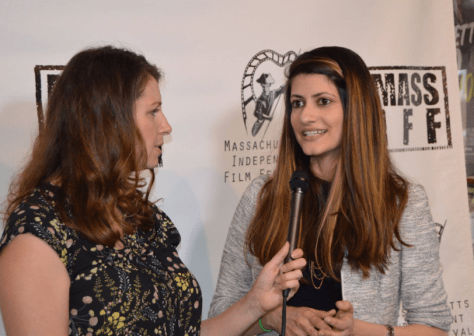
  Very Grave Robbers screened at the Massachusetts Independent Film Festival to an exuberant audience. Chavda attended the showing and admits to being stunned by the audiences overwhelmingly positive reaction. She relates, “You always try to make the best film possible. At some point, you are so deep inside the process that you just naturally lose some perspective. Our production schedule was extremely limited and I was taking care of the numerous obstacles that every producer has to overcome. When our DP injured his hand before the shoot, I had to figure something out. When we needed to juggle multiple shoots, I had to make sure everything was seamless and smooth. When you are immersed in that, you sometimes forget just how amazing the work of those around you and the film itself actually is. I have to thank that crowd at the Massachusetts Independent Film Festival for shaking me back into reality. It was great to be there with them and see their excitement.” Chavda’s fellow filmmakers showed her some appreciation, seasoned with a bit of humor, taking a cardboard cut-out of her along to the Los Angeles premier of Very Grave Robbers when her schedule prohibited her attendance. Even if only there in spirit, LA praised Chavda and the film similarly.

Very Grave Robbers 1