Finessing the Footage: Film Editor Oliver Harwood

Oliver Harwood
Film Editor Oliver Harwood

Like a well trained surgeon, award-winning film editor Oliver Harwood’s ability to carefully cut together media is as inspired as it is precise. A storyteller at his core, Harwood’s impressive body of work spans widely across a decade, boasting perfect examples of both skill and art in dozens of films, including the multi-award winning “Waste” and the international sensation “A Meditation,” which was chosen as an Official Selection of more than 25 film festivals across the globe.

Originally from Northamptonshire, UK, Harwood is far from just a “set of hands” in the editing room. In the industry, Harwood’s strong ability to work symbiotically with the director is a coveted talent, setting him apart from other editors who let their own personal style get in the way of the director’s vision.

“As an editor, I feel that my personal taste is a secondary concern to the director’s intention,” he remarks. “I like to think that my personal style is to have no personal style. In other words, it’s about bringing out the personal style of the director. If an editor’s primary concern is to impose an intrinsic style on every project they do, they should quit editing and be a director,” he says with a smile.

Film Poster for "Waste"
Film Poster for “Waste”

And acclaimed director Justine Raczkiewicz of “Waste” may agree. Her film, edited magnificently by Harwood, took home many awards through a large circuit, including Best Female Director at the Hollyshorts Film Festival and a Finalist at the USA Film Festival, as well as multiple Official Selections for festivals including the Brooklyn Film Festival, Chicago Underground Film Festival, Fantasia Film Festival and more.

“Waste” tells the story of Roger, a shy and reclusive man working at a medical waste disposal facility. In the film, Roger becomes infatuated with his roommate Olive, a woman who models herself after a 1950’s housewife and seems to be more interested in pursuing the latest culinary fads rather than finding a mate.

Roger finds her quirkiness endearing, but learns one night over dinner that they have slightly variant food preferences (read: Olive eats human beings.) Roger politely dines with Olive, apprehensively crunching a sauteed human tongue which she has procured from a website selling ‘the discarded tongues of Buddhist monks who cut them out to be closer to God.’

Awoken now to a grizzly new world, Roger must balance his feelings for her with this dark new insight into who she is. After nodding off at work, Roger experiences a series of disturbing and strange dreams which ultimately lead him to confess his love for Olive.

Roger arrives, flowers in hand, to find Olive in a ball on the floor. She has severed her own toes and, barely hanging onto consciousness, she tells Roger that she’s tried to saute them. The picture changes to a black screen, and credits roll over audio of Olive instructing Roger on how to perfectly cook the toes, and Roger seems to be obeying.

Harwood does a brilliant job telling an unsettling love story using carefully selected lingering shots and impeccably timed cuts. At times, thanks to the editing technique, the viewer’s own levels of discomfort seem to perfectly match what the characters are feeling in that moment.

Harwood articulates his method best, explaining that “typically, a scene would start with a wide shot to establish the space, and then gradually work into the close ups, where the best performances are usually found… But with this one, we decided to start some [scenes] with a closeup shot, and then work our way to the wider shots. This helped reinforce the weird and uncomfortable tone of the story by creating ambiguity to some of the physical spaces used in the film.”

In film, when genres are combined, it takes an experienced, intelligent, and talented editor to tell the story correctly, without playing up one genre more than the other, and Harwood delivers this impeccably.

“When a film chooses to explore darker subject matters with a comical slant to it, the story must remain engaging enough to stand on its own and not be overridden by the themes,” he explains. “Otherwise, the overall feeling of the piece can be left feeling a bit pretentious without a strong emotional narrative to back it up. I tried to remove all thoughts of deeper meaning and intellectual subtext when editing and focused on the emotional through lines that guide the audience.”

Film Poster for "A Meditation"
Film Poster for “A Meditation”

Able to get into the minds of all types of genres, Harwood also displays exceptional work in the film “A Meditation,” which took home six awards from festivals including the MedFF and the Red Corner Film Festival, and screened as an Official Selection of the BLOW-UP International Arthouse Film Festival, Eindhovens Film Festival, Lisbon Film Festival, Oaxaca Film Festival, Kansas City Film Festival, and the San Francisco Black Film Festival to name a few.

This film, on the surface, does not appear to have much going on in terms of the story itself. “It revolves around a man who seems to be ambling through a particularly aimless point in his life,” Harwood describes. “He has no quest, no great adversity, just a vague sense of anxiety that comes with anyone who fears the existential dread of an empty weekend. He meditates, feeds his cat and browses the news, everything done without any particular enthusiasm or resentment.  He seems to be just passing the time.”

The subject is awoken from a midday nap to his doorbell ringing; a young woman wants to buy a DVR he listed on Craigslist earlier that day. She wants to ensure that the machine works, so she follows him into the house to test it out. While in the bedroom, she notices marijuana on the dresser and asks, rather bluntly, if he’d like to smoke. They do, laughing together, and then the woman suggests they take off their clothes and get into bed. The initial awkwardness wears off quickly, and the pair embrace each other warmly until they are interrupted by the woman’s ringing cellphone. Her boyfriend has called, and she has to go.

She leaves, her warmth and presence from moments before replaced with a curt, aloof awkwardness, and the male subject goes about his daily routine of nothingness.

Harwood leans into the simplistic tone of the film by making similar editing choices at the top of the movie. “Because this is rather a simple story, I felt as if the editing of the piece should reflect that. Before the girl arrives, nothing of much significance seems to be happening, though there is a heavy emphasis on establishing a mood and tone,” explains Harwood. “To be able to do this effectively and as economically as possible is something that I believe is vital to a story of this kind.”

However, when the film moves in a more sexually explicit direction and the characters start to open up to each other, the shots became much closer and more personal.

Harwood says, “It was this break in style that influenced me to shift from a rather ‘matter of fact’ and simple editing practice to more abstract and emotionally driven choices.”

The shift is seamless; the viewer cannot quite put their finger on what has happened, but rather they can suddenly feel a change in energy, and this is the mark of a very, very good editor.

“Outside of the technical skill to handle the physical editing of the film, Oliver brought his unique and specific talents and approach to storytelling which is why I selected him to be the editor,” says Joe Petricca, the director of “A Meditation.” “He has great taste in and knowledge of film.”

The director and cinematographer may get all the coverage in the world, but when it comes down to it, how those shots are carefully stitched together bares some serious weight in regard to the final outcome and impact of the project. Oliver Harwood is undoubtedly a gem amongst ediors in the industry, and his refined and invaluable skill set is truly an asset both to the industry and to audiences worldwide.
 

Using makeup to embrace womanhood with Allison Giroday

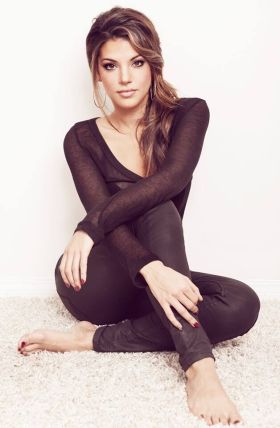
Allison picture sitting down
Allison Giroday, photo by Liz Rosa

There is a common understanding in the fashion industry that clothing, and makeup are products that you buy, but style is what you do with them. Style is eternal. It doesn’t fade when new trends emerge, or when old trends divulge. For makeup artist, Allison Giroday, style is inherent, running deep through her veins. She credits her love for fashion and makeup to the fact that she grew up in one of fashion’s most acclaimed decades: the 1990s. She recalls herself as a young girl, inspired by the token 90s bombshells she’d see on billboard signs and magazine covers. She even remembers her 13-year-old self, locking herself in her school bathroom, trying all sorts of tips and tricks to achieve Pamela Anderson’s signature smudged-eye and baby pink lip look.

“I thought those women were just the most beautiful women in the world and I would stare at their pictures, studying their makeup. I collected fashion magazines and watched Fashion File. I never anticipated that I’d be in the position I am, looking back on those days. Now, the greatest feeling in the whole entire world is when a client gets excited over the reflection she sees in my mirror. It doesn’t matter whether she gasps, smiles, tears up, or sits up taller, it brings me a pride like no other. Every woman deserves to feel beautiful, powerful, and confident. I love the fact that I get to be a part of that,” raved Giroday.

Fortunately for Giroday, she has been able to be a part of that journey for a number of different people, projects, and publications over the duration of her career. For instance, Giroday was referred to hit Canadian artist, Lights, in order to do her makeup for Canada’s largest, most prestigious music event, The Juno Awards. She has also worked for several other celebrities such as professional basketball player, Steve Nash, and successful rap artist, Lil John. Her work has even found its way into publications such as Glassbook Magazine, British GQ, Life & Style, Reader’s Digest, and several others. When founder and editor-in-chief of Mother Muse Magazine saw Giroday’s work, she knew she had to bring her on board for her publication.

Mother Muse is a fashion and lifestyle printed coffee table book, available worldwide, that focuses on the quality of slow living and modern motherhood. It is rich with artwork, articles, interviews, and editorials intended to inspire everyday women and everyday mothers to follow their passions and to live life to the fullest. Due to its heavy emphasis on style, Mother Muse is often full of unique images of models, beautiful color schemes, and several other style inspirations. It is important, therefore, that Mother Muse work with exceptionally talented artists to shoot images that will captivate their readers’attention at first glance.

They begin every shoot with a mood board selected and prepared by the editor with a description of the woman or women that will be featured. This is when Giroday begins to determine how best to match her model’s facial makeup with her other style and hair elements. In a constant determination to outdo her former self, Giroday places great emphasis on keeping her makeup looks current and ensuring that she doesn’t fall behind on the latest trends. With that, she conducts research in her own time to ascertain that she is providing her clients with the latest and greatest that the cosmetics industry have to offer.

“Success has the ability to breed complacency and that’s an easy trap for an artist to fall into because at that point, you stop continuing to grow. It’s important to want to stay inspired so that you never fall out of love with what you are doing. To me, the term makeup artist really is about the art. I don’t just apply makeup, I paint the canvas. My goal is to make my client feel like it’s the best makeup they’ve ever had and I’m so passionate about that,” noted Giroday.

In addition to her passion for makeup itself, Giroday loves working for Mother Muse, as it allows her to explore femininity with every shoot and to embrace the qualities of a goddess. She has crafted her talents so much over the years that she manages to evoke emotions of power and wisdom through the makeup looks she presents and with that, her work tends to flow seamlessly alongside the rest of the magazine’s team. She loves being able to work with other organized, motivated individuals to promote and celebrate the nuances of motherhood, and womanhood in general. What’s more, is that Giroday gets to see the final outcome of her work in print form, a dying art. She loves the fact that she can pick her work up, hold it beneath her fingers and touch it. The amount of dedication and love she puts into her work makes it all the more exciting when she gets to hold it in her hands.

Overall, Giroday considers herself fortunate to have had the opportunity to work with Mother Muse in the past. Every time she is brought on board for a project with them, she remembers exactly why she fell in love with their publication in the first place. She also takes great pride in knowing that Mother Muse has been covered internationally by Yahoo Australia, as well as the Daily Mail. It has also showcased the faces of popular celebrities like Selma Blair and Brie Bella. Next time you’re walking by a copy, pick one up and witness Giroday’s greatness with your own eyes.


Written by Sean Desouza

Richard Rennie: Dominating the Entertainment Industry from All Angles

Multi-hyphenate Richard Rennie – well-known for his work across the fields of acting, modeling and dancing – is not going away anytime soon. Much like entertainers Jennifer Lopez and Donald Glover, Richard has found that expression in all areas have helped him cultivate a truly unique place as an artist in an ever-evolving world. It’s this quality that ensures that there is no one really else like him. Yes, he might fall in the same area as the aforementioned Lopez and Glover – zipping between jobs on even a daily basis – but the energy with which the award-winning performer does it, is very distinct to him.

“I think I’ve always had a unique way of looking at things; a little bit left-of-centre, that has meant people know when ‘Richard’s stamp’ is on a piece of work. Whether that’s a film project I’m acting in, a performance I’m dancing in, or a campaign I’m featured in as a model or spokesperson.”

The entertainer, well-known for his work at the Moulin Rouge and on “Unverified” for Funny or Die, has several acting projects out this year that would suggest this man never quite stops.

Screen Shot 2018-06-12 at 10.57.55 pm (2)
Richard Rennie has a slew of acting, dancing and modeling projects out this year.

“Bachelor Lions,” co-starring David Arquette from the “Scream” franchise and “Eight Legged Freaks,” is one such film that will showcase the unique blend of performance skills that Richard has at his fingertips. “I actually got to play their dance coach in the film.  It was an amazing experience – combining my love of dancing and acting. David Arquette, Mitchel Musso, and James Maslow were all so great to work with and I must say, they’ve all got some moves.”

This project, from RiverRock films, has already had a VIP screening at Cinerama Dome, the famously known leading first run theater. “Unfortunately, I was unable to attend the red carpet event, as I had commited work in Paris at the time. My co-stars included me though.  They were sending photos of themselves all posted up on the red carpet showing off some style, but that only made me want to be there more” Richard explains with a wink.  

Another project Richard has lined up, “My Mom Is Dead”, marks a change in pace for the comedic thespian who plays ‘Kristoff’ in this heartbreaking drama. “That film was challenging to shoot.  The story was created from real life hardship and experiences of the writer. It was great to have her on set sharing the experience with us. I wanted to make sure that we respected her truth and portrayed her story in the most realistic way possible. The whole cast went through something magical together, as we let our raw emotions run free to tell this sad but beautiful story.”

Co-starring Melanie Vesey (“Law & Order”, “Man on the Moon”) and “Twilight” hunk Michael Welch, also well-known for his role in “Z Nation” and NBC’s “Grimm”, “My Mom Is Dead” hails from acclaimed director Sophie Webb (dir. “El Mirador” starring Rick Cosnett of “The Flash”.)

“I really enjoyed the change of pace with “Mom” – every actor was amazing and the mood on set brought out a naturalism in everyone’s performances.” In that film, Richard’s role is crucial because he is the best friend of Emma. “Kristoff is really Emma’s pillar and emotional support throughout the whole film. Emma has lost her mother and is not close to the rest of her family, so Kristoff brings happiness and optimism to the story, proving that you do not need to be blood related to be family.”  

To top it all off, Richard solidifies his prominent relationship with ‘Just One More Productions’ – the esteemed company behind Lionsgate co-production, “Open Water 3: Cage Dive,” starring Megan Peta Hill (“The X Files”) and Joel Hogan (“Home and Away”). In the sequel to “Cage Dive” directed by festival darling Gerald Rascionato, Richard will play the lead love interest Chris. The role and project signifies yet another change in style that we are confident Richard will take with ease.  His previous collaboration with ‘Just One More Productions’, also directed by Rascionato, was “Call Me By Your Maid”- a hilarious award-winning parody film.

That project simultaneously confirmed Richard’s indispensable position at Funny or Die, the distributor of “Call Me By Your Maid”, as Richard had also appeared in a main role for the renowned company’s “Unverified”.

As Richard explains, “it’s so interesting how Hollywood and the entertainment industry works – there’s so many co-productions and crossovers between companies. We all know each other!” he adds with a laugh.

Wendy M. Bain, the accomplished writer and actress, who co-stars alongside Richard in the Hollywood Play Old Frenemies explains “Richard has been an absolute pleasure to work with! His unique skills as a comedic actor make it a nightly challenge to not break character and laugh while I am performing on stage with him. His comedic energy is incredibly engaging and he has a natural talent of commanding the stage. Hundreds of hopeful actors auditioned for the role of Martin, but as soon as we saw Richards unique performance and take on the character, we instantly knew he was the actor we wanted.”

While his future as an actor looks bright, Richard’s tantamount career as a model also doesn’t show signs of slowing down. His relationship with his European agent, Sports Models, who also represent specialized Models with skills in athletics and fitness alongside their high fashion books, continues to thrive. Richard works often with his Parisian agent, as he is represented in both High Fashion, and as a Dancer for specific shoots that demand the unique skill set which Richard holds. Other leading fitness Models represented by Sport Models include “Axelle Etienne (BMX World Champion) and Aria Crescendo (World Renowned Yoga Master). Upcoming is an anticipated spread in edgy publication, “Fantastic Man”, putting Richard’s look in front of hundreds of thousands of readers who subscribe to the men’s fashion bible.

In the dancing arena, Richard’s muscles will continue to stretch. “Dance was my first love of performing and I couldn’t imagine not working within the field. Although I am busy with acting gigs, I make sure to find time to get up on stage and dance. There is no other feeling in the world than allowing your body to move through dancing and get lost within music.”  He is continually involved in dance projects that showcase his dominance in the style of Hip Hop and Commercial dance, constantly expanding from previous performances alongside Grammy-nominated artists Florence and the Machine back in the UK.

Screen Shot 2018-06-12 at 11.01.20 pm (2)
Richard Rennie, center, has been celebrated for his incomparable skills as a dancer and entertainer all around the world.

“I’m excited for the future,” Richard says with a smile. “It’s important to look forward with a positive attitude, as that’s what attracts people to work with you and hire you over and over again.”

Producer Chenlin Qian sheds light on difficult teenage years and importance of family in new film

Chenlin Qian was just three years of age when she started playing the piano. Growing up in Shanghai, China, she always found that music was a way to release all of her emotions. As she aged, she found that different artistic mediums had this effect on people all over the world, and she began to explore them. That is how she found her way into filmmaking.

When watching the movie Amour, Qian was astounded by how moved she could be from a film. She noted the director’s choices and how he chose to display something as harsh and sad as death in a warm beautiful way. She realized that filmmakers had the power to completely influence their audiences, in an even more immersive way than music, and she found herself developing a new passion. She knew from then on that she wanted to make movies and has since become an award-winning producer.

“Film to me, is not a product, it’s more like a tool to help me to express myself to others,” she said.

Qian is now internationally sought-after for what she does. Her film Cowards saw great success at several prestigious film festivals, a pattern that continued for many of her other projects last year, including the drama Sixteen.

Sixteen tells the story of 16-year-old Jennifer, a girl with a perfect life who discovers her early pregnancy, breaks the image of a good girl and looks for her real self. Throughout Jennifer’s life, every choice is made by her parents. When she finds out she is pregnant, Jennifer decides to take control of her destiny, and be herself for once.

“It’s a movie about a teenager’s loss. Everyone has experienced this period of their life, it’s a time where we can so easily get lost. This story showcases the really sincere love of a family during a trying and difficult time,” said Qian.

Sixteen went on to win Best Short at the California International Shorts Festival, the Silver Award at the North America Film Awards, and Honorable Mention at the Los Angeles Film Awards. Such acclaim could never have been possible without Qian, who is said to have saved the project. Without her, the production was at risk of delays and losing money, but she knew just how to rectify the situation and produce an outstanding film.

“Although there is not a very happy beginning, there is a good ending of this film, and a story that needed to be told. It was really thanks to everybody who worked on this project, didn’t complain during the tight pre-production, and instead worked harder for the production to ensure everything went smoothly,” she said.

Yiyun Zhang, the Director of Sixteen, had previously worked with Qian on Cowards, and after it’s immense success, she hired the producer immediately to take part in her new film. Initially, a different producer was working on the film, but left with just two weeks left before shooting was supposed to start. When Qian came on board, she knew she had to work both quickly and efficiently to stay on schedule. From there, Qian began her work, and in just half a month, she began conducting auditions, finding locations and getting permits, organizing the crew, scheduling the shooting plan and getting insurance on sets and equipment. Qian also supervised the post-production for this project.

Last year was a busy time for Qian, who on top of working on Sixteen and Cowardsalso produced WhirlwindandTake Me Back. The latter was the producers first comedy, a refreshing change from the heavy topics and pointed dramas she often makes.

Take Me Back follows a pair of roommates who greatly dislike each other, but after a ridiculous body exchange, they start to understand each other’s lives. The film was nominated by Direct Monthly Online Film Festival and by Newark Short Film Contest.

“It’s a happy ending. I think this movie can bring the audience a positive attitude to life, when you don’t like someone, think and look in a different angle, maybe you will find the shining part of them. After seeing this short, you remember the happiness it brought to you but also you will start to ask yourself, those who I don’t like, do they have some good part I never discovered? If we exchanged bodies, would I do what he did or even worse than he did? I think, this movie can help us to understand other people’s actions. It takes the classic mantra of living in someone else’s shoes and makes it literal,” said Qian.

As Take Me Back was Qian’s first comedy, she conducted a lot of research to see what sort of tone needed to be set to make the film a success. She realized that the new genre was another way to get the audience to feel something while they watched, reminding her why she got into filmmaking in the first place.

“It’s fun to work with people who can bring others happiness. It brought me a fresh filmmaking take, reminding me that movies can not only talk about serious problems, but also can just entertain people,” she concluded.

Written by Annabelle Lee

Conducting a Reality Competition Interview for TV, a how-to by Supervising Producer Emma Greenhalgh

Being a reality producer certainly comes with a lot of preconceptions, but the reality of producing, in my experience, is actually a very warm and rewarding career.

My name is Emma Greenhalgh, and I’ve spent fifteen years producing on reality competition shows for TV. It’s fair to say I’ve produced and directed hundreds of people’s life stories along the way, whether it be with the Got Talent franchise, Dancing with the Stars, and more. It’s been my job to bring people’s personal stories, experiences and emotions to the nations TV screens as part of a carefully crafted TV show. The core of sharing these stories is an on-camera interview, the moment where our subject gets to share a piece of themselves with the show and in turn the nation. It’s an opportunity to open up, to explain the road that lead them to appearing on that show and essentially garner the sympathy or empathy of the viewer at home, and it’s my job to help them do this in the most effective way.

Interviewing for reality TV is something one learns over time. I think the biggest misconception is that contestants are told what to say by a team of producers no one ever gets to see, and whilst yes, we are working hard to bring your favorite shows to your TV screen, we are not telling contestants what to say…we are helping them structure their truth in a concise way to have maximum impact. The key to conducting this kind of interview is to take a story, a personal experience, and present that to an audience in not only the most relatable way possible, but also in a very short amount of time.

The foundation of this kind of interview really is listening. Sounds obvious, right? I have met many producers over the years who have gone in to their interview armed with a list of great questions and a plan of how they want the interview to go, but then forgetting that they have to listen and respond. Sure, ask your first question, make small talk to create a bond and put the person you’re interviewing at ease (they’ll likely be nervous) but from that point on you should be listening and responding. Hear the story you’re being told, enter the world of the person you’re interviewing, imagine how it might feel to have their life, to feel their feelings, to have seen what they’ve seen and feel what they feel. It’s surprising how often even the most hardened of interviewees can be telling you a story but the second you ask them how it feels, it leads them to emotionally connect with the experience again and the regaling of the story changes, now you have the connection and the true feelings.

Ensuring you understand how a person feels is the core of any successful interview and if I could only give one piece of advice that would be it. That said there are a number of ways you can ensure your interview for TV is as thorough and successful as it can be.

So, as you head in to a reality interview think about the following list:

Research your subject

  • Always go in to an interview knowing your interviewee’s background. Who they are, what their life has been like. Know their story in advance and how you want to tell it and have a clear idea of the structure.
  • Ideally talk to your subject in advance for a pre-interview conversation. If that’s not possible, then do your research and know as much as you can about them before you sit down.
  • Write your interview structure/questions in advance. This gives you a guideline to ensure that a) you hit all the beats and don’t miss anything and b) stops you veering off track. Of course, things may change in the interview, but that list of questions acts as your guide and will keep you from losing your way.

Start Light

  • This may seem obvious, but when you have a lot to cover in an interview and perhaps a short amount of time to get it all done, it can be tempting to get in to the heavy or core of a story straight away. This is not a good idea. Let’s face it an interview is a pretty unnatural situation. I always find it’s a good idea to have a chat off camera first, kind of outline what’s going to happen but generally just put them at ease, so they feel comfortable talking to you.
  • Once you begin the interview, always start with the light topics, who they are, where they’re from, their background, growing up etc. No one tells a story by going straight to the middle of the book, you need an introduction to ease in.

Sentence Structure

  • Always get the person to answer your question in a full sentence. The interviewers voice is rarely used. If you asked where a person grew up, if they simply answer ‘Denver Colorado’ there is no context for that answer or what you were asking. The person being interviewed needs to incorporate what was being asked in their response e.g. I grew up in Denver Colorado.

Stay Silent

  • A little less natural, but as you listen to what the person you’re interviewing says it’s important for you to remain silent. You need the audio of the interview to be clean. Thankfully, you can convey a whole range of emotions through your face without making a sound. Using your eyes and facial expressions you can easily nod, shake your head, be sympathetic, be surprised, laugh, but all without sound to encourage the person you are interviewing but not messing up your audio recording.

Be reactive and flexible

  • Often even with all the research and pre-chat before the interview starts, sometimes they just don’t go the way you expect them to. Maybe the timeline is different than you thought, maybe the person doesn’t feel the way you expected, maybe the person doesn’t want to talk about something you were hoping would be the heart of the interview, it happens. The key here is being reactive, being able to work around the hurdles, find a different story or change the direction of what you hoped to get and adapt to the new facts.

Engage and be empathetic

  • An interview shouldn’t just be a list of questions. It’s essentially a conversation. Don’t ask a question to hear an answer and then simply ask the next question on your list. React to the response, maybe it sparks another question, maybe it brings up something you never thought of, ‘hear’ what the person being interviewed says and respond to it, offer empathy, offer sympathy, ask more questions that feel natural. It’s important to remain human and imagine how it must feel for the person you’re talking to, give them space to feel and show that emotion within the interview

Respect

  • Respect the story, it’s someone’s life. Whether you are shocked, saddened, or find it funny, it’s important to respect the story and allow the person being interviewed to tell it their way in their words.

Pacing and Space

  • Don’t rush! This is both for the success of the interview and for post. Always allow room and space at the end of each response for the person to complete what they’re saying or feeling and for your editor to have a clean end before your voice starts again.
  • It’s also very important to allow the person you’re interviewing to talk at their own pace. If they clearly think something is funny, let them laugh, if they are super sad and start to cry, give them room to cry. You can of course be empathetic and sympathetic, but this is where you have to go against natural instincts a little. It may feel uncomfortable but it’s real and it allows the viewer at home to connect with the person.

Obviously there a so many variables when conducting an interview and no two interviews are the same, but ultimately an interview is a carefully crafted conversation where the interviewer is in control but the person being interviewed is still being given the opportunity to speak freely and honestly.

The best way to get better at TV reality interviews? Work in the field but ALWAYS work in the edit too. This way you can see precisely the mechanics and process of how the interview becomes the one-minute piece on TV. The best producers are those that work in both field and post, no question. Oh, and practice, practice, practice; like with anything, the more you do it, the better you will be.

From “Intrusos” to Hollywood Cinema: Actress Nazarena Nóbile

Nazarena Nóbile
Argentinian Actress Nazarena Nóbile

Argentinian beauty Nazarena Nóbile will be making her debut in U.S. cinemas later this year with roles in the upcoming feature films “Summer Night” and “Intolerance: No More.”

Directed by Satellite Award winner Joseph Cross “Summer Night” stars Victoria Justice (“Victorious,” “Zoey 101,” “The First Time”), Justin Chatwin (“War of the Worlds,” “Shameless”) and Analeigh Tipton (“Manhattan Love Story,” “Two Night Stand”).

“Joseph Cross is amazing. He is such a wonderful person. I mean, I knew him as an actor but he surprised me as a director,” says Nóbile. “He is such a nice guy. And his wife and his little daughter Amelia is a sweetheart. In fact, she played my baby daughter in the film.”

Prior to making the move to the U.S. with her husband Juan Baldini three years ago, Nóbile  established herself as an actress through featured roles on several popular Telemundo series such as the multi-award winning show “Silvana Sin Lana,” as well as “Quien es Quien” and “Eva la Trailera.”

Aside from her onscreen reputation in Latin America, Nóbile emphasizes the help of producer and fellow Argentinian, Angel Cassani (“Never Surrender,” “The Pastor”), in connecting her with the right people in the states and sparking her transition into the U.S. film industry.

She explains, “I met Joseph Cross and producer Tara Ansley thanks to Angel Cassani. We met through a skype conference because I was in Buenos Aires at that time, my father had health issues and I had to keep him company for a few months last year. And suddenly they told me there was a part for me. I played Harmony’s sister… It was a small part but I was so happy to be involved in that movie. It was my first important project in LA and I truly appreciate they had thought of me for that.”

In the upcoming film “Summer Night” Nóbile’s character is the disturbed sister of the lead character Harmony who is played by Victoria Justice.

“It’s about growing up…. And how difficult it is to go from adolescence to grown up life,” says Nóbile about the film.

Intolerance: No More
Poster for Sergio Guerrero’s “Intolerance: No More”

In the upcoming film “Intolerance: No More,” a cop drama directed by Sergio Guerrero who earned the Cartagena Film Festival’s  Golden India Catalina Award and the Gramado Film Festival’s Special Jury Award for the film “A Day Without A Mexican,” Nóbile will be taking on a larger role as Lucy, the wife of a cop who’s struggling with concepts of life, death and justice. Produced by Yeniffer Behrens (“The Power of One,” “Encounters,” “Between the Lights”).

Nóbile says, “The film is about the abuse of power, which is in the spotlight a lot these days. It’s a very interesting movie. And it is filmed in a very interesting way. I think it’s gonna be a great surprise for a lot of people.”

Nóbile also has a producer credit on the upcoming film “On the Other Side,” a film that centers on immigration and is currently in post production. Clearly this multi-talented Argentinian has been busy making moves in the states. She is also planning to relocate from Miami to Los Angeles very soon.

I’m so happy living in the US. I love this country, Miami, New York, Chicago, but Los Angeles is my favorite place in the world. I feel most at home there.”

Though Nazarena Nóbile began acting as a child, it was actually while working as a journalist in Argentina that her name first became synonymous with ‘celebrity’ across Latin America. She admits, “I started to work as a journalist for very important Argentinian newspapers and TV networks. I mean, even though acting was my first and true love, journalism was my first important job in the entertainment industry.”

And it was upon landing a recurring role on the entertainment show “Intrusos,” Argentina’s version of “TMZ,” where she was a regular entertainment journalist and panelist for several years, that Nóbile such a well-known figure across Latin America. Though she says she doesn’t regret the decision to move to the U.S., that doesn’t mean leaving her home country and her position at “Intrusos” behind didn’t bring some sadness.

“‘Intrusos’ is one of the most important TV shows in South America. It was very hard for me to leave” she explains. “I love my country so much. It’s such a beautiful place to live. And the people are amazing there, Argentinians are very special people. I miss a lot of things.”

But it seems as though she’s adapted to stateside living quite quickly as well. And with both “Summer Night” and “Intolerance: No More” in post-production and expected to be released in the upcoming months, it’s safe to say audience in the states who didn’t know Nóbile before, will definitely know her after.


Multifarious Skills Behind the Lens Make Zac Chia a Sought After Force in Entertainment

Zac Chia
Zac Chia on set of “Saptapadi” shot by Ran Ro

While the shot sequences and camera angles seen in a film or TV series are laid out by the cinematographer beforehand, capturing those key visuals falls on the shoulders of the industry’s skilled camera operators, those like Malaysian born Zac Chia.

Chia’s extensive skill in capturing visuals as both a camera and gimbal operator have set him apart from others in the industry and have led him to be tapped to work behind the scenes on a number of high profile projects.

Chia says, “I love so many things about film! It’s a business with the perfect blend of art, technology, human relations, and business in my opinion; and an art form with a lot of creativity, yet requires a lot of careful planning. And the collaborative aspect of it is absolutely amazing. Everyone brings their expertise onto the table, and creates a project together.”

Some of the projects he’s become known for include the series “Kore Conversations” and “Cupid’s Match,” which ranked as the CWseed.com’s second most watched show upon release, the films “The Shadowboxer” with Dalton Alfortish from “22 Jump Street,” the 2018 thrillers “Paracusis” with Chris Barry from “The Book of Life,” and “Monkey Man” with Richard Bulda from the series “Fashion House,” and more.

One skill that sets him apart from many camera operators is his seasoned experience using the gimbal to capture scenes with fluid movement, which is exactly what he did for the T-Mobile and Fox collaboration “The Four” aka “The Four: Battle for Stardom.”  The series, which premiered in January, is a music competition reality show where hopeful music groups vie for the chance to win a recording contract with Republic Records.

Arden Tse, “The Four” cinematographer, says, “Zac was extremely critical to the production, to an extent that our productions wouldn’t have been able to run and achieve the shots we were required to get without him. The expertise that he brought to the camera operating side of our production made sure that we could make our days and keep things on schedule.”

https://youtu.be/x4LdE7iaQec

Always in the perfect position to get the shot the production depends on– Chia’s foundation in the industry and the vast repertoire of work he’s created over the years stem from his astonishing talent as a camera operator; but this has also led him to be tapped to take on multiple other roles in the industry where visuals are concerned.

Earlier this year Chia was called in to serve as both the cinematographer and camera operator on the “Bodytraffic” promo video for the 2018 Bodytraffic Los Angeles tour, which debuted on May 31 at The Wallis. Founded in 2007 by Lillian Barbeito and Tina Berkett, the LA-based contemporary dance company Bodytraffic has taken to stages across the U.S. being named as one of 25 to Watch by Dance Magazine in 2013 and Best of Culture by the Los Angeles Times.

As the cinematographer and camera operator on the project Chia worked with director Ran Ro to map out how to capture the entire choreography of one of the company’s dance numbers, which was what the client was looking for. Chia opted for a lot of wide shots and strategically figured out how to capture specific dancers during certain points of the routine using the lighting available in the space.

“I realized we had access to a lot of natural light with the big windows, and so I discussed the use of lighting to highlight the dancers and/or moments with Ran. She loved the idea, and so we got a hazer, as fog has the ability to catch light, and in turn cause the streaks to look more concentrated on screen,” explains Chia.

“When we got to the location, I hopped on the sun surveyor app on my phone to see where the sun would be at what time, and we chose our backdrop and which part of the room to shoot at depending on where the sun would.”    

Considering that the project contains so much movement, Chia’s skill as both a camera and gimbal operator proved integral to capturing the fluidity of the routine and including the dancers performance in the way the client and director envisioned. Using his gimbal, Chia was able to move with the dancers, syncing his movements in terms of speed and direction in order to ensure that they were the center of attention at all times.

“Zac was an incredible cinematographer and gimbal operator on the shoot… His role was crucial for the shoot as it involved filming energetic dance movements in a spacious location. It was a great experience collaborating with him,” explains “Bodytraffic” director and editor Ran Ro. “He came up with great ideas during the shoot and we were able to get shots with dynamic energy and movements although they were filmed spontaneously. He is also very patient on set and is a great communicator. I loved working with him.”

With the ability to move from working as a camera and gimbal operator to leading his department as a cinematographer, and the rare capacity to accomplishing both simultaneously, Chia brings a level of versatility to the table that makes him a unique talent for productions like this. Whatsmore, he’s earned quite a bit of praise for his work as a director as well, earning the Festival Award from the Atlanta Horror Film Festival for his 2015 film “Room 205” and the Diamond Award from the LA Shorts Awards for his 2017 film “Saptapadi.”

Zac Chia
Overwatch League Host Tutu (left) and Director & Camera Operator Zac Chia (right)

Chia has also been tapped to shoot, direct and edit numerous videos for the inaugural season of the Overwatch League, a professional eSports league for the game Overwatch created by Blizzard Entertainment, the creators of World of Warcraft: Warlords of Draenor.

“I was tasked to pitch, create, direct, shoot, and edit shows for the Mandarin audience with OWL’s Mandarin Host, Tutu,” says Chia.

In April one of the video’s Chia shot and directed aired live at the arena in Southern California in between the Shanghai Dragons and Florida Mayhem game, as well as on the platform Weibo in China. He’s also directed numerous other videos for the Overwatch League over the last three months, including ones that aired during the Seoul Dynasty vs Shanghai Dragons game and others.

Chia adds, “I absolutely loved the opportunity to pioneer content for a show in its inaugural season, and I was blessed with a lot of creative freedom from Blizzard Entertainment.”

Up next for camera and gimbal operator, who’s proven himself as a formidable genius behind the lense, is the film “A Good Thing,” which he will also be directing.