Tag Archives: Film

Manifesting a Shop of Eternal Life with Dara Zhao

IMG_4839.JPG

Creating a mood, an emotional atmosphere; this is the immense contribution of a production designer in the film world. The audience, the actors, and the crew are all required to do less belief suspension when the PD cultivates the world envisioned by the director. Dara Zhao is asked to glimpse the vision of her collaborators through their eyes, whether that be a dark one or one of optimism. It’s something she’s known for doing exceedingly well. She has been sought out by Indie filmmakers and massive production companies, as evidenced by her current work on the live-action version of The Little Mermaid. Her role as PD on Shop of Eternal Life skews to a tale much more about the foreboding and menacing topic of mysticism and the afterlife. Regardless of the subject matter, those who collaborate with an exceptional leader in the film community like Dara are eager for the opportunity because they know that her eyes can see their way to replicating the artists’ imaginings.


Many films are about sacrifice but Shop of Eternal Life is an original and cultural take on the specific cost of this. Every culture has its version of Aesop’s Fables, Grimm’s Fairytales, and the like; stories of foibles and redemption. Shop of Eternal Life takes place in the not so distant Twentieth Century and depicts the personal cost of trying to do something to help others. The plot follows a poor man who approaches a pawnshop owner about buying his wedding ring. Explaining that he needs money to pay medical expenses for his sick wife, the man’s offer is countered by a covertly sinister one from the shop’s owner. Rather than a small sum of money for the ring, the pawnshop owner suggests the man sell his soul for more than enough to cover all the hospital bills. When the man returns to the shop many years later, to collect his heart, the events which transpire are both shocking and telling about the potential for danger we all possess. There’s an obvious occult/metaphysical component but this applies aptly to the human character as well.


Shop of Eternal Life culminated in a DGA award for director/producer Yizhou Xu, who in turn praised Zhao for her ability to help realize the world he envisioned. The film which stars Award-Winning actor Jesse Wang (of the film God’s Not Dead and CBS series Code Black) as Chaofeng, Allen Theosky Rowe as Mr. Song, and Gengru Liu as Xiao Dong. Taking place in the 1920s and 1950s with nearly all of the action occuring in a pawnshop, the aging of the characters as well as the advancements in technology is subtly visible. Beyond the aesthetic challenges of manifesting this are the budgetary constraints for a smaller Indie production such as this. Dara remarks, “Yes, the most substantial obstacle for a smaller film is always the financial one. Ha. The freedom you experience is what you balance this against. I’m proud that we created two different decades in such an authentic manner. This was a really interesting environment which offered great potential. I wanted to create a narrow and isolated space; one with an unspecified location which seemed very real, especially with a sense of hopelessness at moments. Even thought this was a period piece, it was more like an allegory; a Faustian story. It was hard to combine these fantasy elements into a realism society environment. I used a lot of metaphors to support the storytelling. We used authentic props and set decorations from China but created what we needed when it didn’t exist.” The results are dramatic. Dara’s dedication and skill resulted in the world of Shop of Eternal Life transporting the looming anxiety of its characters directly into the psyche of the audience. The slow impending sense of doom and the constant comfortability one experiences when watching Shop of Eternal Life is a testament to the expertise of Dara Zhao to fully realize the world the film’s director aspired to display. Viewers don’t want to contemplate budget or lighting, or any other facet of the production process. Dara Zhao makes that concept a part of her equation when working on every production. It’s for this reason that you’ll find her working on productions throughout many different countries for quite some time.


IMG_8147

China’s Ranran Meng uses VFX to take audiences to dystopian future in ‘Fahrenheit 451’

When Ranran Meng was just a young, artistic child growing up in China, she became enthralled by the possibilities of the movies. She would sit in front of the screen in awe, blown away by the infinite possibilities that the medium offered, taking audiences to different places in time, and making the impossible, possible. The more films she watched, the more she began to wonder just how every element was made, and she found herself intrigued by the idea of creating something that wasn’t there during shooting and making it very real for viewers.

“The world has no limit, we can produce an image from the past or from the future, from down the road or other galaxies. Films present these worlds that are so real to us and show us something we would not experience in our day-to-day, or even our lifetime. I told myself as a child that I would one day be a part of creating these new worlds,” said Meng.

Meng now is living her childhood dream. As a compositor, Meng uses advanced visual effects techniques to create the impossible, which she has done for revolutionary projects like The Fantastic Beasts and Where to Find Them VR Experience, making the world of Harry Potter accessible to fans through virtual reality. She has also vastly contributed to the success of many award-winning and critically acclaimed productions, from HBO’s hit show The Deuce to Showtime’s Golden Globe winning mini-series Escape at Dannemora.

Another career highlight for Meng was working on the award-winning film Fahrenheit 451. Starring Michael B. Jordan and Michael Shannon, the film is based off the dystopian novel by Ray Bradbury, a story that Meng was a big fan of before the film was even announced.In a terrifying care-free future, a young man, Guy Montag, whose job as a fireman is to burn all books, questions his actions after meeting a young woman, and begins to rebel against society.

“The story talks about a future American society where books are outlawed and ‘firemen’ burn any that are found, focusing on the historical role of book burning in suppressing dissenting ideas. I like this story because it satirizes the society that tries to control and restrain people’s minds. This society phenomena actually still exists in our world, and it is important to present this to the audience and make them think and do something,” said Meng.

Fahrenheit 451 premiered at the world-renowned Cannes Film Festival in 2018 and aired on HBO on May 19th, 2018. Not only did it captivate audiences, but it wildly impressed critics, and went on to receive several award nominations, including five Emmy nominations. Such success makes Meng very proud, who worked tirelessly to make the film the success it became.

Rather than using VFX to create the impossible, for Fahrenheit 451, Meng used various software to refine every shot, creating an immersive experience for the audience. For this work, the goal is for viewers to not even realize she touched up a scene at all, removing background images that would take away from a shot or inserting important elements into the background to maintain consistency. For example, for the full view of the city shots, there were a lot of lighting boards on the top of the buildings; Meng removed the boards and created new building tops. Also, they shot the film during Christmas time, but that is not when the actual story takes place. Therefore, Meng had to go through every shot and eliminate any Christmas decoration or element that would imply it was the holiday season. It takes a refined eye to catch every detail, but Meng was more than up for the task.

“I like stories that are based in the future and have a science-fiction theme. This is new to me, as it was my first time working in the genre. The images are different and fun to watch or work on. They have a lot of effects in it,” said Meng. “I like the creative work in this project, I needed to change the environment from Christmas period to just a regular time of year, so I used elements in the footage to erase or fill out the scene. It was interesting for me, kind of like creating a whole new environment.”

Meng’s work for Fahrenheit 451 allowed audiences to travel from modern day to the future, just what she envisioned doing when she was a little girl. Creating a clean and complete environment for the film was pivotal to its success, and Meng was more than happy to be a part of such a moving and inspiring cinematic work of art.

“I am very happy to see this film presented to the audiences. To show this satirical story to more people and introduce such a good novel to a larger audience, it’s great. Maybe it can make people think about how knowledge is important. I think this movie is a good influence on the world and shows people what a free world should be. I am proud that I could be a part of it,” she concluded.


Written by Sean Desouza

Australia’s George Zach: Playing the Obvious Villain and Those Not So Obvious

Screen Shot 2019-07-16 at 8.23.28 PM

The most successful art is that which is universal and international in its nature. That which needs no translation and has an appeal that transcends the local identity. The same can be true for the artists which present said art; when we see something of ourselves in them, we are more welcoming. This is an apt description of actor George Zach who seemingly always appears as the character but in a way that doesn’t seem foreign. It’s a benevolent part of this actor’s career which has spanned theatre to film, Australia to numerous other parts of the world. From his Logie nominated role as Michael in Loulla to the metaphysically mysterious priest in Six Steps to Eternal Death, Zach has always found a way to perfectly fit in. There’s an element from his early childhood which contributed to this template and blossomed into a highly successful career.

Australians know George Zach well from his appearance in the iconic 90’s comedy film Nirvana Street Murder. Zach starred with other well-known Aussie actors such as Golden Globe nominated actor Ben Mendelsohn (Rogue One: A Star Wars Story, The Dark Knight Rises) and Mark Little depicted the culture clash of Greek immigrants and Australians in the country at the time. As a first generation son of Greek immigrants himself, George’s preparation for this role was literally a lifetime in the making. His own lineage has blended ideally with a number of productions in which he has been cast. These range from comedy to drama to…well, something altogether different. As someone who grew up with and rejected stereotypes, George was happy to take part in the SBS TV production English at Work. This ground breaking series dealt with issues relevant to people of non-English speaking backgrounds in work place environments. Presented in a dramatic documentary format, it afforded Zach the opportunity to portray an immensely diverse set of characters. He informs, “It was a really important and revealing program. Facets like the Australian sense of humor was explored. A joke in one person’s language can easily be an insult in another person’s culture. Hilarious and heartbreaking at the same time. The propensity to be misunderstand is enormous. I did enjoy this series. It reminded me of how difficult it must have been for my parents and other immigrants who faced challenges which I can only imagine.”

Completely contrasting this very real world type of subject matter; George appeared in Peter T Nathan’s (known for the award winning Australian TV series Shortland Street and Home and Away) Six Steps to Eternal Death. Selected an Official Selection of the Celtic Mystery Short Film Festival, nominated for Best Supernatural Film at the New Hope Film Festival, and a recipient of awards from the Bucharest Shortcut Cinefest and others, this highly stylized and does not lend itself to a logical interpretation. Zach appears as a priest in an Alternative Universe where a Mother is forced to accept she is dead and move on. The actor notes that the power priests held over parishioners in his youth gave him insight into the role.

Equally fantastic and much more menacing is Zach’s appearance as King Oleander in Michael Loder and Charles Terrier’s fantasy/war film A Little Resistance. Driven to madness over the death of his wife, King Oleander embarks on a campaign of obliteration that ultimately results in his own daughter taking up arms against him. The personification of evil in its extremist form, George relates that he found the experiences quite enjoyable. For the affable actor, the role seems to have been a catharsis. Actors often take the painful circumstances of others and live through them, coming out wiser in the end. For George Zach, there are infinite more experiences awaiting him and his admirers.

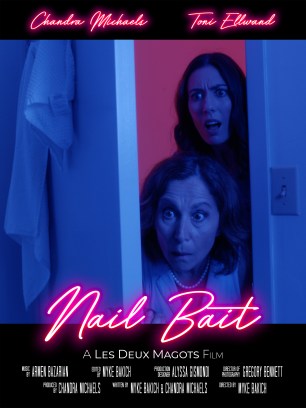
Canada’s Chandra Michaels and Myke Bakich talk upcoming film ‘Nail Bait’

One of the most beautiful and complex relationships in this world is that of a mother and her daughter. This theme has been explored throughout time through art and literature, and Canadian filmmaking power couple Chandra Michaels and Myke Bakich have now contributed to that extensive and distinguished list with their upcoming film Nail Bait, which takes a unique and compelling look at the bond between a mother and her daughter.

Nail Bait, written by Michaels and Bakich, tells the story of Emma and her mother Carol, who head to a nail appointment only to discover the salon is a front for a rub & tug massage parlor. It doesn’t take long for Emma to discover that Carol has ulterior motives for their day. Emma is baited and dragged into infiltrating the underbelly of the salon with her mother to prove her father is a paying client there. After stumbling on some “hard evidence” but no sign of Dad, the women confront their issues and discover other illegal and dangerous enterprises. Before they can sneak out, they are caught, cornered and threatened, discovering they would do anything to protect one another, surprising both themselves and each other.

“We wanted to portray an honest mother-daughter relationship, that despite its challenges, when put to the test reveals how unbreakable that bond can be. We like that we’re breaking new territory exploring a location with weight and stakes we haven’t ever seen before in a mother-daughter buddy story. The story straddles a few genres; drama, comedy, action which was tricky to execute but rewarding to do,” said Michaels.

Michaels acts as writer, producer, and leading actress in the film, playing the role of Emma. When writing Nail Bait, she was inspired by visits to the spa with her own mother, questioning its integrity and wondering what could be going on behind closed doors. She and Bakich were interested in creating a film that delves into the often-ignored occurrences at such spas, while diving into the dynamics of the mother-daughter relationship and internal and external facades.

“Chandra is an incredible filmmaking partner. It’s amazing that she was able to balance the demands of playing Emma with producing the film. She was very aware of the needs of our cast and crew, managing schedules and taking care of our production while balancing her demands as a lead performer. Chandra’s got a great instinct for performance and was very involved in the editing process and finding the authenticity. She’s a great talent, shined bright throughout the entire production and was crucial in bringing this film to fruition,” said Bakich.

Bakich’s approach to the story while directing was to embrace the uncomfortable. He wanted to tell a different type of mother daughter story, one that takes place in an unexpected location and situation and see where that would go. He wanted to play into the discomfort of the bizarre juxtaposition of a rub & tug parlor. This would also allow for a project with two dynamic leading female roles, something important for both Bakich and Michaels.

Finding the ideal location was one of the biggest challenges that Bakich and Michaels faced while making Nail Bait. They required a hallway long and wide enough with many different doors to actual rooms. Bakich wanted to create distinct difference between the upstairs reception and the underbelly of the salon. The upstairs being drab, mundane, slice of life, and the massage parlour below being colorful, intense, and almost surreal.

They found a warehouse space, that was previously a grow-op, with the required hallway. However, it was only half as long as they needed. They decided to embark on an ambitious set build for the downstairs hallway and adjacent doors in the film. With a talented art department team that was diligent, the build was achieved within days. Though, even with the build, the doors and rooms still needed to be reused and connected in ways that they weren’t naturally available. The night before, Bakich plotted it all out and did his best to convey the logistics to the team. They successfully turned one hallway into two, connecting many different rooms and doorways that were in different directions and ends of the location, with changing lighting and color schemes as well. Such execution is a real testament to Myke’s strength as a visual problem solver and storyteller.

image2“Part of what attracted me to shooting Nail Baitwas creating the two worlds that the characters inhabit. I liked Myke and Chandra’s energy and commitment as well. It’s always a challenge to elevate visuals on lower budget projects, but thanks to the generosity of Panavision Canada and John Lindsay I was able to utilize some great camera tools. Shout out to the amazing crew as well who worked hard to make it all happen,” said Gregory Bennett, Director of Photography.

Bakich’s favorite scene in the film came when shooting a tracking shot down a flight of two dozen stairs. It was no easy task, but the director was up for the challenge. Filming into the early hours of the morning, he and Bennett did five takes with a heavy steadi-cam rig and totally nailed the shot. Only once it was perfected did they discover that a key prop was missing, and they had no choice but to reshoot.Bennett leapt up the stairs, willing and ready to do it again and they all followed his charge. They shot another five takes, and the end result is mesmerizing.

“Toni Ellwand who played the mother Carol, grounded her in reality, while bringing a comedic spontaneity to the role. She balanced both the serious and ridiculous nature of the situation in spectacular fashion,” said Bakich, who co-wrote and directed the film.

Ellwand is a Toronto based actress who is known for a series of popular projects, including Blindness, Murdoch Mysteries and the Emmy-award winning The Handmaid’s Tale. She had previously worked with Michaels years prior on a commercial for Ontario’s health care cards, so they were happy to reunite as mother and daughter on this exciting new project.

“Myke and Chandra are a dream team, I would work with them in a heartbeat. They both love what they do so much and are generous and enthusiastic. Chandra is an absolute dream to work with as both an actor and as a producer. Working is her happy place and it shows in everything she does when we’re on set. Myke is quietly determined. He’s gentle but he knows what he needs, and he patiently works until he gets it,” said Ellwand.

Nail Bait premieres at the Toronto Shorts International Film Festival on Saturday March 2nd, 2019. From there, the film is expected to make its way to several more festivals, seen on international screens. They are also exploring the possibility of expanding it into a series, as this film is part of a bigger mother and daughter story.

“It’s an honor to premiere at the Toronto Shorts International Film Festival where our local cast, crew, colleagues, friends and family can share in the experience,” said Michaels.

Toronto Shorts has a special place in Michaels’ and Bakich’s hearts, as their first film, Busy Bee, had its world premiere at the festival back in 2015 and ended up winning the Best of Canada award. Here’s hoping for similar success on their latest venture.

“We love making films and we love doing so together. Creating our own projects is empowering and liberating. We really learned so much making this film and look forward to applying that knowledge to future projects. Filmmaking is really a team sport and we had an amazing team on this project,” they concluded.

Torontonians should check out Nail Bait this Saturday at 7 p.m. at Carlton Cinema. In the meantime, watch the trailer here.

Producer Ricky Cruz brings out the laughs with quirky characters in award-winning new film

IMG_7851
Photo by Arthur Marroquin

Ricky Cruz found his way into producing in an unconventional way. Rather than spending his early years dreaming of working behind the camera, he did the exact opposite. It was his love of acting that led him into the film industry, starring in the popular 2010 South African film Spud alongside John Cleese and Troye Sivan. It was one of the more celebrated local films and an incredible experience to be a part of. Cruz loved every second of it; he believed acting was where he could best help people, by becoming a character the audience could project themselves onto.

After Spud, Cruz found himself working in local commercial campaigns, practical joke television series and National Geographic documentary specials. It was the rewarding experience of seeing something he was a part of come together as a final product that ultimately hooked him and helped him decide that he wanted to pursue a career in entertainment and filmmaking, however, the more exposure he had to film sets, the more he realized his true passion: producing. Since that time, he has become an in-demand producer in both his home country and abroad, with a passion for what he does that translates directly into every project he takes on.

Known for films such as the documentary Improv a Saving Grace and the romance Mixed Orders, Cruz is an extremely versatile producer. Branching into the comedy genre, Cruz has another hit on his hands with the flick The Neighbor. The film tells the story of an offbeat and strange character who tries to befriend a new neighbor before finding a friend just like him. It explores friendship and the importance of being you.

The Neighbor is very much my signature tone of a quirky character in an honest situation comedy, but the deeper level of the character actually being considered an outlier by other inhabitants of the immediate world, gave the film a subtle nuance of real loneliness and rejection, which are two very powerful and very well understood emotions. The Neighbor is a comedy sketch yearning to have its message received via unconventional comedy,” said Cruz.

Currently on the festival circuit, The Neighbor has already won an Award of Merit at The indieFEST 2018, an Honorable Mention at The London International Comedy Film Festival and took part in The Battle of the Sketches 2018. It was an Official Selection at Battle of the Sketches, Portland Comedy Film Festival and Rock and Roll Film Festival Kenya. With the onscreen comedy chops of Willem van der Vegt (Marvel’s Agents of S.H.I.E.L.D.) and writer Zain Ashar, the comedy short has proven its appeal. It was also one of two projects produced by Cruz that was accepted and won an Award of Merit at the indieFEST 2018.

“The fact that The Neighbor has been such a success makes me consider all the other original and creative characters that have originated from things like off-screen improv comedy or jokes between friends. I think the origin of these sorts of characters has a lot to do with their ability to resonate so profoundly with people. They are an exaggerated but honest piece of someone’s personality and because of the respective truth involved in their creation, people tend to relate very strongly to the character. There are so many other interesting character creations that similarly explore different parts of our personality and with The Neighbor’s success, it makes me seriously consider the prospect of utilizing these empathetic and exaggerated characters in their own respective short films or one that explores many of the mentioned characters in an ensemble driven piece,” said Cruz.

Cruz was ready to produce such a unique comedy. As he started in acting, he has vast experience with improv, making him the ideal producer for this film, knowing just how to embrace elements of improv for a familiar character. He knew what parts of the character needed to be showcased best to get audiences to relate and support such an absurd creation as well as where the character would need to be further developed.

“The project really is a showcase to display the type of message I want to spread with the type of characters and humor I want to use. It’s an example of a stage sketch and improv character that translates really well onto screen and acts as evidence that material discovered or created off screen should be mined and explored and adapted if possible because, such comedically conflicted characters are excellent vessels to relay important information and messages in a way that people can easily understand and enjoy. This film offers the ability to escape and comfort simultaneously and those have always been my favorite kinds of films because it is effortless therapy and can help like-minded audience members through turbulent times without them even realizing it,” he concluded.


Written by Annabelle Lee

Animator and Graphic Designer Andrea Mercado honors celebrated YouTubers with new film

As an animator, Andrea Mercado is tasked with bringing characters to life. It is one thing to make a character move, but something entirely different to make it look like it is truly alive. This is where she excels. She appreciates that the character needs to have physicality and transfer feelings to the audience, making sure they are always rooting for the protagonist, no matter how small a story. It is such a deep and thorough understanding of her craft that makes her a formidable leader in her industry, and her passion for what she does is evident in every project she takes on.

Often working on projects that inspire both herself and her audience, Mercado’s work as both an animator and graphic designer has been seen and appreciated by millions around the globe. She finds meaning in what she does with companies like NeuroNet, which manufactures learning software for children, and a recent mobile application she created for pediatricians that allows doctors to quickly find the best dosage of medicine for various conditions. She also helps to tell stories through her animation, whether for the web series Paradigm Spiral or girls video games for Driver Digital.

“I like bringing characters to life. I like knowing that people will see the animations and feel for the characters. More importantly, I like bringing joy into people’s lives, and animation is a nice way of doing that,” she said.

Recently, Mercado also debuted one of her passion projects, the film PINOF Animate! It is a film of her own creation, which features animations from various artists from around the world to recreate, shot by shot, PINOF 9. The reason for this project is to celebrate the 10th anniversary of the PINOF series, created by Mercado’s favorite YouTubers, Daniel Howell and amazingphil.

“We are just a bunch of artists from around the world who really like and admire two British dorks from YouTube,” said Mercado. “The film showcases talent from people from different ethnicities, ages and perspectives. Not all of them are professionals in the field. In fact, some of them are still in middle-school. I even received a message from one of the artists who worked with me, thanking me because now they know animation is something they are really passionate about and that a career in it is an achievable goal. At the end of the day, I think inspiring young people to follow their dreams and create their own projects is the most important thing that has come out of this project,” said Mercado.

Creating PINOF Animate! was the most fun Mercado has had working on any project in her career, but it was also very stressful. She had the opportunity to work with over 30 artists from around the world and before she could assign each of them their shots, she had to group the people based on their experience and quality of work. Advanced animators got longer shots, intermediate animators got shots that were only a few seconds long, and beginner animators got the shortest shots. She also received messages from artists who didn’t know animation but who wanted to join to project, so she gave them a few shots that would work perfectly as illustrated stills.

“Working with Andrea was a very relaxed and easy experience. She was very organized on this project, and kept the collaborators involved frequently updated with full transparency. She demonstrated full understanding if an artist was having trouble meeting their deadline. She also encouraged and supported the idea of artists showcasing to their social media any progress made along the way. I would definitely work with Andrea on any future projects,” said Victoria Putinski, Layout Artist at Wild Kratts Animation Studio who created several shots for the film.

Once PINOF Animate! was completed, Mercado uploaded it to YouTube. It did not take long for Daniel Howell and amazingphil to discover the film and tweet the link, which resulted in hundreds of thousands of viewers who quickly became fans of the unique project. Mercado was touched by such a response.

“It feels incredible. It was stressful and a lot of work, but in the end it paid off. All the fans that watched our video gave us amazing reviews and kept asking if we were going to do another one next year. Some people even emailed me saying they are ready to join the next project, even though I won’t be recruiting new talent until July. And of course, Phil Lester (amazingphil, one of the youtubers), linked our animation in one of his tweets and said it was amazing. Everyone started congratulating us and we felt very validated,” she concluded.

You can watch PINOF Animate! here.


Written by Annabelle Lee

Zanda Tang creates epic and hilarious fight scene in award-winning animated flick

img_0512
Zanda Tang

As an animation concept artist, Zanda Tang shows his imagination and design to others through painting. He accumulates his knowledge and life experience into his art, creating a cathartic experience that audiences around the world can relate to. He researches every element of his designs, knowing the backstory of even inanimate objects, all to better tell the story he is visualizing.

Tang has risen to the top of his industry in China working on many distinguished projects. He has helped to market many illustrious brands in his country, from the China Academy of Space Technology to the Huiju Shopping Center Beijing. His work has captivated millions around the world, and several of his works, including Diors Samurai, Lion Dance, and Baby and Granny have made their way to many prestigious international film festivals.

Baby and Granny is a multi-award-winning short. The 2D animated action-comedy is about a baby and granny who share a common bond, as Baby’s mother is Granny’s daughter, but who fight like crazy when left alone.

“The story of the animation itself is one of the reasons why I joined the project. When I saw the story, I thought it would be a very interesting animation. This unexpected dichotomy lies behind the identities of two common characters. Such exaggerated and interesting stories are helpful for design. The story unfolds with a realistic plot. Granny scrambled to take care of the baby, but Baby couldn’t communicate with Granny. The story uses hyperbole to create a confrontation when two people fight. At the beginning and the end of the story, mother is at home, and they are in a normal state of quiet. And when mom goes out, two people become combative. The exaggerated character setting and rich story rhythm make the story very attractive,” said Tang.

The visuals are highly-influenced by the work of 60’s Pop Artist Roy Lichtenstein. This created a unique challenge, as they had to honor his style while still making their own. Tang did his part by researching the style and the script, figuring out how to best combine them. He was the props and weapons designer for the film, so he worked closely with the team to choose a weapon that is more suitable for both characters. In the early scripts, both characters used guns to attack each other. Tang did not agree with this. He thought the weapon choice could better explain the characters and therefore further immerse the audience into the story.

Tang’s role was pivotal for the climax of the film, the fight scene. Granny’s weapon consists of two Chinese kitchen knives that are drawn closer to the character’s identity and can be used to indicate her superb kung fu skills. For Baby, he designed more exaggerated firearms, such as an oversized gun to bring a sense of humor into the picture and added lovely and lively colors to help shape the character. In the background of most of the shots, Tang also designed many flying props. The props symbolize the characters’ respective identities and show off the absurdity of the fight, making the animation that much more entertaining.

“Many people think that you can easily get a good action movie if you put a lot of effort into the character. In fact, I think when characters move, what really makes their movements seem quick is what’s behind them. In this project, I not only put some props behind the characters, but also made efforts for the rationality and sense of painting of the animation. When two characters jump up to attack each other, something belonging to their characters flies behind them. Items, like Granny’s drawstring balls and kitchenware, which fly up behind the granny’s back, the teapot, and the toys and bottles behind the baby, are added to set off the exaggerated style. The design of these weapons and props is very helpful for the animation of the story picture and character action,” Tang described.

Tang’s efforts helped bring Baby and Granny multiple awards and recognition, including Best Animation Short Student at the Hollywood Boulevard Film Festival and Best Animation Short Film at the London Monthly Film Festival. It was a semi-finalist at the International Online Web Fest and an Official Selection at over 11 festivals around the world.

“I am glad to have made such a challenging project work. After we tried the new painting style, we can still have such great achievements. We were lucky and our efforts were not in vain. Spending a lot of time choosing weapons and items proved to be a worthwhile investment. This reward also makes the team members trust each other more, so we have more power to plan the next project,” Tang concluded.


Written by John Moore

Zekun Mao uses editing to create a thrill for audiences

Zekun Mao still remembers the first time she truly noticed film as a form of art, beyond a simple form of entertainment. She was watching Christopher Nolan’s 2000 blockbuster Memento, and she was fascinated by not just the story, but how it was being told. She began to immerse herself in movies, making her realize a passion that she never knew she had. She knew from then on that she was meant to go into filmmaking, and now, as an award-winning editor, she is living her dream.

“Whatever style the story requires, I will cut the film in that way. I would describe my style of editing as naturalism. I came from a documentary background. Being natural, or being real, is the most important thing. When I am editing, I like to stick to the style of the footage and stick to the tone of stories. I love showing the story as it should be. If it should be emotional, then I will make sure the way I cut the movie will make audiences feel that particular way,” she said.

Becoming an industry leader in her home country of China and abroad, Mao knows just what it takes to captivate an audience. This is exemplified with her work on films like Jie Jie, And The Dream That Mattered, Janek/Bastard, and American Dream, to name a few.

Last year, Mao also saw worldwide success with her film Our Way Home. The dramatic thriller tells the story of Chinese-American James, who picks up his older sister Barbara from college for Thanksgiving 1962. After a racist encounter in a diner, they think they’re being followed, but it’s not someone they expected. The story spoke to Mao, who has experienced similar forms of racism in her own life, which is why she felt compelled to work on the film.

“The story is about racism, especially at this moment when a lot of similar things are happening in the world. A lot of the feelings that immigrants have are painful, confused and embarrassing. Through this story, I want to tell the world that racism is a terrible thing and it shouldn’t happen to anyone. Moreover, the story is about Chinese immigrants. I want to highlight stories that are about my own community and about our history. As a Chinese filmmaker, I see that as one of my responsibilities. I think it is very important to show the difficulties and struggles that Chinese immigrants have even today,” said Mao.

Our Way Home had its world premiere at the Hollyshorts Film Festival 2018 where it was an Official Selection and is expected to continue its film festival run this year. Mao was pivotal to the film’s success. As it is a thriller, creating tension and uneasiness is key to captivating the audience, and editing is a vital tool to achieve this. Her work created the tone, bringing the audience into this dark world, making the thriller just that: thrilling.

“I am really happy that our film has been such a success. I feel really rewarded. All the hard work that we put in was really worth it. I am so happy that the story let the world pay attention to racism that still exists today. I am happy that through this film, I speak out loud what a lot of people want to say. I am also happy that I highlighted the story from my own community,” she said.

When editing, Mao made the decision of using fast cuts. During one crucial scene where the characters are being chased, Mao used her skills to create a feeling of danger, using jump cuts. The cuts are constantly jumping between cars and between the inside and outside of the car.

Mao thoroughly enjoyed her time working on Our Way Home. Everyone she worked with was dedicated to making the best film possible, and it shows in the final cut. Mao formed great professional relationships on set, which was almost the best part of working on the film. The best, she says, was sharing the story with a worldwide audience.

“The story is the reason why I worked on this project, and telling the story is the most enjoyable part of this process. I am very happy that I was able to tell this story, because I believe a lot of people experience racism in different ways. And a lot of Chinese-Americans had the confusing moment of figuring out who they really are. I hope after watching this film, audiences can think about all these problems,” she said.

Be sure to check out Our Way Home to see a telling and timely story, and just what Mao is capable of as an editor.


Written by Annabelle Lee

Mufeng Han’s Noir Blue

Screen Shot 2019-08-22 at 11.09.35 AM

While most everything seems to be shot digitally these days, cinematographer Mufeng Han not only embraces the use of traditional film, he’s become increasingly sought out by other filmmakers for his expertise in its use. There’s no question that actual film has a profound look and feel; working with it is remarkably more demanding than shooting on a digital platform. Beyond a familiarity with the idiosyncrasies of film, it takes substantial forethought and planning to conserve film for any production which utilizes it. Director Lan Liu was adamant about using film for Blue, his crime film with a mind altering perspective. In order to properly possess this tone for the film, Liu enlisted the talent of Mufeng with great results. His work on award-winning films like Patrick (winner of Best Narrative Film at the New York Film Awards) and others confirms his skillful approach but it’s the creativity which stands out in his cinematography for Blue; declaring that his voice stands out in the midst of others of his generation.

Blue is a suspenseful crime drama with a bit of a twist on the standard film noir. There’s a substantial amount of camera slight-of-hand involved in telling this tale and producer Yuanhao Du decided to enlist Mufeng as both the director and cinematographer to create the perfect unified approach to this. The story follows a drug dealer who is desperately trying to pay off his debt. When he is stood up at a money drop, he returns home only to be attacked in his own garage. As the events occur, we begin to understand that there’s something about this new Blue drug which is directly related to this drug dealer, the attack, and the secret of the film. (Spoiler Alert!) What becomes illuminated is that the drug dealer and the attacker are actually the same person. In a crime centered twist on the Groundhog Day premise, it becomes obvious that either reality or the main character’s state of mind has become altered. The greatest enjoyment of this story is discovering which.

The plot of Blue challenged and excited Han as both director and DP. Firstly, the film was shot on 16MM and thus possesses those magical traits which only real film delivers. The initial thought was to shoot in the traditional Noir black & white but Mufeng wanted to take a cue from the film’s title and try something different. The result is Noir-adjacent and notable in its uniqueness. The most impressive example of Han’s work in this production are the fight scenes. Carefully designed, rehearsed, and executed, these three second cuts used a stand in with the main actor. The fast action and intentional blurry faces emphasized the frantic tone and empowered the deception that both characters were the same actor…until they actually were! Han describes, “For one of the most prominent fight scenes, there was no way to avoid showing the character’s face…which was of course our main actor. To achieve the proper look and elicit the shock of the audience, I designed two characters in the frame but with same actor. I kept camera position and let the same actor perform the scene twice as different characters. The two frames were then combined in post, creating the illusion of two versions of the same actor in one frame. The extra effort and time was worth the response we got from the audience.”

Screen Shot 2019-08-22 at 11.04.36 AM

The accolades Blue has received is a result of the full efforts of the cast and crew but there’s no downplaying the immense impact of Mufeng Han’s vision for this film. Though he’s often worked with other directors as their cinematographer, with Blue he proves that he has spent his time on set both fulfilling one role and absorbing the influence of the notable directors he has worked alongside.

Chavda’s Empowerment of Very Grave Robbers

Very Grave Robbers 2
Producer Carina Chavda

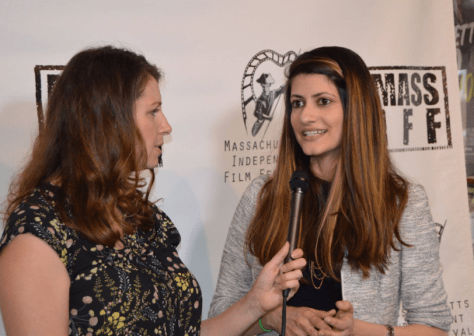
Producer Carina Chavda will tell you that making a film is a result of having talented and skilled professionals as part of your team; making a great film is the product of this AND building relationships throughout your career. Particularly for a producer, steering a film and finding the best people for a particular project means being keenly aware of what they can bring to the process for optimal results. Very Grave Robbers is a 2018 film produced by Chavda which won a host of awards including the Audience Award, Best of Los Angeles, Grand Champion Audience Award, and Best Ensemble cast (48-hour film project). Additionally, this film received a number of nominations at the Austin Comedy Film Festival (2018), and was screened at the prestigious Massachusetts Independent Film Festival. Its success is due in large part to the equal parts expertise and intuition (honed through experience) of Carina.


Keeping an eye out for those she would like to work with has always been part of Carina’s approach. When she was attending the screening of her film I See You, on which she served as producer (with writer-director Manjari Makijany, Academy-Award nominee Aaron Glascock, and BAFTA winning composer Marius De Vries), she met director/writer Joe Boothe. The two exchanged mutual admiration for their films appearing at Cannes that year and expressed the hope of working together. Within a matter of months, a film idea materialized for this occurance and Boothe’s writing partner (and wife) Alexa Alemanni joined. The product of this collaboration, [Very Grave Robbers] is suspenseful, comedic, and exceptional in its dialogue. While the cast is exceptional, it comes as no surprise that the writers are the vehicle which fuels this tale.


As with many great films, Very Grave Robbers is much more about human nature and its shortcomings than simply the events that unfold throughout the story. Andrew and Peter are burglars by trade. They break into a house but are surprised when they are interrupted by many people arriving during mid-heist. The group is an extended family which is returning from the funeral of their grandmother. Assessing the best way to make an exit unnoticed, the two thieves decide to borrow some clothes from the closet and blend in with the mourners. As they attempt to make a casual departure, Andrew comforts a comely family member and feels a connection. Both he and Peter begin to imbibe copious amount of alcohol and end up falling asleep in the same residence they were attempting to burgle. Later that day they begin to regret their actions and embark on a path that does not end well for them.


  Very Grave Robbers screened at the Massachusetts Independent Film Festival to an exuberant audience. Chavda attended the showing and admits to being stunned by the audiences overwhelmingly positive reaction. She relates, “You always try to make the best film possible. At some point, you are so deep inside the process that you just naturally lose some perspective. Our production schedule was extremely limited and I was taking care of the numerous obstacles that every producer has to overcome. When our DP injured his hand before the shoot, I had to figure something out. When we needed to juggle multiple shoots, I had to make sure everything was seamless and smooth. When you are immersed in that, you sometimes forget just how amazing the work of those around you and the film itself actually is. I have to thank that crowd at the Massachusetts Independent Film Festival for shaking me back into reality. It was great to be there with them and see their excitement.” Chavda’s fellow filmmakers showed her some appreciation, seasoned with a bit of humor, taking a cardboard cut-out of her along to the Los Angeles premier of Very Grave Robbers when her schedule prohibited her attendance. Even if only there in spirit, LA praised Chavda and the film similarly.

Very Grave Robbers 1