Charlotte Chimes On Acting Real: Playing Real-Life Characters

Charlotte Chimes has always believed that the best acting performances are those which are ‘real.’ Others might choose the words ‘truthful’ or ‘believable’ for the same effect, but whichever term is used, it’s clear that Charlotte has carved quite the niche for herself as a leading Australian actress regularly called to play real-life people in gripping dramas.

Such is the impressive significance of her reputation in Australia, Charlotte played the key role of Katrina in the acclaimed Channel Nine movie, “Schapelle.” Directed by award-winning “Better Man” filmmaker Khoa Do, “Schapelle” tells the story of Australia’s most notorious and high-profile convicted drug smugglers in the nation’s history. Schapelle Corby spent nine years in an Indonesian jail cell, and maintained her innocence that she did not plant marijuana found in her bodyboard bag by Indonesian airport security. The case drew international headlines and remains as one of Australia’s most well-known real-life stories, and was therefore the country’s most highly-anticipated television event when it aired, drawing millions in viewers.

Any actor who would be involved in the narrative production documenting Schapelle’s story could easily therefore be called successful, because the story is so well-known; the fact that Charlotte Chimes played a key role “Schapelle” therefore puts her in the top echelon of Australian actors.

IMG_2724 (1)
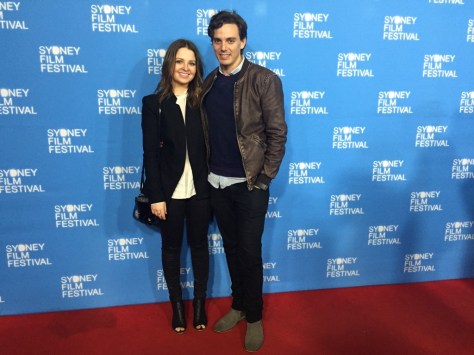
Charlotte, with director Ben Mathews, on the red carpet for the prestigious Sydney Film Festival last year.

Co-star Krew Boylan, well-known for her roles in Logie-winning series “Molly” and international favourite “A Place to Call Home,” speaks very highly of Charlotte. “I had the pleasure of working with Charlotte [on SCHAPELLE]. Charlotte is a gifted actress…I highly recommend her skills, dedication, craft and talent for any work both in Australia and abroad.” Boylan, who is also one of the founders of the Dollhouse Production company alongside Golden-Globe nominated star Rose Byrne, played Schapelle herself. “Krew was lovely to work with,” Charlotte explains. “We had a great time exploring the story from all different angles.”

1987bc842a83c137f886a6c06897f613
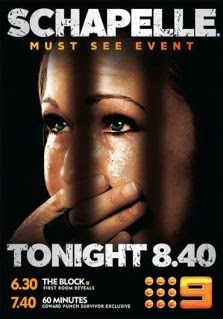
“Schapelle” was a highly-anticipated movie on Australia’s #1 network, Channel Nine.

In addition to her work in “Schapelle,” Charlotte is also well-known for her role as Anya Habschied in “Catching Milat.” Charlotte explains her character well. “Anja Habschied was one of Ivan Milat’s seven victims  –  it was so important that all of his victim’s stories were told in this mini -series…to honour them.” The mini-series was especially important in the Australian film industry because it was directed by Peter Andrikidis, Australia’s most prolific television director also responsible for helming the award-winning ABC series “Janet King” and the feature film “Alex and Eve” with “Chasing Life” star Richard Brancatisano.  

In another strong reflection of her truly unique talent and incredible accomplishments, Charlotte featured as Erin Everett in the successful series “Deadly Women.” Her performance was therefore available to 300 million Netflix subscribers all over the world who watch the popular program. For her role in the chapter titled “Green Eyed Monsters,” Charlotte explains the importance she placed on bringing truth and giving justice to the real-life story of her character. “Female murderers are rarer than male murderers and often become quite famous for their crimes, as the media sensationalises them. It was important to portray her not simply as a one dimensional monster but a three dimensional heart-broken woman who made some very grave choices.”

p11973538_e_v8_aa
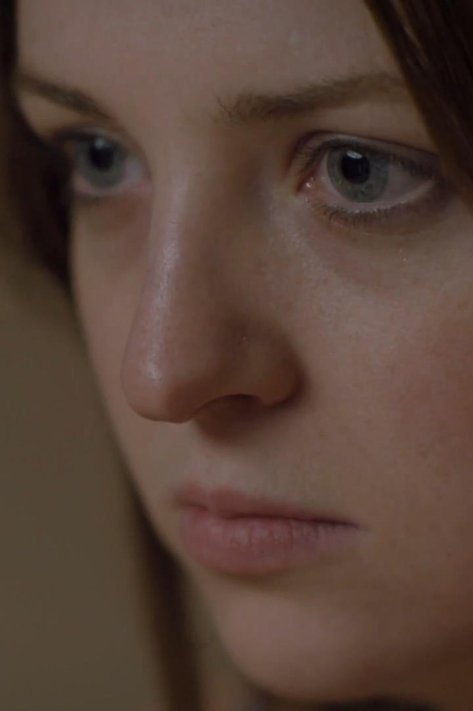
Charlotte in a gripping scene from an episode of “Deadly Women.”

Charlotte, who has also given critical turns in film “Loco” (with “Neighbours” star Taylor Glockner) and TV series “The Verge” (with “Twilight: Eclipse” actor Matt Deane), warmly expresses her gratitude when it comes to her career success.

“At the end of the day, I feel very lucky that I’ve been able to give voice to such interesting and complex, real-life characters.”

Introducing Josué Catalán: The Sound Engineer You Should Know About

The music industry is comprised of driven professionals who are fueled by a love and passion for their work. More often than not, the initial spark of inspiration is ignited by one or more successful precursors and blossoms over time with rigorous practice and determination. For the emerging Chilean sound engineer Josué Catalán, his musical brilliance was firstly motivated by his love for music as a whole, combined with a childhood spent listening to Pink Floyd, U2, and The Beatles. No matter his age, music has always existed as a part of Catalán’s life in a very deep way, and it’s now a craft he’s proved himself to be quite gifted at both mixing and mastering in very significant ways.

Born and raised for the majority of his life in Chile, the start of Catalán’s career as an engineer began in early 2011 during his studies at Duoc UC in Santiago, Chile. In addition to a rigorous course schedule, Catalán was part of a live sound company where he engineered live concerts, recorded his first album from rock/blues band Trio-b in 2012, and soon after achieved his first big success after working with folk band ZOI.

“We produced ZOI’s first album together,” said Esteban Pavez of ZOI. “We recorded the complete band live at the studio and did the overdubs at Josué’s house, where it was mixed and mastered. His sharp ear allows the sound details to be worked with delicacy. Undoubtedly, his work of mixing and mastering is of very good quality and, in my opinion, his hearing and emotional sensitivity allows him to have a better connection with the musician and his music.”

When it comes to the details of his job, Catalán is responsible for taking care of capturing and further processing all of the elements and instruments that compose a song and crafting a final phonographic product from them that can be delivered to the public. Expanding upon this, Catalán explained, “When the artist and the music producer have a song ready, my job is to record it the best way possible, depending on the music genre and the song’s instrumentation. Then I mix the song, a process that consists of putting all of the instruments and vocal takes together in a perfect balance, ultimately creating the experience of listening to a whole band and arrangement in any type of playable format.”

DCIM100GOPROGOPR7354.
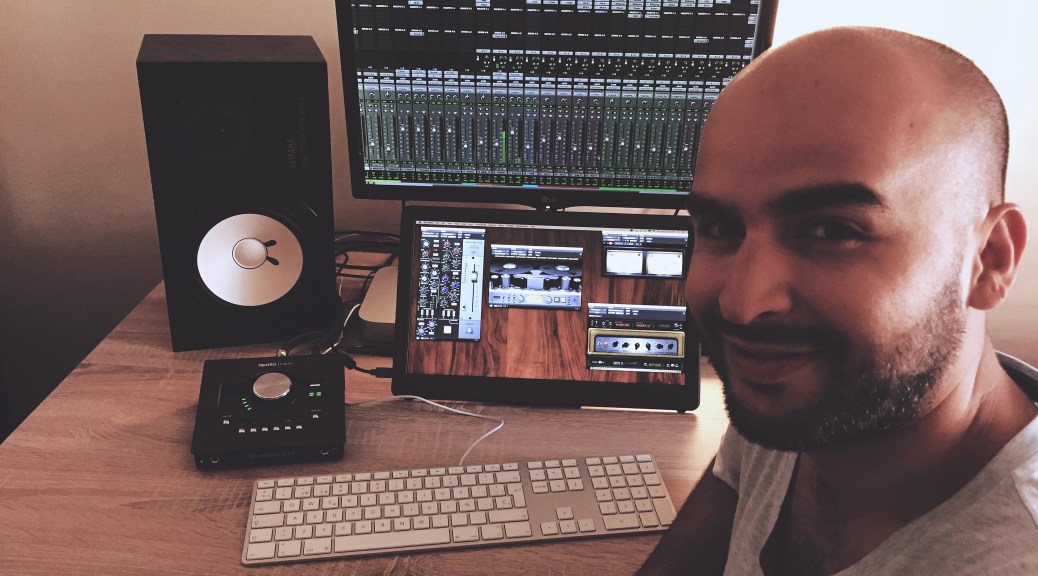
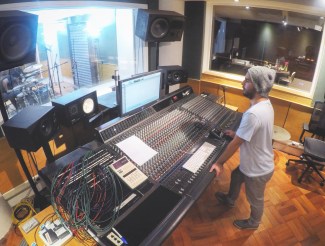
Josué Catalán recording drums at Studio Master

Of course, acquiring the knowledge necessary to create the musical pieces of virtuosity that Catalán has requires dedication, repetitive practice as well as some experimentation, and mentorship. In 2014, he received just the latter upon becoming sound engineer and music producer Barry Sage’s (The Rolling Stones, David Bowie, and New Order) assistant at Studio Master. Sage was the very first to introduce Catalán to the world of professional studio and record production. The following year, he had the riveting opportunity to learn firsthand from music producer Joe Chiccarelli (U2, Frank Zappa, Alanis Morissette, and Jason Mraz) at an exclusive master class in Chile.

Aside from learning from some of the most monumental names in the music industry, post Catalán’s 2015 graduation from Duoc UC where he earned a Bachelor of Arts in Sound Engineering in addition to the award for academic excellence in his studies, he began engineering for a vast variety of them.

While Studio Master was the launching place of Catalán’s professional career, it was only the start of his renowned success. For nearly two years, Catalán worked as the studio chief sound engineer at Studio Factoria where the hit, soul-pop single Son Con Soul was completely mixed and mastered by Josué himself. Son Con Soul was awarded at the 2016 Fox Music USA Awards for best pop ballad and has been aired by some of the biggest radio stations of the country.

3
Josué Catalán on the console at Studio Factoria

The Fox Music USA Awards are held annually and are dedicated to promoting the music of Latin creators worldwide. Both established and emerging artists are eligible in the competition, ultimately providing the possibility of opening new doors for all.

“The Fox Music USA Awards stems from their organization (Fox Music USA) which holds the vision to promote Latin culture and create a community that supports Latin talents worldwide. It started back in 2004 (the awards in 2010), and since there are not a lot of international contests apart from the Grammy’s and Latin Grammy’s, to have worked on a song that was awarded among some of the best exponents in the Latin world is a big credit,” Catalán shared.

When one makes music, not only is winning a highly prestigious award such as a Fox Music USA Award a big credit; receiving recognition via being played by a handful of the most popular radio stations serves as testimony to a musician’s talents, too. The majority of artists create with the hope that their products will one day reach vast audiences, but not all do. Josué Catalán’s work, on the other hand, is one of the exceptions.

Most of the singles and albums Catalán has worked on has reached listeners through cable TV, Spotify, live radio shows, and/or online and FM radio stations, to name a few. When asked what hearing one of the songs he worked on through one of these mediums for the very first time, Catalán reacted by saying, “To me, hearing my work on the radio or television feels like success because the goal is to deliver the experience and the message of the song to the biggest number of people you can. Knowing that my work is being heard gives me a combination of feelings. It makes me feel prideful, but such exposure is also very adrenaline-inducing.”

It is because of these intense emotions that Catalán values his senses of humility and professionalism when it comes to his work. It takes a lot more than just talent to create the overall success of a project, including fighting against one’s own ego in the way that, “You don’t let your own thoughts and emotional attachments interfere with the song and the potential it has,” Catalán explained. Even past colleagues would agree that these are some of Catalán’s strengths, and contribute to what makes him so good at what he does.

Folk/Rock musician Fepe Aguirre, who’s 2015 album Somos De Tierra was recorded, produced, mixed, and mastered by Catalán, praise the sound engineer’s demeanor, work ethic, and talents enough. “Working together with Josué is knowing that the result has an assured quality. He is open-minded and is clear with his opinions and knows exactly what he is looking for. There are many elements that make up his professionalism: his dedication, constant study, and the way he’s always acknowledging new music. As for his personality, he is very capable of facing great challenges without intimidation, and he has great will and great strength. This has led him to meet great personalities in the music industry and become the engineer he is now.”

These few examples above only touch upon the notable resume of professional experience Catalán has achieved in his career as a sound engineer thus far, and is a testament to how exceptionally far he will go.

Currently, Catalán is working on a couple of singles from Chilean blues artist Jano Letelier, various pop ballads from singer Dani Ilabel that are set to go straight to national television grid, and a pop single from singer Hueso Carrizo.


For more information on Josué Catalán, please visit: www.josuecatalan.com

An Exclusive Discussion of Award Winning Actor Christopher Capito’s Best Work

To be an actor is to be an expressive, fearless storyteller; Christopher Capito has been one of these since he was seven years old. Over the past fourteen years, it is a job he has fully embodied.

Originally from Quito, Ecuador, Capito initially got his start in a theater troupe before making the transition into film. Since then, his work has been viewed by a wide range of audiences and has been nominated for and won numerous awards at a variety of film festivals.

In the 2017 short film Rotten Grapes, directed by Marc-Ivan O’Gorman (The Black Magic, A Kiss and a Click, and Blood Coloured Moon), Capito plays Andres De La Vega, a grandchild of a Latino woman who is recently deceased. “The film won more than two festivals, and I won the award of best ensemble with the rest of the main cast,” Capito stated.

Rotten Grapes is a sitcom that follows the De La Vega family after the loss of their beloved grandmother. With the promise of leaving the entire fortune to only one of her grandchildren – the one who holds the most family values – the story delves deeper into the lives of each grandchild, revealing their individual troubles along the way.

The cast was lead under the guidance of experienced acting coach Michael Aspinwall, who’s known for his acting work as Dr. Shelby in the 2012-2013 TV series WWE Raw, and has also worked for companies such as Titan Sports Productions, USA Network, and World Wrestling Entertainment. Given the film’s comedic tone combined with Capito’s prior experience in both short and long form improv, the pair worked well together in training. Expanding upon this, Aspinwall said, “While the other actors had trouble bringing the characters alive, Capito didn’t have to make any effort. He has a natural timing for comedy, and that’s something you can’t learn. Capito was born with that.”

unnamed
Actor Christopher Capito

Also in 2017, Capito co-wrote and starred in the three-time award winning short film Milk Fang. “In Milk Fang, I played the main character named Andrew. The project is about a young vampire who lives in a conservative vampire family. In this world of vampires, there are two types: blood drinkers (who represent the societal norm), and the milker (who are vampires who drink milk instead of blood, and are an analogy to gay people),” Capito explained. “In the story, the young vampire Andrew comes out of the coffin with his parents, and has to face the prejudice of the rest of the vampire society.”

Ultimately exemplifying its success, Milk Fang was awarded with the titles of Best Screenplay, Best LGBTQ Film, and Best Sci-Fi Short Film at three different film festivals. It was directed by Nicholas Joseph Cunha (Red Souls, Outdated, and Daisy) and written in a collaborative effort. Two-time Daytime Emmy Award winner and Primetime Emmy Nominee George McGrath (Pee-Wee’s Playhouse, On the Television, and Tracey Takes On), who also worked as one of the three writers of the film, speaks highly of his writing partner and actor Capito, affirming, “Christopher has a special talent when it comes to writing and acting out real, human stories. He also has the ability to play multiple races, such as Latino, Italian, and Iberian, as well as a wide age range of 13 to 20 years old.”

Aside from his natural talent, this criterion played a crucial role in casting Capito as the main “Chambelan” named Santiago in one of his first U.S. based short films back in 2016, Terintañera. The story of Terintañera revolves around the Quinceañera party, a celebration that is a vital part of Capito’s culture. The film was based in Los Angeles, ultimately showing how the Latin culture is a growing minority. Additionally, the role of Sebastian provided Capito with the perfect opportunity to show his ability to connect with both the American and the Latin cultures.

Elaborating on this, Capito said, “For me, playing Santiago was an amazing experience. Not only was I challenged as an actor with having to revert back to thinking as a younger version of myself in order to pull inspiration from my Latin roots via experiences from a much earlier age, but I was also given the chance to rediscover my culture and ultimately revel in the nostalgia of growing up in it.”


For more information on Christopher Capito, please visit: http://www.imdb.com/name/nm7462667/?ref_=tt_ov_wr

FIGHTING FOR A BETTER LIFE…& FOR HIS LIFE: EL GIGANTE

El Gigante 1

Edwin Perez takes acting very seriously, not in a dramatic sense but rather in the way that he gives every bit of himself to the role. Many of those in his profession give their psyche over to a character but in the film “El Gigante” Perez approached his lead role of Armando with a level of commitment that is often used to refer to such intense leading males like Daniel Day Lewis, Tom Cruise, and others. Edwin’s intense performance is augmented by the bilingual dialogue and the extreme physicality of the storyline (the actor performed all of his own stunts). This emotionally draining Horror story (for both the audience and the actor) was fertile ground for Perez to exhibit his intense commitment to the film. His eclectic credits include animated productions (Nina’s World), Romantic Comedies (Heartfelt), and others but “El Gigante” is best described as Action/Horror. Edwin seems custom tailored for each of these roles and his performance as Armando might well be the shining star of them all. The process was draining in a number of ways for him but the success of this film and his performance justify the toll it took. The film has appeared at multiple festivals worldwide, winning over forty international awards and receiving acclaimed as one of the best horror short films ever made, for which the director has said that “This recognition wouldn’t be possible without Edwin.” It has also gone on to inspire a Japanese comic book series based on the film, distributed by Studio Kurabayashi.El Gigante 2

  The immense popularity that this gritty film received had to start somewhere. For the film’s director Gigi Saul Guerrero that spark was during Edwin’s audition. She professes, “Edwin Perez is by far one of the most outstanding and committed actors I have had the pleasure of working with. The moment he auditioned for Luchagore production’s most famous/successful short film “EL GIGANTE” there was no doubt that he was born to play the lead role. “EL GIGANTE” didn’t only involve a lot of emotion and pain in the horror world we built, but also a great deal of physical strength and creativity from the actors.  Edwin showed enthusiasm and initiative when it came to creating the atmosphere involving the character. He did not disappoint transferring the uniqueness of his craft from the audition room to set. Luchagore considers themselves lucky to have collaborated with Edwin.” The audition scene which won the lead role for Perez is that of a man fighting for his life and his family. While the setting is violent, surreal, and disturbing, Edwin focused solely on the humanity of his character and his fear for his loved ones rather than for his own life. While action is involved, it takes a backseat to the desperation the character openly exhibits.El Gigante 3

  “El Gigante” is the story of Armando (played by Perez) who is attempting to get his family across the US/Mexico border in search of a better life. He awakens in an unknown room, his body broken down and a Lucha Libre mask sewn onto his neck. He is forced to fight for his life against a sadistic family of killers in an effort to escape and find his wife and child. While the movie falls into the Horror genre it also has equally important social connotations. Perez himself immigrated legally into Canada with his family as a young boy. Armando’s plight and the potential dangers is a story not unheard of with those whom the actor has known. The actor made use of his Latin roots to increase the authenticity of the character, working with a dialect coach to perfect his North Mexican accent (the region from which Armando originates).

  The actor’s penchant for physical training paid off in spades when it came to the action scenes that were so vital and so believable in “El Gigante.” While he may not have been a wrestling/MMA super fan, his physical conditioning allowed him to quickly be at a level required for training. Perez communicates, “Fight sequences are like a dance, you have to work with the timing and abilities of the performers. We had a stunt coordinator and a technical consultant for the authenticity of the wrestling moves. The fights were choreographed based on the things we could do physically but it was very demanding. The whole film is also an homage to lucha libre (Mexican wrestling) so we also had to stay true to those guidelines. I was a fan of wrestling as a teenager so I was familiar with the popular moves. That’s where we started and then adapted these to what worked best on film.  With the size difference between David [Forts] and I, we thought it would be really great do some aerial moves. I also really wanted to show the brutality of the beating Armando suffers. We worked on my ability to take a hit and make it look devastating. Needless to say ,I took a lot of bruises throughout this film. During the fight scene with El Gigante, David Forts was supposed to lift me up in the air like a plank over his head. We used rigging to do this. David is a big strong guy but I’m not as light as I look. During one particular take, he threw me against the ropes in a classic wresting set up. The move was for him to grab me by the shoulder and inner thigh; I would plank and then he would press me above his head. Plans don’t always work and he missed my thigh, resulting in his hand slipping right to my groin as he went to lift me over his head. I took an extra-long pause on the canvas after I came down.”El Gigante 4

There was a lot of pain and discomfort involved in “El Gigante” in the script and in the making of the film, not that Perez considers this something he would avoid. The somewhat hyperbolic nature of the film seems actually possible in the real life climate these days. The filmmakers and the cast wanted to make a film which depicts a heightened state of the reality for the people of Mexico who risk it all to gain a better life for themselves and their loved ones. The actor concedes that he was uncertain at the audition for “El Gigante” if he would be offered the part yet Guerrero and others were immediately convinced of his greatness. There’s a bit of an analogy in this facet of his involvement and the story itself. Immigrant comes to a land and is able to achieve greatness and exponentially add to the success of others. Armando may have never been given the opportunities of Edwin but Perez is determined to portray the character’s greatness with his own abilities and talent.

Through Motion Visualization Captures and VFX Zhaoyu Zhou Creates Innovative Film “Last Dance”

VFX artist and director Zhaoyu Zhou23592110_10215392853721198_2657579445691441541_o
VFX artist and director Zhaoyu Zhou

From manipulating the imagery of live-action footage to creating characters like the titular bear in “Paddington,” the CGI Autobots in “Transformers: Age of Extinction,” and even bringing former ones back from the dead, such the “Rogue One: A Star Wars Story” character Grand Moff Tarkin, the advances in visual effects technology has given filmmakers exponential freedom to literally create anything they can imagine.

A perfect example of the unique power and possibilities that new digital technologies have brought to modern filmmaking is Chinese VFX artist and film director Zhaoyu Zhou’s recent film “Last Dance,” which earned the Best Experimental Film Award at the Miami Short Film Festival and was chosen as a Semifinalist by the 2017 Adobe Design Achievement Awards.

An experimental motion capture visualization film, “Last Dance” tells the ancient Chinese romance story “Farewell My Concubine” in the way of Peking Opera, a traditional Chinese performing art that combines music, vocal performance, mime, dance and acrobatics.

"Last Dance"
Poster for “Last Dance”

”I came up with this idea and concept back in 2015 since I have family and relatives engaged in Peking Opera performances, and I have also been influenced by this traditional performing arts since childhood,” explains Zhou. “By creating this film I wanted to depict Peking Opera in a new form, while also giving audiences the opportunity to experience this traditional Chinese performing art.”

Zhou shot “Last Dance” using famous Peking Opera artist Zhang Ming, who assisted in the choreography and performed the dance as both the King and the Concubine simultaneously on a motion capture stage. Zhou then transferred the motion capture data into Houdini where he created the dynamic simulation effects we see on screen. A data intensive film, Zhou also brought in Houdini FX artist Debra Isaac, who’s known for her visual effects work on the documentary films “Holy Man: The USA VS. Douglas White” and “Wildest Weather in the Solar System.”

“Motion visualization is a newer form of storytelling, and it utilizes the most advanced VFX techniques. The final visual look is achieved through the effects of dynamic simulation. I used Mantra to render and Nuke to composite,” Zhou explains. “There are no texture maps on the two characters, so in order to achieve the elegant look I had to tweak the light and shader material.”

The film, which has also been chosen as an Official Selection of the 2018 USC First Look Film Festival, is visually beautiful, with Zhou’s master skill in VFX making it possible for the figures to dance gracefully across the screen. Zhou’s minimalist style in “Last Dance” provides a lot of space for the viewer’s imagination. The dynamic fluidity of the characters, their bright colors– a key representation of the costumes in Peking Opera performances, and they way he structures the two characters, with the King coming across with a level of sharpness and the Concubine with smooth rounded edges, make “Last Dance” a rich expression of innovation and a homage to tradition at the same time.

Another key element to the film, one that helps create an emotional experience for the viewer, gives life to the characters and drives Zhou’s concept of blending the traditional with the modern is the accompanying music.

He says, “This kind of experimental work using motion capture and CG not only require a unique visual style, but they also need to be fully integrated with the music to achieve the best audio visual experience. I am so grateful to my composer Meizhen He for creating the music.”

Zhou, who’s originally from Qingdao, China, began his career a little over five years ago, and what he’s accomplished since is nothing short of amazing. Lately Zhou has been pulling in award after award for his films, which for the most part, are either animated or created through motion visualization techniques. His seasoned skill as a VFX artist is definitely one of his most powerful assets, one that is matched only by his unique creativity and the stories he’s driven to tell.

Some of Zhou’s other films include the 2017 animated film “Karma,” which earned more than nine Best Animation Awards at festivals including the Los Angeles Film Awards and Asians on Film Festival, as well as the Award of Distinction at Greece’s Athens Animation Festival, the 2016 film “Spherical,” which was chosen as an Official Selection of the Melbourne International Animation Festival, the Adobe Design Achievement Awards and more, as well as “Reunion,” “Dancing Blue” and others.

Considering Zhou had already proven his strengths as a narrative storyteller through his previous work, and being someone who’s driven to push his personal creative boundaries, “Last Dance” was the perfect opportunity for the VFX artist and filmmaker to experiment with his craft and create something new.

“This time I wanted to try something new. I saw a lot of experimental works in the beginning. The ones I found most inspirational are the series of motion visualization films by Universal Everything in the UK and WOW studio in Japan,” explains Zhou. “Minimalism combined with surrealism, and integrated with the Chinese Opera is such an innovation. Being able to innovate and combine traditional art with modern technology has always been my pursuit.”

Thanks to his vast knowledge and experience with VFX, Zhou was able to translate an age old form of performance and storytelling into the experimental and wildly creative concept that he envisioned in his mind; and created something audiences across the globe could enjoy.

“It was such an amazing journey for me. My favorite part was transferring the design and concept to the final look through the way of VFX by using Houdini. I couldn’t imagine making this happen without VFX,” says Zhou, adding that, “motion visualization has never been easy but it has challenged me to move forward without fear.”


Orlando Pineda exhibits truth as one of the Immigrant Brothers

Screen Shot 2018-01-02 at 12.43.00 PMOne of the most provocative present day subjects in the US is immigration. While debate is ubiquitous in the media and in political conversation, it’s the plight of the real people who travel to the States in search of a better life that is sometimes overlooked. The filmmakers of Immigrant Brothers made it their mission to portray an accurate representation of this story. Orland Pineda portrays Marcos in the film which depicts the story of three men who struggle to weave themselves into the fabric of America. The story is about Kemar, Ali, and Marcos, three illegal immigrants who meet on the streets of Los Angeles. Coming from different countries and cultures, they find out that they have that one thing in common, the dream of a better life here in America. In order to achieve this, they must first survive, pushing their own personal boundaries and doing things they have never considered possible before. The trio bonds, becoming a family away from their original one and faces situations that would easily frighten and break the vast majority of Americans. The film is a personalization of the current immigrant experience that is depicted with the emotional intensity inherent in these circumstances, adeptly communicated by Pineda and his costars.

Immigrant Brothers received numerous awards including Festival Prize at Atlantic City Cinefest, Best Drama Film at the European Cinematography Awards, and many others (including nominations at the Gold Movie Awards, Los Angeles Cinefest, & Hollywood International Film Festival). The film’s director Nicholas Joseph Cunha relied on Pineda to bring the gravitas he required. Cunha states, “During the filming of Immigrant Brothers, Orlando showed a level of intensity that went beyond the other actors that auditioned; confirming what I saw in his audition. In real life he is a very happy and charming person. I did not expect him to make such an extreme transformation the way he did for the character. His mannerisms, physicality, and emotional center were unrecognizable from the actual person Orlando is in his real life. He took the role very seriously and our film was the recipient of his hard work. I loved working with him. Orlando is a versatile actor who can change his essence in order to play other people.”

Screen Shot 2018-01-02 at 12.44.13 PM

Pineda’s performance as Marcos is that of the protector of the group. He’s the father figure who keeps everyone in line but also has to ensure their safety on the perilous streets of Los Angeles. Marcos is a caring person that would do anything for those he loves. Marcos is an advisor, a provider, and a guardian but his circumstances have required him to become more aggressive than the life which he previously knew. In precarious situations he can turn aggressive, resorting to a fight or flight mode. Even in the midst of this metropolis, the trio can easily find themselves in the type of threatening scenarios that most of the population will never even glimpse. The daily struggle is presented in common situations such as when Kemar (played by Marlon Samuda) disapproves of Marcos stealing food and the pseudo-patriarch reminds him that his actions will provide enough food to last them for a week. What might be called “hunting” in ancient times is easily dubbed “stealing” now, while the actions and outcome are very nearly the same. Pineda communicates all of the inner turmoil of Marcos in these situations and challenges the audience to consider what they might do in the same situation, more for their family than for themselves.

Screen Shot 2018-01-02 at 12.43.47 PM

Pineda’s own status as an immigrant in the US gave him an added empathy for the story of Kemar, Ali, and Marcos but he quickly admits that it is a minute fraction of the actual experience. In addition to other methods of connecting with the life of Marcos, Orlando prepared by spending many nights sleeping on the floor rather than a bed or sofa, going barefoot for days, and refusing other common conveniences which most of us take for granted. This created the aches and pains that influenced the physicality of Marcos as well as his irritability. The actor confirms that these slight shifts in your daily life can greatly affect your demeanor. While uncomfortable, this was essential to understanding Marcos and his “adopted” family. This type of empathy is a requirement for actors and in particular those who feel they have an important story to tell. Orlando relates, “I feel that we live in a time where these stories should be told, not because the story is new but because people are talking about it and are aware. Yes, professionals in the entertainment world can be described as dreamers but that’s not a trivial thing. I think everyone on Earth dreams. We all have aspirations. As a part of the film industry, I can help people who might never find themselves in a certain situation to somehow relate to and understand someone in need. It’s emotional and I love being part of that part of the experience of others. Maybe we can create consciousness and educate people so that they do not end up like Marcos and his friends. Maybe we can help people who are more fortunate to see these people as individuals who want to better their lives rather than just as someone who isn’t trying.”

Screen Shot 2018-01-02 at 12.44.35 PM

The numerous nominations and awards received by Immigrant Brothers confirms that the audience and film community had a great affinity for the film. For an actor like Orlando Pineda, it’s the proof of affecting individuals with the film’s message that holds the greatest importance. He didn’t have to wait for the audience to watch the film to attain confirmation of the stories relevance and impact as he reveals, “When we were shooting a scene in one of the streets in downtown L.A., an old lady came up to Marlon (Kemar) while he was performing a monologue sitting in a corner next to a trash can. Unaware that he was an actor and that we were filming, she leaned towards him and gave him a dollar stating, ‘There is always more than this. Have faith.’ Most of the crew held their work because everyone had tears in their eyes. That was one of the most memorable moments, not only of the film but of my life. That lady didn’t know that her kindness strengthened our resolve that there are good people out there who care for their fellow man and we can have some small part in helping to tell this story.”


Alastair Osment on His Craft And Working With Oscar-Winners

Not every actor gets to spend most of their time employed. Even more rare is an actor who gets to spend time on a critically lauded TV series. And even rarer than that? Acting opposite Academy-Award winners. Fortunately for him, Alastair Osment can say he has achieved all three, as this busy leading man recounts his rewarding experiences on highly esteemed shows like “Deadline Gallipoli”, “Home and Away” and “Top of the Lake” – all shot in Australia, and all loved the world-over.

Most recently, Alastair offered a scene-stealing turn playing the role of Morgan in the Golden-Globe winning series, “Top of the Lake: China Girl.” Besides two of his highlights being that he shared screen time with “The Handmaid’s Tale” and “Mad Men” star Elisabeth Moss, as well as “Game of Thrones” fan-favorite Gwendoline Christie, it’s no surprise that a huge part of this project’s appeal was his chance to join a cast that included Oscar-winning superstar, Nicole Kidman. “Nicole is obviously a world-renowned actress with a huge career behind her; to meet her would be an honour for any actor, but to be in the same cast list as hers is an accomplishment of which I’m very proud.” Although it’s significant, Alastair’s role in “Top of the Lake” isn’t the only acting accomplishment for which he receives kudos in his native Australia. “Although the show winning awards is impressive, my job as an actor and in playing Morgan was to bring as much life to the character written on the page.”

Prior to his work on “Top of the Lake,” Alastair also played an incredibly important role in “Deadline Gallipoli,” a big-budget Australian mini-series that aired on the ‘Australian Home to HBO’, the Showcase network. “I personally love the Showcase network, so I was very excited to be working with them, along with the production company “Matchbox Pictures.” Also produced by “Avatar” superstar Sam Worthington, who also starred in the series, “Deadline Gallipoli” tells the story of journalists who struggle to report the true story of events occurring at Gallipoli during WWI in 1915. The period drama, which further featured Oscar-nominee Rachel Griffiths and Emmy-nominee Hugh Dancy in the cast, gave Alastair the opportunity to explore his country’s history and represent the ‘Australian everyman’ in the character of Melvyn.

Top-of-the-Lake-China-Girl-Key-Art-pic
Promotional shot for season 2 of the critically acclaimed drama, “Top of the Lake.” 
showcase-stacked-white-HBO
Alastair has a strong relationship with the Australian ‘Showcase’ network, Australia’s “home of HBO.”

The production, which was awarded multiple AACTA-Awards (Australia’s equivalent to the Oscars), was especially important to Showcase and Matchbox because it involved telling a story about an event that helped birth Australia’s identity. Alastair felt a responsibility to bring humanity to his character, as his character’s actions resulted in a monumental turning point in the psychology of the main character Charles Bean, played by actor Joel Jackson who stars opposite “Harry Potter” star Daniel Radcliffe in the upcoming film “Jungle.” Producers frequently talk deep respect when discussing the critical importance Alastair played in not only the success of the production, which averaged incredibly high ratings in Australia, but also story-wise.

“I brought pathos in the form of human loss and the loss of friendship, the scene where my best friend Arthur dies in my arms was described as one of the mini-series’ most heartbreaking and moving scenes.”

Deadline Gallipoli - Derik Lynch (Arthur) and Alastair Osment (Melvyn) 5_preview
Alastair Osment in a moving scene from “Deadline Gallipoli,” where he played the key role of Melvyn.
Deadline Gallipoli trailer
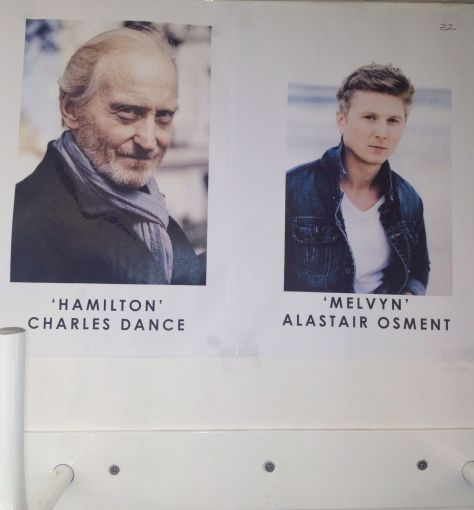
Alastair worked with “Game of Thrones” actor Charles Dance in “Deadline Gallipoli.”

It’s clear that Alastair embodies the typical Australian man, given his characters that live in the time of WWI up until modern day. In the hugely popular series “Home and Away”, a show on which “Thor” star Chris Hemsworth appeared in a lead role and a series that is sold in over 100 countries around the world, Alastair played the important role of Cal Jackson.

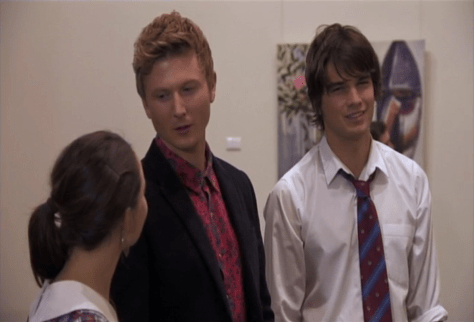
Alastair therefore not only shared his acting talents with viewers in Australia, but with countries like Ireland where “Home and Away” is the number one TV show and entertains millions with its storylines about the residents of a seaside town called “Summer Bay.” “I felt very fortunate to play Cal, because the trajectory of two other main characters hinged on my performance.” Indeed, as Cal, Alastair plays a university student who causes something of a love-triangle when Summer Bay High students visit an art gallery where Cal exhibits his artwork. The emotional depth Alastair portrayed in the storyline provided the foundation upon which writers and producers built a major story arc around the two leads’ relationship.

Home and Away - Philippa Northeast (Evelyn MacGuire), Alastair Osment (Cal Jackson) and Jackson Gallagher (Josh Barrett) 7_preview
Alastair caused quite the stir when he joined the cast of “Home and Away”

“Home and Away” star Nic Westaway, who appeared in 387 episodes of the show over four years, offers his thoughts for what makes Alastair a successful actor. “What makes Alastair truly extraordinary to work with is his generosity as an actor. He is always willing to work collaboratively to achieve the greatest outcome for the story and the production.”

The importance of Alastair’s roles in such highly-regarded television productions ironically seems small when compared to the rest of Alastair’s hugely impressive career. Alastair gives credence to the notion that actors are not merely ‘performers’, but storytellers and artists who need a finely-tuned instrument and highly refined understanding of the craft to inject humanity into what is otherwise just words on a page. The fact that Alastair Osment has worked on the same productions as Oscar, Golden-Globe and Emmy-winners is obviously impressive, but he has also shown how in the age of social media and Kardashian-culture, pedigree and skill build integrity and success.


STUNTWOMAN EBONY DE LA HAYE HAS AN EXCITING CAREER BUILT ON WATER

Film and TV 2

The saying goes, “Choose a job you love and you’ll never work another day in your life.” Those who have found a way to monetize their passion and interests are considered lucky. You could say that Ebony De La Haye is one of the lucky few but that would be a complete misnomer as luck has no part in her story. While still in the early stages of grade school, Ebony began training in her lifelong love of water skiing. Countless competitions and awards later, she took a foray into performing as a stuntwoman and morphed into a new career that became very successful. There’s no denying her ability to turn her love of what she does on the water into an internationally praised body of work, just as there is no denying her incredible abilities. For anyone who feels that you establish yourself and then sit back, De La Haye serves as an example that you are best served doing the antithesis of this. She has systematically built her beginnings as a child prodigy in waterskiing into that of an acrobatic/fight trained entertainer…sometimes doing so while delivering lines in an array of different languages. Whether it’s a calculated plan or simply her ability to continually embellish her skill set, Ebony is literally and figuratively constantly in motion.

When Ken Clark of Action Horizons contacted De La Haye about the position as stunt double for actress Kiersey Clemons in the film Sweetheart, she was already interested in more film work. The fact that filming was taking place in Fiji certainly didn’t dissuade her compulsion to accept the position. Ebony served double duty, arriving two weeks prior to filming to train Clemons for the scenes which would not allow for a stunt double. In addition to being a physical match for the stunt scenes, serving as a mentor/trainer to the actress strengthened the trust bond between the two…resulting in an ease of performance in the more physical scenes of the film. Director J.D. Dillard had worked to take full advantage of De La Haye’s abilities by creating highly dynamic fight scenes that incorporated weaponry and aerial wire work. Because the filming took place on an island, the rigging set ups had to be assembled on site in an environment atypical for normal productions. The film also contains a great deal of underwater work like scuba diving. Countless opportunities for danger required immense planning and preparation to ensure the safety of the cast and crew. These environments were familiar to Ebony, as was the climate (De La Haye spent time starring as the female lead Helen in Universal Studios Singapore’s live Waterworld production). She relates, “The climate in Fiji was very similar to Singapore. The sun took a toll on everyone but we took advantage of filming on an island and took lunch dips in the ocean. It was important to stay incredibly hydrated and take electrolytes in order to do the job with energy and focus. The ocean caused some difficulties as the water conditions were unpredictable. The cast and crew would travel to and from the island we filmed on by boat every day, sometimes in very rough water conditions. This was a daring task. We also encountered some difficulties with the unpredictability of the ocean when filming underwater scenes. Natural elements such as rain or tidal movement would affect water clarity and therefore the overall quality of the shot able to be produced on that day. We very much had to work in sync with mother nature.

This same skill set and exemplary performance led Action horizons to enlist De La Haye to become a part of their stunt team for the Horror/Thriller Prey. The second (and most demanding) part of filming took place in Johor Bahru, Malaysia where an enclosed submergible set was built. For twenty days of filming, Ebony’s role as stunt double required her to be submerged in confined spaces utilizing controlled breath holding and scuba safety. While not as outwardly/visibly demanding, the risk levels were perhaps much greater. The experience of working in Malaysia presented some challenges. Due to shooting on remote islands off Langkawi, the entire production had to be loaded onto small local taxi boats before each shoot day, including all equipment. This meant preempting any stunt or safety equipment needed and preparing contingency plans for all the possible scene variations and running sequences of the day. Travel boats were small and space was limited. Some of the islands are only accessible during high tide, requiring the use of tide charts to map the tide conditions and ensure the production would be able to get on and off the islands safely. All of this served to increase the potential risk for Ebony and increased the need for someone of her skill and experience. She adds, “Prior to working on Prey I had done stunt work on two television productions, “Serangoon Road” and “Indian Summers”. Prey was the first feature film I had worked on. I was excited to be doubling the lead actress and to be on set for the full duration of the shoot. To begin with, I was nervous as it was something I had wanted to do for a while. I felt pressure to do a good job for both the production and myself. We had two weeks of prep time for stunt training with the actors. We created the fight choreography for the action scenes and worked in a pool to establish swimming skills and the underwater action scenes. By the time it came to shoot I was no longer nervous and just really excited to make a movie.”

Stunt coordinators and stunt performers are a highly proficient group requiring immense trust and respect between them. Ken Clark of Action Horizons declares, “Both these films required not only talent but also intelligence and quick thinking. While our goal is to get an amazing and thrilling take, our number one priority is safety. A lot of the time this means performing while being hyper aware of your surrounding and anticipating the potential for danger. On both the features Sweetheart and Prey Ebony was the stunt double for the lead actress, which required her to be on set for the duration of the shoot. Whilst filming Sweetheart Ebony was required to execute numerous stunts involving aerial wire work, performing fight scenes, and the use of her scuba skills to achieve deep under water scenes with a specialized scuba film crew. The filming of Prey also required these scuba skills, working in submerged sets and deep water film tanks, as well as utilizing Ebony’s stunt fighting skills in the choreography and performance of multiple fight scenes. As the stunt coordinator of Prey and Sweetheart, Ebony impressed on both of these projects. A stunt performer is the ultimate team player. They take all the risk to make the star look great. Ebony De La Haye makes her stars look incredible!”


SILENT NIGHT IS A FRIGHTENING SOUND

On Lounge Close 2

Composer Jayden Lawrence has always embraced the path less traveled. While it hasn’t always been the case that this leads to success in the film industry, advances in digital media distribution, streaming services, and overall music recording technology have led to a diversity in the industry which has created numerous opportunities for him. Both traditional film and more contemporary mediums have benefited from Jayden’s talent. Feature films, documentaries, shorts, and many other types of productions have included the musical contributions and enhancements of this composer. He’s known for an eclectic palette that encompasses everything from symphony orchestras to Hip-Hop to just about anything you can think of. A major reason for his success and popularity among filmmakers is because he is a listener. His approach is best stated in one of his favorite quotes from jazz trumpeter Miles Davis. The be-bop icon stated, “It’s not the notes you play, it’s the notes you don’t play.” More specifically put in regards to Lawrence’s compositions, he often sounds different because he isn’t trying to announce his prowess as a composer but rather focuses on only what will complement the action on screen, whether it be marching parade drums, a string section, or a modern grooving dance beat. Lawrence’s score to the film Silent Night is shining proof of this.

The film Silent Night takes place in Australia. The year is 2036 and the government has imposed a system purging anybody considered undesirable or a burden to the society. In the opening scene, a woman gives birth under the supervision of a nurse. The infant’s DNA is tested for any signs of illness or “detrimental” conditions and when a positive result is received, the child is taken away amid the mother’s wailing. This sets the dark tone for the film. Much of the story follows the perspective of Carly, a different Nurse at a purgation clinic. Her duties are to process and see out the purgation of individuals who are admitted to the clinic, having been deemed a burden or risk to the advancement of the race and population. A series of different “victims” are seen being euthanized in a chemical bath. These range from elderly homeless people to young children with infirmities. Videos play on a screen to distract these victims until it is too late. All the while, Carly struggles with her role in this culling of society. There’s a none too subtle statement about society’s indifference and paranoia as it relates to those who fall outside the fortunate “mean.” The tale is disturbing and applicable to virtually all cultures and geographic locations. Lawrence’s score is the nail which allows this picture to hang on the wall for all to see. His emphatic musical “hits” force the audience to turn in the direction that the filmmakers who created Silent Night wish the audience to observe.

One of Jayden’s most important contributions on any film is his focus on individual characters and the ability to make their emotions and motivations have an audible presence on film. While it’s a major part of what he does, he concedes that it’s not always a conscious decision on his part. He often watches the film and is intuitively inspired by it to manifest an emotional counterpoint in the music. This is where his familiarity and being well-versed in different styles and instrumentations pays off, giving him a greater pool of musical options to pull from. In Silent Night, the score is primarily composed of a string ensemble which is used to represent the story world and most importantly, Carly. As an ensemble, a string section is one of the most versatile instruments available in terms of range of pitch, dynamics, mood-setting, and articulations allowing for textural techniques like tremolo, trills, flautando, harmonics, and more. The composer describes, “Carly is portrayed to be quite a warm & caring personality but juxtaposed with the harsh grittiness of using razor blades to inflict pain and cut herself. I wanted to add an element of fragility to Carly, and highlight the pain she is going through so I incorporated a bit of ‘edginess’ into the tonality of the strings and used techniques such as tremolo to represent the fragility and inner turmoil she was experiencing. The strings are also used to bring a softness and warmth to Carly’s character, most notably towards the end as she is deeply touched by what is happening with the young boy.”

Sitting in front of studio (best)

Creating a film, any film, is no small feat. The finances, schedules, and most importantly the desire to do great work can often mean working under a considerable amount of stress while being expected to deliver emotional performances. Even for a composer, often in the studio alone, the demands are great. For Jayden, it’s not a matter of if the pressure will come (that’s a foregone certainty) but how you handle it when it does come. Keeping a cool head about things is absolutely essential for a career in film scoring. Tight deadlines and team dynamics are not always pleasant. This digital age has brought with it enormous flexibility when it comes to media creation but it has also thrown the concept of a “final cut” out the window. Spontaneous last minute changes by someone in the production line necessitate momentary flexibility. When it comes to scoring a film this can mean considerable alterations. In the end, a composer’s job is to serve the film, whatever the demands. This often means creating at the highest level while ensuring the environment is copasetic. Silent Night producer Danielle Reston professes Lawrence’s exceptional abilities on all these points stating, “Working with Jayden on Silent Night was the best experience a producer could hope for. From the first spotting session he was already throwing out ideas and it was clear that he understood the director’s vision. Jayden and I had worked together previously on a film called Oedipus which met some complications during the post-production stages that resulted in a complete re-edit of the film; a composer’s worst nightmare! Jayden simply embraced the change and took it in his stride, delivering a fantastic and memorable score. Unsurprisingly, the score to Silent Night was no different. It created the right amount of tension, despair, and impact that made the film tug that much harder on the heart strings. Jayden’s music has a craftsmanship about it that is not always present in film scores. It was this craftsmanship that ultimately helped propel Silent Night into the success that it has achieved.”

JL CloseUpWorkAtMixingDesk

Producer Annick Jaëgy sheds light on anorexia in award-winning film “Mackenzie”

A child’s imagination is what makes them so special. The ability to envision all new worlds while in sitting alone in a bedroom is something that tends to dissipate as we age. However, artists still possess such imagination for their entire lives, and filmmakers not only have the capability to imagine new worlds, they create them. Annick Jaëgy knows this well. As a producer, her creativity knows no bounds, and it is because of this that she has quickly become one of Europe’s most sought-after in her field.

Throughout her career, Jaëgy has worked on a variety of high-achieving projects, showing the world what she is capable of. She has worked alongside Oscar winners such as Mahershala Ali in the critically-acclaimed film Gubagude Ko, and her work on the musical That Frank garnered international attention.

Another highlight of the producer’s career came from making the film Mackenzie. The film tells the story of a teenage girl who is dealing with the emotional distress of moving to college and leaving behind her severely anorexic sister. On the day of her departure for college, teenage Alison wants it to be about her for a change and not her sister Mackenzie, who she thinks is extremely self-centered. But, as the day progresses, Alison’s true feelings about her sister come to surface. She worries about how Mackenzie will battle her anorexia without her around. And when the time comes to say goodbye, an honest confrontation between the two could jeopardize the future of their relationship. It’s a teen drama with a lot of heart and also some humor. Such a story required a producer who was not only dedicated to their work, but also the message the film was trying to convey, and Jaëgy was the ideal woman for the job. 

Because this script was about a woman struggling with anorexia, Annick was very concerned that we go about the task of casting this actress very carefully, making sure we found not only a good performer but one who would not herself become anorexic in order to do the role. ​I was very impressed with how protective Annick was with her director’s process, making sure she was not rushed to make any decisions, making sure I allotted plenty of time for callbacks and work sessions with the actresses. This is very rare in a producer, most want casting to happen as quickly as possible without a thought to the nuances that a director needs to see in order to make a decision. I’ve worked on many AFI films, but Annick stands out as particularly talented at her job. I had such a positive experience doing Mackenzie with Annick that I jumped at the chance to work with her again on her next project.  I hope to continue to work together,” said Lisa Zambetti, Casting Director.

The idea for Mackenzie came from Sofia Åström, the Writer and Director. Initially, Åström had an idea for a feature about two sisters going on a road trip, which eventually transitioned to a film about two sisters separated by anorexia. She wanted to explore anorexia from the point of view of a family member, in this case the younger sister Alison (Jessica Wingenbach). Such a stance is uncommon in films tackling the disease, which are more often than not told from the point of view of the anorexic person.

Åström struggled with anorexia as a teenager, and now having long recovered, she wanted to use her tools available as a Director, educating audiences on the impact of the disease. However, when Jaëgy came on board, she wanted Åström to work with another writer to give Åström some distance to her script and allow her to direct more clearly. The decision, although sometimes challenging to work with multiple writers on one project, proved to be the right one, as the story is told with the protectiveness of Åström’s connection but also her artistry as Director.

“A lot of people wrongfully think anorexia is a vanity thing when it’s actually a deeply psychological struggle,” said Annick.

Åström and Jaëgy had previously worked on the film Soledad Canyon together prior to Mackenzie, a beautiful short about mourning and grieving. The two had a perfect collaboration, calling it “professional love at first sight”. Therefore, when Åström wrote a film that was as dear to heart as Mackenzie, she knew she needed Jaëgy as her producer to bring her idea to life. Åström was always impressed with Jaëgy, and had faith in her as a producer, trusting her taste and the fact that she could rely on the producer for every step of the filmmaking process. Jaëgy is known for her ability to create an environment where the talents of the cast and crew can flourish. In addition, she raised almost 75 per cent of the funds for the project. Each and every one of her decisions was backed by Åström, knowing that the producer’s instincts would prove fruitful and beneficial for her film.

“This is a story where women have a tendency to recognize themselves or at least their relationship with their siblings. Our main team is almost entirely female apart from William, the cinematographer. Sofia wanted an entirely female main crew. I am glad that William stepped as I think it is important to have the balance of the two genders. I am not in favor of an entire female crew to be honest. On set, we had a good balance men and women,” Annick described.

Jaëgy spent almost two years working on Mackenzie, from start to finish. Finding the correct location took some time, as they were in search of a house with a “jack and Jill bathroom”, a bathroom shared between two bedrooms, with doors entering from each room. This was extremely pivotal to the film, as it is where the sisters have most of their issues, such as Alison making fun of Mackenzie, and Mackenzie struggling with her image in the mirror, and also where they reunite. It was essential to find the right home with such a bathroom. After finding a fit, one of the rooms was too small to shoot, but Jaëgy and her team used a green screen to manipulate the footage. Both bedrooms were entirely repainted and redecorated to make it look like two teenage girls’ rooms and show the two different worlds the two girls are evolving; Alison’s being a messy teenage world and a tom boy with Mackenzie very neat, meticulous, and very girly.

The only leading roles in the film were that of Alison (Jessica Wingenbach) and Mackenzie (Reid Cox). Because of the nature of the project, Jaëgy and her crew also had to cast models to be able to replicate magazines covers. These models animated themselves when Alison was facing them and the mirror, a representation of what Mackenzie wants to be. Although these models had a few lines that made them cast, the film is essentially supported by two female leads. Engaging an audience with such a small cast can sometimes be difficult, but everyone’s commitment to the story translates to the screen.

“It was a very long process but the result is there. We have a beautiful film entirely financed through fundraising, that has gained recognition in renowned festivals around the world,” said Annick.

After its premiere, the film was an Official Selection at prestigious festivals like the Cannes Film Festival Short Film Corner, HollyShort Film Fest, Newport Beach Film Festival, Madrid International Film Festival, and Palm Springs International ShortFest – The ShortFest Film Market. It received a Silver Palm Award for Narrative Short at the Mexico International Film Festival, a Platinum Remi Award Winning for Short Subject Film Award/Dramatic Original and a Remi Winner at WorldFest Houston, and it was nominated for Best Short Film at the California International Film Festival and Davis Chinese Film Festival. Mackenzie has also just been selected to the Academy Award-qualifying Bahamas International Film Festival and we are thrilled as it is a very important film festival. It also pleased the investors. Once the film premiered, one of them told Annick that she would invest in her next film, and is now helping finance her next project. As a filmmaker, such validation is invaluable.

“To see months of work unfold in front my eyes when I was looking at the monitor watching the scenes while on set, these short moments made me think that when you are passionate about narrative visual storytelling, never give up. The road is bumpy and sinuous. It’s hard, don’t get me wrong, but there is nothing more magical to see months, years of work to unfold in front of your eyes while you’re on set,” said Jaëgy.

Annick is immensely proud of Mackenzie, not just with what the film accomplished amongst festivals, but how it resonated with audiences. Each and every member of the cast and crew felt what they were trying to convey in the film, and one of the most rewarding moments for Jaëgy was when one of her leads, Reid Cox, sent her a note.

“I am so grateful for the opportunity you gave me to work on such an incredible project with amazing people. Thank you for creating a safe environment for me to go to an extremely vulnerable place within me. You are such a bright light and I can’t wait to work with you again,” the note read.

Cox was one of many that was impressed with Annick Jaëgy.

“Annick is one of the most qualified people I’ve ever worked with. Her job requires a rare personality, involving management and creativity. There are no models to make a good artistic project. The ability to adapt to each unique configuration is therefore required. Economic and artistic understanding, time management, identification and resolution of often unprecedented problems, social skill, knowledge of the different jobs specific to the movie industry, ability to act for the project and not that of the ego, huge work capacity , especially in rush phases, which often exceed expectations, reliability, intelligence, project appropriation, passion and great humor, are all qualities that allow me to consider Annick as the best collaborator that anyone may wish to have to carry out on a film project,” said Marc Chouarain, a celebrated Composer who worked on Mackenzie.

Be sure to keep an eye out for more of Annick’s work in the future.

 

International Entertainment, and the Talents that Leave us Buzzing….