Category Archives: Reviews, Interviews & Features!

EDDIE TANG BRINGS LIKABILITY TO A VERY BAD MAN IN THREE SIXTY

360-1

Kidnapping is a dangerous situation. It is the subject of the film Three Sixty. While the action displayed on film is tense and dark, Eddie Tang gives a glimpse of levity that has endeared him to the audience and created a stand out role. The brilliance of Three Sixty is not in the originality of its plot (though it does possess a couple of major twists) but rather in the execution and performance of the actors. Every character in Three Sixty is tense and frightening in their own way (even the kidnapping victim “Cheryl”, played very convincingly by Ella Bowman) with the sole exception of Tang. In a small ensemble, the audience is afforded the chance to bond with each character to a greater extent. In Three Sixty, Zac is oddly the character which is most easily relatable. Eddie Tang is an Australian actor with a diverse career in film (Three Sixty, Happy Feet 2, Superman Returns), TV (East West 101), and commercial work (major campaigns by Volkswagen, KFC, and others); his performance as Zac is a perfect example of the talent and on screen charisma that have made him a sought after actor in so many productions. Three Sixty is benefiting from some of that attention as it is set to become a feature film in Hollywood with actors such as Ray Liotta attached to it. Tang is interested in following suit with the film and pursuing the opportunities that Hollywood’s film industry offers.

Three Sixty is an Australian thriller that depicts the story of a kidnapping gone wrong, in multiple ways. It’s the tale of two hapless youths, Zac and Roc, eager to make a quick buck by accepting a job from a nightclub owner to kidnap the girlfriend of a famous footballer. What could possibly go wrong? Nothing? Not if your Roc and greedy for more money. It’s a classic sting, almost a cliché. Get the merchandise, hide and stash it, and raise the price; except that the merchandise isn’t playing ball. No one is playing the game as it was supposed to be played. Nothing in Zac and Roc’s scheme goes according to plan. Just when things seem to get sorted, everything does another three sixty. From the moment when Zac and Roc rip the tape off of Cheryl’s mouth, the duo realizes that they may have kidnapped the wrong girl as evidenced by her American accent rather than the expected Australian one. The chemistry between these three characters (and thus cast members) is undeniable on screen. It is equally as attention commanding as any episode of the Sopranos. This positive interplay was palpable between Tang and Eamon Farren [Roc] during their mutual audition. Faith Martin, one of Australia’s leading casting directors, asked Eddie to audition for Zac based on her experience and intuition about the role. Tang comments, “Eamon and I had an instant connection. Off-set we were best buddies just like our characters were on set. The banter between us was great. There were jokes between us and the sound guys, which led to jumping on the airwaves on the crew radio and causing mischief. It was a fun set to be on. I felt like we were up to George Clooney and Brad Pitt-esque type shenanigans. Sometimes you have to design that kind of vibe on set but it happened completely naturally on Three Sixty. The producer came up to us at dinner on the first night of filming. He said there was magic dust in the air about this film. He was excited by the onscreen chemistry between Eamon and I as actors and how both our characters bounced off each other.”

360-2

While Roc is the darker and menacing of the two, Zac is the one who is more meticulous, cautious, and considerate of both the Cheryl and the felonious plan. Zac analyzes the situation and makes sure nothing goes wrong. The dark heart of Three Sixty is the kidnapping and its ambassador is Roc who, if left to his own designs, would add rape to the plan. Zac brings an aura of level headedness and sense of gentile to the circumstance. The comedy of Three Sixty is in the inexperience and the stupidity of these two when it comes to committing the crime. They often stumble their way through, being fooled and bewildered by Cheryl. Another comedy element is the banter and friendship between Roc and Zac. The back and forth commentary between the two characters in the diner is a classic example of this comical relationship. Three Sixty’s small cast (only five cast members in this film) could have resulted in the audience becoming weary of seeing the same actors on screen but, thanks to the electricity between Tang and Farren the opposite is true.

Eddie Tang’s successful portrayal of Zac in this film can be described with one word, subtle. The unobvious nice guy, Zac is presented in a low key manner which draws the viewer in to an emotional place where they feel sorry that he is even involved in the crime. It’s not an easy place for a character to access with an audience…while committing a violent felony. Eddie notes, “I always prepare and research for a role and I did a lot of work running lines with my PA for Three Sixty. My co-lead, Eamon Farren, is such a fine actor that I knew I’d have to be even more prepared to go toe to toe with him. The roles only work in this film if we both are magnetic in our individual ways. Roc is the character that pushes the guy who organized the job for more money. I felt that Zac’s role needed to be subdued in order to be more the natural stylistic kind of character; the character who is the subtle comic relief within the film. Zac is not an over the top clown, but rather the straight deadpan comic relief. It’s very easy to overplay a comic opportunity but if you underplay it, then it becomes more relatable to the audience and you are not begging them to like your character. It’s better if they just do it because they can relate to him. It gives you an opportunity to build rapport. It’s not an easy task to get the audience to like a character who is a kidnapper; a man who in reality is the villain. Nobody likes a kidnapper in real life, but Zac somehow wins over the audience by playing a subdued role within the film.” Eddie was disciplined and proactive in his approach in creating the backstory for his character. He states, “His father was never around. Because of his abandonment issues, he got into trouble in High School and was expelled. Zac started mixing with the wrong crowd. Roc was his best friend. Zac’s a DJ and dabbled in some Marijuana growing up. He’s overweight, not got much money, never had a girlfriend. He grew up in the South Western Suburbs of Sydney.” Eddie’s preparation paid off in his performance with the film’s Official Selection at the following Film Festivals: L.A. Shortfest, Rhode Island International film festival, Flickerfest (Academy accredited), Hollywood Film festival, Sydney Cockatoo Island, Cleveland International Film Festival, Carmel Art, and Bay Area film festival. Three Sixty’s director Dan Mitchell declares, “I do not hesitate when I say that Eddie’s leading role for Three Sixty was irreplaceable. The film could not have achieved the tone that the script suggested without him. I cannot imagine completing the film without him. Eddie’s achievements in his leading role for Three Sixty were a huge factor in the film’s incalculable critical acclaim. A good actor is an invaluable member of any production and Eddie is doubtlessly a great actor. His status as one of the most accomplished members among his peers can be seen in the variety of achievements he has earned throughout his career. Eddie is one of the most sought after actors in his field.” It’s a bit ironic, by not seeking attention for his role as Zac in Three Sixty, Eddie Tang has once again become one of the most lauded and recognized actors in a successful production.

360-3


Michelle Solomon produces upcoming film Sunny Side Up

headshot-1-ms
Michelle Solomon is both a producer and graphic designer.

Approximately 17% of Canadians are registered as organ and tissue donors. Every 10 minutes another name is added to the national organ transplant waiting list in America. One person can save eight lives. However, many people are desensitized to stats and numbers. They respond better to stories. Producer Michelle Solomon hopes to shed light on this issue by sharing the film Sunny Side Up.

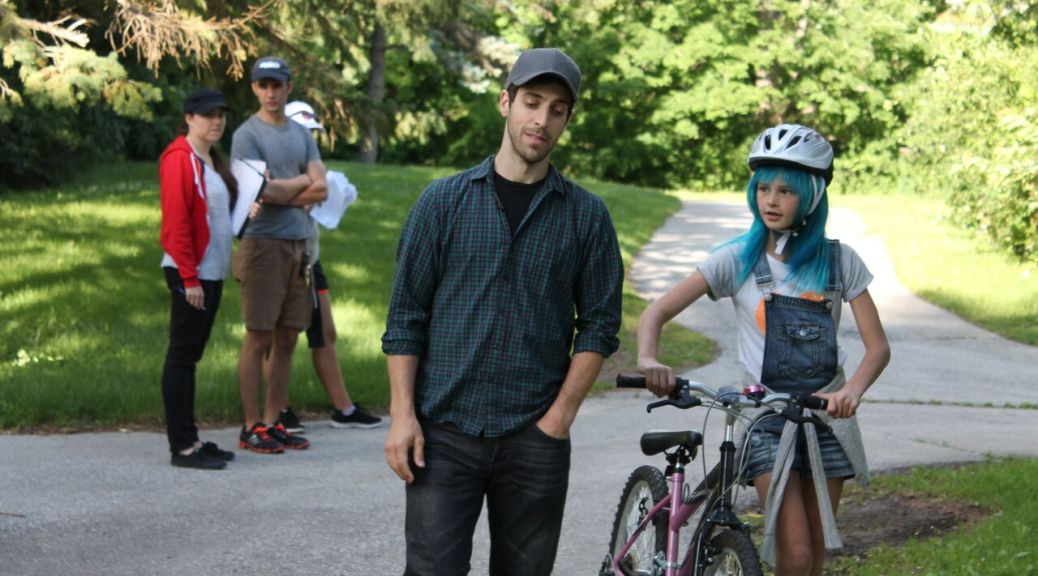
The film tells the story of Marc, who after receiving a corneal transplant unexpectedly befriends a witty, blue-haired girl named Sunny. She helps him see his potential for a happier life.

Sunny Side Up is a chance to show the real-life impact a donor could have. Hopefully, it inspires people to sign up as organ and tissue donors,” said Solomon. “It is a story that tackles the importance of organ donation and showcases the impact one person could make. This beautiful short film is an abstract look into how one can see the beauty in life despite great adversity.”

The film features a young star on the rise, Peyton Kennedy, as the title character Sunny. Her credits range from leads in television series to feature films, like the Netflix series Between, Emmy award-winning Odd Squad, Killjoys, and Murdoch Mysteries. In addition, she has starred in critically acclaimed films American Fable (across House of Lies’ Richard Schiff and The Fosters’ Gavin MacIntosh), Lavender (with Justin Long), and upcoming Telefilm micro-budget feature Cardinal. She worked alongside the film’s other lead Marc, played by David Reale. David has appeared across both film and television, with credits in Suits, Minority Report, Beauty and the Beast to the Canadian Screen Award winner Bang, Bang, Baby, Ben’s At Home, and, Glen Coco in Mean Girls.

“It was fun and very much a collaborative work environment. We received much support from the community in which we were filming. In the end, our financing was a bit of a Frankenstein between our sponsors, investors, and donations. This resulted in the film feeling “bigger” than us, as we had others equally invested in the project,” said Solomon.

Solomon describes the inspiration for the film beginning with the creation of the title character Sunny. Simultaneously, the writer, Simon Paluck, saw a Facebook post from a friend addressing the twenty-year anniversary of his kidney transplant and how thankful he was for his donor.

“How death in one person could mean life in another was a stimulating relationship worth exploring. Especially if the transplant recipient feels unworthy of the organ donation,” said Solomon.

One of Solomon’s greatest strengths as a producer is her savviness. She instinctively understands who to partner with, where to distribute funds, and where films should be submitted to get the greatest recognitions. Kelly Kiernan, a Producer of Creative Design and Development at DreamWorks Animation, mentored with Solomon during the film and realized her talent.

Sunny Side Up is developing partnerships with nonprofit organizations. The film is set to enter Tribeca Film Festival and South by Southwest in Austin, Texas. Michelle’s passion for TV and film, combined with her relentless work ethic and drive, led to Sunny Side Up being a hugely impactful film with great performances. I can’t wait to see it’s continued success in the field, and of course Michelle’s continued success as well,” said Kiernan.

Solomon and the film’s writer Simon Paluck run the production company Picosphere Inc. in Toronto, and together have worked on many projects including the award-winning films Emma and Chalk Dust.

“The biggest challenge of Sunny Side Up was shooting the entire thing in three consecutive days with the majority of the shoot being outdoors. Time was never on our side but we overcame it by immediately dealing with problems as they came up and constantly communicating with everyone,” said Solomon.

In addition to being an award-winning film producer, Solomon is internationally recognized for her work in graphic design. She revitalized the Ace Building Materials brand and will be launching her own social shopping app Adoorn early next year. In addition to all of this, she is proud to be a successful producer.

“I absolutely love assembling a group of hard working, talented individuals and seeing everyone work together for a common goal. There are few environments where you really depend on your peers’ skills, and producing is one of them,” she concluded.

Sergey Savchenko talks working on Russian hit “Liberation of Europe”

sergey-4
Sergey Savchenko has always known film was his passion.

Growing up in the heart of Siberia, Sergey Savchenko was not like other children. While many passed the time with toys, Savchenko turned to movies. Film slowly transitioned from his childhood pastime to his life’s ambition. He would sit and watch the same film over and over again, enjoying it more with each viewing. He would study it, and try to understand how each scene was put together. Upon stepping onto a film set for the first time, his dream was realized.

“On that day, I realized that I’m not alone with dreams and hobbies. It’s like a family, not everyone can understand your worries and complex thoughts so clearly,” he said.

Now, Savchenko is a successful director of photography, working around the world doing what he loves. This year, viewers in Russia had the pleasure of seeing Savchenko’s artistry on 1TV’s Liberation of Europe, a five-episode documentary series highlighting the difficult decisions made in the headquarters of different countries during the second world war. Actor Victor Verzhbitsky, the main narrator of this movie, goes through the events of the World War II, still frozen in time.

“It was a long journey, like a short life. In the process, I visited a lot of European countries, met a lot of very interesting people, gained priceless experience in large reconstructions staging. We worked a lot with actors in emotional scenes, and as a DP it was very interesting to me to set the lighting and searching for needed emotions in a frame,” described Savchenko. “The range of emotions in the film varies, going from bravery and courage, to treachery and intrigue. It was very interesting to work with such a script.”

The difficult format of filming included shooting real characters and events, working with the actors, staging feature scenes, and the cinematic language of the series. The team needed an experienced Director of Photography to be able to handle the complexity of the task, and the director Pavel Elkin chose Savchenko.

“Working with Sergey, to me as a director, was much easier than with any other DPs, due to the fact that his understanding of the process of making the film is much deeper than of many others. He doesn’t need to be explained the principles of shooting for future postproduction or graphics, he is fluent in the technical side of the issue. In addition, the director of photography is essentially the eyes of the director. It is important that `the head` and `the eyes` work together and understand each other well. In creative matters Sergey is simply brilliant,” said Elkin.

While working on Liberation of Europe, the team needed to split the crew to create a second unit, which happened several times. Savchenko ended up taking over for the duties of the director on the second unit.

“I must say, it was done very well. The color of all the featured episodes was also the accomplishment of Sergey. He’s really good at his job and another two or three dozen related tasks,” said Elkin.

The job did not come without its challenges. There were many large-scale reconstructions required, with many people working on them, which made the staging complex, as well as many interviews from people all over the world. But for Savchenko, it was teamwork that made all of the challenges that were presented seem minimal at most.

“Thanks to precise work of the crew, we managed to shoot everything we needed,” he said. “And you know, I can talk with Pavel easily. We understand each other perfectly. He has a vision of a product in general, and clearly understands what he wants and can explain what he needs. has a great shooting experience all around the world, including Europe, it’s brought up in Paul a great sense of taste. He knows all specifics of filming and post-production, so we successfully managed to avoid a lot of problems while shooting. Even in difficult conditions we reached the right results, working quickly like a clockwork mechanism.”

The right results were definitely achieved. The series, which premiered in May, received extremely high ratings in Russia, and had led to a collaboration with companies such as Panera Films, Reality Production, as well as projects advertising for Avon and Siemens. It also inspired the documentary The Great Che.

“Watching it, I was filled with a sense like finishing a book. In my memory, there were much more events and emotions than what had been shown in this project. You just can’t experience this feeling in ordinary life, this feeling of finishing something great, something you have a very warm feeling to,” he concluded. “It is impossible to describe; it can be only experienced.”

Lanie McAuley is the apprehensive yet unapologetic “Bitchy Girl”

Canadian actress Lanie McAuley has a diverse set of roles on her resume. A pro snowboarder in Aeris, a driven dancer in Center Stage: On Pointe, Hollywood starlet in The Unauthorized Melrose Place Story, and many others. None of them were cathartic in the same manner as her role as Heather in Lost After Dark. Far from her normal films, Lost After Dark is a straight up horror/slasher film which pays homage to the 80’s films that gave birth to the genre. McAuley’s portrayal as Heather (an obvious nod by the filmmakers to the film Heathers) displays the actress in all of her spiteful and venomous bitchiness. The role gave Lanie an opportunity to play a character possessing none of the endearing qualities found in many of her other performances, yet audiences still found a way to make her one of their favorites (likely THE favorite) cast member of the production. With a deluge of one liners that portray Heather to be every bit of the archetype bitchy girl in a slasher film, McAuley’s sense of comedic timing gives a release to the tension found in the frightening tale. It’s the perfect combination of release, terror, and vindictiveness that makes this role (and the actress) so memorable in Lost After Dark. Writer/director Ian Kessner recognized the actress’s ability to clearly communicate Heather’s energy from the moment he saw the audition tape. He recalls, “She was my first and only choice for the role of ‘Heather.’ None of the other actors in contention for the part even came close to displaying Lanie’s level of talent. She’s natural, intuitive, and blessed with amazing comic timing. Lanie can make you laugh just as easily as she can make you cry. It’s crazy! On screen, she crafted a masterful performance that audiences fell in love with. The depth Lanie brought to the role made her character incredibly likable and relatable, and contributed immeasurably to the film’s ultimate success. When the movie was first released, I attended screenings at prestigious film festivals around the world. Lanie was always singled out by the audience as the one they loved most. That’s a testament to her tremendous talent and skill. And it’s the reason I’m writing a role for her in my next film as we speak!”

lanie-mcauley-lost-after-dark-2

So how does one become “the bitchy girl” when you are known for being considerate, amenable, and a consummate professional?  When questioned, McAuley tells of her love for movies like Mean Girls, Heathers, and The Shining. This cocktail makes considerable sense when viewing her performance in Lost After Dark. While she was confident in her ability to deliver a great performance as Heather, she remarks, “Ian [Kessner] hired me off an audition tape. He phoned me and said, ‘When I watched your tape, I knew you were my Heather.’ It was really flattering… although it’s a bit of a double-edged sword because if you’re the obvious choice to play the bitchy girl…is that a compliment?” Playing the role very close to her audition (an occurrence that almost never happens in film), McAuley expanded her understanding of Heather by voluminous viewings of the genre, from the 80’s through to modern productions. She knew that the character would have to be grounded in the archetype but play to the sensibilities of modern fans. Her attempt was to honor the tradition while breaking fresh ground in her presentation.

lanie-mcauley-lost-after-dark-1

The dichotomy in Heather is that her dark and self-centered demeanor fuel the comedy. The two are intertwined and as complimentary as sweet and salty. The approach was carefully crafted to McAuley’s strengths in comedic timing. She comments, “I was thrilled that Ian was happy with my comedic timing! I’ve spent a lot of time in acting classes working on comedy in particular. Growing up, I loved being the funny girl, so I’m sure a lot of it comes from that. I’ve definitely had experience with the bias that attractive women can’t be funny; I’ve been in a lot of auditions and even social settings where people say, “Wow, you’re actually really funny.” as if it’s incredibly surprising. I booked another comedic role this year [Bad Date Chronicles] where I had the director and producers in stitches in the audition room. It’s satisfying to make people laugh. I hope that in my career I can help destroy the stigma that women can’t be funny. There are a lot of women out there blazing the trail who are stunning and hilarious: Kristen Wiig, Amy Schumer, and Emma Stone are some of my favourites.” Lanie continues, “I think a big part of why I was singled out as the audience ‘favourite’ was because I was the comic relief. In a slasher film, there’s so much stressful content…the audience needs a break. I’m lucky my character was written to be the funny one. Plus, everyone loves a good mean girl. There’s a guilty pleasure that comes with watching someone say nasty things. So if the audience was digging it, I’m flattered; it means I did my job right. Despite her less than redeeming qualities, I tried to make Heather likeable where I could. There is one scene where she says, ‘I don’t wanna be eaten by a cannonball!’ The comedy is in her idiocy, but there is almost a level of sympathy you have for this poor girl being so dumb (which is aided by Johnnie’s constant criticism of her). I think audiences had a soft spot for her in that way.”

Some of Lanie’s performance might have been aided by the environment and situation during filming. Production was nocturnal and usually in freezing cold temperatures. Add the requirement of Lanie’s character to be crying in hysterics, screaming, spouting vitriol, and running at top speed in high heels…it creates a weird head space for any actor. Channelling these aspects into a great performance is what McAuley does best. Lost After Dark premiered in the U.S. at Screamfest Horror Film Festival in LA, and had its European festival premiere at the IFI Horrorthon in Dublin, Ireland. The film also screened at Nocturna Film Festival in Spain and Fantasporto Film Fest in Portugal and was nominated for “Slasher of the Year” at the 2015 Moviepilot Horror Awards and “Trashiest Trailer” by the Golden Trailer Awards. Lanie was highly appreciative of the warm embrace the fans gave Lost After Dark noting, “I definitely think horror fans are their own breed! For one thing, they’re extremely dedicated. They know what they like and tend to have a really thorough understanding of the horror genre and sub genres. It’s cool to see. They’re really passionate. A lot of film & TV fans just love the good-looking actors and media hype; horror fans really care about story and the art of the genre.” In a genre which earnestly states about Heather and her ilk “The meaner, the better”, Lanie McAuley is one mean Heather!

lanie-headshot-8


HOW CINEMATOGRAPHER SIMU FENG TRANSPORTED AUDIENCES INTO THE HUMAN PSYCHE FOR “BREATHE.”

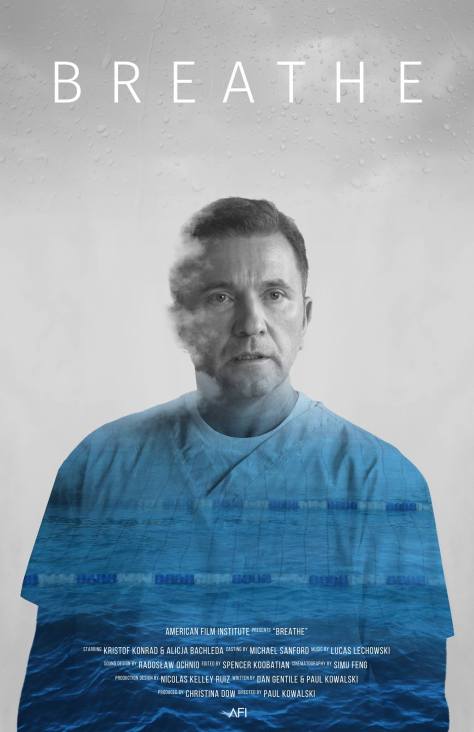
Cinematographer Simu Feng and Director Paul Kowalski have worked together on a number of films. Although they both possess many impressive attributes, perhaps the strongest reason for their successful working relationship is that they are both classic over-planners. Both of these men subscribe to the idea that you should check every production aspect a number of times and have a back-up to your back-up. The security with which this empowers the entire production team allows the artists they work with to create outstanding films that are critically and publicly praised. As proof, consider that their latest collaboration, Breathe, which received more than thirty recognitions and awards from all across the globe including; Cannes Short Film Corner (France), Visioni Corte Film Festival (Italy) (Finalist – Best International Short Film), Southampton International Film Festival (UK) (Official Selection) (Nominated: Best Short Film, Short Screenplay, Leading Actor in a Short, Cinematography, & Score), Beverly Hills Film Festival (Best Short – Audience Choice Award), Aesthetica Short Film Festival (UK) (BAFTA Qualifying) (Nominated – Best Drama), and numerous others. The exemplary work that this duo creates together gives credence to the idea that great art is great art, regardless of your background or history. These two filmmakers come from drastically different backgrounds. Born in London to nomadic Poles, Paul Kowalski grew up in the Middle East Africa and across America. The only child of a civil servant and a nurse, Feng grew up in Shenyang, China and then moved to Beijing to study Geophysics in college. In an abrupt turn, he was accepted to the Beijing Film Academy graduate school and never looked back. While both of these filmmakers pursue the passion of their art, Kowalski notes that it is Simu’s calm nature and demeanor under the stress of production and filming schedules that aids in the director’s ability to remain calm while working together. The cinematographer is Kowalski’s barometer and governor at the same time; a great bonus to the heart of any successful working relationship.

breathe-1

Psychological thrillers have become Paul Kowalski’s calling card. He is adept at making films of this genre and he knows it. Simu Feng has worked with this director multiple times due to his creative and discerning eye for imagery in these films. Concerning Feng’s proficiency, Kowalski declares, ““Simu was integral in bringing my wildest imaginations for Breathe to the screen. Whether it was devising shots in our pool sequence where we had to closely follow our protagonist swimming, or in an operating room watching him perform neurosurgery, Simu was always able to offer practical, creative, and unique solutions to bring the story to life visually. A truly great professional brings more than this to the table though. Working with Simu was a total pleasure. His calm and reassuring presence on set complemented my own directorial intensity and was often a rock amid the chaos of production. The camaraderie he promoted among his camera team made on-set execution a breeze and helped us get over production hurdles when they arose, with great ease.”

breathe-screenshot-1

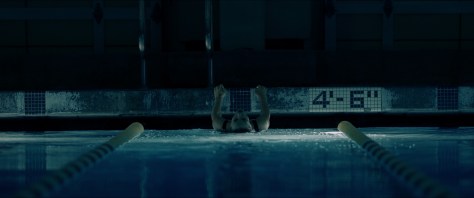
Breathe depicts a neurosurgeon’s psychological battle with reality in coming to terms with his wife’s death. The tragedy has propelled the main character into a place in which discerning reality from the images that haunt him is a constant struggle. As he descends into a surreal state, one gripping scene shows him descending into a pool; he struggles for his own life in the same way he struggles to accept the reality of his situation. Feng comments, “For the night pool scenes, we wanted the space to represent his sub conscious. We wanted the pool to be dark, scary, & moody, regardless of what a public pool should look like. I lit the scene mainly using the reflection of the water, creating a constant flowing light all around the area, adding to his unstable status of mind. I cared a lot about the eye light in the scene. I wanted to enable the audience to see into the character and feel his emotions. For this scene, we really wanted to be with the character…to jump into the pool with him and swim with him while feeling his pain through all the action. To do this, I did some research. I measured the size of the pool and came up with a plan that we could afford. We set up a 21’ ft. crane on the track along one side of the pool and swung the camera into the pool area just above water. For some shots, I had my camera operator walk into the water, holding the crane head and following the actor swimming. The shots turned out really well.” Kowalski expounds, “We needed highly-charged, stylized images to help represent our protagonist neurosurgeon’s growing derailed state of mind. The ALEXA was the solution. In our night pool photography, this camera was able to vividly capture flickers of reflected light, rendering them in crystal clear, ethereal blues. In our operating room scenes, the camera allowed us to keep skin tones vibrant while maintaining the low-lit, psychological (over naturalistic) feel we were after. The quality and flexibility of the ALEXA greatly contributed to the mood and style of the film.”

breathe-screenshot-4

Simu enjoyed creating and designing ways to “trick” the audience when it came to guessing what was real and what was imagined in Breathe. He relates, “Since our plot is not one with a lot of twist and turns, a great deal of the plot point is in the subtext. We really need to figure out a way to keep the audience with the character all the time, immersing them into the world of this film. We took a lot of time designing the shots, making sure we covered all the beats and delivering the emotion for each moment. For me, the great enjoyment in being a cinematographer is that you get to create a story and touch the audience with your images. I enjoy turning the words in the script into something tangible and delivering the emotion of the story through imagery. I get the most sense of accomplishment when a scene is cut together and works the way it should; plus, it’s so much fun working with lighting and playing with all the cameras. It is such a creative job. It forces you to keep coming up with new ideas.  I love to do a job that isn’t routine and repetition.”

As a fan of the US film industry, Simu has aspirations to make it his professional home. He admits to watching both films from his native China as well as US productions in his formative and adult years but makes note of his admiration for the infrastructure and lineage of American film. He states, “I think the US film industry is a fully developed industry in every aspect. There are rules to follow and paths to pursue; a design to getting things done. For example, you make a short, go to festivals, get noticed, and develop an independent feature. Then you go to festivals and get noticed by big studios. Whereas in places with developing film industries, filmmakers need to find their own ways to develop their career. The US has created a proven system that is admired across the whole world. I’m excited about being a part of that established model.”

get-the-life-2

breathe-poster


ROMY TEPERSON CHANNELS HER INNER NEW YORKER

Actress Romy Teperson is ecstatic about her role and involvement in Next Door to the Velinsky’s. The Australian actress has been in her fare share of TV and film productions. Whether it’s her comedic role as Sally Enfield on the comedy hit Swift and Shift Couriers (currently airing in the US on Netflix), as the pivotal female character in Unforgivable Sin, or any of her other lauded roles, Teperson brings an energy that has elevated her to being one of the most highly sought after actresses in her homeland. Not only is she proud of her performance as Doctor Jay in Next Door to the Velinsky’s but she is also proud of the film’s selection as an Official Screening at the Cannes Film Festival. She states, “It’s extremely exciting. To have your film be a part of the history of that festival and reach that level of accolade is definetely a humbling accomplishment. Lots of films get sent to a lot of different festivals throughout the world but Cannes is on a whole other level.” The recognition of Next Door to the Velinsky’s was not limited to this alone as it also received the Award of Excellence from the IndieFEST Film Awards and premiered at the New York International Film Festival. While Teperson is widely known in Australia, the film’s international visibility gave her talent a higher vantage point for fans and critics alike.

dr_jay_2

Some of the tag lines for Next Door to the Velinsky’s include: “How far would you run to escape your past? What if the only way to survive is denial? Some secrets should never be told.” These all hint at the hidden storyline of the film. It is a psychological thriller about a young man [James Marshall] who meets up with his childhood friend [Ruby Taylor], a girl who is crazy and deluded after having lost her memory in a car accident. James has to help Ruby remember who she is as well as forcing her to face the traumatic dark secrets of her past that she has worked so long to forget. As Dr. Jay in the film, Romy is the medical advisor to a legal panel trying to build a case against the lead character Ruby Taylor. Dr. Jay is a prominent surgeon who is all business. She is quick to shut down the run around attempted to be laid upon her, by the smooth talking marketing firm quick to try use her as an expert witness/testimonial for their legal case. While the role of Dr. Jay required Romy to play a character whose profession and age are different from hers, she found it easy to relate to her. Teperson notes, “I feel like in most cases at least you are able to find one or more qualities of the character that you can grab onto and identify with personally. This at least gives you some insight and an understanding as to how they operate and see things; how they work. If you at least have the similarities, you can focus on those to identify with the character. Achieving these means that the differences don’t become as much of a hindrance. I was fortunate with Dr. Jay; her no nonsense love of telling it how it is and going after the bigger picture are all qualities I can definitely relate to. There were for sure more similarities than differences.”

All of those award acceptance speeches at the Oscars, Golden Globes, etc. are truthful when the winners state that a recognized film and performance is the result of a group effort. Even more than the presentations at these awards shows, the greatest benefit to doing exemplary work is that you are remembered and asked to work again on other films. It was a combination of peers and fans that brought Romy to play Dr. Jay in this production. Writer and Producer of the Next Door to the Velinsky’s, Chloe Traicos, had been a fan of Romy’s work and requested that she appear in the film as Dr. Jay. Traicos wrote the part for Teperson. Since the making of this film, Chloe Traicos (Writer/Lead actor), Jon Cohen (Director/Producer), Chris McHardy (Cinematographer), and Romy have worked on five projects together, giving credence to the mutually beneficial working environment of this ensemble. Having worked with several of the other actors on a variety of productions created a familiar and comfortable environment for Romy to step into the character of Dr. Jay. She remarks, “The rapport (between cast members and the director) was there so we were able to perform within the safe confines of this. It almost felt like being at drama camp. Getting to act with a group of people you admire and also happen to be your friends, that’s a very satisfying professional experience.” Speaking of Teperson’s work, Jon Cohen declares, “As a director that has been on a plethora of film and television sets, I have seen a lot of talented performers but Romy stands out as an extremely talented actress who brought her own unique style and vision to each role. Her commitment and dedication to her roles in my films were some of the best character studies I’ve seen in all my years working in the entertainment business.”
Romy’s travel experience is something she put to use for her portrayal of Dr. Jay in Next Door to the Velinsky’s. Teperson’s love of the US emerged in the tone of her character as she states, “I like to say I’m an Australian by nationality, but a New Yorker by build. I identify with the tough, brash, no nonsense humor that NYC is known for. So for me, even though the Dr. Jay isn’t a ‘New Yorker’, she still possesses all those same qualities; ones which felt very comfortable for me to play. I have filmed mostly in Australia. However, if I was going to shoot more anywhere else, it would be within the US. Specifically, more studio work in Los Angeles and more location shooting in New York. I would love the experience of shooting a series in front of a live studio audience. For location shooting, couldn’t think of anywhere more exhilarating and exciting to shoot live than around the streets of New York.”


Next_Door_To_The_Velinksys_LA_Theatre_Release.jpg

LIVI ZHENG EARNS HER REPUTATION AS AN INTERNATIONAL FILMMAKER

Many of us from the West are mesmerized by the martial arts. Though we might pretend otherwise it’s mostly about self-protection peppered with a dash of “I’m cool.” The difference is that those from the part of the world in which this discipline originated and who truly understand it is this; it’s a way of life. There is a mastery of self that transfers to all parts of one’s life. It becomes a lifestyle rather than an expertise with combat. Yes, the physical benefits are there but the mental and spiritual one’s supersede them. Livi Zheng is a respected producer and director began her career as a stuntwoman and actress due to her mastery of martial arts on the enormously popular Asian television program Admiral Zheng He. Immersing herself in the production world, she began assisting in all of the different department until she became the assistant to the producer. Quickly thereafter she was working on scripts, doing research, prepping for shoots, and finally became the producer herself. The immensely popular program about Admiral Zheng He led to a film about this historic Chinese figure. As a testament to the benefits of her martial arts training, Livi assessed what was needed to conquer the production world; achieving great acclaim in the ever-expanding Asian TV and film industry; no small achievement for even the most accomplished professionals.

Livi is originally from Indonesia but moved to Beijing, China with her brother to further pursue martial arts training. While her excellence in the discipline would lead her to working on the hugely popular TV show about one of the most respected historical figures of China, it would also take her life down an entirely different path. The Admiral Zheng He TV series is a massive hit in Indonesia; to simply be an actor on the show would already register as a great success for Livi. But she was so interested in the workings she saw behind the camera that she immediately began the pursuit of assisting in the many different parts of production. Her dedication to learning every aspect of production paid off when she began her role as a producer on the program. In her role on the series as Suhita she was a Javanese queen regnant and the sixth monarch of the Majaphit empire (the biggest empire in Southeast Asia), ruling from 1429 to 1447. Somewhat mirroring that character, Livi oversaw productions that took place in China, Indonesia, and Thailand. It’s poetic that Zheng would learn the lifestyles of each of her people (the cast and crew) and then rule (produce) with the knowledge and empathy gained.

Livi’s work was so successful and lauded by the viewing audience as well as the production company that she was asked to produce the film inspired by the TV program’s success; The Empire’s Throne. Her abilities as an actor together with her skill as a producer, handling the production schedule and budget, made Livi the two most valuable people involved in the series.

Managing hundreds of extras and animals on set with lead actors is quite a feat for any producer. Zheng is frank about the fact that The Empire’s Throne was all about spectacle with expansive vistas and huge numbers of foot soldiers and cavalry. Recalling one scene she states, “There was a very big fight scene with a many horses and challenging stunts. We prep it ahead of time but there was still so many details to work out on the day of; such as getting all the stunt people and extras in the period costumes and props. I hired an extra crew just to get everyone ready faster. I wanted to maximize the shooting time rather than using it to prep the hundreds of people involved in front of the camera.”

article-1

The Empire’s Throne is a colossal dramatic action film, based on the story of the empire Majapahit, the most powerful Empire in Southeast Asia. The film tells the story of the epic struggle for the throne of this kingdom. It features a huge cast, stunning Southeast Asian sets, costumes, locations, and music. This epic period piece possesses a unique cultural aspect. Its spectacular production design is extravagant and unique in the eyes of US audiences, so much so that it garnered an official selection in Boston International Film Festival. It’s of great relevance that one of the stars of both the TV series Admiral Zheng He and The Empire’s Throne took note of Livi’s professionalism and excellence on these productions. In addition to being a star of the show, Saifullah Yusuf (also known as Gus Ipul Job) also has the distinction of being the Indonesian State Minister for National Development Planning (2004-2007) and Deputy governor of East Java, Indonesia (2009- Current) …meaning that he understands the historical accuracy and authentic recreation of these tales. as Saifullah Yusuf related,


”Livi Zheng is a talented and dedicated producer who has shown herself capable of executing sophisticated productions with significant budgets. On the TV series Admiral Zheng He (Laksamana Cheng Ho) and the feature film The Empire’s Throne she coordinated a cast of over 1000 extras along with hundreds of horses while shooting in three different countries. In the action genre her personal experience as a multiple award-winning martial artist gives her unique insight into the stories she produces. Not only was I impressed by her ability to access her prodigious skills and experience, but also by her devotion to depicting realistic portrayals of the locations and historic periods in her films. To this end she spent a good deal of time gathering research from museums around China to add authenticity to the production.”

article-1

Director/producer Nirattisai Kaljaruek has worked with American household names such as Nicholas Cage and Bon Jovi. Regarding his experience working with Livi on these multiple productions, he comments


“Livi’s upbeat spirit and strong vision were an inspiration to our cast and crew, helping them realize the tone and spirit of the film. Her energy and passion are infectious. She manages to oversee everything with compelling detail, while paying attention to budgetary and scheduling constraints. Having grown up in Indonesia and China, and then continuing her education in the United States, she brings a unique multicultural perspective to all of her creative work.”


Zheng’s work on the productions concerning this popular historic figure continued as producer on the feature film Legend of the East. The film was a huge hit with notable achievements, including:  Nominated at the Madrid International Film Festival for Best Foreign Language Feature Film –Legend of the East (Livi Zheng and Nirattisai Kaljaruek), Best Director of a Foreign Language Feature Film (Nirattisai Kaljaruek), won Best Actor for Foreign Film and Best Supporting Actress for Foreign Film. With her successful directing credits adorning her resume  Zheng continues to expand her role as a respected filmmaker, more recently producing and directing the suspenseful Victorian period-piece The Lost Soul. Livi is currently fielding several  offers in the US.

(Title featured image courtesy-of-marie-claire-indonesia-by-irfan-hartanto-2)

Actress Tatiana Romao: Driven to Tell Touching Stories

Tatiana Romao
Tatiana Romao shot by Adrian Aguinaga

While many actors are driven to perform by the fame that accompanies the spotlight, Brazilian actress Tatiana Romao is driven by the unceasing need to tell stories that touch audiences on an emotional level.

Over the past two decades Romao has become known for her work in both South America and the United States through her roles in an impressive list of high profile films such as Bruno Costa’s Encantacao aka Enchanted, Benjamin Holk Henriksen’s romantic drama The Elephant Clan, multi-award winning director Giulio Poidomani’s 2012 drama Disruption, Nyon Visions du Réel and Santa Monica Film Festival Award winner Andrea La Mendola’s 2015 film Lips, Nir Paniry’s (Tina Bobina, A Scarecrow Story) film Extraction, which stars Sasha Roiz from the two-time Primetime Emmy nominated series Grimm and was nominated for the Audience Award at the prestigious South by Southwest Film Festival, and many more.

About what drives her to perform, Romao says, “I want the stories I am a part of to be an example to someone else of a reality different than what they know or have, a new perspective on the struggle they might be going through, to inspire, to give hope. To know that I am able to change someone’s life fulfills me in a way that nothing else does. That’s how I want to change people’s lives and that’s the story I want to live behind.”

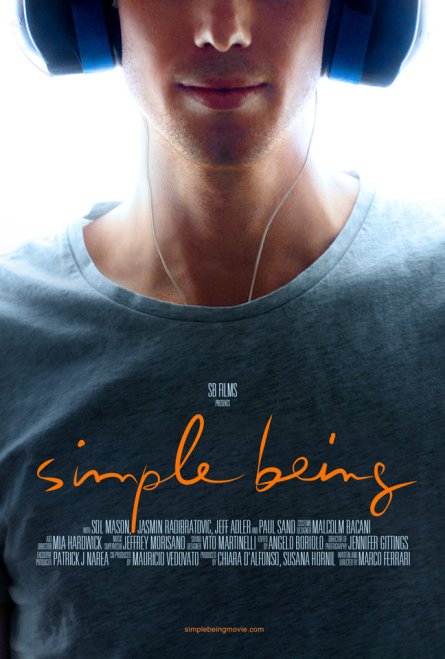
One of her most touching portrayals to date came in 2014 when she took on the lead role of Diana in the dramatic feature film Simple Being written and Directed Marco Ferrari (Moonscape, Don’t Let Me Go). In the film Romao stars alongside Sol Mason (This Tunnel South, Gilmore Girls: A Year In The Life), Jasmin Radibratovic (Broken Hill, Misfire), Jeff Adler (Reel Evil, Criminal Minds, Modern Family) and Tony Award winner Paul Sand (Time of Your Life, Joan of Arcadia).

simple being Tatiana Romao
“Simple Being” Film Poster

Revolving around Clive (Mason), a college student who’s spent most of his life feeling like an outcast, Simple Being offers audiences a powerful look into one young man’s experimental journey into experiencing what it means to really have an impediment.

“It has a beautiful lesson and it teaches the world how to respect and appreciate others,” Romao says about the film.

With few friends in his life aside from Diana (Romao), Xécile (Radibratovic) and Aaron (Adler) who live with him, Clive’s overwhelming feeling of disconnection to the world leads him to embark on a three week journey of sensory abstinence– devoting one week each to experience what it’s like to be deaf, blind and mute.  

As Clive’s closest friend in life, Romao gives a knockout performance as Diana, the one person who supports him on the journey to finding himself and his place in the world.

“Diana gives him the idea to do the experiment for 3 weeks… She is the one who is always by his side and guiding him through it all. He needed to learn about life and she wanted him to find his path, to find himself,” explains Romao. “He is judged and somewhat mocked by his family and classmates and Diana is the only one supporting and pushing him to go all the way and finally discover himself in this journey, she is always by his side with a word of incentive.”

Journeying through each impediment, Clive discovers more and more about himself as each week passes. Over the course of the film we watch him go from being uncomfortably disconnected from everything and everyone to pushing the boundaries of his normal ‘comfortable’ life, and ultimately coming to a point where he is able to experience a new reality filled with real connection.

Produced by Hornil Brothers Productions (Missed Call, The Face of an Angel, Trouble Child, 6 Rose Circle), Simple Being did exceptionally well on the film festival circuit taking home the Best Feature Film Award at Italy’s Artelesia Film Festival, the Castell Award from the Barcelona Film Festival, the Jury Special Mention Award at the Detour On The Road Film Festival, as well as the Excellence in Cinematography Award at the Amsterdam Film Festival and an award at the Human District International Film Festival of Human Rights. Simple Being was also chosen as an Official Selection of the ARS Independent Festival, Brasilia International Film Festival, HollyShorts Film Festival, No Glass Film Festival, Canberra International Film Festival and more.

“This is one of those scripts that you just fall in love with straight away. It wasn’t so much about my role or who I was playing, but more about the story that was being told. That is exactly the kind of project that I want to be a part of, that I want my name connected to and that is exactly what inspires me,” admits Romao.

Romao’s performance in the film is so authentic and touching that you’d imagine she actually lived Diana’s life off screen. To those who have seen her work in the film it will come as no surprise as to why the film garnered such praise, and why she has become such a sought after actress on an international level.

Actress Tatiana Romao
Actress Tatiana Romao (left) director Lidia Damatto & production designer Elisa Lopes (right) at the Hollywood Brazilian Film Festival

In 2017 audiences will be able to catch Romao in the upcoming zombie horror film Valentine DayZ, which also stars Carrie Keagan from the hit series Reno 911 and the films The Hangover and Dead 7, and Robert Allen Mukes from the series Westworld and Weeds. She is currently in talks with Valentine DayZ producer Kate Rees Davies (The Girl, The Night Visitor, The Vanished) and director Mark Allen Michaels (Mind Rage, The Fiance) to take on a critical role in one of their upcoming projects, so stay tuned for more information about that!

Davies says, “When I first met Tatiana, I was so impressed with her ability as an actress and her passion. She is a very versatile talent… I look forward to continuing a strong work relationship with her for many years to come. She is already under consideration for many exciting projects such as ‘Babes With Attitude’ to be filmed in 2018 and ‘The Conflagration’ for the year after.”

For Brazilian actress Tatiana Romao, acting is a means of telling stories and touching the lives of viewers around the world; and, while she’s garnered international fame for her work, it is only a side effect of doing what she loves.


The CW Keeps Actor Nathan Mitchell Busy With Several Hit Shows

Nathan Mitchell
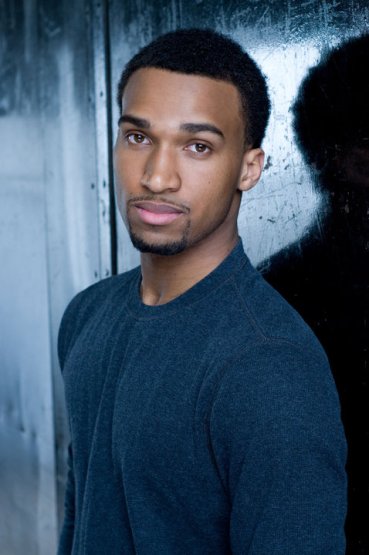
Actor Nathan Mitchell


From hit teen shows to action-packed dramas Canadian-born actor Nathan Mitchell has become a recognizable face on some of The CW’s most popular television shows, and it’s no wonder why—the guy’s got a lot of talent.

Over the last decade we’ve watched Mitchell break Lindsey Shaw’s (“Pretty Little Liars,” “Temps”) character Claire Tolchuck’s heart on “Aliens in America,” battle it out with Colton Hayes (“San Andreas,” “Teen Wolf”) aka Arsenal on the DC Comics inspired series “Arrow” and take on polarizing roles on both sides of justice in the series “Tomorrow People” and “iZombie.”

Ironically enough, Mitchell actually got his start on the small screen on The CW series “Aliens in America” where he played the recurring lead role of Jeffrey, an amiable high school jock who’s the on again off again boyfriend of Claire Tolchuck. Over the course of the first season we watch the two go back and forth falling in and out love with that hot and cold style that’s so characteristic of most high school relationships. At first Tolchuck tries to dump Mitchell’s character in an effort to raise her social status and find a more popular beau, but it doesn’t stick.

“Like any sophomore in love, I waited on her lawn and blasted ‘In Your Eyes’ till she came down and gave me a nice PG hug,” recalls Mitchell.

The two make it work for a little while, but like many high school boys, Jeffrey eventually decides he needs more freedom.

Mitchell says, “I decided she was too clingy so I ended it in between classes. Nice and clean. She was crying but I was cool, so whatevs. Playing the character was a blast!”

nmaliens
Nathan Mitchell as Jeffrey in “Aliens in America”

“Aliens in America” couldn’t have been a better jumping off point for Mitchell’s career, as we got to see the actor take his character from being a lovable stud to a nonchalant ass hole. Proving his dynamic talent, Mitchell takes the character from someone we immediately adore and transforms him into one that is easy to hate, making Jeffrey relevant and relatable to the show’s massive teen following.

In stark contrast to Jeffrey on “Aliens in America,” Mitchell went on to play a significantly more vile character on the Joey Award winning series “The Tomorrow People.” In the action-filled sci-fi series a group of young people who possess psionic powers as a result of human evolution are forced to keep their abilities a secret or risk being imprisoned and exploited by Ultra. Mitchell comes into the mix as one of Ultra’s key agents in the first season of the series, and he’s definitely one badass the Tomorrow People do not want on their trail. Comparing how intimidating his character is on “The Tomorrow People” to Jeffrey in “Aliens in America” it’s surprising that they are played by the same actor, from his mannerisms to the way he carries himself, Mitchell is that good at morphing himself into different characters.

tomorrow-people-2
Nathan Mitchell in “The Tomorrow People”

One of his most popular CW roles to date though is Isaac Stanzler, the bitter and abandoned protégé of Wildcat on the Leo and Prism Award winning series “Arrow.” In the show’s third season we get to see Mitchell put on his villain’s mask and battle gear and get into a nasty brawl with Arsenal aka Roy Harper in a tell-tale interaction that foreshadows the series’ thickening plot. Mitchell is clearly a force to be reckoned with on screen when it comes to action.

“Isaac’s showdown with Roy was epic… The fighting sequences were off the chart,” says Mitchell.

After Mitchell’s character commits a series of bloody murders in a ploy to frame Wildcat and get revenge for past pain, he encounters Arsenal who puts a stop to it all in an intense battle scene that keeps us on our toes.

nm-and-colton-hayes
Colton Hayes (left) and Nathan Mitchell (right) duking it out on “Arrow”

Mitchell’s most recent spot on The CW was in season 2 of the comedy crime drama “iZombie,” which aired earlier this year. Earning a Teen Choice Award nomination last year, as well as a Joey Award nomination this year, “iZombie” follows Olivia Moore played by Rose McIver (“Masters of Sex,” “Once Upon a Time”), a medical student who, after being turned into a zombie, finds a way to use her unique circumstances to help the police solve crimes around the city.

Mitchell first appears in the series powerful season 2 finale in a crucial role as a law enforcement squad leader who leads his team into the Super Max Rager research facility after a group of young researchers take a pill that turns them into bloodthirsty zombies. We see Mitchell take charge as he dashes through the doors of the building and orders Moore, Detective Babineaux and Major to vacate the building so he can clean up the mess.

nmizombie
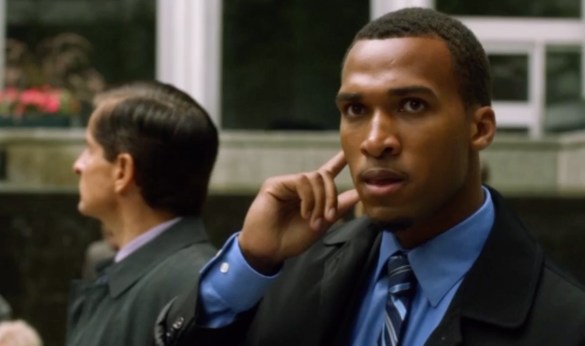
Nathan Mitchell in “iZombie”

Audiences will also be able to catch Nathan Mitchell in a recurring role as a mercenary in season 3 of “iZombie,” which is slated to air on The CW in 2017.

From playing the high school stud to an embittered criminal, as well as several roles as dominating characters in positions of power, Mitchell has done a brilliant job of transforming himself to fit whatever the project calls for; and thanks to his unparalleled talent and undeniable good looks, audiences around the world can bet on seeing a whole lote more from the Canadian actor for many years to come.

Composer Kevin Smithers nominated for best original score for film On the Roof

While Kevin Smithers was studying his undergraduate degree in music, he came to the realization that he enjoyed sitting down and writing down a good sounding solo over a jazz piece than improvising. This realization shaped his future and career; making the transition from a performer to a composer. Throughout the rest of his studying, this passion grew to become a career. Now, Smithers is a successful film and video game composer.

During his career, Smithers has worked on over 20 films and web series, as well as the new PlayStation VR video game World War Toons. However, it was with the award winning film On the Roof that he received his nomination for best original score at the Sitges International Fantastic Film Festival under the Noves Visions SGAE Nueva Autoría section, which he describes as a great honor.

“It’s the way that Kevin understands the music for films: he also puts the story and the characters before his own work. He is very conscious that he’s making music in order to tell a story, for expressing feelings, not only for himself or for people to listen to his music separately,” said Damià Serra Cauchetiez, the director of On the Roof. “Working with Kevin is amazing. He is very hardworking and was very motivated about the story. He always understood what I wanted in every scene, and also he proposed many of the good ideas that they finally ended up in the score.”

On the Roof (also known as En la Azotea) tells the story of Adrián and his friends, who climb to a roof every afternoon to spy a girl who sunbathes naked. However, one afternoon won’t be like the others, as the friends realize that one of them is more interested in a guy showering in a close building. 

“Working on On the Roof was a great experience. Damià and I bonded over some of our favorite scores when we met in Spain and was really excited when he asked me to score his film. He gave me a lot of creative freedom to do something that I thought was interesting and new. In fact, the temp music in the film was radically different to what we ended up doing,” said Smithers.

Smithers wanted to tell part of the story with the music, with a very warm Spanish sounding score for the film as the film takes place during the Spanish summer. However, they didn’t want to go all the way with Spanish flamenco, which is when Smithers came up with the idea of using only an acoustic guitar.

“It’s a very Spanish instrument. I spent time trying to get as many different sounds from the guitar as I could and recording them in various ways. Once I had all these sounds recorded and ready to play with, it’s as if I had a standard ensemble that’s normally used to score a film” he described. “But we altered the sounds to have that cinematic feel as well. Even though it’s a very personal and introspective story for the character, it feels big and daunting from his perspective. By modifying the guitar recordings and doing a lot of guitar passes, we managed to get an intimate Spanish sound that could also grow into a full wall of sound needed for some moments.”

On the Roof has premiered at many film festivals, including Cannes, Berlinale, Sitges, Seminici, Vancouver International Film Festival, Seattle International Film Festival, and more. It has won awards at several of those festivals, including a nomination for best director and Miguel Casanova Rodriguez won for best screenplay at the Sitges International Fantastic Film Festival.

“The most pleasurable thing to me when writing music for film or games is when you’re done with a scene and the music just sits perfectly over it and really adds something to the project that wasn’t there before. This way of telling a story through music is a very specific way of writing, which I deeply enjoy,” Smithers concluded.