Category Archives: Film

Producer Albee Zhang talks her award-winning film ‘Caged’

Other - CAAM Film Festival
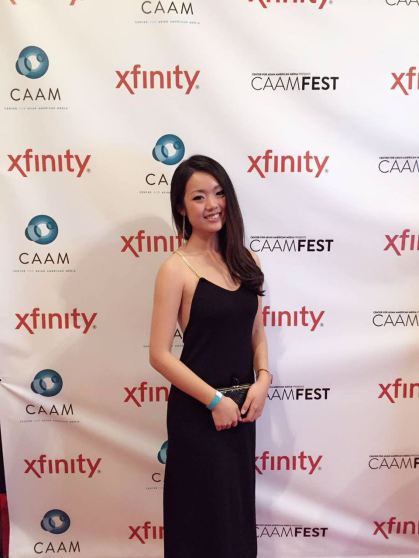
Albee Zhang

From the time Albee Zhang was a child, growing up in Shanghai, China, she knew she wanted to make movies. The entertainment industry always fascinated her, and her creative senses were always strong. As she grew, this dream turned into both a passion and a reality. Now, Zhang is an internationally sought-after producer, living her childhood dream.

Throughout her career, Zhang has achieved what many still dream of. She has worked on hit television shows around the world, such as the British game show The Cube and the Chinese home renovation show Mei Hao Jia. She has made many successful commercials such as the series for Alpine Dairy. She has made films, such as Bride: Shanghai, I Love You, that have gone on to premiere at international film festivals. However, despite all of this, the highlight of her career was just last year when she made the film Caged.

“For a very long time, I was surrounded by fantasy, drama and science-fiction stories. When I was approached about this project, my eyes were brightened up. I had never done any sort of masculine project like this. Brotherhood versus self-ego, money versus fame, blood and underground fighting, all these elements had so many possibilities to be an outstanding project. I knew I had to challenge myself and see how much I could pull out of a project like this,” said Zhang.

Caged is a short film that follows James, a young man who fights in underground cage matches to make ends meet. In the film, James gets the life-changing opportunity to fight professionally, but when his brother Marco crosses a desperate drug dealer, James is forced to choose between his obligations to his brother and his dream of a better life.

“It is a very strong and straight forward theme for a narrative film. By looking at the character struggling through his life, at some point it kind of reminds me of the filmmaking life. Until the day we shine, we are always struggling. The character inspired us, we made the character. It’s a story about MMA fighter, but truly it’s a story to everyone who is fighting for their dreams,” said Zhang.

The film premiered at the New York City Independent Film Festival in May, and went on to have tremendous success. At the 2016 Media Awards it was recognized for Achievement in Film Direction, Achievement in Production Design, and won Best Male Actor. It was an Official Selection at some of the world’s most prestigious festivals, including the Festival Corner of Festival de Cannes, the Auckland International Film Festival, and the London Lift-Off Film Festival Online.

“It means the world to me and my crew that the film has done so well. It proved that everything we risked was worth it. Most cast and crew worked on this film because of friendship. Some of them even volunteered to work on this film. We all had the faith that this project would carry our enthusiasm to somewhere. It didn’t let us down. The honor belongs to the whole Caged family,” Zhang said.

As producer, Zhang managed the cost of the film to fit in an extremely tight budget and schedule. She also acted as production manager for the project, and ensured the crew was always safe and well taken care of on the set. Half of the sets were built in an abandoned basement of an ancient apartment to create an underground style, beat-up looking environment. It was a very bad condition location for filming as it was moist, very dusty, bad air-circulation and completely in the dark, pretty much like a dungeon, but it was perfect for the feel and look of the film. yet it’s exactly we wanted for the film set. Zhang made sure everyone was safe and happy, taking on yet another role.

“I was worried it would be too depressing to work in this kind of environment for four days in a row. We started working when the sky was dark in the morning, we walked out of the location and it was still dark but it was at night. Not seeing daylight for four days could be very intense and uncomfortable. I received zero complaints,” said Zhang.

Zhang made sure any dangerous spots were labeled and blocked, masks were provided, hanging wires were well placed and taped. She oversaw the crew and the fierce fighting shots were shot in the safest but most realistic way. She also arranged a crowd funded online campaign for the film, and received 20 per cent more than what she was aiming for. There is no doubt that she was pivotal to the film.

“Albee was indispensable to the making of our film and bringing it in not only on budget but under budget. She is an energetic, diligent and down-to-earth person who always speak for her crew. People work for her again and again. I also look forward to working with her again,” said the Director, Nick Powers-Gomez. “She has the drive to roll up her sleeves and do whatever needs to be done and fill up whatever position that needs her.”

All those that work with Zhang are continuously impressed by what she brings to the table, not just as a talented and committed producer, but also as a kind and thoughtful person. She not only understands what it takes to make a film a success, but she aims to do more than win awards. She is a storyteller, and constantly seeks to challenge herself. Her passion for what she does is always evident.

“Making film is utilizing a visualized universal language tool to bring out our mutual emotions. I put a lot of attention and work building up character relationships and finding the universal themes, such as love, family, fear, and friendship,” Zhang concluded.


Editor Minghao Shen helps terrify audiences in award-winning horror flick ‘Emily’

Growing up in Beijing China, Minghao Shen always loved film. Unlike many who enjoy watching a movie, he would think about how it was being made. The details behind how each scene was put together were what captivated him; he wanted to be a filmmaker. Eventually, the nuances and strategy behind editing caught his attention, and he knew that was where his future was. Now, he is an internationally celebrated editor.

Shen has worked on countless critically-acclaimed projects, earning him a reputation as one of China’s best recent film editors. His work on films such as Inside Linda Vista Hospital, Stay, Cartoon Book, and Red String has allowed worldwide audiences to see what he is capable of, showing without a doubt why he is so respected in the industry. His work on the horror film Emily perfectly encapsulates what the editor is capable of.

“It is a simple but tense horror film. The movements of shots and the whole visual style are really outstanding. I knew that there would be challenges, but that it would be a great chance for editing,” said Shen.

The film tells the scary story of a woman named Emily. Emily dies giving birth at home after her husband, John, abandons her. However, she will have her revenge from beyond the grave when she returns as a ghost set on killing her widowed husband.

“My favorite part of the whole production was talking about the story, because we found out that there were multiple options would work for it. Although each of the options would have been great, but couldn’t mix them all together, otherwise the tone would be chaos. As an editor, having to narrow this down and figure out how to properly tell the story and convey the right tone was great,” said Shen.

Shen’s instincts proved to be spot on, as Emily went on to do very well at several prestigious film festivals. It was an Official Selection at the Los Angeles CineFest, the SoCal Creative and Innovative Film Festival, the Pittsburgh Independent Film Festival, the Action on Film International Film Festival, the California Independent Film Festival, and the Columbia Gorge International Film Festival. It won Best Overall Micro Film at the Indie Gathering International Short Film Festival and at the Accolade Global Film Competition it won the Award of Excellence.

“I had many complex feelings when I discovered the film was getting a lot of awards. It was a blend of excitement and satisfaction after the hard work everyone had done. We know that we took a bunch of time and work on the film, so I was so glad that our hard work got such encouragement from the festivals,” said Shen.

None of this could have been possible without Shen’s editing talents. He spent his time taking notes every time he met with the director, ensuring he still achieved the vision of the film while bringing his own touch to it.  After the first rough cut, there were a lot of points that needed to be ironed out and redone, but based on notes he did originally, it greatly assisted to the time it took.

“Horror film is always about beats, so the director worked really hard with me to specify each second to make the film the best,” said Shen. “I talked with the director about our thoughts and he trusted me for the style based on my previous experience. There were always some different editing choices between me and the director. He is a talented and continuously brainstorming how to make the film better, so I always let him know more than one choice to let our minds be more open, so that we could avoid some useless change and waste of work time. We actually had some different thoughts in some parts. After a lot of meetings, we finally compromised our differences and both of us thinks this made the finished product better than what just our own ideas would have.”

The director, Jun Xia, agrees, and knows that without Shen his film could not have achieved what it did. The two have worked together on multiple projects since Emily, and Xia knows that Shen’s talents are essential to making a good film.

Minghao and I had worked together for a few times before, and he is always a good listener. He can take feedback and produce more ideas all the time. Minghao is an experienced editor. We talked a lot about a lot of different ways to make Emily better, and it did. He can always come up with unique thoughts when it comes to editing,” said Xia.

Everyone that works with Shen is continuously impressed by his editing skills. Without his work on Emily, audiences may not have been on the edge of their seats, terrified about what would happen next.

You can watch Shen’s impressive editing work on the short film Emily here.

Production Designer Shuhe Wang talks award-winning film ‘Red String’

Born and raised in Taiyuan City, China, Shuhe Wang was destined to be a production designer. Design was always her passion, and she never questioned what it was she wanted to spend her life doing. She understands every aspect as to what it takes to be an exceptional production designer, and that is why she is so highly-respected around the world for what she does.

Despite any challenges that arise, Wang loves what she does, and always shows audiences what she is capable of. Her work on the films Stay, Dancing for You, Cartoon Book, and Inside Linda Vista Hospital helped earn the respect of international audiences and win awards at several film festivals. However, despite this success, she considers working on the film Red String the highlight of her esteemed career.

“With each screening, people are really interested about the story and what is the background of creating the story. As a film, it is always the most important target that let people think about the meaning and something related in society after watching it,” said Wang.

The film tells the tale of an illegal Chinese immigrant who wants to keep his last line of his privacy in a terrible restaurant where he works. However, when he finally goes against his dignity, he finds that he even makes his life worse.

“This is a film about low-level class Chinese immigrant’s life. To make the film reliable and vivid, it relies on the production designer to create the atmosphere about Chinese culture and low-level people’s life. I did a lot of research about what exactly their life had going on, and created some characteristic elements in the film,” said Wang.

Making its way to several international film festivals, Red String impressed critics. It was an Official Selection at the Los Angeles International Shorts Festival, the Festival de Cortometrajes “Jose Francisco Rosado” Pacas, My Love Michelle Short Film Festival, and the Lift-Off Film Festival. It screened at the Festival de Cannes Short Film Corner, was a finalist at the Miami Film Festival, was nominated at the Golden Knight Malta International Film Festival, and was the winner of the Asians on Film Festival.

“I feel excited that the film got a lot of attention by telling a small and rough part of our traditional culture, and glad that the true and hard life of normal people is still being considered and cared a lot by universal audiences. This is a story about my national country’s culture, and it happens in some low-level class people. That is kind interesting to do because I can show audience a different angle of Chinese culture that not very noticeable in real life. And the story is absolutely tense and strong,” said Wang. “The director was very creative and open-minded. It was really great to work with him. He fully trusted me in my department’s process. It makes the work smooth and well- communicated. We were sharing all the thoughts and brainstorming without any concern. We were on the same page for each step.”

The director, Minghao Shen, knows Wang’s commitment to the film and her talent as a production designer largely contributed to the success Red String saw. The two had talked about the script and had found out that they both had a lot of deep thought and ambition regarding the story. Shen trusted that Wang totally understood the story and would create the sets perfectly.

“Shuhe is a designer that does not just care about how to make set pretty, but also about telling a story by the designing, due to her directing skills, so that actually helped the film be better. When Shuhe was working, she was always focused on the details and she was always careful about each single image,” said Shen.

While keeping true to the message of the film, Wang wanted to show some of the key elements to the world without over dressing them. The overall tone is a small bakery and restaurant in old Chinatown of an American city. Wang would go to Chinatown in Los Angeles to simply observe, and to capture the feeling of life there. She would see how they liked to dress and what they liked to eat, what they believed, what way they connected with the outside of Chinatown, what the difference was between the new and old immigrants, and more to truly understand what she needed to create.

“Once I locked each character’s personality, I chose the key elements of each of them and made it into the entire set,” said Wang. “However, the most impressive part of filming Red String was that everyone was so engaged in the story and helped to make it better. The lead actor even gave us some impromptu action with the props as the character and it worked very well. Sometimes we shared the thoughts based on our position to make the film more complete.”

The film was a collective effort by everyone involved, and Wang’s work helped to turn it into a masterpiece.

WALTON CREATES A MODERN ROMANCE BY FLIPPING THE GENDER ROLES IN “THE DATING RING”

Boxers are tough. They are visceral creatures who are quick to physical action and known for few words (with the possible exception of Muhammad Ali) and disconnected from their emotions. The antithesis of this type of person is the calm, well learned, and eagerly helpful librarian. Those who find themselves in this profession are soft spoken professionals who appreciate a good razor for their beard. Wait…were you thinking of a female librarian and possibly a male boxer? Sarah Walton was likely hoping you would make this mistake when she wrote the screenplay for the film The Dating Ring. This film flips the gender roles that we have come to expect. Exploring the dynamic of a relationship between a female boxer and a male librarian, Sarah wanted to challenge both herself and the audience to see these characters as unique and not just another gender assumption. The Dating Ring won worldwide acclaim and was an Official Selection for the Lumiere Film Festival, Italy (2015). Romantic Italians loved the idea which Walton presented that every female/male relationship should be considered at face value; a lesson we’d all be better off learning. Sarah has a pedigree which includes many romantic comedies but The Dating Ring presents its action with a goal of making the viewer ponder just as much as being entertained. The ultimate question asked by this film is, “What is strength?”

When Sarah went through a bad break-up and experienced a betrayal, she did what all artists do…she created. She saw her own dating experience as combative and took the pugilist metaphor to a literal place in her screenplay. To make a clean break from her normal romantic comedy method, she wrote the initial draft without dialogue to challenge herself. This approach gave her a radically different tone for the film and exhibited a fresh approach for Walton. The gender role switch of the two main characters might sound odd on paper but works amazingly well on screen, no doubt due to the incredible performances of Emily Goddard (Shayne) and Nick Farnell (Benji). Shayne is a thirty-three-year-old female boxer, bred by her retired boxing champion mother to be a fighter but it was never Shayne’s passion. She has a maternal mother inside her dying to get out, but her tough exterior and mannerisms belie her true desire for intimacy. Benji is a gentle and compassionate man in his mid 30’s, raised by his strong single mother and two older sisters who taught him the importance of strength and compassion after they escaped from his con artist father. His Achilles heel is being lied to because he watched his mother cry herself to sleep night after night as a result of his father’s lies. He wants true love, not a ruse. Walton states, “In society, the pressure for males and females to focus predominantly on their masculine or feminine traits can be psychologically unhealthy for us as individuals, our self-expression, and the way we interact with one another. Gender role reversal in film challenges this division and promotes equality for the sexes. Within a melodramatic film it’s difficult to stray from the traditional expression and repression of female characters in stereotypical feminine behavior, in which non-diegetic music plays a role. A way of solving that problem is gender role reversal. Steering away from the historical portrayal of masculine and feminine in film will allow us to challenge stereotypes and potentially ease the pressure for men and women to feel limited by their genders in society.”

Donna Hensler (Supervising Producer on The Dating Ring) Recognized the magic in Sarah’s script immediately. She recalls, “As soon as I picked up the script for The Dating Ring I was captured by the voice of the lead character Shayne; a female boxer struggling with the trials and tribulations of love. Sarah’s writing, though commercial and mainstream, is extremely honest and original. She thinks outside the box and isn’t afraid to take a risk. Sarah is a passionate story teller and her stories reflect her unique view of the world and positive view of humanity which is perfectly suited to the romantic comedy genre.”

The Dating Ring still copy

The core of The Dating Ring is designed around fighting. The reveal of the plot is that what you think you are fighting for may not be what you really should be fighting for. With 10 years out of the dating game, Shayne gets back in the ring. She’s training for a big fight and she’s losing her game, so focus is imperative. Her boxing coach mother lets her in on the family secret to winning championships…sex the night before the fight, because it will help her loosen up and focus on the game. Shane meets a male librarian named Benji to whom she is surprisingly attracted. The fact that he’s a male librarian and has a child (she thinks children are the devil) intimidates her, causing her insecurities to flair. She struggles to break the ice with him and finds herself acting out and screaming obscenities like a Tourette’s syndrome victim. Before she knows it she has a fist full of lies to cover up and she’s in too deep. Her fighting increasingly suffers culminating in a choice between the sport she’s loved her whole life and the man of her dreams. When they kiss for the first time Shayne reveals her true self. Benji, hurt that she lied, breaks into tears. She does what any woman in her position would do…she runs off to the boxing ring for the big game. Shayne finds herself in the ring and set up for the wining punch but she can’t do it anymore. Her love for Benji has changed her and she feels compassion for the first time in a long time. She throws in her boxing gloves right then and there with the realization that gentleness is strength.

Just as profound as the role reversal for this story is the idea presented that we cannot judge ourselves by the way that others see us. For Shayne, it is her judgmental and pushy mother who envisions an idea of what her daughter’s life should be. Discovering your sense of self is a thread that runs through much of Walton’s writing. Consider this piece that she penned about other well-known romantic comedy characters of present times; Sarah wrote, “Bridget Jones perfected the art of imperfection.  We love watching her and characters like Carrie Bradshaw, Nina Proudman, or Ted Mosby take chances, put themselves out there and fall down (often literally) because when they make mistakes it makes us feel better about our failures.  It reassures us that it’s okay to be flawed. Mistakes and failures are merely learning curves and opportunities for growth.  Bridget and her fellow imperfectionists show us how making mistakes can lead to happiness because they always succeed in the end.  But what if happiness isn’t at the end of the film or T.V. series.  What if happiness is right now?  Not when we get that dream job, lose weight, finish a degree, earn more money, find a partner, have a baby or move house… but right now. If success is happiness and we can only achieve true happiness through mistakes and failures, then surely we should be welcoming and celebrating failure rather than trying to avoid it?  I know I’ve made a million mistakes and I’ll make a million more.  And I wouldn’t change a single one because they are part of what has gotten me here… And here is pretty great.”

The Dating Ring IMG_3997 (2)

There is a deluge of romantic comedies to choose from if you want to be entertained and feel good. If you want all of the former as well as to be challenged to consider who we are as individuals rather than easily categorized tropes, watch a film that was written by Sarah Walton.

JOHN ALBANIS BECOMES A GLOBAL SENSATION WITH HECTOR AND THE SEARCH FOR HAPPINESS

There are times when you hear about someone taking on a task so difficult, so trying, that you wonder, “Why would you put yourself through this?” Mind you, we’re not talking 127 Hours/James Franco difficult. The film Hector and the Search for Happiness (starring Simon Pegg as Hector) is truly a global experience in terms of the action on the screen and the filmmakers journey to create it. A virtually army of professionals (numbering nearly 600) shot on four different continents, dealing with differing time zones, languages, and currencies to create this masterpiece. To coordinate as well as lend creativity required a very special producer, which is exactly what John Albanis defines. The film’s director, Peter Chelsom, brought John onto this project because of his practically inhuman ability to coordinate and facilitate, all while lending an artistic eye. In order to keep the integrity of the script, a number of producers contributed financially to the film while Albanis’s role was to be the “boots on the ground” in charge. Attesting to the accomplishment of the film’s intact vision are the many awards and nominations it received. These include: 2015 nominated for a Canadian Screen Award, 2015 Leo Awards – nominated Best Motion Picture, nominated Best Production Design in a Motion Picture, nominated Best Musical Score in a Motion Picture, and many others (including a win “Jury Prize” for Peter Chelsom at the Monte-Carlo Comedy Film Festival and a win for Best Foreign Comedy Trailer by the Golden Trailer Awards). A truly stellar cast including: Simon Pegg, Rosamund Pike, Toni Collette, Stellan Skarsgard, Christopher Plummer, Jean Reno, and others was required to deliver incredible performances. Peter Chelsom was required to direct and guide the performances while Kolja Brandt captured them on camera. All of this would have been for naught if John Albanis had not set the table perfectly for all of these artists…and the table required was massive!

When Chelsom requested Albanis to join the film as a producer, it was primarily because of their successful work history (the two have worked together on multiple feature films). When you are about to spend a year of your life biting off more than you can chew, you want someone you trust sitting next to you chewing even faster than yourself. Proving that he was much more than a coordinator or purse string guardian, the relationship between John and Peter would be based on encouraging and advising creatively. Albanis notes, “I had a history of working with Peter and by this point, we’d also become close friends. I wanted Peter to bring more of his personal artistry into this film. I’m a huge fan of his early two films, which were European indies: Hear My Song and Funny Bones. His direction is masterful in those films because the tone is so unique to him. The films he’s made in Hollywood are also fantastic (and certainly financially successful), but they didn’t showcase everything that Peter was capable of achieving. For Hector, Peter needed to get back to his roots and be more creative. This mandate spilled into every decision we made. A lot of the more creative aspects of the film were brainstormed between us early on. A good example of this is the treatment of Hector’s travel journal, which we decided to animate because it afforded us some wonderful thematic and editorial transitional opportunities.”

It’s impossible to separate the diversity of stories in Hector and the Search for Happiness from the diverse situations in which the production was placed to create it. The essence of the story is that Hector (Simon Pegg) is a psychiatrist who feels disillusioned by the mundane nature of his life and emotional experience. On a quest for his own happiness, he seeks out what it is that cultivates this emotion in others. He travels the planet, interacting with and experiencing lifestyles and people completely unlike himself…only to discover that the source of happiness was always with him. The filmmakers were insistent on not using soundstage trickery to “resemble” the feel of each location, meaning that the production travelled to each location, spanning the planet with John Albanis leading the charge. Because he was in charge of scouting locations, this meant that John travelled the globe twice for this film. He explains, “We felt it was crucial to the film’s success to physically go to each country to follow Hector’s journey. And yes…we all wanted to prove it could be done. Hector was an extremely ambitious project with a modest budget — yet we still managed to film across 7 countries and 4 continents including: Vancouver (Canada), London (UK), Johannesburg (S. Africa), Shanghai (China), Los Angeles (USA), Ledakh (India), and Germany. From the very beginning, we viewed it as four indie films that made up one larger story.” A larger studio may have requested a different tone for the film so, rather than rob it of its heart…multiple entities were called upon to aid a financial hand to the artistic integrity. Ultimately, London’s Bankside Films understood the filmmakers vision and agreed with it.

Travelling to exotic destinations with world famous actors may seem glamorous, and it is at times. Producing is a demanding job that requires a clear head and split second decisions at times, especially when in foreign lands. Sometimes the situation calls for a calm demeanor in the most troubling of circumstances. Relating a particularly unsettling experience during the filming of Hector and the Search for Happiness, Albanis recalls, “There’s a section in the film where Hector travels to a Tibetan monastery. We were originally going to film the monastery sequence in rural China. During my initial scout, I sourced the most beautiful monastery in the remote Kangding, Sichuan region of China, which we’d planned to shoot immediately after Shanghai. However, upon arriving at the location, there was unrest between the local monks and the Chinese military police (unrelated to us), so we could no longer film there. This was disastrous for the film and a horrible way to end the production. We went on a hiatus for a few months to game plan how (and where) we were going to film the monastery sequence, which was pivotal to the story. Ultimately, we discovered similar-looking monasteries in Ledakh, India. However, by this time, due to budgetary restraints and cast availability, we were unable to get our entire crew to India. So we decided that I would go to India to produce and direct all of our wide exterior shots, working with a 100% Indian crew and casting a double for Hector (Simon Pegg). I then met back with the rest of the crew along with our cast in the Bavarian Alps in Germany to shoot the interiors, mid-shots, and close-up shots. Coordinating how these shots worked together was quite complicated and each shot had to be precise and storyboarded in great detail.”

IMG_6102

Hector and the Search for Happiness is a warm and tender film yet; it is also uncomfortable. What happens to Hector and those around him is sometimes joyful and affirming and sometimes frightening and unsettling. The adage, “It’s about the journey, not the destination” is accurate and somehow too simplistic to convey the tempering which we humans need to be forged into thankful creations. If the experience solidifies a sense of self, then John Albanis might be the most actualized producer in the film industry today as a result of Hector and the Search for Happiness.

Anja Ellam captivates audiences with her writing of new film “The Woods”

There is one thing about her that shines above all else: she is an entertainer. She is extremely multi-talented, and uses her writing and acting skills to captivate audiences around the world, whether through film, YouTube, or various social media platforms. There is truly no limit to what she can accomplish.

Ellam has tens of thousands of followers on her Instagram, with a strong impact on Twitter as well, and as an influencer has helped many companies and shows gain a following and audience. Working with AwesomenessTV, both her writing and influencing skills have boosted the show to have millions of views. With the extremely popular app, the ArsenicTV Snapchat story gets over 500,000 views daily, and as a host and influencer for the show, Ellam is a large part of that. However, it was with the film The Woods where Ellam’s impressive natural writing talents became truly evident to worldwide audiences.

“Relationships between siblings can be complicated, especially if they’re teenagers. I wanted to show why the older sister in the film was so angry, because this is a common conflict between sisters,” said Ellam.

The Woods tells the story of two sisters at a party, who get lost in the woods while leaving. The film is about two sisters who get lost in the woods while leaving a party. They quickly realize they’re lost and will have to work together to get out, and push through the fighting and angst between them.

“I wanted to do something simple: two characters, one location,” Ellam described. “The sisters’ relationship is based on my sisters and my relationship.”

Ellam wrote the film entirely by herself. Originally, she wanted to experiment with her writing and work on a project that her friends could be a part of. She wrote the script while trying to think of the simplest way to make a short, but the story developed the more she wrote.

“The story is all dialogue driven which is a fun challenge for me as a writer. I also ended up directing it, which is something I’m not familiar with but my team believed in me, and I did know the script and the vision, so I hope the viewers can see it too,” she said.

Viewers definitely see the vision. The film has gone on to be shown at several prestigious international film festivals.  After premiering at the UK Monthly Film Festival, Ellam won the new filmmakers award at the Mediterranean Film Festival (MedFF). It also was just selected as a semi-finalist for the Miami Epic Trailer Festival.

“It’s a really amazing feeling that the film has been so well-received. It’s one thing to write something that people like ,but actually making it and still having people want to watch it is really cool. I know that sounds weird to say, but we did this on a very small budget with only one shooting day. It’s nerve racking because if something doesn’t work it’s almost like you can’t redo it. I’m glad people think we were able to do a good job. It’s had to get your vision across so I’m glad people saw what we were going for,” Ellam said.

All those that worked with Ellam on the film immediately saw that she was an extraordinary writer, and all of the success that the film has received could never have been possible without the vision and talent she brought with her. Maxwell Peters, a Los Angeles based Screenwriter, Director, and Producer, produced The Woods. He says her commitment to the film made it the success that is it.

“Over the course of the past two years I’ve worked with Anja on multiple projects. Most recently I produced her short film The Woods, which she wrote and directed. Anja is easy to work with and had a firm grasp on what she was doing. She worked with her actors with ease and was able to get wonderful performances out of all of them, aside from that she was able to work with crew in an effective and efficient manner,” said Peters.

Even without all the accolades and awards, the experience of writing The Woods was unforgettable for Ellam. She knew what she wanted to do from the beginning, and using her creativity, she was able to make something unforgettable for audiences as well. The film even has a twist ending, which was just plain fun for Ellam to write.

“I liked writing the ending the best. I didn’t know how I was going to end it at first, but I knew I wanted it to be unexpected. I had a lot of fun experimenting with different ending options,” said Ellam. “I took this ending honestly because I think happy endings are boring. I considered having them not make it out but I thought leaving it a little more open ended was a bit more surprising. I love twist endings.”

Be sure to check out what happens to the two sisters by seeing Ellam’s fabulous work in The Woods.

Sound designer Randolph Zaini talks award-winning film “Paper Tiger”

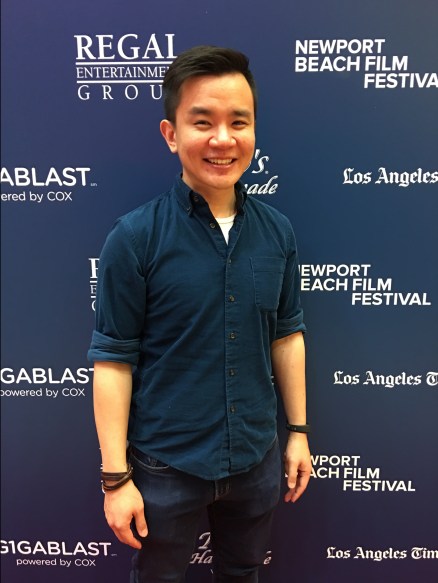
randolph-newport-beach-film-fest.jpg
Sound Designer Randolph Zaini

Only someone who is truly passionate about what they do can talk about it the way that Randolph Zaini speaks about sound design. He explains the intricacies and nuances to the craft as if they are the elements in his poem. Sound design is more than a passion to him; it is a lifestyle, and it is one that he loves living.

When working on the award-winning film Paper Tiger, Zaini showed audiences around the world what he is capable of. The film went to several international film festivals after premiering at the 2015 New Filmmakers Festival, and won the IndieFeast Award, Award of Recognition 2016. The film is also in discussion of being distributed through SCA channel.

“It is incredibly encouraging that the film has done so well. There were many risks that the director and I took in our approach of creating this movie, and receiving so many accolades and distribution only strengthens our belief that we take risks for the right reasons. Chances were either we’d be received with open arms or shunned out of the gates, but it wouldn’t be anything in between, which would be a more regrettable position. Luckily, we were received with very positive reactions,” said Zaini.

Paper Tiger is about a Shaolin monk undergoing an internal conflict after refusing to help a victim of assault. He is part of a traveling troupe promoting Chinese martial arts, yet at the same time, he doesn’t do anything when witnessing an actual act of violence in front of him. In this film, not only does the main character not have any line of dialogue, but he also doesn’t emote very much, coming from a stoic Shaolin background.

“I wanted to do the project because at the core, it is a story that speaks to me. Not that I am a warrior monk of any kind, but that issues of identity crisis and often feeling as if I don’t belong are two things that keep recurring in my life. I am a Chinese-Indonesian; a Chinese by ethnicity, but an Indonesian by birth and citizenship. The feeling of being displaced has always lingered at the back of my head, as well as the cry for help to be accepted without judgment. These emotions are something that are relatable to what the main character of Paper Tiger is going through. Empathy then became a gateway to my involvement in this project. It is a story, or more specifically a state of mind, that needs to be told,” said Zaini.

As a filmmaker, how do you facilitate a character who doesn’t speak and doesn’t indicate with facial expressions, yet at the same time goes through a difficult time? This is where sound design shines, and Zaini was more than up to the task. He approached this by heavily utilizing ambiance design. Introspective moments, volatile moments, anger, despair and frustration is communicated by what is heard surrounding the character. There was one moment when the monk had just performed a martial arts routine, received by a round of applause. As he walks away backstage, the announcer gives a very commercialized version of the cultural history and the business manager sells the cardboard image of the Shaolin, but slowly all that dies down, and all that can be heard are the monk’s footsteps. He is isolated, if not excluded from this world. He is displaced; a man out of his time. Through such sound treatment it becomes painfully obvious. The entire film is filled with this style of sound design that Zaini accomplished so well.

“When given free rein on the sound design process, I was able to experiment with countless techniques I had never done before. That was such a liberating feeling you don’t find that often in ambitious film projects like this. I was also performing every single sound cue for the foley effects. In that sense, I was able to construct this fully realized, complex character by how I would direct the sounds he would make in the story; be it the movement of his monk garb, his prayer beads, and even his footsteps, everything became an audio cue that I instilled into this character. It was tremendously exciting to be able to have a hands-on approach in the story to such level,” said Zaini.

Zaini’s contributions are directly linked to the film’s success. The director, Marshall “Chu-Jen” Wu knew what the sound director was capable of, and knew there was no other person that could achieve the sound he was looking for. Zaini was given complete creative freedom. As the sound design process is very abstract, many of the techniques Zaini used would usually raise questions from directors who are not experienced with ongoing sound projects, but Wu had full faith in Zaini’s capabilities.

“Throughout the entire production of the film, Randolph was able to bring in references from other films, animation, music video, and concerts. Many of those references are not known to the Western market, yet precisely on the point of the vision that I tried to create. One of the most memorable examples of this was Randolph using Japanese Taiko drum performance as the referential suggestion for the soundtrack during the climax martial arts fight in Paper Tiger. The end product is nothing but phenomenal,” said Wu.

Everyone that worked with Zaini on the film was impressed with his skill and commitment to produce flawless sound. The producer of the film, Alexander Moscato, says that every idea Zaini brought to the film only made it better.

“Randolph is an absolute pleasure to work with. He comes to work with a smile and a great sense of humor, and his dedication and passion are quite inspirational. He truly cares about the projects he works on. He takes great care to understand the director’s vision, contributing innovative ideas and insights. When you work with Randolph, it is a collaborative process of discovery, filled with lots of laughs, new insights, and stellar sound design. Randolph is an artist in every sense of the word. He has an ability to bring you into the world of the story by creating dynamic soundscapes. He knows how to tell a story through sound, as he masterfully uses sound to advance the plot, as well as the emotional experiences of the characters that drive the story,” said Moscato.

For a small taste of why Zaini has such an esteemed reputation, you can view his work on the drum scene from Paper Tiger here.

Production designer Andrea Leigh is a visual storyteller

What started out as a love for building retail window displays turned into a successful career as a production designer for Toronto based Andrea Leigh. She always loved building something captivating from nothing, where passers-by would turn to see what was not just her work, but also her art. This innate talent turned into a career, and now she is one of Canada’s best production designers.

It seems like a long time ago that Leigh was fixing window displays, as she has worked on several celebrated projects as a production designer, including the award-winning film Friends Like Us. Leigh knew after reading just a few pages of the script that she needed to design for the film.

“The minimal and sleek vision the director had for the main home really drew me to the project. It’s always fun to work on a job where you actually enjoy the content. The script was funny. The dynamic was entertaining, and it was nice to work with the amazing and talented Toronto cast,” said Leigh.

Friends Like Us tells the tale of a struggling couple – broke and pregnant – who find success through ripping off their friends. The plot twists when one of the women finds out about the affair two of them have been having and they accidentally murder their husbands with a piece of modern art.

“I got to feature some of my favorite artists in the main location we shot. Huge pieces, some abstract, some minimalist. Overall, the opportunity to design a space that said so much by not having much in it was a nice challenge. It really reflected the characters’ sense of new found wealth,” Leigh described.

The film went on to have enormous success at many prestigious international film festivals, and was even nominated for “Best Short Film” by the Director’s Guild of Canada. The production design was vital to the success of the film, and the recognition the film received was amazing for Leigh.

“It’s exciting to know it made it beyond just a ‘project’. You never know what will come of features and shorts. Sometimes they don’t make it anywhere. Sometimes they get wide recognition and reviews. Toronto can feel like a small city sometimes, so when something truly great comes out of it, word gets out fast,” she said.

Success such as this follows Leigh with each project she embarks on, showing audiences around the world why she is so exceptional with what she does. While working with the popular cosmetics brand E.L.F., the commercial Play Beautifully was aired on televisions across North America, and went on to have more than 2 million hits on YouTube alone.

“I feel a lot of young women connected with this commercial, and connected with the brand. It feels like we really got the message across, and that it was more than a commercial. It was more of a story, following the girl,” said Leigh.

The commercial featured an all-female cast, and was shot at numerous locations across Toronto. Leigh says it hardly felt like work, going to coffee shops, bars, rooftops, and more in the middle of the day. Leigh, who has also worked as an interior designer, says designing rooms for young women came naturally to her, and her own living space was even used as one of the shooting locations. She truly felt right at home.

 I have worked closely with Andrea on numerous productions and virally popular commercials, and have become familiar with the level of professionalism and skills required to be a top tier production designer and art director. My experience has led me to believe that Andrea is one of the most prodigiously successful professionals in her field,” said David Quinn, the director of the Play Beautifully commercial who has worked with Leigh on many commercials with the production company Skin & Bones.

The idea was to make the commercial look more like a short film than an advertisement. This is what drew Leigh into the story in the first place. She is a story teller, and her designs play a pivotal part in any story, almost as an extra character. It was a story brought to life by what she describes as amazing cast members. It was also relatable in so many ways for lots of young women.

“You have a rough time, a bad break up, your friends are there for you and sometimes you just need to throw on some lipstick, build your confidence back up after a broken heart and head out on the town with your ladies,” Leigh concluded.

You can view the commercial here.

A THOUSAND CRANES: SCORING GENERATIONS OF LOVE WITH EIKO JIN

Eiko Jin-4

Music is the connective tissue of people throughout distance and time. When you hear music you will likely immediately have an image of people and places based on its character. Whether it is a person wearing a white wig conducting a symphony in Vienna in the 1700’s, indigenous tribe members in a drum circle of the 1800’s, or a punk rocker of the past 30 years, the sounds we hear imply a great deal. It tells us about the people but it can also tell us about the state of their heart, as it does in the short film “A Thousand Cranes.” This film about love and reincarnation had some very specific musical requirements which led the filmmakers to composer Eiko Jin. The composer’s lauded work on such productions as “The Last Page”, “My Sweet Prince”, “Humor Me”, have garnered acclaim for her but it was her cultural expertise which sealed the deal for her as the provider of the musical character and accent of this film. Key to the film is the ability of this sonic backdrop to connect the lives of different characters in different periods of time. The two constant threads in “A Thousand Cranes” are enduring love and the compositions of Eiko Jin.

Director Leonard Chan had been searching for a music composer and experiencing great difficulty finding a professional who had the expertise in traditional Chinese instrumentation and culture to give the proper validity to “A Thousand Cranes.” In the same manner that he would cast an actor for a role, he was much more discerning in terms of hiring a composer to create the music for this film because of the different time periods presented in the film. It wasn’t Jin’s work for traditional films which convinced him but rather the music pieces she created for the Silk Road(Dunhuang) International Cultural Expo in 2016. The project focuses on ethnic music pieces which each represented a different city on the silk road. The nucleus of “A Thousand Cranes” is a love story that begins in ancient China. Eiko’s talent, cultural background, and multilingual abilities (she speaks English, Mandarin, and Cantonese) made her the ideal choice for this film. Chan declares, “Eiko Yichen Jin is a great collaborator. Meeting Eiko is a blessing because she aided in the sound effects, dialogue, and music composition for the film. These three categories were a challenge for me because I could not find someone experienced and talented enough to tackle this project. It included the use of playing Chinese instruments such as the guzheng, an instrument with over 2,500 years of history. Finding a music composer who knew how to play such an instrument was not easy. Having already spoken to some other composers, I was so happy and fortunate to have met her. Eiko introduced me to how music can have character and how sound effects create another layer in a film. What captivated me was the diverse and revolutionary way she described music and used sound in her film. What I learned from her added value to my not just my short film but also to my own filmmaking as well.”

The film is a story about enduring love and the ability of reincarnation to sustain it. A Chinese princess falls in love with a common man. Society’s rules forbid them to be together. The young man sacrifices himself protecting the princess but first tells her, “I’ll meet you in the next life and all the coming ones. No matter how my outlook changes, my soul and my heart will not. I will find you.” The second scenario of the couple is in San Francisco finds a wife stricken with Alzheimer’s and losing her memory. Distressed, she states to her husband, “The doctor told me I’ll lose my memory. Aren’t you afraid?” The husband calmly responds, “As long as we are together everything will be okay.” The final part of this series depicts a young boy and girl on a playground. The boy finds paper cranes on the ground and the little girl asks him about them. In both of the prior parts of the story, the cranes are also seen. These artistic presentations of the couple’s timeless connection are the yin to the yang of Eiko’s compositions. The paper cranes bring the couple together just as the music connects the viewer to their timeless story.

The film’s director had provided Jin with reference music to give her an idea of the mood he wanted to create but it was her job to bring an authentic Chinese sound and instrumentation to the actual score of the film. The composer carefully reviewed the film to discern the connective tissue. Even though the film was comprised of three separate stories, she didn’t want it to appear to be three independent stories. Similar to the way Leonard used the paper crane to communicate that all these stories take place between the same two souls, Eiko used the theme melody line to connect them. The composer created a theme similar to a suite with slight variations. Eiko explains her preferences for instrumentation and the ideas it communicates stating, “Usually I will set up different personalities for different instruments. Sometimes even the same instrument will have two different personalities in different pitches/ranges. For example, I always think of harp as an elegant lady. She’s very emotional but also perfect for horror films with a screaming high pitch. Violin/viola are sisters while cello is a mom & bass is a dad. Violin is more positive and vivid. Cello holds the note for harmony, bass plays a not too obvious audible note but it’s the fundamental of the whole story. Piano is usually used for very emotional situations. In this situation, I chose piano as the only instrument for the second story. It’s very sad that this couple who are deeply in love are being separated by disease. Music has the ability to express all the unspoken words, especially when this elderly wife begins to forget her husband. That’s very hopeless and helpless. Without saying anything, I leave all the work to the piano, adjusted and turned the main theme to a piano version.

Eiko Jin-8

Perhaps the most striking and important part of Eiko’s contribution is her expertise in playing and writing for the guzheng. This Chinese style harp which looks like a wooden box with strings is performed with fake nails. Similar in sound to the Japanese koto, its sound is fragile but very powerful and emotional. The guzheng’s cultural character and wide emotional range made it ideal for the film. Jin describes, “It could be powerful with a fast tempo or very light with a glimmering feeling sound with a slower tempo. It’s really good and popular to be used to describe the glimmering lake or water. By pressing on the string it easily gives a bending sound. No matter what kind of words that I use to describe it, each person will have their own feelings about this instrument’s sound. There’s something that speaks to everyone with the guzheng. I know that if someday I write the music for a kung fu film, I’ll definitely use guzheng for a fight scene.” This type of forward and creative thinking is what leads Leonard Chan and numerous other filmmakers to enlist Eiko Jin to augment their stories and propel them to greater heights.

Innovator Rosanna Peng’s Videography Inspires Creatives Across the Globe

Videographer Rosanna Peng

Today videographer Rosanna Peng is known around the world for her remarkable ability to tell relevant and impactful stories through video. Her unparalleled creativity, the diverse nature of her work and her expertise in editing are a few of the things that have made Peng standout over the last few years, not to mention the high caliber of clients that have specifically sought her out to create visual content to showcase their brand in a way that grabs people’s attention.

Last year she created the videos for the launch of the J.Crew x New Balance 997 Butterscotch and 997 Cortado sneakers, edited EST Fest: The Documentary, which was featured on Trill HD and follows multi-award winning rapper Machine Gun Kelly at EST Fest and gives viewers a closer look into Kelly’s fan base, as well as created several video tutorials for the popular craft marketplace, ETSY, that teach users how to set up their own shop. On top of that Peng was tapped by Society 6 to shoot a series of photo stories that were featured on their website. Her work in 2016 alone has revealed her to be one videographer whose creative talent truly knows no bounds.


Still in her early 20s, Peng’s story is rather unique considering the level of international attention she has already received and the fact that she is primarily self taught. Originally from Vancouver, Canada, Rosanna Peng first discovered her innate talent and passion for telling stories through videos while taking an editing class back in high school, and from that point on she was hooked.  

“I was a shy girl and being able to express myself through videos was something I became addicted to. I couldn’t see myself doing anything else,” admits Peng.

In 2014, Peng was tapped as the lead videographer for FREE, a Toronto-based creator studio and digital agency built for modern creative entrepreneurs and progressive brands. The first videographer at the agency, Peng’s work with FREE gave her the chance to really begin exploring her skill as a videographer without boundaries.

She explains, “I experienced a lot of creative freedom, which was essential to the videographer I am today… I dedicated my weekends and evenings to producing content for the agency and I was oddly satisfied with that, knowing I was crafting my own style with every video that I made.”

Her work as FREE’s videographer put her in charge of creating and editing all of the video content for The Creator Class, a cutting-edge online channel designed by and for creators around the world that brings viewers innovative content centered around music, art, style, culture and adventure. A collaboration between FREE and Canon Canada, The Creator Class has been featured by publications and online platforms such as Booooooom, Fast Company, Highsnobiety, Hypebeast, It’s Nice That, Nowness and Vimeo, and has become a driving force in the social revolution of how users around the world approach creativity through photography and videography.

Rosanna Peng
Rosanna Peng shot by Mike Rodriguez

Peng says, “The Creator Class is a space for creatives to be inspired by one another, but also a platform for them to share their work with like-minded people. It is an important space for young creatives because they need to be reminded that even though there is an over-saturation of image consumption today, their vision and voice is still important.”

The videos Peng has created for The Creator Class over the last three years span the gamut in terms of subjects. From those that highlight the work of leading figures in the art and music scene, to the ‘Cheat Sheet’ segment of videos, which teach viewers how to use specific photography tools and achieve certain effects, Peng’s work has helped to both inspire and inform other creatives.


The ORIGINALS: Go & Get It w/ WondaGurl, ft. DJ P-Plus video she created, which has garnered over 600,000 views on Youtube, gives viewers a rare peek into the creative process, personal inspiration and unique path to success of music producer WondaGurl, who began making beats at age 9 and has since been tapped by the music industry’s leading artists, such as  Travis Scott, Jay Z, Drake, SZA, Young Thug and Kanye West, to produce some of the hottest tracks on the market today.

“I feel proud of the finished video because I’m happy to share young female creative’s stories. I think a lot of people, male or female, view WondaGurl to be an immense source of inspiration and aspiration. Being able to share her story was a very rewarding feeling,” says Peng about the video.

As the videographer, Peng was in charge of not only shooting the video, but like most videos on The Creator Class channel, she edited the entire work as well. Her unique way of capturing her subjects, combined with her expertise as an editor and keen sense of pacing and rhythm, has endowed each video with a deeply personal aspect that gives viewers the experience of feeling as though they are right there in the room having a conversation with the subject in the video.

“I am naturally an introverted and sympathetic person. When I experience situations, I usually sit back and observe. My personality type lends itself to be a great videographer and editor because of my tendency to express myself through videos,” admits Peng. “I have a natural sense of pacing and timing in telling the story. I am also drawn to catching moments that most people look past or ignore. This allows my work to stand out from other work that captures more generic imagery.”


Coming on board as The Creator Class videographer early on in the channel’s inception, the visual content she’s created has bolstered the channel’s social media following exponentially  and established the tone and style the channel has become known for. Considering that one of the main reasons people turn to The Creator Class is to discover information about a broad range of topics through the videos they publish online, videos that for the most part have been created by Peng, it’s not a stretch to say that her work is the foundation on which The Creator Class community has formed.

She says, “Every video was output through my computer to make sure the editing tone and aesthetic matched the channel’s. I have a natural understanding of what current video trends were and brought those elements to the channel growing them to the 40,000 plus subscription base on YouTube and 154,000 follower count on Instagram today.“

Thanks in no small part to Peng’s inspiring work, The Creator Class earned the prestigious 2016 Gold AToMiC Shift Award, which honors breakthrough achievements in the realm of advertising, media, creativity, technology and content.

Former FREE Channel Manager Danielle Reynolds says, “Working with Rosanna is always an inspiring experience. She always pushes the creative boundaries while still maintaining an attention to fine detail. It amazes me how she has been able to teach herself videography.”

While she is primarily self taught as a videographer, Rosanna Peng studied graphic design in college, an area of study that has undoubtedly come in handy as quite a bit of the visual content she creates for clients are embedded alongside stationary graphics and text online. Her understanding of how the style of the video she is creating connects with the attitude of the brand and the overall visual layout has been imperative to her unparalleled ability to create a striking finished project that commands the attention of viewers across the globe– something that can easily be seen through her work as a videographer for MTV FORA and as a photographer for Society 6.

Last year Peng was hired by Society 6, an online marketplace that connects international artists and gives them a platform to sell their work, to photograph the images featured within the popular articles  LA Photographer Fauxly On The Realness of the Hustle and Art in the Wild: A Photo Essay. Considering that Society 6 has a massive reach with 344,000 followers on Instagram and 476,000 monthly viewers on their website in the U.S. alone, Peng’s shots for each project gained quite a bit of attention.

Screen Shot 2017-05-22 at 9.23.06 PM
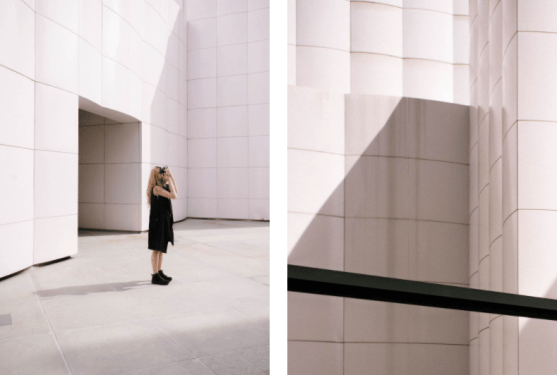
Photographer Fauxley shot by Rosanna Peng for Society 6

For the Fauxley feature Peng captured LA photographer Fauxly in a series of dynamic and architecturally intriguing shots that reveal her in a way that feels natural and aesthetically lines up with the overall layout of the interview on the Society 6 site making it visually pleasing for viewers to read.

Peng explains, “I wanted to shoot her organically without too much posing. This was my approach for this photoshoot because the environments I brought her to had a lot of symmetry in architecture. By balancing an organic subject with a structured environment, it made for a well-balanced juxtaposition between the two.”

Rosanna Peng
Photo by Rosanna Peng for Society 6

For the Art in the Wild: A Photo Essay she was tapped to translate some of her favorite Society 6 designs into photographs in various outdoor environments. The unique images she captured create a bridge between the natural world and the Society 6 designs in a way that is mesmerizingly beautiful. Clearly Peng’s creative eye extends beyond videography and her design degree has been put to good use.

Rosanna Peng’s innovative, inspiring and diverse work has definitely struck a chord with audiences around the world. Stay tuned for the release of her next Society 6 project, which is a lookbook video shoot slated to be released on June 1. She is also currently working on a promo video for Canon Canada’s macro lens, which will be released in August.