
Elegant, beautiful, and meticulously crafted. These are the most common adjectives listeners use to describe Weijun Chen’s work. As an industry-leading Chinese classical composer, he combines unique harmonic and orchestration sensibilities to create stunning pieces of music. His musical persona has been influenced by many aspects of his interests, surroundings, and diverse upbringing. His music is not meant to represent any particular musical style, but he is able to speak for his own musical identity.
“On the one hand, I grew up listening to Chinese vernacular music of the 90s. On the other hand, I was trained rigorously in Western classical music idiom, during which I developed strong interests in Renaissance music, late 19th-century Romanticism, Impressionism, contemporary music, and multimedia. However, rather than aligning myself with a particular style, or forcefully combining different styles, I simply allow my intuition to take over, and express my multitude of influences in a genuine and organic manner,” said Chen.
Throughout his esteemed career, Chen has continuously demonstrated his superb musical capabilities to audiences all around the world. His compositions, such as Watercolors, Three Earlier Songs, and Canoe tell pointed stories through beautiful melodies that evoke untold emotions to their listeners, all while playing at prestigious music festivals and venues.
One such music festival was the 2016 MATA Festival of New Music. MATA is one of the most renowned new music festivals in the world, taking place annually in New York City. Chen was chosen out of 1,156 submissions that year for the chamber version of his piece Dancer. The artist director of MATA was Du Yun at the time, a Pulitzer-Prize winner. The piece was performed by Ensemble Linea, a leading new music ensemble based in France, conducted by Jean-Philippe Wurtz. The performance took place at the National Sawdust in Brooklyn, NY. Chen received a positive review from MusicalAmerica after the premiere. It then went on to the 2016 “June in Buffalo” Festival and was performed by Ensemble Dal Niente, a leading new music group based in Chicago, conducted by Michael Lewanski and the 2018 University of South Florida New-Music Festival & Symposium, performed by the USF New Music Consortium, conducted by Matthew Kennedy.
“Dancer is a difficult piece to write and even more difficult to play for the ensemble, as the detailed rhythmic notations and complex harmonic sonorities require both individual virtuosic playing as well as a high level of ensemble work. I definitely breathed a sigh of relief after the successful premiere and was grateful for Maestro JP and the musicians of Ensemble Linea,” said Chen. “It was an honor to be featured at the MATA Festival and to meet their artistic director, Du Yun. Surrounded by more than a dozen of the world’s most talented young composers and hearing everyone’s music was both humbling and eye-opening. Each one of us showcases a strong, original, and unique musical voice, that collectively shows a diverse and vibrant contemporary music scene today.”
Dancer for chamber ensemble (flute, clarinet, piano, violin, and cello) is written in four sections. The opening section features a series of scales that overlap on top of each other, creating slow harmonic movement. The second section features a prominent melody that resembles passionate Spanish dance, although the melodic line quickly starts to break down and the texture becomes increasingly erratic. This leads to the third section: It is fast and energetic, with a strong pulse in the background. After reaching the climactic point, the last section returns to the slow tempo of the opening section, although it features a much more somber tone. The scale returns as well, albeit in the form of one long and continuous descent that spans the entire section.
It took Chen over six months to write Dancer. It was a challenging project on a technical level, due to the intentional restrictive use of the materials (scales only) as well as the instrumentation itself. The quintet of flute, clarinet, piano, violin, and cello, known as the Pierrot ensemble in contemporary music, is difficult to blend and balance due to the vastly different sound quality of each instrument, according to Chen. However, these two challenges complement each other, and the distinctive color of each individual instrument crystallizes the contrapuntal development of the otherwise limited musical materials.
“This piece reflects on the moment when technique becomes art. Growing up as a child pianist, I plodded through endless scalar exercises, passing the time by imagining my fingers as dancers gliding across the keyboard. Scales, sometimes embellished, sometimes transparent, form the musical fabric of the work, which consciously tries not to evoke keyboard exercises, instead seeking an elegance beneath its technically complicated surface,” he said.
After the success of the chamber version of Dancer, Chen decided to write it for an orchestra as well. The orchestral version received great praise, and demonstrates both Chen’s vast musical knowledge, and also his versatility. Undoubtedly, he is a force to be reckoned with as a classical composer, and we can expect to hear many more beautiful compositions from him in the years to come.
“The art of composition goes beyond a pencil and pieces of paper. Live life to the fullest: go on adventures, embrace nature, and explore cultures, all of which enrich your creative life. Of course, never stop learning and perfecting your craft. Seek mentors in and out of schools, and find music communities around you. Know and love the repertoire! Listen and study the music composed by the masters of the past as well as present. Listen to music of all genres and go to concerts as often as you can,” he advised. “Concert music is meant to be experienced live, and you can also meet your fellow composers, conductors, and musicians there.”
With those wise words for those looking to follow in his footsteps, be sure to keep an eye (and ear) out for Chen’s future works.



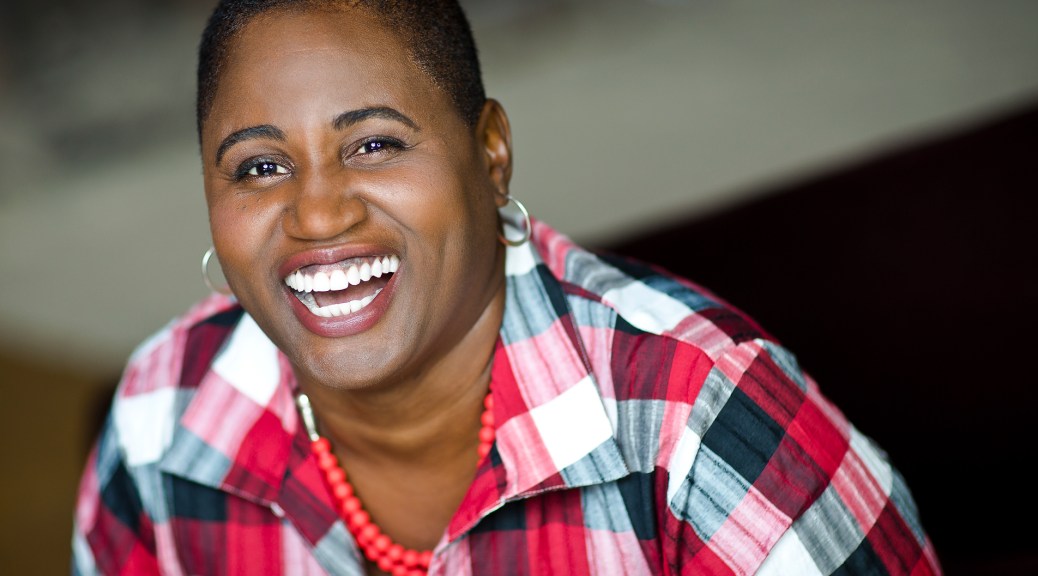


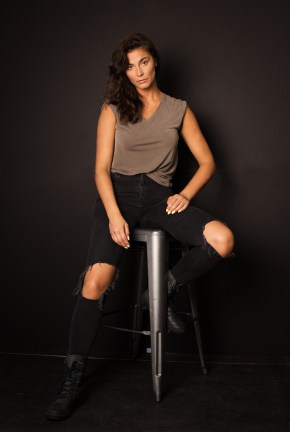 My name is Elysia Rotaru and I have been working as a professional actress since 2008. You may recognize me from the hit show Arrow and the voice of Beatrice Villanova in FIFA 2018, FIFA 2019, and FIFA 2020, as well as countless other films and television series.
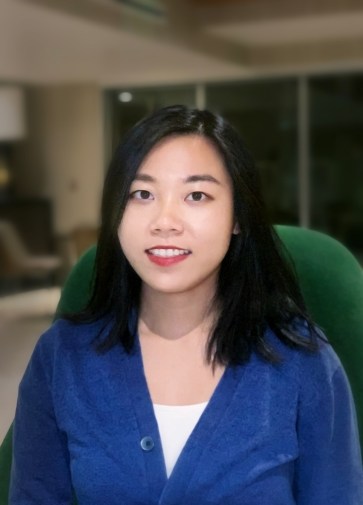
 When Feixue Tang thinks back to growing up in Beijing, China, she recalls her middle school and high school years as being extremely dull and oppressive. The school system only cared about high grades, and students are then rated, ranked, and sorted based on academic performances. As an escape, the young Tang started watching a lot of films in her own time. She felt her life expand through immersing herself in all those different movies around the world.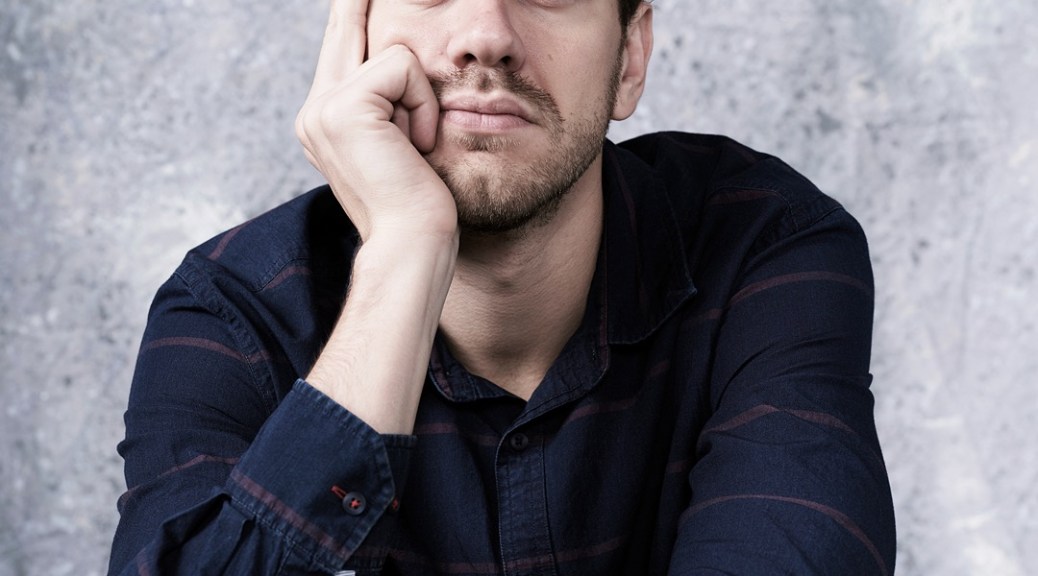
 As an industry-leading Editorial and Marketing Designer with Deadline Hollywood, Otavio Rabelo works with typography, colors, images and other design elements to create unique graphic layouts that are printed or used digitally. He designs conceptual layouts to all sections of a magazine using all the mentioned elements on computer software, and he is responsible for checking and sending final files to printers and making sure that everything is going to be printed correctly. It is a pivotal role in the success of each issue of a magazine he touches, and he knows this well. He remains dedicated to his craft at all times, a true perfectionist.
 internationalfilmreview