All posts by pressva

Producer and Director Gianlorenzo Albertini’s new film explores PTSD in veterans

Director-Gianlorenzo Albertini
Gianlorenzo Albertini

Hailing from Naples, Italy, Gianlorenzo Albertini was drawn to film at a young age. At the time, he believed everything that was happening in the movies actually occurred at that moment in time, somewhere in the world. As he grew, he realized that they were in fact stories, but the magic of movies was not lost on him. He daydreamed about all sorts of futures, from being a professional athlete, a rock star, an army pilot, a poet, a doctor, a detective, the pope. Although he knew that these were not all reasonable options, he knew the one path he could take where everything was possible: filmmaking.

“Films combine all the best things that I love in life: music, photography, writing, painting with light, portraying different characters, and any art,” he said.

As a celebrated director and producer, Albertini is currently releasing his most recent film, The Ribbon on the Kite, to worldwide audiences. The film follows a woman who, after discovering a homeless man living on the riverbank, tries to help him against his wishes. As you watch, you begin to see there is a greater history behind the homeless man than initially seems. Albertini, who also co-wrote the film, wanted to explore the emotional effects of war on individuals and draw attention to the hardships and the devastating effects of physical and psychological trauma that vets who have severe PTSD and are forced to endure due to governmental neglect. He wanted to place emphasis on veterans’ life after war upon, on the grief and horror of the battlefield they are forced to endure, oftentimes keeping the struggle to themselves, and on their difficult transition adjusting to civilian life. The film shows how frequently veterans end up being deliberately homeless because of their psychological inability to cope with the mental abuse inflicted on them, ultimately choosing to suffer in isolation.

As the writer and director of the film, Albertini did not have the experience and the full understanding of the plight of war. However, during his childhood, he often heard the stories told by his grandparents, about the horrors and atrocities during WWII they lived in their youth; they were his first understanding of the harsh and frightening conditions of war. He knew that, as a filmmaker, it was his responsibility to show the world just what so many veterans go through as realistically and explicitly possible.
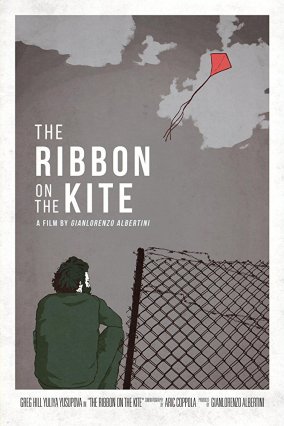
poster the ribbon on the kiteThe Ribbon on the Kite is making its way in the festival circuit. It’s been screened at and won several awards at various festivals around the world such as the Richmond International Film Festival, Maryland International Film Festival, Kansas City FilmFest, Garden State Film Festival, Soma Film festival, Oniros Film Awards, L.A. Shorts Awards, New Filmmakers New York, Hollywood International Moving Pictures Film Festival, Los angeles Independent Film festival Awards, Los Angeles CineFest, St. Lawrence International Film Festival, European Independent Film Award, and Largo Film Awards. After the festival run, Albertini is planning on distributing the film through VOD platforms such as Amazon and Fandor.

During the research and writing phase, Albertini made sure to research exactly what life is like for war veterans. He talked with friends of his, who gave the director vast insight regarding their physical and psychological traumas and what might ultimately drive them to isolation. This created an even deeper drive for Albertini, who had the chance to perceive and recognize their struggles and eventually apply them to the film.

The authenticity of the script was mostly achieved on set during filming, due to the fact that the script barely contains any dialogue. Therefore, all the real emotional traits are not said but instead shown by the work of the actors. This also made Albertini’s work as the director that much more vital, as he had to choose just how to visually convey the authenticity and purity of the story in every shot.

While filming, one of the most significant challenges was working with natural lighting and the unpredictable changes in weather; the natural light of course would eventually fade away, meaning shooting would stop for the day, even if Albertini and his team were in the middle of a scene. For the last scene in the film, they shot at sunset during “magic hour”, which may be short, and took more effort to finalize, but was incredibly worth it.

They shot the film along a riverbank in Los Angeles. The location was beautiful but is known for flooding. During production, the water level began to rise. The crew quickly began packing up their things, but the shot ended up being quite beautiful.

“The equipment almost got swept away by the strong current – that was quite an adventure, but we filmed the flooding of the river and that ultimately ended up in the movie,” he concluded.

Be sure to check out The Ribbon on the Kite. In the meantime, however, you can watch the trailer here.


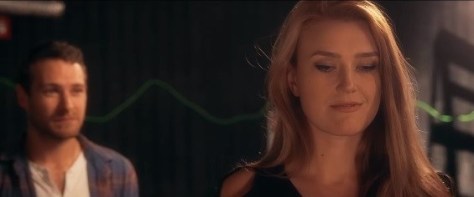
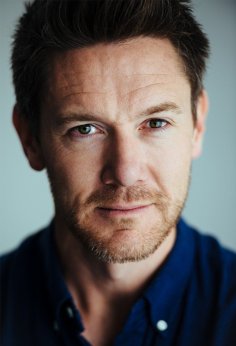
Top photo from left to right: Actress Julia Yusupova, Actor Greg Hill, and Director Gianlorenzo Albertini
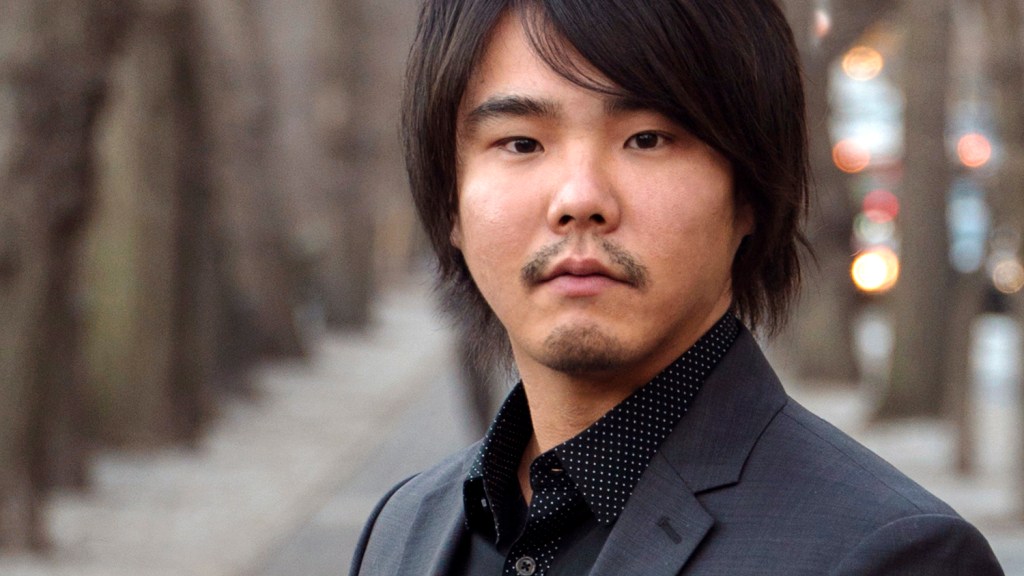
Japan’s Yuito Kimura pays tribute to ‘Back to the Future’ in award-winning film

Yuito Kimura knows that being a cinematographer is not just knowing the equipment or having skills to handle camera and lighting; being a cinematographer is being a storyteller. The moment he takes on a new project, he doesn’t just read the script, he studies it. He makes sure to know exactly what motivates the characters, as he knows that will affect how he shoots each scene. He notes how his vision can help tell the story, and that is what makes him so formidable at what he does.

Both in his home country of Japan and abroad, Kimura is an in-demand leader of his industry. His work on projects such as the music video “We are Stars” for pop band Snow Angels, the web and television commercial for Townfrost, and the films Dropping the S Bomb and Star Wars: Amulet of Urlon show just what he is capable of. He was also recently nominated for Best Director of Photography at the World Music and Independent Film Festival 2019 for the music video “Syrup” for singer/songwriter Jaklyn, which he also directed. It also has been nominated for Best Director and Best Creative Music Video.

Back in 2015, Kimura had the chance to pay tribute to one of his favorite film series, Back to the Future. Creating the film Back to the Future? gave the cinematographer the opportunity to explore the franchise that introduced him to American culture during his childhood, and it was an unforgettable experience. In this new film, Marty and Doc Brown go back to 2015 and find that one detail has changed the future as they knew it.

“I’m a big fan of the Back to the Future movies, and so is everyone that worked on this project. The writer, Logan, had a passion that made me, and the entire crew, really motivated,” said Kimura.

3. Back to the Future?_1While shooting, Kimura focused fully on following the director’s vision, and made suggestions that greatly added to the film. Knowing the original films so well, he proposed mimicking camera framing and movement from Back To The Future II when shooting B-Roll and inserts of the props such as DeLorean and its interior. This recommendation made it to the final cut, and truly adds the right touch of a throwback while still making a unique film.

The film went on to be recognized at several international film festivals, including the Wendy’s Shorts Awards, WILDsound FEEDBACK Film Festival, Sutter Creek International Film Festival, and more. It won Best Film at Fan Fiction Short Film 2016 and Best of Comedy Short at the Direct Short Online Film Festival that same year.

“When we realized on day one of shooting for Back to the Future? that we would be without a cinematographer, I found Yuito’s website and reached out to him directly. He arrived promptly with his equipment and was kind and respectful to everyone on set. He moved quickly through the shot list provided by the director and even offered his own insights that improved the finished product. He is efficient and knows how to get the shots we needed. He provided our production information about lenses and suggested cameras that proved to be important in our later work. I would be happy to work with him again anytime,” said Jen Floor Mathews, Producer.

On set, Kimura made sure to focus on achieving high-quality shots. He used simple camera framing, movement, and lighting. His biggest priority was delivering the story without any distractions, ensuring continuity in lighting and camera work. Such discrepancies, he knows, can cause major distractions for audiences when they watch the film, taking away from a captivating story.

4. Back to the Future?_2“I believe that not making any distractions is actually another level of filmmaking. For example, when I watch a movie, I can be distracted by small thing such as unnatural lighting on actress’s face or continuity. I fully commit myself to not frame those things and fix anything that would would be a distraction,” he said.

Overall, the shoot went very smooth and was quite fun for Kimura. They even had a key prop from the original films, inspiring everyone on set.

“The best part was that they used the actual DeLorean that was used in the original movies. I couldn’t believe I had the opportunity to shoot with such an iconic prop. I still remember that everybody started taking photos with the DeLorean and stopped working. At first, it was putting us behind schedule, but then I realized it was just because everyone was excited to be honoring the movies. It was such a funny moment. That was the highlight,” Kimura concluded.


By Annabelle Lee

Liam Casey Sullivan takes destiny into his own hands

It has been said that destiny doesn’t come down to chance. Rather, destiny is a choice. It isn’t something to wait for, it is something to be achieved. Growing up with actors as parents, Liam Casey Sullivan has always known that entertaining was his destiny; however, rather than wait around for his fate to unfold, Sullivan took matters into his own hands and began doing the very thing he knew he was meant to do. His childhood was charged with exposure to entertainment and other forms of artistic expression. With that, his imagination ran rampant and he was captivated by the world it molded around him. As a result, the talented young actor is no stranger to the stage. Whether he is acting in a theatre production, on a television program, or on the big screen, he is determined to ensure that he never lets his calling escape him. He was born for the screen and knows that with the right amount of hard work and dedication, he will be able to continue along a path to greatness and enjoy it.

Since the outset of his career, Sullivan has earned himself a number of different roles across various entertainment mediums. For instance, when Sullivan was just 10 years old, he felt more than ready to begin his acting journey. The unrepresented, eager young artist had compiled a portfolio of head shots and information about himself, as well as his skill set, and to his avail, was recognized by renowned director, Pat Mills, who wanted Sullivan to act in his upcoming film, 5 Dysfunctional People in a Car. The film comedically follows five individuals during a car ride to drop their grandmother off at her retirement home.

Given his desire to immerse himself into the entertainment industry, Sullivan recalls the experience as feeling absolutely surreal. On top of the excitement of simply getting to act professionally, knowing that his first ever film went on to successfully screen at several North American film festivals, as well as to secure a win for Best International Short Film at FilmOut San Diego, was all the more exciting for the enthusiastic Canadian actor. In addition, he was over the moon when BlogTO named 5 Dysfunctional People in a Car one of the top 8 must-see films at the Toronto International Film Festival.

5 Dyfunctional
LIAM CASEY SULLIVAN AND SHANNON FORD 5 DYSFUNCTIONAL PEOPLE IN A CAR, PHOTO BY PAT MILLS

For the film, Sullivan played a character by the name of Robbie Gordon, intended to be the ultimate heartthrob and the coolest kid in his school. He exists within a constant buzz that results from his popularity, keeping his friends close and turning his nose up at anyone else he crosses paths with. Stereotypically, girls crush on him, his grades lack, and his ego fills every room he enters. In order to play Robbie as convincingly as possible, Sullivan made an effort to channel the excitement of entering the acting world at such a young age and allow him to appear conceited and aware of his reputation. In addition, he seized the project as an opportunity to act as a sponge, absorbing as much information as he possibly could from his experience on set, working alongside other talented actors and under a skilled director. He took note of the hard work and processes evolving around him, vowing to bring his skill set up to par and to start off his career with a bang.

“I was so fortunate to be able to witness a group of people so passionate about what they were doing at the young age of ten. It really solidified my aspiration to continue to do this for the future of my career,” recalled Sullivan.

After working on 5 Dysfunctional People in a Car, Sullivan dedicated himself to pursuing other meaningful roles. He continued to surround himself with like-minded creatives and seizes each new learning experience as ferociously as he did for his first. Since that very first film, Sullivan has gone on to work on a number of other successful projects, such as Mary Goes Round and Degrassi: Next Class. Sullivan is a firm example of the notion that by combining his talent with a willingness to learn and a determination to find work, he can turn his dedication into positive outcomes. For other young actors looking to seize their destiny, Sullivan has the following advice to offer:

“Always challenge your emotional capacity and don’t be afraid to take leaps outside of yourself. It is surprising how well you can do when you consistently test the boundaries of your work. It is really important to always keep in mind how many people go into making a production successful and it is crucial to trust your collaborators. Whether that’s your director or your fellow actors, developing solid trust amongst each other is a great way to achieve results. Be that firmly supporting and believing in your director or fully engaging with another actor in a scene, always remember that achieving greatness in this industry is solely based on the collaboration of many.”


Written by Annabelle Lee, top photo by Joshua Augusto

Production Designer Elisia Mirabelli creates new worlds through her artistic eye

For Canada’s Elisia Mirabelli, Production Design is an element of acting, inhabiting another person, stepping inside of their world, and feeling their story. Each time she begins a project, the seasoned production designer tries to imagine herself as the character whose space she is creating. She asks herself why each object in the space remains there, the history behind it, the psychology of how and why a space is divided the way it is. How much time has been spent there? Who a character lets into their space? What it looks like if their alone in it vs what it looks like if a friend is over? She maps out a life in artifacts, creating backstory, revealing loves, interests, experiences, peeling back another layer.

“Production Design for me is really designing and shaping the insides of a person outwardly. In a practical sense, production design is the construction and creation of a film’s overall look through its set and prop design,” she said.

Mirabelli has a decorated resume, with esteemed projects such as Night Owl, Pretty Thing, Let Me Down Easy, and many more. She has created the background for celebrated music videos and popular commercials and collaborated with some of Canada’s biggest networks.

A highlight of Mirabelli’s career came in 2013 when she did the production design for the prolific network MTV. Working with Bell Media and MTV Canada, Mirabelli designed the promo spot MTV #IN24, a collaboration between FORD and MTV promoting MTV’s new cross-platform series #IN24. It aired domestically across the country on MTV Canada and online at MTV.ca and was winner of the 2014 Media Innovation Awards and also received the Silver Award from Best in Cars & Automotive Services.

For the commercial, Mirabelli designed an indoor forest equipped with real foliage, taxidermy and textured dirt flooring. She and her team built the forest set around the Ford Fiesta. The set included a pathway for actors to dance on and a green screen backdrop for day and night simulated VFX.

“Working with MTV was always a dream of mine. It’s such an iconic production company with a history in creating unique, youth focused, genre pushing content. Additionally, the task of designing and creating an in-studio forest set was super exciting. Designing for a company as iconic and groundbreaking as MTV was a career milestone,” she said.

Mirabelli’s time with Bell Media was filled with exceptional projects. She did the production design for a commercial for CP24, a Canadian news network that reaches more than 3.1 million viewers a week and 3.7 million in all of Ontario. The commercial CP24 Moving at the Speed of Your Morning aired nationally on CP24. It went on to win the 2017 Promax Promotion, Marketing and Design Award.

When working on the commercial, Mirabelli refitted an outdated living room with new furnishings, lighting and small props and set accessories to make the location feel more modern, fresh and bright. She built five custom, faux LED screens that were set in each of the four locations. The LED screens played a pivotal role in the promo as they acted as the transition between scenes, with the camera travelling in and out of each of them. Additionally, her team managed the food styling for forty plus extras.

“The opportunity to create and work on a commercial for CP24’s morning show was really exciting. CP24’s morning programming brings in millions of unique viewers a week, so it was really incredible to work on something knowing that it would be reaching such a large audience,” said Mirabelli.

That same year, Mirabelli also worked with The Space Channel on their holiday programming, creating the commercial Spacemas and highlighting The Doctor Who Christmas Special. To do so, she designed a string of sets that replicated a collection of unique living rooms, fitted with holiday décor. The main set included a 14-foot Christmas tree that sat next to a scaled replica of the Doctor Who Tardis, brought in for the shoot from outside the province. The promo relied heavily on its production design and the ability to design a string of living room sets all captured during a single day of shooting. It went on to receive the 2017 Promax Promotion, Marketing and Design Award: Channel: Holiday or Special Event Spot.

“Space Channel is known for creating content that’s wonderfully lively and ultramodern, an ode to its fantastical programming. Working with props from the BBC’s ‘Doctor Who’ series was a real thrill. Additionally, working with the creative director of The Space Channel was awesome and I’m such a fan of his originality,” Mirabelli described.

Once again in the holiday spirit, Mirabelli worked on Christmas commercials for Gusto, Bell Media’s speciality food channel. The set of commercials launched Gusto and was their first national holiday campaign, an opportunity that excited the production designer. After the commercial series, Gusto was nominated for International Channel of the Year at the 2016 Content Innovation Awards. It aired domestically across Gusto’s sister channels (34 channels total, including The Discovery Channel and TSN).

To create the commercial, Mirabelli built a winter wonderland themed set equipped with half a dozen 8-foot-high white trees, 250 presents, a snow machine, teal lights and custom-made glass ornaments spelling out the names of the program’s hosts, which included Jamie Oliver and Martha Stewart. They were able to design and build two unique, modernized Christmas sets that completely distinguished the promo in an ever-crowded market of holiday programming, which was no easy feat.

“Reimagining the look of a holiday promo into something fresh, modern and cool was fantastic,” Mirabelli said.

Undoubtedly, Mirabelli will continue to be a formidable force in Canada’s film and television industry. Keep an eye out for her work.


Written by Annabelle Lee

Graphic Artist Vinita Bakhale visualized eerie sets for FOX

VinitaRachelBakhale----2018
Graphic Artist Vinita Bakhale

By Annabelle Lee

As a Graphic Artist for Film and Television, Vinita Bakhale creates the visual and print graphics outlined in the script of a production. By doing so, she takes words on a piece of paper and turns them into tactical believable elements of an environment; she helps design a set by using her technical skills, so it feels like a real and authentic place. She uses her artistic talents to enhance a production, and her design contribution truly takes audiences from their chairs and transports them into a scene.

With experience creating visual graphics: imagery created to envision sets an audience will see and experience, to creating both hero print graphics and background print graphics, Vinita has an impressive resume working on prolific television shows and films. She helped design the graphic visual imagery for sets and print graphics for the now iconic series Riverdale, as well as another comic live-action show, Happy!, where she worked as a Lead Graphic Artist designing the show’s print graphics. She also created visual graphic imagery for an important scene in the Academy-Award nominated film The Big Sick. 

Vinita is also known for her contribution as a Graphic Artist on the hit television series Damien. Damien follows the adult life of Damien Thorn, the mysterious child from the 1976 motion picture The Omen who has grown up seemingly unaware of the satanic forces around him. Haunted by his past, Damien, now a war photographer, must come to terms with his true destiny — that he is the Antichrist. Barbara Hershey stars as Ann Rutledge, the world’s most powerful woman who has been tasked with making sure Damien fulfills his destiny. Omid Abtahi portrays Amani Golkar, a close colleague of Damien’s whose fierce loyalty will be tested when he realizes who his brother-in-arms actually is. Meganlyn Echikunwoke plays Simone Baptiste, a woman whose life is thrown into turmoil when tragedy unexpectedly strikes. Damien was produced by Fox 21 Television for the A&E Network. As a massive fan of horror films, especially of cult classics like ‘The Omen’,  Vinita was immediately interested in joining the project.

DAMIEN (2016) NYPD Police Station Graphic Art by Vinita Bakhale Property of FOX 21 Studios
Damien (2016) “NYPD Police Station” Graphic Art by Vinita Bakhale Property of Fox 21 Studios

“Honestly, each one of the episode scripts were really interesting and well-thought out. Reading a script on Damien was like reading the second last chapter of a thriller novel. Adrenaline is pumping, senses are heightened, and then you’re on the last page of the script. This is when the realization sinks in that you’re going to have to wait a more few weeks to see what happens next because that’s when the next episode’s script will come out! I was very captured by the screenwriting for Damien.” she said.

While working on the show, Vinita was responsible for researching visual references and even helped pick out paint colors and design elements for key sets.  She created the key lookbook for the protagonist, Damien Thorn’s New York loft. She also did this for another protagonist, Simone Baptiste’s Brooklyn apartment.  Another important set of tasks Vinita was given included researching, visualizing and modeling key sets such as Simone’s Apartment, The NYPD Police Station, Ceci’s Manhattan Photography Office, Ann Rutledge’s Office and Shrine Room, and John Lyon’s Office. With each set Vinita modeled, she was charged with bringing to life the Production Designer’s direction based on the Showrunner’s vision. In addition to this, she also helped the production with certain print graphics.

Damien (2016) NYPD Police Station Property of Fox 21 Studios
Damien (2016) “NYPD Police Station” Property of Fox 21 Studios

“I’m a pretty big fan of horror movies, and this opportunity was truly once in a lifetime because I don’t think it had even been done before. You usually only ever see prequel or sequel horror films, where plots are obvious and tend to lack originality. Damien was an amazing sequel and made for a compelling television series, with highly engaging and complex characters whose moral compasses were tested due to powerful satanic forces closing in on them. I was astounded with the Showrunner’s vision and writing on the show.” said Vinita.

Damien (2016) Simone's Apartment Graphic Art by Vinita Bakhale Property of Fox 21 Studios
Damien (2016) “Simone’s Apartment” Graphic Art by Vinita Bakhale Property of Fox 21 Studios

Vinita considers her time spent on the project to be thoroughly enjoyable and she is happy that she was able to contribute to the show by creating the visual imagery that helped aesthetically shape the main sets.  She enjoyed designing on this project, especially because she was able to contribute her technical skills for audiences who love the same genre she does.

Be sure to check out Vinita’s latest work, Freaky Friday The Musical, being released by Disney this summer.

Damien (2016) Simone's Apartment Property of Fox 21 Studios
Damien (2016) “Simone’s Apartment” Property of Fox 21 Studios

Overcoming diversity barriers in the industry

My name is Xiao Sun. I was born and raised in China before coming to Canada nine years ago. The performing arts has always been my passion and I have been getting up on a stage to express myself since I was only five years old. I have had the opportunity to work alongside some of Hollywood’s elite, like Oscar winners Jennifer Lawrence, Javier Bardem, Charlize Theron, and most recently Seth Rogan, to name a few.

Like many in this industry, my path towards becoming an actress has been unique. I originally started off as a dancer, training for ten years in Chinese traditional dance. I travelled around China with my team, competing and learning along the way. My dance background taught me how to express myself through performing arts from a young age, and I was later hired as a dancer in Cirque du Soleil’s touring show Amalunain Montreal, Canada.

After moving to Montreal with my parents in 2009, I also began modeling. I joined Miss Universe Canada and was one of the top 10 national finalists and was awarded the Best Runway Model award. At the time, I was the first Asian contestant to ever receive this prestigious award. That was when I realized, maybe for the first time in a professional sense, that I had the power to overcome diversity barriers and become a role model for other Asians looking to make their way in North America’s fashion and entertainment industries.

It was after this experience when I began pursuing my truest passion: acting. Not too long afterwards, I booked my first ever film, Fatal (Universal Pictures), and my career kicked off. However, as the years went by, the only roles that I was getting were those that were specifically looking for Chinese actresses to play “hot girl” or “girlfriend” or “receptionist” or “best friend”. I was and still am very grateful for these roles and how they helped develop my career, but I was beginning to want more. Very few casting calls were looking for Chinese or Asian actors for leading roles, and none of the roles had any real substance.

Recently, the trends in the industry are changing. The success of Black Panther was just one of many awakenings for Hollywood, showing production companies that films not only starring minorities, but also celebrating them, can become massive successes both critically and at the box office.

Television is undergoing a similar paradigm shift. Just last month, Glamour published an article titled “Now Trending on TV: The Sexy Asian Hunk” highlighting the many hit shows that feature Asian actors in the starring roles, playing roles that go beyond the typical stereotype often associated with Asian characters. This is exactly what I, like many Asians in the industry, love to see. However, even with all the progress that has been made in the last two years, dynamic female Asian leads are still very underrepresented.

For the first few years of my acting career, I was building quite the resume, but was still finding myself playing secondary characters that showcased Asian women in a way I found stereotypical; I was either hot, or nerdy, or a funny best friend, or a combination of the three. I wanted to be able to develop a role, get into the substance of the character, and really show a wide range of emotions while reminding myself why I got into acting.

I decided to slightly change the roles I was going for. I started going to less auditions, as I started picking roles that I felt were more suited to what I felt I wanted, and what I thought would be more interesting roles for an Asian woman. This included my 2016 appearance on Syfy’s Incorporated. The story took place in a future where the United States was no more, and China had taken over as the global superpower. I played a public influencer that encouraged and inspired people to save the kids suffering in areas affected by natural disasters caused by climate change. In Mother,opposite Jennifer Lawrence and Javier Bardem, my character was a huge fan of poetry. I travelled days to see a famous poet (played by Bardem) to tell him how much I liked his work, and my character was just a normal human being on this planet. These roles did not require a specific ethnicity. These types of roles are the type we should all strive for.

My most recent role, in Seth Rogan and Charlize Theron’s film Flarsky, I once again had the opportunity to play a character that was proudly Chinese. Initially, the role did not specifically call for an Asian actress, as the film was still being written. After getting the role, the finer details were ironed out, and I was written as a powerful Chinese executive passionate about rescuing animals. This character is passionate and complicated, and the kind of character I always dreamed of playing when I first set out to become an actress.

For too long, Asians have lived on the edge of screens. Jackie Chan and Lucy Liu were pioneers in overcoming such barriers, and in recent years, minorities are having more and more opportunities to take on roles that highlight their culture but are not limited to that audience. Asian actors still have a long way to go, but I would encourage all looking to break out in the industry to keep trying. Go for roles that you are passionate about, write the character you want to play in the story you think is important to be told, be proud of your accent, and sooner or later, audiences will have their own Asian “Black Panther” to look up to.


Written by Xiao Sun

Go behind-the-scenes of Korean hit ‘The Society Game’ with TV Exec Dan Cazzola

For Dan Cazzola, a career in television was always what intrigued him. He never had a back-up plan, and never needed one. Starting out as a producer, he found his calling, as every day he was doing something different and meeting new people; every day was a learning experience. Overseeing every aspect of a show, from beginning to end, was exciting to this Canadian native, and as a producer, he brought shows to success in both his home country and internationally.

Cazzola has now moved on from producing just one show and is currently the Vice President of International Development for Endemol Shine North America, the world’s largest television production group. Working on the corporate side allows him to lend his talent to a variety of current and upcoming shows. Having previously worked for Shine Group in the United Kingdom, he brings years of experience to his role.

“I worked with Dan over many years at Endemol Shine, and he is one of the hardest working people I have ever met. He continuously strived to make every single project we worked on top-notch, and always managed to succeed. On top of all this, he is an extremely positive force in the workplace, always encouraging everyone to do their best work. He is a leader, and I am happy to also consider him a friend,” said Fotini Paraskakis, Managing Director, Endemol Shine Asia.

One of Cazzola’s largest successes abroad was with his work on The Society Game, a South Korean reality TV series, which he co-created. The format was similar to Big Brother, where contestants are isolated from the outside world, but instead featured two teams competing against each other with the twist that one side had to live as a democracy and the other a dictatorship. It was a social experiment to see which society was more effective and which types of leaders would rise to the top and win the game. The show premiered on TVN in October 2016 as their tenth anniversary special series where it was extremely popular and was picked up for a second season.

When creating the idea for the show, Cazzola tried to think of a format that could take place in Korea but resonate with other countries. While brainstorming, he asked himself, what is something many people associate with Korea? His answer was the North and South divide. This is when inspiration struck to have a reality competition show with one team representing dictatorship and the other democracy to see which was ultimately better.

“My favorite thing about working on this project was that we actually shot it outside Seoul close to the border of North Korea. It was a constant reminder that the show we were filming actually was real life for these two countries. We would see the military helicopters flying over every morning and night and the rugged mountain range that we could see in every aerial shot was the physical barrier between us and the DMZ,” Cazzola described.

TV, as Cazzola says, is a universal language. However, its development greatly varies around the world. The Society Game was Cazzola’s first experience with the Korean market and television production in the country. Not only were there language barriers to overcome, but processes were different than what Cazzola was accustomed to. This provided a pivotal learning experience for Cazzola, who at the time had only worked on television programs in Europe and North America. Cazzola and his team set many strict targets and made sure everyone knew exactly what the plan was. In the end, they developed, filmed, and aired the show all within a mere nine months.

“I loved that I not only got to work on an exciting new reality format idea but that I learned all about Korea and how they make TV there. So much of TV can be inward facing and the best part of my role was that I learned how it all comes together there. I learned new ways of doing things and also saw great creativity from the team there. I had a huge amount of respect for them,” said Cazzola.

The Society Game was a large success for Cazzola, as it was his idea that sparked the hit. Now it is a successful format currently being adapted to sell around the world, and Cazzola’s understanding of various markets are one of his greatest assets when scoping out international formats for American television.

‘The Ballerina, The Shoemaker and His Apprentice’ takes audiences back in time with help of Meibei Liu’s editing

As a film editor, Meibei Liu sees herself almost as the conductor of an orchestra. She puts together endless footage and turns it into a piece of art, transforming a script into a true visual masterpiece. In many ways, she is like the doctor of a film; she removes what is unnecessary and replaces what needs work. Editing is putting the final pieces of the director’s puzzle together, and Liu not only understands that, but she also thrives because of it, and that is what makes her a good filmmaker.

Having worked on a variety of projects that have made their way to many prestigious film festivals around the world, Liu has made quite a name for herself as an editor. Such films include Dear Mamá, Headshot, Faith Need Not Change Her Gown, Pumpkin and Fried Noodle, and more. Recently, her film The Ballerina The Shoemaker and His Apprenticereceived nominations at the Oscar-Qualifying Hollyshorts Film Festival and LA Shorts Fest, Maryland International Film Festival, and Ouchy Film Festival in Switzerland, New Port Beach Film Festival where it was nominated for Short Film Award, The Grand Jury Award and Best College Film at The Next Generation Filmmaker Film Festival.

“I’m happy to hear that the film went all over the world for festivals and awards. I was glad that my changes made it into the film and was shown to people who speak different languages. It confirmed that emotions expressed and enhanced by editing can be identified by everyone, which made me believe that I should continue doing what I did for the film. I was glad that Eva asked me to go on board and be part of the project. That gave me a chance to show my attitude towards editing to people,” said Liu.

The film takes place in 1963 Hackney, England, and follows George Arkwright, a young man down on his luck, who must navigate the refined world of ballet pointe shoe making and redeem his value as the apprentice under the shadow of Mr. David Traynor, a talented but stuffy point shoemaker. George’s imagination turns into a reality when he becomes smitten with the Ballerinas the shoes are built for, one named Sylvia particularly, but soon learns this magical and seemingly distant world is not beyond the reach of affliction. Liu came on board half way through editing the film when the Director, Eva Ye, realized she needed expansive editing talent to turn her vision into a reality.

“Working with Meibei was great. She has a strong sensibility for impactful storytelling through an editing perspective. She often provides new perspectives to the story and is invested in trying different ways of getting the emotion across. Sometimes she is more willing to dig deep into the materials just to find something I didn’t even know existed. Her passion and dedication to editing is something I’ve seen rarely. And in many ways, she makes my work better,” said Ye.

Liu is able to address the problems of cuts quickly. When she reviewed the first cut that was made before she was brought on, she realized exactly how to transform the footage into what the director wanted and what audiences would connect with. She took what was a half-finished film and reworked it, making it better. She realized that the scenes were dragging; all of them could end earlier by cutting out some of the lines and actions. She stopped in the middle of the first scene and started the second scene earlier, helping to show the main character’s eagerness. Sometimes, however, she chose to extend a scene and have it linger longer to show the apprentice’s feeling of loss and disappointment. This film has very subtle emotions, and an editor’s vision and eye on digging out the emotions, and enhancing them by editing is vital. Being a very emotional person who is strong at noticing the emotional changes of people, Liu was the ideal candidate to take over as editor.

“It’s a story of dreaming. I believe this is a film that speaks to everyone in spite of when and where it happened. It’s a worldwide emotion that people all over the world can understand. I believe it is important to tell this kind of story, giving the audience a short period of time to experience something they can relate to,” Liu concluded.

The Ballerina, The Shoemaker, and His Apprentice is currently available on Amazon Prime Videos.


Written by Sara Fowler

FROM MERMAIDS TO MENTAL HEALTH, ACTRESS BRIE KRISTIANSEN DOES IT ALL IN TV, FILM, AND NEW MEDIA

Article Written By: Ashley Bower

It’s not always easy to keep up with an industry that is constantly evolving, but when it comes to navigating the busy world of entertainment, working actress Brie Kristiansen is a pro.

“It all started with a musical in Iceland when I was a teenager,” stated Kristiansen, and right from the start, she was propelled into learning how to adapt to the unpredictable curves that life – and the film and television industry – are known for. “The musical was Bugsy Malone and hundreds of people auditioned. In the end, I was cast in the leading role of “Dandy Dan,” which was changed into a female role since they thought I fit very well for the villainous character. Funny story, at the dress rehearsal I fell down and broke my leg and had to do all of the remaining shows in a wheelchair. It actually turned out great in the end, as the wheelchair seemed to add almost another level of authority for this villain.” Ever since this debut, Kristiansen’s career has skyrocketed.

While Kristiansen has numerous projects that span film, television, and new media under her belt, she’s most known for her work on It Takes a Killer, Delirium: What’s Your Worst Fear?, Corrupt Crimes, and her latest role as a series regular on season two of Life as Mermaid.

With over 25 million views and more than 155k subscribers, it’s safe to say that the hit YouTube Series Life as a Mermaid has a passionately committed following. The story follows two mermaid sisters and their journey on land as they work their way around obstacles while adjusting to life with the humans. Kristiansen plays Astrid, a ruthless European villain with an icy demeanor, whose mission is to hunt down the mermaids with the intention of selling them for billions.

life as a mermaid
Brie Kristiansen as “Astrid” in Life as a Mermaid

“From the start of when season two started airing, we received such fantastic reactions from people all over the world. We started getting asked for autographs and receiving fan mail which has all been an amazing experience. We truly have the best fans, and they are what made all the hard work worth it in the end,” Kristiansen reminisced.

Though Life as a Mermaid airs on YouTube, one of the entertainment industry’s newer media platforms to publish episodic content on, the production process was exactly the same as any other television show. The only difference: the website makes its content accessible to anyone anywhere in the world.

Starring opposite Kristiansen in the series is Marcella Di Pasquale, who is also credited as casting director and one of the producers of the show.

“Brie is the sweetest person, so it is so interesting to see her play such a brilliantly evil villain,” explained Di Pasquale. “To be able to switch into such a strong character within a matter of seconds just really goes to show Brie’s true talents and acting skills. She is also great at stage combat and I loved watching her film her fight scenes on the show. Brie is very charismatic and naturally talented, which makes her a great addition to any set, and us on the Life as a Mermaid team always love having her around.”

In addition to villainous roles, it’s apparent that Kristiansen has a gift for securing and excelling in roles that encompass very serious, emotional qualities, such as the roles she played in It Takes a Killer, Delirium: What’s Your Worst Fear?, and Corrupt Crimes. Elaborating on her love of playing and process of preparing for such kind of a role, Kristiansen explained, “I always think it’s really funny since I’m actually quite a goofy person, but I guess I look very serious. However, I love doing these roles, especially when there’s an added challenge or something I haven’t done before.” An example of such is Kristiansen’s work she did on Delirium: What’s Your Worst Fear?” where she plays the character of Ava, a teenager with schizophrenia.

Prior to being cast as Ava, Kristiansen wasn’t familiar with the mental disorder outside of what she had seen in other film and television shows. Therefore, it was a role that require extensive research – something which was already a very major component of Kristiansen’s character preparation process. “I try to get closer to my character’s mindset and who they are. I’m a total nerd when it comes to this and will dive into research for significant amounts of time until I feel that I have managed a full understanding of the character, and then I go into the next steps of my preparation,” Kristiansen said.  “With Ava, I did so much research, probably more than I’d ever done before. I thought it was vital for the authenticity of my character to absolutely dive into research. I went to libraries, read books, and even spoke to people with experience in the field.”

Currently, Delirium: What’s Your Worst Fear? is being screened at multiple film festivals around the world.

delirium.png
Brie Kristiansen as “Ava” in Delirium: What’s Your Worst Fear?

Coincidentally, on Kristiansen’s episode of Corrupt Crimes titled Vulture Feeder Fiend, the topic of schizophrenia arose yet again for the actress, though this time the character with the disorder was not her own. Taking place in California in the 1970’s, the storyline of the episode follows a schizophrenic serial killer named Herbert who murders a homeless man while in his altered state of mind. Kristiansen plays a hippie named Mary, who attempts to hitchhike her way to an event only to suffer a similar fate after she’s given a ride by Herbert himself.

Kristiansen not only loves the roles she’s been given the opportunity to play but is also passionate about the impact they make on her viewers, along with the awareness they bring to mental illness in film and television. “I’m a very open and honest person who comes from a very liberal society. The way I was raised is that if there’s a problem, you speak about it, and that you should never judge others for their feelings or behaviors because you don’t know what they’ve been through or are going through. Mental illness is a very serious issue, and the shame and stigma surrounding these issues need to stop. We need to be able to speak about our feelings, experiences, and illnesses openly in order to help or even fix them. There are so many tools one can learn from speaking to a professional, or by simply opening up to a friend. Love conquers all,” she said.

While some roles help to expand the knowledge and understanding of one’s mind, others do the same for the heart. This is the case for one of Kristiansen’s earlier television series: It Takes a Killer. “In my role as Charlotte, I played an emotionally unstable teenager who goes through a horrible tragedy,” Kristiansen discussed, revealing her journey of portraying the sixteen-year-old character left parentless after discovering her father murdered her mother.  “Charlotte is extremely vulnerable and has moments where she has emotional breakdowns. For me personally, this role was a great opportunity to showcase my talents with vulnerability and fully diving into the character. It was a great experience, and also helped me become more vulnerable and open as a person.”

There’s no question that Kristiansen’s vast experience and success as an actress has helped her grow not only as an artist within the film and television industry, but also as a person. There’s no doubt that this is something she’ll continue to do throughout her acting career in the years to come. Regarding this idea of both personal and career evolution, Kristiansen stated, “I’m incredibly lucky to be a working actress in different parts of the world, and on a variety of project types portraying completely diverse characters. Each time I take on a new role there’s something new I learn about people from the character I’m portraying. As a people person, this job will never become boring. The challenges, in drama, in comedy – all of it – just makes you really grow as an individual and you learn so much about yourself. I’m all about figuring out your dream and making it happen, and I find it to be one of the perks that I am able to grow both personally and professionally while living mine.”

17191018_10155909301804942_8971055201274809684_n.jpg
Brie Kristiansen walking the red carpet

For more information on Brie Kristiansen, please visit:

www.imdb.me/briekristiansen

https://www.briekristiansen.com/

Ben Prendergast creates dystopian world in ‘Post Apocalyptic Man’

Ben 6
Ben Prendergast

It seems like a long time ago that Ben Prendergast was looking to be a software entrepreneur. The Australian native always had a passion for acting, but the notion of pursuing such a career in Australia is so uncommon, he never felt like it was truly a possibility. Having dreamed of being an actor since he was only a child, it always seemed like just that: a dream. However, when embarking on his technology career, Prendergast decided that he had to pursue his passion, and one day, after landing a role on an NBC television pilot, he decided to turn his dream into a reality. Since that time, he has never looked back, crafting an extraordinary career.

Now, Prendergast is an industry leader in Australia, and seeks to make a difference through his work. With Prendergast as the lead, The Marker aimed to bring awareness to the socio-economic issues in Australia and was funded by the Australian Competition and Consumer Commission. Similarly, his film Punch Drunk shed light on the marginalization of the elderly and mentally unwell. Sometimes, the actor’s love of telling stories is what drives him, which was the case with the feature Predestination. However, no matter what he is working on, his innate talent and dedication to his craft impress audiences, critics, and colleagues alike.

“I’ve worked with Ben on a number of projects. Most recently, we worked on Post Apocalyptic Man. As a writer, usually you’re not working directly with actors, but in the case of this project it became really valuable. Ben’s ability to cold read a scene and bring it to life was a revelation, and something we relied on in the early development right through to final script stage. Ben and I would stay up way too late discussing how we could bring more conflict, more drama, more humanity to this piece and I think it really shows in the final script. But then I was also in the rarified air of watching Ben work on set, and even then, he’s constantly drilling for more in the text, and during shooting I saw him make bolder and more compelling choices. Some of them made it into the final film, some didn’t, but I just remember the feeling on set was electric with every take,” said Daniel Walsh, Screenwriter. “I think Ben just has that thing that you can’t put your finger on. You roll the camera on him and you’re transfixed even before he’s said anything. You think to yourself, “What’s he going to do?” and he always surprises. He’s curious, in a way that most actors are, but he’s curious as the character, which is something else completely. I’m not at all surprised that he’s had the success that he’s had.”

Post Apocalyptic Man tells the story of humanity’s need for survival in a world where they are blind to their own destructive tendencies. The human population is in the grips of decline after genetic modification turns the female population sterile. When it is discovered that a child may carry a gene that is immune to the disease, forces of good and evil converge on a small Australian outback community to find the child and gain control over humanity. Cane Storm, the leader of the evil tyranny, sends his number one henchman Baker, played by Prendergast, to infiltrate the Renegades led by anti-hero Shade. Leathergirl escapes with her brother, who seemingly carries the gene, but is pursued by Baker. Throughout the film, audiences discover that Baker is a genetically engineered mercenary who will show no mercy and is hell bent on finding Shade and the boy who carries the cure.

“This film deals with humanity’s deterioration, something that is on all of our minds, but depicts it with food shortage and the notion of a barren human population. We haven’t been a declining population since World War I, and I think current generations aren’t really aware of that or prepared. This film gave a real sense of a species in decline, and the desperation and hope that springs from that. For me, it’s a fantastic analogy for how we currently look at our food waste, energy production, and government systems,” said Prendergast.

When Walsh and Director Nathan Phillips were looking for a clean-cut super soldier type of actor, they asked Prendergast to audition. Not only was he in incredible shape and fresh off an intensive training program, Prendergast was well-known for his tremendous talent and versatility. After auditioning for the part, he was offered the role immediately.

“From the very beginning it was evident that Ben was a thoughtful and dedicated artist, and he had key elements of his character down at a very early stage. He goes deep within his characters, finding the most truthful elements, but also playing with the duality that most interesting characters possess. We had an absolute blast on and off camera and I now consider him a really close friend. Ben gives over to the madness of filmmaking. He wants to find the gait, the voice, the truth of the human condition as it pertains to his character, but then he goes further than that and wants every other department to function too. He looks after camera department, makeup, wardrobe, etc. As a director, I never have to worry that we’re not going to get the shot,” said Nathan Phillips, Director.

Prendergast was aware, when preparing for the film, that he was not only playing a villain, but also a genetically superior being. Therefore, he wanted to look at the misogynistic and xenophobic nature of historical characters to get into the mindset of Baker. He took particular interest in looking at Nazi-Germany and the horrible beliefs in that time. Physically, he thought he should remain strong, but his vocal quality needed to be gravely and distinctive. Once he had all this figured out, he put on his costume of a trench coat and gloves, and instantly became the character in front of the camera.

“I always believe that even when there are nefarious or even psychopathic characters, they always have righteous reasons for their actions. Baker believes he deserves his place in the future utopia of humanity, and that given his clear genetic advantage he is doing humanity a service by cleansing the world of those beneath him. His narcissism has bred a psychopathic quality, and therefore he can operate in any way that Cane Storm, the leader of empire, needs him to. He’ll take any life and use any means necessary to get what he wants,” said Prendergast. “Strangely, this creates an empathy that an audience can follow, we love our bad guys because they have a mastery over their destiny, they know what they want and how to get it. Don’t we all wish for that?”

Baker was essential to the story of Post Apocalyptic Man, and Prendergast to its success. The film wouldn’t have worked without the conflict that Baker carried. The heroes and antiheroes of the film were struggling for survival in a world without food or the ability to procreate. Baker’s character introduced a final hurdle for the protagonists to take action against the empire, and audiences see that although at first they are terrorized, they eventually find the spark to create the resistance.

“It was such a fulfilling project. We were on a really tight shooting schedule but we made it work, producing something completely unique in the Australian film canon. Now considered a cult film, Post Apocalyptic Man is my favorite punk-film outing ever, and I made a lot of great friends in the process,” said Prendergast.

After premiering at St Kilda Film Festival, Post Apocalyptic Man played at independent theatres in Australia, New Zealand, and the United States. Afterwards, it was distributed digitally and still sees success, eight years after its premiere. If you have the opportunity, be sure to watch the film and see Prendergast terrify and excite audiences.


By Sean Desouza