Always interested in all things art and design, Cman Wong was, in a way, destined to be an art director. Although she did not always expect to express her passions in the form of advertising, she found it a way to explore her creativity in a way she never thought possible. When creating dynamic visuals for the world’s largest brands, she feels a thrill.
“It’s a fancy job title with the responsibility beyond the job title. As an Art Director, you’re basically responsible for all visual elements of a product or campaign, from the presentation deck to the overall look and feel. You have to provide a visual direction that not only is eye catching, but also relates to your target audience and divert the message through it,” said Cman.
As an in-demand Art Director, Cman is consistently impressive. She has worked on projects for Marvel, Ferrari, and Undercover to name a few. She is always stimulated by her work and finds that although it may seem like she simply works in marketing, she is truly an artist.
Cman has also had the opportunity to work with acclaimed artists and filmmakers throughout her career. In December of 2016, the Art Director collaborated with Tan Dun, an Academy Award and BAFTA Award winning film composer and conductor. This experience was one of Cman’s highlights of her career.
“It was such a great honor to collaborate with such a prestigious composer like Tan Dun. It is one of my favorite experiences in my career and my life as a whole. Cross discipline collaboration has expanded the possibility and audiences of my work. It was another example to prove the boundless and flexible art I could make,” said Cman.
The project in question was that of the Modern Media National Spirit Achievers Awards 2016. The National Spirit Achievers Awards was first issued in 2007. It is a pioneering work of the Modern Communication Group to carry out “Everything Monthly” sincerity for the eternal moments of the times. It aims to recognize Chinese leaders who have achieved excellence in various fields and created an era. Eighty-one creators, including IM Pei, Fan Jin-shi, Xu Bing, Tan Dun, Ye Jintian, Zhang Yimou, Mao Yuchen, Zhang Xiaogang, Zeng Fanzhi, Ding Lei, Jia Zhangke, Chen Qigang, Huang Yongsong, and Lang Lang, were honored with awards in fields such as art, music, film, architecture, business, education and more. Nowadays, the National Spirit Achievers Awards has become an award with outstanding influence. Each awards ceremony has also become a glorious moment for elite leaders from all walks of life to meet.
For the ceremony, Cman provided the art direction on the video content for the main performance, setting the overall artistic style and visual image. In doing so, she developed key frame content that transformed the audience’s experience, adding another level of entertainment and layer of enjoyment to the performance. Rather than simply listening to the music, they had a visual spectacle created by an artist like Cman.
The video visualized the rhythm of the music in a poetic way. It was inspired by the music and culture of Tibet and Chinese traditional performance. In the breathtaking opening scene, dust begins moving, followed by a cinematic Chinese opera theme form in the 13th century during the Song Dynasty and digital ink Chinese painting scene. It reformed the best image of traditional Chinese Art in a modern way.
The response for the video was tremendous, and Cman personally received not only great feedback from the client, but also the audience who were completely immersed in her creation.
“I like it most because it’s a live performance to see the actual reaction and feedback from the audiences. It’s such a great lesson and inspiration to work at such a high level of international standard performance,” she concluded.
Growing up in Changzhou, a small town in the Eastern part of China, Yang Shao found himself drawn towards filmmaking. As a child, he would pick up his family’s handy-cam and experiment, filming everything he considered interesting. In such a way, he was destined to be a cinematographer. He always had a good eye for photography and frame composition, and when the average person would just see tall buildings while walking in the city, Shao saw letters, signs, magic. He spent his youth thinking of what angle every image he took in would look the best, and he still applies this mentality now, years later, as a celebrated cinematographer.
Shao has put his artistic touch on many film and television ventures. Projects such as A Better World, Life is Horrible, Under and The Great Guys have gone on to see international success with the help of his talents. Audiences can soon expect the same from his upcoming features: Need, In the Middle of the Night, and Excel on the Highway.
The highlight of his career, however, came just last year when Shao worked on the film Once More. It perfectly showcased his talent and passion for cinematography, as the Director and Producer were eager to let him explore his creativity. He was also eager to share the story with the world.
“I was really moved by the story this movie tells. I believe in the importance of telling good-hearted stories and this one is a perfect example of that kind of story. Also, we had an amazing team who was working on the project and working with those folks was really a pleasure,” said Shao.
Once More explores the tale of a psychologically collapsed dancer who failed in a renowned competition and broke his left leg. As the remedy to this life, he intends to commit suicide, but he is accidentally saved by a neighbor girl he was in secret love with. This subtlety encourages him to get back to the stage by dancing with the bum leg.
“At the present time with the #TimesUp movement showing the toxic environment in the film industry that was exposed in the recent year, I think there’s still a lot of room for masculine vulnerability. In fact, that kind of trait in men actually gives me hope in our future. And this movie is a good example of bright and pure emotions that are left in men’s souls. I believe in importance of bringing up the stories that have to be heard but at the same time I know that good-hearted and kind stories is what will make this world a better place,” said Shao.
Once More premiered in March 2017 at the Hollywood International Moving Pictures where it was a semi-finalist on the festival program. From there, it saw great success at many international film festivals, and Shao himself was recognized at many of them, winning Best Cinematography at the American Movie Awards, the Hollywood International Moving Pictures Film Festival, Top Shorts!, Festigious International Film Festival, Los Angeles Film Awards, and more. In total, the film brought Shao seven awards for cinematography, and also numerous awards for Best Film, Best Director and Best Producer. Such acclaim could never have been possible without Shao’s artistic eye.
“I always knew that Yang is a talented cinematographer and always wanted to work with him. He brought his outstanding skill-set to the project. I’m looking forward to working more with Yang,” said Kees Van Oostrum, Executive Producer of Once More.
It was Van Oostrum that approached Shao to be a part of the film. He knew Shao’s cinematography style and that he would be vital to the production. As the cinematographer, Shao chose to use more of the natural light because the story is very elevated by itself and a lot of artificial light would only have hurt the picture in his opinion. A large portion of the movie takes place in a theater, and he made a decision to use abstract lighting to highlight the emotional state of the character and emphasize the stress that the protagonist was going through.
Coming from the East, Shao shot the story with an Asian flavor, bringing the best traditions of the eastern cinematography combined with his extensive experience working in the film industry. This allowed him to obtain angles many would not have, and this tactic was fully supported by the Director, Rachel Zhou and main actor, Jaeme Velez.
“I think we found something very precious there on set. When people’s energies start to bounce around and more importantly play in the same key, that’s when the real magic happens,” said Shao.
Above all else, however, Once More was special for Shao because of the story. He saw himself in the main character, connecting to the protagonist’s artistic journey. It provided a beacon of hope during a difficult time for the cinematographer, and he will never forget what it gave him.
“His passion and will resonated with me on a deeper level. His struggle and obstacles that were on his way to his dream are similar to mine in a way, and to most of the artists’ paths. There was a time in my life where the only thing that was left was hope and big desire to create something larger than myself. And actually, this film came along right around that time. It was like a big sign telling me to keep going, and I think in the end it paid off really well,” he concluded.
As the brilliant Toni Sorenson once said, “If it was easy, the reward at the end would mean nothing.” This statement comes from a woman, mother, and author, who grew up in an orphanage and on the streets and chose a path to victory.
In the entertainment business, victory means booking a new role in a television series, feature film, producing a project you’re passionate about, selling a script you wrote or getting it optioned and made. Most people don’t realize though how big of a part fitness plays into those, especially with actors.
Hollywood, the entertainment capital of the world, has people from all over the world, near and far, looking to pursue their dreams and to make those dreams turn into a reality. Staying in shape while in pursuit of those dreams is not only important for one’s physical health, but their mental health as well. With rejection being one of the biggest struggles someone just moving to Hollywood will have to deal with, it’s very important to always have a healthy outlet for the ups and downs you will face on your journey.
Being an actor in Hollywood isn’t for people with thin skin. It tends to focus so heavily on what its idea of the “perfect image” is as we see daily from network TV shows, to commercials, to magazines, to models on billboards, you get the idea and know what I’m talking about. This business in particular holds people’s image to a much higher standard than one would face living anywhere else in the world. With that being said, the pressures that come with that responsibility are extremely high especially for an actor that will be seen on the silver or big screen.
The reason I mentioned the above is because throughout my experience of being in Hollywood, being a big guy, everyone is constantly judging. When I began this journey, I got into stunts since it seemed like a natural fit – I’m a big guy, 6 foot 3, built, with an accent, and told I could play bad guys all day because I guess that’s the “tough guy” image I give off. Given that that’s the direction I decided to pursue, I had to make sure that my image lived up to the hype. I was in the gym for several hours a day, 6 days a week, eating 7-8 meals throughout the day that consisted of consuming approximately 5,000 calories a day. Believe it or not, eating that much every day and working out that much isn’t easy, even for the big guys that make it appear that way.
As I transitioned into the acting side of the business, I was often told I was “too big.” Too big? I was just told for years I need to be bigger and tougher looking to be the bad guy and now I needed to become less bulk and leaner because now I would be playing more leading man roles, not just henchman types, and needed to be able to be diversified that way if casting or producers saw fit. So, the process began again and now instead of going to the gym six days a week, I was going four days a week and cutting my calories to 3,000 a day. Having been an athlete my entire life since I was a child, serving in the military, and also having a master’s degree in Kinesiology, made finding the discipline to re-write my fitness programs and stick to them pretty easy for me, but they require a lot of discipline! I’d say having discipline when it comes to fitness is one of the biggest skills one can achieve. Setting goals, making plans, and sticking to them. No one ever said looking “Hollywood” good was going to be easy! However, at the end of the day making all of those challenges and sacrifices can be very rewarding mentally as well as physically.
The entertainment business as a whole has put an emphasis on fitness since it was established. From physical comedy actors like Charlie Chaplin, to Steve McQueen, Ronald, Reagan, to action heroes like Sylvester Stallone, Clint Eastwood, and Dwayne Johnson. In addition, there are also actors who perform their own stunts like Tom Cruise in Mission Impossible, and Jackie Chan. Staying in shape for these guys is essential to their careers. For example, most people don’t realize what Hugh Jackman went through to achieve his transformation to become Wolverine. His training consisted of two or more hours in the gym six days a week and consuming 5,000-6,000 calories a day to gain all that muscle and then had to transition into a much lower calorie diet to lose all the water weight and increase his cardio, so he could get shredded for the role.
Working on Television shows like Nikita,XIII: The Series, and Warehouse 13, I was grateful that I was introduced to martial arts and gun skills at a young age because it really made it an authentic look for the characters I played on those shows. As well as feature films I’ve worked on like Freezerand Way of The Westthat were both very physical and challenging as well but required a lot of those trained skills that I already had.
In regards to stunt work, it’s not just about looking the part, but being able to execute the part. Doing stunts is tiresome work and requires extremely long hours and repeated choreography and actual physical fighting to get it right. Sometimes they change the whole thing altogether and you have to relearn from scratch all over again but staying focused mentally and physically is the key. You have to be really physically and mentally ready to keep up, stay alert, and be on point for every take and also take direction correctly from the stunt coordinator and the director. There are a lot of moving parts while shooting an action scene so it’s very important that it always be executed properly every time. I have worked through injury, blood, sweat, tears, and I can honestly say it was all worth the challenge in the end. Good work is applauded and recognized in the entertainment business and word of mouth about people can spread very quickly and, in some cases, can even lead you to your next job if you remain humble, keep the right mindset, and positive attitude which is the key to success in this business.
When I booked the feature film Freezer, I was eating about 3,000-4,000 calories a day to get bigger because the director wanted me to look big and intimidating in comparison to Dylan McDermott. And when I booked xXx: The Return of Xander Cage, Vin Diesel and the director, DJ Caruso, also wanted my character ‘Red Erik’ to appear really big and tough, but in some of these scenes my character was going up and down flights of stairs, so I made sure to really increase my cardio training, so I wouldn’t fatigue while shooting those scenes over and over. In addition, it required me to learn motorcycle stunt training which I hadn’t done since I was about sixteen years old. But I’d say because of my fitness level and ability it allowed me to re-learn quickly and efficiently. At the end of the day the stunts they decided to go with were so extreme they hired a stunt double for those that you see in the film, but I was still required to go through the training as if I were the one doing the stunts myself as well. Had I not been fit enough to be up to the task of creating the character vision they had and physically doing the stunts they wanted in those scenes, I don’t know if I would have booked the role at the end of the day.
Fitness, especially today, is a constantly growing trillion-dollar business that’s probably more trendy and popular now than it’s ever been before. With social media and all the pressures of having to post images and videos of your personal and professional life constantly, you frequently feel vulnerable to the pressures that Hollywood gives to always look your best. Regardless though of what the trends are, one thing always remains true which is that being healthy is essential so implement it into your everyday life regardless of your schedule or profession, and also make sure you get enough hours of sleep a night which is a key element that’s more important than most people realize. Resting the body keeps a healthy mind and allows the body to recover. Set your goals, make time for yourself and watch how many doors achieving those goals will provide in your life, physically, mentally, and emotionally. Again, as Toni Sorenson once said, “If was easy, the reward at the end would mean nothing.”
Being Canadian of Filipino descent and growing up in a multicultural downtown Toronto urban neighborhood, Aida King uses her prominence as an actress to be a representative of a world population sector that is still well under-represented in the entertainment industry. Her unique appearance allows her to portray a variety of cultures and she aims to provide a deeper understanding of different ethnicities. Through the creative arts, she can provide a fresh perspective and not only entertain her audiences, but also educate. With every project she takes on, no matter the genre, she makes sure to understand her character and their background, as well as what drives them. It is such a devotion that makes her such an outstanding actress, and a leader in the industry in Canada.
Known for her versatility, King has worked on a variety of genres as an actress, showing that she is capable of anything. Whether bringing on the laughs in Desert Drive or keeping you on the edge of your seats in the thriller War of Mind, this actress knows exactly how to captivate an audience.
King not only impresses audiences, but also those she works with, as seasoned Producer and Director Josh Mitchell was so moved by the actress’ work in his film The Convicted, which went on to several prestigious international film festivals, that he immediately offered her more roles on his future projects. The two also worked together on the 2015 film Hemorrhage.
Hemorrhage tells the story of a brawling hockey player who suffers from his fourth concussion and is forced to retire. He connects with a shady old high school friend and starts flipping houses, but quickly finds himself face-to-face with a dangerous Mexican gang. When they rough up his wife and kidnap his son – the gloves come off and he takes matters into his own hands.
“Everyone thinks that a pro athlete leads only a glamourous life. That being said, not all are successful as the main stars that are showcased. So many of them face their own unique set of challenges, especially if their career gets cut shorter than expected. The movie is an age-old warning to be careful of whom you associate yourself with,” said King.
Playing the lead role of Ana Chaffe, King was ready to take on a little bit of an action hero. She was a wife and step-mother that was stereotypically cautious and suspicious of her husband’s questionable associates. She was very protective of him and had been worrying about his future, ever since he was forced to retire from his professional hockey career. Her instincts turn out to be correct as she later suffers from her stepchild being kidnapped and her husband under the control of a criminal. Ana’s worry provided pivotal foreshadowing in the film, building suspense and emotionally investing the audience.
“It was a rush to play such a strong character, fighting for her husband and step-child,” said King.
While shooting Hemorrhage, King was required to handle a gun for the first time in her career. Even though it was just a prop, she found the experience quite unnerving. She researched how to shoot a gun, and despite never actually doing so, perfectly executed the scene. This was made easier because of how comfortable she was on set, extremely familiar with the entire cast and crew. However, there was a lot of testosterone on the sports fuelled action film, she joked.
“It’s such an overall different frame of mind when you’re involved in an action focused film. I enjoyed this new approach and the comradery that goes along with it. It was a great time to channel in all great angry female roles that I have seen on TV over the years,” she said.
The trailer for Hemorrhageis featured on Daily Motion‘s website, and the full film is available via Vimeo on Demand since September 2015.
“I am very proud of its outcome. The reviews have been kind and we are grateful for it,” King concluded.
Romaine Waite has always been an outgoing person, a trait he believes has helped him greatly as an actor. When he was a child, growing up in Canada, he participated in school plays and drama programs, not because he thought it would be his career, but simply because that is what he enjoyed. It wasn’t until his early twenties when he realized he could truly follow his passion, and the second he got his first professional part, he knew that acting was his calling.
“I’ve always had this innate ability to connect with people in some way, making people laugh or causing disruptions, depends on who you ask,” he joked.
Now, Waite is a celebrated actor. His work in television series such as Star Trek: Discovery,Frankie Drake Mysteries, and The Mistimpressed audiences in not only Canada, but the rest of the world. His versatility knows no bounds, and he is always looking for a new way to explore his talents.
“Romaine is great. He makes my job a lot easier. He is the consummate professional and a very dedicated and crafter artist. It is always pleasurable working with him,” said Alan Moy, Producer who worked alongside Waite on Murdoch Mysteries and Usher the Usher.
Waite recalls his first real taste of international success as the sci-fi horror flick Antisocial. The movie follows five university friends who gather at a house party to ring in the New Year. Unbeknownst to them, an epidemic has erupted outside, causing outbreaks around the world. With nowhere else to turn, they barricade themselves indoors with only their phones, laptops, and other tech devices. They use their devices to research the possible cause of this outbreak. Information and video footage over flow their computers as they descend further into the cause and the ensuing chaos. As the virus spreads, the mood in the house changes from fear to paranoia. Who is safe? Who can they trust? Reality becomes blurred as they slowly discover the source of the virus causing the sickness… and there is no going back.
“I thought the story was clever it takes something that everyone was familiar with, being social media, and took it to the extreme. If you take away the gore, it’s basically what we’re experiencing today. Snapchat, Instagram, etc. have become these tools that are allowing people to share every single aspect of their life. In a way, I think the film talks about a very important subject in our society — what are the effects of social media and what are the limits and consequences of sharing too much on social media,” said Waite.
In the film, Waite plays Steve, one of the five friends gathering to celebrate New Year’s Eve. He was jovial and sincere university student. Audiences got to see him enjoy time with his close friends and girlfriend. Unfortunately, he was first in the house to experience the epidemic that trapped them in the house. This is pivotal, as Waite was responsible for getting the audience to truly understand the epidemic, and therefore the film. Within the film, Steve was the only individual who the audience was able to see go through a full transition. With this, the audience knew what the signs were and what would happen if another character was to get infected.
“It was really important to me that people felt the struggle of this character. As he tried to figure out what was happening to him without revealing anything to others in house. Through my portrayal, I hoped the audience would feel like they were a friend to my character and miss this him when he was gone,” Waite described.
The film had its premiere at the Fantasia Film Fest in Montreal back in 2013, and from there went to several high-profile international film festivals, including Calgary International Film Fest, Sitges International Fantastic Film Festival, Toronto After Dark Film Festival, and the Cannes Film Festival. From there, it was distributed through Monster Pictures on DVD, through Super Channel, and on iTunes. Such success could not have been possible without Waite’s portrayal of Steve, hooking audiences to the story early on.
“It’s always nice to see an indie film do well. It takes so many people and long days to make a film. To me the success is in completing the project. I am proud of everyone involved,” said Waite.
Antisocial was Waite’s first horror feature film, and five years later he still looks back and coals the experience amazing. At the time, he was still very curious about the process of filmmaking and how it all would come together, and he could not have been happier with the result. Everyone on set was professional and inspired, creating a contagious energy. He found himself watching everyone on set, from the cinematographer to the special effects make-up artist, taking everything in and reminding himself why he wanted to be an actor in the first place.
“I liked the comradery. Everyone was really passionate about the project. We were all stuck in a house for weeks. Friendships were built, and some good memories were made. I hadn’t done anything like that before. Overall it was a great experience,” he said.
Be sure to check out Antisocial to see Waite’s terrifying performance as Steve.
Kevin Dary always knew he wanted to be an actor and has spent his entire life devoted to this artform. Every new character he plays allows him to explore a new part of himself. He knows that through his craft, he can heal wounds, spark new interests, or make one question their own behaviour, and he understands the responsibility behind this. He makes sure to put his entire heart into every project he does, and that is what makes him such a formidable actor.
Known for his versatility and dedication, Dary has worked on several award-winning films throughout his esteemed career, including Pandora’s Box, The Swampand Prego. Through each film, Dary conveys true depth and realism behind his characters. In his most recent film, The Chop Shop, he once again does just that.
The Chop Shop is a passion project made by award-winning director Eric Milzarski. It follows two brothers, Luther and Corey, who are drastic opposites. Luther owns a chop shop that is tied to a group of gangsters and tries to get his do-gooder brother involved. Luther gets beaten for not paying back money. After he finds comfort in his caring brother, Corey, either he must pay them back and risk jail or swallow his pride by turning legitimate.
“I love the idea of apparently terrible, sloppy people actually being a little better than you would expect. That’s why I think this story is important, because themes like forgiveness are universal, and I believe that messages that have a subtler delivery rather than being very on the nose have a stronger impact on audiences. It feels real, just like the world The Chop Shop is set in,” said Dary.
In Chop Shop, Dary plays Johnny, Luther’s right hand at the shop. He has been there since the beginning and he will be there until the end. He also trains the newest recruits. He is the catalyst for a pivotal scene in the story, when Luther has an argument with his brother trying to get him to join the shop, an incident with a rapidly spinning tire costs Johnny a thumb. Luther’s brother, who studied medicine, comes in and offers first aid. Luther jumps on the opportunity to convince him that he is definitely needed here. This moment is key in the film because this is when Luther’s brother starts heavily questioning his possible implication. It is also in that moment when the audience finally sees Luther’s true feelings for Johnny, and Johnny’s physical pain is now nothing compared to the disappointment and resentment he has for his boss. Dary knew the importance of the scene and that he had to deliver, and he impressed all he worked with.
Filming this scene involved a lot of preparation for Dary, first with makeup and visual FX to create the torn apart thumb, but more specifically with the Director, Eric Milzarski. They wanted to be absolutely sure that they could convey the idea of this pain being even stronger from Luther’s attitude towards Johnny in that terrible moment. Milzarski took the time to talk with Dary, one on one, before they even rehearsed this scene. It was an amazing moment of directing and collaboration between the two artists.
The Chop Shop film poster
“Professional through and thorough, Kevin is the type of actor who welcomes harder roles. As his director on several projects, Kevin will workshop and make every character his own. Kevin is an old soul for today’s world. He will listen for hours, take notes about everything, and asking often the most bizarre questions that build his character. Between takes, he’ll quietly focus on little details like “how would my character hold his bottle?” Then the moment the cameras are on him, it’s truly magical,” said Eric Milzarski, Director of The Chop Shop.
The film premiered in September 2017 in Warner Bros Studios to a private audience of industry professionals. It is currently in the festival circuit, and so far has been in the official selection of The Grove Film Festivalin Jersey City, New Jersey, with a screening on March 28th, 2018, and of the Los Angeles Film And Script Festival, with a screening on April 22nd, 2018 at the Conplex Theater on Santa Monica Blvd. Among the prestigious upcoming film festivals, the project was submitted for is theG.I Film Festival inWashington, D.C, the largest in the Veteran community, of which Eric Milzarski is a proud member.
“Knowing the film has been so successful is both beautiful and heartwarming, because I know this project was made with so much passion towards involving audiences that seeing it succeed at that feels so right. I have heard from the director that the scene with Johnny is often the highlight during screenings, with strong response from the audience, who seem to suffer with and for Johnny in that moment. It’s amazing for an actor when you hear something like that,” said Dary.
Although Dary had little knowledge of what happens in a chop shop prior to getting this role, he made sure to study and understand the environment his character was living in. When filming in an actual auto centre, he talked to the workers and learned how to use the machines. This greatly helped make the environment familiar and made the actor feel that he belonged in there, so he could embrace it as Johnny.
“The Chop Shopis the kind of project I love working on because it has an edgy feeling to it, but only to better serve a very relatable story about sibling love and relationships. It has elements of betrayal, deception, but also redemption and forgiveness,” said Dary.
Be sure to check out The Chop Shopand Dary’s enthralling performance.
In 1999, Chen Xu dedicated himself to watching approximately 1,000 movies in order to absorb as much information as possible about sound design and sound mixing within the film industry. Interestingly enough, the overwhelming lesson that he learned was that regardless of a film’s genre or budget, a good sound design could always supplement a film’s visual stimuli and boost the viewer’s imagination beyond this imagery. Sound design has the ability to change the entire viewing experience and Xu felt confident that he possessed the skill set and creativity to be able to take any visual film component and take it to the next level with the addition of his sound design. Since then, he has earned a substantial amount of recognition for his talents, not only in the form of awards, but also in sheer demand for his work. Fortunately for Xu, sound design and sound mixing are a lifelong passion and he is one of the few people in this world who can say that they get to do what they truly love and call it “work.”
“Sound is not as specific as the film’s picture; however, it tends to be integral to our subconscious mind. The delicate organization and arrangement of sounds can greatly enhance a movie. On the surface, it appears to be a mere aid to the picture but in reality, the space and importance of the sound creation typically accounts for over half of the film. This gives me a sense of freedom in my work to express my own creativity. That’s where I really like sound,” said Xu.
Throughout his remarkable career, Xu has used his sound design and sound mixing expertise to enhance the scripts of a number of renowned films such as A Simple Goodbye and The Wasted Times. For his work on The Summer Is Gone, Xu received a nomination for Best Sound Effects Award at the 53rd Golden Horse Film Festival. For Xu, however, receiving awards and nominations are simply a bonus to being able to mix and design sounds for a living. In fact, the true highlights of his career come to life when he gets to work on projects enriched with culture and meaning. This is why, in 2015, when Xu was approached about working on The Shaft, he could not refuse.
The Shaft, which has earned over a dozen international awards, follows three intertwined stories of a father, a son, and a daughter fighting to hold onto hope and family as they face the harsh realities embedded within life in a poor Western-Chinese mining town. The story illuminates a number of complicated relationships hidden beneath the community’s hardened exterior and when Xu first read the film’s script, he knew it was something he had to be a part of. Xu credits the film’s realistic script as being the main draw to accepting this challenge. This meant that for the film, Xu would be in charge of all sound-related work, from production mixer to sound design to final mixing during the film’s post-production phase.
What Xu hadn’t necessarily anticipated when accepting the opportunity to work on The Shaft, was just how harsh the conditions would be. Due to the fact that the film deals with miners, many scenes were shot deep underground and as a result, Xu was tasked with ensuring that the film’s sounds remained as clear as possible given the setting constraints. In addition, the actors insisted on shooting their own scenes despite dangerous conditions, and therefore, Xu had to accompany them in the mines to shoot their scenes. Oftentimes, he would be covered in particles of soot at the end of a shoot. To his director’s appeal, Xu masterfully captured the realistic texture of the town and the state of those living within its conditions through his sound mixtures. In addition, he chose to enhance the importance of the film’s sound design by only using music at the conclusion of the film. In addition, he managed to capture the unique, untouched atmosphere of Guizhou Province in China. Given the fact that Guizhou Province has not yet fully integrated into the fast-growing Chinese economy, he knew that it would be extremely important to ensure that audiences could grasp the authenticity of the film’s location.
Where some sound designers may have found themselves intimidated by the challenges presented when working on The Shaft, Xu found himself energized by the opportunity to experiment in new areas of his art form and to help his colleagues tell this story in the most interesting fashion possible. The film’s director, Zhang Chi, requested that Xu stray away from the typical, clear-cut sound design principles and create a more “dirty” sound arrangement. This, however, did not require Xu to simply arrange the film’s sound elements, but to do so in an intentionally disorderly manner. Chi felt as though this would help to enhance the film’s objectivity. He did not want to criticize the characters, nor did he wish to sympathize with them. He wanted to present the world with an understanding of the social realities embedded within the Chinese culture today and to do so in a way that would resonate with his audiences.
In the coming year, Xu will take charge of the sound mixing and design for two feature length films and hopes to continue spreading his talents throughout the sound editing industry for years to come. To anyone else looking to pursue a career in sound mixing and sound design, Xu offered the following advice:
“Sound design and mixing is a very creative but oftentimes relatively boring job. If you want to become a good sound designer, you must first be able to endure loneliness and genuinely love movies, so that you can always maintain the vitality of your creation,” told Xu.
As a child, Milanka Brooks found herself inspired by her late father, Harry Brooks. He was an actor, and the two would discuss theatre, film and television, and frequented the theatre together. Growing up, Milanka began seeing the theatre world as a magical space where real-time stopped and the world as she knew it only existed within the parameters of the stage. She knew from that young age that she would find herself on the same path as her father and that her future lied in acting.
Now, Brooks is an acclaimed actress, showing audiences in her home country of England and around the world just what a talent she is. Having recently starred in an episode of the popular Netflix original series Black Mirror, and the hit British television show Benidorm, the actress’ versatility is evident, and with her upcoming film Patrick being released later this year, she has no plans on slowing down.
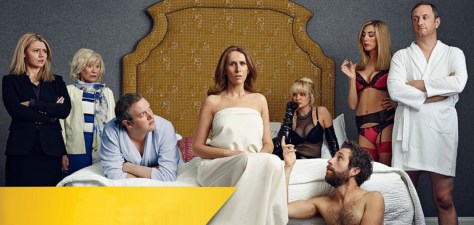
One of Brooks’ most prolific roles was that of Svetlana in the movie Do Not Disturb. The film tells the story of Anna and John, who book into the Stratford-on-Avon hotel where they spent their honeymoon ten years earlier – separately, following Anna’s extra-marital fling, but they had paid for the room anyway. They decide to give their marriage another go but then Anna sees young Luke, the hungover best man from the previous night’s stag party, who mistakes her for a prostitute and whom she rings receptionist Sheila to get rid of. In the meantime, two real escorts arrive and assume that porter Neil is their client, to Sheila’s annoyance. Confusion arises when a blindfold Anna has sex with Luke by mistake and Neil ejects her husband John, believing him to be Luke. By the time Anna’s mother turns up there is much explaining to do.
Sian Gibson, Milanka Brooks and Kierston Wareing in Do Not Disturb, photo courtesy of UKTV
“Do Not Disturb is a really fantastic romp made for audiences with a penchant for farce. Even when reading the script, I could feel the pace and energy of the film. It doesn’t shy away from being a purely energetic, entertaining spoof, full of thrills and turns that leave the audience feeling fully satiated by the end,” said Brooks.
The character of Svetlana is a very intimidating, confident and forceful escort from Russia. As one of the two escorts, Brooks’ character is hired to entertain the groom-to-be on his stag-do in a hotel in Stratford-Upon-Avon, a town that is definitely not known for this kind of behaviour. They storm in to the hotel and demand to be taken to his room. They end up entering the wrong hotel room and seducing the wrong man, which is the catalyst for the train of events to follow.
Svetlana came in to destroy what was already a fairly shattered environment, in Brooks’ opinion. The humor in the story came from a degenerate group of people, all finding themselves in the wrong place at the wrong time. Svetlana highlighted this by her stature, attitude and insolence of the whole situation.
“The men are quite paradoxically the scared characters in the story, and the women end up incredibly domineering and commanding. Sometimes I feel like this came a little too naturally,” Brooks joked.
Catherine Tate, Miles Jupp, Steve Edge, Kierston Wareing, Dylan Edwards, Penny Ryder, and Milanka Brooks in Do Not Disturb, photo courtesy of UKTV
Do Not Disturb also stars British icon Catherine Tate, which was the initial reason Brooks wanted to be a part of it. Working alongside such talented comedians inspired Brooks, saying the TV movie really felt like an ensemble piece from the beginning. Rehearsals consisted of a lot of improvisation and devising around the script. Writer and Executive Producer Aschlin Ditta was always open to the cast’s ideas and any amendments that complimented the story and supported the characters. This allowed the cast to really become comfortable with each other and their characters, playing off everyone’s comedic timing and creating laugh-out-loud funny scenes.
“Milanka is a very fine actress and comedienne and someone I would work with again without a second thought. As a performer she is brilliant and skilful, with a rare eye for both comedy and drama, and as a professional she is faultless. Milanka is incredibly thorough both in her preparation and execution, an exceptional talent, and while she undoubtedly delivers in performance she is also a team player who is a joy to be around. Her energy, talent, insight and humour make her an actress to grace any production,” said Aishlin Ditta, Writer and Executive Producer of Do Not Disturb.
A lot of Brooks’ performance was based on her on-screen relationship with fellow actress Kierston Wareing. The chemistry between the two, playing escorts, had to be comedic and believable to bring audiences in, so the two spent a lot of time getting to know each other outside of rehearsals and filming. The result was perfect timing between the two characters.
Working alongside such a stellar cast and crew, including Wareing, Ditta, and Tate is why Brooks enjoyed creating Do Not Disturb as much as she did. With such comedic energy all around, it was easy to see the humor of the story on set.
“We ended up shooting in this beautiful country house a little outside of London. If any neighbors were watching they would have likely called the police given the absurd nature of a lot of people running in and out of rooms half dressed, but fortunately for us we were in the middle of nowhere,” she concluded.
Korea’s Ran Ro remembers the first time she fell in love with the idea of filmmaking. It was when watching the iconic French film Amelie. As she took in the film, it was a different experience than simply watching a movie. In one scene in particular, the narrator lists out what Amelie, the protagonist, likes, as audiences see the visuals depicted by the narration. That moment sparked a fire inside Ro. She took in how the “mundane” aspects of a film could easily be ignored by the masses but can be captured so beautifully and significantly. It was then when Ro decided she wanted to be an editor. She loved the power that such small decisions could have over the telling of powerful stories, and she was ready to become a master of the artform.
Now, Ro is known for doing just what she admired when watching Amelie. Her attention to detail creates visual masterpieces, whether she be working on a minute long commercial or a feature film. Her work with brands such as Tastemade, BackBeatRags, and Elite Model Management captivated worldwide audiences, and when she embarked on her most personal project ever, the film In Between, she once again impressed.
“The underlying concept of the project was developed when I stumbled across a memorial park in Honolulu. I was supposedly at a place that represents the end of life, but all there was in front of me was empty scenery. Observing the sunlight landing on the unmoving landscape, I couldn’t help but feel oddly at peace. In comparison, I began to think about the emotional turbulence that one goes through in life. The script was written shortly after this experience, as a means of unravelling the curiosity that arose that day at the memorial park. My childhood experience of being raised by my grandmother became a central plot line of the main character of the film,” said Ro.
In Between tells the story of Tina, who in the middle of a suicide attempt on New Year’s Eve discovers a mysterious path inside her duvet cover, leading her to an ethereal space filled with an infinite number of lights. Not only did Ro edit the film, but she also wrote, directed, and produced it.
After premiering last year, the film saw immense success at several prestigious international film festivals. It won the Award of Excellence at Best Shorts Competition and was a semifinalist at the Los Angeles CineFest, the Los Angeles Independent Film Festival Awards, and the Hollywood Screenings Film Festival, to name a few.
“It is rewarding and also very encouraging to have seen the audience resonate with a story that involved my personal experience. It motivates me to create stories that are meaningful and that challenge me to be more curious and observant about things around me and about human emotions,” said Ro.
Music played a large part in the film, from the writing process all the way to editing. One of the music scores titled “Reoccurence” greatly inspired Ro, and she played it repeatedly throughout the production, allowing it to stimulate the rest of the cast and crew.
“During rehearsals with actors, I played the same music to match the pace of their dialogue and the rhythm of the music, knowing that I would be using that score when editing. Once the actors were tuned into the music, the whole scene fit into it – the very last dialogue ended with the last beat of the music,” she described.
Filming went very smoothly, which made the editing process almost effortless for Ro. She knew the exact pace and tone that she wanted for each scene after being involved in the writing and directing processes.
The film uses otherworldly places to visually portray metaphors on time and space. In one scene, this is exemplified when the protagonist crawls through an endless path underneath a duvet cover when time freezes during the New Year’s countdowns. She encounters a little girl who guides her to another otherworldly place, “The Gap”, a realm in between life and death where the souls reside.
The Gap was instrumental to the film, and it was conceptualized when Ro imagined an unperceivable place that exists in between every second. She thought of it as a place where all past moments exist. The main character in the film, who keeps her dear memories of her grandmother, reunites with a younger self of the grandmother in The Gap. This was Ro’s favorite scene in the entire film, and the one she felt the deepest connection with.
“I enjoyed seeing my vision come to life every step of the way from writing, casting to production. It was surreal but also very exciting to see what I envisioned actually happen right in front of me. I felt very grateful that the crew that I was working with truly understood my vision and used their talent to materialize it,” she concluded.
Be sure to watch the beauty of Ro’s work on In Between here.
Hailing from Naples, Italy, Gianlorenzo Albertini was drawn to film at a young age. At the time, he believed everything that was happening in the movies actually occurred at that moment in time, somewhere in the world. As he grew, he realized that they were in fact stories, but the magic of movies was not lost on him. He daydreamed about all sorts of futures, from being a professional athlete, a rock star, an army pilot, a poet, a doctor, a detective, the pope. Although he knew that these were not all reasonable options, he knew the one path he could take where everything was possible: filmmaking.
“Films combine all the best things that I love in life: music, photography, writing, painting with light, portraying different characters, and any art,” he said.
As a celebrated director and producer, Albertini is currently releasing his most recent film, The Ribbon on the Kite, to worldwide audiences. The film follows a woman who, after discovering a homeless man living on the riverbank, tries to help him against his wishes. As you watch, you begin to see there is a greater history behind the homeless man than initially seems. Albertini, who also co-wrote the film, wanted to explore the emotional effects of war on individuals and draw attention to the hardships and the devastating effects of physical and psychological trauma that vets who have severe PTSD and are forced to endure due to governmental neglect. He wanted to place emphasis on veterans’ life after war upon, on the grief and horror of the battlefield they are forced to endure, oftentimes keeping the struggle to themselves, and on their difficult transition adjusting to civilian life. The film shows how frequently veterans end up being deliberately homeless because of their psychological inability to cope with the mental abuse inflicted on them, ultimately choosing to suffer in isolation.
As the writer and director of the film, Albertini did not have the experience and the full understanding of the plight of war. However, during his childhood, he often heard the stories told by his grandparents, about the horrors and atrocities during WWII they lived in their youth; they were his first understanding of the harsh and frightening conditions of war. He knew that, as a filmmaker, it was his responsibility to show the world just what so many veterans go through as realistically and explicitly possible.
The Ribbon on the Kite is making its way in the festival circuit. It’s been screened at and won several awards at various festivals around the world such as the Richmond International Film Festival, Maryland International Film Festival, Kansas City FilmFest, Garden State Film Festival, Soma Film festival, Oniros Film Awards, L.A. Shorts Awards, New Filmmakers New York, Hollywood International Moving Pictures Film Festival, Los angeles Independent Film festival Awards, Los Angeles CineFest, St. Lawrence International Film Festival, European Independent Film Award, and Largo Film Awards. After the festival run, Albertini is planning on distributing the film through VOD platforms such as Amazon and Fandor.
During the research and writing phase, Albertini made sure to research exactly what life is like for war veterans. He talked with friends of his, who gave the director vast insight regarding their physical and psychological traumas and what might ultimately drive them to isolation. This created an even deeper drive for Albertini, who had the chance to perceive and recognize their struggles and eventually apply them to the film.
The authenticity of the script was mostly achieved on set during filming, due to the fact that the script barely contains any dialogue. Therefore, all the real emotional traits are not said but instead shown by the work of the actors. This also made Albertini’s work as the director that much more vital, as he had to choose just how to visually convey the authenticity and purity of the story in every shot.
While filming, one of the most significant challenges was working with natural lighting and the unpredictable changes in weather; the natural light of course would eventually fade away, meaning shooting would stop for the day, even if Albertini and his team were in the middle of a scene. For the last scene in the film, they shot at sunset during “magic hour”, which may be short, and took more effort to finalize, but was incredibly worth it.
They shot the film along a riverbank in Los Angeles. The location was beautiful but is known for flooding. During production, the water level began to rise. The crew quickly began packing up their things, but the shot ended up being quite beautiful.
“The equipment almost got swept away by the strong current – that was quite an adventure, but we filmed the flooding of the river and that ultimately ended up in the movie,” he concluded.
Be sure to check out The Ribbon on the Kite. In the meantime, however, you can watch the trailer here.
Top photo from left to right: Actress Julia Yusupova, Actor Greg Hill, and Director Gianlorenzo Albertini
International Entertainment, and the Talents that Leave us Buzzing….








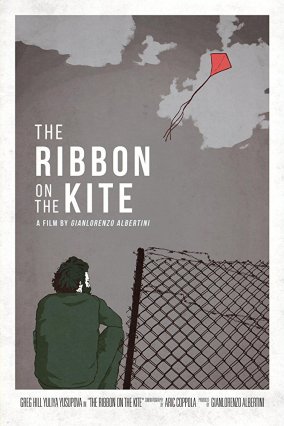 The Ribbon on the Kite is making its way in the festival circuit. It’s been screened at and won several awards at various festivals around the world such as the Richmond International Film Festival, Maryland International Film Festival, Kansas City FilmFest, Garden State Film Festival, Soma Film festival, Oniros Film Awards, L.A. Shorts Awards, New Filmmakers New York, Hollywood International Moving Pictures Film Festival, Los angeles Independent Film festival Awards, Los Angeles CineFest, St. Lawrence International Film Festival, European Independent Film Award, and Largo Film Awards. After the festival run, Albertini is planning on distributing the film through VOD platforms such as Amazon and Fandor.
 internationalfilmreview