
Growing up in Berlin and Munich, Germany, John Wate found a passion in Manga comics at a young age. He was intrigued by the style of the Japanese graphic novels and began drawing his own at just ten years of age. Even then he knew he was meant to tell stories, but as he began transitioning away from drawing and into filmmaking, his innate drive to be a storyteller never wavered.
Now, Wate is a renowned director in his home country and abroad. Two of his past films, The Sword of the Samurai and The Samurai Bow, made it for 4 years into the top twenty of National Geographic Channel’s worldwide most popular documentaries. He is known for his unwavering dedication to his craft, and his work on projects like Epic Warrior Women, Samurai Headhunters, and Samurai Warrior Queens, projects that reminded him just why he got into filmmaking in the first place.
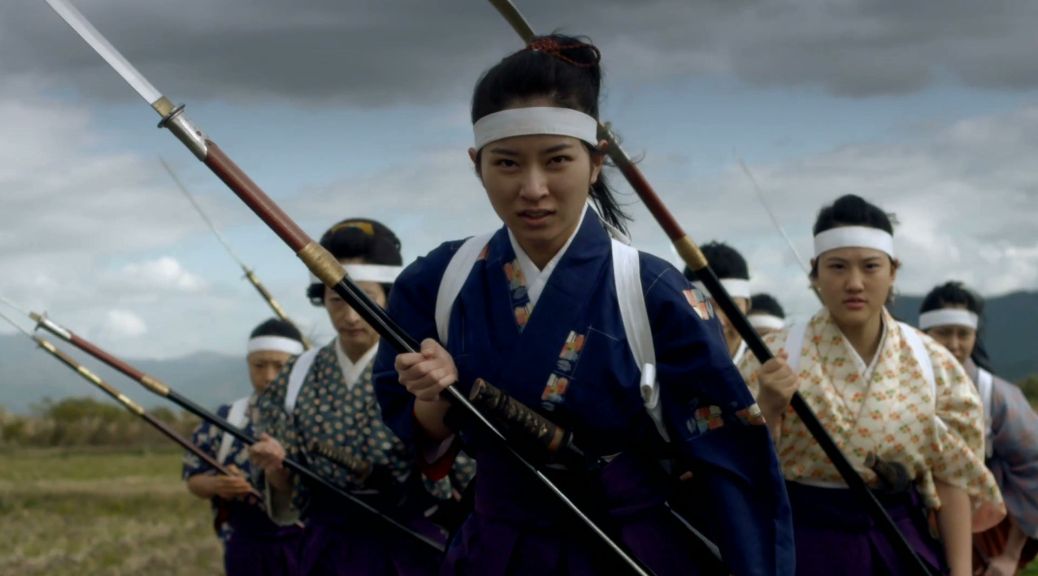
“One of the first manga stories I ever wrote when I was a teenager was that of a female samurai kicking ass. When I was sitting in the edit room watching Samurai Warrior Queens chasing inslow motion across a bridge towards the enemy with their blades drawn, I felt as though I was having my teenage wishes fulfilled,” said Wate.
The drama documentary Samurai Warrior Queens tells the real-life story of Samurai woman Takeko Nakano who in 1868 fights for her clans’ independence in a final battle that marks the end of the Samurai era. The legends of the Samurai seem to be an all-male affair; but contrary to popular belief, Samurai women stood their ground in countless battles and castle sieges. Takeko Nakano fights for her clans’ independence in a final battle that marks the end of the Samurai era.
“It is almost unknown that female samurai existed, let alone that they stood on the battlefield. Recent DNA from battlefields found that 30 percent of the sampled bones belonged to female fighters. However, for proud male samurai it was regarded as a shame if you had to rely on women to win your battle, so their presence was hardly ever recorded. The film can give them their place in history,” said Wate. “Takeko’s life provided a great arc and was pretty much a metaphor for the end of the samurai era as a whole. The role of female heroes has not received much attention until recent years, especially in Japan, and the story sheds a very different light on what in the West is often perceived as the general submissive and weak, moon gazing Japanese female persona.”
Wate enjoys strong female characters and had already come across different accounts of strong female samurai and wanted to show what their life was like. Their education, their ability to stand up against the more famous samurai in battle, it was all an intriguing topic that Wate wanted to really dig into.
Extensive background research of local folk tales and chronicles eventually led him to choose the life story of Takeko Nakano. She grew up in Aizu, a proud province in northern Japan where education, etiquette and martial arts were held in high esteem. Her father was a commander in a clan that understood itself as the protector of the Shogun. When the Shogun was threatened by other clans, supplied by Western firepower, the Aizu fought their last battles that eventually ended in the end of the samurai era. Takeko was very talented with the Naginata, a polearm or a samurai blade with a meter-long grip at the end. She was an instructor and took it on herself to recruit other female combatants to charge against the enemy but was eventually killed during the assault by a bullet.
To understand how she lived, how she might have seen her daily duties, why she refused to marry and fight instead, Wate traveled to her home province, went to research local archives, see their castle defenses, and really explore what her life would have been like. He then developed the script, cast the film, and got to shooting.
“I loved showing the world of the samurai, their attitude, ideals of honor and courage from a female perspective. In some ways they had to endure more than their male counterparts. Not only because they were often the pawns in the marriage game, but also because they had to fight and stand in for the actions of their husbands, their clan and the Shogun. I also found it fascinating and horrifying at the same time how they were taught to pursue grace even in death. Female samurai carried a dagger with them at all times once they reached womanhood to defend their honor. If they were in danger to be captured and raped, they would often have to commit suicide and were taught already as teenagers to tie their knees together with their belts, so that their legs would still look graceful after their death,” he described.
The film was distributed worldwide and nominated on the short list for the IMPACT Award, losing to the Academy-Award winning film Lincoln. It aired in the United States on the Smithsonian Network in 2015 where it still plays regularly, and is available to stream currently on various platforms, including Amazon and Hulu.
By Sean Desouza


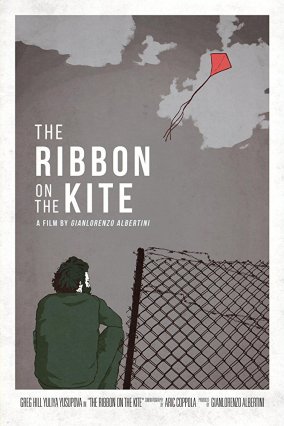 The Ribbon on the Kite is making its way in the festival circuit. It’s been screened at and won several awards at various festivals around the world such as the Richmond International Film Festival, Maryland International Film Festival, Kansas City FilmFest, Garden State Film Festival, Soma Film festival, Oniros Film Awards, L.A. Shorts Awards, New Filmmakers New York, Hollywood International Moving Pictures Film Festival, Los angeles Independent Film festival Awards, Los Angeles CineFest, St. Lawrence International Film Festival, European Independent Film Award, and Largo Film Awards. After the festival run, Albertini is planning on distributing the film through VOD platforms such as Amazon and Fandor.
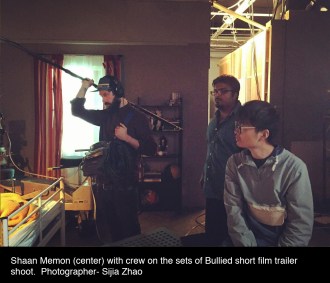
 Shaan Memon believes a film is made three times. At first, it is the writers; they are responsible for visualizing the tale in their mind and creating the characters, personalities and setting. Then comes the actual filming process, which is at the hands of the directors; they see the script and turn words into worlds that will transport audiences from their seats to another reality. Finally, the editors have the responsibility to turn shots into a story; they put everything together in a way that flatters the actors, compliments the set, and captivates audiences. As a true film lover, when Shaan was choosing which path to take in filmmaking, these roles all spoke to him, and he decided to pursue all three. As a celebrated writer, director, and editor, Shaan is showing not just his home country of India, but also the rest of the world, what he is capable of.
 Last year, Campbell consulted Shaan while writing his film Bullied, a story of a gay teenage boy who is being bullied by a gang of older boys in his high-school and living with his single mother. He decides to take revenge by killing the leader of the gang. On the verge of executing his plan, he remembers his mother’s words of wisdom.
 “I wanted to convey my thoughts and tell these stories to the viewers as truthfully as possible, as I had imagined them in my mind. I never start a project until and unless I want to convey something through that. This script is near to my heart as I had struggled a lot for several years. I had a lot to show and say about my experience. I did a lot of research, writing and rewriting to create a powerful script with a good message. And I hope once this film is made, it will help a lot of people,” said Shaan.


 internationalfilmreview