
Category Archives: Reviews, Interviews & Features!

FROM MERMAIDS TO MENTAL HEALTH, ACTRESS BRIE KRISTIANSEN DOES IT ALL IN TV, FILM, AND NEW MEDIA

Article Written By: Ashley Bower

It’s not always easy to keep up with an industry that is constantly evolving, but when it comes to navigating the busy world of entertainment, working actress Brie Kristiansen is a pro.

“It all started with a musical in Iceland when I was a teenager,” stated Kristiansen, and right from the start, she was propelled into learning how to adapt to the unpredictable curves that life – and the film and television industry – are known for. “The musical was Bugsy Malone and hundreds of people auditioned. In the end, I was cast in the leading role of “Dandy Dan,” which was changed into a female role since they thought I fit very well for the villainous character. Funny story, at the dress rehearsal I fell down and broke my leg and had to do all of the remaining shows in a wheelchair. It actually turned out great in the end, as the wheelchair seemed to add almost another level of authority for this villain.” Ever since this debut, Kristiansen’s career has skyrocketed.

While Kristiansen has numerous projects that span film, television, and new media under her belt, she’s most known for her work on It Takes a Killer, Delirium: What’s Your Worst Fear?, Corrupt Crimes, and her latest role as a series regular on season two of Life as Mermaid.

With over 25 million views and more than 155k subscribers, it’s safe to say that the hit YouTube Series Life as a Mermaid has a passionately committed following. The story follows two mermaid sisters and their journey on land as they work their way around obstacles while adjusting to life with the humans. Kristiansen plays Astrid, a ruthless European villain with an icy demeanor, whose mission is to hunt down the mermaids with the intention of selling them for billions.
life as a mermaid
Brie Kristiansen as “Astrid” in Life as a Mermaid

“From the start of when season two started airing, we received such fantastic reactions from people all over the world. We started getting asked for autographs and receiving fan mail which has all been an amazing experience. We truly have the best fans, and they are what made all the hard work worth it in the end,” Kristiansen reminisced.

Though Life as a Mermaid airs on YouTube, one of the entertainment industry’s newer media platforms to publish episodic content on, the production process was exactly the same as any other television show. The only difference: the website makes its content accessible to anyone anywhere in the world.

Starring opposite Kristiansen in the series is Marcella Di Pasquale, who is also credited as casting director and one of the producers of the show.

“Brie is the sweetest person, so it is so interesting to see her play such a brilliantly evil villain,” explained Di Pasquale. “To be able to switch into such a strong character within a matter of seconds just really goes to show Brie’s true talents and acting skills. She is also great at stage combat and I loved watching her film her fight scenes on the show. Brie is very charismatic and naturally talented, which makes her a great addition to any set, and us on the Life as a Mermaid team always love having her around.”

In addition to villainous roles, it’s apparent that Kristiansen has a gift for securing and excelling in roles that encompass very serious, emotional qualities, such as the roles she played in It Takes a Killer, Delirium: What’s Your Worst Fear?, and Corrupt Crimes. Elaborating on her love of playing and process of preparing for such kind of a role, Kristiansen explained, “I always think it’s really funny since I’m actually quite a goofy person, but I guess I look very serious. However, I love doing these roles, especially when there’s an added challenge or something I haven’t done before.” An example of such is Kristiansen’s work she did on Delirium: What’s Your Worst Fear?” where she plays the character of Ava, a teenager with schizophrenia.

Prior to being cast as Ava, Kristiansen wasn’t familiar with the mental disorder outside of what she had seen in other film and television shows. Therefore, it was a role that require extensive research – something which was already a very major component of Kristiansen’s character preparation process. “I try to get closer to my character’s mindset and who they are. I’m a total nerd when it comes to this and will dive into research for significant amounts of time until I feel that I have managed a full understanding of the character, and then I go into the next steps of my preparation,” Kristiansen said.  “With Ava, I did so much research, probably more than I’d ever done before. I thought it was vital for the authenticity of my character to absolutely dive into research. I went to libraries, read books, and even spoke to people with experience in the field.”

Currently, Delirium: What’s Your Worst Fear? is being screened at multiple film festivals around the world.

delirium.png
Brie Kristiansen as “Ava” in Delirium: What’s Your Worst Fear?

Coincidentally, on Kristiansen’s episode of Corrupt Crimes titled Vulture Feeder Fiend, the topic of schizophrenia arose yet again for the actress, though this time the character with the disorder was not her own. Taking place in California in the 1970’s, the storyline of the episode follows a schizophrenic serial killer named Herbert who murders a homeless man while in his altered state of mind. Kristiansen plays a hippie named Mary, who attempts to hitchhike her way to an event only to suffer a similar fate after she’s given a ride by Herbert himself.

Kristiansen not only loves the roles she’s been given the opportunity to play but is also passionate about the impact they make on her viewers, along with the awareness they bring to mental illness in film and television. “I’m a very open and honest person who comes from a very liberal society. The way I was raised is that if there’s a problem, you speak about it, and that you should never judge others for their feelings or behaviors because you don’t know what they’ve been through or are going through. Mental illness is a very serious issue, and the shame and stigma surrounding these issues need to stop. We need to be able to speak about our feelings, experiences, and illnesses openly in order to help or even fix them. There are so many tools one can learn from speaking to a professional, or by simply opening up to a friend. Love conquers all,” she said.

While some roles help to expand the knowledge and understanding of one’s mind, others do the same for the heart. This is the case for one of Kristiansen’s earlier television series: It Takes a Killer. “In my role as Charlotte, I played an emotionally unstable teenager who goes through a horrible tragedy,” Kristiansen discussed, revealing her journey of portraying the sixteen-year-old character left parentless after discovering her father murdered her mother.  “Charlotte is extremely vulnerable and has moments where she has emotional breakdowns. For me personally, this role was a great opportunity to showcase my talents with vulnerability and fully diving into the character. It was a great experience, and also helped me become more vulnerable and open as a person.”

There’s no question that Kristiansen’s vast experience and success as an actress has helped her grow not only as an artist within the film and television industry, but also as a person. There’s no doubt that this is something she’ll continue to do throughout her acting career in the years to come. Regarding this idea of both personal and career evolution, Kristiansen stated, “I’m incredibly lucky to be a working actress in different parts of the world, and on a variety of project types portraying completely diverse characters. Each time I take on a new role there’s something new I learn about people from the character I’m portraying. As a people person, this job will never become boring. The challenges, in drama, in comedy – all of it – just makes you really grow as an individual and you learn so much about yourself. I’m all about figuring out your dream and making it happen, and I find it to be one of the perks that I am able to grow both personally and professionally while living mine.”

17191018_10155909301804942_8971055201274809684_n.jpg
Brie Kristiansen walking the red carpet

For more information on Brie Kristiansen, please visit:

www.imdb.me/briekristiansen

https://www.briekristiansen.com/

Ben Prendergast creates dystopian world in ‘Post Apocalyptic Man’

Ben 6
Ben Prendergast

It seems like a long time ago that Ben Prendergast was looking to be a software entrepreneur. The Australian native always had a passion for acting, but the notion of pursuing such a career in Australia is so uncommon, he never felt like it was truly a possibility. Having dreamed of being an actor since he was only a child, it always seemed like just that: a dream. However, when embarking on his technology career, Prendergast decided that he had to pursue his passion, and one day, after landing a role on an NBC television pilot, he decided to turn his dream into a reality. Since that time, he has never looked back, crafting an extraordinary career.

Now, Prendergast is an industry leader in Australia, and seeks to make a difference through his work. With Prendergast as the lead, The Marker aimed to bring awareness to the socio-economic issues in Australia and was funded by the Australian Competition and Consumer Commission. Similarly, his film Punch Drunk shed light on the marginalization of the elderly and mentally unwell. Sometimes, the actor’s love of telling stories is what drives him, which was the case with the feature Predestination. However, no matter what he is working on, his innate talent and dedication to his craft impress audiences, critics, and colleagues alike.

“I’ve worked with Ben on a number of projects. Most recently, we worked on Post Apocalyptic Man. As a writer, usually you’re not working directly with actors, but in the case of this project it became really valuable. Ben’s ability to cold read a scene and bring it to life was a revelation, and something we relied on in the early development right through to final script stage. Ben and I would stay up way too late discussing how we could bring more conflict, more drama, more humanity to this piece and I think it really shows in the final script. But then I was also in the rarified air of watching Ben work on set, and even then, he’s constantly drilling for more in the text, and during shooting I saw him make bolder and more compelling choices. Some of them made it into the final film, some didn’t, but I just remember the feeling on set was electric with every take,” said Daniel Walsh, Screenwriter. “I think Ben just has that thing that you can’t put your finger on. You roll the camera on him and you’re transfixed even before he’s said anything. You think to yourself, “What’s he going to do?” and he always surprises. He’s curious, in a way that most actors are, but he’s curious as the character, which is something else completely. I’m not at all surprised that he’s had the success that he’s had.”

Post Apocalyptic Man tells the story of humanity’s need for survival in a world where they are blind to their own destructive tendencies. The human population is in the grips of decline after genetic modification turns the female population sterile. When it is discovered that a child may carry a gene that is immune to the disease, forces of good and evil converge on a small Australian outback community to find the child and gain control over humanity. Cane Storm, the leader of the evil tyranny, sends his number one henchman Baker, played by Prendergast, to infiltrate the Renegades led by anti-hero Shade. Leathergirl escapes with her brother, who seemingly carries the gene, but is pursued by Baker. Throughout the film, audiences discover that Baker is a genetically engineered mercenary who will show no mercy and is hell bent on finding Shade and the boy who carries the cure.

“This film deals with humanity’s deterioration, something that is on all of our minds, but depicts it with food shortage and the notion of a barren human population. We haven’t been a declining population since World War I, and I think current generations aren’t really aware of that or prepared. This film gave a real sense of a species in decline, and the desperation and hope that springs from that. For me, it’s a fantastic analogy for how we currently look at our food waste, energy production, and government systems,” said Prendergast.

When Walsh and Director Nathan Phillips were looking for a clean-cut super soldier type of actor, they asked Prendergast to audition. Not only was he in incredible shape and fresh off an intensive training program, Prendergast was well-known for his tremendous talent and versatility. After auditioning for the part, he was offered the role immediately.

“From the very beginning it was evident that Ben was a thoughtful and dedicated artist, and he had key elements of his character down at a very early stage. He goes deep within his characters, finding the most truthful elements, but also playing with the duality that most interesting characters possess. We had an absolute blast on and off camera and I now consider him a really close friend. Ben gives over to the madness of filmmaking. He wants to find the gait, the voice, the truth of the human condition as it pertains to his character, but then he goes further than that and wants every other department to function too. He looks after camera department, makeup, wardrobe, etc. As a director, I never have to worry that we’re not going to get the shot,” said Nathan Phillips, Director.

Prendergast was aware, when preparing for the film, that he was not only playing a villain, but also a genetically superior being. Therefore, he wanted to look at the misogynistic and xenophobic nature of historical characters to get into the mindset of Baker. He took particular interest in looking at Nazi-Germany and the horrible beliefs in that time. Physically, he thought he should remain strong, but his vocal quality needed to be gravely and distinctive. Once he had all this figured out, he put on his costume of a trench coat and gloves, and instantly became the character in front of the camera.

“I always believe that even when there are nefarious or even psychopathic characters, they always have righteous reasons for their actions. Baker believes he deserves his place in the future utopia of humanity, and that given his clear genetic advantage he is doing humanity a service by cleansing the world of those beneath him. His narcissism has bred a psychopathic quality, and therefore he can operate in any way that Cane Storm, the leader of empire, needs him to. He’ll take any life and use any means necessary to get what he wants,” said Prendergast. “Strangely, this creates an empathy that an audience can follow, we love our bad guys because they have a mastery over their destiny, they know what they want and how to get it. Don’t we all wish for that?”

Baker was essential to the story of Post Apocalyptic Man, and Prendergast to its success. The film wouldn’t have worked without the conflict that Baker carried. The heroes and antiheroes of the film were struggling for survival in a world without food or the ability to procreate. Baker’s character introduced a final hurdle for the protagonists to take action against the empire, and audiences see that although at first they are terrorized, they eventually find the spark to create the resistance.

“It was such a fulfilling project. We were on a really tight shooting schedule but we made it work, producing something completely unique in the Australian film canon. Now considered a cult film, Post Apocalyptic Man is my favorite punk-film outing ever, and I made a lot of great friends in the process,” said Prendergast.

After premiering at St Kilda Film Festival, Post Apocalyptic Man played at independent theatres in Australia, New Zealand, and the United States. Afterwards, it was distributed digitally and still sees success, eight years after its premiere. If you have the opportunity, be sure to watch the film and see Prendergast terrify and excite audiences.


By Sean Desouza

Editor Xiaodan Yang creates visual masterpiece with ‘It’s Not Just About a Film’

Xiaodan Yang knows being a film editor isn’t always the most glamorous job in the industry. When she goes to a film premiere, she will see the cast and crew and feel like she knows them so well after seeing their faces on her screen for the past few months. However, it is often the premiere where they first meet her. Editing isn’t a front-and-centre job, and often involves many isolated hours going through the same five seconds of footage trying to decide how best to use it. That being said, she absolutely loves what she does.

“I enjoy every moment during editing. I’m glad to be a participant and witness of the whole journey. Editing is my tool to communicate with audiences. It is how I put my emotions into the story. When people connect with the film, that’s my favorite moment, and I know I’ve done my job,” she said.

Born and raised in China, Yang has now taken the world by storm. Her work on films such as Witness and Sixteen received international recognition, and audiences can expect the same from her upcoming films Kayla and Summer Orange, which makes its world premiere at the renowned Cannes Film Festival Short Film Corner in May. All those she collaborates with not only appreciate what she is capable of, they admire it.

“Xiaodan is a very talented editor. We know each other because of film Snatching Sword (a.k.a Wang Shan). Snatching Sword is an action film, and over half of the scenes are action scenes. As we all know, editing action scenes is like a big trial for an editor. When Xiaodan delivered her first cut, I saw her talents instantaneously. She is sensitive to the pace of the film and knows how to use sound design to tell a story. I think that’s really important for a film editor. What’s more, she has a very collaborative attitude and the ability of responding promptly, which make her an excellent team player. My other crew members and I all enjoy working with her,” said Rachel Zhou, Director and Writer.

One of Yang’s most impressive works was her film It’s Not Just About a Film. After spending the beginning of 2017 editing the project, it premiered on May 13th, and then made its way to several film festivals. Yang herself was awarded with Best Editing at the Top Shorts Film Festival and the Award of Merit in Editing at the Accolade Global Film Festival. Needless to say, the film could never have seen the success that it did without her.

“It still feels so exciting, knowing my work was recognized on a global scale. Winning those two awards, it means so much to me. To be honest, this is not that kind of regular ‘Hollywood film’. The way we decided to tell the story breaks the routine. I’m so glad there are people that can understand our intention and like it,” she said.

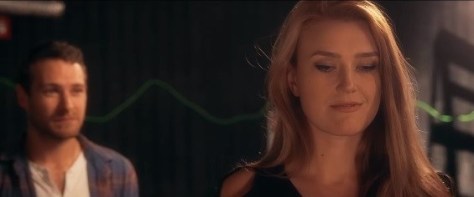
It’s Not Just About a Film tells the story of Max, an actor. To get the lead of a film, Max seduces and has an affair with Cameron, the lead actress and wife of the film’s investor Fabrizio. However, as the shooting goes on, Max realizes that Fabrizio is a violent person with a gangster background. Max wants to end the affair but finds himself unable to break away from it. It is a pretty stylish story, ironic and funny, but also extremely suspenseful.

Working on It’s Not Just About a Film was a very creative process. The director and I had reached a consensus that we had to break the rules. It’s a wild story that needs wild ways to edit. That’s actually not an easy thing to do, but I was ready to try. It was like a brand-new experience for me. When I was working in the editing suite with Chen, the Director, he always encouraged me to try whatever felt good. I could forget about any editing rules in my mind, and it made for an amazing experience. I still feel so lucky that I got to be part of it. All the cast and crew were amazing,” said Yang.

Knowing he wanted Yang on board right away, the director sent her the script. At the time, it was not even completed. The first time she read the script, the story impressed the editor a lot. It was completely different from the films she had edited previously, and Yang is always looking for something new and unique challenges to get her creative juices flowing.

The film follows three different timelines all happening at the same time and includes several dream sequences. These three timelines revolve around the leading character in the story, reality, his dream and the film within the film. This makes for entertaining watching, but immensely challenging editing. With so much going on, Yang knew she had to put the scenes together in not just a creative way, but also one that was logical for audiences not to get lost and confused in the different storylines. She spent a good deal of time on the first cut. Almost every scene in the film had a different location, or even different time and space. Therefore, Yang decided to use different aspect ratios to present different timelines. However, after a few cuts, she still had the concern as to whether or not the audience could understand everything. She then tried to simplify the story by losing minor details, which made the film more relaxed and funny. Yang’s understanding of storytelling proved vital.

“Since the structure of this story was so complicated, editing played an even more important role. I kept reminding myself about one thing, “What am I trying to convey to the audience here?”. Once I was sure about the answer, every decision I made should serve this purpose. Otherwise, it’s easy to get off track under this situation. That’s why my work is particularly essential for this project. I had the responsibility to control the direction of the film, and at the same time to make it interesting,” Yang described.

In addition to editor, Yang took on the role of post-production coordinator for the film. As an editor, she cares about the sound and color correction a lot, and she always sticks to the end until everything is done, making her the perfect fit for the position. She also likes to give her input to the sound designer and colorist, knowing what would work best while editing.

Undoubtedly, Yang’s contributions to It’s Not Just About a Film made the film what it is today. Her commitment to the project was evident with every decision she made. However, the awards and accolades are not important to this editor, who remains humble. For Yang, she just focuses on the story she is telling.

“As the director said, “It’s a story about dream and subjective perception of the world.” And there is always a saying that “dream is the reflection of reality”. I don’t know if there’s scientific evidence to prove it, but it makes sense to me. Based on this concept, we developed this wild, dramatic, even absurd story. For me, it’s fantastic. It stimulated my full potential as an editor,” she concluded.

Be sure to check out Yang’s outstanding work in It’s Not Just About a Film.


By Sean Desouza

Producer Kegan Sant talks award-winning film ‘The Bear’

Born in Trinidad and Tobago, Kegan Sant moved to Canada at just six months old. Growing up just outside of Toronto, Sant was constantly drawn to filmmaking. He has worked in varying capacities on set since he was only a teenager and enjoys shooting photography to keep the creative juices flowing. While trying out the many roles that a film set offers, there was one that spoke to him, and he ultimately decided there was only one option: he was meant to be a producer.

“As I worked through the different roles on set, I realized that my skill set led more heavily towards the management and overall execution of a project. I’m a big believer in knowing one’s strengths and weaknesses and always playing to your strengths; in this case, it set me down a path of working in production and ultimately producing. Being a professional comes with the job description and something I pride myself in – running sets with integrity and calm amidst the chaos,” said Sant.

Throughout his esteemed career, Sant has worked mostly in the commercial sector primarily dealing with advertising agencies to make commercials for brands. This includes large companies such as WestJet, Woods, the CFL, and TELUS. Each and every commercial he has taken on has received national recognition in some capacity, exemplifying just what makes Sant so formidable. However, his talents are not just limited to commercials, and his track record with films is no different.

In 2015, Sant began working on The Bear. Isolated, exhausted, alone: the dramatic thriller follows three miners in a remote Yukon mining camp in Canada’s far north who swap tall tales that lead to a violent showdown with the camp’s bitter owner. Part story of man in the wilderness, part neo-noir, The Bear takes the audience into the Canadian ‘heart of darkness’.

“I think this was an important Canadian story to tell and describes an environment that not many people think about but is a reality for many miners. I liked it because it was loosely based off someone the director had met working on a documentary many years ago and it allowed for different departments to flex their creative muscles. Being able to cast the characters the director had envisioned made the story come to life that much more for me,” said Sant.

After premiering at the 2015 Fort McMurray International Film Festival, where it won for ‘Best Direction’ and ‘Best Cinematography’, The Bear went on to several other prestigious film festivals around the world. It was also an Official Selection at the Yellowknife International Film Festival, Toronto International Short Film Festival, Edinburgh Short Film Festival, Atlantic Film Festival and Austin Short Film Fest. In 2017, it was then acquired by an online VOD distributor.

“I’m proud to know that the film has been so successful and screened around the world. It means that all the hard work myself and the crew put in, was worth it. It impresses me when I think about how many films are made all over the world and what the competition is like in festival screeners these days,” said Sant.

Sant was the team’s first choice for the producer of their film. Long Format Director, Warren Sonoda, knew Sant’s reputation for being able to assemble great crews and bring a high level of production value to the project. When the Director of the film, Peter Findlay talked with Sant about the project’s merits and goals, he felt at ease that Sant was the one who could make his first narrative project come to life.

Although he works on commercials more frequently, Sant knew he wanted to work on The Bear the moment he read the script. He was happy with the team, and admired Findlay’s commitment to the story. He couldn’t pass up the opportunity to help bring the project to life.

“I had the good fortune to work with Kegan as my producer on my award-winning film The Bear. I found Kegan to be extremely professional, creative, and always working calmly behind the scenes in the best interests of the production. What makes Kegan such an asset is that he has the steely focus it takes to deliver on time and on budget – and he also just flat-out loves telling stories. A great compromise between the art and business of filmmaking,” said Findlay.

When shooting, Sant and his team worked outdoors in a remote location. He extensively prepped, knowing that once out there, it would be difficult to change anything. Sant had to build a miner’s camp set from scratch and work with the Director of Photography to find lenses that worked to help it appear that the film was shot in the Yukon rather than rural Ontario.

On top of this, he also offered the director multiple options and a chance to exercise his creativity. Sant wanted to let Findlay feel like he wasn’t rushed, knowing the importance of allowing a director the freedom and flexibility to feel comfortable with their process. Findlay had no prior experience in the narrative world. He didn’t have the crew contacts or resources to bring the project to life in a way that it needed to be produced. Sant was able to introduce him to the right key crew for the job, specifically the cinematographer and production designer.

“I enjoyed working with an experienced director that came from a different world of storytelling – it was enlightening to see the differences in process and to learn from it as well. I could learn from him and likewise, he could learn from me. It was a great working relationship and I was able to hire the best crew for the job, giving some crew opportunities that they hadn’t had before to help build their reel and portfolio, in addition to creating a short on a cool subject,” said Sant.

The Bear is just one of Sant’s many successful films, and he looks forward to working on more in the near future. He is an extremely versatile producer and is constantly adapting to be successful. Audiences can continue to expect great things from him, and for those looking to follow in his footsteps, he offers insightful advice.

“I would tell aspiring producers that they need to get their hands dirty. Producing is not a glamorous job, but it is fulfilling. Work in a variety of capacities on set and make sure that production is what you want. Production manage before you produce; it will help you understand the crew and different departments and needs versus wants. Know your strengths and weaknesses; it will determine whether producing is for you or not. You have to have a thick skin…you will face much rejection in your life if you choose producing as a career path. You must learn to be empathetic, as you will be the boss of an eclectic group of professionals. They will have their quirks, they will have wildly different personalities and you’ll have to learn how to manage them, understand them and realize what you as a producer are willing and able to handle and what you are not. There are many production companies and crews in the industry – if one or two don’t work out, it doesn’t mean you should give up. Perseverance is key – it is the defining difference between you and everyone else who is not a producer,” he advised.


Pictured left to right: Kegan Sant, Peter Findlay, Rob Comeau on set of “The Bear”, photo by Stephanie Langzik
By Sean Desouza

Through the eyes of Èlia Gasull Balada, Editor of ‘Icaros: A Vision’

Elia 2
Èlia Gasull Balada, photo by Carla Gonzalez

Film editor Èlia Gasull Balada had quite a 2017. Esquire and the The New Yorker included one of her most recent films, Icaros: A Vision, in their lists of the best films of the year. After an extensive festival circuit, Icaros had its theatrical release in the United States that summer and soon afterwards in Canada and England. The film will be released in Mexican and Italian theaters this upcoming spring as well.

With a solid experience in cutting trailers, music videos and commercials for production companies and directors such as Part 2 Pictures and Matthew Newton, Gasull Balada balances her career between feature and documentary films like the Documentary TV Series, This Is Life with Lisa Ling, and the highly anticipated social and political wonder, THE KING. Consistently ranging from documentaries to fiction work, Gasull Balada’s versatility makes her undoubtedly a multi-faceted editor.

Following a period of filming in 2014, Gasull Balada’s talents were recognized when she was recommended to edit the feature film Icaros: A Vision. When meeting with Abou Farman, the producer, as well as with the co-directors, Leonor Caraballo and Matteo Norzi, they clicked and immediately decided to start a collaboration together. Èlia was very attracted by the synergy that existed between Caraballo, Norzi and Farman. Norzi has a background as a conceptual artist and Caraballo was a photographer and a video artist in a duo collaboration with Farman, who is also an anthropologist.

Icaros: A Vision follows the life of Angelina, an American woman who travels to the Amazon in search of a miracle after exhausting all her medical options back home. In her search, she finds a group of foreign individuals seeking transcendence, companionship, and the secrets of life and death. Eventually, her perceptions are altered by the ancient psychedelic plant known as ayahuasca, as well as through her bond with Arturo, a young indigenous shaman who is losing his eyesight. When Gasull Balada embarked on this project, she faced the challenge of editing a long meditation between dreams and reality. One of her primary tasks was finding a way to escape the conventional and create an original universe that could faithfully represent  the vision that Leonor and Matteo had. In Gasull Balada’s words, Icaros: A Vision “stays with you and brings you to the Amazon in a way that you don’t expect.”  

At the outset of the film’s editing journey, Gasull Balada was working closely with Caraballo; unfortunately, Caraballo passed away before the editing finished. The film is partly based on Caraballo’s life experiences with cancer and her passing opened a big reflection about life and death for Gasull Balada. They had worked very closely till almost the very end and witnessing the departure of a young artist and creative force was a life lesson for her.

“Leonor’s commitment and vision came from the pure essence of being an artist. It is not easy to make films that talk about difficult subjects like death and she gave everything to it. Icaros wants to explore the mystery of something that goes beyond the rational. The challenge lied in bringing the audience to dark and unexplored places and blurring the  boundaries between dreams and reality. From there, we tried to find moments of truth that could become moving sensorial experiences and could lead to reflections about what it means to die,” she said.

In the wake of Caraballo’s passing, Gasull Balada, Norzi and Farman kept working together to complete the film. Because of the extraordinary and unfortunate circumstances of the project, the edit of Icaros: A Vision was a long process, providing Gasull Balada a long window of time that allowed her to experiment widely with the footage.

“It’s not common to get enough time to experiment until you exhaust all the possibilities. With this film we really pushed ourselves to try many different things until we got to places we felt very confident about. The vision was slowly constructed and we think that Leonor is very pleased with what we did,” Gasull Balada commented.

“Èlia was a crucial part of our film Icaros: A Vision, which had a successful release in North America with full accolades from the press — The New York Times, Variety, The New Yorker, The Hollywood Reporter, and more. As an editor, she is technically skillful, but that is not what stands out about her. She is someone who finds solutions where none seem to exist because she is both patient and experimental. She can layer images and meanings together. That is what worked for us in our film, that deep layering of meaning and images that make a film transcend the occasion of its shooting. She also has a keen eye for detail, which for an editor means making the right decision about when to cut. Elia’s relationship to cinema is a creator’s relationship. She is committed to an aesthetic and moral vision. She ‘sees’ the film… that is, she sees through the material of the film into its deeper meanings and builds the film from there. This was a difficult film in a difficult circumstance, where the main director was on her deathbed right next to Elia as she was editing – I truly don’t believe any other person would have made it through those conditions, let alone accomplish a masterful edit,” said Farman.

Norzi and Caraballo had in mind a very clear aesthetic that it was partly influenced by the experiences they had had with ayahuasca and the Shipibo Conibo imaginary, but they wanted to bring in other elements like animation and some of the previous video art that Caraballo and Farman had created. Gasull Balada faced the challenge of finding a cohesive language that could interweave the original footage shot for the film with all this other material.

“We played with many different elements in this movie but two of them were essential to me: Nature and the Icaros, which are the songs that the shamans sing during the ayahuasca ceremonies. The jungle embraces the journey of Angelina and Arturo, as well as all the other passengers, and it is also the stage for The Vision and the sequence of hallucinations that compose the story. We experimented a lot with how the forest was going to be present throughout the film and how it would be an essential layer of the whole sensory experience. And we did the same thing with the Icaros. There’s no additional music besides the shamanic songs and those help the audience to vibrate and to navigate through different moods. The harmony of the jungle, and the wisdom of the Shipibo Conibo people come in a full circle that starts and ends with Nature. It’s based on the concept of unity and that was our guide during the editing process. Later on, the work that Tom Paul did with the sound design brought the film to another level and created a full immersive experience,” pointed Gasull Balada.

Icaros: A Vision went on to premiere at the 2016 Tribeca Film Festival in the International Narrative Competition. At the Crested Butte Film Festival, Icaros: A Vision won the Special Jury Award. It went on to be an official selection at the Mill Valley Film Festival, the Warsaw Film Festival, and the Santa Fe Film Festival, and screened at International Film Festivals like La Roche Sur Yon, Guadalajara, Habana, Cleveland and Istanbul, among many others.  


By Sean Desouza

Tips from the experts: Supervising Producer Jonathon Ridgard

My name is Jonathon Ridgard, and for over ten years, I have been working as a successful television producer all around the world, predominantly on prime-time entertainment shows such as The X Factor, American Idol, Got Talent franchises, Undercover Boss and Dancing with the Stars. As a Supervising Producer, I am responsible for leading teams of producers, associate producers and production assistants to create great television shows. I have worked on many leading entertainment formats around the world, in the US, UK and Australia, for networks such as NBC, ABC, FOX, BBC, ITV, Network Ten, and more.

No two jobs are the same; no two days are ever the same. To thrive in this industry and have a successful career, you will need perseverance, commitment, and to be prepared to put in a lot of hard work. It certainly isn’t an industry that nurtures the bewildered – you’ll want confidence to work on your skills, experience and contacts and not be afraid to work from the bottom up – with no ego.

Here are my tips, insight, and advice on what it takes to get into television and become a successful producer:

STARTING OUT – PRODUCTION ASSISTANT

My biggest advice to those starting a career in television is to start at the bottom. Irrespective of whatever degree you got in university – leave the ego at the door and learn your craft from the ground up. As a production assistant, you will get to work in every department on a show, work with equipment, and get a real insight into what life is like as a producer. Don’t be afraid to ask questions or ask for advice. Showing a keen interest and being pro-active with your role will only make you stand out to a producer. But remember, choose the right time to ask those questions! Approach every single task, however big or small, with enthusiasm as if your life depended on it. Do the coffee run, make perfect notes, anticipate the needs of your producer and you will be off to a good start.

WATCH TV / HAVE IDEAS

One of the things that I am always surprised at when speaking to people starting out in television is the amount of time they spend watching TV – or lack of. It is so important to watch TV, films, commercials, music videos, short films – anything that might give you inspiration. Mark Twain once said, “There is no such thing as a new idea”, but what a successful producer can do is look at and take inspiration from what they see around them. I have drawn so much inspiration from the stuff that I have watched, adapted it and created something myself.

Constantly make a list of your ideas, whether it’s for a new type of show, a segment of a particular type of show, an interesting game or a particular shot that you liked. You will never know when that might work.

BE SOCIAL

I can’t stress how important it is to get to know as many people as you can, especially in the first few years of your career. Making connections is the key to success in the television industry. Jobs are rarely, if ever advertised. Most people get jobs through word of mouth, reputation and recommendation. So being a strong, creative worker with a good network is definitely an advantage. I haven’t had a ‘job interview’ in seven years and I have worked consistently. All of my work is through recommendations and network executives or executive producers reaching out and wanting me.

And finally…

ENJOY YOURSELF AND BE NICE

Working in television should be a fun, creative experience – remember that, even when things get stressful. This career has given me the opportunity to work and travel the world, meet some of the most interesting people and have the most amazing, life changing experiences – take a moment to take them in.

Remember, always be nice. It’s very easy to develop an ego in this industry, but the one thing I always remember is while it’s nice to be important, it’s important to be nice.


Jonathon Ridgard is currently working on the newest season of American Idol, premiering March 11th on ABC.

Actor Tony Nash shows off boxing skills in ‘Petrol’

Tony Nash believes that his responsibility as an actor is to find the soul of his character and take on their essence. And for this Canadian actor, he believes that the soul of every character has its seed within his own. The seed of some character’s souls sometimes closely resemble him, and others differ greatly, but the differences are always a result of a difference of choices and environment, not the substance of the soul itself. His soul and every other soul out there are made of the same stuff. This is what makes great acting possible. The potential to take on another’s soul through a character and live and breathe as him is limitless, and for that reason, Nash knew acting was the only path for him.

From the 2015 horror/comedy Secret Santa to the upcoming Audience network series Condor, Nash has shown audiences everywhere that he is not only a talented actor, but extremely versatile as well. Whether he is playing a supportive friend, like in the acclaimed movie Saving Dreams or a complicated, bilingual police officer, which he did in the film Meet the Parents, Nash remains completely committed to his characters. He not only portrays them, he becomes them, and this could not be more evident than with his work on the television show Petrol in 2016.

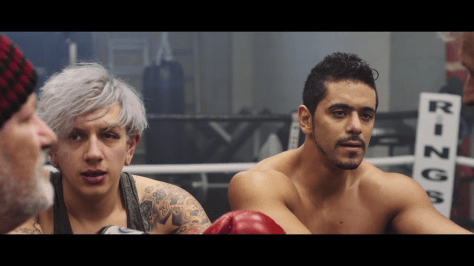
petrol

Petrol is an action/drama series following five reckless drivers who all work for a mysterious Employer. In the show, Nash plays Jason, an ex-military veteran and boxer who is commissioned by a mysterious figure known as The Employer to plan and execute a gold heist. When it goes wrong and his partner is killed, a plan to execute revenge on the all-powerful and elusive Employer is born.

“I was really excited about Petrol because not only would I be able to let loose with my boxing training on set, but also execute a meticulous and brutal gold heist; every actor’s dream. It sounded really exciting to me because I enjoy playing the mysterious bad guy. It comes naturally to me and I knew this would be really fun. I wanted to experience working on a high-paced action project and I knew this would be different than anything else I had done in the past,” said Nash.

The character of Jason was a very skilled boxer who would go on and lead a heist. As an ex-military commander, he knew how to think on his feet and stay composed in any situation. When the heist goes wrong and his friend gets shot in all the action, Nash’s Jason had to compartmentalize his emotions and complete the mission despite losing his comrade. It was a dramatic loss, but he had to push through to the end. He was brave and extremely determined, able to think fast of imminent danger. Nash was ready for the complex role and executed it to perfection.

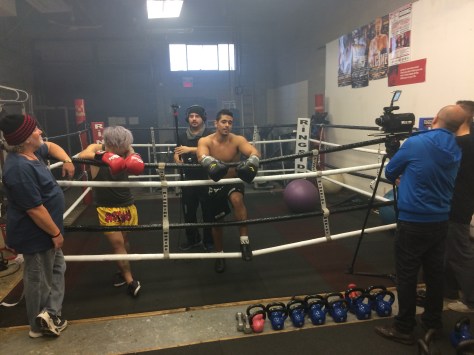
image3

“I worked with Tony on the television show Petrol, where he performed the critical role of Jason the Boxer. Tony’s character is a trained boxer and there are several long scenes in which Jason was to realistically fight an opponent, which provided something of a challenge to the actor who would portray him. On top of that, Jason is also a complicated character who must display the emotions of one whose friend is killed, leading him to desire revenge. I am proud to say that Tony performed beyond my wildest expectations. As a trained boxer, he portrayed Jason’s technique and savagery in the ring perfectly. Not only that, but he was also a fantastic, nuanced actor, bringing the emotional depth of the character to life. His performance enhanced the quality of the entire show. I was extremely impressed with his work,” said Reza Sholeh, Writer and Director of Petrol.

When Sholeh approached Nash about taking on a role as a boxer, Nash was excited about the opportunity and would not let anything get in the way of his delivering a great performance. He was eager to put to use a whole slew of other skills in addition to acting, to take on this explosive role. This is not common, and Nash says that he feels lucky to be able to play such a character. He immediately began training. He had previous experience in boxing, but to be a realistic professional boxer, he wanted to look completely natural. Having already understood many techniques from his previous boxing training, he quickly became an expert for the part, training at the Toronto Boxing Academy in Toronto. It was challenging, training for hours every day, there was a lot of sweat and exhaustion, but Nash knew the importance of the work. He used the long hours spent in the gym to get into the mood and mindset of his character. In one particular boxing scene, Nash steals the show and truly looks like a professional boxer.

“I love boxing and it is one of my favorite sports that I continue to practice even now, years after filming Petrol. I have many inspirations such as Mohammed Ali and Mike Tyson. I studied their techniques and skill and compared them to many other boxers to understand the secret to their incredible success. The day of the shoot for that particular scene, I came in early to warm up and really get into it and focus not only on the technique, but to give the character his own personality as a boxer. I hope I can once again shine in a role not only through acting, but through my other skills and hobbies as well,” said Nash.

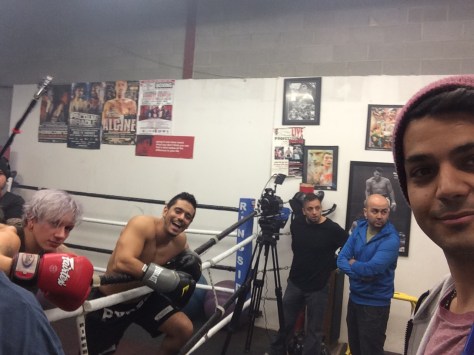
image4

Nash’s work was essential to Petrol and the episodes featuring Jason the Boxer. He was able to bring both his skills as a boxer and talent as an actor to the screen. It is sometimes difficult for actors to be able to do both naturally and simultaneously, but Nash did so flawlessly. He practiced and perfected both boxing and his lines, not forgetting to take the time to understand the character’s mind by finding his soul within him.

“I really liked the fast pace action of this story. I usually opt for deeper and more complex characters, but I loved how my character shared this bond with his friend through boxing and how he was suddenly taken away from him in the heist. I think that is important to portray because it shows both sides of a character. On the outside my character looked tough and intimidating and was willing to put his life at stake in a high-risk situation, but he also had another side of him. That’s important to show because it allows people to understand that there’s more to a tough guy than the way they look on the surface,” he said.

Petrol was released in February 2016 and went on to win several awards including Best Mystery at the Vancouver Webfest and Best Action Adventure at Hollywebfest.


By Sean Desouza

PRODUCING LOVE’S 2ND CHANCES: MING QIU

(By Winston Scott)

Leo Johnson - on set

Like many of us, Ming Qiu is fascinated by the complexity of relationships. Her secret superpower which separates her from most mortals is that, as a film producer, she has the power to give life to the stories of relationships which she finds interesting. Making a film is part discovery, part catharsis, and a whole lot of work. The diversity of the films she produces mirrors the vast array of relationships and their emotional toll that each of us can experience in our lives. This is what filmmakers do, they present stories that makes us laugh, inspire us, and hopefully help us to understand each other and ourselves. One day Qiu is making certain that furniture is burning properly (wait for it, you’ll find out) and the next she is reverse engineering the weather…it’s all a part of movie making and the wild ride that draws creative personalities such as Ming into an industry that gives something to the world.

Evan Bluestein gave Ming the script for his film “Leo Johnson” and she immediately knew that it was too good to not be a part of. The genre was comedy and romance but it was the deeper meaning that cinched the deal for this producer. At its core, “Leo Johnson” is about fear in a relationship and what we are willing to face. It’s an idea that Qiu would like more people to believe in, the notion that we would not only reject the fear which makes relationships so hard but that we would also face our personal fears down for those we love and cherish. Her way to promote this sensibility was to produce this film which espouses such notions.

Leo Johnson - location scout 1

Director Evan Bluestein wanted Qiu to produce because, in addition to witnessing her consummate professionalism on previous projects, her dark humor and fearlessness reminded him of the female lead in the film. He notes, “It’s always tricky to find the balance between humor and heart, and I was fortunate to work with Ming because she is such a collaborative, creative, and a passionate producer. From the beginning of our development process, Ming was an advocate for the love story and for making it the central dynamic from which the plot would grow. What I truly appreciated about working with Ming is her passion for the possibilities of the medium. She has a unique point of view that I’m sure I cannot sum up, but I know it has to do with dry humor and love and seeing the best in people. And that is something that makes its way into all of her films and is the mark of an artist.”

Leo Johnson - location scout 2

Qiu’s determination was challenged at several stages by factors which sought to impede or stop the film’s creation. The usual expected schedule conflicts, rental break downs, and even the Director of Photography leaving near the completion of film could not hamper the film and its producers resolve, in fact…it may have reaffirmed this determination. As sometimes occurs, the characters in the film itself were a metaphor for the cast and crew in so far as love kept them from giving up on their shared goal. In “Leo Johnson” the male lead (Ben) is extremely afraid of fire but he distracts his friend by setting her couch on fire so that his girlfriend Donna can escape during their ring-stealing crime scene; extreme limits for love, just as Ming wished. Being able to keep a cool and positive head during challenging times is made easier by a sense of humor. Qiu boldly states, “I can’t imagine a producer who isn’t able to be funny during these challenging moments. It’s a quality that keeps you and your team healthy during all the production headaches. In fact, all great producers I know are funny people. Film producers who are not funny probably have all pivoted to other careers.”


Rosita Lama Muvdi (Director of “Till I See You Again”) echoes that statement proclaiming, “Ming’s amazing sense of humor, coupled with her dedicated abilities as a talented producer, made working with her on ‘Till I See You Again’ an unforgettable experience. Her intoxicating personality made anyone on the production team excited to be around her, which, in turn, made the set a fun and productive environment to be in. With all the demands during production, Ming was always there to make sure production ran smoothly, ensuring both the cinematographer’s and my vision were able to come to life.”

“Till I See You Again” is a benevolent tale about time travel. While most time travel tales are about riches or crime (and end up with karma serving justice), this tale focuses on a father who simply wants to take care of his daughter. An older man (James) calls his daughter but is ignored. He is given a chance to travel back and have a younger version of himself shower his daughter with gifts and love. Through the experience we see that father and daughter in present day have a warm and full relationship.

Till I See You Again - film festival

What was so unusual and challenging for the filmmakers of “Till I See You Again” was that there was essentially no dialogue in this story. Qiu admits that she is fond of dialogue in her productions and this was new territory for her. What was also unique was the writer’s determination to film one particular scene that communicated the time travel effectively to the audience. Ming describes the scene and how it was created, “Rather than use VFX, We shot the scene with everything moving in reverse direction with the rain from a rain tower. Our actor had to rehearse quite a few times to make sure his walking backwards looked 100% like walking forward when the footage was rewound. The visuals turned out amazing. Looking back at our night in/next to cold rain, all of us felt that having certain constraints actually pushed our creativity to a new level.”

There are many attributes which make Ming such a fine producer: an understanding of the workings of each department of the production team, extraordinary communication and organizational skills, insight into story development, and others…but it’s her curiosity which she feels makes her most important. The desire to find a creative solution to a shared goal is one she shares with the characters in these films. For another film she currently produced titled “My Zombie Club” the Art Department was having difficulty discovering a means to attach vines growing around the main characters derriere (a curse given him by a zombie lord). A diligent producer, Qiu researched until she found the perfect wardrobe piece that would serve both the art department, VFX department, and still allow the actor to retain some modesty. While it’s an unusual and humorous example, this is the challenge of any relationship…finding a solution that we can all live with. Ming Qiu is an living/professional model of the ideas illustrated in her films.


Profile: Leading Actor Giselle van der Wiel

Leading Australian actress Giselle van der Wiel, who has just been cast in two series shooting in the United States, is not as intimidating in person as one might expect. In a career that spans different mediums (TV shows like “Hendrix” with “Neighbours” actor Chelsea Jones) and characters (and Spanish exchange student in “In the Land Farthest From”), Giselle has built a reputation as a powerful presence in camera that would lead one to assume she’s overawing in person. In the best possible way, Giselle retains her strength upon our meeting but also possesses an incredibly personable nature that makes it no surprise her acting career continues to go from strength-to-strength.

We’re sitting down with Giselle to discuss two feature films in which she appears in critical roles, “On Halloween,” a new feature film with “2:22” actor Ezekiel Simat and “Reaching Distance,” with “Unbroken” actress Morgan Griffin. It’s the night after a glitzy film premiere and Giselle has just walked the red carpet with fellow Aussie A-listers. “All part of the routine of being an actor,” she says humbly, with a laugh. It could be easy to get distracted by talking about the behind-the-scenes glamour of a blockbuster premiere, but Giselle likes to focus on the work. So we resume our conversation about her upcoming projects and how she has achieved such great things in her eclectic career.

“I’m constantly working at growing as a person – I feel that unless I really know myself, and if I don’t experience life and meet new people, I can’t really grow as an actor.”

Giselle van der Wiel
Giselle van der Wiel on the red carpet for a film premiere.

When contacted about Giselle’s performance, “On Halloween” director didn’t need to be prodded to heap praise on Australia’s answer to Kristen Stewart. “Giselle has a crazy unique ability to own every frame she’s in,” Timothy Boyle enthusiastically explained.” There are moments where an actor gives more than you, as the writer and director, ever intended. It’s in these moments that the film takes on an extra level of depth. It’s what good actors do. It’s what Giselle did for me every day of the shoot.” Timothy, whose feature “The Half Dead” starred “Lord of the Rings” star John Rhys-Davies, clearly speaks from a position of authority. He goes on to compare Giselle’s unique appeal to that of other mega-star Australians Yvonne Strahovski (“The Handmaid’s Tale”) and “Avatar” star Sam Worthington.

While we lose focus laughing about the ironically funny moments that come with shooting a horror film, we briefly touch on her key character in “Reaching Distance,” from award-winning director David Fairhurst. In the role of “Chell,” Giselle shares the screen with BAFTA-nominated actress Tara Morice, best known for her work opposite twice-Oscar-nominated Emily Watson and her part in Baz Luhrmann’s “Strictly Ballroom.” Giselle explains “the beautiful thing about this industry is that it’s really collaborative, so everyone’s connected and everyone knows each other. It helps everyone lift their game.”

On the topic of those two TV shows Giselle is due to start filming in the US, she has to stay quite mum. “Unfortunately I’m not able to go into too much detail about my characters, but I can say that my character’s name in “Masculinity in Crisis” season 2 is Joanna.” “Masculinity” series is an award-winning co-production between Joseph Gordon Levitt’s production company HitREcord and successful outfit Nix Film, and is distributed by Amazon Studios. Series creator and lead actor Alex Cubis (“Dear White People”) explains that Giselle was cast because there was no other actor who could play her role. “The character was specifically written to possess the ability to perform in Australian and American accents, and speak Spanish. Aside from her X-factor, Giselle was the only girl who auditioned who could play the role.”

When asked about her character in “Dipsticks,” Giselle laughs. “That project is going to be fun because it’s a comedy; I don’t want to reveal too much about that. But I’m really happy to have a chance to play a lead in a comedy series.” That series also stars NBC “Community” actor Dominik Musiol, so it’s safe to say that Giselle is in fine company when it comes to her career.

“I feel really lucky that I get to continue working in different countries and in different styles – that was always my goal when I started acting. I’m very grateful.”

Producer Mickey Liu brings music and drama together in acclaimed film ‘Nocturne in Black’

Growing up, Mickey Liu always found himself stuck between two different pathways as a child. He studied business, but he loved the arts. However, as a teenager, he realized he could combine both these passions and become a professional producer. A producer is a leader, a problem-solver, a caretaker, a doer, a negotiator, a storyteller and an artist. Liu aims to be all of them, and he has achieved his goal, becoming one of China’s leading producers.

“The lack of professional producers is one of the biggest problems in the film industry of my home country. I feel the responsibility and urgency to become one. It’s very challenging, but also very rewarding,” said Liu.

Liu’s work in Chinese film is renowned. His movies such as Sail the Summer Wind, An Ill-Fitting Coat and Tear of the Peony exemplify Liu’s determination to transform the Chinese film industry and allow for more professional producers to take lead. However, one of the highlights of his career comes from his work on the 2016 film Nocturne in Black, which is actually in Arabic.

“I wanted to work on this project because of its powerful script with a musical element of the story. It was one of those rare cases where I immediately knew I would regret not being part of this. It was definitely a very ambitious and challenging project, but if we could pull that off, we would send a powerful message,” he said.

Nocturne in Black takes place in a war-ravaged Middle Eastern neighborhood, where a musician struggles to rebuild his piano after it is destroyed by terrorists. The film premiered and was an Official Selection at the 2016 Telluride Film Festival in Colorado along with Liu’s film Tear of the Peony. From there it was an Official Selection at the Los Angeles Shorts International Film Festival, won Best Director at NDU International Film Festival, The Marion Carter Green Award at the 2016 National Board of Review, Gold Circle Award Grant Winner at the 2016 Caucus Foundation, and Best Short Film Narrative at the Long Beach International Film Festival. What was the most exciting for Liu, however, was when he received the news that Nocturne in Black was shortlisted for Best Live Action Short for the 89th Academy Awards.

“It was definitely the highlight of my career. I remember receiving an email from Producer Felecia Hunter with the subject line “JESUS CHRIST” and a link to the Hollywood Reporter article in it. I was literally shaking while scrolling down the list and found out that we were shortlisted. I had no idea it could go that far, and I still feel very honored and blessed to be a part of it” said Liu.

When putting together a team for the film, Producer Felecia Hunter approached Liu, knowing what an asset he could be as a co-producer. The two had worked together in the past, and she knew he had great experience putting together and designing posters. Once he was approached, Liu read the script and immediately decided to jump on board. He then created the pitch book and designed posters when the film was just a script, which ended up being essential in the success of their Kickstarter campaign, and he also designed the look of the Kickstarter page. Half of the film was financed by the crowdfunding campaign. Liu also contributed editing notes in post-production.

NIB at LA Shorts Fest with producer Felecia Hunter
Mickey Liu and Felecia Hunter at the LA Shorts Fest

Hunter and Liu attended several film festivals and awards to help promote the film. During the film’s festival run, he helped with coordinating the transportation of the film’s DCP copy and created promotional postcards for Nocturne in Black. Liu played a critical role in financing and marketing of Nocturne in Black, and that is exactly why Hunter approached him to begin with.

Mickey is organized, thorough, and possesses a very keen eye for details. He knows how to communicate with department heads quickly and effectively, ensuring a productive working environment on set and throughout post-production. Mickey is an asset on any project or event he works on. He always goes the extra mile by working long hours; triple checking details; and doing much more than is required of his job description. Through our work together, I had the delight of experiencing his extraordinary talent shine from pre-production to having films he produced screen at the Telluride Film Festival and other notable festivals worldwide. Mickey Liu is a gifted artist, but also a skilled professional and invaluable collaborator. His writing, producer’s vision, and narrative insights have always been revelatory – the sign of a mature and talented film producer – and add an unforgettable quality to any project he takes on,” said Hunter.

The story is set in Syria, but for safety reasons due to the civil war in the country, the production took place in the director’s home country Lebanon. Liu was working long hours just to put together a good pitch book; he did a lot of the research and exchanged notes with the Director, Jimmy Keyrouz, to ensure the look of the pitch book matched Keyrouz’s artistic vision. He then worked on the typography and details of the book for days, and this was only the first step.

“Everyone on the team pushed themselves to a whole new level because we wanted to have the best possible version of the film. It was really a labor of love and I could feel it when I was working on it,” Liu described.

The team was one of the best parts about working on Nocturne in Black for Liu. He was extremely impressed with everyone’s commitment to the story and with the professionalism on set. Everyone was at the top of their game, and they were having fun. More than anything, however, Liu was most inspired by the story they were telling. He knows the importance it has and encourages audiences to see it.

“It’s imperative to remind people about what is happening in the forgotten parts of the world – murderously effective, half-ton barrel bombs are constantly dropped on innocent civilians. It’s a story about human spirit standing up to oppression, evil, and terrorism. In the story, playing music is the protagonist’s ultimate act of defiance in a world where music is banned. I think it sends out a powerful message. Our director once said, “Art is a mighty tool that helps us fight extremism and terrorism.” In some way, making this film is our way to join the fight,” he said.

Be sure to check out Nocturne in Black so you too can join the fight.


Top photo by Lingyun Zheng


By Sean Desouza