Category Archives: Producer

Britain’s Rosie Kinane-Adams is not just a producer, but a true storyteller

Press 2
Rosie Kinane-Adams

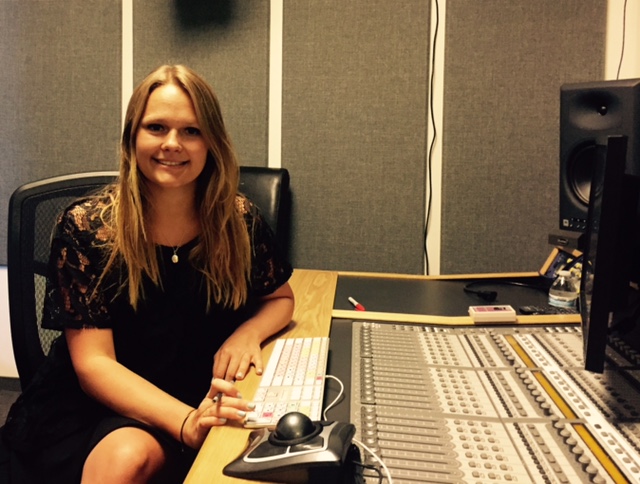
Rosie Kinane-Adams has always been aware of the power of storytelling. She understands the connection one can feel with someone they have never met, simply by hearing their story. She has felt this obsession since she was a child. She wanted to know everything about everyone that ever existed. She became fascinated with television and its ability to share the story of a child her age going through much different circumstances; from her house in London, England, she was able to see far beyond her city, and into the happenings around the world.

It was only natural for Kinane-Adams to want to do her part to tell people’s stories, and the answer was simple. She would be a producer. She would spend her life showing people who overcome all obstacles, whether it be the story of a dancer who overcame a disability to perform on the biggest stage in the world, or a couple trying to overcome their lifestyle differences and fall in love.

“I wanted to be responsible for inspiring people around the world and showing them what’s out there and what people are capable of,” she said.

Kinane-Adams has worked on many successful projects throughout her career. She produced Married at First Sight Australia, which has been nominated for Best Factual Program Silver at the Logie Awards. She also produced two seasons of Simon Cowell’s hit show America’s Got Talent, impressing audiences and colleagues across the globe.

“The simplest way to describe working with Rosie would be like a ‘breath of fresh air.’ That is why she stands out among other producers I worked with. Her approach to the job, her attitude, and her overall presence are something all producers need to strive for. She brings excitement, positivity, and new ideas in every situation she is in. She is the best producer I have ever worked with; and hopefully will again in the near future,” said Chase Marbumrung, Line Producer of America’s Got Talent. “Rosie is so amazing at what she does because she is dynamic. She is full of energy and new ideas; and she adapts to any situation without sacrificing her character. Everyone I know who worked with her can vouch for this. Every production would be lucky to have to her.”

Earlier this year, Kinane-Adams once again put her touch on a popular television show, this time being for the ninth season of Masterchef Australia. The Masterchef franchise is one of the most successful cooking shows in the world, with a presence in 52 countries, and on every continent. The Australian version differs slightly from the original British version. The initial round of the show consists of a large number of hopeful contestants from across Australia individually “auditioning” by presenting a food dish before the three judges in order to gain one of 50 semi-final places. The semi-finalists then compete in several challenges which test their food knowledge and preparation skills. The contestants will then be whittled down through a number of individual and team-based cooking challenges and weekly elimination rounds until a winning MasterChef is crowned. The winner plays for a prize that includes chef training from leading professional chefs, the chance to have their own cookbook published, and $250,000 in cash. Working on the show has been a mission point of Kinane-Adams’ career.

Masterchef is the most successful cooking show format in the world, and a lot of that comes down to story. People at home love to see home cooks like themselves succeed and achieve their dream. It’s about good people wanting to follow their dream and learn from the best in their business. It’s a feel-good show, and they never go out of style,” said Kinane Adams.

After her success with Married at First Sight, the Endomol Shine Group recruited Kinane-Adams to work on Masterchef. They were looking for the best, and Kinane-Adams’ results from Married at First Sight showed she was just that. Her episodes did incredibly well in the ratings up against tough competition. Her episodes came in at number one in the ratings the night they aired, and were up 98 per cent year on year from the timeslot the year before. She continued a similar pattern on Masterchef.

“Having an internationally renowned producer like Rosie on the team brought an invaluable source of knowledge and creativity to the show. Working with her inspired creativity for myself and the rest of the team. Rosie’s unique approach to storytelling is what makes her one of the best in the business,” said Kelly Maycock, Senior Producer of Masterchef Australia.

Kinane-Adams edit produced two 60-minute episodes of Masterchef Australia. To do this, she took the raw content from the field and crafted it into a clear, concise and compelling episode for the viewers at home. She would watch through over a hundred hours of footage and create a clear timeline and story from the many stories that existed within the episode. From there, she would work with her editor to polish it into an episode that met the high standard that Masterchef has the reputation for. She was vital to the success of her episodes, and the season as a whole.

Working on such a respected format within my industry, and one that has been around in one form or another since I was born, is an incredible milestone for me. To have such final creative control on such a successful and complex show is a wonderful feeling. With just myself and an editor working on it gives you a real sense of ownership over the episode. The success of that episode is, in a large part, down to storytelling,” Kinane-Adams said. “The show has a lot of integrity. It’s all about encouraging growth for the everyday man, proving that anyone can follow their dreams and achieve them. It has a really positive vibe to it, and that’s a wonderful thing to be a part of.”

Masterchef is known in the industry for being one of the hardest shows to post-produce and edit. It is said if you can do Masterchef, you can do it all in the reality world, and Kinane-Adams can truly do everything in the reality world. She is one of Britain’s best, and there is no doubt that we can continue to expect great work from this storyteller for quite some time.

ZHENG HUANG PRODUCES AN AWARD-WINNING FILM FROM THE HEART OF HIS FAMILY

Of all the qualities that make up an artist, the most essential is heart. While knowledge, vision, and technical expertise are beneficial, passion is not to be underestimated when it comes to the tenacious mindset that drives an artist of almost any medium. Producer Zheng Huang’s connection to the location and story of the film “Lost” was deeply embedded in his heart. While he wore a multitude of hats for “Lost” (including writer and director) it was the role of producer which proved most taxing. It was Huang’s excellence as a producer that also led this film to such immense praise and eventually a spot at the world famous Cannes Film Festival. The film is epic, adventurous, and gripping for many reasons. Zheng was driven to create the film as a tribute and connection to his family’s homeland and to expose its beauty to the world. The lush grasslands, the exotic characters, and the endearing portrayal by the cast all appear to originate from the story which this producer was inspired to write, and was the only person capable of manifesting onscreen. “Lost” truly is a piece of Zheng Huang personified for all to see.

psb (1)


“Lost” was Zheng’s first high budget film to produce and he definitely felt the responsibility. Whether it was fear or passion, the fuel that pushed him towards excellence was the appropriate one. After the completion of the script, he flew to China and did location scouting in Inner Mongolia. It was an intensely emotional moment for him. Huang’s grandfather had died on the grasslands of Inner Mongolia and it was this which inspired the story. Zheng wanted to be in the grasslands; to feel them and to expose this feeling to the rest of the world in film. For two years he had seen the terrain, the people, and the story in his mind; a mixture of Chinese and American culture and individuals…and now he was seeing the nebulous form start to solidify in front of his eyes. While the story of “Lost” is not derived from his family, Huang understood that the feeling of the location and people who carry the spirit of both his grandfather’s life and his own. The film tells of an American boy named Michael who has lost his mother in Inner Mongolia. Mr. Wu, a native Mongolian, saved Michael and decides to adopt him. Mr. Wu teaches him Chinese and Mongolia culture. Michael’s real mom (Mary) searches for him for quite some time. Michael knows the truth that Mr. Wu hides this from him and Mary. Michael is angry but struggles with the decision to return to his birth family or not. While many films give a clear and imposed decision about situations like this, “Lost” accurately depicts the conflict that can be a part of real life when considering to whom have we bonded most strongly. Just as importantly, the story and the stunning visuals of this film portray the people and the culture of Inner Mongolia not as “others” but as those who share precisely the same emotions, virtues, and faults as those of any group of people on the planet, meaning that Zheng perfectly achieved the goal of his film. The process of creating this onscreen was earned.
E8162276-2944-4592-A15D-6F80DBF33E92

Every producer knows the challenging points for their project. Successfully and positively utilizing these is a badge of honor as well as an accomplishment for any professional in the field. For “Lost” the can easily be defined as: kids, animals, and nature. Due to the nature of the people in this part of the world, the actors needed to be able to ride horses. This is not exactly a skill that the majority of individuals possess these days. While some actors take quickly and easily to it, it only takes one intimidated thespian to derail the schedule. A dutiful producer, Huang prepared a week of riding lessons in advance to the shoot. A couple of actors were never quite at ease with the situation (or the animals) which necessitated a restructuring of the shot list and even some “cheat” shots.

Zheng admits that this film was his first time working with a child actor. The final performance by this youth in the film is exceptional but the producer concedes that it wasn’t exactly the same as dealing with most actors in his experience. He recalls, “He was great and is a very talented actor. I think it’s wrong to expect a young actor to have the same perspective as an adult. It was actually kind of miserable for part of the shoot, it was hot and he was being asked to do things that were difficult…I can completely understand his state of mind. Having been a young boy myself once I knew that there’s not much that pizza and some toys can’t fix when it comes to attitude. Regardless of the actor I’m working with, I find that if I can put myself in their shoes I can quickly find the proper motivation for them.”

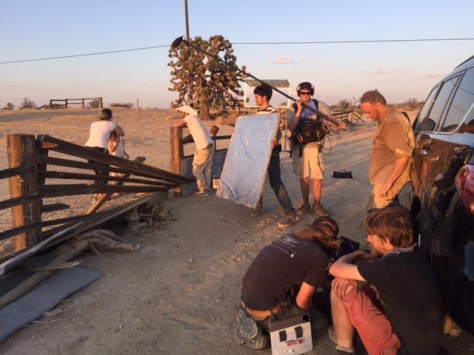
One of the most striking traits of “Lost” is the visual component of the film. The beauty of the Inner Mongolian grasslands is as epic as any classic western from Hollywood’s heyday. A shrewd producer who is always cognizant of a film’s budget, Huang had his location manager contact his best friend (a herdsman named A De) about using his private 8,000-acre meadow. A De was so interested in the film being made that he offered the location up free of charge. As a thank you, Zheng gave him a supporting role in the film. In an effort to keep production value high and cost low, he also hired a crew from nearby Beijing (four hours away from the filming location). Casting locals rounded out this international production and provided the authenticity that Huang had envisioned. Since his early vision, it was these very people that he wanted to be seen in the film.

DT8A1862

“Lost” was much more than a film to Zheng. It was an Odyssey that connected him with the previous generations of his family. Through his talent, he was able to communicate to the rest of the world, via film, what it feels like to feel both afraid and comforted in a part of the world that few Westerners will ever see. It’s by seeing these types of stories that we realize how similar all people are at their core. The literal deluge of awards that “Lost” has received in addition to being an Official Selection of the Cannes Film Festival (2017 American Film Award, Award of Merit at the 2017 Best Shorts Competition, Official Selection of the Hollywood International Moving Pictures Film Festival, Multiple Platinum Awards at the International Independent Film Awards, and numerous others) is an assurance that the beauty of this film has touched many people in many different lands. While producer is only one of the roles which Zheng Huang performed for this film, it is likely the most applicable to his deep investment in it.

psb

RAFAEL THOMASETO BRINGS HIS HOLLYWOOD INSPIRATION FULL CIRCLE

Making a film can be like going on vacation. No, not in the sense that you relax but rather in the fact that you travel for different experiences. You might travel to Paris to walk the Champs- Elysees and attend the Louvre or you might go to Cabo Wabo to drink tequila and kite surf. Filmmakers are people like the rest of us and they are prone to experience making different genres of productions; it allows them to keep things fresh and interesting throughout their career. While producer Rafael Thomaseto has made many thoughtful and heart-wrenching films, he reveled in the making of “Inherent Greed” with its selfish and even maniacal characters. Like a Disneyland thrill ride for both the audience and those involved in making this production, it displayed some of the darker sides of humanity, scaring you while you still enjoy the break from reality.

Film has often been the intersection of humanity for many of us. While we can relate to the characters in many ways, they often seem willing to exceed the barriers that society or reality imposes on itself. For Thomaseto who grew up in Brazil, the lines between safety and danger were always clear. His family’s residence in a gated community allowed him the safety of a “normal” childhood but he was always aware that there were others who were not afforded this benefit. This perspective is a stark contrast to the main characters in “Inherent Greed”, the Duboff brothers. These siblings have been raised in a highly affluent family and been given every opportunity, yet they want more. While they are driven to crime by the thought of increasing wealth, Thomaseto was inspired to commit a small infraction by a film poster and Woody Allen. He explains, “When I was 13, I had an experience that shaped my vision of the cinema. In São Paulo, every Friday my mother would pick up me and my sister from school and we would meet my dad at a mall in the city for lunch and then an afternoon of shopping. I hated spending hours watching them spend money on clothes so I would immerse myself into movies. One particular time I was in line to buy popcorn and had already gotten my tickets to see a romantic comedy, but I noticed the poster for a movie called Match Point. For some reason this image stood out to me. I left the line and went to check the times of the movie and realized it was PG16. I didn’t care. I pretended I was going to the movie I had tickets for and entered a different room. I sat down in the first row and watched Match Point, written and directed by Woody Allen. It’s still my favorite movie and Woody became my favorite director and inspiration.”

“Inherent Greed” is a complex story of two brothers who have been raised with privilege and wealth but return this favor by murdering their own parents in hopes of seizing the family fortune. The main focus of the story concerns whether the two brothers can get away with their crime while avoiding public or legal scrutiny. While the opulence of the family in the movie is displayed via onscreen locations filmed in mansions and a ranch in Topanga Canyon, the independent film sized budget belies the images onscreen. Thomaseto confirms, “Smaller films often have very unique and original ideas and stories, which makes them very interesting. One of the greatest challenges for a producer is that these films don’t come with the financial backing of a big studio. I got hired only a few days before the official picture, and I was at the time working on the postproduction of a commercial for a brand called Clearasil. The budget of the commercial was probably 100 times bigger than what we had for “Inherent Greed.” Organization is a key element to making sure a production happens. Keeping a constant conversation within all the main and key roles on the project, such as executive producer, producer, director, cinematographer is essential. These are creative people; when allowed to use their talents…sometimes the best results have nothing to do with the financial component.” This perspective is part of what fueled Thomaseto’s documentary “Cycles of Existence” which attempts to understand how the homeless community finds happiness even though they have essentially no material possessions. The idea itself is diametrically opposed to the main characters of “Inherent Greed.”

Retribution, Karma, call it what you like…the Duboff brothers get what’s coming to them in a number of ways at the end of the film (yes, you’ll have to watch it yourself for the details). The concept of rewards happens for those behind the camera as well as those on camera. Many of the films Rafael has produced have appeared at the world famous Cannes Film Festival, including “Inherent Greed.” He relates, “Cannes has always been my favorite film festival and I have always been obsessed with the films that come out of there. Having the films I’ve worked on be a part of it gives me more strength and self-esteem to keep fighting in the entertainment industry for great work. Working in film isn’t as glamorous as people think but attending a festival like this is a step up for everyone’s career. It brings more visibility to the work of the film and the talents involved. You can enjoy the benefits of being a filmmaker, which means sitting down at a meeting during the festival and having rose wine surrounded by heads of production of the main film studios in the world. A sense of community and affirmation is the real payoff in this situation.” Louie Torrellas (CEO of Ambitious Media Productions) declares, “Any person who works in the film industry is highly aware of how difficult and overwhelming shooting a project can be. Being the head of a production, gives you even more responsibility and in my point of view, the producer is the boss and the most important role on a movie. Rafael’s work during the production of the film ‘Inherent Greed’ was nothing short of amazing. One of the executive producers on the film recommended him to my company, Ambitious Media (production company for the film). We hired him and he instantly took over the project and made it work. Rafael exhibits a proficiency and tenacity rarely seen in producers these days. I’m continually reminded what a genius move it was to hire him. The positive reactions to this film vet this decision in spades.”

Los Angeles Brazilian Film Festival

Producer Melina Tupa talks upcoming documentary ‘Slaves Among Us’

Melina Tupa always has always had two passions: film and journalism. Growing up, it never really occurred to her that there was a way to combine both of these things. Then, one fateful day, she had an epiphany that changed her life. She could be a documentary filmmaker. Being a journalist, she believes, gives her an extra responsibility as a film producer to pursue stories that are of public interest and that will help the communities she lives in. Since coming to that realization, Tupa has been committed to making impactful documentary films, and that is why she is so sought-after around the world for what she does.

Over the past few years, Tupa has delivered hard-hitting documentaries that share truths many are unaware of or afraid to talk about. When producing the PBS Frontline film Rape on the Night Shift, audiences everywhere became aware of the horrifying stories of many janitorial workers who have dealt with sexual assault. With her film The Search, she told the story of a grandmother’s search for her long-lost grandchild, which dives into the Argentinean “Dirty War.” All who work alongside Tupa are not only impressed, but also inspired by her commitment to her work.

“I had the honor of being a Consulting Producer with Melina on her documentary The Search. It was a pleasure working with Melina: she’s smart, driven, tenacious, creative, and yet is open to different perspectives and ideas that are not her own, which means that she is also confident. What makes Melina good, but great is a better word, is that she always has a big vision for her work,” said Director and Producer Spencer Nakasako.

Soon, audiences will once again have the chance to see Tupa’s formidable producing abilities in the upcoming Investigative Reporting Program (IRP) film Slaves Among Us. The documentary will expose the many layers of human trafficking, from the recruiter in the home country to the smuggler, trafficker and subcontractor that make it possible for major corporations to profit from forced labor in the United States. The documentary will tell the story of a group of teens from Guatemala who, with the inadvertent aid of the American government, fall into the hands of a criminal enterprise. This investigation will show who makes money off such victims and how the American consumer benefits from their mistreatment.

“I wanted to work on this project because I believed this was a very important story that needed to be widely known by the audience. The fact that in 2017 we still have forced labor is outrageous,” said Tupa.

Tupa was approached to work on Slaves Among Us after her success with the Investigative Reporting Program on the documentary Rape on the Night Shift. The producers of the documentary knew she had a very good reputation and she had an asset that was key to work on the field: she is bilingual in Spanish and most of the characters on this story are Spanish-speaking individuals. As a field producer, this was vital.

“I liked that I had direct contact with the sources of the story. I did old school reporting: just knocking on people’s doors and asking what they have seen or heard about the case. I was able to get to know the community I was reporting on thoroughly. And I was also able to gain the character’s trust. A lot of them are undocumented immigrants and many times they are afraid of telling wrongdoings because they are afraid of the retaliation they might get,” Tupa described.

Working in Ohio, Tupa reported on the trailer park where Guatemalans (adults and minors) trafficked to the United States were living. She was able to conduct interviews with more than thirty individuals there. She was able to secure three interviews (one in shadow, two full face) where the sources confirmed the story about the trafficking scheme she was after. She was also able to establish a connection with a very important source who had worked with the main characters of the story. This led to finding and securing and exclusive interview with one of the victims of labor trafficking.

Back at Investigative Reporting Program office, she worked as a Researcher. She found archival videos, photos and newspapers on the DeCoster Egg Farm violations, unaccompanied children entering the United States across the border, egg industry facilities, and the case of immigrant minors working on an egg farm. This information was pivotal to illustrate the story.

“I believe it is important to tell this story because nobody should be living in slave conditions in 2017. It’s important to let people know this is happening so this could result in a change of policy, for example, in unaccompanied minors entering the United States or for the poultry industry to have highest safety standards for its employees,” said Tupa.

Slaves Among Us is expected to be released in 2019. Based on Tupa’s track record, audiences can expect an outstanding film once again.


Photo by Vanessa Arango Garcia

Director and Producer Sonia Bajaj has fast success with new film ‘Bekah’

Sonia Bajaj realized her true calling while in Pune, India. During this period of transition, she was introduced to people from different cultural backgrounds and varied interests. She was in constant touch with daily happenings in the world and she also began to have a better understanding of art forms like music and literature. She was introduced to several films, television series and documentaries from all over the world, thereby exposing her to different styles of filmmaking. She began experimenting, and soon these experiments translated in experiences. She knew she had to be a filmmaker.

Originally from Mumbai, Bajaj has been able to travel the world doing what she loves. She thoroughly enjoys the aspects of making a film. As a producer, she is responsible for overseeing all five stages of filmmaking: development, pre-production, production, post-production and distribution. She creates a business plan, budget, and schedule, handle creative and business affairs, and gather cast and crew. But that is not all she does, she also is a successful director.

“While making multiple short films, I realized how thoroughly I enjoy myself during the entire process of making a film. Being a director is similar to being the captain on a ship. You have your entire team helping you, yet the responsibility of a successful sail lies entirely on your shoulders. When I direct a film, I have the opportunity to take the audiences to the world of my characters through my eyes. That’s what I like about being a director,” she said. “I look forward to narrating stories that touch the heart, that inspire an individual to overcome obstacles and live his dream, stories that educate and entertain.”

As both a director and producer, Bajaj has had a formidable career. She has worked on award-winning films such as Rose, Hari, The Best Photograph, A Broken Egg and Impossible Love. She is also the curator for the women in film series at Downtown Los Angeles Film Festival, where her responsibilities include reviewing and judging films around the globe. She has an esteemed reputation, and is respected by all she works with.

“Sonia is a professional and a pleasure to work with. She has a superb eye for truth when it comes to filmmaking and making an actor feel connected and safe on set. I would work with her again in an instant,” said Tony Ruiz, who worked alongside Bajaj on her film Rose.

With her new film Bekah, Bajaj is impressing both audiences and critics yet again. The film was just completed in May, and was first recognized at LA Shorts Awards where it won an award for Best Drama. Since that time, it has already been an Official Selection at the UK Monthly Film Festival, a Semi Finalist at Hollywood International Moving Pictures Film Festival and Los Angeles Cine Fest and a Finalist at Eurasia International Monthly Film Festival. It won the Award of Merit at Accolade Global Film Competition, the Gold Award at NYC Indie Film Awards, and the Platinum Award at Mindfield Film Festival, with many more film festivals expected for the powerful film.

“With Bekah, I had the opportunity to direct and produce the story of a young African American woman. Our entire cast comprised of African American Actors, and crew from different parts of the world, giving me the opportunity to work in a culturally diverse project. Our goal was to inspire and encourage our viewers through Bekah’s eyes. We’ve been successful in achieving that in a short span of time,” said Bajaj.

Bekah is the story of an idealistic young writer and college dropout who pursues her dream of becoming a full-time writer, motivated by the spirit of her deceased fiancé. She leaves her dysfunctional home and goes it alone facing a world that is less idealistic.

The story focuses on the struggles of a young writer trying to break into the real world. It’s a tale of overcoming the loss of love, by fulfilling a promise that was made. At the end, it becomes all about how families need to be connected and support each other.  We wanted to tell this story to encourage families to support each other, encourage youngsters to pursue their dreams despite the difficulties that they may face,” Bajaj described.

After looking at Bajaj’s success of her other films, the main lead and co-producer Charlie Cakes, also known as Charlotte Makala, asked her to be a part of the project, knowing her needed someone of her caliber to make the film the success it has already become. Looking at the diverse nature of the film, Bajaj instantly got on board. As they began producing the film, they realized that 80 per cent of the cast and crew were all women.

“This definitely was refreshing experience to produce a film made by women and about women,” said Bajaj. “The very fact that our team was so diverse, it was essential to have a director who wasn’t familiar with the culture of the characters. I had my own take to the production, which helped us to create a fresh outlook to the story we wanted to convey.”

There were many rehearsals, and script revisions, and Bajaj, both the director and producer of the film, experimented with different techniques before filming. This enabled her to create a fast-paced productive environment on set, allowing her to get all the shots she set out for in a skilled and quick manner.

“I enjoyed directing my actors in their accent. The lingos were so different that it was a learning experience to get out of my comfort zone, learn a different style of talking and build emotions out of that. It helped to broaden my horizon and work on building varied layers to the characters,” Bajaj described.

Bekah is just one of many films that Bajaj has put her winning touch on. She is a formidable director and producer, and one that audiences can expect to continue hearing about for years to come.

Producer Xueru Tang connects with her heritage on upcoming film ‘Hot Pot Man’

headshot 1
Producer Xueru Tang

Xueru Tang has two mottos by which she lives her life. The first is “work hard”. Her friends call her a workaholic, but to her, she is focused. She loves what she does and she strives to be the best, and she makes no excuses for that. Her second mantra is “believe in yourself”. The world “believe” is important to her. Every project she takes on, she truly believes it will succeed, and this belief keeps her pushing through any tough times, or any problems that may arise, causing her to face her fears. These two qualities, hard work and faith, combined with an innate talent, are what have allowed Tang to become the film producer she is today, and she is recognized around the world for what she does.

Having worked on award-winning films like Locked, Inside Linda Vista Hospital, and Emily, as well as last year’s popular commercial for Chinstudio’s Fall Collection, Xueru Tang has had a career filled with success. However, with her upcoming film Hot Pot Man, she got to feel a sense of accomplishment that she has yet to feel in her esteemed career, telling a story of her hometown.

“I was born and raised in Chengdu, China. The hot pot was created in Chengdu, and it’s my home food. It really important to me. All the story in the film happens in Chengdu, and it is shot in Chengdu. This really excited me when I heard about the project. I want to show the world how beautiful my city is,” said Tang.

The film, which will premiere in October in Chengdu, has received a lot of media attention. Newspaper Xin Cheng Kuai Bao and Jin Ri Toutiao reported about Tang, calling her a New Power filmmaker from the generation after the 90’s. They interviewed her about her experience in U.S. film industry, how she combined the differences between China and U.S. in film production and operated the whole project from funding to future distribution.During these interviews, Tang also shared her opinions about helping Chinese independent filmmakers spread their strength in U.S. market and form its own way to distribution and achieve a greater personal, marketing and social value.

“Five years ago in China, not every filmmaker studied film, and we don’t really think about the professional and how it is important. For today, we still don’t request professional producers who study producing or filmmaking as their college or university major. Everyone just works, never studies, and they just use their way or someone’s way to do thing. For me the kind of the producer who studied and worked in Hollywood, and knows about Hollywood style, is really difficult to find in China. I think this is similar to what it is like in Hollywood, they don’t know a lot about the Chinese market there. When they call me a New Power Filmmaker, I think it is because I understand both markets. In that way, I am a unique producer,” Tang described.

This understanding of both the Chinese and American film markets is vital for Hot Pot Man. Tang brought the Hollywood style of thinking to her hometown. She did the funding and location scouting for the film, and dealt with the stars, like the famous rapper Di Xie and the Chinese comedian Jian Liao, and their agents. She checked all the contracts with crews and locations, and made sure there was insurance and the required permits. She made sure labor was fair and didn’t allow for too long of work days. For distribution, she got the film into Chinese cinemas, negotiating in what she calls the “Hollywood” way.

“Xueru is our excellent producer. She delivered a business plan and pitch book in english and Chinese in one day. This work efficiency we have never experienced from one person in China. And Xueru was a very responsible producer. I remember, another producer couldn’t find the location and couldn’t make a deal with talent, so we called Xueru. She didn’t blame them, she just bought a plane ticket and came to China to solve all the problem. I really like working with her. She has respect for the views of others, and she brings a lot Hollywood working style to us, making our shoot very smooth and all the crew members very happy,” said Dage Zhang, Director of Hot Pot Man. “Xueru loves her job, she crazy loves what she does. She told me she believes the movie will change the world. She wants to produce good movies that will affect the world. And most importantly, I never once heard her say she could not do something, she always tried first, and I think that is remarkable not just as a producer, but as a person.”

Tang found the story of Hot Pot Man very interesting, and when she got the call asking for her help, she didn’t care that she was on the other side of the world, she wanted to come and do what she could.

“No one thought of this as a job or work, everyone thought of it as a film. It was really great team work. But working for this project, it’s my passion. I have special feelings for my city, my city helped build my personality,” she concluded.

TUNA’S INTERNATIONAL COOPERATION

Producer Tuna Erturk’s films and commercial work is widely recognized with awards and their prevalence in the industry. If you don’t know of him that’s likely because you don’t live in Turkey. Fame and recognition does not typically transfer internationally unless you are an actor with a marquee name. This doesn’t bother Tuna as he has always preferred creating behind the scenes. Still…he has been a part of some productions in the US which means it’s likely that you’ll start hearing his name more often, at least if you are in the industry. As the world’s communication becomes more immediate, our interest in different cultures and the stories we share cross international boundaries. Established and creative professionals like Erturk are increasingly becoming sought after to lend their skills and sensibilities to an entertainment thirsting public.

Erturk served as a producer on Dervis Zaim’s Fish which won a Crystal Apricot Award, a SIYAD Award, and was an official selection of the Istanbul International Film Festival. The film is an excellent example of the rich storytelling that is found outside of the US. Fish follows the story of a poor fisherman who, desperate to cure his daughter’s muteness, tries to catch a fabled magic fish. As the film’s producer, Tuna played a huge role in the creation and ultimately ensured their fantastic degrees of critical and commercial success. The film was shot in Golyazi/Bursa, Turkey (a peninsula) where the spectacular views and natural beauty complement the mythical hopes of the main character. Tuna concedes that coordinating a location shoot there was more than worth the effort. Having done only one feature project prior to Fish, Erturk was overwhelmed by Zaim’s insistence that he come aboard the project. He notes, “I was so busy with shooting T.V. commercials at the time. Dervis Zaim came to office one day to meet and asked me to work on Fish. I said that I really wanted to and then he replied to me with this Turkish idiom ‘There is no wedding without the orchestra. You must be there!’ He was stating that I was the orchestra in the wedding. With that kind of confidence, I found a way to make my schedule work and I’m glad I did.” As proof of the positive working relationship and Erturk’s work, Fish won multiple awards at the Malaysia International Film Festival and was nominated for Best Film at Nuremberg Film Festival.

Commercial Shooting 1

Tuna was already in LA amongst the Hollywood industry and experiencing it firsthand when he was hired as producer for the film Uzun bir Gun or “A Long Day.” This film is about a sick father who is accompanied by his son to find the patriarch’s childhood home was filmed in Turkey. Having served as producer in both the US and Turkey, the difference in the two industries was redefined for Erturk. He states, “There is a very close connection between the film industry and school in LA. It’s not just directing or production, technically that is the way it is. Active people working in the sector give lectures on light, sound, visual effects, and many other topics. They share with you all their experiences on set. This makes it possible to educate qualified personnel in every way. There are university graduate set workers and assistants, production assistants, sound assistants in LA. Everyone is very professional and educated in their work. There is great support for students. You can rent the finest cameras, the best equipment, and the most amazing team almost for free. The working rules here are much stricter than in Turkey. For instance, the health and rest time of the team working on the set is very important. In the simplest case, you can call at least 12 hours after the last worker who left the set. I can count many other rules for protecting the workers like this. I think these rules make things work better quality. It was with great pride that I applied my experience here in Hollywood to producing in Turkish films.” “A Long Day” received awards from First Run Film Festival – Wasserman Award, Golden Orange Film Festival, and Tehran International Short Film Festival.

Most recently, Tuna was enlisted as the producer for Noah Tree. Set to be shot in Bursa (Turkey), it tells the story of a man named Omer who goes to his dying father’s childhood village to fulfill his last wish: to bury him under the Noah Tree which his father claims to have planted long ago. But the villagers believe the tree to be the first tree Noah planted after the Great Flood and they will do anything to stop Omer from debasing their sacred tree. The production has already received a Cannes Film Festival Residence invitation.

Choosing to focus on films these days, Erturk has a long history in producing with various formats. Every producer and director gets their start in commercials and Tuna is no exception. He has no disdain for them, in fact…he quite liked the work. What’s not to like when you’re working with international stars like Megan Fox and for massive brands like Coca Cola and Doritos? It does however not come without it’s challenges as he notes, “We shot the Doritos commercial with Megan Fox in Istanbul. When she arrived at the Istanbul International Airport all the paparazzi were waiting there for her. She was very famous in Turkey like the rest of the world. The commercial was about a celebration of new product of Doritos “Fritos Shots”. There was an academy in commercial that brings together the young bright brains. So one of the teachers was Megan Fox. We shot the commercials for 3 days in one studio. The most challenging part of the commercial was Megan’s fame. She was so famous and it was hard keep paparazzi and media attention away.” Erturk adds, “My tasks during these productions were: making budgets, hiring crew, and keep it running smoothly. I was reporting every process to the executive producer Emre Oskay. We were finding solutions together if we had a problem. He was a friend more than a boss. That positive working relationship grew into twenty-three commercials together and film work.” Oskay adds, “In addition to our commercial work together, I have also worked with Tuna on a pair of feature films, both of which he produced. These films, 2014’s Fish and 2013’s Cycle, have each accrued a fantastic degree of commercial success and have drawn the acclaim of audiences and critics. Neither film would have garnered such a significant degree of international acclaim if not for Tuna and his fantastic gifts as a producer. Tuna Erturk stands among the top tiers of Turkey’s film producers.”

IMG_9826

Producer Albee Zhang talks her award-winning film ‘Caged’

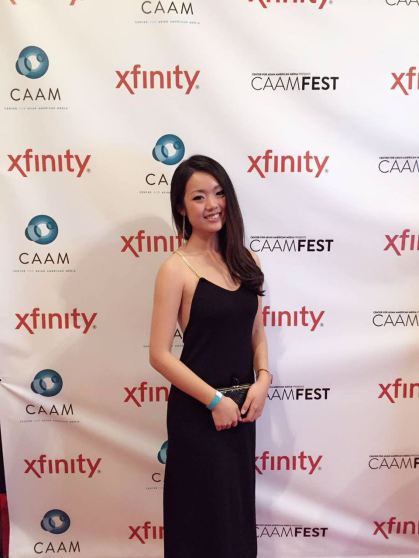
Other - CAAM Film Festival
Albee Zhang

From the time Albee Zhang was a child, growing up in Shanghai, China, she knew she wanted to make movies. The entertainment industry always fascinated her, and her creative senses were always strong. As she grew, this dream turned into both a passion and a reality. Now, Zhang is an internationally sought-after producer, living her childhood dream.

Throughout her career, Zhang has achieved what many still dream of. She has worked on hit television shows around the world, such as the British game show The Cube and the Chinese home renovation show Mei Hao Jia. She has made many successful commercials such as the series for Alpine Dairy. She has made films, such as Bride: Shanghai, I Love You, that have gone on to premiere at international film festivals. However, despite all of this, the highlight of her career was just last year when she made the film Caged.

“For a very long time, I was surrounded by fantasy, drama and science-fiction stories. When I was approached about this project, my eyes were brightened up. I had never done any sort of masculine project like this. Brotherhood versus self-ego, money versus fame, blood and underground fighting, all these elements had so many possibilities to be an outstanding project. I knew I had to challenge myself and see how much I could pull out of a project like this,” said Zhang.

Caged is a short film that follows James, a young man who fights in underground cage matches to make ends meet. In the film, James gets the life-changing opportunity to fight professionally, but when his brother Marco crosses a desperate drug dealer, James is forced to choose between his obligations to his brother and his dream of a better life.

“It is a very strong and straight forward theme for a narrative film. By looking at the character struggling through his life, at some point it kind of reminds me of the filmmaking life. Until the day we shine, we are always struggling. The character inspired us, we made the character. It’s a story about MMA fighter, but truly it’s a story to everyone who is fighting for their dreams,” said Zhang.

The film premiered at the New York City Independent Film Festival in May, and went on to have tremendous success. At the 2016 Media Awards it was recognized for Achievement in Film Direction, Achievement in Production Design, and won Best Male Actor. It was an Official Selection at some of the world’s most prestigious festivals, including the Festival Corner of Festival de Cannes, the Auckland International Film Festival, and the London Lift-Off Film Festival Online.

“It means the world to me and my crew that the film has done so well. It proved that everything we risked was worth it. Most cast and crew worked on this film because of friendship. Some of them even volunteered to work on this film. We all had the faith that this project would carry our enthusiasm to somewhere. It didn’t let us down. The honor belongs to the whole Caged family,” Zhang said.

As producer, Zhang managed the cost of the film to fit in an extremely tight budget and schedule. She also acted as production manager for the project, and ensured the crew was always safe and well taken care of on the set. Half of the sets were built in an abandoned basement of an ancient apartment to create an underground style, beat-up looking environment. It was a very bad condition location for filming as it was moist, very dusty, bad air-circulation and completely in the dark, pretty much like a dungeon, but it was perfect for the feel and look of the film. yet it’s exactly we wanted for the film set. Zhang made sure everyone was safe and happy, taking on yet another role.

“I was worried it would be too depressing to work in this kind of environment for four days in a row. We started working when the sky was dark in the morning, we walked out of the location and it was still dark but it was at night. Not seeing daylight for four days could be very intense and uncomfortable. I received zero complaints,” said Zhang.

Zhang made sure any dangerous spots were labeled and blocked, masks were provided, hanging wires were well placed and taped. She oversaw the crew and the fierce fighting shots were shot in the safest but most realistic way. She also arranged a crowd funded online campaign for the film, and received 20 per cent more than what she was aiming for. There is no doubt that she was pivotal to the film.

“Albee was indispensable to the making of our film and bringing it in not only on budget but under budget. She is an energetic, diligent and down-to-earth person who always speak for her crew. People work for her again and again. I also look forward to working with her again,” said the Director, Nick Powers-Gomez. “She has the drive to roll up her sleeves and do whatever needs to be done and fill up whatever position that needs her.”

All those that work with Zhang are continuously impressed by what she brings to the table, not just as a talented and committed producer, but also as a kind and thoughtful person. She not only understands what it takes to make a film a success, but she aims to do more than win awards. She is a storyteller, and constantly seeks to challenge herself. Her passion for what she does is always evident.

“Making film is utilizing a visualized universal language tool to bring out our mutual emotions. I put a lot of attention and work building up character relationships and finding the universal themes, such as love, family, fear, and friendship,” Zhang concluded.

Director/Producer Richard Kenyon Embarks on Several New Projects

Richard Kenyon
Director/producer Richard Kenyon shot by Jill Marie Robinson

Some creatives seem to have their hands in so many different projects that we can’t help but wonder if they’ve been blessed with a superhuman gift or discovered a mysterious way to create more hours in the day. The collective work of director/producer Richard Kenyon, which spans the gamut and includes award-winning films, PSAs and high profile theatre productions, is one that begs the question: How does one man accomplish so much?

Earlier this year Kenyon produced, directed and co-wrote the film A Girl’s Guide to Drowning starring Young Artist Award nominee Alexis Rosinsky from the films My Best Friend and The Archer, as well as the Golden Globe Award winning series Modern Family.

A Girl’s Guide to Drowning brings to the screen a story about the drastic manner in which a young woman tries to cope after a painful breakup with her boyfriend. Based on the character of Ophelia from William Shakespeare’s play “Hamlet,” who is as tragic as she is iconic, Kenyon’s newest film is a modern take on a classic play, which he says is, “proof positive that Shakespeare is relevant in the 21st Century.”

The film, which is expected to screen at festivals around the world later this year, is one that Kenyon has wanted to make for many years, but only came to full fruition after a chance meeting with Alexis Rosinsky, who plays the lead character in the film.

Kenyon recalls, “My wife and I were at a dinner party and Alexis performed a monologue from Ophelia and it blew us away. She was 13 years old at the time and I have never witnessed a more natural talent than the way she spoke Shakespearean text. So my wife and I went home and wrote ‘A Girl’s Guide To Drowning’ for Alexis.”

Considering his long-standing passion for Shakespeare’s work, and his ability to craft a story that hits home with modern audiences, A Girl’s Guide to Drowning was the perfect film for Kenyon to direct.

Richard Kenyon
Director Richard Kenyon & Alexis Rosinsky on set of “A Girls Guide to Drowning” photo by Maynrad Brenes

A highly sought after director, Kenyon is also in pre-production with the film Measure for Measure, a feature based on Shakespeare’s play of the same name, which he will be producing and directing. The storyline for the film revolves around a nun who’s propositioned by a high-ranking official and faced with the decision to lose her virginity in order to save the life her brother, or do nothing and keep her chastity intact. With Kenyon behind the wheel, there’s no doubt that Measure for Measure will do justice to Shakespeare’s original play, while also appealing to the palettes of modern audiences.

“To say this film is my opus is really an understatement. I have been around this play for my entire adult life. I saw a production of it at Stratford Canada in 1992 and it hasn’t left my mind. It starred the amazing Colm Feore and a young actress by the name of Elizabeth Marvel-who now both appear in ‘House of Cards’,” explains Kenyon. “Since that day I have directed the play twice and have been in it so I know the power it has in for an audience.”

In addition to Measure for Measure, Kenyon is also busy laying the groundwork for the upcoming film Some Day, a biographical tale about the struggles he personally faced as a child when he and his family moved from England to Canada, which is slated to begin shooting in Canada at the end of the year. If his plate wasn’t full enough already, he will also be directing the upcoming horror film Branded, as well as the film Ice Cream.

A film about the penal system, which focuses on the way seemingly simple decisions are overwhelmingly difficult for prisoners as they try to assimilate back into society after being released from the system, Ice Cream is expected to begin shooting in Barcelona at the end of summer.

“It is unlike anything that I have ever been offered before which was the real attraction. I love being challenged by my work otherwise why do it,” says the director about the upcoming film.

Kenyon’s directing career, which stretches back over the past three decades, first began back home in Canada in the late ‘80s when he directed “The Actor’s Nightmare” performed at the Alberta One Act Play Festival. His love for the theatre and his unparalleled talent as a director eventually lead Kenyon to serve as the artistic director and co-founder of several prestigious theatre companies, including The Shakespeare Company (TSC), Shakespeare in the Mountains and Knights in Waiting.

Over the years Kenyon has directed innumerable iconic plays including “A Midsummer Night’s Dream,” which was performed to sold out audiences during TSC’s inaugural summer season, “Richard the Third,” which received rave reviews for its ingenuity, “Cyrano de Bergerac” by Edmond Rostand, and more.

He says, “There is something very unique and exciting when an actor steps onstage and performs. A bond is made with the audience and they aren’t afraid to tell you how they feel. That is thrilling.”

While he’s achieved extensive success as a producer and director in the film world, with his first film Insomniac winning the award for Best Overall Score at the AMPIA Rosie Award as well as being nominated for the Best Editing, Best Cinematography and Best Drama Awards, the theatre is something Kenyon says, “never leaves you.”

This summer he will be directing the production of “Hamlet” produced by the Lovers and Madmen company, which will be performed at several venues throughout Pasadena. He is also directing and producing the upcoming production of  “The Curious Mind of Will Shakespeare,” an immersion show that will take audiences into the exciting world of Shakespeare and is slated to run at the Shakespeare Club Villa of Pasadena on October 26, 27 and 29.

Maynard Brenes, who served as the director of photography on A Girl’s Guide to Drowning, says, “Richard’s theatre background is probably his most valuable asset to directing that he brings to the table day in and day out. Part of the creative puzzle is being able to communicate with talent and having that background is invaluable. His work speaks for itself.”

In addition to his film and theatre work, Richard Kenyon has also made a huge mark in the entertainment industry as the producer and director of several riveting PSAs, such as The Keys, which earned an AMPIA Rosie Award Nomination for Best PSA in 2015, as well as the “Pason Systems” PSA, which earned him an AMPIA Rosie Award Nomination for Best Producer in 2008.

Beyond all this, Kenyon is the creator and radio host of “The Director’s Cut with Rich Kenyon,” an informative series that airs on Kaotic Radio and sheds light on all areas of the film industry.

Driven to create new and enticing work at every turn, Kenyon says “Stagnation is the death of art.”  

Anyone who’s had a glimpse of Kenyon’s work over the years would easily conclude that he is definitely one creative genius who’s never stagnated, and with four new films in the works, it’s doubtable that he ever will!

Writer-Producer Stuart Reid Sets New Standard for Kid’s TV

Writer-producer Stuart Reid’s appealing combination of talent, good humor and ambition has an unusual effect on just about every project he’s attached too. As soon as he joins a team, Reid’s high quality contributions typically elevate not only the task at hand, but also his role.

His first writing credit was for DHX Media and Nickelodeon’s Make It Pop, but since then, the charming Canadian has gone on to story edit, write or co-write nearly a dozen episodes of children’s television, develop original series for Sesame Street and NBCUniversal, and even been hired to simply write jokes, ‘punching up scripts’ on shows “looking for a little extra oomph in the comedy department”.

Earning industry-wide recognition is a characteristic aspect of Reid’s sure-footed career path, a journey that led him to film and television even before he finished school. “One of my first summer jobs as a teenager was with Corus Entertainment at Treehouse TV in Toronto,” Reid said. ”Working at Treehouse sort of piqued my interest and got me interested in television and production, and specifically kids. Next thing you know, cut to ten years later, and I’m living between Toronto and Los Angeles, staffing regularly and working with brands I grew up loving, like Doozers and The Jim Henson Company.”

For Reid, his professional life was firing on all cylinders. “It was a lifelong dream for me to work with Henson – a legendary brand with such a cherished and iconic history,” Reid said. “To me, it was a great accomplishment. The Doozers are those little green guys and gals from Fraggle Rock. The Doozers are always building, inventing things and engineering solutions to overcome the obstacles in front of them. There’s a real curriculum there, teaching kids to overcome adversity, and nurturing essential skills to help them creatively problem solve.”

From there, Reid continued to distinguish himself, working with writing partner Mark Purdy on an unannounced series for DHX Media and Mattel (the toy company). “Stuart is one of our primary writers,” story editor Shea Fontana said. “And he also one of the few writers that we could rely on to generate solid episode premises for a series. I knew I could always count on Stuart to deliver high quality, funny and entertaining stories. His work has been integral to our success.”

His gift for mastering the tricky balance of heart and comedy is Reid’s calling card, one that affords him many opportunities. It’s a comprehensive set of skills that allows him broad professional latitude. “Right now, now I writing on an upcoming show for Air Bud Entertainment, but mainly trying to find the time to develop more original material. It’s been a busy year.”

Reid always has one eye on the horizon, and he knows exactly what he wants. “I really enjoy working in animation, but really anything involving comedy that lets you flex the creative muscles. We love to play in big worlds with supernatural elements and larger than life stories. As long as there is heart and something real that makes our characters tick.” Reid said, “we’ve been writing on a lot of existing franchises or other people’s shows. Our ultimate goal is to get a series of our own on the air… Something original, in the truest sense of the word, that came from our tiny, tiny brains.”