Category Archives: international Talent

Ask an expert: A “how to” of line producing

Esi 1
Line Producer Esi Conway

I am Esi Conway, and throughout my years of being a line producer, I have worked hard to become recognized as one of the best at what I do. As a line producer, I build teams who can pull together to make great television shows. I am often one of the first people on the team.  I usually start off with a budget, schedules and deadlines. I then build teams, find locations, and book the crews. Going around the world, I have worked on some of the world’s most well-known television shows, for networks such as MTV, HGTV, BBC, Animal Planet, and more.

To be a successful line producer, you must be organized, disciplined, and have an in-depth knowledge of scheduling and budgeting, as well as an understanding of the technical accepts of TV making. On a day-to-day basis, you plan and schedule to get ahead of the project and forecast the needs of the team. You also trouble shoot any problems that arise. To succeed as a line producer, you need exceptional communication and diplomacy skills about to balance editorial expectations with the financial constraints of the budget. Here are my quick tips to getting into the industry and staying in the industry:

Getting into the industry

When I started out, nepotism was the name of the game. To get a start in the industry, you had to know someone working in TV. I had no such contacts, so I got a friend who studied design to make a cool eye catching resume and cover letter and sent it to every production company listed in the TV directory called “’the knowledge.’ I was given a few weeks work as an office PA, and that’s where I got my break. Thankfully, now there are sites you can go to where they advertise starting positions in TV.

Build relationships with your team

Gain an understanding of what each role does and the challenges they face as this will help you when it comes to problem solving.

Be flexible in your approach to problem solving

Editorial teams are constantly trying to squeeze more out of a budget. Listen to the idea and think is there a way to balance this request with the budget. Ask yourself “where might you be able to save to give them some of their additional requests?”

Be approachable

It is important that you know what’s going on in the project, so it’s important that you are approachable so that people come to you with ideas, issues, progress reports, and everything else.

Stay in contact with contractors

Be the connector person. In this role, it is important to have a great list of contacts with a proven track record in each area so that you can build teams for various projects. Who can pull together to produce hit shows?

Remember the working hours

Filmmaking and television don’t allow for the 9-5, so it is often hard for those with families to maintain their positions at companies. You must be prepared to put in the hours, whether it be the weekend, or holidays to get the project completed.

Take a minute to enjoy the moment

Once you get your foot in the door, it’s important that you maintain your enthusiasm and commitment. As it is a project based industry, you need to maintain your standards so that people want to employ you again. If you can do this, it can be very rewarding. I have worked with some top names in the industry, on television shows watched by millions. Although the hours are long, it doesn’t feel like work as the excitement from the team and the project carry you through. From being on a safari shoot in South Africa, to shooting in the favelas in Brazil, to filming with the Queen in Malaysia, there is never a dull moment.


Director Jan Pavlacky turns harsh conditions into artistic masterpiece

Many people are haunted by the idea of what they should spend their life doing. Finding a career path that pays the bills and makes one truly happy seems almost impossible. Luckily for Jan Pavlacky, a chance job on a film set ignited a dream, and that dream has turned into the reality of becoming an award-winning director.

Pavlacky’s talents are recognized around the world by both colleagues and audiences that see his work. His directing on his film BKA 49-77 received international acclaim and was screened at some of the world’s most prestigious film festivals. His exceptional directing abilities have been appreciated by companies such as Nike when he did a commercial campaign for them, as well as world re-known production companies such as Savage and atSwim. He has excelled in directing commercials, films, and even music videos, including his work on the music video for the Please The Trees song “It’s Not Me.” The music video called for Pavlacky to shoot in difficult conditions during the middle of winter, on the highest mountain in the Czech Republic. When it came time for the shoot, there was a massive snowstorm, and temperatures fell below zero degrees.

We drank a lot of hot tea and mountain rum and wore warm clothes. We were fighting against extremely low visibility but luckily we had several walkie-talkies that we were able to hide in the actors costumes so we I could direct them during the shot. We had the chance to shoot on film stock, which, due to the extreme weather conditions, was the only way how to shoot, since the temperatures were too low for a digital camera,” said Pavlacky. “I love when the conditions are somehow extreme. It makes me somehow more focused towards the one single goal. We were really lucky to have such harsh weather conditions since the weather played a crucial part in the story.”

“It’s Not Me” was Please The Trees’ first music video. Although such extreme weather conditions were not originally part of the plan, Pavlacky used it to add an extra element to the story, thinking it was the best way to show a man finding his soul in the emptiness, which is what the song is about.

Rather than giving up, Jan pushed forward in order to convey the deep subject matter through the visual medium.  The final product ended up being a beautiful piece of art, showcasing gorgeous shots of the white-out conditions.  Since its release, the video has accrued tens of thousands of views and kick-started the successful career of the band,” said Alessio Spinelli of Milk and Honey Pictures, the production company that did the music video. “The band wouldn’t be where they are now if it weren’t for Jan’s incredible work as lead director on that first music video.”

Milk and Honey is a production company that focuses not only on commercials and music videos, but also on feature films and television series. They are one of the biggest production houses in Prague, and have an impressive reputation not just in Pavlacky’s native country of the Czech Republic, but also worldwide.

“Milk and Honey have been in the business for more than 20 years. They’ve produced big Hollywood Blockbusters and countless foreign commercials, and working such an important company was a huge step in my career,” said Pavlacky.

Pavlacky’s impressive work with Milk and Honey goes far past the “It’s Not Me” video. He was also the lead director for multiple Milk and Honey projects including commercials for Theraflu and GS Enerix. The Theraflu commercial was his first experience working on a project for the U.S. market and worldwide renowned digital agency Wunderman.

“Notably working for the US market is always something special and it is a benchmark for many directors in my field, so obviously, the responsibility was huge, and I was extremely happy that the shoot ended up successfully. The collaboration with the New York creative team brought some great ideas into the shoot. I also had a great Director of Photography on board who shot many feature films and together we delivered a great commercial and had an amazing and creative time on the set,” said Pavlacky.

The commercial was shot at many different locations around Prague, creating a visual experience that impressed both Wunderman and the American audience. His work on the GS Enerix commercial also did wonders in the Czech market, airing to thousands of viewers on television. It helped to improve all brand indexes, including brand recognition, purchase intent and sales. With results like this, it is no doubt that Pavlacky’s impact will continue to impress audiences on both the big and small screen for years to come.

Photographer Alejandra Sierra brings artistry to everything she shoots

For as long as Alejandra Sierra can remember, she has always been holding a camera in her hands. There was never a moment of doubt about what she wanted to do with her life; she always knew that photography would make her happy. But what makes her luckier than most is that not only does she love what she does, she is extraordinarily good at it.

While being recognized around the world for her talents as a photographer, Sierra has seen tremendous success. She has over 22 thousand followers on Instagram, and her first individual exhibition, “Metalmorphosis” went on to be featured in the leading contemporary art museum, MURA, in her hometown of Guadalajara, Mexico. Her photographs have been seen by hundreds of thousands of readers of various Mexican magazines, and contributed to making the magazine Cream the success it is today. This trend continues in regards to her work with national companies.

“I love photography and I really enjoy product shots, and shooting for national companies allows me to do both,” said Sierra.

Sierra’s work has helped boost many corporations such as La Tequila, Le Garraf, Marisa Pasteleria, Café Barra Café, California Wings and Beer, Cortez, Gaspar, Osaka, Olio Bistro, La Bocha, Ambiderm, Marianka, and Kuu, to name only a few. She was instrumental in providing them with widespread social media exposure, as well as drawing in a growth in sales.

“It makes me really proud to have such big enterprises to like my work, know about it and want their products shot by me,” she said.

One of her more substantial jobs was for the restaurant De La Rosa, and Sierra helped the company revamp their image with her work. For Sierra, the chance to work with a company that gives so many jobs to the people in her country was invaluable.

“It was a humbling experience to know that I was responsible for the pictures of this iconic brand. I shot products I grew up buying as a kid and then portrayed what they represent through a picture,” said Sierra.

Rocío Gómez Michel, the Marketing Manager for De la Rosa, was extremely impressed with Sierra’s work with her brand. She attributes Sierra’s work to the success of the restaurant’s social media, allowing for consumers to feel closer to the brand they grew up with, and they saw a sizable increase in sales as a direct result from Sierra’s photos.

“Given my history as a brand analyst, I know the importance of a good photographer in campaigning and branding an organization. Alejandra’s experience as a photographer, as well as her achievements through her career made her a clear choice to help in the continued success of De la Rosa. Her expertise is an invaluable asset toward the overall success and growth of any organization she becomes involved with, and I can confirm from personal experience that she is largely responsible for much of the success,” said Michel.

Sierra’s work has impacted not only the sales of companies, but also the awareness of many social cause organizations across Mexico. She uses her art to help improve the lives of others in her native country, something that is not only rewarding, but important.

“Telling a story, bringing a cause to life, being able to make a difference is one of the best feelings in the world,” said Sierra. “It makes me really proud. I feel useful and that I´m making a difference through my passion and career. Being able to help doing what I love the most is amazing.”

Of the various social causes she has helped, what was perhaps the most substantial was Sierra’s work with Mi Gran Esperanza (MGE), a widely renowned association dedicated to the eradication and treatment of cancer. Mi Gran Esperanza is a civil association founded 22 years ago that helps to treat and attempt to cure children with cancer. More than 3,000 children and their families, have been helped by the association, and they are one of the most important associations of our kind in Mexico. Mi Gran Esperanza helps with physical, emotional and spiritual health and recovery of low income patients and their families. Each year, they treat around 400 kids mostly from the western side of our country, helping them to overcome their battles.

“Working with MGE was Bittersweet. It was sad, because you never want kids to get cancer, but being able to know that my work was going to help their lives being a little bit better was great. It was an honor to shoot this brave kids and their families,” said Sierra.

Sierra’s photos were featured in the annual calendar that the organization puts out every year to fundraise and provide as a thank you for their donors. The calendar showcases the patients, the installations, the families and what they do. Estela de la Alba Rulfo the CEO of Mi Gran Esperanza, says that they chose Sierra for this project based on her previous work and reputation as an outstanding photographer.

“Alejandra’s leading role as the photographer for our calendar was instrumental in raising money for our organization, and that we required a top tier photographer to complete this task. After working with Alejandra, I am confident that we made the right choice. Thanks to Alejandra’s preeminent skills as a leading photographer, as well as her patience and ability to complete shoots timely, the people felt comfortable, happy and familiar in each shoot. The results were amazing pictures and a truly beautiful calendar. The closeness was such that Alejandra even became a sponsor for one of the girls she felt the most connected with. This encapsulated the desired tone of the calendar, and showcased the impact that the donations have on many of our patients and families. I am wholly grateful to have worked alongside her throughout this project,” said Rulfo.

The calendar has unparalleled success, and sold nearly 10,000 copies. Because of such tremendous success, MGE presented Sierra with a recognition as a thank you for all the work done and the positive results.

“It was great being able to help them and put a smile on their faces,” said Sierra.

Sierra chose the uplifting theme of gratitude for her photos, and showcased the reflection of this emotion from the families, whose medical expenses are entirely covered by donations. After choosing the theme, she had to coordinate the photo shoots. This resulted in a month of organizing and shooting, and dividing what our services include, what did we do with the donations and how the families were thankful for them. Sierra shot the patients, their families and the events, and was ultimately responsible for the majority of the calendar.

“This project has been one of my most valuable lessons in life. Seeing the kids so positive, so brave, and so happy was really inspiring,” she concluded.

Actor Wadih Dona’s Menace and Magnetism Earns International Renown

WADIH DONA HEAD SHOT3

Australian actor Wadih Dona’s career has been marked by an impressively steady progression of accomplishments. His natural cache of talent and classic theatrical training has earned him two decades of sustained professional success, not only on stage but also with numerous television and film jobs. Dona’s gift for creating fully realized, believable characterizations have landed him several very high-profile recurring roles on Australia’s top TV shows, but those successes are just a minor aspect of the driven actor’s ambition.

“I am interested in telling stories that resonate on a larger scale,” Dona said. “I have been in TV, film and theatre for many years in Australia, and I am interested in opening up avenues for international work. The US is a market that actors naturally gravitate to, and given my long list of credits, I felt ready to take it on.”

It didn’t take long for Dona to reach this goal. His portrayals utilize an impressive mixture of instinct, stagecraft and soulful, emotional intensity; Dona draws viewers in close, building an emotional bond which he deftly exploits for a powerful artistic impact. It was precisely this quality which led him to his first US film, 2016’s Septembers of Shiraz, playing alongside two of America’s biggest movie stars, Oscar winner Adrien Brody and the acclaimed lead actress Salma Hayek.

The film, a thriller set in 1979 Iran, was somewhat of a passion project for the two stars—both also served as producers—and it combines taut suspense and raw emotion into a compelling whole.

Septembers of Shiraz is an art house film, it’s an intimate family story, not an action blockbuster,” Dona said. “The film is an adaptation of the novel by Dalia Sofer, and is based on real life. It centers on a Jewish-Iranian family, played by Brody and Hayek, who are suddenly faced with persecution when the Iranian Revolution unfolds in 1979. Brody’s character is arrested, tortured and humiliated, and the film closely follows his ordeal and the fortitude he had to have to get through it.”

Dona’s personal background—the actor grew up in numerous European and Middle Eastern countries—and formidable resume of successful performances served him well when it came to Septembers of Shiraz.

“I knew Wayne Blair, the director, as we had worked together in a production of Othello for the most eminent Shakespeare company in Australia,” Dona said. “We had history, were good friends, so he trusted me and my work methodology—and vice versa.”

“He sent me the script, asked me to screen test and told me that the project would be cast out of the US, with Salma Hayek and Adrien Brody attached. Obviously, I did well because I got the part, but Wayne had no final say in the casting so it was good to know that I achieved it on my own merit.”

This was indeed the case, as executive producer Heidi Jo Markel said: “We were looking for an actor with gravitas, who could portray the menace of the Iranian Revolution. We knew we had our guy when we saw his fantastic screen test. Wadih is talented actor with incredible screen presence and the icing on the cake was that he was a pleasure to work with on the shoot.”

To develop his character (Rostam, a member of the infamous Revolutionary Guard) Dona focused on Markel’s watchword: “Menace. Rostam symbolizes the forces of chaos and anarchy within the Revolution,” Dona said. “I was cast because I can access those dark emotions quite easily. As a child I was exposed to civil wars and I knew those kind of men, I saw them—young men who suddenly had power, and they could do what they pleased with that power. When we were on set, carrying weapons and with the period uniforms, I was scared when I saw my own reflection in the mirror!”

wadih_on_set

“Adrien Brody and Salma Hayek were both very personally invested in this story,” Dona said. “I had scenes with both, and each was a pleasure to work alongside, but I had more to do, plot wise, with Salma. In one scene, Rostam loots her house and there is an obvious sexual threat as well as one of underlying violence. We rehearsed this scene a few times and kept going deeper emotionally. She went into that dark emotionally territory with me so openly, we built rapport very quickly because of this. She was fantastic to work with—open, accessible and an absolutely gorgeous human being.”

When the film debuted at the prestigious Toronto Film Festival, Dona said, “It premiered there in the biggest cinema in Toronto, the Roy Thompson theatre, with 2,630 people watching. It was massive. I had never seen a cinema that size.”

A complex, thoughtful piece of filmmaking, Septembers of Shiraz was aptly described, by one critic, as “a germane and intelligent observation of the current global political climate in which the world’s ‘have-nots’ are rebelling against the party-political status quo.”

For Dona, it had even more significance. “It was a fantastic, enriching experience,” he said. “Personally, I think we made something quite beautiful and life affirming. And it has helped me leverage myself professionally to do more work. It’s a calling card of sorts for me now—people sit up and listen when I tell what I have done in this film. And, if I had to be selfish, I would say also that shooting a film with one of your friends directing and acting alongside Oscar award winning stars, well, that’s too not bad, either, is it?”

AN AWARD-WINNING FILM ABOUT A MAN WHO NEEDS NO AWARDS: I HEARD THE FLOWERS BLOOMING WHEN I WAS 80

Short film IHFBW80

How do you create a film about an eighty-year old man transporting a piano across town to perform a solo concert? Well, besides having all the creative professionals involved…you hire the amazing producer like Huang Zhe (aka Gigi). With a variety of different types of productions (film, commercials, etc.), Gigi quite simply knows how to maneuver every piece into its perfect place so that the artists can get along with the job of being artists. The most classic of automobiles need the proper propellant to deliver performance and so does every classic production. When director Zhen Pan started off with a rough test shoot, he reached out to Huang and enlisted her help to put the film on track. After reading the script and conferring with Pan (whom she had worked with previously on other productions), Gigi decided to sign on and bring new life to the film. It was a well contrived decision as I Heard the Flowers Blooming When I Was 80 won Best Screenplay in 4th Golden Panda International Short Film Festival and was a finalist in the IndustryBoost Competition. Huang’s ability to reset the course for this production and empower it to such great success is a testament to the fact that a great producer is paramount for filmmakers to achieve their vision.

Writer/director Zhen Pan is often referred to as China’s Wes Anderson. Within his decade long career, he has amassed numerous lauded productions. It was highly important to him that I Heard the Flowers Blooming When I Was 80, matched up to those in his impressive resume. He recalls, “We had a rough testing shoot and it didn’t quite go well. A lot of things went wrong and we just couldn’t figure out a way to make things work the way we needed them to. It was not until Huang Zhe stepped in to become our new producer that we were able to re-start the  project. Not only did she manage to find all the locations that we needed, but she also re-grouped the entire team and kept everyone energetic and focused on creating something that we would be proud of. I couldn’t thank her enough for being the production leader and making everything happen. This film would have been impossible to make and receive the recognition it has been given without Gigi.” Huang is quick to admit that she was able to make use of some prior work, essentially retaining about a third of previous footage. New schedule shoots and permits required quick and accurate designing to get the film in on time and within budget. The film required a consummate professional like Huang to guide it into a proper “landing.”

While the film focuses on one main character, the cast numbers more than thirty and required a sizeable crew. I heard the Flowers Blooming When I was 80 is a heartwarming story of recalling and achieving your dreams. On his 80th birthday, a lonely old man named Larry (played by John S. Boles) meets two children who are doing a school survey on the street. The little boy asks Larry:” What was your dream when you were my age?” This reminds Larry of when he was a little boy and wanted to hold a piano concert. Everyone dissuaded him from the idea as his parents believed his older sister to be a better pianist and more deserving of attention. Everyone ignored the boyhood Larry’s feelings. With the gradual growth of age, little Larry became old and eventually forgot his dream. On his eightieth birthday, Larry spent time alone, as he usually does while his children made excuses to avoid their father’s birthday. Larry suddenly remembers the question that the little boy asked him in the morning,” What was your dream at my age?” and decides to pick up his dream again. Moving his piano from the garage to the center of the small town, he interrupts the lives of the town’s commuters, but he finally achieves his dream of holding a piano concert…in spite of having no audience. The film gives wings to the idea that our dreams are for ourselves and not simply to be pursued for the appreciation of others. The very idea itself is a perfect description of a successful producer’s role. It’s a concept which Huang has thoroughly embraced. Gigi confirms, “The most important thing for me is seeing the stories that I like and love to produce. I was attracted to this production by only seeing the film title, and stepped in as soon as I read the script. I knew the problem was that the film didn’t have a proper plan and schedule. It was also highly important to have a crew which can work well with each other. A talented crew is so important, but the most important thing is keeping a happy filming environment.  Everyone should enjoy what he or she is doing. I decided to regroup the crew for this film, meaning that I found a totally new crew for this production. I started the pre-production earlier this time. Since I prepared early and had good communication with the city, we got the street closure for free…nobody was unhappy about that.”

A seemingly “doomed” production that couldn’t quite get off the ground, I Hear the Flowers Blooming When I was 80 went on to be an award-winning film because Gigi Huang recognized the potential of the story, cast, and crew. Investing her talents with those of this production, it went on to gain the type of notoriety that all its participants hoped for. Gigi comments, “To be honest, I was really happy and felt honored that we won the ‘Best Screenplay’. It might not have gained notoriety or prestige for my career personally but that’s not why I’m a producer. I’m perfectly happy to sit back and know that I was able to achieve exactly what I set out to do and that allowed Zhen Pan and everyone involved to be the artists that they are.” …which is exactly what I heard the Flowers Blooming When I was 80 is all about.

headshot 2

Mariana Montes is bilingual triple threat in Too Many Tamales

Headshot
Actress Mariana Montes

For Mariana Montes, acting is more than a career choice: it is a chance to continuously grow as a person with each role she takes. She has conquered the stage both domestically and internationally, both in Spanish and English, both in comedy and drama. Whether it is as a small role or a leading lady, this versatile actress is doing what she loves, and giving audiences performances to remember.

Originally from Mexico City, Montes is completely bilingual in both English and Spanish. She has worked in successful plays, such as Second Chances directed by Connie St. John from No Weapon Productions, Oedipus Machina at the prestigious Odyssey Theater Ensemble directed by Ron Sossi, and starred in Uterine Affairs by French writer and director Celine Nyanga. Uterine Affairs was nominated as Best International Ensemble, and won for both Best Original Playwright, and the audience-favorite Encore Award at the Hollywood Fringe Festival last year.

Her Mexican heritage and love for language and travel is something she brings to her work as an actress. When starring in the play Too Many Tamales, she performed with The Bilingual Foundation of the Arts (BFA). The BFA has a 42-year history of commitment to all people in the greater Los Angeles area, presenting the finest Hispanic literary culture for both Spanish and English speaking audiences. BFA’s presence is an integral part of the Los Angeles cultural scene, and provides an added dimension of understanding between the diverse cultures of the area by emphasizing the similarities of the human condition, which serve to unite us.

“I am able to identify natural talent, and Mariana is one of those gifted artists, overflowing with beauty, charm and charisma,” said Cecilia Garcia, the Director of Too Many Tamales and the Artistic Manager at BFA.

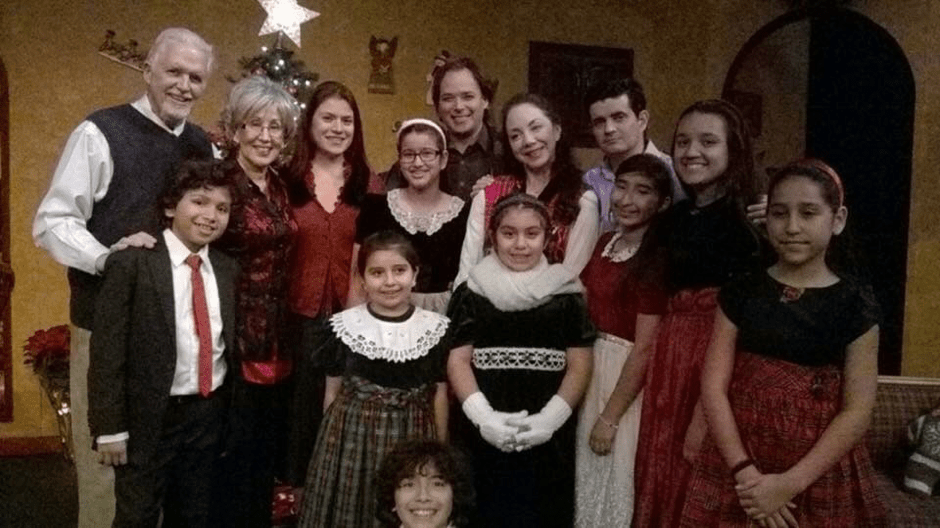
Based on the story by Gary Soto, Too Many Tamales tells the story of the young girl Maria, who well helping her parents make the tamales for Christmas dinner, she sees her mother set her precious diamond ring to the side. Although only trying it on for a brief moment, Maria loses the ring. In a panic, she corners her favorite cousins, and the four of them secretly eat the 24 tamales in a goal to find the ring in the dough. After eating all the Christmas Eve dinner, Maria learns a lesson and witnesses a Christmas miracle.

Being in this production was fantastic. I was surrounded by a great team of professional actors. I thought it was going to be hard to work with kids but I was mistaken. They taught me a lot actually, and it was always fun to have them around,” said Montes.

Montes played Maria’s Aunt Rosa, a middle class hard-working woman who is dedicated to her family and brings the rest of the characters together. For Montes, who does not often get to play fun roles like Rosa, the change was welcome.

“Rosa is the perfect Latino mom who has everything under control. She knows about her niece’s secret, she can talk to the puppets but she is supportive about it because she once knew how to do it too, it’s a matter of faith,” said Montes.

While Too Many Tamales is a comedic musical, Montes typically is cast in dramatic roles. The actress is a true triple threat, as her acting, singing, and dancing abilities shine.

“Everything was full of charm and love. We did this show in Plaza De La Raza at Margo Albert Theatre that holds almost 300 people. It was amazing when we had full house and we could hear all the audience members singing our songs,” described Montes. “At the end of the play, we would invite them to come and join us for a final dance. It was great to see how much they love the show. I was sad when it was over. People would come to me and congratulate me and the rest of the cast for our performances and you can see how happy they all were.”

The true highlight of the experience for Montes was working alongside such a great cast and crew, saying they became a family from the experience. The production starred child actress Tiffany Galaviz, who was recently seen on television show The Voice: Kids, as well as Gloria Laino, known for the hit shows American Horror Story: Asylum and Weeds.

“Mariana is an incredible talented actress. I have had the opportunity to work with her in both film and theater, and I can tell you about her dedication and passion,” said Laino.

Too Many Tamales is a Christmas classic, but it is so much more than that. For Montes, the message the play communicates is extremely important, especially in the divided nation that we see today.

 It’s all about family and love. It’s a play that leaves you with the desire to communicate how much you love and care for your friends and family. It is a play about friendship, love, and tolerance between cultures,” concluded Montes.


Artist Alexandre Cornet has exemplary vision for CosmoVision

Alexandre Cornet was just a child when he discovered what his passion was. While many children are doodling in class, making stick figures as a distraction, his drawings were much more than that. This innate talent and enjoyment for art gave rise to a career in illustration and design, and he has never looked back.

Cornet’s abilities have led to many achievements throughout his career, and he is sought-after by many companies looking to define the artistic side of their brand. This includes the internationally successful production company CosmoVision Media Group. CosmoVision is a production company that specializes in high-end natural history and factual entertainment, specifically documentaries. Their goal is to make films that spread awareness on environmental issues, and help “heal the planet” as they put it.

“I like CosmoVision’s vision and the important subjects of their work and wanted to be part of it,” said Cornet.

When Cornet was brought on board, CosmoVision did not have an identifiable visual aspect to the brand. He was in charge of creating a logo that would be instantly recognizable to those in the industry.

“It was a great experience, I had never worked for a documentary production company and I had to create a logo that would have some animated version for video credit apparitions. It took some time as I had to create the visual identity from scratch. I had to create a slick and minimal visual identity, adaptive to different mediums and formats,” said Cornet.

When creating the logo, Cornet did not simply begin designing what he thought would work. He wanted to ensure the logo was suitable for the company, so he did his research. He began with several interviews and things started to take shape through the investigation process.

“I researched a lot to create a mood board and then spent a lot of times exploring possibilities sketching on paper, and developing selected ideas until approved. Once determined the idea and concept of the logo began the second phase of the work, which was to create some rules and guidelines, experimenting further for each application, and at last designing the basic printed materials such as letterhead and business card. Good communication and regular feedback made everything possible,” he described.

After conducting his research, Cornet decided to create something subtle and minimalistic, easy and didactic, to fit and emphasize the richness of the content and purpose of CosmoVision’s work. He had his work cut out for him, as the logo had to go into several mediums, such as print animation, and video, and would still work well on a business card. It had to work well being superposed onto moving images. The Idea behind the result is that the shape of the “C” of CosmoVision is eclipsing a circular light, like the moon to the sun, creating a different, unique and displaced “C” shape, bigger and standing out as the initial letter.

“I am happy I helped them to actually define their whole project and to know their satisfaction when they actually saw it in video opening credit use, on top of video sequences and when they printed their business cards and letterheads,” said Cornet.

Cornet has known Jacob Steinberg, the director of CosmoVision, and the art director Paola Saavedra, for some time, and knew of their experience and dedication to their work. It was because of their reputation that Cornet initially decided to take on the project.

“They both have different personalities and are full of stories and inspiring experiences. It has been a great working and learning from each other,” said Cornet.

Steinberg is an Emmy Award Nominated Cinematographer. His work has been screened internationally on television and in festivals. He is the owner and managing director of CosmoVision Media Group, a full-service production company specializing in high-end documentary film for television and cinema. He describes working with Cornet as a great experience.

“Alex was responsive, and took the time to be creative and interact with us throughout the entire process. He managed our feedback very well, ultimately producing a final product that we are extremely satisfied with. Alex’s work represents the face of our company, and we are thrilled with it,” said Steinberg. “Alex is a dedicated creative professional. He manages expectations well from the start, and provides the framework upon which to make progress effectively. He then is patient, giving and receiving his feedback, providing his own inputs simultaneously. He takes the time to really understand his clients’ passions, priorities, and ultimate goals to provide exemplary final work that exceeds expectations.”

Cornet’s vision for CosmoVision has been extremely well-received. You can view his work on the logo on the company’s website here.

THE INCREDIBLE VOYAGE OF JIPING LIU

By Kelly James


A Graphic Designer has to look at the world differently. If you’ve ever stopped to truly examine their work, you’ll recognize that they take what most of us see as mundane and are able to capture the excitement, beauty, and originality of almost any action or object. They “turn up the volume and color” in our world, often without sound or pigmentation. They allow us to see others and ourselves as we’d like to be seen. The Graphic Designers who practice their vocation in the film industry have a number of tasks and opportunities before them but essentially, they enable visionary filmmakers to manifest the beginning stages of their ideas. Whether by means of storyboards, posters, or any number of creations that the Graphic Designer brings forth, their perspective can be the first or the last images that the public and filmmakers themselves retain about a particular production. Jiping Liu has worked in a variety of genres and cultures as a Graphic Artist with resounding success and recognition. In particular, she is known for getting inside the productions she works on to see how the professionals in the film industry work in order to more accurately and artistically create the images she is praised for. When you know more about Jiping’s background, you begin to understand that her perspective and talent is the product of an artist who has always pursued something bigger.

Jiping always knew what she wanted in life, to be an artist. From the earliest days in her hometown of Shijiazhuang city, China and later when she moved to Beijing…it was always about art. Comics, cartoons, painting…all of these were valid artistic expressions to a young Liu. She recalls her first compulsion to direct her career path to graphic design stating, “I’m pretty sure I decided to become a graphic designer rather than a painter during the first summer holiday in Beijing Jiaotong University. I got an internship offer from an international company. I remember the company’s creative director was sick for two weeks, so I got a chance to work on company’s ongoing APP design called ‘Life Circle.’ I was so excited to work on real projects and they trusted me very much, letting me try to design the ICON and opening page for the APP. It was just a try, but I took it very seriously. To my surprise, the head of company picked my ICON design. In the end, this APP was available to come out on market and many people liked to download and install it. This was my first time feeling that graphic design is graceful and makes people’s life easier, even beautiful.” During Jiping’s third year at University she received an offer from Tencent (one of the largest Internet companies and largest gaming company in the world) to work as a graphic designer. Her work for Tencent included working on several big budget events, designing posters, books, and advertisements for each event. At that time, Liu opened her own personal design shop online. The artist she was already became fused with the modern day opportunities she was being given.

Realizing that her artistic talent and sensibilities could be utilized among a variety of formats, Jiping became interested in the opportunities which the film industry allowed. Serving as graphic designer for the horror film “Kumal”, Liu’s work became visible at such high profile events as the 70th Cannes Film Festival, the Los Angeles Independent Film Festival, and many others. Writer and director Jun Xia had seen Jiping’s work in another film at a screening in Warner Bros Studio (She gives Me Sight) which was graphic designed by Liu. He hired her to be the graphic designer on his film “Emily” which became a multiple award winner

Creating the title design of “Sea of Mirrors”, Jiping chose to use mellow fonts to represent the delicate and beautiful female form of the film’s lead character juxtaposed against sharp edges and corners to represent the darker elements within the film’s story. “Sea of Mirrors” director Thomas Lim says, “Jiping Liu is a graphic designer with extraordinary creativity and skill. Her designs are amongst the best and most unique I’ve seen and her talents are right up there with the best.”

One of Liu’s favorite projects was the work she did for the film “Locked.” The film contains numerous gun battles. Liping used an illustrator style design poster for “Locked.” The colors of the characters on the poster are the same costume color they wore in the movie. She tells, “The size of the budget, big or small, for a film is not the most influential when it comes to design quality. Less can very often be more. More is not always a good thing, big budgets allow you to choose easier and work faster but I find that with a small budget I will spend time to find a way to get the art to work. If you have the skill, you can create quality. Whatever spurs your creativity and brings it out of you is the best.”

The future is not only bright for this graphic designer, it’s also busy. Liu is currently working on a number of projects for Alpha Pictures Inc. Frank Antonelli sought Jiping out and hired her to be the lead graphic designer on three very important upcoming productions; Bee, Armor Hero and Requiem Street. BEE, Armor Hero and Requiem Street were the top 3 popular comics and animations in China. Alpha Pictures Inc. is now developing and adapting these three animations to live-action/global feature films. BEE has 1 billion views on u17.com, a six-episode animated web series released in China and Japan and an action figure line released in 2015. The Requiem Street comic has been published since 2012 and has 2.2 billion views on U17.com. Number 1 Chinese comic in 2016 and twenty-four-episode animated web series released. Requiem Street also has a live-action TV series in production. Armor Hero is based on the top selling toys, Armor Hero is a series of characters on which more than 200 TV episodes and on which two feature films are based. In its eight-year history, Armor Hero has attracted 400 million fans and garnered a 4.8 billion accumulated viewership through video portals in China. The brand generates more than 600 million RMB in toy retail sales per year. The massive popularity and built in audience interest of these three sotrylines bodes extremely well for anticipated box office enthusiasm and returns.

Of all the talents that Liu possesses, the most beneficial may not be the most obvious. As someone who has spent time in both the US and China, as well as possessing an artist’s eye for the film industry, Liu is perfectly suited to further establish the bonds that have become mutually beneficial to both locations. The differences between these two cultures is something which Jiping has always found attractive. She enjoys the experience being caught between the two. She admits, “I received a very good job offer from China last year but I gave it up.

I believe the future of film and TV will be international and global. Nowadays, many Chinese production companies are opening branch offices in Hollywood; they want to corporate and step into Hollywood films. It’s a big trend for the modern film industry. Artists who have different cultural background, art style, and knowledge will be in need. People always say American films are top, to make these films keep shinning there needs to be different cultural elements. Movies play for everyone no matter where you located. That makes me interested in being a Chinese graphic designer in the US, because I want to contribute to this Chinese and American corporation.”

Screen Shot 2017-06-04 at 4.58.36 PM

Actress Valeria Gonzalez travels the world doing what she loves


valeria-5
Valeria Gonzalez, photo by Rudik Osorio

Valeria Gonzalez was born in Monterrey, Mexico, but her career has taken her all over the world. The diverse actress speaks six languages, and is completely fluent in three. Her cultural experiences both from her home country, and the many places she has been, help make her the extraordinary actress that she is, combined with innate talent, and a passion for what she does.

Despite working in some of the most beautiful and unique locations the world has to offer, Gonzalez remains humble. One of these spots was the island of Carloforte, Italy, when she shot the film Isola.

Isola tells the story of Martina, played by Gonzalez. Martina is of Italian origins, but lives in Madrid. She visits Sardinia to see her Italian grandmother. While on the island, she decides to conduct some video interviews on her late grandfather, Nonno Eugenio, who she was very close to. Unfortunately, the interviews are a disappointment when Martina discovers that those who knew her grandfather, especially as a young man, have very different memories from her own.

“The island is just stunning, and the people there are so beautiful,” said Gonzalez. “It was one of the best experiences of my life. While I was playing a complex and beautiful character going through such an interesting journey, I was also exploring a delightful island together with the wonderful people that helped make the film happen.”

The role required Gonzalez to speak Italian, which is among the six languages she can speak, including Spanish, English, Catalan, French, and some Swedish. Despite Italian not being her native language, and coming from Mexico rather than Italy, Gonzalez’s versatility as an actress shone through, and she was empowered by the character she was playing.

“Martina is hopeful. When she decides to interview her grandmother and other people who knew him, she gets very defensive towards her grandfather, since their view of him doesn’t fit the perception she has always had of him, being an incredible human being. She feels very disappointed when they keep making fun of him even if it is in a harmless way. She finally comes at peace when she realizes that her little cousin still thinks their grandfather was a good person,” she described. “I loved her journey, how she starts being so excited about her personal project, to then being disappointed and hurt when she finds out other people have a very different perception of her grandfather, and then finally she realizes her image of him might be only hers but it is strong and beautiful, and she won’t let that change.”

This message, and Gonzalez’s performance, resonates with viewers, and went on to be selected for the Botti du Scoggiu film festival in Italy. Gonzalez was excited and proud of their film for making it to the festival, but she always trusted the director of the film, Catherine Dewar, to make something exceptional.


valeria-6
Valeria Gonzalez working on the film Isola

“Valeria is an extremely talented and inspiringly natural actress. She is always empathetic and open towards those she works with, generous in her work and in life. While working with a young boy their connection was evident, she really took the time to build a relationship with him and gain his trust. She enjoys improvisation and can manage challenges such as performing and improvising in a foreign language, such as Italian, the language of the film. She is adaptable, open and always enthusiastic about new projects. She is extremely hard working and always positive, a joy to have on set and a precious collaborator,” said Dewar.


Continuing her streak of working in some of the world’s most breathtaking places, Gonzalez then worked in Joshua Tree National Park while shooting the award-winning film Sexy Jalapenos. Although the film was set in a Mexican desert, Joshua Tree provided the perfect landscape for the setting.

Sexy Jalapenos tells audiences the story of a devout desert dwelling Latino family, whose harmony is disrupted by the arrival of their teenage daughter’s white boyfriend. Ramona, the teenage daughter played by Gonzalez, meetings her boyfriend in New York, and when she brings him to Mexico to meet her family, she finds herself struggling between her parents’ conservative rules and views of the world, some of which are difficult for her to dismiss, and the freedom that her boyfriend offers in their relationship. In the end, she decides to be brave and accept the consequences, whatever they may be, by choosing an adventurous life with her boyfriend.

“I read the script and really liked the struggle Ramona was going through. I also found it very comedic and I love working in comedy,” said Gonzalez.

The film went on to win the award for Best Directing at the School of Visual Arts Dusty Film Festival.

When shooting the web series Okupados, Gonzalez got to shoot in Spain where the series was set, she filmed in London for the film The Pick Up, and she just finished shooting in Tijuana for the upcoming film Jaloguin. Gonzalez is not afraid to cross borders to tell stories that she wants to tell, and audiences always can expect a treat when they see her name appear in the opening credits.  

“Couts” Diego Coutinho celebrates 50th anniversary of D&AD with Wish You Were Here?

pic1
Coutinho and the crew working on Wish You Were Here?

Diego “Couts” Coutinho did not always know he would eventually be considered a top art director and motion graphics designer in his country. He started working at the age of eleven, fixing cars. A year later, he began working in a chair factory. During his time there, he learned what hard work really was, and what it meant to succeed. At the age of 20, he went to school to study graphic design. He was the first in his family to go university.

Despite his humble beginnings, Coutinho quickly became one to watch. He has been recognized worldwide for his talents, winning awards and festival selections. Yet, even with all he has achieved, for him it is still about doing what he loves.

“The art director is one of the people in charge of the project, so if it goes wrong, it’s your responsibility, but if that’s okay you’ll get your laurels too. In this position, beyond the possibility of having more space to act, I feel very stimulated with the possibilities to explore my own ideas and solutions for the project,” said Coutinho.

Coutinho’s success continued when he worked on the film Wish You Were Here? to celebrate the 50th anniversary of the famous D&AD Awards for design and advertising. Design and Art Direction (D&AD, formerly known as British Design & Art Direction) is a British educational charity which exists to promote excellence in design and advertising. Widely considered one of the most prestigious and difficult-to-win awards in design and advertising, D&AD celebrates the finest creativity each year across a diverse range of disciplines.

“It’s a dream to be part of the 50th anniversary of such an important festival and to play with such groundbreaking pieces of art direction and advertising. So, for a festival of such importance like D&AD to give us the opportunity to promote next year’s awards is fantastic,” said Coutinho.

The spot summarizes the five decades of the awards in a creative and unusual way, recalling memorable pieces of design and advertising that won the coveted pencil-shaped trophies. The over 20 references Coutinho’s team picked from the immense D&AD archives were reinterpreted, using various techniques like 2D and 3D animation, stop-motion, live-action and puppetry, all the while swapping characters and narratives between the ads. The resulting fragments were sequenced in a free-associative way, with elements from a scene “trespassing” onto the next creating a flowing, surrealistic narrative that reflects the ambiguous, unpredictable nature of memory.

“It was great to work with such creative freedom. Of all the work I usually do, this one was like the ‘cherry on top’ because of the creative freedom we had and all the extra fun we had along the way,” said Coutinho.

Wish You Were Here? went on to win multiple awards, including one from D&AD itself, the Wood Pencil for Branded Film Content & Entertainment online. It also won the Silver for Visual Language and Graphics at the Cannes Lions, the Gold for Title Sequence at Ciclope 2015, the Bronze in Motion Graphics at LIA, and the 2015 Merit Award for Broadcast & Moving Image/Animation at One Show.

02“I like the touch of mood that is important for the pacing of the film. I believe that it is fun for people in the field, who know the history of design and advertising, to try to identify all the references,” described Coutinho. “And receiving awards in many festivals for this project was an honor and a privilege.”

In this movie, Coutinho worked on the creative team, responsible for creating what would happen in the film. The storyline connects one commercial into another, and he had to think about how to merge two or three commercials in just one shot. After this, he created motion graphics and designed the posters of the movie.

“We began exploring ideas and concepts of what could turn out to be the film. After many suggestions, we got the proposal that summarizes, in a creative and unusual way, five decades of the Awards, all the while recalling memorable pieces of design and advertising that won the coveted pencil shaped trophies, mixing the commercials in a not your typical look-back piece, however,” he described. “The biggest challenge was to implement the concept of ‘let’s put mixed commercials in one spot’. The answer was gradually emerging based on associations, sometimes associations between elements in each commercial, sometimes in action or even free associations.”

The result is not a movie to be viewed from the perspective of the common market, in which technical elements as a clear identity, typesetting, and color work clearly permeate throughout the video, according to Coutinho.

“The final product asks for a moment of questioning about what is happening in the video, a fact that is obvious when we pay attention to the way how the track was built,” he said.

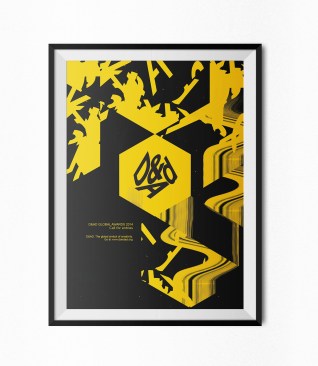
To create the posters, Coutinho used the same logic that was used to create the movie. He picked over some references from the D&AD archives and reinterpreted them in a fresh new way. The result of the posters come from mixing references of the Wish You Were Here? campaign, and other posters that were awarded in D&AD in the past. He used some materials that had been used in the creation of the short, and kept the references consistent with the identity of the campaign.

“Highly motivated, Diego has an amazing professional attitude that always brings a huge production value to any project he is involved,” said Diogo Kalil, a motion designer and 3D animator on the project.

You can view Coutinho’s work on the posters here, or check out the full video here.