Category Archives: Film

Young Canadian actor Kyle Meagher talks about his role in new film “The Big Crunch”

1v4a7030
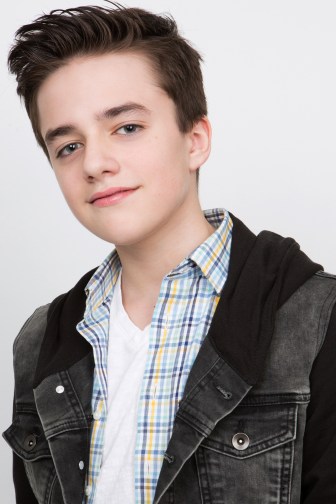
Actor Kyle Meagher 

Many people spend their lives working in a job that brings them little happiness. It takes many years to figure out what they are meant to do. Those graduating high school face a decision as to how they want to spend their lives, and few that age can figure it out. This is where Kyle Meagher is the exception. While growing up in Ottawa, it was evident what he was meant to do, and he started doing at the age of ten. Now, four years later, Meagher stands among Canada’s best young actors.

Audiences have had the pleasure of watching Meagher in an assortment of national commercials, web campaigns, award-winning television programs, and feature films. And even with a successful career under his belt by his teens, he has no plans on slowing down. This past year, he was able to secure a role in the short film The Big Crunch, alongside Peter DuCunha (12 Monkeys), Jennifer Robertson (Schitt’s Creek), and Chris Gibbs (The BFG). He also got to work with his friend Sam Ashe Arnold (The Adventure Club).

“This was a cool short film to work on because they added a bunch of special effects and used a new, very expensive camera that helped make the special effects possible. I was really excited to see what it would turn out to look like,” said Meagher.

The Big Crunch, by Inflo Films, is produced by Harry Cherniak, and written and directed by Dusty Mancinelli. Meagher was excited to work alongside them, as he had heard of their great reputation of making award-winning films. It looks like The Big Crunch will follow the same trend, as it is already making its way to many film festivals.

“I love hearing about the festivals the film is going to and seeing the press about it. Harry and Dusty are great film makers and they deserve the recognition for the amazing work they do,” said Meagher.

The film follows 12-year-old August (DaCunha), who suffers an existential crisis about his place in the world after learning the universe will one day collapse in an epic Big Crunch. Nothing can shake August out of his depressive state, not even celebrating his birthday six months early. But when August is accidentally electrocuted after changing a light bulb, he has a magnificent cosmic experience. During an intense game of dodgeball at school, August suddenly unearths his own magical powers and goes on an extraordinary adventure of self-discovery. With his newfound understanding of the universe, August stands up to his bully and goes after the girl of his dreams.

“In this film, it was a great build up to a climax where August kisses the girl he has been admiring. It’s amazing to watch the character go from a very forlorn and sad child to one that sees the world in a completely new way. The scenes were fun to shoot, we spent some time outdoors and running around a school,” said Meagher.

The film made its world debut at the Atlantic Film Festival in Halifax in September, and quickly headed to the Edmonton International Film Festival right afterwards. Audiences get to see Meagher play a role completely unlike himself: a bully. He and his friends are known as the “Goons” and bully August throughout the film.

“I am totally opposite to the bully, but I can relate to the role because I have been bullied before myself, and I simply channel what I’ve seen into a character,” said Meagher.

Throughout his career, Meagher has played the character of a bully many times. His experience makes his performance not only believable, but outstanding. However, those he works with find it interesting to watch him take on roles that are so different to his real-life personality.

“Kyle’s a really great guy, so it’s fun to see him play such a jerk,” said Sam Ashe Arnold, who played Elvis, August’s archenemy in the film. “Kyle is funny and nice to everyone, and he’s always professional and well prepared. That’s pretty much exactly the kind of person you hope to get cast with. He’s a great actor partly because he has such an expressive face, with big eyes and a big smile, but it’s mostly because he’s smart and he really listens and takes direction,” said Sam Ashe Arnold.

Arnold played the main bully in the film, and had worked with Meagher previously, but it was on this production that they truly became friends. They are both from Ottawa, so they attend auditions together, and hope to work together again soon.

“Sam and I are with the same talent agency and we spend time together so it was neat to actually get to work with him on set,” said Meagher. “I also met Peter DuCuhna for the first time who is a great actor that has a lot of experience.”

Despite having a lot of experience himself, the role also provided a unique learning experience for Meagher.

“There was a stuntman who taught Peter how to jump out the window for a scene – and it was the first time I had been with a stuntman on set,” he concluded. “It opened my eyes a bit more about safety and was interesting to see what they teach!”

Audiences will have the opportunity to see The Big Crunch later this year. Bell Media will be putting it on the BravoFact website.


Actor Andrew Searles talks creating a character in film Sharkboy

andrew-2
Actor Andrew Searles

Andrew Searles is funny, there is no doubt about it. The actor and stand-up comedian knows how to deliver a line and leave audiences in stiches. He is known across his home country of Canada for his comedic talents, and whether on stage or screen, he captivates audiences.

When working on the film Sharkboy, Searles’ natural comedic talents shine through. He plays Sundown, a character who was created after the film was written, specifically for him. The role required a lot of improvising, and natural comedic talents. Luckily, that is Searles’ specialty.

“I really had fun and enjoyed playing the character of Sundown. The character was not originally part of the script, but the director liked me so much that he wrote me into the script as one of the gang members. I was instructed, because I originally didn’t have any written lines, to improvise and go along with the scene. As a result, I would often repeat the last word said by anyone in the scene, for comedic effect,” said Searles.

Sharkboy tells the story of Francis, a half-man, half-shark, and the events surrounding his arrival at a new high school. The “Sharkboy” has a difficult time adapting to the high school, as he is bullied by Scott and his gang. Scott’s girlfriend is caught by the eye of Sharkboy, but not before Scott catches him staring, which leads to a violent altercation for Sharkboy. When Scott challenges Sharkboy to a wrestling match during their gym class, Sharkboy eats Scott, and immediately becomes not only the new leader of the gang, but the coolest kid in school. Now Sharkboy is styling and winning awards and the hearts of his fellow students, along with the heart of the newly single, Scott’s ex-girlfriend. The film is based on the myth that the band Led Zeppelin once defiled a groupie with a shark.

“From the breakdown of the film, it seemed like a type of awkward, twisted comedy, and I was eager to sign on and be a part of this, especially when they explained what the “Sharkboy” character was. I think the title alone was enough to sell me on this,” said Searles.

sharkboy
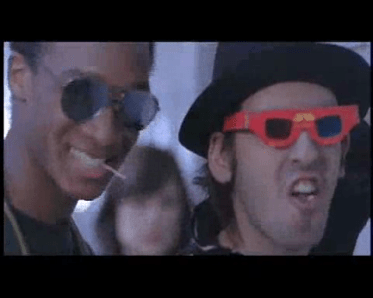
Still from Sharkboy

Sundown is one of the gang members lead by the antagonist Scott. He is in almost every scene, and turns into one of Sharkboys friends. Part of what makes the character so funny is his look, which was entirely created by Searles. Sundown looks like a member of an ‘80s gang, donning a high-top, California State Trooper-style reflective sunglasses, and a box of toothpicks. Searles was inspired by the iconic character of Mr. Bean, where Rowan Atkinson created a classic icon who did not speak, but was incredibly funny.

“I felt with such a unique looking character such as mine, the less he said on screen, the more of an impact he would have, and based on the reactions of people who have seen the movie, with my characters unique look, I felt I accomplished just that. I’m very proud of myself to this day for portraying a comedic character that said so little but stood out on screen,” said Searles. “I liked the fact that I was given free will with the character. I was able to make it my own and craft it exactly how I want to do it. In most cases, an actor is given a breakdown or guidelines of what the character is, but in my case there were no restrictions or guidelines, so it felt great to really create something on my own.”

Pat Kiley, the director of the film, loved Searles’ look for the character, and he effectively named the character “Sundown” after the striking similarity to the Top Gun character of the same name.

sharkboy-2
Still from Sharkboy.

“Andrew created his own retro style for the character and we loved his angle and his approach to the character as it fit perfectly with the story. I loved how even though his character had few to no lines in a scene, his character spoke volumes on the screen while saying so little. He ended up becoming one of the crew’s favorite characters because of his hilarious look and demeanor whenever he was on screen. Even at the film premiere, the audiences loved him too. Andrew not only brought life to a character, but he did it with so little and he brought out so much out of it. I look forward to working with him again one day. He did spectacular job and I wish him all the best in his career. He is definitely an incredible actor whose character began with nothing and made it huge and a fan favorite on screen,” said Kiley.

Creating a character for the film, which would be a challenge for many of the most seasoned actors, was a breeze for Searles. His experience in improvising and stand-up comedy made it easy to think on the spot.

“I would watch and listen attentively to the other characters lines. After a run-through and rehearsal, I would decide what I would say and when to say it, to keep the rhythm and pacing of the scene. After figuring out what I would say before the cameras started rolling, I would let the other actors know that I would be saying something at a certain point in the dialogue when nobody would say anything. Therefore, we all knew when I would come in and say my line, without stepping on another characters line,” said Searles.

Sharkboy premiered at the 2004 ‘Comedia Festival’ gala as part of the Just for Laughs comedy festival in Montreal. The film was also screened at the Austin Film Festival.

You can watch Searles as the audience favorite Sundown in Sharkboy on FunnyorDie here.

Actress Valeria Gonzalez travels the world doing what she loves


valeria-5
Valeria Gonzalez, photo by Rudik Osorio

Valeria Gonzalez was born in Monterrey, Mexico, but her career has taken her all over the world. The diverse actress speaks six languages, and is completely fluent in three. Her cultural experiences both from her home country, and the many places she has been, help make her the extraordinary actress that she is, combined with innate talent, and a passion for what she does.

Despite working in some of the most beautiful and unique locations the world has to offer, Gonzalez remains humble. One of these spots was the island of Carloforte, Italy, when she shot the film Isola.

Isola tells the story of Martina, played by Gonzalez. Martina is of Italian origins, but lives in Madrid. She visits Sardinia to see her Italian grandmother. While on the island, she decides to conduct some video interviews on her late grandfather, Nonno Eugenio, who she was very close to. Unfortunately, the interviews are a disappointment when Martina discovers that those who knew her grandfather, especially as a young man, have very different memories from her own.

“The island is just stunning, and the people there are so beautiful,” said Gonzalez. “It was one of the best experiences of my life. While I was playing a complex and beautiful character going through such an interesting journey, I was also exploring a delightful island together with the wonderful people that helped make the film happen.”

The role required Gonzalez to speak Italian, which is among the six languages she can speak, including Spanish, English, Catalan, French, and some Swedish. Despite Italian not being her native language, and coming from Mexico rather than Italy, Gonzalez’s versatility as an actress shone through, and she was empowered by the character she was playing.

“Martina is hopeful. When she decides to interview her grandmother and other people who knew him, she gets very defensive towards her grandfather, since their view of him doesn’t fit the perception she has always had of him, being an incredible human being. She feels very disappointed when they keep making fun of him even if it is in a harmless way. She finally comes at peace when she realizes that her little cousin still thinks their grandfather was a good person,” she described. “I loved her journey, how she starts being so excited about her personal project, to then being disappointed and hurt when she finds out other people have a very different perception of her grandfather, and then finally she realizes her image of him might be only hers but it is strong and beautiful, and she won’t let that change.”

This message, and Gonzalez’s performance, resonates with viewers, and went on to be selected for the Botti du Scoggiu film festival in Italy. Gonzalez was excited and proud of their film for making it to the festival, but she always trusted the director of the film, Catherine Dewar, to make something exceptional.


valeria-6
Valeria Gonzalez working on the film Isola

“Valeria is an extremely talented and inspiringly natural actress. She is always empathetic and open towards those she works with, generous in her work and in life. While working with a young boy their connection was evident, she really took the time to build a relationship with him and gain his trust. She enjoys improvisation and can manage challenges such as performing and improvising in a foreign language, such as Italian, the language of the film. She is adaptable, open and always enthusiastic about new projects. She is extremely hard working and always positive, a joy to have on set and a precious collaborator,” said Dewar.


Continuing her streak of working in some of the world’s most breathtaking places, Gonzalez then worked in Joshua Tree National Park while shooting the award-winning film Sexy Jalapenos. Although the film was set in a Mexican desert, Joshua Tree provided the perfect landscape for the setting.

Sexy Jalapenos tells audiences the story of a devout desert dwelling Latino family, whose harmony is disrupted by the arrival of their teenage daughter’s white boyfriend. Ramona, the teenage daughter played by Gonzalez, meetings her boyfriend in New York, and when she brings him to Mexico to meet her family, she finds herself struggling between her parents’ conservative rules and views of the world, some of which are difficult for her to dismiss, and the freedom that her boyfriend offers in their relationship. In the end, she decides to be brave and accept the consequences, whatever they may be, by choosing an adventurous life with her boyfriend.

“I read the script and really liked the struggle Ramona was going through. I also found it very comedic and I love working in comedy,” said Gonzalez.

The film went on to win the award for Best Directing at the School of Visual Arts Dusty Film Festival.

When shooting the web series Okupados, Gonzalez got to shoot in Spain where the series was set, she filmed in London for the film The Pick Up, and she just finished shooting in Tijuana for the upcoming film Jaloguin. Gonzalez is not afraid to cross borders to tell stories that she wants to tell, and audiences always can expect a treat when they see her name appear in the opening credits.  

“Couts” Diego Coutinho celebrates 50th anniversary of D&AD with Wish You Were Here?

pic1
Coutinho and the crew working on Wish You Were Here?

Diego “Couts” Coutinho did not always know he would eventually be considered a top art director and motion graphics designer in his country. He started working at the age of eleven, fixing cars. A year later, he began working in a chair factory. During his time there, he learned what hard work really was, and what it meant to succeed. At the age of 20, he went to school to study graphic design. He was the first in his family to go university.

Despite his humble beginnings, Coutinho quickly became one to watch. He has been recognized worldwide for his talents, winning awards and festival selections. Yet, even with all he has achieved, for him it is still about doing what he loves.

“The art director is one of the people in charge of the project, so if it goes wrong, it’s your responsibility, but if that’s okay you’ll get your laurels too. In this position, beyond the possibility of having more space to act, I feel very stimulated with the possibilities to explore my own ideas and solutions for the project,” said Coutinho.

Coutinho’s success continued when he worked on the film Wish You Were Here? to celebrate the 50th anniversary of the famous D&AD Awards for design and advertising. Design and Art Direction (D&AD, formerly known as British Design & Art Direction) is a British educational charity which exists to promote excellence in design and advertising. Widely considered one of the most prestigious and difficult-to-win awards in design and advertising, D&AD celebrates the finest creativity each year across a diverse range of disciplines.

“It’s a dream to be part of the 50th anniversary of such an important festival and to play with such groundbreaking pieces of art direction and advertising. So, for a festival of such importance like D&AD to give us the opportunity to promote next year’s awards is fantastic,” said Coutinho.

The spot summarizes the five decades of the awards in a creative and unusual way, recalling memorable pieces of design and advertising that won the coveted pencil-shaped trophies. The over 20 references Coutinho’s team picked from the immense D&AD archives were reinterpreted, using various techniques like 2D and 3D animation, stop-motion, live-action and puppetry, all the while swapping characters and narratives between the ads. The resulting fragments were sequenced in a free-associative way, with elements from a scene “trespassing” onto the next creating a flowing, surrealistic narrative that reflects the ambiguous, unpredictable nature of memory.

“It was great to work with such creative freedom. Of all the work I usually do, this one was like the ‘cherry on top’ because of the creative freedom we had and all the extra fun we had along the way,” said Coutinho.

Wish You Were Here? went on to win multiple awards, including one from D&AD itself, the Wood Pencil for Branded Film Content & Entertainment online. It also won the Silver for Visual Language and Graphics at the Cannes Lions, the Gold for Title Sequence at Ciclope 2015, the Bronze in Motion Graphics at LIA, and the 2015 Merit Award for Broadcast & Moving Image/Animation at One Show.

02“I like the touch of mood that is important for the pacing of the film. I believe that it is fun for people in the field, who know the history of design and advertising, to try to identify all the references,” described Coutinho. “And receiving awards in many festivals for this project was an honor and a privilege.”
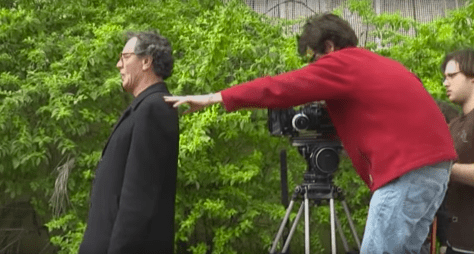
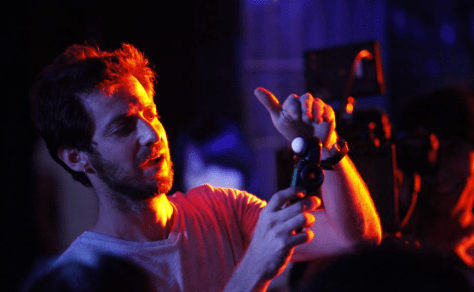
In this movie, Coutinho worked on the creative team, responsible for creating what would happen in the film. The storyline connects one commercial into another, and he had to think about how to merge two or three commercials in just one shot. After this, he created motion graphics and designed the posters of the movie.

“We began exploring ideas and concepts of what could turn out to be the film. After many suggestions, we got the proposal that summarizes, in a creative and unusual way, five decades of the Awards, all the while recalling memorable pieces of design and advertising that won the coveted pencil shaped trophies, mixing the commercials in a not your typical look-back piece, however,” he described. “The biggest challenge was to implement the concept of ‘let’s put mixed commercials in one spot’. The answer was gradually emerging based on associations, sometimes associations between elements in each commercial, sometimes in action or even free associations.”

The result is not a movie to be viewed from the perspective of the common market, in which technical elements as a clear identity, typesetting, and color work clearly permeate throughout the video, according to Coutinho.

“The final product asks for a moment of questioning about what is happening in the video, a fact that is obvious when we pay attention to the way how the track was built,” he said.

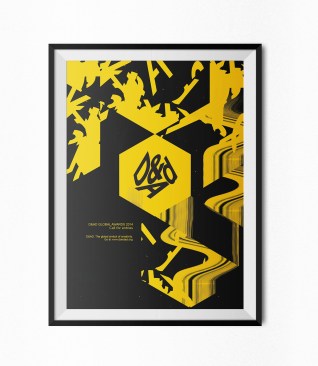
To create the posters, Coutinho used the same logic that was used to create the movie. He picked over some references from the D&AD archives and reinterpreted them in a fresh new way. The result of the posters come from mixing references of the Wish You Were Here? campaign, and other posters that were awarded in D&AD in the past. He used some materials that had been used in the creation of the short, and kept the references consistent with the identity of the campaign.

“Highly motivated, Diego has an amazing professional attitude that always brings a huge production value to any project he is involved,” said Diogo Kalil, a motion designer and 3D animator on the project.

You can view Coutinho’s work on the posters here, or check out the full video here.

EYE DROPS – AVNER MAYER SHOWS A KINDER WORLD

When art is malevolent it is divisive, seeking to focus society on what “others” are doing to make your life worse. When it is mediocre, it serves little purpose at all. But, when art is at its best, it gathers all peoples in and draws their inherent goodness out of them. The creators of art are no different than every other segment of society in the fact that they must daily choose to use their abilities to draw us closer to each other or tear us apart. The WATER Project seeks to cultivate the former. Also known as the Israeli-Palestinian Cinematic Project, this endeavor saw ten Israeli and Palestinian directors embark on a journey to create films, fiction or documentary inspired by water. Under the belief that water symbolizes the source of possibilities at the primal core of all things, these filmmakers took part in joint meetings in Tel-Aviv presenting their ideas to one another. Produced with full creative freedom with mixed crews of Palestinians and Israelis, these films reflected the personal and courageous perspectives of both sides view of reality. The film Eye Drops was part of the WATER project which was screened at more than 20 Festivals around the world, receiving significant press attention. The project premiere was at the Prestigious Venice international film festival as the opening film of the “Critic week” program. The WATER project received an Amnesty award for its effort to bring Palestinian and Israelis closer. Eye Drops is a reaffirming vision of the ability of all people to see beyond their differences, particularly in a subject matter as provocative as this one. The film received global attention at festivals including the: Tertio Millennio Film Festival (Italy), Stockholm International Film Festival, Busan International Film Festival (South Korea), New Middle East Cinema film festival in Philadelphia, and many others. The look that Cinematographer (Israel born) Avner Mayer created depicts both the despair and hope of the people and this land. Overcoming the almost instinctual reaction of this land’s natives and the world’s view of it, Meyer’s imagery and design enables the audience to see the humanity underlying it all.

It’s easy to make assumptions about someone without getting to truly know them as an individual. That can be applied to the viewing audience of a news program, a film, or even a neighbor. In Eye Drops, Mohammad Bakri lives with his two sons (Saleh and Ziad) in a small flat in Tel Aviv. Their neighbor Sarah (played by Rona Zilberman) is a Holocaust survivor who asks them to assist her with her eye-drop medication. A unique and mysterious connection grows among them. The movie is about compassion and the ability to get along in spite of differences in religion and race. The filmmakers approach to the composition was to create a feeling of empathy. In order to convey this, the movie is almost always shot at the eye level of the characters. The hope for this was to allow viewers to see through the character’s eyes and souls. Many of the shots include the entire cast in order to create a feeling of unity. Exterior shots were designed to be cold and intimidating, almost as a mirror to the political climate in Israel at that point during the second Intifada (https://en.wikipedia.org/wiki/Second_Intifada). In contrast, the houses are portrayed as places of great warmth in hopes of showing the love and compassion hiding inside this political climate. All that is need is to go into someone’s home and talk with them in order to find real, warm human beings.

eye-drops-with-directoractor-mohammad-bakri

It was Mayer’s task to create these emotional vignettes for Eye Drops. Mohammad Bakri (director/writer/actor) needed a highly skilled professional behind the camera who not only understood how to help him capture the story but to also understood the people and emotions that motivated them. Designing everything from the lighting to the framing of the shot necessitated a professional and emotional eye. Avner communicates, “As a DP I feel my work is always to translate the director’s vision into images. A lot of the preproduction process for me concentrates in creating the visual bible of the movie. When you work with new filmmakers, there are two main problems. First of all, their visual lexicon is not always clear; meaning you need to find a common language to talk about images. That’s always hard but it seems to be smoother with more experienced filmmakers. The second issue regards logistics and the amount of time needed to achieve some effects. It’s much easier to talk about shots than actually to perform them on set. It’s important that the director will realize what is possible to do and what’s not inside the budget and time constraints, prioritizing the important story beats. People don’t often realize that this is a lot of what my job entails. Mohammed is well known and respected in the Israel film community so it was a pleasure to work with him and it was much easier than working with a ‘new’ director…but there are always challenges. Mohammed wanted to shoot in the actual real locations. It was a blessing and a curse as a DP. The locations had a lot of charm and were very photogenic but the big minus was regarding space. This was mostly in regards to the house, which was a little too small. We were limited in our options with that space. In the end we found creative solutions and solved that issue.”

Eye Drops received voluminous praise and accolades from the community and critics. One of the most vocal fans of Mayer’s work on the film came from its creator. The fact that Mohammad was also the lead actor in the Eye Drops made Avner much more aware of the acting. Normally this cinematographer focuses on the visual side of the imagery; did the characters land in the right place? Is the lighting precise? Etc. Bakri praises Avner’s work and awareness declaring, “I honestly couldn’t have done this movie without Avner’s Support. It was my first narrative film, and coming into the movie there were a lot of elements I didn’t expect. Avner was my right hand, helping me in planning the scene blocking and shot selection. We were on a tight schedule and Avner got us there in time. I really think Avner is a real talent! He’s very committed to his work, he communicates well, and his visual perception and imagery is stunning! I’m never surprised to hear that he’s doing well in the industry, he deserves it!”

eye-drops-head-shot-diffrent-project

The climax of the film is when Sarah’s eyes are finally well enough to make out the faces of her helpers. She sees that they are in fact the individuals who she would have avoided if she had seen with her vision rather than with her heart. Eye Drops makes a profound statement that will hopefully predict the future.


CINEMATOGRAPHER YASH KHANNA MAKES “OUIJA SUMMONING” FRIGHTENINGLY GOOD

When filmmakers create a film on a smaller budget that does huge numbers, Hollywood sits up quickly. That’s exactly what happened when Writer/Director Marwan Mokbel’s Ouija Summoning (produced by Egywood Pictures) became a hit horror film. Ouija Summoning was distributed by some of the biggest platforms in the U.S. and worldwide, including Amazon Prime, Walmart, Best Buy, Red Box, iTunes, Barnes and Noble, and many more. Horror films are among the most commercially successful genres in the industry. When a film like this with tighter budgetary constraints is so well received, it’s proof that the story and the look of the film are exemplary and in perfect synergy. Horror productions rely heavily on the believability of the “look” as fans of the genre continually demand more realistic visuals for the unbelievable situations. Mokbel needed a consummate professional as his DP for Ouija Summoning and he found it in Yash Khanna. One of the main reasons for Khanna’s enthusiasm about being involved was Marwan’s encouragement that his DP be experimental. Creative people love the opportunity to do just that…be very creative. The scenario worked out well for Yash, Mokbel, and the film they have created. Marwan states, “I hired Yash because of his extensive history of bringing a unique visual style and stamp to each production he has worked on in the past. Yash was nothing short of impressive with his work on our film. His understanding of lighting, composition, and color, reveal his talent while the thoroughness of his preproduction preparedness gives proof of his staunch work ethic and commitment. The film one hundred percent succeeded thanks to the fantastic contributions of Yash.”

Khanna relents that being prepared is the most necessary part of his early contributions to any film. His eclectic resume (including films such as: Funny Man, How To Get Girls, Slipaway, Exit, and many others) displays his ability to be a valued Cinematographer on a production for any genre but, his work on Ouija Summoning allowed him to stretch his creative muscles in the appropriate manner for this horror production. Yash notes, “The reason for taking on a project like this, other than working with someone great like Marwan, is that I was afforded the chance to do different techniques. I learned some new things about the horror genre working on this film. I learned how it can be made gripping. I was able to try some lighting ideas which I had wanted to try for a long time. Usually we don’t get to play much with underexposure and contrast but I was able to explore many of these ideas while shooting Ouija Summoning. Marwan works at a very quick pace so shooting fast on multiple setups was a good experience for me as well.”

pic3

From the very earliest stages of his preproduction planning, Khanna set down with the department heads to design the color palette for wardrobe and art design in order to achieve a gothic look for the film. Moving on to lighting and color, Yash wanted to execute soft lighting but with a lot of contrast. The reason behind this choice was to make the atmosphere appear grey and gloomy. Khanna and his team designed their lighting by first cutting and diffusing the daylight and then they began lighting the world of Ouija Summoning. They came up with the idea of using stained glass. This would allow them to introduce harsh colors in the frame. They then designed a rig that would keep the color temperature in sync with the sources, accommodating the many scenes with flashlights and candles. A prime example of the result is in the suspenseful first scene of Ouija Summoning. Yash explains, “The Opening scene was one of the toughest ones to film. We were filming in the basement of an old house. The scene was a long one shot with practical effects. We needed a very dim look as it was the first time we reveal paranormal elements in the film. Marwan had written the scene in a very gripping tone and we wanted to do justice to it. We rigged small units where the camera wouldn’t see them and rigged just the right amount of practical [lighting] where we would feel silhouettes moving.

It was really tight quarters and I had to operate the camera through the stairs walking down and following though narrow corridors. It was a long take. A lot of fans comment that this is a ‘jump out of your seat moment for them…which makes me very happy.”

In a film of the horror genre, it’s a modern day requirement to use VFX, fans expect it and almost demand it. In Ouija Summoning, a beautiful woman is haunted by an evil spirit after an innocent game of Ouija board goes horribly wrong. Sara (the woman) had a perfect life until an evil spirit was summoned from a Ouija board. This spirit had once killed its own son and cannot put the past behind it. Sara is tormented by this spirit, who will stop at nothing until it destroys Sara and everyone else in her life. Making good use of his prior experience working on projects which involve VFX, Khanna planned his lighting, color, and camera choices with the VFX team to make this work to the film’s advantage. Sometimes however, VFX is not enough. Only the authenticity that comes from witnessing real events works in a storyline. In the climactic ending scenes of Ouija Summoning, Sara flees from the spirit and the viewers witness a harrowing chase. For Yash’s role as DP, it was one of the most dangerous and important scenes. He confirms, “The car chase scene, towards the later end of the film, is where the character is driving away from the paranormal spirit. This scene required the car to appear fast and out of control along curvy desert trails. Our stunt man had to skid the car along the turns and do a 180 spin and flip the car in one single motion; after which the car explodes. This was filmed during a one-night shoot. Time constraints were strict, the risk of danger was high, and we could obviously not do take after take of exploding cars. I had multiple camera units running to maximize the footage. We lit a huge area of the desert because we were shooting from far away. The shot came out perfect and was one of the highlights of the movie, a real testament to the planning we did and the amazing execution of our crew!”

Because of the stir Ouija Summoning created, Yash is now fielding a host of offers. The best advertisement is doing great work. The public took great interest in Ouija Summoning and the look which Khanna created, now Hollywood is taking great interest in him. Smiling he declares, “The success of Ouija Summoning has been a great boost for my career. This was my first horror film. I have been offered many horror scripts as a result of it. I’m reading them and waiting for something unique to interest me. I am excited about what’s next.”

best-pic


Gioya Tuma-Waku Shines Bright in new film

gioya-2
Gioya Tuma-Waku plays Dalia in Shine Bright.

Many films and television shows driven from the female perspective deal with a lead searching for a romantic companion with funny tidbits along the way in her quest for true love. The genre ‘chick-flick’ although entertaining, tends to portray some two-dimensional female characters that are motivated by little else than their careers and/or romance. On the other hand, there is a typical role for women to be cast as a sexy sidekick in an action-packed adventure. Slowly, Hollywood is stepping away from this type of pigeon-holing, and deeper characters are being written for female leads. The new feature film Shine Bright does just that, and explores the relationship of two sisters dealing with life’s tragedies, love, conflict and surprises. It’s a story about self-discovery and follows how two sisters react differently when faced with grief and their journey to overcome it.

Actress Gioya Tuma-Waku plays Dalia in the film. Dalia is the best friend and right-hand-woman of Genesis, the younger sister in the story, played by Maya Brattkus who is known for her role in the indie film Wild Prairie Rose. They are teens dealing with dating, social media, the pressures of graduating, and enjoying their last year in high school.

“I wanted to be in this film because it’s a beautiful story about the bond between sisters and their journey overcoming pain and grief. I love female driven stories or any stories that have strong female leads because this industry is mostly male driven and as a woman, I enjoy stories that I can relate to and stories that are written from our perspective but that are not clichéd and those are the kind of roles I want to be seen in,” said Tuma-Waku.

The film is written and directed by James Avelar, known for the 2008 film Look at Me, and who also owns the production company Calixtro Films. Avelar describes working with Tuma-Waku as a delight, saying the moment he met her, he knew she would be an integral part to his film. Now, he wants to work with her on all his future films.

“Good actors are very hard to come by. When I met Gioya to go over the role, I knew she was that character. Given that the character was a teenager and Gioya is not, her youthfulness and innocence was the right look I needed for the character. She became a teenager, and it is not that easy for most actors who are over 21 to go back and live and act like a teenager,” said Avelar. “Gioya is also a great improviser. She came up with dialogue that helped the scene, which made it better, and made her character more believable. What makes her a great actress also, is her interaction with the other actors. She was giving, caring and helpful in any way to move the story along. Coming to rehearsals, editing dialogue, even reading other parts when the other actors could not show up for rehearsals.”

Tuma-Waku is originally from the Congo, but was raised in South Africa. She wanted to work on the film because it is a coming-of-age but is female driven, describing the importance of Hollywood starting to diversify, and that includes gender just as much as it includes ethnicity and culture. This is something that Avelar captured in his story.

“James is a wonderful director because he allows you to take he’s written on the page and combine it with your own imagination and script. It was great to be allowed the freedom to add certain things while still adhering to the essence of the script. Some directors don’t allow you to deviate at all from the script but James wanted us to use our natural instincts. And when your character is a teenager, you want to be able to play around with her and be a little silly because the age calls for it,” said Tuma-Waku.

Being silly while playing Dalia was definitely fun for Tuma-Waku. Dalia is a teenager who loves to party and is very techno savvy, but is also a good student and she looks out for her best friend. Although she is playing a teenager, Tuma-Waku says there are similarities between herself and her character.

“Dalia is very protective her best friend and will be the first to raise any concerns she has about people who she thinks are a good influence. I get pretty protective of my close friends too. I don’t like or want anyone messing with their happiness,” said Tuma-Waku. “I could also be a lot quirkier with her dress sense, which is similar to how I used to dress but have grown out of it.”

Tuma-Waku has also appeared in a webisode of Pre-Dates, and an improv based short called Dr. Brown where she was able to go back to her African roots as well as an original theatre piece called Circles in which captured the audience in the leading role at the well known James Armstrong Theatre in Torrance. She has also been cast in a pilot called Up The Ladder and is currently filming two webseries called Dreamchaserz, where she is cast in the supporting role and The Palms Series, where the lead role was offered to her by the producer whom she had previously worked with on Pre-Dates.

Shine Bright also stars actress Rebecca Grimes, playing the older sister Andie. Grimes immediately thought of Tuma-Waku and recommended her for the role, knowing the talent and versatility that Tuma-Waku possesses as an actress.

“When you find people who you work well with, you stick with them,” said Tuma-Waku. “You see this happening every day in the industry, even with the biggest stars and directors, because you know the kind of quality of work you will get, and I got to work with amazing people.”

Shine Bright is currently in post-production and expected to premiere later this year. There is no doubt that with such an impactful storyline and strong cast, it will be making its way through the film festival circuit.

“I wish people would support indies like these more often. Because these are the people who have a dream and no funding but find a way to barely make it work because they are so passionate and eager to tell their story and share it with everyone,” Tuma-Waku concluded. “This is a beautiful film about two sisters who had to rely on each other and are forced to grow up too fast, and should be seen by people, especially the younger generation, because it’s something that actually happens a lot more than it is talked about.”

Anele Morris stars in upcoming film Snake Outta Compton

anele-2
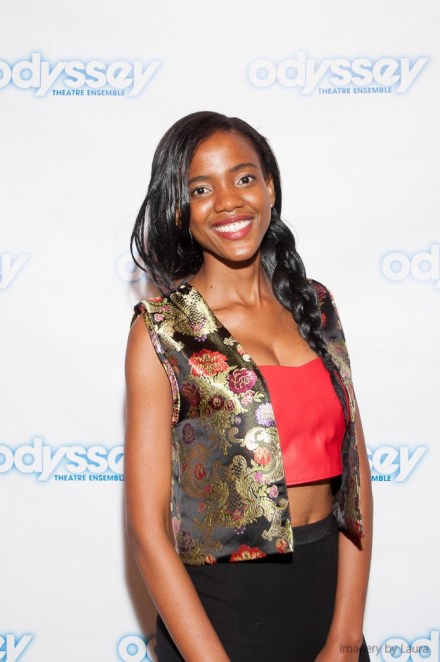
Anele Morris is an actress from South Africa.

Most twelve-year olds barely know what they want for dinner let alone what they want to do for the rest of their lives. Many teenagers’ passions change as fast as their clothes. Anele Morris is the exception.

Morris started writing when she was just a twelve year-old growing up in South Africa. She would change the outcome of stories she would see on the television screen by writing her own endings and different scenes. This hobby slowly transitioned into something much more, a love for acting.

When Morris was 20, she was presented with the opportunity to audition for the New York Film Academy in Los Angeles, where she was awarded with a partial scholarship. That’s when her professional acting career began. Now, she plays the role of Carly in the upcoming feature film Snake Outta Compton.

“Working on this feature film was an absolute joy. This was my very first comedy and it was an amazing experience to explore that side of my acting ability,” said Morris. “I learned that comedy acting is a lot of fun and I definitely would love to do more of it.”

Morris worked with director Hank Braxtan on Snake Outta Compton, which she doesn’t take lightly.

“Working with Hank taught me how to have more fun on set and to enjoy the experience,” said Morris. “He gave us freedom as artists and directed us in a way that helped improve my creativity.”

Braxtan has directed actors such as James Remar (Django Unchained) in his film Unnatural, which he also edited and got limited theatrical release for.

This is not Morris’ first taste of success. She has a starring role in the film Bloggers, which she wrote and produced and it has been submitted to a variety of film festivals over the next year. She also appeared in an episode of the award-winning web series Adopted. She also is the lead actress in the film Arsenic, and is in the film After.

“As an actress I submit myself to telling someone else’s truth. It is not about me but about the character. I imagine the character as the musician; my body is the instrument, the notes are made from the internal and external dialogue, and the performance is the music she plays,” said Morris. “I like the artistry of it, how you can only really trust yourself to be what each character needs to be. It really challenges you as an artist to be creative and own your performance with no apologies.”

With everything Morris has achieved, she has overcome what she believes to be the largest challenge as an actress: a lack of self-confidence. She did this by realizing that she wasn’t on her way, trying to be an actress but that she is an actress, and this allowed her to walk into auditions more confidently and approach scenes with more creativity.

“My goal is to embody the essence of being not just a talented actor but a professional actor who carries herself well in the business of acting as well as in the craft of acting, which includes owning a production company that produces stories that embody the unique talents of all kinds of actors from around the world. I also aim to be a film actress whose name stands for excellence, truth and inspiration. I want to be the kind of actress who is not afraid of discipline and hard work, manifesting success and a career with longevity,” said Morris.

There is little doubt, with the talent that Morris has, that she will achieve all of her goals. However, there is still one challenge that she has yet to overcome, which was the most difficult part of acting as Carly in Snake Outta Compton.

“Honestly, the biggest challenge was standing in my heels for extended periods of time,” she joked. “My feet were really feeling it, but other than that I had a blast.”

EDDIE TANG BRINGS LIKABILITY TO A VERY BAD MAN IN THREE SIXTY

360-1

Kidnapping is a dangerous situation. It is the subject of the film Three Sixty. While the action displayed on film is tense and dark, Eddie Tang gives a glimpse of levity that has endeared him to the audience and created a stand out role. The brilliance of Three Sixty is not in the originality of its plot (though it does possess a couple of major twists) but rather in the execution and performance of the actors. Every character in Three Sixty is tense and frightening in their own way (even the kidnapping victim “Cheryl”, played very convincingly by Ella Bowman) with the sole exception of Tang. In a small ensemble, the audience is afforded the chance to bond with each character to a greater extent. In Three Sixty, Zac is oddly the character which is most easily relatable. Eddie Tang is an Australian actor with a diverse career in film (Three Sixty, Happy Feet 2, Superman Returns), TV (East West 101), and commercial work (major campaigns by Volkswagen, KFC, and others); his performance as Zac is a perfect example of the talent and on screen charisma that have made him a sought after actor in so many productions. Three Sixty is benefiting from some of that attention as it is set to become a feature film in Hollywood with actors such as Ray Liotta attached to it. Tang is interested in following suit with the film and pursuing the opportunities that Hollywood’s film industry offers.

Three Sixty is an Australian thriller that depicts the story of a kidnapping gone wrong, in multiple ways. It’s the tale of two hapless youths, Zac and Roc, eager to make a quick buck by accepting a job from a nightclub owner to kidnap the girlfriend of a famous footballer. What could possibly go wrong? Nothing? Not if your Roc and greedy for more money. It’s a classic sting, almost a cliché. Get the merchandise, hide and stash it, and raise the price; except that the merchandise isn’t playing ball. No one is playing the game as it was supposed to be played. Nothing in Zac and Roc’s scheme goes according to plan. Just when things seem to get sorted, everything does another three sixty. From the moment when Zac and Roc rip the tape off of Cheryl’s mouth, the duo realizes that they may have kidnapped the wrong girl as evidenced by her American accent rather than the expected Australian one. The chemistry between these three characters (and thus cast members) is undeniable on screen. It is equally as attention commanding as any episode of the Sopranos. This positive interplay was palpable between Tang and Eamon Farren [Roc] during their mutual audition. Faith Martin, one of Australia’s leading casting directors, asked Eddie to audition for Zac based on her experience and intuition about the role. Tang comments, “Eamon and I had an instant connection. Off-set we were best buddies just like our characters were on set. The banter between us was great. There were jokes between us and the sound guys, which led to jumping on the airwaves on the crew radio and causing mischief. It was a fun set to be on. I felt like we were up to George Clooney and Brad Pitt-esque type shenanigans. Sometimes you have to design that kind of vibe on set but it happened completely naturally on Three Sixty. The producer came up to us at dinner on the first night of filming. He said there was magic dust in the air about this film. He was excited by the onscreen chemistry between Eamon and I as actors and how both our characters bounced off each other.”

360-2

While Roc is the darker and menacing of the two, Zac is the one who is more meticulous, cautious, and considerate of both the Cheryl and the felonious plan. Zac analyzes the situation and makes sure nothing goes wrong. The dark heart of Three Sixty is the kidnapping and its ambassador is Roc who, if left to his own designs, would add rape to the plan. Zac brings an aura of level headedness and sense of gentile to the circumstance. The comedy of Three Sixty is in the inexperience and the stupidity of these two when it comes to committing the crime. They often stumble their way through, being fooled and bewildered by Cheryl. Another comedy element is the banter and friendship between Roc and Zac. The back and forth commentary between the two characters in the diner is a classic example of this comical relationship. Three Sixty’s small cast (only five cast members in this film) could have resulted in the audience becoming weary of seeing the same actors on screen but, thanks to the electricity between Tang and Farren the opposite is true.

Eddie Tang’s successful portrayal of Zac in this film can be described with one word, subtle. The unobvious nice guy, Zac is presented in a low key manner which draws the viewer in to an emotional place where they feel sorry that he is even involved in the crime. It’s not an easy place for a character to access with an audience…while committing a violent felony. Eddie notes, “I always prepare and research for a role and I did a lot of work running lines with my PA for Three Sixty. My co-lead, Eamon Farren, is such a fine actor that I knew I’d have to be even more prepared to go toe to toe with him. The roles only work in this film if we both are magnetic in our individual ways. Roc is the character that pushes the guy who organized the job for more money. I felt that Zac’s role needed to be subdued in order to be more the natural stylistic kind of character; the character who is the subtle comic relief within the film. Zac is not an over the top clown, but rather the straight deadpan comic relief. It’s very easy to overplay a comic opportunity but if you underplay it, then it becomes more relatable to the audience and you are not begging them to like your character. It’s better if they just do it because they can relate to him. It gives you an opportunity to build rapport. It’s not an easy task to get the audience to like a character who is a kidnapper; a man who in reality is the villain. Nobody likes a kidnapper in real life, but Zac somehow wins over the audience by playing a subdued role within the film.” Eddie was disciplined and proactive in his approach in creating the backstory for his character. He states, “His father was never around. Because of his abandonment issues, he got into trouble in High School and was expelled. Zac started mixing with the wrong crowd. Roc was his best friend. Zac’s a DJ and dabbled in some Marijuana growing up. He’s overweight, not got much money, never had a girlfriend. He grew up in the South Western Suburbs of Sydney.” Eddie’s preparation paid off in his performance with the film’s Official Selection at the following Film Festivals: L.A. Shortfest, Rhode Island International film festival, Flickerfest (Academy accredited), Hollywood Film festival, Sydney Cockatoo Island, Cleveland International Film Festival, Carmel Art, and Bay Area film festival. Three Sixty’s director Dan Mitchell declares, “I do not hesitate when I say that Eddie’s leading role for Three Sixty was irreplaceable. The film could not have achieved the tone that the script suggested without him. I cannot imagine completing the film without him. Eddie’s achievements in his leading role for Three Sixty were a huge factor in the film’s incalculable critical acclaim. A good actor is an invaluable member of any production and Eddie is doubtlessly a great actor. His status as one of the most accomplished members among his peers can be seen in the variety of achievements he has earned throughout his career. Eddie is one of the most sought after actors in his field.” It’s a bit ironic, by not seeking attention for his role as Zac in Three Sixty, Eddie Tang has once again become one of the most lauded and recognized actors in a successful production.

360-3


Michelle Solomon produces upcoming film Sunny Side Up

headshot-1-ms
Michelle Solomon is both a producer and graphic designer.

Approximately 17% of Canadians are registered as organ and tissue donors. Every 10 minutes another name is added to the national organ transplant waiting list in America. One person can save eight lives. However, many people are desensitized to stats and numbers. They respond better to stories. Producer Michelle Solomon hopes to shed light on this issue by sharing the film Sunny Side Up.

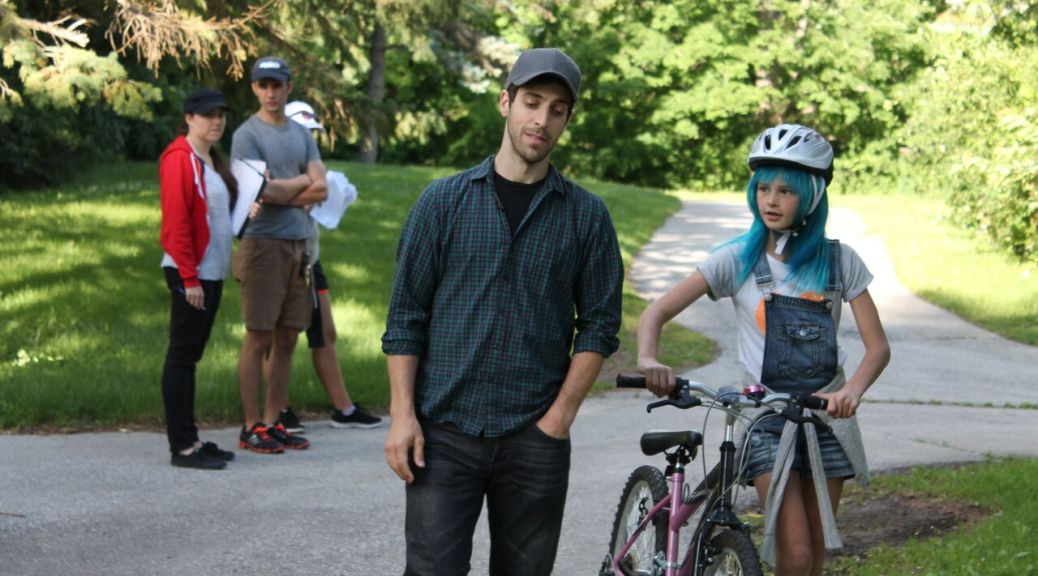
The film tells the story of Marc, who after receiving a corneal transplant unexpectedly befriends a witty, blue-haired girl named Sunny. She helps him see his potential for a happier life.

Sunny Side Up is a chance to show the real-life impact a donor could have. Hopefully, it inspires people to sign up as organ and tissue donors,” said Solomon. “It is a story that tackles the importance of organ donation and showcases the impact one person could make. This beautiful short film is an abstract look into how one can see the beauty in life despite great adversity.”

The film features a young star on the rise, Peyton Kennedy, as the title character Sunny. Her credits range from leads in television series to feature films, like the Netflix series Between, Emmy award-winning Odd Squad, Killjoys, and Murdoch Mysteries. In addition, she has starred in critically acclaimed films American Fable (across House of Lies’ Richard Schiff and The Fosters’ Gavin MacIntosh), Lavender (with Justin Long), and upcoming Telefilm micro-budget feature Cardinal. She worked alongside the film’s other lead Marc, played by David Reale. David has appeared across both film and television, with credits in Suits, Minority Report, Beauty and the Beast to the Canadian Screen Award winner Bang, Bang, Baby, Ben’s At Home, and, Glen Coco in Mean Girls.

“It was fun and very much a collaborative work environment. We received much support from the community in which we were filming. In the end, our financing was a bit of a Frankenstein between our sponsors, investors, and donations. This resulted in the film feeling “bigger” than us, as we had others equally invested in the project,” said Solomon.

Solomon describes the inspiration for the film beginning with the creation of the title character Sunny. Simultaneously, the writer, Simon Paluck, saw a Facebook post from a friend addressing the twenty-year anniversary of his kidney transplant and how thankful he was for his donor.

“How death in one person could mean life in another was a stimulating relationship worth exploring. Especially if the transplant recipient feels unworthy of the organ donation,” said Solomon.

One of Solomon’s greatest strengths as a producer is her savviness. She instinctively understands who to partner with, where to distribute funds, and where films should be submitted to get the greatest recognitions. Kelly Kiernan, a Producer of Creative Design and Development at DreamWorks Animation, mentored with Solomon during the film and realized her talent.

Sunny Side Up is developing partnerships with nonprofit organizations. The film is set to enter Tribeca Film Festival and South by Southwest in Austin, Texas. Michelle’s passion for TV and film, combined with her relentless work ethic and drive, led to Sunny Side Up being a hugely impactful film with great performances. I can’t wait to see it’s continued success in the field, and of course Michelle’s continued success as well,” said Kiernan.

Solomon and the film’s writer Simon Paluck run the production company Picosphere Inc. in Toronto, and together have worked on many projects including the award-winning films Emma and Chalk Dust.

“The biggest challenge of Sunny Side Up was shooting the entire thing in three consecutive days with the majority of the shoot being outdoors. Time was never on our side but we overcame it by immediately dealing with problems as they came up and constantly communicating with everyone,” said Solomon.

In addition to being an award-winning film producer, Solomon is internationally recognized for her work in graphic design. She revitalized the Ace Building Materials brand and will be launching her own social shopping app Adoorn early next year. In addition to all of this, she is proud to be a successful producer.

“I absolutely love assembling a group of hard working, talented individuals and seeing everyone work together for a common goal. There are few environments where you really depend on your peers’ skills, and producing is one of them,” she concluded.