Category Archives: Film

Australian actress Natasha St. Clair-Johnson stars in new film ‘Incall’

NatashaStClairJohnson-2006
Natasha St. Clair-Johnson, photo by KAT TUOHY PHOTOGRAPHY

“Acting is the one way that I feel free to be myself,” said Natasha St. Clair Johnson. The Australian native has an innate talent, and has loved performing for almost her entire life. As a child, she wanted to be like the people she saw on-screen, but as she grew, this desire became much fiercer. She wanted to tell stories; she wanted to show the wonderful and painful aspects of what it means to be human; she wanted to make a difference with the best way she knew how. Acting became her focus, and performing her way of life. Now, she is one of Australia’s leading actresses, and the passion she feels for what she does is the same as it was when she began her career.

While working her way to the top, St. Clair-Johnson worked on several extremely successful projects, showing her home country and the world why she is so formidable. In the feature film Birthday, the actress has the critical role of a social-worker. Her work led the film to be selected for the highly-prestigious Cannes Film Festival, where it took home the top award for Best Actress in a Foreign Film. Similar success followed with her film Prized, where she co-stars with ‘Twitch’ aka Stephan Boss from So You Think You Can Dance and currently the popular DJ on The Ellen Degeneres Show, as well as the movie Shang, playing a seductive vampire and showing audiences how versatile of an actress she truly is.

“The thrill of performing is like nothing else for me. With film and theatre being such different mediums, they both still give me joy. Being on set has an intimacy, a rawness, and a realism to it,” said St. Clair-Johnson.

Audiences can also look forward to St. Clair-Johnson’s performance in the highly-anticipated film Incall. The film tells the story of a wealthy house wife who gets more than she bargained for when a call girl changes the course of her day into something completely unexpected. It explores ideas of sexuality, power, feminism, and manipulation, with three women all appearing as different facets of what is it to be the modern woman.

“Not many films like to show women that are sexual and strong. It’s considered taboo, and commonly mistaken to be either an excuse for woman to behave in an explicit nature or to get attention. Our film is more about the mind games between people. It’s not about seeing anything happen but the suggestion,” St. Clair-Johnson described.

The film is centered around St. Clair-Johnson’s character and what happens to her over the course of one day. It is a window into the perverse intimacy she enjoys. She is an elegant, well-dressed, poised woman with a dark side. Although she appears to be one way to others, her inner desires are quite different from the persona she displays. She has a certain way about her that can be disarming, which is what the directors were looking for in St. Clair-Johnson’s performance. She perfectly personifies the complicated character, with a hint of possible danger, as you can’t always be sure where the character might take the conversation or situation she is in.

While many films explore a male and female dynamic, Incall involves two strong female characters. These characters are not necessarily attracted to each other, but rather show how they manipulate, judge, and control each other. It is about ego and power. St. Clair-Johnson’s character is the instigator of the events. Therefore, when the director was looking for someone for such an important and complicated role, she knew she had to find someone with immense talent.

“Natasha is gifted and hard working. She always gives 100 per cent to every take and patience beyond what would be required of her. It is a pleasure working with her on and off set. She is very personable. Her unique choices make her an outstanding actress. She has a subtle but compelling ability to seek the nuances in her characters’ behavior, with an unlimited range and keen understanding of the complexities of the characters’ relationships,” said Rachael Murphy, Writer and Director of Incall.

Murphy approached St. Clair-Johnson when she began casting. She knew that she wanted the actress as her leading character to make her film a success. St. Clair-Johnson was happy to take on a role in an all-female film. During the shoot, she found herself being taken away with what was happening. She knew exactly where to go with her character, completely embodying her. She would utilize subtle and exciting exchanges between her co-star and herself, opening up her creative juices. With every script she works on, the actress takes the time to analyze it. She figures out the exact motives behind each of her characters’ choices. For Incall, she worked those choices into her performance flawlessly, displaying intimacy, and passive-aggressive behavior simultaneously.

In addition to acting, St. Clair-Johnson also took on an executive producer role for the film. Although she had never done this before, she was excited to learn about the job, knowing the experience behind-the-scenes would help make her an even better actress. She was able to find the perfect balance between her role as an actress and her executive producing responsibilities, and found herself watching every take and staying engaged in all areas of the film production.

“This project gave me artistic freedom to play with whatever choices I wanted. I was to carry the film and I loved the responsibility of that. Especially showcasing myself in a film that is strongly focused on women. My team and I knew that it would be topical and the LGBT community would also be interested. We were recently approached by a film festival exclusively showcasing films produced and starring woman. It’s an honor,” said St. Clair-Johnson.

Incall is currently in post-production with a release date set for 2018 into the film festival circuit, and then onwards to national release in the United States and Australia. It is also expected to make its way to several Australian television networks, and streaming services such as Amazon Prime, Netflix, YouTube, and Hulu in the short film category. If you get a chance, make sure to check out St. Clair-Johnson’s stellar performance.

THE DESIGN 7 OF LOVE: JAMES CHEN

22163818_10155843589892431_477575936_o

Filmmakers are always searching for a better way to communicate the message and feeling of a story. The characters found in their creations are a means for the viewer to identify the experiences and emotions in their own lives, or the ones they hope to avoid. In the upcoming feature film Design 7 of Love, the filmmakers took advantage of the vision and talent of VFX Artist James Chen to manifest the state of mind of one of the central characters in a very disorienting situation. The film connects the unexpected association of architecture and emotions, or perhaps more accurately…the effect of these on one’s mind. Using state of the art technology in CG, they enlisted Hi-Organic Motiongraphics to do what so many productions desire, to display that which cannot be filmed. Taking a key role in this, Chen worked on some of the most surreal moments in the film. The integration of this tool and the cooperation between artist like Chen and filmmakers continues to be the type of visuals to moviegoers that were nonexistent until the last several years. While CG has allowed the creators of these films to display almost any scenario on screen, the role of artists like James Chen is to make them so real that we almost question our own senses.

The VFX work which James was charged with creating is integral to telling Design 7 of Love properly. One must understand the surreal nature of the storyline in order to appreciate how important Chen’s work on the film was. Yet, even prior to this one must understand that the word “design” in Chinese has two meanings. The first is the dictionary definition meaning “to decide upon the look and functioning of (a building, garment, or other object)”, the second is “to set up someone or something, in a relatively negative way.” The word “design” in this film has both of the meanings in many cases, especially when everyone is trying to “design” a scenario or situation in order to “set up” someone in the emotional world. The beautiful protagonist of the story is Doris, an interior Designer. Her ex-boyfriend Bartz hopes to repair their relationship by providing her with a senior designer position in the architecture studio where he works. This only serves to enrage Emma, the company’s other designer who seems to have feeling towards Bartz. The studio’s pitching process to a hotel goes smoothly as Doris’ presentation impresses the hotel’s young owner Mark, both with her design concept and herself. Doris suddenly becomes the studio’s hot shot. The studio owner Andrew hopes to ensure the company’s revenue by landing the hotel as a client. To achieve this, he encourages (essentially orders) Doris to starting dating Mark. Doris pretends to date Mark to justify her cold actions towards Bartz, leaving Bartz devastated and also making Mark more and more confused. Doris does not fully accept nor deny either of the two men’s pursuits. As the relationship between the characters becomes more and more complex, Doris’ mind world starts to twist. In a congruent fashion, all her “designs” metaphorically turn her vision of this supposed “beautifully designed” city into a pile of monstrosity, reflecting what’s in her own mind. In the end, Doris, Bartz, Mark, Andrew, Emma, and the other two studio staff [Chang and Chiz] all have their own “design” to “set someone up” in love or other affairs. The director of Design 7 of Love even created a scene in which all the characters act like they are “actors” instead of film characters, conveying to the audience “being set up.” The overall theme is that what we label “love” may actually be the result of a “design.” It’s the ability to see the merging of imagination of the mind (brought about by the emotional turmoil) that becomes part of reality that James manifested for the film.  Doris’ main work objective is to provide new design to the hotel to make it a part of Taipei’s new “world design capital” title, but her emotional state has become chaotic and unstable as a result of her complex social relationship. When she wants to make things more clear, more simple, more “designed”, the outside world becomes more complex. This resulted in an approach that Chen describes as “anti-beauty.”

An ideal example of this is in the “Growing Monstrosity” scenes. So called because of the evolving appearance of the city, these changes are a direct effect of the chaos in the emotional state of Doris. Window fences, excessed vent pipes, and poles start to grow from the walls of the street view instead of beautiful decorations. These reflects the character’s mind. Metaphoric steel fences appear as a sign of Doris’ insecurity. James and the team came up with 40 base mechanical objects which were considered elemental to a structure, from factory pipes to a variety of small metal fences to serve as parts pool. The combination of the objects and scripted sequence transformation animation created a large number of wall structures with different shapes, providing a sufficient amount of complexity for the “growing monster” atmosphere in a fast way. The “shattered dream” scene contains CG environment and VFX with green screen footage. Doris is seen standing on a ladder made of piano keys, enjoying the “beautiful dream” environment which reflects her feeling at the time. The scene is designed to have a full CG environment. Later in the film the scene starts to collapse with every step she runs on the ladder as the dream becomes a nightmare. James states, “My colleagues and I utilized a vast amount of relief sculpture photo and traced them onto the models with Zbrush to enhance the details which made the Thinking Particles-powered fragmentation FX more convincing and beautiful.”

IMG_3493

Hi-Organic Motiongraphics Kai-Zhen Lee was FX Lead on the film and explains what made Chen such an asset, stating, “James has experienced a vast variety of CG animation positions which made him very resourceful when facing technical difficulties. He often provided quick and sometimes unorthodox solutions for FX problems regarding the interactions between software functions from time to time. It was thanks to his knowledge, experience, and ingenuity that we were able to create such a unique look for Design 7 of Love.” A result of this was the film’s nomination for “Best Visual Effects” at the prestigious 51st Golden Horse Awards. With over fifty years of filmmaking history to the Golden Horse Awards, the nomination for “Best Visual Effects” places Chen and Hi-Organic Motiongraphics among the most recognized in Taiwan, Hong-Kong, & China. The connection between the images he creates and their effect on viewers is always present in his thoughts. James relates, “In order to get photos of Taipei city with a clear view for this film, the team somehow managed to negotiate with one of the TV stations to give us access to their helipad, which is a rare occasion. It’s not a view that many people get and it is beautiful! When you are up on a tall building and overlooking the city you appreciate the perspective. It’s times like these when I realize that my job is to give other people the ability to see things with the same awe that I experience. I love that part of what I do.”

Filmmaker Alice Esposito pays tribute to old school cinema with new film

TMTFFTHBPoster
Poster for The Mockingbird that Fell from the Highest Branch

Alice Esposito sees life through the lens of a camera. Everywhere she looks, she knows exactly how an image could be framed perfectly, whether in a photograph or video. Her artistic instincts have been her fortitude throughout her career, and her determined work ethic sets her apart from the rest. There is little doubt as to why she is one of Italy’s best recent photographers and filmmakers.

While working on successful projects, such as Thend, Esposito has exemplified versatility and artistry. As both a filmmaker and a photographer, she is internationally sought after. Her work consistently tells a story in a beautiful way, which is exemplified by her film The Mockingbird that Fell from the Highest Branch.

The black and white silent comedy tells the story of a cynical, socially inept mime that lives a life of tiny distractions. Yet, even indulging in his smallest fantasies drives him to fits of rage and despair. A chance encounter with the woman of his reverie compels him into a series of humorously tragic attempts at wooing her. A romantic picnic, a windy walk on the beach, and multiple passes at capturing her beauty through art all backfire, with harrowing consequences.

“I feel like nowadays the stories are told so fast and full of action or sex that people do not have time for simplicity and realness anymore. With this movie, I wanted to stop time and let you live the moments with the main character, which is why some sequences of the movie are slightly slower than the normal parameters of cinema. I wanted to challenge the viewer to stay with me, to feel all these feelings that we usually escape from. There’s also a lack of technology and space/time that I wanted to use to give the audience this sense of peace, but with a little anxiety behind that. Technology made us impatient, and I wanted to analyze this concept. And love, this incredible feeling that keeps everything together; the expectation of love, its course, the ups and down, and the real and the fantasy,” Esposito described.

After premiering at The Prince of Prestige Film Festival where it was nominated for Best Short, Best Actor and Best Actress, The Mockingbird that Fell from the Highest Branch went on to tremendous success. It won the Festival Prince of Prestige Academy Award as Best Comedy (Comedy Gold).

PhilRistainoBTS_TMTFFTHB
Phil Ristaino as the mime in The Mockingbird that Fell from the Highest Branch

“When the film first started having success, I was like ‘cool’, but after I began telling the cast and crew, it really hit me. This wasn’t the first time I won something, but it was the first time I won something where I worked with so many people and coordinated with them all together to create a project. It felt like all the family won and that everybody’s work was recognized. I was and still am so proud and grateful of them,” said Esposito.

Esposito’s idea for the film came from working with her friend and main actor in the film Phil Ristaino. Ristaino created character routines for fun, and his “Bad Luck Mime” stood out to Esposito. The two decided to make a movie that would be a tribute to the origin of cinema. Having already worked together on the film Dinamicity, which saw similar success, they were eager to work together again.

Working with Alice is very collaborative. Alice is an extremely enthusiastic director. She gets caught up in whatever idea has currently caught her fancy and will talk at great length about all the ideas she has for a particular story. Often, she will call me about a project she wants to make and tell me about some visual or story ideas, and these conversations will usually result in us meeting up to discuss the next project and see if it appeals to us both. We are both very visual people, and her ideas will spark images in my own mind, and vice versa,” said Ristaino.

Esposito was the producer, writer, and director of the film, and therefore greatly responsible for its success. She wanted to make the perfect film, and thought of every last detail. Half of the post-production took place in Italy, and the other half in California. Normally, coordinating this would be immensely difficult, but Esposito’s management capabilities are exceptional.

Location scouting was also vital for the production, and this turned out to be one of Esposito’s favorite parts of filming. She was able to discover different parts of Los Angeles, like Eagle Rock and Griffith Park, Malibu, and Echo Park. Her love for the setting overcame any challenges that come from working outside, like wind and natural light. In order to film like this, a filmmaker must be fast and precise, characteristics that Esposito embodies.

She also wanted to find the perfect team to take charge. She knew how important the music would be in a silent film, and therefore found not just composer, but two, Simone Anichini and Davide Alberto Centolani.

“A big part of making this movie this successful I think was to have the right people around me. It all always comes down to the talents you work with. I learned a lot about delegating and asking for want I needed. I was able to put all the pieces of production together and have exactly what I wanted. Many of the things were planned ahead, but you need to be ready for something not working out and be able to go around it. The secret is to be always ready to change and compromise but never give up,” she advised.

The last piece of the puzzle for the filmmaker was the title. She wanted something that would encapsulate her film. It was when she remembered that in Italian, a mockingbird is also called “the mime” that she realized she had a title.

“I remember I was in the car with Phil and we started to throw titles around, it was hilarious,” she described. “The mockingbird is known to mimic the songs of other birds and the sounds of insects, and this is how it started to come together. Being in love is like being above every physical experience I know, but at the same time when you heart gets broken the impact to the ground is hard. You could say the title represents this feeling but with a tragic romanticism with a pinch of irony in it. I think we got it right!”

That they did. Keep an eye out for Esposito’s work. With talent like hers, we can expect to keep seeing her name for quite some time.

Watch The Mockingbird that Fell from the Highest Branch here.

Top photo by Unknown

LIVI ZHENG LAUNCHED TEASER IN WORLD BANK AND IMF ANNUAL MEETING. Washington, D.C.

untitled-1956-Edit-SOThere was no better time to launch the Bali: Beats of Paradise teaser than during the 2017 Annual Meetings of the World Bank Group and the IMF, Washington D.C. last week.
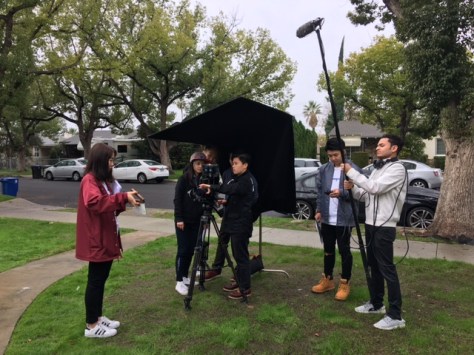
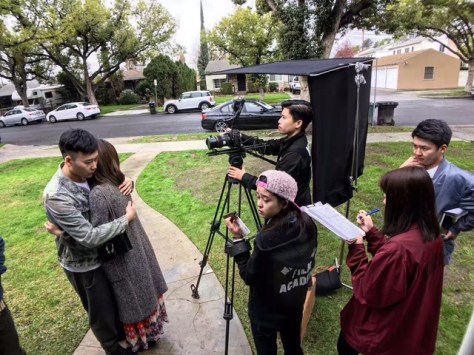
 

Bali: Beats of Paradise is a gamelan-themed film directed by Livi Zheng, Indonesian film director in the United States. Gamelan is Indonesian traditional music. Balinese gamelan has been used internationally as in the film Avatar directed by James Cameron. According to a Los Angeles Times article, “The gamelan is Balinese…A lot of the percussion for “Avatar” is gamelan-based or sounds gamelan-based … It’s a very pretty fusion of different worlds that gives the place itself a quality that is magical. Using it for percussion, rather than drums or other things, gives a sort of magical glow to everything.”


Bali, Indonesia will be hosting the 2018 Annual Meetings of the World Bank Group and the IMF. Livi Zheng was appointed to be a spokesperson to represent Indonesia at the 2017 Annual Meeting of the World Bank Group and the IMF Global Media Gathering alongside Managing Director of the World Bank Group (2010-2016), current Republic of Indonesia Minister of Finance, Sri Mulyani Indrawati, Republic of Indonesia Coordinating Maritime Affairs Minister, Luhut B. Panjaitan, and Bank Indonesia Governor, Agus Martowardojo.


Livi recently directed a feature film in Bali entitled Bali: Beats of Paradise. The film is scheduled for a 2018 theatrical release in US cinemas. During filming Livi and her film crew spent a few weeks with the local people. Travelling around Bali they captured the beautiful scenery Bali is famous for but more importantly, they learned how central culture and traditions are in everyday life. For the Balinese, life is a celebration. Each morning the Balinese are seen giving offerings; this is one of the ways they celebrate life. Livi notes that for Balinese, music and art are part of life. In Balinese life there are several important celebrations such as one’s birthday, adulthood, marriage, and even when one passes away. Beyond those central ceremonies there are numerous others encountered almost daily when travelling around Bali. Balinese ceremonies are very festive and are always accompanied by gamelan, the traditional Balinese music


Bali: Beats of Paradise teaser can be viewed at:

https://www.youtube.com/watch?v=iiHJjqhrAUA&t=5s

DISPLAYING THE DISTANCE: RUIXI GAO

Anyone who has been in a long distance relationship will relate to the film “Distance.” Whether it’s romantic or platonic, being separated from those you love is difficult, particularly when you are on opposite sides of the planet. To communicate the feeling in images, director Haixiao Lu enlisted Ruixi Gao to take the helm as cinematographer. Based on her previous work in productions like Last Call, Locked, Under the Pieces, and others, Lu was confident that Ruixi could deliver the sentiment and creativity he was looking for; a notion that was proven correct when “Distance” earned wins at the 2017 Hollywood Film Competition, the LA Shorts Awards, and the NYC Indie Film Awards (earning the Best Short Film). Gao is justifiably proud of the look of the film. What it lacked in big budget financing, Ruixi made up for in creativity, tenacity, and good old fashioned hard work; it’s a situation she often prefers as it requires her to prove her ability to deliver an exemplary product regardless of the monetary factor. The slick look and beautiful vibe of the film belie any struggle to make it. While the storyline of “Distance” may be painful and the process of making it hard fought, watching the film is completely effortless and enjoyable.

The perennial theme of the movie is love, in particular a long distance relationship between young lovers. While in China, a young Korean girl meets a boy and the fall in love. When her love goes to study in LA she is understandably heartbroken. They go about living separate lives while still in the relationship. While it is difficult, they FaceTime every day. Inevitably the spacial distance and their busy lives take a toll, creating an emotional space between them. With a grand romantic gesture to surprise him, the girl flies to LA but finds him in the embrace of another woman. In a letter, she tells the boy that the memory of their love will endure but the relationship cannot, at least it cannot for her. In the final frames we see the two former lovers returning to the places they were in the beginning of the film but appearing changed. While this story is not new, the way it is communicated is done with such grace and beauty that it elicits a transcendent beauty and pain which cause it to be markedly different than similar films that preceded it.

While many filmmakers romanticize over the days of actual film, Gao feels that the digital age has empowered many cinematographers to create a higher quality of imagery in films within greater time and budget constraints. Even more, the transition from film to digital has allowed DPs to create looks previously impossible. The result is the transition to a new age of a more realistic sensory experience, a richer color screen, and new innovation opportunities. Rather than a detriment, Ruixi considers the advantages of digital to be a powerful tool to be used in the appropriate manner. That said, she is fond of using an analog methodology when it is called for…as she did with an important aspect of “Distance.” When the director (Haixiao) told Gao he wanted to have a split screen simultaneously showing the male character in LA and the Female in Korea, Ruixi experimented with different ways of achieving this for the film. She reveals, “It’s always a challenge when you want to achieve the look of a big budget film on a smaller budget but I honestly feel that there is no substitute for being creative. I studied and researched a lot of different methods for doing a split screen. I did camera test before the shooting and then showed the director my experimental video. I simply covered up half camera’s screen(monitor) and then combined the two in post-production, placing one on the bottom. Together they made a perfect complete picture. There are many ways to shoot. Working with the editor gives a variety of means to achieve the effects needed for this.”

distance 01

While the filming was done in one city, it was Ruixi’s job to make sure that the main characters appeared to be in locations on opposite sides of the planet. The moods of the boy and the girl would also need to be passively communicated to relate the emotional mood of the characters. Gao used a simple lighting design for the film with low key lighting and a soft filter for the Korean girl and a somewhat more revealing and higher key lighting for the boy in Los Angeles. Gao professes that a simple design is typically the stronger one in her estimation, which director Haixiao Lu agrees with. He notes, “Anyone who has seen Ruixi’s reel will attest to how attractive it is. She has this innate ability to find the natural beauty in all things, which is always the most honest and powerful when it comes to visual imagery. I did not hesitate to seek her out to be the DP on this film once I saw the reel. She really knows how to work with a director. She is a passionate artist and working with her is exciting because of this. Talent such as hers is rare.”

Ruixi Gao is a reminder to all in the film community that embracing a “hands on” approach to innovation can mean using traditional tools or the most advanced ones available. The only rule that is important in art is the constant pursuit of it. The form is elevated by those who take risks and follow their own muse. While Gao may have learned from others, she forges ahead with an open mindedness that serves her and those she works alongside well. The pain that one feels when watching “Distance” would not be as intense and ironically enjoyable without the look this cinematographer has created for us.

distance03

Actor Jeff Parazzo’s Artistic Authenticity

While Jeff Parazzo first made his professional bones in children’s television, the ambitious young actor unfailingly projects a forceful dramatic presence. The Canadian-born Parazzo imbues each role with an impressive mix of skill and instinct, and whether it’s a soul-searching dramatic feature like The Waiting Room or the dark science fiction of powerful short film Celsius 486, Parazzo deftly creates convincing characterizations that unfailingly display a rich measure of nuance and emotion.

It’s a striking combination of deft technique and natural instinct that Parazzo realized was his vocation early in life

“I was always fascinated by films and found myself enjoying drama class way back when I was in school, “Parazzo said. “When I finished my studies it just felt natural to start taking professional workshops.”

Born and raised in Toronto, he has been acting for the better part of two decades and has a strong resume of professional training.

“I’ve continually trained in Canada and Southern California,” Parazzo said “I was fortunate to work with the acclaimed Canadian coach David Rottenberg in Toronto and, in Los Angeles, with Michelle Danner from the Larry Moss Studio, as well as the Edgemar Centre for the Arts in Santa Monica.”

Early in his career, Parazzo jumped right in with a recurring co-lead in a very popular, action packed series. “I’m best known for my work as Trent Mercer, the White Dino Thunder Ranger on the Hit kids TV show Power Rangers Dino Thunder,” Parazzo said. “I went on to do the critically acclaimed Canadian indie Late Fragment as well as many more TV and film credits over the years.”

jeff-parazzo-2

The ease with which Parazzo transitioned from the Power Rangers glossy, fantasy adventure into the eccentric, innovative Late Fragment significantly raised the actor’s professional profile and his subsequent, fast rising stack of credits is a testament to the both his talent and broad appeal.

“For The Waiting Room, I just got a call from my agent saying they were interested in meeting me.”  Parazzo said. “At the audition the lead actor and I just played around and improvised a bunch of different thing, and a few days later I was booked. It was so fun, I’ve always loved doing indie films. There’s a freedom that comes with working on an indie that’s hard to experience on bigger studio productions—I’ve got an indie heart, so working on these types of films, with creative filmmakers, is all I could ask for.”

Parazzo’s skills once again allowed him to craft a wholly believable performance.

“I worked with Jeff on The Waiting Room, which tells the story of a once successful actor, Jasmin, who struggles in his older age to find roles,” actor-director Jordan Barker said. “Jeff played the role of Teller, who has an endearing conversation with Jasmin and comforts him in his current situation, He was so focused on the material that it didn’t feel like acting at all—just another character existing.”

Next up for Parazzo was grim sci-fi thriller Celsius 486, set in a distant overpopulated future where a government mandated sterilization program targets males  arbitrarily deemed  undesirable.

Celsius 486 was demanding but creatively fulfilling because we were working on such a tight schedule,” Parazzo said. “Everything had to be shot over a 2 day period and, as the lead whose eyes you see the story through, I was basically in for every scene.”

Typically, Parazzo not only exceled but also enhanced the production.

“Celsius 486 is where I first worked with Jeff Parazzo,” writer-producer Christos Petsis said. “Jeff flourished in this role which was a very demanding character. It was amazing to see how real he made the role feel, adding a deep strength to the character that we had not seen on the page.”

Here, Petsis’ aptly summarizes the actor’s approach; a gift for creating a comprehensive dramatic presentation which Parazzo, who can currently be seen in Aaron Sorkin’s directorial debut Molly’s Game starring Jessica Chastain, unfailingly achieves. It’s an essential quality for any onscreen portrayal—a subtle, particular brand of aesthetic sensitivity which Parazzo very consciously nurtures.

“I enjoy doing projects of all genres,” Parazzo said. “But I do seem to be drawn to roles that are offbeat and stylized, dealing with interesting themes, and characters that are slightly off center. I just want to continue to learn and communicate my work truthfully, authentically, while never forgetting that I am just one piece of the whole story telling puzzle.”


RACHEL ZHOU DIRECTS A MULTINATIONAL NAIL BITER IN LOS ANGELES KIDNAPPING

China not only possesses an acclaimed and burgeoning film industry but also a huge number of movie goers and cinema fans who greatly contribute to a film’s international box office. There’s a good reason that you see many Chinese names in the credits of Hollywood films these days as well as an increasing number of the country’s talent appearing alongside Hollywood marquee names. The relationship between these film industries has been mutually beneficial artistically and financially. A key ingredient in this scenario is the ability of at least some of the professionals to communicate in both languages (sometimes multiple languages) whether in front of the camera or behind it. Rachel Zhou is a Chinese director well versed in American film. She has found herself working on numerous productions due to her talent and her command of both languages. Communication is key for a director when speaking with the actors, cinematographers, and other members of the film crew. It’s even more so when the same vision must be communicated clearly to a cast and crew who do not share the same native tongue. The China-US production Los Angeles Kidnapping enlisted her as a director due to their need of cross cultural assuredness in both the storyline and the performance of the off camera crew.

The occurrence of US/China film productions is becoming increasingly more prevalent. Directors who are both talented and at ease in communicating in both languages (Rachel speaks four languages) make them even more attractive these days. Zhou believes that the communication involved in a film production transcends even the spoken. Her goal is to have her team work together culturally and spiritually. Directing more than the film, she feels that it is her job to create a positivity, a sense of calm and confidence that permeates the very air of the working environment to sync the minds of all involved. Even though she possesses more than the appropriate verbal skills needed for all on her team, it’s Rachel contention that once she creates this “vibe” on set, everyone understands and anticipates the needs of the work.

Los Angeles Kidnapping is a Chinese story taking place in the US but the theme is universal. Through the experiences of Delger (played by Siyu Lu) the audience is asked the question, to what ends will one spend their life fixated on revenge. Motivated by avenging his brother’s death, Delger follows clues about the murder to Los Angles. As a graduate of the police academy, he both understands the law and is willing to work outside it as a result of his anger. Working undercover as an Uber driver in LA, he continues his investigation. When a friend of a friend is kidnapped by mobsters, Delger is enlisted to aid in the rescue. The experience and a surprising plot twist at the end of the story cause this protagonist to question whether a life solely focused on vengeance is one he is willing to live.

While the list of Zhou’s directing credits is extensive, her work on action films was not, prior to Los Angeles Kidnapping. She fully embraced the idea of the different approach required for the genre. Taking great care to design and discuss the film’s many action sequences with stunt coordinators for entertaining action designers, Rachel’s cast underwent extensive training for them film. While storylines of a more emotional nature are centered around the actors, action films present the action as a character in themselves. This includes crew members and professionals who specialize in the genre such as stunt coordinators, drone operators, traffic controllers etc. The film also gave Rachel a chance to use one of her favorite tools as she describes, “I’m into Steadicam shots a lot. When I direct an action/crime/drama, especially actions scenes, I prefer to go with Steadicam shots. Steadicam is a novel way to shoot a scene as it isolates the movement of the camera operator from the camera. Stabilizing mechanisms counter the movements of the camera operator to eliminate the inevitable imperfections present in handheld shooting. These work in an extremely powerful way since the Steadicam shots, compared to handheld shots, give a stronger sense of subjectivity with steady movements. The audience finds it easy to become engaged in the setup.”

IMG_1546

Los Angeles Kidnapping garnered a plethora of awards at such prestigious events as the London Independent Film Awards (2017), Miami Independent Film Festival (2017), Hollywood International Cine Fest (2017), Los Angeles Film Awards, and received an astounding 1.94 Million views on Iqiyi.com (China’s version of Netflix) which announced Zhou as an action director. Los Angeles Kidnapping’s producer Cleo Zou has an acclaimed career in China as a producer, working with the country’s most respected and successful stars like Jackie Chan. Cleo declares, “With Rachel on the set, I never had to worry about the shoot because she is such a highly-productive artist. She`s talented, smart, hardworking and humorous. She always knows what she wants and how to get it. We all love working with her. She possesses that ease of working with professionals from both cultures which enables everyone involved to relax and enjoy the process, which is when artists are able to deliver their very best.” It’s this tone that Rachel always strives for, in both big and little ways. She reveals, “Everyone works very hard on a film set. I feel it’s important for us to not only support each other but to lift the spirits of one another. I think there is always time to make it fun. When we were shooting a conversation scene in an alley for Los Angeles Kidnapping, the art department was asked to make wanted posters to place on the walls. Because those posters are never in focus, they made ones that said “Wanted, Giraffe” & “Wanted Dinosaur”, etc. It was a tight shoot that day but the funny posters made all of us laugh. It’s not only the little things that the audience appreciates but also the little things the professionals making the film like.”

Production Designer Mercedes Hachuel: The Dynamics are in the Details

Venezuelan-Spanish production designer Mercedes Hachuel’s lyrical sense of aesthetics, keen professionalism and zesty, enthusiastic creativity allows her to successfully take on just about any type of film job. Equally at home designing for commercials, music videos, motion pictures and television, Hachuel’s dedication and drive have earned her both a strong reputation and fast-growing resume of noteworthy credits.

For Hachuel, a lifelong romance with storytelling and art provided the ideal background for her choice of career. “I was born in Caracas, Venezuela and as a child I’d read books and draw the worlds that I imagined the characters living in.” Hachuel said. “My favorites were Harry Potter and Lord of the Rings, so you can imagine that when the films were released I just felt in love with those worlds and wanted to create something like that myself. I loved ideas, I loved creativity so I studied social communication with a major in film in the Andres Bello Catholic University, the best in the country. Meantime I worked in a small advertising agency where we produced all our commercials in-house, and I realized I had to do something related to film That’s when I moved to Los Angeles to study production at UCLA.”

Arriving in Hollywood, she wasted no time. “I met Leslie Dilley, the art director of the first Star Wars and production designer of Aliens, Deep Impact  and many other amazing films.” Hachuel said. “He became my mentor and explained to me that everything I had done up to that point was actually production design. He taught me the secrets and the real magic behind the work. Everything I heard and did made me love production design even more and that’s when I realized it was my passion—what I wanted to do for the rest of my life, to create magic worlds and make fantasies reality. I think that was the best decision I ever made.”

Her industry peers certainly agree. Whether she’s assigned to a dark comedy like He Matado a Mi Marido (“I Killed My Husband”), the bittersweet family dramedy of The Astronaut, an intense thriller like The Cards or famed dancer-singer Brian Puspos’ atmospheric music video Murder She Wrote , Hachuel leaves her own distinctive imprint even as she ensures a seamless production.

“Mercedes is passionate, talented and reliable—characteristics that make her a great asset for any project,” Murder She Wrote producer Gonzalo Wagner said. “She has a great ability to adapt herself to new situations and solve last minute problems. You can rely on her and know that you don’t have to worry because she’s ready for anything.”

Production Design is a necessarily collaborative discipline and Hachuel excels at bringing a team together; her professional background—advertising, set decoration and art department experience—provides a rich cumulative basis which produces invariably superlative results.

“As production designer, I realized how important it is for the audience to be able to immerse themselves in the story, “ Hachuel said. “If we do not achieve that, it doesn’t work. It’s really important to have design and sets that support the narrative and backstory of the film. And to capture that—to set the tone—the art department, camera department, lighting, all have to work together, because only the right mix of set decoration, color, shadows and highlights not only tells the story, they also add depth to it.”

Elie Sfeir
Hachuel, with second assistant director Gavin McFarland, prepares to build another world (photo by Elie Sfeir)

“Mercedes is always attentive and passionate about her work,” Guillermo Polo, director of photography on The Astronaut, said. “She is always ready to change something in order to make the shot perfect, and is always ready for the next shot, which is really great for my department. That attention to detail is what makes her work unique.”

“I really do believe in details,” Hachuel said. “You have to be looking out for them all the time, to add or take them out and you design and build while always thinking about those little elements, because they are what will make what you are creating unique and believable. You can’t create another world if you do not pay attention to what should really be there, and those little details are what make all the difference in the end.”

Even for a short form music video project, Hachuel reliably gives her best, creative all.

“On Murder She Wrote, the director and I discussed every small detail so we could get a shared vision of the artistic concept,” she said. “It was the story of a man that lost everything he cared about and murdered his lover. We played with the idea of having all the sets suspended in a black hole that was infinite, timeless and dead, but it had to look classy at the same time. So, I had to be really careful with the color, since I needed to work with that stark contrast. Finally, I choose a color palette of gold, red and white—these represented the value and purity of love but also, at the same time, the blood and passion of those violent emotions. Experimenting with those colors, I composed and selected each set piece and everyone liked the results.

For Hachuel, every production design assignment is an artistic challenge, and she takes a great measure of satisfaction in crafting the most complimentary and ideal presentations a story requires

“I love projects where I have to create different props and build things,” Hachuel said. “I always do a great deal of research before I actually begin, to give myself enough information to be able to create a believable world. That’s my ultimate goal—to let the audience feel that the world I created could really exist.”

Stay Tuned for Britain’s Francesca De Luca in ‘Midnight Daughter’ and ‘Espresso’

Francesca-_044
Francesca De Luca

When actress Francesca De Luca stands before a camera, every fiber of her being comes to life. Her soul awakens when she transforms into an unfamiliar character, adopting all of the dynamic elements that makes them who they are. She is driven by the unique challenge of taking a character’s description from a script and bringing them to life. It is a journey unlike any other and a privilege to call it a job. For De Luca, her work is about transporting her viewers into a different world. It’s about allowing them to escape from real life, or to explore elements of their being in ways they might not have otherwise done. She finds that films can be therapeutic, offering relief from our everyday lives. They enlighten and entertain us in such a way that molds our thoughts, our passions, and our dreams in the same way that acting has molded her.

“I love to make an audience feel something, whether it’s through comedy or drama, and the emotion or truth of a character. I love making people laugh, feel and think, and I love to sink my teeth into a script where the character has depth, contrasts, and experiences an emotional journey,” told De Luca.

Every time that De Luca sets her sights on a script, there is no doubt that she will make it a success. She has had a profound impact on every film she has ever worked on, and she is a known asset in the industry. Her performance as Margot Fonteyn in the film, Jeremiah Tower: The Last Magnificent, gained broad recognition when it featured at the Tribeca Film Festival just this past year, and again when it was selected for the Hamptons Film Festival and Key West Film Festival. The film’s success, however, did not stop there. It earned widespread critical acclaim when it was released in theatres across Canada and the United States, receiving immeasurable praise from prestigious publications like the New York Times. Later on this year, viewers carried it to number one in the ITunes Documentary category and were the reason that it featured in the top ten slots of the Independent Movie category.

Another of her major successes was working on the film Passports which won the 1st Place Audience Award at the California Women’s Film Festival, as well as the Award of Merit at The Accolade Global Film Competition. The film also went on to receive official selections at the aforementioned festivals, as well as Atlanta Shorts Fest, Laughlin International Film Festival and Film Invasion LA.

This sort of success is not unheard of for talent as unparalleled as De Luca’s and it only motivates her to expand her reach in the industry. Her drive is unprecedented and for this reason, filmmakers are drawn to her when looking to cast an actor that will carry their script or storyline to greatness. Fortunately for cinematographers all over the world, she is attracted to well-written scripts and eager to do their characters justice. When producers like Annie C. Wright, who worked with De Luca on her digital series, Down & Out, get to experience working with De Luca, they are often astounded by the depths of her talent.

“Francesca is not only talented in her craft, she’s professional, driven, and willing to put in the work required to succeed in this industry. She is a joy to have on set and I hope to be able to work with her again in future productions,” said Wright.

Jeremy Pion Berlin, who directed Passports, was intrigued by her exceptional on-screen presence and her improvisation skills. He knew that he had to work with her and his experience working with her pushed him to want to work with her again for his upcoming film, Midnight Daughter. When Berlin approached her about starring in his first feature length film, the British-Italian actress was thrilled. For Midnight Daughter, De Luca will be playing the lead role, Shawna. The psychological thriller is to be set in an old-age facility where Shawna works. De Luca, who loves playing dark, dramatic roles, is ecstatic about the depth of Shawna’s character and the opportunity to keep her audience on their toes for the duration of the emotional roller coaster that the film will depict.

In addition to Midnight Daughter, De Luca will also be starring in the romantic comedy Espresso. She is very excited to be diving further into the comedic genre once again. Her versatility as an actress allows her to transform herself into characters living through all kinds of experiences. She is not typecast and she does not limit herself to any specific range of characters. She seizes the challenge of becoming whomever a script needs her to be. If her history of excelling in every role she has accepted is any indication, she once will be perfect for the part in Espresso.

“I love the challenge of playing different roles and brining parts of myself to a character. It is my passion and I am lucky to get to do what I love over and over again. I can’t wait to see how both projects turn out,” concluded De Luca.

Cinematographer Kristin Fieldhouse’s Perfect Mix of Art and Science

With any feature film, audience interest always centers on the starring actors, but the fine art of cinema succeeds or fails due to the efforts of three key contributors—director, writer, and, perhaps most critically, the cinematographer. Whether photographing in lush color or stark black & white, the overall look of a movie sets the tone and provides invaluable context for its storyline, and one of the field’s fast-rising practitioners is the skilled British-born cinematographer Kristin Fieldhouse.

Hers is an exacting occupation, part science, part art, that requires both acute aesthetic sensibilities and precise technical acumen— qualities that Fieldhouse been cultivating since she was a pre-teen shutterbug. “My love of photography began when I was twelve,” Fieldhouse said. ”I attended a local independent school that had an incredible darkroom and photography teacher, and was lucky enough to spend many hours taking pictures and developing prints, and exploring art galleries on weekends.”

It also became a very personal part of her life and identity. “Photography gave me the opportunity to find my voice through imagery and a means to express myself as an artist,” Fieldhouse said. “Having gone through some childhood trauma—losing my father and sister—photography was a healing process and gave me the opportunity to connect with people through an artistic medium. And that, in turn, led me to cinematography.”

Even before completing her education, Fieldhouse began racking up some significant camera department credits, contributing to such high-profile Hollywood projects as The Incredible Hulk, Total Recall, music documentary Neil Young Journeys along with numerous television and short film credits. Upon graduating, with an MFA, from the American Film Institute, her professional life as a cinematographer began to blossom.

With a solid roster of short film credits, Fieldhouse moved into feature film, shooting Michael Seater’s Sadie’s Last Days on Earth, Jenée LaMarque’s The Feels and veteran actor Amy Jo Johnson’s directorial debut The Space Between, an offbeat comedy about a man who learns his new born son was sired by another and embarks on an odyssey to find the biological father. Her experience shooting the film encapsulates Fieldhouse’s comprehensive grasp of the demanding craft.

kristin-fieldhouse- setting up shot

“Amy Jo Johnson and [producer] Jessica Adams were building a team of artists and technicians that understood their vision—within the confines of an ambitious script, a micro-budget and a short shooting schedule,’ Fieldhouse said. “This was to become an epic road movie, with lots of locations, limited time, large cast, babies and a travelling limousine. They reached out and brought me on for a lengthy prep—which was essential for the project. I developed a language and symbiosis with Amy, and was also able to help organize and put in place the various cinemagraphic elements required under challenging circumstances.”

In short order, the company was off and running. “The challenges of the film were numerous,” Fieldhouse said. “16 days of shooting, always on the move, many locations, and lots of road and car work. We managed it using smart scheduling and techniques that kept crew and gear light and streamlined and by working together to overcome the obstacles that came up with locations, weather and schedule.”

It’s not all logistics—the conscientious cinematographer must also contend with myriad, far more subtle issues. “I tried to approach the film as a fly on the wall,” Fieldhouse said. “I attempted to let the themes of the film play out unobstructed, working to enable authentic comedy and to allow for improvisation. It was also important for me to use framing and lighting to bring connection to our characters and support personal and nuanced scenes that required a delicate touch. I wanted the camera to be close and personal for some scenes, and then to stand back for others giving breath and a more objective point of view.”

Fieldhouse’s sensitivity—a singular, artful empathy for story and characters—is a quality that not only characterizes her approach to the camera, it also directly affects the production itself.

“I found Kristin to be a true artist,” Johnson said. “Her ability to work with the cast and make them feel comfortable and free to experiment contributed significantly to our great performances. She and I fully collaborated on every shot and created the look and feel of the film together. She was also an incredible leader who had her crew inspired and motivated the entire shoot. We had a very demanding schedule but Kristin exceeded all my expectations and delivered exceptional image quality. I’m excited to see where Kristin’s career takes her. I believe she’ll be one of the great ones”.

That kind of intuitive, on-the-spot collaborative creativity is rare, and is certain to push Fieldhouse’s burgeoning professional reputation even higher throughout the international film community. For Fieldhouse, the prospects are limitless, but at her core, it’s all about genuine artistic expression and the impact it can make.

“I see film as a medium that connects and enlightens,” Fieldhouse said. “It has an incredible capacity to give space to voices and experiences. If I can continue to tell honest stories that inspire and challenge the status quo—that would be a true gift.”