All posts by pressva

Director Jan Pavlacky turns harsh conditions into artistic masterpiece

Many people are haunted by the idea of what they should spend their life doing. Finding a career path that pays the bills and makes one truly happy seems almost impossible. Luckily for Jan Pavlacky, a chance job on a film set ignited a dream, and that dream has turned into the reality of becoming an award-winning director.

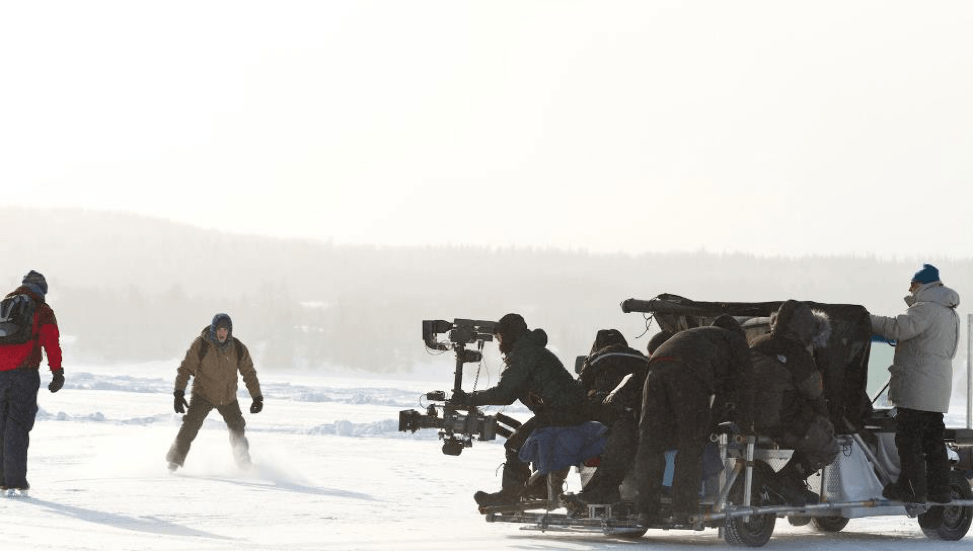
Pavlacky’s talents are recognized around the world by both colleagues and audiences that see his work. His directing on his film BKA 49-77 received international acclaim and was screened at some of the world’s most prestigious film festivals. His exceptional directing abilities have been appreciated by companies such as Nike when he did a commercial campaign for them, as well as world re-known production companies such as Savage and atSwim. He has excelled in directing commercials, films, and even music videos, including his work on the music video for the Please The Trees song “It’s Not Me.” The music video called for Pavlacky to shoot in difficult conditions during the middle of winter, on the highest mountain in the Czech Republic. When it came time for the shoot, there was a massive snowstorm, and temperatures fell below zero degrees.

We drank a lot of hot tea and mountain rum and wore warm clothes. We were fighting against extremely low visibility but luckily we had several walkie-talkies that we were able to hide in the actors costumes so we I could direct them during the shot. We had the chance to shoot on film stock, which, due to the extreme weather conditions, was the only way how to shoot, since the temperatures were too low for a digital camera,” said Pavlacky. “I love when the conditions are somehow extreme. It makes me somehow more focused towards the one single goal. We were really lucky to have such harsh weather conditions since the weather played a crucial part in the story.”

“It’s Not Me” was Please The Trees’ first music video. Although such extreme weather conditions were not originally part of the plan, Pavlacky used it to add an extra element to the story, thinking it was the best way to show a man finding his soul in the emptiness, which is what the song is about.

Rather than giving up, Jan pushed forward in order to convey the deep subject matter through the visual medium.  The final product ended up being a beautiful piece of art, showcasing gorgeous shots of the white-out conditions.  Since its release, the video has accrued tens of thousands of views and kick-started the successful career of the band,” said Alessio Spinelli of Milk and Honey Pictures, the production company that did the music video. “The band wouldn’t be where they are now if it weren’t for Jan’s incredible work as lead director on that first music video.”

Milk and Honey is a production company that focuses not only on commercials and music videos, but also on feature films and television series. They are one of the biggest production houses in Prague, and have an impressive reputation not just in Pavlacky’s native country of the Czech Republic, but also worldwide.

“Milk and Honey have been in the business for more than 20 years. They’ve produced big Hollywood Blockbusters and countless foreign commercials, and working such an important company was a huge step in my career,” said Pavlacky.

Pavlacky’s impressive work with Milk and Honey goes far past the “It’s Not Me” video. He was also the lead director for multiple Milk and Honey projects including commercials for Theraflu and GS Enerix. The Theraflu commercial was his first experience working on a project for the U.S. market and worldwide renowned digital agency Wunderman.

“Notably working for the US market is always something special and it is a benchmark for many directors in my field, so obviously, the responsibility was huge, and I was extremely happy that the shoot ended up successfully. The collaboration with the New York creative team brought some great ideas into the shoot. I also had a great Director of Photography on board who shot many feature films and together we delivered a great commercial and had an amazing and creative time on the set,” said Pavlacky.

The commercial was shot at many different locations around Prague, creating a visual experience that impressed both Wunderman and the American audience. His work on the GS Enerix commercial also did wonders in the Czech market, airing to thousands of viewers on television. It helped to improve all brand indexes, including brand recognition, purchase intent and sales. With results like this, it is no doubt that Pavlacky’s impact will continue to impress audiences on both the big and small screen for years to come.

Photographer Alejandra Sierra brings artistry to everything she shoots

For as long as Alejandra Sierra can remember, she has always been holding a camera in her hands. There was never a moment of doubt about what she wanted to do with her life; she always knew that photography would make her happy. But what makes her luckier than most is that not only does she love what she does, she is extraordinarily good at it.

While being recognized around the world for her talents as a photographer, Sierra has seen tremendous success. She has over 22 thousand followers on Instagram, and her first individual exhibition, “Metalmorphosis” went on to be featured in the leading contemporary art museum, MURA, in her hometown of Guadalajara, Mexico. Her photographs have been seen by hundreds of thousands of readers of various Mexican magazines, and contributed to making the magazine Cream the success it is today. This trend continues in regards to her work with national companies.

“I love photography and I really enjoy product shots, and shooting for national companies allows me to do both,” said Sierra.

Sierra’s work has helped boost many corporations such as La Tequila, Le Garraf, Marisa Pasteleria, Café Barra Café, California Wings and Beer, Cortez, Gaspar, Osaka, Olio Bistro, La Bocha, Ambiderm, Marianka, and Kuu, to name only a few. She was instrumental in providing them with widespread social media exposure, as well as drawing in a growth in sales.

“It makes me really proud to have such big enterprises to like my work, know about it and want their products shot by me,” she said.

One of her more substantial jobs was for the restaurant De La Rosa, and Sierra helped the company revamp their image with her work. For Sierra, the chance to work with a company that gives so many jobs to the people in her country was invaluable.

“It was a humbling experience to know that I was responsible for the pictures of this iconic brand. I shot products I grew up buying as a kid and then portrayed what they represent through a picture,” said Sierra.

Rocío Gómez Michel, the Marketing Manager for De la Rosa, was extremely impressed with Sierra’s work with her brand. She attributes Sierra’s work to the success of the restaurant’s social media, allowing for consumers to feel closer to the brand they grew up with, and they saw a sizable increase in sales as a direct result from Sierra’s photos.

“Given my history as a brand analyst, I know the importance of a good photographer in campaigning and branding an organization. Alejandra’s experience as a photographer, as well as her achievements through her career made her a clear choice to help in the continued success of De la Rosa. Her expertise is an invaluable asset toward the overall success and growth of any organization she becomes involved with, and I can confirm from personal experience that she is largely responsible for much of the success,” said Michel.

Sierra’s work has impacted not only the sales of companies, but also the awareness of many social cause organizations across Mexico. She uses her art to help improve the lives of others in her native country, something that is not only rewarding, but important.

“Telling a story, bringing a cause to life, being able to make a difference is one of the best feelings in the world,” said Sierra. “It makes me really proud. I feel useful and that I´m making a difference through my passion and career. Being able to help doing what I love the most is amazing.”

Of the various social causes she has helped, what was perhaps the most substantial was Sierra’s work with Mi Gran Esperanza (MGE), a widely renowned association dedicated to the eradication and treatment of cancer. Mi Gran Esperanza is a civil association founded 22 years ago that helps to treat and attempt to cure children with cancer. More than 3,000 children and their families, have been helped by the association, and they are one of the most important associations of our kind in Mexico. Mi Gran Esperanza helps with physical, emotional and spiritual health and recovery of low income patients and their families. Each year, they treat around 400 kids mostly from the western side of our country, helping them to overcome their battles.

“Working with MGE was Bittersweet. It was sad, because you never want kids to get cancer, but being able to know that my work was going to help their lives being a little bit better was great. It was an honor to shoot this brave kids and their families,” said Sierra.

Sierra’s photos were featured in the annual calendar that the organization puts out every year to fundraise and provide as a thank you for their donors. The calendar showcases the patients, the installations, the families and what they do. Estela de la Alba Rulfo the CEO of Mi Gran Esperanza, says that they chose Sierra for this project based on her previous work and reputation as an outstanding photographer.

“Alejandra’s leading role as the photographer for our calendar was instrumental in raising money for our organization, and that we required a top tier photographer to complete this task. After working with Alejandra, I am confident that we made the right choice. Thanks to Alejandra’s preeminent skills as a leading photographer, as well as her patience and ability to complete shoots timely, the people felt comfortable, happy and familiar in each shoot. The results were amazing pictures and a truly beautiful calendar. The closeness was such that Alejandra even became a sponsor for one of the girls she felt the most connected with. This encapsulated the desired tone of the calendar, and showcased the impact that the donations have on many of our patients and families. I am wholly grateful to have worked alongside her throughout this project,” said Rulfo.

The calendar has unparalleled success, and sold nearly 10,000 copies. Because of such tremendous success, MGE presented Sierra with a recognition as a thank you for all the work done and the positive results.

“It was great being able to help them and put a smile on their faces,” said Sierra.

Sierra chose the uplifting theme of gratitude for her photos, and showcased the reflection of this emotion from the families, whose medical expenses are entirely covered by donations. After choosing the theme, she had to coordinate the photo shoots. This resulted in a month of organizing and shooting, and dividing what our services include, what did we do with the donations and how the families were thankful for them. Sierra shot the patients, their families and the events, and was ultimately responsible for the majority of the calendar.

“This project has been one of my most valuable lessons in life. Seeing the kids so positive, so brave, and so happy was really inspiring,” she concluded.

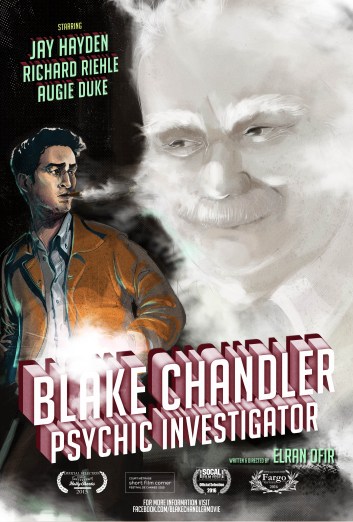
Graphic Designer Joy Sun does noir film poster for “Blake Chandler: Psychic Investigator”

Joy_04_poster
Film poster for Blake Chandler: Psychic Investigator

While growing up in Tainan city, Taiwan, Joy Sun always loved drawing. She knew quickly that she had to be involved with art in her future, but she didn’t immediately know how. Failure wouldn’t get in her way, and after teaching herself storyboarding and working on business cards, she wanted to be both a storyboard artist and graphic designer. Now, she is recognized internationally for her talents as both.

As a storyboard artist, Sun has worked with some of the world’s largest companies, such as LG when she did the storyboard’s for their commercial Bring the Aurora to Life with Power of Perfect Black. As a graphic designer, Sun designed both a website and logo for Bruber Media Partners, as well as business cards for the famous transgender advocate Rodrigo Heng-Lehtinen. She has an extensive resume, but she would consider the highlight of her career working on the posters for the film Blake Chandler: Psychic Investigator, a project that truly combined both her graphic design and storyboard artist talents into one.

Blake Chandler: Psychic Investigator was a very fun and special project since a lot of movie posters nowadays are made with photographs and are heavily Photoshopped. It was a rare chance to get to take a more minimalist approach in terms of style and execution of a movie poster, and I enjoyed having the opportunity to do so,” said Sun.

Blake Chandler: Psychic Investigator is a critically acclaimed and highly successful feature film. It is a science-fiction comedy about a psychic investigator who tries to seek revenge on the ghost of his former crime fighting partner. The film was written, directed, and produced by Elran Ofir, who describes Sun’s work as immensely vital to the production as she was the lead graphic designer for the film, therefore creating the overall image that was most accessible to the public eye.

“There are very few people in the industry with the level of extraordinary talent and ability as Joy Sun and she has earned her lead roles on some of the most widely distributed productions for some of the biggest production companies in the industry. I feel extremely honored to have worked with Joy Sun throughout the production of Blake Chandler: Psychic Investigator and know that she will only continue to create commercially successful and critically acclaimed productions, which is why Joy is an excellent addition to the graphic design industry,” said Ofir. “I personally commissioned Joy for this lead role because she is the only graphic designer in the industry able to recreate the classic style of noir films. Joy’s illustrative and graphic design abilities are undoubtedly distinguished within her field. In addition, I wanted someone that could visualize my direction clearly and the result was an extraordinary film poster that neither me or the rest of the production crew could have expected.”

When the director Ofir approached Sun, he had very clear vision of what he wanted, but still gave Sun the space to be creative. Through his words, Sun says she found myself in a world of fonts. He specifically stated that he wanted the main character holding a flashlight with a cigar in his mouth and with the ghost smoking out of the cigar. Sun immediately wanted to make it her own. She started researching what noir films posters look like and tried to bring that vision onto the paper. She used her knowledge of colors and her digital drawing skills to mimic what Ofir had in mind, and made something he wanted and still from her own creation.

“It is always good to work with someone knows what they are doing as a leader. Elran is a great director and producer with an artistic vision that demands attention, I wanted to work with him for this reason. He is a succinct and clear individual whom is easily approachable, which I respect within business relations,” said Sun. “Also, Noir film has an amazing and deep history and the production of Blake Chandler: Psychic Investigator set out to revive the style. Beyond that, the crew I worked with was magnificent and made the process very enjoyable and interesting. Moreover, who wouldn’t want to work on a film about taking revenge on a ghost?”

The film has seen an enormous amount of success, having been selected for HollyShorts 2015 Official Selection, Fargo Film Festival 2016 Official Selection, SOCAL Film Fest 2016 Official Selection, and the Festival De Cannes 2015 Short Film Corner. For Sun, going to Cannes was an overwhelming experience, as she knows the prestige the film festival has. Not only would the film be showing, but people from all over the world would see her one-of-a-kind poster.

“I am so honored to be part of this process and had the pleasure to have my work out there to share with people,” Sun concluded.

Cinematographer Jon Keng feels lucky to be doing what he loves every day

No matter how many awards he wins, festivals he attends, or film sets he works on, Jon Keng remains humble. For him, it isn’t about the recognition or the praise, for him, it is just about doing what he loves. He knows how fortunate he is. Keng is from Singapore, where people rarely get to pursue their true passions in life as they get forced to conform with societal norms. Despite all that he has accomplished, he just feels to be able to make a living out of being a cinematographer.

Keng started out wanting to be a photographer, but as he grew so did his dreams, and he turned to cinematography. His understanding of how to beautifully frame a still image greatly contributed to his talents as a cinematographer when he began, and now he has worked around the world on a variety of award-winning films and television shows. He previously worked on award-winning LGBT themed films Cocoon and The Stairs.  He recently shot the TV pilot Pineapple, which was selected for Sundance Film Festival 2017. His film Fata Morgana won a prestigious Golden Rooster Awards last year, China’s equivalent of the Academy Awards. There is no shortage of achievements for this cinematographer.

I enjoy my work a lot. Every film presents a different work environment, so I never get bored of what I do,” said Keng.

Working on the 2013 film Tadpoles, Keng began experiencing his enormous success. The film screened at over nine festivals, including the Vladivostok in Russia, Jogja-NETPAC in South East Asia, and the Singapore Short Cuts. He was also the first Singaporean to win the Jury Prize at Locarno International Film Festival in Switzerland for his work on the film, the world’s longest running film festival, which is widely considered to be one of the top film festivals.

Tadpoles was, by far, the toughest film set I had ever worked on,” said Keng. “Being forced to tackle extreme challenges with a team of people is my favorite aspect of filmmaking. I feel that it really bonds the crew and gives us so many great memories to look back on.”

Keng was involved with the film right from the beginning of the screenwriting process, and was able to give his feedback to each new draft as it came along. He worked alongside his childhood friend Ivan Tan, the writer and director of the film. The two of them always had a shared interest in filmmaking, and became a compatible team.

“Jon is a great pillar of support on set. Even when things get stressful, he is always on point and calm with his decision making. This is very reassuring to the crew,” said Tan. “Jon never tries to impose a particular style onto a film. Instead, he digs deep into the core of the story and together, we find a unique look for every film we work on.”

Tadpoles follows two families who are forced to stay indoors and confront their fractured relationships as an unusual monsoon threatens to flood the eastern part of Singapore. There had been a series of floods in Singapore prior to the film, which became the inspiration.

“It feels great to be able to share this uniquely Singaporean story with the rest of the world,” said Keng.

After the triumph of Tadpoles, it became clear to not only Singapore, but the rest of the world, that Keng has extraordinary talent as a cinematographer. In 2015, he worked on the film Home, which became the first Chinese film to win at Best International Film at Raindance International Film Festival.

Home is a unique project because it started right from the ground up. We threw around some themes that we wanted to explore, being migrant stories in China, but we never really had a specific story in mind,” said Keng. “One day when we were on location scouts, we came across an abandoned hotel resort with a gigantic water lily pond. We spoke to the old caretaker of the resort, a migrant worker that had been left behind by the construction company many years ago after the construction had fallen through. inspired by this unique location and character, we decided to write an entire story around it.”

Home tells the story of Lao Tian, an elderly migrant caretaker of an abandoned construction site. On his last day of work, he encounters a five-year-old city girl who has run away from home. Bie Pu explores the concept of homelessness across the social classes of modern day Beijing.

“Shooting on real locations with real people cast in many of the acting roles was a great pleasure for me. It showed me that there is a multitude of stories out there in the real world left to be explored,” said Keng.  “I enjoy this organic style of working, to find a location first before writing the script. This brings a level of realism to the film, something that cannot be achieved with set builds. Once the location was found, the script was completed in less than a week and we were shooting within two weeks once the actors were cast.”

The film had its premiere at the Los Angeles Film Festival in 2015, an Oscar qualifying festival and one of the premier festivals in Los Angeles. It then went on to not only be screened at 13 international festivals, but win the HBO Films Competition Award at the Savannah Film Festival, and the Director’s Choice Award at the Miami Film Festival.

“Working with Jon Keng is the epitome of a professional working experience. Jon’s expertise in cinematography is only matched by his great demeanor and ability to remain calm under high pressure situations. Jon has made a name for himself as being the reliable artist and technician you want on set,” said the producer of Home, Edmond Yang. “J on is good at what he does because he approaches every job and every collaboration from a place of respect. His interactions with coworkers are based on a foundation of trust and professionalism surpassing any of his peers. He is able to keep focus on the overarching needs of a production while never forgetting the micro details which make up each successes. Jon illustrates why creativity fused with technical precision make an artist, but more importantly he reminds us why interpersonal communication is key to our discipline. This is why people want him on every set we have – because he is as talented as he is humble and that’s a combination we want to surround ourselves with in order to achieve our best on film sets.”

It seems that Keng does not work on a project that does not have outstanding results. His meticulous eye and passion for what he does justifies why he is such a celebrated cinematographer. With skills like his, there is no doubt his name will continue to appear on both the big and small screen.

Actor Wadih Dona’s Menace and Magnetism Earns International Renown

WADIH DONA HEAD SHOT3

Australian actor Wadih Dona’s career has been marked by an impressively steady progression of accomplishments. His natural cache of talent and classic theatrical training has earned him two decades of sustained professional success, not only on stage but also with numerous television and film jobs. Dona’s gift for creating fully realized, believable characterizations have landed him several very high-profile recurring roles on Australia’s top TV shows, but those successes are just a minor aspect of the driven actor’s ambition.

“I am interested in telling stories that resonate on a larger scale,” Dona said. “I have been in TV, film and theatre for many years in Australia, and I am interested in opening up avenues for international work. The US is a market that actors naturally gravitate to, and given my long list of credits, I felt ready to take it on.”

It didn’t take long for Dona to reach this goal. His portrayals utilize an impressive mixture of instinct, stagecraft and soulful, emotional intensity; Dona draws viewers in close, building an emotional bond which he deftly exploits for a powerful artistic impact. It was precisely this quality which led him to his first US film, 2016’s Septembers of Shiraz, playing alongside two of America’s biggest movie stars, Oscar winner Adrien Brody and the acclaimed lead actress Salma Hayek.

The film, a thriller set in 1979 Iran, was somewhat of a passion project for the two stars—both also served as producers—and it combines taut suspense and raw emotion into a compelling whole.

Septembers of Shiraz is an art house film, it’s an intimate family story, not an action blockbuster,” Dona said. “The film is an adaptation of the novel by Dalia Sofer, and is based on real life. It centers on a Jewish-Iranian family, played by Brody and Hayek, who are suddenly faced with persecution when the Iranian Revolution unfolds in 1979. Brody’s character is arrested, tortured and humiliated, and the film closely follows his ordeal and the fortitude he had to have to get through it.”

Dona’s personal background—the actor grew up in numerous European and Middle Eastern countries—and formidable resume of successful performances served him well when it came to Septembers of Shiraz.

“I knew Wayne Blair, the director, as we had worked together in a production of Othello for the most eminent Shakespeare company in Australia,” Dona said. “We had history, were good friends, so he trusted me and my work methodology—and vice versa.”

“He sent me the script, asked me to screen test and told me that the project would be cast out of the US, with Salma Hayek and Adrien Brody attached. Obviously, I did well because I got the part, but Wayne had no final say in the casting so it was good to know that I achieved it on my own merit.”

This was indeed the case, as executive producer Heidi Jo Markel said: “We were looking for an actor with gravitas, who could portray the menace of the Iranian Revolution. We knew we had our guy when we saw his fantastic screen test. Wadih is talented actor with incredible screen presence and the icing on the cake was that he was a pleasure to work with on the shoot.”

To develop his character (Rostam, a member of the infamous Revolutionary Guard) Dona focused on Markel’s watchword: “Menace. Rostam symbolizes the forces of chaos and anarchy within the Revolution,” Dona said. “I was cast because I can access those dark emotions quite easily. As a child I was exposed to civil wars and I knew those kind of men, I saw them—young men who suddenly had power, and they could do what they pleased with that power. When we were on set, carrying weapons and with the period uniforms, I was scared when I saw my own reflection in the mirror!”

wadih_on_set

“Adrien Brody and Salma Hayek were both very personally invested in this story,” Dona said. “I had scenes with both, and each was a pleasure to work alongside, but I had more to do, plot wise, with Salma. In one scene, Rostam loots her house and there is an obvious sexual threat as well as one of underlying violence. We rehearsed this scene a few times and kept going deeper emotionally. She went into that dark emotionally territory with me so openly, we built rapport very quickly because of this. She was fantastic to work with—open, accessible and an absolutely gorgeous human being.”

When the film debuted at the prestigious Toronto Film Festival, Dona said, “It premiered there in the biggest cinema in Toronto, the Roy Thompson theatre, with 2,630 people watching. It was massive. I had never seen a cinema that size.”

A complex, thoughtful piece of filmmaking, Septembers of Shiraz was aptly described, by one critic, as “a germane and intelligent observation of the current global political climate in which the world’s ‘have-nots’ are rebelling against the party-political status quo.”

For Dona, it had even more significance. “It was a fantastic, enriching experience,” he said. “Personally, I think we made something quite beautiful and life affirming. And it has helped me leverage myself professionally to do more work. It’s a calling card of sorts for me now—people sit up and listen when I tell what I have done in this film. And, if I had to be selfish, I would say also that shooting a film with one of your friends directing and acting alongside Oscar award winning stars, well, that’s too not bad, either, is it?”

AN AWARD-WINNING FILM ABOUT A MAN WHO NEEDS NO AWARDS: I HEARD THE FLOWERS BLOOMING WHEN I WAS 80

Short film IHFBW80

How do you create a film about an eighty-year old man transporting a piano across town to perform a solo concert? Well, besides having all the creative professionals involved…you hire the amazing producer like Huang Zhe (aka Gigi). With a variety of different types of productions (film, commercials, etc.), Gigi quite simply knows how to maneuver every piece into its perfect place so that the artists can get along with the job of being artists. The most classic of automobiles need the proper propellant to deliver performance and so does every classic production. When director Zhen Pan started off with a rough test shoot, he reached out to Huang and enlisted her help to put the film on track. After reading the script and conferring with Pan (whom she had worked with previously on other productions), Gigi decided to sign on and bring new life to the film. It was a well contrived decision as I Heard the Flowers Blooming When I Was 80 won Best Screenplay in 4th Golden Panda International Short Film Festival and was a finalist in the IndustryBoost Competition. Huang’s ability to reset the course for this production and empower it to such great success is a testament to the fact that a great producer is paramount for filmmakers to achieve their vision.

Writer/director Zhen Pan is often referred to as China’s Wes Anderson. Within his decade long career, he has amassed numerous lauded productions. It was highly important to him that I Heard the Flowers Blooming When I Was 80, matched up to those in his impressive resume. He recalls, “We had a rough testing shoot and it didn’t quite go well. A lot of things went wrong and we just couldn’t figure out a way to make things work the way we needed them to. It was not until Huang Zhe stepped in to become our new producer that we were able to re-start the  project. Not only did she manage to find all the locations that we needed, but she also re-grouped the entire team and kept everyone energetic and focused on creating something that we would be proud of. I couldn’t thank her enough for being the production leader and making everything happen. This film would have been impossible to make and receive the recognition it has been given without Gigi.” Huang is quick to admit that she was able to make use of some prior work, essentially retaining about a third of previous footage. New schedule shoots and permits required quick and accurate designing to get the film in on time and within budget. The film required a consummate professional like Huang to guide it into a proper “landing.”

While the film focuses on one main character, the cast numbers more than thirty and required a sizeable crew. I heard the Flowers Blooming When I was 80 is a heartwarming story of recalling and achieving your dreams. On his 80th birthday, a lonely old man named Larry (played by John S. Boles) meets two children who are doing a school survey on the street. The little boy asks Larry:” What was your dream when you were my age?” This reminds Larry of when he was a little boy and wanted to hold a piano concert. Everyone dissuaded him from the idea as his parents believed his older sister to be a better pianist and more deserving of attention. Everyone ignored the boyhood Larry’s feelings. With the gradual growth of age, little Larry became old and eventually forgot his dream. On his eightieth birthday, Larry spent time alone, as he usually does while his children made excuses to avoid their father’s birthday. Larry suddenly remembers the question that the little boy asked him in the morning,” What was your dream at my age?” and decides to pick up his dream again. Moving his piano from the garage to the center of the small town, he interrupts the lives of the town’s commuters, but he finally achieves his dream of holding a piano concert…in spite of having no audience. The film gives wings to the idea that our dreams are for ourselves and not simply to be pursued for the appreciation of others. The very idea itself is a perfect description of a successful producer’s role. It’s a concept which Huang has thoroughly embraced. Gigi confirms, “The most important thing for me is seeing the stories that I like and love to produce. I was attracted to this production by only seeing the film title, and stepped in as soon as I read the script. I knew the problem was that the film didn’t have a proper plan and schedule. It was also highly important to have a crew which can work well with each other. A talented crew is so important, but the most important thing is keeping a happy filming environment.  Everyone should enjoy what he or she is doing. I decided to regroup the crew for this film, meaning that I found a totally new crew for this production. I started the pre-production earlier this time. Since I prepared early and had good communication with the city, we got the street closure for free…nobody was unhappy about that.”

A seemingly “doomed” production that couldn’t quite get off the ground, I Hear the Flowers Blooming When I was 80 went on to be an award-winning film because Gigi Huang recognized the potential of the story, cast, and crew. Investing her talents with those of this production, it went on to gain the type of notoriety that all its participants hoped for. Gigi comments, “To be honest, I was really happy and felt honored that we won the ‘Best Screenplay’. It might not have gained notoriety or prestige for my career personally but that’s not why I’m a producer. I’m perfectly happy to sit back and know that I was able to achieve exactly what I set out to do and that allowed Zhen Pan and everyone involved to be the artists that they are.” …which is exactly what I heard the Flowers Blooming When I was 80 is all about.

headshot 2

Xiaoyuan Xiao on how to Manifest a Masterful Solo

Screen Shot 2019-09-09 at 12.25.33 PM

Solo may refer to a musical statement which announces mastery and emotion. It may also refer to piloting a course by one’s self. Both of these definitions find their union in director David R. Liu’s film of the same title. Known for his New York Jazz Film Festival award-winning film Bebop, Liu’s enlistment of “Ivy” Xiaoyuan Xiao (at the behest of producer Xin Li) to help him manifest the story testifies to the renown this Chinese born producer has amassed throughout the Indie film community. Solo’s status as an Official Selection at festivals including CAAMFest, the FARCUME International Film Festival of Faro, the Los Angeles Asian Pacific Film Festival, and numerous others confirms his trust was well placed. Solo is as moody and ethereal as the Jazz music which serves as the backdrop for the journey of the young boy who is so central to its plot. His interaction resonates with dissonant harmony against his father, while his challenging situation is the moving picture personification of the beautiful awkwardness of Thelonious Monk or tempered uncomfortability of Charles Mingus. This film is as much for Jazz lovers as those who understand nothing of the genre but appreciate emotional struggle.

Screen Shot 2019-09-09 at 12.25.09 PM

Max Tepper stars as Jeffrey, a teenage saxophonist who is adjusting to life after his parents’ separation and impending divorce. His troubled father Alex (played by George Tsai of the FX series Mayans and Netflix’s two-time Golden Globe Winning original series The Kominsky Method starring Michael Douglas and Alan Arkin) is at a point of crisis, having lost both his marriage and his job. The comfort Alex feels with the presence of his son is counterbalanced by Jeffery’s musical desires; a nagging reminder of his soon to be ex-wife’s imprint on their offspring.

Screen Shot 2019-09-09 at 12.25.17 PM

 Solo offers no huge effects or complex production numbers; which is precisely what stands out about this film. The producers, director, crew, and cast have cohesively created a mood of gravitas that permeates the entire story. The intensity of life’s uncomfortable relationships and moments are to be channeled into Jeffery’s artistic expression. It’s a fitting parallel to that of the artists who created this production. In the same way that “Birth of the Cool” featured Miles Davis rejecting the template of jazz of that era for a slow moving artistic statement, Solo echoes this tempered language with a fictional tale of a present day aspiring horn player. It’s not so much a jazz story as a human story. Ivy confirms that you don’t need to be a music aficionado to connect with Solo, stating, “I am actually the opposite of Jeffrey if I have to make a connection. My parents bought me piano when I was interested in learning but the passion only lasted a short time. I had so many interests learning an instrument growing up but unfortunately, nothing lasted. Solo reminded me how lucky I am to have open-minded parents and opportunities to explore. That’s the essence of our film and why I wanted to be involved in telling it.”

Screen Shot 2019-09-09 at 12.25.43 PM

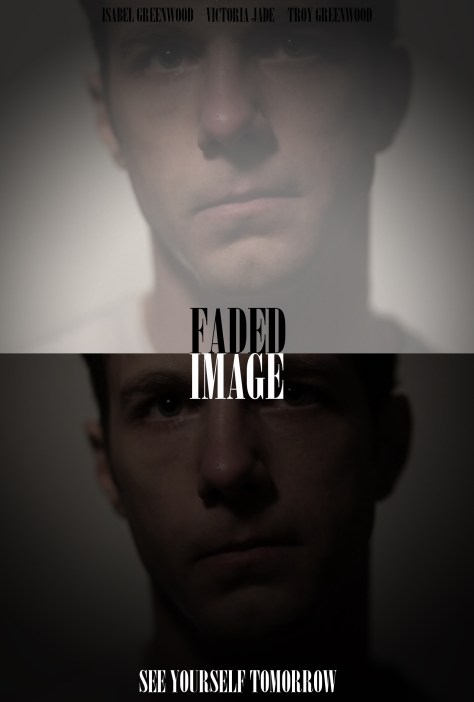
“FADED IMAGE REVEALS A VULNERABLE & GIVING TROY GREENWOOD

Troy Greenwood has many talents; producer, writer, actor, etc. While he may not truly accept it, poet and artist should be mentioned in the same breath. His film Faded Image is as vulnerable, heart-wrenching, and inspiring as any of the great poems of literature. The film seeks to reveal, relate, and give respite to those who experience or come into contact with those who experience depression. The public’s understanding and acceptance of the validity and presence of mental health has grown considerably in the last decade, often as a benefit of the work of artists like Greenwood who help others to peer into the invisible “virus” that effects and overwhelms our fellow citizens and family members, often directly in front of us. Faded Image was an official selection at the Covellite Film Festival as well as the Bare Bones festival 2017. As someone who has dealt with the challenges in his personal life like clinical depression and leukemia, Troy is able to communicate the internal perspective that so many silent individuals struggle with on a daily basis. Because he is a lauded and respected member of the film community, Greenwood is able to present these feelings in a way that makes them palpable to a wide audience. Good films allow us to “see” the emotions on the screen, great ones allow us to “feel” them; and Faded Image is a great film. The two drastically different scenes relate the mental state and the ability of all individuals to choose which of these to gravitate towards. As the dialogue of Faded Image states, “Find shelter in the simplest of things that bring us joy. Dance, cry, sing, laugh…even when it hurts and know that you are never alone.” Poetry. Hope. Art.

To suggest that Faded Image is a life-long endeavor is completely accurate. The writing of the script has been a decades long process for Greenwood. While the majority of those who battle depression avoid the help that could be given them due to some antiquated sense of inferiority or shame, it takes an artist like Troy to run headfirst into the fray and reveal the most personal and vulnerable parts of himself. This is partly due to a desire to help and inform others and also as a self-enacted form of therapy. Therapy happens in stages and can sometimes take a lifetime to achieve the progress necessary to cope. Greenwood began creating the script for Faded Image two decades ago. He reveals, “I wrote the first half of the script during my teens when I was first diagnosed with chronic depression. Battling through dark times and dark thoughts it can almost feel like you’re detached from yourself, unable to feel, and the dialogue of the first half of the script came out of a piece I wrote talking to myself as an outsider about the way it feels to be at the end of your rope – suicidal. I then thought about what I might say to myself in those darkest of moments to get myself through, and that formed the first incarnation of the script, nearly 20 years ago. I returned to the piece at numerous points throughout my career, tinkering with the script, mostly updating or revising the second half of the script, and how my thoughts had changed about what I might choose to say to myself to get through. It wasn’t until I started collaborating with Film Acting Fight Club that the idea came back in earnest to film this project. It had been several years since I looked at the script but I brought it in to the group for a reading. The feedback I got from the group was great, and I went about rewriting a draft of the script.” The first half of the film, which was written in Troy’s teen years, takes place in a bathroom. It depicts a teen contemplating, and to some point, attempting his own suicide. It is painful to watch. The lack of color translates the lack of interest and stimulation that someone suffering from depression receives from the world. This myopic outlook is unavoidable in the same way that someone dealing with pneumonia cannot resist a cough. The second half of the film depicts the same person, now an adult who has persevered and now possesses the wisdom and ability to speak to his younger self about the trials he has faced. The man’s age has also taught him the ability to do that most difficult thing, take one’s own advice. The setting for this second half of the film is a summer’s day surrounded by color and light…and hope. A young girl plays in the park, alluding to the hope that blooms in the future.

14663_889580108396_908312593_n

If writing this script was the act of writing a speech, filming and releasing it was the equivalent of reading the speech aloud at the city square. Troy confirms that the technical part of filming came with its challenges as well. He notes, “I knew the constraints of an enclosed space [bathroom scenes] would make it nearly impossible to get the angles I needed to bring my vision to life, so we built a set and shot the first half of the project during the winter. After finishing the first half, the second portion was much easier as it just required waiting for the weather to clear in order to shoot in the summer. The sunny park and the winter indoors are obvious metaphors for the winter and summer of our lives and proved incredibly apt. The finished piece has been very well received. It is my desire to donate the film to health and support groups as an educational and/or promotional tool for discussing the issue of depression. Too often, we struggle in silence, and I would hope this film might shed some light on that and at least open up some conversation about an issue that I think affects a lot more of us then we admit.”

The entire film is a voice over monologue, which lends itself to the idea of the viewer being inside the mental perspective of Faded Image’s main character. This facet also makes the cinematography more vital than normal. Troy is adamant that the talent of his DP Chris Bragg helped him to so accurately portray what depression (and the release from it) feels like. Bragg comments, “Faded Image was a unique and interesting project to work on. It was clear that Troy had spent a long time with the idea and script to know exactly what was needed. The bathroom set was painstakingly built to allow for specific angles and it really opened up possibilities for me as the cinematographer, like the tight close-up over the sink, or the slow move up and around his shoulder. The final piece is a raw and engaging piece that grips you and leaves you pondering it well after viewing.”

Faded Image contains many possible motives. It can entertain, inspire, inform, help…the specific reasons are not completely obvious. This is an unexpectedly endearing quality for a film. Void of outcome attachment, the audience is able to take something personal from the production. Greenwood relates, “Inspiring people can drive people to create change in the world (that is a help), and films that help are often sources of inspiration for people. If anything, I’d say in all of my work my aim is get people to see things from different perspectives, to offer insight perhaps into why someone acts a certain way or question what ‘equality’ or ‘justice’ or ‘truth’ means and in doing so get my audience to investigate their own views on various subjects. I guess the best way to put that would be to say, my goal in all my work is to investigate and illuminate humanity.”

PosterArt27x40 (2)

Mariana Montes is bilingual triple threat in Too Many Tamales

Headshot
Actress Mariana Montes

For Mariana Montes, acting is more than a career choice: it is a chance to continuously grow as a person with each role she takes. She has conquered the stage both domestically and internationally, both in Spanish and English, both in comedy and drama. Whether it is as a small role or a leading lady, this versatile actress is doing what she loves, and giving audiences performances to remember.

Originally from Mexico City, Montes is completely bilingual in both English and Spanish. She has worked in successful plays, such as Second Chances directed by Connie St. John from No Weapon Productions, Oedipus Machina at the prestigious Odyssey Theater Ensemble directed by Ron Sossi, and starred in Uterine Affairs by French writer and director Celine Nyanga. Uterine Affairs was nominated as Best International Ensemble, and won for both Best Original Playwright, and the audience-favorite Encore Award at the Hollywood Fringe Festival last year.

Her Mexican heritage and love for language and travel is something she brings to her work as an actress. When starring in the play Too Many Tamales, she performed with The Bilingual Foundation of the Arts (BFA). The BFA has a 42-year history of commitment to all people in the greater Los Angeles area, presenting the finest Hispanic literary culture for both Spanish and English speaking audiences. BFA’s presence is an integral part of the Los Angeles cultural scene, and provides an added dimension of understanding between the diverse cultures of the area by emphasizing the similarities of the human condition, which serve to unite us.

“I am able to identify natural talent, and Mariana is one of those gifted artists, overflowing with beauty, charm and charisma,” said Cecilia Garcia, the Director of Too Many Tamales and the Artistic Manager at BFA.

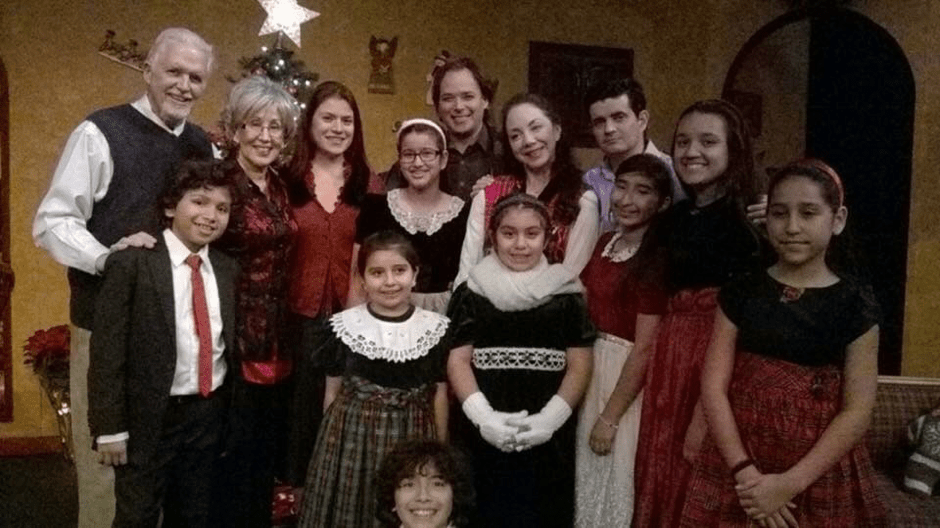
Based on the story by Gary Soto, Too Many Tamales tells the story of the young girl Maria, who well helping her parents make the tamales for Christmas dinner, she sees her mother set her precious diamond ring to the side. Although only trying it on for a brief moment, Maria loses the ring. In a panic, she corners her favorite cousins, and the four of them secretly eat the 24 tamales in a goal to find the ring in the dough. After eating all the Christmas Eve dinner, Maria learns a lesson and witnesses a Christmas miracle.

Being in this production was fantastic. I was surrounded by a great team of professional actors. I thought it was going to be hard to work with kids but I was mistaken. They taught me a lot actually, and it was always fun to have them around,” said Montes.

Montes played Maria’s Aunt Rosa, a middle class hard-working woman who is dedicated to her family and brings the rest of the characters together. For Montes, who does not often get to play fun roles like Rosa, the change was welcome.

“Rosa is the perfect Latino mom who has everything under control. She knows about her niece’s secret, she can talk to the puppets but she is supportive about it because she once knew how to do it too, it’s a matter of faith,” said Montes.

While Too Many Tamales is a comedic musical, Montes typically is cast in dramatic roles. The actress is a true triple threat, as her acting, singing, and dancing abilities shine.

“Everything was full of charm and love. We did this show in Plaza De La Raza at Margo Albert Theatre that holds almost 300 people. It was amazing when we had full house and we could hear all the audience members singing our songs,” described Montes. “At the end of the play, we would invite them to come and join us for a final dance. It was great to see how much they love the show. I was sad when it was over. People would come to me and congratulate me and the rest of the cast for our performances and you can see how happy they all were.”

The true highlight of the experience for Montes was working alongside such a great cast and crew, saying they became a family from the experience. The production starred child actress Tiffany Galaviz, who was recently seen on television show The Voice: Kids, as well as Gloria Laino, known for the hit shows American Horror Story: Asylum and Weeds.

“Mariana is an incredible talented actress. I have had the opportunity to work with her in both film and theater, and I can tell you about her dedication and passion,” said Laino.

Too Many Tamales is a Christmas classic, but it is so much more than that. For Montes, the message the play communicates is extremely important, especially in the divided nation that we see today.

 It’s all about family and love. It’s a play that leaves you with the desire to communicate how much you love and care for your friends and family. It is a play about friendship, love, and tolerance between cultures,” concluded Montes.


Camera operator Mike Heathcote brings talent and artistry to Canadian television series Cardinal

picture3
Michael Heathcote

It was when Michael Heathcote was a teenager that working with video cameras went from being a hobby to a viable career option. Growing up in Toronto, it was in a high school course when he realized the responsibility that comes when looking through a lens of a camera, having the power to shape how people see things. Since that moment, he has never looked back, and now he is an internationally successful camera and Steadicam operator.

Heathcote’s success did not come overnight. He has extensive training and a natural talent that have contributed to where he is today. He worked on the highly-anticipated Hulu original series The Handmaid’s Tale set to release this Spring, based off the famous book by Margaret Atwood. Last year, he also worked on the upcoming film Downsizing, directed by Academy Award winning director Alexander Payne, with an all-star cast of Matt Damon, Kristin Wiig, Bruce Willis, Christoph Waltz, Jason Sudeikis, and Neil Patrick Harris. Currently, Canadians have the pleasure of seeing Heathcote’s artistry with a camera on the hit television show Cardinal.

“I am very proud of Cardinal. Everyone involved with the project worked incredibly hard and it’s nice to see critics and fans admiring and appreciating our work,” said Heathcote.

Cardinal is a six-part crime drama on Canadian television network CTV. It is an adaptation of the mystery novel Forty Words for Sorrow by Giles Blunt. It follows Detective John Cardinal as he attempts to catch a serial killer while also struggling to right past wrongs that could derail his investigation and end his career, as the case grows more violent and twisted, and the clock ticks down on the killer’s next victim.

“I loved the book and admire Steve Cosens, the cinematographer, and Director Daniel Grou who were also attached to the project. I knew with these two talented individuals and such an amazing story this would be a great TV series,” said Heathcote.

Cosens and Heathcote had worked together previously on feature film Mean Dreams, which was an Official Selection at some of the world’s top film festivals, including the Cannes Film Festival and Toronto International Film Festival, as well as the Canadian Screen Award nominated series Rogue. Cosens, knowing the talent that Heathcote posses, asked him to join the Cardinal series as a Steadicam operator.

“I’ve known Michael for several years and have been fortunate enough to have hired him as my A-camera/Steadicam operator on more than one occasion.  His images consistently exhibit a very strong and unique sense of composition, and his Steadicam work is, hands down, the best I’ve ever worked with, and I’ve worked around the world in the industry for twenty years.  His framing is always rigorous and fully considered and his camera movement is consistently fluid, artful and full of grace,” said Cosens.

The series was filmed in Sudbury, Ontario, Canada in the middle of winter, when the average temperature is -4 to 17 degrees Fahrenheit. Battling these brutal conditions was worth it in the end, as the cold and harsh climate enhanced the mysterious aspects of the story.

“Equipment starts to fail and camera operating in knee deep snow is very physically demanding. It was very challenging but I had a lot of fun,” said Heathcote.

Working to achieve director Daniel Grou’s vision, Heathcote had his work cut out for him. Grou planned many uninterrupted single take Steadicam shots. Single take shots are very hard to design because there is no cut away. The shot has to be perfect from the start to finish and encompass everything the audience needs to see or hear to help tell the story.

“This is very unique, and Daniel would come up with these beautifully choreographed shots daily. There is one five minute Steadicam shot in particular that Daniel designed that begins outside a school, follows our lead actor John Cardinal up and down several flights of stairs, a shoot-out and chase sequence evolve and the shot ends up back outside where we began. It was incredibly challenging physically and mentally. There aren’t a lot of projects that you get an opportunity to camera operate a shot like this and it was an absolute honor Daniel and Steve trusted me to execute it. It is definitely one I will never forget,” Heathcote described.

Grou, who has over two and a half decades of experience working internationally in the entertainment industry, was immediately impressed by Heathcote’s talents. Despite working with many talented camera/Steadicam operators over his long and awarded career, Grou says working with Heathcote this one time was enough to try and bring him on to every one of the projects he works on.

“Mike is just a complete genius at what he does technically, but artistically is where he truly shines. He can interpret a director’s or a photographer’s vision and go beyond it to find a true soul; a true magic to the images he helps us create. He is in tune with actors’ movements, as well as their fragile, ineffable emotional state as they work through a scene. He is always at the right place and in the right moment as he accompanies them on their journey. He is a treasure,” said Grou.


Cardinal is on CTV Wednesdays at 10 pm, or you can catch up on the series, and see Heathcote’s outstanding work, here.