RUOXUAN LI WORKS WITH A FILM ICON IN DISTANT VISION

Screen Shot 2017-09-20 at 6.44.21 PM

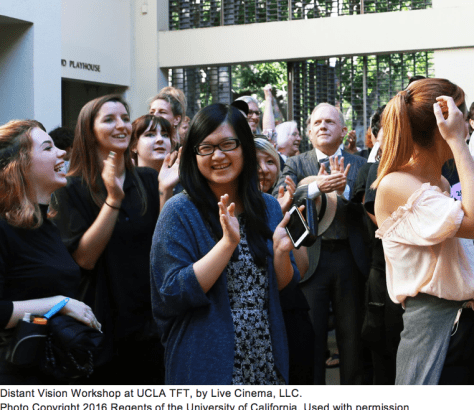
There are artists who create in a solitary space. Painters, sculptors, writers, and others: these are some of those who manifest their art by themselves. In contrast, many artists are involved in a collaborative effort to summon forth the works that they present to the world. The individuals of this latter group long to work with others who inspire them to reach heights that even they felt incapable of achieving. The art of storytelling in its modern form is one of the most prominent of these. Costume designer Ruoxuan Li has taken part in many varied productions but one of the most profound was her work with Francis Ford Coppola on “Distant Vision.” There are few iconic names that raise the standard of an entertainment medium and define their generation; names so universally recognized and lauded that it seems everyone appreciates their work and all participants of said art form long to work with them. Early in her career, Ruoxuan has already achieved this. It has inspired her, given her the opportunity to learn, and cultivated a drive and confidence in herself that propels her into adventurous and artistic endeavors. Li’s work with Francis Ford Coppola on “Distant Vision” gave her a look into the mind of one of our greatest filmmakers as well as vetted her as one of the brightest stars in the costume design/production community.

Ruoxuan was introduced to Mr. Coppola by Dr. Deborah Landis. Li’s design work on the opera “Cosi Fan Tutte” had impressed Landis so much that she recommended the costume designer to Coppola with great confidence. You’d be hard pressed to find anyone from any location on the planet who isn’t a fan of Coppola’s universally lauded films, and Ruoxuan is no exception. Still, being a professional means placing the admiration you might have for such an artist aside for the time being and focusing on the work; easier said than done. The story of “Distant Vision” is based on Coppola’s own family. Li found herself having meetings with the director discussing personal conversations about his family and his perspective on them. While she pressed herself to deliver her very best, Li admits that the scenario was surreal as she found herself peering through Coppola’s own family photo albums with him and discussing options. Ruoxuan reveals, “I will always remember the first meeting I had with Mr. Coppola in person; it was truly like a dream. I’ve always been a fan of his films and could never have imagined myself working with him. Add to that his kindness and generosity. Every time we talked about the costumes, he was very open to ideas and a discussion of opinions. I felt that he was very connected to and aware of all the difficulties we might have. He was so supportive and appreciative. He made the environment so comfortable that I’d forget and then suddenly think ‘This is the man whose films I have worshipped for as long as I can remember. To say that it was a positive experience for me would be an extreme understatement.”

“Distant Vision” is a concept piece that recounts the struggles and triumphs of three generations of an Italian-American family set against the birth and growth of the invention of television.” The action of the story is divided into three different periods, all of which take place in the heart of Italian Harlem, New York. Set in the 1920’s, the first act is a tragedy from Alfonso Corrado’s story who helped engineer and build the first ‘television’ machine. On this rainy Easter Sunday, a big family baptism party occurs after the festival parade on the street. Alfonso’s two eldest sons, Danny and Archie show the guest children some reels from the newly built first television. Danny accidentally falls to his death from the roof while trying to fix the signal. The 1950’s present Act Two. A flash back of 10-year old Tony Corrado, son of Archie Corrado, playing a ‘television game’ with cameras made of cardboard at home in the basement with his friend. Though caught by his mother and scolded, the scene shows young Tony developing a passion for television. The final 1980’s scene presents an adult Tony Corrado, now a celebrity director. He is shown explaining the new project he’s working on to an interviewer. Introducing his wife and daughter, he retells the camera the story of his family through generations with references of early footages and photos.

Li’s preproduction time was about two months long. The different decades were close enough to share similarities in style but different enough that each required their own subtle identities. Once research was done and early designs approved by Mr. Coppola, Ruoxuan set up a full team and shop to handle the volume of the work. The same shop which did the initial work and fittings would continue on through the filming to maintain all costuming and ensure that everything stayed with the proper actors. Emmy Award-Winning costume designer Jane Ruhm was the costume advisor on “Distant Vision” and was highly impressed by Li’s work. She declares, “Ruoxuan’s research was very thorough. It was presented in a beautifully curated book, and even included photographs from Mr. Coppola’s family photo albums. She is an accomplished artist and was able to communicate her design ideas clearly to Mr. Coppola and to the cutter/fitter who was hired to build them. Ruoxuan was an inspiration for her team which was paramount because a leader sets the tone for those she works with. In costuming, organization is so important when working with a large cast such as this. I overheard multiple actors tell her how happy they were with their costume and how it had helped them “find their character”. The various periods in the story and the overall production value of the film were totally dependent on Ruoxuan’s designs since the sets were minimal. I know how happy the producers and Mr. Coppola were with what she accomplished because they made a point of telling me about it.” This is perhaps the most prominent award one can achieve in the entertainment industry, to be respected and appreciated by both those known and unknown professionals alike. The role of a costume designer is to help individual in front of, behind, and those watching the camera’s display to lose themselves in the story and the performance. While Francis Ford Coppola is one name we all know who is a fan of Ruoxuan Li’s work, there are countless other professionals who share his same opinion when it comes to this talented costume designer.
Screen Shot 2017-09-20 at 6.44.37 PM

RUOXUAN LI WORKS WITH A FILM ICON ON DISTANT VISION

Screen Shot 2017-09-20 at 6.44.21 PM

There are artists who create in a solitary space. Painters, sculptors, writers, and others: these are some of those who manifest their art by themselves. In contrast, many artists are involved in a collaborative effort to summon forth the works that they present to the world. The individuals of this latter group long to work with others who inspire them to reach heights that even they felt incapable of achieving. The art of storytelling in its modern form is one of the most prominent of these. Costume designer Ruoxuan Li has taken part in many varied productions but one of the most profound was her work with Francis Ford Coppola on “Distant Vision.” There are few iconic names that raise the standard of an entertainment medium and define their generation; names so universally recognized and lauded that it seems everyone appreciates their work and all participants of said art form long to work with them. Early in her career, Ruoxuan has already achieved this. It has inspired her, given her the opportunity to learn, and cultivated a drive and confidence in herself that propels her into adventurous and artistic endeavors. Li’s work with Francis Ford Coppola on “Distant Vision” gave her a look into the mind of one of our greatest filmmakers as well as vetted her as one of the brightest stars in the costume design/production community.

Ruoxuan was introduced to Mr. Coppola by Dr. Deborah Landis. Li’s design work on the opera “Cosi Fan Tutte” had impressed Landis so much that she recommended the costume designer to Coppola with great confidence. You’d be hard pressed to find anyone from any location on the planet who isn’t a fan of Coppola’s universally lauded films, and Ruoxuan is no exception. Still, being a professional means placing the admiration you might have for such an artist aside for the time being and focusing on the work; easier said than done. The story of “Distant Vision” is based on Coppola’s own family. Li found herself having meetings with the director discussing personal conversations about his family and his perspective on them. While she pressed herself to deliver her very best, Li admits that the scenario was surreal as she found herself peering through Coppola’s own family photo albums with him and discussing options. Ruoxuan reveals, “I will always remember the first meeting I had with Mr. Coppola in person; it was truly like a dream. I’ve always been a fan of his films and could never have imagined myself working with him. Add to that his kindness and generosity. Every time we talked about the costumes, he was very open to ideas and a discussion of opinions. I felt that he was very connected to and aware of all the difficulties we might have. He was so supportive and appreciative. He made the environment so comfortable that I’d forget and then suddenly think ‘This is the man whose films I have worshipped for as long as I can remember. To say that it was a positive experience for me would be an extreme understatement.”

“Distant Vision” is a concept piece that recounts the struggles and triumphs of three generations of an Italian-American family set against the birth and growth of the invention of television.” The action of the story is divided into three different periods, all of which take place in the heart of Italian Harlem, New York. Set in the 1920’s, the first act is a tragedy from Alfonso Corrado’s story who helped engineer and build the first ‘television’ machine. On this rainy Easter Sunday, a big family baptism party occurs after the festival parade on the street. Alfonso’s two eldest sons, Danny and Archie show the guest children some reels from the newly built first television. Danny accidentally falls to his death from the roof while trying to fix the signal. The 1950’s present Act Two. A flash back of 10-year old Tony Corrado, son of Archie Corrado, playing a ‘television game’ with cameras made of cardboard at home in the basement with his friend. Though caught by his mother and scolded, the scene shows young Tony developing a passion for television. The final 1980’s scene presents an adult Tony Corrado, now a celebrity director. He is shown explaining the new project he’s working on to an interviewer. Introducing his wife and daughter, he retells the camera the story of his family through generations with references of early footages and photos.

Li’s preproduction time was about two months long. The different decades were close enough to share similarities in style but different enough that each required their own subtle identities. Once research was done and early designs approved by Mr. Coppola, Ruoxuan set up a full team and shop to handle the volume of the work. The same shop which did the initial work and fittings would continue on through the filming to maintain all costuming and ensure that everything stayed with the proper actors. Emmy Award-Winning costume designer Jane Ruhm was the costume advisor on “Distant Vision” and was highly impressed by Li’s work. She declares, “Ruoxuan’s research was very thorough. It was presented in a beautifully curated book, and even included photographs from Mr. Coppola’s family photo albums. She is an accomplished artist and was able to communicate her design ideas clearly to Mr. Coppola and to the cutter/fitter who was hired to build them. Ruoxuan was an inspiration for her team which was paramount because a leader sets the tone for those she works with. In costuming, organization is so important when working with a large cast such as this. I overheard multiple actors tell her how happy they were with their costume and how it had helped them “find their character”. The various periods in the story and the overall production value of the film were totally dependent on Ruoxuan’s designs since the sets were minimal. I know how happy the producers and Mr. Coppola were with what she accomplished because they made a point of telling me about it.” This is perhaps the most prominent award one can achieve in the entertainment industry, to be respected and appreciated by both those known and unknown professionals alike. The role of a costume designer is to help individual in front of, behind, and those watching the camera’s display to lose themselves in the story and the performance. While Francis Ford Coppola is one name we all know who is a fan of Ruoxuan Li’s work, there are countless other professionals who share his same opinion when it comes to this talented costume designer.

Screen Shot 2017-09-20 at 6.44.37 PM

Writer Victor Osorio took readers around the world with comic strip ‘Alienados’

When Victor Osorio was seven years old, he would sneak out of his room at night to watch television. When his parents caught him, they did not punish him, but rather made a deal: if he wanted to stay up at night, he had to read. Somehow, what seemed so awful at the time ended up becoming the guiding force in Osorio’s life, because he became an avid reader, which prompted his interest in writing. Soon after this, he began writing short stories and poems, and since that time, writing and creating stories has been his biggest passion.

Osorio is now an internationally celebrated writer. Originally from Barcelona, Spain, he rose to the top of his industry in his country quickly, largely due to his widely successful children’s book Cosas Que Nadie Sabe, published in both Spanish and Catalan, as well as German. He also wrote an episode for the award-winning web series Hollywood, and currently helps the company Origo Media writing short commercials and commercial videos. He is extremely versatile, and has even written software manuals for Ceinsa. His success truly began, however, when he began writing for the comic Alienados in the popular magazine Dibus!.

“Everyone at Norma Editorial, the publishing house behind Dibus! located in Barcelona, was very happy with my work. The magazine’s editors told me that they were very impressed with my skills and talent, especially since I was in my early twenties back then. and I’m so happy that I took the opportunity and did such a good job with it. I’ve always loved comic-books and when the people at Norma Editorial offered me the chance to write this comic strip for a comic-focused children’s magazine, I immediately jumped on it,” said Osorio.

The iconic comic strip tells the story of three funny and tiny aliens who crash-land on Earth and have to explore the planet with no knowledge whatsoever of the culture and traditions. In every issue, the aliens travel to a different part of the world and have comical adventures based on the fish-out-of-water cliché. The strip also teaches curiosities and traditions of the country visited to the children reading the magazine.

“Working on this was awesome. I always loved comic-books so being able to write a two-page comic strip for a famous and renowned national magazine was like a dream come true,” said Osorio.

Prior to working on Alienados, Osorio greatly impressed those at Norma while writing for their publisher’s blog. The Dibus! magazine editors quickly took note of what an exceptional writer he was, and invited him to become part of the comic. It wasn’t long afterwards when readers also began to become impressed with the writer’s talents.

“Victor is a very talented and flexible writer, able to produce a comedic comic for kids while also instilling a love for learning and travelling. He has a very clear writing style and a good eye for interesting and appealing subjects. His style is very unique and he is able to produce all sorts of content,” said Juan Avella, a fellow writer who enjoyed Osorio’s work on Alienados.

With each new issue, Osorio would begin by researching the region or country the magazine editors said the aliens were going to visit that month. During this time, he would figure out what the best thing to focus on would be to capture readers’ attention. Whether it was food, tourist attractions, famous people or locations, he always picked subjects that were not common knowledge, allowing for a more entertaining read.

“I remember using the Gauchos for the Patagonia because I could use it for a joke, and because it’s a fairly unknown, but very peculiar culture,” Osorio described.

Despite having no previous experience in writing comic strips, Osorio took the opportunity and soared. Working with just a two-page strip, he had to be very concise and effective, skills that he carries with him on every project, as they make the best style of writing.

He also was given the opportunity to work on the page design when creating the panels for the comic, which allowed him to see how his writing and the illustrator’s drawings worked seamlessly together.

“You need to take into account how the human eye reads a page and the shapes and colors that it feels attract to, the motion of the bodies in the page, fonts, and more. Learning to do all that while actually writing something that will be printed was difficult but very rewarding,” said Osorio.

Although this was Osorio’s first foray into comic-book writing, he loved every minute of the experience. He was given complete creative freedom, and was never told to make large changes, as the editors enjoyed his work so much.

“At the time, I didn’t value it as much as I do now, but doing that comic strip I got the opportunity to be entertaining and offer some knowledge at the same time for the first time in my career. The collaboration with illustrator Dani Cruz was also amazing. He would translate my words into pictures with great accuracy and he offered valuable advice and tips to solve some of the narrative challenges that I faced,” he described.

Without Osorio, the Alienados strip would not have seen the success that it did during his time at Dibus! and the experience provided the perfect learning experience for writing for children. We all know this is now something Osorio more than excels at, and we can definitely understand why.

SIMEON TAOLE DELIVERS A COMPLEX SNAPSHOT OF A LIFE IN “EVERYTHING CHANGES”

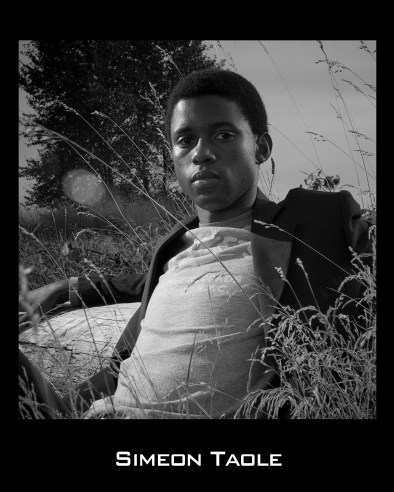
Simeon Taole believes in the power of photographs. As an actor that might seem both a redundant and ironic statement. His performance in the film “Everything Changes” immediately squelches this confusion. The film and Taole’s performance is nothing short of extraordinary. In many ways it exemplifies great storytelling. Humor, intoxicating passion, tears, and a completely unexpected ending (two of them in fact) are all communicated by both the emotional cinematography and the inspired performances of Simeon and his only costar in the film, Virginia Leigh. As the couple experiencing a first date, these two actors generate a chemistry that permeates the air. Through discussions and coy confessions about their lives and interests we are romance-inspired voyeurs who are nourished by their budding romance. As the action progresses we are witness once again to the fact that life is rarely if ever as carefree as we would hope. The repartee, the longing silence, the honesty of the two characters in this film is so convincing that we want to believe that Leigh an Taole are actually a couple. This very modern tale is a photograph of the complications of romance in this world.

It’s not serendipitous that Simeon’s character in the film is so interested in photography. The idea that a photograph displays and is simultaneously withholding in the entirety of information is a central theme to the story. Calvin’s fixation of photography is a metaphor for his desire to discover and understand himself and the world around him, and perhaps to make it a more beautiful place from his vantage point. We almost feel that if he “frames” the moments in his life correctly, he will be able to relax with them. Calvin is a character who is looking for meaning in his life. He has regrets and hopes he can rewrite his future and change things; which he hopes to begin by forging a connection with Naomi. Calvin is motivated by his desire to capture something with her and ultimately bring meaning to his life. Somewhat naively, he feels confident that he can do this. The naiveté of this is not apparent until the end of the film. Calvin is a nostalgic person and photographer who laments the fact that photographs don’t tell stories with real meaning, at least, not like they used to in Life magazine. In the end, he’s presented with a photograph that has significant meaning for them both and changes everything.

Simeon Taole Headshot 02

With deep insight and information of all aspects and characters of this film, Simeon was aware of the story from many points of view and given the time to deeply understand Calvin, which resulted in the compelling and honest performance seen in “Everything Changes.” Taole states, “I had a very detailed history for both characters in the film. It was great to think about what it is that motivates a character at a granular level. I spent time thinking about what it is that’s complicated about him; the dichotomies that exist in all of us. For example, how we can show love and yet also cause pain. How no one is fully good or bad but alternates between the two. Or sometimes, even simultaneously conveys both. I think for me it’s about taking this rich history and applying the level of detailed information to other roles where I wouldn’t necessarily have all that information at the beginning.”

One of the aspects of the film that makes it so gripping and real is the lack of singularity in its approach. Moments of lighthearted playful romance are mixed with tension and even fear. Real life can go from joy to tragedy in an instant and the film does not deny or shy away from this reality. A large reason why this works so well is the measured approach Simeon uses in his performance. He takes great care to not be overly broad with the comedic moments lest the audience not feel the truth of the more dramatic ones. Most of the actor’s work has been in dramas but he notes that this has given him a conservative approach to levity which plays out well in this film.

There’s no denying that a great deal of the heart in “Everything Changes” comes from the intoxicating chemistry between the two (and only) cast members. While it might be expected that a cast so small would make the viewer perhaps long for other characters but Calvin and Naomi (played by Virginia Leigh) go through a myriad of emotional evolutions that it’s impossible to remove one’s focus from them. Taole remarks, “I do feel a cast of only two does create a sense of intimacy in the film that would not necessarily be there with a larger cast. We both had to be fully engaged. Our chemistry was important because we carry the film and this really works for this story. I don’t think it affected the way I prepared for the role but it may have meant we had less downtime during the shoot because we were in every scene.” Leigh concedes, “Simeon and I didn’t really know each other before this film but I found immediate chemistry with him and this showed on screen. We had a warm, funny connection that engaged the audience and led to an ending that was shocking after such a strong build. Our natural bond was a key strength of Simeon who can read actors and find the paths to organic connection off which the audience can feed. Of course, he was the central leader to this film, and his performance was key to the ensuing success. Simeon carries this film in his performance as Calvin. He brings the audience into the over-compensating, overly- confident young man who one cannot help but root for.”

Simeon Taole Frame Still_Everything_Changes 02

“Everything Changes” has been an immense hit of the film festival circuit with screenings at: at 2016 San Francisco Black Film Festival, 2016 Hollywood Glam Gala, 2016 Las Vegas Lift-Off Festival, 2015 Toronto International Shorts Film Festival, the 2016 North York Arts Anniversary and Cultural Hotspot Closing Party, and a win for “Best Short Film” at the 2016 San Diego Black Film Festival. As Calvin, Simeon Taole is a proxy for the audience. He encourages us to dig to find meaning and connection with those around us. What reveals can be both beautiful and shocking, an idea delivered with impact via Simeon’s incredible performance.

Simeon Taole_On_Set_Everything Changes_01

YOUNG ACTRESS JAEDA LEBLANC IS ACTING WITH SOME OF THE BIGGEST NAMES IN HOLLYWOOD

IMG_9841

Jaeda LeBlanc may be the best kind of actor. She delivers powerful performances which are emotionally moving yet young enough that she is completely unaffected when it comes to the incredible fame and notoriety of those she works with. This powerful professional cocktail results in an individual focused on doing her best and disinterested in any vocational or social politics involved. As proof, Jaeda is too young to watch the most popular TV program in the world “Game of Thrones” …that will make more sense as you keep reading. LeBlanc is a young actor in age but her performances certainly belie this fact. She’s appeared in comedy kid shows (Odd Squad), acclaimed medical dramas (Saving Hope), even crime dramas (Real Detective), but in the upcoming The Death and Life of John F. Donovan she is set to receive the kind of notoriety that follows the marquee names she appears with in the film. LeBlanc appears in the film alongside names such as: Kit Harington (GOT’s Jon Snow), Natalie Portman, Kathy Bates, Susan Sarandon, and a host of other accomplished professionals. The core of the film is about fame, how we perceive those who have it and how it affects their lives. While this young Canadian actress has experienced accolades in her home country, “The Death and Life of John F. Donovan” prepares to project her into the arena of international fame. In discussing the film and her involvement, we get a glimpse into Jaeda’s view of fame and how it correlates to the industry and her involvement.Screen Shot 2017-09-18 at 9.19.19 PM

So many iconic names in the field of film give gravitas to this story’s exploration of fame; how it affects those who possess it as well as colors the vision of those who witness it. It appears that everyone in society finds the idea of fame appealing. In a culture which lists “social media influencer” as a valid job title there can be little doubt that the pursuit of fame is air to many in the world. The Death and Life of John F. Donovan challenges perception and reality. A decade after the death of an American TV star, a young actor reminisces on the written communication he shared with him as well as the impact those letters had on both their lives. American movie star (Kit Harington in the lead role) finds his correspondence with an 11-year-old actor exposed, prompting assumptions that begin to destroy his life and career. Jaeda also appears as a young fan of Donovan’s in the film. The main character is encouraged to interact with her by his manager Barbara Haggermaker (played by Kathy Bates) as a means of creating positive press.Screen Shot 2017-09-18 at 9.19.42 PM

It’s doubtless that millions of GOT fans are envious of LeBlanc’s interaction with Harington but the fantasy show’s more adult themes prohibit Jaeda’s parent from allowing her to view it, leaving her to see Kit as more of a coworker and star of the soon to be released film rather than the dashing bastard heir to the throne. The most impressive individual in Jaeda’s assessment was the film’s director Xavier Holland who helped her focus the approach for her role in the film. Holland comments, “When I saw Jaeda’s audition tape I was very impressed by this little girl’s acting ability. I also started acting at a very young age so when I saw Jaeda, she immediately reminded me of myself at an earlier age. Seeing her on the screen, I was immediately drawn to her character because she has that special kind of connection with the camera and the audience. Jaeda has a strong artistic ability. It allows you to see the picture of the character that she is painting, otherwise I don’t think she would be able to display such a strong image of what she wants her character to be. The camera loves Jaeda! She has an amazing stage presence. Like most artists, Jaeda knows how to create emotions but what impressed me the most were the little moments when she was not talking, just before crying; she was just quiet, still, and sad, but yet she was still making us feel something. That is what I love the most in an actor. Jaeda is an extremely talented young artist and I hope she knows that”.

Teen Choice Award

LeBlanc did her due diligence preparing for the role just as she would any other. Holland’s appraisal of her performance is the epitome of the idea of preparation meeting opportunity. The chance to be in such a major film is exciting for the young actress but even more so is the opportunity to watch so many accomplished actors on set and witness their method and approach towards their characters and scenes. Jaeda’s humility is admirable as she concedes that, as a young actress there are many opportunities ahead to learn and she makes a point to be astute and aware as they present themselves. Names like Bates, Portman, and Sarandon are desirable tutors for a young actress such as LeBlanc. With such exciting circumstances, one would expect the young actress’s favorite moment of this project to be one of heartfelt advice from any of these acclaimed veterans of film…yet, Jaeda’s most memorable moment is seen through the eyes of her own mother. Jaeda recalls, “Yes, there are a lot of famous actors in this movie and I was excited to play along with them so I could study their ways of working and see how I could improve my own skills by learning from them. Now, after working with them I realize that I am like them in the sense that I have the same work ethic. So yes, working with big names is definitely a bonus in this choice of career. But…my favorite moment was when I went to get breakfast. I was in the lineup with my mom when she turned she saw a lady behind her. She smiled at her, then she looked back because that person looked so familiar. My mom’s face started to change at that moment as she realized that it was Kathy Bates. She turned to her and nervously said ‘hello’ to Kathy. I had to take over because my mom looked like she was going to pass out. lol. I said hello to Kathy and just let her know that my mom was acting a little weird because she liked her so much. Kathy was very nice about it. When I think about it, I guess I learned two lessons about being an accomplished actor on this film: how to perform well and how to be gracious to fans. This was a very sweet moment that I still remember fondly.”


Scott Michael Wagstaff talks new film ‘Pendulum’

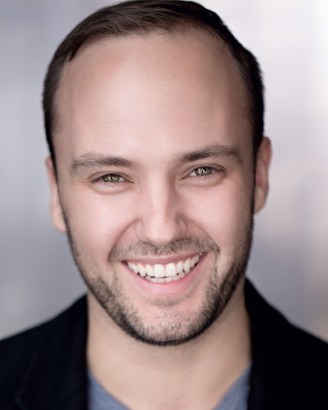
Scott Michael Wagstaff headshot by Kim Hardy 1
Scott Michael Wagstaff, photo by Kim Hardy

Creativity has always been a guiding force in Scott Michael Wagstaff’s life; it is his fuel. From a young age, he channeled that into performing. The buzz he would get from standing on a stage in front of a live audience was addicting. As he grew, performing was no longer about the thrill, but rather living in a place of honesty for himself, and inspiring audiences to do the same. It is this understanding that makes Wagstaff such an extraordinary actor today. He acts not only because he wants to, but because he needs to. There has never been an alternative for him.

Throughout his career, Wagstaff has taken not only his home country of England, but the world by storm. With memorable roles in BBC’s Doctors, 6 Days, The Time of Their Lives, and Final Reflection, audiences can see exactly why Wagstaff is at the top of his field. Recently, his accolades grew yet again, with a nomination for “Best Supporting Actor” at the FilmQuest Film Festival for his role in the new film Pendulum.

“Playing the role of Gwilym was a very fulfilling and a great challenge. The role required me to be a man of few words which is tougher than what it sounds. As an actor, you feel at times the words do the work for you, so when I found I had little to say to honor this role, and furthermore the story, it always seemed challenging. I had to just completely trust that I had everything going on already,” said Wagstaff

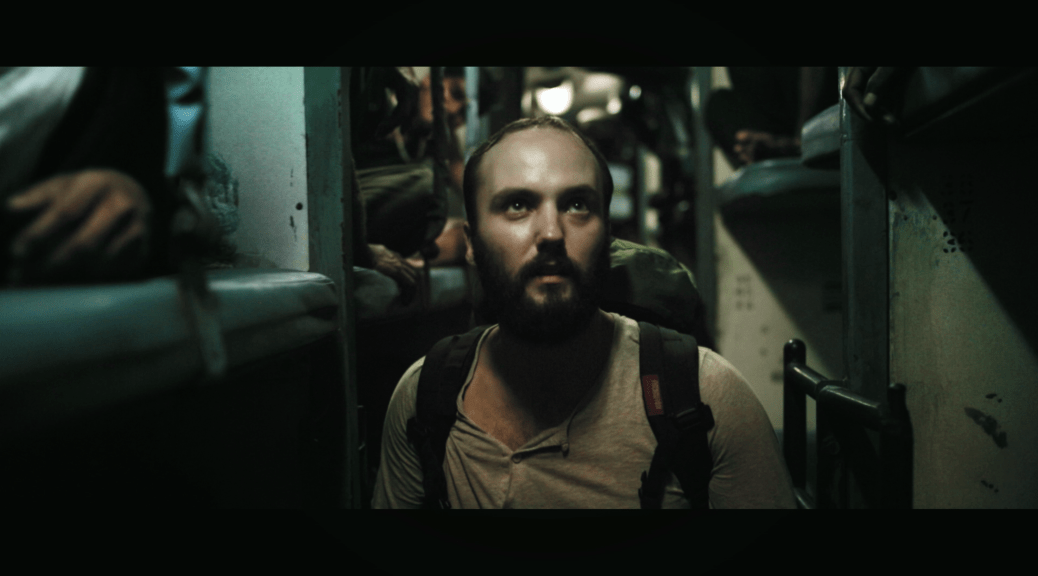
Pendulum is a film about two friends who seek spiritual salvation in India in advance of the impending collapse of the cosmos. It is a spiritual science fiction tale with a deep message, telling audiences the importance of being okay with themselves, who they are, and to stop attaching to everything else to distract from who they really are. Wagstaff plays the pivotal role of Gwilym. Gwilym is a very cold man, but has great care and love for his best friend Cerys. The role was entirely improvised, with no script. Wagstaff had to ensure that whatever he improvised would not only keep true to the story, but enhance it.

“What helped is knowing why Gwilym is so cold. He didn’t agree with the hedonistic and disconnected world in London, a result of the end of the world upon them, and had given up on connecting himself, thinking he’s better off alone without joining in the numbing of the end of the world. Once I understood that part of myself that wanted to numb from certain things in life did that then help me embody this character,” Wagstaff described.

In addition to Wagstaff’s nomination, the film is in competition at Encounters Film Festival at the end of the month, making the film BAFTA and Oscar qualified. It is an Official Selection at the Stranger With My Face Festival, NOLA Horror Film Festival, PUNE Film Festival, and of course, the FilmQuest Festival. It has just begun its film festival run, so it will likely be recognized much more around the world. None of this could have been possible without Wagstaff’s understanding of his character and his dedicated and captivating portrayal of Gwilym. He also produced the film.

“Scott is a generous and kind-hearted team member, who really wants the best for each member of the cast and crew and will go to lengths to let people shine. As a performer, he is able to deliver deep and emotionally connected performances in the trickiest of circumstances, always putting vast amounts of work in, and with the confidence to let his talents dazzle,” said Lauren Cooney, the Director, Writer, and Producer of the film. “As an actor Scott has a deep emotional well, on which to draw from, and is able to deliver truthful and complex performances in the moment. As a producer Scott is fully up for taking big risks, and jumping on board adventures. He seeks out collaborators who he is excited by, and is very committed to long-term work in this much-loved industry.”

Cooney initially invited Wagstaff to work on her film, knowing she needed the best actors to make her film a success, especially when it came to Gwilym. He is the catalyst for the lead female role Cerys to see that everything she has been searching for is right there within herself. Even though he comes across cold and disconnected, he breathes a truth into Cerys’ life about him being okay with being alone without him saying anything. He has a love for Cerys that helps her to see that love ultimately between human beings is what matters most – love of self and then love of others. The road trip to India wouldn’t have happened if Gwilym wasn’t there with her, as she wasn’t capable of being physically alone.

“On a deeper level, Gwilym represents people in this world who have great moral beliefs and want change, but don’t speak up until they feel they really do have to. It would be great if these people would speak up from the get go,” said Wagstaff.

Wagstaff had full creative freedom to create such an in-depth character. His instincts were almost always right, and very little was changed without his input. There was a great sense of teamwork on the film, and that is what Wagstaff loved.

“It was the ultimate meaning of collaboration to me and the people in the cast and crew were fantastic. I also loved that I got to travel around India with this film, I see the most radical and powerful sights and even ended up on a train for over three days travelling from one location to another,” he concluded.

Be sure to keep an eye out for Wagstaff in Pendulum.

Q&A with leading Canadian actor Darren Eisnor

Originally from a small town in Ontario, Canada, Darren Eisnor did not grow up aspiring to be an actor. It came to him suddenly, in an epiphany of sorts, and since that moment, he has never wanted anything else. Now, he is one of Canada’s top young actors, and he is quickly taking the globe by storm.

In many captivating performances, such as the films Holiday Joy and Early Release, as well as the acclaimed television show Anne with an E, Eisnor has gained fans from all over the world., and audiences are looking forward to his performance in the upcoming Syfy horror flick Never Knock. Currently, he is starring in the popular Blackpills series Skal, an enthralling story about the water disappearing across the planet overnight. To read more about the series, Eisnor’s career, and his life, check out the interview below!

IFR: What do you like about being an actor?

 DE: I get to be super cool. When people ask me what I do, and I say that I’m an actor as a career, they automatically assume I’m a cool guy. So that’s pretty cool. Really though, if you can get some lucky breaks and manage to carve a career out of the whole thespian thing, it is a ton of fun and incredibly liberating in a few ways. I’m the kind of guy who bounces around from friend group to friend group, and I’m always diving headfirst into new interests, as I like to keep things fresh and experience as much as possible in this life. Acting meshes rather well with that state of mind, because I get to become all sorts of different people in all sorts of different lives, and if I convince the right people that I’m really like those people – then I get paid for it!

It can be a great life experience for me to look at the world through all these different perspectives, even if it’s just for an audition or two and I don’t end up getting the part. We humans are such interesting and multi-faceted creatures, but I don’t think everyone gets the chance or has the courage to explore all their dimensions. Of course, there are some dark and dangerous sides to us as well, that are probably best left for the actors (and the Mixed Martial Artists). It really is a privilege to even have the opportunity to compete for all these roles that I go out for, and I am grateful for that.

When I first started training as an actor, it actually helped me in a therapeutic way. I didn’t realize how many emotional walls I had built up over the years, and I think this is especially prevalent among young men, and even more so for young men like me who were competitive athletes for most of their life. I actually think there is a fair argument for the building of these walls, because life is almost always very hard to tackle, and the battlefield of life can be easier to navigate if you are able to have a firm grip on your emotions. However, acting is a forum for the human condition to express itself, and to be successful and great at this profession, it seems to me that one must truly elevate emotional intelligence to a higher level of understanding and vulnerability.

IFR: Why did you want to work on Skal?

DE: Skal piqued my interest with its post-apocalyptic world, something that’s fascinated me in stories like The Walking Dead, or the Fallout video game series. At first, I auditioned for the role of Arthur, the outright leading role of the series. Arthur is a bit of a nerd, but he’s charismatic enough to operate a YouTube channel with three million subscribers. I submitted a tape that I really nailed down in terms of performance, and was really excited. The scenes they requested for the audition helped a lot in that regard, ranging from comical and cool, to raging and teary-eyed. I got a callback for it – but for the role of “Ylane”, which was a soon-to be-changed French name from the original French short film the series is based on. The character is Arthur’s best friend and manager, and an integral character within the series.

My agent set up a Skype session with the writer/director who is from France, Benjamin Cappelletti, who explained to me that my original audition was great, but I didn’t look enough like his vision of Arthur. He went on to say that I looked like a great “Ylane.” Luckily, I was able to flesh out this character into someone with some dark humanity, and they casted me! They even renamed the character “Darren” which was pretty cool, since I’m not sure if I’ll get the chance to play my own name again.

IFR: What was it like working on Skal?

DE: Working on Skal was an outstanding career experience for me. Living in Montreal for about a month during this shoot really made me feel a sense of independence. Of course, it came with the great responsibility of carrying a lot of the burden of the show’s success on my shoulders, which was more than welcome on my end. This was exactly what I’d be looking forward to, and I wasn’t about to back down now that it was staring me down.

Darren was an interesting character to play. In the first episode, before the apocalyptic world is born, Darren is a bit of an arrogant showman, talking all sorts of big game to the hottest girls in the room. That said, he felt relatively happy and content in his materialistic world. But when all the bodies of water in the world dry up, he immediately adapts a “kill or be killed” mindset. While it’s easy to condemn that sort of regression, it’s easy for me to understand why someone would fall into that way of thinking in that sort of world. Although there are times when it seems Darren is being overly aggressive, often it’s hard to disagree with his sentiment in a world where you can’t trust anyone, or take any chances.

Every villain is a hero in the story of their mind, and that’s how I took ownership of Darren when he makes decisions that may seem wrong on the surface. There is one particular part of the series where I wish Darren were a little more heroic, but I remained entirely understanding of his motive of self-preservation. I think there’s also an automatic connection with a character when he has the same name as you – and when the other characters address me as “Darren” there is an added element of personalization.

I also tried to get into character for one particular series of events by going without food for a day or so. It was definitely tough turning down lunch that day on set, but at least the last meal I had before all that was a delicious all-you-can-eat sushi brunch!

IFR: What was your character like?

DE: The role of Darren is important to the story, firstly as Arthur’s best friend and Emma’s romantic interest. There’s an awkward love triangle going on where Arthur lusts for Emma, but never makes any moves on her. Darren is far from low on confidence, so him and Emma have been going at it for a while, and it really irritates Arthur – even after all the water dries up, and the apocalypse creeps on in. After survival mode kicks in, Darren and Emma clash often. Emma has an empathetic desire to help as many people as she can, but Darren understands that there is too much danger to risk the group, especially after they come across a huge stash of water bottles that could keep them alive long enough to figure out what the hell’s going on in the world.

The group runs into two other people named Frank (a police officer) and Malika (a nurse). Frank misleads the group when he comes into first contact with them, and Darren never trusts him again after that. There are many fiery exchanges while they try to escape the dangerous city, but as the season crosses the halfway point, tragedy strikes, and the pack is split up. Darren becomes a prisoner of a violent gang of brutal men. With his life fully in jeopardy, his every action has extremely high weight to it. In season two, I think I will be exploring an even darker side of Darren if we keep the fun rolling.

IFR: What was it like working with such an all-star cast?

DE: It’s important for there to be a good chemistry between cast members, especially when a group forms in the show and your characters spend a lot of time interacting with each other. Everyone got along really well, and really put their best foot forward with their performances in Skal.

In terms of performance, it was superb. Evan Marsh (who plays Arthur) was a consistent rock in the center of the production, and there’s one particularly powerful scene where we really pushed each other to emotional peaks. Oliva Scriven (Emma) managed to tolerate an intense make out scene with me, so kudos to her for that. She’s very popular on social media for her role on Degrassi, so it was nice to have her bring some viewers on board with that. Trevor Hayes (Frank) and Mariah Inger (Malika) were playing characters that “Darren” viewed as outsiders, and didn’t trust, and there were some great heated interactions between us on screen – especially Frank, the hard-nosed cop who doesn’t take too kindly to Darren’s big mouth.

Shawn Baichoo played a late-season villain named Pablo, who is a leader of a violent gang. I only got to work with him for a short period of time, but he really brought his A-game and played a convincing madman. They gave him a contact lens that made it look like he had a white “dead eye”, which added to the aura of evil. We had some intense scenes that he totally owned and showed a possession of confident power. I should also mention that little Chelsea Goldwater, who played a young child prisoner, helped add to the creepiness of the scenes.

This project was Benjamin Cappelletti’s “baby”. He’d been pushing this story for a while as a young filmmaker in France, and it was great to help bring his vision to life. His passion for Skal was evident, and even though there were a few moments of language barriers, we were able to communicate together and get the scenes done to his satisfaction.

IFR: The series premieres on the streaming app Blackpills. How do you think streaming websites have opened the doors for actors such as yourself?

DE: Well, obviously there is more opportunity than ever for an actor with all these new avenues of distribution. In the past, films were limited to festivals and cinema, while television series were limited to cable and satellite subscriptions. Now there are all sorts of streaming avenues out there for episodic series and films alike, and the opportunity to get quality productions made has never been greater.

I’m very grateful for the opportunity to have a leading role in Skal, and it will be interesting to see how Blackpills performs overall as a company. It seems they are aiming to get a firm grip on the mobile-streaming game, as their app is currently only available for mobile devices as opposed to TVs. I haven’t had the chance to observe many of the other shows on their app, but they have already granted out several second season renewals for some of them, so there is certainly a chance for us to get back at it. At the very least, the show is of high-quality and makes for solid demo footage to show other productions what I can do with a meaty role.

Blackpills also stands out with the brevity of each of their shows’ episodes; the average runtime for an episode of Skal was about nine minutes long. Today’s generation operate very much from an extreme lack of attention span, so this format is designed quite well with that in mind. Here’s hoping it works out!

Antonio Vigna talks adopting mindset of a serial killer

The first time that Antonio Vigna stepped onto a stage, he realized that he has a passion to entertain flowing through his veins. As he began to take on more prominent roles, he learned that there wasn’t a single part of acting that he didn’t enjoy. To this day, he thrives on the opportunity to step into the shoes of a new, different character every time he shoots a film or television show. He feels empathy for the unique situations that his characters encounter and he delves so deeply into his roles that he often catches himself feeling as though he is actually living through their eyes. The true joy of his job, however, comes from inspiring his audiences to overcome the hardships in their lives that are similar to those of the characters he portrays. For Vigna, knowing that he may be the source of hope in even a single viewer’s life is what motivates him to continue acting.

Vigna’s relentless desire to act has earned him a variety of diverse roles in several films and television series. During his work as an actor, however, he developed a profound appreciation for all of the intricate roles involved in creating a film and found himself intrigued to learn more about each one. Eventually, he realized that he enjoyed producing films just as much as he enjoyed acting in them, and his audiences are all the more fortunate for it. His talents as a producer are unparalleled and his works have landed him in several film festivals around the world. In fact, two films that he is particularly fond of, Dia de Muertos and In a Heartbeat were featured at the prestigious Cannes Short Film Corner in 2017. Despite his esteemed career as a producer, Vigna is still an actor and balances the two professions seamlessly.

In 2015, Vigna wrote the script for Perfection which depicts the unique, thrilling tale of a young artist struggling to find the missing piece for his masterpiece. It isn’t until the artist has an accident and discovers the solution to his masterpiece is human blood, which leads him on a terrifying murder spree. When Vigna pitched the script to his director, they knew that they were going to need a high calibre actor to take on the part of the artist. Fortunately, they didn’t have to look any further than Vigna, who had the exact skill set and on-screen presence that the lead role demanded. For the highly sought-after actor, this character presented a unique opportunity to flavour his career in a newfound way and he was eager to bring his own story to life.

“Actors often find themselves playing interesting, dynamic characters; however, one of the most complicated character types to play is a serial killer. I saw this as both an opportunity and a challenge to master the complexity of his mind. I knew that I had to find element of his personality that I could relate to in order to become him on screen in a believable way, which was extremely difficult but rewarding in the end,” said Vigna.

The film’s first assistant director, Markel Goikoetxea was just as pleased with Vigna’s performance as he was. Goikoetxea, being the first assistant director, witnessed the film’s progress from conception to the finished product and he knows better than most about the value that Vigna brings to his roles. His unprecedented talents were the reason that the film showed at prestigious film festivals such as the Hollywood Screenings Film Festival and Los Angeles Cinefest. He was even nominated for Best Actor at the Barcelona Planet Film Festival for his work on Perfection.

“From the very first time I saw the director and Antonio talking about the role, I knew that he was going to nail it. He is so detail-oriented and he gives his best no matter what role he is playing. His work is a reflection of the level of care and consideration he takes to develop his characters flawlessly. He is one of the most talented and hard-working actors that I have ever met,” told Goikoetxea.

The opportunity to play such an intricate, troubled character was a thrill for Vigna. The artist, much like Vigna, is passionate beyond comprehension about his work. As the story progresses, it becomes increasingly apparent that the artist’s determination to bring perfection to his masterpiece pushes him to lose touch with reality and to be blinded by his quest for greatness. Vigna was drawn to the complexity of the role and enjoyed searching for the parallels between his passion for acting and the artist’s passion for his masterpiece. Playing the artist was a journey in itself.

So, what’s in store for the highly esteemed actor? Vigna hopes to continue acting in and producing the highest quality films possible. When asked about the highlight of his career to date, the talented actor and producer humbly replied that his career is a highlight in itself and that the best is yet to come.

Actress Isabella Richardson captivates in ‘Next of Kin’

For Isabella Richardson, acting is pushing boundaries. She throws her emotions into her characters, and therefore evokes viewers emotions, allowing them to see themselves in her portrayal. She is aware of the importance of her work and how it can impact the lives of her audience, and this knowledge allows her to fully commit to each and every role she takes on. The Australian actress is internationally sought-after, with an esteemed career at just nineteen years of age.

Working on projects such as the sketch comedy show You’re Skitting Me, and commercials for Beyond Blue and Sprite, Richardson has won audiences over with her naturalistic approach to her craft. She never overacts, and that is what makes her such an outstanding talent. This is exemplified yet again with her work in the acclaimed film Next of Kin.

“The story of the film is a relatable, but yet complicated interpretation of frustrations towards loved ones. We may get annoyed at the smallest things that someone you love does, but in the end, you adore them no matter what and should never take the little annoying things for granted, because you don’t know when they might be taken away from you,” said Richardson.

The short film follows a policewoman whose job is incredibly straining on her relationship with her husband, who is also her partner in the police force. She has moments in the film of annoyances towards her husband, but in the end, realizes not to take the people she is surrounded by for granted, due to receiving a call about a young boy who was caught up in a terrible accident causing his death.

“I really loved the director and his passion for movie making. The storyline of the film was incredibly deep, but also very simplistic that anyone who were to watch it would relate to the main character. I also believed that it would be an interesting character to try and put myself into,” she described.

Richardson plays Kristine, a character whose boyfriend has just fallen off a bridge and died after doing daring tricks on his skateboard. Kristine is undeniably devastated and has to come to terms with just seeing her boyfriend fall to his death. She is comforted by the police officers and asked questions of the accident immediately following it. Kristine had a broken outlook on life until she met David, but he was rebellious and would sometimes do things that made Kristine uneasy. He was thoughtless at times when it came to how Kristine felt about certain activities he took apart, specifically the people he hung out with. Kristine is the kind of person who needs someone there at all times, she is very co-dependent due to her late family’s careless upbringing, and she relies on a safety blanket, that being David. Kristine is quickly faced with another death leading her to start living an independent lifestyle with the hopes of recovering any day now from all the loss she has experienced in such a short time. It was the first moment of a turning point that led to the rest of the films outcome. It was a pivotal moment of emotion that was needed to spark the main characters and their involvement with each other, and Richardson more than met the task at hand.

“Working on Next of Kin was a truly interesting experience. I had never cried on camera, so that was probably the biggest challenge for me. I got into the mindset of this character by putting myself into her shoes. She had just seen her boyfriend fall to his death right before her eyes, so placing my own thought process into that situation brought up a lot of external emotion which I was able to translate into my characters own emotion,” she said.

When looking for an actress who could convincingly capture the vital role of Kristine, director Nicholas Carlton immediately thought of Richardson. The two had worked together previously on the moving coming for Beyond Blue, titled ‘Preventing Youth Suicide.’ Richardson’s portrayal of a seventeen-year-old troubled skateboarder greatly impressed the director, and he knew her talent would be perfect for Kristine.

“Isabella is featured in a short film that I directed called Next of Kin, and she played the character of a young girl who had just experienced her boyfriend’s death right before her eyes. Isabella brought a realistic aspect to this character. The situation is a devastating ordeal for a young girl to manage. She applied her training and techniques that she has learnt through her short years to reveal a compelling outlook of a simplistic character without any scripted lines. She worked with the me to fully understand the feelings that her character would have felt in that moment, as if she was in the characters shoes,” said Carlton.

Next of Kin went on to receive praise as an Official Selection at the Byron Bay Film Festival where it premiered. Without Richardson’s authentic portrayal of Kristine, such acclaim may not have been possible, but for the actress, she simply enjoyed working alongside great people.

“I loved being able to work with a great crew and cast. They all were incredibly lovely and I was met only with helpful, kind people. We all were there because we loved doing what we do and that was one of the things that made the whole experience so much fun,” she said.

There is little doubt that Richardson will continue to be a name to watch out for on both the big and small screen for years to come.

Master Violinist Carlos Felipe Silva Makes his Mark as a Film Composer


Screen Shot 2017-09-21 at 1.58.30 PM
Carlos Felipe Silva at The Latin Grammys in Las Vegas (from left to right: Stefano Melillo, Sophie Maricq, Luis Tellez, Oscar Stagnaro, Calros Silva, Manuel Lara and Marco Flores.) Photo by Nora Gonzalez

Venezuelan composer Carlos Felipe Silva was born a prodigy. He received his first music lessons when he was just 5 years old; by 7 he’d begun formally training in the violin. Silva took to it like a bird takes to flight, but a mind like his could never be restricted to a single instrument. In the young virtuoso’s head rang entire symphonies, and as he grew older it became clear what he was born to do.

“At 18, I had the opportunity to come to the States to attend the Interlochen Arts Academy in Michigan,” said Silva, recalling how music went from being his passion to his career. “It was during that time I realized how important music was to me. I knew from that moment on that I had to spend the rest of my life making music.”

Silva spent the next five years as a violinist with Venezuela’s world-renowned Simón Bolívar Symphony Orchestra, led by world-renowned conductor and violinist Gustavo Dudamel, who has since become conductor of the Los Angeles Philharmonic.

“[After that], I got to study at my dream school — Berklee College of Music in Boston, the best place on earth to learn music,” Silva said. “I studied with world class instructors, and I was immersed in an environment that breathes music 24/7.”

By the time he earned his B.A. in Film Scoring from the ultra-exclusive Berklee College of Music, Silva already possessed more experience than many musicians gain in a lifetime. He immediately set out to prove his brilliance as a film composer, captivating audiences with his score for the 2015 thriller “Skye.” At the heart of the film is the titular Skye, a girl who is abducted for ransom by three of her male classmates. As the action intensifies and the plan goes south Skye finds herself walking the line between survival instinct and Stockholm Syndrome.

“‘Skye is a great thriller with fascinating turns. It shows the complexities of our society, and of how we react to life’s greatest challenges,” Silva said. “I wanted to create a score that could portray those complexities… In the first talk I had with the director we agreed upon a sonic landscape full of provocative elements and electronic pulses, with a lot of tension and suspense.”

Following the success of “Skye,” Silva didn’t waste a single second continuing his work. Within the year he had finished composing and recording his next masterstroke, “Clocks.”


“This piece and other cues were commissioned and produced by Moai Films, a production company based in L.A. I’d previously worked with them on the film ‘Matthew,’ and I developed a great relationship with Lukas Colombo, the head and creative mastermind behind Moai Films Productions,” Silva said. “It was an incredible opportunity to record and conduct a full orchestra…  [who] brought the score to life, and we were all very satisfied with the results. The session was incredible, and I got to work with some of the best musicians in town.”

When writing “Clocks,” Silva drew his inspiration from the beating pulse of the sprawling cities he’d spent his life in, starting in Caracas, then Boston where he mastered his craft, and ultimately Los Angeles, where he currently spends each day creating and performing.

“‘Clocks’ was written to portray the intensity of modern lives in big cities, where we all strive to achieve our dreams, but forget about the simple things that make life meaningful,” he described soulfully. “We used a traditional instrumentation, where the trumpet has the main melody line which sits on top of a provocative string ostinato; the choir adds an emotional layer to whole composition.”

In a way, however, “Clocks” represents the exact opposite of who Silva is as a person. Though he’s led a metropolitan life, Silva has never been forced to choose between reaching his dreams and finding meaning in life. Through his music, he has captured both in equal measures. In that sense, Carlos Felipe Silva, the Venezuelan virtuoso, has discovered the true meaning of life.

“Music is everything in my life. It’s a gesture of love which must be shared with others. It’s an act of faith and spirituality, and it’s the best way for me to communicate,” he explained. “As Nietzsche said: ‘Without music, life would be a mistake.’’’