Tag Archives: Filmmaking

Canadian star Dewshane Williams recalls ‘Dogpound’ and why he went into acting

From the time Dewshane Williams was a child, he always had one passion: film. He spent his earliest years watching movies and television shows as much as possible. As he grew, he started to see himself as an actor. After his first performance, when he was just a schoolboy, he was hooked. He began to immerse himself in musical theatre, writing, choreographing, and acting in productions. He never envisioned himself doing anything else, and today, he is one of the best actors to recently come from Canada.

Williams has spent most of his life in Canada, and has taken the country’s film industry by storm. He has starred in hit television shows, such as The Expanse and Defiance, as well as critically-acclaimed films like The Story of Luke and Home Again.

Williams’ first true taste of international success came in 2010 from his work on the film Dogpound. Georges Bermann, the Executive Producer of the film, credits Dogpound of launching a number of careers, including Williams’. His convincing portrayal of Frank the inmate was spot on and accurate, and Berrmann was incredibly impressed with the, at the time, not well-known actor.

“I noticed that Dewshane is the type of actor that focuses entirely on creating the best work. Watching him channel the teenage angst associated with juvenile distress made our director’s job easy. He’s a joy to work with. Dewshane’s generosity and focus are admirable qualities. I think his performance in our film speaks for itself; hard work goes a long way,” said Bermann.

 Dogpound tells the story of 17-year-old Butch, who is sent to the Enola Vale Youth Correctional Center in Montana for blinding an abusive correctional officer. He brings with him a deep-seated intolerance for injustices and a penchant for meting out retributions on his own. He becomes friends with two other inmates at the correctional facility, where they encounter gang violence, death, and harassment from staff and other inmates.

“This film is important because it’s a cautionary tale. It’s social commentary. If you look closely enough, it’s an opportunity to show anyone who’s going down the wrong path where they’ll end up. Particularly young people who might not have any idea what that kind of world is like,” said Williams.

In Dogpound, Williams played Frank. He was a juvenile inmate who worked as an enforcer. Frank starts a riot that involves everyone in the jail. His character has an important arc, as Frank appears to be an immoral character, but ultimately has a heart. Due to an injustice perpetrated against another inmate, he takes it upon himself to act, which was surprisingly selfless for the character. Williams is now known for taking on roles that will impact audiences, and at the time, this is exactly what he did.

Dogpound premiered in June 2010 in Paris, France, and later was an Official Selection at the Tribeca Film Festival. The director, Kim Chapiron, won the coveted “Best New Narrative Director” at the Tribeca Film Festival. The film impacted audiences and impressed critics all over the world, and skyrocketed Williams’ name in the Canadian film industry.

“The thought that anyone would pay me to do what I loved was a dream come true, it really was,” Williams recalled.

Dogpound was Williams’ first feature film. At the time, the entire concept of being on set and shooting a movie seemed unreal to the young actor. He auditioned for the role just dreaming he would get the part, but his raw talent eclipsed any lack of experience he may have had at the time. He greatly impressed the casting director, and won the role.

“It’s a standard thing to hear, but actors almost always have to audition for a part. Before getting to revel in whom you might be working with, you’ve got to compete. You’ve got to show everyone why you’d be able to bring something to the character. I studied for hours, trained with my acting coach, and left school early that day. I can remember being in Character the whole day, maybe that helped,” said Williams.

Once earning the role, a lot of research was required for Williams to truly understand his character. He read articles, watched films, and a number of documentaries. He credits a docuseries titled Scared Straight as being great source material for him to understand the juvenile delinquent correctional system.

“The film was a co-production between Canada, USA, and France. Most of our film crew had flown in from Paris, so I had to be a great listener on that set. English wasn’t our director’s first language, so I picked up a bit of French while shooting. I loved our crew; they really wanted to create a good film – I could tell, and that was infectious,” said Williams.

Now that Williams has become such a successful actor, it may be easy to forget that feeling of what it was like to be young and struggling, just dreaming of becoming what he now is. However, Williams remains humble, and Dogpound still holds a special place in his heart.

“You never forget your first film, and this one was mine. To this day, complete strangers come up to me and say ‘that film was so realistic, I would never want to end up in there.’ That’s the point, you don’t want to end up in Juvie,” Williams concluded.


Calvin Khurniawan on the impressionistic art of cinematography

There is an age old saying that tells us “beauty is in the eye of the beholder.” For many different art forms, these words could not be truer. For instance, by nature, the art of cinematography is entirely subjective. What may appeal to one person, may disinterest another. What you consider beautiful, your peer may deem hideous. It all amounts to the different ways in which individuals perceive the world. In order to succeed as a cinematographer, therefore, an artist must be able to speak to multiple different audiences at once. They need to understand how to channel the vast array of emotions, thoughts, and experiences that life has to offer into their medium of choice. They require a different kind of creativity and they must use it to entertain audiences of all different sizes. They need to see the world the way that Calvin Khurniawan does and once they do, they need to share their artistry with people from all walks of life, challenging them to see their surroundings in new lights.

“It seems obvious, but if you ask ten different painters to paint a tree, you’ll wind up with ten different styles of paintings of the same tree. It truly comes down to an artisanal approach. No other cinematographer would be able to replicate and do the same thing as the other, even with the same material to focus on. Everyone will light and place the camera differently. For that reason, I would say that cinematography is an impressionistic art. It makes my job all the more enjoyable because I get to determine how I’d like to tell a story and then I get to bring it to life,” told Khurniawan.

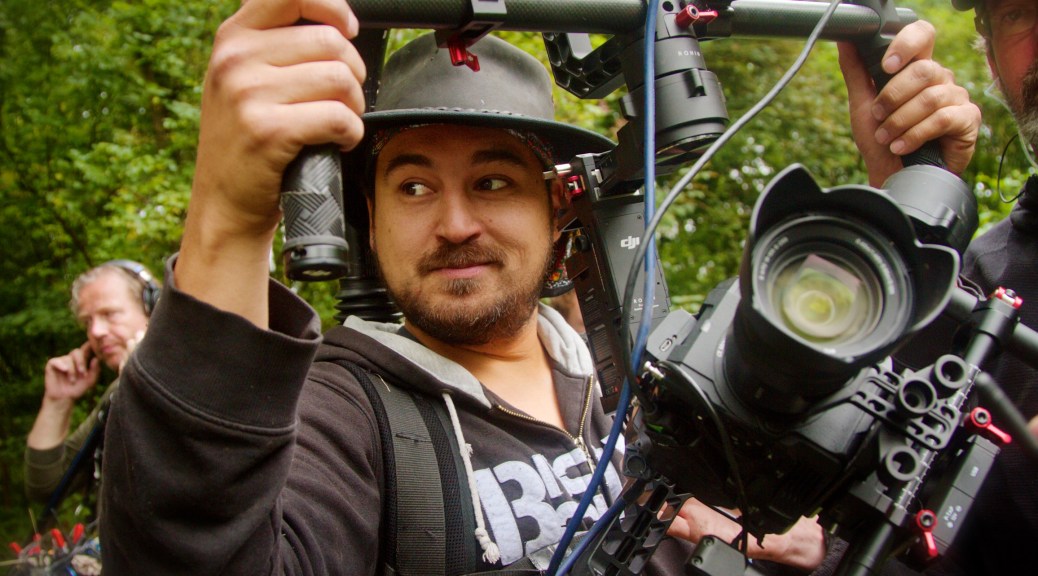
Khurniawan’s unwavering passion for filmmaking extends back as early as his childhood and his perspective derives from years of immersing himself in the arts. At a young age, Khurniawan’s father allowed him to use the family camera to take photographs of their vacation and he became addicted to the feeling of seeing his photos once he had them developed. He began to notice the different ways to manipulate an image he’d like to depict and loved the depth of emotions he could capture. It wasn’t until he began taking videos with his first ever mobile phone that he realized how intrigued he was by filmmaking. From there, he never looked back. His work as a photographer and cinematographer has landed him success with a number of films, many of which he ended up winning awards. For instance, Khurniawan’s film Alchemist won Best Student Film at festivals like the Around the World International Festival, the Los Angeles Independent Film Festival, the New York Film Festival, and more. His other films, such as Antifilm and Kudeta, have also earned Official Selections at a number of prestigious festivals, as well as praise from his peers. He is a force to be reckoned with in the filmmaking industry and he has no plans of stopping any time soon.

In July of this year, Khurniawan collaborated with fashion guru Peggy Hartanto to bring Kudeta to life. The film juxtaposes modern choreography with modern fashion as it portrays Hartanto’s finesse in the fashion industry. The simplicity of her design doesn’t simply translate as modern, but rather it signifies a daring take on modern wear. Essentially, the basic idea of the film was to dress female warriors in dresses and present them like they hadn’t ever been seen before. It created an anti-thesis to fashion film and Khurniawan is drawn to the idea of bringing unexpected notions to life before his audiences. Prior to filming, however, Khurniawan was apprehensive given the amount of VFX shots that he would need to create. Rather than succumbing to the pressure, he dedicated every fiber of his being to learn how to use VFX to the best of his abilities and the result was profound. In fact, his mastery of VFX and his eye for filmmaking made him an instrumental key to the film’s success.

“It was truly challenging at first because I knew there were going to be a lot of VFX shots, but I trained and I took my time to understand the tools. I stayed up all night prior to each shoot in order to prepare so that I could be confident that I would capture the best content as possible,” recalled Khurniawan.

Another of Khurniawan’s favorite aspects of his profession is getting to collaborate with other top artists in the industry. For Kudeta, Khurniawan was fortunate enough to work with Hartanto and explore the world of modern fashion. He was also able to work with other designers and film enthusiasts on set. For instance, Kudeta’s production designer, Indrianty Lihardinata was humbled by the experience of working with Khurniawan for the film. Most artists who work with him are taken aback by the caliber of professionalism and expertise that he brings to the table when he works. According to Lihardinata, in fact, Khurniawan was the ideal combination of professional and enjoyable to create with.

“My favorite part about working with Calvin is his willingness to spend time with key departments to discuss the different aspects of the film. Kudeta was a fun one because it is a high-speed fashion film and so he would shoot everything in a high frame rate to accentuate the movement of the dancers. He is the coolest person to work with because he would take the time to frame every minor detail to ensure that it had a strong “wow” factor,” emphasized Lihardinata.

In all, Khurniawan takes great pride in the content he created for Kudeta. For this reason, he was even more pleased when Kudeta earned the recognition that it did so early on in its festival run. It was chosen as an Official Selection at both Tampa Bay Underground Film Festival in Florida, as well as the Short to the Point Festival in Bucharest and will likely go on to inspire even more audiences as time progresses. In the meantime, the esteemed cinematographer is excited to try his hand at creating a documentary. He believes that it will allow him to exercise his instinct as opposed to allowing technical elements to dominate his content. Stay tuned for more.


Photo by Joshua Kang

Sound editor Zheng Jia transports audiences to 1930s China in upcoming film ‘Luna’

LUNA WB premiere
Zheng Jia at Luna premiere

Zheng Jia did not always plan on being a sound editor. She spent most of her young life working towards a career in computer sciences. However, when she realized she wanted to pursue something different, she started exploring as many career options as possible, and filmmaking kept coming back to her. It gave her the power to tell stories, to change lives for the better, and to share her work with the world. After starting to watch films for more than simply entertainment, she began to realize the power of sound. It has the ability to completely transform a scene, to take it to a new level. She would be storytelling, bringing out emotions with her work, and she was intrigued. It was this realization that put Zheng on the path to greatness, as she is now an internationally sought-after sound editor.

With an outstanding reputation, Jia has come a long way from that girl who didn’t know what to do with the rest of her life. She has worked with some of the world’s largest production companies and on many popular film and television projects. She is currently working with NBC Universal on their long-running show Law & Order: SVU, and her esteemed resume features many more hits. Earlier this year, Zheng worked with Warner Brothers on the upcoming film Luna, and once again, she has proven what a force she is as a sound editor.

“It was an absolutely amazing experience working with Warner Brothers, and truly a privilege to be able to work with the most experienced post production crew, alongside close filmmaker friends. I got to experience the freedom of great communication and artistic collaboration with talented filmmakers that I’ve known for years, and also got to go through the strict disciplined post-production schedule and protocol through one of the most professional film studios. It was also a great feeling to know that the whole studio system was there supporting the entire journey for us filmmakers and we could always communicate and work closely together towards any potential issues and obstacles. Our main goal was always the same: to create great art,” said Jia

Luna is set in 1930s Shanghai, China. It follows the famous prostitute Luna, who offers to play a gambling game with an unexpected guest. As the attraction between the two builds, both of their undercover political identities unravel, leading to unexpected consequences.

Zheng’s worked as the dialogue editor for the film. She was in charge of the whole audio build-up from the human voice perspective. All the crowds in different locations (on the street, inside the brothel) needed to be created from scratch. Because of the unique texture of the story, everything needed to be in Mandarin with a certain accent and in the certain location. To do this, Jia collected many Mandarin sound footage from past projects and from her own personal collection, and put them together piece by piece in order to create the perfect tune for a 1930s Shanghai brothel back in that era, which was a key point of the whole story. Her work was invaluable.

“Working with Zheng was a great experience. Firstly, she gave us constructive suggestions on sound recording before we started shooting. The story takes place in 1930s Shanghai but we shot it on Warner Bros. back lot. To make the story sound real, we needed a lot of effects to recreate the environment of 1930s Shanghai. Finding them in the United States was nearly impossible, so Zheng got them from her own collection,” said Xu Zhang, Director of Luna. “She has a lot of experience, skill, and work ethic, which make her one of the best at what she does.”

Luna is Warner Bros. first production that is fully produced and presented in Chinese Mandarin, with with a Chinese main cast and crew, telling a Chinese story, with a strong Chinese female lead character. As a Chinese female filmmaker herself, there wouldn’t have been a better fit than Luna for Jia. After, Zhang and writer/editor Mei Liying approached her to be a part of their project, knowing that they needed a talented sound editor due to the nature of their film, Jia was immediately on board.

The film required not just a good sound editor, but one that also was fluent in Mandarin. Although that is the language of the film, the lead actress was not fluent. There were many takes with good acting, but not a completely authentic accent. This is where Jia’s extraordinary talents truly shine. She had to go through multiple takes to find lines that would match the performance, and string them together flawlessly. To do this, Jia had to have full knowledge of the certain dialect in that region in China, back in the day, in that specific location or situation, with the very specific crowds and groups and everything human voice related. Such a task is normally daunting and time consuming, but Jia turned everything around in two days.

“Especially for Western audiences and Western crew members including Warner Brothers studio producers and other staff, my work was their direct way of experiencing a world that is vastly different from the nowadays Western World, and that was immediately affecting their whole emotional experience when watching it. I worked closely with Xu and Mei in order to pick up and fix the subtlest places of the dialogue in creative ways in order to keep the performance authentic while still making sure that culturally or language-wise everything still made sense,” Jia described.

Besides the technical part of dialogue editing, Jia was in charge of creating the human voice environment for the crowded brothel, with different groups of people – men, women, laughter, flirting, drunk conversation, polite, higher-class small talk, etc. in order to make the whole story as authentic as possible. To achieve that, she went through all of her sound library collections, and even went out and recorded some authentic materials herself. Eventually, she was able to build up the whole brothel environment, and it sounds remarkable.

The film premiered at Warner Bros Studios in May. It will begin making its film festival run soon, and there is little doubt that not only will Luna be a tremendous success, but Jia’s sound editing will receive acclaim from both critics and audiences alike.

“This project itself was a great pleasure to work on. Xu and Mei created such a great story and characters that were so very intriguing and authentic, and as Chinese filmmakers, it was an absolute honor and great presentation to be able to work on a great project featuring strong female minority lead in a major Hollywood studio,” she concluded.

Audiences can also look forward to Jia’s work on the small-screen in the upcoming CW series Life Sentence. It’s a dramedy, very different from the sound editor’s previous work. Be sure to check it out next year.

Victor Gilbert reminds the world that a kiss should just be a kiss

victor
Victor Gilbert

From the time he was a baby, Victor Gilbert has been immersed into a world of full of films, acting, and make believe. Given the fact that his mother is a cinematographer, Gilbert has played child roles in several of her films and he has had the unique opportunity to test his acting skills against a number of different storylines and plots. Like most children, Gilbert loves to play pretend and he finds himself energized by the ability to play pretend for more than just enjoyment, but as a career. Playing a wide range of emotions interests him, and he thrives on the chance to explore playing different versions of “happy,” “sad,” or “mad.” For Gilbert, acting is all he’s ever known. It is a part of his family. He has grown with it and he wishes to continue to let acting grow with him for the rest of his life.

As he has aged, Gilbert has slowly branched away from filming with his mother and has begun working with esteemed production companies, directors, actors, and more. At the mere age of 10, Gilbert is taking the entertainment industry by storm and having earned such great success so early on in his life, it is intriguing to wonder where his talents will carry him next. One of his most notable works was for Netflix’s Hell on Wheels, where Gilbert played the son of a railroad worker called Jeff Strobridge, played by Reg Rogers. In this role, Gilbert had the chance to act alongside Rogers, Anson Mount, the series’ lead actor, as well as several other experienced professionals. It was a great way to expose himself to various acting styles and techniques, and since he was a recurring character, he had the opportunity to develop his character throughout each episode he acted in. Gilbert thoroughly enjoyed learning from the individuals he acted with, and submerged himself into the film’s extravagant, western-themed set. To this day, he considers it one of the highlights of his career.

Another of Gilbert’s more enjoyable projects evolved over the summer of 2016 when he aced the audition for, and won the role of Peter in the influential film, The Kiss. The Kiss tells the emotional story of a young boy, played by Gilbert, kisses another young boy at school. It is set in the 1950’s and unpacks a controversial dilemma for a mother who tries to understand what her child is going through. With the tag line, “a kiss should just be a kiss,” the film explores deep themes of love and homosexuality, and is gaining a substantial amount of praise from film festivals around the world. Being only 8 years old at the time of filming, Gilbert was unfamiliar with the emotional nature of the plot line and didn’t realize the importance of the topic in today’s society. Upon learning of meaning behind the film’s premise, Gilbert was eager to play such an impactful role. In fact, Gilbert’s character was pivotal to the The Kiss’ storyline and he set the tone for the entire film.

Gilbert credits his role in The Kiss as being the toughest he had ever played. Having to travel back in time to the 1950’s through the film’s costumes and set design was unlike anything Gilbert had ever done before. When filming, he had to act out emotionally charged scenes involving kissing another boy, being scolded by his mother, and portray feelings of fear, sorrow, and intimidation. Fortunately, Gilbert excels in any environment where he has to sell different emotions for the better of his character’s storyline. He has a remarkable ability to play multi-dimensional emotions and despite his age, he never struggled to explore a new emotion when asked. David Emmanuel, who both produced and acted in The Kiss, has nothing but respect for Gilbert’s natural affinity to play his characters as realistically and organically as possible. He was astonished to see an actor as young as Gilbert displaying qualities that even some of the most established professionals have not yet mastered.

“Victor had a very, – I cannot stress it enough – very difficult scene to act at such a young age. He had to pretend to have kissed a boy in school, to dress up, to wear lipstick, and more. Still, he did an amazing job and was so right for the role. He was extremely patient and open-minded for this movie. Not to mention, he was very professional on set for such a young age. He listened to the director very well and was open to giving his input whenever he didn’t feel comfortable,” noted Emmanuel.

If you ask Gilbert, however, the film simply helped him tell an important story to the world and he was happy to have had the opportunity. Even he himself was moved by his character’s strength and determination. To play such an integral character at such a young age is a rare feat for any child actor and he hopes to be able to do so again in future.

“I think the story of this film is important because there are tons of people who are still too shy to love another person of the same gender. I think these kinds of films help these people come forward. It is so important to respect people for who they are. Films have a big impact on people and they can influence generations,” told Gilbert.

Upon wrapping The Kiss, it made its way to several prestigious film festivals in Orlando, Los Angeles, Brazil, Cannes, Germany, Sweden, and many more. Gilbert, along with everyone else involved in the film, are excited to see where else The Kiss will go and how many more lives they can touch with this incredible story.

Michael Whalley steals the heart of ‘Jean’ and audiences in new film

There is a camaraderie that comes from playing sports. Everyone has the same goal, they wear the uniform, they experience the same victories and failures as a team. For New Zealand’s Michael Whalley, he experiences that same solidarity from acting. He represents the team while still shining on his own. He works with that team spirit to achieve the best result possible. He loves to play, and considers acting a serious game, as each new project brings a new match and a different opponent. To use such a metaphor shows how much Whalley appreciates the intricacies of his craft, and this understanding translates to raw talent for this celebrated actor.

With an esteemed resume and unparalleled versatility, Whalley is an internationally in-demand actor. While working on many acclaimed films, such as the 2015 award-winning feature Psychoanalysis, he has shown the world what he is capable of. His work on Slow West, alongside Michael Fassbender and Ben Mendelsohn, received praise from audiences and critics, and this trend occurs with almost everything Whalley takes on.

“To think I could be paid for doing the very thing I wanted to do every day was such an incredible thought, so I sought to make that my reality,” said Whalley.

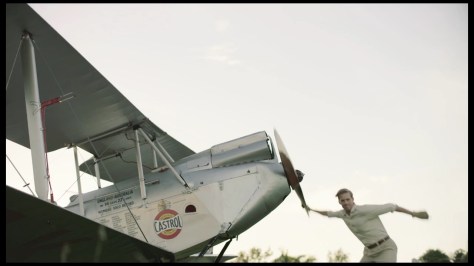
Earlier this year, one of Whalley’s newest films was once again a large success.  The actor played the leading character of Beverly Shepherd in the historical romance Jean. The film tells the story of Jean Batten, New Zealand’s greatest pilot, heroine, celebrity, and mystery. Beverly Shepherd is the romantic lead in the film. Beverly is a man with a strong moral backbone, a sense of fun for life and a determination to challenge for the things he wants in both affairs of his career and heart. Despite being the only son of wealthy Sydneysiders, he lacks the pretension of wealth. He can read people and knows instinctively if they are being untruthful. Independent and modern, he is attracted by Jean’s adventurous spirit and mystery. His greatest struggle is attempting to protect Jean from decisions that would put her in danger, only to have to accept that she isn’t someone who wants or needs protection. He knows he has to play a long game of love to not scare her away. Jean had lovers in her life, but Beverly is the one man who truly captures her heart. In the story, audiences see how headstrong Jean is with her life and career, and when Beverley sweeps in and shows her glimpses of recreation, fun and love, he innocently threatens her focus, creating Jean’s ultimate emotional conflict. Therefore, the filmmakers required a seasoned actor to play such a pivotal role in such an important story, and Whalley was the obvious choice, with the talent and passion to go with it.

JEAN 1 with Kate Eliot pic Ginnie Loane
Michael Whalley and Kate Elliot in Jean, photo by Ginnie Loane

“Especially in the past few years, it has been of growing importance to remind ourselves of the power women had in shaping the world. Too many films are one-sided in their portrayal of male heroes, and Jean was a heroine that defied the constraints of a male-driven world. The film, the first about Jean Batten, is a piece of entertainment, education and inspiration for New Zealand and the world to see. I had known of Jean Batten in the past, but this was a chance to see behind the tabloids and popular public image into the life of such a mysterious firebrand,” Whalley described.

After premiering earlier this year, the film has seen vast critical success. At the Film Awards New York 2017, Jean won an unprecedented nine awards, including “Best TV Movie” and “Best Drama Special”. These are immensely prestigious honors, as New York Festivals recognize only the best content from over 50 countries around the world. In addition, the film was successful commercially, airing on TVNZ, which reaches over 2 million people and has recently been acquired by distributor Banijay International for the ROW market. Such success could not have been possible without Whalley’s portrayal of Beverly.

“He brought a charm, wit and strength to the character of Beverly Shepherd that we could only imagine.” said the Producer and Writer of the film, Donna Malane.

Taking part in this period piece was enticing for Whalley, and as an actor he is always looking for new challenges and experiences to refine his talent. This story is set in the thirties, and Whalley researched the decade extensively to ensure he would completely transport audiences. Parts of this process were more fun than others, such as driving around an open top 1930s Model A Ford, and getting to know about the planes they were working with, which by a happy coincidence, were taught to Whalley by an old friend of his grandfather, Dennis. However, some parts of the preparation process were more grueling. Whalley had to take on the language, manner of speech and the classic nature of the period drama, and work to make that all ring true for his mouth, body and mind to create a genuine portrayal. To do this, Whalley infused his character with the parts of himself that fit best, which he tries to do for every role he can. This helps create an authenticity that captivates audiences, and what the actor is so well-known for.

Jean Ginnie Loane 2
Michael Whalley in Jean, photo by Ginnie Loane

Whalley says getting into the mindset of the time was made easier by the incredible costumes designed by Kirsty Cameron. As soon as he put on his gear, he felt clean, classic and upright. “Putting on my costume became a very important part of my morning ritual to get into Beverly’s shoes, literally,” he joked.

Improvisation also was a great tool for the actor when preparing for filming. During rehearsals with his co-star, Kate Elliott, they would have a series of improvisations around the scripted dialogue, which he says was a sure-fire way to find out what they knew or didn’t know about their characters and the world of the film. These exercises were helpful as the role of Beverly was a refreshing change for the actor, who often plays “punks and public nuisances”, and the character of Beverly is very dependable and ethical.

The actor also uses music frequently to prepare for roles. For Jean, Whalley made a playlist specific to what Beverly may have been listening to at the time, mixed with songs from Postmodern Jukebox to “get in the zone to play”, once again, similar to an athlete.

Undoubtedly, Jean is a must-see, and Whalley is enchanting in it, as he is so well-known to be. His passion for the story is evident, and his passion for what he does is even more so.

“This was a chance to act in an historical and important story in both New Zealand and International history. The true love of Jean Batten, at one point the world’s most famous and respected women. To play a character who had the charm, wit, intelligence and pilot skills to win the heart of the Lady that kept it locked away,” concluded Whalley.


Top photo by Ginnie Loane

Anna Pniowsky masters different levels of fear to terrify audiences in ‘He’s Out There’

file 2016-12-02, 2 07 11 pm
Photo by Kevin McIntyre

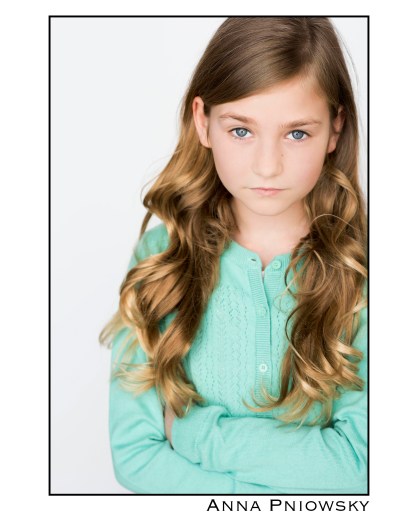
Even at the age of 12, Anna Pniowsky understands that choosing to pursue a career as an actress would not be worth doing for the wrong reasons. It is a cutthroat field to work in and if you wish to become an actress for glamor or fame, it is unlikely that you will be able to withstand the pressure and the challenges that you will be faced with. Pniowsky knows that becoming an actress involves a type of perseverance that most individuals will never require in their lifetimes. She is always on her game, ready for any audition, callback, or role that she is tasked with. On top of that, she has mastered the ability to look self-doubt in the face and turn it away. Her love for acting transcends any obstacle that she comes across and by believing in herself and surrounding herself with people who support her dreams, she has no doubt that she will be acting for years to come.

“If you feel that acting is truly in your blood, remember the well-known adage – it is a marathon, not a sprint. It takes a lot of auditions before you book something. You will feel self-doubt and you will want to give up, but if you truly love it, you can push forward. You just have to believe in yourself,” told Pniowsky.

Despite her age, Pniowsky has earned herself a breadth of experience and training in her field. Just this past year, she landed the lead role in a film written, directed, and starred in by Oscar-winning actor Casey Affleck. The film, Light of My Life, is a drama about a father (played by Affleck) and his daughter (played by Pniowsky) who live on the outskirts of a society that was destroyed by a pandemic ten years ago. Buzz about Pniowsky’s role in the film is already gaining traction as being a career-defining moment for the talented young actress and audiences everywhere are eager to see what happens when it premieres.

Prior to filming Light of My Life, Pniowsky won the role of Kayla in Sony Screen Gems’ horror film, He’s Out There. He’s Out There depicts the terrifying tale of a mother and her two daughters who take a vacation to a remote lake house and wind up being tormented by a murderer in the woods. In the film, Pniowsky acted alongside celebrated actress Yvonne Strahovski, as well as her little sister, Abby. She was paramount to the film’s storyline and appears in the entire duration of the film. In order to play her character as convincingly as possible, Pniowsky endeavored to master multiple different ways of appearing frightened. Since her character is scared throughout the entirety of the film, she felt it was very important to develop her character to be dynamic and she avoided appearing one-dimensional at all costs. With that, she developed various different levels of fear that she could transition back and forth between, depending on the intensity of the scene. In doing so, she created a character that audiences can relate to, and ideally, will identify with as they embark upon the journey that the film aims to take them on.

The film’s director, Dennis Iliadis, could not have been more pleased with Pniowsky’s performance. Knowing that the quality of the film rested entirely on the performance of his cast, he was determined to find actresses that could emulate the mood of the film directly into its audience. When asked about Pniowsky’s performance, Iliadis had the following to say:

“Anna was phenomenal to work with. For such a young age, she’s an actress of incredible intelligence, sensibility and instinct. I have never worked with a young actor or actress who is so hard working, disciplined and focused. We had a very emotionally demanding and technically difficult shoot but in those very challenging conditions, Anna gave a great performance in a role of strenuous physicality and very complex and heightened emotions. Even in the most difficult situations, Anna was always prepared, always ready to go. She really made the rest of us up our game.”

After wrapping He’s Out There, Pniowsky gained a new appreciation for the horror film genre. Most mainstream horror films today have one goal and that is to terrify an audience. It is rare, however, to be able to act in a horror film with an underlying moral compass. Pniowsky was fortunate enough to be able to identify the deeper meanings that the story tells. Not only is it a story that highlights the unrelenting strength of a mother’s love for her children, it also does an excellent job of emphasizing a journey of personal growth in Pniowsky’s character. She found herself inspired by the presence of strong, female characters in the film and feels that young girls can learn a lot from Kayla’s will and determination to survive. She loved seeing strong female characters taking charge and fighting hard for what they believe in. It is a message that women of all ages can carry with them beyond the film and into their own personal lives and Pniowsky was honored to be able to play a role in helping foster that movement.

Ismaël Lotz on the honor of working alongside his childhood idols

IL05
Ismaël Lotz

When Ismaël Lotz looks back on his inspiration to pursue a career as a Director of Photography, Lotz recounts a unique combination of motivators. He recalls watching television and films with his father as a child. In fact, at the mere age of 7, Lotz saw E.T., and it was his first time seeing a film on the big screen. He was left in complete and utter awe, eager to see many more films just like it. After E.T., came films like Indiana Jones and Back to the Future. Eventually, he began experimenting with photographs and with shooting film on an 8mm camera. Even at a young age, he was confident that he could build a future out of his passion. His fascination with telling these gripping stories through different lighting techniques, filming methods, and sound styles opened an endless amount of possibilities and creative outlets for him to channel his artistry. He promised himself that one day, he would produce films that audiences would love the way he loved films like Back to the Future. Little did he know, he would one day work with the actors who crafted these stories before his eyes; however, today, instead of being his idols, these actors are also his equals.

Over the course of his career, Lotz has built himself into a highly sought-after Director of Photography in the arts and entertainment industry. His creative process typically begins when he assesses the story of a script and determines which style of film would best suit its inherent messages, moods, emotions, and atmospheres. Once he develops a vision for the script, he works tirelessly to ensure that he brings it to life in such a way that honors every element of the writer’s vision. Lotz distinguishes himself by his ability to capture every detail of a storyline, no matter how large or small. In his free time, he researches and experiments different filming techniques used by other directors of photography to master new techniques and broaden his range of abilities in order to enhance his skill set for the better of his future projects. In fact, in 2016, he had the unique opportunity to test his hand at filming a documentary called I Am Famous, featuring the life of Tom Wilson.

After he developed the idea of I Am Famous, Lotz was extremely excited about the opportunity to work with an actor that he had admired and idolized ever since he was a child. Wilson, who played the infamous role of Biff in Back to the Future, built an entertaining comedy reel out of his experiences after Back to the Future stormed the film industry. His role was so well known and vehemently disliked by audiences across the globe that he became accustomed to strangers approaching him and saying, “I hate you!” For I Am Famous, Lotz was not only the Director of Photography, but also the film’s sole director and editor. His personal approach to shooting the documentary allowed him to unveil Wilson’s true self. Being able to get to know one of the actors who inspired Lotz to become a Director of Photography was an opportunity unlike anything else he had ever encountered. He worked tirelessly to ensure that the final product of the project was nothing short of perfect.

“The way I create documentaries is very close and personal. I think the closer you can get to your subject, the more honest and real you can present them in your film. I like getting close to my subject on an intellectual level, but also with my camera. The result of I Am Famous was more than I could have ever dreamt. It turned out to be very successful,” told Lotz.

On the other side of the camera, Wilson was extremely humbled by the project. He doesn’t often allow for filmmakers to tap into his personal journeys; however, he felt that he could trust Lotz to portray him in an honest, organic light. He developed a confidence in Lotz that allowed him to feel at ease on camera and that allowed Lotz to challenge him to open himself up before his audience. When Wilson agreed to the project, he had no idea that he would be so moved by the final product and he felt that it was a distinct pleasure to be able to experience working with such a well-established Director of Photography.

“Working with Ismaël was a pleasure, as he is kind, easy to collaborate with, and keeps his humanity of the utmost importance – which is sometimes a rarity in filmmaking. His friendly demeanor makes a fine foundation for his skills as a cinematographer and director who gets things done. His knowledge of the technical demands that underlie the complex technologies of filmmaking are at the highest professional level and he has proven that with a long list of impressive professional work. In my almost forty years of filmmaking, I must say that Ismaël combines the essential ingredients for a successful filmmaker; a high level of technical skill, a deep commitment to the art of cinematography, and the personal character that makes for a solid and lasting success,” noted Wilson.

I Am Famous premiered in 2017 on ShortCutz Festival in Amsterdam. It went on to screen successfully at a number of subsequent film festivals such as the Miami Independent Film Festival, the Los Angeles Film Awards, New York Film Awards, Hollywood International Independent Documentary Awards, and many more. Knowing the film has done this well so early on in its screening life is a testament to Lotz’ prowess as a Director of Photography. He is motivated to explore the possibility of creating a follow up film.

For anyone aspiring to follow in Lotz’ footsteps, he cautions them to remain honest to themselves and to their environment. He understands that in his field, it is imperative to create as much as possible. With that, will come mistakes and ultimately, learning opportunities. By watching the work of other cinematographers, you can learn new techniques and gain an appreciation for all of the different styles present in the industry. The learning never stops and maybe one day, up-and-coming cinematographers will get to work with their idols and perfect their craft as Lotz has done in his remarkable career.

Saudi Arabia’s Talha Bin Abdulrahman is director extraordinaire

As a child, growing up in Riyadh, Saudi Arabia, Talha Bin Abdulrahman’s father used to rent movies and watch them with his family. This quality time together meant even more for the oldest brother, as he was enthralled by the films in a different way than the rest of his family. Bin Abdulrahman knew then that he was meant to be a filmmaker, and has spent his life making that dream a reality.

Now, as a director, Bin Abdulrahman does exactly what he always dreamed of. He creates all new worlds, and sees his job as gathering all the pieces of a puzzle and putting them together just right. This viewpoint is that of a perfectionist, which is exactly what Bin Abdulrahman is when it comes to filmmaking. His newest film, The Scapegoat, is a telling tale of a writer going through a rough spot, and is expected to be a strong contender at many of the world’s most prestigious film festivals. This is no different than his previous work. His comedic musical Film School Musical is an award-winning look at the difficulties a young filmmaker can go through, and his feature Viral Night, although still in pre-production, is a thriller that audiences can already look forward to.

“The rush of being on set, there’s nothing quite like it. You get to see performances of talented people giving you their best with what they were given, even when things go south there’s always some kind of silver lining or a lesson to be learned so you avoid it in future situations,” said Bin Abdulrahman.

One of the director’s favorite films to work on was the 2015 dramatic thriller Served Cold. Honoring television shows like Breaking Bad and Better Call Saul, Bin Abdulrahman wanted to tell a story about the drug world, showing that there is no clear-cut black and white in this world. Therefore, Served Cold is about a former drug lord who is sentenced to life in prison after killing an undercover cop. With the help of his shady attorney, he has to take desperate measures in order to be with his teenage daughter.

“There is a lot of interesting grey areas to discover and I wanted this project to shed some light on that theme. It’s essentially a cold revenge story about a criminal lawyer who poisons one of his clients who was sentenced to do a life sentence for illegal drug trafficking and killing the undercover DEA agent, who is also the lawyer’s father by adoption. This scheme doesn’t go as planned,” said Bin Abdulrahman. “Revenge stories can be very emotionally engaging and it’s a good way to see the characters faced with their worst nightmare, the rage behind the revenge fuels the whole story and it’s satisfying for the audience to go through this emotional journey.”

Bin Abdulrahman’s vision for the film was achieved when it won the “Audience Choice” at the SFA awards in January 2015, which was being held at the same time and place as the Sundance Film Festival. The film’s rights were then sold to ShortsHD, an international cable channel, where it was such a hit with audiences that it has aired twelve times during 2015.

“It feels very rewarding to be validated by awards and audience reactions. I think to myself that I must be headed on the right direction. It feels reassuring after five months of work to know that it wasn’t for nothing and it boosts you to move on to your next project,” said Bin Abdulrahman.

After writing the script himself and self-financing the production with his producer, Bin Abdulrahman made the decision to also direct the film. After finding the right cinematographer, the project took off. Immediately, Bin Abdulrahman became committed to telling the story of Served Cold with a specific vision in mind. He knew the look and feel that was appropriate for the genre and worked hard to bring the script to life. The story is very moody and has layers of dark tones, so maintaining that feeling depended a lot on the actors and how realistic their performances were, so as the director, Bin Abdulrahman strived to get the best out of his cast, and his efforts paid off. It gave him quite a lesson on finding the best way to get his actors in the mood and to get them be very serious, as all of the scenes were extremely intense. Throughout filming, the director strived to be fully harmonious with his crew, and he succeeded.

“Working with Talha is a blessing. He comes to set extremely prepared, knows what he wants and is very easy to work with. I enjoy working with directors like Talha who makes a producer’s life easier,” said Maan B., the Producer of Served Cold. “Talha is a very talented, creative, and visionary director. I experienced it on set with him; we came to set one day with something we have long prepared for, but something did not work, so Talha came up with a better idea on the spot and we continued with our day without losing money. That’s the kind of directors I like. He’s not married to his ideas. He’s open to suggestions and anything else that will help the project for the better.”

Bin Abdulrahman knows just how to bring the best out of those he works with, and the best out of himself. It is what makes him such an in-demand director, and why he will continue to have such a prosperous career.

Producer Sherry Yang scares and educates audiences in new thriller ‘Under the Pieces’

The moment Sherry Yang steps onto a film set, she falls in love with what she does all over again. She is an extraordinary producer, and her passion for her work translates into each and every film she has done. She loves the feeling of working tirelessly night and day, as it allows her to see the magic of the filmmaking process in its entirety. She loves that as a producer, she nourishes a project from beginning to end; she works with every department; she is the go-to person for any problem that may arise and always has a way of solving it. For Yang, her work is more than satisfying, it is addicting, and that is why she is in demand all over the world.

Yang has produced many high-achieving films, and the success of each comes down to her talent and work ethic. Her versatility is superlative, and whether working on a historical story, such as the award-winning film The Letter, a telling comedy, exemplified by her films Jiaozi and Cash Back, or meaningful dramas like Te Echo de Menos, Yang’s producing is continuously top-notch. She has now also extended her resume to the thriller genre with her work on the new film Under the Pieces, and she has once again showed the world what she is capable of.

“I had always been very interested in the human psyche, which sparked my interest in Under the Pieces. I have been especially fascinated by the notion of dual personalities. This film decided to take a step further and make it multiple personal identities, and that made me excited. It was going to be another challenge to see how a mysterious murder would play out. I wanted to be one of the key elements that help in bringing this story to its successful,” said Yang.

Under the Pieces - Yuki Yoshimatsu, Brittany Fisheli, Sherry Yang - photo by Vera Zhang
Yuki Yoshimatsu, Brittany Fisheli, and Sherry Yang – photo by Vera Zhang

Under the Pieces follows a detective as she tries to put the puzzle pieces together of a horrendous murder that occurs inside a loving couple’s home. Yang was responsible for gathering the team, setting up meetings and rehearsals, and running daily productions. She also had to hire a writer and director. When she found Yuki Yoshimatsu, Yang then was involved in the creative aspect of the film. She would go over each draft and work with her team to ensure they were telling the right story. This made her extremely attached to the script, and she had to make sure she found the right actors for each part. Finding someone who can convincingly portray multiple personalities is not easy, as they had to be someone who could change their entire disposition just from the look in their eyes, but eventually she found just that in Mikael Mattsson. Her work was not done after that; once filming was completed, the team then looked for the ideal editor, one who would display the story in a manner that the audience would understand what happened whilst keeping the mystery of it until the very end, which they found in Monge. Undoubtedly, the film could not have achieved what it did without Yang, and these thoughts are echoed by her team.

“Sherry demonstrated exceptional problem-solving skills and communication abilities within and outside the production crew. In particular, when working with her, I don’t remember having a single problem with other departments or locations. When a producer is talented and particularly adept at their job it often goes unnoticed, because everyone else can tend to their own responsibilities without unexpected distractions. In this respect, Sherry was always an unsung hero on set by solving every ongoing problem that we were unaware of at the time. She is the best kind of producer, one who provides an environment where everyone on the crew can excel up to and beyond their individual abilities to collaboratively make the best possible product. I don’t even know much about her past work and accomplishments because when I’ve worked with her she has always been focused entirely on the job at hand rather than talking about herself. The filmmaking business is often correctly characterized for its narcissism. It is an industry where many people prop themselves up by tearing others down. It is notable that I have never heard a negative comment about Sherry from anyone else or a diminishing remark from her about anyone else. This might seem like a small thing, but it is a significant asset to the film industry because she has the type of work ethic and personality that sets a cultural and social example for an industry that is too often lacking,” said Edwin Beckenbach, a gaffer on Under the Pieces.

After premiering at the Los Angeles Cinema Festival of Hollywood in February where it won Best Student Film, Under the Pieces has had quite the film festival run. It was a selection at the celebrated Cannes Short Film Corner, as well as the L.A. Shorts Awards 2017 where it won Best Short Film Silver Award and the NYC Indie Film Awards 2017, where it took home Best Short Film Platinum Award.

“It is exciting that the film did so well. I am happy that many audiences and festival juries were able to understand the story and enjoy it. It assures us that the film was understandable and that we were able to tell the story correctly. We hope that this film has not only surprised audiences with the ending, but that it allowed them to connect with its message. We wanted the audience to understand that although perhaps not to the extreme of murder, but any individual in a stressful situation can snap with one simple push,” said Yang.

The film started out as Cinematographer Royce Gao’s passion project. Gao approached Yang knowing she was the best producer possible for her cherished film. Yang was not only eager to tell the story, but also to take on a more creative producing role, finding the correct writer and director, and being a part of the writing process. This made communication critical for the project’s success.

“I truly liked how I got to be involved creatively. The fact that I was able to put a few inputs to the story made this project a lot more personal to me. It made me more passionate to make sure the story was told right. I enjoyed being valued not only for my skills as a producer, but also for my creativity,” she said.

Above all else, however, Yang wanted to tell the story not just as a thriller that would excite and terrify audiences, but as a teaching tool. She wanted to educate viewers on multiple personality disorder, and put in a lot of research to make the story as authentic as possible.

Be sure to check out Under the Pieces and get a glimpse into Sherry Yang’s outstanding producing talents.


Top photo Victoria Geske, Sherry Yang – by Yuki Yoshimatsu

Tooba Rezaei experiences the magic of touching hearts through ‘A Sweet Dream’

A-sweet-dream-poster-small
A Sweet Dream film poster

One of the most unique joys of being an artist is knowing that your work evokes raw, human emotions within those around you. Visual arts have the ability to transcend the mundane aspects of human life and to push people to explore themselves and the world around them. Over time, art has created change. It has inspired and influenced. It has created chaos and disruption, and it has birthed a community of dreamers, and creators. It has produced renowned artists like Tooba Rezaei, whose passion has allowed her to touch the lives of several different people throughout her career. For Rezaei, the true joy of her craft comes from the platform it gives her to make people feel things that they may not otherwise have the chance to feel. She gets to tell stories and to motivate her audiences to dream without limits.

When Rezaei was a child, she would immerse herself in cartoon television shows. When each show ended, she would take her pen and paper and challenge herself to draw all of her favorite characters. She was energized by the feeling of her pencils exploring the paper and loved the creating things that hadn’t otherwise existed. As she grew up, she continued to test her skills against various mediums and art forms within the field of visual arts. This led her to discover the wonderful world of animation, a world in which she feels that she belongs. She has a natural affinity for bringing her drawings to life via animation and loves the dynamics that the motion brings to her artwork. As an animator, Rezaei has created a number of well-known animations, such as her original animation, A Sweet Dream. Prior to creating A Sweet Dream, however, Rezaei experienced her first sense of impacting the lives of others through her artwork with her animations for the game SilverFit.

SilverFit was a game designed specifically for use by an older demographic. Essentially, it is a virtual therapy system to be used to train gross motor skills and ADL tasks during rehabilitation sessions. The game presents the necessary exercises for elderly individuals to follow along with and keep their muscles working accordingly. Since its inception, the game received great success and is now used by over 20,000 individuals a week. As SilverFit’s first designer, Rezaei acted as the background designer, background painter, character designer, and character animator. She designed a wide variety of different games, each based on the use of different motor skills to suit the game’s intended audience. In working for SilverFit, Rezaei got a taste of what it felt like to know that her work would directly aid in helping improve the health of its target audience. It gave Rezaei’s art a meaningful sense of purpose and she was addicted to the high of helping those around her. SilverFit’s founder and managing director, Maaike Dekkers-Duijts, was blessed to have Rezaei on board for the project. Her talents exceeded far beyond simply animating.

“Her animations really seem to come alive. They really ‘touch’ you. She is a great artist, creating extraordinarily beautiful animations. She is so artistic and has exceptional talent,” regarded Dekkers-Duijts.

After the success of Silverfit, Rezaei then extended her talents to the children’s show Parparook for Persian Gulf TV. Parparook (meaning ‘Pinwheel’ in the South of Iran) is a special program that is produced and distributed in Kahlije Fars IRIB (Islamis Repablic of Iran Broadcasting, also known as Persian Gulf). Rezaei wrote, directed, designed, painted and animated all the characters and all the objects on the background of Parparook, creating everything from scratch and differentiating her shorts from everything on the show. The producer and manager of the program were so happy with results that years later they used some of Rezaei’s work for other kid’s television programs as well.

Knowing that she had always wanted to create her own animated story, she knew that in order for it to be truly worth her while, she would need to give it an element of social influence. She wanted to do more than just entertain, and out of this determination, A Sweet Dream was born. A Sweet Dream can be described as a bittersweet, allegorical look at the desires of a little girl who wants the world to see her talents shine through her difficult life circumstances. Not only did Rezaei animate this project from start to finish, she also wrote and directed the storyline. To fit with the animated short’s premise, Rezaei felt it fitting to use a simple, two dimensional, flat design. In fact, she felt that the simplicity of the drawings was imperative to the overall mood she was attempting to portray. She wanted it to seem as if the little girl could’ve drawn the lines and shapes herself, making her world easier to relate to for her audience. Rezaei then added a second element to her design concept by showcasing the little girl’s reality through dark blue tones and contrasting it with her dream state, which Rezaei colored in golden tones.

“In her dream world, forms are curvaceous and delicate. There is dance and movement and inspiration. However, in reality, she is in an orphanage and the forms of the beds and the room are sharp and straight with harsh angles, alluding to her real-life struggles and difficulties,” said Rezaei.

Rezaei hoped that A Sweet Dream would challenge her audience to question their own harsh realities and evaluate them against their own hopes and dreams. She wanted them to think about how they would react if they were in the little girl’s shoes. Would their dreams be squandered by their reality? According to Rezaei, if we don’t push ourselves to understand the lives of others, we can never truly improve our society as a whole and make our collective world a better place. She felt as though A Sweet Dream helped to remind her why she does the work that she does. Seeing her audiences shed tears over her story solidified the reality that this is exactly what she wants to be doing and that she had succeeded in her efforts to make them stop and think about the consequences of their actions.

After screening at a number of different film festivals, A Sweet Dream even went on to win Best Animation at the Los Angeles CineFest, as well as Finalist in Animation Short at both the International Film Awards in Berlin, Germany, as well as at Constatine’s Gold Coin Festival in Serbia. If you wish to experience the magic, watch A Sweet Dream for yourself and you won’t be disappointed.


Image by Tooba Rezaei, captured from ‘A Sweet Dream’