JOSE ANDRES SOLORZANO PEERS DEEP INTO MEXICO IN “HUICOLES: THE LAST PEYOTE GUARDIANS”

Jose Andres Solorzano was looking for work that has a greater sense of adventure. He already had a very successful career at Red Bull Mexico Headquarters but wanted to pursue his career as a filmmaker full time. Although he had experience as a cinematographer he had never taken the full plunge. Feeling that the fortune smiles on those who take the risk, he quit his safe day job and ended up getting more risk than he had imagined or hoped for. Within a very short time he received a phone call from Argentina. Hernan Vilchez, famed documentary director, was looking for someone to cover the gathering of the traditional government of the Huichol Nation on top of their most sacred mountain. The Huichol were discussing a situation with a Canadian mining company that involved one of their most sacred sites. Without skipping a beat Solorzano was in, beginning what would become a three-year-long journey which would include escaping from armed drug cartels, witnessing ritual sacrifices, and often find him alone in nature without protection from its brutality. If Jose were not so busy filming a documentary about the Huichol it would be fascinating to watch one about his own epic experience as DP for “Huicoles: The Last Peyote Guardians.”

“Be careful what you ask for.” is a highly appropriate description of this period in Jose’s life. For three years he travelled some of the most remote areas of Mexico, sometimes alone and often at great risk. At times being around other people posed more danger than the forces of nature. It’s fitting that the Huichol and such a spiritual and enigmatic people; it’s an apt description of Solorzano’s experience as DP working with Hernan Vilchez on this documentary. Hernan sent Jose to the Huichol traditions government gathering on top of the Cerro del Quemado. He was so convinced by what Solorzano captured (by himself) that he immediately extended the project into a feature documentary. Due to Hernan’s permanent residency in Argentina, he often sent his trusted DP out by himself to get the footage he required. The belief of this celebrated director was both confidence building and demanding.

“Huicoles: The Last Peyote Guardians” follows the Ramirez family trough their sacred pilgrimage to Wirikuta, the place where they connect with their gods and gather peyote in order to talk to them. The documentary portrays at the same time the cosmogony of the Huichol culture and their fight against foreign mining companies that are trying to create an open sky mining in their most sacred territory. This natural protected area known to them as Wirikuta is the most biodiverse desert in the world for cactus plants. The documentary tells the point of view of the Ramirez family and the Huichol culture but also presents the point of view of the mining companies and the mestizo population of that area, presenting a dialogue to all the parts that create the complex problem of mining in this region of Mexico. The members of the Ramirez family are introduced on camera as we learn about them, their history, culture, and this pilgrimage that is intrinsic to the relationship they have with their gods. We also see the inhabitants of the Wirikuta, a very poor region of Mexico in great need of the work resources that could be brought by the oil company. The documentary tries to balance both points of view, allowing the audience to make their own decision.

The journey of the Ramirez family and the documentary start in Laguna Seca, Jalisco and it finishes on the top of their most sacred mountain, the Cerro del Quemado (Mountain of the burned one). Jose created a visual language for the film based on his director’s desire to be very realistic but also communicate the aesthetic of the sojourn. The method which both director and DP agreed upon was the use of time lapse photography as a recurring resource for this language. Time lapse allowed for the portrayal of these amazing locations in an unconventional way. This technique allows the audience to witness with an altered perception of time and movement normally unseen by the human eye. Time lapse allowed for this film to show the stark contrast of natural terrain and topography versus machines and other manmade objects. Of course, it also magnifies the viewer’s understanding of the mysticism and magic the Huichol feel connected with.

Remote locations without electricity, the middle of the desert, tops of mountains, the depths of mines, etc., were some of the many challenging factors which Solorzano was confronted with in his work on this production. The absence of running water or a sewer system can be navigated but cameras without electricity cannot be dealt with the same way. Solar power mats, power inverters that ran off car batteries, and gear which utilized less power in general were all a part of the required package for the cameras. Extreme heat, cold, and pervasive dust exacerbated the complications of running even a small amount of production gear. Jose concedes that it was the Huichol themselves who enabled him to survive due to their knowledge of navigating this perilous journey. Professing the constitution of these people he recalls, “We had been shooting a ceremony in the bottom of a valley and we needed to carry all the gear down the mountain to this sacred place. They sacrificed a cow and had a ceremony. After shooting the ceremony we needed to walk back to their village on top of the mountain. There was a moment when my legs couldn’t go any further. I was literally crawling and couldn’t keep on going. Hernan was still going forward and while in pain he kept a good attitude on every step of this way up. Near the end some of the women in the family grabbed my back pack and tripod and helped me to finish the way back to the village.”

Jose Andres Solorzano went looking for change and he found it. Perhaps it’s more appropriate to say that he helped to make it.  “Huicoles: The Last Peyote Guardians.” had a premier tour that visited many different venues, two of which were a part of the Huichol nation territory. Thousands lined up outside the theater in Guadalajara to see the documentary under the rain in Mexico City, a strong indicator for any premier. This feature documentary garnered more than 11 different awards at international festivals. The effect on the Huichol and those who viewed their story is public, the lasting meaning on Solorzano has been much more private until now. He reveals, “For me, this documentary changed my life and how I live it. Before starting to work on this production I came from doing a lot of actions sports content for brands like Red Bull and Vans. This content was really fun to shoot but I was missing something. ‘Huicholes: The Last Peyote Guardians’ took me back to my interests of trying to shape a better society with my craft. It also helped me understand a unique culture that is still alive in my country, the Huichol nation. With the understanding of their cosmogony it also opened my eyes to my interest in learning more from my roots and the different native indigenous cultures that are still alive in Mexico. If I had to choose the most memorable part of this production for me, it would be all the knowledge I gained and the people I knew in the road. That is a really interesting difference between narrative and documentary film. In a narrative film you are trying to create a world in order to portray an idea or message. In a documentary film you are trying to grasp that knowledge from other people and circumstances and at the end of the movie, you have changed because of all of that you have learned. Documentary filmmaking changes the filmmakers and the audience. At least, that is what it should do in my estimation. I believe that after three years of going to the desert and the different Huichol communities, I became a completely different person. The old Jose Andres died in the desert in one of those adventures when I rolled from a mountain or maybe when the drug cartels stopped us. One thing is for certain, without this movie I wouldn’t be who I am today.”

Screen Shot 2018-01-17 at 16.51.32

+/- EDITING=HU

Plus_Minus_

(By Kelly James)

An editor can be a director’s best friend. Those who fill either of these roles on a production give a nod of acknowledgement to this statement. Editor Shiman Hu is an in-demand professional in the film industry and a highly valued collaborator on many a film set due to her understanding of this symbiotic relationship. As with any mutually beneficial partnership, an altruistic approach serves the entire group best. Producer Li Yuan (who worked with Hu on the film “Plus Slash Minus +/-“) extends that idea professing, “Shiman is the kind of editor that every producer and director wants to work with. She understands the storyboard and the director’s vision thoroughly. She completes a film not just by telling the audience what’s literally in the screenplay but by emphasizing the director’s theme with her excellent ability to combine different camera movements visually with editing rhythm. It sets up a tone which is exactly as the director desired.” This praise is vetted by the recognition which “Plus Slash Minus +/-“ has received such as being an official selection at a variety of film festivals like the Los Angeles Film Awards, Gold Movie Awards Goddess Nike, Top Shorts, and the South Film and Arts Academy Festival. The story of a very real life drama (inspired by true events) and the skill with which it is presented have made it a favorite of pubic and peers.

As the title infers to astute viewers, “Plush Slash Minus +/-“ is about dealing with the unexpected. It’s the story of Cathy, a promising high school teen on the surface but one who has felt the challenges of her single parent home. Now faced with an unplanned pregnancy, she insists on giving birth to her child regardless of everyone’s objection. Endless fights escalate in her life causing more drama that has driven both mother and daughter to the edge. Cathy’s immature boyfriend, her mother’s temporary lover, everyone is passively involved in this drama but are resistant to witnessing the birth of a child and continuation of a perceived cycle of struggle.

Hu worked with the other filmmakers under the concept that the film be presented in a stark manner, almost more as a documentary than a piece of fiction. Refraining from beautiful, wide sweeping cinematography shots/framing and the use of vibrant color, the story appears visually natural and realistic to drive home the idea that in real life things are not always attractive and pleasant to deal with. An underage girl with an unexpected pregnancy who looks to be repeating the difficulties her own mother faced; it’s not the typical escapism or overly grand super heroism that seem to be most easily digested by many viewers. Cathy proposes to the father of her child that they leave town together. When he refuses, she returns home only to find cigarettes, alcohol, and an instable financial situation to greet her. Chaos is the pervasive theme throughout the film as this young woman faces a very real and all too common occurrence in life.

Many times, the effect that the director desires on screen is most accurately realized in the editing process. Shiman embraces the opportunity that her role affords her in films such as “Plus Slash Minus +/-.” In a pivotal scene that redirects Cathy’s attitude and feelings towards her own mother, Hu was able to intensify the action filmed for the scene. When the mother’s boyfriend knocks Cathy down, the matriarch leaps to her defense and brawls with him to protect her child. Shiman used effects during this scene with Cathy’s POV shots to exhibit that she had been stunned by the force of the boyfriend’s assault, conveying the intensity and true harm caused.

Music is often the guide which lights the path for the audience, making the emotional journey more accessible; Shiman is an enthusiastic fan of its use. When Cathy discovers she is pregnant by using a home pregnancy test in the bathroom, chaotic music accompanies her. After the fight scene while mother and daughter cry together, a sole piano melody magnifies the moment. At nearly every emotional turn, the editor has inserted the appropriate musical accoutrement to assist the viewer in fully experiencing the moment with the characters of this film.

While she doesn’t refuse work in big budget feature films, Hu relates that she finds film like this one to be among the most important for her to be a part of creating. She notes, “This is one of the most challenging types of film to create. I’ve never edited a film with such a realistic theme before. It’s closer to the theme of a documentary and discusses a hot topic which many people are concerned about. I needed to arrange the image language to tell a complete story. The film was made up of many shots and every shot had many takes, especially the fighting scenes. I tried a lot of different ways to show this scene until finally determining the most perfect way to present it. It’s sometimes a difficult process but this is where the expression and creativity comes in to play. This difficulty comes not from the special effects but in regards to the existing footage’s ability to tell the whole story and cutting through the shots to emphasize the sense of rhythm; it’s a very important part of the work and a part which I love.”

Editing truly allows one to bring a very big change to a movie. Without a great editor, even the most beautiful footage can be useless. The final presentation of a script is about eighty percent related to the editor. An editor is like a magician; they can transform even unsatisfactory footage into something quite meaningful. They can make bad shots disappear and unplanned ones seemingly congeal out of thin air. Magic hands like those of Shiman Hu are to be respected, valued, and congratulated.

Plus_Minus

A Craftsman’s Look With Cinematographer Tanmay Chowdhary

Article 1.png

Grief is a subtle emotion to communicate authentically. Director Sanford Jenkins and cinematographer Tanmay Chowdhary understood this in their work together for the film A Craftsman. If displayed too overtly it would seem overly dramatic and excessive. The duo had worked together on music videos but once Sanford witnessed Tanmay’s incredible work on the film Across Drylands, Among Nomads, he was insistent that the two collaborate on this film about a despondent widower and the attempts of those around him to save him. A Craftsman is as much a tale of the crushing power of love as its ability to rescue. Director and DP combined talents to create a film which honestly immerses the audience in the state of mind of the main character and his vacillation between embracing or rejecting the great unknown.

Starring Marvin Gay as Herman J. Willow, Shirely Jordan (of Code Black and Golden Goble series Friends) as Meredith Jenkins, and Leonard R. Garner Jr. (known for The Blues Brothers, multiple Primetime Emmy nominated series Rules of Engagement, and Wings) as Pastor Samuel Raines; A Craftsman follows a woodworker named Herman who is dealing with the recent passing of his wife. Applying the practicality of his vocation to his emotional despair, Herman decides to build his own coffin so that he may join his dearly beloved. When his friend Meredith discovers this plan, she decides that spending time with someone may be more beneficial to the grieving widower than direct confrontation. She asks Herman to teach her how to make her own coffin and through this process Herman is able to experience an array of emotions which remind him that he is still among the living. The story offers a glimpse into the heart of one of life’s most difficult experiences. As Herman takes the final step towards joining his wife, both character and audience are asked to question what we leave behind for those whom we love.

Filmmakers Sanford Jenkins and Tanmay Chowdhary were committed to taking extensive steps in making this film visually striking. Its monochromatic look focuses on color and displays strong influences from the sense of space and composition found in Pawel Pawliskowsy’s Ida and the movement in Tarkovsy’s Mirror. They employed the use of a vintage 1970’s Angenieux Zoom lens to capture the color shifts which give A Craftsman it’s unique aesthetic. Tanmay communicates, “The lighting was instrumental in achieving the mood of the film. The lighting was reflective of Herman’s headspace and hence it supplemented the story very effectively with its dim exposure and cloudy feel.” Describing the design of the most intense scene near the film’s conclusion, Tanmay reveals, “The last shot was in a way the most complex and the longest of the film. In this one-minute-long shot, Herman goes inside the truck and tries to switch it back on but then breaks down. The shot was designed to catch his reflection on time in three different mirrors and then land on a composition that would hold. We used two 2K lights from outside the garage and blasted it through the windows to light Herman’s face.” The cinematographer notes that he often edits in his own head. The results speak for themselves. In addition to A Craftsman’s overwhelming reception at nearly two dozen film festivals, it received the Best Cinematography Award at the Tide Film Festival in New York, Outstanding Faculty Award for Cinematography at the First Look Film Festival, and a nomination for the Student Edutes at Camerimage (the biggest international platform that celebrates the art of cinematography).

MAKING FILTH CREDIBLE: CHRISTINA SPINA

image1

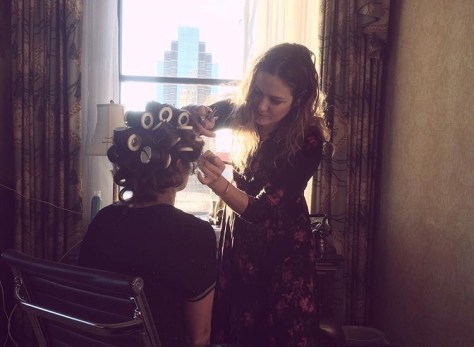
The world of politics can be gritty and rough. The task of telling the stories of politics can resemble that as well. Both the process and the look requires a consummate professional to do it properly; makeup artist Christina Spina is such a person. Taking over for fellow artist Jessica Panetta when she was called away early in the filming of Filth City, Spina stepped in and created a seamless transition. Working with both Jessica and director Andy King, Christina established a tone congruent with the tone of the productions. Whether maintaining the design continuity or creating on the spot looks for day players, Spina used her skill to assist the director’s vision, empower the actors, and be a vital part of what would result in the film winning the award for Best Comedy and Best Cast at the Canadian Film Fest 2017.

The 2017 action/comedy/crime film is based on true events inspired by Toronto’s Mayor Rob Ford. Filth City tells the story of a city’s crack smoking mayor competing for reelection whilst in the heat of a scandal. When local kids record Hogg smoking crack on video, numerous media outlets compete to get their hands on the footage. Hogg’s campaign staff and syndicate of dirty cops work to keep the video’s existence a secret while others want to use this to put an end to the mayor’s political career. Crime, corruption, and the largest garbage strike in York history are all components as the plot follows a wide range of characters through this neo-noir crime tale. The film itself was provocative similarly to the real life events it was based on. During the world premiere at the Canadian Film Festival in March 2017 (at the Scotia Bank Cinema) Filth City received a massive amount of attention from the media, stoked by intense negative public comments by the city’s late mayor’s brother. His comments created a media frenzy and the film received tons of media attention as a result, creating buzz and selling out tickets; the very definition of turning a negative into a positive.

The director and the designer (Panetta) had created a look that was inspired by modern television crime dramas, and classic film noir crime films. All of this was communicated to Christina when she took over. While the public often thinks of makeup in TV and film as making the actors more attractive, the goal was anything but this for Filth City. The filmmakers knew that the story was about the reality of politics and the people involved, not the pleasant way these individuals project themselves. To this end the goal was to present what they referred to as “hyper realism.” The look of the characters was to be very specific and not the somewhat bland “wallpaper” approach commonly seen in film. Christina describes, “For example, a lead cop character had a specific flip to the front of his hair. The Mayor had redness in his face and was intentionally sweaty and shiny on camera. The cop turned drug addict character had a dry red patch on his neck and darkness under his eyes. A young woman in one of the lead roles wore gold eye shadow. All of these choices are so simple but specific in forming the visual language of character. In comedy, depending on the circumstances of the script and the nature of the show, characters tend to have bigger makeup design elements to increase the comedy aspect. Since this was a crime drama comedy, the ham factor was turned down and simplified into hyper-realism.”

In the work of a makeup artist, what appears “normal” on screen is every bit as challenging to establish as that which seems striking. That might seem counterintuitive but anyone who has appeared on camera without the benefit of makeup can attest to the fact that it can greatly aid or detract from your appearance. In TV and film productions, extremes at both ends of the scale can be challenging. If the viewer finds themselves paying attention to the makeup, it’s done incorrectly. Christina concedes that it is very difficult to produce a makeup look that appears flawlessly natural, as if the person is wearing nothing at all. This type of makeup is erroneously confused with being easy and fast, which is not at all the case as it takes refining and attention to the most minute details and should never be seen. The makeup style Spina used for lead character Mayor Hogg (referred to as breakdown makeup) displayed redness all over his face to resemble broken capillaries from substance abuse. This makeup design was very specific and required both written and photo documentation to ensure perfect replication for each scene.

Not all of Christina’s work on Filth City required painstaking recreation for the lead characters. She often got the opportunity to improvise looks for a number of day players (actors on the set for a single day, often performing peripheral or background roles). It wasn’t uncommon on this production to have an actor with four different look changes in one day. Because the story was set in current times with an emphasis on politicians, law enforcement, and the media, Spina often took her inspiration from the generalization of these types on day to day television. The proper simple choices can have a dramatic effect on camera. It’s this type of wisdom which augments the talent that Christina is lauded for. Her quirky versions of real people benefited both the comedy and the crime sentiments of the storyline. She agrees stating, “I am actually able to execute last minute requests successfully with a combination of methods. It mostly comes with years of experience. I am always facing challenges and learning from experience, and am lucky to have those experiences to move forward so that I am more prepared each day. I have learned so much over the years, and am learning still. Each experience encourages me to revise and restock my kit. I have learned so many valuable things, one important tip is to be able to improvise requests on the spot by having a fully stocked kit with all the tools and items to execute any request. It could be stressful when requests are made and crew is forced to wait on me or my department, a general rule on set is that you do not want to be the cause of holding up shooting. But with thorough communication and a solid plan of execution everyone can get their respective jobs done and not feel stress in a way that would compromise the outcome.”

image2

THE MODERN PATH TO ALL THINGS ENTERTAINMENT

Screen Shot 2017-12-04 at 9.58.40 PM

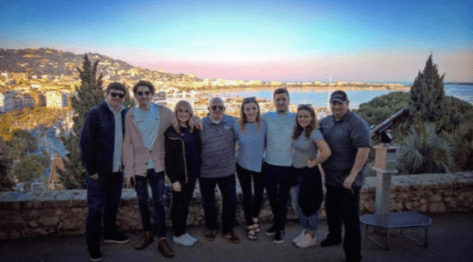
Information moves more quickly than ever before. Included in this nowadays is entertainment. While it used to be music downloads, we presently see the entire season of a TV program released in a day, and films come out more and more expeditiously whether new productions or classic time capsule fare. All of this results in a closer relationship between the artists who create these works and those who are able to deliver them to the public. Red Touch Media (RTM) is a company which licenses and distributes entertainment content. It has created a world class content management and distribution system. The conduit between RTM, the artist/companies who have content to distribute, and the public is event producer Ian Pickup. As the professional who plans and manifests the situations/venues between those who “have” and those who “want”, Ian is the M.C. if you will of the modern entertainment mogul parties. Helping RTM to present their product at global prestigious events like MIP TV and MIPCOM, Pickup facilitates the meetings and conversations that lead to the rest of us being able to watch our favorite productions (and listening or reading them, depending on the situation). Whether it’s events in Cannes, Liverpool, Sydney, or others, Ian Pickup has found himself in the enviable position of being on the cusp of modern entertainment technology, while not actually being a filmmaker himself. If there is such a thing as a professional entertainment wingman, this event producer is at the top of the heap.

Held in Cannes, MIP TV and MIPCOM are where a significant portion of the worlds TV and film content is sold and purchased. These massive events facilitate and determine what a great deal of the world watches. RTM provides software for many studios at these markets who use RTM software to manage all their digital assets as well as to sell this content. It is a critical part of the sales process. If you think of MIP and MIP TV as a marketplace of digital and entertainment content, you have the right idea.  RTM’s job is to help studios use their software to display, manage, distribute, and ultimately sell that TV & film content. At MIP TV (which focuses on television content) Pickup finds himself on site from the very first set up of RTM’s venue to the final stages. During MIPCOM (which focuses more on film), Ian is responsible for the overall Operations and works closely with Reed Midem (the event organizers). With an attendance of around 14,000, MIPCOM may be the somewhat larger event but current trends show that more and more of the viewing public skews to the comfortability and accessibility of TV programing (though film as well is becoming more available). Pickup states, “RTM is very aware of how things are evolving in the entertainment industry and it is passionate about being a leader. I appreciate the proactive nature of this. These two events are a requirement for anyone who is part of the industry. Company executives are often asked to be on panels to talk about the latest technology and trends.  Given our position as a prime distributor of digital content to underserved markets, we really do see where things are headed and what might shape the market.”

Screen Shot 2017-12-04 at 9.59.04 PM

As an event producer for RTM Ian takes part in a wide variety of tasks. One minute might find him renting a yacht and hosting a dinner, then next might be throwing one of those parties that he is famous for; not in the sense of lavishness but rather in terms of providing an atmosphere of fun. In fact, Ian takes great pride in the fact that the events he creates are not solely focused on the spectacle but rather in creating a relaxed form of respite from what may have been a chaotic whirlwind of meetings and discussion that are a necessity of the situation. It’s somewhat surprising to hear that the person in charge of gathering great groups of individuals is adamant that his role is one of facilitating personal connection. The show itself is more about relationships than logistics.  Coordinating with unions, installation teams, and multiple companies doing different things on the installation is a really big part of the job, to say nothing of the multiple languages often involved in these events. As Ian puts it, “Most of the deals are made outside the ‘formal’ parts of the show.  Parties, dinners, off line meetings, anywhere where you can get to know someone on a deeper level rather than simply as ‘Steve from Sony with a quota.’ Our reputation in the business is one of deep relationships with not just our clients but people in general, we know how to develop relationships and we are good at it. Yes, I’m a professional who produces and coordinates events but I honestly think of my role as someone who creates an environment where people can relax, have fun, and be themselves. I think this is what allows people to understand if they want to do business with someone…when they feel as if they’ve truly met them rather than simply that person as a representative. It takes a lot of work and preparation to create that environment though.”

Meeting like MIPCOM and MIP TV are examples of the continuing evolution of entertainment in the world. RTM’s pervasiveness is in a positively correlated path to this and Ian Pickup is keenly aware of this relationship’s benevolent effect on all involved parties. His incredible aptitude for organization makes him skillful in his career but what makes him the recipient of such immense accolades is his focus on the personal touch. He communicates, “Whether it’s the people I work with or the people I see at our events, it’s all about getting to know each other better. Working side by side with someone gives a window into their character that is not usually apparent from casual conversation. It’s important to work with everyone both internally and externally to make each event smooth and great!” This sentiment is echoed by Wayne Scholes (Chairman and Chief Executive Officer of Red Touch Media) who states, “Ian Pickup is an invaluable member of our management team and has always proven to be particularly capable of adapting to any manner of challenging situations during live events. The fact that people are always willing to ‘muck in’ when required is an absolutely crucial factor in the success of any business.”


SHREEKRISHNA DOESN’T MIND IF YOU CALL HIM “LONGSHOT”

(By Kelly James)

1.jpg

One of the most important lessons in dealing with life’s fortune and misfortune is that we can choose to laugh or cry, most often at the absurdity of it all. A malevolent storm destroys a neighborhood with the exception of one house, one of two twins receives fame and fortune while the other suffers constant defeat and humiliation, even a well-placed gambling debt can make or destroy a person. Life is fascinating when one considers the minute variations that lead to (seeming) happiness or tragedy. Writer Shreekrishna Padhye has always been fascinated by these situations. His self-declared love of dark comedy has led him to create a number of disturbing and yet laughable productions. Rather than showing us the real hero that each of us has the potential to become, Padhye finds amusement in showing us all how potentially sinister we can become…or possibly how wary we should be that those around us might become. His stories of the baser aspects of human nature exhibit proof that he has made peace with the self-centered facet of the members of society.

The pervasive sentiment in a large number of the stories which Shreekrishna writes is not judgmental, although the viewer might impose their own sense of right and wrong onto what they witness in them. It is Padhye’s contention that human motivation and action is a delicate precipice on which circumstance and emotions teeter. He concedes that while many of us wear the visage of ethics, we all are suspect until placed in situations that test our resolve. Padhye explains, “Humans are generally peaceful until they’re not and I’m fascinated by how little it can take to push someone over that line. It’s not easy to acknowledge the darkness that resides in every one of us and I feel that through humor you can ask these tough questions without making the audience defensive. I think people are inherently selfish. That isn’t a pessimistic statement, because we are all motivated by the same desire to survive. This also doesn’t mean people are bad. Being altruistic or bad is the result of our selfish motivations and the situation.

Shreekrishna’s “Longshot” is more a character study than simply a story. In the film, a mailman drops a package off at a residence as a man and wife are in their middle of their weekly ritual of watching the lottery drawing. During the delivery, the wife squints at the TV and erupts in excitement as she sees that they have won the lottery. They break open a special bottle of champagne and offer a drink to the mailman. The postman recognizes opportunity and before the couple can call the Lottery Board with their winning numbers, the mailman procures a knife from the kitchen and stabs them to death. With the couple dead and no obstacle between him and the fortune, the mailman picks up the ticket. It’s at this point that he notices the numbers all match…with the exception of one. He discovers the wife’s reading glasses…which were unused when she saw the winning numbers, he killed for nothing.

What is so interesting and such an important part of Padhye’s writing is that he lays some of the blame (thought not evenly) on both victim and perpetrator. In the film, the mailman tries to change what he feels is his miserable existence by stealing the lottery ticket and ends up killing the couple. The husband invites the mailman in to celebrate because sharing his happiness amplifies it. Both sides of this story are motivated by selfish reasons. The intersection that both sides of this equation share is greed. One may be more socially acceptable but the outcome for all involved parties is destruction. Shreekrishna reveals that he has always been suspicious of lotteries because they seem to amplify greed and selfishness, thereby creating a perfect setting for him to construct a tale of humanity’s shortcomings.

The plot itself is fairly simple, but this isn’t the source of what makes so many filmmakers and audience members fans of Padhye’s writing. The sense of knowing and relatability that he brings to his characters is palpable. They seem familiar in a way that is sometimes too close for comfort. The Mailman feels that life has not given him the proper opportunities and he must correct it through his own actions. The wife focuses her energy on this “get rich quick with luck” idea that she feels will ultimately allow her to have the things she desires. The husband feels that he serves at the behest of his wife and under the surface may resent this. He “goes along to get along.” It’s the source of the characters and their true motivations that make the story work. Padhye had discussions with each of the actors playing these three main roles about what their characters felt and truly thought versus what they exhibited on the surface. He relates, “One of the pitfalls a writer needs to avoid is molding the characters to fit a particular story. This will make them seem unrealistic, instead the better approach is to create conflicting characters in a tense situation and let them tell you how a something would play out.

In this case the comedy arises not necessarily from the quirky characters but from the situation that they find themselves in. It’s naturally funny to see people fall and make a fool of themselves. The mistakes the husband and wife make in this film are relatively benign (being overly friendly with their mailman) but because the circumstance is so unusual and there’s a lot at stake, this mistake ends up costing them their lives. The mailman’s character is funny and relatable because he is a rookie… at crime. We can laugh at his failure without him having to act in an exaggerated manner.”

Audiences were thrilled by the film but even more exuberant were the actors of “Longshot” who were given the chance to play such layered characters. Asdis Thorlaksdotti, the Icelandic actress who played the wife in the film describes, “Great writing like the kind Shreekrishna creates gives an actor the opportunity to think and discover. There are a number of ways to communicate this character and discussing them with him was an exercise in creativity…which doesn’t always happen for actors. He brilliantly explored the sinister impulses that lurk just beneath the surface of normal everyday life, and ended up creating something truly unique and refreshing. It was an immense pleasure to find the humor, the malevolent situations, and actions in this film.”

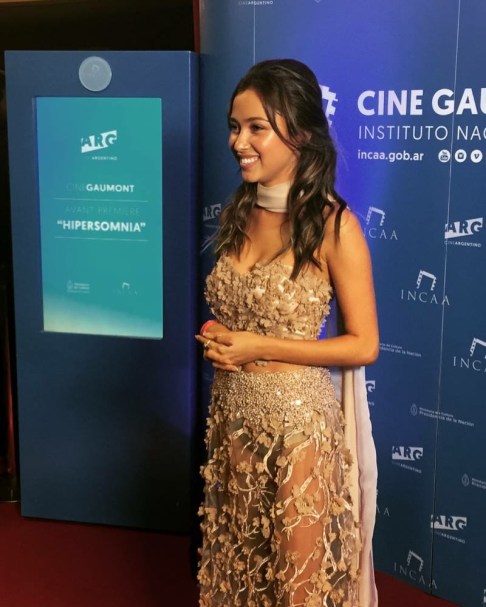
Argentinian Actress Yamila Saud Wows Audiences with the Film “Hypersomnia”

Yamila Saud
Argentinian actress Yamila Saud

As the only South American country to win not just one, but two Academy Awards, it’s no surprise that some of Latin America’s most talented film industry professionals hail from Argentina. Born in the bustling city of Cordoba, actress Yamila Saud is a shining symbol of Argentine contributions to cinema.

In her most recent role, Saud grabs audiences and pulls them down into a dark and unsettling place where human depravity has no limits. That film is “Hypersomnia”– a powerful 2017 thriller about human trafficking and the tragic toll it takes, both physically and psychologically, on the trapped women who are literally living in slavery.

Saud delivers a captivatingly meta performance as Milena, an actress who is playing a character named Laly in a theater production that takes place within the film’s storyline. Laly is a prisoner in a brothel, a victim of the human slave trade, and she lives in constant fear of the men who treat her worse than livestock. Milena, like Saud, is intensely serious about her craft. Determined to fully capture the essence of Laly, Milena begins falling deeper and deeper into character.

“[Milena’s] character [Laly] is a sex slave who falls in love with one of her captors. During rehearsals Milena begins to experience trances, in which she seems to live the life of her character,” Saud described. “What begins as an acting exercise ends up becoming a dark reality.”

Because of its layered narratives, the film’s impact is felt on several levels. Beyond the subjects of sex slavery and Stockholm syndrome, “Hypersomnia” also deftly tackles a social issue that has dominated the news of late — sexual harassment and assault by powerful men in the industry. As an actress, Saud’s character Milena endures advances and threats of retribution from the play’s director.

“[The story is also about] the abuse of power by men, where women are manipulated to do what is asked of them in exchange for getting work,” Saud said. “In this case, the director subjects [Milena] to a number of rare requests.”

It is no small task for an actress to believably capture the trauma of Laly, the worsening psychosis of Milena, and the effect it has on Milena to be exploited by powerful men. But Saud was able to expertly take on both characters, a testament to her versatility.

“My most challenging roles were Milena and Laly in ‘Hypersomnia,’” Saud recalled. “The character of Milena is a girl who has a dream, but to achieve it she has to submit to the director’s ‘requests.’ … It’s something that really happens every day, not only in the artistic fields but in all industries.”

Disturbing, enthralling and extremely relevant, “Hypersomnia” is a brilliant social critique presented as a haunting psychological thriller. “Hypersomnia” is available to stream for free for Netflix subscribers.

Saud’s upcoming film “Solo el Amor” is slated to begin shooting in 2018, and is about as different from “Hypersomnia” as a film can be. Lighthearted by comparison, “Solo el Amor” is the timeless story of two mismatched young people discovering an unlikely romance.

“I am very happy to be a part of this film,” Saud said. “I think every actress dreams of making a love movie, and I’m not the exception.”

At its core, “Solo el Amor” is a classic tale of the heart wanting what the heart wants. Saud plays Ana, a straight-laced and serious woman who begins falling in love with a young man named Bruno.

“Ana is a young lawyer who lives in a world that is as structured as it is unexciting. Bruno is a bohemian and an irresponsible singer-songwriter who dreams of reaching success with his rock band,” Saud explained. “Despite their differences they fall in love, leading them to understand who they are — and to go for what they really want at whatever cost.”

The heartwarming story of love conquering all, “Solo el Amor” will begin filming next year and will likely begin screening to audiences in late 2018 or the following year.

Yamila Saud’s versatility and empathy form the foundation for the career she has built. Whether playing an unstable stage actress, a victim of human trafficking, or a lawyer on a collision course with true love, Saud is capable of understanding her characters on a truly deep level. That intimate connection to her characters that Saud naturally possesses is a rare gift that no amount of training can teach.

Filmmaking is All About the Beauty of Collaboration for DP Olesia Saveleva

Cinematographer Olesia Saveleva
Director Joshua Amar and DP Olesia Saveleva on set of “Steady Eddie”

The filmmaking process is arguably one of the best examples of a group of people collaborating across multiple departments in order to bring a single vision to life. Turning the initially ‘invisible’ vision of the director into a visible story that viewers around the world can experience is a massive undertaking, and though the role of every department is integral to the finished work, the relationship between a director and their cinematographer is one of the most vital.

Esteemed cinematographer Olesia Saveleva says that, for her, “the collaboration part of filmmaking is one of the most interesting and attractive parts of filmmaking.” She adds, “You never know how the dialogue with the director and other principal team members will go. I love when there is trust and honesty. I love when everybody is sharing ideas and I love when a director hears all the suggestion and takes a lead in making decisions.”

As the proverbial ‘eyes of the director,’ the cinematographer has to first understand the director’s vision, and then use their creativity and technical skill to translate that vision into what we ultimately see on screen. One of the things that has made Olesia Saveleva such a successful and sought after cinematographer in the film world is her ability to understand what the directors she works with envision for their project.

Earlier this year Saveleva wrapped production on Joshua Amar’s (“Velvet Waterfalls,” “Billy the Kid”) dramatic film “Steady Eddie,” which was chosen as an Official Selection of the SCAD Savannah Film Festival where it premiered in November.

Starring Robert Daniel Sloan (“How I Met Your Mother,” “Bad Teacher,” “Sinister 2”), Gabriel Sousa (“Mad Men,” “Growing Up Immigrants”) and Shawn Lockie (“Criminal Minds”) “Steady Eddie” tells the story of Jesse (Robert Daniel Sloan), a young boy who, fearing his autistic older brother Ed (Gabriel Sousa) will die in battle, takes Ed to their father’s cabin in the wilderness in hopes of getting him to avoid the Vietnam War draft.

“In this project we wanted to stay in the perspective of the young brother, so we are much closer to him,” explains Saveleva.

In order to bring the audience closer to Jesse, Saveleva made sure that each scene in the film included both a shot from his point of view and one of him and his reactions, which helps viewers to identify with what he is feeling. From the lighting, which helped to transport the audience to the 1960s when the film takes place, to the decision to initially keep a portion of the frame out of focus in some shots, which directs the viewer’s attention to a specific area, Saveleva’s extraordinary work as the cinematographer of the film was key in making “Steady Eddie” a highly cinematic and visually gripping story.

Out of all of her productions to date Saveleva marks “Steady Eddie” as one of her top favorites. She explains, “It was the smoothest and the most pleasant set. And we had a very creative, responsible and collaborative team. The production of this film was the best in terms of organization, and I had the best director and producer. Everybody was on top of their jobs so we got everything we needed.”

As a cinematographer Saveleva is also known for her work on films such as Jorge S. Pallas’ “In Girum Imus Nocte,” which earned the Award of Recognition from the 2016 IndieFEST Film Awards, the comedy film “The Worst People at the Party,” the crime film “Brothers,” “X & Y” and the recently released drama “Immigrant Brothers.”

About working with Saveleva, Olga Solodukhina, the director of the film  “X & Y,” says, “It is a very fruitful collaboration. She bring a lot of ideas to the table. Olesia pays a lot of attention to the details. As a cinematographer she is very good with composition and designing camera movements. But also she collaborates closely with the production designer and costume designer.”

While she has undoubtedly made a powerful mark through her work as the cinematographer on a diverse range of narrative films, she’s also lent her unparalleled skill to countless music videos. Most recently she worked with artists Julia Proskuryakova, Elena Esenina and Maxim Galkin as the cinematographer on their music video for the hit Russian song “I’m a Mother,” which was released in October and has garnered extensive attention from media outlets across Russia. The music video, which already has over 377,000 views on YouTube, follows two fed up housewives who get tired of doing everything for their family and getting no appreciation from their husbands so they decide to break free and have some fun.

From the way she zeros in on the intricately arranged food and shows only the housewife’s hands, which gives the sense that she is more of a servant than a person, to the following framing, which makes it feel as though she is trapped within four walls, Saveleva’s composition in the opening scenes perfectly supports the story. Through her camera movements, such as slowing down over a stack of plates as they shatter on the ground, signaling that the housewife is ready to break free, to the way she speeds up the shots and keeps the camera traveling once the women have reclaimed their freedom, Saveleva used her seasoned skill to set the pace of the video.

Thanks to her extensive experience in the field, Saveleva’s technical skill is so on point that she has the capacity to get creative with her director when it comes time to shoot instead of being fixated on sticking to one plan.

She explains, “When I plan a shoot thoroughly with a director we kind of get on the same wavelength. So that when we come on set we are both flexible to change shots and be creative because we are still on the same wavelength.”

At the end of the day filmmaking is all about collaboration; and a strong collaborative relationship between a director and cinematographer is one that often continues over the course of each of their career, with the two joining forces again and again to make magic on screen. And for Olesia Saveleva, that is precisely the kind of relationship she looks for in the people she works with.

“I want to find one or several directors who I collaborate well with and make many projects together. The collaboration part excites me the most because I believe in synergy. The better I know the director, the faster the decision making is happening. We trust each other in making creative decisions and we can challenge each other with ambitious plans. I believe that in those collaboration processes the strongest movies are being made.”

“2Survive” Star Ingrid Haubert is Instagram’s Nutella Girl

IMG_6633

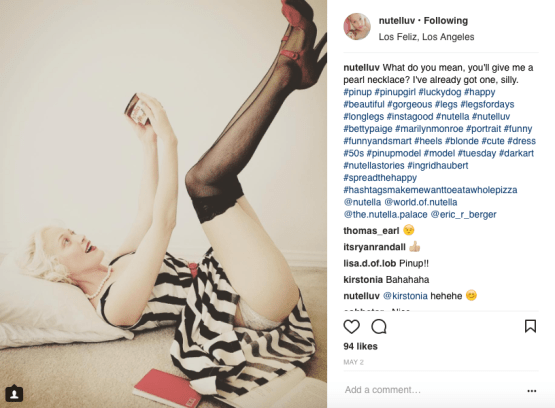
You’re scrolling through Instagram when you come across a photo of a striking blonde. She’s standing in her Buddy Holly glasses and a baby blue bowtie in front of an open cabinet filled to capacity with…um, 50 jars of Nutella? Captivated and instantly in love, you navigate to her profile, @Nutelluv, and it’s everything you’ve ever hoped for.

You quickly realize that your dream girl is off the rails beautiful, unabashedly hilarious, captivating, and seemingly in a serious relationship with this delicious hazelnut spread. She has thousands of followers and an arsenal of couple-like photos where she sits lovingly beside Nutella jars on beaches, in beds, in hospitals, and on dates downtown. But who is this passionately quirky, seemingly shameless Nutella girl?

The bombshell and brains behind @Nutelluv is none other than the unforgettable Australian-born actress Ingrid Haubert, and we had the pleasure of sitting down with her to talk art, success, movies, television, and, of course, Nutella.

Ingrid Haubert shot by Vanie Poyey
Actress Ingrid Haubert shot by Vanie Poyey

An alumni of both the Australian Academy of Performing Arts and the Australian Institute of Music, Haubert is the perfect balance of charisma, natural talent, and formal education. With a skillset ranging from horror to comedy to drama and science fiction, Haubert engages audiences globally with her authentic deliveries, impeccable timing, and her harnessed, raw emotion. From her recent appearances on MTV to films streaming on AmazonPrime, and everything in between, Haubert is undoubtedly an unstoppable force in the industry.

In “2Survive,” one of the many films she’s starred in to date, Haubert shares the screen with Golden Globe Award nominee Erik Estrada (“Finding Faith,” “CHiPs” ), Jonathan Camp ( “Agents of S.H.I.E.L.D.,” “S.W.A.T.”) and Michael Laurie (“Nuclear,” “CollegeHumor Originals”) as she embodies the lead role of Amber, a tall drink of water in the middle of a scorching, death-riddled desert. A film about a reality television show that goes terribly wrong, “2Survive” follows six contestants as they face unforeseen obstacles and pull from deep within themselves as they attempt to get home alive.

The way Haubert transforms Amber from a seemingly basic beauty (with little going on in the intelligence department) and helps her grow into a woman of strength by revealing that her intelligence exists in her ability to think outside of the box, and the invaluable importance of her kindness and compassion, makes her a major highlight of the film. Haubert’s dedication to breathing life into the character with authenticity whilst adding layers to her personality were tantamount to making Amber the kind of character audiences could easily get behind.

Haubert says she was determined “not to let [Amber] just be an airhead. I wanted her to have substance, vulnerability, something to make the audience care about her and root for her.”  

2surviveposter

It is Haubert’s poignant instincts as an actor that make the film as compelling and relevant as it is. She excels at highlighting strong, capable women while encouraging much needed dialogue about female empowerment and heroism. Haubert finds ways to strengthen the characters she plays in every role she steps into, making her a critical staple in Hollywood today.

Not limited to just film, Haubert appears frequently in episodic television as well, engaging fans nationally with her spark and brilliance. Most recently, Haubert played a key role in MTV’s “Awkward.,” the story of a 15-year-old-nobody who is pushed into the limelight when the school mistakes a legitimate accident for a suicide attempt.Last year we got a chance to see Haubert on MTV when she guest starred on the network’s hit series “Awkward.,” which stars award-winning actress Ashley Rickards (“One Tree Hill,” “Behaving Badly”), Beau Mirchoff (“I Am Number 4,” “Scary Movie 4”) and Jillian Rose Reed (“Foursome,” “Weeds”). The Teen Choice and People’s Choice Award winning series “Awkward.” follows Rickards’ character Jenna Hamilton, an awkward teen whose high school popularity skyrockets after rumors spread that her accidental fall was really a suicide attempt.

Haubert comes into the series in season 5 episode 14 titled ‘WTF Happened Last Year?,’ which follows Jenna into college and centers largely on her crumbling relationship with her long-distance boyfriend Matty (Beau Mirchoff). Haubert plays a key role as a pompous retail stylist at a high-end clothing store who embarasses series’ lead Tamara (Jillian Rose Reed) who can’t afford the clothes she wants.

“My character was very snooty and nasty, which is the opposite of me. So it was kinda fun to let that out,” says Haubert.

However, the tables quickly turn on Haubert when Sadie (Molly Tarlov) shows up out of nowhere, slaps her credit card on the table and says to Haubert with palpable attitude, “Ring ‘em up shop bitch. Chop chop Tilda Skankton, you work retail so work it.” Haubert is immediately cut down from her pedestal with her mortified facial expressions making for great comedy. The scene is also key in the developing friendship between Sadie and Tamara, former high school rivals, as the encounter gives Sadie an opportunity to show Tamara a little kindness.

Haubert has a deep love for her craft, which gives her work a certain genuinity and passion impossible to duplicate. Haubert explains, “I love creating a new person, how they walk, talk, dress, and think, but I I’d have to say that the biggest thing for me always comes back to the story.”

So, speaking of story. What is the deal with this exceptionally ingenious, uniquely awesome Instagram page?

Screen Shot 2017-11-14 at 1.51.33 pm

Haubert is quick to answer. “@nutelluv started out as a laugh. I was joking with my friends about how I didn’t need a boyfriend because I had Nutella, and making fun of all the ridiculously sappy Instagram posts and captions that are out there. But then I started to think about it, and I thought…oh, it’s actually true. Nutella is always there when I need it, I’m always left satisfied, and plus, who doesn’t love a sweet Italian?”

“Everybody does love a sweet Italian,” I joke, but then Haubert comes back and hits me with some poetic truth. “I realised this could be a really interesting way to tell a story everyday within the confines of a photograph and short caption,” Haubert explains. “Many actors think that the work starts when you get the job, or when you get an audition. But I believe in doing something everyday towards an ultimate goal, even if it is small. I saw this Instagram idea as a potential storytelling platform where I could create my own character and stories. Plus, at the very least, it keeps my brain in the habit of refining an idea to its simplest form, which is a skill that helps in all my creative pursuits.”

Whimsical, brave, talented, motivated and committed, actress Ingrid Haubert is a shining example of everything a performer should be. With a presence undeniable, Haubert practices relentless determination and engages audiences across the globe, taking the bull by the horns, the jobs by the minute, and the Nutella by the pallet.

Screen Shot 2017-11-14 at 1.53.46 pm


Canadian star Dewshane Williams recalls ‘Dogpound’ and why he went into acting

From the time Dewshane Williams was a child, he always had one passion: film. He spent his earliest years watching movies and television shows as much as possible. As he grew, he started to see himself as an actor. After his first performance, when he was just a schoolboy, he was hooked. He began to immerse himself in musical theatre, writing, choreographing, and acting in productions. He never envisioned himself doing anything else, and today, he is one of the best actors to recently come from Canada.

Williams has spent most of his life in Canada, and has taken the country’s film industry by storm. He has starred in hit television shows, such as The Expanse and Defiance, as well as critically-acclaimed films like The Story of Luke and Home Again.

Williams’ first true taste of international success came in 2010 from his work on the film Dogpound. Georges Bermann, the Executive Producer of the film, credits Dogpound of launching a number of careers, including Williams’. His convincing portrayal of Frank the inmate was spot on and accurate, and Berrmann was incredibly impressed with the, at the time, not well-known actor.

“I noticed that Dewshane is the type of actor that focuses entirely on creating the best work. Watching him channel the teenage angst associated with juvenile distress made our director’s job easy. He’s a joy to work with. Dewshane’s generosity and focus are admirable qualities. I think his performance in our film speaks for itself; hard work goes a long way,” said Bermann.

 Dogpound tells the story of 17-year-old Butch, who is sent to the Enola Vale Youth Correctional Center in Montana for blinding an abusive correctional officer. He brings with him a deep-seated intolerance for injustices and a penchant for meting out retributions on his own. He becomes friends with two other inmates at the correctional facility, where they encounter gang violence, death, and harassment from staff and other inmates.

“This film is important because it’s a cautionary tale. It’s social commentary. If you look closely enough, it’s an opportunity to show anyone who’s going down the wrong path where they’ll end up. Particularly young people who might not have any idea what that kind of world is like,” said Williams.

In Dogpound, Williams played Frank. He was a juvenile inmate who worked as an enforcer. Frank starts a riot that involves everyone in the jail. His character has an important arc, as Frank appears to be an immoral character, but ultimately has a heart. Due to an injustice perpetrated against another inmate, he takes it upon himself to act, which was surprisingly selfless for the character. Williams is now known for taking on roles that will impact audiences, and at the time, this is exactly what he did.

Dogpound premiered in June 2010 in Paris, France, and later was an Official Selection at the Tribeca Film Festival. The director, Kim Chapiron, won the coveted “Best New Narrative Director” at the Tribeca Film Festival. The film impacted audiences and impressed critics all over the world, and skyrocketed Williams’ name in the Canadian film industry.

“The thought that anyone would pay me to do what I loved was a dream come true, it really was,” Williams recalled.

Dogpound was Williams’ first feature film. At the time, the entire concept of being on set and shooting a movie seemed unreal to the young actor. He auditioned for the role just dreaming he would get the part, but his raw talent eclipsed any lack of experience he may have had at the time. He greatly impressed the casting director, and won the role.

“It’s a standard thing to hear, but actors almost always have to audition for a part. Before getting to revel in whom you might be working with, you’ve got to compete. You’ve got to show everyone why you’d be able to bring something to the character. I studied for hours, trained with my acting coach, and left school early that day. I can remember being in Character the whole day, maybe that helped,” said Williams.

Once earning the role, a lot of research was required for Williams to truly understand his character. He read articles, watched films, and a number of documentaries. He credits a docuseries titled Scared Straight as being great source material for him to understand the juvenile delinquent correctional system.

“The film was a co-production between Canada, USA, and France. Most of our film crew had flown in from Paris, so I had to be a great listener on that set. English wasn’t our director’s first language, so I picked up a bit of French while shooting. I loved our crew; they really wanted to create a good film – I could tell, and that was infectious,” said Williams.

Now that Williams has become such a successful actor, it may be easy to forget that feeling of what it was like to be young and struggling, just dreaming of becoming what he now is. However, Williams remains humble, and Dogpound still holds a special place in his heart.

“You never forget your first film, and this one was mine. To this day, complete strangers come up to me and say ‘that film was so realistic, I would never want to end up in there.’ That’s the point, you don’t want to end up in Juvie,” Williams concluded.


International Entertainment, and the Talents that Leave us Buzzing….