Category Archives: international Talent

Jackson Williams talks dancing with Whitney Houston, Magic Mike Live, and living his dream

jackson-2
Jackson Williams is from Peterborough, England.

Coming from Peterborough, England, Jackson Williams never imagined that one day he would dance alongside the world’s biggest stars. Growing up, he never thought he would be a dancer at all. He was always an athlete, playing rugby, soccer, swimming, and boxing, but it wasn’t until he was a teenager, when he saw his sister dance, that he realized his passion. Since that moment, his passion turned into a talent, and a talent turned into a career.

Williams is fresh off touring the globe with pop-sensation Ellie Goulding and her Delirium World Tour. He previously toured with Kylie Minogue, Australia’s most successful artist of all time, and Take That, the chart-topping boy band. He has appeared on Simon Cowell’s show X Factor, and toured with the show, and was part of the Olympic Opening Ceremonies in London in 2012.

“This is the only job I’ve ever had. It is my twelfth year professionally. I love the excitement of being on stage. I’m a down to earth kind of guy, but there is something about having a personality on stage and you can be anyone you want and there is no judgement. I love performing,” said Williams.

Despite touring with The Alesha Show and Girls Aloud previously, it was in 2009 when Williams truly shot into a different category of dancers, and was recognized as one of the best that the United Kingdom had to offer. This was when he went on tour with none other than Whitney Houston.

“It said a lot, having the statement that such a high caliber artist wanted to work with you. They could have chosen anyone in the country but they chose me. They thought I was a friendly person who worked hard. These people who had been around for years wanted me around them. They trusted me. And in terms of a dancer, it put my name on the block and I have stayed there. I was the main boy in the show with one other guy. We were Whitney’s boys,” said Williams.

The promo tour went all over Europe, and sadly ended up becoming Whitney Houston’s last tour, as she tragically passed in three years later. Williams’ knows he was one of the last dancers to ever perform with the legend, and he knows it is an honor.

“She was one of the greatest and I feel proud,” he said. “She was a mega, mega, mega, mega, mega star. You are nervous, you are scared, and you are super excited, every kind of emotion. That first time that I was on stage, I got goosebumps when she hit a note. It was like I was cold but I was sweating. That had never happened to me before, and has never happened to me since. Humming, she still sounded better than anyone else in the world. She is the most incredible singer I have ever been on stage with. It is history. It is iconic.”

Jerry Reeve, the celebrated choreographer that brought Williams on the tour, says he did so because he is one of the most highly desired dancers in the industry in the U.K., with extensive experience and unmatched talent.

“Jackson stands out on stage as a dancer of tremendous experience and flawless technique. His years of success have perfected his craft on stage and make every concert at which he dances an inevitable success. Jackson dances very vibrantly and elegantly and conveys various moods with his performances, from comedy to romance. He gives every production a unique personality with his very original footwork, while he showcases his prowess in numerous styles, ranging from ballet, to hip-hop, to jazz, keeping audiences captivated and excited. Jackson serves as a valuable asset to every production for which he dances and most definitely contributes to their successes in retaining high viewership and high-ticket sales. His sheer eclecticism is always highly rewarding, and it is always a unique pleasure to choreograph such a distinguished talent,” said Reeve.

Reeve continues to seek out Williams for tours and shows he is putting together to this day, knowing that he possesses extraordinary abilities required to captivate audiences when he dances. For Williams, performing on Whitney Houston’s tour was the first time he really started to just enjoy what he was doing, without thinking too much about it.

“You become one on stage. It becomes second nature. When you are singing in a car but you are still driving, that is what it is like. You are doing it but you are singing along to it, without thinking about the song, that is what it was like performing on stage. I was dancing but not thinking about each move. I just got to enjoy what I was doing and take it all in,” said Williams.

And he hasn’t stopped since. It seems unbelievable that there was once a time when he hid that he was dancing from his father, going to dance classes after soccer practice. Millions of people have seen him dance, and he will keep doing it until his body won’t let him. With no plans on slowing down, the dancer will soon be taking part in Channing Tatum’s Magic Mike Live in Las Vegas.

“If I was on my deathbed now, I lived a good life. I am quite chuffed,” he concluded.

EYE DROPS – AVNER MAYER SHOWS A KINDER WORLD

When art is malevolent it is divisive, seeking to focus society on what “others” are doing to make your life worse. When it is mediocre, it serves little purpose at all. But, when art is at its best, it gathers all peoples in and draws their inherent goodness out of them. The creators of art are no different than every other segment of society in the fact that they must daily choose to use their abilities to draw us closer to each other or tear us apart. The WATER Project seeks to cultivate the former. Also known as the Israeli-Palestinian Cinematic Project, this endeavor saw ten Israeli and Palestinian directors embark on a journey to create films, fiction or documentary inspired by water. Under the belief that water symbolizes the source of possibilities at the primal core of all things, these filmmakers took part in joint meetings in Tel-Aviv presenting their ideas to one another. Produced with full creative freedom with mixed crews of Palestinians and Israelis, these films reflected the personal and courageous perspectives of both sides view of reality. The film Eye Drops was part of the WATER project which was screened at more than 20 Festivals around the world, receiving significant press attention. The project premiere was at the Prestigious Venice international film festival as the opening film of the “Critic week” program. The WATER project received an Amnesty award for its effort to bring Palestinian and Israelis closer. Eye Drops is a reaffirming vision of the ability of all people to see beyond their differences, particularly in a subject matter as provocative as this one. The film received global attention at festivals including the: Tertio Millennio Film Festival (Italy), Stockholm International Film Festival, Busan International Film Festival (South Korea), New Middle East Cinema film festival in Philadelphia, and many others. The look that Cinematographer (Israel born) Avner Mayer created depicts both the despair and hope of the people and this land. Overcoming the almost instinctual reaction of this land’s natives and the world’s view of it, Meyer’s imagery and design enables the audience to see the humanity underlying it all.

It’s easy to make assumptions about someone without getting to truly know them as an individual. That can be applied to the viewing audience of a news program, a film, or even a neighbor. In Eye Drops, Mohammad Bakri lives with his two sons (Saleh and Ziad) in a small flat in Tel Aviv. Their neighbor Sarah (played by Rona Zilberman) is a Holocaust survivor who asks them to assist her with her eye-drop medication. A unique and mysterious connection grows among them. The movie is about compassion and the ability to get along in spite of differences in religion and race. The filmmakers approach to the composition was to create a feeling of empathy. In order to convey this, the movie is almost always shot at the eye level of the characters. The hope for this was to allow viewers to see through the character’s eyes and souls. Many of the shots include the entire cast in order to create a feeling of unity. Exterior shots were designed to be cold and intimidating, almost as a mirror to the political climate in Israel at that point during the second Intifada (https://en.wikipedia.org/wiki/Second_Intifada). In contrast, the houses are portrayed as places of great warmth in hopes of showing the love and compassion hiding inside this political climate. All that is need is to go into someone’s home and talk with them in order to find real, warm human beings.

eye-drops-with-directoractor-mohammad-bakri

It was Mayer’s task to create these emotional vignettes for Eye Drops. Mohammad Bakri (director/writer/actor) needed a highly skilled professional behind the camera who not only understood how to help him capture the story but to also understood the people and emotions that motivated them. Designing everything from the lighting to the framing of the shot necessitated a professional and emotional eye. Avner communicates, “As a DP I feel my work is always to translate the director’s vision into images. A lot of the preproduction process for me concentrates in creating the visual bible of the movie. When you work with new filmmakers, there are two main problems. First of all, their visual lexicon is not always clear; meaning you need to find a common language to talk about images. That’s always hard but it seems to be smoother with more experienced filmmakers. The second issue regards logistics and the amount of time needed to achieve some effects. It’s much easier to talk about shots than actually to perform them on set. It’s important that the director will realize what is possible to do and what’s not inside the budget and time constraints, prioritizing the important story beats. People don’t often realize that this is a lot of what my job entails. Mohammed is well known and respected in the Israel film community so it was a pleasure to work with him and it was much easier than working with a ‘new’ director…but there are always challenges. Mohammed wanted to shoot in the actual real locations. It was a blessing and a curse as a DP. The locations had a lot of charm and were very photogenic but the big minus was regarding space. This was mostly in regards to the house, which was a little too small. We were limited in our options with that space. In the end we found creative solutions and solved that issue.”

Eye Drops received voluminous praise and accolades from the community and critics. One of the most vocal fans of Mayer’s work on the film came from its creator. The fact that Mohammad was also the lead actor in the Eye Drops made Avner much more aware of the acting. Normally this cinematographer focuses on the visual side of the imagery; did the characters land in the right place? Is the lighting precise? Etc. Bakri praises Avner’s work and awareness declaring, “I honestly couldn’t have done this movie without Avner’s Support. It was my first narrative film, and coming into the movie there were a lot of elements I didn’t expect. Avner was my right hand, helping me in planning the scene blocking and shot selection. We were on a tight schedule and Avner got us there in time. I really think Avner is a real talent! He’s very committed to his work, he communicates well, and his visual perception and imagery is stunning! I’m never surprised to hear that he’s doing well in the industry, he deserves it!”

eye-drops-head-shot-diffrent-project

The climax of the film is when Sarah’s eyes are finally well enough to make out the faces of her helpers. She sees that they are in fact the individuals who she would have avoided if she had seen with her vision rather than with her heart. Eye Drops makes a profound statement that will hopefully predict the future.


Dancer Anton Engel talks the BBC Music Awards, Magic Mike Live, and doing what he loves

anton-bbc
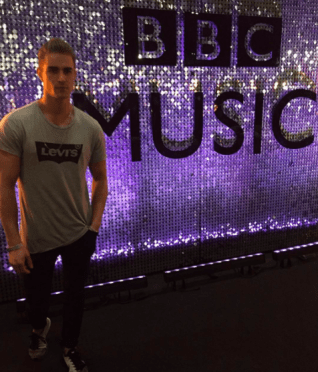
Anton Engel at the BBC Music Awards.

Last month, dancer Anton Engel performed for millions dancing at the BBC Music Awards. The experience was not necessarily new for the young dancer, who has been featured on many broadcasts in his established career, but it was thrilling none-the-less.

The show, which premiered December 16th, 2016, featured Britain’s best musical talent. Engel knew what being picked as a dancer for the show meant, and would not let the pressure of performing on live television interfere with his job.

“It is always a great feeling to have such a big audience in the auditorium and at the same time watching you on the television live. The crowd was absolutely amazing,” said Engel. “We made sure we knew our material inside out so that we could would only focus on delivering a great performance and presence on stage.”

Engel, who is also a model, was given the opportunity with the show to really focus on his appearance on stage.  He was playing the role as both a dancer and model, with the responsibility of accompanying the presenters on stage with the right timing and elegance. They needed a model who would be able to take direction from a director very quickly regarding counts, placement, timing and movement. Coming from a dancing background, this was not an issue for him.

“It can be very stressful, but at the same time it is what I love. It was all about having a good quality of movement with an elegant and jazzy walk,” said Engel.

The ceremony, being one of the largest music shows in the world, had an average audience of 3.9 million people watching live on BBC One. Engel worked closely with the world-renowned team at Black Skull Creative productions, including Ross Nicholson, Dan Shipton, and choreographer Jay Revell.

“Anton will always present a great final product while keeping a professional approach to it during the process. It is always a pleasure to work with Anton, since I know that my work is in good hands. He has always delivered a great performance with a personal touch that only Anton can create. His performance quality is very original and pleasant to watch while his energetic and positive personality stays very enjoyable to work with,” said Revell.

Originally from the countryside in Switzerland, in a small town called Ballen, Engel has come a long way. He has performed for the British royal family, danced with worldwide top-charting group Fifth Harmony, toured with the sensational glamor group The Dreamboys, and been featured on Alan Carr’s New Year Specstacular. No matter how big or small his job is, he is always doing what he is truly passionate about.

“Dancing is something that I have always enjoyed. I feel like I can express myself in a way that words would not be enough. It’s that moment where you and the music become one and everything around you stops. The dance world is such a nice atmosphere, when you meet a dancer you have a lot you can relate to since you are sharing the same passion and have the honor to experience the feelings that dancing can give you. Being lucky enough to have an audience to share my passion with is the best feeling ever,” said Engel.

Engel grew up speaking three languages: German with his mother, Swedish with his father and French at school and with friends. At 13, he and his friends formed a competitive breakdancing group. He moved to Sweden by himself at the age of 16 to study dancing. At 19, he moved to London to live his dream of being a professional dancer. He is now 23 years old and have a critical place in the dance and fashion industries all over the United Kingdom, and will soon be making his way to Vegas to dance in Channing Tatum’s Magic Mike Live.

“The feeling of knowing that I will be moving to Las Vegas working for Magic Mike is unreal, I still can’t believe it. I am constantly thinking about it and it puts a smile on my face. Knowing that I will be performing for thousands of people in the iconic Hard Rock Café in Vegas is a dream coming true,” he said. “It is a huge change of lifestyle for me and I’m looking forward to it. I feel like It is time for a new chapter in my life and I have never felt so ready.”

Engel will be working alongside the director, Channing Tatum, as well as choreographer and co-director Alison Faulk, who choreographed the Magic Mike films with Tatum. He will also work with choreographer Luke Broadlick, associate choreographer and director Teresa Espinosa, and all the other professional dancers in the show. But for Engel, it is just another opportunity to do what he loves.

“When I dance I feel like everything around me stops. All my thoughts and worries are put to the side and I can enjoy life and the moment. The feeling of you being overtaken by dance, whether it is you just improvising, performing on live TV or for a big audience, the feelings and the way it makes your body feel there is nothing else like it,” he concluded.
You can buy tickets to Magic Mike Live here.

ZHENG KANG’S LION DANCE IS AN INSTANT CLASSIC OF ANIMATION

Zheng Kang is redefining the role of animator. Yes, he is technically given the title director/animator but he does (pun intended) the lion’s share of the work on Lion Dance. For this production, he helped create the script, directed a live action cast (more about this later), directed the animation (coordinated with different teams on different continents), animated, and essentially helped to coordinate every aspect of this film. Zheng has been a driving force behind so many animated productions (Comedy Central’s TripTank, Diors Samurai, Baby and Granny, etc.) that he is constantly striving to create original approaches to ward off any unconscious attempt to fall into a pattern. In Lion Dance, Kang has gone to new heights of diligence and preparation in order to create a unique look and storyline to reflect accurately on his native culture and the characters of the film. It’s this intense work ethic and attention to even the smallest detail that led to a host of accolades for Lion Dance, not the least of which was the decision to use Lion Dance as a teaching aid by the faculty at USC (University of Southern California) School of Cinematic Arts for their graduate animation classes. Winning awards and screenings at prestigious festivals is high praise (both of which Lion Dance has garnered) but being used as a template to the premier graduate students in the field is a rare accomplishment indeed. It doesn’t come easy; Zheng can attest to this. He worked hard to make Lion Dance an epitome of its ilk. The achievements and praise of the film confirm that all of this tenacity paid off in spades for this young and creative professional.  Lion Dance continues to focus attention on Zheng Kang’s contributions to the animation film world.

with-live-action-crew

In creating Lion Dance, Kang wanted to present a love story that was original. Just as importantly, he wanted to present its main characters in a new way. He states, “As a Chinese man, I’m well aware that the male Chinese characters are often presented as comic relief. I was committed to portraying my leading man as exactly that, a leading man. I wanted to show that he could be brave, kind, searching for love; I wanted him to represent all those qualities that Asian men are seen void of.” The Hero, Jian, is the “head” of the lion in the traditional ‘Lion Dance’ during the parade celebrating Chinese New Year in his town. He and Ayumi (the female lead) lock eyes and fall in love, but Jian is in mid- parade and must continue his march through the town. It is typical when the Lion Dance is performed in real-life that two teams will take turns performing inside the Lion costume because it is so heavy and hot! When Jian hears a hand tapping on his Lion costume, he assumes it is the relief team and he races off to find Ayumi. He arrives at her balcony and is sad to see she is not there. Heartbroken, he heads back to take his place in the parade. The film then switches to Ayumi’s perspective of the events. After their eyes met, Ayumi decides that she can’t let Jian simply march away. She races after him, catching up with his Lion at the same time as the relief teams are taking their shift. She taps Jian’s Lion costume, and he mistakes her for the relief team. Throwing the Lion head onto Ayumi without looking, he races off to find her, unaware that she was standing right next to him! Now, as the relief team begin to march, poor Ayumi finds herself pushed along inside the parade. The star-crossed lovers seem doomed at this point to be diverted from each other. In the final act of the film, a sad Jian becomes very confused when he spots that his Lion is no longer in the parade, and is instead playing with local children. He walks over and lifts the Lion’s head off to find Ayumi underneath. Both are surprised, and relieved, having finally found each other. In the final scene, the camera drifts off to a romantic firework display as the young heroes fall in love. Zheng created these young characters to provide a role model he felt had been too often overlooked in film. He comments, “I wanted to ensure that I was as diverse as possible and created a starring role for an Asian man that allowed him to be an action hero (rather than a comedy relief) and a starring role for an Asian woman that allowed her to have confidence, strength of character, and personality (rather than being a Caucasian guy’s one-dimensional love interest). I believe that no matter what art form you work in, you have the ability to inspire and educate society with a positive message.

In his role as director/animator for Lion Dance, Kang utilized a very unique approach. Because he wanted the characters to avoid any status-quo type movements found in animation, Zheng cast and directed a group of live actors in order to get completely original movements and expressions. Employing a method known as rotoscoping, the animators would work on top of the live action footage and follow the actual live sequences. This led the animators to following the movements of the actors rather than deferring to their stock ideas about what movements should look like in animation. The result is immediately noticeable as different from the vast majority of animation productions. Zheng concedes that this method was every bit as successful as he had imagined. The only difficult aspect was that he had so many great actors auditioning with interesting interpretations of the characters.

work-on-animation

To meet the scheduling and budgetary constraints but yet still bring his vision to completion, Kang hatched another ingenious approach. Coordinating multiple crews on different continents, he created a twenty-four hour per day work schedule. Zheng’s co-director Tim Pattinson was astonished as he relates, “On Lion Dance, Zheng’s directing skills were exceptional. Using a series of sketches, drawovers, and video calling, he was able to effectively and assuredly communicate very complex animation direction to teams across 5 continents, resulting in the successful completion of our animated scenes. In Tokyo, Zheng created a complex and incredibly successful method of visually communicating the direction of our original sound and score design to Japanese speaking team members, via a series of graphs showing our story’s emotional peaks and troughs, high-energy moments, etc. Lion Dance has been very well-received globally and I have no doubt that it could not have enjoyed any of this success without Zheng’s clear, confident, and incredibly commercially-successful direction. Zheng’s skills on Lion Dance as the Animation Lead were invaluable, in terms of achieving our finished film.” The recognition and achievements Lion Dance has received are literally too numerous to mention in one article but a few include: Award of Recognition (Hollywood International Moving Pictures Film Festival 2016), Animation Of The Month (The Monthly Film Festival) October 2016, Best Animation (Los Angeles Independent Film Festival Awards) November 2016, Best Animated Short Film (Chandler International Film Festival) October 2017, Best Animation (Asian On Film), Best Short Animation (Canadian Diversity Film Festival), Best Short Animation (Canadian Diversity Film Festival), and official screenings around the world in LA, London, Guam, Toronto, and many others.

final-mix-at-usc

When asked what fueled the herculean amount of work he did for Lion Dance, Zheng reveals, “I really do feel that any artist can have a positive effect. I knew that this was a great love story that could also show people from my part of the world to be the same as anywhere else. There will always be cultural differences but in our hearts we all want the same things. Animation serves to tell that story just as well as a feature film, a great song, or a moving painting. Oh, and one other thing fueled all of this. Typically, for a whole year, the work for me was 15-hour days/7 days- per-week. Approaching the last month of production, the light at the end of the tunnel was visible. Tim [Pattinson] and I have a friend named Konie and his fantastic Korean cooking kept us going. we’d have been living on hot dogs and potato chips for that last month if not for him. That’s a hero to me as well!”


CINEMATOGRAPHER YASH KHANNA MAKES “OUIJA SUMMONING” FRIGHTENINGLY GOOD

When filmmakers create a film on a smaller budget that does huge numbers, Hollywood sits up quickly. That’s exactly what happened when Writer/Director Marwan Mokbel’s Ouija Summoning (produced by Egywood Pictures) became a hit horror film. Ouija Summoning was distributed by some of the biggest platforms in the U.S. and worldwide, including Amazon Prime, Walmart, Best Buy, Red Box, iTunes, Barnes and Noble, and many more. Horror films are among the most commercially successful genres in the industry. When a film like this with tighter budgetary constraints is so well received, it’s proof that the story and the look of the film are exemplary and in perfect synergy. Horror productions rely heavily on the believability of the “look” as fans of the genre continually demand more realistic visuals for the unbelievable situations. Mokbel needed a consummate professional as his DP for Ouija Summoning and he found it in Yash Khanna. One of the main reasons for Khanna’s enthusiasm about being involved was Marwan’s encouragement that his DP be experimental. Creative people love the opportunity to do just that…be very creative. The scenario worked out well for Yash, Mokbel, and the film they have created. Marwan states, “I hired Yash because of his extensive history of bringing a unique visual style and stamp to each production he has worked on in the past. Yash was nothing short of impressive with his work on our film. His understanding of lighting, composition, and color, reveal his talent while the thoroughness of his preproduction preparedness gives proof of his staunch work ethic and commitment. The film one hundred percent succeeded thanks to the fantastic contributions of Yash.”

Khanna relents that being prepared is the most necessary part of his early contributions to any film. His eclectic resume (including films such as: Funny Man, How To Get Girls, Slipaway, Exit, and many others) displays his ability to be a valued Cinematographer on a production for any genre but, his work on Ouija Summoning allowed him to stretch his creative muscles in the appropriate manner for this horror production. Yash notes, “The reason for taking on a project like this, other than working with someone great like Marwan, is that I was afforded the chance to do different techniques. I learned some new things about the horror genre working on this film. I learned how it can be made gripping. I was able to try some lighting ideas which I had wanted to try for a long time. Usually we don’t get to play much with underexposure and contrast but I was able to explore many of these ideas while shooting Ouija Summoning. Marwan works at a very quick pace so shooting fast on multiple setups was a good experience for me as well.”

pic3

From the very earliest stages of his preproduction planning, Khanna set down with the department heads to design the color palette for wardrobe and art design in order to achieve a gothic look for the film. Moving on to lighting and color, Yash wanted to execute soft lighting but with a lot of contrast. The reason behind this choice was to make the atmosphere appear grey and gloomy. Khanna and his team designed their lighting by first cutting and diffusing the daylight and then they began lighting the world of Ouija Summoning. They came up with the idea of using stained glass. This would allow them to introduce harsh colors in the frame. They then designed a rig that would keep the color temperature in sync with the sources, accommodating the many scenes with flashlights and candles. A prime example of the result is in the suspenseful first scene of Ouija Summoning. Yash explains, “The Opening scene was one of the toughest ones to film. We were filming in the basement of an old house. The scene was a long one shot with practical effects. We needed a very dim look as it was the first time we reveal paranormal elements in the film. Marwan had written the scene in a very gripping tone and we wanted to do justice to it. We rigged small units where the camera wouldn’t see them and rigged just the right amount of practical [lighting] where we would feel silhouettes moving.

It was really tight quarters and I had to operate the camera through the stairs walking down and following though narrow corridors. It was a long take. A lot of fans comment that this is a ‘jump out of your seat moment for them…which makes me very happy.”

In a film of the horror genre, it’s a modern day requirement to use VFX, fans expect it and almost demand it. In Ouija Summoning, a beautiful woman is haunted by an evil spirit after an innocent game of Ouija board goes horribly wrong. Sara (the woman) had a perfect life until an evil spirit was summoned from a Ouija board. This spirit had once killed its own son and cannot put the past behind it. Sara is tormented by this spirit, who will stop at nothing until it destroys Sara and everyone else in her life. Making good use of his prior experience working on projects which involve VFX, Khanna planned his lighting, color, and camera choices with the VFX team to make this work to the film’s advantage. Sometimes however, VFX is not enough. Only the authenticity that comes from witnessing real events works in a storyline. In the climactic ending scenes of Ouija Summoning, Sara flees from the spirit and the viewers witness a harrowing chase. For Yash’s role as DP, it was one of the most dangerous and important scenes. He confirms, “The car chase scene, towards the later end of the film, is where the character is driving away from the paranormal spirit. This scene required the car to appear fast and out of control along curvy desert trails. Our stunt man had to skid the car along the turns and do a 180 spin and flip the car in one single motion; after which the car explodes. This was filmed during a one-night shoot. Time constraints were strict, the risk of danger was high, and we could obviously not do take after take of exploding cars. I had multiple camera units running to maximize the footage. We lit a huge area of the desert because we were shooting from far away. The shot came out perfect and was one of the highlights of the movie, a real testament to the planning we did and the amazing execution of our crew!”

Because of the stir Ouija Summoning created, Yash is now fielding a host of offers. The best advertisement is doing great work. The public took great interest in Ouija Summoning and the look which Khanna created, now Hollywood is taking great interest in him. Smiling he declares, “The success of Ouija Summoning has been a great boost for my career. This was my first horror film. I have been offered many horror scripts as a result of it. I’m reading them and waiting for something unique to interest me. I am excited about what’s next.”

best-pic


EDDIE TANG BRINGS LIKABILITY TO A VERY BAD MAN IN THREE SIXTY

360-1

Kidnapping is a dangerous situation. It is the subject of the film Three Sixty. While the action displayed on film is tense and dark, Eddie Tang gives a glimpse of levity that has endeared him to the audience and created a stand out role. The brilliance of Three Sixty is not in the originality of its plot (though it does possess a couple of major twists) but rather in the execution and performance of the actors. Every character in Three Sixty is tense and frightening in their own way (even the kidnapping victim “Cheryl”, played very convincingly by Ella Bowman) with the sole exception of Tang. In a small ensemble, the audience is afforded the chance to bond with each character to a greater extent. In Three Sixty, Zac is oddly the character which is most easily relatable. Eddie Tang is an Australian actor with a diverse career in film (Three Sixty, Happy Feet 2, Superman Returns), TV (East West 101), and commercial work (major campaigns by Volkswagen, KFC, and others); his performance as Zac is a perfect example of the talent and on screen charisma that have made him a sought after actor in so many productions. Three Sixty is benefiting from some of that attention as it is set to become a feature film in Hollywood with actors such as Ray Liotta attached to it. Tang is interested in following suit with the film and pursuing the opportunities that Hollywood’s film industry offers.

Three Sixty is an Australian thriller that depicts the story of a kidnapping gone wrong, in multiple ways. It’s the tale of two hapless youths, Zac and Roc, eager to make a quick buck by accepting a job from a nightclub owner to kidnap the girlfriend of a famous footballer. What could possibly go wrong? Nothing? Not if your Roc and greedy for more money. It’s a classic sting, almost a cliché. Get the merchandise, hide and stash it, and raise the price; except that the merchandise isn’t playing ball. No one is playing the game as it was supposed to be played. Nothing in Zac and Roc’s scheme goes according to plan. Just when things seem to get sorted, everything does another three sixty. From the moment when Zac and Roc rip the tape off of Cheryl’s mouth, the duo realizes that they may have kidnapped the wrong girl as evidenced by her American accent rather than the expected Australian one. The chemistry between these three characters (and thus cast members) is undeniable on screen. It is equally as attention commanding as any episode of the Sopranos. This positive interplay was palpable between Tang and Eamon Farren [Roc] during their mutual audition. Faith Martin, one of Australia’s leading casting directors, asked Eddie to audition for Zac based on her experience and intuition about the role. Tang comments, “Eamon and I had an instant connection. Off-set we were best buddies just like our characters were on set. The banter between us was great. There were jokes between us and the sound guys, which led to jumping on the airwaves on the crew radio and causing mischief. It was a fun set to be on. I felt like we were up to George Clooney and Brad Pitt-esque type shenanigans. Sometimes you have to design that kind of vibe on set but it happened completely naturally on Three Sixty. The producer came up to us at dinner on the first night of filming. He said there was magic dust in the air about this film. He was excited by the onscreen chemistry between Eamon and I as actors and how both our characters bounced off each other.”

360-2

While Roc is the darker and menacing of the two, Zac is the one who is more meticulous, cautious, and considerate of both the Cheryl and the felonious plan. Zac analyzes the situation and makes sure nothing goes wrong. The dark heart of Three Sixty is the kidnapping and its ambassador is Roc who, if left to his own designs, would add rape to the plan. Zac brings an aura of level headedness and sense of gentile to the circumstance. The comedy of Three Sixty is in the inexperience and the stupidity of these two when it comes to committing the crime. They often stumble their way through, being fooled and bewildered by Cheryl. Another comedy element is the banter and friendship between Roc and Zac. The back and forth commentary between the two characters in the diner is a classic example of this comical relationship. Three Sixty’s small cast (only five cast members in this film) could have resulted in the audience becoming weary of seeing the same actors on screen but, thanks to the electricity between Tang and Farren the opposite is true.

Eddie Tang’s successful portrayal of Zac in this film can be described with one word, subtle. The unobvious nice guy, Zac is presented in a low key manner which draws the viewer in to an emotional place where they feel sorry that he is even involved in the crime. It’s not an easy place for a character to access with an audience…while committing a violent felony. Eddie notes, “I always prepare and research for a role and I did a lot of work running lines with my PA for Three Sixty. My co-lead, Eamon Farren, is such a fine actor that I knew I’d have to be even more prepared to go toe to toe with him. The roles only work in this film if we both are magnetic in our individual ways. Roc is the character that pushes the guy who organized the job for more money. I felt that Zac’s role needed to be subdued in order to be more the natural stylistic kind of character; the character who is the subtle comic relief within the film. Zac is not an over the top clown, but rather the straight deadpan comic relief. It’s very easy to overplay a comic opportunity but if you underplay it, then it becomes more relatable to the audience and you are not begging them to like your character. It’s better if they just do it because they can relate to him. It gives you an opportunity to build rapport. It’s not an easy task to get the audience to like a character who is a kidnapper; a man who in reality is the villain. Nobody likes a kidnapper in real life, but Zac somehow wins over the audience by playing a subdued role within the film.” Eddie was disciplined and proactive in his approach in creating the backstory for his character. He states, “His father was never around. Because of his abandonment issues, he got into trouble in High School and was expelled. Zac started mixing with the wrong crowd. Roc was his best friend. Zac’s a DJ and dabbled in some Marijuana growing up. He’s overweight, not got much money, never had a girlfriend. He grew up in the South Western Suburbs of Sydney.” Eddie’s preparation paid off in his performance with the film’s Official Selection at the following Film Festivals: L.A. Shortfest, Rhode Island International film festival, Flickerfest (Academy accredited), Hollywood Film festival, Sydney Cockatoo Island, Cleveland International Film Festival, Carmel Art, and Bay Area film festival. Three Sixty’s director Dan Mitchell declares, “I do not hesitate when I say that Eddie’s leading role for Three Sixty was irreplaceable. The film could not have achieved the tone that the script suggested without him. I cannot imagine completing the film without him. Eddie’s achievements in his leading role for Three Sixty were a huge factor in the film’s incalculable critical acclaim. A good actor is an invaluable member of any production and Eddie is doubtlessly a great actor. His status as one of the most accomplished members among his peers can be seen in the variety of achievements he has earned throughout his career. Eddie is one of the most sought after actors in his field.” It’s a bit ironic, by not seeking attention for his role as Zac in Three Sixty, Eddie Tang has once again become one of the most lauded and recognized actors in a successful production.

360-3


Lanie McAuley is the apprehensive yet unapologetic “Bitchy Girl”

Canadian actress Lanie McAuley has a diverse set of roles on her resume. A pro snowboarder in Aeris, a driven dancer in Center Stage: On Pointe, Hollywood starlet in The Unauthorized Melrose Place Story, and many others. None of them were cathartic in the same manner as her role as Heather in Lost After Dark. Far from her normal films, Lost After Dark is a straight up horror/slasher film which pays homage to the 80’s films that gave birth to the genre. McAuley’s portrayal as Heather (an obvious nod by the filmmakers to the film Heathers) displays the actress in all of her spiteful and venomous bitchiness. The role gave Lanie an opportunity to play a character possessing none of the endearing qualities found in many of her other performances, yet audiences still found a way to make her one of their favorites (likely THE favorite) cast member of the production. With a deluge of one liners that portray Heather to be every bit of the archetype bitchy girl in a slasher film, McAuley’s sense of comedic timing gives a release to the tension found in the frightening tale. It’s the perfect combination of release, terror, and vindictiveness that makes this role (and the actress) so memorable in Lost After Dark. Writer/director Ian Kessner recognized the actress’s ability to clearly communicate Heather’s energy from the moment he saw the audition tape. He recalls, “She was my first and only choice for the role of ‘Heather.’ None of the other actors in contention for the part even came close to displaying Lanie’s level of talent. She’s natural, intuitive, and blessed with amazing comic timing. Lanie can make you laugh just as easily as she can make you cry. It’s crazy! On screen, she crafted a masterful performance that audiences fell in love with. The depth Lanie brought to the role made her character incredibly likable and relatable, and contributed immeasurably to the film’s ultimate success. When the movie was first released, I attended screenings at prestigious film festivals around the world. Lanie was always singled out by the audience as the one they loved most. That’s a testament to her tremendous talent and skill. And it’s the reason I’m writing a role for her in my next film as we speak!”

lanie-mcauley-lost-after-dark-2

So how does one become “the bitchy girl” when you are known for being considerate, amenable, and a consummate professional?  When questioned, McAuley tells of her love for movies like Mean Girls, Heathers, and The Shining. This cocktail makes considerable sense when viewing her performance in Lost After Dark. While she was confident in her ability to deliver a great performance as Heather, she remarks, “Ian [Kessner] hired me off an audition tape. He phoned me and said, ‘When I watched your tape, I knew you were my Heather.’ It was really flattering… although it’s a bit of a double-edged sword because if you’re the obvious choice to play the bitchy girl…is that a compliment?” Playing the role very close to her audition (an occurrence that almost never happens in film), McAuley expanded her understanding of Heather by voluminous viewings of the genre, from the 80’s through to modern productions. She knew that the character would have to be grounded in the archetype but play to the sensibilities of modern fans. Her attempt was to honor the tradition while breaking fresh ground in her presentation.

lanie-mcauley-lost-after-dark-1

The dichotomy in Heather is that her dark and self-centered demeanor fuel the comedy. The two are intertwined and as complimentary as sweet and salty. The approach was carefully crafted to McAuley’s strengths in comedic timing. She comments, “I was thrilled that Ian was happy with my comedic timing! I’ve spent a lot of time in acting classes working on comedy in particular. Growing up, I loved being the funny girl, so I’m sure a lot of it comes from that. I’ve definitely had experience with the bias that attractive women can’t be funny; I’ve been in a lot of auditions and even social settings where people say, “Wow, you’re actually really funny.” as if it’s incredibly surprising. I booked another comedic role this year [Bad Date Chronicles] where I had the director and producers in stitches in the audition room. It’s satisfying to make people laugh. I hope that in my career I can help destroy the stigma that women can’t be funny. There are a lot of women out there blazing the trail who are stunning and hilarious: Kristen Wiig, Amy Schumer, and Emma Stone are some of my favourites.” Lanie continues, “I think a big part of why I was singled out as the audience ‘favourite’ was because I was the comic relief. In a slasher film, there’s so much stressful content…the audience needs a break. I’m lucky my character was written to be the funny one. Plus, everyone loves a good mean girl. There’s a guilty pleasure that comes with watching someone say nasty things. So if the audience was digging it, I’m flattered; it means I did my job right. Despite her less than redeeming qualities, I tried to make Heather likeable where I could. There is one scene where she says, ‘I don’t wanna be eaten by a cannonball!’ The comedy is in her idiocy, but there is almost a level of sympathy you have for this poor girl being so dumb (which is aided by Johnnie’s constant criticism of her). I think audiences had a soft spot for her in that way.”

Some of Lanie’s performance might have been aided by the environment and situation during filming. Production was nocturnal and usually in freezing cold temperatures. Add the requirement of Lanie’s character to be crying in hysterics, screaming, spouting vitriol, and running at top speed in high heels…it creates a weird head space for any actor. Channelling these aspects into a great performance is what McAuley does best. Lost After Dark premiered in the U.S. at Screamfest Horror Film Festival in LA, and had its European festival premiere at the IFI Horrorthon in Dublin, Ireland. The film also screened at Nocturna Film Festival in Spain and Fantasporto Film Fest in Portugal and was nominated for “Slasher of the Year” at the 2015 Moviepilot Horror Awards and “Trashiest Trailer” by the Golden Trailer Awards. Lanie was highly appreciative of the warm embrace the fans gave Lost After Dark noting, “I definitely think horror fans are their own breed! For one thing, they’re extremely dedicated. They know what they like and tend to have a really thorough understanding of the horror genre and sub genres. It’s cool to see. They’re really passionate. A lot of film & TV fans just love the good-looking actors and media hype; horror fans really care about story and the art of the genre.” In a genre which earnestly states about Heather and her ilk “The meaner, the better”, Lanie McAuley is one mean Heather!

lanie-headshot-8


HOW CINEMATOGRAPHER SIMU FENG TRANSPORTED AUDIENCES INTO THE HUMAN PSYCHE FOR “BREATHE.”

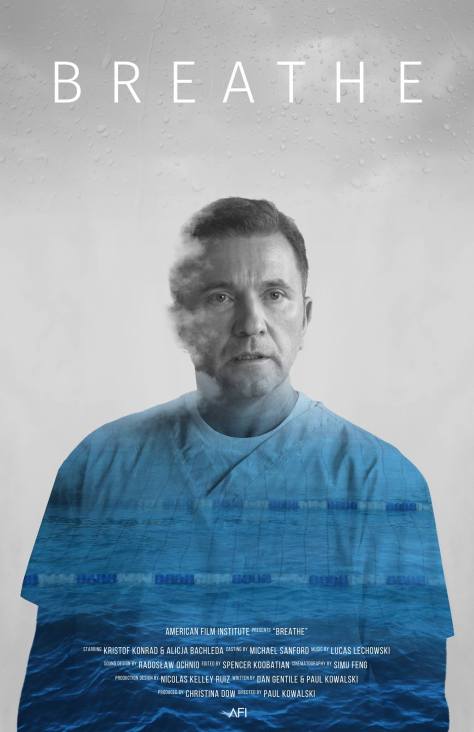
Cinematographer Simu Feng and Director Paul Kowalski have worked together on a number of films. Although they both possess many impressive attributes, perhaps the strongest reason for their successful working relationship is that they are both classic over-planners. Both of these men subscribe to the idea that you should check every production aspect a number of times and have a back-up to your back-up. The security with which this empowers the entire production team allows the artists they work with to create outstanding films that are critically and publicly praised. As proof, consider that their latest collaboration, Breathe, which received more than thirty recognitions and awards from all across the globe including; Cannes Short Film Corner (France), Visioni Corte Film Festival (Italy) (Finalist – Best International Short Film), Southampton International Film Festival (UK) (Official Selection) (Nominated: Best Short Film, Short Screenplay, Leading Actor in a Short, Cinematography, & Score), Beverly Hills Film Festival (Best Short – Audience Choice Award), Aesthetica Short Film Festival (UK) (BAFTA Qualifying) (Nominated – Best Drama), and numerous others. The exemplary work that this duo creates together gives credence to the idea that great art is great art, regardless of your background or history. These two filmmakers come from drastically different backgrounds. Born in London to nomadic Poles, Paul Kowalski grew up in the Middle East Africa and across America. The only child of a civil servant and a nurse, Feng grew up in Shenyang, China and then moved to Beijing to study Geophysics in college. In an abrupt turn, he was accepted to the Beijing Film Academy graduate school and never looked back. While both of these filmmakers pursue the passion of their art, Kowalski notes that it is Simu’s calm nature and demeanor under the stress of production and filming schedules that aids in the director’s ability to remain calm while working together. The cinematographer is Kowalski’s barometer and governor at the same time; a great bonus to the heart of any successful working relationship.

breathe-1

Psychological thrillers have become Paul Kowalski’s calling card. He is adept at making films of this genre and he knows it. Simu Feng has worked with this director multiple times due to his creative and discerning eye for imagery in these films. Concerning Feng’s proficiency, Kowalski declares, ““Simu was integral in bringing my wildest imaginations for Breathe to the screen. Whether it was devising shots in our pool sequence where we had to closely follow our protagonist swimming, or in an operating room watching him perform neurosurgery, Simu was always able to offer practical, creative, and unique solutions to bring the story to life visually. A truly great professional brings more than this to the table though. Working with Simu was a total pleasure. His calm and reassuring presence on set complemented my own directorial intensity and was often a rock amid the chaos of production. The camaraderie he promoted among his camera team made on-set execution a breeze and helped us get over production hurdles when they arose, with great ease.”

breathe-screenshot-1

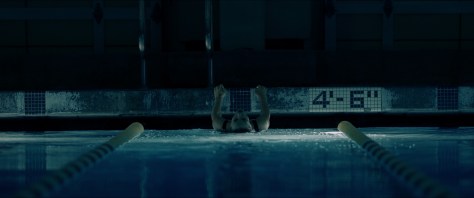
Breathe depicts a neurosurgeon’s psychological battle with reality in coming to terms with his wife’s death. The tragedy has propelled the main character into a place in which discerning reality from the images that haunt him is a constant struggle. As he descends into a surreal state, one gripping scene shows him descending into a pool; he struggles for his own life in the same way he struggles to accept the reality of his situation. Feng comments, “For the night pool scenes, we wanted the space to represent his sub conscious. We wanted the pool to be dark, scary, & moody, regardless of what a public pool should look like. I lit the scene mainly using the reflection of the water, creating a constant flowing light all around the area, adding to his unstable status of mind. I cared a lot about the eye light in the scene. I wanted to enable the audience to see into the character and feel his emotions. For this scene, we really wanted to be with the character…to jump into the pool with him and swim with him while feeling his pain through all the action. To do this, I did some research. I measured the size of the pool and came up with a plan that we could afford. We set up a 21’ ft. crane on the track along one side of the pool and swung the camera into the pool area just above water. For some shots, I had my camera operator walk into the water, holding the crane head and following the actor swimming. The shots turned out really well.” Kowalski expounds, “We needed highly-charged, stylized images to help represent our protagonist neurosurgeon’s growing derailed state of mind. The ALEXA was the solution. In our night pool photography, this camera was able to vividly capture flickers of reflected light, rendering them in crystal clear, ethereal blues. In our operating room scenes, the camera allowed us to keep skin tones vibrant while maintaining the low-lit, psychological (over naturalistic) feel we were after. The quality and flexibility of the ALEXA greatly contributed to the mood and style of the film.”

breathe-screenshot-4

Simu enjoyed creating and designing ways to “trick” the audience when it came to guessing what was real and what was imagined in Breathe. He relates, “Since our plot is not one with a lot of twist and turns, a great deal of the plot point is in the subtext. We really need to figure out a way to keep the audience with the character all the time, immersing them into the world of this film. We took a lot of time designing the shots, making sure we covered all the beats and delivering the emotion for each moment. For me, the great enjoyment in being a cinematographer is that you get to create a story and touch the audience with your images. I enjoy turning the words in the script into something tangible and delivering the emotion of the story through imagery. I get the most sense of accomplishment when a scene is cut together and works the way it should; plus, it’s so much fun working with lighting and playing with all the cameras. It is such a creative job. It forces you to keep coming up with new ideas.  I love to do a job that isn’t routine and repetition.”

As a fan of the US film industry, Simu has aspirations to make it his professional home. He admits to watching both films from his native China as well as US productions in his formative and adult years but makes note of his admiration for the infrastructure and lineage of American film. He states, “I think the US film industry is a fully developed industry in every aspect. There are rules to follow and paths to pursue; a design to getting things done. For example, you make a short, go to festivals, get noticed, and develop an independent feature. Then you go to festivals and get noticed by big studios. Whereas in places with developing film industries, filmmakers need to find their own ways to develop their career. The US has created a proven system that is admired across the whole world. I’m excited about being a part of that established model.”

get-the-life-2

breathe-poster


ROMY TEPERSON CHANNELS HER INNER NEW YORKER

Actress Romy Teperson is ecstatic about her role and involvement in Next Door to the Velinsky’s. The Australian actress has been in her fare share of TV and film productions. Whether it’s her comedic role as Sally Enfield on the comedy hit Swift and Shift Couriers (currently airing in the US on Netflix), as the pivotal female character in Unforgivable Sin, or any of her other lauded roles, Teperson brings an energy that has elevated her to being one of the most highly sought after actresses in her homeland. Not only is she proud of her performance as Doctor Jay in Next Door to the Velinsky’s but she is also proud of the film’s selection as an Official Screening at the Cannes Film Festival. She states, “It’s extremely exciting. To have your film be a part of the history of that festival and reach that level of accolade is definetely a humbling accomplishment. Lots of films get sent to a lot of different festivals throughout the world but Cannes is on a whole other level.” The recognition of Next Door to the Velinsky’s was not limited to this alone as it also received the Award of Excellence from the IndieFEST Film Awards and premiered at the New York International Film Festival. While Teperson is widely known in Australia, the film’s international visibility gave her talent a higher vantage point for fans and critics alike.

dr_jay_2

Some of the tag lines for Next Door to the Velinsky’s include: “How far would you run to escape your past? What if the only way to survive is denial? Some secrets should never be told.” These all hint at the hidden storyline of the film. It is a psychological thriller about a young man [James Marshall] who meets up with his childhood friend [Ruby Taylor], a girl who is crazy and deluded after having lost her memory in a car accident. James has to help Ruby remember who she is as well as forcing her to face the traumatic dark secrets of her past that she has worked so long to forget. As Dr. Jay in the film, Romy is the medical advisor to a legal panel trying to build a case against the lead character Ruby Taylor. Dr. Jay is a prominent surgeon who is all business. She is quick to shut down the run around attempted to be laid upon her, by the smooth talking marketing firm quick to try use her as an expert witness/testimonial for their legal case. While the role of Dr. Jay required Romy to play a character whose profession and age are different from hers, she found it easy to relate to her. Teperson notes, “I feel like in most cases at least you are able to find one or more qualities of the character that you can grab onto and identify with personally. This at least gives you some insight and an understanding as to how they operate and see things; how they work. If you at least have the similarities, you can focus on those to identify with the character. Achieving these means that the differences don’t become as much of a hindrance. I was fortunate with Dr. Jay; her no nonsense love of telling it how it is and going after the bigger picture are all qualities I can definitely relate to. There were for sure more similarities than differences.”

All of those award acceptance speeches at the Oscars, Golden Globes, etc. are truthful when the winners state that a recognized film and performance is the result of a group effort. Even more than the presentations at these awards shows, the greatest benefit to doing exemplary work is that you are remembered and asked to work again on other films. It was a combination of peers and fans that brought Romy to play Dr. Jay in this production. Writer and Producer of the Next Door to the Velinsky’s, Chloe Traicos, had been a fan of Romy’s work and requested that she appear in the film as Dr. Jay. Traicos wrote the part for Teperson. Since the making of this film, Chloe Traicos (Writer/Lead actor), Jon Cohen (Director/Producer), Chris McHardy (Cinematographer), and Romy have worked on five projects together, giving credence to the mutually beneficial working environment of this ensemble. Having worked with several of the other actors on a variety of productions created a familiar and comfortable environment for Romy to step into the character of Dr. Jay. She remarks, “The rapport (between cast members and the director) was there so we were able to perform within the safe confines of this. It almost felt like being at drama camp. Getting to act with a group of people you admire and also happen to be your friends, that’s a very satisfying professional experience.” Speaking of Teperson’s work, Jon Cohen declares, “As a director that has been on a plethora of film and television sets, I have seen a lot of talented performers but Romy stands out as an extremely talented actress who brought her own unique style and vision to each role. Her commitment and dedication to her roles in my films were some of the best character studies I’ve seen in all my years working in the entertainment business.”

Romy’s travel experience is something she put to use for her portrayal of Dr. Jay in Next Door to the Velinsky’s. Teperson’s love of the US emerged in the tone of her character as she states, “I like to say I’m an Australian by nationality, but a New Yorker by build. I identify with the tough, brash, no nonsense humor that NYC is known for. So for me, even though the Dr. Jay isn’t a ‘New Yorker’, she still possesses all those same qualities; ones which felt very comfortable for me to play. I have filmed mostly in Australia. However, if I was going to shoot more anywhere else, it would be within the US. Specifically, more studio work in Los Angeles and more location shooting in New York. I would love the experience of shooting a series in front of a live studio audience. For location shooting, couldn’t think of anywhere more exhilarating and exciting to shoot live than around the streets of New York.”


Next_Door_To_The_Velinksys_LA_Theatre_Release.jpg

Actress Tatiana Romao: Driven to Tell Touching Stories

Tatiana Romao
Tatiana Romao shot by Adrian Aguinaga

While many actors are driven to perform by the fame that accompanies the spotlight, Brazilian actress Tatiana Romao is driven by the unceasing need to tell stories that touch audiences on an emotional level.

Over the past two decades Romao has become known for her work in both South America and the United States through her roles in an impressive list of high profile films such as Bruno Costa’s Encantacao aka Enchanted, Benjamin Holk Henriksen’s romantic drama The Elephant Clan, multi-award winning director Giulio Poidomani’s 2012 drama Disruption, Nyon Visions du Réel and Santa Monica Film Festival Award winner Andrea La Mendola’s 2015 film Lips, Nir Paniry’s (Tina Bobina, A Scarecrow Story) film Extraction, which stars Sasha Roiz from the two-time Primetime Emmy nominated series Grimm and was nominated for the Audience Award at the prestigious South by Southwest Film Festival, and many more.

About what drives her to perform, Romao says, “I want the stories I am a part of to be an example to someone else of a reality different than what they know or have, a new perspective on the struggle they might be going through, to inspire, to give hope. To know that I am able to change someone’s life fulfills me in a way that nothing else does. That’s how I want to change people’s lives and that’s the story I want to live behind.”

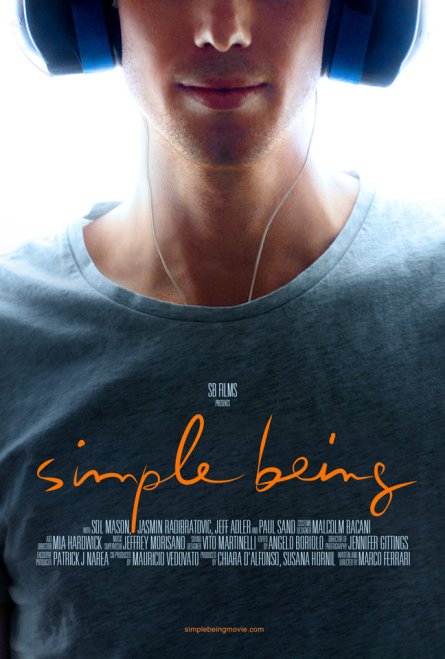
One of her most touching portrayals to date came in 2014 when she took on the lead role of Diana in the dramatic feature film Simple Being written and Directed Marco Ferrari (Moonscape, Don’t Let Me Go). In the film Romao stars alongside Sol Mason (This Tunnel South, Gilmore Girls: A Year In The Life), Jasmin Radibratovic (Broken Hill, Misfire), Jeff Adler (Reel Evil, Criminal Minds, Modern Family) and Tony Award winner Paul Sand (Time of Your Life, Joan of Arcadia).

simple being Tatiana Romao
“Simple Being” Film Poster

Revolving around Clive (Mason), a college student who’s spent most of his life feeling like an outcast, Simple Being offers audiences a powerful look into one young man’s experimental journey into experiencing what it means to really have an impediment.

“It has a beautiful lesson and it teaches the world how to respect and appreciate others,” Romao says about the film.

With few friends in his life aside from Diana (Romao), Xécile (Radibratovic) and Aaron (Adler) who live with him, Clive’s overwhelming feeling of disconnection to the world leads him to embark on a three week journey of sensory abstinence– devoting one week each to experience what it’s like to be deaf, blind and mute.  

As Clive’s closest friend in life, Romao gives a knockout performance as Diana, the one person who supports him on the journey to finding himself and his place in the world.

“Diana gives him the idea to do the experiment for 3 weeks… She is the one who is always by his side and guiding him through it all. He needed to learn about life and she wanted him to find his path, to find himself,” explains Romao. “He is judged and somewhat mocked by his family and classmates and Diana is the only one supporting and pushing him to go all the way and finally discover himself in this journey, she is always by his side with a word of incentive.”

Journeying through each impediment, Clive discovers more and more about himself as each week passes. Over the course of the film we watch him go from being uncomfortably disconnected from everything and everyone to pushing the boundaries of his normal ‘comfortable’ life, and ultimately coming to a point where he is able to experience a new reality filled with real connection.

Produced by Hornil Brothers Productions (Missed Call, The Face of an Angel, Trouble Child, 6 Rose Circle), Simple Being did exceptionally well on the film festival circuit taking home the Best Feature Film Award at Italy’s Artelesia Film Festival, the Castell Award from the Barcelona Film Festival, the Jury Special Mention Award at the Detour On The Road Film Festival, as well as the Excellence in Cinematography Award at the Amsterdam Film Festival and an award at the Human District International Film Festival of Human Rights. Simple Being was also chosen as an Official Selection of the ARS Independent Festival, Brasilia International Film Festival, HollyShorts Film Festival, No Glass Film Festival, Canberra International Film Festival and more.

“This is one of those scripts that you just fall in love with straight away. It wasn’t so much about my role or who I was playing, but more about the story that was being told. That is exactly the kind of project that I want to be a part of, that I want my name connected to and that is exactly what inspires me,” admits Romao.

Romao’s performance in the film is so authentic and touching that you’d imagine she actually lived Diana’s life off screen. To those who have seen her work in the film it will come as no surprise as to why the film garnered such praise, and why she has become such a sought after actress on an international level.

Actress Tatiana Romao
Actress Tatiana Romao (left) director Lidia Damatto & production designer Elisa Lopes (right) at the Hollywood Brazilian Film Festival

In 2017 audiences will be able to catch Romao in the upcoming zombie horror film Valentine DayZ, which also stars Carrie Keagan from the hit series Reno 911 and the films The Hangover and Dead 7, and Robert Allen Mukes from the series Westworld and Weeds. She is currently in talks with Valentine DayZ producer Kate Rees Davies (The Girl, The Night Visitor, The Vanished) and director Mark Allen Michaels (Mind Rage, The Fiance) to take on a critical role in one of their upcoming projects, so stay tuned for more information about that!

Davies says, “When I first met Tatiana, I was so impressed with her ability as an actress and her passion. She is a very versatile talent… I look forward to continuing a strong work relationship with her for many years to come. She is already under consideration for many exciting projects such as ‘Babes With Attitude’ to be filmed in 2018 and ‘The Conflagration’ for the year after.”

For Brazilian actress Tatiana Romao, acting is a means of telling stories and touching the lives of viewers around the world; and, while she’s garnered international fame for her work, it is only a side effect of doing what she loves.