Cinematography is a delicate balance between the technical and the creative, and Polish director of photography Martin Kobylarz has mastered the art of walking that fine line. Known for his work on both films and commercials, Kobylarz’s projects often raise questions about issues facing society in the past, present and future.
Born in Denmark to Polish parents and educated at the prestigious American Film Institute in Los Angeles, Kobylarz uses his vast and worldly experience to raise the bar for his craft. Recently, he was the cinematographer in charge of the National Autistic Society’s awareness campaign commercial, “Can You Make It To The End?”
“The whole commercial is seen from a first person perspective of a child with autism so it was up to me to find the right gear to give this a realistic feel,” Kobylarz said. “When reading about autism they give very specific definitions as to how they feel and perceive the world when they have sensory overload.”
The public awareness campaign was highly effective, and Kobylarz’s first-person approach played a large part in that success. The commercial’s frenetic and tense style is especially impactful, as if the viewer is experiencing the sensory overload as the child would.
Kobylarz has worked on a wide variety of film productions as well, including the 2012 drama “Wolves From Another Kingdom.” Directed by Christopher Carbone (“Mother Nature’s Son,” “Revivify”), the film centers around a group of children trying to survive after the end of the world. The project holds a rare 9.1 out of 10 rating on IMDb, and brought with it the unique challenge of strictly adhering to the child labor laws governing the cast of “Wolves From Another Kingdom.”
“My role included being a key creative figure and maintaining production efficiency, whilst working under strict child labor laws,” Kobylarz said. “My responsibilities also included overseeing and ensuring on-set safety rules and guidelines within my department were upheld.”
With more than 25 actors aged 5 to 17, safety standards were obviously a big consideration on-set. However, it’s a very different story within the ravaged world that audiences see in the film. Tasked with keeping his little brother Daniel safe, Aiden must navigate the ruins of a post-apocalyptic hellscape. When the duo meet a band of children living in the wastes, Aiden must decide whether or not to settle down with the group of dystopian Lost Boys.
“We worked very hard in prep across all departments. Plus I had time to read the script 100 times over and really get into the world of the film, and align myself to the director’s vision. I feel like every shot we made was discussed and thought about in prep,” said Kobylarz, who described the project as his favorite to date. “Of course we were open to spontaneous moments of inspiration when we got to the shooting, but because we were so prepared we knew if it was something that fit the project or not.”
Among Kobylarz’s myriad of other projects are the darkly-romantic drama “Do It Yourself,” as well as the upcoming historical drama “Adrift In Soho,” a period piece about a 1950’s artists’ movement in London to end nuclear proliferation. “Adrift In Soho” is currently in post-production and is scheduled to be released to eager UK audiences this July.
Using Nottingham as a stand-in for London, “Adrift In Soho” tells the story of the activists who pioneered the counter-cultural anti-war movement which evolved into a phenomenon that defined the 1960s Vietnam-era. The exceptional period piece also has the distinction of being the first film to document the origins of a now iconic symbol.
“‘Free-cinema filmmakers’… were documentarians who wanted to film the real people on the streets and everyday life. Coincidentally this was the same time that people started protesting about nuclear bombs and this was when they invented the peace sign that we know today,” Kobylarz recounted. “They used the symbol in their March to Aldermaston, which was a protest march the filmmakers captured. Our film is the first film ever to portray the origins of the peace symbol.”
Because of his unmatched passion for his work, Kobylarz’s projects run the gamut from film to advertising. He learned early in his life that his love for cinematography was a love for all film, and he doesn’t play favorites when it comes to genre or subject. In fact, the productions he’s been a part of are so diverse and his skills so varied that the only thing they all share in common is the exceptional talent and vision of his expertise as director of photography.
Media production expert thrives in producing high-rated television shows
Daniel Ariano is a seasoned television and film producer with over eight years of industry experience. His extensive list of credits includes hits such as “Ídolos” (Brazilian “American Idol”), “TUF Brasil” (Brazilian “The Ultimate Fighter”) and most recently, “O Aprendiz” (Brazilian “The Apprentice”).
Led by two different hosts over the course of its ten season run, “O Aprendiz” was a Brazilian, business reality show where candidates competed for a contract in a specific that would last at least one year, paid by the program’s sponsor. Competitors were divided into two teams where they were asked to complete a series of tasks that were then judged by the presenter and a panel of counselors.
A natural born leader, Ariano climbed up the latter upwards from his very first position on the show, moving from Production Assistant to Production Coordinator over a span of four seasons. Ariano was a part of seasons 7, 8, 9, and 10 of “O Aprendiz,” his responsibilities varying and increasing as the years progressed.
Prior to his work on “O Aprendiz,” Ariano gained experience with reality television via producing season 4 of “Ídolos,” Brazila’s version of America’s famed show, “American Idol.” His talents caught the attention of director Fernando Viudez, who later connected Ariano to “O Aprendiz.”
Speaking of their collaborations, Viudez provided, “I first met Daniel on the “Ídolos” production. Our crew was big, but Daniel was young and thirsty, and had a way of looking at television production like no one I’d ever met before. I invited him to be a part of “O Aprendiz” and, there, he surprised me even more. He is a leader, and he brought his intelligence and added to an already good TV show, making it great.”
The types of contestants involved and the overall theme of “O Aprendiz” that Ariano worked on varied from season to season. The 7th season followed college students, the 8th entrepreneurs, the 9th welcomed back the show’s original host, Roberto Justus, and the 10th showcased well-known celebrities. “Working on “The Apprentice” was a real challenge for me. I think it’s the most real TV show out there among all other reality TV. You give the contestants a task, and they can do and go wherever they want in order to complete it, so you have to be ready for every kind of situation,” Ariano said regarding his experience.
On the flip side of challenging, the production provided Ariano with luxury of traveling all over the world for his work as a result of his stellar communication skills and problem solving abilities. “Besides traveling all over Brazil, the show was shot in Turkey, Colombia, Orlando, Washington D.C., Italy, and South Africa, to name a few places. On top of location scouting and taking care of legal authorizations, my responsibilities were to follow all of the contestants during each of the tasks, make sure that the history was being told properly and that the logistics between the production crew were always 100%,” Ariano commented.
That being said, the perks of getting to travel for work didn’t come without challenges. “From dealing with flat tires to international travel arrangements for 60+ people, I faced it all,” Ariano admitted. “Traveling is fun when you’re on vacation, but when you travel for work, your mind never rests.”
With it’s multiple, demanding components, even Viudez agreed that working on “O Aprendiz,” “Is a challenge like no other. We chose every member of the production carefully. We have an inside joke that goes, “To be a good producer for The Apprentice, you can’t eat, sleep or sit.” However, joke aside, it’s hard. It’s really hard. And people like Daniel make it easy. He has a light way of dealing with hard situations, and that just makes everyone calmer. At his first season, he was a great producer. By his fourth, he was necessary for the show. Plus, if you enjoy the people you spend the majority of your day with, you will enjoy your work.”
Contestants over the four seasons of “O Aprendiz” ranged from everyday college students and businessmen, to musicians, actors, TV hosts, models, and athletes. For the first six seasons, businessman and TV personality Roberto Justus hosted the show, while entrepreneur, university professor and politician Joao Doria Jr. presented the latter end.
“My favorite episode was from the first season I worked on, the “semifinal” episode,” Ariano said. “It took place in Italy, and on that episode I had to go on camera and disqualify a contestant, Gabriela Gaspari da Costa, because she had broken a rule. The task was to get from one point in Italy to another point, in a different city, without money and without asking for it or for a ride. What you could do was find some work and get paid to do it. Contestants had 48 hours to complete that. What Gabriela did, was ask for a ride and ask for money to buy a train ticket. Since I was the one following her with a hidden camera, I had to disqualify her.”
In the final season of “O Aprendiz” involving celebrity contestants, every icon represented a single charity. The winning participant was volleyball player Ana Moser, who raised 828,000 reais (translated to something around $400,000) for her charity. “It’s always more satisfying when you know your work is going to help someone in need,” said Ariano of the matter. “It wasn’t about the audience, it was about doing the right thing. I gave so much of my life to this show, and knowing that charities benefitted from it made my time and work that much more worth it.”
Ariano stated, “There’s a saying among producers from The Apprentice that goes, “If you can produce The Apprentice, you can produce anything on TV.” And it’s so true. The show puts you on the spotlight constantly, and everyday is a new experience. Just when you think you’ve seen it all, something brand new is thrown at you, and being able to live through that makes you grow as a person and as a professional.”
Rob McLoughlin as DCI Mills in the film “Suspect 13”
We already know through his powerful leading performances in films like “Suspect 13” and “Bio Killer,” that English actor Rob McLoughlin’s dramatic disposition and captivating on screen presence have made quite an impression on audiences.
Early on in his career McLoughlin established himself as a diversely talented actor capable of holding his own alongside industry greats such as Golden Globe nominee Martin Freeman, who McLoughlin acted alongside in one of his first projects on the big screen, the BBC’s “Micro Men.”
Aside from being an extraordinarily talented performer, McLoughlin has the added bonus of being drop dead gorgeous by anyone’s standards. What’s more is the fact that, regardless of whether he’s playing a bad boy criminal like his character in the film “The Fry Up” or a debonair stud, which he portrayed in a recent commercial for Audi (which you can check out below), McLoughlin is a gifted chameleon who is able to easily adapt his look to fit the role.
In one of his most recent films, “Il Sonnambulo,” he applies his remarkable artistry to the horror genre for the first time. His expressive and self-aware nature is serving him well for this new challenge, as the psychological horror featuring a murderous Venetian “Boogey Man” has already won several impressive awards including Vancouver Web Fest’s Best Horror and Seattle Web Fest’s Best Cinematography and Best Director.
With his belief in the power of creativity, his trust in the writing and his engagement in the development of his characters, McLoughlin is a director’s dream. He worked closely with award-winning “Il Sonnambulo” director Doug Rath to create the dynamic character of Roberto Aurelio; an accomplished and somewhat arrogant journalist looking for a big break.
For the recent and first time dad, McLoughlin says, “The subject matter was challenging…although it was so much fun, it was really really dark too.”
It takes a certain positive attitude and passion to cultivate fun on the set of an intense and murderous horror film, read McLoughlin’s interview below to see how he does just that!
Hi Rob, thanks for joining us! Can you tell our audience where you are from?
RM: I’m from Liverpool but London has been my home for the past 14 years. It’s a great, fun and creative city.
When and how did you first get into acting?
RM: When I first came to London I was working as a model. I got into acting that way. I just got to help out on a couple of unpaid short films. Couple of lines here and there. That sort of thing. I got hooked immediately. I love being on set. I love the process of it all. It’s just so much fun and it is really absorbing to get into the heads of the characters and to tell their stories.
Can you tell us a little bit about the storyline of the film “Il Sonnambulo”?
RM: “Il Sonnambulo” translates as “The Sleepwalker” in Italian. He’s a Venetian ‘Boogey Man’. He is a character that people would warn their kids about, “Be good or Il Sonnambulo will get you.” That kind of thing. He’s really bloody horrible! He kills kids and adults; he mutilates them in fact!
So it begins with a very famous photographer, Atticus Hurst, whose daughter vanished 20 years ago and he’s been taunted by someone claiming to be Il Sonnambulo ever since. This has lead him to many gruesome murder scenes, but his pain of loss and over exposure to the gore has lead him to be somewhat desensitized to it all. Then he teams up with a ‘gonzo’ style journalist, who has forced his way on to the trail of Il Sonnambulo. Things take a very different turn for both of them after that.
How does your character Roberto fit into the story?
RM: I play the journalist, Roberto Aurelio. He’s a good guy. Was successful in the past winning loads of awards for his war stories when he managed to sneak into Syria to report on the conflict, but the past few years have been quiet for him. Getting an interview with Atticus Hurst is his big break back into the big time. And oh boy, does he want to exploit that. Roberto is a fun character. He’s a chancer, you know? He takes loads of risks. He’s cheeky and arrogant but somehow still remains likable.
How did you approach developing this character for the screen?
RM: I actually sat down with the director, Doug Rath and his wife Hanna and invented Roberto’s back story. He’s not a million miles away from me personality wise. He definitely looks like me for sure. I wanted him to be vulnerable but arrogant at the same time. He has to show balls but he’s scared shitless. And that’s confusing because he thinks Atticus is completely mad, that this is all some spooky crap that Atticus has made up after too many absinthes. However, it’s all too enticing and could get him back on track professionally. I mean, who knows that feeling better than an actor right? Pretty much everything we do is a shot in the dark. Maybe I’m closer to Roberto than I thought. Interesting.
Did you face any challenges along the way?
RM: The subject matter was challenging, I had never done an outright horror film before, and although it was so much fun it was really really dark too. It’s a psychological horror. I think I could have dealt with gore easier. The fact that we were dealing with the horrible murders of babies is what did it, as I had just become a dad for the first time and now I had to put these thoughts in my head. Yeah, it was really tough, as you can imagine. In fact don’t imagine, I have imagined it for you.
What were some of you most memorable moments during the production?
RM: I broke my nose. All by myself. Actually, I rebroke it.
We were waiting in the green room on set to do a scene at night to be shot in the back of a black cab and I was a bit fidgety. Doug has this cane that he got off a set in Chicago, it was an antique wooden stick with a heavy solid silver bulldog handle. Apparently it belonged to some nasty East End gangster in Victorian London. It was also supposedly cursed. I started spinning the thing around and sure enough I wack myself in the exact place where my nose had been broken 2 months before. I looked around the room and luckily no one had noticed until the makeup girl pointed out there was blood pouring from the bridge of my nose. We were just about to film a scene, man, not good timing.
Has “Il Sonnambulo” had its world premiere yet?
RM: It was shown on the productions own website at Halloween; IlSonnambulo.com. It’s now doing rounds at film festivals and gaining interest from several networks in the States to be shot as a series. It has a lot of legs and the story needs to be pushed on. We left it at one hell of an amazing cliffhanger, so all our fingers are crossed.
Does the film have any upcoming screenings that you can share with us?
RM: It’s been shown at the “Vancouver Web Fest” where it won for Best Horror. It also won Best Cinematography and Best Director at Seattle Web Fest. Its showing in Buenos Aires and Toronto, New Media Film Fest and Montreal Web Fest too. There’s more to be confirmed at this point.
Can you tell us about some of the other film projects you’ve done over the course of your career?
RM: I’ve done quite a few films. My first big film was on a BBC production called “Micro Men” starring Martin Freeman. It’s a true story about Clive Sinclair (Alexander Armstrong) who invented ZX Spectrum home computer and Chris Curry (Freeman), who invented the BBC micro computer which was used in almost every school in the UK. I played one of Curry’s technicians, Nick Toop. The BBC didn’t credit me with the role as I was a late casting, but I’m on the poster! Something I’m still trying to put right 10 years later.
“Suspect 13” was also a highlight in my acting career. Set in a high class private members bar in the city, I played a gangster, who sticks the place up taking all 13 witnesses hostage, and the investigating officer, who accuses all 13 of committing the crime. It was amazing fun to play 2 characters at the same time. Playing the bad guy is always fun. Written and directed by Sam Walker and produced by his company BloomBox, this was his first film. It was shot in black and white for a very noir feel. Sam has become a good friend since we worked together.
Can you tell us about some of the notable people you’ve worked with over the years?
RM: I spent eight years working at the Royal Opera House in London doing stage combat and stunt work. Working with Placido Domingo on Cyrano De Bergerac and Simon Boccanegra was awesome! I’ve worked with world renowned director David McVicar many times. One of the things I worked with him on was Le Nozze Di Figaro (The Marriage of Figaro) which won several awards. We actually devised an opening scene during the overture which has never been done in the two hundred years of its production so there’s a little bit of history there.
Going from there to films, back and forth has always kept things fresh for me. Working with Martin Freeman on “Micro Men” was great. He’s a super friendly guy. I also told him he was going to play the Hobbit after reading it in Empire Magazine. Something he knew nothing about at the time. I take full credit for that by the way!
They are all very different, what made you choose to participate in these projects?
RM: That is simple; fun! That’s why I do what I do. I love my job. Love it! I get to make pretend like we did when we were kids, but now I do it for a living. I hope that shows in my performances. One day I’m sword fighting on stage in front of two thousand people and the next I’m on set with fifty people who’ve all shown up because they believe in this script we’ve all read. It’s amazing! That’s the power of it. Everything we do, we believe is the best thing ever. That’s exciting!
You get approached all the time to work on projects with people, what makes you pick one role over another?
RM: The story for a start. The experience I will get and what I will learn from it. I’m not financially motivated at all. I leave that to other people. I’ve worked on many things for very little to no money because I believed in the story. You just know when you read the script, “I want to do this!” Everything is in the writing.
Do you feel that you get cast to play a certain type of character more than others?
RM: No, not really. I’ve probably played a version of the same character more than once but not that I’ve really noticed. Any similarities in roles I have played have always been far apart enough for me not to notice. So no, I don’t feel typecast in any way.
Out of all of the projects you’ve been in to date, what has been your favorite project, or projects, and why?
RM: Working at the Royal Opera House was amazing fun! I love doing the stunts and training hard. I even went and got a personal trainer qualification off the back of it.
“Suspect 13” was amazing! Pulling off a heist in the middle of the financial centre in London was brilliant. We nearly got arrested by the CID when we began filming as they didn’t realize we had permission to film in the area. Especially dressed in suits with balaclavas carrying baseball bats and concealed guns. That was a memorable moment!
I did a six week run in theatre playing the role of Jean in “Miss Julie.” That was a real eye-opener for me. I hadn’t done much theatre before then so playing the lead in a classic such as that brought it’s own challenges. I learned so much in those 6 weeks. On the last performance, a matinee on a Sunday afternoon, we did a performance for a school. When the curtain went down at the finale a 16 year old kid in the front row said to his friend (not too quietly either), “Thank f*** for that!” “Yep,” I said, “Thank f*** for that!”
What has been your most challenging role?
RM: Erm,…. a couple I think. I played an abusive husband in “The Loving Brutality.” That was tough as I had to get my head around someone who beats his wife. I had to find some sympathy for the character as that’s the only way you can play it. He’s a bully, a horrible guy, but of course, he doesn’t know he’s bully. It was dark. The role made me feel very weird, I don’t do bullies.
“Il Sonnambulo” was tough, again because of the subject matter. As a new dad, I didn’t expect I would be imagining horrific things happening to babies as part of my job. It was extremely challenging. Doug (the director) felt the same. He had a model made of a dismembered baby for one of the scenes. We couldn’t even look at it. Up close it didn’t even look that realistic but we kept it covered until it was needed. I don’t think it even made the final cut. It was too much.
What is your favorite genre to work in as an actor?
RM: Saying all that, I really liked doing the horror thing. We all get a thrill from being scared or creeped out. I’m lucky I got to make one. I would definitely do another one. I also love comedy. It’s so bloody hard to get that right. People always tell me the way to play comedy is to play it straight and I agree on the most part but America loves slapstick. You can’t play that straight. That needs to be amped up. Laughter is the best medicine they say.
What separates you from other actors? What do you feel your strongest qualities are?
RM: I’m me. I don’t look at others and wish I was them. I’m just me. I don’t really blow my own trumpet, I believe I have good qualities though. I have good acting chops! I know I can switch from drama to comedy. Sometimes in the same sentence. We’re particularly good at that in the north of England, and that’s how life is most of the time, isn’t it? I can scrub up ok, don a suit or scruff up quite easily for a role. My normal style is jeans and a t-shirt. I’m witty, I’m intelligent; I was given a good brain and I like to use it. I’m relaxed. Maybe too much sometimes but I’m also professional. I do my job to the best of my abilities every time.
Have you been in any commercials or music videos?
RM: Yes, I’ve done a few commercials. Last year I did a six-part Mark’s and Spencer ad for Valentine’s Day. It was based on an internet date that goes really well thanks to M&S. I also did a commercial for Audi recently. We filmed in Spain and I was strapped to the top of their new cars being driven down an airport runway at 80 mph. That was so much fun. I wanted to do it all week. The hardest part was I was meant to be reading a newspaper and looking really relaxed. Not so easy when the wind is pushing the paper into your face. We used a cardboard one in the end. It was like 100 degrees and I got totally burnt but I really enjoyed it.
What projects do you have coming up?
RM: So, apart from the interest in “Il Sonnambulo,” I’m currently attached to a film called “Betrayal,” written by my friend Malcolm Davies. It’s a really well written gangster drama. It’s in pre-production at the moment but there’s a few big names attached already. I’m set to play the co-lead in this. There’s such a nice twist in this story which sets it apart from the mainstream British gangster film, which usually gets centered around football for some reason. I’m really looking forward to getting started on it.
What do you hope to achieve in your career as an actor?
RM: I love working. I just want to work. I’m ambitious, I want to carve out a successful career. I can see myself directing at some point. I would love to write, direct and star in something one day. It’s the life less ordinary, isn’t it?
My family and friends have always supported me and my partner is a rock. I owe it to them to be successful.
Why is acting your passion and chosen profession?
RM: I studied fine art in college. My dad is an artist, my whole family is quite creative actually. We have lots of musicians and singers. It was a natural progression for me. I’ve always been obsessed with movies and I’ve always wanted to make them. I hope I can be behind the camera at some point, but for the moment I’m really enjoying working in front of it. I must be mad!
Actor Cesare Scarpone brings passion and talent to all of his character portrayals.
Cesare Scarpone is an award-winning actor who consistently projects a formidable dramatic presence. The Canadian-born Scarpone inhabits each characterization with a masterly combination of skill and instinct, and whether it’s romantic comedy or a dark suspense story, he deftly crafts a persuasive, tangible persona imbued with the full spectrum of nuance, traits and emotion.
It’s a rare balance of sensitivity and showmanship and Scarpone, surprisingly, stumbled upon his avocation almost by chance.
“I started in high school, not knowing what acting really was, but coming from a town where theatre and acting are seen as a fantasy, imagined only through the TV, this attitude was the norm,” Scarpone said. “At my first performance, I stepped onto the stage and was overwhelmed by the mass of people watching me. I’d gotten through half the play but all of a sudden I froze. I’d forgotten my line and time stopped. This was the biggest rush I’d ever felt and I wanted more.”
Scarpone’s path was set, and the following year his performance as Jerry in the Edward Albee classic, “The Zoo Story,” earned him the Sears Drama Festival’s award of excellence for the York Ontario region.
“From there, I couldn’t get enough. I tried to do as many independent films as I could sink my teeth into,” Scarpone said. “This led to a few spots on television programs, union films and a commercial.”
Scarpone’s talent has shown up in his outstanding character portrayals in the films “Black Forest” from writer-director David Briggs, director Gabriella Bevilacqua’s “Aftermath,” Omii Thompson’s “Modern Romance is Dead,” Rebecca Carrigan’s “All I Need,” Rob Comeau’s “Chance” and “Dead Monday” from director Mark Korven. On TV, Scarpone has acted in History’s “Curious and Unusual Deaths” and Cineflix’s true crime docudrama, “Dual Suspects.”
“Working with Cesare on “Black Forest” was a great experience,” said Briggs. “It was obvious from the first take that Cesare is all about the character, and he digs deep to bring the script to life. He believes in the craft of acting, and that passion brought a lot to his role.”
Scarpone’s meticulous approach is fueled by a soul-deep passion, not just for the craft, but also its role in world culture. “Story telling is something that everyone knows in their hearts. We love it, yearn for it,” Scarpone said. “You see it in your everyday life, in some form or another and through different mediums, but we are slowly losing the original performed art. Our generation no longer needs to even get out of bed to watch a film or read a news article. They have everything in their hand. But the experience of live theatre can be life changing, perspective changing. You can truly connect with people, and not in a way that is buffered by static transmission through a screen. Everyone should know live theatre, and everyone deserves to have access to it.”
With almost 20 film and TV credits, Scarpone knew it was time to reach for an even higher level of accomplishment. “I decided to apply for a drama school, and this led me to London, England—the heart of theatre. What better place to train?” Scarpone said. “I came across The London Academy of Music and Dramatic Art, and decided to audition for their flagship courses. I was surprised to get the call from the legendary Rodney Cortier, head of the school, inviting me to their two-year acting course—the best of its kind in London, which equates as one of the best in the world.”
Arriving in London in 2014, Scarpone subsequently performed in more than half a dozen stage productions (including “A Midsummer Night’s Dream” and “The Tempest”), absorbing a full measure of the almost alchemical depth of skill which has always typified British stagecraft.
“When I got that call I was ecstatic and screamed at the top of my lungs because this meant that I would finally have the foundation I needed to have my skills really develop,” Scarpone said. “Now I am in my final term at the school, graduating in July and ready to attack this growing market.”
“What first led me to acting was the feeling of not only being free on stage, but also feeling the effect I was having on the audience in theatre and film. I love both mediums, each with their joys and merits, and both are something I’m extremely excited about,” Scarpone said. “There are so many new things going on in the industry, like immersive theatre, and advances in technology with film and television that allow new ideas to be better completed and given to the world.”
Scarpone has already distinguished himself as both a capable technician and self-possessed artist. His very sense of wonder itself generates an aura of appealing enthusiasm and is something he’s sure to bring in many more productions to come.
Cristina Tomas Rovira specializes in photography and videography for music, fashion and weddings.
Professional photographer and videographer Cristina Tomás Rovira has worked alongside with some of the greats of the entertainment industry, capturing moments via still photography and film for more than half a decade.
Originally from Barcelona, Rovira’s awareness of the arts was sparked at a young age. “I’ve been interested in this world since I was little,” Rovira said. “Every time I watched a movie or a TV show, I could picture myself working on one of them. I was, and still am, addicted to watching behind the scenes videos.”
After obtaining her first camera around the age of 10 and receiving praise for her photographs, Rovira explained that, “something just clicked. I loved the feeling of people telling me that my talents were special and that they liked my pictures. So, I kept going to continue to get the same reactions from them.”
Rovira began working professionally while attending The Centre de la Imatge i la Tecnologia Multimèdia (Barcelona) in 2010.
“My first job as a photographer was at a music festival in Barcelona. I was 19 years old at the time, and it was one of the best experiences of my life,” Rovira described. At the time, Rovira’s pictures from the festival were used for press, ultimately gaining her work recognition around the city of Barcelona.
It was also during college when Rovira picked up her first DSLR camera in an attempt to figure out the basics of videography. “I was working on a fashion assignment for one of my classes and noted a lack of videographers surrounding me. DSLR cameras were increasing in popularity, so I decided to try the whole video thing for myself. I ended up capturing the making of that fashion project, and from that day forward my life was forever changed,” said Rovira.
Since 2010, Rovira has been in charge of all filmmaking at Padilla Rigau, a leading, Barcelona-based Wedding Photography and Videography company. The company is known for capturing some of lives most precious moments with a unique, modern and fresh twist.
“I truly believe that our work as photographers and videographers is based on feelings – to create them, and to capture them,” said Rovira. “Attending weddings has provided me with a greater sensitivity towards what is in front of the camera, and I now use that sensitivity always, whether I’m shooting a wedding, a commercial or a fashion film.”
In Rovira’s opinion, two of the most powerful qualities a good photographer can have are that of speed and affectivity. One must be fast, humble and approachable, and the same goes for videographers. “If you shoot the same look or seen a thousand times, the subject will get the impression that it is his or her fault. If you have something specific in mind, you need to explain your idea when everyone’s around, so that everything translates, including your excitement regarding the prospective shot,” Rovira explained.
When it comes to her own work and creative tendencies, Rovira tends to enjoy capturing the details that are often overlooked. “I consider myself an adventurer,” said Rovira. “I have always been on the hunt of new perspectives. I like telling stories from a different outlook. I’m really observant. I’ve always been that way, and that fact about my personality has given me an extreme sense of what people like to see in my work.”
The work of a photographer entails so much more than a simple point and click. It is a job that requires an excellent aesthetic eye, and both creative and technical aptitude. For example, when it comes to the different types of lighting she’s worked with, Rovira provided, “You have to be like a chameleon and adapt to the lighting that has been given to you. Sometimes, I’m shooting something that’s happening under one kind of light, and when I turn around to film something else, the light is completely different, so I have a very small window of time to reset my camera to shoot the second scene. I have to be fast and prepared so I don’t lose the moment.”
Rovira developed her own photographic style upon moving to Los Angeles for a year, where she collaborated and refined her camera skills with the internationally renowned photographer, Joseph Llanes. Llanes’ work has been published in Rolling Stone, Billboard, Spin, New York magazine and L.A. Weekly. His wide range of clients includes talents like Rihanna, Justin Bieber, The Black Keys, Katy Perry and Gavin Rossdale, to name a few.
“Everything that surrounded me was invigorating and I felt a constant need to capture most of the people and things that I came in contact with,” Rovira explained of her introduction to the entertainment industry of Los Angeles. “Being a foreigner gave me the chance to see the extraordinary in the ordinary.”
Alongside mentor Llanes, Rovira assisted with multiple photo shoots with top clients, where she ultimately acquired an intense understanding of the building blocks of professional photography. “I always learn something from Joseph in every photo shoot or project that we collaborate on. He taught me the importance of creating a good environment at work, and to always be two steps ahead of yourself with every project. Have a plan B, C and D, so you’re prepared to quickly solve any problem that might occur during the shoot, without the client noticing that there was even a problem to begin with,” Rovira said.
Since this experience, Rovira has photographed and assisted with shoots involving many top tier musicians, bands and musical events, her framework including talent such as Quincy Jones, Phoenix and Els Catarres. In 2013, Rovira assisted Llanes at the world famous annual music festival, Coachella. She has also photographed leading music events in Los Angeles with Llanes such as Hard Summer and the Hard Day of the Dead Festival, where Rovira worked in photographing such famed talents as the Grammy winning DJs Calvin Harris, Skrillex and Zedd.
During the Aokify America Tour’s November, 2013 Los Angeles show for Steve Aoki, a Grammy nominee and Billboard Award winning EDM musician, Rovira photographed Aoki as well as music superstars Iggy Azalea, Linkin Park, Travis Barker and Kid Cudi.
As a videographer, Rovira has engaged her outstanding talents for companies Brownie Spain and Padilla-Rigau, for several years. As an innovative team member, Rovira has, and currently, films and photographs weddings and fashion events. “Nowadays, we are amongst the top ten wedding photographers and videographers in Spain,” Rovira said. “I love doing weddings because I work with two of my best friends. We have built a really strong company together.”
When it comes to fashion, Rovira has created fashion films with some of the most well known brands in all of Spain. Some of Rovira’s clients include Shana, Swarovski, Codigo Basico, Estel Alcaraz and Pompeii Brand, among others. Regarding her work, Rovira commented, “Working with [these brands] on a regular basis allows me to improve and try new things with each video. I love capturing what’s going on around me.”
With industrial designer Estel Alcaraz, Rovira has acted as her, “right-hand person,” as quoted by Alcaraz, since the beginning of Alcaraz’s career. “Cristina is a part of my team. I was lucky enough to know her when we were both starting our professional careers and we helped each other as much as we could. She works with me on every project I start. She’s exceptionally sensitive to detail and puts my ideas on paper or on video. Either way, she always gets what I want because she has the ability to capture the emotion and passion that I put into my products through her work.”
The pair worked closely with one another on one of Alcaraz’s most important projects, The Sardines Boots. The Sardines Boots are bright yellow, light, flexible rain boots that are designed to easily fold and compress to a backpack size. With the motto, “Don’t let wet socks give you cold feet,” the campaign was published worldwide.
“Cristina knows how to showcase the essence of my products and it was great to be known inside the world of industrial design with her work, as she is one of the people who believed in me from the very beginning,” Alcaraz said. “Working with Cristina is great because she always wants to go one step further and is always thinking about starting new projects. Sometimes, she even encourages me to design so that can she make a new video. She has this contagious positive energy that makes you believe that you can make everything come true.”
Rovira has also applied her profound camera skills for a TV commercial with professional Spanish footballer, Andres Iniesta. “I showed my footage and pictures to the director of that shoot and his reaction was priceless. He liked how I captured moments that he didn’t realize happened, and commented that the composition of my work was extremely beautiful.”
Jordi Egea, owner of the Spanish production company Smilefilms, directed the commercial shoot. Previously, Egea and Rovira have collaborated on several projects with the brand Dormity. Regarding Rovira’s sought-after skills, Egea said, “We hire her because she is great at doing her work, she gives you what you and your client ask for, and goes above and beyond what is needed of her. She understands her clients and what they want and captures the essence of every brand while still maintaining her personal style. Plus, people feel comfortable around her, and that’s key when you work with people who are not necessarily used to being in front of a camera.”
Cinematographer Colin Akoon at home behind the camera
In the fiercely competitive film industry, it takes a lot more than some camera know-how for a cinematographer to stand out. Many people are skilled in the technical process but lack the artistic vision required to create compelling cinema. Others possess vivid imaginations but are unable to meet (or unwilling to yield to) the expectations of the director. A person with all of these traits is a rare gem, an invaluable asset with the potential to outshine all those around them in the highly saturated industry. Colin Akoon is just such a man.
An award-winning director of photography, or DP, Akoon is responsible for a countless array of critically-acclaimed film and commercial productions. He has been fascinated with storytelling his entire life, and at a young age discovered the power cinema can have on an audience.
“I remember being six years old, watching a horror movie at a neighbor’s house, one I probably shouldn’t have been watching at that age… I still recall the fear that paralyzed me… That night I slept in my parents’ bed. I made them put the radio on to distract me from the bumps in the night,” Akoon recalled. “Good cinema gets a hold of every part of you and doesn’t let go.”
In 2014 he was critical to the wild success of the award-winning “Canadian Tire Ice Truck” ad campaign. The campaign’s name is quite literal, as Akoon explained. To promote their new cold-weather battery, Canadian Tire contracted Ice Culture to build a fully operational truck out of ice. Ice Culture is internationally-known for making everything – from ornate sculptures, to exotic lounges around the world, from Thailand to Dubai – out of ice. But this project was their most ambitious undertaking of all.
Still of Ice Truck built by Ice Culture for Canadian Tire shot by Colin Akoon
“They were having a truck built out of ice, one that would actually start and drive,” Akoon said. “It was important that we tell the story of Ice Culture – a small family-owned business – and also get a sense of the small town where they’re situated… We really wanted to get across the idea that this incredible record-breaking feat was accomplished by hard-working, everyday Canadians.”
In addition to being used in commercials for Canadian Tire, a documentary-style behind-the-scenes film was made to detail the exhaustive process of creating a working truck out of ice. Akoon was the DP on the making-of film, which played a large part in the campaign’s overwhelming popularity — particularly among the judges at a number of high-profile awards ceremonies.
“The resulting video really shows the detail of the hard work that went into the making of this ice truck,” Akoon said proudly. “The ‘Ice Truck’ campaign went off to be nominated and win more than a dozen awards… and our making-of documentary was a big contributor to the overall success of the campaign.”
It was a brilliant stroke of marketing genius to complement the campaign with a making-of documentary. A fascinating glimpse into the creation of the eye-catching ice truck, Akoon’s work captured the attention of consumers and advertising critics alike. The campaign’s laundry list of accolades include the Best In Show Award and two Gold Medals (for “Best Brand Building Campaign” and “Most Innovative Idea or Concept”) at the 2014 PROMO! Awards, third prize at the 2014 world-renowned New York Festivals International Advertising Awards, and the honor of being on the shortlist of contenders for the 2014 Cannes Lions Award, often considered the most sought-after and prestigious award in the advertising industry.
As a cinematographer, Akoon has his fingers in a lot of pies and doesn’t restrict himself to any one type of project. His exceptional work in advertising is widely-recognized, but his creativity and visual mastery shine their brightest in his work on narrative film and television productions. One such example is director Mateo Guez’s 2014 film “Together Alone,” for which Akoon was the DP. The emotionally-charged film looks at the love and lust within a group of three star-crossed young lovers. However, “Together Alone” is much more than the story of an ill-fated love triangle.
“Mateo assembled a very small team to make “Together Alone” a feature film about two young men and one young woman as they struggle through friendship, sexual relations, and self-identity,” Akoon said. “Mateo desired to make a film that did not strictly adhere to any one script or blueprint, but rather would evolve through improvisation and experimentation. As a result, the filmmaking was a very intimately creative experience.”
Of the countless projects he has been involved in, Akoon describes Lorne Hiltser’s “The Incident(s) at Paradise Bay” as among his personal favorites. Gripping and heart-wrenching, “The Incident(s) at Paradise Bay” is based on the real-world Tranquility Bay reform school in Jamaica, which became the focus of global outrage in 2007 after allegations that the facility’s strict disciplinary methods were actually child abuse.
“The moral question of whether the procedures… were just or merely abusive was an interesting one, but mostly Lorne and I were fascinated with the poetic style by which the short script was written,” Akoon said, describing what drew him to the project. “There was an eerie dreamlike quality to the script that Lorne and I knew we wanted to explore visually.”
Akoon captured that eerily surreal sensation flawlessly. Every shot of every scene was painstakingly planned and calculated to maximize that dreamlike quality of the film. His use of zoom shots as a nostalgic beginning and ending of the film contrasts seamlessly with the close, tight shots used to introduce Marcus, the film’s protagonist.
“The sequence that shows Marcus in the ‘solution room’ cage was a very important one. This was our real introduction to the character and to the harsh treatment of the academy’s disciplinary attrition,” Akoon said. “We wanted the audience to feel they were Marcus in that cage. Depth of field for this sequence was kept to a minimum, visually suggesting the claustrophobic feeling of being caged.”
Throughout “The Incident(s) at Paradise Bay,” “Together Alone,” and all of Akoon’s countless other films, his talent and experience are unmissable. Akoon has a natural gift for capturing the exact aesthetic a project demands, a deliberate manner of planning and setting up each shot, and is unsurpassed in his aptitude for collaboration, constantly working closely with each project’s director to conceive and achieve a shared vision. In an industry with so much competition, nobody can hold a candle up to Colin Akoon.
Music supervisor Anna San Juan shot by Reymark Palcon
In the glamorous world of movie making, one aspect of the film production process is often overlooked and vastly underrated. This refers to the musical soundscapes that help mold the film into the magical art form that we have all come to know and love. Without the extensive efforts of a film’s music supervisor, in this case the talented Anna San Juan, all of the relevant audio featured in the film, including any and all music would be nothing but an illusion.
Born and raised in Manila, Anna San Juan has proven herself to be very talented when it comes to recognizing what sound best compliments a project she is working on. Many people don’t realize that being a music supervisor is much more difficult than just picking songs for a film. The job often entails not just the creative aspect of music but the business end as well including such tasks as dealing with numerous legal aspects of clearing song licenses’, extensive research to find the right’s holders, and most importantly reaching out to labels and artists about using their music in the first place.
San Juan realized early on in life that she had a deep passion for music and film so she figured why not try to involve both in her ideal career.
“It all started when a group of incredibly talented American Film Institute fellows took a chance on me bringing me on-board their films as the music supervisor. After two years of also learning alongside them, the opportunity for a feature film [Actors Anonymous] unexpectedly came along, ” recalls San Juan.
Actors Anonymous, the film in question, was a difficult project to take on, but San Juan’s music supervision endowed the upcoming feature with captivating soundscapes that take on a life of their own. It involved the collaboration of 12 directors and featured the esteemed actor, writer and director James Franco (127 hours, The Interview) in a starring role, who also happened to be the author of the adapted novel.
At times the role of music supervisor is a grueling job with little to no recognition for doing something that truly adds an inordinate amount of substance to the finished project. Nevertheless, San Juan certainly understands the importance of what she does for everyone involved with the production.
“My all-time favorite moments are always the unexpected. Something clicks in between song and picture, and suddenly the lines are blurred. At least this is how unique ideas blow me away. A great, innovative pick in my experience can transform and elevate the scene into more than it is. I wouldn’t say better, just different in an amazing creative way, ” adds San Juan.
Prior to her work on Franco’s Actors Anonymous, San Juan proved the diversity of her skill as the music supervisor on a variety of other films including Starman (2014), This Way Up (2014), Slut (2014), Young Americans (2014) and Martian American (2014). The latter two films went on to be featured at dozens of film festivals worldwide, won numerous awards, and both were presented with a prestigious Student Emmy Award in their respective categories.
Currently San Juan is working on a number of projects most notably The Chase and Pursuit, a comedy about a couple out on the run over a parking ticket, and the more serious City Limits, a crime drama that focuses on a man’s obsession with his father’s untimely death and the risk he and his friends take to uncover the dangerous truth about what really happened.
Rex Alan McMillan and Katie Lee (right) star in Katie Micay’s “Limited Engagement.”
It’s a romantic comedy about a woman who always finds herself the bridesmaid, but never the bride.
It was shot on real film without sync sound, tells a visual story without dialogue and features a professionally trained dog named Chachi who incidentally drives the plot.
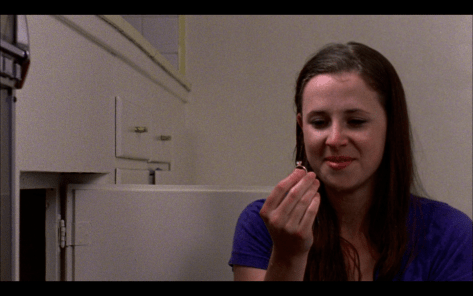
For writer-producer Katie Micay, “Limited Engagement” is a testament to her exceptional filmmaking forte. The story follows Kate, an unmarried, perpetual bridesmaid and hopeless romantic. Kate is ecstatic to find an engagement ring in her boyfriend, Ian’s, pocket. But to her dismay, the ring goes missing and in a panic, Kate turns her house upside down to find the ring before Ian notices.
The two-person short stars Katie Lee (“10 Days of Rain”) in the role of Kate and Rex Alan McMillan (“Alice Agonistes”) as Ian.
“In just a few short minutes, this film takes you on a roller coaster of emotion,” Lee said. “There is a clear conflict which everyone can relate. The story finishes with a resolution that not only gives a sense of relief, but also reminds you to laugh at yourself because in life everything works itself out one way or another in the end.”
Micay aimed to craft a story with a self-deprecating and witty sense of humor. “While writing this, I pulled a lot from one of my friendships,” she said. “I am extremely sarcastic in real life and my good friend was extremely literal. It never ceased to amuse me how many times she would fall for my sarcasm.”
“Limited Engagement” is an exercise in creativity that demonstrates Micay’s screenwriting inventiveness. The entire story is put in front of the camera and is conveyed by the characters’ viewable actions. It’s entirely absent of expository dialogue and the achievement befalls only the best screenwriters.
“I actually love creating stories without dialogue because it pushes you to really tell a story visually,” said Micay, a Vancouver native. “These days a lot of films over explain, but the audience often prefers to put the pieces together on their own.”
Said Lee, “The script seemed really fun and quirky and I’m all about quirky. Plus, the idea that it was a silent, slapstick style comedy was very appealing to me because as an actor there is such a fun physical exploration to the characters.”
Growing up, Micay absorbed influence from shows such as “Friends” and subscribes to the writing convention that situational comedy is driven by strong characters. So is the case with “Limited Engagement,” where she created a dynamic leading female that carries the story in many scenes all by herself, all the while executing the needed comedic, situational mishaps.
“The audience really stays with Kate and goes through the struggle with her. You feel her pain and her happiness,” Micay said.
The character had familiar feelings for Lee and also hit close to home. She said the best part of acting in the role was “how relatable Kate is to most women. I was going on four years in my own personal relationship and was watching friends settle down left and right. Making Kate relatable and likeable gives the audience the ability to sympathize with her and also want to follow along on her journey to see what happens.”
From a producer’s standpoint, Micay was charged the task of finding a dog that would play an integral role. Kate’s plight within the story is incited to a peak when her dog accidentally swallows her ring. Kate discovers its whereabouts using a metal detector and winds up getting it back using a laxative.
“It could happen to anyone and likely something similar has happened,” Lee said. “You can’t help but laugh because everyone knows.”
Micay says implementing the dog, Chachi, was the biggest challenge to the production. “Even though he is a professionally trained entertainment animal, it was still much harder than a human,” she said. “We had him on set one day and had to get everything we needed in a very short period of time.”
Casting the human actors, on the other hand, was a different experience. “When casting, we needed people who were very expressive, but natural at the same time. Both Katie and Rex auditioned and it was clear that they were very talented,” said Micay. “They were both a great joy to work with. They really wanted to collaborate and help my vision reach the screen.”
Micay is known for her previous writing and producing of “Flirt,” a Reality Bytes Film Festival Official Selection, “My So Called Family,” that was an Official Selection at the Bel Air Film Festival and “The Firefly Girls,” which screened this month at the Sonoma International Film Festival.
“Limited Engagement” achieved critical acclaim as it received an Award of Merit at the Women’s Independent Film Festival. It was also an Official Selection at the Los Angeles Women’s International Film Festival.
The 2012 film was dedicated to Micay’s great aunt, Clara Nelson. “She passed away before I made “My So Called Family,” which is loosely based off the week she died. She was a stand-up comedian that loved to tell a good dirty joke. She just loved life and family. When I moved to Los Angeles, she really helped make it home for me.”
Cinematographer Ross Radcliffe on location of “The Last Alaskans” shot by Dave Clawson
After multiple life-threatening sports-related injuries suddenly derailed him from a future as a professional athlete, college student Ross Radcliffe turned to his interest entirely to his other love, cinematography. Born and raised on Vancouver Island in Canada, Radcliffe became motivated by the idea of seeking out remote corners of the world and capturing them on film. Turning the hours he would have spent training into hours submerged in film making, the revolutionary cinematographer quickly became recognized as among the top of the field.
When asked what it was about cinematography that captured his interest, Radcliffe answered without hesitation. “To be a cinematographer is to be a visual storyteller,” he said. “I get to craft images that effectively move the audience through a story, with all the twists and turns of emotions along the way.” And that he does.
Radcliffe began by shooting and editing his own projects, which quickly secured him a position with Susie Films, a full service, pitch to post production company. At Susie Films, Radcliffe’s love for the industry flourished, and before long, his insurmountable talents were recognized by major reality TV networks. National Geographic quickly hired him as a freelance cinematographer, followed quickly thereafter by both Animal Planet and the Discovery Channel.
With work pouring in, Radcliffe admits that his physical stamina and limitless capabilities are invaluable to networks filming shows revolving around high paced, action packed adventure. “I think a big responsibility of mine, due to the type of projects I shoot, is to stay on top of my physical conditioning,” says Radcliffe. He continues, “when I film a subject, I want to make sure their are no barriers between the story and the audience, so I have to be a pro at following along, no matter the conditions or situations might be. In my field, a good cinematographer blends into the situation to let it play out as naturally as possible.”
It is because of this physical endurance and artistically trained eye that audiences have the incredible adventure-based reality shows we see today. For example, Radcliffe worked as the Director of Photography on The Travel Channel’s Jackson Wild. The series revolves around the EJ Jackson, a 4-time world champion and adventure author and founder of Jackson Kayak, and his brave and fearless family. During this production, Radcliffe followed the family to Germany, Austria, South Africa, England and Zambia, where he faced what he calls a “crazy challenge” of keeping up with them physically. Radcliffe recalls of the experience, “I was able to capture mountain biking through Europe and waterfall jumping in Africa but, for the record, running around Africa with a 40 lb camera on your shoulder isn’t easy!”
Trekking through the freezing temperatures of an Alaskan winter was no easy task, either, though through his beautifully captured images used in National Geographic’s Dr. Oakley: Yukon Vet, Radcliffe made it look graceful and effortless. As the Director of Photography, the tactful cinematographer followed Dr. Oakley day and night and captured irreplaceable footage of the veterinarian as she helped a weak cow deliver an over sized calf. Radcliffe recalls the experience fondly, adding “while this project was extremely demanding physically and sometimes entailed stepping in stinky animal droppings or running from an angry muskox, I was honored to be part of such a small, hand selected team.”
No longer a stranger to Alaska by any means, Radcliffe was hired next for his technological brilliance and insurmountable endurance by The Animal Planet and Discovery Channel to shoot The Last Alaskans. Ranked second in the network’s most watched shows, the program is internationally acclaimed for its genre-busting take on the people and families who reside in the Alaskan Wildlife Refuge, located just above the arctic circle. Radcliffe’s contribution to the series gained recognition in The New York Times and The Washington Post, hooking viewers with depictions of unimaginably challenging living conditions, matched only in magnitude by the stunning beauty of the terrain.
To the great advantage of audiences worldwide, Radcliffe’s deep desire to put himself into other people’s shoes through the magic of cinematography will never fade. He admits, “being a cinematographer is the only job I have ever had that doesn’t feel like work. Every day that I wake up on location, I truly cannot believe how lucky I am. I’m honored and humbled to be instrumental in telling stories about people and places that would have gone otherwise unnoticed.” With his rare and refined compounded talents in both technology and athleticism, Radcliffe is sure to bring us uniquely captivating and alluring images for years to come.
Beto Araujo is bringing his editorial talents to “The Bounty Hunter.”
The award-winning film and TV director Marcelo Galvão has selected Beto Araujo as editor for his forthcoming feature western movie, “The Bounty Hunter.” Araujo, an 18-year editing master in advertising, music videos and TV, brings a world of talent and experience to the forthcoming production.
Galvão penned the script and the story follows a feared killer living in the countryside of the Brazilian state of Pernambuco between the 1910s and 1930s.
“Beto was highly recommended by my friend and colleague, Fernando Sanches, and after meeting him and talking about the project, I believe he has the skills and the passion that I’m looking for,” said Galvão.
The film is being produced by Galvão’s production company, Gatacine. It is scheduling to film in Brazil and release next year in the U.S. and Brazil. As a release in Brazil, the western will be titled “O Matador.”
“This film is one international audiences will gravitate towards,” Araujo said. “It has a great cinematic story, dynamic characters, drama, action and it’s all set against the beautiful backdrop of early 20th century Brazil. Marcelo is an amazing, award-winning director who can deliver this western period piece in an extraordinary way.”
Creative, achieved, talented and recognized internationally, Araujo edited four episodes of HBO Latin America’s, “Psi,” including the series’ pilot and Season 1 finale. He edited a MTV VMA nominated music video for the Brazilian rock band, Nação Zumbi, and has edited hundreds of commercials and advertising promos including for brands such as Coca-Cola, Google, Samsung, VW, Ford, Visa and many more.
“Beto’s body of work shows the kind of versatility I was looking for in an editor,” Galvão said. “His work for HBO was nominated for Best Drama on last year’s international Emmy and his diverse work in advertising covers almost every possible editing style. All of that shows me that he is a passionate professional that put his best on all his projects and I want this passion and dedication on my project.”
Galvão, from Rio de Janeiro, wrote, produced and directed the 2014 feature drama, “Farewell.” The film told the story of a 92-year old man who decides it’s time to say goodbye to all that’s important in his life, including his lover who is 55 years younger. It won 15 international film festival awards including Best Film at the Los Angeles Brazilian Film Festival. Galvão is also known for directing the award-winning films, “Buddies,” “La riña” and “Quarta B.”
For “The Bounty Hunter,” plot details are being kept under wraps, but the story features a captivating protagonist who was abandoned as a baby, raised in the wild by a bounty-hunting bandit and eventually becomes a feared bounty hunter himself.
The film will have story elements of old-fashioned vigilante justice, drama, action and revenge. The characteristics of the premise drive the editorial strategy and also create an opportunity within the filmmaking process.
“I believe that Western period movies made nowadays have a total freedom regarding editorial approach,” Galvão said. “For me, “The Bounty Hunter” requires editing skills both drama and for fast-paced action sequences.”
It’s a challenge Araujo is ready to oversee. He’s experienced with fast cutting and also knows how to strike the balance needed with slower, dramatic scenes.
“Cutting dramatic scenes and action scenes differ in terms of pacing, sequencing, tone and seamless continuity,” said Araujo, who is from Sao Paulo, Brazil. “With drama, the beats are slower and we’re serving the story that’s being driven by the characters who are layered and evolving. With action and fight sequences, it’s about creating the desired speed and tempo, and visually presenting what’s happening with a real force behind it. We want to make the action authentic and stylized, but also show the movements with clarity so the audience can see what’s unfolding.”
Previously, Araujo edited “O Desejo de Saiuri,” a short film from writer-director Fernando Sanches, and “The Side of the Door,” from writer-director Joao Simi.
He edited Getty Images’ “85 Seconds” campaign that won many awards including the 2013 Gold Lion for Editing, the 2014 Gold for Best Editing at the El Ojo de Iberomerica and the Bronze award in Editing at the New York Festivals International Television and Film Awards.
Among Araujo’s many other editing accolades, he cut the “Black and White” commercial for Skip, a laundry detergent manufacturer, that won a 2010 Cannes Silver Lion. He also edited BIC’s “Declaracao de Amor” (Declaration of Love) spot that won the Bronze at El Ojo and was shortlisted at the renowned Cannes Film Festival.






 internationalfilmreview