Category Archives: Behind the Scenes

A Star Behind the Scenes: Victoria Marino on Adventurous Filming Around the World.  

Victoria Marino
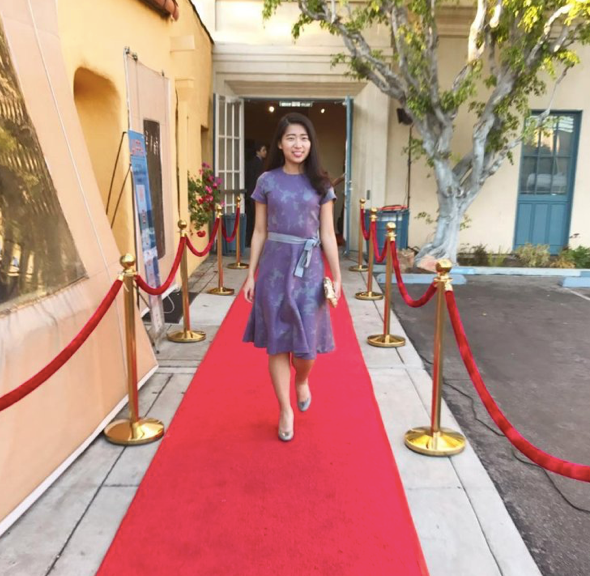
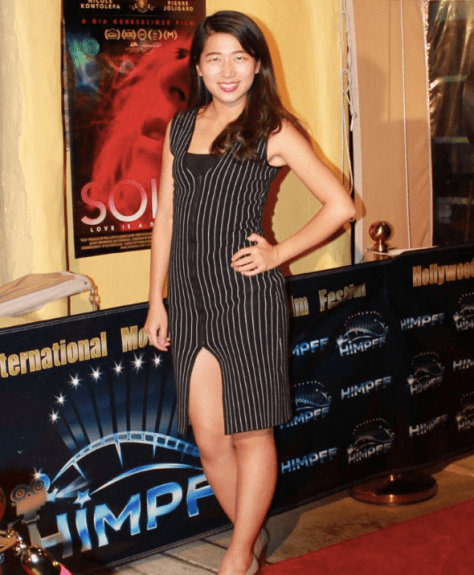
Production Coordinator Victoria Marino representing Brazilian Production Services at the Los Angeles Brazilian Film Festival


The rapid pace and apparent dangers of reality competition shows set in the jungle and outback might suggest that productions simply throw contestants into unchartered territories, leaving them to fend for themselves. In actuality, hugely successful shows like “The Wheel” on which Victoria Marino is a production coordinator, require a detailed set of procedures, top-notch crew, and a precise plan of action to coordinate. We sat down with Victoria to discuss the importance of her role, how she got to where she is in her career, and why she loves her position in the entertainment industry.

That Victoria has a diverse skill set is simply one reason why she has provided indispensable contributions to film and television productions, particularly those shows filmed in South America. It helps that the company through which she completes most of her assignments, Figura Media (aka Brazil Production Services), specializes in premium documentaries shot in Brazil and has been responsible for the Netflix hits “Chef’s Table” and “Fearless.”

“Speaking the local language, understanding the work culture, having the local contacts of competent crew, equipment houses, etc, and having knowledge of Brazilian locations is what allows me to do my job,” explains Victoria.

She also tells us that her bilingual skill set definitely sets her apart, explaining, “The fact that I am Brazilian, but have lived in the US for a few years now, speak perfect English and have knowledge of American culture allows me to completely understand the needs of my clients and deliver results up to their expectations or hopefully, surpass them.”

For the survival show “The Wheel,” which airs on the Discovery Channel, Victoria had the critical responsibility of being the production coordinator for two of the Brazilian shooting locations out of the show’s six. Because those two locations were the Amazon Rainforest and the Pantanal certainly would have added obvious challenges, not to mention that Victoria helped lead a team of 40 people employed over a period of three months to make this production happen.

Ultimately though, Victoria enjoyed overcoming such obstacles. “‘The Wheel’ was a project in which I learned a lot because it was so big and so fast paced. I had to be connected with the crew at all times, and be ready to solve any problems as fast and as efficiently as possible.”

Brazil Production Services not only works on reality shows like “The Wheel,” but as Victoria explains, acts for a number of other high-profile companies: “We serve a variety of clients for fiction, institutional and commercial projects, including but not limited to several shoots for the UFC, an institutional photoshoot for Addison Design and PEPSICO, a second unit for a Marvel Disney feature and others.”

That Marvel feature was just one example out of a large number of big-budget projects in which Victoria has played a critical role. She elaborates, “I love that I get to work on a variety of projects that have different a theme, size and scope, and allow me to learn about the many different aspects of producing while adapting to the specific needs of each job.”

It’s not just Victoria who holds the opinion that she played a key part in the success of these projects produced by Brazil Production Services. Jud Franklin, VP of Production at PIV who is also well known in the industry for his executive roles in UFC shows, proudly exclaimed that his team “could not have been happier with the expertise and critical role provided by [Victoria],” adding that they “look forward to [their] continued work with her at [BPS].”

So it’s probably safe to assume that there are more dangerous adventures coming up for this successful globetrotter.

“This year, some of the exciting projects we have coming up are a premium documentary about MMA for Netflix, an episode of the NBC show ‘The Voyager’ with Josh Garcia and the second unit of a Brazilian feature film shooting in Orlando.” She adds, “I am leading new marketing initiatives at BPS to get new Brazilian clients that want to film here in the USA also, since most of our clients are foreign clients that want to film in Brazil.”


MACBETH’S MODERN COOL LOOK, COURTESY OF AWARD-WINNER JANE JOHNSTON

Only the brave (sometimes the foolish) fear to tread upon the hallowed ground known as Shakespeare. For centuries the works of the playwright have been treated as gospel for actors and all those involved in their production. Their rhythm and essence of these storylines have been the base and inspiration for much of modern cinema and theater. While the stories have been retold in their basic original form in film, on seldom occasion they have been reimagined. Such was the case with Geoffrey Wright’s Macbeth starring Sam Worthington in the title role, produced exactly 400 years (to the year) from what is considered the play’s original premier. Set in modern day Melbourne, this Australian production of Macbeth is a gangland interpretation. In a congruent fashion, Worthington (as Macbeth) is convinced by his drug addled wife to seize his destiny and assume power by killing his close friend Duncan, setting into play a domino effect of tragic events. This modern interpretation of a classic called for slick cars and suits while also wanting to give a nod to Scottish themes and touches of a more historic Macbeth. The film’s design has pops of color throughout the tones of greys and blacks. Once he became King, Macbeth owns his look donning color and texture. By the end of the film he is battling for his life in a more military garb. When a tale is as well-known and loved as Macbeth, the audience knows what to expect, just not the accent it will be presented with. It was paramount for this presentation of Macbeth to visually be set apart and above all others. To great means this was achieved through the talent and artistry of costume designer Jane Johnston. She readily admits to being terrified going into the production but her plan was to bite off small chunks and manage these bite sized pieces. The plan worked to the delight of Johnston, the filmmakers, the audience, and critics. The film’s director Geoffrey Wright professes, “I very purposefully sought out Jane Johnston to create the costumes and look of Macbeth. Her resulting vision of combining old world styles with modern fabrics was instrumental to its themes and moods. From a visual-textural point of view it remains the richest and most complex film I’ve directed and I was thrilled by Johnston’s planning, communication, and execution of craft. Johnston’s work was especially impressive in enhancing the character portrayed by the star, Sam Worthington, whose next film was as the lead in the biggest budgeted and most profitable film (up to that time) ever made – ‘Avatar’ by legendary director, James Cameron. Cameron’s company was impressed by Worthington’s impact in Macbeth and Johnston’s work was a critical part of the reason for that assessment. Worthington had never previously looked as good as he did in Macbeth. His elevation to an international star was made certain and Johnston received an AFI award, the highest Australian accolade possible, for her accomplishment.”

sam 3
lachyvic3

sam&vic

Jane’s very tried and true process involves reading and dissecting the script and coming up with tear-sheets to piece together her thoughts for looks. Meetings with producers, the director, etc. follows as a cohesive form evolves for each character. It’s essential to have conversations with the hair and makeup departments to see what they are thinking. Taking advantage of the city’s location itself, Johnston notes, “Melbourne has some interesting public art and some great locations which I think that added to the production design value but as far as costumes were concerned I think the fact that we were shooting in winter definitely added to the look. Needless to say, we would have made a very different film had we shot in Sydney. Melbourne is also known for its fashion and I tried to use interesting Melbourne designers whenever I could and mix them up with pieces of vintage clothing. There was one particular men’s label called Calibre who were incredibly helpful. I also found some really obscure independent fashion and jewelry makers whose products I incorporated into the designs.” She continues, “I remember sitting in my car outside a bar in Sydney with Sam Worthington ‘doing my pitch’ and hoping that he could see it too. Thankfully he was totally on board and excited by the character. I think it was one of those times that the look and clothes helped the actor feel grounded, and helped them see who they were. I started having fittings and our ideas evolved. Once we felt we had our character, I could develop it further and add certain touches or details to the point where I knew it was right.”

This Film Finance production of Macbeth received six nominations and two wins, one of which was Johnston’s Australian Film Institute (AFI) Award for Best Costume Design. The AFI Award is the highest honor in Australia and a massive achievement for anyone involved in the film industry. Describing the experience, Johnston recalls, “The event went over two nights with the first night being the technicians’ awards, which was our night. The second night was the more glamorous red carpet event where the actors turned up. The experience itself was quite surreal. A lot of people around me felt quite confident for the production designer and myself but you never know. David’s award (David McKay won Best Production Design for Macbeth) was called out first and he made his speech and then costumes were announced and I think I really stopped hearing anything in that moment! I gave my speech and thanked my fabulous team and met David out the back to have our photos taken. Then of course we celebrated! I think that the film overall had a strong impact; it was visual, had a great soundtrack, and it really hadn’t been attempted on this sort of budget before. The production design and the costumes worked really well together and I believe that helps for a film to receive recognition. I put Sam Worthington in a suit and that hadn’t been done before! I also put him in a kilt. I think it was a stylish looking film and it happened to stand out amongst the other films of that year.” Proof that with talent and quality material, you can excite and expose different generations to the most classical of stories.

_VIC6667

ROTH REVEALS “TRUE NEW YORK”

When you open a puzzle box you find many disjunct pieces. While they have their own individual identity, when properly assembled, they reveal a full and descriptive image. This description applies to the documentary film anthology True New York. NYC is often referred to as the world’s greatest city. It might be American bravado bestowing this moniker but there’s no denying New York’s international appeal. Writer and director Jordan Roth hails from Canada but admits to harboring romanticism for New York City, which led to his immediate acceptance of Jeremy Workman’s invitation to become part of this Wheelhouse Creative production. True New York is a series of documentaries which, viewed together, reveals what we have always subconsciously understood; the charm and strength of New York City is found in its differences. Quite possibly more than any US city, New York is seen as the true American template; one in which different people and stories enrich each other’s lives…as these films enrich and inspire the audience.

Workman had seen Jordan Roth’s documentary film, entitled C Rock, about a Bronx rite of passage and was convinced that its creator understood the sentiment of what he was hoping to exhibit in True New York. Jeremy confirms, “It was a pleasure working with Jordan on True New York. He’s a great talent. We look forward to working with him further as his career progresses.” Jordan relates, “I think what actually makes True New York interesting and strong is that these are stories that all feel very human. They feel distinct to New York and these people all feel like New York characters, but even more…we’re connecting to their personal stories.

Asked about what he thinks is the New York experience, Jordan answers, “I think it’s about community. When you live in a great city like New York, on some level you feel a sense of pride and a sense of being a part of something. That might be corny but I think it’s true. You’re a part of the whole mess of the city. There’s an energy that comes from different types of people, from everywhere in the world, from vastly different backgrounds, all crammed together and trying to live in this space.”

True New York displays a variety of characters in the anthology. Taxi Garage (by Joshua Z Weinstein) is the story of a Queens taxi depot and follows Johnnie “Spider” Footman, a colorful octogenarian who is New York’s oldest taxi driver. Spider is a fascinating, sweet, funny guy who is surrounded by many other colorful characters. This story portrays more joy than one might presume. Jeremy Workman’s One Track Mind reveals the amazing story of Philip Coppola, who has devoted four decades to cataloging every station in the New York City subway system. Coppola is obsessive and seems odd at first but as the story delves into his life’s work, something beautiful and impressive is revealed. Sam Cullman and Benjamin Rosen’s Black Cherokee focuses on Otis Houston Jr., a self-taught artist from Harlem who performs along Manhattan’s FDR Drive. Many might have driven by Otis working on the road and have missed the experience of witnessing a true modern artist. A Son’s Sacrifice follows a 27-year-old who confronts his mixed Bangladeshi-Puerto Rican heritage and tries to gain acceptance from his father’s conservative community in this film by Yoni Brook. Finally, C-Rock (by Roth) explores a group of Bronx kids who leap off a 100-foot tall cliff into the Harlem River, a dangerous rite of passage going back generations. These five stories from completely different walks of life are relatable in their characters’ struggles and endeavors. The emotional element they all reveal is universal and deeply human. We meet people all trying to  make it through another day and better their situation in some small way.

Fans of documentary films are steadily increasing. While scripted movies are valued for their characters in exceptional circumstances, documentaries reveal the exceptional everyday people who may otherwise go unnoticed. The protagonists of documentaries are complex because they are real, possessing flaws. What initially drew Jordan to True New York was the potential of a venue for the kind of stories that the film market doesn’t typically allow to be seen. Only by seeking this paradigm shift will filmmakers bring fresh ideas and stories to the public.

When asked what he loves about New York, Roth notes, “Again, there’s a sense of community. I don’t really mean that it’s this sense that everyone is arm and arm and loving each other. It’s just that everyone is here in this place, together. There are people living here from everywhere in the world, all different cultures and backgrounds, all pushed together. There’s an energy I feel when I’m walking around in New York that is completely unique. I also love how accessible everything feels in the city, being able to hop on the train and get pretty much anywhere. I love the history and the cultural richness of the city.” He adds, “I also love the food. “

As a Canadian, Roth feels fortunate to work in the United States and call it home for now. “I feel strongly Canadian, but I love this country and care about it. I’m even an American history dork. I studied American history in school. I also know I’m just very lucky to live in the U.S. and pursue my work here.”

Joran screenshot


AN AWARD-WINNING FILM ABOUT A MAN WHO NEEDS NO AWARDS: I HEARD THE FLOWERS BLOOMING WHEN I WAS 80

Short film IHFBW80

How do you create a film about an eighty-year old man transporting a piano across town to perform a solo concert? Well, besides having all the creative professionals involved…you hire the amazing producer like Huang Zhe (aka Gigi). With a variety of different types of productions (film, commercials, etc.), Gigi quite simply knows how to maneuver every piece into its perfect place so that the artists can get along with the job of being artists. The most classic of automobiles need the proper propellant to deliver performance and so does every classic production. When director Zhen Pan started off with a rough test shoot, he reached out to Huang and enlisted her help to put the film on track. After reading the script and conferring with Pan (whom she had worked with previously on other productions), Gigi decided to sign on and bring new life to the film. It was a well contrived decision as I Heard the Flowers Blooming When I Was 80 won Best Screenplay in 4th Golden Panda International Short Film Festival and was a finalist in the IndustryBoost Competition. Huang’s ability to reset the course for this production and empower it to such great success is a testament to the fact that a great producer is paramount for filmmakers to achieve their vision.

Writer/director Zhen Pan is often referred to as China’s Wes Anderson. Within his decade long career, he has amassed numerous lauded productions. It was highly important to him that I Heard the Flowers Blooming When I Was 80, matched up to those in his impressive resume. He recalls, “We had a rough testing shoot and it didn’t quite go well. A lot of things went wrong and we just couldn’t figure out a way to make things work the way we needed them to. It was not until Huang Zhe stepped in to become our new producer that we were able to re-start the  project. Not only did she manage to find all the locations that we needed, but she also re-grouped the entire team and kept everyone energetic and focused on creating something that we would be proud of. I couldn’t thank her enough for being the production leader and making everything happen. This film would have been impossible to make and receive the recognition it has been given without Gigi.” Huang is quick to admit that she was able to make use of some prior work, essentially retaining about a third of previous footage. New schedule shoots and permits required quick and accurate designing to get the film in on time and within budget. The film required a consummate professional like Huang to guide it into a proper “landing.”

While the film focuses on one main character, the cast numbers more than thirty and required a sizeable crew. I heard the Flowers Blooming When I was 80 is a heartwarming story of recalling and achieving your dreams. On his 80th birthday, a lonely old man named Larry (played by John S. Boles) meets two children who are doing a school survey on the street. The little boy asks Larry:” What was your dream when you were my age?” This reminds Larry of when he was a little boy and wanted to hold a piano concert. Everyone dissuaded him from the idea as his parents believed his older sister to be a better pianist and more deserving of attention. Everyone ignored the boyhood Larry’s feelings. With the gradual growth of age, little Larry became old and eventually forgot his dream. On his eightieth birthday, Larry spent time alone, as he usually does while his children made excuses to avoid their father’s birthday. Larry suddenly remembers the question that the little boy asked him in the morning,” What was your dream at my age?” and decides to pick up his dream again. Moving his piano from the garage to the center of the small town, he interrupts the lives of the town’s commuters, but he finally achieves his dream of holding a piano concert…in spite of having no audience. The film gives wings to the idea that our dreams are for ourselves and not simply to be pursued for the appreciation of others. The very idea itself is a perfect description of a successful producer’s role. It’s a concept which Huang has thoroughly embraced. Gigi confirms, “The most important thing for me is seeing the stories that I like and love to produce. I was attracted to this production by only seeing the film title, and stepped in as soon as I read the script. I knew the problem was that the film didn’t have a proper plan and schedule. It was also highly important to have a crew which can work well with each other. A talented crew is so important, but the most important thing is keeping a happy filming environment.  Everyone should enjoy what he or she is doing. I decided to regroup the crew for this film, meaning that I found a totally new crew for this production. I started the pre-production earlier this time. Since I prepared early and had good communication with the city, we got the street closure for free…nobody was unhappy about that.”

A seemingly “doomed” production that couldn’t quite get off the ground, I Hear the Flowers Blooming When I was 80 went on to be an award-winning film because Gigi Huang recognized the potential of the story, cast, and crew. Investing her talents with those of this production, it went on to gain the type of notoriety that all its participants hoped for. Gigi comments, “To be honest, I was really happy and felt honored that we won the ‘Best Screenplay’. It might not have gained notoriety or prestige for my career personally but that’s not why I’m a producer. I’m perfectly happy to sit back and know that I was able to achieve exactly what I set out to do and that allowed Zhen Pan and everyone involved to be the artists that they are.” …which is exactly what I heard the Flowers Blooming When I was 80 is all about.

headshot 2

THE INCREDIBLE VOYAGE OF JIPING LIU

By Kelly James


A Graphic Designer has to look at the world differently. If you’ve ever stopped to truly examine their work, you’ll recognize that they take what most of us see as mundane and are able to capture the excitement, beauty, and originality of almost any action or object. They “turn up the volume and color” in our world, often without sound or pigmentation. They allow us to see others and ourselves as we’d like to be seen. The Graphic Designers who practice their vocation in the film industry have a number of tasks and opportunities before them but essentially, they enable visionary filmmakers to manifest the beginning stages of their ideas. Whether by means of storyboards, posters, or any number of creations that the Graphic Designer brings forth, their perspective can be the first or the last images that the public and filmmakers themselves retain about a particular production. Jiping Liu has worked in a variety of genres and cultures as a Graphic Artist with resounding success and recognition. In particular, she is known for getting inside the productions she works on to see how the professionals in the film industry work in order to more accurately and artistically create the images she is praised for. When you know more about Jiping’s background, you begin to understand that her perspective and talent is the product of an artist who has always pursued something bigger.

Jiping always knew what she wanted in life, to be an artist. From the earliest days in her hometown of Shijiazhuang city, China and later when she moved to Beijing…it was always about art. Comics, cartoons, painting…all of these were valid artistic expressions to a young Liu. She recalls her first compulsion to direct her career path to graphic design stating, “I’m pretty sure I decided to become a graphic designer rather than a painter during the first summer holiday in Beijing Jiaotong University. I got an internship offer from an international company. I remember the company’s creative director was sick for two weeks, so I got a chance to work on company’s ongoing APP design called ‘Life Circle.’ I was so excited to work on real projects and they trusted me very much, letting me try to design the ICON and opening page for the APP. It was just a try, but I took it very seriously. To my surprise, the head of company picked my ICON design. In the end, this APP was available to come out on market and many people liked to download and install it. This was my first time feeling that graphic design is graceful and makes people’s life easier, even beautiful.” During Jiping’s third year at University she received an offer from Tencent (one of the largest Internet companies and largest gaming company in the world) to work as a graphic designer. Her work for Tencent included working on several big budget events, designing posters, books, and advertisements for each event. At that time, Liu opened her own personal design shop online. The artist she was already became fused with the modern day opportunities she was being given.

Realizing that her artistic talent and sensibilities could be utilized among a variety of formats, Jiping became interested in the opportunities which the film industry allowed. Serving as graphic designer for the horror film “Kumal”, Liu’s work became visible at such high profile events as the 70th Cannes Film Festival, the Los Angeles Independent Film Festival, and many others. Writer and director Jun Xia had seen Jiping’s work in another film at a screening in Warner Bros Studio (She gives Me Sight) which was graphic designed by Liu. He hired her to be the graphic designer on his film “Emily” which became a multiple award winner

Creating the title design of “Sea of Mirrors”, Jiping chose to use mellow fonts to represent the delicate and beautiful female form of the film’s lead character juxtaposed against sharp edges and corners to represent the darker elements within the film’s story. “Sea of Mirrors” director Thomas Lim says, “Jiping Liu is a graphic designer with extraordinary creativity and skill. Her designs are amongst the best and most unique I’ve seen and her talents are right up there with the best.”

One of Liu’s favorite projects was the work she did for the film “Locked.” The film contains numerous gun battles. Liping used an illustrator style design poster for “Locked.” The colors of the characters on the poster are the same costume color they wore in the movie. She tells, “The size of the budget, big or small, for a film is not the most influential when it comes to design quality. Less can very often be more. More is not always a good thing, big budgets allow you to choose easier and work faster but I find that with a small budget I will spend time to find a way to get the art to work. If you have the skill, you can create quality. Whatever spurs your creativity and brings it out of you is the best.”

The future is not only bright for this graphic designer, it’s also busy. Liu is currently working on a number of projects for Alpha Pictures Inc. Frank Antonelli sought Jiping out and hired her to be the lead graphic designer on three very important upcoming productions; Bee, Armor Hero and Requiem Street. BEE, Armor Hero and Requiem Street were the top 3 popular comics and animations in China. Alpha Pictures Inc. is now developing and adapting these three animations to live-action/global feature films. BEE has 1 billion views on u17.com, a six-episode animated web series released in China and Japan and an action figure line released in 2015. The Requiem Street comic has been published since 2012 and has 2.2 billion views on U17.com. Number 1 Chinese comic in 2016 and twenty-four-episode animated web series released. Requiem Street also has a live-action TV series in production. Armor Hero is based on the top selling toys, Armor Hero is a series of characters on which more than 200 TV episodes and on which two feature films are based. In its eight-year history, Armor Hero has attracted 400 million fans and garnered a 4.8 billion accumulated viewership through video portals in China. The brand generates more than 600 million RMB in toy retail sales per year. The massive popularity and built in audience interest of these three sotrylines bodes extremely well for anticipated box office enthusiasm and returns.

Of all the talents that Liu possesses, the most beneficial may not be the most obvious. As someone who has spent time in both the US and China, as well as possessing an artist’s eye for the film industry, Liu is perfectly suited to further establish the bonds that have become mutually beneficial to both locations. The differences between these two cultures is something which Jiping has always found attractive. She enjoys the experience being caught between the two. She admits, “I received a very good job offer from China last year but I gave it up.

I believe the future of film and TV will be international and global. Nowadays, many Chinese production companies are opening branch offices in Hollywood; they want to corporate and step into Hollywood films. It’s a big trend for the modern film industry. Artists who have different cultural background, art style, and knowledge will be in need. People always say American films are top, to make these films keep shinning there needs to be different cultural elements. Movies play for everyone no matter where you located. That makes me interested in being a Chinese graphic designer in the US, because I want to contribute to this Chinese and American corporation.”

Screen Shot 2017-06-04 at 4.58.36 PM

ZHENG KANG’S LION DANCE IS AN INSTANT CLASSIC OF ANIMATION

Zheng Kang is redefining the role of animator. Yes, he is technically given the title director/animator but he does (pun intended) the lion’s share of the work on Lion Dance. For this production, he helped create the script, directed a live action cast (more about this later), directed the animation (coordinated with different teams on different continents), animated, and essentially helped to coordinate every aspect of this film. Zheng has been a driving force behind so many animated productions (Comedy Central’s TripTank, Diors Samurai, Baby and Granny, etc.) that he is constantly striving to create original approaches to ward off any unconscious attempt to fall into a pattern. In Lion Dance, Kang has gone to new heights of diligence and preparation in order to create a unique look and storyline to reflect accurately on his native culture and the characters of the film. It’s this intense work ethic and attention to even the smallest detail that led to a host of accolades for Lion Dance, not the least of which was the decision to use Lion Dance as a teaching aid by the faculty at USC (University of Southern California) School of Cinematic Arts for their graduate animation classes. Winning awards and screenings at prestigious festivals is high praise (both of which Lion Dance has garnered) but being used as a template to the premier graduate students in the field is a rare accomplishment indeed. It doesn’t come easy; Zheng can attest to this. He worked hard to make Lion Dance an epitome of its ilk. The achievements and praise of the film confirm that all of this tenacity paid off in spades for this young and creative professional.  Lion Dance continues to focus attention on Zheng Kang’s contributions to the animation film world.

with-live-action-crew

In creating Lion Dance, Kang wanted to present a love story that was original. Just as importantly, he wanted to present its main characters in a new way. He states, “As a Chinese man, I’m well aware that the male Chinese characters are often presented as comic relief. I was committed to portraying my leading man as exactly that, a leading man. I wanted to show that he could be brave, kind, searching for love; I wanted him to represent all those qualities that Asian men are seen void of.” The Hero, Jian, is the “head” of the lion in the traditional ‘Lion Dance’ during the parade celebrating Chinese New Year in his town. He and Ayumi (the female lead) lock eyes and fall in love, but Jian is in mid- parade and must continue his march through the town. It is typical when the Lion Dance is performed in real-life that two teams will take turns performing inside the Lion costume because it is so heavy and hot! When Jian hears a hand tapping on his Lion costume, he assumes it is the relief team and he races off to find Ayumi. He arrives at her balcony and is sad to see she is not there. Heartbroken, he heads back to take his place in the parade. The film then switches to Ayumi’s perspective of the events. After their eyes met, Ayumi decides that she can’t let Jian simply march away. She races after him, catching up with his Lion at the same time as the relief teams are taking their shift. She taps Jian’s Lion costume, and he mistakes her for the relief team. Throwing the Lion head onto Ayumi without looking, he races off to find her, unaware that she was standing right next to him! Now, as the relief team begin to march, poor Ayumi finds herself pushed along inside the parade. The star-crossed lovers seem doomed at this point to be diverted from each other. In the final act of the film, a sad Jian becomes very confused when he spots that his Lion is no longer in the parade, and is instead playing with local children. He walks over and lifts the Lion’s head off to find Ayumi underneath. Both are surprised, and relieved, having finally found each other. In the final scene, the camera drifts off to a romantic firework display as the young heroes fall in love. Zheng created these young characters to provide a role model he felt had been too often overlooked in film. He comments, “I wanted to ensure that I was as diverse as possible and created a starring role for an Asian man that allowed him to be an action hero (rather than a comedy relief) and a starring role for an Asian woman that allowed her to have confidence, strength of character, and personality (rather than being a Caucasian guy’s one-dimensional love interest). I believe that no matter what art form you work in, you have the ability to inspire and educate society with a positive message.

In his role as director/animator for Lion Dance, Kang utilized a very unique approach. Because he wanted the characters to avoid any status-quo type movements found in animation, Zheng cast and directed a group of live actors in order to get completely original movements and expressions. Employing a method known as rotoscoping, the animators would work on top of the live action footage and follow the actual live sequences. This led the animators to following the movements of the actors rather than deferring to their stock ideas about what movements should look like in animation. The result is immediately noticeable as different from the vast majority of animation productions. Zheng concedes that this method was every bit as successful as he had imagined. The only difficult aspect was that he had so many great actors auditioning with interesting interpretations of the characters.

work-on-animation

To meet the scheduling and budgetary constraints but yet still bring his vision to completion, Kang hatched another ingenious approach. Coordinating multiple crews on different continents, he created a twenty-four hour per day work schedule. Zheng’s co-director Tim Pattinson was astonished as he relates, “On Lion Dance, Zheng’s directing skills were exceptional. Using a series of sketches, drawovers, and video calling, he was able to effectively and assuredly communicate very complex animation direction to teams across 5 continents, resulting in the successful completion of our animated scenes. In Tokyo, Zheng created a complex and incredibly successful method of visually communicating the direction of our original sound and score design to Japanese speaking team members, via a series of graphs showing our story’s emotional peaks and troughs, high-energy moments, etc. Lion Dance has been very well-received globally and I have no doubt that it could not have enjoyed any of this success without Zheng’s clear, confident, and incredibly commercially-successful direction. Zheng’s skills on Lion Dance as the Animation Lead were invaluable, in terms of achieving our finished film.” The recognition and achievements Lion Dance has received are literally too numerous to mention in one article but a few include: Award of Recognition (Hollywood International Moving Pictures Film Festival 2016), Animation Of The Month (The Monthly Film Festival) October 2016, Best Animation (Los Angeles Independent Film Festival Awards) November 2016, Best Animated Short Film (Chandler International Film Festival) October 2017, Best Animation (Asian On Film), Best Short Animation (Canadian Diversity Film Festival), Best Short Animation (Canadian Diversity Film Festival), and official screenings around the world in LA, London, Guam, Toronto, and many others.

final-mix-at-usc

When asked what fueled the herculean amount of work he did for Lion Dance, Zheng reveals, “I really do feel that any artist can have a positive effect. I knew that this was a great love story that could also show people from my part of the world to be the same as anywhere else. There will always be cultural differences but in our hearts we all want the same things. Animation serves to tell that story just as well as a feature film, a great song, or a moving painting. Oh, and one other thing fueled all of this. Typically, for a whole year, the work for me was 15-hour days/7 days- per-week. Approaching the last month of production, the light at the end of the tunnel was visible. Tim [Pattinson] and I have a friend named Konie and his fantastic Korean cooking kept us going. we’d have been living on hot dogs and potato chips for that last month if not for him. That’s a hero to me as well!”


CINEMATOGRAPHER YASH KHANNA MAKES “OUIJA SUMMONING” FRIGHTENINGLY GOOD

When filmmakers create a film on a smaller budget that does huge numbers, Hollywood sits up quickly. That’s exactly what happened when Writer/Director Marwan Mokbel’s Ouija Summoning (produced by Egywood Pictures) became a hit horror film. Ouija Summoning was distributed by some of the biggest platforms in the U.S. and worldwide, including Amazon Prime, Walmart, Best Buy, Red Box, iTunes, Barnes and Noble, and many more. Horror films are among the most commercially successful genres in the industry. When a film like this with tighter budgetary constraints is so well received, it’s proof that the story and the look of the film are exemplary and in perfect synergy. Horror productions rely heavily on the believability of the “look” as fans of the genre continually demand more realistic visuals for the unbelievable situations. Mokbel needed a consummate professional as his DP for Ouija Summoning and he found it in Yash Khanna. One of the main reasons for Khanna’s enthusiasm about being involved was Marwan’s encouragement that his DP be experimental. Creative people love the opportunity to do just that…be very creative. The scenario worked out well for Yash, Mokbel, and the film they have created. Marwan states, “I hired Yash because of his extensive history of bringing a unique visual style and stamp to each production he has worked on in the past. Yash was nothing short of impressive with his work on our film. His understanding of lighting, composition, and color, reveal his talent while the thoroughness of his preproduction preparedness gives proof of his staunch work ethic and commitment. The film one hundred percent succeeded thanks to the fantastic contributions of Yash.”

Khanna relents that being prepared is the most necessary part of his early contributions to any film. His eclectic resume (including films such as: Funny Man, How To Get Girls, Slipaway, Exit, and many others) displays his ability to be a valued Cinematographer on a production for any genre but, his work on Ouija Summoning allowed him to stretch his creative muscles in the appropriate manner for this horror production. Yash notes, “The reason for taking on a project like this, other than working with someone great like Marwan, is that I was afforded the chance to do different techniques. I learned some new things about the horror genre working on this film. I learned how it can be made gripping. I was able to try some lighting ideas which I had wanted to try for a long time. Usually we don’t get to play much with underexposure and contrast but I was able to explore many of these ideas while shooting Ouija Summoning. Marwan works at a very quick pace so shooting fast on multiple setups was a good experience for me as well.”

pic3

From the very earliest stages of his preproduction planning, Khanna set down with the department heads to design the color palette for wardrobe and art design in order to achieve a gothic look for the film. Moving on to lighting and color, Yash wanted to execute soft lighting but with a lot of contrast. The reason behind this choice was to make the atmosphere appear grey and gloomy. Khanna and his team designed their lighting by first cutting and diffusing the daylight and then they began lighting the world of Ouija Summoning. They came up with the idea of using stained glass. This would allow them to introduce harsh colors in the frame. They then designed a rig that would keep the color temperature in sync with the sources, accommodating the many scenes with flashlights and candles. A prime example of the result is in the suspenseful first scene of Ouija Summoning. Yash explains, “The Opening scene was one of the toughest ones to film. We were filming in the basement of an old house. The scene was a long one shot with practical effects. We needed a very dim look as it was the first time we reveal paranormal elements in the film. Marwan had written the scene in a very gripping tone and we wanted to do justice to it. We rigged small units where the camera wouldn’t see them and rigged just the right amount of practical [lighting] where we would feel silhouettes moving.

It was really tight quarters and I had to operate the camera through the stairs walking down and following though narrow corridors. It was a long take. A lot of fans comment that this is a ‘jump out of your seat moment for them…which makes me very happy.”

In a film of the horror genre, it’s a modern day requirement to use VFX, fans expect it and almost demand it. In Ouija Summoning, a beautiful woman is haunted by an evil spirit after an innocent game of Ouija board goes horribly wrong. Sara (the woman) had a perfect life until an evil spirit was summoned from a Ouija board. This spirit had once killed its own son and cannot put the past behind it. Sara is tormented by this spirit, who will stop at nothing until it destroys Sara and everyone else in her life. Making good use of his prior experience working on projects which involve VFX, Khanna planned his lighting, color, and camera choices with the VFX team to make this work to the film’s advantage. Sometimes however, VFX is not enough. Only the authenticity that comes from witnessing real events works in a storyline. In the climactic ending scenes of Ouija Summoning, Sara flees from the spirit and the viewers witness a harrowing chase. For Yash’s role as DP, it was one of the most dangerous and important scenes. He confirms, “The car chase scene, towards the later end of the film, is where the character is driving away from the paranormal spirit. This scene required the car to appear fast and out of control along curvy desert trails. Our stunt man had to skid the car along the turns and do a 180 spin and flip the car in one single motion; after which the car explodes. This was filmed during a one-night shoot. Time constraints were strict, the risk of danger was high, and we could obviously not do take after take of exploding cars. I had multiple camera units running to maximize the footage. We lit a huge area of the desert because we were shooting from far away. The shot came out perfect and was one of the highlights of the movie, a real testament to the planning we did and the amazing execution of our crew!”

Because of the stir Ouija Summoning created, Yash is now fielding a host of offers. The best advertisement is doing great work. The public took great interest in Ouija Summoning and the look which Khanna created, now Hollywood is taking great interest in him. Smiling he declares, “The success of Ouija Summoning has been a great boost for my career. This was my first horror film. I have been offered many horror scripts as a result of it. I’m reading them and waiting for something unique to interest me. I am excited about what’s next.”

best-pic


JEAN PAULO LASMAR CREATES ART FROM AN UNCOMFORTABLE LIVING SCENARIO

Brazilian Jean Paulo Lasmar is most commonly recognized as a Producer & DP but storyteller is probably the most accurate description of him. Director of Photography or Producer are the most easily labeled tools which he utilizes but that says more about our attempt to place a label on him than it does the actual way in which he creates. Consider the fact that he spent some time in Panama and Indonesia observing the people, their surroundings, their interactions… producing documentaries to tell their stories. From this he moved on to Latin America, the UK, South America, West Sumatra, and eventually the US. In his travels he simultaneously also pursued his love of photography, capturing the visual personalities of the people and places he encountered. Lasmar has spent his life thus far seeking out the less obvious and too often overlooked tales hidden in those not so celebrated. It is his perspective that there are far more interesting stories than the ones that often repackaged and repeated to the audience. While he employs the skills that are tried and true, Jean Paulo’s true talent lies in his ability (a benefit of his love of photography) in recognizing the beauty that is found yet masked by a veneer of the mundane. His film O Condominio (The Condominium, as writer/producer/director) came about as a result of his experience living in Sao Paulo, Brazil. While O Condominio is a film that was conceived and created by Lasmar, he has lent his talents to numerous award-winning films such as: Looking at the Stars (Documentary Winner of a Student Academy Award in 2015), the live action animated Mosquito: The Bite of Passage (2016 Telly Award Winner), Surviving a Funeral (screened at the 2014 Cannes Film Festival), and numerous others. While these films and his work have received copious accolades, Lasmar’s films are recognizable by the introspection of normal people and the unexpected complexity of their lives and situations.

o-condominio_1461

Anyone who has spent some time in communal (esque) living spaces understands the bargain and sense of unease that exists in this lifestyle. Jean Paulo has known little else. He confirms, “The world I was creating in this film is very familiar to me. São Paulo is a vertical metropolis with thousands of resident buildings all over the city. I lived in three apartment complexes before I decided to write the story.” The inspiration to make O Condminio came at a time when he was not only living in an apartment but also when Lasmar was preparing to make another film. He recalls, “I had the rights to write and direct my version of a short story called ‘The Bird’ written by the famous Brazilian writer Regina Drummond. It is a story about euthanasia. It’s a very interesting and heart-wrenching story. Things weren’t falling into place as I had wanted and my wife Silvia took me to lunch, just to get out of the house. She literally dragged me out of the house. We stepped inside the elevator and there was a note on the wall. There was a group meeting happening soon to decide many items related to the building’s welfare and maintenance. Right then and there I saw the story; the characters, conflicts, who would approve, who would not. These group meetings are hell. They are chaotic. People really transform themselves in these situations and some really stand out as great leaders. We came back from lunch and I wrote twelve pages. I had been looking for some grand statement for a film and there was a great idea being served up to me.”

O Condominio is a satire about living together. The plot centers around the intense routine of a family man who becomes the building manager of a problematic apartment complex. Estevan (the protagonist)’s job is to take care of the building but he is also a family man. He needs to provide for his family. There more involved he becomes with the problems of the apartment complex, the less time he spends with his wife and kids. These opposing forces drive his internal conflict. Nestor, one of the problematic residents, wants to bring him down. The story becomes political; there’s a dispute for power. It’s a metaphor of a city, a state, and/or a country. There is the side which controls the system and there is the opposite side. Estevan ultimately has to make the decision of whether he should take care of his family or sacrifice his role as a family man for the sake of the others. He chooses his family but the power wheel is cyclical and will never end. It is a constant in human behavior. There is sarcasm in the aftermath of the events. Estevan becomes the opposition and he won’t be silenced. This conflict is analogous to our interaction with others as well as our own internal conflict. It’s a factor that Lasmar contends with in his multiple roles behind the camera. Writer/director Suzana Amaral relates to this as well. Amaral has been recognized for her films at the Berlin International Film Festival, the Havana Film Festival, The Moscow International Film Festival, the Cartagena Film Festival, and countless others. About Jean Paulo’s work, she comments, “Jean Paulo is a superb filmmaker whose capabilities behind the scenes are only rivaled by the glowing reception his work frequently receives. Jean Paulo has consistently earned widespread admiration and respect for his work. His accomplishments are evidence of the vast range of his work, as his talents span medium and mode.” One of the greatest difficulties with someone as talented as Lasmar is delegating when circumstances require. However, this is what enables the process of film production and allows for opportunities in the community. It also results in achievements such as O Condominio’s Official Selection at the 2012 Mostra Brasil Brasilianische Filmschau, in Munich, Germany. Jean Paulo concedes, “With my previous directing experience in O Outro Jorge, I felt like I paid too much attention to the frame, the composition, the light, and the camera movements. I should have focused more on the story and directing the actors. In O Condominio, as a writer/director and producer, I choose to do just that; focusing on the story and directing actors. I really prepared myself to do it. I studied directing actors with Fatima Toledo, one of the most talented actor’s coaches in Brazil. I also worked with Suzana Amaral. She is a great author and director who really knows how to direct her actors. I knew I had to trust my DP; to let him do his work. I tell you, it’s very difficult to do that when you are a cinematographer. Gabriel Morais is a fantastic cinematographer. He is young and very talented. He understood quickly what I wanted, and I finally let go and focused on my tasks. I also stepped down from editing, which is something that I usually do in my films. I wanted to collaborate and I wanted my crew to feel that their work was in this film. I also believed there can be a middle ground in terms of getting involved in the work of the other departments, after all the director is the maestro and it’s his vision. I just wanted to focus on the story and the performances. Nowadays, I work a lot closer with my collaborators, that’s how it should be.”

o-condominio_1784

This is the lesson of both the film O Condominio and the filmmaker; learn how to work together for the good of all and, if possible, nurture the talents of others. When people are invested, whether in their personal life or their professional one, it is difficult to accept that things can never be done in the exact manner you would pursue…but the sense of achieving success together will likely be the most beneficial to all. Art imitates life and life can be enriched by art. This symbiotic relationship exists because of artists like Jean Paulo Lasmar; those who create and allow others to be a part of the successful results.

PRODUCER BEATRICE VON SCHWERIN ENABLES “ALL THESE VOICES”

­­­­    There have been many, many films about World War II. With subject matter as prolific as this it is difficult to find a new angle. The film All These Voices is one of the few films to achieve this goal. The film’s producer Beatrice von Schwerin understood this when the opportunity came her way. While history informs us about the events, the arts enable us to comprehend the lessons learned as well as to take on the emotional quotient of these events. It is often true that the perspective of a war is viewed differently based on your geography. It is this fact that helps to make von Schwerin the perfect person to oversee the making of All These Voices. In addition to her excellence as a producer, Beatrice hails from Europe; giving her an ideal perspective to produce this Hollywood film. A member of Swedish nobility and possessing a resume of celebrated European film work, this producer brings many obvious talents…as well as a few less obvious ones. All These Voices struck a resonant chord. The award-winning film was screened at a wide variety of festivals including; AFI Film Fest (Los Angeles, CA), Carmel Film Festival (Carmel, CA), American Film Festival (Wroclaw, Poland), LA Polish Film Festival (Los Angeles, CA) ICARO Festival International de Cine (Guatemala) Las Vegas Film Festival (Las Vegas, NV – Winner Best International Short), 24 FPS International Short Film Festival (Abilene, TX), Kino Otok Isola Cinema Festival (Izola and Ljubljana, Slovenia), LA Jewish Film Festival (Los Angeles, CA), Resistance Film Festival (Tehran, Iran), Southway Film Festival (Mykolaiyy, Ukraine), Centre Des Arts (Geneva, Switzerland – Special Screening and Lecture), European Student Film Festival (Geneva, Switzerland – Special Screening and Lecture), Newport Beach Film Festival (Newport, CA), FIC Autor Film Festival  (Guadalajara, Jalisco, Mexico), Washington DC Jewish Film Festival (Washington DC, MA), Woods Hole Film Festival (Woods Hole, MA). It’s important to view this list as a whole to understand that All These Voices had such a major appeal to so many different sections of the world population. Based on the locations of these screenings, we can easily assume that regardless of cultural, economic, or religious affiliation, these audiences were intrigued and attentive to the film’s message. This is proof that films which don’t involve CGI or superheroes can have mass appeal to audiences with many varied lifestyles. The fact that Beatrice was able to produce this film on a minor fraction of the average Hollywood budget is a major achievement for any production these days.

atv31zacharylanoue

All These Voices is highly unique in the way that the story is presented. The film takes place in the days following the end of World War II. A young SS officer has sought out refuge by hiding in an abandoned Polish theater. A theater troupe of survivors enters to celebrate the end of the war. Having camouflaged his identity, and remaining mute so as not to reveal his native German tongue, the soldier joins the survivors in a vibrant celebration. As he witnesses the expression of their painful past, he is forced to come to terms with his complicity in their grief. It’s an idea that seems quite possible to have occurred in post WWII Europe. Multiplying the ease with which the audience can accept the story is the location. Nothing could be as appropriate as watching a film in a theater while the action takes place in a theater. Of course, with the events taking place in 1945 Poland, the surroundings needed to reflect that era. Beatrice chose the Roxie Theater in Downtown Los Angeles. Hollywood continually proves that its ability to be malleable is one of its greatest assets. This attribute, in addition to the talented community, is what has interested von Schwerin in possibly pursuing a residency in LA even though she has already experienced great success as a producer in Europe. She concedes, “Hollywood has always been the center of film; I don’t think that that will ever change. The film industry has been active here for over 100 years. The major studios are still located in and around Hollywood. It falls naturally that once a center for any type of industry is built, it stays there. I am actually looking forward to the day when I am part of a movie that will shoot its full production days in Los Angeles; it would be wonderful, to be closer to home.  I know that the shorter commute home would be nice [laughs].”
atv1arkashastevenson

The production All These Voices took on some highly difficult tasks, not the least of which was the presentation of its theme. Making sure that the story was told in a proper and respectful way was the greatest challenge. The Holocaust and the effect that it has had on people is a very important story to tell.  Beatrice reveals that she gained some new knowledge from her director and multiple-productions collaborator David Henry Gerson. She notes, “I had what I thought was good knowledge about the Holocaust and its effect on people. However, working with David Henry Gerson helped me to get a stronger sense of it. Seeing it from David’s point of view, he has family that lived through the holocaust, and hearing his stories together with their stories has opened my understanding. None of my direct family has ever lived through such a trauma, so this has definitely helped me understand in more detail what the survivors had gone through.” It is obvious that Gerson was appreciative of von Schwerin’s attention and care of the subject matter as well as her producing skills as he comments, “Beatrice cares deeply about protecting and supporting the creative vision of the film. Working with her on All These Voices made this more apparent to me than ever before. She is an utmost professional, who inspires greatness and action in her crews and those working with her. Everyone performs their best having Beatrice around as a producer. Regardless of whether it was with myself as the director of any other member of the cast and crew, she listened carefully, assessed scenarios swiftly and effectively, and always, always, always was 110% prepared. Her intelligence governs all of her decisions. She has a rare ability as a leader and is a great force of positivity, effectiveness, and inventiveness. Making this film without her would be inconceivable.” The film’s writer, Brennan Elisabeth Peters echoes this sentiment stating, “As the screenwriter on All These Voices, having a producer as capable as Beatrice supporting my vision was crucial to its development and execution. As an artist, an important part of my process is thinking in terms of possibilities rather than limitations, especially on the script level. Unfortunately, due to the nature of filmmaking as a particularly logistically challenging and collaborative art form, this is not always possible. On other projects, I frequently feel the need to hone my vision and rein in expectations based on the limitations of my collaborators. However, with Beatrice on All These Voices, I truly felt free and uninhibited to write a script that was ambitious, gratifying, and, ultimately, award-winning. That was due in large part to my faith and trust in Beatrice as a producer.” One of the most difficult obstacles for the film is probably unnoticed by the majority of American audiences. All These Voices is extremely detailed in its recreation of the era and location of the events taking place…even down to the language being spoken. As producer, von Schwerin had to be involved in just about every aspect of the film production. This meant making sure that the dialogue was spoken correctly and believably. Beatrice states, “The cast on ATV were a very special bunch. Seeing that the film is all in Polish and German, probably the hardest part was making sure that the dialogue and pronunciation was correct. Parts of our cast were born and raised in Poland and some were not. Our film was seen all over the world, including places where Polish and German are the native languages; this required us to be painstakingly critical of the language in order to be authentic. I’m really proud that we were able to achieve this goal so well.”

It’s hard to imagine a young Beatrice von Schwerin roaming the grounds of her family’s castle in Sweden and then maturing into this commanding presence on set. How many of us would leave a comfortable life of adulation and nobility in order to face challenges day after day on a production? Beatrice conveys this commitment best in her own words declaring, “Producing is never an easy job, if it were easy, I would probably not be working as a producer. I need a proper challenge and producing gives me that challenge. When I moved to LA I promised myself that once I stop smiling when I see the Hollywood sign, I would quit my job and move back to Scandinavia. I am still smiling.”


 

atv66arkashastevenson

THE REUNION SHOWS MANY DIFFERENT VIEWS, COURTESY OF JUSTIN IVAN HONG

Storytelling has taken many forms. The original orators had to be skilled in manipulating their voices and contorting their bodies in ways that helped those around the campfire to “see” all the characters and places being presented. Authors used their literary abilities to “paint” all manner of odyssey in the mind’s eye. Theater began to pull the great works into manifestation with the aid of thespians, lighting, music, and props. Modern films began as a visual marvel that eventually succeeded in allowing us to literally see things that had previously only been imagined. The miracle of modern cinema is that it allows us, as viewers, to experience scenarios we will likely never actually be in and sometimes…even view the same situation from different emotional perspectives. This idea perfectly explains the premise of The Reunion as well as the experience of watching the film. Director/writer/producer Carmen Elly Wilkerson’s 2015 production has received immense attention in the past year and Justin Ivan Hong is the cinematographer whom she worked with to design the look of the film. It’s a tall order for a film which mostly takes place in a single room with the four female characters discussing their personal view of the conflict in the film. At the Cannes Film Festival, Kodak named Wilkerson one of 16 Filmmakers to watch. The Reunion received great praise and numerous achievements including: the Charlotte Black Film Festival – Audience Award, HollyShorts Film Festival – Audience Award, nominations at both the Pan African Film Festival (Best Short) and the Burbank International Film Festival (Best Short & Best Actress). The Reunion was also an Official Selection at the following festivals: Miami Short Film Festival, Black Harvest Film Festival, Urbanworld Film Festival, Reel Sisters of Diaspora Film Festival, San Francisco Black Film Festival, Martha’s Vineyard African American Film Festival, and the Gary International Film Festival. For a film with such a simple scenario (or maybe not so simple) as four women in a room discussing a pivotal moment in their lives, the film definitely garnered a lot of attention. The film that Wilkerson created is provocative and has the audience guessing as to what actually happened, all the while being enabled to do so by the believability of the world she created with Hong.reunion1-copy

Justin was highly recommended by the American Film Institute’s head of cinematography, so Carmen had no trepidation when she contacted him about working with her on The Reunion. She quickly realized why Hong had received such glowing accolades. Wilkerson comments, “Justin and I immediately starting working to pre-produce the film even as he was on location in another city. He helped craft the look of the film and collaborated well. He was so thorough in his approach and extremely detail orientated. As a filmmaker, he understands performances and story, helping to elevate the script’s potential. Justin even stepped in and helped me edit a

few sequences that weren’t yet working. He’s one of those artists who adds to the mix and makes the director’s job easier. Justin is a very bright collaborator and cinematographer.” It would seem that the biggest challenge on this film production was the deceptively simple scenario; four girls holed up in their room, hiding from the outside world. From the beginning of pre-production, the discussion between the director and Hong centered around finding a way to sustain visual interest due to the fact that it was basically four characters talking inside a room for twenty minutes. Justin recalls, “We identified all the dramatic beats and worked out a plan of movement and blocking that flowed with the emotional flow of the film. In order to fully work within the tight confines of a bedroom, we planned out the different camera positions within the room in such a way that the blocking complimented the actresses’ movements and that in turn added a sense of fluidity and immediacy that fit the story very well.”

reunion2

One of the things which cinema can achieve quite proficiently is to sometimes “deceive” the viewer with different perspectives. Everyone has the ability to color their memory with an emotional slant. Numerous psychological studies and experiments have been conducted in order to prove the effect of emotion on memory. Filmmakers often make use of this tool as well. The same holds true for the way the action of film can translate a mood based on the cinematography. Justin concedes, “Another aspect of the film was the ulterior motives of each character and the relationships they have, as it relates to the collective secret that they are hiding. I used subtle framing choices to visually portray this volatile dynamic between these friends. This also worked in conjunction with the blocking. When the four characters were feeling united and close to each other, I used wider lenses and included all of them in the composition. When they start to fragment, we had them walk away to different parts of the room and I used slightly tighter lenses and framed them alone, adding to the feeling of distance from each other.”

The Reunion is a compelling film which explores the varied ways that individuals can perceive the same circumstance. Presenting the same situation, colored through the lens of the different characters, and culminating in unique perspectives is a superior achievement which the film’s creator, Carmen Elly Wilkerson, the cinematographer, Justin Ivan Hong, and indeed the entire cast and crew can be proud of, as proven by the critical and public acclaim the film has received.