All posts by pressva

Manifesting a Shop of Eternal Life with Dara Zhao

IMG_4839.JPG

Creating a mood, an emotional atmosphere; this is the immense contribution of a production designer in the film world. The audience, the actors, and the crew are all required to do less belief suspension when the PD cultivates the world envisioned by the director. Dara Zhao is asked to glimpse the vision of her collaborators through their eyes, whether that be a dark one or one of optimism. It’s something she’s known for doing exceedingly well. She has been sought out by Indie filmmakers and massive production companies, as evidenced by her current work on the live-action version of The Little Mermaid. Her role as PD on Shop of Eternal Life skews to a tale much more about the foreboding and menacing topic of mysticism and the afterlife. Regardless of the subject matter, those who collaborate with an exceptional leader in the film community like Dara are eager for the opportunity because they know that her eyes can see their way to replicating the artists’ imaginings.


Many films are about sacrifice but Shop of Eternal Life is an original and cultural take on the specific cost of this. Every culture has its version of Aesop’s Fables, Grimm’s Fairytales, and the like; stories of foibles and redemption. Shop of Eternal Life takes place in the not so distant Twentieth Century and depicts the personal cost of trying to do something to help others. The plot follows a poor man who approaches a pawnshop owner about buying his wedding ring. Explaining that he needs money to pay medical expenses for his sick wife, the man’s offer is countered by a covertly sinister one from the shop’s owner. Rather than a small sum of money for the ring, the pawnshop owner suggests the man sell his soul for more than enough to cover all the hospital bills. When the man returns to the shop many years later, to collect his heart, the events which transpire are both shocking and telling about the potential for danger we all possess. There’s an obvious occult/metaphysical component but this applies aptly to the human character as well.


Shop of Eternal Life culminated in a DGA award for director/producer Yizhou Xu, who in turn praised Zhao for her ability to help realize the world he envisioned. The film which stars Award-Winning actor Jesse Wang (of the film God’s Not Dead and CBS series Code Black) as Chaofeng, Allen Theosky Rowe as Mr. Song, and Gengru Liu as Xiao Dong. Taking place in the 1920s and 1950s with nearly all of the action occuring in a pawnshop, the aging of the characters as well as the advancements in technology is subtly visible. Beyond the aesthetic challenges of manifesting this are the budgetary constraints for a smaller Indie production such as this. Dara remarks, “Yes, the most substantial obstacle for a smaller film is always the financial one. Ha. The freedom you experience is what you balance this against. I’m proud that we created two different decades in such an authentic manner. This was a really interesting environment which offered great potential. I wanted to create a narrow and isolated space; one with an unspecified location which seemed very real, especially with a sense of hopelessness at moments. Even thought this was a period piece, it was more like an allegory; a Faustian story. It was hard to combine these fantasy elements into a realism society environment. I used a lot of metaphors to support the storytelling. We used authentic props and set decorations from China but created what we needed when it didn’t exist.” The results are dramatic. Dara’s dedication and skill resulted in the world of Shop of Eternal Life transporting the looming anxiety of its characters directly into the psyche of the audience. The slow impending sense of doom and the constant comfortability one experiences when watching Shop of Eternal Life is a testament to the expertise of Dara Zhao to fully realize the world the film’s director aspired to display. Viewers don’t want to contemplate budget or lighting, or any other facet of the production process. Dara Zhao makes that concept a part of her equation when working on every production. It’s for this reason that you’ll find her working on productions throughout many different countries for quite some time.

 

IMG_8147

Behind the Scenes Greatness with Bohan Gong

Kylin article

Bohan Gong. You probably don’t know the name of this successful film producer but then again, you don’t know the name of many film producers unless you’re in the film industry or a cinephile. It’s a better bet that you know the marquee names of the films he has enabled. Tom Cruise, William Hurt, Pierce Brosnan; these names might be more familiar and they’re all part of the productions that Bohan has contributed his talents towards. Gong is a key player in facilitating the collaboration of Hollywood and China’s film industries. With Kylin Pictures and other companies, Bohan has worked on multiple Oscar-winning films and delivered the kind of compelling stories that are captivating regardless of one’s geography and culture. This newly burgeoning association has already proven itself beneficial to both the professionals who create these films and the public who hungers for them. Still, expanding this territory requires navigating the laws of both countries and the operating structure of the insdustries themselves; something which Bohan has continually proven himself adept at managing.

The Mel Gibson directed Hacksaw Ridge is the story of Medal of Honor winner Desmond T. Doss, a conscientious objector who served at the Battle of Okinawa and saved many lives. The recipient of two Oscars, the story depicted bravery in union with opposition to taking the lives of others. As co-executive producer, Bohan researched and created a marketing strategy for this film that appealed to the Chinese market and resulted in its status as a massive success. From obtaining the legal obligations for displaying the film to analyzing the data concerning its release, Bohan was the springboard to this film’s embrace by Chinese audiences. Gong repeated this for the Tom Cruise film American Made, based on the true story of an American pilot who smuggled for government agencies. As lead producer for The King’s Daughter (starring Pierce Brosnan and Oscar-winner William Hurt) Bohan negotiated distribution with companies including Disney, Fox, Universal, SONY, Open Road, and others. Additionally, he oversaw the 2D to 3D transfer work that took place between LA and China based companies. His varied responsibilities, which often require a comfortability in both languages and decorum of America and China, confirm that this producer’s talent is matched by his ability to work easily in different environments with professionals of vastly different backgrounds.

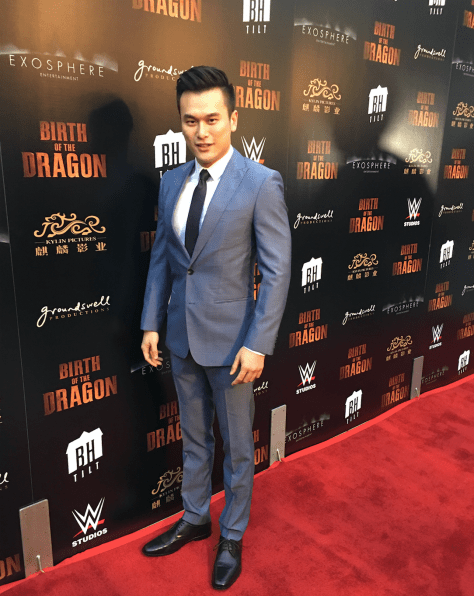
As the world becomes an increasingly smaller community, international collaboration and films about the mixing of cultures become more popular. 2016’s Birth of the Dragon tells the story of the iconic Bruce Lee. Recipient of the Golden Angel Award at the Chinese American Film Festival, this feature film amassed a loyal audience in both the US and abroad. As producer on Birth of the Dragon, Bohan returned to a familiar role of facilitating interactions between filmmakers and foreign markets. His most recent work with Kylin Pictures is producing on the upcoming feature film Shanghai Sojourners. Notably, Bohan helped secure the acclaimed Nick Cassavetes (The Notebook, My Sister’s keeper) to direct. The film is a love story of a man and woman from different cultures set in World War II Shanghai

Streaming films have become much more than a safety net for the industry, it has provided a viable means of supporting filmmakers. Hits in the Chinese market like Los Angeles Kidnapping (seen on China’s iQiyi) and Hot-Blooded Youth (available on the Youku streaming platform) have received millions of views. Both of these films share the common point of having Bohan Gong as the producer. It’s essential for the viability of the global film industry that the most accomplished of professionals like Bohan take part in a variety of productions. Delivering exceptional stories on any platform gains the trust of audiences and ensures that a great story is always that…simply a great story. Across international borders and across different platforms, great talent produces loyal audiences.


China’s Ranran Meng uses VFX to take audiences to dystopian future in ‘Fahrenheit 451’

When Ranran Meng was just a young, artistic child growing up in China, she became enthralled by the possibilities of the movies. She would sit in front of the screen in awe, blown away by the infinite possibilities that the medium offered, taking audiences to different places in time, and making the impossible, possible. The more films she watched, the more she began to wonder just how every element was made, and she found herself intrigued by the idea of creating something that wasn’t there during shooting and making it very real for viewers.

“The world has no limit, we can produce an image from the past or from the future, from down the road or other galaxies. Films present these worlds that are so real to us and show us something we would not experience in our day-to-day, or even our lifetime. I told myself as a child that I would one day be a part of creating these new worlds,” said Meng.

Meng now is living her childhood dream. As a compositor, Meng uses advanced visual effects techniques to create the impossible, which she has done for revolutionary projects like The Fantastic Beasts and Where to Find Them VR Experience, making the world of Harry Potter accessible to fans through virtual reality. She has also vastly contributed to the success of many award-winning and critically acclaimed productions, from HBO’s hit show The Deuce to Showtime’s Golden Globe winning mini-series Escape at Dannemora.

Another career highlight for Meng was working on the award-winning film Fahrenheit 451. Starring Michael B. Jordan and Michael Shannon, the film is based off the dystopian novel by Ray Bradbury, a story that Meng was a big fan of before the film was even announced.In a terrifying care-free future, a young man, Guy Montag, whose job as a fireman is to burn all books, questions his actions after meeting a young woman, and begins to rebel against society.

“The story talks about a future American society where books are outlawed and ‘firemen’ burn any that are found, focusing on the historical role of book burning in suppressing dissenting ideas. I like this story because it satirizes the society that tries to control and restrain people’s minds. This society phenomena actually still exists in our world, and it is important to present this to the audience and make them think and do something,” said Meng.

Fahrenheit 451 premiered at the world-renowned Cannes Film Festival in 2018 and aired on HBO on May 19th, 2018. Not only did it captivate audiences, but it wildly impressed critics, and went on to receive several award nominations, including five Emmy nominations. Such success makes Meng very proud, who worked tirelessly to make the film the success it became.

Rather than using VFX to create the impossible, for Fahrenheit 451, Meng used various software to refine every shot, creating an immersive experience for the audience. For this work, the goal is for viewers to not even realize she touched up a scene at all, removing background images that would take away from a shot or inserting important elements into the background to maintain consistency. For example, for the full view of the city shots, there were a lot of lighting boards on the top of the buildings; Meng removed the boards and created new building tops. Also, they shot the film during Christmas time, but that is not when the actual story takes place. Therefore, Meng had to go through every shot and eliminate any Christmas decoration or element that would imply it was the holiday season. It takes a refined eye to catch every detail, but Meng was more than up for the task.

“I like stories that are based in the future and have a science-fiction theme. This is new to me, as it was my first time working in the genre. The images are different and fun to watch or work on. They have a lot of effects in it,” said Meng. “I like the creative work in this project, I needed to change the environment from Christmas period to just a regular time of year, so I used elements in the footage to erase or fill out the scene. It was interesting for me, kind of like creating a whole new environment.”

Meng’s work for Fahrenheit 451 allowed audiences to travel from modern day to the future, just what she envisioned doing when she was a little girl. Creating a clean and complete environment for the film was pivotal to its success, and Meng was more than happy to be a part of such a moving and inspiring cinematic work of art.

“I am very happy to see this film presented to the audiences. To show this satirical story to more people and introduce such a good novel to a larger audience, it’s great. Maybe it can make people think about how knowledge is important. I think this movie is a good influence on the world and shows people what a free world should be. I am proud that I could be a part of it,” she concluded.


Written by Sean Desouza

Australia’s George Zach: Playing the Obvious Villain and Those Not So Obvious

Screen Shot 2019-07-16 at 8.23.28 PM

The most successful art is that which is universal and international in its nature. That which needs no translation and has an appeal that transcends the local identity. The same can be true for the artists which present said art; when we see something of ourselves in them, we are more welcoming. This is an apt description of actor George Zach who seemingly always appears as the character but in a way that doesn’t seem foreign. It’s a benevolent part of this actor’s career which has spanned theatre to film, Australia to numerous other parts of the world. From his Logie nominated role as Michael in Loulla to the metaphysically mysterious priest in Six Steps to Eternal Death, Zach has always found a way to perfectly fit in. There’s an element from his early childhood which contributed to this template and blossomed into a highly successful career.

Australians know George Zach well from his appearance in the iconic 90’s comedy film Nirvana Street Murder. Zach starred with other well-known Aussie actors such as Golden Globe nominated actor Ben Mendelsohn (Rogue One: A Star Wars Story, The Dark Knight Rises) and Mark Little depicted the culture clash of Greek immigrants and Australians in the country at the time. As a first generation son of Greek immigrants himself, George’s preparation for this role was literally a lifetime in the making. His own lineage has blended ideally with a number of productions in which he has been cast. These range from comedy to drama to…well, something altogether different. As someone who grew up with and rejected stereotypes, George was happy to take part in the SBS TV production English at Work. This ground breaking series dealt with issues relevant to people of non-English speaking backgrounds in work place environments. Presented in a dramatic documentary format, it afforded Zach the opportunity to portray an immensely diverse set of characters. He informs, “It was a really important and revealing program. Facets like the Australian sense of humor was explored. A joke in one person’s language can easily be an insult in another person’s culture. Hilarious and heartbreaking at the same time. The propensity to be misunderstand is enormous. I did enjoy this series. It reminded me of how difficult it must have been for my parents and other immigrants who faced challenges which I can only imagine.”

Completely contrasting this very real world type of subject matter; George appeared in Peter T Nathan’s (known for the award winning Australian TV series Shortland Street and Home and Away) Six Steps to Eternal Death. Selected an Official Selection of the Celtic Mystery Short Film Festival, nominated for Best Supernatural Film at the New Hope Film Festival, and a recipient of awards from the Bucharest Shortcut Cinefest and others, this highly stylized and does not lend itself to a logical interpretation. Zach appears as a priest in an Alternative Universe where a Mother is forced to accept she is dead and move on. The actor notes that the power priests held over parishioners in his youth gave him insight into the role.

Equally fantastic and much more menacing is Zach’s appearance as King Oleander in Michael Loder and Charles Terrier’s fantasy/war film A Little Resistance. Driven to madness over the death of his wife, King Oleander embarks on a campaign of obliteration that ultimately results in his own daughter taking up arms against him. The personification of evil in its extremist form, George relates that he found the experiences quite enjoyable. For the affable actor, the role seems to have been a catharsis. Actors often take the painful circumstances of others and live through them, coming out wiser in the end. For George Zach, there are infinite more experiences awaiting him and his admirers.

Coomes in Bye Bye Blue: a Thoughtful Portrait of Mental Illness

Bye Bye Blue

Kasia Kowalczyk’s film Bye Bye Blue is receiving a great deal of buzz as it prepares to debut on the film festival circuit; actress Sarah Coomes is a major part of this. Sarah’s moving performance as Flora breaks down a number of walls around two subjects about which the public feels great unease; homelessness and mental illness. Though they’ve been displayed numerous times, the performance Coomes delivers in this particular production draws a very clear line that communicates her circumstances in a very relatable way. A great actor is not only someone who is believable in the role but who enables the audience to see something of themselves in the character; something Coomes resoundingly achieves in Bye Bye Blue.

Clever is a word which might imply someone with dual intent, perhaps even duplicitous. While Sarah’s presentation of Flora is most certainly clever, there is no ill intent or deception involved; at least not by design. The remarkability of both actress and film in Bye Bye Blue is that we not only discover more about this person whom we are quick to judge, but also come to understand our own inclinations of labeling others in difficult situations. Flora is a woman afflicted with a mental illness brought about by physical circumstances. Describing her iteration of the character, Sarah describes, “I didn’t want her to be presented as a ‘mad person’ or typical person that we’ve seen so often in film. I did a lot of research about people with mental illness and how their minds become fragmented. They become dissociated with reality and are forced to construct new ones. Honestly, it’s a way of investigating the amazing human mind and what it can do to protect itself. That’s vastly different than someone screaming and pulling their own hair out. I researched everything from schizophrenia to imaginary friends. There’s a huge spectrum out there.” As recipient of awards from the Jerwood Foundation, RC Sherriff Trust, and winner of the Westminster Prize Soho Theater, Coomes is known throughout the industry for her dedication to detail in constructing her characters.

This Kasia Kowalczyk directed film is the depiction of a young woman living on the streets who has collapsed outside her tent. While it is clear that she is suffering from some mental illness, hearing disembodied voices and only tolerating clothes which are blue, it’s evident how dire her situation is once she is taken to the hospital. While the doctors attempt to explain to Flora that her brain tumor is killing her and increasing her mental symptoms, she is unable to accurately process this. When Sarah (as Flora) flees the hospital in a panic, her desperation is palpable. It’s at this point when the film becomes surreal and points to Flora’s end. Her imaginary friend “Blue” leads her to the beach where they play. Flora is confronted with the notion that she must either say goodbye to Blue or die.

What both the filmmakers and the actress have done in Bye Bye Blue is to personalize, justify, and place a very real face on those who live on the streets. Coomes in particular manifests layer upon layer of a young woman dealing with the most sobering of circumstances while being void of a support system. Her personification of this character is deeply moving and altering. What could have been a gross over simplification bordering on a trope was instead crafted into a person of which many of us might state, “That could be me!” With so many films that cover the same events, it’s often the actors like Sarah Coomes who captivate us and make these films unique. Bye Bye Blue serves to erase any demarcation between “regular” members of society.


Canada’s Chandra Michaels and Myke Bakich talk upcoming film ‘Nail Bait’

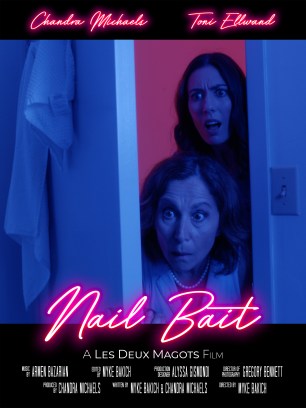
One of the most beautiful and complex relationships in this world is that of a mother and her daughter. This theme has been explored throughout time through art and literature, and Canadian filmmaking power couple Chandra Michaels and Myke Bakich have now contributed to that extensive and distinguished list with their upcoming film Nail Bait, which takes a unique and compelling look at the bond between a mother and her daughter.

Nail Bait, written by Michaels and Bakich, tells the story of Emma and her mother Carol, who head to a nail appointment only to discover the salon is a front for a rub & tug massage parlor. It doesn’t take long for Emma to discover that Carol has ulterior motives for their day. Emma is baited and dragged into infiltrating the underbelly of the salon with her mother to prove her father is a paying client there. After stumbling on some “hard evidence” but no sign of Dad, the women confront their issues and discover other illegal and dangerous enterprises. Before they can sneak out, they are caught, cornered and threatened, discovering they would do anything to protect one another, surprising both themselves and each other.

“We wanted to portray an honest mother-daughter relationship, that despite its challenges, when put to the test reveals how unbreakable that bond can be. We like that we’re breaking new territory exploring a location with weight and stakes we haven’t ever seen before in a mother-daughter buddy story. The story straddles a few genres; drama, comedy, action which was tricky to execute but rewarding to do,” said Michaels.

Michaels acts as writer, producer, and leading actress in the film, playing the role of Emma. When writing Nail Bait, she was inspired by visits to the spa with her own mother, questioning its integrity and wondering what could be going on behind closed doors. She and Bakich were interested in creating a film that delves into the often-ignored occurrences at such spas, while diving into the dynamics of the mother-daughter relationship and internal and external facades.

“Chandra is an incredible filmmaking partner. It’s amazing that she was able to balance the demands of playing Emma with producing the film. She was very aware of the needs of our cast and crew, managing schedules and taking care of our production while balancing her demands as a lead performer. Chandra’s got a great instinct for performance and was very involved in the editing process and finding the authenticity. She’s a great talent, shined bright throughout the entire production and was crucial in bringing this film to fruition,” said Bakich.

Bakich’s approach to the story while directing was to embrace the uncomfortable. He wanted to tell a different type of mother daughter story, one that takes place in an unexpected location and situation and see where that would go. He wanted to play into the discomfort of the bizarre juxtaposition of a rub & tug parlor. This would also allow for a project with two dynamic leading female roles, something important for both Bakich and Michaels.

Finding the ideal location was one of the biggest challenges that Bakich and Michaels faced while making Nail Bait. They required a hallway long and wide enough with many different doors to actual rooms. Bakich wanted to create distinct difference between the upstairs reception and the underbelly of the salon. The upstairs being drab, mundane, slice of life, and the massage parlour below being colorful, intense, and almost surreal.

They found a warehouse space, that was previously a grow-op, with the required hallway. However, it was only half as long as they needed. They decided to embark on an ambitious set build for the downstairs hallway and adjacent doors in the film. With a talented art department team that was diligent, the build was achieved within days. Though, even with the build, the doors and rooms still needed to be reused and connected in ways that they weren’t naturally available. The night before, Bakich plotted it all out and did his best to convey the logistics to the team. They successfully turned one hallway into two, connecting many different rooms and doorways that were in different directions and ends of the location, with changing lighting and color schemes as well. Such execution is a real testament to Myke’s strength as a visual problem solver and storyteller.

image2“Part of what attracted me to shooting Nail Baitwas creating the two worlds that the characters inhabit. I liked Myke and Chandra’s energy and commitment as well. It’s always a challenge to elevate visuals on lower budget projects, but thanks to the generosity of Panavision Canada and John Lindsay I was able to utilize some great camera tools. Shout out to the amazing crew as well who worked hard to make it all happen,” said Gregory Bennett, Director of Photography.

Bakich’s favorite scene in the film came when shooting a tracking shot down a flight of two dozen stairs. It was no easy task, but the director was up for the challenge. Filming into the early hours of the morning, he and Bennett did five takes with a heavy steadi-cam rig and totally nailed the shot. Only once it was perfected did they discover that a key prop was missing, and they had no choice but to reshoot.Bennett leapt up the stairs, willing and ready to do it again and they all followed his charge. They shot another five takes, and the end result is mesmerizing.

“Toni Ellwand who played the mother Carol, grounded her in reality, while bringing a comedic spontaneity to the role. She balanced both the serious and ridiculous nature of the situation in spectacular fashion,” said Bakich, who co-wrote and directed the film.

Ellwand is a Toronto based actress who is known for a series of popular projects, including Blindness, Murdoch Mysteries and the Emmy-award winning The Handmaid’s Tale. She had previously worked with Michaels years prior on a commercial for Ontario’s health care cards, so they were happy to reunite as mother and daughter on this exciting new project.

“Myke and Chandra are a dream team, I would work with them in a heartbeat. They both love what they do so much and are generous and enthusiastic. Chandra is an absolute dream to work with as both an actor and as a producer. Working is her happy place and it shows in everything she does when we’re on set. Myke is quietly determined. He’s gentle but he knows what he needs, and he patiently works until he gets it,” said Ellwand.

Nail Bait premieres at the Toronto Shorts International Film Festival on Saturday March 2nd, 2019. From there, the film is expected to make its way to several more festivals, seen on international screens. They are also exploring the possibility of expanding it into a series, as this film is part of a bigger mother and daughter story.

“It’s an honor to premiere at the Toronto Shorts International Film Festival where our local cast, crew, colleagues, friends and family can share in the experience,” said Michaels.

Toronto Shorts has a special place in Michaels’ and Bakich’s hearts, as their first film, Busy Bee, had its world premiere at the festival back in 2015 and ended up winning the Best of Canada award. Here’s hoping for similar success on their latest venture.

“We love making films and we love doing so together. Creating our own projects is empowering and liberating. We really learned so much making this film and look forward to applying that knowledge to future projects. Filmmaking is really a team sport and we had an amazing team on this project,” they concluded.

Torontonians should check out Nail Bait this Saturday at 7 p.m. at Carlton Cinema. In the meantime, watch the trailer here.

Hannah Ryan Shows the Darker Side of the Hollywood Dream in American Eggs

IMG_9580

Americans are not the only ones who can find an interesting take on other cultures. Brothers Callum Rory Mitchell and Lewis Mitchell are sons of famed Australian actor Mark Mitchell (star of Banff Award and Logie Award-Winning television series Round the Twist) and TV creators in their own right. The siblings are bringing their own funny and somewhat dark take on Hollywood in the series American Eggs. They’ve included some substantial Aussie talent in the role of Cordelia, thanks to actress Hannah Ryan. The series depicts what LA thinks it wants to be versus what it really is. It’s an ideal and entertaining presentation of a microcosm of the American state of mind in a very unsteady environment. Ryan presents Cordelia as someone starkly different than the California dream girl one might envision. There’s plenty of depth and substance to Cordelia; so much so that it’s difficult to think of anyone else than Hannah Ryan filling this role.


There are more than enough films and television productions which profess to the glamour and excitement of Los Angeles & Hollywood; American Eggs is not one of these. The story begins with Pony (the protagonist) face down in the street after being robbed. He’s just one of a host of characters who skirt the borderline of decay and decadence in an attempt to simply get by in Southern California. Pony doesn’t long for fame but rather just to be a part of the action in this fickle and somewhat precarious city. The story follows him as he rubs elbows with the almost famous, the semi-influential, and those with potential; refusing in spite of his experiences to realize that LA is not the place he dreamt it would be.


Cordelia [Hannah] sees herself as a an up and coming skin care entrepreneur. In reality, she might be the most frightening person in the entire series. In order to avoid going to jail, Cordelia has locked a group of women in her own house after an unfortunate turn of events. At best, she’s made a major mistake; at worst, she’s unhinged and breaking from reality. No aspect presents this better than when Cordelia moves out of town to work at a donut shop in an attempt to hide out from the repercussions of her actions. She’s entitled and lacking the normal borders that construct ethical actions. The cast (which includes Rhys Mitchell of The Happy Worker with Thomas Haden Church) is given ample latitude by the director to explore a spectrum of mesmerizing and at times disturbing character motivations. Ryan relates, “I take it as a complement that the Mitchell brothers who are the creators contacted me and asked me to play the part. I’d previously acted with their bother Rhys Mitchell (cast in Oscar-winning director David Lynch’s upcoming film) and they felt I was ideal for Cordelia. She’s a desperate girl who is a hermit, lonely and trying to figure a way out of her predicament. She certainly provided me with a lot of great ideas as an actress.”

HannahRyan-1284

Cinematographer Carl Nenzén Lovén Enjoys International Acclaim

carl-1Cinematographer Carl Nenzén Lovén’s sterling professional reputation is distinguished by his signature mix of gorgeously captured visuals, encyclopedic knowledge of camera equipment and his unflagging zeal on location—no matter how challenging the setting may be. In just a few years’ time, the Swedish-born Lovén has emerged as an international force, one whose quickly growing resume of professional achievements reflects his generosity of spirit.

Whether it’s a music video, short or feature Lovén delivers spectacular results, working not just as lead cinematographer but also, when a project appeals, serving in innumerable capacities in the camera department, sometimes as assistant cameraman or working the crucial on set function of focus puller.

Lovén’s expertise proved invaluable on his most recent assignment, ‘Go Back to China,’ the forthcoming dramedy feature from noted producer-director Emily Ting.

“I loved the script when I read it,” Lovén said. “The story follows Sasha, a trust fund baby who will lose her fortune unless she returns to China to work for her father’s toy company. It explores the complex relationship between a neglectful father and a daughter who’s been brought up in a wildly different culture, so it’s a really interesting combination of elements.”

“I was first assistant camera for the Hong Kong, and China portions of the movie,” Lovén said. “I was the only one flown in from the US as camera crew, to oversee, and act as connection between our DP (director of photography) Josh Silfen and the local crew. Since I’d spent roughly four years of my life there, studying Specialty Cinematic Arts at Hong Kong City University, I was well equipped to interact with the locals—far better than someone who had just arrived.”

While he could navigate the cultural landscape with ease, Lovén was presented with a different challenge—limited technical resources.

“I helped in the pre-production picking camera body for the China portion, as well as advising [on] lenses,” Lovén said “When presented with a new project I usually go through my mental library and evaluate why I would select a certain camera or a certain lens, consider why we would shoot on film, or why shooting digital would be the better choice. For ‘Go Back to China,’ it wasn’t so much choice, but more based on the rental house’s existing equipment, I got us the best gear we needed for the job.”

The cinematographer routinely mixes art and science, and Lovén also served as de facto trouble-shooter. “As first assistant my main job is to save time, and make my DP’s job easier,” he said. “That means advising on maybe how to make a shot different, or foresee things that have to be taken care of later. Apart from being second in command for camera crew, and head of gear, I was also focus puller.”

’Pulling focus’ is the act of changing a lens’ focus in correspondence to a moving subject’s distance from the focal plane, to maintain a sharp, consistent image. It’s a subtle but critical element: if an actor moves away within a shot, the focus puller will change the distance setting on the lens in precise relation to his changing position, or shift focus from one subject to another within the frame, as dictated by what the shot requires. Thus the focus puller/cinematographer is hands-on steward of a film’s entire visual narrative, and Loven’s technical skill and intimate knowledge of cinematographic and optical theory is second to none.

”Carl was an essential member of the team on Go Back to China,” DP Silfen said “He always rolled with the punches, navigating the challenges of working with local crew in a foreign country, and his focus pulling was spot on.”

Lovén always impresses with his characteristic blend of involvement, energy, technical knowledge and distinct knack for dynamic visuals. Not surprisingly, director Ting tasked him with some additional follow up.

“When the Asia portion of the movie wrapped up, I was called back to Los Angeles to do the pickup shots as well,” Lovén said, “It will premiere at SXSW this year, will be screened at the San Jose Film Festival and they are securing more festivals each day.”`

“It was a great experience, and I am really excited to see how the film turned out.”

Cultures Clash in Producer Yuanhao Du’s Kung Fu Western Good Friend from the West

Screen Shot 2019-08-22 at 11.05.10 AM

It’s difficult to make a film about the wrongs that have been done by the people of one culture to another, while still making something unusually fascinating and enjoyable. Quentin Tarantino did this with Django Unchained in recent times. It’s a delicate balance that is precarious in its manifestation. Good Friend from the West evokes shades of this, juggling the cultures of White settlers, Native Americans, and Chinese railworkers in the Old West. Late nineteenth-century United States is a vibrant petri dish for exhibiting this trio of vastly different cultures and their perceptions of each, as well as their confrontations. Executive Producer Yuanhao Du is more than a talented filmmaker; he has the perspective to bring essential elements to this film. A native of China who has made films in the US and throughout the world, Yuanhao was void of the template of manifesting this era of US history even though he was well aware of it. Lacking a pre-imposed idea of “how” a story set in the Western US Frontier “should” be told, this EP and his cast & crew created an immensely unique modern Western film. With some obvious nods to martial arts filmmaking techniques, there’s even a bit of whimsy to this story which is most certainly dark in its lesson.

Good Friend from the West takes place in 1873 as a Chinese railworker (played by Zhan Wang) makes a hasty escape from his indentured servitude on the expanding westward rail system construction. During his journey, he encounters a wounded cowboy (played by Dan Rutkowski) who is himself avoiding capture by Native American soldiers. When these Native Americans descend upon the duo, one of the most satisfying, surprising, and unintuitive scenes is presented. The film integrates 70’s Kung Fu film stylings as the railworker fights off the Native Americans. Not since films like Shaun of the Dead have we seen such an unusual and positive complementing mish-mash of genres. Producer Yuanhao relates, “This story combined three cool elements for me; a Western, a physical film, and Chinese and American sensibilities. At one time,  films about Chinese and American people working together were very hot; like those Jackie Chen movies. But now, people barely can see these kind of movies. Filming has magic that can influence people’s minds. If we want to reduce the misunderstanding between these two big countries with two different cultures, then as filmmakers we need to make more of these films. We have a lot of films to show how American and Chinese people are different but more importantly, we should find out what we share in common. If we want to survive, we need to know each other and work together.”

Shot in the desert on 35 MM Film, the production costs were ample. A blending of traditional Western meets Kung Fu action is also not the most obvious and easy concept to sell to investors. Yuanhao turned to crowdfunding to ensure sufficient funds for the film. While it has the obvious result of raising the necessary capital, Yuanhao reinforces that he saw this approach as being an added source of advertisement which greatly benefited the production as well. More than most, the concept of the film was a gamble. The physical and creative efforts of the cast and crew are obvious in the truly cinematic presentation of grand vistas and cultural clashes that are visible on-screen. The film’s cultural appeal and resonance is vetted by its status as an Official Selection at important events including the Hong Kong Film Art International Film Festival, Miami Independent Film Festival, Los Angeles Film & Script Festival, and awards from WordFest-Houston International Film & Video Festival (Gold Remi Award), International Independent Film Awards, European Cinematography AWARDS, and numerous others. For Yuanhao, it’s more about the reception he sees in the audience as he states, “It always feels good when I see that people like my films because I know deep down in their hearts, they agree with the philosophy of my films. I believe that this will eventually be the foundation of reducing the misunderstanding between different cultures.”

All That Glitters is a Timeless & Timely Tale

ALL_THAT_GLITTERS_1
Liv Li on the set of All That Glitters

While great storytellers can relate any tale in a gripping manner, it’s always best when they have some direct personal attachment to it. The film All That Glitters is a story of female perseverance and empowerment; a poignant topic these days perhaps more than ever in the world. Director and writer Lincheng Yang had a strong attachment to the story (more about that later) as did first assistant director for the film Liv Li. Gender does not usurp talent but we also find ourselves in an era where thankfully it is also not prohibitive. The plot of this film is made more authentic by both the talent and experiences of these incredible women who created it.


The female experience permeates nearly every aspect of All That Glitters. Madison Greenlund appears as Helen Noah, a talented copywriter in her twenties who has not come into her own professionally. As a young girl, Helen (played by Sierra Anne Murphy of Paramount Pictures distributed Bumblebee) was diagnosed with scoliosis. The ridicule she received in her teen years destroyed her self-esteem and has held her back in her profession now as an adult. Her work partner [Jerry] is a charismatic handsome writer who is more than eager to take credit for Helen’s exceptional work. Judy is Helen’s feisty and well-intentioned boss who makes it her mission to challenge this young female writer to rightfully claim her recognition for her talent.


All That Glitters is based on Lincheng Yang’s own personal experience. Present day finds her as an acclaimed and respected film director in a primarily male dominated field. Placing Liv in the first assistant director role further ensured that the production process flowed smoothly, safely, and exceptionally at the hands of yet another female filmmaking professional. Li confirms that she has found herself in scenarios that called for a woman to step up and command the same treatment and respect that male counterparts are given. She affirms, “I think in this male-dominated industry, it’s very hard for woman to break through. Even today, we have to force ourselves to speak up in this industry. If you want to straighten a rusty and distorted pipe, the force you use to do it will always be harder than the initial power that’s placed upon it. I’m glad to see that the most powerful unions, like the DGA, are putting more attention and strength in actively helping women empowerment in this industry and other minorities of the society, like LGBTQ community and minor ethnic groups.” Juggling the logistics, preparing daily call sheets, checking cast and crew, and maintaining order on the set, Liv’s skill, talent, and determination are unquestionable. Her work and that of the entire production received numerous recognitions including Best Narrative Short Film at CineCina, Best Director & Best Short film at NXT UP, Best Cinematography at the Los Angeles Film Awards, and Official Selection of the Elijah Wells iGen Film Festival and The Film Collective.


The fact that female filmmakers are the creative forces behind such exceptional productions is important to state and yet the fact that it must be reiterated seems somewhat defeating. Lincheng Yang, Liv Li, and countless other female filmmakers will increasingly be recognized as leading voices in the field. While their part in the continuing exposure of their art demands long hours and difficult situations, ours responsibility as the audience is as simple as sitting back and enjoying what they have created for us.