All posts by pressva

XIANG NAN GONG ENABLES THE PRODUCTIONS THAT TELL THE STORIES OF CHINA TO THE WORLD

IMG_4375

It has been said that everyone has a story. In the world of television and film production, writers and directors are considered to be the creators of these stories. While this may be true, without the mastery of a technical director and producer…none of these tales would ever reach an audience. Having a vision is a very different thing from having the skills and knowledge to manifest it. Xiang Nan Gong has served this role for decades at Shandong Radio and Television, earning him the status as one of China’s most respected professionals in this field. During his time with Shandong he oversaw the multiple technical facets in the creation of documentary and scripted series. From massive scale variety shows to location documentary series which told the history of the Chinese people, Gong designed and facilitated lighting, staging, sound, and a myriad of other components which are essential to delivering the filmmakers vision. Xiang Nan might be the least well-known member the production team but he is definitely the most vital.

As with all cultures, the Chinese people are interested in the history of their ancestors and land. A country of such immense size and variety of inhabitants has many stories to tell. “The Story of Yili River” is a documentary depicting the Yili River from the perspective of the cheerful running water line.  It explores the Yili river people’s folk customs, rich life, and delicacy. Gong focused on his expertise as a recording engineer for this production, recording and placing the authentic music of the inhabitants of this region to tell the folk customs of the people on both sides of the Yili River.

Xiang Nan worked closely with the director and a small team of professionals in the studio to create and recreate the sounds of the Yimeng People for the “Shandong Report.” Layering a series of sounds and sound patterns, Gong created the sound design with a mixture of authentic music, location recordings, and studio sonics which depicted the hard lives of these people. This village is surrounded by high mountains and steep cliffs, streams, and other harsh natural environmental factors. To properly recreate and communicate what these inhabitants experience required a consummate expert like Xiang Nan.

As technical director and producer on Shandong’s “Sun Bin Military Strategist”, Gong aided this production which tells of a man who also lived through a difficult situation but persevered and elevated himself to the level of great respect. Famous for receiving the punishment of face tattooing and having his knee caps removed, Sun Bin later became one of the most respected and trusted strategist of his country’s era. While remarking that his difficulties were nothing compared to Sun Bin’s, Xiang Nan concedes that the equipment of the 90s which he used was less than desirable for this thirteen-episode historical series. He tells, “Historical dramas are grand in scale with many layers of sound. This is what makes it so believable to the viewer. While your conscious mind may not notice it, something in your unconscious tells you that you are really there amidst these battle scenes and different locations due to the small details. Today’s state of the art technology makes the process much less cumbersome but back when we made this series, it took many hours to achieve what can happen in minutes now. Regardless, the finished product is what is important and ‘Sun Bin Military Strategist’ was very well received and popular.”

Another of Gong’s productions, “44 Notes” received international and domestic acclaim. “44 Notes” won the first prize from the State Council Information Office and the Ministry of radio and television, the “Golden Bridge Award” in the United States, Japan, Germany, Taiwan, Hong Kong and other countries and regions, and was adapted for television drama production at the center in Beijing. This documentary shows the bicycling trip of teacher Du Xiangjun and forty- four of his students (of the Zibo Normal School in the Shandong Province) as they made their way to the capitol to perform a concert. Along the way, they sing and experience a number of hardships on their journey. Half way between reality TV and unscripted drama, “44 Notes” called upon Gong to be prepared for an unlimited amount of variables that could affect the filming and recording of this production. Its international acclaim is a testament to his expertise on this project.

As a loving husband and proud father of a daughter, Xiang Nan was especially happy to assume the duties of technical director and producer of Shandong’s “The Charm of Women.”

The program is the first female Chinese series about female characters with outstanding contributions from all walks of life. It introduces the work, study, life, and successful careers of each woman. Shot in documentary style, Gong took particular care to oversee the lighting and sound to present these women with the respect and admiration which their achievements deserve. While certainly not the most famous subjects of the many productions he has overseen, Xiang Nan professes that they are among the most important because they serve as an example to current and future generations like his daughter, exhibiting the great importance and impact that Chinese women have on their families and society.

As the professional who literally “sets the stage” and supplies the sounds on a wide variety of productions, telling the stories of China’s past and present; with international award-winning productions to his credit, the respect of his industry, and a long history at Shandong Radio and Television, Xiang Nan Gong is among the elite technical directors and producers who continues to bring new ideas to an ever expanding production community.

EVA YE IS CALM, COOL, AND COLLECTED FOR WARM SMOOTH MEAN

10178115_10152071663201519_6690902688629142441_n

Conflict is a deeply embedded part of our lives; no question. It’s ironic that in an attempt to escape the day to day difficulties which we experience, we often find escape by watching the problems of fictional characters in films. Most of us are oblivious to the fact that the filmmakers who grant us this means of solace experience an ample amount of conflict themselves in their endeavors. Cinematographer Eva Ye experiences conflict constantly with her involvement in films. It might be hazardous conditions, inclement weather, differing opinions on set, and others factors. The main difference is that when Eva deals with these factors, budgets and artistic expression hang in the balance. Ye has a reputation for keeping a cool head while getting the desired shot. For anyone who has even been on set during a production, that’s much easier said than done. Whether she is the DP on a TV production, music video, film, or any manner of creative filmmaking, Eva’s small size holds big ideas and large talent. Come to think of it, she’s a bit of a contradiction herself with so much talent inside a small container.

Ye’s work on the film Warm Smooth Mean (Official Selection of First Look Film Festival) has received great praise. This film with its surprising reveal near the end is full of mystery and tension. Warm Smooth Mean follows Hunter Nelson, a young man troubled by the suicide of his father River Nelson. River was the singer of a legendary country duo named Silent Station. When Hunter receives a royalty check from his father’s work, he travels to a small town to give the check back to his father’s former bandmate Jerry Lee McCoy…and to search for the answers behind River’s untimely passing years ago.

Jess Maldaner (director of Warm Smooth Mean) and Eva worked extensively in preproduction to make their plan for the film. Past experience had taught them that having the film specifically and painstakingly planned out would benefit them later. While the industry has been around long enough to make it difficult to create a truly “original” premise, the look and stylized quality of a film can often set it apart. The first part of the film takes place in Oklahoma and the lighting appears soft, mellow, and yet somewhat cold as Hunter begins his journey. As the film goes on, the secret reveals, the fight ensues, and the filmmakers begin to use more harsh and warm light to construct the scene, which heightens the stakes.

Ye’s work is center stage in perhaps the most climactic scene of the entire film. She describes, “Because of my dance background, my strong ability to operate a handheld camera is something that makes a lot of sense to me. I’m not a strong person. I’m actually quite petite compared to a lot of operators, standing at 5’4” and 110 lbs. To be able to move a camera with my hand quite intuitively is something I’ve learned through years of dancing. The rehearsing was definitely crucial in achieving this shot. We spent almost the whole night shooting this scene. There were at least 10-15 times of me moving with the actors without the camera to test out camera positions. When it came to the actual shooting, I knew exactly where I needed to go. There were people spotting me from behind in case I ran into something when I was backing up. I backed up with the actor coming towards me and stopped when he stopped. I pushed in when he got a hit in the face and fell backwards. It all worked out really naturally. Planning and rehearsing was the core of getting the scene right.” Director Jess Maldaner augments this description stating, “Eva’s handheld camera operation in this crucial fight scene was flawless! Her creative instincts allowed her to deliver the perfect amount of camera movement in the shots to create a high level of tension for the viewing audience. Eva’s work was paramount to the final look and emotional effectiveness of Warm Smooth Mean. Her technical skills coupled with her understanding of how to convey an emotional experience visually was a huge asset to the final film. She is a master of camera movement. She is also that rare exceptionally talented artist who is completely free of ego. ”

Sometimes your talent is welcomed, other times it requires some convincing when opinions differ. While filming one of the opening scenes which required some very smooth and stable camera work, the production found themselves without a car mount for the camera. While Maldaner was convinced of the need for green screen to achieve the look for the shot (taking place on a bumpy stretch of highway in Palmdale), Eva was convinced that the quickly disappearing sunlight would not accommodate this. Arbitration was in process and Ye held to the fact that her abilities and ideas would get the desired effect with greater expediency…which it did. The finished scene shows a steady shot with the blurred flat desert outside the window. Conflict averted, artistic vision intact.

Part psychosexual thriller, part art-house film, Shen is a unique portrait of desire and domination in their most cerebral and bodily manifestations. Conflict abounds in the storyline and the imagery Eva produced for this film propels it. Shen’s life is irreversibly altered when she discovers an anonymous artist has drawn her in an erotic position. After a series of strange occurrences, Shen realizes this man is drawing her future. Though her obsession with him begins as a mere daydream, his continual re-appearance starts to make her question what is real and what is hallucination. Meanwhile, her relationship with her fiancé takes a turn for the worse as he suspects she is fantasizing about someone else. His desire to control her reaches a fever pitch after he invades her journal and uncovers her disturbing secrets.

Writers Jace Casey (also the director of Shen) and Abigail Flowers understood that they needed an exceptional DP to create the mood and look which the storyline evoked. Ye’s reel had suspense, romance, thrillers, drama, & music videos. The style of shots and feeling delivered in Eva’s camera language clicked with theirs. While Casey had a plethora of experience in theater and as an actor, having an accomplished cinematographer like Ye greatly aided his process for this film. Eva recalls one scene in particular in which she was able to use her abilities to aid her director recalling, “On set, we maintained communication and respect for each other constantly. There was one occasion when we needed to take a shot of the downstairs swimming pool through the point of view of the actor standing at the 30th floor apartment window. In Jace’s mind, he knew that’s what he wanted but he was unsure if the focal length of the lens, the height of the camera, and the tilt-down angle of the lens barrel were appropriate to convey the action. He was on the verge of eliminating the shot. My experience and knowledge of such shooting situation helped Jace to understand how we could achieve this particular shot, which turned out just the way he wanted if not better. I think it is the understanding of the fine line between a creative collaborator and a loyal supporter of his original vision that made us work so well together.”

The fruit of that cooperation among the two resulted in a film whose achievements include: Harlem International Film Festival “Top Short” (2016), Tampa Bay Underground Film Festival “Best Escapism Film” (2016), and Official selection of Studio City Film Festival, Laughlin International Film Festival, & Monarch Film Festival (2016).

While there are so many talented filmmakers in the industry these days, ability alone is not the deciding factor in regards to who other professionals choose to work with. Many times it is the proper combination of expertise, artistic vison, and temperament that win out. Eva agrees, “My ability to always find the right angle makes me incredibly versatile, yet I am also very strong and firm with my suggestions. I know what I want, yet am willing to consider alternative options. That is a courtesy I always offer to my fellow filmmakers as well. The willingness to listen to others while believing in yourself is an asset. I’d like to think that my calm presence on set helps create a balanced, mindful atmosphere for shooting. Even when things may not be going right, you should always find a way to stay focused, remain positive, and strategize.”


YVETTE GREGORY IS WINE TASTING

WineTastingScreenGrab1

While actress Yvette Gregory looks like Beatriz Jones, the character she plays in the Eros Panhellenios 2017 film Wine Tasting, the dichotomy is clear when you study each woman. It’s even more clear for the woman who becomes the other. The two may share some history with wine, Gregory’s family has a vineyard (Hentley Farm in South Australia) and Jones is in a relationship with a sommelier, but that’s close to the only intersection for these two. While Beatriz is a bit “tightly wound”, Yvette has been an artist seeking out challenges since her days as a child on set in her homeland of Australia. It’s ironic that it takes someone as free spirited as Gregory to convincingly portray the constrained Jones. It’s just one aspect in a series of counter intuitive preconceptions you might make about Gregory…which you’ll soon learn to realign.

Having already experienced a highly successful acting career in Australia and enjoying a comfortable living would be enough for most of us but for Gregory there is always a new mountain to climb. Entertainment is in her DNA (her mother was a model) and she was in front of the camera while still in her single digits. Acting was as everyday as…well, everyday life. While notoriety and financial compensation is the definition of success for most people, new challenges and the pursuit of her craft are paramount for Yvette. Leaving her stable and successful acting career, family, and friends in Australia; this actress headed to Los Angeles in search of success in Hollywood.

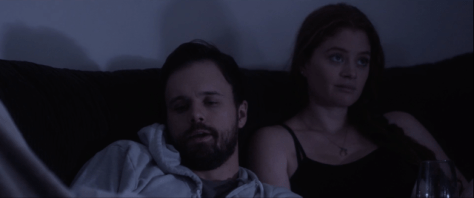
The pursuit of success and the conflict it can cause is the theme of Wine Tasting in which Gregory portrayed Beatriz Jones, the girlfriend of aspiring Sommelier Ed Tate (played by Josh Thrower). Wine Tasting follows four men who have struggled and sacrificed vast swaths of their personal and professional lives to become professional wine tasters. When all but one of them passes the incredibly difficult sommelier certification test, the ensuing conflict threatens to tear their close-knit group apart. Yvette’s character is one of the men’s girlfriends, and throughout the film she struggles to maintain their relationship as his wine-tasting obsession becomes overwhelming. Wine Tasting’s Award Winning script by Justin Samuels has won awards at Film Festivals including: the Beverly Hills Film Festival, Sunscreen Film Festival, Evolution and Mallorca International Film Festival, and is an Official Selection to the San Rafael Film Festival. The theme of success, community, and conflict is not foreign to Yvette or her chosen profession. She comments, “Of course we all have that little green monster inside of us. I would say it’s probably even more prevalent in the entertainment Industry. Everyone has their own path and if you stay in line long enough, your turn will eventually come. I have friends who have found success back home and in Hollywood very quickly and others who have hustled for decades. I know my biggest character defect is when I start to compare myself to someone else. It’s good to take a step back, look at what you have accomplished and find gratitude for everything you have achieved so far. The main difference is if you recognize these things in yourself or if you impulsively act on them. One of the great things about acting is that you do a lot of introspection, which allows you to not just react without thinking.” Gregory is much more actualized than the main characters of Wine Tasting who are sometimes defined by the situations that occur in their lives.

Yvette’s role as adult escort Stephanie in Amazon’s “Private Sales” couldn’t be further from herself or Beatriz but the role gave the actress a great deal of exposure, leading to opportunities such as her role in Wine Tasting. While “lady of the evening” may not cause you to think “girlfriend”, the producers of Wine Tasting recognized something in the portrayal that worked exceedingly well. Gregory agrees, “I think my role in ‘Private Sales’ played a big a part in this casting even though Beatriz who I was cast as in Wine Tasting couldn’t be any more different than the role I played in ‘Private Sales’! Beatriz is totally reserved and a bit of a prude with jealousy and trust issues about her boyfriend. I think I pull off the pretty nerd look and that’s Beatriz’ vibe, which helped casting decipher the role for me pretty quickly. Beatriz is a bit conservative and reserved but isn’t afraid to tell it how it is when it gets to the breaking point. She really loves Ed but is torn because he slowly becomes more and more distant, showing little respect for her time. Relationships are hard at the best of times but, when a relationship is new and other commitments seem to become more important, it really tests the trust and stability of the relationship. Beatriz is intelligent, articulate and loving but she is also a little emotionally immature. They both have a lot of growing up to do.”

The conflict that comes from a lack of time is not restricted to relationships and their love. Yvette was cast as Beatriz almost as filming was set to start. Even when you love what you do, a cramped timeline can lead to anxiety. Inevitable last minute changes occur, as in all productions, but the time afforded most actors to truly and deeply understand their character was significantly reduced for this actress…not that you would ever know it. Wine Tasting’s director, Josh Miller, declares, “Yvette is an exceptional actress with everything a director could want from a performer. Her ability to adapt to changes in the material is remarkable, and her talent for improvisation is second to none. Yvette was one of Wine Tasting’s most valuable assets.” You won’t hear any complaining about the twelve plus hour shooting days or lack of prep time from Gregory who is fully aware that she is living out her dream. Even though dreams don’t come easy, they do come with perks. Yvette remarks, “Shooting at the famous Saban Theater in Beverly Hills was a special treat. With all the history of the great actors who have performed there, it demanded excellence of all of us. If I were to be honest, that’s the reason I left behind what I had already achieved in Australia. I wanted to be working in a new setting that demanded excellence from me. Travelling to Hollywood to work alongside those who I perceived to be at the upper echelon of the industry, that’s what success means to me…and it feels pretty great.”

WineTastingScreenGrab2

Cinematographer Ernesto Pletsch travels to home country of Brazil for new show “Desterro”

DESTERRO, 2016. Dhruv Lapsia (1stAC) and me
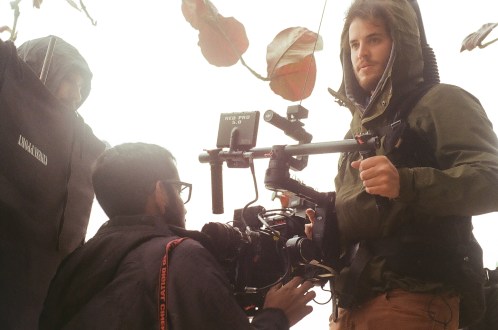
Dhruv Lapsia and Ernesto Pletsch on the set of Desterro

Ernesto Pletsch is one of the lucky few. Not only does he get to do what he loves every day, he is exceptionally good at it, and isn’t that the dream?

Originally from Porto Alegre, Brazil, Pletsch has seen success both domestically and abroad. Just last year, he worked on the pilot for the television series Desterro, a show in Florianópolis, Brazil. The series follows the investigations of two detectives in a witchery island located in southern Brazil.

Desterro is a thriller and crime story. My favorite genre to watch. I was very excited about the whole project and the ambition of it,” said Pletsch. “Looking back, I think that was my best experience as a cinematographer. I had a great team, working with people I already trust and felt confident with. In Brazil, I ended up meeting more awesome and talented people that were essential for this to work. Every day was a different challenge and learning to me, making Desterro a very special experience.”

Desterro was inspired in folkloric tales of the island Florianópolis. These folkloric tales were written, drawn and sculpted by a famous artist called Franklin Cascaes. A blend of witchery, mystery and gothic, creating great inspiration for Pletsch and the rest of the team.

“I loved shooting Desterro because everyone was putting their souls into the project. Everyone was doing their best. We had our moments of tension, but we also had those moments of euphoria, and when we called it a wrap and you could just see smiling faces around,” he said.

The pilot was shot during a five day time period in Santa Catarina. The people in the area had not had the opportunity to see a film production before, as the island is somewhat secluded. Pletsch and his team were viewed as true Hollywood guests, and the best treatment was offered.

DESTERRO, 2016. Mayanna Neiva (lead actress, star), Chico Caprario (actor), Dhruv Lapsia (1stAC) and me
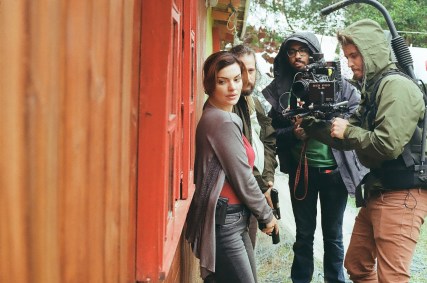
Mayanna Neiva, Chico Caprario, Dhruv Lapsia, and Ernesto Pletsch on the set of Desterro

“Shooting in Brazil, as expected, had completely different rules, as in no rules,” Pletsch joked. “We had the freedom to do whatever we wanted to, shoot anywhere at any time. This was very exciting.”

While shooting, Pletsch was presented with the challenge of overcoming an obstacle he had no control over: the weather. Certain scenes would be completely prepared, and when it came time to shoot, it would become windy and rainy. Low tides made it difficult to carry boats to desired locations. Equipment would have to be moved and plans would have to change, but for Pletsch, a seasoned cinematographer, he says that is all part of the experience.

“It will always feel frustrating and disappointing at the time because you have a certain idea in mind, but it happens. You move on, and sometimes it comes out better than you originally thought,” he said.

According to Pletsch, shooting Desterro was different than a usual television show, saying it was shot like a movie. They had four days for twenty pages of script, which gave them a reasonable time for each scene. They took our time and made it day by day.

“Usually television shows would require more efficiency from the crew. On a film, we record five to seven pages of the script a day. For a television episode, it tends to go over ten pages. This can get pretty hectic, and sometimes you prioritize delivery over creativity. That’s how usually goes. In any production, you have to pick at least two sides of the triangle: price, quality and time. If they want something delivered fast, they better have money to accelerate the process. If you don’t have money, you may take time to do something good. But if you don’t have either money or time, you’ll probably end up with something of poorer quality,” he advised.

Despite the great success he saw on the show as the Director of Photography, Pletsch was first signed into this project as a gaffer. When he first became aware of the project, there was already an American cinematographer on board. Wanting to work in his native country, he took on the role of lighting technician, and offered to help the cinematographer understand Brazilian practices and translate for the Brazilian crew. However, three weeks before they were scheduled to shoot, the director, Mariana Má Thomé, approached Pletsch to take on the role of cinematographer, as the previous cinematographer could no longer do the role for personal reasons. Having already worked with Má Thomé before, and getting to truly work as a cinematographer in his home country, it all felt like destiny.

“I always like working with Ernesto because we combine the best of our abilities to make the perfect visual for the film. We get together references and break them down in visual palettes, styles and movement.
On set, our work is smooth. Most of it was already planned ahead, and I know I can trust him with his work. Ernesto loves what he does, and this can clearly be seen on screen. He is always striving for the best, and will work with all department heads to achieve the best picture. His work with light is spectacular, and for me, as a director, is lovely to see your vision on screen,” said Má Thomé.

The pilot premiered at Florianópolis, Brazil, on September 11, 2016. From there, they had two more public screenings, and had a lot of success with rave reviews from both locals and critics. Desterro is currently being negotiated with Brazilian and international networks.

Mike Goral’s narration of docuseries “Polar Bear Town” captivates audiences

Mike Goral has built his career in acting without the “lights, camera, action” experience. Instead, he works alone, in a small sound-proofed room, with only a microphone as his partner. Goral is a voice actor, and has narrated projects appreciated by millions, both in his home country of Canada and the United States.

While working in the industry for over twenty years, Goral has worked on promos and imaging products for some of the world’s most recognized companies, narrated television shows for some of the largest networks, and voiced segments for local radio stations that thousands listen to every single day. He is extremely versatile, and has genuine passion for what he does. While working for the television show Polar Bear Town for the Smithsonian Channel, Goral is able to do what he loves while continuously learning about something he knew nothing about, making each day completely different.

“I thought Polar Bear Town was a really cool story. I loved the script and the story. It’s always fun to work on a production that is well-planned. The production team was awesome and I was drawn to the project immediately. Nothing beats working with great people,” said Goral.

Polar Bear Town is a documentary series about a community of people in Churchill and Northern Manitoba, Canada that reside in a part of the continent where polar bears dwell at certain times of the year. People from all over the world travel to this remote community to get a close-up, in-person look at the mighty polar bear.

“I’ve heard stories about Churchill for years. It’s one of the most remote communities in Canada. I grew up in Southern Ontario, nowhere near Northern Manitoba, and the polar bear stories were legendary. I always heard that some people carried guns up there because of the imminent danger of bear attacks. I always thought it would be a cool place to visit, but haven’t made my way up there just yet,” said Goral. “I’ve learned so much about Churchill, Manitoba because of this show. I’ve experienced a different culture within my own native country. I found the people’s stories fascinating: people who make a living out of being tour guides for seeing polar bears, up-close in their natural habitat. I didn’t even know such careers existed. “

As the narrator for the show, Goral has what he describes as the unique privilege of telling a great story to a large audience of viewers. Each episode shows a different element to the story, and there are different tones in the episodes. There are parts where there is imminent danger, and Goral has to deliver his narration with a certain intensity. Then, there are parts where two of the cast members are arguing, which requires different cadence to his deliveries. The narration is key to the show’s success.

“The story takes a lot of different turns, and I have to use all that I have learned over the years to help make those make transitions when I am telling the story. It was a lot of fun, and it’s what I love to do,” he said.

Goral has now voiced the first season of Polar Bear Town, and he worked with director Jeff Newman on this most recent season. The two have a great sense of teamwork, as Goral describes the director as awesome, and a consummate professional.

“Jeff is very focused and would walk into our sessions knowing exactly what he needed done. He gave very clear direction, and was a lot of fun to work with. We shared a lot of laughs while working together too. The process was relaxed and enjoyable. I really hope to work with him again. Nothing beats good chemistry,” described Goral.

Newman agrees, and says working with Goral is fantastic and a lot of fun. As the director, he knows the importance of a voice actor, especially for a documentary type of show. Narration is pivotal to the telling of the story.

“Mike’s easy to work with, consistent, and has a great delivery. He takes direction really well and was able to give me exactly what I needed really fast,” said Newman. “This series has a wide range of reads to it, from scientific and informational, to intense adventure, to balls out fun. Mike was able to cover all the bases and provide the right tone in every scene.”

Despite discussing polar bears so frequently, Goral has found he is more scared of them than he once was, becoming more aware of how dangerous the bears are.

“There was one segment of the series that described the vicious attack of a local woman. She almost lost her life. I couldn’t imagine experiencing something like that. I think going through something like that can change a person forever,” said Goral.

While his subject matter might be harsh, the experience is a great one for Goral. Working on Polar Bear Town allows him to do what he loves on a regular basis, and although he is not featured on the screen, but rather through the speakers, fans appreciate the value that he adds to each episode.

 “I really enjoy it. When you are part of something you like, it’s a lot of fun. You get to be a part of something great. I just loved the way the series was produced. It was an awesome production team. They were true professionals, and that’s what made it such a pleasure,” he concluded.

You can watch full episodes of Polar Bear Town here.

MACBETH’S MODERN COOL LOOK, COURTESY OF AWARD-WINNER JANE JOHNSTON

Only the brave (sometimes the foolish) fear to tread upon the hallowed ground known as Shakespeare. For centuries the works of the playwright have been treated as gospel for actors and all those involved in their production. Their rhythm and essence of these storylines have been the base and inspiration for much of modern cinema and theater. While the stories have been retold in their basic original form in film, on seldom occasion they have been reimagined. Such was the case with Geoffrey Wright’s Macbeth starring Sam Worthington in the title role, produced exactly 400 years (to the year) from what is considered the play’s original premier. Set in modern day Melbourne, this Australian production of Macbeth is a gangland interpretation. In a congruent fashion, Worthington (as Macbeth) is convinced by his drug addled wife to seize his destiny and assume power by killing his close friend Duncan, setting into play a domino effect of tragic events. This modern interpretation of a classic called for slick cars and suits while also wanting to give a nod to Scottish themes and touches of a more historic Macbeth. The film’s design has pops of color throughout the tones of greys and blacks. Once he became King, Macbeth owns his look donning color and texture. By the end of the film he is battling for his life in a more military garb. When a tale is as well-known and loved as Macbeth, the audience knows what to expect, just not the accent it will be presented with. It was paramount for this presentation of Macbeth to visually be set apart and above all others. To great means this was achieved through the talent and artistry of costume designer Jane Johnston. She readily admits to being terrified going into the production but her plan was to bite off small chunks and manage these bite sized pieces. The plan worked to the delight of Johnston, the filmmakers, the audience, and critics. The film’s director Geoffrey Wright professes, “I very purposefully sought out Jane Johnston to create the costumes and look of Macbeth. Her resulting vision of combining old world styles with modern fabrics was instrumental to its themes and moods. From a visual-textural point of view it remains the richest and most complex film I’ve directed and I was thrilled by Johnston’s planning, communication, and execution of craft. Johnston’s work was especially impressive in enhancing the character portrayed by the star, Sam Worthington, whose next film was as the lead in the biggest budgeted and most profitable film (up to that time) ever made – ‘Avatar’ by legendary director, James Cameron. Cameron’s company was impressed by Worthington’s impact in Macbeth and Johnston’s work was a critical part of the reason for that assessment. Worthington had never previously looked as good as he did in Macbeth. His elevation to an international star was made certain and Johnston received an AFI award, the highest Australian accolade possible, for her accomplishment.”

sam 3
lachyvic3

sam&vic

Jane’s very tried and true process involves reading and dissecting the script and coming up with tear-sheets to piece together her thoughts for looks. Meetings with producers, the director, etc. follows as a cohesive form evolves for each character. It’s essential to have conversations with the hair and makeup departments to see what they are thinking. Taking advantage of the city’s location itself, Johnston notes, “Melbourne has some interesting public art and some great locations which I think that added to the production design value but as far as costumes were concerned I think the fact that we were shooting in winter definitely added to the look. Needless to say, we would have made a very different film had we shot in Sydney. Melbourne is also known for its fashion and I tried to use interesting Melbourne designers whenever I could and mix them up with pieces of vintage clothing. There was one particular men’s label called Calibre who were incredibly helpful. I also found some really obscure independent fashion and jewelry makers whose products I incorporated into the designs.” She continues, “I remember sitting in my car outside a bar in Sydney with Sam Worthington ‘doing my pitch’ and hoping that he could see it too. Thankfully he was totally on board and excited by the character. I think it was one of those times that the look and clothes helped the actor feel grounded, and helped them see who they were. I started having fittings and our ideas evolved. Once we felt we had our character, I could develop it further and add certain touches or details to the point where I knew it was right.”

This Film Finance production of Macbeth received six nominations and two wins, one of which was Johnston’s Australian Film Institute (AFI) Award for Best Costume Design. The AFI Award is the highest honor in Australia and a massive achievement for anyone involved in the film industry. Describing the experience, Johnston recalls, “The event went over two nights with the first night being the technicians’ awards, which was our night. The second night was the more glamorous red carpet event where the actors turned up. The experience itself was quite surreal. A lot of people around me felt quite confident for the production designer and myself but you never know. David’s award (David McKay won Best Production Design for Macbeth) was called out first and he made his speech and then costumes were announced and I think I really stopped hearing anything in that moment! I gave my speech and thanked my fabulous team and met David out the back to have our photos taken. Then of course we celebrated! I think that the film overall had a strong impact; it was visual, had a great soundtrack, and it really hadn’t been attempted on this sort of budget before. The production design and the costumes worked really well together and I believe that helps for a film to receive recognition. I put Sam Worthington in a suit and that hadn’t been done before! I also put him in a kilt. I think it was a stylish looking film and it happened to stand out amongst the other films of that year.” Proof that with talent and quality material, you can excite and expose different generations to the most classical of stories.

_VIC6667

Animator and designer Cynthia Larenas talks working with eBay and music legend Egyptian Lover

CynthiaLarenas_1
Designer and Animator Cynthia Larenas

Despite working all around the world, Cynthia Larenas’ upbringing is very important to her. She was born in Quito Ecuador, and moved to Australia at the age of four. Growing up in Adelaide, she still stuck to her Spanish roots and is completely bilingual. Her heritage is something that she wants to keep alive while travelling for her work.

Larenas is a designer and animator, working for large companies and small businesses to create apps, videos, print designs, and much more. Her extreme versatility lends it hands to many mediums, and she has worked with some of the biggest brands in the world, including eBay.

“I wanted to work at eBay because I thought it would be a great opportunity to learn new things, to challenge myself, and experience working at a large company. I wanted to undertake the rebranding projects because I thought it was a fun and exciting opportunity to produce work that would be seen at such a huge scale,” said Larenas.

As only one of two in-house designers for eBay Australia and New Zealand, Larenas’ responsibilities included rebranding Group Deal, Flash Sale and Fashion Gallery creative, and leading the design of eBay’s fashion Gallery brand towards a more Gen Y demographic. She created eDM design and build, was involved in casting, photo and design direction of external agencies, created promotional material for in-house employee engagement campaigns, and did animation work for eBay’s 2013 Christmas Campaign. Her work was featured on the homepage of eBay Australia and New Zealand every day for a year.

“It was great to work at eBay and I got to learn a lot, particularly what is involved to run and maintain the creative on such a big website. It was also fun seeing what you had worked on up on the website and seeing that the hard work you were doing were converting to sales. It’s been the best place where I have been able to get direct results of my creative,” she said.

While working with eBay, Larenas had the ability to measure her work, test mobile placements, pitch ideas, and challenge herself. For the Fashion Gallery rebranding project, the aim was to attract a more Gen Y audience to the gallery. This meant she got to research and create some fun pieces that brought something different to the eBay site, directly contributing to their sales and growth.

“It was really cool to see. I remember I was subscribed to eBay eDMs before I worked there, and shortly after I started, I received an email as I normally did, however this time I saw my work on there being shared out to me. It was a funny and proud moment in my career,” said Larenas.

Larenas’ work continued to impress with the different companies she worked for. While working as an animator with Electric Studios, she helped on campaigns for Bosistos, Old Spice, and Jack Daniels. She also was a Creative Director, Designer, and Animator for Nectar + Co, and Designer at Imano, where she helped shape Ray-Ban’s app “Never Hide” during that time.

“I love that I get to make things look good and have then opportunity to influence the world around me,” said Larenas.

Continuing with this trend, Larenas worked with the American musician, vocalist, producer and DJ, Egyptian Lover. He was an important part of the L.A. dance music and rap scene in the early 1980s. He is widely known as being ‘The King’ of the Roland-TR 808. For the release of his song “Into the Future”, Larenas and Carl Jiorjio were asked to create an animated music video for it. Jiorjio and Larenas have worked together on a few different promotional animations and music videos for artists in the UK and US, but the most notable was for Egyptian Lover last year.

“Cynthia is one of the most dedicated and hardworking individuals I have worked with. For as long as I have known her she has always been working hard on different projects that have been keeping her busy in the creative industry. What I like most about working with Cynthia is her ability to push herself when it comes to a project, often studying to expand her skill set and knowledge for the greater good of the projects she undertakes. I’ve also admired her fearlessness when it comes to design or animation challenges, always pushing to provide creative and powerful solutions. She is motivated by pressure and never turns down a job because it’s too hard. I have witnessed her time and time again take up challenges, learn new programs and techniques that exceed clients’ expectations. Her all-round knowledge and broad range of skills are rare in the design world these days,” said Jiorjio.

“Having worked all around the world has helped her not only to understand different cultures and approaches, but it has also resulted in her applying a professional and easy to work with ethic. I have never seen her become defeated by a job and have recommended her highly throughout my career,” he continued.

Jiorjio served as creative guidance and did the final editing of the clip. As the two of them were fully responsible for the music video, from concepts to storyboards, to animation and final editing, it meant they had complete creative freedom to explore our imaginations as far as they wanted.

“Working on the Egyptian Lover video was rewarding, challenging, fun and one of my favorite projects to date,” said Larenas. “I love collaborating with musicians or other artists because I get to work with really talented creative people that push me to do better.”

Her tasks involved art direction, storyboarding, compositing, 2D and 3D animation and illustration. Although the video was released only a couple of months ago, it has received an extremely positive response. It already has over 8,500 hits on YouTube and was shown on LA television station Link TV which reaches 33.7 million US homes and 6.7 million regular viewers. None of this could have been possible without Larenas’ dedication to the project.

 “Making this clip for Egyptian Lover was also humbling as he is a pioneer in electronic music, with thousands of adoring fans across the world,” said Larenas. “Although it was a massive task, that spanned over a year, it was extremely rewarding when it was finished.”

Larenas’ extraordinary talent is evident to all those that saw the Egyptian Lover music video, and all of her other work. With such innate talent, there is no doubt as to why she is so respected in the industry, and considered one of the best at what she does.


Shu Zhang brings authentic historical makeup to film Death in a Day

Born and raised in Hangzhou, China, Shu Zhang brings her heritage into her work as a makeup designer. She has worked and volunteered around the world, lending her skills to completely different projects time and time again, showing both her clients and those that see her work just how innately talented she truly is.

While working on the short film Death in a Day, Shu had a pivotal role as lead makeup artist and hair stylist. She aimed to give the actors authentic, historically accurate makeup, as the film takes place in the early 90s. Shu’s background in art history and period makeup made her integral to the authenticity of the production.

“The hero is the early 90s American immigrant. The look is totally different with the America born Chinese nowadays. I wanted to focus on her 90s traditional Chinese style, but also to show her makeup under the influence of 90s American style. So, I put her major look into the decade which is more nature in tone, a sculpted look with a more idealized face shape,” said Shu.

Death in a Day tells the story of Evan, a young Chinese boy who, after visiting his comatose father in the hospital, witnesses his mother’s struggle and must come to grips with the impending death falling upon their family. Death in a Day, which premiered in June last year, was announced as the Best Narrative Short at San Diego Asian Film Festival in 2016, and was officially selected for a number of film festivals, it received a huge response from there.

“It’s fun to get involved in this original concept movie. I always came with idea of my own, so I know how this is important to a director to make a film,” said Shu.

It took three months of pre-production and many meetings to work out the perfect makeup design. Shu then had to test the makeup on a couple of actors to make final decision.

The mother’s makeup throughout the entire film is very key to its success, and there are many close-up on her face. Her makeup had to look beautiful but also desperate to highlight the soul of story, and Shu was more than up to the task.

“Shu is good at researching and widely knowing the cosmetic market. She always finds the most suitable products based on actors’ situations. She is always the one to meet my requirement accurately and without fault. Shu can really create with makeup. Everyone knows how to put on lots of makeup on, but looking simple is even harder, and she can do that,” said Yuin Zhang, an investor and advisor of the film.

Yuin Zhang was extremely happy Shu’s work on the film, and invited her to join the feature film she is investing in, Venus by Water. She works for the largest film studio in China, Hengdian World Studio, which is often called the Hollywood of China.

The writer and director of the film, Lin Wang, was also extremely impressed with Shu’s work. The two had previously worked together for a photoshoot for the NBA, where Shu was the first ever Chinese makeup artist to do the makeup for NBA players. The two formed a friendship and business relationship from there.

“Lin Wang is creative, young, and talented director. I knew Lin would make an award-winning film. The script was originally written by just herself. I feel we focused on every detail to perfection: makeup, wardrobe, props and the set needed to be completely historically accurate, which led us achieve a higher artistic level. All our efforts have paid off,” said Shu.

Wang will also be directing Venus by Water, which will begin production later this year. Shu is constantly looking for opportunities to keep doing what she loves, because she is a true artist, and all those that view her work know this to be true.

“Makeup is art to me. Faces are perfect canvases. My inspirations come from art history and from fresh makeup products that come out. I love looking at people’s faces from different worlds, and transforming them. It’s always been the biggest part of my life,” she concluded.

Ask an expert: A “how to” of line producing

Esi 1
Line Producer Esi Conway

I am Esi Conway, and throughout my years of being a line producer, I have worked hard to become recognized as one of the best at what I do. As a line producer, I build teams who can pull together to make great television shows. I am often one of the first people on the team.  I usually start off with a budget, schedules and deadlines. I then build teams, find locations, and book the crews. Going around the world, I have worked on some of the world’s most well-known television shows, for networks such as MTV, HGTV, BBC, Animal Planet, and more.

To be a successful line producer, you must be organized, disciplined, and have an in-depth knowledge of scheduling and budgeting, as well as an understanding of the technical accepts of TV making. On a day-to-day basis, you plan and schedule to get ahead of the project and forecast the needs of the team. You also trouble shoot any problems that arise. To succeed as a line producer, you need exceptional communication and diplomacy skills about to balance editorial expectations with the financial constraints of the budget. Here are my quick tips to getting into the industry and staying in the industry:

Getting into the industry

When I started out, nepotism was the name of the game. To get a start in the industry, you had to know someone working in TV. I had no such contacts, so I got a friend who studied design to make a cool eye catching resume and cover letter and sent it to every production company listed in the TV directory called “’the knowledge.’ I was given a few weeks work as an office PA, and that’s where I got my break. Thankfully, now there are sites you can go to where they advertise starting positions in TV.

Build relationships with your team

Gain an understanding of what each role does and the challenges they face as this will help you when it comes to problem solving.

Be flexible in your approach to problem solving

Editorial teams are constantly trying to squeeze more out of a budget. Listen to the idea and think is there a way to balance this request with the budget. Ask yourself “where might you be able to save to give them some of their additional requests?”

Be approachable

It is important that you know what’s going on in the project, so it’s important that you are approachable so that people come to you with ideas, issues, progress reports, and everything else.

Stay in contact with contractors

Be the connector person. In this role, it is important to have a great list of contacts with a proven track record in each area so that you can build teams for various projects. Who can pull together to produce hit shows?

Remember the working hours

Filmmaking and television don’t allow for the 9-5, so it is often hard for those with families to maintain their positions at companies. You must be prepared to put in the hours, whether it be the weekend, or holidays to get the project completed.

Take a minute to enjoy the moment

Once you get your foot in the door, it’s important that you maintain your enthusiasm and commitment. As it is a project based industry, you need to maintain your standards so that people want to employ you again. If you can do this, it can be very rewarding. I have worked with some top names in the industry, on television shows watched by millions. Although the hours are long, it doesn’t feel like work as the excitement from the team and the project carry you through. From being on a safari shoot in South Africa, to shooting in the favelas in Brazil, to filming with the Queen in Malaysia, there is never a dull moment.

ROTH REVEALS “TRUE NEW YORK”

When you open a puzzle box you find many disjunct pieces. While they have their own individual identity, when properly assembled, they reveal a full and descriptive image. This description applies to the documentary film anthology True New York. NYC is often referred to as the world’s greatest city. It might be American bravado bestowing this moniker but there’s no denying New York’s international appeal. Writer and director Jordan Roth hails from Canada but admits to harboring romanticism for New York City, which led to his immediate acceptance of Jeremy Workman’s invitation to become part of this Wheelhouse Creative production. True New York is a series of documentaries which, viewed together, reveals what we have always subconsciously understood; the charm and strength of New York City is found in its differences. Quite possibly more than any US city, New York is seen as the true American template; one in which different people and stories enrich each other’s lives…as these films enrich and inspire the audience.

Workman had seen Jordan Roth’s documentary film, entitled C Rock, about a Bronx rite of passage and was convinced that its creator understood the sentiment of what he was hoping to exhibit in True New York. Jeremy confirms, “It was a pleasure working with Jordan on True New York. He’s a great talent. We look forward to working with him further as his career progresses.” Jordan relates, “I think what actually makes True New York interesting and strong is that these are stories that all feel very human. They feel distinct to New York and these people all feel like New York characters, but even more…we’re connecting to their personal stories.

Asked about what he thinks is the New York experience, Jordan answers, “I think it’s about community. When you live in a great city like New York, on some level you feel a sense of pride and a sense of being a part of something. That might be corny but I think it’s true. You’re a part of the whole mess of the city. There’s an energy that comes from different types of people, from everywhere in the world, from vastly different backgrounds, all crammed together and trying to live in this space.”

True New York displays a variety of characters in the anthology. Taxi Garage (by Joshua Z Weinstein) is the story of a Queens taxi depot and follows Johnnie “Spider” Footman, a colorful octogenarian who is New York’s oldest taxi driver. Spider is a fascinating, sweet, funny guy who is surrounded by many other colorful characters. This story portrays more joy than one might presume. Jeremy Workman’s One Track Mind reveals the amazing story of Philip Coppola, who has devoted four decades to cataloging every station in the New York City subway system. Coppola is obsessive and seems odd at first but as the story delves into his life’s work, something beautiful and impressive is revealed. Sam Cullman and Benjamin Rosen’s Black Cherokee focuses on Otis Houston Jr., a self-taught artist from Harlem who performs along Manhattan’s FDR Drive. Many might have driven by Otis working on the road and have missed the experience of witnessing a true modern artist. A Son’s Sacrifice follows a 27-year-old who confronts his mixed Bangladeshi-Puerto Rican heritage and tries to gain acceptance from his father’s conservative community in this film by Yoni Brook. Finally, C-Rock (by Roth) explores a group of Bronx kids who leap off a 100-foot tall cliff into the Harlem River, a dangerous rite of passage going back generations. These five stories from completely different walks of life are relatable in their characters’ struggles and endeavors. The emotional element they all reveal is universal and deeply human. We meet people all trying to  make it through another day and better their situation in some small way.

Fans of documentary films are steadily increasing. While scripted movies are valued for their characters in exceptional circumstances, documentaries reveal the exceptional everyday people who may otherwise go unnoticed. The protagonists of documentaries are complex because they are real, possessing flaws. What initially drew Jordan to True New York was the potential of a venue for the kind of stories that the film market doesn’t typically allow to be seen. Only by seeking this paradigm shift will filmmakers bring fresh ideas and stories to the public.

When asked what he loves about New York, Roth notes, “Again, there’s a sense of community. I don’t really mean that it’s this sense that everyone is arm and arm and loving each other. It’s just that everyone is here in this place, together. There are people living here from everywhere in the world, all different cultures and backgrounds, all pushed together. There’s an energy I feel when I’m walking around in New York that is completely unique. I also love how accessible everything feels in the city, being able to hop on the train and get pretty much anywhere. I love the history and the cultural richness of the city.” He adds, “I also love the food. “

As a Canadian, Roth feels fortunate to work in the United States and call it home for now. “I feel strongly Canadian, but I love this country and care about it. I’m even an American history dork. I studied American history in school. I also know I’m just very lucky to live in the U.S. and pursue my work here.”

Joran screenshot