The film editor is one of cinema’s true behind the scenes wizards, one who can escalate the intensity of any sequence, deftly manipulating the action and emotion in a way few other production contributors—whether writer, actor or director—are as readily able to match. Russian editor and visual effects supervisor Pavel Khanyutin, known for cutting with surgical precision and an acute sense of pace, is an ideal example of this dynamic, almost alchemical skill.
For more than a decade, Khanyutin has exerted a strong influence on his country’s visual experience, as a film editor and through his influential use of CGI—he made significant impact supervising VFX in Timur Bekmambetov’s popular 2004 fantasy thriller Night Watch and Andrey Kavun’s 2010 war drama Kandagar. He also excels in his other professional capacity, conceiving and directing commercial advertising spots.
Khanyutin’s relish is evident in whatever he takes on, and his 16 years as a creator of television spots for high end prestige clients have been an enjoyable pursuit that has produced many notable achievements, crafting memorable pieces for Google, Coca Cola, Ikea, Pepsi’s Adrenaline Rush, Panasonic, Mars, Nike, cellular network Megafon and many others.
“In advertising the tough deadlines and limited time make the process almost like a competitive sport.” Khanyutin said. “However, there always remain enough possibilities for creative work, in the storytelling and sophisticated editing.”
But it’s working as an editor and visual effects supervisor where he derives the most satisfaction; in Russia, after all, the art of film cutting has a particularly rich heritage, going back to groundbreaking mid-1920’s giants Sergei Eisenstein and Grigor Aleksandrov.
“In editing, the possibilities are nearly unlimited, and it’s almost impossible to overestimate its importance.” Khanyutin said. “It’s a language in which films speak to the viewer’s unconsciousness, and it can deliver every shade of emotion, just as speech does. This is the most interesting, most complicated aspect and is also what allows a film to really get inside a viewer’s head. It’s almost like metaphysics—a visual philosophy.”
“Each project is interesting in its own way.” He said. “Editing documentary films is a very special process, you could almost say that the movie is coming to life in the editing room—getting precise emotions, different shades, from the material is the challenge—to create a great piece of work. I am lucky that I had a lot of documentary experience at the beginning of my career.”
Khanyutin’s personal involvement with every project is intense. “Working on a feature film is a different matter.” Khanyutin said. “To tell a colorful story, it’s very important to really dip down into it, to lead everything through one’s own self, to believe in characters, yet always be sensible. Then every cut will be as conscious and meaningful as sounds in speech. And the time spent in the editing room—it could be one month or one year—becomes part of you. You even see it in dreams.”
That tireless commitment to film gains Khanyutin tremendous professional advantage. “I’ve worked with Pavel as directors and editors always work together—I’ve dropped material off at his door to do with as he pleases, and I’ve sat, lurking over his shoulder, for up to a dozen hours at a time.” Film maker-screenwriter Michael Kupisk said. “In both cases I found Pavel’s instinct and touch to be invaluable in terms of defining the final outcome of the product. He was able to show me angles and methods of delivering a beat or turn that I hadn’t anticipated and is always thinking of how to make the movie better. What I admire most about Pavel is his innate rhythm and instinct. He adds something to the project that is satisfying to both the filmmakers’ vision and the audience’s viewership of the material.”
Khanyutin’s singular grasp on how best to manipulate raw footage is an invaluable asset, and his singular propensity to anticipate and deliver a finished product that really reaches deep down into an audience’s emotions qualifies him as a cinema auteur with illimitable potential. For Khanyutin, his professional goals are simple and straightforward, best summed up in three words:
Much like film, television, novels, and theatre, music and song are also powerful forms of storytelling. In some instances they can stand on their own, while in others they are used as a means of enhancing and completing the expression of a particular story. Talented composer and orchestrator Emily Rice has been telling stories through sound for the past four years. Her framework of experience consists of a long list of accredited success stories, her work ranging from student films to Hollywood blockbusters. Most recently, Rice has been cordially attached to compose a new and exciting project; a documentary film called “100 Faces of Survival,” directed and produced by innovative filmmakers Jared White and Lilit Pilikian.
“100 Faces of Survival” focuses on the Armenian genocide, which had its 100-year anniversary in 2015. The documentary also partially follows the married couple, Pilikian, who is of Armenian descent, and White, as they travel to Armenia to see if they can uncover her family’s past home prior to them fleeing the genocide. “It’s a story of Armenian identity in general, but closely follows Lilit’s relationship with her own identity,” Rice said.
Elaborating on this, White added, “We had long thought about what we could do to mark the 100th anniversary of the Armenian Genocide. We didn’t want to just make another genocide documentary, as there are many well-made ones out there already. So, we landed upon our hook into the topic: exploring Armenian identity, and what it means to be Armenian 100 years after the genocide.”
Composer Emily Rice
Prior to “100 Faces of Survival,” Rice collaborated with Pilikian and White on two previous films, composing both shorts titled “Clone Counseling” and “Kill Me Now.” The three have been working together for nearly a year now.
With as complex of a score as “100 Faces of Survival” is expected to have in order to help guide its viewers through a range of different tones and emotions, it was important that Pilikian and White selected the right composer for the job. The duo is confident that Rice has what it takes to bring the audience to those depths. “Emily strives to always keep the audience’s experience with the film in mind as she crafts her scores. She immerses herself in the films she scores, always works to help further the story, has a deep understanding of music of all genres and flavors, and adapts to best suit the needs of the project at hand. Her music often acts as a gateway into the emotional journey of the films she works on, so we knew she would be a perfect fit for “100 Faces of Survival,”” stated White.
Originally from Harrow, England, Rice received her Bachelor’s Degree in Music from the University of York in 2008. In 2014, she moved to Los Angeles and completed her Graduate Certificate in Scoring for Motion Pictures and Television at the University of California. “I did my undergraduate degree in music, so I always knew that I wanted my life to revolve around it. I’d spent a lot of time playing in orchestras so was always drawn to that sound, and from my experiences playing in bands I knew that I liked the storytelling aspect of songs. In many ways, film music is the perfect combination of these two things as it helps tell stories through the use of almost any combination of instruments,” Rice commented.
As a composer and an orchestrator, Rice’s responsibilities vary depending on what she is working on, though they always encompass a similar idea: to aid in telling a specific story. When it comes to composing, her main duty is to compose (or in other words, write) all of the music for whatever film it is that she is working on. “Sometimes, I perform on it and either record it or produce the final mixed mock-ups which will be used if live recording isn’t an option,” Rice explained of this task.
For orchestrating, Rice does this while simultaneously writing. “Orchestration is a slightly different and more complex thing to describe, but the two [orchestrating and composing] go hand in hand. Orchestration is about knowing each instrument inside out, whether they are orchestral instruments, synths, guitars, etc., and knowing which combination of instruments to use to achieve a specific sound or effect,” she said. No matter what Rice is working on, whether it be the music in a film or an episode of television, she states, “My role is always to enhance the story and emotion, not to ‘get in the way’ of it – especially of dialogue! It’s also important to me that the music has an opinion, or a ‘point of view.’ Music that blends into the background too much can seem like wallpaper, and I often try and imagine the scores I write to be another character in the story.”
For the score of “100 Faces of Survival,” this is exactly what Rice plans to do. “The consistent thread through the film is the issue of Lilit Pilikian’s identity as someone of Armenian descent,” Rice said. The film correspondingly addresses the different elements that make up ones identity, such as aspects of culture like language, religion, food, and geography. While the composer will be scoring the documentary alone, she is looking forward to working with a number of performers throughout the process in an effort to compose a number of themes based around these topics, as well as a recurring theme for Pilikian herself as audiences follow her journey. “Armenia has a number of indigenous instruments – the duduk has often been used in film scores and so I’m excited to have a legitimate excuse to use it in this score. The Armenian national anthem is also a fun piece of music, so I may weave a number of my own arrangements into the score, too,” she added.
Thus far, Rice has been reviewing rough cuts of the film in preparation for the composition work she will be creating throughout postproduction.
Composer Emily Rice with Kaushik Sampath
“I think that the score is likely to be very broad, and what I mean by that is I’m expecting there to be a number of themes to write as well as an underscore. It’ll hopefully show my capabilities composing music connected to a specific geographical place despite not being from that place, and as I’m also hoping to use live players, that should enhance the overall quality of the sound of the score,” said Rice.
With a prospective scoring deadline of mid-August, a final release date for “100 Faces of Survival” has yet to be set in stone.
“It’s really a privilege that Jared and Lilit have asked me to score such a personal story that must have so many feelings and emotions mixed in for both of them. I think that my ideas for this film are strong because the filmmakers have a clear vision and the storytelling thread through the film is also strong. I love working with them, and I feel that scoring something with such a cultural/national identity will be a huge challenge, but also a wonderful opportunity to learn more about Armenian music and have the chance to write themes, something I love doing in my scores whenever I can,” Rice stated.
Forthcoming, Rice will be involved in preparing for the scoring process of the renowned composer Brian Tyler’s (“Iron Man 3,” “Thor: The Dark World” and “Fast Five”) upcoming projects. Her work can also be heard on the hit television show “Underground,” where Rice worked with composer Laura Karpman (“The Tournament,” “Carrie” and “Man in the Chair”), playing the cello on several episodes.
When we are moved by a film, or encounter a new television series that sparks our attention and earns our love, few of us consider the long list of people behind the scenes that are responsible for making the project great; and why would we, after all the point of both mediums is to help us get lost in the story.
Regardless of whether we recognize the jaw-dropping level of collaboration that goes into a production or not, it still remains that hundreds of crew members band together to work long hours to bring our favorite projects to the screen, and film electrician and camera operator Ekaterina Doldjeva is one of them.
As the on set electrician, Doldjeva’s work requires her to take on a multitude of responsibilities from communicating with the cinematographer to determine what lighting they want in to order achieve the desired mood in a scene, to setting up the lights and deciding on their placement, as well as cuing the lights at the right time. Each and every one of her decisions has a pivotal effect on the final outcome of a production.
Doldjeva explains, “For me, every time I am lighting a set, it feels like I am painting with light… I have always believed that people tend to remember how a movie made them feel more than anything else. So, understanding and being able to control light is crucial in order to tell any story.”
One thing that makes Doldjeva a special force in the industry is the fact that she is also a skilled camera operator. When it comes to working as a camerawoman on set, Doldjeva’s work entails much more than simply pointing a camera. She has to maintain the composition of the shot and know what camera angles to shoot and when to move, all the while being conscious of the actors and set to ensure that everything that needs to be in the shot is– and that nothing that isn’t supposed to be in the shot accidentally makes it in.
While Doldjeva works grueling hours behind the scenes to bring magical stories to life for the audience to enjoy and rarely gets the recognition she deserves from the public, she doesn’t work in film for the fame, she works in the industry because she loves contributing her creative efforts to visual storytelling; and to her team behind the scenes, she is worth her weight in gold.
Finding a quick, resourceful and energetic electrician that the cinematographer can trust is rare, and that is one of the reasons why Doldjeva is such a sought after gem in the industry.
Serving as the electrician on the Primetime Emmy Award winning and Golden Globe nominated series “Shameless,” the Netflix original series “Sense8,” NBC’s “Chicago Med,” and “Chicago P.D.” starring Sophia Bush (“One Tree Hill,” “Partners”) has kept Ekaterina Doldjeva busy working nonstop for the majority of 2016 so far; and she shows no signs of slowing down.
She is currently working as the electrician on the comedy feature film “Office Christmas Party” starring Golden Globe Award winner Jennifer Aniston (“Friends,” “Horrible Bosses”) and Olivia Munn (“X-Men: Apocalypse,” “Zoolander 2”), the drama film “American Express” starring Oscar Award winner Charlize Theron (“Monster,” “Mad Max: Fury Road”) and the upcoming dramatic series “A.P.B.” starring Ralph Abbas (“Chicago Fire”) and Olivia Bird (“Empire”).
One of the qualities Doldjeva has to her advantage that few others do is the fact that she can easily transition across various roles in the field. While she works most consistently as an electrician on set, she has paid her dues and honed her skills as a grip and cinematographer as well. She was the grip on the romantic biographical feature film “Southside with You,” which earned a nomination for the Grand Jury Prize at the prestigious Sundance Film Festival, as well as the cinematographer and editor on the film “Heirloom.”
To find out what it takes to work as an on set electrician and camera operator in the highly competitive film world, make sure to check out our interview with Ekaterina Doldjeva below!
Hey Ekaterina, thanks for joining us! Can you start of by telling us where you are from?
ED: Absolutely! I am from a small town called Panagyurishte in Bulgaria. It is a patriotic town with a significant historical value. I lived there as a kid, then, I transferred for high school to the capital of Bulgaria, Sofia. Being thirteen years old, I had to learn to live by myself, which helped me grow and form as a person at an early age.
What was it like growing up their?
ED: Growing up in Bulgaria was a happy adventure. Many kids would gather daily and play soccer, tennis, basketball, volleyball, etc, until the sun goes down. We would go on trips and walk or bike around historical monuments in the woods. The nature is gorgeous everywhere in Bulgaria. There are various forests, lakes, rivers, caves and national parks all around the country. Hiking was another common thing to do either with groups of people or with family. We studied Bulgarian history along with international history and geography. This made me decide to study abroad, and travel as much as I can, so I can see different parts of the world and learn their culture and history.
When did you first realize you wanted to work in the film industry?
ED: I would say when I was in high school. My major had a main focus on computer science, math, and physics with an emphasis on English language. But I was interested in visual effects and animation and graphic design primarily at the time. I would look at the lighting style of a certain painting and try to create an image thinking about how to light it on the computer and make it seem real and alive for whatever project I was working on. Right after high school, I enrolled in a college in Los Angeles and started taking editing, camera operating, lighting and film history classes. My interests in visual storytelling became clearer, pointing me to the career path I chose to do today.
What was the first job you landed in the industry?
ED: One of my first jobs on a professional level was “Chicago Fire” TV series, but I did numerous short films, independent features and events before that as well. I started working on big productions my last year of college which was a huge accomplishment for me.
What was it like working on that production?
ED: “Chicago Fire” and other projects like “Betrayal,” “Chicago PD,” “The Other One,” “Empire,” “Shameless” and “Sense8,” were productions where I used all the knowledge I learned in college. At the same time, there was etiquette, which is crucially important behind the scenes. It is breathtaking to see how a certain scene is done especially on a show like “Chicago Fire.” Most scenes include lighting buildings on fire and heavy stunt work, but helping and contributing to create those scenes and afterwards see it on TV when the episode comes out, it repays for all the hard work I have done. I feel grateful that I am able to be apart of the crew at such a high level. Another interesting factor on working on this production as well every other one is that some of my bosses are Academy Award winners. They have done so many great movies and TV shows and working with them, seeing the decisions they make for a certain scene or a shot is always the most amazing part of my job.
What came first for you, working as a camera operator or electrician?
ED: I think that both jobs are equally important, but the reason I thrive to be a better and better electrician is to eventually become a cinematographer. Lighting is a crucial part of telling a visual story. For me, every time I am lighting a set, it feels like I am painting with light. However, being a camera operator is a true passion of mine. In order to be a cinematographer you have to be able to translate words from the script into visuals. There is way more into it, but I would say that one couldn’t work without the other.
How did one lead to the other?
ED: I realized that you couldn’t just point a camera and shoot something and expect it to look on a professional level. I started to research different lighting styles and how to create a certain look, mood and the atmosphere in a scene. I have always believed that people tend to remember how a movie made them feel more than anything else. So, understanding and being able to control light is crucial in order to tell any story.
Can you break down an average day for you when you’re working on set as a camera operator?
ED: Working as a camera operator involves constant communication with the cinematographer and the actors. The camera operator has to be cautious of the actors’ rehearsals, camera movements, lights and flares and anything else that may help or ruin the shot. Often, I have to fix problems and find solutions on the go. For example, it’s my responsibility to see if the shot comes out sharp. Also, I have to look for any unwanted equipment or props in the shot. Another important factor is talking to the actors either about their position in front of the camera or even anyone looking straight into the lens. This may seem insignificant, but scenes with more actors and extras requires that extra attention of detail. In other words, I am the eyes and ears of the cinematographer. I would say that communication and teamwork is essential throughout the day.
How about as an electrician?
ED: When I work as an electrician I see the shots and the scenes in a different way. Once the camera is set, then lighting begins. I often think ahead what the next set up will be in terms of lights, power and equipment. It’s very important to be quick, safe and efficient when you are lighting a scene. Every time we use big sources of light, you don’t want to blind anyone or set a light in an unsafe position. Weather condition is a key when we are shooting on location, so it would be my responsibility to make everything work in any circumstances. Teamwork is essential for an electrician. We often have to separate what we do, so we stay more efficient and productive.
What are some of the challenges you’ve faced in your position during a production? How did you overcome them?
ED: I think the most common challenge I face with most days is doing lighting cues. It could be as simple as a character entering a room and flipping a switch to turn on or off the light to flickering lights and thunderstorm effects, flashlights, TV screen effect, fire etc. It’s not uncommon to do a movement or an effect in a shot that is not in the script, so when this happens, I have to improvise and come up with a quick solution and see how as a team we can make it work, so we don’t slow down the production. This makes our crew look good in front of our bosses and especially the producers. I would say that I learned to overcome those challenges easily within every production that I have worked on since I meet different crews and bosses that have different ways of doing their job. This absolutely helps expand my knowledge and builds up my skill set.
Can you tell us about some of the productions you’ve worked on and what job you were doing?
ED: The past year I did a few very interesting projects such as the films “Office Christmas Party” and “American Express,” as well as the television series “The Exorcist,” “Shameless” and “Empire.”
“Office Christmas Party” is a comedy starring Jennifer Aniston, Jason Bateman and Kate McKinnon. The story is about a branch manager who throws an epic Christmas party in order to land a big client, so his branch doesn’t get shut down. Some of the scenes were shot in downtown Chicago and we had a pretty big crew, more than usual. Throughout the day, we experiences short blizzards, rain and clear skies, all within 30 mins. A rapid weather change like this is never good for a lighting set up. So, at times, I had to separate from the crew and follow the weather every 10 mins, so I can tell the gaffer if there will be a lighting change. We had lights on every intersection around the square we were shooting at, inside buildings, along trees etc. so I had to be close to a certain section and decrease or increase the amount of light on all lights every time the sun changes and let everyone know, so they can tell production. This was crucial for lighting continuity within every shot and scene.
Another project I did was called “American Express” starring Academy Award winner Charlize Theron, Amanda Seyfried and Joel Edgerton. On this project, I had the chance to work with a female cinematographer for the first time. She was specific in her choices of light and camera composition. Every time I had to set up a light whether on a ceiling or hidden around wall, most of the time it was my choice of placement. Because of my choices with the amount of light and shaping the light every time we set up, I got to be the photo stills gaffer for the feature film. In other words, we had photo sessions where I was in charge of the lighting set ups. A similar thing happened on the Fox pilot “The Exorcist” starring Academy Award winner Geena Davis. Since this series is a thriller, we had various lighting effects every day. I did all of the lighting cues at almost every location we shot at. For example, I had to simulate power going down on construction workers inside a church at a specific moment when the actors were passing by. Every time, timing was crucial especially when I had to repeat the same effect a couple of times in a row.
But, the Golden Globe nominated series “Shameless” and “Empire” were absolutely different from the three projects I just mentioned. “Shameless” has minimal lighting when the production comes to shoot in Chicago. I usually have to set up one or two lights but I have to avoid making them look artificial. “Empire” is absolutely the opposite of “Shameless” and maybe everything else I have ever done, because this is a drama TV series that has musical performances. So, I often had to navigate a spotlight and follow the singer across the stage. We had to set up lights for the shot but also, for the stage. Sometimes there will be a long shot where the performance might get interrupted; the singer would go off stage, or dance etc. A small mistake on a giant production like this could be inexcusable. I was electrician on all of these projects and it was important for me to be focused and quick in every decision I made.
What has been your favorite project so far?
ED: This is a hard question to answer because I’ve enjoyed all of the projects I have done. However, if I had to pick one to be my favorite it would be “Sense8.” It is a Netflix original made by Lilly and Lana Wachowski. Some of their work include “Matrix trilogy,” “V for Vendetta,” “Speed Racer,” “Cloud Atlas” and “Jupiter Ascending.”
On “Sense8,” I had the chance to work with Academy Award winner cinematographer John Toll, whose credits include “Braveheart,” “The Last Samurai,” “Iron Man 3,” “The Thin Red Line,” “Almost Famous,” “Vanilla Sky” and “Legends of the Fall.” He is one of my favorite cinematographers, I even studied his work while I was in college. I see him as a mentor and someone to look up to in terms of telling a visual story and becoming a better cinematographer. Having the chance to be apart of his crew and work directly for him is something I never thought would happen. Some of the techniques he used on set, whether setting up a shot or solving a lighting problem, even the way he communicated with the crew, was something I hadn’t encountered on set before. I think what I loved most about this project was the pace and the way the directors and the cinematographer perceived each scene and communicated to the actors.
What would you say your strongest qualities are in your field?
ED: Some of the strongest qualities I have are problem solving, I am quick and efficient, but safe, creative and absolutely reliable, and I am a team player. Working in the lighting department requires me to not only be knowledgeable of the equipment we use along with all the new updates and what new technology has to offer, but also, being able to use it properly. I think that those qualities helped me understand the professionalism behind the scenes and quickly establish my career path.
Can you tell us about the different types of lighting that you use for a scene to create a certain mood or atmosphere?
ED: Well, this really depends on the story, the director and the cinematographer. Some cinematographers prefer big sources of light that can be cut, diffused and shaped once set and others the smallest possible use of light possible. In the same way, I have worked with cinematographers who love the use of LEDs. An important factor of creating a certain mood or atmosphere in a scene is what the project is about. The contrast ratio defines the feel or the mood of the scene. For example, comedies tend to use a 2:1 ratio where if we look at the shadows in a certain shot they are almost non-existent. However, in thrillers there is lots of harsh lighting with deep, dark shadows that create a spooky feeling to enhance the surprise moment. On the other hand, in the case of a low light, high contrast ratio scenario or the other way around, the choice of the certain lights comes with the preferences of the cinematographer and the gaffer.
Earlier this year you were invited to judge the 2016 Fandependent Film Festival in Chicago, what was it like judging the festival?
ED: It was an interesting experience to judge versus having my movie being the one judged. Also, my comments had to be on point since this would help decide the winner of the festival. I can say that this was an overwhelming experience since I had a lot of responsibility on my shoulders but at the same time, I enjoyed giving an in-depth evaluation about each project.
What were some of the things you looked for when judging the films that screened at the festival?
ED: I would always start from the overall story whether or not it works or the plot makes sense. Next, I would focus on the acting and how each character carries the dialog or the story itself. Of course, I would focus on my field looking at the cinematography and lighting of the film and how everything relates to the story.
Can you tell us about some of the projects you are currently working on and what you are doing?
ED: Currently, I am working on “Sense8.” We have been shooting in various location houses where one of my main responsibility is to link all the LED panels we set to a dimmer board, so the gaffer would be able to quickly control the levels on each light throughout the shots. There are many issues that can come up doing this; so troubleshooting has been a major responsibility during this show.
At the end of the day, what is it that you love about your job?
ED: It encompasses creativity, technical knowledge and etiquette. Collaborating with so many people and various departments in order to create the final product repays at the end of the day especially when you see your name in the credits in the theatre or on TV later on. I wouldn’t change what I do for any other job.
What do you hope to achieve in your career?
ED: I would say my long-term goal is to work as a cinematographer and shoot feature films at an Academy level. For now, I am glad that I am able to work on such high profile productions and expand my knowledge with each project that I do.
Samar Kauss is a Brazilian filmmaking tour de force.
Brazil’s Samar Kauss has proven herself to be a filmmaker to watch, as any project she is attached to gains immeasurable success. Hailing from Brazil, Kauss has established herself as an internationally recognized editor, lending her services to some of her home country’s most distinguished productions over the past decade.
Native Brazilians may recognize her for her sustained work on the highly popular television show GNT Fashion, the Brazilian equivalent of E! News, which examines all things fashion, pop culture, and celebrity gossip. Since 2001, Kauss worked as an editor for GNT Fashion for several years, working alongside some of the country’s most notable celebrities, directors, and creatives across the entertainment industry. The show, distributed on Brazil’s leading network TV Globo, one of the country’s largest broadcast stations, reaches over 180 million homes in Brazil, rivaling that of even some of the most popular American productions.
Kauss does not let the bar lie with only one immensely popular television show, however. She has also worked as an editor for the highly popular series Mesa Para Dois, (Table For Two), a culinary series hosted by the renowned Brazilian celebrity chefs Flavia Quaresma and Alex Atala. The two chefs are nationally famous for their entertaining, yet informative series in which Kauss’ job is to propagate the show’s energetic pacing, and to support the comedic timing of the two chefs as they dive through local community’s in search for the most rich and flavorful recipes around Brazil and internationally. As a longstanding editor on the program, Kauss ran a tight ship, and was able to understand, envision, and articulate through her cuts exactly what the directors and producers of the show had in mind for the final visual product. The show’s executive producer, Alessandra Casado, had this to say: “Thanks to the tight, polished editing skills demonstrated by Samar, Mesa Para Dois was received tremendously well and garnered a substantial viewership of up to 183 million Brazilians.”
In addition to her work as an editor, Kauss also has worked hand-in-hand with the Australian government’s Department of Health as a leading Director of Photography for their government-funded educational documentary, aimed to raise international awareness and pledge support to a large and thriving aboriginal tribe known as the Wadeye Community, who live in the rural Northern Territory of Australia. The documentary has had a significant impact on the aboriginal tribes of Australia, and was hailed for its significant cultural impact across the community.
Whether it’s landing leading roles on Brazil’s leading television networks or extending her talents to a noble, humanitarian cause for Australia’s Department of Health, Editor and Director of Photography Kauss has certainly taken the international entertainment film and television industry by storm.
For more than 25 years, Carson Manning has brought his stunt performing and acting talent to film and TV productions.
The inspiration was sparked for Carson Manning when he was growing up watching films and TV shows in Toronto with his grandfather, Frank Billing. Manning was raised by Billing and by his mother, Pixie, after his father left when he was born. Manning and ‘Grandfer’ took it all in together, from classics to sitcoms to reruns, and everything in between. The magic of moviemaking and television stirred an irresistible urge to be a part of it all.
“As a small boy, I never missed watching the Academy Awards, even till now,” Manning said. “I always dreamed I would work and act in the film industry. I always enjoyed the amazing talent I would see and how actors could become someone else.”
What started as a boyhood dream would materialize into a rare reality. Manning’s destiny wasn’t to view from the audience, but rather to be an on-screen figure entertaining them. He tapped into the perilous world of stunt performing and is also a formidable actor of praiseworthy merit nearly 30 years experienced.
Manning has braved car and motorcycle stunts, fight scenes, hard falls and hits in Fox’s box office smash, “X-Men: Days of Future Past,” Columbia Pictures’ “Pixels” starring Adam Sandler, 2014’s “RoboCop” reboot starring Joel Kinnaman, Sony’s “Pompeii” starring Kit Harington and New Line Cinema’s “Shoot ‘Em Up” with Clive Owen and Paul Giamatti, to name a few.
This year, Manning served as stunt performer, stunt driver and stunt rigger for the highly anticipated “Suicide Squad” from writer-director David Ayer. Warner Bros. is releasing the picture globally August 5 and it features a star-studded cast including Will Smith, Jared Leto, Margot Robbie and others.
Manning has collaborated with and engaged his talents alongside a list of names analogous to the Hollywood Walk of Fame including Oscar winning actors Denzel Washington, Rod Steiger, Timothy Hutton and Halle Berry. Other notables Manning has worked with include the late comedy legends George Carlin and John Candy, as well as the famed Second City “SCTV” cast, Golden Globe winner Jim Carrey, Oscar nominees Will Smith, Hugh Jackman and Sir Ian McKellen and “Star Trek” icon Sir Patrick Stewart.
First showing a flair for performing when he was going through public school, Manning was inspired by classic comedy shows such as “Saturday Night Live,” the Dean Martin Roast and “The Tonight Show Starring Johnny Carson.” He actually went to St. Clair Jr High School with Kiefer Sutherland in Toronto and developed a reputation as a class clown who found himself in trouble often for disrupting lessons with improv and mime skits of his own creation. When the charades caught the attention of Manning’s school principal, he was made to go from class to class performing the skits that otherwise resulted in discipline. Manning would go on to take improv and comedy classes, but never ventured into the world of stand-up. His performing future laid elsewhere.
Many stunt performers come from a martial arts background that allows them to deliver the needed action sequences on film with authenticity. Manning’s path instead included stints in athletics that proved similarly befitting. He exceled in track and field, and has played hockey since he was 4 years old. When he was young, his grandfather gave him a unicycle that sharpened his balance early on, and Manning also participated in dancing, horseback riding and dirt biking.
“I used to love driving anything and fast,” he said. “So with all that, it gave me some very great skills that I learned to perfect for what I ended up doing later in life.”
Acting, though, came before stunts. Manning was initially steered to break into the business by taking extra work. One of his very early roles came in 1987 where he played a gang member on the award-winning CTV crime drama, “Night Heat.” A year later, Manning played a rioter on an award-winning CBC series called “Street Legal.” That inception to filmmaking was all Manning needed to discover his true passion.
On TV, he would go on to act in William Shatner’s “TekWar,” Paul Haggis’ “Due South,” HBO’s Golden Globe nominated “Gotti,” Fox’s hit “Goosebumps” series, the Stephen King, Emmy-winning mini-series, “Storm of the Century” and more. Manning got his start in film acting in 1994 when he played prisoner characters in both “Car 54, Where Are You?” with David Johansen and John C. McGinley, and in “Trapped in Paradise” with Nicolas Cage, Jon Lovitz and Dana Carvey. He would go on to act in the cult comedy classic “Half Baked” starring Dave Chappelle, in Bryan Singer’s “X-Men” and in “The Hurricane,” from seven-time Oscar nominated producer-director Norman Jewison (“Fiddler on the Roof,” “Moonstruck,” “Jesus Christ Superstar”).
In “The Hurricane” – that stars Denzel Washington as Rubin “Hurricane” Carter, who was wrongfully imprisoned for murder – Manning played a prison guard and shared scenes with Washington. In one on-screen instance, Carter meets Canadians in prison for the first time who are trying to help him. Carter gets mad and tries to leave his table when Manning’s character gets in his way and assures him to relax.
“It was a nice, moving scene,” Manning said. “It was a pleasure to work with him and of course having Norman Jewison direct me. It was a big thrill working and acting for Mr. Jewison.”
Manning’s stunt performing career is littered with coveted credits both on TV and the big screen. He got started with stunts in 1993 on CBS’ Gemini-nominated action series, “Top Cops.” Since then, Manning has performed, rigged, coordinated and doubled stunts for shows such as FX’s “The Strain,” the CW’s “Beauty and the Beast,” Syfy’s “Defiance,” History’s “Gangland Undercover,” the CW’s Emmy-nominated “Nikita,” Syfy’s “Alphas” and more. Manning has most recently performed stunts for the independent action film, “Gridlocked,” starring “Prison Break” star Dominic Purcell. He’s also done stunts for and plays an assassin in NBC’s forthcoming “Taken” prequel series based on the film franchise that starred Liam Neeson.
Stunt coordinator/performer Brian Jagersky has worked on more than 100 different films and TV series including “The Incredible Hulk,” “300” and “X-Men.” Jagersky and Manning have collaborated in delivering stunts for several productions, namely “Shoot ‘Em Up,” “Pompeii” and for the Emmy-nominated CW action series, “Nikita.”
For “Nikita,” Jagersky served as stunt coordinator and said, “Carson performed stunts in many key scenes in the show, demonstrating his extraordinary prowess in precision driving and fighting skills. One of his most notable action scenes was a scene where he breaks into a house to look for someone. After stepping into a kitchen with all-glass windows, machine guns and explosions begin bursting the windows and Manning gets hit causing a big chest explosion, and then gets jerked across the room backwards into a large gas stove. This scene was incredibly performed and demonstrated his exceptional technique.”
Training and fine tuning the body is a necessity for stunt performing, but it doesn’t stop there. “As a stunt man, you always have to be training and keeping your body in tune and you have to have the skills to accomplish stunts that you are called upon to do,” said Manning.
Those types of skills showed up again with Manning’s work with TJ Scott, a 30-year, Canadian Screen Award winning director-writer-producer. Scott has directed hit shows such as “Orphan Black,” “Gotham,” “Spartacus,” “Longmire,” “Dark Matter” and many more.
Scott directed Manning in episodes of “The Strain” and “12 Monkeys.” “In “The Strain,” Scott said, “Mr. Manning performed wonderful stunt acting that totally brought the episodes to life with his natural way of simulating action. He played a father being harassed by a group of marauders who ends up getting away in a car with his family and crashes into stuff along the road. On the episode of “12 Monkeys,” Carson played a scientist who gets killed in a cross fire of an important scene. Mr. Manning is a stunt performer who has done wonders in both the film and television industry, and is certainly well-known and revered to come out of Canada.”
Manning has stunt doubled for many actors throughout his career including talents such as Hugh Jackman, Joe Penny, Graham Greene, Tim Daly, Victor Webster, Colm Feore, Scott Highland, Jay O. Sanders, John Shea and others.
“As a stunt double, I work very close with actors so they feel confident that they have a double who is going to make them look good, as well as be there for them when they need me,” he said. “Sometimes the lead actor will do his own stunts, so it is my job to make sure the actor is safe along with the stunt coordinator. I will make sure the actor is padded in case they have to fall down or if the actor is throwing a punch or taking a punch, I demonstrated the proper way to execute that without actually getting punched in the face, but make it look like it did happen.”
Combining Manning’s dual talents – stunt performing and acting – makes for an invaluable qualification when it comes to film and TV production that’s few and far between. It’s not often casting decision makers elect stunt performers for character roles, but the paradox is one defied by Manning’s career achievements. He brings a wealth of know-how from stunt perspectives and has also proven to be a talented asset as an actor, a notion that makes budgeting sense for producers.
“Being a good stunt performer who can act is great for a production,” Manning said, “as they save money by having an actor who can do his own stunts, as well they do not have to spend more money bringing in a separate double for the actor too.”
In looking back from when he was a boy watching movies and TV shows with his grandfather to where he’s ascended to today, Manning says, “All I can say is I love the business, I feel very fortunate and to be a part of it has been a thrill.”
The journey continues for Manning, who has been attaching to act and perform stunts for forthcoming projects in 2016 including writer Sebastian MacLean’s feature film, “Tuff,” writer-director Travis Grant’s “Time Man” and other exciting projects that are presently under wraps.
The Los Angeles-based actress, Jaclyn Fleming, is a woman of immeasurable skill and talent. She’s the kind of person who’s been a performer since the day she could walk, and has now acted professionally for nine successful years.
After graduating from the renowned Second City Toronto, Fleming recently relocated from Canada to California in October of 2013, where she’s since worked on a number of shows. Her past and present credits span numerous media outlets and platforms, her most current work including heavy involvement with Tennessee Williams Improvised, The Second City Hollywood’s “Bubbelplast” and “Milk Tooth,” and Impro Studio Theatre’s “The Gauntlet” and “Netflix with Matt and Jack,” to name a few.
“I became involved with Impro Studios upon recommendation from Producer/Stage Manager Matthew Pitner,” Fleming said. The pair had previously studied at Upright Citizens Brigade (UCB) together for improv acting, along with Paul Vonasek. “We had all come from a background of narrative and genre based improv and immediately felt a kinship.”
Fleming auditioned to be a part of an ongoing study for Tennessee Williams and an in-depth acting technique taught by the highly talented Brian Lohmann. From there, she relished the opportunity of doing several runs of Tennessee Williams Improvised, and has subsequently performed in the style for several independent shows at the Studio Theatre.
“The Gauntlet” and “Netflix with Matt and Jack” are two continuing shows that Fleming stars in at Impro Studio Theatre regularly. Produced by Matthew Pitner, “The Gauntlet” challenges Impro Main Company members to perform through a gauntlet of genres with performers from the studio.
“Jaclyn is truly a master of her craft,” Pitner recalled fondly of the performer. “As the nature of much of our work at theatre is transitory by nature, it is all the more reason why individuals like Jaclyn are so vitally important to the world. Her performances are highly praised by the community and inspire more support for the theatre as a whole, ranging from an increase in patrons to new students. The ways in which she has grown further confirms my belief that she belongs on the stage and screen and will have continued longevity throughout her career as an artist.”
Additionally, “Netflix with Matt and Jack” is an Impro Studio Theatre monthly show where Fleming and Pitner also come together in collaboration. “This show is raw and vulnerable for performers and audiences alike,” Fleming explained. “It is centered around building deep, emotionally-grounded relationships, all in the comforts of a faux apartment, while we watch Netflix. What comes out of it is moving and hilarious.”
Similar to her improv work with Impro Studio Theatre, Fleming has served as a valuable member of The Second City Hollywood since 2014. In 2015, Fleming was hand picked by Director, Writer, Actor, and Producer Dave Colan to be a part of Second City’s “Milk Tooth,” an ensemble made up of eight cast members who performed each Friday night.
“Jaclyn acted as a vital member and contributed beyond the regular expectations of the cast requirements,” said Colan of Fleming’s talents. “She brings depth, presence and life to the stage every time she performs.”
The cast rehearsed weekly, spending multiple hours building a solid ensemble that never failed to exceed audience’s expectations. After having been a part of ensemble driven performing in Toronto, Fleming’s move to The Second City Hollywood was a natural progression that led to an increase in viewership from outside theaters as well as the opportunity to perform in various festivals in the LA-area.
“I’ve been fortunate to have been asked to do “Cake Batter’s Funny Women Festival, which runs annually,” Fleming said. “The festival focuses specifically on women in comedy, in various categories.” Moreover, Fleming’s dabbled with musical improv as a part of “One Night Only” on several occasions, as well as participate as a frequent performer of the Venice Art Crawl, which takes place in Venice Beach, California a few times a year.
Post “Milk Tooth,” Fleming continued performing with The Second City Hollywood in her latest hit show “Bubbelplast,” produced by Celeste Pechous. Like “Milk Tooth,” “Bubbelplast” is also comprised of a hand picked, eight-person ensemble (Jaclyn Fleming, Molly Donnelly, Maya Gwynn, Jacob Sorling, Joshua Dickinson, Paul Heredia, David Anthony Luna, and Cassie Townsend) and includes a night of hilarious, Long Form improv at every show.
Together, the eight rehearse weekly where they are given the freedom to create. “We have some of the most energetic and physicals shows and rehearsals,” Fleming explained. “Working with the others within the ensemble constantly allows for me to grow. Each one of them has such a unique and amazing way of bringing life to the stage. I get to take lessons not only from what Celeste provides us as a director, but every time I watch each of them do something. Working in an ensemble reminds me that we are all in this together. It allows for me to let go and relinquish the need to be ‘perfect.’”
This encouraging space and experience has permitted Fleming to evolve and showcase her sought after talents, where she’s ultimately received a large amount of praise and recognition for her work. “‘Bubbelplast’ has allowed me to clearly show audiences my adeptness within the realms of physical comedy, musical improv and in-depth character work. I have received many compliments for bringing professionalism, my attention to detail, genuine emotional connection, and grounded performing to each show I am a part of,” Fleming stated. Not only has Fleming achieved recognition within the theatre community around Hollywood, her exposure via The Second City Hollywood has sparked the attention of several well-known directors who have pursued efforts of collaboration.
Currently, Fleming is in the process of diving into a bit of a different realm of comedic theatre acting. Set to begin production this summer is “Ginger Snaps,” a One Woman Show directed by Jamie Janek and staring Fleming. The show is a 50-minute staged comedic sketch play that tells the story of one Ginger and her life adventures thus far.
“I am so excited to be working on all of these projects,” said Fleming, elated. “I am getting the opportunity to work with some of the most gifted people in the country and to hone in on my skills as a performer. I am excited for what is to come of all of these endeavors and to see where they take me.”
Over the years Canadian actor Cory Dagg has brought his unparalleled talent to a pretty astonishing list of film and television productions. Becoming known for his roles on hit television shows like “The Andromeda Strain,” “Top Cops” and “Street Legal,” as well as films such as Primetime Emmy nominee Brad Turner’s “The Inspectors,” Michael Kennedy’s action-packed crime film “Hostile Force” and “Bond of Silence” acting alongside Kim Raver from “24” and “Grey’s Anatomy,” Dagg’s proven that he has a unique gift for playing authoritative roles just as easily as he plays the underdog.
With a character list spanning the likes of government officials, sly detectives and frustrated public defenders, Dagg’s way of communicating with his eyes is something that has made each and every character he’s taken on to date unforgettable. His role as Detective Peters in the series premiere of Columbia Tristar’s thriller series “The Net” is one that not only helped carve out his reputation for portraying multi-layered characters in the crime genre, but also set up the basis for the show.
While out for a run early one morning, freelance computer programmer Angela Bennett (played by Brooke Langton) is arrested by federal agents only to find out once in the interrogation room that her identity has been erased and replaced with that of a wanted felon. Dagg’s character Detective Peters comes down hard on Bennett who is both baffled and afraid as Peters threatens her with a lengthy jail sentence for crimes she didn’t commit.
“Whenever I get a new role, I get to know that character as if they were going to be my new best friend. I try to think of every aspect of them – how they feel, how they would respond in certain situations, what they would say,” explains Dagg.
“With Peters being a cop, I knew I could handle that since I ‘ve done a lot of cops and military roles. But Peters is a bit of a dirty cop, so I had to dig deep to bring that out in him. Really, it comes down to immersing myself in the character, finding something – anything – I might have in common with him, and playing on that.”
Another of Dagg’s authoritative style characters that has left an indelible mark in the minds of viewers is that of General Michaelson on the seven Primetime Emmy Award nominated series “The Andromeda Strain,” which was adapted from Michael Crichton’s 1969 novel and produced by four-time Oscar nominee Ridley Scott. The four-part series follows a group of highly trained scientists as they work to find the source of what killed the inhabitants of a small town and a way to stop it, and the military team tasked with keeping the disaster under wraps as a matter of national security.
Acting alongside Benjamin Bratt (“Miss Congeniality,” “Despicable Me 2”) who plays Dr. Jeremy Stone and Golden Globe Award winner Ricky Schroder (“Get Him to the Greek,” “NYPD Blue”) who plays Major Bill Keane MD, Cory Dagg gave a brilliant performance as General Michaelson, the military leader who is charged with quarantining the affected area from the mysterious virus, and keeping the rest of the population safe.
Interestingly enough, Dagg originally auditioned for a smaller role on the series however, after director Mikael Salomon (“Hard Rain”) saw Dagg’s performance, he was given a much meatier role and his character went on to be featured in three of the series’ four episodes.
“The director said later he was surprised I didn’t have military experience, that’s how convincing he thought I was,” recalls Dagg. “It’s the dramatic roles I love the most, when the stakes are really high I’m able to separate myself from other actors and usually get the role.”
As an actor Cory Dagg effortlessly stands out in a crowd thanks to his magnetic presence both on and off camera, his rare versatility, and his ability to breathe life into the most complex characters, all of this and more have been crucial factors in the impressive career he has created for himself over the past 30 years, and we can’t wait to see what he takes on next!
When one finds their life’s passion it’s easy to see, a person simply comes alive when they’re doing what they are destined to do, the tricky part for many is figuring out how to turn that passion into a career and take decisive action to make it happen. Anyone who’s had the chance to watch UK actor Darren Higham perform would be hard pressed to think that Higham is driven by anything other than passion. His dedication and love for his craft oozes from his heart, magically bringing to life each and every character he portrays.
After honing his skills in the theatre starring in a plethora of productions at some of England’s most prestigious venues including the Redditch Palace Theatre, the Capitol Theatre in Manchester, and the Bolton Little Theatre in Bolton, Higham went on to land his first on screen role a little over a decade ago in the BAFTA and Royal Television Society Award winning drama “Clocking Off” created by Primetime Emmy Award winner Paul Abbott (“Shameless,” “State of Play”).
A high-profile production for any actor’s first television role, Higham lit up the screen as an aggravating police officer in the “Clocking Off” episode “KT’s Story” with ease. His believability as a police officer landed him a critical role as Police Constable in the BBC’s Edgar Allen Poe Award winning crime drama “Dalziel and Pascoe” the very same year.
Since then, Higham has gone on to amass an impressive repertoire of work that include playing critical roles in Daniel Percival’s (“Walking the Dead,” “Strike Back”) BAFTA Award winning film “Dirty War,” Brett Foraker’s comedy film “Buying Porn” and the 2010 western “Desperados.”
While Higham has proven his capacity to play everything from intense and layered roles in heavy hitting dramas to quirky characters in countless comedies, he admits that there’s a special breed of comedy that excites him the most.
“I’m comfortable in pretty much everything but I guess if I really had to choose one, I’d say comedy, more comedy drama than slapstick comedy though!”
While Higham has proven his knack for taking on comedic roles in multiple productions over the years, the one that he has become best known for is from his recurring roles on the “The Armando Iannucci Shows” created by Oscar nominee Armando Iannucci. A popular sketch comedy series, “The Armando Iannucci Shows” proved to the world that Higham is one actor whose improv skills have the power to tickle anyone’s funny bone.
To find out more about UK actor Darren Higham’s work and his upcoming roles, make sure to check out our interview below!
Hey Darren thanks for joining us! Can you tell us where are you from, and when and how you into acting?
DH: I’m from Wigan, which is a town in the northwest of England. I absolutely loved western films when I was a kid, they were an escape. I used to watch them with my Granddad. I was from a working class Northern family though and acting just wasn’t what people did. I did lots of different jobs after I left school and trained as a chef too. Then I spent a year in Hong Kong doing a few different things but I had the chance to do a few bits of work in the Hong Kong film industry, they liked my look! And once I’d had that taste, there was no going back. When I got back to the UK, I was offered a place at college and then a place at Manchester Metropolitan University where I completed my acting degree. This was a fantastic opportunity. Manchester Met is one of the best acting schools in the UK and has a brilliant reputation for theatre work.
You recently wrapped production on the upcoming film “The Quiet House,” can you tell us a little bit about the film and the character you play?
DH: It’s a futuristic film set in a world where pets are pretty much banned as they are thought to spread disease. The state looks to control this ban by way of daily scans on buildings. A drug has been developed that, when injected into the pet, means it can’t be picked up by the scanners and inevitably, a black market has developed around this. The film is pretty dark and mysterious. It has lots of underlying themes running through it such as state control, individual choice, quality of life etc. My character is pretty much a recluse, he lives alone with his cat. On the face of it, he is an upright citizen, employed in a government job, obeying all the rules – but he’s not really like that at all. His initial focus is on keeping his cat safe but then he finds himself in a much darker situation, there’s a bit of a twist to the story that I don’t think people will expect.
How is this character different from those you’ve played in the past?
DH: He’s a bit darker in the sense that you never really know where you are with him. I’ve played tough guys before but they’ve tended to be bad in a more obvious way. This guy is really chilling, you don’t really know where his loyalties lie.
You also just shot the films “Somnus” and “Modern Life is Rubbish,” can you tell us about those?
DH: “Somnus” blends sci-fi with horror. It’s about a cargo ship that is on its final mission working the monotonous Earth-Mars route. The ship malfunctions and the crew has to make a change of course to Somnus, a remote asteroid colony. It soon becomes clear to the crew though that Somnus has a dark past, which could affect all of mankind. It’s a really intriguing story and cleverly mixes sci-fi with horror. I play a medical droid who effectively is the wise old man of the ship, he’s a robot, sort of in the vein of Siri I guess. I haven’t really done any sci-fi before so this was memorable in that sense. Also, the way the story works means I didn’t have to have very much interaction with the other characters whilst filming which was also a novelty for me.
“Modern Life is Rubbish” is about a couple going through a break-up, which is played out against a backdrop of the songs that defined their relationship. It’s a really touching story, one that lots of people will be able to identify with. It’s a romantic comedy and very British! It was a lot of fun to film. I play a character called Solomon who is a friend of the guy going through the break-up. I play guitar in a band which at one point looked like they might be destined for fame but have ended up playing pub gigs. My band serves as a bit of a warning to the main guy as to what his future could look like if he carries on the same route as he is, so whilst he’s funny, he’s also a bit sad. This was a great project to work on, everyone got on really well and it was a tight crew.
Can you tell us about some of the other film projects you’ve worked on over the course of your career?
DH: I worked on a film called “Desperado.” I played the lead character who was called ‘Jr’, a wannabe cowboy living in a small terraced house in the north of England. The story revolved around this character, it was quite a simple storyline really but all of the other characters were linked to Jr, so his dad, his next door neighbour, his dad’s mate etc. I found the character pretty easy to play as his backstory was really quite similar to my own life, I really identified with his position, being in one place, feeling that you’re slightly trapped almost, but pining to be somewhere else! This was actually one of the most enjoyable shoots I’ve been on, it was a really tight knit cast and crew and we had a lot of fun.
I worked on another film called “Dirty War” which was centered around the aftermath of a bomb exploding in Liverpool Street station, one of the busiest stations in London. I played a fireman. He was important to the story as a large part of the devastation and human impact was seen through his eyes, so the audience was able to really feel what it was like through him. I found this role quite hard as it was such a difficult story – in London we had experienced IRA bombings before but this was being filmed in a post September 11th era so you felt a sense of responsibility to get it right, and to portray as best as you could the sheer horror of such a situation.
How about television projects?
DH: I’ve worked on a fair few TV programs, but the one that really stands out for me is working on the “Armando Iannucci Show,” which was a series of comedy sketches. It was written and directed by Armando and it was a privilege to work with him. I’d long been an admirer. There was a whole ensemble cast working on the shows and I appeared in a fair few of them, I built up a bit of a rapport with Armando, we have a similar sense of humour. This was a really fun project to work on, the cast was brilliant and there was a lot of improv which I love to do.
I worked on a TV programme called “Clocking Off,” which was a really popular show from a few years ago. It was an ongoing drama with recurring story lines and I played a policeman who pops up when one of the other characters gets into a spot of trouble when discovered drinking and driving. It was a serious drama, there wasn’t a lot of humour but it was one of my first TV appearances so I absolutely loved the opportunity, I got to work with some great people and the guy who wrote it (Paul Abbott) is just brilliant.
I also worked on a hugely popular show called “Dalziel and Pascoe.” Funnily enough, I also played a policeman in that too. My character is meant to be acting as security for a judge whose life has been threatened but he lets the judge talk him into letting him take some time out alone, and the judge is subsequently found murdered. This was an interesting role as whilst I was playing a policeman, I was also under suspicion of having played a part in the judge’s death so it was a bit of a dual character. This role gave me the chance to work with an actor called Warren Clark (who had appeared in numerous projects, including the film ‘Clockwork Orange’) who I really admired. He has since passed away so I feel pretty honoured to have had that chance.
You get approached all the time to work on projects with people, what makes you pick one role over another?
DH: I love for each role I do to be different from the last, it keeps me on my toes and means I’m constantly having to adapt. This ensures I never get complacent. Acting is a craft and you have to work at it all the time to ensure you’re at your best. Ultimately though, for me, the story is key. Whilst it’s a privilege to work with well-known people, I’m not really concerned as to whether the director/producer/other actors etc are big names – as long as the story grabs me, that is the hook for me.
Do you feel that you get cast to play a certain type of character more than others?
DH: Because of the way I naturally look, and my physique, I do tend to find that I get cast either in the lawman/peace maker role, so things like policemen, military men, firemen or, on the other end of the spectrum, in the hardman role, so gangsters, ‘tough guys’ and the like! I don’t mind really – it gives me an opportunity to surprise people when they see what else I can do!
Out of everything you’ve worked on over the course of your career, what project has been your absolute favorite?
DH: I would probably say “Desperados.” This was by no means the biggest project I’ve worked on but it’s my favourite primarily because this was the first film I wrote, directed and starred in myself. I went through the whole filming process from start to finish – from formulating the idea, writing the script, getting finance in place, getting the cast and crew together, filming it, post production, getting it out to the market, going to film festivals and doing Q&A sessions etc. I learnt so much and I am so proud of the finished film. It received a lot of critical and popular praise and it did really well on the film festival circuit, it was shortlisted for both the Salford Film Festival and The End of the Pier International Film Festival and was showcased in the film corner at the Cannes Film Festival.
What has been your most challenging role?
DH: Probably Jr in “Desperados,” because of the fact that not only was I acting, I was also directing the film, my first. It was without a doubt challenging and stressful – you want to give the performance your all and you want to focus on the acting but, at the same time, you also have to be thinking about the direction, where the cameras are, the other actors etc. I found that it was best to let the acting just come naturally, I’d written the script so I knew my character inside out. It worked for me.
What separates you from other actors? What do you feel your strongest qualities are?
DH: I honestly think I have a natural talent for acting, I find it easy to fall into character. I love film and I love people watching, I find it easy to imagine myself in different positions so I think I can identify with characters quite instinctively. I also trained at one of the best acting universities in the UK, I am classically trained and I cut my acting teeth on numerous theatre productions so I am comfortable in my abilities as an actor and I know I can adapt my skills to suit any particular project. On a more general level, I’m also focused, determined, resilient and can laugh at myself– the latter two are both particularly good for an actor!
What projects do you have coming up?
DH: I have a lead in an upcoming film called “Hector & Myself” which I am very excited about. I am also working on another film of my own, called “One Hit Wonder” which I hope to start filming next year. I also have a couple of other projects in the pipeline but I can’t really say anything about those at the moment. It’s a pretty busy time for me which is great.
What do you hope to achieve in your career as an actor?
DH: Really my main goal is to continue having the opportunity to play interesting roles in a wide variety of projects. Acting is a profession where you never stop learning, it’s a continual process and I love that about it. It is often hard, but it is never boring.
Why is acting your passion and chosen profession?
DH: I love the creativity and that every day is different. Acting can have its ups and downs, it makes you dig deep but at the end of the day, you know you’ve given something that people are going to enjoy watching and it’s a great feeling. I also love the fact that researching different roles provides an opportunity to learn more about all sorts of different issues and topics, you learn a lot that way too. It’s not just a job where you go through the same old motions each and every day.
Kayla Strada is an award-winning actress from Australia known for her standout roles in the films “Next” and “Love Is…”
Kayla Strada, an Australian actress known for her award-winning performance as Chelsea Johnson in the short drama film, “Next,” has been dazzling international audiences for years for her refined character portrayals in film, TV, commercials and theatre. The enticing Strada has a track record of swelling success. With demanded talent, passion for the craft and a look tailor made for a career in front of the cameras, Strada has risen to international prominence for her standout acting facilities.
Strada’s star quality was recognized in no time by the ultra-competitive industry that is acting. When she was just 17 years old, Strada was cast among thousands of auditioning actors as the beloved character, Betty Boop, for Universal Studios Singapore.
Kayla Strada was cast as Betty Boop for Universal Studios Singapore.
She’s since gone on to act in films championed by award-winning filmmakers such as Stan Harrington and Tessa Blake. Strada has acted in “Home and Away,” a 28-year running soap opera that’s the most awarded show in Logie history (Australia’s version of the Emmys), in commercials for Universal and Fox and in theatrical productions of quintessential shows such as “A Streetcar Named Desire,” “Alice in Wonderland,” “West Side Story” and more.
Strada was tabbed for a coveted scholarship at the McDonald College — Australia’s top performing arts school headquartered in Sydney — and also perfected her craft at Australia’s National Institute for Dramatic Arts.
After moving to the U.S., Strada attended Los Angeles’ renowned Stella Adler Academy of Acting, which boasts famed alums such as Oscar winner Benicio del Toro (“Traffic”), Oscar nominee Mark Ruffalo (“Spotlight”) and Golden Globe winner Henry Winkler (“Happy Days”), among dozens more.
“The real art of acting, I feel, starts from theatre,” Strada said. “The theatre background shaped me as an actress because of the amount of work involved in the collaboration with others. Working with other people’s ideas and your own brings what’s on paper to life. With theatre, you’re never really finished. It’s taught me it’s an ongoing learning experience.”
Strada hails from the city of Gosford that is situated on the Central Coast of New South Wales, Australia, just outside of Sydney. Part of her initial lure to acting came after watching Universal’s 2003 reimagining of an iconic story that’s moved audiences for decades.
“The story all began after watching Peter Pan,” Strada said. “And no, it’s not the story of ‘I never want to grow up, so that’s why I act.’ I think I was about 13, kinda when I thought of myself as a woman. I had a child crush on Peter Pan, then played by Jeremy Sumpter, and really wanted to meet him. The only way to meet him was to be an actor myself. Obviously, my inspiration for acting changed, but that’s where it semi-started.”
Strada’s early taste in film and TV was influenced by her mother, Mary, who made a point to have Strada and her brother, Joseph, watch movies based on true stories.
Added Strada, “I am a big fan of Cate Blanchett. She is a big inspiration because she still goes back to her foundation and still does a lot of theatre, as well as the film side. She knows how to juggle both really well.”
Actress Kayla Strada reflected on performing the character, Chelsea Johnson: “She taught me to never give up.”
Strada’s own performing began on the stage. Her first big role came in the Gosford Musical Society production of “West Side Story,” where she played Anybody’s, the stubborn tomboy who joins the Jets gang in the story.
“It was super funny for me because I was probably the most European looking girly girl playing the part of an American tomboy, but I had a blast exploring that character,” she said.
It was another character, however, that Strada first performed on stage who holds a special place in her heart and has served as the catalyst for recurring success. Strada debuted one of her favorite characters — Chelsea Johnson — for a memorable high school theatre project. She developed and performed the character, who was a familiar someone that hit close to home.
“Chelsea Johnson’s secret is the same as mine,” Strada said. “We both share the fact that we are dyslexic.”
And both equally brave. Chelsea is a character Strada describes as a bubbly, bright go-getter who has her sights set on being a star actress, despite her impediment. “Cold reads are her obstacles and she is motivated to prove to herself and to others that she can do it.”
Effectively performing a monologue brings its own share of challenges, but delivering one all the while overcoming dyslexia is a feat of remarkable merit. That’s precisely what Strada did.
“To have the audience laughing at me at the beginning, then to not hear a pin drop by the end of my monologue was the most satisfying feeling as an actor,” said Strada. “To have a judge who was examining my performance tear up at the end of my high school performance exam was more then worth it.”
What was gained beyond acing the dramatic test?
“She taught me to never give up,” Strada said.
And Strada didn’t give up the character either. She reprised Chelsea Johnson for a short film called “Next,” whereby this time Chelsea auditions for Hamlet, but has unwittingly memorized the wrong lines and is asked to cold read for the part in Shakespeare’s tragedy.
“Chelsea is forced to face her fears and insecurities to reveal her hidden secret,” Strada said.
Strada’s groundbreaking performance in “Next” was recognized with a Best Actress award at the 2016 Nova Film Fest (Virginia) in April. “Next” was also nominated for Best Short and was the runner-up for Best Dialogue Short at the 2015 Action on Film Festival (Monrovia, Calif.).
For her role as Chelsea Johnson in “Next,” Australian actress Kayla Strada won the Best Actress Award at the 2016 Nova Film Fest.
Stan Harrington directed “Next” and is a multi-award-winning director, producer and actor known for “Lost Angels,” “Perception,” “The Craving Heart,” and many more.
“I asked Stan if he would film it. When he said, ‘No,” I asked if he would just read the script first. He came back the next day and said, ‘We’re filming it this weekend,’” said Strada.
The pair would collaborate again on the short romantic drama, “Love Is…” with Harrington writing and directing, and Strada starring in the role of Maddie.
The film follows Nick (Bryan Lee Wriggle) and Maddie, who fall in love at first sight, but find their relationship stalling and themselves searching for the true meaning of love.
“The nature of a shoot required to make a movie like “Love is…” is exceptionally trying, so getting to work with actors that not only come prepared, but also have incredible talent and insight, like Kayla, makes everything just that little bit easier,” said Harrington.
Strada described her character as a relatable girl with universal themes including wanting her boyfriend to show his love instead of only saying it. The story picks up where Nick and Maddie are at a routine stage in their relationship, but Maddie is trying to change things because she doesn’t believe Nick has been trying to show Maddie he loves her, even though he has and his efforts went unnoticed.
“It has been a privilege to work with someone like Kayla Strada,” said Wriggle, who has also acted in Harrington’s “Bella” and Relativity Media’s hit “21 & Over.” “She brings a professional attitude and great work ethic to set each day. I feel honored to work with actors that take control of their work and ‘bring it’ on set each and every time!”
Actress Daphne Tenne (“Monkey Say, Monkey Do,” “Vort”) co-starred in the role of Liz. “This project has been an amazing journey,” she said. “Kayla is extraordinary at what she does, truly a professional at work. Acting alongside Kayla in this film was a journey that I will take with me forever. I am very fortunate to have had the opportunity to be a part of the project and I learned a lot about myself and about love.”
The “Love Is…” story had thematic elements inspired by events from Strada’s life. “My uncle passed away and my mother, back home in Australia, was noticing all these five cent coins all over the house. She started to put things together that it was my uncles’ way of telling my family that he his around watching them and things are okay. It may sound strange, but I have had other people come up to me after watching the film, saying they have had similar experiences, so although this is based around a couple, the inspiration came from my uncle.”
“Love Is…” became an Official Selection at the Nova Film Fest, is expected to screen at forthcoming film festivals and will be shot as a feature film adaptation. “The team we had…it became a real family and I love that,” Strada said. “It’s a project that we have worked so hard to tell a story that we are all passionate about.”
Strada’s other film roles include playing an ER Nurse in “Upended,” a short drama directed by the award-winning Tessa Blake (“Election Night”). The film tells the story of an unstable single mother who looks after her young son, who is rushed to a hospital after eating what he though were acceptable brownies. Strada’s character enters the plot and tries to help the boy survive.
She also acted as Nancy in the Nick Seabra-directed film, “Cold Milk.” The role saw Strada carry out the victimized Nancy, who is taken hostage by an unfamiliar, crazed man who wants Nancy to impersonate his daughter, who was taken away from him.
For TV, Strada performed in the role of Gypsy for the Discovery Channel’s “Deadly Women” docu-crime series that chronicles true crime stories of female killers, and in writer-director-producer Sophie Webb’s, “Same Sex.” She’s also acted in Australia in the Nine Network’s “Underbelly” and 7 Network’s hit soap opera, “Home and Away.”
Strada has acted in the music video, “Here’s to the Sunrise,”for the pop/hip-hop group, Kicking Sunrise (Right Coast Music), and co-hosted on YouTube’s popular “The Naked Traveller” adventure series with Tyson Mayr. She most recently presented at the 2016 Los Angeles Greek Film Festival with host Mena Suvari, star of “American Beauty” and “American Pie.”
Actress Kayla Strada presented with Mena Suvari at the 2016 Los Angeles Greek Film Festival.
We’re looking forward to seeing Kayla Strada in many more exciting roles to come! For all the latest, visit her official site, www.kaylastrada.com.
Actor Samuel Faraci with his Young Artist Award, Young Entertainer Award and Joey Award
Samuel Faraci is a widely up-and-coming Toronto born, Los Angeles-based child actor who’s super successful at what he does. Represented by CESD Talent Agency and PALLAS Management Group, at just ten years old, Faraci already has a lengthy framework of professional experience, his credits including “Saving Hope,” “PAW Patrol,” “Antisocial 2,” “Hannibal,” “Odd Squad,” and “Super Why!” to name a few. Since November of 2015, he has received eight award nominations among three different ceremonies. He won in all of them, for the same role and show, his portrayal of “Henry” on the hit TV series “Saving Hope.”
Airing on CTV Television Network and ION Television, “Saving Hope” is a supernatural medical drama that follows the lives of the nurses and doctors of Hope Zion Hospital. Faraci’s character Henry is a spirit among the hospital, who wanders around without knowing that he is already dead. “He is looking for his body with the help of a doctor who can communicate with ghosts. He feels himself in other children who received his organs until he finds the girl who received his heart, and realizes he died,” Faraci elaborated.
For this role, Faraci won A Joey Award in 2015 for “Best Actor in a TV Drama Guest Starring Role Age 6-9 Years.” Most recently in 2016, he won in Los Angeles a Young Artist Award for “Best Performance in a TV Series – Guest Starring Young Actor (10 or Under),” and a Young Entertainer Award for “Best Guest Starring Young Actor 11 and Under – TV Series” for the same role.
Faraci was additionally nominated for three other Joey Awards in 2015 in the categories of “Best Actor in a TV Comedy Guest Starring Role” for his work on the series “Odd Squad,” “Best Male Voiceover Performance Age 7-9 Years” for “Super Why!” and “Best Actor in a Feature Film Supporting/Principal Role Age 7-9” for the film “Antisocial 2.” Similarly, he was nominated for a second Young Artist Award in 2015 for “Best Performance in a TV Series – Guest Starring Young Actor 10 and Under” for his work on “Hannibal,” as well as a second Young Entertainer Award in 2016 for “Best Recurring Young Actor 13 and Under – Television Series” for “Odd Squad.”
The award-winning actor started his career at the young age of five auditioning for commercials, booking his first official acting job by the age of six. “My first job was an appearance in a kids show called “JiggiJump.” I had to stand up, sit down and smile during a rollercoaster themed song. It was fun,” Faraci said.
Contrastingly, Faraci’s work on “Saving Hope” was quite dramatic, ultimately allowing him to showcase his talents as an actor in a different light. “All of the scenes were very emotional,” Faraci explained. “It gave me the opportunity to explore Henry’s perspective of not being able to hug his parents or talk to his friends anymore.”
In order to successfully understand this character, Faraci explained that he really had to use his five senses in order to experience everything that was going on around him and fully embody Henry. “Every actor has a different process, I have to think about things that I’ve experienced in the past so that you can relate to your character,” said Faraci.
Faraci performed all of his scenes with actor Michael Shanks (“Burn Notice,” “Smallville” and “Stargate SG-1”) who plays Dr. Charlie Harris on “Saving Hope.” Well-known director Gregory Smith (“Arrow,” “Rookie Blue” and “DC Legends of Tomorrow”), who was a child actor himself, directed the episode and played a key role in Faraci’s success as Henry. “He guided me through the process of expressing the emotions required for the role,” Faraci detailed. “He told Henry’s story in a very moving way.”
Behind the scenes, Faraci fondly recalled learning about the different medical instruments in the faux but ever-so-real looking hospital set of Hope Zion Hospital. “It surprised me that every single piece of medical equipment on set is real and can be operated,” he said.
Furthermore, the show provided him with a memorable experience regarding the magic of makeup. “Something happened before the second day of shooting,” Faraci recollected. “I fell down at school and my lip was swollen, but makeup fixed it perfectly. It’s really amazing what they can do.”
While some of his favorite actors consist of Johnny Depp, Leonardo DiCaprio and Keanu Reeves, Faraci’s family initially influenced him to take up acting. “I think the love for acting runs in the family,” Faraci commented. “My great-grandfather was an opera singer and his brother was an actor at Cinecitta in Rome. They inspired me to start acting.”
Evidently, the career choice suits the multitalented child actor, who’s already experienced the joy of winning multiple awards for his work. Despite feeling a great sense of accomplishment while accepting all of his awards, Faraci stated, “I was also surprised because I was competing against very talented young actors who also deserved to win.”
Nevertheless, he added, “I keep these awards in my bedside table to remind me of my journey, and to motivate me to train more and improve my technique. I love to learn!”
Faraci will be playing both supporting and principal roles in three upcoming feature films, “Country Crush,” “One Drop” and “The Headhunter’s Calling,” all making their debut in 2016. Furthermore, he’ll be the voice of character Liam McLoud in a new Nickelodeon animation series titled “Rusty Rivets,” premiering this summer.

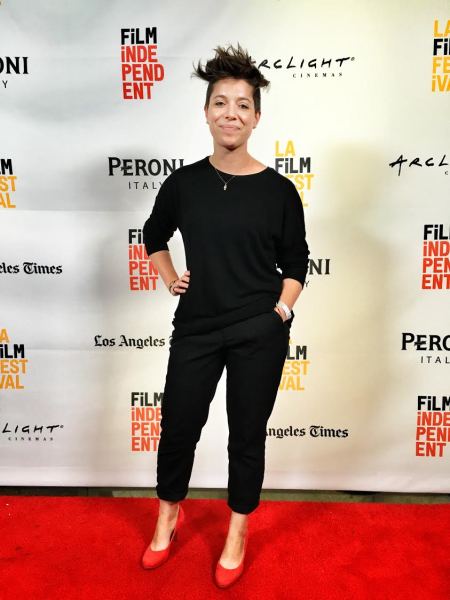
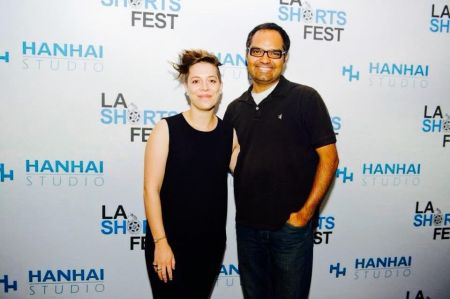








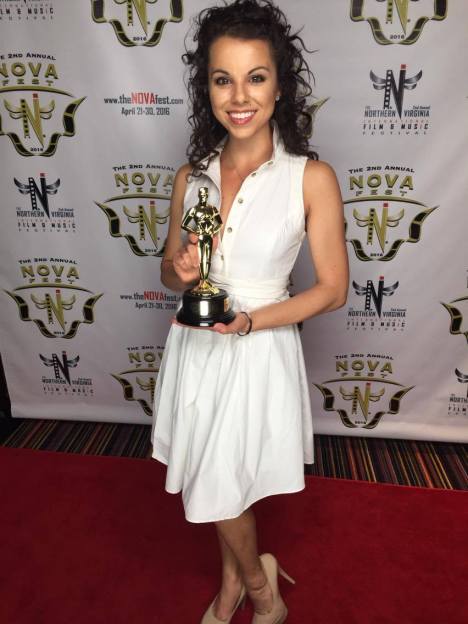
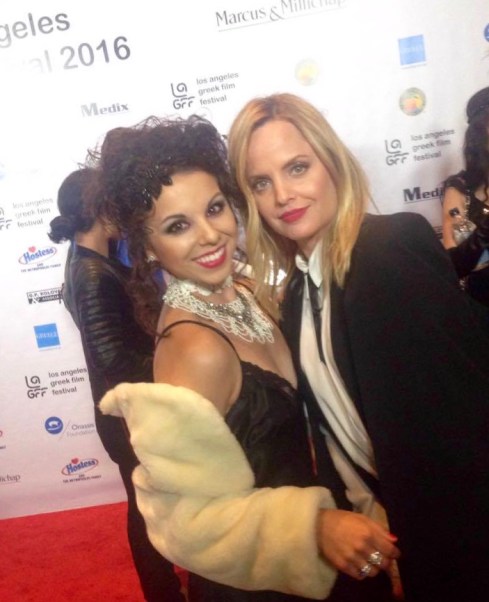

 internationalfilmreview