Category Archives: international Talent

Model Francois Angoston’s athletic past is greatest asset

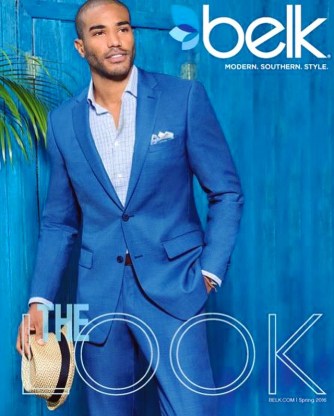
Belk
Francois Angoston modelling for Belk

Growing up in Guadeloupe, Francois Angoston spent his time playing sports. He was always an athlete, always making sure to be in the best shape possible. Later in his life, when he had made the transition to modelling, his athletic build and instinctively hard work ethic from years of sports training became his greatest assets, and today he is known internationally as one of the best models to come from the Caribbean.

While modelling for the popular American department store Belk, Angoston’s history as an athlete proved to be vital. Modeling for the catalogue in the sportswear collection for the last four years due to his incredibly defined physique and the captivating intensity he expresses in his posing, Angoston is an asset to the catalogue and brand. He has modeled Belk’s premier collections that have featured brands like Nike and Under Armour, displaying every article of clothing from compression shorts, to sneakers, to tracksuits, and sweatpants. Not only do these images have appear on posters in the 293 stores across the country, they also appear in magazine ads, and on the company’s website.

“What I liked most about working for Belk, was that they gave me so many experiences. I did things I never did before and it was always a pleasure working with such a great team. Most of the time we were shooting sportive topics, I really enjoy being energetic and dynamic on shootings. It makes a lot of fun. One day I was shooting with a kid and had to give him a training on the field. It gave me a journey back in the days when I trained kids in sports. I love kids and it’s so great how much energy they have,” Angoston described.

Angoston immediately impressed the casting director with his confident movements and versatile look, and his talents for the brand initially made them keep asking for him to return each year. Not only did he get to display sporting wear, he modeled a variety of lines for the store.

“I wanted to work with this client I loved the diversity of their clothing collection. Working for Belk is always a great experience. We’re doing so many different things and I can play different roles. One day I’m wearing a classy suit, the other day I’m riding the surfboard, go fishing or flying in a helicopter. They always have great ideas, beautiful locations and a lot of adventures to offer. I’m always excited for the next shoot,” he said.

Megan Hurly, the Senior Art Director for Belk knows firsthand that a model’s work is a critical staple and necessity of the U.S. fashion advertising and marketing industries, and she says her company relies on the skill of professionals like Angoston.

“The work of a model frames our apparel lines, making it imperative to find ‘the one’ who can match our creative intentions and complement them. Because of Francois’ extraordinary talent and incredible look, I have cast him as a leading model for Belk for multiple collection campaigns and catalogues since 2013, initially casting him knowing he would be the perfect model to represent the company long-term. We only rehire models if they prove to be valuable to the Belk name and its commercial success and reach, and Francois has done exactly that, it is for this reason that he has become our go-to model for our catalogues,” said Hurley. “Francois is a unique and gifted model. He always creates success.”

Izod1
Francois Angoston in IZOD campaign

Being at the top of his field, Angoston is extremely sought-after in the industry. Many brands look to him to represent them, and his look has resonated with many shoppers. His work with the clothing brand IZOD did just that.

“Only one month before the job I just arrived in Los Angeles. The first job with IZOD was one of my first, biggest jobs, so I really wanted to work on this. You think about the immediate exposure, but I also loved the fact that they are a modern sportswear brand. I always enjoy having jobs with some action,” said Angoston. “It was a great experience shooting with IZOD. I actually get to play golf, hockey and mobile ski – that was very fun. We were going on the beach and had a great time as I had the chance to meet very nice people. But more importantly, I learned a lot from the people I worked with, as I’m always very interested and observing in how they work and behave. This attribute always gives me a better understanding and with that, I pay a lot of attention to details.”

IZOD is a mid-range clothing company that produces dressy-casual clothing, sportswear for men, as well as footwear and accessories. They are known for their Harrington jackets, v-necks, and cardigan sweaters. Consumers seek out the brand in many stores across the country, and recognize Angoston as a face of it.

“I loved the energy working with IZOD, and the vibes within the team. Everybody was extremely friendly but very professional at the same time. I really enjoyed being surrounded by happy people, as I love to create those days as a joy too,” Angoston concluded. “I remember dancing in the snow, shirtless, and one time playing football wearing underpants. It was super fun and I loved the results. How can you not love these days? That’s why I love my job.”

Alon Juwal’s Sci-Fi Film “Visitors” Keeps Viewers on the Edge of Their Seats

"Visitors" Alon Juwal
Film Poster for Alon Juwal’s Film “Visitors”

Last year producer Alon Juwal wrote, directed and produced the riveting dramatic sci-fi film Visitors, which has been gaining traction with audiences and festivals across the U.S. since its release at the tail end of 2016.

Starring Kei’la Ryan (Bad Friends & Family, Kingdom, Night Crawlers) as Kaleigh, Nick Unger (Front Seat Chronicles, Phil of the Future) as her brother Cole, and Tim Juliano as their father, Visitors follows two siblings who return home to their estranged father’s house after a long absence, only to find their home being invaded by a group of uninvited visitors from another world as the night progresses.

As the producer of the film, Juwal’s ability to bring together a talented cast and crew, execute the business side of things, such as raising the necessary funding to actually make the project happen, as well as overseeing all aspects of the production from pre to post were integral to the success Visitors has achieved since its release.

Garnering extensive attention across the country, Visitors earned Juwal the Best Director of a Sci-Fi Short Award at New York City International Film Festival, as well as the Honorable Mention Award from the Boston Sci-Fi Film Festival. Visitors was also nominated for awards at several festivals including the USA Film Festival, Vail Film Festival, Phoenix Comic-Con and Newport Beach Film Festival, and was chosen as an Official Selection at the New Hope Film Festival.

“Working with Alon has been an amazing experience… he doesn’t like to waste time, he knows when he has the shot which makes him a great decisive director. Alon is good at what he does because he knows that preparation is key, and you can see it in the way he put the project together,” explains Tom Edwards, Visitors’ aerial cinematographer and behind the scenes videographer.

“Before principle photography he made the time to meet up with his actors and crew members to make sure everyone was comfortable and on the same page. To have a good friend like Alon who is just as passionate as you are, working together to make stories come to life is a real charm.”

Visitors film Alon Juwal
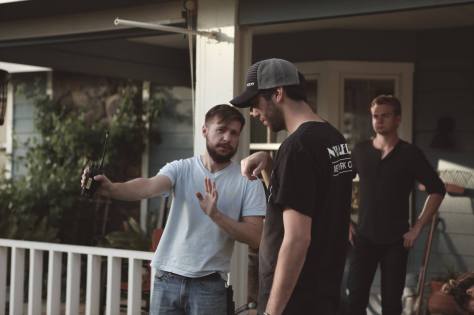
Egor Povolotskiy (left), Alon Juwal & Nick Unger (right) on set of “Visitors” by Majid Alkhatib

Through the powerful combination of the film’s score, specific angles, lighting and purposeful pacing, Juwal does an impeccable job of building the suspense within the story in a way that keeps viewers on the edge of their seats.

The long shots of the brother and sister running through the trees at night trying to make it to safety, while neither the characters nor the viewers really know what they are running from, the bright lights beaming down from above creating eerie silhouettes in the forest, but still leaving us unsure of where the light is coming from, and sporadic sounds of their father’s dog barking in distress, are a few of the cinematic devices Juwal employs to heighten the tension within the film.

While all of this was tantamount to nailing the thrilling, otherworldly sci-fi elements, what really makes Visitors such a unique film is the burdensome relationships Juwal paints between the siblings and their father. As the producer/director of the film Juwal remarkably captures the palpable feeling of emotional discontent that exists between Kaleigh, Cole and their father, revealing the years of turmoil that persists within the family with a subtlety that allows the audience to draw their own conclusions. Visitors is proof that Juwal’s style is one that shows rather than tells, a mark of a truly talented and thoughtful filmmaker.

"Visitors" Alon Juwa
(left to right) Kei’la Ryan, Nick Unger, Alon Juwal & Braden Pruss on set of “Visitors” by Polina Krasovicka

Like the work of most producer/directors, Juwal’s personal life experiences have had a strong impact on the stories he chooses to bring to life on screen. Originally from Tel Aviv, Israel, Juwal’s parents separated early on in his childhood; and it is clear to see how his first-hand experience growing up with divorced parents gave him the insight necessary to accurately portray the strained relationship that exists between the children and their father in the film Visitors.

“I spent the majority of time with my mother as I was growing up. Even though I saw my father quite often, we were always pretty distant from one another. The first thing they teach you in film school is to write about what you know, so I always tried to channel these experiences to my work,” explains Juwal.

Juwal’s approach to Visitors is uniquely powerful in that the film includes all of the elements necessary for an entertainingly suspenseful sci-fi film, while also portraying a moving emotional story that touches audiences on a deeper level.

“First and foremost, good cinema must be entertaining. Cinema is a way of escaping from reality, so when we go to the movies, we basically want a break from our boring, every-day lives. We want to be entertained,” admits Juwal. “Personally, when I go to the movies I’m looking for more than that. I want to be moved. A good movie can often stay with me for an entire day, even more.”

A beautifully shot film with a heartfelt message, it’s not at all surprising that producer and director Alon Juwal has received such far-reaching acclaim for Visitors, and we can’t wait to see what he comes up with next.


MASSIMILIANO LOMBARDO ON THE SWEET & SALTY SCORE OF NOCTURNALLY YOURS

Storytelling has been with mankind for as long as we can remember; yes…that’s humorous. Whether it began as a means of oral history or entertainment (it was likely both) it has captivated people. The means have changed over time, what was spoken by a single orator or actor in front of the cave’s fire is now a vision manifested by the most skilled artists and advanced software. Filmmakers have returned to the keystone of imagination and its limitless possibilities. Whether it be rocks and a drum aiding Cro-Magnon man or current day symphonies and music software with composers, the relationship between music and stories is one of the longest enduring marriage in the arts. 2017’s Karma is a CGI animated film of a cautionary tale. This recent release has already been nominated in over 30 film festivals all over the world and has won 8 awards, including Best Original Score: Honorable Mention at the Asians on Film Festival (US, 2017) for its composer Massimiliano Lombardo. Director Peter Zhou directly reached out to Lombardo (also known as Max) after seeing bits and samples of other animated movies he had previously scored. Because Karma contains very little sound FX and no dialogue at all in the movie, the music would become a main character. The film also has a wall to wall score, meaning that the music is present from the opening scene through to the final credits. Keeping the music interesting and effective all the time without being able to hide behind sound fx or dialogue required an inventive and assertive composer like Max. Zhou requested a score that would engage the audience but not pull their attention away.

A film composer’s task is to write music to picture in order to enhance the emotional impact of the movie and help tell the story. Karma is a traditional 3D animated movie (like Pixar’s movies). After meeting and discussing the music with director Peter Zhou and animator Franklin Okike, Max decided to write a classical full orchestral score with memorable melodies and motifs. The first step was to write a theme for the main character, from which the whole score would be developed. Lombardo recalls, “I watched the picture twice and then shutdown the computer and focused on music for an entire day. Once I had a theme I started composing the actual score to picture, adapting the theme to it. During this process I wrote entirely on the piano in something called sketches.” Sketches are reductions of what will be the actual full score. They contain the main ideas, the rhythm, and the harmony but without orchestration. From there Max began the orchestration, choosing the right orchestral colors and arranging for an ensemble. Given the size of an orchestra, writing for it without a sketch can get a bit dispersive. Max used this method to focus on one thing at the time: rhythm and dramatic impact of the music first, then orchestral embellishments, textures, and finally colors.

Lombardo had an immediate affinity for this film and its message, which greatly aided his role as composer. He confirms, “It really makes a big difference when you fall in love with the movie you are scoring. With Karma it was love at first sight for me. First of all, the movie is incredibly well designed and animated. Characters and landscapes are incredibly detailed and evocative. Furthermore, the movie is very well structured and has a built in rhythm to it. All these elements together are the perfect backbone to a score. The characters would suggest the themes, the colors and textures would inspire orchestral colors and arrangements, while the structure would dictate the rhythm of the score.” Karma tells the story of a boy who meets a fish in a mysterious forest. The boy starts feeding the fish and the fish grows exponentially. He gets carried away and feeds the fish everything he has with him regardless of whether this is good for the little creature. The fish keeps growing until he eventually turns into a monster and eats the boy. The movie is a metaphor for the way we are treating our planet and the animals in it. Actions without conscience lead to disaster for us and all who inhabit Earth.

conducting

Upon viewing, the music in Karma seems so perfectly matched and obvious…yet, prior to Max’s compositions there were a myriad of possible ways that the score could emotionally affect the audience. Carefully taking this into consideration so that he might deliver the intended impact of the action, Lombardo delicately crafted the music for Karma. He explains how his work colored scenes stating, “There are two scenes in which I think the music really added a layer to the movie. One is when we first realize the fish is getting bigger. In this moment the score gets majestic and magical taking the point of view of the boy, but then goes into a darker tone as we start sensing that something is wrong. Here the music really anticipates and creates suspense before the big reveal when the fish turns into a monster. The other moment is at the very end when the fish eats the boy. Here I didn’t want to make it too dramatic as the movie had to be playful overall. I decided to build a dark orchestral piece that ends with a silly resolution that almost sounds like a Tom & Jerry cartoon, leaving a smile on people’s face when the end credits come in.

Contemplating Lombardo’s score for Karma, Peter Zhou relates, “We were really trying to go to some new places with this film. We straddled a line to deliver a message while making it entertaining and not heavy handed. I’m sure that it is frightening for a composer to play their new creation to someone for the first time; it’s a very delicate moment. As soon as I watched the film with Max’s score, I couldn’t stop smiling. It was perfect! He perfectly captured the message and the mood of the movie, adding an extra layer to it that made it complete. I think he really captured the essence of the movie.” Whether he is working with the finest LA musicians, the London Symphony Orchestra, or digital music software, Max Lombardo continually brings a fresh and creative approach to modern film composition and orchestration.

Headshot2

Writer-Producer Stuart Reid Sets New Standard for Kid’s TV

Writer-producer Stuart Reid’s appealing combination of talent, good humor and ambition has an unusual effect on just about every project he’s attached too. As soon as he joins a team, Reid’s high quality contributions typically elevate not only the task at hand, but also his role.

His first writing credit was for DHX Media and Nickelodeon’s Make It Pop, but since then, the charming Canadian has gone on to story edit, write or co-write nearly a dozen episodes of children’s television, develop original series for Sesame Street and NBCUniversal, and even been hired to simply write jokes, ‘punching up scripts’ on shows “looking for a little extra oomph in the comedy department”.

Earning industry-wide recognition is a characteristic aspect of Reid’s sure-footed career path, a journey that led him to film and television even before he finished school. “One of my first summer jobs as a teenager was with Corus Entertainment at Treehouse TV in Toronto,” Reid said. ”Working at Treehouse sort of piqued my interest and got me interested in television and production, and specifically kids. Next thing you know, cut to ten years later, and I’m living between Toronto and Los Angeles, staffing regularly and working with brands I grew up loving, like Doozers and The Jim Henson Company.”

For Reid, his professional life was firing on all cylinders. “It was a lifelong dream for me to work with Henson – a legendary brand with such a cherished and iconic history,” Reid said. “To me, it was a great accomplishment. The Doozers are those little green guys and gals from Fraggle Rock. The Doozers are always building, inventing things and engineering solutions to overcome the obstacles in front of them. There’s a real curriculum there, teaching kids to overcome adversity, and nurturing essential skills to help them creatively problem solve.”

From there, Reid continued to distinguish himself, working with writing partner Mark Purdy on an unannounced series for DHX Media and Mattel (the toy company). “Stuart is one of our primary writers,” story editor Shea Fontana said. “And he also one of the few writers that we could rely on to generate solid episode premises for a series. I knew I could always count on Stuart to deliver high quality, funny and entertaining stories. His work has been integral to our success.”

His gift for mastering the tricky balance of heart and comedy is Reid’s calling card, one that affords him many opportunities. It’s a comprehensive set of skills that allows him broad professional latitude. “Right now, now I writing on an upcoming show for Air Bud Entertainment, but mainly trying to find the time to develop more original material. It’s been a busy year.”

Reid always has one eye on the horizon, and he knows exactly what he wants. “I really enjoy working in animation, but really anything involving comedy that lets you flex the creative muscles. We love to play in big worlds with supernatural elements and larger than life stories. As long as there is heart and something real that makes our characters tick.” Reid said, “we’ve been writing on a lot of existing franchises or other people’s shows. Our ultimate goal is to get a series of our own on the air… Something original, in the truest sense of the word, that came from our tiny, tiny brains.”

AWARD-WINNING EDITOR JUN XIA’S “INSIDE LINDA VISTA HOSPITAL”

Jun Xia is passionate about his work. As an editor, he is passionate about filmmaking in general but he makes no qualms about his love of Horror films. To be clear, it’s the difficulty of it that calls to him and is so attractive. Jun contends that for an editor, horror films are more difficult and require more of him than any other genre. There are multiple reasons for his opinion but it’s clear that the affinity between this editor and the genre is mutual. His work on the film “Inside Linda Vista Hospital” is evidence that Xia feels called to dig deep and bring brilliance, and the accolades which the film has received have vetted him as one of the premier professionals of the day. In addition to numerous awards, Jun was named winner of Best Editing at the United International Film Festival 2017 and received the prestigious honor of this film being named an Official Selection of the Festival De Cannes Short Film Corner 2017. It’s hard to fathom the concept that a factor which led to such international notoriety was conducted in a small editing room. This is the role and life of an editor however and Xia seems more than comfortable with it. When speaking about his work on “Inside Linda Vista Hospital” it is obvious that his ideas and the images on the screen transport him to another place, just as they do for the audience and even the characters on screen.

Jun is boisterous in his proclamation that editing Horror films is an art form, perhaps even a calling for him. One thing is for sure, when a professional feels as inspired and assured as this, you are certain to get an incredible film. “Inside Linda Vista Hospital” is a pseudo-documentary horror film. The script and fictional elements are used to tell the story but are presented in a style that mirrors the documentary format, giving an implied sense of reality to it. The story is about three explorers of the supernatural who go to investigate an abandoned hospital. They get lost in the hospital and one member of the trio becomes separated from the group. While the other two try to connect and find him, they encounter a variety of horrible things in the hospital. John (the missing member) is lost in the basement as the other two characters encounter patients who had been tortured in the hospital and eventually died. Several surprise twists and turns in the story line deliver the shocks and startles that viewers of this genre love. While it all seems so natural and intuitive when viewing the movie, the film’s editor reveals that it is quite the opposite.

While many people operate under the presumption that an editor simply connects and dissects different scenes, the role is actually one of the most vital in creating a film’s story. Working closely with the director, Jun commonly finds himself in deep discussion about what tone to take in placing the scenes together. As with any creative endeavor, if you aren’t noticing the difficulty that it takes to create the work…it means that a highly skilled artist has manifested it. Xia explains, “Once filming is wrapped, there is still so much work to do before the film takes shape. The story is given to the film editor. The editor should discuss with the director to understand the director’s interpretation and ideas of the script. The editor should also understand the director’s style because every director has a unique voice which will naturally lead to different film styles. After the synthesis of these, the editor will successively present the story’s narrative methods using editing software. It’s paramount to understand the role and temperaments of all these professionals in order to be an effective film editor (the ability to understanding what the writer, director, and actors are doing). When it is most creative and enjoyable is during the post-production, the director and the film editor will communicate and discuss at great length. The film editor needs to understand the style and the ideal effect of the director before starting the cutting.  The director will also give the film editor a large creative space in order to maximize the effect that presented by the film.”

Every editor has a process and Xia’s is very specific when it comes to Horror films like “Inside Linda Vista Hospital.” Obviously, he does an initial check of the footage to find the subjective perspectives and intersperse them into the cinematic look of the film; for example, using the POV shots to present the sense of what the character sees while walking. In this way, the audience will feel like they are moving in the film scene while watching the movie. “Inside Linda Vista Hospital” had a large number of handheld camera shots which can be useful but problematic for an editor. Jun describes, “There are a lot of handheld shots in this film. I needed to edit these shots to move fast, so the audience will feel that it’s real and scary. There is a shot in which the character runs into an abandoned red room; I wanted them to run very fast and then fall down on the ground. To achieve this, when I edited this scene, I removed some frames when they run and fall. This is a good idea when editing moving shots. It adds a jolt and surprise element.” Xia adds, “It’s true that editing with a moving or hand-held shot is more difficult than with a fixed shot. A moving shot is constantly changing and often represents the state and psychology of the characters, such as running, walking, or moving with the visual changes of the characters. The editing of these shots should be very reasonable and the convergence of the character movements should be smooth. When editing this, you need to find the splicing points of the screen and then chose the best joint to link the senses of different contents and form a complete action or concept. In addition, based on the characters’ physical movements on the scenes, it’s best to select the beginning or the end of the action as the editing point. In contrast to this, a fixed shot is relatively static and visually has no obvious dynamic shot.

The challenge for Jun when editing a horror film comes not only from the technical aspect of what he is doing but the content which he is given. The footage for a horror film has such a diverse number of factors that affect its delivery. VFX, Dolly shots, fighting or chasing scenes, and other methods are essentially requirements of the genre. While many types of films include some of these, only the rarest contained what is almost always contained in a Horror film. Of course, no scary movie is complete without those unexpected frights which elicit screams and then laughter. This is yet another reason that Jun Xia loves this type of work; it allows him to use the very best he can muster to draw such a wide range of emotional responses from audiences across the planet.

Linda V 1

“LIKE COTTON TWINES” EDITOR TING YU CRAFTS AN EMOTIONAL AND AWARD-WINNING TALE

Like Cotton Twines is one of those rare films that breaks your heart and inspires you at the same time. In the form of cinema, it achieves what no other informative vehicle can; it gives the audience an inside view of a very real situation in another culture. A story such as this touches not only the viewer but also those who create it. Ting Yu served as the editor for this production, carefully crafting its presentation with writer/director/producer Leila Djansi. This film’s content directly speaks to both women as it relates to the plight of women in this particular part of the world. Ting also notes that there are facets of the story which resonate with her due to her country of origin. As a lauded and respected member of the film industry, Yu proved her value to the film and the emotional impact it has made. Now available for streaming on Netflix, Like Cotton Twines is receiving a great deal of accolades, as it did in Ghana (the location of the film’s story) where it was nominated for thirteen awards (at the Ghana Movie Awards, the biggest national movie awards in Ghana) and won 6 awards, including the best film editing award for Ting.

The film focuses on the traditional culture in Ghana. Told from the perspective of an American teaching volunteer, it focuses on his attempts to save one of his students, a fourteen-year-old girl, from religious slavery. Djansi contacted Ting based on her reel and declares, “There is a rhythm to Ting’s editing that is on par with some of the greatest editors. Whether it’s on the micro or macro level, she excels with every edit. She combines shots in a way that perfectly conveys the message of the scene and overall tone of the film. It’s inconceivable to think that Like Cotton Twines would have received the attention and praise that it has without Ting’s talent. When I approached Ting it was because I knew that I had to have an editor of exceptional ability to help me realize my vision.” Conflicting opinions are healthy in film and often lead to better art. Yu’s perspective and ideas are what led Leila to bring Ting aboard the film. For the scene in which Allison (the teacher) did not find Tuigi (the student) on the bus, Leila wanted to use a long take from the beginning to the end, because of the production value. At Yu’s urging, she agreed that this take was beautiful but too long. Ting created a cut half the length of the original; one which allowed the audience to still feel the same emotional content but make the story move faster and more entertaining. She found that her personality and opinions were very strong as an editor but she had no problem listening to the director to help achieve her vision of the film. These are the traits that endeared her to Leila Djansi. These two professionals worked at a feverish pace to complete Like Cotton Twines on a very tight schedule. Yu recalls, “We had several cuts before we locked the picture. Each time we made a cut, Leila and I would sit down and watch the whole film together; both of us giving each other notes. Leila is very open-minded. She is always willing to listen to my opinion, especially when we think we need to cut something out of the film. It was an ideal situation. We would challenge each other…in a very positive way. I feel that this is one of the ways you achieve such a good end result; when everyone seeks the very best and refuses to take anything less than that. One of my favorite memories is of Leila’s cooking. She is such a good cook and would cook for me, because we were working such long hours to finish on schedule. I’d be making cuts based on our notes and also guessing what she would be making me for lunch. That’s not the kind of experience and positive work environment I think most editors get. Add to that the fact that Like Cotton Twines won so many awards; I’m a little spoiled by it all.”

Perhaps one of the unseen facets of Ting’s approach and excellence as an editor is because she started out pursuing the path of director. Her history with secondary choices has proven quite fortuitous. When Yu didn’t get accepted into her chosen University as a medicine major, she switched to TV and Film production. She found that she had a lot of natural talent and it excited her. She felt a strong connection to American films, in particular the work of Steven Spielberg. It became apparent to her that an editor has a different means by which to structure and shape the message and tone of a film and she found it more intuitive for her personally.

Ting notes that one of the reasons she was interested in the role of editor of Like Cotton Twines was the story of females in a culture which does not see them as equal to men. Because of these aspects of her own country of origin (Yu is from China) she believed that the commonly held view that men are seen as somehow superior to women gave her great empathy for the characters and storyline of the film. She communicates, “It’s silly to feel this way when I know that everyone is equal but, coming from a society where women are not seen as important as men…it is difficult to shake this idea from your own thoughts. Leila and this film do an amazing job communicating these ideas and I am proud to have been a part of it.”

The attention and accolades which Ting Yu received for her work in Like Cotton Twines led directly to more work. Enjoying a wide variety of productions such as editing an African documentary about wildlife, Kickboxer: Retaliation (once again starring Jean-Claude Van Damme), and a trio of live action films based on comics and toys in China, Ting Yu has become one of those editors who is in demand across the planet. It’s written in the stars that those directors whom she has admired will be watching her work and likely remembering her name for future projects.

13339629_10154814089580828_8216972789816935442_n

Editor Minghao Shen helps terrify audiences in award-winning horror flick ‘Emily’

Growing up in Beijing China, Minghao Shen always loved film. Unlike many who enjoy watching a movie, he would think about how it was being made. The details behind how each scene was put together were what captivated him; he wanted to be a filmmaker. Eventually, the nuances and strategy behind editing caught his attention, and he knew that was where his future was. Now, he is an internationally celebrated editor.

Shen has worked on countless critically-acclaimed projects, earning him a reputation as one of China’s best recent film editors. His work on films such as Inside Linda Vista Hospital, Stay, Cartoon Book, and Red String has allowed worldwide audiences to see what he is capable of, showing without a doubt why he is so respected in the industry. His work on the horror film Emily perfectly encapsulates what the editor is capable of.

“It is a simple but tense horror film. The movements of shots and the whole visual style are really outstanding. I knew that there would be challenges, but that it would be a great chance for editing,” said Shen.

The film tells the scary story of a woman named Emily. Emily dies giving birth at home after her husband, John, abandons her. However, she will have her revenge from beyond the grave when she returns as a ghost set on killing her widowed husband.

“My favorite part of the whole production was talking about the story, because we found out that there were multiple options would work for it. Although each of the options would have been great, but couldn’t mix them all together, otherwise the tone would be chaos. As an editor, having to narrow this down and figure out how to properly tell the story and convey the right tone was great,” said Shen.

Shen’s instincts proved to be spot on, as Emily went on to do very well at several prestigious film festivals. It was an Official Selection at the Los Angeles CineFest, the SoCal Creative and Innovative Film Festival, the Pittsburgh Independent Film Festival, the Action on Film International Film Festival, the California Independent Film Festival, and the Columbia Gorge International Film Festival. It won Best Overall Micro Film at the Indie Gathering International Short Film Festival and at the Accolade Global Film Competition it won the Award of Excellence.

“I had many complex feelings when I discovered the film was getting a lot of awards. It was a blend of excitement and satisfaction after the hard work everyone had done. We know that we took a bunch of time and work on the film, so I was so glad that our hard work got such encouragement from the festivals,” said Shen.

None of this could have been possible without Shen’s editing talents. He spent his time taking notes every time he met with the director, ensuring he still achieved the vision of the film while bringing his own touch to it.  After the first rough cut, there were a lot of points that needed to be ironed out and redone, but based on notes he did originally, it greatly assisted to the time it took.

“Horror film is always about beats, so the director worked really hard with me to specify each second to make the film the best,” said Shen. “I talked with the director about our thoughts and he trusted me for the style based on my previous experience. There were always some different editing choices between me and the director. He is a talented and continuously brainstorming how to make the film better, so I always let him know more than one choice to let our minds be more open, so that we could avoid some useless change and waste of work time. We actually had some different thoughts in some parts. After a lot of meetings, we finally compromised our differences and both of us thinks this made the finished product better than what just our own ideas would have.”

The director, Jun Xia, agrees, and knows that without Shen his film could not have achieved what it did. The two have worked together on multiple projects since Emily, and Xia knows that Shen’s talents are essential to making a good film.

Minghao and I had worked together for a few times before, and he is always a good listener. He can take feedback and produce more ideas all the time. Minghao is an experienced editor. We talked a lot about a lot of different ways to make Emily better, and it did. He can always come up with unique thoughts when it comes to editing,” said Xia.

Everyone that works with Shen is continuously impressed by his editing skills. Without his work on Emily, audiences may not have been on the edge of their seats, terrified about what would happen next.

You can watch Shen’s impressive editing work on the short film Emily here.

Production Designer Shuhe Wang talks award-winning film ‘Red String’

Born and raised in Taiyuan City, China, Shuhe Wang was destined to be a production designer. Design was always her passion, and she never questioned what it was she wanted to spend her life doing. She understands every aspect as to what it takes to be an exceptional production designer, and that is why she is so highly-respected around the world for what she does.

Despite any challenges that arise, Wang loves what she does, and always shows audiences what she is capable of. Her work on the films Stay, Dancing for You, Cartoon Book, and Inside Linda Vista Hospital helped earn the respect of international audiences and win awards at several film festivals. However, despite this success, she considers working on the film Red String the highlight of her esteemed career.

“With each screening, people are really interested about the story and what is the background of creating the story. As a film, it is always the most important target that let people think about the meaning and something related in society after watching it,” said Wang.

The film tells the tale of an illegal Chinese immigrant who wants to keep his last line of his privacy in a terrible restaurant where he works. However, when he finally goes against his dignity, he finds that he even makes his life worse.

“This is a film about low-level class Chinese immigrant’s life. To make the film reliable and vivid, it relies on the production designer to create the atmosphere about Chinese culture and low-level people’s life. I did a lot of research about what exactly their life had going on, and created some characteristic elements in the film,” said Wang.

Making its way to several international film festivals, Red String impressed critics. It was an Official Selection at the Los Angeles International Shorts Festival, the Festival de Cortometrajes “Jose Francisco Rosado” Pacas, My Love Michelle Short Film Festival, and the Lift-Off Film Festival. It screened at the Festival de Cannes Short Film Corner, was a finalist at the Miami Film Festival, was nominated at the Golden Knight Malta International Film Festival, and was the winner of the Asians on Film Festival.

“I feel excited that the film got a lot of attention by telling a small and rough part of our traditional culture, and glad that the true and hard life of normal people is still being considered and cared a lot by universal audiences. This is a story about my national country’s culture, and it happens in some low-level class people. That is kind interesting to do because I can show audience a different angle of Chinese culture that not very noticeable in real life. And the story is absolutely tense and strong,” said Wang. “The director was very creative and open-minded. It was really great to work with him. He fully trusted me in my department’s process. It makes the work smooth and well- communicated. We were sharing all the thoughts and brainstorming without any concern. We were on the same page for each step.”

The director, Minghao Shen, knows Wang’s commitment to the film and her talent as a production designer largely contributed to the success Red String saw. The two had talked about the script and had found out that they both had a lot of deep thought and ambition regarding the story. Shen trusted that Wang totally understood the story and would create the sets perfectly.

“Shuhe is a designer that does not just care about how to make set pretty, but also about telling a story by the designing, due to her directing skills, so that actually helped the film be better. When Shuhe was working, she was always focused on the details and she was always careful about each single image,” said Shen.

While keeping true to the message of the film, Wang wanted to show some of the key elements to the world without over dressing them. The overall tone is a small bakery and restaurant in old Chinatown of an American city. Wang would go to Chinatown in Los Angeles to simply observe, and to capture the feeling of life there. She would see how they liked to dress and what they liked to eat, what they believed, what way they connected with the outside of Chinatown, what the difference was between the new and old immigrants, and more to truly understand what she needed to create.

“Once I locked each character’s personality, I chose the key elements of each of them and made it into the entire set,” said Wang. “However, the most impressive part of filming Red String was that everyone was so engaged in the story and helped to make it better. The lead actor even gave us some impromptu action with the props as the character and it worked very well. Sometimes we shared the thoughts based on our position to make the film more complete.”

The film was a collective effort by everyone involved, and Wang’s work helped to turn it into a masterpiece.

PETER CHRAPKA HELPS SET HISTORY STRAIGHT

History can tell us volumes. The main shortcoming is that it is sometimes selective in what it wants to tell us. A half-truth is still akin to a lie. Anyone who presents themselves without fault is likely someone who has a major one. This is particularly applicable to countries. To deny fallacy or shortcomings is to admit that you have them to the world. When truth is omitted it is up to artists and journalists to bring these occurrences into the light. Ryan Boyko, Diana Cofini, & Editor Peter Chrapka performed the patriotic task of revealing the truth about the internment camps of World War I in Canada. The love of their country compelled them to create a 32-episode documentary series about this period. This documentary series would inspire a feature documentary to expound on the tale. Only in facing the events of the past can Canada hope to understand and avoid them in the future, a lesson that is applicable to every place on Earth…no matter where you live or your ideology.

The Camps Poster5 large format

“The Camps” is a documentary series depicting the period between 1914 and 1920 when over 8,500 people were wrongfully imprisoned in Canada. Almost forgotten, “The Camps” honors the memory of these men, women, and children by telling the story of their affliction. This production was recognized with an Award of Recognition by Hollywood International Moving Pictures Film and an Award of Merit (Special Mention) at the IndieFest Film Awards. Director/writer/producer Ryan Boyko approached Peter about the project. Chrapka openly admits that the content was as instrumental as the process for him, stating, “After meeting Ryan, the director, I learned of the internment camps for the first time and was shocked as I’d never heard about it before. Ryan saw my previous work and hired me to set up the project and sync all the audio. Ryan noticed the great attention to detail I had in handling the footage and setting up the project properly as well as my past awards and recognitions for work in the documentary genre so he offered me the position of video editor for the ‘The Camps.’ I felt like this was an important project for all of us. There is a responsibility that comes with a career in which you have a line of communication with the public.”

“The Camps” received so much attention and praise that its creators decided to fashion a feature documentary entitled That Never Happened: Canada’s First National Internment Operations. The expanded production team focused on the story of the 8,500 people who were wrongfully imprisoned in concentration camps across Canada, not for anything they had done but because of where they came from, as well as the fact that in 1954 the public records were destroyed. In the 1980s, a few brave men and women began working to reclaim this chapter in history to ensure future generations would know about it. Chrapka and his fellow filmmakers became the next generation in this lineage determined to reveal and discuss the true events while learning from them. Delivering a story such as this is never easy, Peter concedes, “I commend Ryan on his pursuits to tell this story in Canada’s history that has been erased from the history books. He wants this information to reach as many Canadians as possible. This web series has been viewed by thousands of people from around the world and I think the feature documentary will greatly help in reaching thousands more.”

17159330_10155022643096894_4368818621155072033_o

It quickly became apparent to Chrapka that his task would be monumental working on the feature documentary. It involved locating and researching archived clips of the time period. Luckily, the Canadian National Film Board has a fairly large collection of footage from this era which the production was able to license. Of course, most of the records about the internment camps had been destroyed, meaning that no footage specific to the camps was available. Working with a combination of black and white footage from the 1920s as well as footage acquired from private citizens’ camcorders at special events in the 1990s up to the 2000s gave Peter some video but there was a distortion in the resolution as the quality of some of the old footage was not great quality. In documentaries, it is expected that archive clips are of lower quality. These archived clips became an integral part of telling the story and allowed the audience to visualize what the interviewees were referring to. This footage, combined with numerous interviews, gave a strong emotional component to the documentary.

The primary force behind both productions, Ryan Boyko, declares, “Peter’s incredibly important tasks included splicing stories together from the hours of interview footage we shot (which gave him creative control over what conversations made it into the finalized episodes), choosing the music for each episode from a stock cue library, splicing in our 4K drone footage (drone footage was a relatively new concept at the time, and required skill and grace to effectively edit into each episode), and overseeing the work of our color corrector, sound mixer, and other post-production personnel. All this adds up to Peter being an essential member of our crew, and a lead factor in The Camps & That Never Happened: Canada’s First National Internment Operations receiving the incredible critical and commercial success that it has. The web-series has garnered awards from the IndieFEST Film Awards (where the series won an Award of Merit for Best Documentary Short) and Hollywood International Moving Pictures Film Festival (where the film won an Award of Recognition for Best Webisode/New Media). Peter was such a vital component and essential part of the voice with which we delivered this story, I knew that he must be included in the feature documentary when we decided to move forward with it. He is inseparable from the tone we achieved in That Never Happened.”

20151223_125954

It’s easy to tell the kind of story which everyone wants to hear; communicating painful self-implicating ones requires bravery and introspection. It’s only by recognizing one’s own flaws that they may be overcome. Peter admits, “As a proud Canadian, I am glad I got to help in getting this story out to the world and sharing a part of Canada’s past that most Canadians have never heard of. I have learned a lot about this event in Canada’s history and have mentioned it to many of my friends and colleagues. They were as surprised as I was when I told them about this part in Canada’s history because it was never mentioned in any of our history classes growing up. I also learned a lot about storytelling and the importance of keeping the audience engaged and interested as a result of working both of these projects. I’m incredibly proud of these productions because I believe that all art is best when it is honest.”


WALTON CREATES A MODERN ROMANCE BY FLIPPING THE GENDER ROLES IN “THE DATING RING”

Boxers are tough. They are visceral creatures who are quick to physical action and known for few words (with the possible exception of Muhammad Ali) and disconnected from their emotions. The antithesis of this type of person is the calm, well learned, and eagerly helpful librarian. Those who find themselves in this profession are soft spoken professionals who appreciate a good razor for their beard. Wait…were you thinking of a female librarian and possibly a male boxer? Sarah Walton was likely hoping you would make this mistake when she wrote the screenplay for the film The Dating Ring. This film flips the gender roles that we have come to expect. Exploring the dynamic of a relationship between a female boxer and a male librarian, Sarah wanted to challenge both herself and the audience to see these characters as unique and not just another gender assumption. The Dating Ring won worldwide acclaim and was an Official Selection for the Lumiere Film Festival, Italy (2015). Romantic Italians loved the idea which Walton presented that every female/male relationship should be considered at face value; a lesson we’d all be better off learning. Sarah has a pedigree which includes many romantic comedies but The Dating Ring presents its action with a goal of making the viewer ponder just as much as being entertained. The ultimate question asked by this film is, “What is strength?”

When Sarah went through a bad break-up and experienced a betrayal, she did what all artists do…she created. She saw her own dating experience as combative and took the pugilist metaphor to a literal place in her screenplay. To make a clean break from her normal romantic comedy method, she wrote the initial draft without dialogue to challenge herself. This approach gave her a radically different tone for the film and exhibited a fresh approach for Walton. The gender role switch of the two main characters might sound odd on paper but works amazingly well on screen, no doubt due to the incredible performances of Emily Goddard (Shayne) and Nick Farnell (Benji). Shayne is a thirty-three-year-old female boxer, bred by her retired boxing champion mother to be a fighter but it was never Shayne’s passion. She has a maternal mother inside her dying to get out, but her tough exterior and mannerisms belie her true desire for intimacy. Benji is a gentle and compassionate man in his mid 30’s, raised by his strong single mother and two older sisters who taught him the importance of strength and compassion after they escaped from his con artist father. His Achilles heel is being lied to because he watched his mother cry herself to sleep night after night as a result of his father’s lies. He wants true love, not a ruse. Walton states, “In society, the pressure for males and females to focus predominantly on their masculine or feminine traits can be psychologically unhealthy for us as individuals, our self-expression, and the way we interact with one another. Gender role reversal in film challenges this division and promotes equality for the sexes. Within a melodramatic film it’s difficult to stray from the traditional expression and repression of female characters in stereotypical feminine behavior, in which non-diegetic music plays a role. A way of solving that problem is gender role reversal. Steering away from the historical portrayal of masculine and feminine in film will allow us to challenge stereotypes and potentially ease the pressure for men and women to feel limited by their genders in society.”

Donna Hensler (Supervising Producer on The Dating Ring) Recognized the magic in Sarah’s script immediately. She recalls, “As soon as I picked up the script for The Dating Ring I was captured by the voice of the lead character Shayne; a female boxer struggling with the trials and tribulations of love. Sarah’s writing, though commercial and mainstream, is extremely honest and original. She thinks outside the box and isn’t afraid to take a risk. Sarah is a passionate story teller and her stories reflect her unique view of the world and positive view of humanity which is perfectly suited to the romantic comedy genre.”

The Dating Ring still copy

The core of The Dating Ring is designed around fighting. The reveal of the plot is that what you think you are fighting for may not be what you really should be fighting for. With 10 years out of the dating game, Shayne gets back in the ring. She’s training for a big fight and she’s losing her game, so focus is imperative. Her boxing coach mother lets her in on the family secret to winning championships…sex the night before the fight, because it will help her loosen up and focus on the game. Shane meets a male librarian named Benji to whom she is surprisingly attracted. The fact that he’s a male librarian and has a child (she thinks children are the devil) intimidates her, causing her insecurities to flair. She struggles to break the ice with him and finds herself acting out and screaming obscenities like a Tourette’s syndrome victim. Before she knows it she has a fist full of lies to cover up and she’s in too deep. Her fighting increasingly suffers culminating in a choice between the sport she’s loved her whole life and the man of her dreams. When they kiss for the first time Shayne reveals her true self. Benji, hurt that she lied, breaks into tears. She does what any woman in her position would do…she runs off to the boxing ring for the big game. Shayne finds herself in the ring and set up for the wining punch but she can’t do it anymore. Her love for Benji has changed her and she feels compassion for the first time in a long time. She throws in her boxing gloves right then and there with the realization that gentleness is strength.

Just as profound as the role reversal for this story is the idea presented that we cannot judge ourselves by the way that others see us. For Shayne, it is her judgmental and pushy mother who envisions an idea of what her daughter’s life should be. Discovering your sense of self is a thread that runs through much of Walton’s writing. Consider this piece that she penned about other well-known romantic comedy characters of present times; Sarah wrote, “Bridget Jones perfected the art of imperfection.  We love watching her and characters like Carrie Bradshaw, Nina Proudman, or Ted Mosby take chances, put themselves out there and fall down (often literally) because when they make mistakes it makes us feel better about our failures.  It reassures us that it’s okay to be flawed. Mistakes and failures are merely learning curves and opportunities for growth.  Bridget and her fellow imperfectionists show us how making mistakes can lead to happiness because they always succeed in the end.  But what if happiness isn’t at the end of the film or T.V. series.  What if happiness is right now?  Not when we get that dream job, lose weight, finish a degree, earn more money, find a partner, have a baby or move house… but right now. If success is happiness and we can only achieve true happiness through mistakes and failures, then surely we should be welcoming and celebrating failure rather than trying to avoid it?  I know I’ve made a million mistakes and I’ll make a million more.  And I wouldn’t change a single one because they are part of what has gotten me here… And here is pretty great.”

The Dating Ring IMG_3997 (2)

There is a deluge of romantic comedies to choose from if you want to be entertained and feel good. If you want all of the former as well as to be challenged to consider who we are as individuals rather than easily categorized tropes, watch a film that was written by Sarah Walton.