Category Archives: international Talent

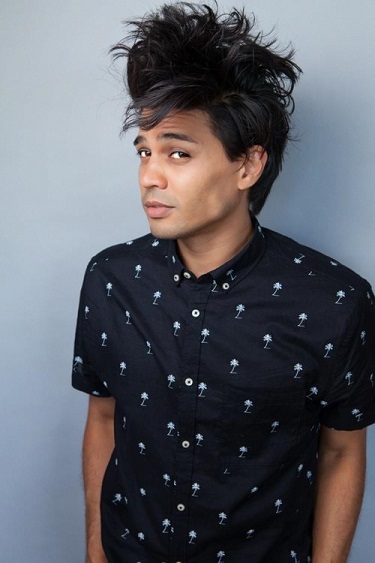
Actor Jeff Parazzo’s Artistic Authenticity

While Jeff Parazzo first made his professional bones in children’s television, the ambitious young actor unfailingly projects a forceful dramatic presence. The Canadian-born Parazzo imbues each role with an impressive mix of skill and instinct, and whether it’s a soul-searching dramatic feature like The Waiting Room or the dark science fiction of powerful short film Celsius 486, Parazzo deftly creates convincing characterizations that unfailingly display a rich measure of nuance and emotion.

It’s a striking combination of deft technique and natural instinct that Parazzo realized was his vocation early in life

“I was always fascinated by films and found myself enjoying drama class way back when I was in school, “Parazzo said. “When I finished my studies it just felt natural to start taking professional workshops.”

Born and raised in Toronto, he has been acting for the better part of two decades and has a strong resume of professional training.

“I’ve continually trained in Canada and Southern California,” Parazzo said “I was fortunate to work with the acclaimed Canadian coach David Rottenberg in Toronto and, in Los Angeles, with Michelle Danner from the Larry Moss Studio, as well as the Edgemar Centre for the Arts in Santa Monica.”

Early in his career, Parazzo jumped right in with a recurring co-lead in a very popular, action packed series. “I’m best known for my work as Trent Mercer, the White Dino Thunder Ranger on the Hit kids TV show Power Rangers Dino Thunder,” Parazzo said. “I went on to do the critically acclaimed Canadian indie Late Fragment as well as many more TV and film credits over the years.”

jeff-parazzo-2

The ease with which Parazzo transitioned from the Power Rangers glossy, fantasy adventure into the eccentric, innovative Late Fragment significantly raised the actor’s professional profile and his subsequent, fast rising stack of credits is a testament to the both his talent and broad appeal.

“For The Waiting Room, I just got a call from my agent saying they were interested in meeting me.”  Parazzo said. “At the audition the lead actor and I just played around and improvised a bunch of different thing, and a few days later I was booked. It was so fun, I’ve always loved doing indie films. There’s a freedom that comes with working on an indie that’s hard to experience on bigger studio productions—I’ve got an indie heart, so working on these types of films, with creative filmmakers, is all I could ask for.”

Parazzo’s skills once again allowed him to craft a wholly believable performance.

“I worked with Jeff on The Waiting Room, which tells the story of a once successful actor, Jasmin, who struggles in his older age to find roles,” actor-director Jordan Barker said. “Jeff played the role of Teller, who has an endearing conversation with Jasmin and comforts him in his current situation, He was so focused on the material that it didn’t feel like acting at all—just another character existing.”

Next up for Parazzo was grim sci-fi thriller Celsius 486, set in a distant overpopulated future where a government mandated sterilization program targets males  arbitrarily deemed  undesirable.

Celsius 486 was demanding but creatively fulfilling because we were working on such a tight schedule,” Parazzo said. “Everything had to be shot over a 2 day period and, as the lead whose eyes you see the story through, I was basically in for every scene.”

Typically, Parazzo not only exceled but also enhanced the production.

“Celsius 486 is where I first worked with Jeff Parazzo,” writer-producer Christos Petsis said. “Jeff flourished in this role which was a very demanding character. It was amazing to see how real he made the role feel, adding a deep strength to the character that we had not seen on the page.”

Here, Petsis’ aptly summarizes the actor’s approach; a gift for creating a comprehensive dramatic presentation which Parazzo, who can currently be seen in Aaron Sorkin’s directorial debut Molly’s Game starring Jessica Chastain, unfailingly achieves. It’s an essential quality for any onscreen portrayal—a subtle, particular brand of aesthetic sensitivity which Parazzo very consciously nurtures.

“I enjoy doing projects of all genres,” Parazzo said. “But I do seem to be drawn to roles that are offbeat and stylized, dealing with interesting themes, and characters that are slightly off center. I just want to continue to learn and communicate my work truthfully, authentically, while never forgetting that I am just one piece of the whole story telling puzzle.”


Graphic Designer Suzy van der Velden beautifully captured surf lifestyle for O’Neill

7L5A5378_f1
Designer Suzy van der Velden

Suzy van der Velden was just six years old when her father made her first desk. It was then when her creativity awoke. She could sit at her desk and spend the day drawing whatever came to her. She still does this today, however, it is often for some of the world’s biggest brands.

Van der Velden has quickly become one of the best Dutch graphic designers. She has established herself through her impressive work with Lululemon, Oilily, and more. When working with the internationally successful sporting wear brand O’Neill, van der Velden once again showed the world what she was capable of.

“I wanted to be part of O’Neill because it’s a brand with a rich heritage. Not a lot of brands have a real story, but O’Neill does and it’s a great one. Rooted in surf, it’s founder Jack O’Neill has changed and touched the lives of many by inventing the wetsuit. That mindset of innovation and to see how we can enjoy nature for longer is something that really attracted me to the brand. As an outdoor enthusiast, I love spending time exploring nature and to be part of a brand that views nature as a playground is an amazing thing,” said van der Velden.

While with O’Neill, van der Velden was responsible for all artwork for the Women’s & Girls collection, including swim wear, snow jackets, lifestyle, outerwear and collaborations such as Liberty London. With such a vast range of work, she researched the different categories extensively, looking to find what the best print techniques were, what was suitable for them, and how to push the limits to innovate and what the trends were. With a shift towards craftsmanship in the company, van der Velden was then free to use her creative freedom, producing the high-quality artwork she is known for, which was more expressive and pushed the brand forward. She worked to create an image for each specific product, as well as the brand as a whole.

“For Swim, I would design in a different way than for a Snow jacket so to say. This could have to do with scale, but also the esthetic would differ and use of color. This made the role interesting and never dull. I became a specialist in knowing what was the best way to approach all the different categories,” she described.

Van der Velden’s passion for the brand was evident in each piece of work she produced. She designs with the end customer in the back of her mind, and at O’Neill she gained a strong understanding of the action sport industry and the lifestyle that goes with it. The energy of the board sports, she says, is reflected in the collections, making it a really diverse and fun environment to be in. Van der Velden also travelled frequently for work, and she really got to see how the brand was appreciated beyond just the walls of her office. She immediately noticed the team spirit from those that wear it.

“I loved the fact that the product I worked on gave people the opportunity to enjoy what they loved most. My greatest reward was being able to see my designs come to life and seeing people wear my clothes in all areas around the world,” she said.

It wasn’t just customers that were impressed with what van der Velden produced. She was able to take trends and translate them into her work in a way that made sense for the brand, greatly contributing to its success. She consistently hit the right tone for each specific product, and her artistic instincts were greatly appreciated by all she worked with.

“It was great working with Suzy and I personally really enjoyed it. She was very well respected by the entire team and had an easy yet professional nature. I found that Suzy could bring a graphic story and direction across with natural authenticity and could get people to buy into the big picture with her simple but very educated communication style,” said David Henry, the Global Snow Performance Product Manager and European Accessories Product Manager at O’Neill. “Three words spring to mind when I think of Suzy: easy going, knowledgeable, and professional. Suzy was always on top of things and this gave me confidence that we were on the right track. She was also always open to others point of view and the resulted in meetings that were well balanced. Suzy always brought a sense of calm with sometimes big egos and I really liked that about her.”

Initially, van der Velden wanted to work at O’Neill for the experience, but it quickly became much more than that. As soon as she started working at O’Neill, she knew she wanted to stay a part of the team of young talented individuals with a passion for action sports. Although it was initially a temporary position, van der Velden’s work ethic and talent quickly impressed, and she was offered a permanent spot not long after.

Van der Velden also was inspired by the story of the founder, Jack O’Neill, who invented the wetsuit. This allowed people to surf in all areas of the world that were never able to otherwise. The goal of the company is to ensure people can surf no matter the water temperature. Their mission is ‘to surf longer’. O’Neill is known for its extraordinary athletes that are always pushing the boundaries, causing people to always be engaged to what the brand is going to do next. Van der Velden’s designs captured those ideals perfectly.

“Innovation is in the brands DNA and this makes sure O’Neill is ahead of the game, plus there is always an element of fun keeping it light,” said van der Velden.

The six years van der Velden spent at O’Neill, were in her words, a “blast.” However, it was always the inspiring story of Jack O’Neill that appealed to her, which she describes as timeless.

“Jack O’Neill passed away on the second of June of this year. It’s sad to see such a legend pass away, but I’m grateful for what he has built and that I’ve been able to be a part of the experience in a way,” she concluded.

RACHEL ZHOU DIRECTS A MULTINATIONAL NAIL BITER IN LOS ANGELES KIDNAPPING

China not only possesses an acclaimed and burgeoning film industry but also a huge number of movie goers and cinema fans who greatly contribute to a film’s international box office. There’s a good reason that you see many Chinese names in the credits of Hollywood films these days as well as an increasing number of the country’s talent appearing alongside Hollywood marquee names. The relationship between these film industries has been mutually beneficial artistically and financially. A key ingredient in this scenario is the ability of at least some of the professionals to communicate in both languages (sometimes multiple languages) whether in front of the camera or behind it. Rachel Zhou is a Chinese director well versed in American film. She has found herself working on numerous productions due to her talent and her command of both languages. Communication is key for a director when speaking with the actors, cinematographers, and other members of the film crew. It’s even more so when the same vision must be communicated clearly to a cast and crew who do not share the same native tongue. The China-US production Los Angeles Kidnapping enlisted her as a director due to their need of cross cultural assuredness in both the storyline and the performance of the off camera crew.

The occurrence of US/China film productions is becoming increasingly more prevalent. Directors who are both talented and at ease in communicating in both languages (Rachel speaks four languages) make them even more attractive these days. Zhou believes that the communication involved in a film production transcends even the spoken. Her goal is to have her team work together culturally and spiritually. Directing more than the film, she feels that it is her job to create a positivity, a sense of calm and confidence that permeates the very air of the working environment to sync the minds of all involved. Even though she possesses more than the appropriate verbal skills needed for all on her team, it’s Rachel contention that once she creates this “vibe” on set, everyone understands and anticipates the needs of the work.

Los Angeles Kidnapping is a Chinese story taking place in the US but the theme is universal. Through the experiences of Delger (played by Siyu Lu) the audience is asked the question, to what ends will one spend their life fixated on revenge. Motivated by avenging his brother’s death, Delger follows clues about the murder to Los Angles. As a graduate of the police academy, he both understands the law and is willing to work outside it as a result of his anger. Working undercover as an Uber driver in LA, he continues his investigation. When a friend of a friend is kidnapped by mobsters, Delger is enlisted to aid in the rescue. The experience and a surprising plot twist at the end of the story cause this protagonist to question whether a life solely focused on vengeance is one he is willing to live.

While the list of Zhou’s directing credits is extensive, her work on action films was not, prior to Los Angeles Kidnapping. She fully embraced the idea of the different approach required for the genre. Taking great care to design and discuss the film’s many action sequences with stunt coordinators for entertaining action designers, Rachel’s cast underwent extensive training for them film. While storylines of a more emotional nature are centered around the actors, action films present the action as a character in themselves. This includes crew members and professionals who specialize in the genre such as stunt coordinators, drone operators, traffic controllers etc. The film also gave Rachel a chance to use one of her favorite tools as she describes, “I’m into Steadicam shots a lot. When I direct an action/crime/drama, especially actions scenes, I prefer to go with Steadicam shots. Steadicam is a novel way to shoot a scene as it isolates the movement of the camera operator from the camera. Stabilizing mechanisms counter the movements of the camera operator to eliminate the inevitable imperfections present in handheld shooting. These work in an extremely powerful way since the Steadicam shots, compared to handheld shots, give a stronger sense of subjectivity with steady movements. The audience finds it easy to become engaged in the setup.”

IMG_1546

Los Angeles Kidnapping garnered a plethora of awards at such prestigious events as the London Independent Film Awards (2017), Miami Independent Film Festival (2017), Hollywood International Cine Fest (2017), Los Angeles Film Awards, and received an astounding 1.94 Million views on Iqiyi.com (China’s version of Netflix) which announced Zhou as an action director. Los Angeles Kidnapping’s producer Cleo Zou has an acclaimed career in China as a producer, working with the country’s most respected and successful stars like Jackie Chan. Cleo declares, “With Rachel on the set, I never had to worry about the shoot because she is such a highly-productive artist. She`s talented, smart, hardworking and humorous. She always knows what she wants and how to get it. We all love working with her. She possesses that ease of working with professionals from both cultures which enables everyone involved to relax and enjoy the process, which is when artists are able to deliver their very best.” It’s this tone that Rachel always strives for, in both big and little ways. She reveals, “Everyone works very hard on a film set. I feel it’s important for us to not only support each other but to lift the spirits of one another. I think there is always time to make it fun. When we were shooting a conversation scene in an alley for Los Angeles Kidnapping, the art department was asked to make wanted posters to place on the walls. Because those posters are never in focus, they made ones that said “Wanted, Giraffe” & “Wanted Dinosaur”, etc. It was a tight shoot that day but the funny posters made all of us laugh. It’s not only the little things that the audience appreciates but also the little things the professionals making the film like.”

Production Designer Mercedes Hachuel: The Dynamics are in the Details

Venezuelan-Spanish production designer Mercedes Hachuel’s lyrical sense of aesthetics, keen professionalism and zesty, enthusiastic creativity allows her to successfully take on just about any type of film job. Equally at home designing for commercials, music videos, motion pictures and television, Hachuel’s dedication and drive have earned her both a strong reputation and fast-growing resume of noteworthy credits.

For Hachuel, a lifelong romance with storytelling and art provided the ideal background for her choice of career. “I was born in Caracas, Venezuela and as a child I’d read books and draw the worlds that I imagined the characters living in.” Hachuel said. “My favorites were Harry Potter and Lord of the Rings, so you can imagine that when the films were released I just felt in love with those worlds and wanted to create something like that myself. I loved ideas, I loved creativity so I studied social communication with a major in film in the Andres Bello Catholic University, the best in the country. Meantime I worked in a small advertising agency where we produced all our commercials in-house, and I realized I had to do something related to film That’s when I moved to Los Angeles to study production at UCLA.”

Arriving in Hollywood, she wasted no time. “I met Leslie Dilley, the art director of the first Star Wars and production designer of Aliens, Deep Impact  and many other amazing films.” Hachuel said. “He became my mentor and explained to me that everything I had done up to that point was actually production design. He taught me the secrets and the real magic behind the work. Everything I heard and did made me love production design even more and that’s when I realized it was my passion—what I wanted to do for the rest of my life, to create magic worlds and make fantasies reality. I think that was the best decision I ever made.”

Her industry peers certainly agree. Whether she’s assigned to a dark comedy like He Matado a Mi Marido (“I Killed My Husband”), the bittersweet family dramedy of The Astronaut, an intense thriller like The Cards or famed dancer-singer Brian Puspos’ atmospheric music video Murder She Wrote , Hachuel leaves her own distinctive imprint even as she ensures a seamless production.

“Mercedes is passionate, talented and reliable—characteristics that make her a great asset for any project,” Murder She Wrote producer Gonzalo Wagner said. “She has a great ability to adapt herself to new situations and solve last minute problems. You can rely on her and know that you don’t have to worry because she’s ready for anything.”

Production Design is a necessarily collaborative discipline and Hachuel excels at bringing a team together; her professional background—advertising, set decoration and art department experience—provides a rich cumulative basis which produces invariably superlative results.

“As production designer, I realized how important it is for the audience to be able to immerse themselves in the story, “ Hachuel said. “If we do not achieve that, it doesn’t work. It’s really important to have design and sets that support the narrative and backstory of the film. And to capture that—to set the tone—the art department, camera department, lighting, all have to work together, because only the right mix of set decoration, color, shadows and highlights not only tells the story, they also add depth to it.”

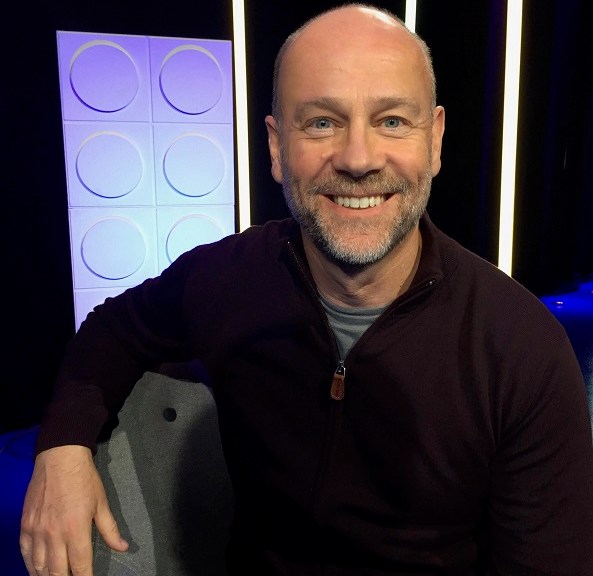
Elie Sfeir
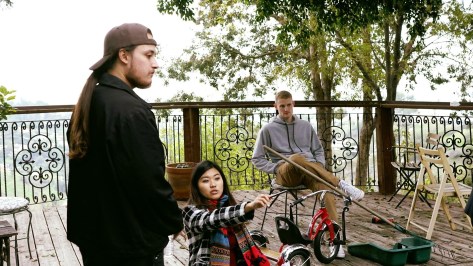
Hachuel, with second assistant director Gavin McFarland, prepares to build another world (photo by Elie Sfeir)

“Mercedes is always attentive and passionate about her work,” Guillermo Polo, director of photography on The Astronaut, said. “She is always ready to change something in order to make the shot perfect, and is always ready for the next shot, which is really great for my department. That attention to detail is what makes her work unique.”

“I really do believe in details,” Hachuel said. “You have to be looking out for them all the time, to add or take them out and you design and build while always thinking about those little elements, because they are what will make what you are creating unique and believable. You can’t create another world if you do not pay attention to what should really be there, and those little details are what make all the difference in the end.”

Even for a short form music video project, Hachuel reliably gives her best, creative all.

“On Murder She Wrote, the director and I discussed every small detail so we could get a shared vision of the artistic concept,” she said. “It was the story of a man that lost everything he cared about and murdered his lover. We played with the idea of having all the sets suspended in a black hole that was infinite, timeless and dead, but it had to look classy at the same time. So, I had to be really careful with the color, since I needed to work with that stark contrast. Finally, I choose a color palette of gold, red and white—these represented the value and purity of love but also, at the same time, the blood and passion of those violent emotions. Experimenting with those colors, I composed and selected each set piece and everyone liked the results.

For Hachuel, every production design assignment is an artistic challenge, and she takes a great measure of satisfaction in crafting the most complimentary and ideal presentations a story requires

“I love projects where I have to create different props and build things,” Hachuel said. “I always do a great deal of research before I actually begin, to give myself enough information to be able to create a believable world. That’s my ultimate goal—to let the audience feel that the world I created could really exist.”

Canadian Actor Donald Heng Faces the Supernatural in SyFy’s ‘Ghost Wars’

Canadian actor Donald Heng followed a downright unorthodox route to break into the business, but it’s definitely working for him. The Vancouver-born Heng’s recurring role as Deputy Larry Foon on the new SyFy network fantasy/horror television series Ghost Wars encapsulates the Heng story, an offbeat, pan-professional mash-up of career choices that has placed him alongside some high profile stars.

“Quite frankly, I never felt I was attracted to acting for necessarily the right reasons,” Heng said. “I grew up admiring the police I saw portrayed in films and I wanted to be a police officer. I studied criminology in university. In the end, I figured being an actor would provide the positive aspects of being a cop without having to deal with the public pressure and boring administrative work.”

Born in Vancouver B.C., Heng had flirted with acting as a teenager, but after graduating high school and studying for a Bachelor of Arts Degree for Political Science and History at Simon Fraser University, he decided to obtain representation and study the craft in earnest.

“Despite that initial ambivalence, I fell in love with acting for all the right reasons. I acquired an agent and jumped in headfirst,” Heng said. “I studied acting with Jeb Beach for the next 5 years. And also worked with Matthew Harrison, Robin Nielsen and most recently, Andrew McElroy.”
Donald Heng 2

“Initially I just wanted to be on TV,” Heng said. “I can pinpoint the exact moment I decided I wanted to be an actor and that I was in it for the long run. My second class ever with Jeb Beach coincided with a deeply depressing moment in my life and Jeb helped me channel that energy into something I was able to illustrate through acting. I realized that I could take all the bad things I’d experienced in life and turn these into something good. Meryl Streep articulated it best as she remembered Carrie Fisher, ‘take your broken heart, and make it into art.’”

Heng swiftly parlayed that emotional breakthrough into a successful television career, with a small but memorable role in Disney’s T.V movie Girl Vs. Monster, a string of appearances on such series as Supernatural, Ransom, Arrow and, most recently, the elegantly terrifying Ghost Wars.

“This was a project that checked so many boxes on my list,” Heng said. “First off, I got to play a police officer which has always been a dream of mine. Secondly, I deeply respect the actors on this series. It was a wonderful experience to work with Vincent D’Onofrio [Full Metal Jacket, Netflix’s Daredevil], Meatloaf and Avan Jogia. I had some challenging experiences working on this as my character goes through some traumatic events in the series premiere. But it was a challenge that I welcomed and deeply appreciate the opportunity to have experienced it.”

His co-stars agree. “Donald was an absolute pleasure to work with,” Ghost Wars lead Avan Jogia said. “It’s so nice to act alongside someone who understands what each individual character brings to a scene and then, ultimately, the entire piece.”

Heng is also fully invested in his new role. “I am very excited about Ghost Wars,” Heng said. The horror/fantasy has experienced revitalization in recent years and demand for quality stories in the genre is at an all-time high. New shows have to meet that demand by integrating a very human story into the horror and develop a show that can stand on its own and be mainstream without just catering to a niche market. Remove the ‘creepy factor,’ and there’s still a very human story beneath it. By attaching that human component, it becomes easier to think about the character’s relationships and also about what might be at stake because of that ghostly entity.”

Heng stands at the cusp, savoring a rich, loaded professional moment in a fast moving career that has already come far and is poised to reach full bloom

“I just want to make good movies and TV,” Heng said. “And I want to do it for the same reasons that I fell in love with acting—I want to continue to push that goal of consolidating all the bad that is in my life and make it into something beautiful.”

Donald Heng will next appear as a guest star on episode 2 of the 4th season of The Flash airing on the CW, Tues., Oct.17th.

CREATING A STATE OF THE ART LOOK FOR FLATLINERS

At the end of this month (September 29th in the US) the Cross Creek Pictures/Columbia Pictures distributed drama/horror/sci-fi film Flatliners will open worldwide. Why does Hollywood choose to remake such a film (the original Oscar nominated production was released in 1990)? There are numerous reasons but one of the most prominent is that the ability to tell the story has become better, at least in certain genres; that’s code for technology. There’s no denying that there have always been great artists and professionals creating films but technological advances make the unbelievable more believable. As someone who works in this field as a VFX Coordinator, Jacquelyn Racine is always working with the latest developments. The soon to be released remake of the 1990’s film Flatliners (starring Ellen Page, Diego Luna, and star of the original 90’s film Kiefer Sutherland) has a remarkable look thanks to the work of Racine and her team at Spin VFX. Movie audiences have become savvy in regards to VFX, leaving the professionals who create them with the task of creating exceptional visuals that are somewhat grounded in reality. This is especially challenging within the story of Flatliners with its otherworldly settings. The mediator at the heart of this is Jacquelyn Racine.

Spin VFX is a large-scale visual effects studio in Toronto. One of the top three companies which most L.A. based networks outsource their work to, it has over 100 employees working on up to/over 20 projects at a time. As a VFX Coordinator at Spin VFX, Jacquelyn oversaw three groups of artists, assessing strengths and assigning work according to deadlines. Perhaps more than any other professional around her, the human aspect was paramount. The director’s vision needed to be communicated clearly and manifested by those whose individual skill set best met the need. The very nature of the art being created for the film necessitated a two-way street in communication with Jacquelyn as the roundabout.

The look of the film is not the only difference from the original. The new production has a markedly more supernatural turn on the idea of the afterlife that was investigated in the 90’s story. Technological advancements in cinema have made this a much more viable course. When each of the characters in the film go into their ‘flatline’, they enter an alternate universe with magical components. These paranormal experiences follow them back to reality and haunt them in everyday life. The students push themselves so close to the limits of human life that they almost kill themselves to chase a high of the unusual alternate reality. The 2017 film uses the idea of the original as more of a starting point. The work of Spin VFX empowered the filmmakers to take the idea much further than before. It is meant to be a separate film even though it’s a remake. The characters are different and it takes place in modern day, meaning that the same initial aspects remain the same but the overall look can change and has given the story a different bent.

While the flatline experiences were hinted at in the 90’s film, VFX allows them to be deeply explored and displayed in this new version. In this rendition of Flatliners, the visual effects play an integral role, essentially becoming another character within the film as they help direct the plot. A deliberate vagueness makes it hard to differentiate between reality and the ‘flatline’ in a number of scenes. The result of this is that the audience becomes somewhat disoriented in a similar way to the characters in the film. Jacquelyn worked with her team and the filmmakers to develop a look for each of the characters’ ‘flatline’ world based on their history. Some are meant to be ethereal and beautiful while others are enhanced versions of reality. The VFX in the film adds a visual spectacle to a unique story that would otherwise be quite sad.

The work of Racine and her team at Spin VFX is not as simple as just sitting down at a monitor and using software and…Voila, everything looks amazing! From the very beginning, the producers and directors of a film like Flatliners understand the visual needs of their story are great. Racine and Spin VFX were heavily involved in the previsualization meetings that took place before shooting. This included creating mock-ups of some of the more complicated sequences. They created a blocking for the actors and production team members to use on set for complex camera movement scenes (often involving the use of a techno dolly). Bringing a simplified video example on set can help the director understand and perhaps alter the way they choose to shoot a given scene. Jacquelyn was in charge of overseeing all the work being brought on set and ensuring it was completed on time and on schedule. She explains, “The animation team at Spin VFX, with my management and the VFX Supervisor’s direction, created previsualization videos to give guidance to the team on set. It included a bird’s eye view and camera view of the set, actors, and equipment on location. We used software called ‘Maya’ to create a fully computer generated version of what they were seeing in real life. It demonstrated where the camera would need to be placed to perform the required camera movement. It also included each set piece placed to scale (based on location measurements), so it was a realistic depiction of the production. The video was played for the director and DP to determine whether their vision could be achieved in the space or not. We discovered that the actors would need to be relocated since the camera would interact with them. This was something we wanted to avoid, so we rearranged the placement of the elements in the video and demonstrated the new version to the director. This ensured that when they got on set to shoot the sequence it was clear what needed to be done, and no time was wasted.”

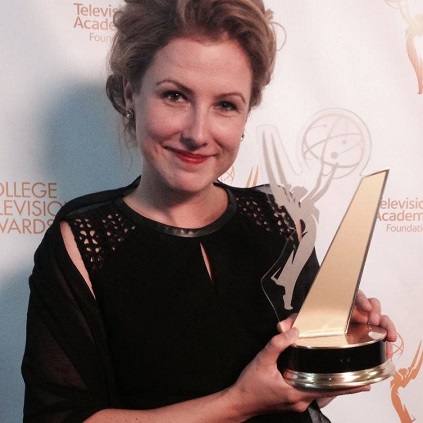
Headshot_2

Spin VFX’s Wes Sewell professes, “It was my distinct pleasure to work with Jacquelyn on the feature film Flatliners. We worked closely together at Spin VFX with the animation, effects, and tracking departments. With Jacquelyn’s oversight, we developed a previsualization system for the film. Her excellent and precise management of these teams of artists made it possible to deliver the on-set materials within a tight schedule. It’s not only her knowledge and abilities, it’s that I know I can trust her to keep everything moving. It always gives me comfort to know she’s there. Every success is built on the talent of those involved but also on their commitment and reliability; Jacquelyn is a master of all these.”

Cinematographer Kristin Fieldhouse’s Perfect Mix of Art and Science

With any feature film, audience interest always centers on the starring actors, but the fine art of cinema succeeds or fails due to the efforts of three key contributors—director, writer, and, perhaps most critically, the cinematographer. Whether photographing in lush color or stark black & white, the overall look of a movie sets the tone and provides invaluable context for its storyline, and one of the field’s fast-rising practitioners is the skilled British-born cinematographer Kristin Fieldhouse.

Hers is an exacting occupation, part science, part art, that requires both acute aesthetic sensibilities and precise technical acumen— qualities that Fieldhouse been cultivating since she was a pre-teen shutterbug. “My love of photography began when I was twelve,” Fieldhouse said. ”I attended a local independent school that had an incredible darkroom and photography teacher, and was lucky enough to spend many hours taking pictures and developing prints, and exploring art galleries on weekends.”

It also became a very personal part of her life and identity. “Photography gave me the opportunity to find my voice through imagery and a means to express myself as an artist,” Fieldhouse said. “Having gone through some childhood trauma—losing my father and sister—photography was a healing process and gave me the opportunity to connect with people through an artistic medium. And that, in turn, led me to cinematography.”

Even before completing her education, Fieldhouse began racking up some significant camera department credits, contributing to such high-profile Hollywood projects as The Incredible Hulk, Total Recall, music documentary Neil Young Journeys along with numerous television and short film credits. Upon graduating, with an MFA, from the American Film Institute, her professional life as a cinematographer began to blossom.

With a solid roster of short film credits, Fieldhouse moved into feature film, shooting Michael Seater’s Sadie’s Last Days on Earth, Jenée LaMarque’s The Feels and veteran actor Amy Jo Johnson’s directorial debut The Space Between, an offbeat comedy about a man who learns his new born son was sired by another and embarks on an odyssey to find the biological father. Her experience shooting the film encapsulates Fieldhouse’s comprehensive grasp of the demanding craft.

kristin-fieldhouse- setting up shot

“Amy Jo Johnson and [producer] Jessica Adams were building a team of artists and technicians that understood their vision—within the confines of an ambitious script, a micro-budget and a short shooting schedule,’ Fieldhouse said. “This was to become an epic road movie, with lots of locations, limited time, large cast, babies and a travelling limousine. They reached out and brought me on for a lengthy prep—which was essential for the project. I developed a language and symbiosis with Amy, and was also able to help organize and put in place the various cinemagraphic elements required under challenging circumstances.”

In short order, the company was off and running. “The challenges of the film were numerous,” Fieldhouse said. “16 days of shooting, always on the move, many locations, and lots of road and car work. We managed it using smart scheduling and techniques that kept crew and gear light and streamlined and by working together to overcome the obstacles that came up with locations, weather and schedule.”

It’s not all logistics—the conscientious cinematographer must also contend with myriad, far more subtle issues. “I tried to approach the film as a fly on the wall,” Fieldhouse said. “I attempted to let the themes of the film play out unobstructed, working to enable authentic comedy and to allow for improvisation. It was also important for me to use framing and lighting to bring connection to our characters and support personal and nuanced scenes that required a delicate touch. I wanted the camera to be close and personal for some scenes, and then to stand back for others giving breath and a more objective point of view.”

Fieldhouse’s sensitivity—a singular, artful empathy for story and characters—is a quality that not only characterizes her approach to the camera, it also directly affects the production itself.

“I found Kristin to be a true artist,” Johnson said. “Her ability to work with the cast and make them feel comfortable and free to experiment contributed significantly to our great performances. She and I fully collaborated on every shot and created the look and feel of the film together. She was also an incredible leader who had her crew inspired and motivated the entire shoot. We had a very demanding schedule but Kristin exceeded all my expectations and delivered exceptional image quality. I’m excited to see where Kristin’s career takes her. I believe she’ll be one of the great ones”.

That kind of intuitive, on-the-spot collaborative creativity is rare, and is certain to push Fieldhouse’s burgeoning professional reputation even higher throughout the international film community. For Fieldhouse, the prospects are limitless, but at her core, it’s all about genuine artistic expression and the impact it can make.

“I see film as a medium that connects and enlightens,” Fieldhouse said. “It has an incredible capacity to give space to voices and experiences. If I can continue to tell honest stories that inspire and challenge the status quo—that would be a true gift.”

Production Designer Alex Craig’s Extraordinary Creative Vision

English production designer Alex Craig is one of the leading proponents of his craft. Well known to UK television audiences through a sterling roster of credits, from his contributions to the avidly watched BBC National Lottery and A Question of Sport and runaway reality smash This Time Next Year, Craig has perfected a mixture of bold creativity and context sensitive design that’s made him one of the most in-demand talents in the business.

Craig arrived at his position through a somewhat circuitous route; he initially studied fine arts at a series of prestigious schools when fate intervened. “A good friend at art school was training to direct film in the Media Studies department,” Craig said. “And he told me about the role of the art director in film and TV and that immediately  interested me. My initial experience was working on music videos and fashion shows, which I loved, so it just grew from there and I became hooked. A Fine Art degree isn’t the most obvious route into production design, but in my case, it was.”

In short order, Craig established himself as a reliably creative professional with a peerless instinct for creating solid, appealing design

“Throughout my career, I’ve been lucky enough to have worked on a wide range of interesting and well known UK and international productions,” Craig said. “Many of these required a variety of studio and location work in the UK, China and Spain  Large scale entertainment shows are definitely a favorite of mine, and I’m a big music fan, so l welcome the opportunity to get involved in designing tours for bands and solo artists. As a personal project, I’d also like to experiment with some of the LED technology that is commonplace in studio design and apply it to create innovative bespoke pieces for interiors. Variety definitely keeps my designs fresh.”

One of Craig’s biggest and most challenging assignments has been as lead production designer for BBC1 TV’s long-running, start-studded annual fundraising spectacular Children in Need for almost a full decade.  Since its 1980 launch, CIN has raised 600 million British pounds for disabled children and young people, established itself as a prominent staple of British pop culture and featured many of world’s most famous entertainers—from Taylor Swift and Madonna to Rod Stewart and One Direction.

Alex-Craig-children-in-need-set-design-bbc (3)

“The show producers approached me in 2006,” Craig said. “They wanted to bring the CIN set up to date—it was beginning to look a bit old fashioned. They were impressed by my designs, as I’d been production designer on a number of high-profile BBC shows, and they thought it would be a good fit. I jumped at the opportunity.”

It was formidable job. “The telethon is a live, 7 hour primetime broadcast,” Craig said. “It features numerous ‘A list’ acts from the worlds of pop, musicals, comedy, dance, plus surprise performances. For the most part, these take place on a very large, impressive main stage. But the set also requires areas for presenters, surprise guests and more intimate performances so the set design also includes additional stages, a catwalk, multiple entrance options, several huge LED screens, plus a large studio audience. “

As a fully live, in-the-moment theatrical presentation, Craig has to not only anticipate myriad potential complications, he must be prepared to confront any issue head on. “The set also has to be flexible enough to get specific ‘performance sets’ required by any given artist, onto and off the main stage at high speed. It’s a technically complex event, which requires a mixture of creativity, logistics and a calm nature—especially when there’s less than a minute to go till the next spot and I can see an incomplete performance set still being put together on the stage.  Back in 2006 there was also a large orchestra to accommodate, and although the orchestra is now gone, the amount of technology has increased which brings its own challenges.”

“There’s a creative pressure to design a set that is going to have the style and presence to work as an appropriate backing for a diverse mix of some of the world’s biggest stars,’ Craig said. “The fact that it is live requires a lot of quick turnaround scenic setting, striking and re-setting throughout the 7 hours that we’re live on air. Backstage can become extremely cramped, with props, scenery and band equipment stacked everywhere you look. The set also incorporates a huge amount of LED technology which has to be integrated into the scenery as the set is installed. This can sometimes slow us down if there’s any kind of fault or glitch.”

Few have the drive, vision and skill to take on such monumental task, year after year, but Craig wouldn’t have it any other way. Nor would the BBC: “Alex designed the main studio set for 9 Children in Need shows, which is an outstanding achievement in itself,” executive producer Clare Pizey said. “He is an innovative and extremely talented Production Designer who has managed to give the show a visual identity which sets the tone for the night. And he is always pushing to move the look of the set to the next level, which both uplifts and inspires the audience. This is much of the reason why Children in Need has become so special to British culture as a whole.”

Craig’s long stint with CIN is one of the crown jewels in his already glittering resume, and it holds a special place in the designer’s affections.

“I love designing this show and am proud of what it stands for,” Craig said. “It has become a very special annual event in my work diary and a career highlight for me. It’s an honor to have contributed to such a good cause for so many years.  The show has raised record amounts of money even during recession years, and that always spurs me on to dream up new ways of presenting a fresher, more innovative design.”

For more information on Alex Craig, visit alexcraig.com

THE SMART BET IS ON RAHUL

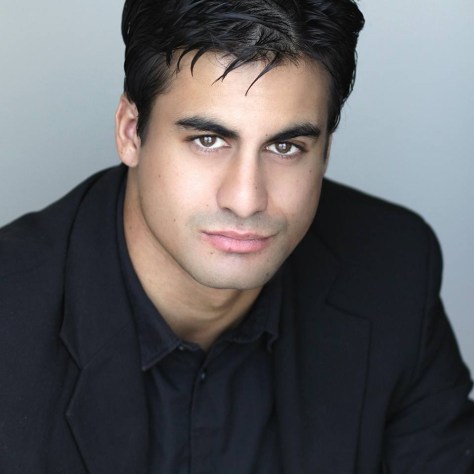
14717253_10210889797021138_3904528173664801187_n

For those of us who are not actors, it’s difficult to imagine getting up in front of an audience or a film crew with people watching us cycle through the emotions and the situations that many of us would rather not exhibit in public. It’ counterintuitive. It’s also ironic that the things we want to watch others do in a public viewing (film, plays, TV) are the types of things that we’d never want to have others watch us do. To ask Rahul Naulakha, actors are simply those of us who have learned how to better control and display their emotions than the typical individual. According to him, we all do some acting in our lives but actors have simply learned when to “turn it on” in a way that other’s appreciate and are entertained by. There’s a ring of truth in what Rahul says if we admit it to ourselves. Rahul’s work in the film “Place Your Bet” is an ideal example of this. Costarring with Saturday Night Live’s Steve Holland, Naulakha plays a menacing individual who is the muscle for a loan shark. As Dhruv, Rahul transitions from affable to frightening on a dime. Loaded with twists, this tale of a gambling deal gone bad displays Rahul at his best as the duplicitous Dhruv. He’s a frightening man, the type which Naulakha revels in portraying on screen.

When Allen (played by Steve Holland of Feud and Saturday Night Live) finds a nearby restaurant to watch a basketball game and escape the troubles in his life, he encounters Dhruv (played by Rahul Naulakha); a charismatic and friendly guy just hanging out, or is he? As Dhruv eases Allen into conversation, we soon learn that Dhruv has a hidden motive for chatting with him. Allen owes money to a mob boss, having lost a bet on a horserace. Trying to procrastinate in paying his debt, he hides and makes up excuses not to pay the $185,000 dollars back. When these two men meet by happenstance, they begin to discover through the conversation that they are connected through this professional relationship and things escalate.

Naulakha had worked with director Zachary Fineman before “Place You Bet” but it was his first time with his costar (and SNL cast member) Steve Holland. The experience of filming on location in North Hollywood involved more comedy than the audience can see in the film. Rahul recalls, “I had a great time working with Steve Holland both on and off screen. On screen I was doing my best to scare him out of his mind. We were both doing our very best to get into our characters. I’ve done comedic roles in films as well so I appreciated Steve’s ability to show this dramatic side of himself in the film. Off screen we joked a lot with each other, saying our lines in weird cartoon character like voices, which was hilarious.”

The mask type approach that the actors used in the film was something which Rahul applied directly to the deceptive nature of his character. While Dhruv appears to be amiable and charming, just an ordinary guy, early on, his lack of humanity appears as the story develops. Naulakha portrays him as an individual who is able to turn off his emotions and sympathy for his fellow man when the job requires him to perform his less benevolent vocational requirements. Rather than a means of living with the actions as self-preservation, we get the feeling that this man enjoys his job and throws himself into the work. Rahul concedes that he revels in playing characters of this ilk, stating, “I love playing a bad guy. This is one of my most sought out roles, mainly because you get to go out of the norms completely…you don’t have to hold anything back. When you’re the heavy in a film, you can go back to being a kid with all of its rebelliousness and fun time all at once. Most of the time when you play a good guy you are playing a version of you. There may be a slight difference of personality between your character and you (maybe he is shy, and in real life you are the most outgoing person there is) but other than that, most of the time when performing as the good guy, the main thought/emotional process is the same as in your real life. Being the antagonist often means there are less restrictions. The character doesn’t subscribe to the rules that society has agreed upon so you can literally do whatever you want. This presents a much more personally entertaining and enjoyable challenge for me as an actor. It brings out all your acting abilities such as your facial expressions, emotions, movements, and in general makes you feel more alive.”

17457752_10212609571974437_8030380806700052084_n

Naulakha’s subtle percolation of Dhruv’s demeanor and intentions is strikingly convincing. All deference to Pete Townshend (composer of The Who’s “Behind Blue Eyes”) but Rahul feels it’s fairly easy to access the center of a “villain” and it doesn’t require a profound tragedy or searing hatred. Most of what is witnessed by the viewer as frightening is not found in the actions of the character but rather the character’s propensity to do harm; a trait which is often unspoken and lacks exhibition. He relates, “I use a lot of projection/visualization when I act. Even if I am not menacing, there is no denying the fact that we´ve all been through the same type of emotions that Dhruv has. The frustration and anger of a job interview that we didn´t get, a lost relationship, or just stepping on a rock outside your doorstep, all of these elicit something in your core. From this point it’s just a matter of how little or how much we control it. I projected moments like these that I have been through and then take it up a notch. It’s like stoking a fire from a small spark. In reality a lot of us walk around suppressing these emotions with a smile, saying we are fine but for a character like Dhruv, you can let loose and be as crazy as you want…and that’s just fun.”

Writer Victor Osorio took readers around the world with comic strip ‘Alienados’

When Victor Osorio was seven years old, he would sneak out of his room at night to watch television. When his parents caught him, they did not punish him, but rather made a deal: if he wanted to stay up at night, he had to read. Somehow, what seemed so awful at the time ended up becoming the guiding force in Osorio’s life, because he became an avid reader, which prompted his interest in writing. Soon after this, he began writing short stories and poems, and since that time, writing and creating stories has been his biggest passion.

Osorio is now an internationally celebrated writer. Originally from Barcelona, Spain, he rose to the top of his industry in his country quickly, largely due to his widely successful children’s book Cosas Que Nadie Sabe, published in both Spanish and Catalan, as well as German. He also wrote an episode for the award-winning web series Hollywood, and currently helps the company Origo Media writing short commercials and commercial videos. He is extremely versatile, and has even written software manuals for Ceinsa. His success truly began, however, when he began writing for the comic Alienados in the popular magazine Dibus!.

“Everyone at Norma Editorial, the publishing house behind Dibus! located in Barcelona, was very happy with my work. The magazine’s editors told me that they were very impressed with my skills and talent, especially since I was in my early twenties back then. and I’m so happy that I took the opportunity and did such a good job with it. I’ve always loved comic-books and when the people at Norma Editorial offered me the chance to write this comic strip for a comic-focused children’s magazine, I immediately jumped on it,” said Osorio.

The iconic comic strip tells the story of three funny and tiny aliens who crash-land on Earth and have to explore the planet with no knowledge whatsoever of the culture and traditions. In every issue, the aliens travel to a different part of the world and have comical adventures based on the fish-out-of-water cliché. The strip also teaches curiosities and traditions of the country visited to the children reading the magazine.

“Working on this was awesome. I always loved comic-books so being able to write a two-page comic strip for a famous and renowned national magazine was like a dream come true,” said Osorio.

Prior to working on Alienados, Osorio greatly impressed those at Norma while writing for their publisher’s blog. The Dibus! magazine editors quickly took note of what an exceptional writer he was, and invited him to become part of the comic. It wasn’t long afterwards when readers also began to become impressed with the writer’s talents.

“Victor is a very talented and flexible writer, able to produce a comedic comic for kids while also instilling a love for learning and travelling. He has a very clear writing style and a good eye for interesting and appealing subjects. His style is very unique and he is able to produce all sorts of content,” said Juan Avella, a fellow writer who enjoyed Osorio’s work on Alienados.

With each new issue, Osorio would begin by researching the region or country the magazine editors said the aliens were going to visit that month. During this time, he would figure out what the best thing to focus on would be to capture readers’ attention. Whether it was food, tourist attractions, famous people or locations, he always picked subjects that were not common knowledge, allowing for a more entertaining read.

“I remember using the Gauchos for the Patagonia because I could use it for a joke, and because it’s a fairly unknown, but very peculiar culture,” Osorio described.

Despite having no previous experience in writing comic strips, Osorio took the opportunity and soared. Working with just a two-page strip, he had to be very concise and effective, skills that he carries with him on every project, as they make the best style of writing.

He also was given the opportunity to work on the page design when creating the panels for the comic, which allowed him to see how his writing and the illustrator’s drawings worked seamlessly together.

“You need to take into account how the human eye reads a page and the shapes and colors that it feels attract to, the motion of the bodies in the page, fonts, and more. Learning to do all that while actually writing something that will be printed was difficult but very rewarding,” said Osorio.

Although this was Osorio’s first foray into comic-book writing, he loved every minute of the experience. He was given complete creative freedom, and was never told to make large changes, as the editors enjoyed his work so much.

“At the time, I didn’t value it as much as I do now, but doing that comic strip I got the opportunity to be entertaining and offer some knowledge at the same time for the first time in my career. The collaboration with illustrator Dani Cruz was also amazing. He would translate my words into pictures with great accuracy and he offered valuable advice and tips to solve some of the narrative challenges that I faced,” he described.

Without Osorio, the Alienados strip would not have seen the success that it did during his time at Dibus! and the experience provided the perfect learning experience for writing for children. We all know this is now something Osorio more than excels at, and we can definitely understand why.