Category Archives: Film

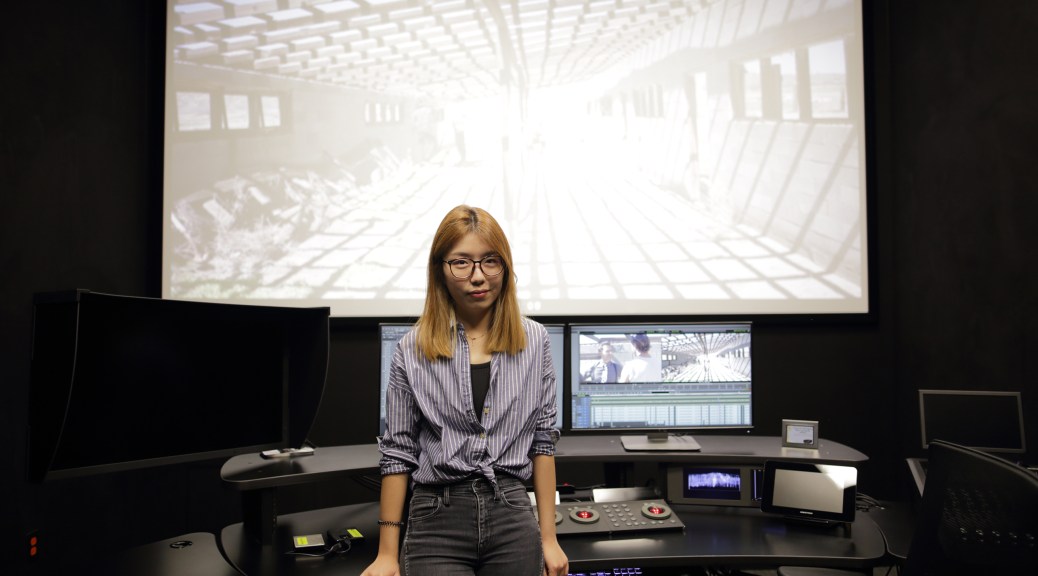
Editor Ran Ro tells her personal story in acclaimed film ‘In Between’

Korea’s Ran Ro remembers the first time she fell in love with the idea of filmmaking. It was when watching the iconic French film Amelie. As she took in the film, it was a different experience than simply watching a movie. In one scene in particular, the narrator lists out what Amelie, the protagonist, likes, as audiences see the visuals depicted by the narration. That moment sparked a fire inside Ro. She took in how the “mundane” aspects of a film could easily be ignored by the masses but can be captured so beautifully and significantly. It was then when Ro decided she wanted to be an editor. She loved the power that such small decisions could have over the telling of powerful stories, and she was ready to become a master of the artform.

Now, Ro is known for doing just what she admired when watching Amelie. Her attention to detail creates visual masterpieces, whether she be working on a minute long commercial or a feature film. Her work with brands such as Tastemade, BackBeatRags, and Elite Model Management captivated worldwide audiences, and when she embarked on her most personal project ever, the film In Between, she once again impressed.

“The underlying concept of the project was developed when I stumbled across a memorial park in Honolulu. I was supposedly at a place that represents the end of life, but all there was in front of me was empty scenery. Observing the sunlight landing on the unmoving landscape, I couldn’t help but feel oddly at peace. In comparison, I began to think about the emotional turbulence that one goes through in life. The script was written shortly after this experience, as a means of unravelling the curiosity that arose that day at the memorial park. My childhood experience of being raised by my grandmother became a central plot line of the main character of the film,” said Ro.

In Between tells the story of Tina, who in the middle of a suicide attempt on New Year’s Eve discovers a mysterious path inside her duvet cover, leading her to an ethereal space filled with an infinite number of lights. Not only did Ro edit the film, but she also wrote, directed, and produced it.

After premiering last year, the film saw immense success at several prestigious international film festivals. It won the Award of Excellence at Best Shorts Competition and was a semifinalist at the Los Angeles CineFest, the Los Angeles Independent Film Festival Awards, and the Hollywood Screenings Film Festival, to name a few.

“It is rewarding and also very encouraging to have seen the audience resonate with a story that involved my personal experience. It motivates me to create stories that are meaningful and that challenge me to be more curious and observant about things around me and about human emotions,” said Ro.

Music played a large part in the film, from the writing process all the way to editing. One of the music scores titled “Reoccurence” greatly inspired Ro, and she played it repeatedly throughout the production, allowing it to stimulate the rest of the cast and crew.

“During rehearsals with actors, I played the same music to match the pace of their dialogue and the rhythm of the music, knowing that I would be using that score when editing. Once the actors were tuned into the music, the whole scene fit into it – the very last dialogue ended with the last beat of the music,” she described.

Filming went very smoothly, which made the editing process almost effortless for Ro. She knew the exact pace and tone that she wanted for each scene after being involved in the writing and directing processes.

The film uses otherworldly places to visually portray metaphors on time and space. In one scene, this is exemplified when the protagonist crawls through an endless path underneath a duvet cover when time freezes during the New Year’s countdowns. She encounters a little girl who guides her to another otherworldly place, “The Gap”, a realm in between life and death where the souls reside.

The Gap was instrumental to the film, and it was conceptualized when Ro imagined an unperceivable place that exists in between every second. She thought of it as a place where all past moments exist. The main character in the film, who keeps her dear memories of her grandmother, reunites with a younger self of the grandmother in The Gap. This was Ro’s favorite scene in the entire film, and the one she felt the deepest connection with.

“I enjoyed seeing my vision come to life every step of the way from writing, casting to production. It was surreal but also very exciting to see what I envisioned actually happen right in front of me. I felt very grateful that the crew that I was working with truly understood my vision and used their talent to materialize it,” she concluded.

Be sure to watch the beauty of Ro’s work on In Between here.


Written by Annabelle Lee

Producer and Director Gianlorenzo Albertini’s new film explores PTSD in veterans

Director-Gianlorenzo Albertini
Gianlorenzo Albertini

Hailing from Naples, Italy, Gianlorenzo Albertini was drawn to film at a young age. At the time, he believed everything that was happening in the movies actually occurred at that moment in time, somewhere in the world. As he grew, he realized that they were in fact stories, but the magic of movies was not lost on him. He daydreamed about all sorts of futures, from being a professional athlete, a rock star, an army pilot, a poet, a doctor, a detective, the pope. Although he knew that these were not all reasonable options, he knew the one path he could take where everything was possible: filmmaking.

“Films combine all the best things that I love in life: music, photography, writing, painting with light, portraying different characters, and any art,” he said.

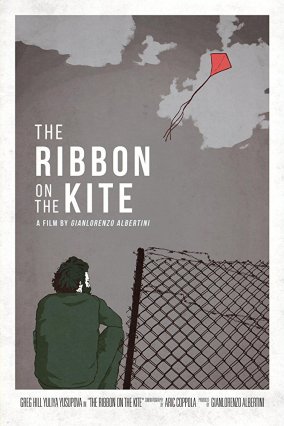
As a celebrated director and producer, Albertini is currently releasing his most recent film, The Ribbon on the Kite, to worldwide audiences. The film follows a woman who, after discovering a homeless man living on the riverbank, tries to help him against his wishes. As you watch, you begin to see there is a greater history behind the homeless man than initially seems. Albertini, who also co-wrote the film, wanted to explore the emotional effects of war on individuals and draw attention to the hardships and the devastating effects of physical and psychological trauma that vets who have severe PTSD and are forced to endure due to governmental neglect. He wanted to place emphasis on veterans’ life after war upon, on the grief and horror of the battlefield they are forced to endure, oftentimes keeping the struggle to themselves, and on their difficult transition adjusting to civilian life. The film shows how frequently veterans end up being deliberately homeless because of their psychological inability to cope with the mental abuse inflicted on them, ultimately choosing to suffer in isolation.

As the writer and director of the film, Albertini did not have the experience and the full understanding of the plight of war. However, during his childhood, he often heard the stories told by his grandparents, about the horrors and atrocities during WWII they lived in their youth; they were his first understanding of the harsh and frightening conditions of war. He knew that, as a filmmaker, it was his responsibility to show the world just what so many veterans go through as realistically and explicitly possible.

poster the ribbon on the kiteThe Ribbon on the Kite is making its way in the festival circuit. It’s been screened at and won several awards at various festivals around the world such as the Richmond International Film Festival, Maryland International Film Festival, Kansas City FilmFest, Garden State Film Festival, Soma Film festival, Oniros Film Awards, L.A. Shorts Awards, New Filmmakers New York, Hollywood International Moving Pictures Film Festival, Los angeles Independent Film festival Awards, Los Angeles CineFest, St. Lawrence International Film Festival, European Independent Film Award, and Largo Film Awards. After the festival run, Albertini is planning on distributing the film through VOD platforms such as Amazon and Fandor.
During the research and writing phase, Albertini made sure to research exactly what life is like for war veterans. He talked with friends of his, who gave the director vast insight regarding their physical and psychological traumas and what might ultimately drive them to isolation. This created an even deeper drive for Albertini, who had the chance to perceive and recognize their struggles and eventually apply them to the film.

The authenticity of the script was mostly achieved on set during filming, due to the fact that the script barely contains any dialogue. Therefore, all the real emotional traits are not said but instead shown by the work of the actors. This also made Albertini’s work as the director that much more vital, as he had to choose just how to visually convey the authenticity and purity of the story in every shot.

While filming, one of the most significant challenges was working with natural lighting and the unpredictable changes in weather; the natural light of course would eventually fade away, meaning shooting would stop for the day, even if Albertini and his team were in the middle of a scene. For the last scene in the film, they shot at sunset during “magic hour”, which may be short, and took more effort to finalize, but was incredibly worth it.

They shot the film along a riverbank in Los Angeles. The location was beautiful but is known for flooding. During production, the water level began to rise. The crew quickly began packing up their things, but the shot ended up being quite beautiful.

“The equipment almost got swept away by the strong current – that was quite an adventure, but we filmed the flooding of the river and that ultimately ended up in the movie,” he concluded.

Be sure to check out The Ribbon on the Kite. In the meantime, however, you can watch the trailer here.


Top photo from left to right: Actress Julia Yusupova, Actor Greg Hill, and Director Gianlorenzo Albertini

Japan’s Yuito Kimura pays tribute to ‘Back to the Future’ in award-winning film

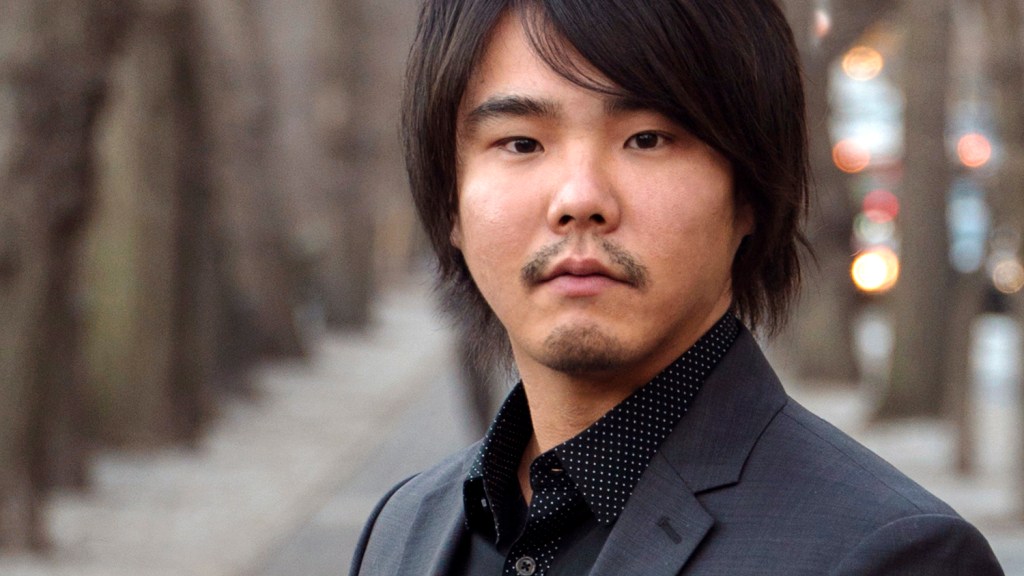
Yuito Kimura knows that being a cinematographer is not just knowing the equipment or having skills to handle camera and lighting; being a cinematographer is being a storyteller. The moment he takes on a new project, he doesn’t just read the script, he studies it. He makes sure to know exactly what motivates the characters, as he knows that will affect how he shoots each scene. He notes how his vision can help tell the story, and that is what makes him so formidable at what he does.

Both in his home country of Japan and abroad, Kimura is an in-demand leader of his industry. His work on projects such as the music video “We are Stars” for pop band Snow Angels, the web and television commercial for Townfrost, and the films Dropping the S Bomb and Star Wars: Amulet of Urlon show just what he is capable of. He was also recently nominated for Best Director of Photography at the World Music and Independent Film Festival 2019 for the music video “Syrup” for singer/songwriter Jaklyn, which he also directed. It also has been nominated for Best Director and Best Creative Music Video.

Back in 2015, Kimura had the chance to pay tribute to one of his favorite film series, Back to the Future. Creating the film Back to the Future? gave the cinematographer the opportunity to explore the franchise that introduced him to American culture during his childhood, and it was an unforgettable experience. In this new film, Marty and Doc Brown go back to 2015 and find that one detail has changed the future as they knew it.

“I’m a big fan of the Back to the Future movies, and so is everyone that worked on this project. The writer, Logan, had a passion that made me, and the entire crew, really motivated,” said Kimura.

3. Back to the Future?_1While shooting, Kimura focused fully on following the director’s vision, and made suggestions that greatly added to the film. Knowing the original films so well, he proposed mimicking camera framing and movement from Back To The Future II when shooting B-Roll and inserts of the props such as DeLorean and its interior. This recommendation made it to the final cut, and truly adds the right touch of a throwback while still making a unique film.

The film went on to be recognized at several international film festivals, including the Wendy’s Shorts Awards, WILDsound FEEDBACK Film Festival, Sutter Creek International Film Festival, and more. It won Best Film at Fan Fiction Short Film 2016 and Best of Comedy Short at the Direct Short Online Film Festival that same year.

“When we realized on day one of shooting for Back to the Future? that we would be without a cinematographer, I found Yuito’s website and reached out to him directly. He arrived promptly with his equipment and was kind and respectful to everyone on set. He moved quickly through the shot list provided by the director and even offered his own insights that improved the finished product. He is efficient and knows how to get the shots we needed. He provided our production information about lenses and suggested cameras that proved to be important in our later work. I would be happy to work with him again anytime,” said Jen Floor Mathews, Producer.

On set, Kimura made sure to focus on achieving high-quality shots. He used simple camera framing, movement, and lighting. His biggest priority was delivering the story without any distractions, ensuring continuity in lighting and camera work. Such discrepancies, he knows, can cause major distractions for audiences when they watch the film, taking away from a captivating story.

4. Back to the Future?_2“I believe that not making any distractions is actually another level of filmmaking. For example, when I watch a movie, I can be distracted by small thing such as unnatural lighting on actress’s face or continuity. I fully commit myself to not frame those things and fix anything that would would be a distraction,” he said.

Overall, the shoot went very smooth and was quite fun for Kimura. They even had a key prop from the original films, inspiring everyone on set.

“The best part was that they used the actual DeLorean that was used in the original movies. I couldn’t believe I had the opportunity to shoot with such an iconic prop. I still remember that everybody started taking photos with the DeLorean and stopped working. At first, it was putting us behind schedule, but then I realized it was just because everyone was excited to be honoring the movies. It was such a funny moment. That was the highlight,” Kimura concluded.


By Annabelle Lee

Liam Casey Sullivan takes destiny into his own hands

It has been said that destiny doesn’t come down to chance. Rather, destiny is a choice. It isn’t something to wait for, it is something to be achieved. Growing up with actors as parents, Liam Casey Sullivan has always known that entertaining was his destiny; however, rather than wait around for his fate to unfold, Sullivan took matters into his own hands and began doing the very thing he knew he was meant to do. His childhood was charged with exposure to entertainment and other forms of artistic expression. With that, his imagination ran rampant and he was captivated by the world it molded around him. As a result, the talented young actor is no stranger to the stage. Whether he is acting in a theatre production, on a television program, or on the big screen, he is determined to ensure that he never lets his calling escape him. He was born for the screen and knows that with the right amount of hard work and dedication, he will be able to continue along a path to greatness and enjoy it.

Since the outset of his career, Sullivan has earned himself a number of different roles across various entertainment mediums. For instance, when Sullivan was just 10 years old, he felt more than ready to begin his acting journey. The unrepresented, eager young artist had compiled a portfolio of head shots and information about himself, as well as his skill set, and to his avail, was recognized by renowned director, Pat Mills, who wanted Sullivan to act in his upcoming film, 5 Dysfunctional People in a Car. The film comedically follows five individuals during a car ride to drop their grandmother off at her retirement home.

Given his desire to immerse himself into the entertainment industry, Sullivan recalls the experience as feeling absolutely surreal. On top of the excitement of simply getting to act professionally, knowing that his first ever film went on to successfully screen at several North American film festivals, as well as to secure a win for Best International Short Film at FilmOut San Diego, was all the more exciting for the enthusiastic Canadian actor. In addition, he was over the moon when BlogTO named 5 Dysfunctional People in a Car one of the top 8 must-see films at the Toronto International Film Festival.

5 Dyfunctional
LIAM CASEY SULLIVAN AND SHANNON FORD 5 DYSFUNCTIONAL PEOPLE IN A CAR, PHOTO BY PAT MILLS

For the film, Sullivan played a character by the name of Robbie Gordon, intended to be the ultimate heartthrob and the coolest kid in his school. He exists within a constant buzz that results from his popularity, keeping his friends close and turning his nose up at anyone else he crosses paths with. Stereotypically, girls crush on him, his grades lack, and his ego fills every room he enters. In order to play Robbie as convincingly as possible, Sullivan made an effort to channel the excitement of entering the acting world at such a young age and allow him to appear conceited and aware of his reputation. In addition, he seized the project as an opportunity to act as a sponge, absorbing as much information as he possibly could from his experience on set, working alongside other talented actors and under a skilled director. He took note of the hard work and processes evolving around him, vowing to bring his skill set up to par and to start off his career with a bang.

“I was so fortunate to be able to witness a group of people so passionate about what they were doing at the young age of ten. It really solidified my aspiration to continue to do this for the future of my career,” recalled Sullivan.

After working on 5 Dysfunctional People in a Car, Sullivan dedicated himself to pursuing other meaningful roles. He continued to surround himself with like-minded creatives and seizes each new learning experience as ferociously as he did for his first. Since that very first film, Sullivan has gone on to work on a number of other successful projects, such as Mary Goes Round and Degrassi: Next Class. Sullivan is a firm example of the notion that by combining his talent with a willingness to learn and a determination to find work, he can turn his dedication into positive outcomes. For other young actors looking to seize their destiny, Sullivan has the following advice to offer:

“Always challenge your emotional capacity and don’t be afraid to take leaps outside of yourself. It is surprising how well you can do when you consistently test the boundaries of your work. It is really important to always keep in mind how many people go into making a production successful and it is crucial to trust your collaborators. Whether that’s your director or your fellow actors, developing solid trust amongst each other is a great way to achieve results. Be that firmly supporting and believing in your director or fully engaging with another actor in a scene, always remember that achieving greatness in this industry is solely based on the collaboration of many.”


Written by Annabelle Lee, top photo by Joshua Augusto

‘The Ballerina, The Shoemaker and His Apprentice’ takes audiences back in time with help of Meibei Liu’s editing

As a film editor, Meibei Liu sees herself almost as the conductor of an orchestra. She puts together endless footage and turns it into a piece of art, transforming a script into a true visual masterpiece. In many ways, she is like the doctor of a film; she removes what is unnecessary and replaces what needs work. Editing is putting the final pieces of the director’s puzzle together, and Liu not only understands that, but she also thrives because of it, and that is what makes her a good filmmaker.

Having worked on a variety of projects that have made their way to many prestigious film festivals around the world, Liu has made quite a name for herself as an editor. Such films include Dear Mamá, Headshot, Faith Need Not Change Her Gown, Pumpkin and Fried Noodle, and more. Recently, her film The Ballerina The Shoemaker and His Apprenticereceived nominations at the Oscar-Qualifying Hollyshorts Film Festival and LA Shorts Fest, Maryland International Film Festival, and Ouchy Film Festival in Switzerland, New Port Beach Film Festival where it was nominated for Short Film Award, The Grand Jury Award and Best College Film at The Next Generation Filmmaker Film Festival.

“I’m happy to hear that the film went all over the world for festivals and awards. I was glad that my changes made it into the film and was shown to people who speak different languages. It confirmed that emotions expressed and enhanced by editing can be identified by everyone, which made me believe that I should continue doing what I did for the film. I was glad that Eva asked me to go on board and be part of the project. That gave me a chance to show my attitude towards editing to people,” said Liu.

The film takes place in 1963 Hackney, England, and follows George Arkwright, a young man down on his luck, who must navigate the refined world of ballet pointe shoe making and redeem his value as the apprentice under the shadow of Mr. David Traynor, a talented but stuffy point shoemaker. George’s imagination turns into a reality when he becomes smitten with the Ballerinas the shoes are built for, one named Sylvia particularly, but soon learns this magical and seemingly distant world is not beyond the reach of affliction. Liu came on board half way through editing the film when the Director, Eva Ye, realized she needed expansive editing talent to turn her vision into a reality.

“Working with Meibei was great. She has a strong sensibility for impactful storytelling through an editing perspective. She often provides new perspectives to the story and is invested in trying different ways of getting the emotion across. Sometimes she is more willing to dig deep into the materials just to find something I didn’t even know existed. Her passion and dedication to editing is something I’ve seen rarely. And in many ways, she makes my work better,” said Ye.

Liu is able to address the problems of cuts quickly. When she reviewed the first cut that was made before she was brought on, she realized exactly how to transform the footage into what the director wanted and what audiences would connect with. She took what was a half-finished film and reworked it, making it better. She realized that the scenes were dragging; all of them could end earlier by cutting out some of the lines and actions. She stopped in the middle of the first scene and started the second scene earlier, helping to show the main character’s eagerness. Sometimes, however, she chose to extend a scene and have it linger longer to show the apprentice’s feeling of loss and disappointment. This film has very subtle emotions, and an editor’s vision and eye on digging out the emotions, and enhancing them by editing is vital. Being a very emotional person who is strong at noticing the emotional changes of people, Liu was the ideal candidate to take over as editor.

“It’s a story of dreaming. I believe this is a film that speaks to everyone in spite of when and where it happened. It’s a worldwide emotion that people all over the world can understand. I believe it is important to tell this kind of story, giving the audience a short period of time to experience something they can relate to,” Liu concluded.

The Ballerina, The Shoemaker, and His Apprentice is currently available on Amazon Prime Videos.


Written by Sara Fowler

Ben Prendergast creates dystopian world in ‘Post Apocalyptic Man’

Ben 6
Ben Prendergast

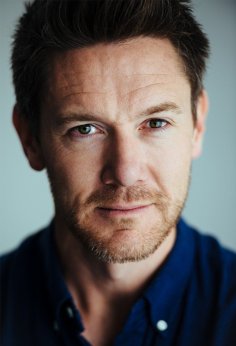
It seems like a long time ago that Ben Prendergast was looking to be a software entrepreneur. The Australian native always had a passion for acting, but the notion of pursuing such a career in Australia is so uncommon, he never felt like it was truly a possibility. Having dreamed of being an actor since he was only a child, it always seemed like just that: a dream. However, when embarking on his technology career, Prendergast decided that he had to pursue his passion, and one day, after landing a role on an NBC television pilot, he decided to turn his dream into a reality. Since that time, he has never looked back, crafting an extraordinary career.

Now, Prendergast is an industry leader in Australia, and seeks to make a difference through his work. With Prendergast as the lead, The Marker aimed to bring awareness to the socio-economic issues in Australia and was funded by the Australian Competition and Consumer Commission. Similarly, his film Punch Drunk shed light on the marginalization of the elderly and mentally unwell. Sometimes, the actor’s love of telling stories is what drives him, which was the case with the feature Predestination. However, no matter what he is working on, his innate talent and dedication to his craft impress audiences, critics, and colleagues alike.

“I’ve worked with Ben on a number of projects. Most recently, we worked on Post Apocalyptic Man. As a writer, usually you’re not working directly with actors, but in the case of this project it became really valuable. Ben’s ability to cold read a scene and bring it to life was a revelation, and something we relied on in the early development right through to final script stage. Ben and I would stay up way too late discussing how we could bring more conflict, more drama, more humanity to this piece and I think it really shows in the final script. But then I was also in the rarified air of watching Ben work on set, and even then, he’s constantly drilling for more in the text, and during shooting I saw him make bolder and more compelling choices. Some of them made it into the final film, some didn’t, but I just remember the feeling on set was electric with every take,” said Daniel Walsh, Screenwriter. “I think Ben just has that thing that you can’t put your finger on. You roll the camera on him and you’re transfixed even before he’s said anything. You think to yourself, “What’s he going to do?” and he always surprises. He’s curious, in a way that most actors are, but he’s curious as the character, which is something else completely. I’m not at all surprised that he’s had the success that he’s had.”

Post Apocalyptic Man tells the story of humanity’s need for survival in a world where they are blind to their own destructive tendencies. The human population is in the grips of decline after genetic modification turns the female population sterile. When it is discovered that a child may carry a gene that is immune to the disease, forces of good and evil converge on a small Australian outback community to find the child and gain control over humanity. Cane Storm, the leader of the evil tyranny, sends his number one henchman Baker, played by Prendergast, to infiltrate the Renegades led by anti-hero Shade. Leathergirl escapes with her brother, who seemingly carries the gene, but is pursued by Baker. Throughout the film, audiences discover that Baker is a genetically engineered mercenary who will show no mercy and is hell bent on finding Shade and the boy who carries the cure.

“This film deals with humanity’s deterioration, something that is on all of our minds, but depicts it with food shortage and the notion of a barren human population. We haven’t been a declining population since World War I, and I think current generations aren’t really aware of that or prepared. This film gave a real sense of a species in decline, and the desperation and hope that springs from that. For me, it’s a fantastic analogy for how we currently look at our food waste, energy production, and government systems,” said Prendergast.

When Walsh and Director Nathan Phillips were looking for a clean-cut super soldier type of actor, they asked Prendergast to audition. Not only was he in incredible shape and fresh off an intensive training program, Prendergast was well-known for his tremendous talent and versatility. After auditioning for the part, he was offered the role immediately.

“From the very beginning it was evident that Ben was a thoughtful and dedicated artist, and he had key elements of his character down at a very early stage. He goes deep within his characters, finding the most truthful elements, but also playing with the duality that most interesting characters possess. We had an absolute blast on and off camera and I now consider him a really close friend. Ben gives over to the madness of filmmaking. He wants to find the gait, the voice, the truth of the human condition as it pertains to his character, but then he goes further than that and wants every other department to function too. He looks after camera department, makeup, wardrobe, etc. As a director, I never have to worry that we’re not going to get the shot,” said Nathan Phillips, Director.

Prendergast was aware, when preparing for the film, that he was not only playing a villain, but also a genetically superior being. Therefore, he wanted to look at the misogynistic and xenophobic nature of historical characters to get into the mindset of Baker. He took particular interest in looking at Nazi-Germany and the horrible beliefs in that time. Physically, he thought he should remain strong, but his vocal quality needed to be gravely and distinctive. Once he had all this figured out, he put on his costume of a trench coat and gloves, and instantly became the character in front of the camera.

“I always believe that even when there are nefarious or even psychopathic characters, they always have righteous reasons for their actions. Baker believes he deserves his place in the future utopia of humanity, and that given his clear genetic advantage he is doing humanity a service by cleansing the world of those beneath him. His narcissism has bred a psychopathic quality, and therefore he can operate in any way that Cane Storm, the leader of empire, needs him to. He’ll take any life and use any means necessary to get what he wants,” said Prendergast. “Strangely, this creates an empathy that an audience can follow, we love our bad guys because they have a mastery over their destiny, they know what they want and how to get it. Don’t we all wish for that?”

Baker was essential to the story of Post Apocalyptic Man, and Prendergast to its success. The film wouldn’t have worked without the conflict that Baker carried. The heroes and antiheroes of the film were struggling for survival in a world without food or the ability to procreate. Baker’s character introduced a final hurdle for the protagonists to take action against the empire, and audiences see that although at first they are terrorized, they eventually find the spark to create the resistance.

“It was such a fulfilling project. We were on a really tight shooting schedule but we made it work, producing something completely unique in the Australian film canon. Now considered a cult film, Post Apocalyptic Man is my favorite punk-film outing ever, and I made a lot of great friends in the process,” said Prendergast.

After premiering at St Kilda Film Festival, Post Apocalyptic Man played at independent theatres in Australia, New Zealand, and the United States. Afterwards, it was distributed digitally and still sees success, eight years after its premiere. If you have the opportunity, be sure to watch the film and see Prendergast terrify and excite audiences.


By Sean Desouza

Editor Xiaodan Yang creates visual masterpiece with ‘It’s Not Just About a Film’

Xiaodan Yang knows being a film editor isn’t always the most glamorous job in the industry. When she goes to a film premiere, she will see the cast and crew and feel like she knows them so well after seeing their faces on her screen for the past few months. However, it is often the premiere where they first meet her. Editing isn’t a front-and-centre job, and often involves many isolated hours going through the same five seconds of footage trying to decide how best to use it. That being said, she absolutely loves what she does.

“I enjoy every moment during editing. I’m glad to be a participant and witness of the whole journey. Editing is my tool to communicate with audiences. It is how I put my emotions into the story. When people connect with the film, that’s my favorite moment, and I know I’ve done my job,” she said.

Born and raised in China, Yang has now taken the world by storm. Her work on films such as Witness and Sixteen received international recognition, and audiences can expect the same from her upcoming films Kayla and Summer Orange, which makes its world premiere at the renowned Cannes Film Festival Short Film Corner in May. All those she collaborates with not only appreciate what she is capable of, they admire it.

“Xiaodan is a very talented editor. We know each other because of film Snatching Sword (a.k.a Wang Shan). Snatching Sword is an action film, and over half of the scenes are action scenes. As we all know, editing action scenes is like a big trial for an editor. When Xiaodan delivered her first cut, I saw her talents instantaneously. She is sensitive to the pace of the film and knows how to use sound design to tell a story. I think that’s really important for a film editor. What’s more, she has a very collaborative attitude and the ability of responding promptly, which make her an excellent team player. My other crew members and I all enjoy working with her,” said Rachel Zhou, Director and Writer.

One of Yang’s most impressive works was her film It’s Not Just About a Film. After spending the beginning of 2017 editing the project, it premiered on May 13th, and then made its way to several film festivals. Yang herself was awarded with Best Editing at the Top Shorts Film Festival and the Award of Merit in Editing at the Accolade Global Film Festival. Needless to say, the film could never have seen the success that it did without her.

“It still feels so exciting, knowing my work was recognized on a global scale. Winning those two awards, it means so much to me. To be honest, this is not that kind of regular ‘Hollywood film’. The way we decided to tell the story breaks the routine. I’m so glad there are people that can understand our intention and like it,” she said.

It’s Not Just About a Film tells the story of Max, an actor. To get the lead of a film, Max seduces and has an affair with Cameron, the lead actress and wife of the film’s investor Fabrizio. However, as the shooting goes on, Max realizes that Fabrizio is a violent person with a gangster background. Max wants to end the affair but finds himself unable to break away from it. It is a pretty stylish story, ironic and funny, but also extremely suspenseful.

Working on It’s Not Just About a Film was a very creative process. The director and I had reached a consensus that we had to break the rules. It’s a wild story that needs wild ways to edit. That’s actually not an easy thing to do, but I was ready to try. It was like a brand-new experience for me. When I was working in the editing suite with Chen, the Director, he always encouraged me to try whatever felt good. I could forget about any editing rules in my mind, and it made for an amazing experience. I still feel so lucky that I got to be part of it. All the cast and crew were amazing,” said Yang.

Knowing he wanted Yang on board right away, the director sent her the script. At the time, it was not even completed. The first time she read the script, the story impressed the editor a lot. It was completely different from the films she had edited previously, and Yang is always looking for something new and unique challenges to get her creative juices flowing.

The film follows three different timelines all happening at the same time and includes several dream sequences. These three timelines revolve around the leading character in the story, reality, his dream and the film within the film. This makes for entertaining watching, but immensely challenging editing. With so much going on, Yang knew she had to put the scenes together in not just a creative way, but also one that was logical for audiences not to get lost and confused in the different storylines. She spent a good deal of time on the first cut. Almost every scene in the film had a different location, or even different time and space. Therefore, Yang decided to use different aspect ratios to present different timelines. However, after a few cuts, she still had the concern as to whether or not the audience could understand everything. She then tried to simplify the story by losing minor details, which made the film more relaxed and funny. Yang’s understanding of storytelling proved vital.

“Since the structure of this story was so complicated, editing played an even more important role. I kept reminding myself about one thing, “What am I trying to convey to the audience here?”. Once I was sure about the answer, every decision I made should serve this purpose. Otherwise, it’s easy to get off track under this situation. That’s why my work is particularly essential for this project. I had the responsibility to control the direction of the film, and at the same time to make it interesting,” Yang described.

In addition to editor, Yang took on the role of post-production coordinator for the film. As an editor, she cares about the sound and color correction a lot, and she always sticks to the end until everything is done, making her the perfect fit for the position. She also likes to give her input to the sound designer and colorist, knowing what would work best while editing.

Undoubtedly, Yang’s contributions to It’s Not Just About a Film made the film what it is today. Her commitment to the project was evident with every decision she made. However, the awards and accolades are not important to this editor, who remains humble. For Yang, she just focuses on the story she is telling.

“As the director said, “It’s a story about dream and subjective perception of the world.” And there is always a saying that “dream is the reflection of reality”. I don’t know if there’s scientific evidence to prove it, but it makes sense to me. Based on this concept, we developed this wild, dramatic, even absurd story. For me, it’s fantastic. It stimulated my full potential as an editor,” she concluded.

Be sure to check out Yang’s outstanding work in It’s Not Just About a Film.


By Sean Desouza

Through the eyes of Èlia Gasull Balada, Editor of ‘Icaros: A Vision’

Elia 2
Èlia Gasull Balada, photo by Carla Gonzalez

Film editor Èlia Gasull Balada had quite a 2017. Esquire and the The New Yorker included one of her most recent films, Icaros: A Vision, in their lists of the best films of the year. After an extensive festival circuit, Icaros had its theatrical release in the United States that summer and soon afterwards in Canada and England. The film will be released in Mexican and Italian theaters this upcoming spring as well.

With a solid experience in cutting trailers, music videos and commercials for production companies and directors such as Part 2 Pictures and Matthew Newton, Gasull Balada balances her career between feature and documentary films like the Documentary TV Series, This Is Life with Lisa Ling, and the highly anticipated social and political wonder, THE KING. Consistently ranging from documentaries to fiction work, Gasull Balada’s versatility makes her undoubtedly a multi-faceted editor.

Following a period of filming in 2014, Gasull Balada’s talents were recognized when she was recommended to edit the feature film Icaros: A Vision. When meeting with Abou Farman, the producer, as well as with the co-directors, Leonor Caraballo and Matteo Norzi, they clicked and immediately decided to start a collaboration together. Èlia was very attracted by the synergy that existed between Caraballo, Norzi and Farman. Norzi has a background as a conceptual artist and Caraballo was a photographer and a video artist in a duo collaboration with Farman, who is also an anthropologist.

Icaros: A Vision follows the life of Angelina, an American woman who travels to the Amazon in search of a miracle after exhausting all her medical options back home. In her search, she finds a group of foreign individuals seeking transcendence, companionship, and the secrets of life and death. Eventually, her perceptions are altered by the ancient psychedelic plant known as ayahuasca, as well as through her bond with Arturo, a young indigenous shaman who is losing his eyesight. When Gasull Balada embarked on this project, she faced the challenge of editing a long meditation between dreams and reality. One of her primary tasks was finding a way to escape the conventional and create an original universe that could faithfully represent  the vision that Leonor and Matteo had. In Gasull Balada’s words, Icaros: A Vision “stays with you and brings you to the Amazon in a way that you don’t expect.”  

At the outset of the film’s editing journey, Gasull Balada was working closely with Caraballo; unfortunately, Caraballo passed away before the editing finished. The film is partly based on Caraballo’s life experiences with cancer and her passing opened a big reflection about life and death for Gasull Balada. They had worked very closely till almost the very end and witnessing the departure of a young artist and creative force was a life lesson for her.

“Leonor’s commitment and vision came from the pure essence of being an artist. It is not easy to make films that talk about difficult subjects like death and she gave everything to it. Icaros wants to explore the mystery of something that goes beyond the rational. The challenge lied in bringing the audience to dark and unexplored places and blurring the  boundaries between dreams and reality. From there, we tried to find moments of truth that could become moving sensorial experiences and could lead to reflections about what it means to die,” she said.

In the wake of Caraballo’s passing, Gasull Balada, Norzi and Farman kept working together to complete the film. Because of the extraordinary and unfortunate circumstances of the project, the edit of Icaros: A Vision was a long process, providing Gasull Balada a long window of time that allowed her to experiment widely with the footage.

“It’s not common to get enough time to experiment until you exhaust all the possibilities. With this film we really pushed ourselves to try many different things until we got to places we felt very confident about. The vision was slowly constructed and we think that Leonor is very pleased with what we did,” Gasull Balada commented.

“Èlia was a crucial part of our film Icaros: A Vision, which had a successful release in North America with full accolades from the press — The New York Times, Variety, The New Yorker, The Hollywood Reporter, and more. As an editor, she is technically skillful, but that is not what stands out about her. She is someone who finds solutions where none seem to exist because she is both patient and experimental. She can layer images and meanings together. That is what worked for us in our film, that deep layering of meaning and images that make a film transcend the occasion of its shooting. She also has a keen eye for detail, which for an editor means making the right decision about when to cut. Elia’s relationship to cinema is a creator’s relationship. She is committed to an aesthetic and moral vision. She ‘sees’ the film… that is, she sees through the material of the film into its deeper meanings and builds the film from there. This was a difficult film in a difficult circumstance, where the main director was on her deathbed right next to Elia as she was editing – I truly don’t believe any other person would have made it through those conditions, let alone accomplish a masterful edit,” said Farman.

Norzi and Caraballo had in mind a very clear aesthetic that it was partly influenced by the experiences they had had with ayahuasca and the Shipibo Conibo imaginary, but they wanted to bring in other elements like animation and some of the previous video art that Caraballo and Farman had created. Gasull Balada faced the challenge of finding a cohesive language that could interweave the original footage shot for the film with all this other material.

“We played with many different elements in this movie but two of them were essential to me: Nature and the Icaros, which are the songs that the shamans sing during the ayahuasca ceremonies. The jungle embraces the journey of Angelina and Arturo, as well as all the other passengers, and it is also the stage for The Vision and the sequence of hallucinations that compose the story. We experimented a lot with how the forest was going to be present throughout the film and how it would be an essential layer of the whole sensory experience. And we did the same thing with the Icaros. There’s no additional music besides the shamanic songs and those help the audience to vibrate and to navigate through different moods. The harmony of the jungle, and the wisdom of the Shipibo Conibo people come in a full circle that starts and ends with Nature. It’s based on the concept of unity and that was our guide during the editing process. Later on, the work that Tom Paul did with the sound design brought the film to another level and created a full immersive experience,” pointed Gasull Balada.

Icaros: A Vision went on to premiere at the 2016 Tribeca Film Festival in the International Narrative Competition. At the Crested Butte Film Festival, Icaros: A Vision won the Special Jury Award. It went on to be an official selection at the Mill Valley Film Festival, the Warsaw Film Festival, and the Santa Fe Film Festival, and screened at International Film Festivals like La Roche Sur Yon, Guadalajara, Habana, Cleveland and Istanbul, among many others.  


By Sean Desouza

Actor Tony Nash shows off boxing skills in ‘Petrol’

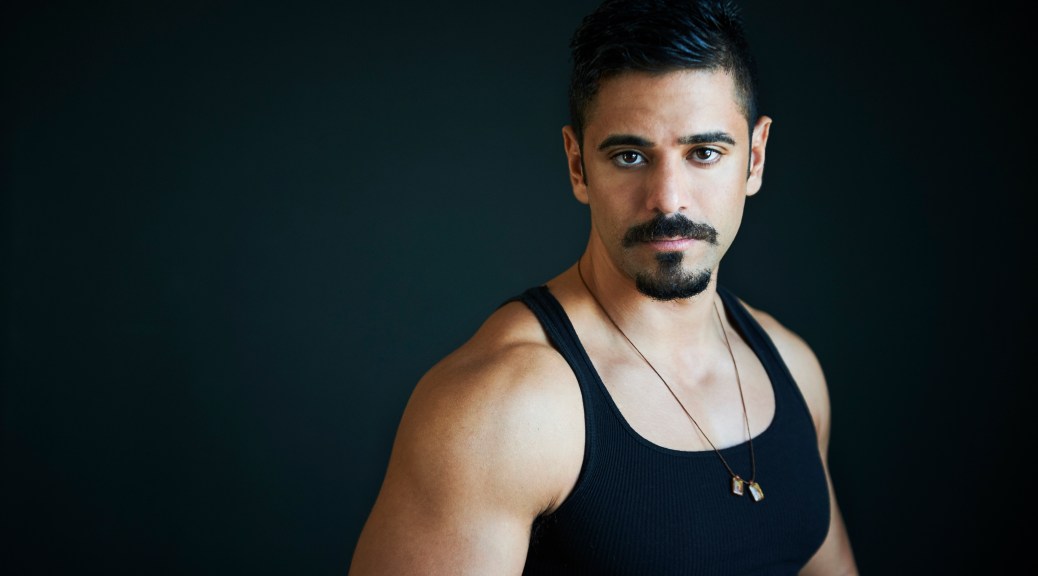
Tony Nash believes that his responsibility as an actor is to find the soul of his character and take on their essence. And for this Canadian actor, he believes that the soul of every character has its seed within his own. The seed of some character’s souls sometimes closely resemble him, and others differ greatly, but the differences are always a result of a difference of choices and environment, not the substance of the soul itself. His soul and every other soul out there are made of the same stuff. This is what makes great acting possible. The potential to take on another’s soul through a character and live and breathe as him is limitless, and for that reason, Nash knew acting was the only path for him.

From the 2015 horror/comedy Secret Santa to the upcoming Audience network series Condor, Nash has shown audiences everywhere that he is not only a talented actor, but extremely versatile as well. Whether he is playing a supportive friend, like in the acclaimed movie Saving Dreams or a complicated, bilingual police officer, which he did in the film Meet the Parents, Nash remains completely committed to his characters. He not only portrays them, he becomes them, and this could not be more evident than with his work on the television show Petrol in 2016.

petrol

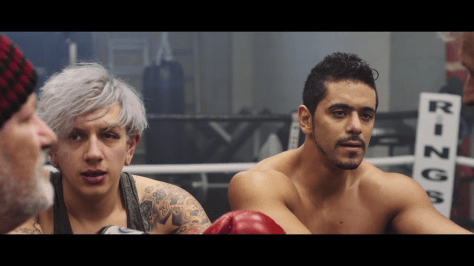
Petrol is an action/drama series following five reckless drivers who all work for a mysterious Employer. In the show, Nash plays Jason, an ex-military veteran and boxer who is commissioned by a mysterious figure known as The Employer to plan and execute a gold heist. When it goes wrong and his partner is killed, a plan to execute revenge on the all-powerful and elusive Employer is born.

“I was really excited about Petrol because not only would I be able to let loose with my boxing training on set, but also execute a meticulous and brutal gold heist; every actor’s dream. It sounded really exciting to me because I enjoy playing the mysterious bad guy. It comes naturally to me and I knew this would be really fun. I wanted to experience working on a high-paced action project and I knew this would be different than anything else I had done in the past,” said Nash.

The character of Jason was a very skilled boxer who would go on and lead a heist. As an ex-military commander, he knew how to think on his feet and stay composed in any situation. When the heist goes wrong and his friend gets shot in all the action, Nash’s Jason had to compartmentalize his emotions and complete the mission despite losing his comrade. It was a dramatic loss, but he had to push through to the end. He was brave and extremely determined, able to think fast of imminent danger. Nash was ready for the complex role and executed it to perfection.

image3

“I worked with Tony on the television show Petrol, where he performed the critical role of Jason the Boxer. Tony’s character is a trained boxer and there are several long scenes in which Jason was to realistically fight an opponent, which provided something of a challenge to the actor who would portray him. On top of that, Jason is also a complicated character who must display the emotions of one whose friend is killed, leading him to desire revenge. I am proud to say that Tony performed beyond my wildest expectations. As a trained boxer, he portrayed Jason’s technique and savagery in the ring perfectly. Not only that, but he was also a fantastic, nuanced actor, bringing the emotional depth of the character to life. His performance enhanced the quality of the entire show. I was extremely impressed with his work,” said Reza Sholeh, Writer and Director of Petrol.

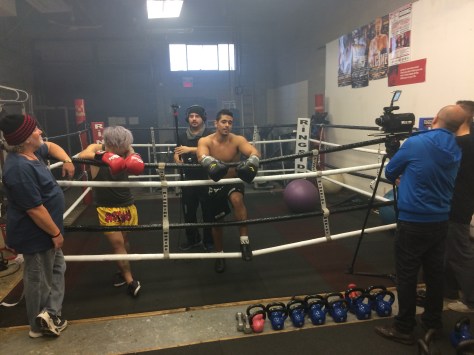
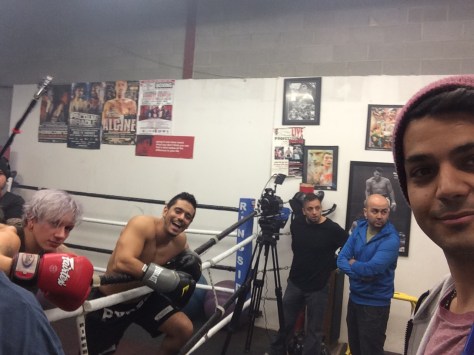
When Sholeh approached Nash about taking on a role as a boxer, Nash was excited about the opportunity and would not let anything get in the way of his delivering a great performance. He was eager to put to use a whole slew of other skills in addition to acting, to take on this explosive role. This is not common, and Nash says that he feels lucky to be able to play such a character. He immediately began training. He had previous experience in boxing, but to be a realistic professional boxer, he wanted to look completely natural. Having already understood many techniques from his previous boxing training, he quickly became an expert for the part, training at the Toronto Boxing Academy in Toronto. It was challenging, training for hours every day, there was a lot of sweat and exhaustion, but Nash knew the importance of the work. He used the long hours spent in the gym to get into the mood and mindset of his character. In one particular boxing scene, Nash steals the show and truly looks like a professional boxer.

“I love boxing and it is one of my favorite sports that I continue to practice even now, years after filming Petrol. I have many inspirations such as Mohammed Ali and Mike Tyson. I studied their techniques and skill and compared them to many other boxers to understand the secret to their incredible success. The day of the shoot for that particular scene, I came in early to warm up and really get into it and focus not only on the technique, but to give the character his own personality as a boxer. I hope I can once again shine in a role not only through acting, but through my other skills and hobbies as well,” said Nash.

image4

Nash’s work was essential to Petrol and the episodes featuring Jason the Boxer. He was able to bring both his skills as a boxer and talent as an actor to the screen. It is sometimes difficult for actors to be able to do both naturally and simultaneously, but Nash did so flawlessly. He practiced and perfected both boxing and his lines, not forgetting to take the time to understand the character’s mind by finding his soul within him.

“I really liked the fast pace action of this story. I usually opt for deeper and more complex characters, but I loved how my character shared this bond with his friend through boxing and how he was suddenly taken away from him in the heist. I think that is important to portray because it shows both sides of a character. On the outside my character looked tough and intimidating and was willing to put his life at stake in a high-risk situation, but he also had another side of him. That’s important to show because it allows people to understand that there’s more to a tough guy than the way they look on the surface,” he said.

Petrol was released in February 2016 and went on to win several awards including Best Mystery at the Vancouver Webfest and Best Action Adventure at Hollywebfest.


By Sean Desouza

Producer Mickey Liu brings music and drama together in acclaimed film ‘Nocturne in Black’

Growing up, Mickey Liu always found himself stuck between two different pathways as a child. He studied business, but he loved the arts. However, as a teenager, he realized he could combine both these passions and become a professional producer. A producer is a leader, a problem-solver, a caretaker, a doer, a negotiator, a storyteller and an artist. Liu aims to be all of them, and he has achieved his goal, becoming one of China’s leading producers.

“The lack of professional producers is one of the biggest problems in the film industry of my home country. I feel the responsibility and urgency to become one. It’s very challenging, but also very rewarding,” said Liu.

Liu’s work in Chinese film is renowned. His movies such as Sail the Summer Wind, An Ill-Fitting Coat and Tear of the Peony exemplify Liu’s determination to transform the Chinese film industry and allow for more professional producers to take lead. However, one of the highlights of his career comes from his work on the 2016 film Nocturne in Black, which is actually in Arabic.

“I wanted to work on this project because of its powerful script with a musical element of the story. It was one of those rare cases where I immediately knew I would regret not being part of this. It was definitely a very ambitious and challenging project, but if we could pull that off, we would send a powerful message,” he said.

Nocturne in Black takes place in a war-ravaged Middle Eastern neighborhood, where a musician struggles to rebuild his piano after it is destroyed by terrorists. The film premiered and was an Official Selection at the 2016 Telluride Film Festival in Colorado along with Liu’s film Tear of the Peony. From there it was an Official Selection at the Los Angeles Shorts International Film Festival, won Best Director at NDU International Film Festival, The Marion Carter Green Award at the 2016 National Board of Review, Gold Circle Award Grant Winner at the 2016 Caucus Foundation, and Best Short Film Narrative at the Long Beach International Film Festival. What was the most exciting for Liu, however, was when he received the news that Nocturne in Black was shortlisted for Best Live Action Short for the 89th Academy Awards.

“It was definitely the highlight of my career. I remember receiving an email from Producer Felecia Hunter with the subject line “JESUS CHRIST” and a link to the Hollywood Reporter article in it. I was literally shaking while scrolling down the list and found out that we were shortlisted. I had no idea it could go that far, and I still feel very honored and blessed to be a part of it” said Liu.

When putting together a team for the film, Producer Felecia Hunter approached Liu, knowing what an asset he could be as a co-producer. The two had worked together in the past, and she knew he had great experience putting together and designing posters. Once he was approached, Liu read the script and immediately decided to jump on board. He then created the pitch book and designed posters when the film was just a script, which ended up being essential in the success of their Kickstarter campaign, and he also designed the look of the Kickstarter page. Half of the film was financed by the crowdfunding campaign. Liu also contributed editing notes in post-production.

NIB at LA Shorts Fest with producer Felecia Hunter
Mickey Liu and Felecia Hunter at the LA Shorts Fest

Hunter and Liu attended several film festivals and awards to help promote the film. During the film’s festival run, he helped with coordinating the transportation of the film’s DCP copy and created promotional postcards for Nocturne in Black. Liu played a critical role in financing and marketing of Nocturne in Black, and that is exactly why Hunter approached him to begin with.

Mickey is organized, thorough, and possesses a very keen eye for details. He knows how to communicate with department heads quickly and effectively, ensuring a productive working environment on set and throughout post-production. Mickey is an asset on any project or event he works on. He always goes the extra mile by working long hours; triple checking details; and doing much more than is required of his job description. Through our work together, I had the delight of experiencing his extraordinary talent shine from pre-production to having films he produced screen at the Telluride Film Festival and other notable festivals worldwide. Mickey Liu is a gifted artist, but also a skilled professional and invaluable collaborator. His writing, producer’s vision, and narrative insights have always been revelatory – the sign of a mature and talented film producer – and add an unforgettable quality to any project he takes on,” said Hunter.

The story is set in Syria, but for safety reasons due to the civil war in the country, the production took place in the director’s home country Lebanon. Liu was working long hours just to put together a good pitch book; he did a lot of the research and exchanged notes with the Director, Jimmy Keyrouz, to ensure the look of the pitch book matched Keyrouz’s artistic vision. He then worked on the typography and details of the book for days, and this was only the first step.

“Everyone on the team pushed themselves to a whole new level because we wanted to have the best possible version of the film. It was really a labor of love and I could feel it when I was working on it,” Liu described.

The team was one of the best parts about working on Nocturne in Black for Liu. He was extremely impressed with everyone’s commitment to the story and with the professionalism on set. Everyone was at the top of their game, and they were having fun. More than anything, however, Liu was most inspired by the story they were telling. He knows the importance it has and encourages audiences to see it.

“It’s imperative to remind people about what is happening in the forgotten parts of the world – murderously effective, half-ton barrel bombs are constantly dropped on innocent civilians. It’s a story about human spirit standing up to oppression, evil, and terrorism. In the story, playing music is the protagonist’s ultimate act of defiance in a world where music is banned. I think it sends out a powerful message. Our director once said, “Art is a mighty tool that helps us fight extremism and terrorism.” In some way, making this film is our way to join the fight,” he said.

Be sure to check out Nocturne in Black so you too can join the fight.


Top photo by Lingyun Zheng


By Sean Desouza