Category Archives: Film

Jinming Zhao Stands Up as extraordinary producer

When Jinming Zhao began making the film Stand Up, she knew she would be making a film that inspired audiences. What she didn’t know was that making the film would inspire herself and her confidence in her abilities as a producer as well.

Stand Up is the story of a quiet teenage girl who has trouble processing her emotions at her beloved grandfather’s funeral, until her evil father comes for the heritage. The idea for the film came from Zhao, who was convinced to make it perfect.

“It was really good experience,” she said. “It’s nice to get the chance to collaborate with so many talented people.”

The film has been making waves across film festivals. It won Best Film of the Month at the Director Short Online Film Festival. It is an official selection in the Short Stop International Film Festival, Access Code Short Film Festival, and Love International Film Festival, and was nominated for Best Film of the Inspired Faith Film Festival where it won the Excellence Award. In the Top Shorts Film Festival, it received Audience Awards, and it won the Award of Recognition at the Hollywood International Moving Picture Film Festival.

“It’s amazing,” said Zhao when describing what it was like to when the first Audience Award. “When I got a trophy for the first time, I sent my mom a picture, and she said she was proud of me. That’s a moment I’ll never forget.”

The awards were well deserved. Zhao had to work harder than most to achieve what she did, and overcame the challenge of being stereotyped against while producing the film.

“I found a perfect house with reasonable price but when I talked with the owner for the first time, she didn’t want to talk about it at all, and she thought I didn’t look like a producer at all, because I’m an Asian small girl. She didn’t treat me seriously. I was hurt by that experience, but I didn’t give up because I wanted the house,” she said.

Zhao was relentless, and went back to the house a second time, with more confidence and a prepared statement. The visit secured the location with no issues.

“I told myself that I’m an independent, talented, smart, and strong woman, and there’s nothing I need to be afraid of,” she said.

This sentiment resonates with whoever she works with, as Zhao is recognized as a truly talented producer amongst collegues. Guannan Li, who worked with Zhao on Stand Up, attributes the quality of the film to Zhao.

“I am certain that without Jinming’s irreplaceable talents as a producer, the film would not have maintained such a high quality. She is a creative and talented producer, and we were entirely fortunate to have included her on the film,” said Li.

The two had prior success while working on the horror film Emily back in 2014. The film won Best Horror at the Los Angeles Independent Film Festival, Best Horror Short Film at the Hollywood Horror Festival, and Best Short Film at Mad Town Horror 2015. It was an official selection at the London Digital Film Festival 2015, the Fill Bloom Film Festival 2015, the Hollywood Horror Fest of Shorts 2015, the BigHouse Invitational Year One 2015, the Fort Lauderdale International Film Festival 2015, the International New York Film Festival 2015, the Horror Short Video Contest 2015, the Los Angeles Short Film Festival 2016, and finally the HollyShorts Film Festival 2016.

Zhao also worked with director Jun Xia on Emily, who approached her about working on the film.

“She is a creative powerhouse that we were very fortunate to include on our film, and I wholly attribute much of our success to her leading contributions,” said Xia.

Zhao had never worked on a horror film prior to Emily, and when she first read the script she was hesitant to accept the role of producer. However, the opportunity to work with Xia changed her mind.

“We worked on the script together and came up with a great story,” she said.

The success that Emily received prepared Zhao for a future full of success, but working on Stand Up gave her something even more valuable for her producing career.

“I learned that if I want other people to respect me, I have to respect myself first. I understand that to be as a foreigner would face more problems than local people do, but I have confidence and capability to overcome them,” she concluded.

PRODUCER BRIAN MANCINI BRINGS LOVE AND LAUGHTER TO A TENSE TOPIC

One of the most positive aspects about the Arts and specifically film, is that it allows us to step into the experiences and thoughts of others. Film often makes the impossible transition from sympathy to empathy, in a very safe way. Rita Mahtoubian Is Not A Terrorist is a film which approaches a very prevalent and modern situation. The filmmakers have chosen a very unusual approach in the presentation of their idea; a romantic comedy. It’s not the usual approach for this subject matter and Brain Mancini is not the typical producer. With films like; A Meditation, Dryland, Star-O, and others to his Producer credits, Mancini has enabled many diverse films to be created for the public’s viewing. With Rita Mahtoubian Is Not A Terrorist, Brian was attracted to a number of aspect of this film. His litmus test is always, “Would I want to see this movie?” and it was a resounding “YES!” for him.  Ultimately, Mancini states that what confirms his decision to work on a project is if he believes in the story being told. Rita Mahtoubian Is Not A Terrorist is a film which challenges the idea of stereotyping others in our modern age and tells us as much about ourselves as it does about those whom we might be unfamiliar with, as well as engaging us to question the reasons behind our thoughts. That probably sounds like a lofty status for a Rom-Com if you haven’t seen the film. The use of this genre to tackle the idea at its core, as well as some very interesting approaches to filming, removes a great deal of negativity out of the film, allowing the audience to focus on their own individual perception rather than a mob mentality.

Rita Mahtoubian Is Not A Terrorist garnered a nomination at both the 2015 Tribeca Film Festival and the Casting Society of America, USA. Being recognized by perhaps the most famous New York film festival as well as the professional community which seeks diversity in casting is the kind of outstanding achievement that lets Mancini know that he is striking a resonant chord with this film. His fellow producer Roja Gashtili (known for her work on Morgan Spurlock’s A DAY IN THE LIFE, MTV’s EXILED ,SATURDAY NIGHT LIVE: IN THE 90s) refers to Brian as “a magician!” Assembling the components (crew, cast, logistics, finances) needed to make a film which deals with people fears, prejudices, and matters of the heart, would certainly take some sort of magic to manifest. Rita Mahtoubian Is Not A Terrorist is really the story of someone who is being treated as an outsider even though they’ve spent their entire life in the US. When Iranian-born Rita sets out to change her life from ordinary to extraordinary, she accidentally captures the attention of Homeland Security. The film is a satirical comedy about romance and trying to be a better person. For example, when Rita attempts to make some friends by hosting a dinner party, it just so happens that she’s also acquiring the same household materials that could be used to make explosives. With her Iranian background, she gets flagged as a possible threat to public safety. Mancini states, “In the film we do critique the close-minded attitude that anyone of Middle Eastern decent must be a terrorist but the film’s intent is to show how that’s not the case. Rita Mahtoubian moved to America as a child and grew up American. It’s a subject that can be relatable not only for Americans but for all immigrants in any country. It’s all about not believing in stereotypes and actually seeing who people really are. The film is really romantic comedy about an FBI agent falling for the person he’s investigating. Most people found it to be heartwarming with a good message of how absurd it could be to judge someone solely on their family’s background and ethnicity.”

Brian and his production team came up with one very interesting approach which solved two hurdles for their film. He explains, “We shot “Rita” in Los Angeles as most of the script was written with specifically LA in mind. Early in development we had discussed the idea of shooting abroad as we had several scenes located in the Middle East. The creative way around this was when we decided to build miniatures and shoot all of those scenes in that style. Our main goal was to not sacrifice the story for any amount of money. We would often ask each other ‘How can we creatively get this same feeling that’s written in the script?’ Being able to shoot on a stage and creating the miniature sets gave us the capability of shooting a desert scene in the morning and then moving to steel mill only a few hours later.” Creative producing resulted in time and money saved, which could be channeled into other aspects of the film.

This production which has such an unusual approach to a timely situation, has been enormously accepted and appreciated by audiences. Brian feels that this validates his motivation to be involved in the core message of Rita Mahtoubian Is Not A Terrorist. His role as producer necessitates his involvement from pre to post production, which means Mancini puts a lot of time, effort, and heart into the films he helps to create. He comments, “The grand consensus is that the film is well liked by the mass audiences. I feel that because people can relate to the characters, it gets them invested. The humor successfully releases the tension when needed and helps audiences stay inside this world that we created. I hope that people see this movie and take a moment to think about our overall message. The feedback we’ve been getting from the film is that people understand and enjoy the message. Additionally, they enjoy the choices in our visual storytelling. The miniatures successfully capture audience’s imagination and the ending when the Agent walks through the explosion site into a heart shaped hole creates a warm and fuzzy feeling.” While Brian Mancini has no aspirations to the stardom and celebrity that drives many, he is always striving for the films he takes part in and believes in making. It’s about both the story and the art of telling the story for this producer. He confesses that there are so many possible ways to portray these tales…and he is eager to experience as many as possible in his career.


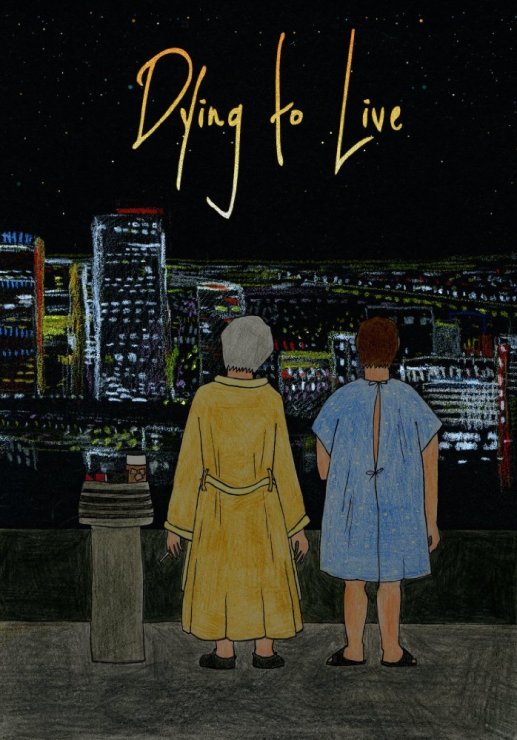
Film Review: “Dying to Live”

dying-to-live-cover
Poster for “Dying to Live”


Director Ilya Rozhkov astounds again with his latest brilliantly executed film, Dying to Live, which was chosen as an Official Selection of the Cannes Film Festival’s Court Metrage, as well as by the Manhattan Film Festival where it was nominated for Best Dramatic Short and the USA Film Festival Int’l Short Film Competition where it was the Runner Up for the Best Short Film Award.

The visceral story follows a young man, Jesse, on the day he learns of his terminal illness, and takes us on a journey that is somehow both deeply tragic, and, yet, joyously light.

The film opens at Jesse’s miserable workplace, a car lot, as he watches his co worker and love interest, Anne, proudly exit after she quits her job to travel to Paris. Played by the engagingly talented and strikingly beautiful Tammy-Anne Fortuin, Anne tries to convince Jesse to quit and come along. “We’re about to hit our 30s,” she argues. “If not now, when?” Bound by subtle and relatable hints of fear, Jesse obediently returns to work, only to lose consciousness in the breakroom shortly thereafter.

With exceptional attention to detail, the film takes us down the fluorescent hallways of the hospital and into a small office where Jesse is faced with his diagnosis for the first time. It is in this scene where any hope on Jesse’s face is shattered.  Actor Aleksander Ristic brings Jesse to life, really, during his confrontation with death, making the scene both too long, and not long enough.

Jesse is carted off to a shared room where he meets his roommate, George, played by actor John Colton (The Young and the Restless, Days of our Lives, Tosh.0)  An older man with a heart condition, George convinces an emotional and angry Jesse to live it up a little, and together, with the help of a bottle of booze hidden in a cut-out bible, they share moments of true happiness and an unlikely friendship on the roof of the hospital. This is where the cinematography of the film really shines, with everything in stillness, and faces hiding in just the right amount of shadow.

The next morning, when Jesse’s boss calls, he does what he’s always wanted to do: he quits over the phone. Jesse and George celebrate in a moment of real and genuine surprise and limitlessness when a nurse walks in, bringing the gravity of the situation back to earth. Rozhkov does an outstanding job bringing emotions up and down, without bruising the viewer. His sense of timing, and his ability to mix the perfect cocktail of comedy and depth, is simply not teachable.

Since Dying to Live is full of little twists and turns that bring what could be cliche into a category original and creative, we learn next that, during a medical scan, George has taken Jesse’s phone and text messaged Anne, saying he’d be over later that night. Unable to simply stroll out of the hospital on their own, George and Jesse make a casual exit dressed as doctors. They are chased out by an angry nurse when George clutches his chest and falls to the ground. Jesse speeds off to meet Anne in George’s old red Mustang, and as soon as the screeching tires are out of sight, George opens his eyes, smiles, and asks if Jesse got away.  George’s laughter takes the viewer through the credits.

The use of music throughout the film is chill-worthy, and producer Jainardhan Sathyan, along with Radhika Womack, do a noteworthy job ensuring the film stands as one cohesive project. Every setting is perfectly staged, every word is ideally written and delivered, and the overall concept is clear and powerful. The story, told with wit and grace, is an important one, and Sathyan makes sure it is told in the best way possible. The viewer is left with room to write the rest of the story, so to speak, all while feeling entirely satisfied with the story as told.

Such a topic of life and death can be hard to tackle, but Dying to Live is truly a gift to viewers in that every bit delivers compassion, depth, and humor with every scene, and leaves audiences feeling inspired.


Exclusive Q&A With “Love By Chance” Talent Vishal Arora

“Love By Chance” star Vishal Arora has been appearing in stage plays, music videos and television series’ for several years. Much of Arora’s work has appeared on India’s well-known channel Bindass, a famous youth channel known for programs targeting the country’s younger generation.

Recently, Arora played the character of a Customer Care Executive on one of Bindass’s hit television series titled “Love By Chance.” Just this week, I had the chance to sit down with Arora and discuss the details of his character’s storyline within the episode, all outlined in our exciting interview below.

kl1_1633

Currently, you’re living in Los Angeles, California. Where were you born and raised?
VA: I was born and raised in Ambala Cantt, Haryana north part of India. After completing my bachelor’s degree in computers, I moved to Mumbai where I started my acting career. I did theatre in the beginning and began getting work in TV Serials a year after. Since then, for the past four years, I have been working TV, music videos and commercial jobs.

For how many years have you been acting? Where did you initially get your start?
VA: It’s been 5 years now since I started initially. I began with theatre roles and from there began booking commercial projects.

Who and what inspired your acting career early on?
VA: My love of acting stems from my childhood; I love to live different lives, which is possible through this art form. In my school days I performed on stage. Whenever I perform on stage, it gives me a type of freedom we mostly don’t get in real life because of society rules and regulation in addition to rituals in my country. When I act, I’m living my dream. When I was younger, the stage was a great platform to begin with. From there, once you get started professionally, getting work helps you make a name for yourself and your family, which is exciting when you have the whole world watching your work.

“Love By Chance” is an episodic show that airs on Bindass TV where you played the character of a Customer Care Executive. What more can you tell me about the show’s plot? More so, what can you tell me about your character?
VA: It’s a fun filled story about a character named Joshi meeting a character named Ishita one day at work. My character and Joshi work for a glue manufacturing company. He is a door-to-door salesman for this brand glue and I work in the customer care back office called Lo Chipak Gaya where we work together. It is his 31st day at work and he has failed to meet the monthly sales target. He is under great pressure to perform. That’s when he steps out for some hard selling and meets Ishita. As soon as Ishita buys the glue – Joshi asks for a high five. Accidentally, some glue had gotten on to their hands as the glue bottles were faulty and then he calls me for a solution because I am his close friend and always he relies on me to solve his problems. Their hands get glued together and Ishita has a whole day of tasks planned ahead. From being an irritating sales man stuck with her to solving her problems throughout the day, Joshi eventually gets fired, but my character still motivates him while he’s leaving. In the end, Joshi charms his way to Ishita’s heart and they both decide to give a relationship a chance.

How did you initially become connected to the show? Did you have to audition for the role?
VA: I initially got connected through a casting director whom I had auditioned for with some other role. He sent me to this particular role, which was dependent on the character requirements.

What was the audition process like?
VA: Since I auditioned for something else that was also an episodic show, the process was fairly unique. I was given a script to perform and it took 1 hour for the whole process to conclude. Then, after few days, I got a call for “Love By Chance.” I was a bit surprised because I wasn’t expecting it at all.

Who are some of the other actors you collaborated with on “Love By Chance?” What was it like working with them?
VA: Joshi who is played by Rahul Sharma, and Ishita who is played by Huzan Mevawalla. It was fun working with them we had a good time on set. We got to know one another while working together. It was a great experience and we had many fun moments while shooting.

Can you tell me about a favorite memory or experience from the time you spent working on “Love By Chance?”
VA: It was when I was shooting for my particular scene where I had to act over the top like grandma’s do in Indian daily soaps. It was fun for everyone watching me doing that and was good experience for me to be able to play around and act so dramatically.

How would you say that “Love By Chance” allowed you to showcase your talents as an actor?
VA: It is always a good way to explore your skills and showcase your talents whenever I played characters like this the one I played on “Love By Chance.” My character was dramatic and over the top, which is totally different from how I am in my personal life. It gave me a means of showcasing my skills by being totally different from who I am in real life.

What’s next for you in the world of entertainment? What are your future career goals and aspirations?
VA: I am looking forward to working in film and TV in Hollywood because it’s a platform where I can really showcase my skills and also explore the things I’ve always wished to do with my acting. This type of art is unimaginable and everyday I explore something new personally. It’s a process, which can never end; it just gets better by working more everyday. My goals are to just do good work and entertain people with my skills and when I make someone laugh, that gives inspiration that I am doing something unique in life. It makes me feel like I am living for myself.


For more information on Vishal Arora, please visit: vishal-arora.branded.me

ANA ROZA CIMPERMAN IS THE DEFINITION OF A DREAM GIRL IN EIGHT AND A HALF CIRCLES

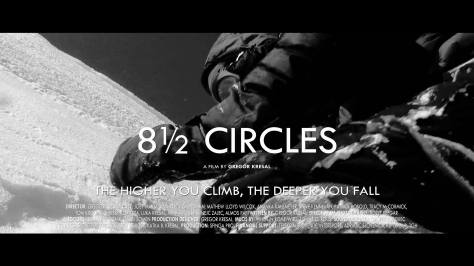
Eight and a Half Circles is a movie which makes the viewer disoriented in an intriguing way. For filmgoers who prefer not to have the action spoon fed to them, this passion piece by filmmaker Gregor Kresal is premiering at the Teplice nad Metuji film festival in the Czech Republic and screenings at the Poprad film festival in Slovakia and at the Spotkania film festival in Poland. The female lead of Eight and a Half Circles is Slovenian born actress Ana Roza Cimperman. Cimperman’s performance as Cat is luminous and yet ethereal, which is exactly the reason Kresal states that she was the very first actress he thought of when he created the role. This film which defines the term psychodrama, allows viewers to enter the altered state of reality of a man who is grasping feverishly to understand what is reality and what his life has meant to those around him. Eight and a Half Circles delivers with a great surprise ending but keeps you guessing about what is fact and what is self-fulfilling/desired reality until the very end.

Actress Ana Roza Cimperman is proof of two things in film; the film community is global now more than ever, and Hollywood still attracts the elite from across the planet. Cimperman has amassed a number of film and TV credits in the past few years (Jefferson, Nympho’s Diary, Rayven Choi, The Man Van, etc.) and is the female lead in Eight and a Half Circles. The fact that this Slovenian born and educated actress exhibits not even a hint of an accent in her role as the American “Cat” in this film, gives profound credit to both her acting as well as her focus on the language of the film. Ana confirms that this was paramount to her approach as Cat stating, “The most difficult part was probably the fact that this was my first film in English. At first, it is really hard to be relaxed and natural in a language that is not your mother tongue, but with enough rehearsal you can get past it. There is also this pressure of sounding as American as possible to not seem out of place in a movie where everyone else is American. After a while you have to let go of that and just focus on the scene and the present moment.” Certain scenes were framed in ways which excluded Cat’s face, in order to portray Omm (the male lead role played by New York actor Joey Maida)’s sense of confusion and disorientation. This required Ana to focus on how to communicate with her body rather than facial expressions or dialogue, creating yet another challenge for her role. Her commitment to reaching for the new places that the role of Cat brought is exactly the reason Eight and a Half Circles creator/writer/director chose Ana. As a grantee of the David Lynch Foundation, Kresal not only experienced filmmaking in the US but also struck a harmonious chord with Lynch. Both artists enjoy the psychological approach to storytelling. Kresal used his experience as an Alpinist to convey the mind altering states that these adventurous mountaineers are subject to experiencing. This is the core of Eight and a Half Circles. Gregor describes the film as an Alpinist’s reflection of Dante’s Inferno. As Omm (the male lead) is preparing for a climbing expedition in Pakistan, he gets the feeling that something might go wrong; which he shares with his girlfriend Cat. He is agitated. Every night he wakes up restless and feels he is drifting further away from Cat. He then wakes up in a hospital room and is told that he has already gone on his expedition, fell ill and was transported to the hospital. In that moment he realizes that Cat is really the woman nursing him while he is recovering from surgery and that his whole relationship with her was just a fragment of his imagination. Kresal comments, “Eight and a Half Circles is extremely important to me as it is essentially my life story. When I completed the script, I immediately thought of Ana Roza who I had met a few years prior in Ljubljana, Slovenia. She plays the role of Cat, Omm’s girlfriend who turns out to be just a fragment of his imagination that his mind creates when he is recovering from surgery in the hospital. Her character had to be grounded but it still had to possess a dream-like quality which Ana managed to pull-off perfectly.” Ana recalls, “Gregor knew me from my work on the feature film Tomorrow in which I had the lead role. I see some similarities between the character of Mojca, who I played in Tomorrow, and Cat as they are both gentle, thoughtful and sensible women so perhaps that made the decision to cast me easier. I was only familiar with Gregor’s work on the documentary Sfinga (The Sphinx) so I was not sure what the tone and the story of the movie would be. I knew it was going to feature mountaineering so I was expecting more of a dynamic, action-based film. I was pleasantly surprised when I read the script which has many layers and depth. It features interesting multi-dimensional characters so it took me several readings to figure out what was really going on. This was a good sign for me as it meant there were many ways to approach this character.”

13987649_1208643962502250_6979794603663033572_o

The viewing audience is often required to contemplate what is reality in Eight and a Half Circles as well as the true motivation and actions of the characters in the film. This makes the surprise ending even more gratifying…SPOILER ALERT. The surreal nature of Cat necessitated contemplation from Cimperman who states, “In the movie there is the real Cat who is a nurse and also the imaginary one, which Omm’s brain created based on the brief moment when they met for the first time. The imaginary one was definitely more mysterious and inquisitive while the real one was more supportive and caring. At first, I almost fell into the trap of playing her in a dreamy and angelic way… which would have been completely wrong because it is important that she is a real and grounded person. It is what keeps the viewer interested in their story and the loss at the end greater when you realize none of those intimate moments between her and Omm really happened.”

Eight and a Half Circles is a film which appeals to the audience in many different ways. The action and adrenaline of mountain climbing with its potential dangers, the inner workings of the human psyche as a way to deal with threats, and the intrigue of the unknown; all are present and accessible in this production. The anticipation at many film festivals, based on word of mouth alone, are proof of film’s ability to peak interest. Cimperman is just as excited about the public’s reception of this film, which she considers to be a major achievement. She is excited to take on more English speaking roles but admits to being drawn to the cerebral aspect rather than daredevil influenced roles. Cimperman reveals, “Joey Maida (Omm) is a very talented and hardworking actor based in New York. I admired the way he dived into the role although it dealt with a sport he was not that familiar with. He was not afraid of challenges and even traveled to Europe to shoot the second part of the movie in the Italian Alps. I have done adventurous sports in the past and I enjoy the rush but, as a working actress, being injured means you cannot work. Acting is my true passion which means that anything which keeps me from acting is not worth giving that up.”_H__0551_retouched

ACTOR MICHELLE ALEXANDER SHIFTS FROM HORROR TO COMEDY WITH HILARIOUS NEW SERIES ‘OVERACHIEVING UNDERDOGS’

To say that actor Michelle Alexander is versatile would be a thundering understatement. While the Vancouver Island-born performer is best known for her role as serial killer Alison on the innovative horror anthology series Darknet, Alexander’s current small screen incarnation, as Tess on web series Overachieving Underdogs, plays at the opposite end of the spectrum—it’s a fast, funny comedy centered on two young women living in Toronto—but for Alexander, the transition was simple.

““Both genres need to be 110% believable and authentic,” she said. “If a viewer can smell a ‘funny moment’ is being played for the joke rather than fulfilling the circumstances of that character, it feels false.”

Alexander’s keen grasp on the emotional mechanics of performance are impressive, and provide a fascinating insight in the actor’s modus operandi. “In terms of preparation, the two genres are not as different as people think,” Alexander said. “Drama is a tragedy with irrevocable consequences—death, heartbreak, loss. But comedy is tragedy without those consequences—your pants fall down in public; you fart during grace at your in-laws’ dinner party. The trick is to give the ‘comic circumstances’ as much importance as you would a dramatic tragedy. The comedy is there for the viewer, but the actor has to be invested in the circumstance.”


In Overachieving Underdogs, Alexander makes it look easy, and the results are hilarious. With equally gifted co-star, Sophia Fabiilli, the pair’s zany impulses, emotional vulnerability and unpredictable gags are deftly realized, and run the full comic route, from physical slapstick to razor sharp repartee


Together, the two make a formidable team. “Sophia is amazing,” Alexander said. “Everybody say that we have an onscreen chemistry that is rare. The series is all about our characters, Tess and Polly, individually as well as their relationship, so we share a lot of screen time. We know how to feed each other in the moment and riff on a joke together. Plus, like me, she’s determined to get an authentic funny moment rather than a ‘cheap funny moment’. We push each other to go further, to take bigger risks, to make each moment as funny and full as it can possibly be. She’s a joy to be on set with.”


The pairing has created a volatile, endearing and evident bond that provides a solid foundation for wild comic escapades, from irony laden observations on contemporary life to the pitfalls of dating and the unexpected twists which the two women face, as Alexander said, when “going after the dreams they never knew they wanted.”


“In terms of comedic performance, Sophia and I shine most in scripted comedy, rather than stand-up or sketch,” Alexander said. “Following on the success of series like Broad City  and Garfunkel and Oates, we decided to put those skills to the test.”


“It’s been pure fun,” Alexander said. “The pilot shoot was peopled by highly skilled professionals both in-front of and behind the camera. We all believe so much in the potential of the series that we all brought our best work to the pilot. The set designer even made a “Tess and Polly shrine” in Tess’ apartment. I’m not sure if you ever see it on camera, but it’s a metaphor for how every tiny detail was attended to and cared for. “


Alexander also generates enthusiasm among her colleagues. “Michelle brings a great energy to set, always prepared, focused on the end game, willing to take risks,” director Patrick Hodgson said. “Directing her on Overachieving Underdogs was a fantastic experience. Her bright energy carried over to the crew and made for a genuinely fun time on the show. When we reached moments of conflict, or struggled with a scene, we put our heads together and worked out a solution that worked for both of us. No drama, no ego. She is a diligent, committed performer, who is keen to collaborate with her scene partners and director, always early to set and eager to make sure the cast and crew were all taken care of.”

The series’ wit and charm have an empathic appeal that’s bound to reach a larger audience.  “We are currently in talks with some Canadian networks, one in Europe and one in the US, to produce a full 13-episode season of the show,” Alexander said. “And we’ve been overwhelmed by the popular response. Publications, both in Canada and the US, wanted to write about it, women from as far away as the UK tweeted at us that they “felt like you are making this series for me.”


The show’s success lies with Tess and Polly’s—and Alexander and Fabiilli’s—personal relatability, a genuine emotional quality that can’t be manufactured, but is instantly recognizable.  As Alexander said, “Once Sophia and I, dressed as Tess and Polly, did a promo stunt in downtown Toronto during rush hour. We had two girls shout from the streetcar, ‘I’m a TESS!’ and ‘I’m a POLLY!’”

Multicultural Roots Help Actor Ashley Tabatabai Take on Diverse Characters on Screen

Ashley Tabatabai
Ashley Tabatabai shot by Adam Lyons


International actor Ashley Tabatabai has benefitted immensely from his worldly background and time spent in an array of countries, surrounded by exotic and varied cultures, languages and people. Born in the UK to parents of English, German and Iranian descent, he was raised in Spain, and picked up an American accent during his years in International school. All of this lends to Tabatabai’s mysterious aura   enhanced by a grasp of dialects which make him an invaluable asset for casting directors. But it’s his raw talent as a performer that forms the keystone in the illustrious career he’s built for himself.

Tabatabai has been extremely active in the industry for years. First and foremost he is an actor, delivering powerful performances in several television series including “Color Me Grey” and “Have I Been Here Before?,” as well as in films such as “Digital You,” “Louis: Lost In Motion,” and the upcoming drama “Falsified.” His love of acting, however, stems from his passion for storytelling. That’s why the extensive list of credits he’s accumulated includes not only his myriad roles as an actor, but also his work as a writer and producer on an array of acclaimed projects.

“I operate on two fronts. One as an actor, auditioning for and booking great roles, and the other as a storyteller and producer who creates his own content. I believe the two to go hand in hand,” Tabatabai said. “I’m a huge advocate of creating original work and telling your own  stories.”

Last year Tabatabai assumed the role of undercover cop Johnny Clemence in the first episode of the upcoming series “Color Me Grey.” Surrounded by mobsters and in too deep to get out, the constant risk that Johnny will be found out grows more and more imminent. As the suspense grows to a crescendo, viewers will find themselves glued to the edge of their seats. Though everyone in this series leads a double life, this is especially true for Johnny.


Ashley Tabatabai "Color Me Grey"
Scott Michael Wagstaff (left) & Ashley Tabatabai (right) in “Color Me Grey” shot by Adam Lyons


“Johnny is a really enigmatic character, quietly observant and always processing and calculating,” Tabatabai said. “This is a guy who has gone undercover to infiltrate a criminal organization, whose own members lead double lives to help do their underhand business. So in essence Johnny is operating multiple covers at all times.”

Another of Tabatabai’s films, the early 20th century period piece “Louis Lost In Motion,” blew audiences away in 2014 with its imaginative approach to storytelling. Filled with intrigue and mystery, the film focuses on two key figures in early filmmaking — Louis Le Prince and Thomas Edison.

“[This] is a film based on the conspiracy theory around Louis Le Prince, who is famed as the first person to ever record moving images on his single-lens camera. He mysteriously vanished after boarding a train, before ever getting to patent his invention,” Tabatabai said. “To this day, no one knows what happened to him or why.”

Often, it is particularly difficult for actors to play real people, contemporary or historical. When the opportunity to arose for Tabatabai to do so, he jumped at the chance.

“The period costume as well as hair and makeup really helped me to drop into the body of the character. Being immersed in the actual locations where he actually spent time was a great way to picture what his experience might have been like,” he said. “There is always a sense of pressure involved when portraying a real person, especially someone as iconic as this.”

Check out the trailer for “Louis Lost in Motion” below:

Most recently, Tabatabai stars as Javier Baena in “Falsified,” an upcoming film about the reunion between a father and the son who was stolen from him at birth. Tabatabai also wrote and produced the film, which is based on a frighteningly real epidemic of infant thefts that occurred over the course of 50 years.

“It’s very much about the dynamic between a parent and child, and in particular a father and son,” Tabatabai said, describing the stirring drama. “On another level I feel it’s important to raise awareness of the scandal that happened in Spain.”

The vast range of roles he’s portrayed speaks volumes to his talent and reputation as an actor. Eager audiences can catch Ashley Tabatabai in “Falsified” later this year, and in the upcoming film “Digital You,” which is set for release in 2017.

JAPAN IS A STATE OF MIND

IMG_0222

Everyone knows that person; the one who goes on vacation and returns with an affect. It might be a foreign accent or a way of dressing, possibly even eating patterns or mannerisms. The trait is off-putting to most of us. It can however, be a source of amusement as in the film JAPAN. The film is the brainchild of Canadian comedy group Tony Ho. One of JAPAN’s stars is the affable and amusing Adam Niebergall. Adam plays Marty, a character that all of us know. Niebergall’s performance, along with that of Roger Bainbridge [Nolan] and Miguel Rivas [Pat Dunkling], remind us of the interplay amongst a key group of great comic actors. Whether watching Laurel & Hardy, The Three Stooges, the Marx Brothers, or modern teams like Adam Sandler and Kevin Hart, the joy is always in witnessing their overcompensation towards the mundane and reminding us to laugh at the reflection of ourselves. Comedic greats allow us to remove the weight of things off our shoulders no matter what the setting. Niebergall and his costars fully achieve this goal in a hilarious take on office politics and the idea that the Rolling Stones expressed, “You can’t always get what you want but if you try sometime you find you get what you need.”

Any fan of either the British or American versions of TV’s The Office will readily be amused by JAPAN. An overly eager, somewhat politically incorrect boss like Pat Dunkling will seem incredibly familiar to fans of either show. Pat is not derivative of David Brent or Michael Scott but he is an archetype of this manner.  He is overly exuberant and we get the feeling that he very easily falls in and out of love with anything that he can take on as a persona to make himself more interesting, often to the discomfort of those around him. When Dunkling returns from holiday in Japan, he decides that he will have two interns compete for a paid position with the company via a karaoke battle. Rivas’s performance as Dunkling is well contained and not over the top, which is difficult considering his Japanese stereotype infused wardrobe, hair, and makeup. The true belly laughs are delivered courtesy of Marty and Nolan. While preparing for the competition, we see both men have a glimpse of their past as well as their future. The hyperbolic visions of both are there to tell us how we all invest a little too much of ourselves in every small event that occurs, or at least the ones we have deemed to be truly important.

IMG_0230 (640x640)

Niebergall has shown a wide range in films, although all have comedy at their core. In films like WANDA he plays a man who is at times threatening and quick to become violent; passionate and somewhat menacing. In Dissection it was fear; in Giordano it was desperation, but Marty in this film is a genuinely likeable and harmless guy. Viewer’s get the sense that Marty wants to do well but doesn’t want to step on anyone’s toes in the process…unless he is pushed, which happens in JAPAN. Niebergall (who won a Canadian Comedy Award in 2015) describes his character stating, “Marty is an unmotivated, classic privileged white male. He’s 25 years old and he’s never had anything to be afraid of except for maybe hard work. He comes from a long line of very successful men and he represents the apple that really did actually fall pretty far away from the tree, if trees could throw apples instead of dropping  them. However, when Marty’s sedentary bubble is burst by Pat Dunkling’s offer of a potential promotion he is suddenly willing to put his all into winning the competition. He feels he can make up for his whole life by trying hard for the first time in this moment. He’s a great character because he reminds me of myself and a lot of people I know who don’t really know or appreciate how good they have it sometimes.” Marty shows us that he is willing to do things he would not normally do because of his fear of failure. This includes copying Nolan’s choice of a Sophie B Hawkins song for the Karaoke battle as well as a hilarious attempt at a very uncomfortable lap dance in the work place. As with other Tony Ho films, it is the chemistry even more than the premise of the film which makes it so amusing and entertaining. Miguel Rivas [Dunkling] gives a large amount of credit for JAPAN’s success to Adam’s approach and improvising commenting, “I had a blast working on Japan with Adam and I love working with him in general. He’s super creative, energetic, and really odd in all the best possible ways. I just love his choices. I remember a point in the movie when his character (Marty) gets embarrassed so Adam stuck his whole torso in a filing cabinet drawer like an ostrich would do in order to hide. That’s such a funny way to express his shame. He’s great at adding stuff like that; stuff that isn’t already in the script. Sometimes he would do even more subtle things, like the way he wears his tie just a bit too short. It all comes together to round out a really weird, funny character. He has a really vibrant personality and it shows in his work. And his singing?? Those high notes!?? I think I remember the main reason we used Sophie B. Hawkins in the Karaoke competition was because Adam would go around singing “Damn I Wish I Was Your Lover” all the time as if it were a normal thing to do. Then we thought it would be so funny if both songs were by Sophie B. Hawkins so we chose “As I Lay Me Down” for Roger.” Roger Bainbridge confirms, “Working with Adam on the movie Japan was awesome. His voice was crucial for the piece, because he’s excellent at playing sweet, confused oddballs. He completely nailed the Marty character, this child struggling to be a grown up. His performance helped to set the tone for the entire film. Japan was one we never seemed to stop writing. Adam came up with some of my favorites, like having the misinformed Pat Dunkling character thinking that ‘massages in Japan are just sex’. We had to cut one of his favorites from the movie about Marty and Nolan venturing a guess that ‘Saki’ was ‘soccer for babies.’

IMG_0233 (412x554)

No spoilers here. Adam’s character Marty both does and does not win, you’ll have to go see JAPAN to truly understand. The film’s conclusion is not what the viewer takes away for the experience, rather it is Adams’s performance as Marty that endears you and causes you to hope for his success in spite of himself. It is easy to see the adult that is struggling to break through Adam’s stunted emotional growth. It’s the characteristic that Niebergall most enjoys about Marty. He reveals, “You can’t amuse someone if you can’t amuse yourself. I think the more personal you can make your comedy the funnier it will be. The best comedy often bares some horrible secret. If it draws people in because they are surprised to relate to something or it wakes someone up to how great it is that all people have something strange about them, it creates a feeling of sharing.”


PETER HADFIELD PUTS THE SAW IN “I SAW YOU”

The Canadian film I Saw You is about the unexpected results when one is thrown suddenly into a situation and doesn’t know how to handle things. Specifically, the story is about a young man (know in the film simply as “boy”) who falls in love at first sight. He makes a plan, somewhat spontaneously and proceeds forward, determined to create something wonderful from his passion from his new found feelings of love.  The circumstances may be different but the spontaneous nature of the film’s message resonates with its cinematographer Peter Hadfield. The independent film organization Cineworks paired up artists to create collaborative visual art pieces. The lead actor, Ashley Andel, and Mina Shum (director, writer, and producer) were paired up to make a film. One of the curators at Cineworks suggested Peter to Mina as an accomplished cinematographer who worked well in high pressure situations. Without ever having met or worked together, the two began building the visual schematic that would present the film’s storyline.IMG_3345

Peter Hadfield is a Canadian cinematographer who is more accustomed to working with projects that have a larger than life appearance. Projects like Harrison x and Clairmont the Second’s “It’s Okay, I Promise” with its fast movement, or the heavy adrenaline infused TV series Ice Pilots NWT (on which he worked as an editor) are more indicative of some of Hadfield’s fast movement work but Peter is always looking for a challenge as well as a way to expand his palette as a cinematographer; which made him eager to work with Mina Shum on I Saw You. Mina Shum is a highly respected and award-winning director, writer, and producer whose credits include (among others) Double Happiness (for which she was awarded the Wolfgang Staudte Award at the Berlin Film Festival, Best Feature Film at the Torino Festival of Young Cinema, Best Canadian Feature Film at the Toronto International Film Festival as well as multiple nominations for other films) who quickly signed on Hadfield as the cinematographer for I Saw You after meeting with him. The film called for a much more intimate feel than much of Peter’s prior work but his vision for the shots persuaded Shum; a decision she is happy to confirm was the correct one. Shum comments, “Peter’s personality is strongly displayed in his work. He is intelligent, conscientious, caring, and talented! Peter brought a unique sensitivity to the film. He has a great eye, and a strong work ethic, and most importantly for all artists: vision. His experience was a major asset to the production. When I needed advice, his perspective was always sound. His work was so strong that I was happy to include him on another production, Ninth Floor which is a feature documentary.”

I Saw You was an Official Selection of the Vancouver Film Festival, an achievement that was especially meaningful to Hadfield as the film was such a deviation from his usual large scale work. The boy, who falls in love at first sight with a girl, places an ad in the local paper stating “I saw you.” The action continues over seven days as the boy waits for a call from the girl. He unexpectedly becomes part of a community with three Chinese women who frequent the park near him. Hadfield wanted to capture the emotion and heartache of the boy by the way the shots were framed. He explains, “Most of the film takes place inside an apartment. The use of walls, doorways, and the ceiling became instrumental for metaphor in the frame. I would fill half the frame with a wall to make Boy feel claustrophobic, or frame him in the kitchen through the doorway to make him feel stuck in his situation. I used unconventional and awkward framing, excluding parts of the boy’s face from the frame to make his discomfort more apparent. Towards the end of the film the framing becomes more conventional as Boy’s experience becomes brighter, until we see a full shot of the boy when he bumps into the girl again.” Lighting is a part of cinematography that Peter is especially interested in and recognized for his mastery. Director Scott Cudmore (who used Hadfield as his cinematographer on the “It’s Okay, I promise” seven minute opus music video by Harrison x and Clairmont the Second) notes that, “I am always thrilled with Peter’s understanding of composition and light. It inspires me as a director and always makes me want to work with him again.” Hadfield confirms his preoccupation with this aspect of his job noting, “One of the largest challenges for I Saw You was shooting in a cramped apartment without much space for lights, not to mention the camera. Using practical lights in the frame as well as sculpting available light became essential to light Boy (the film’s main character). A fun challenge! Mina Shum was very flexible and collaborative. When I made bolder suggestions she was totally game to use them. My favorite part was shooting inside the apartment at night. It made for so many opportunities to light the apartment in interesting ways and create interesting frames. Since ninety percent of the film took place in one small apartment, we had to get very creative in finding new angles.”

IMG_3355

Peter is continually searching out new ways of approaching his craft and challenging himself. Utilizing his availability to other filmmakers and even investigating things as mundane as podcasts to increase his awareness of all emerging approaches, Hadfield is constantly improving himself.  The aforementioned director Scott Cudmore recognizes this attribute in Peter and is currently making use of him again on the upcoming video “Needs” for the band Odonis. Peter reveals, “The music video has a very loose narrative of a corporation developing Artificial Intelligence, the AI becoming out of control and the corporation reacting to the problems than ensue. Long camera zooms and intense color, inspired by Dario Argento’s Suspiria and Francis Ford Coppola’s One From The Heart are present throughout the video. The vivid color palette and ominous, constantly zooming lens makes for a very dark and dramatic video. I was stepping out of my comfort zone on this one. I usually prefer to light naturally, or use available light. I poured over different images from both photographers and cinematographers, trying to discern how the artists I respect achieve a look similar to what I was going for. I love being forced to grow as a cinematographer; both myself and those I work with end up with a better product if I am stretched beyond my current limits.”

LINZEE BARCLAY CHALLENGES HISTORICAL STEREOTYPES IN “HOMEFRONT”

Love and war are the two most prevalent themes in cinema. Perhaps that is because everyone has been touched by one of these factors, all too often by both. The later makes for great action and outrage; portraying the humanity and inspiring sympathy for those on the unpopular side of history can often be a herculean task. Linzee Barclay understands this very well. In 2015’s HOMEFRONT she plays Elisabeth; a mother, wife, and German caught in the middle of one of World War II’s worst battles. The film had many lofty goals, not the least of which was being a bi-lingual with both English and German dialogue. HOMEFRONT won Best Picture, Best Sound, and Best Production Design (as well as nominations for Best Director and People’s Choice) at the Sheridan Screen Art Awards in addition to being screened at the Oakville Film and Arts Festival and the 2015 Buffer Film Festival in Toronto.

The setting of HOMEFRONT is the Ardennes Forest and also the location of WWII’s “Battle of the Bulge.” The film is less about this pivotal confrontation between German, Russian, British, and American forces than the war’s toll on the people in the Ardennes. 1944 was several years into the war and less than a year before its recognized conclusion. All sides had been exhausted and had recognized their losses. For Linzee’s character Elizabeth, it was the realization of many things. Exhausted by a long war, she understood that the war had only brought destruction to her country and her family. Her husband was likely dead and there was danger all around her and her son. When a wounded American soldier finds his way to her home, with an SS officer on his heels; Elisabeth and her son Fritz (played by C.J. Dube) are convinced to protect him at their likely personal peril. Finding the caring and altruistic side of a likely former Nazi sympathizer is not an easy goal for any actress. HOMEFRONT writer and director Jamie Banks confirms that Linzee was an obvious choice for the role of Elizabeth stating, “She just blew me away in casting. Linzee can convey so much with just her face. In real life she is bubbly, outgoing, funny, yet when she became Elisabeth she truly was a different person. She executed the German Dialogue so flawlessly that even Germans were praising the German dialogue in the film. Linzee is extremely intelligent. This allows her to see what makes a character unique. I immediately knew that she was our Elisabeth.”

IMG_3218

The intensity of the storyline needed to be matched in the actor’s performances. Producer Sarah Thompson was looking for something strong, convincing, and understated in Elisabeth. Although Barclay’s execution of the dialogue was impressive, Thompson was looking for an unspoken sense of depth and intensity. Sarah notes, “Linzee brought an entirely new side to Elisabeth that was not on paper. The physicality and mannerisms that she introduced played a huge part in the audience’s reaction to her. The amount of passion and emotion she gave off with just a look sold us. Her eyes said it all. Her interpretation from just the sides let us know that she would give us endless possibilities.”

HOMFRONT may be a war film but it doesn’t glorify war. Rather than an encouraging tale, the film depicts how some people lose the ability to care for others and the desperation with which others cling to it. As a mother who takes part in a ruse to protect a wounded soldier who is by definition at the time, the enemy; Elisabeth protects the American in an attempt to cling to her good side, while risking her own life. Above it all is her goal to protect her son. Barclay’s convincing portrayal brings the viewer to challenge the dichotomous relationship of what historical propaganda may tell us about someone and human nature itself. Jamie Banks attributes much of the film’s success to Linzee stating, “Linzee provided an intense emotional authenticity to the film that allowed it to succeed. In a very real way, she made the film. Any of the intense emotions a viewer feels are channeled through Linzee. She draws you into the film and makes the danger real. She makes you think, ‘God, she’s in a dangerous situation!’ In any period piece, immersion is crucial, and Linzee provided that immersion for our film.”

Barclay has been a part of many award-winning films and television presentations including The Real Inglorious Bastards which won a 2014 Canadian Screen Award & an Official Selection at the Cornwall Film Festival for Frontier. The Screen Media Award which HOMEFRONT received was particularly meaningful to her. The actress explains, “Elisabeth was very special to me. There are things about her that we can all relate to like loving your family and wanting to protect them. It was the differences that we don’t all share that are the joy of discovering and portraying a character like her. I’ve studied a lot about history of that time and women’s roles in Nazi Germany. My knowledge of the German language was obviously a major asset but, to challenge the stereotype of someone like Elisabeth can be a great discovery. I had to be very specific with her body language and the physical approach to her. The key to it is to finding the humanity. Everyone is flawed in some respect. When a character seemingly ‘wins’ in a story, they are also ultimately losing something dear to them. One just takes precedence over the other.”

Although it wasn’t “method producing” or method acting; the film’s location, in a cabin, in Canada, in the dead of winter…obviously aided the cast of Rylan Wilkie, Mike Koras, and CJ Dube in accessing the harsh message of the storyline. Linzee confesses, “On the third night around 3am actor Rylan Wilkie (who played a very convincingly intimidating SS Soldier) and I got a case of the giggles during a take and couldn’t shake them for a bit. Unfortunately for him, he was standing outside in the dead of winter waiting on an apple box to come in to the cabin and I couldn’t open the door without laughing at him. Yet, when it was time to bring the emotional gravitas of the character to the scene, Barclay was always prepared. Producer Sarah Thompson confirms, “Linzee’s portrayal of Elisabeth and the raw emotion she brought to the film is one of the main reasons the film had such a strong reaction from audiences. The way she openly wept while holding her son at the end sent chills through people’s backs and left a lasting impression that could not be shaken.”

IMG_3217

Within days of wrapping HOMEFRONT, Linzee was cast as Sharlene in the CW series Reign. Her portrayal of this sassy, cockney harlot, in many ways the comedic relief of the series, is in sharp contrast to Elisabeth and the weight of her circumstances. Both characters are equally convincing in the hand of this adept actress. Also in Linzee’s immediate future is her appearance on the CBC TV series Murdoch Mysteries. This Canadian actress continues to cross character borders and national borders with a variety of productions, following her muse as fans follow her career.