Category Archives: Film

HOW CINEMATOGRAPHER SIMU FENG TRANSPORTED AUDIENCES INTO THE HUMAN PSYCHE FOR “BREATHE.”

Cinematographer Simu Feng and Director Paul Kowalski have worked together on a number of films. Although they both possess many impressive attributes, perhaps the strongest reason for their successful working relationship is that they are both classic over-planners. Both of these men subscribe to the idea that you should check every production aspect a number of times and have a back-up to your back-up. The security with which this empowers the entire production team allows the artists they work with to create outstanding films that are critically and publicly praised. As proof, consider that their latest collaboration, Breathe, which received more than thirty recognitions and awards from all across the globe including; Cannes Short Film Corner (France), Visioni Corte Film Festival (Italy) (Finalist – Best International Short Film), Southampton International Film Festival (UK) (Official Selection) (Nominated: Best Short Film, Short Screenplay, Leading Actor in a Short, Cinematography, & Score), Beverly Hills Film Festival (Best Short – Audience Choice Award), Aesthetica Short Film Festival (UK) (BAFTA Qualifying) (Nominated – Best Drama), and numerous others. The exemplary work that this duo creates together gives credence to the idea that great art is great art, regardless of your background or history. These two filmmakers come from drastically different backgrounds. Born in London to nomadic Poles, Paul Kowalski grew up in the Middle East Africa and across America. The only child of a civil servant and a nurse, Feng grew up in Shenyang, China and then moved to Beijing to study Geophysics in college. In an abrupt turn, he was accepted to the Beijing Film Academy graduate school and never looked back. While both of these filmmakers pursue the passion of their art, Kowalski notes that it is Simu’s calm nature and demeanor under the stress of production and filming schedules that aids in the director’s ability to remain calm while working together. The cinematographer is Kowalski’s barometer and governor at the same time; a great bonus to the heart of any successful working relationship.

breathe-1

Psychological thrillers have become Paul Kowalski’s calling card. He is adept at making films of this genre and he knows it. Simu Feng has worked with this director multiple times due to his creative and discerning eye for imagery in these films. Concerning Feng’s proficiency, Kowalski declares, ““Simu was integral in bringing my wildest imaginations for Breathe to the screen. Whether it was devising shots in our pool sequence where we had to closely follow our protagonist swimming, or in an operating room watching him perform neurosurgery, Simu was always able to offer practical, creative, and unique solutions to bring the story to life visually. A truly great professional brings more than this to the table though. Working with Simu was a total pleasure. His calm and reassuring presence on set complemented my own directorial intensity and was often a rock amid the chaos of production. The camaraderie he promoted among his camera team made on-set execution a breeze and helped us get over production hurdles when they arose, with great ease.”

breathe-screenshot-1

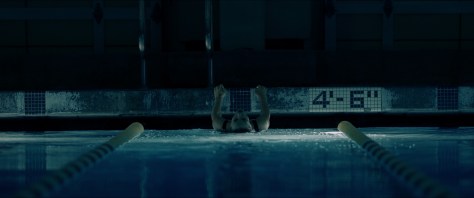
Breathe depicts a neurosurgeon’s psychological battle with reality in coming to terms with his wife’s death. The tragedy has propelled the main character into a place in which discerning reality from the images that haunt him is a constant struggle. As he descends into a surreal state, one gripping scene shows him descending into a pool; he struggles for his own life in the same way he struggles to accept the reality of his situation. Feng comments, “For the night pool scenes, we wanted the space to represent his sub conscious. We wanted the pool to be dark, scary, & moody, regardless of what a public pool should look like. I lit the scene mainly using the reflection of the water, creating a constant flowing light all around the area, adding to his unstable status of mind. I cared a lot about the eye light in the scene. I wanted to enable the audience to see into the character and feel his emotions. For this scene, we really wanted to be with the character…to jump into the pool with him and swim with him while feeling his pain through all the action. To do this, I did some research. I measured the size of the pool and came up with a plan that we could afford. We set up a 21’ ft. crane on the track along one side of the pool and swung the camera into the pool area just above water. For some shots, I had my camera operator walk into the water, holding the crane head and following the actor swimming. The shots turned out really well.” Kowalski expounds, “We needed highly-charged, stylized images to help represent our protagonist neurosurgeon’s growing derailed state of mind. The ALEXA was the solution. In our night pool photography, this camera was able to vividly capture flickers of reflected light, rendering them in crystal clear, ethereal blues. In our operating room scenes, the camera allowed us to keep skin tones vibrant while maintaining the low-lit, psychological (over naturalistic) feel we were after. The quality and flexibility of the ALEXA greatly contributed to the mood and style of the film.”
breathe-screenshot-4

Simu enjoyed creating and designing ways to “trick” the audience when it came to guessing what was real and what was imagined in Breathe. He relates, “Since our plot is not one with a lot of twist and turns, a great deal of the plot point is in the subtext. We really need to figure out a way to keep the audience with the character all the time, immersing them into the world of this film. We took a lot of time designing the shots, making sure we covered all the beats and delivering the emotion for each moment. For me, the great enjoyment in being a cinematographer is that you get to create a story and touch the audience with your images. I enjoy turning the words in the script into something tangible and delivering the emotion of the story through imagery. I get the most sense of accomplishment when a scene is cut together and works the way it should; plus, it’s so much fun working with lighting and playing with all the cameras. It is such a creative job. It forces you to keep coming up with new ideas.  I love to do a job that isn’t routine and repetition.”

As a fan of the US film industry, Simu has aspirations to make it his professional home. He admits to watching both films from his native China as well as US productions in his formative and adult years but makes note of his admiration for the infrastructure and lineage of American film. He states, “I think the US film industry is a fully developed industry in every aspect. There are rules to follow and paths to pursue; a design to getting things done. For example, you make a short, go to festivals, get noticed, and develop an independent feature. Then you go to festivals and get noticed by big studios. Whereas in places with developing film industries, filmmakers need to find their own ways to develop their career. The US has created a proven system that is admired across the whole world. I’m excited about being a part of that established model.”

get-the-life-2

breathe-poster


ROMY TEPERSON CHANNELS HER INNER NEW YORKER

Actress Romy Teperson is ecstatic about her role and involvement in Next Door to the Velinsky’s. The Australian actress has been in her fare share of TV and film productions. Whether it’s her comedic role as Sally Enfield on the comedy hit Swift and Shift Couriers (currently airing in the US on Netflix), as the pivotal female character in Unforgivable Sin, or any of her other lauded roles, Teperson brings an energy that has elevated her to being one of the most highly sought after actresses in her homeland. Not only is she proud of her performance as Doctor Jay in Next Door to the Velinsky’s but she is also proud of the film’s selection as an Official Screening at the Cannes Film Festival. She states, “It’s extremely exciting. To have your film be a part of the history of that festival and reach that level of accolade is definetely a humbling accomplishment. Lots of films get sent to a lot of different festivals throughout the world but Cannes is on a whole other level.” The recognition of Next Door to the Velinsky’s was not limited to this alone as it also received the Award of Excellence from the IndieFEST Film Awards and premiered at the New York International Film Festival. While Teperson is widely known in Australia, the film’s international visibility gave her talent a higher vantage point for fans and critics alike.

dr_jay_2

Some of the tag lines for Next Door to the Velinsky’s include: “How far would you run to escape your past? What if the only way to survive is denial? Some secrets should never be told.” These all hint at the hidden storyline of the film. It is a psychological thriller about a young man [James Marshall] who meets up with his childhood friend [Ruby Taylor], a girl who is crazy and deluded after having lost her memory in a car accident. James has to help Ruby remember who she is as well as forcing her to face the traumatic dark secrets of her past that she has worked so long to forget. As Dr. Jay in the film, Romy is the medical advisor to a legal panel trying to build a case against the lead character Ruby Taylor. Dr. Jay is a prominent surgeon who is all business. She is quick to shut down the run around attempted to be laid upon her, by the smooth talking marketing firm quick to try use her as an expert witness/testimonial for their legal case. While the role of Dr. Jay required Romy to play a character whose profession and age are different from hers, she found it easy to relate to her. Teperson notes, “I feel like in most cases at least you are able to find one or more qualities of the character that you can grab onto and identify with personally. This at least gives you some insight and an understanding as to how they operate and see things; how they work. If you at least have the similarities, you can focus on those to identify with the character. Achieving these means that the differences don’t become as much of a hindrance. I was fortunate with Dr. Jay; her no nonsense love of telling it how it is and going after the bigger picture are all qualities I can definitely relate to. There were for sure more similarities than differences.”

All of those award acceptance speeches at the Oscars, Golden Globes, etc. are truthful when the winners state that a recognized film and performance is the result of a group effort. Even more than the presentations at these awards shows, the greatest benefit to doing exemplary work is that you are remembered and asked to work again on other films. It was a combination of peers and fans that brought Romy to play Dr. Jay in this production. Writer and Producer of the Next Door to the Velinsky’s, Chloe Traicos, had been a fan of Romy’s work and requested that she appear in the film as Dr. Jay. Traicos wrote the part for Teperson. Since the making of this film, Chloe Traicos (Writer/Lead actor), Jon Cohen (Director/Producer), Chris McHardy (Cinematographer), and Romy have worked on five projects together, giving credence to the mutually beneficial working environment of this ensemble. Having worked with several of the other actors on a variety of productions created a familiar and comfortable environment for Romy to step into the character of Dr. Jay. She remarks, “The rapport (between cast members and the director) was there so we were able to perform within the safe confines of this. It almost felt like being at drama camp. Getting to act with a group of people you admire and also happen to be your friends, that’s a very satisfying professional experience.” Speaking of Teperson’s work, Jon Cohen declares, “As a director that has been on a plethora of film and television sets, I have seen a lot of talented performers but Romy stands out as an extremely talented actress who brought her own unique style and vision to each role. Her commitment and dedication to her roles in my films were some of the best character studies I’ve seen in all my years working in the entertainment business.”

Romy’s travel experience is something she put to use for her portrayal of Dr. Jay in Next Door to the Velinsky’s. Teperson’s love of the US emerged in the tone of her character as she states, “I like to say I’m an Australian by nationality, but a New Yorker by build. I identify with the tough, brash, no nonsense humor that NYC is known for. So for me, even though the Dr. Jay isn’t a ‘New Yorker’, she still possesses all those same qualities; ones which felt very comfortable for me to play. I have filmed mostly in Australia. However, if I was going to shoot more anywhere else, it would be within the US. Specifically, more studio work in Los Angeles and more location shooting in New York. I would love the experience of shooting a series in front of a live studio audience. For location shooting, couldn’t think of anywhere more exhilarating and exciting to shoot live than around the streets of New York.”


Next_Door_To_The_Velinksys_LA_Theatre_Release.jpg

LIVI ZHENG EARNS HER REPUTATION AS AN INTERNATIONAL FILMMAKER

Many of us from the West are mesmerized by the martial arts. Though we might pretend otherwise it’s mostly about self-protection peppered with a dash of “I’m cool.” The difference is that those from the part of the world in which this discipline originated and who truly understand it is this; it’s a way of life. There is a mastery of self that transfers to all parts of one’s life. It becomes a lifestyle rather than an expertise with combat. Yes, the physical benefits are there but the mental and spiritual one’s supersede them. Livi Zheng is a respected producer and director began her career as a stuntwoman and actress due to her mastery of martial arts on the enormously popular Asian television program Admiral Zheng He. Immersing herself in the production world, she began assisting in all of the different department until she became the assistant to the producer. Quickly thereafter she was working on scripts, doing research, prepping for shoots, and finally became the producer herself. The immensely popular program about Admiral Zheng He led to a film about this historic Chinese figure. As a testament to the benefits of her martial arts training, Livi assessed what was needed to conquer the production world; achieving great acclaim in the ever-expanding Asian TV and film industry; no small achievement for even the most accomplished professionals.

Livi is originally from Indonesia but moved to Beijing, China with her brother to further pursue martial arts training. While her excellence in the discipline would lead her to working on the hugely popular TV show about one of the most respected historical figures of China, it would also take her life down an entirely different path. The Admiral Zheng He TV series is a massive hit in Indonesia; to simply be an actor on the show would already register as a great success for Livi. But she was so interested in the workings she saw behind the camera that she immediately began the pursuit of assisting in the many different parts of production. Her dedication to learning every aspect of production paid off when she began her role as a producer on the program. In her role on the series as Suhita she was a Javanese queen regnant and the sixth monarch of the Majaphit empire (the biggest empire in Southeast Asia), ruling from 1429 to 1447. Somewhat mirroring that character, Livi oversaw productions that took place in China, Indonesia, and Thailand. It’s poetic that Zheng would learn the lifestyles of each of her people (the cast and crew) and then rule (produce) with the knowledge and empathy gained.

Livi’s work was so successful and lauded by the viewing audience as well as the production company that she was asked to produce the film inspired by the TV program’s success; The Empire’s Throne. Her abilities as an actor together with her skill as a producer, handling the production schedule and budget, made Livi the two most valuable people involved in the series.

Managing hundreds of extras and animals on set with lead actors is quite a feat for any producer. Zheng is frank about the fact that The Empire’s Throne was all about spectacle with expansive vistas and huge numbers of foot soldiers and cavalry. Recalling one scene she states, “There was a very big fight scene with a many horses and challenging stunts. We prep it ahead of time but there was still so many details to work out on the day of; such as getting all the stunt people and extras in the period costumes and props. I hired an extra crew just to get everyone ready faster. I wanted to maximize the shooting time rather than using it to prep the hundreds of people involved in front of the camera.”

article-1

The Empire’s Throne is a colossal dramatic action film, based on the story of the empire Majapahit, the most powerful Empire in Southeast Asia. The film tells the story of the epic struggle for the throne of this kingdom. It features a huge cast, stunning Southeast Asian sets, costumes, locations, and music. This epic period piece possesses a unique cultural aspect. Its spectacular production design is extravagant and unique in the eyes of US audiences, so much so that it garnered an official selection in Boston International Film Festival. It’s of great relevance that one of the stars of both the TV series Admiral Zheng He and The Empire’s Throne took note of Livi’s professionalism and excellence on these productions. In addition to being a star of the show, Saifullah Yusuf (also known as Gus Ipul Job) also has the distinction of being the Indonesian State Minister for National Development Planning (2004-2007) and Deputy governor of East Java, Indonesia (2009- Current) …meaning that he understands the historical accuracy and authentic recreation of these tales. as Saifullah Yusuf related,


”Livi Zheng is a talented and dedicated producer who has shown herself capable of executing sophisticated productions with significant budgets. On the TV series Admiral Zheng He (Laksamana Cheng Ho) and the feature film The Empire’s Throne she coordinated a cast of over 1000 extras along with hundreds of horses while shooting in three different countries. In the action genre her personal experience as a multiple award-winning martial artist gives her unique insight into the stories she produces. Not only was I impressed by her ability to access her prodigious skills and experience, but also by her devotion to depicting realistic portrayals of the locations and historic periods in her films. To this end she spent a good deal of time gathering research from museums around China to add authenticity to the production.”

article-1

Director/producer Nirattisai Kaljaruek has worked with American household names such as Nicholas Cage and Bon Jovi. Regarding his experience working with Livi on these multiple productions, he comments


“Livi’s upbeat spirit and strong vision were an inspiration to our cast and crew, helping them realize the tone and spirit of the film. Her energy and passion are infectious. She manages to oversee everything with compelling detail, while paying attention to budgetary and scheduling constraints. Having grown up in Indonesia and China, and then continuing her education in the United States, she brings a unique multicultural perspective to all of her creative work.”


Zheng’s work on the productions concerning this popular historic figure continued as producer on the feature film Legend of the East. The film was a huge hit with notable achievements, including:  Nominated at the Madrid International Film Festival for Best Foreign Language Feature Film –Legend of the East (Livi Zheng and Nirattisai Kaljaruek), Best Director of a Foreign Language Feature Film (Nirattisai Kaljaruek), won Best Actor for Foreign Film and Best Supporting Actress for Foreign Film. With her successful directing credits adorning her resume  Zheng continues to expand her role as a respected filmmaker, more recently producing and directing the suspenseful Victorian period-piece The Lost Soul. Livi is currently fielding several  offers in the US.

(Title featured image courtesy-of-marie-claire-indonesia-by-irfan-hartanto-2)

Actress Tatiana Romao: Driven to Tell Touching Stories

Tatiana Romao
Tatiana Romao shot by Adrian Aguinaga

While many actors are driven to perform by the fame that accompanies the spotlight, Brazilian actress Tatiana Romao is driven by the unceasing need to tell stories that touch audiences on an emotional level.

Over the past two decades Romao has become known for her work in both South America and the United States through her roles in an impressive list of high profile films such as Bruno Costa’s Encantacao aka Enchanted, Benjamin Holk Henriksen’s romantic drama The Elephant Clan, multi-award winning director Giulio Poidomani’s 2012 drama Disruption, Nyon Visions du Réel and Santa Monica Film Festival Award winner Andrea La Mendola’s 2015 film Lips, Nir Paniry’s (Tina Bobina, A Scarecrow Story) film Extraction, which stars Sasha Roiz from the two-time Primetime Emmy nominated series Grimm and was nominated for the Audience Award at the prestigious South by Southwest Film Festival, and many more.

About what drives her to perform, Romao says, “I want the stories I am a part of to be an example to someone else of a reality different than what they know or have, a new perspective on the struggle they might be going through, to inspire, to give hope. To know that I am able to change someone’s life fulfills me in a way that nothing else does. That’s how I want to change people’s lives and that’s the story I want to live behind.”

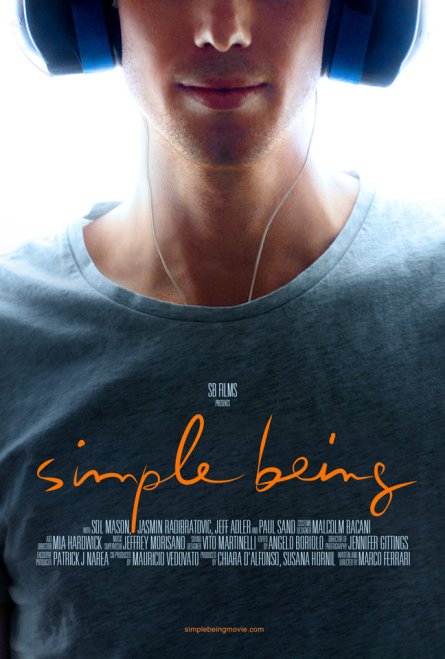
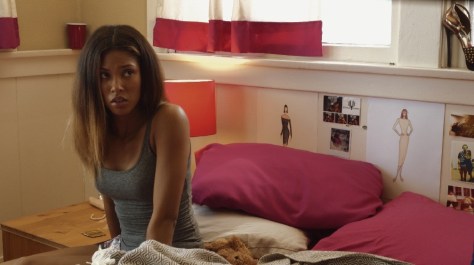
One of her most touching portrayals to date came in 2014 when she took on the lead role of Diana in the dramatic feature film Simple Being written and Directed Marco Ferrari (Moonscape, Don’t Let Me Go). In the film Romao stars alongside Sol Mason (This Tunnel South, Gilmore Girls: A Year In The Life), Jasmin Radibratovic (Broken Hill, Misfire), Jeff Adler (Reel Evil, Criminal Minds, Modern Family) and Tony Award winner Paul Sand (Time of Your Life, Joan of Arcadia).

simple being Tatiana Romao
“Simple Being” Film Poster

Revolving around Clive (Mason), a college student who’s spent most of his life feeling like an outcast, Simple Being offers audiences a powerful look into one young man’s experimental journey into experiencing what it means to really have an impediment.

“It has a beautiful lesson and it teaches the world how to respect and appreciate others,” Romao says about the film.

With few friends in his life aside from Diana (Romao), Xécile (Radibratovic) and Aaron (Adler) who live with him, Clive’s overwhelming feeling of disconnection to the world leads him to embark on a three week journey of sensory abstinence– devoting one week each to experience what it’s like to be deaf, blind and mute.  

As Clive’s closest friend in life, Romao gives a knockout performance as Diana, the one person who supports him on the journey to finding himself and his place in the world.

“Diana gives him the idea to do the experiment for 3 weeks… She is the one who is always by his side and guiding him through it all. He needed to learn about life and she wanted him to find his path, to find himself,” explains Romao. “He is judged and somewhat mocked by his family and classmates and Diana is the only one supporting and pushing him to go all the way and finally discover himself in this journey, she is always by his side with a word of incentive.”

Journeying through each impediment, Clive discovers more and more about himself as each week passes. Over the course of the film we watch him go from being uncomfortably disconnected from everything and everyone to pushing the boundaries of his normal ‘comfortable’ life, and ultimately coming to a point where he is able to experience a new reality filled with real connection.

Produced by Hornil Brothers Productions (Missed Call, The Face of an Angel, Trouble Child, 6 Rose Circle), Simple Being did exceptionally well on the film festival circuit taking home the Best Feature Film Award at Italy’s Artelesia Film Festival, the Castell Award from the Barcelona Film Festival, the Jury Special Mention Award at the Detour On The Road Film Festival, as well as the Excellence in Cinematography Award at the Amsterdam Film Festival and an award at the Human District International Film Festival of Human Rights. Simple Being was also chosen as an Official Selection of the ARS Independent Festival, Brasilia International Film Festival, HollyShorts Film Festival, No Glass Film Festival, Canberra International Film Festival and more.

“This is one of those scripts that you just fall in love with straight away. It wasn’t so much about my role or who I was playing, but more about the story that was being told. That is exactly the kind of project that I want to be a part of, that I want my name connected to and that is exactly what inspires me,” admits Romao.

Romao’s performance in the film is so authentic and touching that you’d imagine she actually lived Diana’s life off screen. To those who have seen her work in the film it will come as no surprise as to why the film garnered such praise, and why she has become such a sought after actress on an international level.

Actress Tatiana Romao
Actress Tatiana Romao (left) director Lidia Damatto & production designer Elisa Lopes (right) at the Hollywood Brazilian Film Festival

In 2017 audiences will be able to catch Romao in the upcoming zombie horror film Valentine DayZ, which also stars Carrie Keagan from the hit series Reno 911 and the films The Hangover and Dead 7, and Robert Allen Mukes from the series Westworld and Weeds. She is currently in talks with Valentine DayZ producer Kate Rees Davies (The Girl, The Night Visitor, The Vanished) and director Mark Allen Michaels (Mind Rage, The Fiance) to take on a critical role in one of their upcoming projects, so stay tuned for more information about that!

Davies says, “When I first met Tatiana, I was so impressed with her ability as an actress and her passion. She is a very versatile talent… I look forward to continuing a strong work relationship with her for many years to come. She is already under consideration for many exciting projects such as ‘Babes With Attitude’ to be filmed in 2018 and ‘The Conflagration’ for the year after.”

For Brazilian actress Tatiana Romao, acting is a means of telling stories and touching the lives of viewers around the world; and, while she’s garnered international fame for her work, it is only a side effect of doing what she loves.


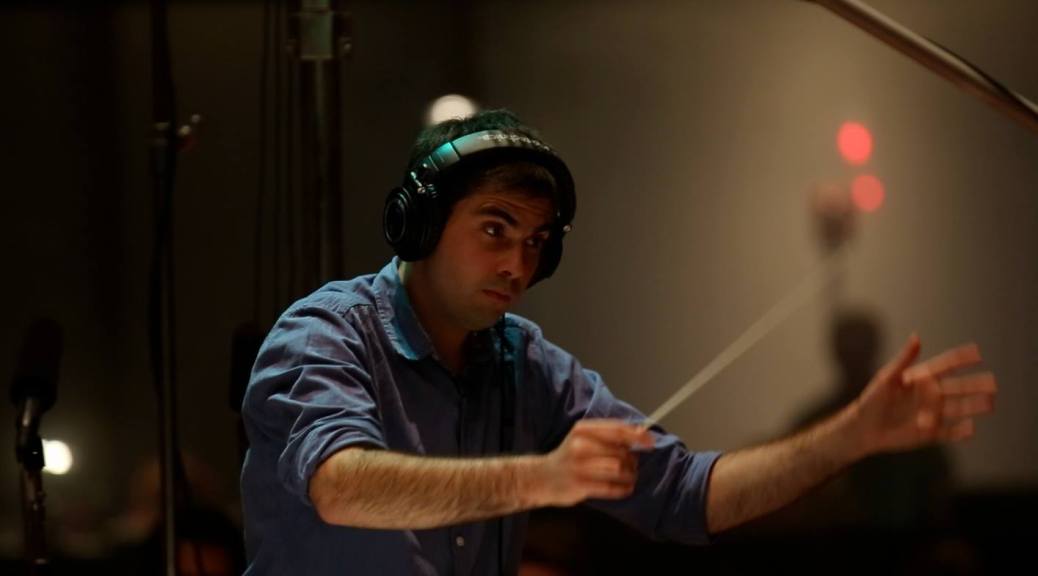
Composer Kevin Smithers nominated for best original score for film On the Roof

While Kevin Smithers was studying his undergraduate degree in music, he came to the realization that he enjoyed sitting down and writing down a good sounding solo over a jazz piece than improvising. This realization shaped his future and career; making the transition from a performer to a composer. Throughout the rest of his studying, this passion grew to become a career. Now, Smithers is a successful film and video game composer.

During his career, Smithers has worked on over 20 films and web series, as well as the new PlayStation VR video game World War Toons. However, it was with the award winning film On the Roof that he received his nomination for best original score at the Sitges International Fantastic Film Festival under the Noves Visions SGAE Nueva Autoría section, which he describes as a great honor.

“It’s the way that Kevin understands the music for films: he also puts the story and the characters before his own work. He is very conscious that he’s making music in order to tell a story, for expressing feelings, not only for himself or for people to listen to his music separately,” said Damià Serra Cauchetiez, the director of On the Roof. “Working with Kevin is amazing. He is very hardworking and was very motivated about the story. He always understood what I wanted in every scene, and also he proposed many of the good ideas that they finally ended up in the score.”

On the Roof (also known as En la Azotea) tells the story of Adrián and his friends, who climb to a roof every afternoon to spy a girl who sunbathes naked. However, one afternoon won’t be like the others, as the friends realize that one of them is more interested in a guy showering in a close building. 

“Working on On the Roof was a great experience. Damià and I bonded over some of our favorite scores when we met in Spain and was really excited when he asked me to score his film. He gave me a lot of creative freedom to do something that I thought was interesting and new. In fact, the temp music in the film was radically different to what we ended up doing,” said Smithers.

Smithers wanted to tell part of the story with the music, with a very warm Spanish sounding score for the film as the film takes place during the Spanish summer. However, they didn’t want to go all the way with Spanish flamenco, which is when Smithers came up with the idea of using only an acoustic guitar.

“It’s a very Spanish instrument. I spent time trying to get as many different sounds from the guitar as I could and recording them in various ways. Once I had all these sounds recorded and ready to play with, it’s as if I had a standard ensemble that’s normally used to score a film” he described. “But we altered the sounds to have that cinematic feel as well. Even though it’s a very personal and introspective story for the character, it feels big and daunting from his perspective. By modifying the guitar recordings and doing a lot of guitar passes, we managed to get an intimate Spanish sound that could also grow into a full wall of sound needed for some moments.”

On the Roof has premiered at many film festivals, including Cannes, Berlinale, Sitges, Seminici, Vancouver International Film Festival, Seattle International Film Festival, and more. It has won awards at several of those festivals, including a nomination for best director and Miguel Casanova Rodriguez won for best screenplay at the Sitges International Fantastic Film Festival.

“The most pleasurable thing to me when writing music for film or games is when you’re done with a scene and the music just sits perfectly over it and really adds something to the project that wasn’t there before. This way of telling a story through music is a very specific way of writing, which I deeply enjoy,” Smithers concluded.


THE REUNION SHOWS MANY DIFFERENT VIEWS, COURTESY OF JUSTIN IVAN HONG

Storytelling has taken many forms. The original orators had to be skilled in manipulating their voices and contorting their bodies in ways that helped those around the campfire to “see” all the characters and places being presented. Authors used their literary abilities to “paint” all manner of odyssey in the mind’s eye. Theater began to pull the great works into manifestation with the aid of thespians, lighting, music, and props. Modern films began as a visual marvel that eventually succeeded in allowing us to literally see things that had previously only been imagined. The miracle of modern cinema is that it allows us, as viewers, to experience scenarios we will likely never actually be in and sometimes…even view the same situation from different emotional perspectives. This idea perfectly explains the premise of The Reunion as well as the experience of watching the film. Director/writer/producer Carmen Elly Wilkerson’s 2015 production has received immense attention in the past year and Justin Ivan Hong is the cinematographer whom she worked with to design the look of the film. It’s a tall order for a film which mostly takes place in a single room with the four female characters discussing their personal view of the conflict in the film. At the Cannes Film Festival, Kodak named Wilkerson one of 16 Filmmakers to watch. The Reunion received great praise and numerous achievements including: the Charlotte Black Film Festival – Audience Award, HollyShorts Film Festival – Audience Award, nominations at both the Pan African Film Festival (Best Short) and the Burbank International Film Festival (Best Short & Best Actress). The Reunion was also an Official Selection at the following festivals: Miami Short Film Festival, Black Harvest Film Festival, Urbanworld Film Festival, Reel Sisters of Diaspora Film Festival, San Francisco Black Film Festival, Martha’s Vineyard African American Film Festival, and the Gary International Film Festival. For a film with such a simple scenario (or maybe not so simple) as four women in a room discussing a pivotal moment in their lives, the film definitely garnered a lot of attention. The film that Wilkerson created is provocative and has the audience guessing as to what actually happened, all the while being enabled to do so by the believability of the world she created with Hong.reunion1-copy

Justin was highly recommended by the American Film Institute’s head of cinematography, so Carmen had no trepidation when she contacted him about working with her on The Reunion. She quickly realized why Hong had received such glowing accolades. Wilkerson comments, “Justin and I immediately starting working to pre-produce the film even as he was on location in another city. He helped craft the look of the film and collaborated well. He was so thorough in his approach and extremely detail orientated. As a filmmaker, he understands performances and story, helping to elevate the script’s potential. Justin even stepped in and helped me edit a

few sequences that weren’t yet working. He’s one of those artists who adds to the mix and makes the director’s job easier. Justin is a very bright collaborator and cinematographer.” It would seem that the biggest challenge on this film production was the deceptively simple scenario; four girls holed up in their room, hiding from the outside world. From the beginning of pre-production, the discussion between the director and Hong centered around finding a way to sustain visual interest due to the fact that it was basically four characters talking inside a room for twenty minutes. Justin recalls, “We identified all the dramatic beats and worked out a plan of movement and blocking that flowed with the emotional flow of the film. In order to fully work within the tight confines of a bedroom, we planned out the different camera positions within the room in such a way that the blocking complimented the actresses’ movements and that in turn added a sense of fluidity and immediacy that fit the story very well.”

reunion2

One of the things which cinema can achieve quite proficiently is to sometimes “deceive” the viewer with different perspectives. Everyone has the ability to color their memory with an emotional slant. Numerous psychological studies and experiments have been conducted in order to prove the effect of emotion on memory. Filmmakers often make use of this tool as well. The same holds true for the way the action of film can translate a mood based on the cinematography. Justin concedes, “Another aspect of the film was the ulterior motives of each character and the relationships they have, as it relates to the collective secret that they are hiding. I used subtle framing choices to visually portray this volatile dynamic between these friends. This also worked in conjunction with the blocking. When the four characters were feeling united and close to each other, I used wider lenses and included all of them in the composition. When they start to fragment, we had them walk away to different parts of the room and I used slightly tighter lenses and framed them alone, adding to the feeling of distance from each other.”

The Reunion is a compelling film which explores the varied ways that individuals can perceive the same circumstance. Presenting the same situation, colored through the lens of the different characters, and culminating in unique perspectives is a superior achievement which the film’s creator, Carmen Elly Wilkerson, the cinematographer, Justin Ivan Hong, and indeed the entire cast and crew can be proud of, as proven by the critical and public acclaim the film has received.


LOOKING AT THE STARS WITH DIFFERENT EYES: XIAO’OU OLIVIA ZHANG

image1

Sometimes, in order to do your job to the best of your ability, you have to change the manner in which you perform your role. This is not done for the sake of ease or to be lazy, it’s quite the opposite. Taking the normal or more obvious path does not always lend itself properly to the presentation. It can be frustrating and taxing but in the end, it becomes quite gratifying. Xiao’ou Olivia Zhang understands this only too well from her experience working on the film Looking at the Stars. The ironic title of this movie about blind ballet dancers challenged Zhang to come up with many new approaches to grant an empathetic ear to relate the tactile experiences of the dancers. Ultimately, it was a requirement for Olivia to put on her Foley hat and go about discovering augmented sounds to give the audience a better idea of what it felt like (literally) to understand the experiences of these dancers. The work on this film was a far cry from her normal sound designing experience on a film, and yet…Zhang states that she was thrilled to be forced to come up with new sounds that would have the greater impact of what the characters in the film were experiencing. With celebrated films like Lost City of Tomorrow, The Hunt, Thunderstorm, Los Villanos, and others…it’s encouraging to see that a professional with so many achievements, like Olivia, is excited about finding a creative solution for the productions in which she is involved.

When Veronica Li (Supervising Sound Editor of Looking at the Stars) was looking for someone to work with her on the film, she approached Zhang because she wanted someone with strong Foley abilities and an extremely discerning ear. Li explains, “The sound design of Looking of the Stars depends a lot on the Foley. Olivia was one of the most important parts of the sound design team. Her work brings us as an audience a lot closer to the character. We feel what they feel through the detailed Foley sounds, and thus, we become more involved in the story. She had a very good understanding of the characters and the story, and the Foley she recorded brings the movie alive, which is the essential part of the sound design of this movie.” The excellence of both Zhang’s work and the entire production was proven by the achievement of Looking at the Stars being awarded a USA Student Academy Award, an Urbanworld Film Festival win (the Documentary Prize), and a nomination from the International Documentary Association. Zhang admits that receiving accolades is never an unwelcome gift when it applies to your work but she also feels that this production was especially meaningful as she shared a common trait with the subjects of the film. She notes, “The degree of us focusing on sound in life connected me in a significant way to the dancers. I would often close my eyes to hear the sound of the materials I had selected, attempting to get into the subject’s mind and test out if I could imagine what thing I’m holding in my hand from the sound it makes. Moments like this made the story somehow personal to me. Of course, I couldn’t understand the depth of the courage of the dancer’s but, this small attempt to relate to them with a common sensory focus and application, it raised my appreciation for the way in which they ‘see’ the world. It’s an amazing audible environment which they appreciate that I think many people might overlook. That was an unexpected gift I received from working on Looking at the Stars.”

Looking at the Stars is an intimate glimpse into the lives of the extraordinary ballerinas at the world’s only ballet school for the blind; the Fernanda Bianchini Ballet Association for the Blind. The story of these dancers goes beyond the challenge of learning to dance without a visual reference. Like many of us, these women want to be good professionals, partners, & friends. They want to be relevant and self-sufficient. They work fiercely to become the best versions of themselves. One of the dancers, Geyza, is the school’s prima ballerina. She is an example of grace, strength and determination. She began studying ballet with Fernanda Bianchini after losing her sight at the age of nine. In the film, Geyza arrives at a crossroads. Like many women, she feels pulled in two directions, between her family and her career. Preparing to get married, Geyza believes that in order to be a good wife she must dedicate herself to her family. She is also determined to not let married life end her aspirations as a ballet dancer and instructor. Whereas the obvious focus of the movie could have been overcoming a physical situation (blindness), Looking at the Stars chooses to instead focus on the heart and strength with which the dancers approach their entire lives.

While the film focuses on the dancers lives and interaction with the outside world, Zhang focuses on the sounds which helps the audience understand what is going on with them at a personal level. One scene in particular is a prime example of this work. Veronica Li recalls, “There was one scene in which the main character (who is blind) is touching her wedding dress. The movement of the character’s hand across the material and the sound Olivia recorded was so detailed and believable that it not only gives an enhanced sound but, it conveys the essence of that emotional moment.” 
Olivia continues, noting, “One of my most fond memories was re-creating the sound of ballet movement. I’m not a ballerina myself and my size is very different than the dancers. Half of the time the sound of ballet movement was made with my hands wearing the ballerina shoes to create swift jumps and slides over the dance floor. It was a fun day trying to be a ballerina who dances on my hands. Sometimes the great sound you are hearing in theatre was not made in the way you would imagine. That’s movie magic!” That makes Xiao’ou Olivia Zhang fall somewhere on the scale between scientist and magician; which sounds like possibly one of the most unusual and fun careers in the world.


Gabriella Spacciari shows versatility in both acting and modelling

gabriella
Gabriella Spacciari modelling for Quem Disse Berenice

Although Gabriella Spacciari started out knowing she wanted to be an actress, she always remained open to new opportunities. This how she came into modelling, and now millions of people have seen her face.

Spacciari was studying acting when she first started getting modeling jobs. Since that time, she has done a wide variety of television commercials and prints.

“Modelling is a private acting to the camera, who has the power to capture the beauty of the shapes, colors and shadows. It’s the idea of this ‘magic eye’ that is your audience of one,” said Spacciari. “I love to photograph and be photographed.”

One of Spacciari’s largest campaigns was for Pepsi, when she was in a commercial with the soccer player David Luiz. In the film, two girlfriends are ready to go out when it starts to rain. One of them almost gives up afraid of ruining her hair style. She tried to escape the rain, but it leaks on her hair. When she enters the party, the player David Luiz identifies with her.

The commercial was shot in London and directed by Pedro Pereira. The campaign was shown on TV Globo during the FIFA World Cup in 2014.

“We had a bunch of restrictions to be followed and Gabriella had the quality we were expecting for the acting to be natural, funny, with a naive seduction,” said Pereira. “Gabriella was very professional during the long hours shooting. Also, she photographs amazingly, which contributes to the success of the campaign. I’ve been seeing her on many campaigns here in Brazil and I think she´s getting her space, showing more on each project the great actress and model she is.”

One of the campaigns he is referring to is for GVT Communications. This included Veja Magazine, one of the biggest magazines in Brazil. During this time, she worked with Mabel Feres, who has worked for many brands such as Vogue and Marie Claire, and has done portraits of Andy Garcia, Anne Hathaway and Cindy Crawford, to name a few.

“Modelling is something that requires a lot of discipline and understanding, knowing what your style sells,” said Spacciari.

Spacciari has done many national campaigns in Brazil for SuperBonder, GoodEyer, Pósitron, Dupont, Óticas Carol. She has represented big brands such Dupont, Motorola and Trident. She also shot for Cultura Inglesa, which was for metro, outdoors, and schools all over Brazil, working with Patricia Mesquita and William Mello.

“It had a great range. People used to send me pictures with them and the outdoors,” she said.

She also did a make-up tutorial campaign for Quem Disse Berenice. It was at the stores nationally, and also online.

“Its huge, everybody sees it and comments on it,” said Spacciari. “It’s fun to go to a magazine stand and see yourself on it, or to be crossing the street with your actual boyfriend and seeing a bus stop with you smiling at another guy.” 

Spacciari is recognized internationally. She moved from a small city to São Paulo, and graduated in drama. She has done stage plays, and modelling jobs. She did a supporting role in the feature The Red Thread with the Mexican director Alfred Widman, as well as the leading role in the film Before Sunset I Think of You with the Chinese director Yuk Law. She was in the webseries BlackSpiderMan that went to San Francisco Comic-Con, the LA Comic Con, the Kamikaze Comic Con just last month.

“I think I discovered the capacity of overcoming barriers by working in different places and communicating with different cultures,” she concluded. “I’ve been discovering my art and been in projects that have been recognized around the world.”


SEBASTIAN SACCO’S PERFORMANCE IN “NO PLACE” IS EERILY SIMILAR TO PRESENT DAY SCENARIOS

Imagination can be wonderful but it can also make things harder for us in the real world. That statement might contradict what most of us think about imagination. Escapism can be a beneficial tool, right? Most of the time it is, but consider the predicament of Writer/Director Joe Beverly, a celebrated filmmaker who had written a deep and intense character driven piece called No Place (the film would go on to be screened at the Forum Film Festival and win ‘Best Short’ and ‘Best Screenplay’). The central character, William Aims, would need to communicate his inner turmoil without words as often as with. Aims is such a strong force in the story that casting anyone less charismatic or “alpha male” as the character would cause the story to “lose its teeth.” Luckily for Beverly, young British actor Sebastian Sacco was seeking an intensely dramatic role. Joe Beverly declares, “I needed to cast an exceptionally strong actor to successfully execute what I had written in the script. I was extremely lucky to find Sebastian and, when he auditioned, I knew almost instantly that he was the absolute perfect choice to essay the role of William. He has an uncanny ability to communicate without speaking or even moving much, a gift which only the very best actors possess, and which he put on full display in No Place. His performance went beyond what I had even hoped for and truly made the film a special tour de force about the cult of money and how it can topple lives. There is no way the film would have been possible without Sebastian’s stunning performance and everyone who has seen it has been floored by his portrayal of William.” The film’s star states that the reason for his being cast is likely due to a combination of acting and inherent character traits as he sates, “I’m an extremely moral person and will speak up if I think something is wrong. I think it was this trait which Joe saw in me. In my opinion, a strong actor is someone who isn’t scared to go there, to look ridiculous, to fail in front of people and to keep trying. That’s a strong actor. I think what Joe meant was that I was capable of holding the audience’s attention. I take it as quite a compliment that Joe saw that in me.”

no-place4

No Place is unsettling in how contemporary and possible it seems. The plot depicts a scenario in which England has seen a political, economic, and social change. The government has fallen, the banks have crashed, and the old system has fallen into the hands of three remaining corporations. These three corporations are now ruled by the Bank of Britain, posing as three separate organizations that still give the public an opportunity to vote. Young economist Will Aim’s (Sebastian Sacco) works his way to the top of the system, eventually working alongside Tony Darwin (Paul Dewdney) who is the final over seer of Britain’s future. Will’s moral compass and girlfriend, Skylar (Danielle Norman) rejects the new system, seeing the bigger picture, she tries to open Will’s eyes. He slowly begins to uncover the truth that Skylar saw all along and, with Skylar by his side, Will has a life changing decision to make; one which is harder than he ever expected. As inspiration for Aims, Sebastian reverted back to an earlier time and emotional state of mind which he had experienced. He remarks, “I went back to my private school days. Trying to impress people in that world. It’s all about how you talk, dress, posture eat; everything is judged and weighed up. If you can do it all the ‘right way’ then you’re part of the club. That sense of constant self-awareness and trying to look and act a certain way but never above your station was important to me. Will was very straight edged. He rose to his position so quickly because he was smart, not because he was imposing or a risk taker. In my own private school days, I thought some people were rich because they were smatter and harder working than others. I believed in these ridicules lies. The truth is most people are stuck and trapped by their circumstances. I’ve been as ignorant and blind as Will was and I’ve come out the other side. So I understood his journey.

The film was well received by critics, the film community, and the public; no doubt due to the intense performances which Sacco and his supporting cast delivered as well as the timely subject matter. Sebastian reveals that he is somewhat conflicted about these recognitions as he remarks, “It was amazing to hear it won awards. Joe called me straight away to let me know. I’m always very hard on my performance and wasn’t happy with it, so to hear that it had won two awards…I couldn’t have been too bad. I think awards are pointless in many ways. Arts are about expression. Not all expression is nice. A lot of awards are like a popularity contest. I think as long as you don’t make films with awards in mind, staying true to the original idea and express it in the strongest way possible to that truth…then if someone wants to give you an award for that, I feel that is good. The best reward is just making the film. When that happens, my entire life just stops. It is fulfilling and draining simultaneously. When you finish, you have this piece of art that you have all worked together to create. You have this thing that existed in your collective minds and you made it materialize, then you send it out for others to experience. Now that is an award!”


no-place5

HUGO SHIH BRINGS THE SECRET INGREDIENT TO “PRESSURE-MAN”

From the first frame and song of Pressure-Man (writer/director Kai Kuei-Chieh Hsu’s musical comedy) you instantly recognize the color of John Potter’s suit and tie as prominently as his singing. This is by design. The theatrical, somewhat fanciful approach is designed to place the viewer into accepting the “sleepwalking” lifestyle that the main character John is immersed in. The colors are over the top on purpose. The color makes a subliminal impact, it’s the reason that the filmmakers approached colorist Hugo Shih to use his expertise on Pressure-Man. Even the scene over the closing credits shows the wild color schemes Shih can use to great effect. The heart of the film is intact regardless of the color, but it is the talent which Hugo brings that truly gives this film the character to make it stand out as unique. Among its many recognitions were: 2016 American Movie Award (Best Production / Art Direction (Winner), 2016 Praxis Film Festival (Audience Awards), & Official Selection of the 2015 Los Angeles International Film Festival Awards (Winner – Best Comedy/Dramedy). In hopes of understanding why Kai Hsu and this production were so intent on having Shih work on Pressure-Man as the colorist, we spoke with him in order to understand his role and the essential parts of his vocation. Because the film is so stylized in terms of its use of color, it is a perfect example of what a colorist is capable of doing in modern cinema.

In current American society, Pressure-Man is the norm. This film is about an accountant who is so tied to his job that he doesn’t take the time to participate in actual life with his family. The idea of living to work rather than working to live is ingrained into the life of many in the US. Pressure-Man is as subtle as a sledgehammer, which is exactly what is needed to wake the main character John (and many of us) from this enslavement. In pursuing the dream, we forget to live the dream, which is exactly what Hsu is saying in this film…about everyone, not simply those in the film. To create such an altered state, Hsu worked closely with Hugo in creating the approach he wanted for a color scheme.

From the opening scene, Shih’s handy work is evident. As Pressure-Man introduces himself and the film in song, his brightly colored suit and bow tie grab the viewer’s attention as a spotlight illuminates him. The director wanted everything but the Pressure-Man hidden so Hugo added a lot of mask, covering everything else and tracked the actor, so that the mask would follow with him. It’s a technique which the viewer doesn’t notice but focuses the attention right where the filmmaker desires it to be. Even the transition from the opening song into the action of the film required Hugo’s expertise. Shih explains, “There was one shot we worked on very long time, which is the shot when Pressure-man stops dancing and starts to introduce us to the main character and the idea of the story. The Director wanted the lighting to look like he was using dimmer. It was difficult because it wasn’t shot this way. I needed to add the dimmer effect myself. In order to achieve this, I brought down everything at the background but the Pressure-man. Secondly, I key framed the background to gradually light it up, but without effect on the Pressure-man. Sometimes the director wanted it as dark as possible, but without losing any of the detail. Thus, the director and I were looking for a balanced light that we could both be happy about. I like working with directors that have specific ideas and requirements. Even though their requests might be difficult, we can build a style of communication. I know how to achieve many things as a colorist but if I learn how to communicate better and more easily with the directors and cinematographers I work with, I will work more and we will all enjoy the process.” Describing another shot in the film, Shih states, “There is a shot in which the Pressure-man is in the bathtub with father. When I graded this scene, the director asked me to make it look like the actors were in their own little world. I made the spotlight stronger, and used two shapes to mask out the sides to be dark. Then I added overall blur to simulate the steam because I want to make more feeling of taking shower. There was also a scene in which the father has a nightmare. He dreams that every member of his family has become a ‘Pressure- Man’. This was composed of multiple green screen shots. Because we have a rushing to meet our deadline, I decided to do compositing in a color grading software. Before I was able to do that, I had to do a perfect color balancing so that I could get a clean key and make a proper composition. It isn’t exciting to hear about but the finished product really made the director excited.”

pressure-man_before-l

pressure-man_after-l

A common misconception about the colorist job on a film is that they only deal with grades and tones of color. Because of the work they do and its effect on the action taking place in the frame, they often control how the lighting feels on film as well as the color. Because the colorist almost always performs their work after the filming has taken place, it is important that they work closely with the director and have a strong sense of why the lighting was established on set during filming. Just as with the actors, the environment in which the colorist performs his/her work is crucial to achieving the proper effect. The working environment of a colorist is very different from other positions on a production. During a color session, the room must be totally dark. There only light which can be turned on is a 6500 daylight lamp because it will adjust to the colorist’s eyes once they go out of the room and come back in. Also, the room must be 18% Gray (which is a neutral color and won’t reflect any colors to influence the eyes of the colorist towards the image). A colorists’ room also requires specialized equipment to aid in the color grade process, making things efficient and accurate. Hugo Shih’s work in Pressure-Man highlights the impact of the role of a colorist in modern film. While many audiences may not understand the substantial amount of time required and the valuable expertise that Hugo possesses; the look of the film stands as proof that his contributions create a unique and artistic experience.