Category Archives: Chinese Filmmaker

Producer Xueru Tang connects with her heritage on upcoming film ‘Hot Pot Man’

headshot 1
Producer Xueru Tang

Xueru Tang has two mottos by which she lives her life. The first is “work hard”. Her friends call her a workaholic, but to her, she is focused. She loves what she does and she strives to be the best, and she makes no excuses for that. Her second mantra is “believe in yourself”. The world “believe” is important to her. Every project she takes on, she truly believes it will succeed, and this belief keeps her pushing through any tough times, or any problems that may arise, causing her to face her fears. These two qualities, hard work and faith, combined with an innate talent, are what have allowed Tang to become the film producer she is today, and she is recognized around the world for what she does.

Having worked on award-winning films like Locked, Inside Linda Vista Hospital, and Emily, as well as last year’s popular commercial for Chinstudio’s Fall Collection, Xueru Tang has had a career filled with success. However, with her upcoming film Hot Pot Man, she got to feel a sense of accomplishment that she has yet to feel in her esteemed career, telling a story of her hometown.

“I was born and raised in Chengdu, China. The hot pot was created in Chengdu, and it’s my home food. It really important to me. All the story in the film happens in Chengdu, and it is shot in Chengdu. This really excited me when I heard about the project. I want to show the world how beautiful my city is,” said Tang.

The film, which will premiere in October in Chengdu, has received a lot of media attention. Newspaper Xin Cheng Kuai Bao and Jin Ri Toutiao reported about Tang, calling her a New Power filmmaker from the generation after the 90’s. They interviewed her about her experience in U.S. film industry, how she combined the differences between China and U.S. in film production and operated the whole project from funding to future distribution.During these interviews, Tang also shared her opinions about helping Chinese independent filmmakers spread their strength in U.S. market and form its own way to distribution and achieve a greater personal, marketing and social value.

“Five years ago in China, not every filmmaker studied film, and we don’t really think about the professional and how it is important. For today, we still don’t request professional producers who study producing or filmmaking as their college or university major. Everyone just works, never studies, and they just use their way or someone’s way to do thing. For me the kind of the producer who studied and worked in Hollywood, and knows about Hollywood style, is really difficult to find in China. I think this is similar to what it is like in Hollywood, they don’t know a lot about the Chinese market there. When they call me a New Power Filmmaker, I think it is because I understand both markets. In that way, I am a unique producer,” Tang described.

This understanding of both the Chinese and American film markets is vital for Hot Pot Man. Tang brought the Hollywood style of thinking to her hometown. She did the funding and location scouting for the film, and dealt with the stars, like the famous rapper Di Xie and the Chinese comedian Jian Liao, and their agents. She checked all the contracts with crews and locations, and made sure there was insurance and the required permits. She made sure labor was fair and didn’t allow for too long of work days. For distribution, she got the film into Chinese cinemas, negotiating in what she calls the “Hollywood” way.

“Xueru is our excellent producer. She delivered a business plan and pitch book in english and Chinese in one day. This work efficiency we have never experienced from one person in China. And Xueru was a very responsible producer. I remember, another producer couldn’t find the location and couldn’t make a deal with talent, so we called Xueru. She didn’t blame them, she just bought a plane ticket and came to China to solve all the problem. I really like working with her. She has respect for the views of others, and she brings a lot Hollywood working style to us, making our shoot very smooth and all the crew members very happy,” said Dage Zhang, Director of Hot Pot Man. “Xueru loves her job, she crazy loves what she does. She told me she believes the movie will change the world. She wants to produce good movies that will affect the world. And most importantly, I never once heard her say she could not do something, she always tried first, and I think that is remarkable not just as a producer, but as a person.”

Tang found the story of Hot Pot Man very interesting, and when she got the call asking for her help, she didn’t care that she was on the other side of the world, she wanted to come and do what she could.

“No one thought of this as a job or work, everyone thought of it as a film. It was really great team work. But working for this project, it’s my passion. I have special feelings for my city, my city helped build my personality,” she concluded.

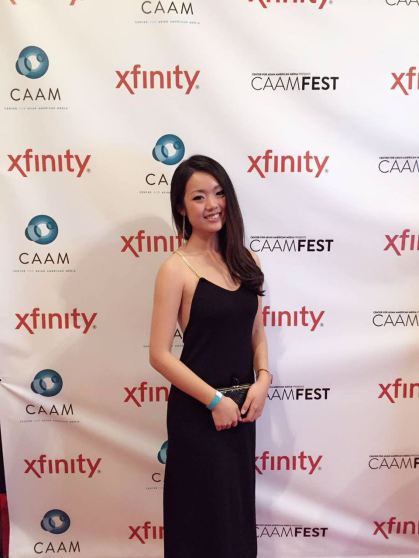
Producer Albee Zhang talks her award-winning film ‘Caged’

Other - CAAM Film Festival
Albee Zhang

From the time Albee Zhang was a child, growing up in Shanghai, China, she knew she wanted to make movies. The entertainment industry always fascinated her, and her creative senses were always strong. As she grew, this dream turned into both a passion and a reality. Now, Zhang is an internationally sought-after producer, living her childhood dream.

Throughout her career, Zhang has achieved what many still dream of. She has worked on hit television shows around the world, such as the British game show The Cube and the Chinese home renovation show Mei Hao Jia. She has made many successful commercials such as the series for Alpine Dairy. She has made films, such as Bride: Shanghai, I Love You, that have gone on to premiere at international film festivals. However, despite all of this, the highlight of her career was just last year when she made the film Caged.

“For a very long time, I was surrounded by fantasy, drama and science-fiction stories. When I was approached about this project, my eyes were brightened up. I had never done any sort of masculine project like this. Brotherhood versus self-ego, money versus fame, blood and underground fighting, all these elements had so many possibilities to be an outstanding project. I knew I had to challenge myself and see how much I could pull out of a project like this,” said Zhang.

Caged is a short film that follows James, a young man who fights in underground cage matches to make ends meet. In the film, James gets the life-changing opportunity to fight professionally, but when his brother Marco crosses a desperate drug dealer, James is forced to choose between his obligations to his brother and his dream of a better life.

“It is a very strong and straight forward theme for a narrative film. By looking at the character struggling through his life, at some point it kind of reminds me of the filmmaking life. Until the day we shine, we are always struggling. The character inspired us, we made the character. It’s a story about MMA fighter, but truly it’s a story to everyone who is fighting for their dreams,” said Zhang.

The film premiered at the New York City Independent Film Festival in May, and went on to have tremendous success. At the 2016 Media Awards it was recognized for Achievement in Film Direction, Achievement in Production Design, and won Best Male Actor. It was an Official Selection at some of the world’s most prestigious festivals, including the Festival Corner of Festival de Cannes, the Auckland International Film Festival, and the London Lift-Off Film Festival Online.

“It means the world to me and my crew that the film has done so well. It proved that everything we risked was worth it. Most cast and crew worked on this film because of friendship. Some of them even volunteered to work on this film. We all had the faith that this project would carry our enthusiasm to somewhere. It didn’t let us down. The honor belongs to the whole Caged family,” Zhang said.

As producer, Zhang managed the cost of the film to fit in an extremely tight budget and schedule. She also acted as production manager for the project, and ensured the crew was always safe and well taken care of on the set. Half of the sets were built in an abandoned basement of an ancient apartment to create an underground style, beat-up looking environment. It was a very bad condition location for filming as it was moist, very dusty, bad air-circulation and completely in the dark, pretty much like a dungeon, but it was perfect for the feel and look of the film. yet it’s exactly we wanted for the film set. Zhang made sure everyone was safe and happy, taking on yet another role.

“I was worried it would be too depressing to work in this kind of environment for four days in a row. We started working when the sky was dark in the morning, we walked out of the location and it was still dark but it was at night. Not seeing daylight for four days could be very intense and uncomfortable. I received zero complaints,” said Zhang.

Zhang made sure any dangerous spots were labeled and blocked, masks were provided, hanging wires were well placed and taped. She oversaw the crew and the fierce fighting shots were shot in the safest but most realistic way. She also arranged a crowd funded online campaign for the film, and received 20 per cent more than what she was aiming for. There is no doubt that she was pivotal to the film.

“Albee was indispensable to the making of our film and bringing it in not only on budget but under budget. She is an energetic, diligent and down-to-earth person who always speak for her crew. People work for her again and again. I also look forward to working with her again,” said the Director, Nick Powers-Gomez. “She has the drive to roll up her sleeves and do whatever needs to be done and fill up whatever position that needs her.”

All those that work with Zhang are continuously impressed by what she brings to the table, not just as a talented and committed producer, but also as a kind and thoughtful person. She not only understands what it takes to make a film a success, but she aims to do more than win awards. She is a storyteller, and constantly seeks to challenge herself. Her passion for what she does is always evident.

“Making film is utilizing a visualized universal language tool to bring out our mutual emotions. I put a lot of attention and work building up character relationships and finding the universal themes, such as love, family, fear, and friendship,” Zhang concluded.

Editor Minghao Shen helps terrify audiences in award-winning horror flick ‘Emily’

Growing up in Beijing China, Minghao Shen always loved film. Unlike many who enjoy watching a movie, he would think about how it was being made. The details behind how each scene was put together were what captivated him; he wanted to be a filmmaker. Eventually, the nuances and strategy behind editing caught his attention, and he knew that was where his future was. Now, he is an internationally celebrated editor.

Shen has worked on countless critically-acclaimed projects, earning him a reputation as one of China’s best recent film editors. His work on films such as Inside Linda Vista Hospital, Stay, Cartoon Book, and Red String has allowed worldwide audiences to see what he is capable of, showing without a doubt why he is so respected in the industry. His work on the horror film Emily perfectly encapsulates what the editor is capable of.

“It is a simple but tense horror film. The movements of shots and the whole visual style are really outstanding. I knew that there would be challenges, but that it would be a great chance for editing,” said Shen.

The film tells the scary story of a woman named Emily. Emily dies giving birth at home after her husband, John, abandons her. However, she will have her revenge from beyond the grave when she returns as a ghost set on killing her widowed husband.

“My favorite part of the whole production was talking about the story, because we found out that there were multiple options would work for it. Although each of the options would have been great, but couldn’t mix them all together, otherwise the tone would be chaos. As an editor, having to narrow this down and figure out how to properly tell the story and convey the right tone was great,” said Shen.

Shen’s instincts proved to be spot on, as Emily went on to do very well at several prestigious film festivals. It was an Official Selection at the Los Angeles CineFest, the SoCal Creative and Innovative Film Festival, the Pittsburgh Independent Film Festival, the Action on Film International Film Festival, the California Independent Film Festival, and the Columbia Gorge International Film Festival. It won Best Overall Micro Film at the Indie Gathering International Short Film Festival and at the Accolade Global Film Competition it won the Award of Excellence.

“I had many complex feelings when I discovered the film was getting a lot of awards. It was a blend of excitement and satisfaction after the hard work everyone had done. We know that we took a bunch of time and work on the film, so I was so glad that our hard work got such encouragement from the festivals,” said Shen.

None of this could have been possible without Shen’s editing talents. He spent his time taking notes every time he met with the director, ensuring he still achieved the vision of the film while bringing his own touch to it.  After the first rough cut, there were a lot of points that needed to be ironed out and redone, but based on notes he did originally, it greatly assisted to the time it took.

“Horror film is always about beats, so the director worked really hard with me to specify each second to make the film the best,” said Shen. “I talked with the director about our thoughts and he trusted me for the style based on my previous experience. There were always some different editing choices between me and the director. He is a talented and continuously brainstorming how to make the film better, so I always let him know more than one choice to let our minds be more open, so that we could avoid some useless change and waste of work time. We actually had some different thoughts in some parts. After a lot of meetings, we finally compromised our differences and both of us thinks this made the finished product better than what just our own ideas would have.”

The director, Jun Xia, agrees, and knows that without Shen his film could not have achieved what it did. The two have worked together on multiple projects since Emily, and Xia knows that Shen’s talents are essential to making a good film.

Minghao and I had worked together for a few times before, and he is always a good listener. He can take feedback and produce more ideas all the time. Minghao is an experienced editor. We talked a lot about a lot of different ways to make Emily better, and it did. He can always come up with unique thoughts when it comes to editing,” said Xia.

Everyone that works with Shen is continuously impressed by his editing skills. Without his work on Emily, audiences may not have been on the edge of their seats, terrified about what would happen next.

You can watch Shen’s impressive editing work on the short film Emily here.

Production Designer Shuhe Wang talks award-winning film ‘Red String’

Born and raised in Taiyuan City, China, Shuhe Wang was destined to be a production designer. Design was always her passion, and she never questioned what it was she wanted to spend her life doing. She understands every aspect as to what it takes to be an exceptional production designer, and that is why she is so highly-respected around the world for what she does.

Despite any challenges that arise, Wang loves what she does, and always shows audiences what she is capable of. Her work on the films Stay, Dancing for You, Cartoon Book, and Inside Linda Vista Hospital helped earn the respect of international audiences and win awards at several film festivals. However, despite this success, she considers working on the film Red String the highlight of her esteemed career.

“With each screening, people are really interested about the story and what is the background of creating the story. As a film, it is always the most important target that let people think about the meaning and something related in society after watching it,” said Wang.

The film tells the tale of an illegal Chinese immigrant who wants to keep his last line of his privacy in a terrible restaurant where he works. However, when he finally goes against his dignity, he finds that he even makes his life worse.

“This is a film about low-level class Chinese immigrant’s life. To make the film reliable and vivid, it relies on the production designer to create the atmosphere about Chinese culture and low-level people’s life. I did a lot of research about what exactly their life had going on, and created some characteristic elements in the film,” said Wang.

Making its way to several international film festivals, Red String impressed critics. It was an Official Selection at the Los Angeles International Shorts Festival, the Festival de Cortometrajes “Jose Francisco Rosado” Pacas, My Love Michelle Short Film Festival, and the Lift-Off Film Festival. It screened at the Festival de Cannes Short Film Corner, was a finalist at the Miami Film Festival, was nominated at the Golden Knight Malta International Film Festival, and was the winner of the Asians on Film Festival.

“I feel excited that the film got a lot of attention by telling a small and rough part of our traditional culture, and glad that the true and hard life of normal people is still being considered and cared a lot by universal audiences. This is a story about my national country’s culture, and it happens in some low-level class people. That is kind interesting to do because I can show audience a different angle of Chinese culture that not very noticeable in real life. And the story is absolutely tense and strong,” said Wang. “The director was very creative and open-minded. It was really great to work with him. He fully trusted me in my department’s process. It makes the work smooth and well- communicated. We were sharing all the thoughts and brainstorming without any concern. We were on the same page for each step.”

The director, Minghao Shen, knows Wang’s commitment to the film and her talent as a production designer largely contributed to the success Red String saw. The two had talked about the script and had found out that they both had a lot of deep thought and ambition regarding the story. Shen trusted that Wang totally understood the story and would create the sets perfectly.

“Shuhe is a designer that does not just care about how to make set pretty, but also about telling a story by the designing, due to her directing skills, so that actually helped the film be better. When Shuhe was working, she was always focused on the details and she was always careful about each single image,” said Shen.

While keeping true to the message of the film, Wang wanted to show some of the key elements to the world without over dressing them. The overall tone is a small bakery and restaurant in old Chinatown of an American city. Wang would go to Chinatown in Los Angeles to simply observe, and to capture the feeling of life there. She would see how they liked to dress and what they liked to eat, what they believed, what way they connected with the outside of Chinatown, what the difference was between the new and old immigrants, and more to truly understand what she needed to create.

“Once I locked each character’s personality, I chose the key elements of each of them and made it into the entire set,” said Wang. “However, the most impressive part of filming Red String was that everyone was so engaged in the story and helped to make it better. The lead actor even gave us some impromptu action with the props as the character and it worked very well. Sometimes we shared the thoughts based on our position to make the film more complete.”

The film was a collective effort by everyone involved, and Wang’s work helped to turn it into a masterpiece.

ZHEN LI PRODUCES BRILLIANCE WITH WIT IN “GENGHIS KHAN CONQUERS THE MOON”

Genghis Khan photo for press articles 1

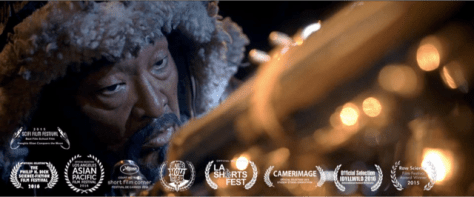
Genghis Kahn Conquers the Moon. The title of this film sounds…well, eccentric. Even its producer Zhen Li admits to being uncomfortable at first with the title and premise. He comments, “At the beginning, I though the idea was a bit bizarre, then I decided it was wacky instead of bizarre. It’s very bold to do a project about a well-known historic figure doing something against the historical fact. However, after reading the script and understanding what the metaphor implies, I abruptly changed this opinion. The story is special and unique with wit, humor, and intellectual sarcasm.” You don’t have to take the word of Li though; the achievements and recognitions of this film speak volumes. Genghis Kahn Conquers the Moon was an official selection at the Cannes Film Festival (France) 2016 (Short Film Corner), Sci-Fi Film Festival (Australia) 2015, Camerimage International Film Festival (Poland) 2016, The London International Festival of Science Fiction and Fantastic Films 2016, Los Angeles Independent Film Festival Awards 2015, Taipei Film Festival (台北電影節) 2017 Nominated for Best Short Film, Los Angeles Independent Film Festival Awards 2015 [Best Actor], and a 20th Century Fox Visual Effects Fellowship 2015 Recipient, and countless others too numerous to list. This diverse list of accolades attests to both the exceptional story and production as well as its universal appeal to different cultures spanning the globe. Celebrated actors James Hong and Cary-Hiroyuki Tagawa perform as the two main characters (Kahn and the wizard) in this film and bring the weight of their impressive Hollywood resumes to this production. Zhen Li’s confident and experienced presence is felt in every aspect of this film from the performers onscreen to its presence on the film festival circuit.

  There is no denying that VFX has created a situation in modern cinema that takes any idea a filmmaker might have and manifests astonishingly believable imagery. This eliminates the need for the viewer to suspend their belief as a courtesy to the storyline; the actions are clearly visible and believable for all to see. One bit of reality that VFX has not suspended is the truth that budgets still exist in filmmaking and it is the role of the producer to figure out what fits into the financial constraints and what does not. Because the premise for Genghis Kahn Conquers the Moon was finalized pre-budget, Zhen Li was faced with a great idea and cast but in need of ways to pay for this. Utilizing crowd funding, studio sponsorship, and other sources, Li created a plan and budget that would allow the film to possess the desired production value. The impressive look of this film allows one to easily understand that the VFX budget was both sizable and well worth it.

Revealing the evolution of his approach, Zhen states, “Our original plan was to shoot scenes in Death Valley with the spectacular landscape of an apocalypse. After some research, we found it will be over 130 degrees Fahrenheit and thus impossible for us to shoot there.  We luckily found Lucern Dry Lake which has a similar look to our vision. It was still extremely hot in summer, as there was no cloud and trees, only with direct sunlight. We rented 4 RVs and had huge fans blowing cool air off of giant ice cubes to cool down the crew.”

While this took care of the Earth scenes, the moon was the actual VFX challenge. Rather than constructing a large scale lunar surface, Li had a miniature of the moon’s topography built with a gradually-changing scale ratio. Scenes were shot on a green stage with the moon’s surface as a plate. These were then composited together in post-production. VFX supervisor Gene Warren III (whose credits include: Hellboy, The Expendables, Resident Evil: Apocalypse, Underworld, The Simpsons) professes, “Genghis Kahn Conquers the Moon is an ambitious project of impressive imagination and great execution. As a producer, Zhen Li did an incredibly amazing job, which allowed us to be able to make Khan land on the Moon.” When a film has a premise that is asking a lot of the audience, the images are often the tipping point for them to invest completely in the story.


It should go without stating that what is paramount to every production is the incredible performances of the actors. For Genghis Kahn Conquers the Moon, Li procured a cast of minuscule size but immense impact. Most notably of these were Cary-Hiroyuki Tagawa (as Kahn) and James Hong (as the wizard). The credits of these two actors spans many of the most beloved films and TV productions of the past thirty to forty years. The gravitas and levity that they brought to this film is evident from the moment they first appear on the screen. Zhen discovered that this is well founded. He notes, “They are both so established and recognizable from their many Hollywood large-scale studio productions; even so, they like to work with younger filmmakers who tell unique stories and experiment with different styles of performance. Working with these experienced actors, their devotion and enthusiasm touched me. Cary-Hiroyuki Tagawa had to wear the Genghis Khan costume including the helm, armors, and leather boots. The costume was more than 20 pounds and he was wearing it in the insanely hot weather. He was sweating like a fountain but he never once complained. He kept working until the sweat ruined his makeup and then we would have to re-do it. The improvisation between these two lead actors brought a great deal to the film.”

  Genghis Kahn Conquers the Moon was an official selection at the Cannes Film Festival; a festival so notable and respected that even those with no knowledge of the film community understand what an achievement and honor it is to have your film selected to appear there. Cannes is more than just recognition; it opens a window of opportunities to both show films and see films from the most talented filmmakers all over the world. It is a community of the upper echelon and provides inspiration and a springboard to future projects. While in attendance at Cannes to support Genghis Kahn Conquers the Moon, Li’s film attracted crowds and garnered him invitations to some of his favorite directors’ screenings, such as:  Woody Allen’s Café Society, Pedro Almodovar’s JULIETA, Asghar Farhadi’s The Salesman, Park Chan-wook’s The Handmaiden, Paul Verhoeven’s ELLE, Maren Ade’s Toni Erdmann, ken Loach’s I, Daniel Blake, and many other internationally lauded productions.

Perhaps the highest indicator of the quality of your work comes not from the critics or the box office but rather, those whom you work with in the industry. James Hong (Daytime Emmy Award-Winner and Genghis Kahn in this film) states, “It’s great to work with this young talented producer. Zhen Li will soon be known as the driving force in the film industry.”


Ariel Zhang talks living her dream, the importance of acting, and dancing in CD-9’s “Get Dumb”

head shot taken by Gerard Alba
Actress Ariel Zhang

From the time Ariel Zhang was a child, she always wanted to be a performer. Singing and acting were always her passions, and growing up in Beijing, China, she began to explore these passions, by studying vocal music, dance, and stage drama. At that time, she enjoyed being at center of the stage, being in the spotlight and being admired. As she grew, she began to appreciate the nuances to acting more and more. She wanted a colorful life, where she could constantly have different experiences and see through many different perspectives. She came to truly appreciate Sir Alex Guiness’ words “Acting is happy agony.” This realization solidified her future, and acting became her true love. Now, she is an award-winning actress, with international audiences appreciative of her talent.

I bring life to screen. Being an actress, I can pass all my energy to the audience with my performance. The successful performance of an actress gives vivid and direct descriptions of the hero to affect the inner heart of all the audiences. It also means that I could have the chance to experience the eternity of time and space as well as the immortality of life, as I could have the chance to act in roles from the far past to the never-ending future,” said Zhang.

And Zhang has done just that. She has portrayed characters from the ancient times, like in the film Mo Zi when she had the leading role of Song. She has represented large companies, such as Citic Bank, when they launched a campaign and commercial to help Chinese immigrants coming to the United States. She has used both her singing and acting capabilities while teaching young children English and Chinese with the interactive computer game PreSchool Play with Skoolbo. And she has captivated audiences around the world with her award-winning performance as a schizophrenic in the film Consumemate. There is no limit to what this versatile actress can achieve.

“I think that being an actress is a great almost holy job, where you can redeem people’s souls, just like doctors do to save people’s physical lives. I think that a theater is like a church, where people will get their souls purified. Watching the work of the actors, the audience will be able to look into their own minds, from which they will view the world and the society with some kind of criticism. Staying in a theater for two or three hours, the audience can be there observing themselves from the depths of their heart with quietness. This is the charm of the stage drama, which communicates with the audience by the performance of the actors. That is why I hope to have such power to influence the audience by my acting,” said Zhang.

While Zhang tells important stories, she always enjoys what she does. She always has fun, no matter what role she is playing. And sometimes, she plays roles just to have fun, going back to that thought she had as a child, that when you act, each day is different. That is exactly what happened when she was a dancing girl in Mexican pop band CD-9’s collaboration music video with South Korean girl group Crayon Pop, titled Get Dumb.

“It was fun to be one of the dancing girls. This music video doesn’t really have a proper story line to follow, so your character feels freer to do whatever feels right. In a commercial or a film, you can experiment with the character, but you know where the story is taking you, so this was different and fun,” said Zhang.

As a dancing girl in the video, Zhang got to dance in a pool that was in a fancy car, just laughing and having fun. The video gave her the opportunity to keep expanding her horizons, and work with foreign singers, something the actress had never done before.

“I felt out of my comfort zone, since I was dancing a different kind of music of that I usually listen to. But I felt comfortable enough to be myself and have fun with it. Also, as a dancer, the floor is my world, but having the unique opportunity of doing it in water, it was a nice experience,” she described.

Fellow actress Sabrina Percario worked with Zhang on the video, and describes her as extremely pleasant to work with, a reputation she carries with whatever she works on.

“Ariel is a sweetheart and very professional actress. She is a unique, dynamic and much desired creative artist. She brings to her work both enthusiasm and creative magic, and she excels in many specific areas that take her beyond the range of most artists in her peer group. She is able to play very different characters,” said Percario.

The video, produced by Sony Music, has over 2.5 million hits on YouTube alone. It is an upbeat song, made for dancing. That is exactly what Zhang did when she first saw the final product, and it made the experience even better.

“I was really happy with the video. When I got to see the music video online, I was so excited, that I danced and sang along with it,” she said. “CD-9 and Crayon Pop have so much energy, it’s contagious. Even though everyone was working so hard, they never went off. They kept the set working in a positive way with a smile in their faces. Everyone seemed to be happy to be working there that day.”

You can watch the Get Dumb music video here.

XIANG NAN GONG ENABLES THE PRODUCTIONS THAT TELL THE STORIES OF CHINA TO THE WORLD

IMG_4375

It has been said that everyone has a story. In the world of television and film production, writers and directors are considered to be the creators of these stories. While this may be true, without the mastery of a technical director and producer…none of these tales would ever reach an audience. Having a vision is a very different thing from having the skills and knowledge to manifest it. Xiang Nan Gong has served this role for decades at Shandong Radio and Television, earning him the status as one of China’s most respected professionals in this field. During his time with Shandong he oversaw the multiple technical facets in the creation of documentary and scripted series. From massive scale variety shows to location documentary series which told the history of the Chinese people, Gong designed and facilitated lighting, staging, sound, and a myriad of other components which are essential to delivering the filmmakers vision. Xiang Nan might be the least well-known member the production team but he is definitely the most vital.

As with all cultures, the Chinese people are interested in the history of their ancestors and land. A country of such immense size and variety of inhabitants has many stories to tell. “The Story of Yili River” is a documentary depicting the Yili River from the perspective of the cheerful running water line.  It explores the Yili river people’s folk customs, rich life, and delicacy. Gong focused on his expertise as a recording engineer for this production, recording and placing the authentic music of the inhabitants of this region to tell the folk customs of the people on both sides of the Yili River.

Xiang Nan worked closely with the director and a small team of professionals in the studio to create and recreate the sounds of the Yimeng People for the “Shandong Report.” Layering a series of sounds and sound patterns, Gong created the sound design with a mixture of authentic music, location recordings, and studio sonics which depicted the hard lives of these people. This village is surrounded by high mountains and steep cliffs, streams, and other harsh natural environmental factors. To properly recreate and communicate what these inhabitants experience required a consummate expert like Xiang Nan.

As technical director and producer on Shandong’s “Sun Bin Military Strategist”, Gong aided this production which tells of a man who also lived through a difficult situation but persevered and elevated himself to the level of great respect. Famous for receiving the punishment of face tattooing and having his knee caps removed, Sun Bin later became one of the most respected and trusted strategist of his country’s era. While remarking that his difficulties were nothing compared to Sun Bin’s, Xiang Nan concedes that the equipment of the 90s which he used was less than desirable for this thirteen-episode historical series. He tells, “Historical dramas are grand in scale with many layers of sound. This is what makes it so believable to the viewer. While your conscious mind may not notice it, something in your unconscious tells you that you are really there amidst these battle scenes and different locations due to the small details. Today’s state of the art technology makes the process much less cumbersome but back when we made this series, it took many hours to achieve what can happen in minutes now. Regardless, the finished product is what is important and ‘Sun Bin Military Strategist’ was very well received and popular.”

Another of Gong’s productions, “44 Notes” received international and domestic acclaim. “44 Notes” won the first prize from the State Council Information Office and the Ministry of radio and television, the “Golden Bridge Award” in the United States, Japan, Germany, Taiwan, Hong Kong and other countries and regions, and was adapted for television drama production at the center in Beijing. This documentary shows the bicycling trip of teacher Du Xiangjun and forty- four of his students (of the Zibo Normal School in the Shandong Province) as they made their way to the capitol to perform a concert. Along the way, they sing and experience a number of hardships on their journey. Half way between reality TV and unscripted drama, “44 Notes” called upon Gong to be prepared for an unlimited amount of variables that could affect the filming and recording of this production. Its international acclaim is a testament to his expertise on this project.

As a loving husband and proud father of a daughter, Xiang Nan was especially happy to assume the duties of technical director and producer of Shandong’s “The Charm of Women.”

The program is the first female Chinese series about female characters with outstanding contributions from all walks of life. It introduces the work, study, life, and successful careers of each woman. Shot in documentary style, Gong took particular care to oversee the lighting and sound to present these women with the respect and admiration which their achievements deserve. While certainly not the most famous subjects of the many productions he has overseen, Xiang Nan professes that they are among the most important because they serve as an example to current and future generations like his daughter, exhibiting the great importance and impact that Chinese women have on their families and society.

As the professional who literally “sets the stage” and supplies the sounds on a wide variety of productions, telling the stories of China’s past and present; with international award-winning productions to his credit, the respect of his industry, and a long history at Shandong Radio and Television, Xiang Nan Gong is among the elite technical directors and producers who continues to bring new ideas to an ever expanding production community.

EVA YE IS CALM, COOL, AND COLLECTED FOR WARM SMOOTH MEAN

10178115_10152071663201519_6690902688629142441_n

Conflict is a deeply embedded part of our lives; no question. It’s ironic that in an attempt to escape the day to day difficulties which we experience, we often find escape by watching the problems of fictional characters in films. Most of us are oblivious to the fact that the filmmakers who grant us this means of solace experience an ample amount of conflict themselves in their endeavors. Cinematographer Eva Ye experiences conflict constantly with her involvement in films. It might be hazardous conditions, inclement weather, differing opinions on set, and others factors. The main difference is that when Eva deals with these factors, budgets and artistic expression hang in the balance. Ye has a reputation for keeping a cool head while getting the desired shot. For anyone who has even been on set during a production, that’s much easier said than done. Whether she is the DP on a TV production, music video, film, or any manner of creative filmmaking, Eva’s small size holds big ideas and large talent. Come to think of it, she’s a bit of a contradiction herself with so much talent inside a small container.

Ye’s work on the film Warm Smooth Mean (Official Selection of First Look Film Festival) has received great praise. This film with its surprising reveal near the end is full of mystery and tension. Warm Smooth Mean follows Hunter Nelson, a young man troubled by the suicide of his father River Nelson. River was the singer of a legendary country duo named Silent Station. When Hunter receives a royalty check from his father’s work, he travels to a small town to give the check back to his father’s former bandmate Jerry Lee McCoy…and to search for the answers behind River’s untimely passing years ago.

Jess Maldaner (director of Warm Smooth Mean) and Eva worked extensively in preproduction to make their plan for the film. Past experience had taught them that having the film specifically and painstakingly planned out would benefit them later. While the industry has been around long enough to make it difficult to create a truly “original” premise, the look and stylized quality of a film can often set it apart. The first part of the film takes place in Oklahoma and the lighting appears soft, mellow, and yet somewhat cold as Hunter begins his journey. As the film goes on, the secret reveals, the fight ensues, and the filmmakers begin to use more harsh and warm light to construct the scene, which heightens the stakes.

Ye’s work is center stage in perhaps the most climactic scene of the entire film. She describes, “Because of my dance background, my strong ability to operate a handheld camera is something that makes a lot of sense to me. I’m not a strong person. I’m actually quite petite compared to a lot of operators, standing at 5’4” and 110 lbs. To be able to move a camera with my hand quite intuitively is something I’ve learned through years of dancing. The rehearsing was definitely crucial in achieving this shot. We spent almost the whole night shooting this scene. There were at least 10-15 times of me moving with the actors without the camera to test out camera positions. When it came to the actual shooting, I knew exactly where I needed to go. There were people spotting me from behind in case I ran into something when I was backing up. I backed up with the actor coming towards me and stopped when he stopped. I pushed in when he got a hit in the face and fell backwards. It all worked out really naturally. Planning and rehearsing was the core of getting the scene right.” Director Jess Maldaner augments this description stating, “Eva’s handheld camera operation in this crucial fight scene was flawless! Her creative instincts allowed her to deliver the perfect amount of camera movement in the shots to create a high level of tension for the viewing audience. Eva’s work was paramount to the final look and emotional effectiveness of Warm Smooth Mean. Her technical skills coupled with her understanding of how to convey an emotional experience visually was a huge asset to the final film. She is a master of camera movement. She is also that rare exceptionally talented artist who is completely free of ego. ”

Sometimes your talent is welcomed, other times it requires some convincing when opinions differ. While filming one of the opening scenes which required some very smooth and stable camera work, the production found themselves without a car mount for the camera. While Maldaner was convinced of the need for green screen to achieve the look for the shot (taking place on a bumpy stretch of highway in Palmdale), Eva was convinced that the quickly disappearing sunlight would not accommodate this. Arbitration was in process and Ye held to the fact that her abilities and ideas would get the desired effect with greater expediency…which it did. The finished scene shows a steady shot with the blurred flat desert outside the window. Conflict averted, artistic vision intact.

Part psychosexual thriller, part art-house film, Shen is a unique portrait of desire and domination in their most cerebral and bodily manifestations. Conflict abounds in the storyline and the imagery Eva produced for this film propels it. Shen’s life is irreversibly altered when she discovers an anonymous artist has drawn her in an erotic position. After a series of strange occurrences, Shen realizes this man is drawing her future. Though her obsession with him begins as a mere daydream, his continual re-appearance starts to make her question what is real and what is hallucination. Meanwhile, her relationship with her fiancé takes a turn for the worse as he suspects she is fantasizing about someone else. His desire to control her reaches a fever pitch after he invades her journal and uncovers her disturbing secrets.

Writers Jace Casey (also the director of Shen) and Abigail Flowers understood that they needed an exceptional DP to create the mood and look which the storyline evoked. Ye’s reel had suspense, romance, thrillers, drama, & music videos. The style of shots and feeling delivered in Eva’s camera language clicked with theirs. While Casey had a plethora of experience in theater and as an actor, having an accomplished cinematographer like Ye greatly aided his process for this film. Eva recalls one scene in particular in which she was able to use her abilities to aid her director recalling, “On set, we maintained communication and respect for each other constantly. There was one occasion when we needed to take a shot of the downstairs swimming pool through the point of view of the actor standing at the 30th floor apartment window. In Jace’s mind, he knew that’s what he wanted but he was unsure if the focal length of the lens, the height of the camera, and the tilt-down angle of the lens barrel were appropriate to convey the action. He was on the verge of eliminating the shot. My experience and knowledge of such shooting situation helped Jace to understand how we could achieve this particular shot, which turned out just the way he wanted if not better. I think it is the understanding of the fine line between a creative collaborator and a loyal supporter of his original vision that made us work so well together.”

The fruit of that cooperation among the two resulted in a film whose achievements include: Harlem International Film Festival “Top Short” (2016), Tampa Bay Underground Film Festival “Best Escapism Film” (2016), and Official selection of Studio City Film Festival, Laughlin International Film Festival, & Monarch Film Festival (2016).

While there are so many talented filmmakers in the industry these days, ability alone is not the deciding factor in regards to who other professionals choose to work with. Many times it is the proper combination of expertise, artistic vison, and temperament that win out. Eva agrees, “My ability to always find the right angle makes me incredibly versatile, yet I am also very strong and firm with my suggestions. I know what I want, yet am willing to consider alternative options. That is a courtesy I always offer to my fellow filmmakers as well. The willingness to listen to others while believing in yourself is an asset. I’d like to think that my calm presence on set helps create a balanced, mindful atmosphere for shooting. Even when things may not be going right, you should always find a way to stay focused, remain positive, and strategize.”


AN AWARD-WINNING FILM ABOUT A MAN WHO NEEDS NO AWARDS: I HEARD THE FLOWERS BLOOMING WHEN I WAS 80

Short film IHFBW80

How do you create a film about an eighty-year old man transporting a piano across town to perform a solo concert? Well, besides having all the creative professionals involved…you hire the amazing producer like Huang Zhe (aka Gigi). With a variety of different types of productions (film, commercials, etc.), Gigi quite simply knows how to maneuver every piece into its perfect place so that the artists can get along with the job of being artists. The most classic of automobiles need the proper propellant to deliver performance and so does every classic production. When director Zhen Pan started off with a rough test shoot, he reached out to Huang and enlisted her help to put the film on track. After reading the script and conferring with Pan (whom she had worked with previously on other productions), Gigi decided to sign on and bring new life to the film. It was a well contrived decision as I Heard the Flowers Blooming When I Was 80 won Best Screenplay in 4th Golden Panda International Short Film Festival and was a finalist in the IndustryBoost Competition. Huang’s ability to reset the course for this production and empower it to such great success is a testament to the fact that a great producer is paramount for filmmakers to achieve their vision.

Writer/director Zhen Pan is often referred to as China’s Wes Anderson. Within his decade long career, he has amassed numerous lauded productions. It was highly important to him that I Heard the Flowers Blooming When I Was 80, matched up to those in his impressive resume. He recalls, “We had a rough testing shoot and it didn’t quite go well. A lot of things went wrong and we just couldn’t figure out a way to make things work the way we needed them to. It was not until Huang Zhe stepped in to become our new producer that we were able to re-start the  project. Not only did she manage to find all the locations that we needed, but she also re-grouped the entire team and kept everyone energetic and focused on creating something that we would be proud of. I couldn’t thank her enough for being the production leader and making everything happen. This film would have been impossible to make and receive the recognition it has been given without Gigi.” Huang is quick to admit that she was able to make use of some prior work, essentially retaining about a third of previous footage. New schedule shoots and permits required quick and accurate designing to get the film in on time and within budget. The film required a consummate professional like Huang to guide it into a proper “landing.”

While the film focuses on one main character, the cast numbers more than thirty and required a sizeable crew. I heard the Flowers Blooming When I was 80 is a heartwarming story of recalling and achieving your dreams. On his 80th birthday, a lonely old man named Larry (played by John S. Boles) meets two children who are doing a school survey on the street. The little boy asks Larry:” What was your dream when you were my age?” This reminds Larry of when he was a little boy and wanted to hold a piano concert. Everyone dissuaded him from the idea as his parents believed his older sister to be a better pianist and more deserving of attention. Everyone ignored the boyhood Larry’s feelings. With the gradual growth of age, little Larry became old and eventually forgot his dream. On his eightieth birthday, Larry spent time alone, as he usually does while his children made excuses to avoid their father’s birthday. Larry suddenly remembers the question that the little boy asked him in the morning,” What was your dream at my age?” and decides to pick up his dream again. Moving his piano from the garage to the center of the small town, he interrupts the lives of the town’s commuters, but he finally achieves his dream of holding a piano concert…in spite of having no audience. The film gives wings to the idea that our dreams are for ourselves and not simply to be pursued for the appreciation of others. The very idea itself is a perfect description of a successful producer’s role. It’s a concept which Huang has thoroughly embraced. Gigi confirms, “The most important thing for me is seeing the stories that I like and love to produce. I was attracted to this production by only seeing the film title, and stepped in as soon as I read the script. I knew the problem was that the film didn’t have a proper plan and schedule. It was also highly important to have a crew which can work well with each other. A talented crew is so important, but the most important thing is keeping a happy filming environment.  Everyone should enjoy what he or she is doing. I decided to regroup the crew for this film, meaning that I found a totally new crew for this production. I started the pre-production earlier this time. Since I prepared early and had good communication with the city, we got the street closure for free…nobody was unhappy about that.”

A seemingly “doomed” production that couldn’t quite get off the ground, I Hear the Flowers Blooming When I was 80 went on to be an award-winning film because Gigi Huang recognized the potential of the story, cast, and crew. Investing her talents with those of this production, it went on to gain the type of notoriety that all its participants hoped for. Gigi comments, “To be honest, I was really happy and felt honored that we won the ‘Best Screenplay’. It might not have gained notoriety or prestige for my career personally but that’s not why I’m a producer. I’m perfectly happy to sit back and know that I was able to achieve exactly what I set out to do and that allowed Zhen Pan and everyone involved to be the artists that they are.” …which is exactly what I heard the Flowers Blooming When I was 80 is all about.

headshot 2

LIVI ZHENG EARNS HER REPUTATION AS AN INTERNATIONAL FILMMAKER

Many of us from the West are mesmerized by the martial arts. Though we might pretend otherwise it’s mostly about self-protection peppered with a dash of “I’m cool.” The difference is that those from the part of the world in which this discipline originated and who truly understand it is this; it’s a way of life. There is a mastery of self that transfers to all parts of one’s life. It becomes a lifestyle rather than an expertise with combat. Yes, the physical benefits are there but the mental and spiritual one’s supersede them. Livi Zheng is a respected producer and director began her career as a stuntwoman and actress due to her mastery of martial arts on the enormously popular Asian television program Admiral Zheng He. Immersing herself in the production world, she began assisting in all of the different department until she became the assistant to the producer. Quickly thereafter she was working on scripts, doing research, prepping for shoots, and finally became the producer herself. The immensely popular program about Admiral Zheng He led to a film about this historic Chinese figure. As a testament to the benefits of her martial arts training, Livi assessed what was needed to conquer the production world; achieving great acclaim in the ever-expanding Asian TV and film industry; no small achievement for even the most accomplished professionals.

Livi is originally from Indonesia but moved to Beijing, China with her brother to further pursue martial arts training. While her excellence in the discipline would lead her to working on the hugely popular TV show about one of the most respected historical figures of China, it would also take her life down an entirely different path. The Admiral Zheng He TV series is a massive hit in Indonesia; to simply be an actor on the show would already register as a great success for Livi. But she was so interested in the workings she saw behind the camera that she immediately began the pursuit of assisting in the many different parts of production. Her dedication to learning every aspect of production paid off when she began her role as a producer on the program. In her role on the series as Suhita she was a Javanese queen regnant and the sixth monarch of the Majaphit empire (the biggest empire in Southeast Asia), ruling from 1429 to 1447. Somewhat mirroring that character, Livi oversaw productions that took place in China, Indonesia, and Thailand. It’s poetic that Zheng would learn the lifestyles of each of her people (the cast and crew) and then rule (produce) with the knowledge and empathy gained.

Livi’s work was so successful and lauded by the viewing audience as well as the production company that she was asked to produce the film inspired by the TV program’s success; The Empire’s Throne. Her abilities as an actor together with her skill as a producer, handling the production schedule and budget, made Livi the two most valuable people involved in the series.

Managing hundreds of extras and animals on set with lead actors is quite a feat for any producer. Zheng is frank about the fact that The Empire’s Throne was all about spectacle with expansive vistas and huge numbers of foot soldiers and cavalry. Recalling one scene she states, “There was a very big fight scene with a many horses and challenging stunts. We prep it ahead of time but there was still so many details to work out on the day of; such as getting all the stunt people and extras in the period costumes and props. I hired an extra crew just to get everyone ready faster. I wanted to maximize the shooting time rather than using it to prep the hundreds of people involved in front of the camera.”

article-1

The Empire’s Throne is a colossal dramatic action film, based on the story of the empire Majapahit, the most powerful Empire in Southeast Asia. The film tells the story of the epic struggle for the throne of this kingdom. It features a huge cast, stunning Southeast Asian sets, costumes, locations, and music. This epic period piece possesses a unique cultural aspect. Its spectacular production design is extravagant and unique in the eyes of US audiences, so much so that it garnered an official selection in Boston International Film Festival. It’s of great relevance that one of the stars of both the TV series Admiral Zheng He and The Empire’s Throne took note of Livi’s professionalism and excellence on these productions. In addition to being a star of the show, Saifullah Yusuf (also known as Gus Ipul Job) also has the distinction of being the Indonesian State Minister for National Development Planning (2004-2007) and Deputy governor of East Java, Indonesia (2009- Current) …meaning that he understands the historical accuracy and authentic recreation of these tales. as Saifullah Yusuf related,


”Livi Zheng is a talented and dedicated producer who has shown herself capable of executing sophisticated productions with significant budgets. On the TV series Admiral Zheng He (Laksamana Cheng Ho) and the feature film The Empire’s Throne she coordinated a cast of over 1000 extras along with hundreds of horses while shooting in three different countries. In the action genre her personal experience as a multiple award-winning martial artist gives her unique insight into the stories she produces. Not only was I impressed by her ability to access her prodigious skills and experience, but also by her devotion to depicting realistic portrayals of the locations and historic periods in her films. To this end she spent a good deal of time gathering research from museums around China to add authenticity to the production.”

article-1

Director/producer Nirattisai Kaljaruek has worked with American household names such as Nicholas Cage and Bon Jovi. Regarding his experience working with Livi on these multiple productions, he comments


“Livi’s upbeat spirit and strong vision were an inspiration to our cast and crew, helping them realize the tone and spirit of the film. Her energy and passion are infectious. She manages to oversee everything with compelling detail, while paying attention to budgetary and scheduling constraints. Having grown up in Indonesia and China, and then continuing her education in the United States, she brings a unique multicultural perspective to all of her creative work.”


Zheng’s work on the productions concerning this popular historic figure continued as producer on the feature film Legend of the East. The film was a huge hit with notable achievements, including:  Nominated at the Madrid International Film Festival for Best Foreign Language Feature Film –Legend of the East (Livi Zheng and Nirattisai Kaljaruek), Best Director of a Foreign Language Feature Film (Nirattisai Kaljaruek), won Best Actor for Foreign Film and Best Supporting Actress for Foreign Film. With her successful directing credits adorning her resume  Zheng continues to expand her role as a respected filmmaker, more recently producing and directing the suspenseful Victorian period-piece The Lost Soul. Livi is currently fielding several  offers in the US.

(Title featured image courtesy-of-marie-claire-indonesia-by-irfan-hartanto-2)