All posts by pressva

Lanie McAuley is the apprehensive yet unapologetic “Bitchy Girl”

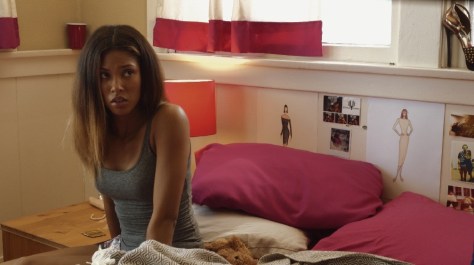
Canadian actress Lanie McAuley has a diverse set of roles on her resume. A pro snowboarder in Aeris, a driven dancer in Center Stage: On Pointe, Hollywood starlet in The Unauthorized Melrose Place Story, and many others. None of them were cathartic in the same manner as her role as Heather in Lost After Dark. Far from her normal films, Lost After Dark is a straight up horror/slasher film which pays homage to the 80’s films that gave birth to the genre. McAuley’s portrayal as Heather (an obvious nod by the filmmakers to the film Heathers) displays the actress in all of her spiteful and venomous bitchiness. The role gave Lanie an opportunity to play a character possessing none of the endearing qualities found in many of her other performances, yet audiences still found a way to make her one of their favorites (likely THE favorite) cast member of the production. With a deluge of one liners that portray Heather to be every bit of the archetype bitchy girl in a slasher film, McAuley’s sense of comedic timing gives a release to the tension found in the frightening tale. It’s the perfect combination of release, terror, and vindictiveness that makes this role (and the actress) so memorable in Lost After Dark. Writer/director Ian Kessner recognized the actress’s ability to clearly communicate Heather’s energy from the moment he saw the audition tape. He recalls, “She was my first and only choice for the role of ‘Heather.’ None of the other actors in contention for the part even came close to displaying Lanie’s level of talent. She’s natural, intuitive, and blessed with amazing comic timing. Lanie can make you laugh just as easily as she can make you cry. It’s crazy! On screen, she crafted a masterful performance that audiences fell in love with. The depth Lanie brought to the role made her character incredibly likable and relatable, and contributed immeasurably to the film’s ultimate success. When the movie was first released, I attended screenings at prestigious film festivals around the world. Lanie was always singled out by the audience as the one they loved most. That’s a testament to her tremendous talent and skill. And it’s the reason I’m writing a role for her in my next film as we speak!”

lanie-mcauley-lost-after-dark-2

So how does one become “the bitchy girl” when you are known for being considerate, amenable, and a consummate professional?  When questioned, McAuley tells of her love for movies like Mean Girls, Heathers, and The Shining. This cocktail makes considerable sense when viewing her performance in Lost After Dark. While she was confident in her ability to deliver a great performance as Heather, she remarks, “Ian [Kessner] hired me off an audition tape. He phoned me and said, ‘When I watched your tape, I knew you were my Heather.’ It was really flattering… although it’s a bit of a double-edged sword because if you’re the obvious choice to play the bitchy girl…is that a compliment?” Playing the role very close to her audition (an occurrence that almost never happens in film), McAuley expanded her understanding of Heather by voluminous viewings of the genre, from the 80’s through to modern productions. She knew that the character would have to be grounded in the archetype but play to the sensibilities of modern fans. Her attempt was to honor the tradition while breaking fresh ground in her presentation.

lanie-mcauley-lost-after-dark-1

The dichotomy in Heather is that her dark and self-centered demeanor fuel the comedy. The two are intertwined and as complimentary as sweet and salty. The approach was carefully crafted to McAuley’s strengths in comedic timing. She comments, “I was thrilled that Ian was happy with my comedic timing! I’ve spent a lot of time in acting classes working on comedy in particular. Growing up, I loved being the funny girl, so I’m sure a lot of it comes from that. I’ve definitely had experience with the bias that attractive women can’t be funny; I’ve been in a lot of auditions and even social settings where people say, “Wow, you’re actually really funny.” as if it’s incredibly surprising. I booked another comedic role this year [Bad Date Chronicles] where I had the director and producers in stitches in the audition room. It’s satisfying to make people laugh. I hope that in my career I can help destroy the stigma that women can’t be funny. There are a lot of women out there blazing the trail who are stunning and hilarious: Kristen Wiig, Amy Schumer, and Emma Stone are some of my favourites.” Lanie continues, “I think a big part of why I was singled out as the audience ‘favourite’ was because I was the comic relief. In a slasher film, there’s so much stressful content…the audience needs a break. I’m lucky my character was written to be the funny one. Plus, everyone loves a good mean girl. There’s a guilty pleasure that comes with watching someone say nasty things. So if the audience was digging it, I’m flattered; it means I did my job right. Despite her less than redeeming qualities, I tried to make Heather likeable where I could. There is one scene where she says, ‘I don’t wanna be eaten by a cannonball!’ The comedy is in her idiocy, but there is almost a level of sympathy you have for this poor girl being so dumb (which is aided by Johnnie’s constant criticism of her). I think audiences had a soft spot for her in that way.”

Some of Lanie’s performance might have been aided by the environment and situation during filming. Production was nocturnal and usually in freezing cold temperatures. Add the requirement of Lanie’s character to be crying in hysterics, screaming, spouting vitriol, and running at top speed in high heels…it creates a weird head space for any actor. Channelling these aspects into a great performance is what McAuley does best. Lost After Dark premiered in the U.S. at Screamfest Horror Film Festival in LA, and had its European festival premiere at the IFI Horrorthon in Dublin, Ireland. The film also screened at Nocturna Film Festival in Spain and Fantasporto Film Fest in Portugal and was nominated for “Slasher of the Year” at the 2015 Moviepilot Horror Awards and “Trashiest Trailer” by the Golden Trailer Awards. Lanie was highly appreciative of the warm embrace the fans gave Lost After Dark noting, “I definitely think horror fans are their own breed! For one thing, they’re extremely dedicated. They know what they like and tend to have a really thorough understanding of the horror genre and sub genres. It’s cool to see. They’re really passionate. A lot of film & TV fans just love the good-looking actors and media hype; horror fans really care about story and the art of the genre.” In a genre which earnestly states about Heather and her ilk “The meaner, the better”, Lanie McAuley is one mean Heather!

lanie-headshot-8


HOW CINEMATOGRAPHER SIMU FENG TRANSPORTED AUDIENCES INTO THE HUMAN PSYCHE FOR “BREATHE.”

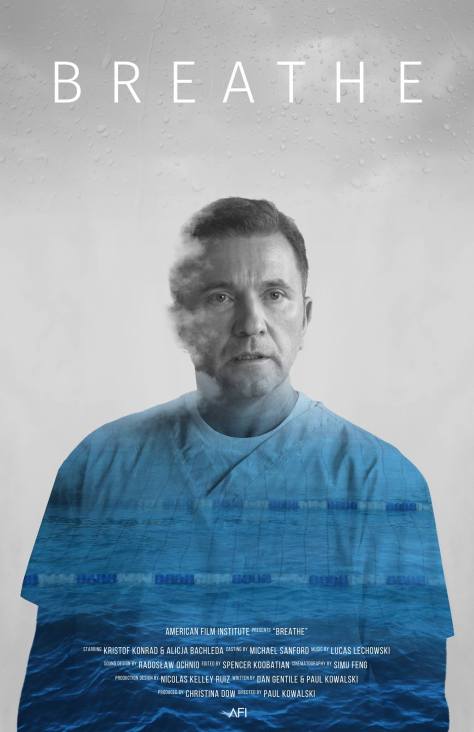
Cinematographer Simu Feng and Director Paul Kowalski have worked together on a number of films. Although they both possess many impressive attributes, perhaps the strongest reason for their successful working relationship is that they are both classic over-planners. Both of these men subscribe to the idea that you should check every production aspect a number of times and have a back-up to your back-up. The security with which this empowers the entire production team allows the artists they work with to create outstanding films that are critically and publicly praised. As proof, consider that their latest collaboration, Breathe, which received more than thirty recognitions and awards from all across the globe including; Cannes Short Film Corner (France), Visioni Corte Film Festival (Italy) (Finalist – Best International Short Film), Southampton International Film Festival (UK) (Official Selection) (Nominated: Best Short Film, Short Screenplay, Leading Actor in a Short, Cinematography, & Score), Beverly Hills Film Festival (Best Short – Audience Choice Award), Aesthetica Short Film Festival (UK) (BAFTA Qualifying) (Nominated – Best Drama), and numerous others. The exemplary work that this duo creates together gives credence to the idea that great art is great art, regardless of your background or history. These two filmmakers come from drastically different backgrounds. Born in London to nomadic Poles, Paul Kowalski grew up in the Middle East Africa and across America. The only child of a civil servant and a nurse, Feng grew up in Shenyang, China and then moved to Beijing to study Geophysics in college. In an abrupt turn, he was accepted to the Beijing Film Academy graduate school and never looked back. While both of these filmmakers pursue the passion of their art, Kowalski notes that it is Simu’s calm nature and demeanor under the stress of production and filming schedules that aids in the director’s ability to remain calm while working together. The cinematographer is Kowalski’s barometer and governor at the same time; a great bonus to the heart of any successful working relationship.

breathe-1

Psychological thrillers have become Paul Kowalski’s calling card. He is adept at making films of this genre and he knows it. Simu Feng has worked with this director multiple times due to his creative and discerning eye for imagery in these films. Concerning Feng’s proficiency, Kowalski declares, ““Simu was integral in bringing my wildest imaginations for Breathe to the screen. Whether it was devising shots in our pool sequence where we had to closely follow our protagonist swimming, or in an operating room watching him perform neurosurgery, Simu was always able to offer practical, creative, and unique solutions to bring the story to life visually. A truly great professional brings more than this to the table though. Working with Simu was a total pleasure. His calm and reassuring presence on set complemented my own directorial intensity and was often a rock amid the chaos of production. The camaraderie he promoted among his camera team made on-set execution a breeze and helped us get over production hurdles when they arose, with great ease.”

breathe-screenshot-1

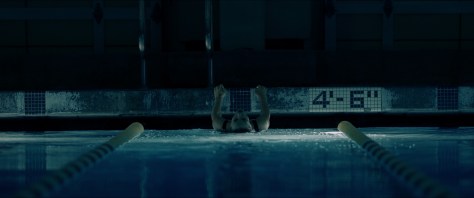
Breathe depicts a neurosurgeon’s psychological battle with reality in coming to terms with his wife’s death. The tragedy has propelled the main character into a place in which discerning reality from the images that haunt him is a constant struggle. As he descends into a surreal state, one gripping scene shows him descending into a pool; he struggles for his own life in the same way he struggles to accept the reality of his situation. Feng comments, “For the night pool scenes, we wanted the space to represent his sub conscious. We wanted the pool to be dark, scary, & moody, regardless of what a public pool should look like. I lit the scene mainly using the reflection of the water, creating a constant flowing light all around the area, adding to his unstable status of mind. I cared a lot about the eye light in the scene. I wanted to enable the audience to see into the character and feel his emotions. For this scene, we really wanted to be with the character…to jump into the pool with him and swim with him while feeling his pain through all the action. To do this, I did some research. I measured the size of the pool and came up with a plan that we could afford. We set up a 21’ ft. crane on the track along one side of the pool and swung the camera into the pool area just above water. For some shots, I had my camera operator walk into the water, holding the crane head and following the actor swimming. The shots turned out really well.” Kowalski expounds, “We needed highly-charged, stylized images to help represent our protagonist neurosurgeon’s growing derailed state of mind. The ALEXA was the solution. In our night pool photography, this camera was able to vividly capture flickers of reflected light, rendering them in crystal clear, ethereal blues. In our operating room scenes, the camera allowed us to keep skin tones vibrant while maintaining the low-lit, psychological (over naturalistic) feel we were after. The quality and flexibility of the ALEXA greatly contributed to the mood and style of the film.”

breathe-screenshot-4

Simu enjoyed creating and designing ways to “trick” the audience when it came to guessing what was real and what was imagined in Breathe. He relates, “Since our plot is not one with a lot of twist and turns, a great deal of the plot point is in the subtext. We really need to figure out a way to keep the audience with the character all the time, immersing them into the world of this film. We took a lot of time designing the shots, making sure we covered all the beats and delivering the emotion for each moment. For me, the great enjoyment in being a cinematographer is that you get to create a story and touch the audience with your images. I enjoy turning the words in the script into something tangible and delivering the emotion of the story through imagery. I get the most sense of accomplishment when a scene is cut together and works the way it should; plus, it’s so much fun working with lighting and playing with all the cameras. It is such a creative job. It forces you to keep coming up with new ideas.  I love to do a job that isn’t routine and repetition.”

As a fan of the US film industry, Simu has aspirations to make it his professional home. He admits to watching both films from his native China as well as US productions in his formative and adult years but makes note of his admiration for the infrastructure and lineage of American film. He states, “I think the US film industry is a fully developed industry in every aspect. There are rules to follow and paths to pursue; a design to getting things done. For example, you make a short, go to festivals, get noticed, and develop an independent feature. Then you go to festivals and get noticed by big studios. Whereas in places with developing film industries, filmmakers need to find their own ways to develop their career. The US has created a proven system that is admired across the whole world. I’m excited about being a part of that established model.”

get-the-life-2

breathe-poster


ROMY TEPERSON CHANNELS HER INNER NEW YORKER

Actress Romy Teperson is ecstatic about her role and involvement in Next Door to the Velinsky’s. The Australian actress has been in her fare share of TV and film productions. Whether it’s her comedic role as Sally Enfield on the comedy hit Swift and Shift Couriers (currently airing in the US on Netflix), as the pivotal female character in Unforgivable Sin, or any of her other lauded roles, Teperson brings an energy that has elevated her to being one of the most highly sought after actresses in her homeland. Not only is she proud of her performance as Doctor Jay in Next Door to the Velinsky’s but she is also proud of the film’s selection as an Official Screening at the Cannes Film Festival. She states, “It’s extremely exciting. To have your film be a part of the history of that festival and reach that level of accolade is definetely a humbling accomplishment. Lots of films get sent to a lot of different festivals throughout the world but Cannes is on a whole other level.” The recognition of Next Door to the Velinsky’s was not limited to this alone as it also received the Award of Excellence from the IndieFEST Film Awards and premiered at the New York International Film Festival. While Teperson is widely known in Australia, the film’s international visibility gave her talent a higher vantage point for fans and critics alike.

dr_jay_2

Some of the tag lines for Next Door to the Velinsky’s include: “How far would you run to escape your past? What if the only way to survive is denial? Some secrets should never be told.” These all hint at the hidden storyline of the film. It is a psychological thriller about a young man [James Marshall] who meets up with his childhood friend [Ruby Taylor], a girl who is crazy and deluded after having lost her memory in a car accident. James has to help Ruby remember who she is as well as forcing her to face the traumatic dark secrets of her past that she has worked so long to forget. As Dr. Jay in the film, Romy is the medical advisor to a legal panel trying to build a case against the lead character Ruby Taylor. Dr. Jay is a prominent surgeon who is all business. She is quick to shut down the run around attempted to be laid upon her, by the smooth talking marketing firm quick to try use her as an expert witness/testimonial for their legal case. While the role of Dr. Jay required Romy to play a character whose profession and age are different from hers, she found it easy to relate to her. Teperson notes, “I feel like in most cases at least you are able to find one or more qualities of the character that you can grab onto and identify with personally. This at least gives you some insight and an understanding as to how they operate and see things; how they work. If you at least have the similarities, you can focus on those to identify with the character. Achieving these means that the differences don’t become as much of a hindrance. I was fortunate with Dr. Jay; her no nonsense love of telling it how it is and going after the bigger picture are all qualities I can definitely relate to. There were for sure more similarities than differences.”

All of those award acceptance speeches at the Oscars, Golden Globes, etc. are truthful when the winners state that a recognized film and performance is the result of a group effort. Even more than the presentations at these awards shows, the greatest benefit to doing exemplary work is that you are remembered and asked to work again on other films. It was a combination of peers and fans that brought Romy to play Dr. Jay in this production. Writer and Producer of the Next Door to the Velinsky’s, Chloe Traicos, had been a fan of Romy’s work and requested that she appear in the film as Dr. Jay. Traicos wrote the part for Teperson. Since the making of this film, Chloe Traicos (Writer/Lead actor), Jon Cohen (Director/Producer), Chris McHardy (Cinematographer), and Romy have worked on five projects together, giving credence to the mutually beneficial working environment of this ensemble. Having worked with several of the other actors on a variety of productions created a familiar and comfortable environment for Romy to step into the character of Dr. Jay. She remarks, “The rapport (between cast members and the director) was there so we were able to perform within the safe confines of this. It almost felt like being at drama camp. Getting to act with a group of people you admire and also happen to be your friends, that’s a very satisfying professional experience.” Speaking of Teperson’s work, Jon Cohen declares, “As a director that has been on a plethora of film and television sets, I have seen a lot of talented performers but Romy stands out as an extremely talented actress who brought her own unique style and vision to each role. Her commitment and dedication to her roles in my films were some of the best character studies I’ve seen in all my years working in the entertainment business.”

Romy’s travel experience is something she put to use for her portrayal of Dr. Jay in Next Door to the Velinsky’s. Teperson’s love of the US emerged in the tone of her character as she states, “I like to say I’m an Australian by nationality, but a New Yorker by build. I identify with the tough, brash, no nonsense humor that NYC is known for. So for me, even though the Dr. Jay isn’t a ‘New Yorker’, she still possesses all those same qualities; ones which felt very comfortable for me to play. I have filmed mostly in Australia. However, if I was going to shoot more anywhere else, it would be within the US. Specifically, more studio work in Los Angeles and more location shooting in New York. I would love the experience of shooting a series in front of a live studio audience. For location shooting, couldn’t think of anywhere more exhilarating and exciting to shoot live than around the streets of New York.”


Next_Door_To_The_Velinksys_LA_Theatre_Release.jpg

LIVI ZHENG EARNS HER REPUTATION AS AN INTERNATIONAL FILMMAKER

Many of us from the West are mesmerized by the martial arts. Though we might pretend otherwise it’s mostly about self-protection peppered with a dash of “I’m cool.” The difference is that those from the part of the world in which this discipline originated and who truly understand it is this; it’s a way of life. There is a mastery of self that transfers to all parts of one’s life. It becomes a lifestyle rather than an expertise with combat. Yes, the physical benefits are there but the mental and spiritual one’s supersede them. Livi Zheng is a respected producer and director began her career as a stuntwoman and actress due to her mastery of martial arts on the enormously popular Asian television program Admiral Zheng He. Immersing herself in the production world, she began assisting in all of the different department until she became the assistant to the producer. Quickly thereafter she was working on scripts, doing research, prepping for shoots, and finally became the producer herself. The immensely popular program about Admiral Zheng He led to a film about this historic Chinese figure. As a testament to the benefits of her martial arts training, Livi assessed what was needed to conquer the production world; achieving great acclaim in the ever-expanding Asian TV and film industry; no small achievement for even the most accomplished professionals.

Livi is originally from Indonesia but moved to Beijing, China with her brother to further pursue martial arts training. While her excellence in the discipline would lead her to working on the hugely popular TV show about one of the most respected historical figures of China, it would also take her life down an entirely different path. The Admiral Zheng He TV series is a massive hit in Indonesia; to simply be an actor on the show would already register as a great success for Livi. But she was so interested in the workings she saw behind the camera that she immediately began the pursuit of assisting in the many different parts of production. Her dedication to learning every aspect of production paid off when she began her role as a producer on the program. In her role on the series as Suhita she was a Javanese queen regnant and the sixth monarch of the Majaphit empire (the biggest empire in Southeast Asia), ruling from 1429 to 1447. Somewhat mirroring that character, Livi oversaw productions that took place in China, Indonesia, and Thailand. It’s poetic that Zheng would learn the lifestyles of each of her people (the cast and crew) and then rule (produce) with the knowledge and empathy gained.

Livi’s work was so successful and lauded by the viewing audience as well as the production company that she was asked to produce the film inspired by the TV program’s success; The Empire’s Throne. Her abilities as an actor together with her skill as a producer, handling the production schedule and budget, made Livi the two most valuable people involved in the series.

Managing hundreds of extras and animals on set with lead actors is quite a feat for any producer. Zheng is frank about the fact that The Empire’s Throne was all about spectacle with expansive vistas and huge numbers of foot soldiers and cavalry. Recalling one scene she states, “There was a very big fight scene with a many horses and challenging stunts. We prep it ahead of time but there was still so many details to work out on the day of; such as getting all the stunt people and extras in the period costumes and props. I hired an extra crew just to get everyone ready faster. I wanted to maximize the shooting time rather than using it to prep the hundreds of people involved in front of the camera.”

article-1

The Empire’s Throne is a colossal dramatic action film, based on the story of the empire Majapahit, the most powerful Empire in Southeast Asia. The film tells the story of the epic struggle for the throne of this kingdom. It features a huge cast, stunning Southeast Asian sets, costumes, locations, and music. This epic period piece possesses a unique cultural aspect. Its spectacular production design is extravagant and unique in the eyes of US audiences, so much so that it garnered an official selection in Boston International Film Festival. It’s of great relevance that one of the stars of both the TV series Admiral Zheng He and The Empire’s Throne took note of Livi’s professionalism and excellence on these productions. In addition to being a star of the show, Saifullah Yusuf (also known as Gus Ipul Job) also has the distinction of being the Indonesian State Minister for National Development Planning (2004-2007) and Deputy governor of East Java, Indonesia (2009- Current) …meaning that he understands the historical accuracy and authentic recreation of these tales. as Saifullah Yusuf related,


”Livi Zheng is a talented and dedicated producer who has shown herself capable of executing sophisticated productions with significant budgets. On the TV series Admiral Zheng He (Laksamana Cheng Ho) and the feature film The Empire’s Throne she coordinated a cast of over 1000 extras along with hundreds of horses while shooting in three different countries. In the action genre her personal experience as a multiple award-winning martial artist gives her unique insight into the stories she produces. Not only was I impressed by her ability to access her prodigious skills and experience, but also by her devotion to depicting realistic portrayals of the locations and historic periods in her films. To this end she spent a good deal of time gathering research from museums around China to add authenticity to the production.”

article-1

Director/producer Nirattisai Kaljaruek has worked with American household names such as Nicholas Cage and Bon Jovi. Regarding his experience working with Livi on these multiple productions, he comments


“Livi’s upbeat spirit and strong vision were an inspiration to our cast and crew, helping them realize the tone and spirit of the film. Her energy and passion are infectious. She manages to oversee everything with compelling detail, while paying attention to budgetary and scheduling constraints. Having grown up in Indonesia and China, and then continuing her education in the United States, she brings a unique multicultural perspective to all of her creative work.”


Zheng’s work on the productions concerning this popular historic figure continued as producer on the feature film Legend of the East. The film was a huge hit with notable achievements, including:  Nominated at the Madrid International Film Festival for Best Foreign Language Feature Film –Legend of the East (Livi Zheng and Nirattisai Kaljaruek), Best Director of a Foreign Language Feature Film (Nirattisai Kaljaruek), won Best Actor for Foreign Film and Best Supporting Actress for Foreign Film. With her successful directing credits adorning her resume  Zheng continues to expand her role as a respected filmmaker, more recently producing and directing the suspenseful Victorian period-piece The Lost Soul. Livi is currently fielding several  offers in the US.

(Title featured image courtesy-of-marie-claire-indonesia-by-irfan-hartanto-2)

Composer Kevin Smithers nominated for best original score for film On the Roof

While Kevin Smithers was studying his undergraduate degree in music, he came to the realization that he enjoyed sitting down and writing down a good sounding solo over a jazz piece than improvising. This realization shaped his future and career; making the transition from a performer to a composer. Throughout the rest of his studying, this passion grew to become a career. Now, Smithers is a successful film and video game composer.

During his career, Smithers has worked on over 20 films and web series, as well as the new PlayStation VR video game World War Toons. However, it was with the award winning film On the Roof that he received his nomination for best original score at the Sitges International Fantastic Film Festival under the Noves Visions SGAE Nueva Autoría section, which he describes as a great honor.

“It’s the way that Kevin understands the music for films: he also puts the story and the characters before his own work. He is very conscious that he’s making music in order to tell a story, for expressing feelings, not only for himself or for people to listen to his music separately,” said Damià Serra Cauchetiez, the director of On the Roof. “Working with Kevin is amazing. He is very hardworking and was very motivated about the story. He always understood what I wanted in every scene, and also he proposed many of the good ideas that they finally ended up in the score.”

On the Roof (also known as En la Azotea) tells the story of Adrián and his friends, who climb to a roof every afternoon to spy a girl who sunbathes naked. However, one afternoon won’t be like the others, as the friends realize that one of them is more interested in a guy showering in a close building. 

“Working on On the Roof was a great experience. Damià and I bonded over some of our favorite scores when we met in Spain and was really excited when he asked me to score his film. He gave me a lot of creative freedom to do something that I thought was interesting and new. In fact, the temp music in the film was radically different to what we ended up doing,” said Smithers.

Smithers wanted to tell part of the story with the music, with a very warm Spanish sounding score for the film as the film takes place during the Spanish summer. However, they didn’t want to go all the way with Spanish flamenco, which is when Smithers came up with the idea of using only an acoustic guitar.

“It’s a very Spanish instrument. I spent time trying to get as many different sounds from the guitar as I could and recording them in various ways. Once I had all these sounds recorded and ready to play with, it’s as if I had a standard ensemble that’s normally used to score a film” he described. “But we altered the sounds to have that cinematic feel as well. Even though it’s a very personal and introspective story for the character, it feels big and daunting from his perspective. By modifying the guitar recordings and doing a lot of guitar passes, we managed to get an intimate Spanish sound that could also grow into a full wall of sound needed for some moments.”

On the Roof has premiered at many film festivals, including Cannes, Berlinale, Sitges, Seminici, Vancouver International Film Festival, Seattle International Film Festival, and more. It has won awards at several of those festivals, including a nomination for best director and Miguel Casanova Rodriguez won for best screenplay at the Sitges International Fantastic Film Festival.

“The most pleasurable thing to me when writing music for film or games is when you’re done with a scene and the music just sits perfectly over it and really adds something to the project that wasn’t there before. This way of telling a story through music is a very specific way of writing, which I deeply enjoy,” Smithers concluded.


JEAN PAULO LASMAR CREATES ART FROM AN UNCOMFORTABLE LIVING SCENARIO

Brazilian Jean Paulo Lasmar is most commonly recognized as a Producer & DP but storyteller is probably the most accurate description of him. Director of Photography or Producer are the most easily labeled tools which he utilizes but that says more about our attempt to place a label on him than it does the actual way in which he creates. Consider the fact that he spent some time in Panama and Indonesia observing the people, their surroundings, their interactions… producing documentaries to tell their stories. From this he moved on to Latin America, the UK, South America, West Sumatra, and eventually the US. In his travels he simultaneously also pursued his love of photography, capturing the visual personalities of the people and places he encountered. Lasmar has spent his life thus far seeking out the less obvious and too often overlooked tales hidden in those not so celebrated. It is his perspective that there are far more interesting stories than the ones that often repackaged and repeated to the audience. While he employs the skills that are tried and true, Jean Paulo’s true talent lies in his ability (a benefit of his love of photography) in recognizing the beauty that is found yet masked by a veneer of the mundane. His film O Condominio (The Condominium, as writer/producer/director) came about as a result of his experience living in Sao Paulo, Brazil. While O Condominio is a film that was conceived and created by Lasmar, he has lent his talents to numerous award-winning films such as: Looking at the Stars (Documentary Winner of a Student Academy Award in 2015), the live action animated Mosquito: The Bite of Passage (2016 Telly Award Winner), Surviving a Funeral (screened at the 2014 Cannes Film Festival), and numerous others. While these films and his work have received copious accolades, Lasmar’s films are recognizable by the introspection of normal people and the unexpected complexity of their lives and situations.

o-condominio_1461

Anyone who has spent some time in communal (esque) living spaces understands the bargain and sense of unease that exists in this lifestyle. Jean Paulo has known little else. He confirms, “The world I was creating in this film is very familiar to me. São Paulo is a vertical metropolis with thousands of resident buildings all over the city. I lived in three apartment complexes before I decided to write the story.” The inspiration to make O Condminio came at a time when he was not only living in an apartment but also when Lasmar was preparing to make another film. He recalls, “I had the rights to write and direct my version of a short story called ‘The Bird’ written by the famous Brazilian writer Regina Drummond. It is a story about euthanasia. It’s a very interesting and heart-wrenching story. Things weren’t falling into place as I had wanted and my wife Silvia took me to lunch, just to get out of the house. She literally dragged me out of the house. We stepped inside the elevator and there was a note on the wall. There was a group meeting happening soon to decide many items related to the building’s welfare and maintenance. Right then and there I saw the story; the characters, conflicts, who would approve, who would not. These group meetings are hell. They are chaotic. People really transform themselves in these situations and some really stand out as great leaders. We came back from lunch and I wrote twelve pages. I had been looking for some grand statement for a film and there was a great idea being served up to me.”

O Condominio is a satire about living together. The plot centers around the intense routine of a family man who becomes the building manager of a problematic apartment complex. Estevan (the protagonist)’s job is to take care of the building but he is also a family man. He needs to provide for his family. There more involved he becomes with the problems of the apartment complex, the less time he spends with his wife and kids. These opposing forces drive his internal conflict. Nestor, one of the problematic residents, wants to bring him down. The story becomes political; there’s a dispute for power. It’s a metaphor of a city, a state, and/or a country. There is the side which controls the system and there is the opposite side. Estevan ultimately has to make the decision of whether he should take care of his family or sacrifice his role as a family man for the sake of the others. He chooses his family but the power wheel is cyclical and will never end. It is a constant in human behavior. There is sarcasm in the aftermath of the events. Estevan becomes the opposition and he won’t be silenced. This conflict is analogous to our interaction with others as well as our own internal conflict. It’s a factor that Lasmar contends with in his multiple roles behind the camera. Writer/director Suzana Amaral relates to this as well. Amaral has been recognized for her films at the Berlin International Film Festival, the Havana Film Festival, The Moscow International Film Festival, the Cartagena Film Festival, and countless others. About Jean Paulo’s work, she comments, “Jean Paulo is a superb filmmaker whose capabilities behind the scenes are only rivaled by the glowing reception his work frequently receives. Jean Paulo has consistently earned widespread admiration and respect for his work. His accomplishments are evidence of the vast range of his work, as his talents span medium and mode.” One of the greatest difficulties with someone as talented as Lasmar is delegating when circumstances require. However, this is what enables the process of film production and allows for opportunities in the community. It also results in achievements such as O Condominio’s Official Selection at the 2012 Mostra Brasil Brasilianische Filmschau, in Munich, Germany. Jean Paulo concedes, “With my previous directing experience in O Outro Jorge, I felt like I paid too much attention to the frame, the composition, the light, and the camera movements. I should have focused more on the story and directing the actors. In O Condominio, as a writer/director and producer, I choose to do just that; focusing on the story and directing actors. I really prepared myself to do it. I studied directing actors with Fatima Toledo, one of the most talented actor’s coaches in Brazil. I also worked with Suzana Amaral. She is a great author and director who really knows how to direct her actors. I knew I had to trust my DP; to let him do his work. I tell you, it’s very difficult to do that when you are a cinematographer. Gabriel Morais is a fantastic cinematographer. He is young and very talented. He understood quickly what I wanted, and I finally let go and focused on my tasks. I also stepped down from editing, which is something that I usually do in my films. I wanted to collaborate and I wanted my crew to feel that their work was in this film. I also believed there can be a middle ground in terms of getting involved in the work of the other departments, after all the director is the maestro and it’s his vision. I just wanted to focus on the story and the performances. Nowadays, I work a lot closer with my collaborators, that’s how it should be.”

o-condominio_1784

This is the lesson of both the film O Condominio and the filmmaker; learn how to work together for the good of all and, if possible, nurture the talents of others. When people are invested, whether in their personal life or their professional one, it is difficult to accept that things can never be done in the exact manner you would pursue…but the sense of achieving success together will likely be the most beneficial to all. Art imitates life and life can be enriched by art. This symbiotic relationship exists because of artists like Jean Paulo Lasmar; those who create and allow others to be a part of the successful results.

PRODUCER BEATRICE VON SCHWERIN ENABLES “ALL THESE VOICES”

­­­­    There have been many, many films about World War II. With subject matter as prolific as this it is difficult to find a new angle. The film All These Voices is one of the few films to achieve this goal. The film’s producer Beatrice von Schwerin understood this when the opportunity came her way. While history informs us about the events, the arts enable us to comprehend the lessons learned as well as to take on the emotional quotient of these events. It is often true that the perspective of a war is viewed differently based on your geography. It is this fact that helps to make von Schwerin the perfect person to oversee the making of All These Voices. In addition to her excellence as a producer, Beatrice hails from Europe; giving her an ideal perspective to produce this Hollywood film. A member of Swedish nobility and possessing a resume of celebrated European film work, this producer brings many obvious talents…as well as a few less obvious ones. All These Voices struck a resonant chord. The award-winning film was screened at a wide variety of festivals including; AFI Film Fest (Los Angeles, CA), Carmel Film Festival (Carmel, CA), American Film Festival (Wroclaw, Poland), LA Polish Film Festival (Los Angeles, CA) ICARO Festival International de Cine (Guatemala) Las Vegas Film Festival (Las Vegas, NV – Winner Best International Short), 24 FPS International Short Film Festival (Abilene, TX), Kino Otok Isola Cinema Festival (Izola and Ljubljana, Slovenia), LA Jewish Film Festival (Los Angeles, CA), Resistance Film Festival (Tehran, Iran), Southway Film Festival (Mykolaiyy, Ukraine), Centre Des Arts (Geneva, Switzerland – Special Screening and Lecture), European Student Film Festival (Geneva, Switzerland – Special Screening and Lecture), Newport Beach Film Festival (Newport, CA), FIC Autor Film Festival  (Guadalajara, Jalisco, Mexico), Washington DC Jewish Film Festival (Washington DC, MA), Woods Hole Film Festival (Woods Hole, MA). It’s important to view this list as a whole to understand that All These Voices had such a major appeal to so many different sections of the world population. Based on the locations of these screenings, we can easily assume that regardless of cultural, economic, or religious affiliation, these audiences were intrigued and attentive to the film’s message. This is proof that films which don’t involve CGI or superheroes can have mass appeal to audiences with many varied lifestyles. The fact that Beatrice was able to produce this film on a minor fraction of the average Hollywood budget is a major achievement for any production these days.

atv31zacharylanoue

All These Voices is highly unique in the way that the story is presented. The film takes place in the days following the end of World War II. A young SS officer has sought out refuge by hiding in an abandoned Polish theater. A theater troupe of survivors enters to celebrate the end of the war. Having camouflaged his identity, and remaining mute so as not to reveal his native German tongue, the soldier joins the survivors in a vibrant celebration. As he witnesses the expression of their painful past, he is forced to come to terms with his complicity in their grief. It’s an idea that seems quite possible to have occurred in post WWII Europe. Multiplying the ease with which the audience can accept the story is the location. Nothing could be as appropriate as watching a film in a theater while the action takes place in a theater. Of course, with the events taking place in 1945 Poland, the surroundings needed to reflect that era. Beatrice chose the Roxie Theater in Downtown Los Angeles. Hollywood continually proves that its ability to be malleable is one of its greatest assets. This attribute, in addition to the talented community, is what has interested von Schwerin in possibly pursuing a residency in LA even though she has already experienced great success as a producer in Europe. She concedes, “Hollywood has always been the center of film; I don’t think that that will ever change. The film industry has been active here for over 100 years. The major studios are still located in and around Hollywood. It falls naturally that once a center for any type of industry is built, it stays there. I am actually looking forward to the day when I am part of a movie that will shoot its full production days in Los Angeles; it would be wonderful, to be closer to home.  I know that the shorter commute home would be nice [laughs].”

atv1arkashastevenson

The production All These Voices took on some highly difficult tasks, not the least of which was the presentation of its theme. Making sure that the story was told in a proper and respectful way was the greatest challenge. The Holocaust and the effect that it has had on people is a very important story to tell.  Beatrice reveals that she gained some new knowledge from her director and multiple-productions collaborator David Henry Gerson. She notes, “I had what I thought was good knowledge about the Holocaust and its effect on people. However, working with David Henry Gerson helped me to get a stronger sense of it. Seeing it from David’s point of view, he has family that lived through the holocaust, and hearing his stories together with their stories has opened my understanding. None of my direct family has ever lived through such a trauma, so this has definitely helped me understand in more detail what the survivors had gone through.” It is obvious that Gerson was appreciative of von Schwerin’s attention and care of the subject matter as well as her producing skills as he comments, “Beatrice cares deeply about protecting and supporting the creative vision of the film. Working with her on All These Voices made this more apparent to me than ever before. She is an utmost professional, who inspires greatness and action in her crews and those working with her. Everyone performs their best having Beatrice around as a producer. Regardless of whether it was with myself as the director of any other member of the cast and crew, she listened carefully, assessed scenarios swiftly and effectively, and always, always, always was 110% prepared. Her intelligence governs all of her decisions. She has a rare ability as a leader and is a great force of positivity, effectiveness, and inventiveness. Making this film without her would be inconceivable.” The film’s writer, Brennan Elisabeth Peters echoes this sentiment stating, “As the screenwriter on All These Voices, having a producer as capable as Beatrice supporting my vision was crucial to its development and execution. As an artist, an important part of my process is thinking in terms of possibilities rather than limitations, especially on the script level. Unfortunately, due to the nature of filmmaking as a particularly logistically challenging and collaborative art form, this is not always possible. On other projects, I frequently feel the need to hone my vision and rein in expectations based on the limitations of my collaborators. However, with Beatrice on All These Voices, I truly felt free and uninhibited to write a script that was ambitious, gratifying, and, ultimately, award-winning. That was due in large part to my faith and trust in Beatrice as a producer.” One of the most difficult obstacles for the film is probably unnoticed by the majority of American audiences. All These Voices is extremely detailed in its recreation of the era and location of the events taking place…even down to the language being spoken. As producer, von Schwerin had to be involved in just about every aspect of the film production. This meant making sure that the dialogue was spoken correctly and believably. Beatrice states, “The cast on ATV were a very special bunch. Seeing that the film is all in Polish and German, probably the hardest part was making sure that the dialogue and pronunciation was correct. Parts of our cast were born and raised in Poland and some were not. Our film was seen all over the world, including places where Polish and German are the native languages; this required us to be painstakingly critical of the language in order to be authentic. I’m really proud that we were able to achieve this goal so well.”

It’s hard to imagine a young Beatrice von Schwerin roaming the grounds of her family’s castle in Sweden and then maturing into this commanding presence on set. How many of us would leave a comfortable life of adulation and nobility in order to face challenges day after day on a production? Beatrice conveys this commitment best in her own words declaring, “Producing is never an easy job, if it were easy, I would probably not be working as a producer. I need a proper challenge and producing gives me that challenge. When I moved to LA I promised myself that once I stop smiling when I see the Hollywood sign, I would quit my job and move back to Scandinavia. I am still smiling.”


atv66arkashastevenson

Mariano De Luca learns and inspires while making award-winning film Nazi Gold in Argentina

For many artists, the first real piece they ever finished stays with them. It defines them, shapes their future, and inspires them to keep going. Mariano De Luca, a director of photography from Argentina, knows this. He worked on his first film over ten years ago, and it still remains one of the most powerful projects in his career.

The documentary feature Nazi Gold in Argentina reveals a lot of hidden information about the lost gold in Germany after the second world war, and the connections between the Nazi leaders and the Argentine Government of that time.

“Having worked in this film was pretty important for me. It was my first feature film. I was working with so much talented people. It was a great experience full of passion and talent. And besides all that, it was a great opportunity for me to learn more about the history of my country and the government at the time,” said De Luca.

The idea was to give the documentary a feeling like an espionage movie with agents spying on other agents. Hundreds of Nazis came to Argentina after the war due to a policy from Juan Domingo Peron, the president at that time. But the connections between Nazis and elite politics prevailed after Peron. The film was directed by the late Rolo Pereyra, a reknown director/writer/producer, and was first Argentine nominated to receive an Emmy. Pereyra taught De Luca in school, and knew his style was necessary to make Nazi Gold in Argentina a success. Due to a heart condition, Pereyra passed away before the theatrical release and did not get to see the success that his film received.

“Working on this film was such a great experience. I learned so much. It was different from the other projects I have worked on, because it was full of information and historic content from my own country. The story is based on real facts and those facts really happened, so you learn about the past and discover a whole new meaning for a lot of things that maybe you already know, but you now know in a different light. You find yourself being part of the investigation, like another one of the investigators.”

The film premiered at the Gaumont, a reknowned theatre in Buenos Aires. It went on to win the Silver Condor for Best Documentary at the Argentinean Critics Award, and was nominated for Best Screenplay/Documentary at the same awards.

“Sometimes, we were only five or six people on the crew, and Mariano made that to work perfectly. He tried to made everything possible. Simplifying things, finding the best way to tell the story and not being limited by the small crew,” said Daniel Botti, the producer. “His collaboration on this project was vital to recreate the look that the director and production designer wanted. The film got the look and feel they wanted, and that shows on the screen.”

De Luca describes working with the people he did on this project was important to his experience. He was working with veterans when he was newer to the industry, which shaped his career.

“Oscar Carballo, the production designer, was a really inspiration to me. Hearing him talking about art and film craft was a blessing. And Daniel really shared all his experience on this film, he was ‘the’ man when we had to overcome the troubles on our Europe trip.”

They travelled around the world to shoot in the film. They went from Buenos Aires, Bariloche, Puerto Madryn and Cordoba City in Argentina to Madrid, Rome, Zurich, Geneva, Berlin, Hamburg and Laboe.

De Luca was in charge of prepping and making the equipment list for the whole feature film. He started with only interviews and some b-roll before it became a feature film. De Luca also worked with a change in technology. At the time, the industry was transferring to HD cameras, and he was shooting with first HD cameras available in the country at that time. The feature film added action and drama sequences to the documentary/interview footage, so he also had to shoot stunts and effects shots for the feature.

“It was an incredible experience working on Nazi Gold in Argentina. I was the youngest, and being able to share the shooting with such experience and talented people was a blessing,” he concluded. “I had the opportunity to work with friends and that made the shoot a lot easier. Lots of laughs and good moments.”


THE REUNION SHOWS MANY DIFFERENT VIEWS, COURTESY OF JUSTIN IVAN HONG

Storytelling has taken many forms. The original orators had to be skilled in manipulating their voices and contorting their bodies in ways that helped those around the campfire to “see” all the characters and places being presented. Authors used their literary abilities to “paint” all manner of odyssey in the mind’s eye. Theater began to pull the great works into manifestation with the aid of thespians, lighting, music, and props. Modern films began as a visual marvel that eventually succeeded in allowing us to literally see things that had previously only been imagined. The miracle of modern cinema is that it allows us, as viewers, to experience scenarios we will likely never actually be in and sometimes…even view the same situation from different emotional perspectives. This idea perfectly explains the premise of The Reunion as well as the experience of watching the film. Director/writer/producer Carmen Elly Wilkerson’s 2015 production has received immense attention in the past year and Justin Ivan Hong is the cinematographer whom she worked with to design the look of the film. It’s a tall order for a film which mostly takes place in a single room with the four female characters discussing their personal view of the conflict in the film. At the Cannes Film Festival, Kodak named Wilkerson one of 16 Filmmakers to watch. The Reunion received great praise and numerous achievements including: the Charlotte Black Film Festival – Audience Award, HollyShorts Film Festival – Audience Award, nominations at both the Pan African Film Festival (Best Short) and the Burbank International Film Festival (Best Short & Best Actress). The Reunion was also an Official Selection at the following festivals: Miami Short Film Festival, Black Harvest Film Festival, Urbanworld Film Festival, Reel Sisters of Diaspora Film Festival, San Francisco Black Film Festival, Martha’s Vineyard African American Film Festival, and the Gary International Film Festival. For a film with such a simple scenario (or maybe not so simple) as four women in a room discussing a pivotal moment in their lives, the film definitely garnered a lot of attention. The film that Wilkerson created is provocative and has the audience guessing as to what actually happened, all the while being enabled to do so by the believability of the world she created with Hong.reunion1-copy

Justin was highly recommended by the American Film Institute’s head of cinematography, so Carmen had no trepidation when she contacted him about working with her on The Reunion. She quickly realized why Hong had received such glowing accolades. Wilkerson comments, “Justin and I immediately starting working to pre-produce the film even as he was on location in another city. He helped craft the look of the film and collaborated well. He was so thorough in his approach and extremely detail orientated. As a filmmaker, he understands performances and story, helping to elevate the script’s potential. Justin even stepped in and helped me edit a

few sequences that weren’t yet working. He’s one of those artists who adds to the mix and makes the director’s job easier. Justin is a very bright collaborator and cinematographer.” It would seem that the biggest challenge on this film production was the deceptively simple scenario; four girls holed up in their room, hiding from the outside world. From the beginning of pre-production, the discussion between the director and Hong centered around finding a way to sustain visual interest due to the fact that it was basically four characters talking inside a room for twenty minutes. Justin recalls, “We identified all the dramatic beats and worked out a plan of movement and blocking that flowed with the emotional flow of the film. In order to fully work within the tight confines of a bedroom, we planned out the different camera positions within the room in such a way that the blocking complimented the actresses’ movements and that in turn added a sense of fluidity and immediacy that fit the story very well.”

reunion2

One of the things which cinema can achieve quite proficiently is to sometimes “deceive” the viewer with different perspectives. Everyone has the ability to color their memory with an emotional slant. Numerous psychological studies and experiments have been conducted in order to prove the effect of emotion on memory. Filmmakers often make use of this tool as well. The same holds true for the way the action of film can translate a mood based on the cinematography. Justin concedes, “Another aspect of the film was the ulterior motives of each character and the relationships they have, as it relates to the collective secret that they are hiding. I used subtle framing choices to visually portray this volatile dynamic between these friends. This also worked in conjunction with the blocking. When the four characters were feeling united and close to each other, I used wider lenses and included all of them in the composition. When they start to fragment, we had them walk away to different parts of the room and I used slightly tighter lenses and framed them alone, adding to the feeling of distance from each other.”

The Reunion is a compelling film which explores the varied ways that individuals can perceive the same circumstance. Presenting the same situation, colored through the lens of the different characters, and culminating in unique perspectives is a superior achievement which the film’s creator, Carmen Elly Wilkerson, the cinematographer, Justin Ivan Hong, and indeed the entire cast and crew can be proud of, as proven by the critical and public acclaim the film has received.


LOOKING AT THE STARS WITH DIFFERENT EYES: XIAO’OU OLIVIA ZHANG

image1

Sometimes, in order to do your job to the best of your ability, you have to change the manner in which you perform your role. This is not done for the sake of ease or to be lazy, it’s quite the opposite. Taking the normal or more obvious path does not always lend itself properly to the presentation. It can be frustrating and taxing but in the end, it becomes quite gratifying. Xiao’ou Olivia Zhang understands this only too well from her experience working on the film Looking at the Stars. The ironic title of this movie about blind ballet dancers challenged Zhang to come up with many new approaches to grant an empathetic ear to relate the tactile experiences of the dancers. Ultimately, it was a requirement for Olivia to put on her Foley hat and go about discovering augmented sounds to give the audience a better idea of what it felt like (literally) to understand the experiences of these dancers. The work on this film was a far cry from her normal sound designing experience on a film, and yet…Zhang states that she was thrilled to be forced to come up with new sounds that would have the greater impact of what the characters in the film were experiencing. With celebrated films like Lost City of Tomorrow, The Hunt, Thunderstorm, Los Villanos, and others…it’s encouraging to see that a professional with so many achievements, like Olivia, is excited about finding a creative solution for the productions in which she is involved.

When Veronica Li (Supervising Sound Editor of Looking at the Stars) was looking for someone to work with her on the film, she approached Zhang because she wanted someone with strong Foley abilities and an extremely discerning ear. Li explains, “The sound design of Looking of the Stars depends a lot on the Foley. Olivia was one of the most important parts of the sound design team. Her work brings us as an audience a lot closer to the character. We feel what they feel through the detailed Foley sounds, and thus, we become more involved in the story. She had a very good understanding of the characters and the story, and the Foley she recorded brings the movie alive, which is the essential part of the sound design of this movie.” The excellence of both Zhang’s work and the entire production was proven by the achievement of Looking at the Stars being awarded a USA Student Academy Award, an Urbanworld Film Festival win (the Documentary Prize), and a nomination from the International Documentary Association. Zhang admits that receiving accolades is never an unwelcome gift when it applies to your work but she also feels that this production was especially meaningful as she shared a common trait with the subjects of the film. She notes, “The degree of us focusing on sound in life connected me in a significant way to the dancers. I would often close my eyes to hear the sound of the materials I had selected, attempting to get into the subject’s mind and test out if I could imagine what thing I’m holding in my hand from the sound it makes. Moments like this made the story somehow personal to me. Of course, I couldn’t understand the depth of the courage of the dancer’s but, this small attempt to relate to them with a common sensory focus and application, it raised my appreciation for the way in which they ‘see’ the world. It’s an amazing audible environment which they appreciate that I think many people might overlook. That was an unexpected gift I received from working on Looking at the Stars.”

Looking at the Stars is an intimate glimpse into the lives of the extraordinary ballerinas at the world’s only ballet school for the blind; the Fernanda Bianchini Ballet Association for the Blind. The story of these dancers goes beyond the challenge of learning to dance without a visual reference. Like many of us, these women want to be good professionals, partners, & friends. They want to be relevant and self-sufficient. They work fiercely to become the best versions of themselves. One of the dancers, Geyza, is the school’s prima ballerina. She is an example of grace, strength and determination. She began studying ballet with Fernanda Bianchini after losing her sight at the age of nine. In the film, Geyza arrives at a crossroads. Like many women, she feels pulled in two directions, between her family and her career. Preparing to get married, Geyza believes that in order to be a good wife she must dedicate herself to her family. She is also determined to not let married life end her aspirations as a ballet dancer and instructor. Whereas the obvious focus of the movie could have been overcoming a physical situation (blindness), Looking at the Stars chooses to instead focus on the heart and strength with which the dancers approach their entire lives.

While the film focuses on the dancers lives and interaction with the outside world, Zhang focuses on the sounds which helps the audience understand what is going on with them at a personal level. One scene in particular is a prime example of this work. Veronica Li recalls, “There was one scene in which the main character (who is blind) is touching her wedding dress. The movement of the character’s hand across the material and the sound Olivia recorded was so detailed and believable that it not only gives an enhanced sound but, it conveys the essence of that emotional moment.” 
Olivia continues, noting, “One of my most fond memories was re-creating the sound of ballet movement. I’m not a ballerina myself and my size is very different than the dancers. Half of the time the sound of ballet movement was made with my hands wearing the ballerina shoes to create swift jumps and slides over the dance floor. It was a fun day trying to be a ballerina who dances on my hands. Sometimes the great sound you are hearing in theatre was not made in the way you would imagine. That’s movie magic!” That makes Xiao’ou Olivia Zhang fall somewhere on the scale between scientist and magician; which sounds like possibly one of the most unusual and fun careers in the world.