Director/Producer Richard Kenyon Embarks on Several New Projects

Richard Kenyon
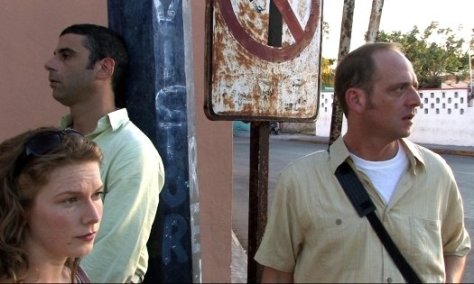
Director/producer Richard Kenyon shot by Jill Marie Robinson

Some creatives seem to have their hands in so many different projects that we can’t help but wonder if they’ve been blessed with a superhuman gift or discovered a mysterious way to create more hours in the day. The collective work of director/producer Richard Kenyon, which spans the gamut and includes award-winning films, PSAs and high profile theatre productions, is one that begs the question: How does one man accomplish so much?

Earlier this year Kenyon produced, directed and co-wrote the film A Girl’s Guide to Drowning starring Young Artist Award nominee Alexis Rosinsky from the films My Best Friend and The Archer, as well as the Golden Globe Award winning series Modern Family.

A Girl’s Guide to Drowning brings to the screen a story about the drastic manner in which a young woman tries to cope after a painful breakup with her boyfriend. Based on the character of Ophelia from William Shakespeare’s play “Hamlet,” who is as tragic as she is iconic, Kenyon’s newest film is a modern take on a classic play, which he says is, “proof positive that Shakespeare is relevant in the 21st Century.”

The film, which is expected to screen at festivals around the world later this year, is one that Kenyon has wanted to make for many years, but only came to full fruition after a chance meeting with Alexis Rosinsky, who plays the lead character in the film.

Kenyon recalls, “My wife and I were at a dinner party and Alexis performed a monologue from Ophelia and it blew us away. She was 13 years old at the time and I have never witnessed a more natural talent than the way she spoke Shakespearean text. So my wife and I went home and wrote ‘A Girl’s Guide To Drowning’ for Alexis.”

Considering his long-standing passion for Shakespeare’s work, and his ability to craft a story that hits home with modern audiences, A Girl’s Guide to Drowning was the perfect film for Kenyon to direct.

Richard Kenyon
Director Richard Kenyon & Alexis Rosinsky on set of “A Girls Guide to Drowning” photo by Maynrad Brenes

A highly sought after director, Kenyon is also in pre-production with the film Measure for Measure, a feature based on Shakespeare’s play of the same name, which he will be producing and directing. The storyline for the film revolves around a nun who’s propositioned by a high-ranking official and faced with the decision to lose her virginity in order to save the life her brother, or do nothing and keep her chastity intact. With Kenyon behind the wheel, there’s no doubt that Measure for Measure will do justice to Shakespeare’s original play, while also appealing to the palettes of modern audiences.

“To say this film is my opus is really an understatement. I have been around this play for my entire adult life. I saw a production of it at Stratford Canada in 1992 and it hasn’t left my mind. It starred the amazing Colm Feore and a young actress by the name of Elizabeth Marvel-who now both appear in ‘House of Cards’,” explains Kenyon. “Since that day I have directed the play twice and have been in it so I know the power it has in for an audience.”

In addition to Measure for Measure, Kenyon is also busy laying the groundwork for the upcoming film Some Day, a biographical tale about the struggles he personally faced as a child when he and his family moved from England to Canada, which is slated to begin shooting in Canada at the end of the year. If his plate wasn’t full enough already, he will also be directing the upcoming horror film Branded, as well as the film Ice Cream.

A film about the penal system, which focuses on the way seemingly simple decisions are overwhelmingly difficult for prisoners as they try to assimilate back into society after being released from the system, Ice Cream is expected to begin shooting in Barcelona at the end of summer.

“It is unlike anything that I have ever been offered before which was the real attraction. I love being challenged by my work otherwise why do it,” says the director about the upcoming film.

Kenyon’s directing career, which stretches back over the past three decades, first began back home in Canada in the late ‘80s when he directed “The Actor’s Nightmare” performed at the Alberta One Act Play Festival. His love for the theatre and his unparalleled talent as a director eventually lead Kenyon to serve as the artistic director and co-founder of several prestigious theatre companies, including The Shakespeare Company (TSC), Shakespeare in the Mountains and Knights in Waiting.

Over the years Kenyon has directed innumerable iconic plays including “A Midsummer Night’s Dream,” which was performed to sold out audiences during TSC’s inaugural summer season, “Richard the Third,” which received rave reviews for its ingenuity, “Cyrano de Bergerac” by Edmond Rostand, and more.

He says, “There is something very unique and exciting when an actor steps onstage and performs. A bond is made with the audience and they aren’t afraid to tell you how they feel. That is thrilling.”

While he’s achieved extensive success as a producer and director in the film world, with his first film Insomniac winning the award for Best Overall Score at the AMPIA Rosie Award as well as being nominated for the Best Editing, Best Cinematography and Best Drama Awards, the theatre is something Kenyon says, “never leaves you.”

This summer he will be directing the production of “Hamlet” produced by the Lovers and Madmen company, which will be performed at several venues throughout Pasadena. He is also directing and producing the upcoming production of  “The Curious Mind of Will Shakespeare,” an immersion show that will take audiences into the exciting world of Shakespeare and is slated to run at the Shakespeare Club Villa of Pasadena on October 26, 27 and 29.

Maynard Brenes, who served as the director of photography on A Girl’s Guide to Drowning, says, “Richard’s theatre background is probably his most valuable asset to directing that he brings to the table day in and day out. Part of the creative puzzle is being able to communicate with talent and having that background is invaluable. His work speaks for itself.”

In addition to his film and theatre work, Richard Kenyon has also made a huge mark in the entertainment industry as the producer and director of several riveting PSAs, such as The Keys, which earned an AMPIA Rosie Award Nomination for Best PSA in 2015, as well as the “Pason Systems” PSA, which earned him an AMPIA Rosie Award Nomination for Best Producer in 2008.

Beyond all this, Kenyon is the creator and radio host of “The Director’s Cut with Rich Kenyon,” an informative series that airs on Kaotic Radio and sheds light on all areas of the film industry.

Driven to create new and enticing work at every turn, Kenyon says “Stagnation is the death of art.”  

Anyone who’s had a glimpse of Kenyon’s work over the years would easily conclude that he is definitely one creative genius who’s never stagnated, and with four new films in the works, it’s doubtable that he ever will!
Writer-Producer Stuart Reid Sets New Standard for Kid’s TV

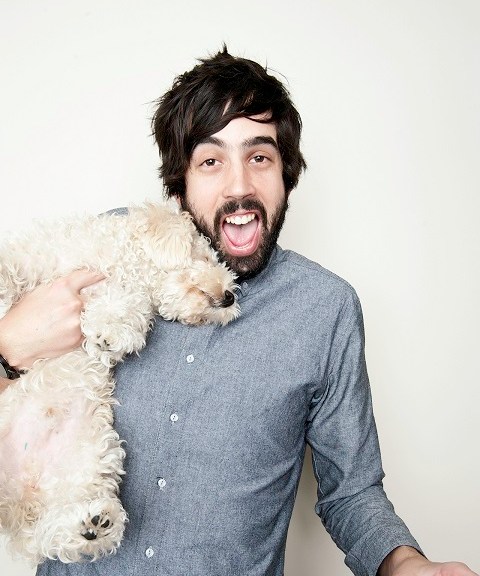
Writer-producer Stuart Reid’s appealing combination of talent, good humor and ambition has an unusual effect on just about every project he’s attached too. As soon as he joins a team, Reid’s high quality contributions typically elevate not only the task at hand, but also his role.

His first writing credit was for DHX Media and Nickelodeon’s Make It Pop, but since then, the charming Canadian has gone on to story edit, write or co-write nearly a dozen episodes of children’s television, develop original series for Sesame Street and NBCUniversal, and even been hired to simply write jokes, ‘punching up scripts’ on shows “looking for a little extra oomph in the comedy department”.

Earning industry-wide recognition is a characteristic aspect of Reid’s sure-footed career path, a journey that led him to film and television even before he finished school. “One of my first summer jobs as a teenager was with Corus Entertainment at Treehouse TV in Toronto,” Reid said. ”Working at Treehouse sort of piqued my interest and got me interested in television and production, and specifically kids. Next thing you know, cut to ten years later, and I’m living between Toronto and Los Angeles, staffing regularly and working with brands I grew up loving, like Doozers and The Jim Henson Company.”

For Reid, his professional life was firing on all cylinders. “It was a lifelong dream for me to work with Henson – a legendary brand with such a cherished and iconic history,” Reid said. “To me, it was a great accomplishment. The Doozers are those little green guys and gals from Fraggle Rock. The Doozers are always building, inventing things and engineering solutions to overcome the obstacles in front of them. There’s a real curriculum there, teaching kids to overcome adversity, and nurturing essential skills to help them creatively problem solve.”

From there, Reid continued to distinguish himself, working with writing partner Mark Purdy on an unannounced series for DHX Media and Mattel (the toy company). “Stuart is one of our primary writers,” story editor Shea Fontana said. “And he also one of the few writers that we could rely on to generate solid episode premises for a series. I knew I could always count on Stuart to deliver high quality, funny and entertaining stories. His work has been integral to our success.”

His gift for mastering the tricky balance of heart and comedy is Reid’s calling card, one that affords him many opportunities. It’s a comprehensive set of skills that allows him broad professional latitude. “Right now, now I writing on an upcoming show for Air Bud Entertainment, but mainly trying to find the time to develop more original material. It’s been a busy year.”

Reid always has one eye on the horizon, and he knows exactly what he wants. “I really enjoy working in animation, but really anything involving comedy that lets you flex the creative muscles. We love to play in big worlds with supernatural elements and larger than life stories. As long as there is heart and something real that makes our characters tick.” Reid said, “we’ve been writing on a lot of existing franchises or other people’s shows. Our ultimate goal is to get a series of our own on the air… Something original, in the truest sense of the word, that came from our tiny, tiny brains.”

PLACING THE LAUGHTER AND HEART INTO THE DEVIL’S TAIL WITH PHIL LUZI

Phil Luzi is in an underground water cave in the Mexico and he is nervous. “Hey, are there snakes in here?” he says with concern. His inner monologue is comparing the pros and cons of the situation. On one hand, he is filming a feature film in a tropical climate, far away from the cold of the Canadian winter. He is staying in a beach house with a personal chef at his disposal. To offset that, he finds himself wondering what manner of science fiction horror film based creature might rise from the dark and murky depths in which he currently finds himself. Luzi wonders exactly how he arrived at this point in his life. Oh…he wanted to be a successful actor and he is one. Still, does danger have to be part of the equation? Phil recalls when he first met writer and star of The Devil’s Tail (the film being shot) Samantha Swan. The two met and worked together at The Second City in Toronto. This is also where he met his Devil’s Tail co-star, Rob Fulton. Their work on previous projects together led Swan to write the role of Dave specifically for Luzi. She confirms, “The director (Christopher Comrie) and myself always wanted Phil in the film. I wrote a part specifically for him that only he could play. I can’t imagine anyone else in that part. Once on board, from first read- through to recording ADR in post-production, Phil Luzi commits with great energy and humor. We always considered ourselves lucky to have him on The Devil’s Tail and would be lucky to have him on any of our future films.”

DevilsTail1

Luzi plays Dave in The Devil’s Tail. Dave is that loyal and abiding friend who would do anything if you asked. Even if he is scared, even if he thought for a second that he might die, even if he knew it was a bad idea…he would be there for his friend. Dave is the low-status character that gives the high- status character the courage they lack when they need it the most. He’s that guy in a group of friends that’s along for the ride but never knows for sure where they’re going. He’s the ‘YES’ man and everyone counts on it. In the storyline of The Devil’s Tail, Dave follows his best friend (Pete) to a strange land to find someone he doesn’t even personally like, all because he loves Pete unconditionally. Like all nice guys, even Dave has a boiling point. He reaches that boiling point after much tested patience and compliance. It’s always fun to watch that person who never loses it FINALLY lose it and then immediately go back to being that docile team player everyone counts on him to be. Phil states, “The Devil’s Tail was my first large role in a feature film. The thought of it was at first intimidating. I was working with actors with so much more experience under their belts. I was afraid that I’d show up in Mexico to a wall of ego and rejection. I was challenged to muster my own self-belief and confidence, not only in my abilities as an actor but in my ability to socialize and open myself up to learning, adapting and becoming part of a fresh social dynamic. It was a challenge to consider myself a talented actor, deserving of this opportunity. It was an exercise in self-belief in the face of doubt and insecurity. More experience doesn’t necessarily make you better than another actor. It just gives you the confidence and belief that you can conquer any fleeting fear of failure. That is a huge lesson.”

The Devil’ Tail is the type of film which contains something for everyone; adventure, romance, danger, even comedy. Dave is the comic relief of The Devil’s Tail. The storyline itself is intense. Pete (Fulton) goes to a strange country and into the backroads of the Yucatan Peninsula to find his missing friend (Eddie) and the unrequited love of his life Kate. Danger is inevitable, and Pete’s courage is found in Dave – that friend who always has your back and gives you so much confidence, you think you can do anything. Dave is Pete’s sidekick, the Robin to his Batman. What Dave lacks in courage he makes up for in his belief in and love for Pete. Dave is the quintessential best buddy who isn’t afraid to look like a fool, to suffer ridicule at his own expense, and to get wet, or dirty, or go anywhere (even climb a ridiculously tall ancient pyramid) all because he loves, admires, and respects his best friend. Luzi professes, “I love Dave. I’d like to think that to some extent I’m a lot like Dave. The film’s hero Pete would not have succeeded in finding Eddie and Kate in this intimidating strange place if it wasn’t for the companionship and encouragement of his buddy Dave. Truthfully, this is probably one of the things that actors love about what we do; if only for a little while, we can become that better person that we aspire to.”

DevilsTailbts

If one is attempting to be a different person, you may as well be adventurous with your surroundings. Luzi admits that when the filmmakers spoke to him about the location of the shoot, he was excited. The location of Tulum, Mexico was, for the most part, paradise. Living in a large house with a private pool, beach and chef felt like living a dream for Phil. Of course the cast and crew were there to work, not to luxuriate. Mostly shot on location in the surrounding area, the environments were dark, scary, strange places. When not in the murky depths, Luzi’s fear of heights was challenged by climbing the ancient Mayan pyramids. Not many of us would be fond of the idea that facing some of our greatest fears would be captured on film for the world to see, especially while it necessitated keeping a straight face…or worse, being funny. Still, Phil admits that it was a growing experience for him that he was happy to take part in. He gives copious praise and credit to the film’s writer and star as he admits, “Samantha [Swan] knew how to present me with challenges as an actor; to take me on a new journey through this character, and become someone new. I think above all else, Sam hired me because she knew I was capable and talented enough to devour the nuances of the soft-spoken character she wrote; to express a range of emotions from compliance, to frustration and fear, to the discovery of new found courage and self-belief. The growth of Dave’s character from beginning to end is in many ways the subplot to an adventurous love story. She never questioned for a minute her belief that I could carry the responsibility of bringing this character to life with depth, believability, and humor. In fact, to this day her belief in me during that time is what carries me through moments of insecurity and doubt.”


AWARD-WINNING EDITOR JUN XIA’S “INSIDE LINDA VISTA HOSPITAL”

Jun Xia is passionate about his work. As an editor, he is passionate about filmmaking in general but he makes no qualms about his love of Horror films. To be clear, it’s the difficulty of it that calls to him and is so attractive. Jun contends that for an editor, horror films are more difficult and require more of him than any other genre. There are multiple reasons for his opinion but it’s clear that the affinity between this editor and the genre is mutual. His work on the film “Inside Linda Vista Hospital” is evidence that Xia feels called to dig deep and bring brilliance, and the accolades which the film has received have vetted him as one of the premier professionals of the day. In addition to numerous awards, Jun was named winner of Best Editing at the United International Film Festival 2017 and received the prestigious honor of this film being named an Official Selection of the Festival De Cannes Short Film Corner 2017. It’s hard to fathom the concept that a factor which led to such international notoriety was conducted in a small editing room. This is the role and life of an editor however and Xia seems more than comfortable with it. When speaking about his work on “Inside Linda Vista Hospital” it is obvious that his ideas and the images on the screen transport him to another place, just as they do for the audience and even the characters on screen.

Jun is boisterous in his proclamation that editing Horror films is an art form, perhaps even a calling for him. One thing is for sure, when a professional feels as inspired and assured as this, you are certain to get an incredible film. “Inside Linda Vista Hospital” is a pseudo-documentary horror film. The script and fictional elements are used to tell the story but are presented in a style that mirrors the documentary format, giving an implied sense of reality to it. The story is about three explorers of the supernatural who go to investigate an abandoned hospital. They get lost in the hospital and one member of the trio becomes separated from the group. While the other two try to connect and find him, they encounter a variety of horrible things in the hospital. John (the missing member) is lost in the basement as the other two characters encounter patients who had been tortured in the hospital and eventually died. Several surprise twists and turns in the story line deliver the shocks and startles that viewers of this genre love. While it all seems so natural and intuitive when viewing the movie, the film’s editor reveals that it is quite the opposite.

While many people operate under the presumption that an editor simply connects and dissects different scenes, the role is actually one of the most vital in creating a film’s story. Working closely with the director, Jun commonly finds himself in deep discussion about what tone to take in placing the scenes together. As with any creative endeavor, if you aren’t noticing the difficulty that it takes to create the work…it means that a highly skilled artist has manifested it. Xia explains, “Once filming is wrapped, there is still so much work to do before the film takes shape. The story is given to the film editor. The editor should discuss with the director to understand the director’s interpretation and ideas of the script. The editor should also understand the director’s style because every director has a unique voice which will naturally lead to different film styles. After the synthesis of these, the editor will successively present the story’s narrative methods using editing software. It’s paramount to understand the role and temperaments of all these professionals in order to be an effective film editor (the ability to understanding what the writer, director, and actors are doing). When it is most creative and enjoyable is during the post-production, the director and the film editor will communicate and discuss at great length. The film editor needs to understand the style and the ideal effect of the director before starting the cutting.  The director will also give the film editor a large creative space in order to maximize the effect that presented by the film.”

Every editor has a process and Xia’s is very specific when it comes to Horror films like “Inside Linda Vista Hospital.” Obviously, he does an initial check of the footage to find the subjective perspectives and intersperse them into the cinematic look of the film; for example, using the POV shots to present the sense of what the character sees while walking. In this way, the audience will feel like they are moving in the film scene while watching the movie. “Inside Linda Vista Hospital” had a large number of handheld camera shots which can be useful but problematic for an editor. Jun describes, “There are a lot of handheld shots in this film. I needed to edit these shots to move fast, so the audience will feel that it’s real and scary. There is a shot in which the character runs into an abandoned red room; I wanted them to run very fast and then fall down on the ground. To achieve this, when I edited this scene, I removed some frames when they run and fall. This is a good idea when editing moving shots. It adds a jolt and surprise element.” Xia adds, “It’s true that editing with a moving or hand-held shot is more difficult than with a fixed shot. A moving shot is constantly changing and often represents the state and psychology of the characters, such as running, walking, or moving with the visual changes of the characters. The editing of these shots should be very reasonable and the convergence of the character movements should be smooth. When editing this, you need to find the splicing points of the screen and then chose the best joint to link the senses of different contents and form a complete action or concept. In addition, based on the characters’ physical movements on the scenes, it’s best to select the beginning or the end of the action as the editing point. In contrast to this, a fixed shot is relatively static and visually has no obvious dynamic shot.

The challenge for Jun when editing a horror film comes not only from the technical aspect of what he is doing but the content which he is given. The footage for a horror film has such a diverse number of factors that affect its delivery. VFX, Dolly shots, fighting or chasing scenes, and other methods are essentially requirements of the genre. While many types of films include some of these, only the rarest contained what is almost always contained in a Horror film. Of course, no scary movie is complete without those unexpected frights which elicit screams and then laughter. This is yet another reason that Jun Xia loves this type of work; it allows him to use the very best he can muster to draw such a wide range of emotional responses from audiences across the planet.

Linda V 1

“LIKE COTTON TWINES” EDITOR TING YU CRAFTS AN EMOTIONAL AND AWARD-WINNING TALE

Like Cotton Twines is one of those rare films that breaks your heart and inspires you at the same time. In the form of cinema, it achieves what no other informative vehicle can; it gives the audience an inside view of a very real situation in another culture. A story such as this touches not only the viewer but also those who create it. Ting Yu served as the editor for this production, carefully crafting its presentation with writer/director/producer Leila Djansi. This film’s content directly speaks to both women as it relates to the plight of women in this particular part of the world. Ting also notes that there are facets of the story which resonate with her due to her country of origin. As a lauded and respected member of the film industry, Yu proved her value to the film and the emotional impact it has made. Now available for streaming on Netflix, Like Cotton Twines is receiving a great deal of accolades, as it did in Ghana (the location of the film’s story) where it was nominated for thirteen awards (at the Ghana Movie Awards, the biggest national movie awards in Ghana) and won 6 awards, including the best film editing award for Ting.

The film focuses on the traditional culture in Ghana. Told from the perspective of an American teaching volunteer, it focuses on his attempts to save one of his students, a fourteen-year-old girl, from religious slavery. Djansi contacted Ting based on her reel and declares, “There is a rhythm to Ting’s editing that is on par with some of the greatest editors. Whether it’s on the micro or macro level, she excels with every edit. She combines shots in a way that perfectly conveys the message of the scene and overall tone of the film. It’s inconceivable to think that Like Cotton Twines would have received the attention and praise that it has without Ting’s talent. When I approached Ting it was because I knew that I had to have an editor of exceptional ability to help me realize my vision.” Conflicting opinions are healthy in film and often lead to better art. Yu’s perspective and ideas are what led Leila to bring Ting aboard the film. For the scene in which Allison (the teacher) did not find Tuigi (the student) on the bus, Leila wanted to use a long take from the beginning to the end, because of the production value. At Yu’s urging, she agreed that this take was beautiful but too long. Ting created a cut half the length of the original; one which allowed the audience to still feel the same emotional content but make the story move faster and more entertaining. She found that her personality and opinions were very strong as an editor but she had no problem listening to the director to help achieve her vision of the film. These are the traits that endeared her to Leila Djansi. These two professionals worked at a feverish pace to complete Like Cotton Twines on a very tight schedule. Yu recalls, “We had several cuts before we locked the picture. Each time we made a cut, Leila and I would sit down and watch the whole film together; both of us giving each other notes. Leila is very open-minded. She is always willing to listen to my opinion, especially when we think we need to cut something out of the film. It was an ideal situation. We would challenge each other…in a very positive way. I feel that this is one of the ways you achieve such a good end result; when everyone seeks the very best and refuses to take anything less than that. One of my favorite memories is of Leila’s cooking. She is such a good cook and would cook for me, because we were working such long hours to finish on schedule. I’d be making cuts based on our notes and also guessing what she would be making me for lunch. That’s not the kind of experience and positive work environment I think most editors get. Add to that the fact that Like Cotton Twines won so many awards; I’m a little spoiled by it all.”

Perhaps one of the unseen facets of Ting’s approach and excellence as an editor is because she started out pursuing the path of director. Her history with secondary choices has proven quite fortuitous. When Yu didn’t get accepted into her chosen University as a medicine major, she switched to TV and Film production. She found that she had a lot of natural talent and it excited her. She felt a strong connection to American films, in particular the work of Steven Spielberg. It became apparent to her that an editor has a different means by which to structure and shape the message and tone of a film and she found it more intuitive for her personally.

Ting notes that one of the reasons she was interested in the role of editor of Like Cotton Twines was the story of females in a culture which does not see them as equal to men. Because of these aspects of her own country of origin (Yu is from China) she believed that the commonly held view that men are seen as somehow superior to women gave her great empathy for the characters and storyline of the film. She communicates, “It’s silly to feel this way when I know that everyone is equal but, coming from a society where women are not seen as important as men…it is difficult to shake this idea from your own thoughts. Leila and this film do an amazing job communicating these ideas and I am proud to have been a part of it.”

The attention and accolades which Ting Yu received for her work in Like Cotton Twines led directly to more work. Enjoying a wide variety of productions such as editing an African documentary about wildlife, Kickboxer: Retaliation (once again starring Jean-Claude Van Damme), and a trio of live action films based on comics and toys in China, Ting Yu has become one of those editors who is in demand across the planet. It’s written in the stars that those directors whom she has admired will be watching her work and likely remembering her name for future projects.

13339629_10154814089580828_8216972789816935442_n

Editor Minghao Shen helps terrify audiences in award-winning horror flick ‘Emily’

Growing up in Beijing China, Minghao Shen always loved film. Unlike many who enjoy watching a movie, he would think about how it was being made. The details behind how each scene was put together were what captivated him; he wanted to be a filmmaker. Eventually, the nuances and strategy behind editing caught his attention, and he knew that was where his future was. Now, he is an internationally celebrated editor.

Shen has worked on countless critically-acclaimed projects, earning him a reputation as one of China’s best recent film editors. His work on films such as Inside Linda Vista Hospital, Stay, Cartoon Book, and Red String has allowed worldwide audiences to see what he is capable of, showing without a doubt why he is so respected in the industry. His work on the horror film Emily perfectly encapsulates what the editor is capable of.

“It is a simple but tense horror film. The movements of shots and the whole visual style are really outstanding. I knew that there would be challenges, but that it would be a great chance for editing,” said Shen.

The film tells the scary story of a woman named Emily. Emily dies giving birth at home after her husband, John, abandons her. However, she will have her revenge from beyond the grave when she returns as a ghost set on killing her widowed husband.

“My favorite part of the whole production was talking about the story, because we found out that there were multiple options would work for it. Although each of the options would have been great, but couldn’t mix them all together, otherwise the tone would be chaos. As an editor, having to narrow this down and figure out how to properly tell the story and convey the right tone was great,” said Shen.

Shen’s instincts proved to be spot on, as Emily went on to do very well at several prestigious film festivals. It was an Official Selection at the Los Angeles CineFest, the SoCal Creative and Innovative Film Festival, the Pittsburgh Independent Film Festival, the Action on Film International Film Festival, the California Independent Film Festival, and the Columbia Gorge International Film Festival. It won Best Overall Micro Film at the Indie Gathering International Short Film Festival and at the Accolade Global Film Competition it won the Award of Excellence.

“I had many complex feelings when I discovered the film was getting a lot of awards. It was a blend of excitement and satisfaction after the hard work everyone had done. We know that we took a bunch of time and work on the film, so I was so glad that our hard work got such encouragement from the festivals,” said Shen.

None of this could have been possible without Shen’s editing talents. He spent his time taking notes every time he met with the director, ensuring he still achieved the vision of the film while bringing his own touch to it.  After the first rough cut, there were a lot of points that needed to be ironed out and redone, but based on notes he did originally, it greatly assisted to the time it took.

“Horror film is always about beats, so the director worked really hard with me to specify each second to make the film the best,” said Shen. “I talked with the director about our thoughts and he trusted me for the style based on my previous experience. There were always some different editing choices between me and the director. He is a talented and continuously brainstorming how to make the film better, so I always let him know more than one choice to let our minds be more open, so that we could avoid some useless change and waste of work time. We actually had some different thoughts in some parts. After a lot of meetings, we finally compromised our differences and both of us thinks this made the finished product better than what just our own ideas would have.”

The director, Jun Xia, agrees, and knows that without Shen his film could not have achieved what it did. The two have worked together on multiple projects since Emily, and Xia knows that Shen’s talents are essential to making a good film.

Minghao and I had worked together for a few times before, and he is always a good listener. He can take feedback and produce more ideas all the time. Minghao is an experienced editor. We talked a lot about a lot of different ways to make Emily better, and it did. He can always come up with unique thoughts when it comes to editing,” said Xia.

Everyone that works with Shen is continuously impressed by his editing skills. Without his work on Emily, audiences may not have been on the edge of their seats, terrified about what would happen next.

You can watch Shen’s impressive editing work on the short film Emily here.

Production Designer Shuhe Wang talks award-winning film ‘Red String’

Born and raised in Taiyuan City, China, Shuhe Wang was destined to be a production designer. Design was always her passion, and she never questioned what it was she wanted to spend her life doing. She understands every aspect as to what it takes to be an exceptional production designer, and that is why she is so highly-respected around the world for what she does.

Despite any challenges that arise, Wang loves what she does, and always shows audiences what she is capable of. Her work on the films Stay, Dancing for You, Cartoon Book, and Inside Linda Vista Hospital helped earn the respect of international audiences and win awards at several film festivals. However, despite this success, she considers working on the film Red String the highlight of her esteemed career.

“With each screening, people are really interested about the story and what is the background of creating the story. As a film, it is always the most important target that let people think about the meaning and something related in society after watching it,” said Wang.

The film tells the tale of an illegal Chinese immigrant who wants to keep his last line of his privacy in a terrible restaurant where he works. However, when he finally goes against his dignity, he finds that he even makes his life worse.

“This is a film about low-level class Chinese immigrant’s life. To make the film reliable and vivid, it relies on the production designer to create the atmosphere about Chinese culture and low-level people’s life. I did a lot of research about what exactly their life had going on, and created some characteristic elements in the film,” said Wang.

Making its way to several international film festivals, Red String impressed critics. It was an Official Selection at the Los Angeles International Shorts Festival, the Festival de Cortometrajes “Jose Francisco Rosado” Pacas, My Love Michelle Short Film Festival, and the Lift-Off Film Festival. It screened at the Festival de Cannes Short Film Corner, was a finalist at the Miami Film Festival, was nominated at the Golden Knight Malta International Film Festival, and was the winner of the Asians on Film Festival.

“I feel excited that the film got a lot of attention by telling a small and rough part of our traditional culture, and glad that the true and hard life of normal people is still being considered and cared a lot by universal audiences. This is a story about my national country’s culture, and it happens in some low-level class people. That is kind interesting to do because I can show audience a different angle of Chinese culture that not very noticeable in real life. And the story is absolutely tense and strong,” said Wang. “The director was very creative and open-minded. It was really great to work with him. He fully trusted me in my department’s process. It makes the work smooth and well- communicated. We were sharing all the thoughts and brainstorming without any concern. We were on the same page for each step.”

The director, Minghao Shen, knows Wang’s commitment to the film and her talent as a production designer largely contributed to the success Red String saw. The two had talked about the script and had found out that they both had a lot of deep thought and ambition regarding the story. Shen trusted that Wang totally understood the story and would create the sets perfectly.

“Shuhe is a designer that does not just care about how to make set pretty, but also about telling a story by the designing, due to her directing skills, so that actually helped the film be better. When Shuhe was working, she was always focused on the details and she was always careful about each single image,” said Shen.

While keeping true to the message of the film, Wang wanted to show some of the key elements to the world without over dressing them. The overall tone is a small bakery and restaurant in old Chinatown of an American city. Wang would go to Chinatown in Los Angeles to simply observe, and to capture the feeling of life there. She would see how they liked to dress and what they liked to eat, what they believed, what way they connected with the outside of Chinatown, what the difference was between the new and old immigrants, and more to truly understand what she needed to create.

“Once I locked each character’s personality, I chose the key elements of each of them and made it into the entire set,” said Wang. “However, the most impressive part of filming Red String was that everyone was so engaged in the story and helped to make it better. The lead actor even gave us some impromptu action with the props as the character and it worked very well. Sometimes we shared the thoughts based on our position to make the film more complete.”

The film was a collective effort by everyone involved, and Wang’s work helped to turn it into a masterpiece.

In Pursuit of a Dream: Esteemed Film Composer Michael-Alexander Brandstetter

Michael-Alexander Brandstetter
Austrian Film Composer Michael-Alexander Brandstetter

Composer Michael-Alexander Brandstetter, 24, first discovered his love for film scores as a young boy at home in Eggenburg, Austria. Brandstetter, who recently composed the scores for the films The Path, Gnossienne and The Pamoja Project, began his musical journey by learning to play classical music on the piano, but for him, becoming a classical pianist was never the goal. He set his sights on becoming a film composer from the start and he wasn’t going to let anything stop him from reaching the top.

“I remember that it started when I was around seven or eight years old. I actually developed an interest in film music right from the get go. I guess, since classical music is sort of all around you in Austria, I didn’t take particular interest in it. Film music however was something different… You couldn’t just listen to it on the radio, and it wasn’t performed anywhere, so you had to either go to the movies to listen to it or buy the score album,” recalls Brandstetter.

While his contemporaries at the time were more preoccupied with listening to mainstream bands such as Slipknot and Green Day, because that was the cool thing to do, Brandstetter was busy familiarizing himself with the work of great composers like Hans Zimmer, Danny Elfman, Franz Schubert, Michael Kamen and other pivotal artists who would come to influence his future career as a film composer.

Within months of taking his first piano class he was already moving outside of the box and creating his own compositions, a telling sign of what the future would hold for the then budding 9 year old.

“I started playing my own tunes instead of practicing. I always hated to practice, or even to play what was written on the sheet. To me it felt like it was limiting my creativity. I would much rather take musical phrases out of the composition I was supposed to play, and improvise on it,” explains Brandstetter.

In 2004, only three years after he took his first piano lesson, Brandstetter composed the score for the sci-fi feature film U.V.O  directed by his older brother Wolfgang Brandstetter, who has become known throughout Austria for his work as the screenwriter behind the films Medcrimes – Nebenwirkung Mord, Tod in den Bergen, Wer hat Angst vorm schwarzen Mann?, Die geerbte Familie and others. In 2006, at the age of 14, Brandstetter composed the score for Wolfgang’s dramatic feature film Winter. To compose such elaborate scores for two lengthy feature films at such a young age definitely put Brandstetter in the spotlight, earning him rightful recognition as a musical prodigy in Austria.

“My parents bought me a casio keyboard and a mini disc player and I put together my musical tracks and recorded them either all together or separately… The whole thing ended up being a true art project, and it worked. I still wear a Casio digital watch today to remind me of that time when I started, with nothing more than one keyboard,” admits Brandstetter.

At the age of 14 Brandstetter discovered renowned composer Hans Zimmer’s company Remote Control Productions (RCP), which is based in Southern California and has been responsible for some of the most epic scores of our time, including those for the Pirates of the Caribbean movies, Iron Man, Gladiator, Mission: Impossible 2, The Last Samurai, Transformers, Kingdom of Heaven, The Da Vinci Code, Inception, Sherlock Holmes and more. Floored by the powerful work of the company, Brandstetter’s sights were set on becoming a part of RCP from that point on.

With steadfast dedication to making his dream of becoming a film composer a reality, he laid a strong foundation for himself by studying audio engineering and musicology in college in Austria, and then moving stateside where he attended USC’s screen scoring program, which is regarded as the number one school in the world for film scoring. While at USC Brandstetter was awarded the annual mentorship program with composer James Newton Howard, as well as the the Betty Rose Collaboration Award, which is determined by faculty and student votes.

Earning quite a bit of attention for his ingenious talent, his time at USC was beyond fruitful; and shortly after graduation he was tapped by Adam Michael Schiff to join Bleeding Fingers Music, a joint venture between RCP and Extreme Music as an additional music composer and junior music producer.

A defining moment in his career, being asked to join a world renowned company such as RCP was proof that Brandstetter’s hard work paid off– he had made it to the top.

“It is where I’ve always wanted to be, and I think this is what makes my story unique, that I had a goal, I made a plan, and sticked to it as much as possible and simply tried to circumvent any and all obstacles,” says Brandstetter about joining RCP.

Within a year, Brandstetter has written, arranged and orchestrated several original musical compositions for projects such as Starz Global’s Insomnia, Sony’s Snatch and Discovery Channel’s Alaskan Bush People.

As a film composer Brandstetter’s unique compositions have been integral to driving the emotions and stories of a great many films in recent years. In 2015 he composed the score for Abhijit Gajwani’s (Wabi Sabi, Mangata, Tapori) dramatic film Gnossienne, which revolves around Jeremy, a man who disconnects from the outside world after the loss of his wife.

With the difficult emotions dealt with in the story, and the fact that most of the film centers on a dialogue between Jeremy and his maid, who tries to help him move past his grief, the music for Gnossienne had to be delicate, emotive and give space for the conversation for the two main characters to unfold– something Brandstetter nailed perfectly.

He explains, “I really tweaked all the instruments I used in the score. Reversed piano sounds, distorted strings, ambient long and ominous pads, every sound was essentially custom made… I then brought in a solo violinist and recorded her on top of the rest of the music, which really brought it to life.”

Starring Manuela Osmont (Bite Me), Paula Bellamy-Franklin (I Got the Hook Up) and Matthew Michael Collins (Thin Lines) Gnossienne had an altogether positive reception on the film festival circuit taking home the Honorable Mention Award at the International Film Awards Berlin and the Certificate of Excellence Award at the Dada Saheb Phalke Film Festival, as well as screening at the prestigious Cannes Film Festival Court Metrage and many more.

About working with Brandstetter on the film, director Abhijit Gajwani explains, “Before composing, he sat down and talked the tone of the story… Michael’s ability to understand the story, the characters and their conflicts sets him apart from other composers. His music feels pure and true to them… I was trying to do the impossible with this film and Michael actually pushed me further and helped me make a better film.”

The Pamoja Project
Film Poster for the “The Pamoja Project”

Brandstetter also recently composed the score for The Pamoja Project, a touching documentary from director Audrey Emerson that follows three Tanzanian women trying to uplift their community and create a change when it comes to dealing with global poverty. The word “pamoja” means “together” in Swahili, and much of the film is about how when we unite and work towards a common goal, we can overcome difficult obstacles and achieve what once seemed to be impossible.

As the composer of The Pamoja Project Brandstetter did a brilliant job of helping to set the pace of the film with his original score. His strategic use of certain musical devices were essential to both heightening the inspirational energy and driving the deeply emotional aspects within the film’s key scenes.

“I first set out to create a ‘Pamoja Theme,’ something that incorporates the essential thought that great things can only happen together. Once I had that, I created three different, but closely related soundscapes for the three women the documentary follows,” explains Brandstetter.

Released in 2016, The Pamoja Project has been praised for it’s uplifting story and has been viewed by international audiences as an Official Selection of the Chicago International Social Change Film Festival, Sunscreen Film Festival West, Rhode Island International Film Festival, Yonkers Film Festival, Massachusetts Independent Film Festival and more.

Director Audrey Emerson explains, “Michael stood out from the beginning as the obvious choice as a composer. He was not just talented, but kind, hard-working and dedicated… I felt that Michael really cared about the story and his score reflected that.”

Over the last few years Michael-Alexander Brandstetter also composed the scores for a long list of other films including Eric Baird’s (Injection) sci-fi film Time to Leave, Tiffany Danielle Brooks’ Sharing Day, the animated film Disappearance, the 2016 drama The Path starring Raleigh Cain from the series Longmire, and many more.

While Brandstetter has clearly become a highly sought after film composer in recent years, his genius compositions are definitely strong enough to stand alone– in fact, come September 16 some of his original compositions are set to be performed during the highly anticipated “Welcome Home: Walter Arlen in Concert” at the Vienna Konzerthaus, where the Vienna Symphony and the Vienna Philharmonic also perform, in Vienna, Austria.

The “Welcome Home: Walter Arlen in Concert” is a pivotal event that will welcome home composer Walter Arlen, a 96-year-old exiled artist and Holocaust survivor, whose music will be performed in Austria for the first time.

Michael-Alexander Brandstetter
Michael-Alexander Brandstetter (left) & Walter Arlen (right) at the LA Opera

Brandstetter, who organized the concert with the help of his father, a minister in the Austrian government, explains, “I met Walter at the Residence of the Austrian Consulate General when I was studying at USC… He told me that his last wish would be that his only orchestral work, ‘The Song of Songs’ would be performed in Vienna.”

Thanks to Brandstetter’s diligent efforts, Alren’s “The Song of Songs” will be performed for the first time in Vienna by musicians from  the world renowned Wiener Symphoniker orchestra, and the concert will also feature Franz Schubert’s Symphony No.5, as well as Brandstetter’s original composition “Righteous Among The Nations.”

“This piece is especially important to him since it is based on the Jewish poem ‘The Song of Songs’… He started to work on it to prove himself, and that he and his culture are not ‘inferior,’ to put it mildly, as the Nazis suggested. Working on this piece gave him strength in difficult times. So, it is an emotional homecoming,” explains Brandstetter about Arlen’s piece.

From playing a key role in Hans Zimmer’s company RCP and composing powerful film scores that touch audiences on an emotional level and effortlessly drive the visual story as it unfolds on the screen, to having his original compositions performed by one of the most notable orchestras in the world, composer Michael-Alexander Brandstetter has made more of an impact as an international composer than most will in an entire lifetime.

Brandstetter is also currently working as a composer for Extreme Music from his hometown, Vienna, where his skills in musical composition, arranging, orchestration and music editing are undoubtedly being put to good use. With an impressive library that boasts music from artists and composers such as Quincy Jones, Hans Zimmer, George Martin, Snoop Dogg, Xzibit, and Junkie XL, Extreme Music is the production arm of Sony/ATV Music Publishing, which creates and licenses music for television, film, advertising and online media.


PETER CHRAPKA HELPS SET HISTORY STRAIGHT

History can tell us volumes. The main shortcoming is that it is sometimes selective in what it wants to tell us. A half-truth is still akin to a lie. Anyone who presents themselves without fault is likely someone who has a major one. This is particularly applicable to countries. To deny fallacy or shortcomings is to admit that you have them to the world. When truth is omitted it is up to artists and journalists to bring these occurrences into the light. Ryan Boyko, Diana Cofini, & Editor Peter Chrapka performed the patriotic task of revealing the truth about the internment camps of World War I in Canada. The love of their country compelled them to create a 32-episode documentary series about this period. This documentary series would inspire a feature documentary to expound on the tale. Only in facing the events of the past can Canada hope to understand and avoid them in the future, a lesson that is applicable to every place on Earth…no matter where you live or your ideology.

The Camps Poster5 large format

“The Camps” is a documentary series depicting the period between 1914 and 1920 when over 8,500 people were wrongfully imprisoned in Canada. Almost forgotten, “The Camps” honors the memory of these men, women, and children by telling the story of their affliction. This production was recognized with an Award of Recognition by Hollywood International Moving Pictures Film and an Award of Merit (Special Mention) at the IndieFest Film Awards. Director/writer/producer Ryan Boyko approached Peter about the project. Chrapka openly admits that the content was as instrumental as the process for him, stating, “After meeting Ryan, the director, I learned of the internment camps for the first time and was shocked as I’d never heard about it before. Ryan saw my previous work and hired me to set up the project and sync all the audio. Ryan noticed the great attention to detail I had in handling the footage and setting up the project properly as well as my past awards and recognitions for work in the documentary genre so he offered me the position of video editor for the ‘The Camps.’ I felt like this was an important project for all of us. There is a responsibility that comes with a career in which you have a line of communication with the public.”

“The Camps” received so much attention and praise that its creators decided to fashion a feature documentary entitled That Never Happened: Canada’s First National Internment Operations. The expanded production team focused on the story of the 8,500 people who were wrongfully imprisoned in concentration camps across Canada, not for anything they had done but because of where they came from, as well as the fact that in 1954 the public records were destroyed. In the 1980s, a few brave men and women began working to reclaim this chapter in history to ensure future generations would know about it. Chrapka and his fellow filmmakers became the next generation in this lineage determined to reveal and discuss the true events while learning from them. Delivering a story such as this is never easy, Peter concedes, “I commend Ryan on his pursuits to tell this story in Canada’s history that has been erased from the history books. He wants this information to reach as many Canadians as possible. This web series has been viewed by thousands of people from around the world and I think the feature documentary will greatly help in reaching thousands more.”

17159330_10155022643096894_4368818621155072033_o

It quickly became apparent to Chrapka that his task would be monumental working on the feature documentary. It involved locating and researching archived clips of the time period. Luckily, the Canadian National Film Board has a fairly large collection of footage from this era which the production was able to license. Of course, most of the records about the internment camps had been destroyed, meaning that no footage specific to the camps was available. Working with a combination of black and white footage from the 1920s as well as footage acquired from private citizens’ camcorders at special events in the 1990s up to the 2000s gave Peter some video but there was a distortion in the resolution as the quality of some of the old footage was not great quality. In documentaries, it is expected that archive clips are of lower quality. These archived clips became an integral part of telling the story and allowed the audience to visualize what the interviewees were referring to. This footage, combined with numerous interviews, gave a strong emotional component to the documentary.

The primary force behind both productions, Ryan Boyko, declares, “Peter’s incredibly important tasks included splicing stories together from the hours of interview footage we shot (which gave him creative control over what conversations made it into the finalized episodes), choosing the music for each episode from a stock cue library, splicing in our 4K drone footage (drone footage was a relatively new concept at the time, and required skill and grace to effectively edit into each episode), and overseeing the work of our color corrector, sound mixer, and other post-production personnel. All this adds up to Peter being an essential member of our crew, and a lead factor in The Camps & That Never Happened: Canada’s First National Internment Operations receiving the incredible critical and commercial success that it has. The web-series has garnered awards from the IndieFEST Film Awards (where the series won an Award of Merit for Best Documentary Short) and Hollywood International Moving Pictures Film Festival (where the film won an Award of Recognition for Best Webisode/New Media). Peter was such a vital component and essential part of the voice with which we delivered this story, I knew that he must be included in the feature documentary when we decided to move forward with it. He is inseparable from the tone we achieved in That Never Happened.”

20151223_125954

It’s easy to tell the kind of story which everyone wants to hear; communicating painful self-implicating ones requires bravery and introspection. It’s only by recognizing one’s own flaws that they may be overcome. Peter admits, “As a proud Canadian, I am glad I got to help in getting this story out to the world and sharing a part of Canada’s past that most Canadians have never heard of. I have learned a lot about this event in Canada’s history and have mentioned it to many of my friends and colleagues. They were as surprised as I was when I told them about this part in Canada’s history because it was never mentioned in any of our history classes growing up. I also learned a lot about storytelling and the importance of keeping the audience engaged and interested as a result of working both of these projects. I’m incredibly proud of these productions because I believe that all art is best when it is honest.”


Model Alice Phillips Dishes on her Go-To Beauty Secrets

UK-based model Alice Phillips has made a huge mark in the fashion and beauty industries on an international level in recent years, due in no small part to her flawless features, such as her perfect lips and gorgeous blonde locks, not to mention her killer body. Alice has been featured in Hello! Magazine, a highly popular publication in the UK, Style Magazine (UK), she also had a six-page spread in 7Hues Magazine, where she looks absolutely stunning. Over the last few years Alice’s versatility as a model has been a major draw for clothing, swimwear and make-up brands such as Goals Boutique, New Yorker’s Apparel, Elizabeth Jane Swimwear, Shopshift, Jessica White Cosmetics, and more.

Model Alice Phillips
Model Alice Phillips for Elizabeth Jane Swimwear

While Alice is only 22-years-old she has a long career ahead of her as a model, which means she needs to keep her hair shining and her skin glowing at all times. And just because her beauty routine is necessary for her to continue booking high profile jobs like she does, that doesn’t mean her beauty secrets can’t be useful for the rest of us as well, because after all, who doesn’t want to look like a model? Prior to becoming the sought after model she is today, Alice spent time as a makeup artist, so if you’re ready to find out about some of her insider tips and personal favorites, make sure to check out our interview below.

Model Alice Phillips
Model Alice Phillips in an editorial for 7Hues Magazine


Describe your look in three words:

AP: Elegant. Sexy. Clean.

What’s your 5-minute routine, your go-to regimen when you’re in a crunch for time?

AP: When I’m in a rush for work, I’ll wake up wash and tone my face, I’ll mix my moisturizer with my foundation, I like to do this a lot as it also makes my foundation lighter for daily use. Then I will use a bold lip stick, so I only have to do a bit of mascara and eyeliner!

Never leave the house without:

AP: My lip liner and lipstick, never ever!

Exercise Routine:

AP: I live next to a hiking path, so i do that 3 to 4 times a week and then I go to the gym in the evening every other day to get my weights in!

What are a few of your beauty essentials?

AP: Sublimage Chanel cleanser is one of my favourites, I have been using that for 3 years now. If I am going for the completely flawless skin look I will use Stila stay all day foundation, this is great but on a day to day it is pretty thick, if you were to use it everyday mix it with moisturizer to lighten it, lastly my Laura Mercier powder is very important as this sets my face and holds everything in place even my eye shadow!

What are some of your skincare secrets?

AP: I think skin care is always hard to have top secrets for as everyone’s skin is so different and we have to be careful as to what we use on our skin! I would definitely go to a dermatologist and get them to review you skin, to show you what will work best with it. Me personally, I like to use a oil free moisturizer with a really hydrating serum underneath, then once a week I use the Sublimage Mask by Chanel to really boost everything!

Do you have any go-to DIY concoctions you use for skin hydration?  

AP: When I use my mask it says to use it for 10 minutes, I leave mine on overnight and then wash my face the following morning, this really intensifies the moisture.

How do you keep your hair shiny and healthy?

AP: Once or twice a week I will use a hair mask overnight with a shower cap on to intensify the treatment. Also I never blow dry my hair, that’s a massive thing that keeps my hair from breaking. Always try to wash it with enough time for your hair to naturally dry! Lastly hair oil, coconut oil is my fav!

As a makeup artist, what are some of the most important things that you learned that everyone should know?

AP: One of the most important things to me is that there is no rule with makeup just because it’s a bronzer or blusher does not mean it can’t be an eye shadow, just because it’s an eyeliner does not mean you can’t use it on your lips! Makeup is so fun, to experiment with all different products and different ways of using them is the best thing you can do! Who knows what different looks you could do!

What’s your favorite go-to makeup look for a night on the town, and how do you achieve it?

AP: My go to would be a smokey eye! Smokey eyes are the easiest to achieve once you know how to do it. I would say always start with a brown or black kohl eyeliner drawing a thicker liner then blend that out with a clean brush, go over with a shadow and keep blending out, until you get a soft smokey look. If you need to make it darker just keep going back over with a shadow.

What’s your usual makeup routine for everyday?

AP: Some days I don’t like to wear anything on my eyes so I will do a nice base, contour, highlight and brows! Thats me done for the most part!

Who are some of your beauty icons?

AP: I don’t have a beauty icon per say but I love people who start something new and make it their own! I will always thank Amy Winehouse for the winged eye liner! I love winged eyeliner!!

Favorite fragrance:

AP: I only wear Chance-Chanel EPD