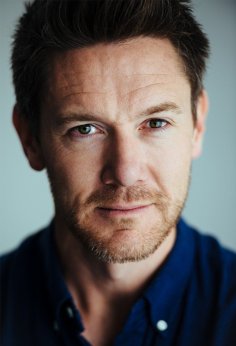
Despite having other passions, Mark Davis found himself acting from a young age. Growing up in Melbourne, Australia, his father had an old VHS camcorder, and to pass the time, Davis’ brother and his friend used to use the camera, recording small skits. Being the youngest, Davis was always made to be a bad guy who gets beaten up, or he would be dressed up in his mother’s clothes to play a woman. At the time, he was just happy to be spending time with his big brother, but little did he know he would grow to be a celebrated actor.
Throughout his esteemed career, Davis has been a part of several acclaimed projects, from award-winning movies to prolific commercials. He has starred in films like Lucy and Topdecked, which he also wrote, as well as the upcoming period drama Fallen. Australians also know his face from national commercials for Honda, Crownbet, Interflora, and more.
“I knew acting was always something I had a natural affinity for. Instinctually the acting process made sense to me and even though I was quite shy, I felt freedom when taking on a role. I feel like acting is a culmination of many art forms and for me movement and being in touch with something like your emotions and imagination as a profession just made sense. I like taking a walk in other people’s shoes and to get paid to swear, cry, fall in love and throw chairs is a privilege,” said Davis.
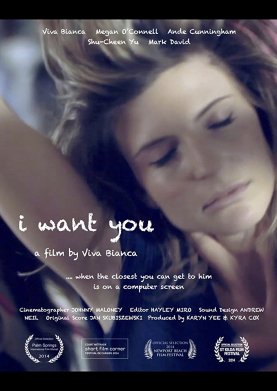
One of Davis’ first tastes of international success came with the 2013 romantic drama I Want You. The story follows Maya, who is deeply in love with a boy who lives in Israel. Maya struggles to maintain her faith in a relationship that unfolds largely on a computer screen after she meets another man who can provide the tangible aspects missing from her relationship. Although tempted, Maya has to ask herself, will this new relationship give her what she truly wants?
“The story really demonstrates that good people can be tempted to do things that are against their morals and who they are. In the end, however, the film is about forgiveness and that message is very strong,” said Davis.
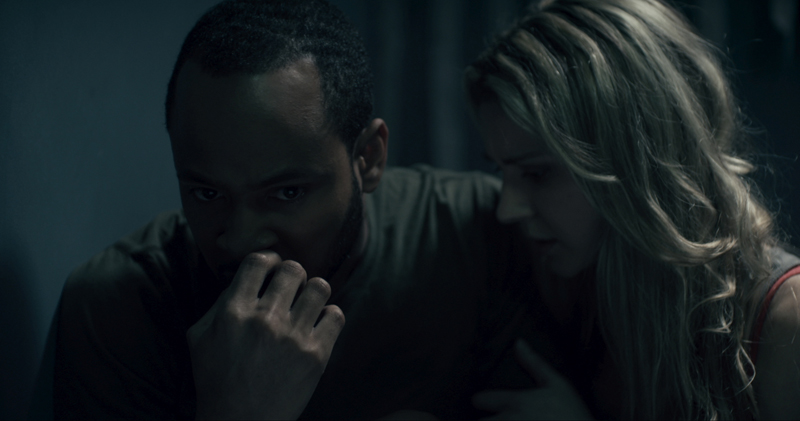
In the film, Davis plays Ethan, a character who was very much the other man in a love story. Ethan had to seduce Maya, who was in a very healthy relationship. He was the protagonist in the film. He came into a healthy environment and had to be the perfect blend of nice and endearing whilst also being the bad guy who is going to ruin a relationship purely for his own sexual gratification. Therefore, Davis had to be extremely charming, and managed to do so in tough shooting conditions. It was extremely hot on set, as they were filming in many different locations during the Australian summer.
“I liked being cheeky and being a person with low morals dressed as a nice guy. I’m more self-deprecating and awkward in real life so I had to channel my inner Brando to pull it off. That’s the joy in acting and I definitely had fun on this film. I’ve always said that no one cares about your enlightenment, the audience will watch because they want to see your darkness. It’s more relatable,” said Davis.
I Want You also stars Australian superstar Viva Blanca, best known for her role on the television series Spartacus. The film marked the actress’ directorial debut, and she felt the pressure. Knowing she had to have the perfect casting to make her film a success, she gave Davis the role of Ethan.
With the help of Davis, the film went on to be screened at the Palm Springs International Film Festival, the Newport Beach film festival and the St Kilda Film Festival, seeing great success around the globe.
“It was one of the first films I was involved with and I’m glad it was so highly regarded. Viva is a great creative mind and an amazing talent,” he concluded.
“To me, filmmaking is like making a delicious meal. The process of shooting is like gathering the ingredients for the food, whereas post editing is like cooking. Editors reorder the different materials, and create different dishes through proper dressing and seasoning,” she said.
Chen is recognized around the world for what she does. Having edited highly successful films such as Slingshot Prince, Offsprung, and most recently, I Don’t Want to Sleep Alone, Chen is an industry leading editor in China with her work celebrated both there and abroad.
Chen is also a celebrated colorist, often combining her roles on many films. She has enhanced many films through color with her work, including Maskand The Last Page. The latter was a motivational project for the Chinese native, as she was telling a true story about another artist.
The Last Page is a short film that follows the story of a once famed comic book writer Emanuel Delgado. After a long career of award winning comics, and a mega fan base, it’s been nearly a decade since Emanuel abruptly ended his career because of the death of his brother. He is living in a house littered by the drunken debris of his depression until one of his fans show up who is the same age as his brother and encourages him to restart drawing comic books.
“I like this film because it carries positive energy and is both motivating and encouraging. It’s a story about a person coping after the big mental trauma of losing everything to picking himself up and changing his miserable life. It encourages people to never give up on their dreams, reminding them there are always other people supporting and caring about them. We need to cherish our own lives and do more meaningful things in the limited time that we have. I was totally touched when I finished watching this film. It is not only about remembering the people we’ve lost, but also encourages those people who lost their hope from losing the one they love to get out of the deep sorrow and tell them that there is always somebody else supporting and caring about them,” said Chen.
The film premiered at the Los Angeles Independent Film Awards 2017, where it took home the top prize. Chen was both happy and surprised when she heard that The Last Page was an award-winning film, knowing that it touched audiences the same way it touched her.
“I remembered those countless nights that I was talking with the director about the color grading ideas and how we could make this film into a better piece of art. And right now, we can all be proud of ourselves that we made it to the end, although it was just a small step on a long road ahead of me, I will keep up and be more creative as a filmmaker,” she said.
Chen was in charge of all the color grading for this project. The director described what kind of color effects he wanted for each scene after showing her the editing. Chen marked down every detail he mentioned and spent weeks turning his vision into a reality.
There are a lot of scenes in the film that express a decadence and hopeless feeling, and Chen used color to enhance these emotions. She used a heavy yellow and green color tune for showing the messy house environment. After the character’s internal emotion changed, she used some bright and clean color tunes to represent the delightful changes in his life. The whole color tune changed from cold to warm. Her color grading works highlighted the transitions of the moods and echoed the arc of the story, different color rhythms made this whole film vivid and lifelike. Her work took the film to a new level.
“The film had a big creative space for me to do the color grading, through the discussion with the director, I understood what he wanted and started to do the individual color design. Throughout the whole process I had a chance to use the color analyse from other different film types and apply them to this film project. I like the color tunes from Fight Club very much, and I was always trying to get a chance to apply them into my film projects. This short film fulfilled the wish for me by using the Fight Club dirty color tunes to highlight the messy house when the main character was at his lowest point. Also, it created a big comparison later when the main character was back into his normal life,” she said.
Be sure to watch The Last Page to see Chen’s outstanding work and be moved by Emanuel Delgado’s story.
Growing up in Odessa, Ukraine, Alina Smolyar always believed she would be a painter. She had been drawing since the age of three and gained recognition for her work around the world. However, at twelve-years-old, she quit it. Even at that age, she knew she did not have the inspiration or the drive to become a visual artist; this was her parents dream, not her own. She knew she had another passion to explore, one that excited her beyond anything else, and that was acting.
As a childhood pastime, Smolyar would put together small plays or sketches with other kids in her neighborhood. They invited audiences of their parents and neighbors, and every time Smolyar would perform she felt an energy that was unparalleled with anything else she had ever experienced.
“When it came to that point when I had to choose my future job I totally knew what I wanted to do. The only problem was that I had to convince my parents that I could do it. They didn’t want me to become a professional actress. They are not related with show business at all,” said Smolyar.
Now, Smolyar has indeed shown not only her parents, but also the entire world just what she is capable of as an actress. She starred in her own filmMolehill, taking home several awards for Best Actress for her performance from many prestigious film festivals around the world. She has been in several national commercials and acclaimed television series. She has worked alongside Hollywood’s elite, like Denise Richards, Val Kilmer, and William Baldwin in the upcoming comedy 1stBorn.
Smolyar’s latest film is the action/thriller feature Skeleton in the Closet. The film tells the story of Jason, 20-something slacker and computer savant who, on a dare, hacks the White House computer servers. He covers his digital tracks, but a hacker buddy boasts of Jason’s exploits online. The FBI tracks down the friend – then breaks down Jason’s door. The events that follow are a race against time, a battle of wits, and a fight to the death for two young computer prodigies pitted against a group of armed, determined criminals who will stop at nothing. In the end, the difference between life and death rests solely upon superior intelligence – and willingness to trust, but as things spiral further and further out of control, the question for us is: will they make it?
Alina Smolyar, photo by Valery Sobol
“It’s so fresh right now audiences will love it. It’s going to be a Ukrainian-American project, a thriller with some action elements. I won’t give you details about the story but it’s very hot and new for this particular time. It’s a thriller, you will see a lot of action and of course everything is based on love. You’ll see some drama, elements of comedy. David Ransil is a script writer, you will enjoy it for sure. He definitely knows what he does,” said Smolyar.
In the film, Smolyar plays a pivotal role. At first, her character appears to be very nice and helpful, but she is also very deceiving. She aims to benefit herself in every move she makes. She also is pivotal to the climax of the story, helping audiences better understand every characters’ motives.
Smolyar is very excited to be working on such a unique film. Not only does she like the story, but she loves the team she will be working alongside. Shooting will begin in September, with an expected release date of next year.
“It’s very important to have a great team. I like the script, the idea, my character and the place where we are going to shoot it. It’s a huge mansion with an amazing lake. I am really looking forward to it,” she said.
Smolyar has quite the year ahead with Skeleton in the Closet and1stBorn. With so much going on, she still remembers being a young girl in Ukraine with a dream that her family didn’t support, and now, for others that may be facing the same challenge, she offers the following advice.
“Think wisely before choosing this career. You always have to be prepared to hear no and just move on. The best phrase for that if you can see yourself doing something else besides acting, do it, don’t start an acting career. But if you decide to take this road you have to understand that it takes so much commitment, inside power, taste and knowing what you’re selling. You are a product, know your brand,” she advised.
To stay up-to-date with Skeleton in the Closet, check out the film’s website here.
Growing up in Changzhou, a small town in the Eastern part of China, Yang Shao found himself drawn towards filmmaking. As a child, he would pick up his family’s handy-cam and experiment, filming everything he considered interesting. In such a way, he was destined to be a cinematographer. He always had a good eye for photography and frame composition, and when the average person would just see tall buildings while walking in the city, Shao saw letters, signs, magic. He spent his youth thinking of what angle every image he took in would look the best, and he still applies this mentality now, years later, as a celebrated cinematographer.
Shao has put his artistic touch on many film and television ventures. Projects such as A Better World, Life is Horrible, Under and The Great Guys have gone on to see international success with the help of his talents. Audiences can soon expect the same from his upcoming features: Need, In the Middle of the Night, and Excel on the Highway.
The highlight of his career, however, came just last year when Shao worked on the film Once More. It perfectly showcased his talent and passion for cinematography, as the Director and Producer were eager to let him explore his creativity. He was also eager to share the story with the world.
“I was really moved by the story this movie tells. I believe in the importance of telling good-hearted stories and this one is a perfect example of that kind of story. Also, we had an amazing team who was working on the project and working with those folks was really a pleasure,” said Shao.
Once More explores the tale of a psychologically collapsed dancer who failed in a renowned competition and broke his left leg. As the remedy to this life, he intends to commit suicide, but he is accidentally saved by a neighbor girl he was in secret love with. This subtlety encourages him to get back to the stage by dancing with the bum leg.
“At the present time with the #TimesUp movement showing the toxic environment in the film industry that was exposed in the recent year, I think there’s still a lot of room for masculine vulnerability. In fact, that kind of trait in men actually gives me hope in our future. And this movie is a good example of bright and pure emotions that are left in men’s souls. I believe in importance of bringing up the stories that have to be heard but at the same time I know that good-hearted and kind stories is what will make this world a better place,” said Shao.
Once More premiered in March 2017 at the Hollywood International Moving Pictures where it was a semi-finalist on the festival program. From there, it saw great success at many international film festivals, and Shao himself was recognized at many of them, winning Best Cinematography at the American Movie Awards, the Hollywood International Moving Pictures Film Festival, Top Shorts!, Festigious International Film Festival, Los Angeles Film Awards, and more. In total, the film brought Shao seven awards for cinematography, and also numerous awards for Best Film, Best Director and Best Producer. Such acclaim could never have been possible without Shao’s artistic eye.
“I always knew that Yang is a talented cinematographer and always wanted to work with him. He brought his outstanding skill-set to the project. I’m looking forward to working more with Yang,” said Kees Van Oostrum, Executive Producer of Once More.
It was Van Oostrum that approached Shao to be a part of the film. He knew Shao’s cinematography style and that he would be vital to the production. As the cinematographer, Shao chose to use more of the natural light because the story is very elevated by itself and a lot of artificial light would only have hurt the picture in his opinion. A large portion of the movie takes place in a theater, and he made a decision to use abstract lighting to highlight the emotional state of the character and emphasize the stress that the protagonist was going through.
Coming from the East, Shao shot the story with an Asian flavor, bringing the best traditions of the eastern cinematography combined with his extensive experience working in the film industry. This allowed him to obtain angles many would not have, and this tactic was fully supported by the Director, Rachel Zhou and main actor, Jaeme Velez.
“I think we found something very precious there on set. When people’s energies start to bounce around and more importantly play in the same key, that’s when the real magic happens,” said Shao.
Above all else, however, Once More was special for Shao because of the story. He saw himself in the main character, connecting to the protagonist’s artistic journey. It provided a beacon of hope during a difficult time for the cinematographer, and he will never forget what it gave him.
“His passion and will resonated with me on a deeper level. His struggle and obstacles that were on his way to his dream are similar to mine in a way, and to most of the artists’ paths. There was a time in my life where the only thing that was left was hope and big desire to create something larger than myself. And actually, this film came along right around that time. It was like a big sign telling me to keep going, and I think in the end it paid off really well,” he concluded.
Romaine Waite has always been an outgoing person, a trait he believes has helped him greatly as an actor. When he was a child, growing up in Canada, he participated in school plays and drama programs, not because he thought it would be his career, but simply because that is what he enjoyed. It wasn’t until his early twenties when he realized he could truly follow his passion, and the second he got his first professional part, he knew that acting was his calling.
“I’ve always had this innate ability to connect with people in some way, making people laugh or causing disruptions, depends on who you ask,” he joked.
Now, Waite is a celebrated actor. His work in television series such as Star Trek: Discovery,Frankie Drake Mysteries, and The Mistimpressed audiences in not only Canada, but the rest of the world. His versatility knows no bounds, and he is always looking for a new way to explore his talents.
“Romaine is great. He makes my job a lot easier. He is the consummate professional and a very dedicated and crafter artist. It is always pleasurable working with him,” said Alan Moy, Producer who worked alongside Waite on Murdoch Mysteries and Usher the Usher.
Waite recalls his first real taste of international success as the sci-fi horror flick Antisocial. The movie follows five university friends who gather at a house party to ring in the New Year. Unbeknownst to them, an epidemic has erupted outside, causing outbreaks around the world. With nowhere else to turn, they barricade themselves indoors with only their phones, laptops, and other tech devices. They use their devices to research the possible cause of this outbreak. Information and video footage over flow their computers as they descend further into the cause and the ensuing chaos. As the virus spreads, the mood in the house changes from fear to paranoia. Who is safe? Who can they trust? Reality becomes blurred as they slowly discover the source of the virus causing the sickness… and there is no going back.
“I thought the story was clever it takes something that everyone was familiar with, being social media, and took it to the extreme. If you take away the gore, it’s basically what we’re experiencing today. Snapchat, Instagram, etc. have become these tools that are allowing people to share every single aspect of their life. In a way, I think the film talks about a very important subject in our society — what are the effects of social media and what are the limits and consequences of sharing too much on social media,” said Waite.
In the film, Waite plays Steve, one of the five friends gathering to celebrate New Year’s Eve. He was jovial and sincere university student. Audiences got to see him enjoy time with his close friends and girlfriend. Unfortunately, he was first in the house to experience the epidemic that trapped them in the house. This is pivotal, as Waite was responsible for getting the audience to truly understand the epidemic, and therefore the film. Within the film, Steve was the only individual who the audience was able to see go through a full transition. With this, the audience knew what the signs were and what would happen if another character was to get infected.
“It was really important to me that people felt the struggle of this character. As he tried to figure out what was happening to him without revealing anything to others in house. Through my portrayal, I hoped the audience would feel like they were a friend to my character and miss this him when he was gone,” Waite described.
The film had its premiere at the Fantasia Film Fest in Montreal back in 2013, and from there went to several high-profile international film festivals, including Calgary International Film Fest, Sitges International Fantastic Film Festival, Toronto After Dark Film Festival, and the Cannes Film Festival. From there, it was distributed through Monster Pictures on DVD, through Super Channel, and on iTunes. Such success could not have been possible without Waite’s portrayal of Steve, hooking audiences to the story early on.
“It’s always nice to see an indie film do well. It takes so many people and long days to make a film. To me the success is in completing the project. I am proud of everyone involved,” said Waite.
Antisocial was Waite’s first horror feature film, and five years later he still looks back and coals the experience amazing. At the time, he was still very curious about the process of filmmaking and how it all would come together, and he could not have been happier with the result. Everyone on set was professional and inspired, creating a contagious energy. He found himself watching everyone on set, from the cinematographer to the special effects make-up artist, taking everything in and reminding himself why he wanted to be an actor in the first place.
“I liked the comradery. Everyone was really passionate about the project. We were all stuck in a house for weeks. Friendships were built, and some good memories were made. I hadn’t done anything like that before. Overall it was a great experience,” he said.
Be sure to check out Antisocial to see Waite’s terrifying performance as Steve.
In 1999, Chen Xu dedicated himself to watching approximately 1,000 movies in order to absorb as much information as possible about sound design and sound mixing within the film industry. Interestingly enough, the overwhelming lesson that he learned was that regardless of a film’s genre or budget, a good sound design could always supplement a film’s visual stimuli and boost the viewer’s imagination beyond this imagery. Sound design has the ability to change the entire viewing experience and Xu felt confident that he possessed the skill set and creativity to be able to take any visual film component and take it to the next level with the addition of his sound design. Since then, he has earned a substantial amount of recognition for his talents, not only in the form of awards, but also in sheer demand for his work. Fortunately for Xu, sound design and sound mixing are a lifelong passion and he is one of the few people in this world who can say that they get to do what they truly love and call it “work.”
“Sound is not as specific as the film’s picture; however, it tends to be integral to our subconscious mind. The delicate organization and arrangement of sounds can greatly enhance a movie. On the surface, it appears to be a mere aid to the picture but in reality, the space and importance of the sound creation typically accounts for over half of the film. This gives me a sense of freedom in my work to express my own creativity. That’s where I really like sound,” said Xu.
Throughout his remarkable career, Xu has used his sound design and sound mixing expertise to enhance the scripts of a number of renowned films such as A Simple Goodbye and The Wasted Times. For his work on The Summer Is Gone, Xu received a nomination for Best Sound Effects Award at the 53rd Golden Horse Film Festival. For Xu, however, receiving awards and nominations are simply a bonus to being able to mix and design sounds for a living. In fact, the true highlights of his career come to life when he gets to work on projects enriched with culture and meaning. This is why, in 2015, when Xu was approached about working on The Shaft, he could not refuse.
The Shaft, which has earned over a dozen international awards, follows three intertwined stories of a father, a son, and a daughter fighting to hold onto hope and family as they face the harsh realities embedded within life in a poor Western-Chinese mining town. The story illuminates a number of complicated relationships hidden beneath the community’s hardened exterior and when Xu first read the film’s script, he knew it was something he had to be a part of. Xu credits the film’s realistic script as being the main draw to accepting this challenge. This meant that for the film, Xu would be in charge of all sound-related work, from production mixer to sound design to final mixing during the film’s post-production phase.
What Xu hadn’t necessarily anticipated when accepting the opportunity to work on The Shaft, was just how harsh the conditions would be. Due to the fact that the film deals with miners, many scenes were shot deep underground and as a result, Xu was tasked with ensuring that the film’s sounds remained as clear as possible given the setting constraints. In addition, the actors insisted on shooting their own scenes despite dangerous conditions, and therefore, Xu had to accompany them in the mines to shoot their scenes. Oftentimes, he would be covered in particles of soot at the end of a shoot. To his director’s appeal, Xu masterfully captured the realistic texture of the town and the state of those living within its conditions through his sound mixtures. In addition, he chose to enhance the importance of the film’s sound design by only using music at the conclusion of the film. In addition, he managed to capture the unique, untouched atmosphere of Guizhou Province in China. Given the fact that Guizhou Province has not yet fully integrated into the fast-growing Chinese economy, he knew that it would be extremely important to ensure that audiences could grasp the authenticity of the film’s location.
Where some sound designers may have found themselves intimidated by the challenges presented when working on The Shaft, Xu found himself energized by the opportunity to experiment in new areas of his art form and to help his colleagues tell this story in the most interesting fashion possible. The film’s director, Zhang Chi, requested that Xu stray away from the typical, clear-cut sound design principles and create a more “dirty” sound arrangement. This, however, did not require Xu to simply arrange the film’s sound elements, but to do so in an intentionally disorderly manner. Chi felt as though this would help to enhance the film’s objectivity. He did not want to criticize the characters, nor did he wish to sympathize with them. He wanted to present the world with an understanding of the social realities embedded within the Chinese culture today and to do so in a way that would resonate with his audiences.
In the coming year, Xu will take charge of the sound mixing and design for two feature length films and hopes to continue spreading his talents throughout the sound editing industry for years to come. To anyone else looking to pursue a career in sound mixing and sound design, Xu offered the following advice:
“Sound design and mixing is a very creative but oftentimes relatively boring job. If you want to become a good sound designer, you must first be able to endure loneliness and genuinely love movies, so that you can always maintain the vitality of your creation,” told Xu.
Korea’s Ran Ro remembers the first time she fell in love with the idea of filmmaking. It was when watching the iconic French film Amelie. As she took in the film, it was a different experience than simply watching a movie. In one scene in particular, the narrator lists out what Amelie, the protagonist, likes, as audiences see the visuals depicted by the narration. That moment sparked a fire inside Ro. She took in how the “mundane” aspects of a film could easily be ignored by the masses but can be captured so beautifully and significantly. It was then when Ro decided she wanted to be an editor. She loved the power that such small decisions could have over the telling of powerful stories, and she was ready to become a master of the artform.
Now, Ro is known for doing just what she admired when watching Amelie. Her attention to detail creates visual masterpieces, whether she be working on a minute long commercial or a feature film. Her work with brands such as Tastemade, BackBeatRags, and Elite Model Management captivated worldwide audiences, and when she embarked on her most personal project ever, the film In Between, she once again impressed.
“The underlying concept of the project was developed when I stumbled across a memorial park in Honolulu. I was supposedly at a place that represents the end of life, but all there was in front of me was empty scenery. Observing the sunlight landing on the unmoving landscape, I couldn’t help but feel oddly at peace. In comparison, I began to think about the emotional turbulence that one goes through in life. The script was written shortly after this experience, as a means of unravelling the curiosity that arose that day at the memorial park. My childhood experience of being raised by my grandmother became a central plot line of the main character of the film,” said Ro.
In Between tells the story of Tina, who in the middle of a suicide attempt on New Year’s Eve discovers a mysterious path inside her duvet cover, leading her to an ethereal space filled with an infinite number of lights. Not only did Ro edit the film, but she also wrote, directed, and produced it.
After premiering last year, the film saw immense success at several prestigious international film festivals. It won the Award of Excellence at Best Shorts Competition and was a semifinalist at the Los Angeles CineFest, the Los Angeles Independent Film Festival Awards, and the Hollywood Screenings Film Festival, to name a few.
“It is rewarding and also very encouraging to have seen the audience resonate with a story that involved my personal experience. It motivates me to create stories that are meaningful and that challenge me to be more curious and observant about things around me and about human emotions,” said Ro.
Music played a large part in the film, from the writing process all the way to editing. One of the music scores titled “Reoccurence” greatly inspired Ro, and she played it repeatedly throughout the production, allowing it to stimulate the rest of the cast and crew.
“During rehearsals with actors, I played the same music to match the pace of their dialogue and the rhythm of the music, knowing that I would be using that score when editing. Once the actors were tuned into the music, the whole scene fit into it – the very last dialogue ended with the last beat of the music,” she described.
Filming went very smoothly, which made the editing process almost effortless for Ro. She knew the exact pace and tone that she wanted for each scene after being involved in the writing and directing processes.
The film uses otherworldly places to visually portray metaphors on time and space. In one scene, this is exemplified when the protagonist crawls through an endless path underneath a duvet cover when time freezes during the New Year’s countdowns. She encounters a little girl who guides her to another otherworldly place, “The Gap”, a realm in between life and death where the souls reside.
The Gap was instrumental to the film, and it was conceptualized when Ro imagined an unperceivable place that exists in between every second. She thought of it as a place where all past moments exist. The main character in the film, who keeps her dear memories of her grandmother, reunites with a younger self of the grandmother in The Gap. This was Ro’s favorite scene in the entire film, and the one she felt the deepest connection with.
“I enjoyed seeing my vision come to life every step of the way from writing, casting to production. It was surreal but also very exciting to see what I envisioned actually happen right in front of me. I felt very grateful that the crew that I was working with truly understood my vision and used their talent to materialize it,” she concluded.
Be sure to watch the beauty of Ro’s work on In Between here.
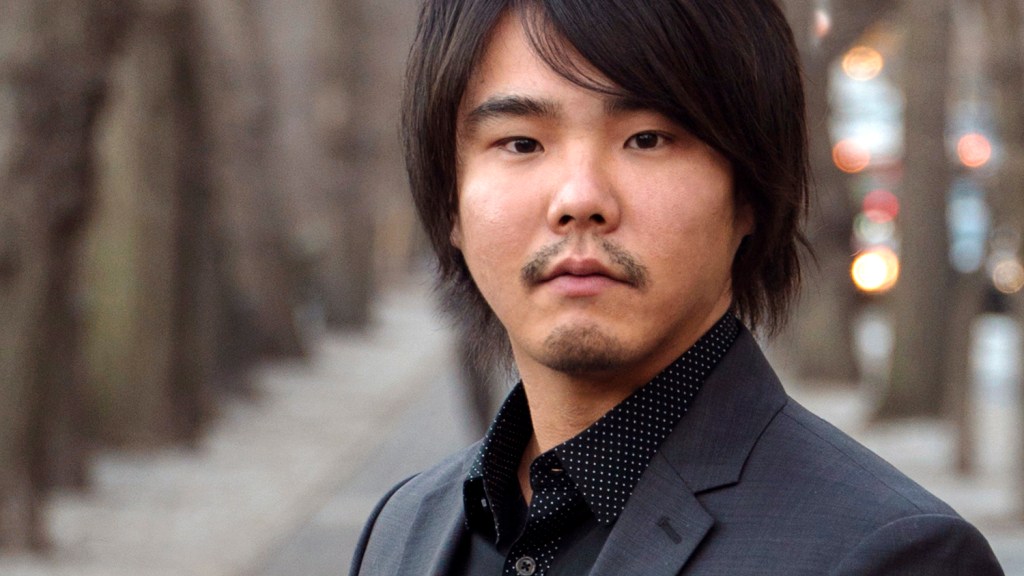
Yuito Kimura knows that being a cinematographer is not just knowing the equipment or having skills to handle camera and lighting; being a cinematographer is being a storyteller. The moment he takes on a new project, he doesn’t just read the script, he studies it. He makes sure to know exactly what motivates the characters, as he knows that will affect how he shoots each scene. He notes how his vision can help tell the story, and that is what makes him so formidable at what he does.
Both in his home country of Japan and abroad, Kimura is an in-demand leader of his industry. His work on projects such as the music video “We are Stars” for pop band Snow Angels, the web and television commercial for Townfrost, and the films Dropping the S Bomb and Star Wars: Amulet of Urlon show just what he is capable of. He was also recently nominated for Best Director of Photography at the World Music and Independent Film Festival 2019 for the music video “Syrup” for singer/songwriter Jaklyn, which he also directed. It also has been nominated for Best Director and Best Creative Music Video.
Back in 2015, Kimura had the chance to pay tribute to one of his favorite film series, Back to the Future. Creating the film Back to the Future?gave the cinematographer the opportunity to explore the franchise that introduced him to American culture during his childhood, and it was an unforgettable experience. In this new film, Marty and Doc Brown go back to 2015 and find that one detail has changed the future as they knew it.
“I’m a big fan of the Back to the Future movies, and so is everyone that worked on this project. The writer, Logan, had a passion that made me, and the entire crew, really motivated,” said Kimura.
While shooting, Kimura focused fully on following the director’s vision, and made suggestions that greatly added to the film. Knowing the original films so well, he proposed mimicking camera framing and movement from Back To The Future II when shooting B-Roll and inserts of the props such as DeLorean and its interior. This recommendation made it to the final cut, and truly adds the right touch of a throwback while still making a unique film.
The film went on to be recognized at several international film festivals, including the Wendy’s Shorts Awards, WILDsound FEEDBACK Film Festival, Sutter Creek International Film Festival, and more. It won Best Film at Fan Fiction Short Film 2016 and Best of Comedy Short at the Direct Short Online Film Festival that same year.
“When we realized on day one of shooting for Back to the Future? that we would be without a cinematographer, I found Yuito’s website and reached out to him directly. He arrived promptly with his equipment and was kind and respectful to everyone on set. He moved quickly through the shot list provided by the director and even offered his own insights that improved the finished product. He is efficient and knows how to get the shots we needed. He provided our production information about lenses and suggested cameras that proved to be important in our later work. I would be happy to work with him again anytime,” said Jen Floor Mathews, Producer.
On set, Kimura made sure to focus on achieving high-quality shots. He used simple camera framing, movement, and lighting. His biggest priority was delivering the story without any distractions, ensuring continuity in lighting and camera work. Such discrepancies, he knows, can cause major distractions for audiences when they watch the film, taking away from a captivating story.
“I believe that not making any distractions is actually another level of filmmaking. For example, when I watch a movie, I can be distracted by small thing such as unnatural lighting on actress’s face or continuity. I fully commit myself to not frame those things and fix anything that would would be a distraction,” he said.
Overall, the shoot went very smooth and was quite fun for Kimura. They even had a key prop from the original films, inspiring everyone on set.
“The best part was that they used the actual DeLorean that was used in the original movies. I couldn’t believe I had the opportunity to shoot with such an iconic prop. I still remember that everybody started taking photos with the DeLorean and stopped working. At first, it was putting us behind schedule, but then I realized it was just because everyone was excited to be honoring the movies. It was such a funny moment. That was the highlight,” Kimura concluded.
It has been said that destiny doesn’t come down to chance. Rather, destiny is a choice. It isn’t something to wait for, it is something to be achieved. Growing up with actors as parents, Liam Casey Sullivan has always known that entertaining was his destiny; however, rather than wait around for his fate to unfold, Sullivan took matters into his own hands and began doing the very thing he knew he was meant to do. His childhood was charged with exposure to entertainment and other forms of artistic expression. With that, his imagination ran rampant and he was captivated by the world it molded around him. As a result, the talented young actor is no stranger to the stage. Whether he is acting in a theatre production, on a television program, or on the big screen, he is determined to ensure that he never lets his calling escape him. He was born for the screen and knows that with the right amount of hard work and dedication, he will be able to continue along a path to greatness and enjoy it.
Since the outset of his career, Sullivan has earned himself a number of different roles across various entertainment mediums. For instance, when Sullivan was just 10 years old, he felt more than ready to begin his acting journey. The unrepresented, eager young artist had compiled a portfolio of head shots and information about himself, as well as his skill set, and to his avail, was recognized by renowned director, Pat Mills, who wanted Sullivan to act in his upcoming film, 5 Dysfunctional People in a Car. The film comedically follows five individuals during a car ride to drop their grandmother off at her retirement home.
Given his desire to immerse himself into the entertainment industry, Sullivan recalls the experience as feeling absolutely surreal. On top of the excitement of simply getting to act professionally, knowing that his first ever film went on to successfully screen at several North American film festivals, as well as to secure a win for Best International Short Film at FilmOut San Diego, was all the more exciting for the enthusiastic Canadian actor. In addition, he was over the moon when BlogTO named 5 Dysfunctional People in a Car one of the top 8 must-see films at the Toronto International Film Festival.
LIAM CASEY SULLIVAN AND SHANNON FORD 5 DYSFUNCTIONAL PEOPLE IN A CAR, PHOTO BY PAT MILLS
For the film, Sullivan played a character by the name of Robbie Gordon, intended to be the ultimate heartthrob and the coolest kid in his school. He exists within a constant buzz that results from his popularity, keeping his friends close and turning his nose up at anyone else he crosses paths with. Stereotypically, girls crush on him, his grades lack, and his ego fills every room he enters. In order to play Robbie as convincingly as possible, Sullivan made an effort to channel the excitement of entering the acting world at such a young age and allow him to appear conceited and aware of his reputation. In addition, he seized the project as an opportunity to act as a sponge, absorbing as much information as he possibly could from his experience on set, working alongside other talented actors and under a skilled director. He took note of the hard work and processes evolving around him, vowing to bring his skill set up to par and to start off his career with a bang.
“I was so fortunate to be able to witness a group of people so passionate about what they were doing at the young age of ten. It really solidified my aspiration to continue to do this for the future of my career,” recalled Sullivan.
After working on 5 Dysfunctional People in a Car, Sullivan dedicated himself to pursuing other meaningful roles. He continued to surround himself with like-minded creatives and seizes each new learning experience as ferociously as he did for his first. Since that very first film, Sullivan has gone on to work on a number of other successful projects, such as Mary Goes Round and Degrassi: Next Class. Sullivan is a firm example of the notion that by combining his talent with a willingness to learn and a determination to find work, he can turn his dedication into positive outcomes. For other young actors looking to seize their destiny, Sullivan has the following advice to offer:
“Always challenge your emotional capacity and don’t be afraid to take leaps outside of yourself. It is surprising how well you can do when you consistently test the boundaries of your work. It is really important to always keep in mind how many people go into making a production successful and it is crucial to trust your collaborators. Whether that’s your director or your fellow actors, developing solid trust amongst each other is a great way to achieve results. Be that firmly supporting and believing in your director or fully engaging with another actor in a scene, always remember that achieving greatness in this industry is solely based on the collaboration of many.”
Written by Annabelle Lee, top photo by Joshua Augusto
It seems like a long time ago that Ben Prendergast was looking to be a software entrepreneur. The Australian native always had a passion for acting, but the notion of pursuing such a career in Australia is so uncommon, he never felt like it was truly a possibility. Having dreamed of being an actor since he was only a child, it always seemed like just that: a dream. However, when embarking on his technology career, Prendergast decided that he had to pursue his passion, and one day, after landing a role on an NBC television pilot, he decided to turn his dream into a reality. Since that time, he has never looked back, crafting an extraordinary career.
Now, Prendergast is an industry leader in Australia, and seeks to make a difference through his work. With Prendergast as the lead, The Marker aimed to bring awareness to the socio-economic issues in Australia and was funded by the Australian Competition and Consumer Commission. Similarly, his film Punch Drunk shed light on the marginalization of the elderly and mentally unwell. Sometimes, the actor’s love of telling stories is what drives him, which was the case with the feature Predestination. However, no matter what he is working on, his innate talent and dedication to his craft impress audiences, critics, and colleagues alike.
“I’ve worked with Ben on a number of projects. Most recently, we worked on Post Apocalyptic Man. As a writer, usually you’re not working directly with actors, but in the case of this project it became really valuable. Ben’s ability to cold read a scene and bring it to life was a revelation, and something we relied on in the early development right through to final script stage. Ben and I would stay up way too late discussing how we could bring more conflict, more drama, more humanity to this piece and I think it really shows in the final script. But then I was also in the rarified air of watching Ben work on set, and even then, he’s constantly drilling for more in the text, and during shooting I saw him make bolder and more compelling choices. Some of them made it into the final film, some didn’t, but I just remember the feeling on set was electric with every take,” said Daniel Walsh, Screenwriter. “I think Ben just has that thing that you can’t put your finger on. You roll the camera on him and you’re transfixed even before he’s said anything. You think to yourself, “What’s he going to do?” and he always surprises. He’s curious, in a way that most actors are, but he’s curious as the character, which is something else completely. I’m not at all surprised that he’s had the success that he’s had.”
Post Apocalyptic Man tells the story of humanity’s need for survival in a world where they are blind to their own destructive tendencies. The human population is in the grips of decline after genetic modification turns the female population sterile. When it is discovered that a child may carry a gene that is immune to the disease, forces of good and evil converge on a small Australian outback community to find the child and gain control over humanity. Cane Storm, the leader of the evil tyranny, sends his number one henchman Baker, played by Prendergast, to infiltrate the Renegades led by anti-hero Shade. Leathergirl escapes with her brother, who seemingly carries the gene, but is pursued by Baker. Throughout the film, audiences discover that Baker is a genetically engineered mercenary who will show no mercy and is hell bent on finding Shade and the boy who carries the cure.
“This film deals with humanity’s deterioration, something that is on all of our minds, but depicts it with food shortage and the notion of a barren human population. We haven’t been a declining population since World War I, and I think current generations aren’t really aware of that or prepared. This film gave a real sense of a species in decline, and the desperation and hope that springs from that. For me, it’s a fantastic analogy for how we currently look at our food waste, energy production, and government systems,” said Prendergast.
When Walsh and Director Nathan Phillips were looking for a clean-cut super soldier type of actor, they asked Prendergast to audition. Not only was he in incredible shape and fresh off an intensive training program, Prendergast was well-known for his tremendous talent and versatility. After auditioning for the part, he was offered the role immediately.
“From the very beginning it was evident that Ben was a thoughtful and dedicated artist, and he had key elements of his character down at a very early stage. He goes deep within his characters, finding the most truthful elements, but also playing with the duality that most interesting characters possess. We had an absolute blast on and off camera and I now consider him a really close friend. Ben gives over to the madness of filmmaking. He wants to find the gait, the voice, the truth of the human condition as it pertains to his character, but then he goes further than that and wants every other department to function too. He looks after camera department, makeup, wardrobe, etc. As a director, I never have to worry that we’re not going to get the shot,” said Nathan Phillips, Director.
Prendergast was aware, when preparing for the film, that he was not only playing a villain, but also a genetically superior being. Therefore, he wanted to look at the misogynistic and xenophobic nature of historical characters to get into the mindset of Baker. He took particular interest in looking at Nazi-Germany and the horrible beliefs in that time. Physically, he thought he should remain strong, but his vocal quality needed to be gravely and distinctive. Once he had all this figured out, he put on his costume of a trench coat and gloves, and instantly became the character in front of the camera.
“I always believe that even when there are nefarious or even psychopathic characters, they always have righteous reasons for their actions. Baker believes he deserves his place in the future utopia of humanity, and that given his clear genetic advantage he is doing humanity a service by cleansing the world of those beneath him. His narcissism has bred a psychopathic quality, and therefore he can operate in any way that Cane Storm, the leader of empire, needs him to. He’ll take any life and use any means necessary to get what he wants,” said Prendergast. “Strangely, this creates an empathy that an audience can follow, we love our bad guys because they have a mastery over their destiny, they know what they want and how to get it. Don’t we all wish for that?”
Baker was essential to the story of Post Apocalyptic Man, and Prendergast to its success. The film wouldn’t have worked without the conflict that Baker carried. The heroes and antiheroes of the film were struggling for survival in a world without food or the ability to procreate. Baker’s character introduced a final hurdle for the protagonists to take action against the empire, and audiences see that although at first they are terrorized, they eventually find the spark to create the resistance.
“It was such a fulfilling project. We were on a really tight shooting schedule but we made it work, producing something completely unique in the Australian film canon. Now considered a cult film, Post Apocalyptic Man is my favorite punk-film outing ever, and I made a lot of great friends in the process,” said Prendergast.
After premiering at St Kilda Film Festival, Post Apocalyptic Man played at independent theatres in Australia, New Zealand, and the United States. Afterwards, it was distributed digitally and still sees success, eight years after its premiere. If you have the opportunity, be sure to watch the film and see Prendergast terrify and excite audiences.
By Sean Desouza
International Entertainment, and the Talents that Leave us Buzzing….


 I Want You also stars Australian superstar Viva Blanca, best known for her role on the television series Spartacus. The film marked the actress’ directorial debut, and she felt the pressure. Knowing she had to have the perfect casting to make her film a success, she gave Davis the role of Ethan.






 While shooting, Kimura focused fully on following the director’s vision, and made suggestions that greatly added to the film. Knowing the original films so well, he proposed mimicking camera framing and movement from Back To The Future II when shooting B-Roll and inserts of the props such as DeLorean and its interior. This recommendation made it to the final cut, and truly adds the right touch of a throwback while still making a unique film.
 “I believe that not making any distractions is actually another level of filmmaking. For example, when I watch a movie, I can be distracted by small thing such as unnatural lighting on actress’s face or continuity. I fully commit myself to not frame those things and fix anything that would would be a distraction,” he said.


 internationalfilmreview