Category Archives: Reviews, Interviews & Features!

“FADED IMAGE REVEALS A VULNERABLE & GIVING TROY GREENWOOD

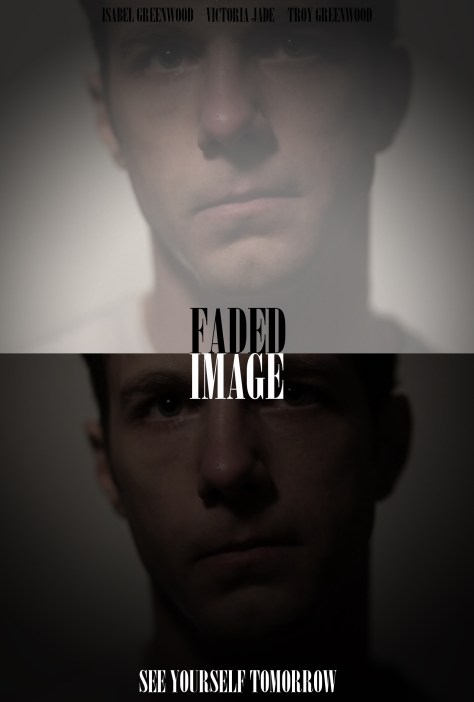
Troy Greenwood has many talents; producer, writer, actor, etc. While he may not truly accept it, poet and artist should be mentioned in the same breath. His film Faded Image is as vulnerable, heart-wrenching, and inspiring as any of the great poems of literature. The film seeks to reveal, relate, and give respite to those who experience or come into contact with those who experience depression. The public’s understanding and acceptance of the validity and presence of mental health has grown considerably in the last decade, often as a benefit of the work of artists like Greenwood who help others to peer into the invisible “virus” that effects and overwhelms our fellow citizens and family members, often directly in front of us. Faded Image was an official selection at the Covellite Film Festival as well as the Bare Bones festival 2017. As someone who has dealt with the challenges in his personal life like clinical depression and leukemia, Troy is able to communicate the internal perspective that so many silent individuals struggle with on a daily basis. Because he is a lauded and respected member of the film community, Greenwood is able to present these feelings in a way that makes them palpable to a wide audience. Good films allow us to “see” the emotions on the screen, great ones allow us to “feel” them; and Faded Image is a great film. The two drastically different scenes relate the mental state and the ability of all individuals to choose which of these to gravitate towards. As the dialogue of Faded Image states, “Find shelter in the simplest of things that bring us joy. Dance, cry, sing, laugh…even when it hurts and know that you are never alone.” Poetry. Hope. Art.

To suggest that Faded Image is a life-long endeavor is completely accurate. The writing of the script has been a decades long process for Greenwood. While the majority of those who battle depression avoid the help that could be given them due to some antiquated sense of inferiority or shame, it takes an artist like Troy to run headfirst into the fray and reveal the most personal and vulnerable parts of himself. This is partly due to a desire to help and inform others and also as a self-enacted form of therapy. Therapy happens in stages and can sometimes take a lifetime to achieve the progress necessary to cope. Greenwood began creating the script for Faded Image two decades ago. He reveals, “I wrote the first half of the script during my teens when I was first diagnosed with chronic depression. Battling through dark times and dark thoughts it can almost feel like you’re detached from yourself, unable to feel, and the dialogue of the first half of the script came out of a piece I wrote talking to myself as an outsider about the way it feels to be at the end of your rope – suicidal. I then thought about what I might say to myself in those darkest of moments to get myself through, and that formed the first incarnation of the script, nearly 20 years ago. I returned to the piece at numerous points throughout my career, tinkering with the script, mostly updating or revising the second half of the script, and how my thoughts had changed about what I might choose to say to myself to get through. It wasn’t until I started collaborating with Film Acting Fight Club that the idea came back in earnest to film this project. It had been several years since I looked at the script but I brought it in to the group for a reading. The feedback I got from the group was great, and I went about rewriting a draft of the script.” The first half of the film, which was written in Troy’s teen years, takes place in a bathroom. It depicts a teen contemplating, and to some point, attempting his own suicide. It is painful to watch. The lack of color translates the lack of interest and stimulation that someone suffering from depression receives from the world. This myopic outlook is unavoidable in the same way that someone dealing with pneumonia cannot resist a cough. The second half of the film depicts the same person, now an adult who has persevered and now possesses the wisdom and ability to speak to his younger self about the trials he has faced. The man’s age has also taught him the ability to do that most difficult thing, take one’s own advice. The setting for this second half of the film is a summer’s day surrounded by color and light…and hope. A young girl plays in the park, alluding to the hope that blooms in the future.

14663_889580108396_908312593_n

If writing this script was the act of writing a speech, filming and releasing it was the equivalent of reading the speech aloud at the city square. Troy confirms that the technical part of filming came with its challenges as well. He notes, “I knew the constraints of an enclosed space [bathroom scenes] would make it nearly impossible to get the angles I needed to bring my vision to life, so we built a set and shot the first half of the project during the winter. After finishing the first half, the second portion was much easier as it just required waiting for the weather to clear in order to shoot in the summer. The sunny park and the winter indoors are obvious metaphors for the winter and summer of our lives and proved incredibly apt. The finished piece has been very well received. It is my desire to donate the film to health and support groups as an educational and/or promotional tool for discussing the issue of depression. Too often, we struggle in silence, and I would hope this film might shed some light on that and at least open up some conversation about an issue that I think affects a lot more of us then we admit.”

The entire film is a voice over monologue, which lends itself to the idea of the viewer being inside the mental perspective of Faded Image’s main character. This facet also makes the cinematography more vital than normal. Troy is adamant that the talent of his DP Chris Bragg helped him to so accurately portray what depression (and the release from it) feels like. Bragg comments, “Faded Image was a unique and interesting project to work on. It was clear that Troy had spent a long time with the idea and script to know exactly what was needed. The bathroom set was painstakingly built to allow for specific angles and it really opened up possibilities for me as the cinematographer, like the tight close-up over the sink, or the slow move up and around his shoulder. The final piece is a raw and engaging piece that grips you and leaves you pondering it well after viewing.”

Faded Image contains many possible motives. It can entertain, inspire, inform, help…the specific reasons are not completely obvious. This is an unexpectedly endearing quality for a film. Void of outcome attachment, the audience is able to take something personal from the production. Greenwood relates, “Inspiring people can drive people to create change in the world (that is a help), and films that help are often sources of inspiration for people. If anything, I’d say in all of my work my aim is get people to see things from different perspectives, to offer insight perhaps into why someone acts a certain way or question what ‘equality’ or ‘justice’ or ‘truth’ means and in doing so get my audience to investigate their own views on various subjects. I guess the best way to put that would be to say, my goal in all my work is to investigate and illuminate humanity.”

PosterArt27x40 (2)

Mariana Montes is bilingual triple threat in Too Many Tamales

Headshot
Actress Mariana Montes

For Mariana Montes, acting is more than a career choice: it is a chance to continuously grow as a person with each role she takes. She has conquered the stage both domestically and internationally, both in Spanish and English, both in comedy and drama. Whether it is as a small role or a leading lady, this versatile actress is doing what she loves, and giving audiences performances to remember.

Originally from Mexico City, Montes is completely bilingual in both English and Spanish. She has worked in successful plays, such as Second Chances directed by Connie St. John from No Weapon Productions, Oedipus Machina at the prestigious Odyssey Theater Ensemble directed by Ron Sossi, and starred in Uterine Affairs by French writer and director Celine Nyanga. Uterine Affairs was nominated as Best International Ensemble, and won for both Best Original Playwright, and the audience-favorite Encore Award at the Hollywood Fringe Festival last year.

Her Mexican heritage and love for language and travel is something she brings to her work as an actress. When starring in the play Too Many Tamales, she performed with The Bilingual Foundation of the Arts (BFA). The BFA has a 42-year history of commitment to all people in the greater Los Angeles area, presenting the finest Hispanic literary culture for both Spanish and English speaking audiences. BFA’s presence is an integral part of the Los Angeles cultural scene, and provides an added dimension of understanding between the diverse cultures of the area by emphasizing the similarities of the human condition, which serve to unite us.

“I am able to identify natural talent, and Mariana is one of those gifted artists, overflowing with beauty, charm and charisma,” said Cecilia Garcia, the Director of Too Many Tamales and the Artistic Manager at BFA.

Based on the story by Gary Soto, Too Many Tamales tells the story of the young girl Maria, who well helping her parents make the tamales for Christmas dinner, she sees her mother set her precious diamond ring to the side. Although only trying it on for a brief moment, Maria loses the ring. In a panic, she corners her favorite cousins, and the four of them secretly eat the 24 tamales in a goal to find the ring in the dough. After eating all the Christmas Eve dinner, Maria learns a lesson and witnesses a Christmas miracle.

Being in this production was fantastic. I was surrounded by a great team of professional actors. I thought it was going to be hard to work with kids but I was mistaken. They taught me a lot actually, and it was always fun to have them around,” said Montes.

Montes played Maria’s Aunt Rosa, a middle class hard-working woman who is dedicated to her family and brings the rest of the characters together. For Montes, who does not often get to play fun roles like Rosa, the change was welcome.

“Rosa is the perfect Latino mom who has everything under control. She knows about her niece’s secret, she can talk to the puppets but she is supportive about it because she once knew how to do it too, it’s a matter of faith,” said Montes.

While Too Many Tamales is a comedic musical, Montes typically is cast in dramatic roles. The actress is a true triple threat, as her acting, singing, and dancing abilities shine.

“Everything was full of charm and love. We did this show in Plaza De La Raza at Margo Albert Theatre that holds almost 300 people. It was amazing when we had full house and we could hear all the audience members singing our songs,” described Montes. “At the end of the play, we would invite them to come and join us for a final dance. It was great to see how much they love the show. I was sad when it was over. People would come to me and congratulate me and the rest of the cast for our performances and you can see how happy they all were.”

The true highlight of the experience for Montes was working alongside such a great cast and crew, saying they became a family from the experience. The production starred child actress Tiffany Galaviz, who was recently seen on television show The Voice: Kids, as well as Gloria Laino, known for the hit shows American Horror Story: Asylum and Weeds.

“Mariana is an incredible talented actress. I have had the opportunity to work with her in both film and theater, and I can tell you about her dedication and passion,” said Laino.

Too Many Tamales is a Christmas classic, but it is so much more than that. For Montes, the message the play communicates is extremely important, especially in the divided nation that we see today.

 It’s all about family and love. It’s a play that leaves you with the desire to communicate how much you love and care for your friends and family. It is a play about friendship, love, and tolerance between cultures,” concluded Montes.


Camera operator Mike Heathcote brings talent and artistry to Canadian television series Cardinal

picture3
Michael Heathcote

It was when Michael Heathcote was a teenager that working with video cameras went from being a hobby to a viable career option. Growing up in Toronto, it was in a high school course when he realized the responsibility that comes when looking through a lens of a camera, having the power to shape how people see things. Since that moment, he has never looked back, and now he is an internationally successful camera and Steadicam operator.

Heathcote’s success did not come overnight. He has extensive training and a natural talent that have contributed to where he is today. He worked on the highly-anticipated Hulu original series The Handmaid’s Tale set to release this Spring, based off the famous book by Margaret Atwood. Last year, he also worked on the upcoming film Downsizing, directed by Academy Award winning director Alexander Payne, with an all-star cast of Matt Damon, Kristin Wiig, Bruce Willis, Christoph Waltz, Jason Sudeikis, and Neil Patrick Harris. Currently, Canadians have the pleasure of seeing Heathcote’s artistry with a camera on the hit television show Cardinal.

“I am very proud of Cardinal. Everyone involved with the project worked incredibly hard and it’s nice to see critics and fans admiring and appreciating our work,” said Heathcote.

Cardinal is a six-part crime drama on Canadian television network CTV. It is an adaptation of the mystery novel Forty Words for Sorrow by Giles Blunt. It follows Detective John Cardinal as he attempts to catch a serial killer while also struggling to right past wrongs that could derail his investigation and end his career, as the case grows more violent and twisted, and the clock ticks down on the killer’s next victim.

“I loved the book and admire Steve Cosens, the cinematographer, and Director Daniel Grou who were also attached to the project. I knew with these two talented individuals and such an amazing story this would be a great TV series,” said Heathcote.

Cosens and Heathcote had worked together previously on feature film Mean Dreams, which was an Official Selection at some of the world’s top film festivals, including the Cannes Film Festival and Toronto International Film Festival, as well as the Canadian Screen Award nominated series Rogue. Cosens, knowing the talent that Heathcote posses, asked him to join the Cardinal series as a Steadicam operator.

“I’ve known Michael for several years and have been fortunate enough to have hired him as my A-camera/Steadicam operator on more than one occasion.  His images consistently exhibit a very strong and unique sense of composition, and his Steadicam work is, hands down, the best I’ve ever worked with, and I’ve worked around the world in the industry for twenty years.  His framing is always rigorous and fully considered and his camera movement is consistently fluid, artful and full of grace,” said Cosens.

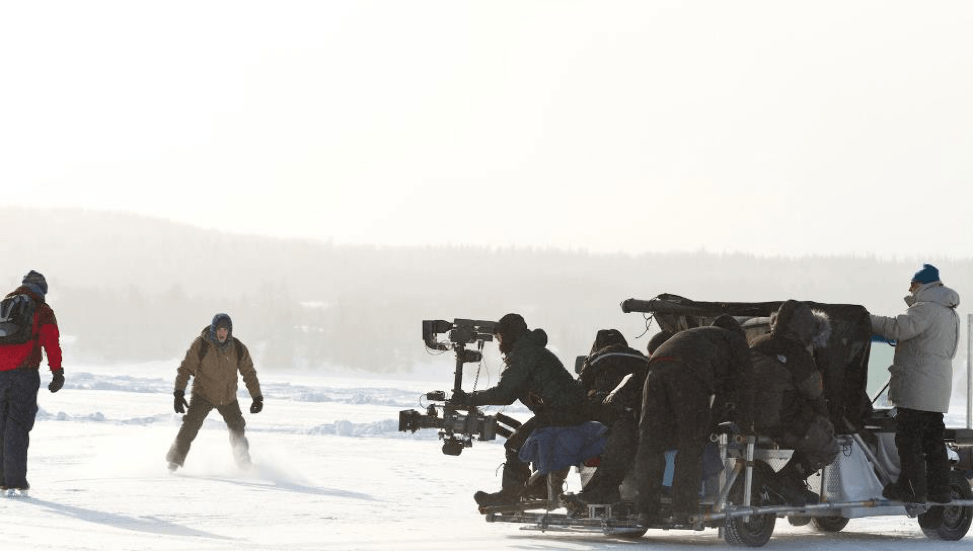
The series was filmed in Sudbury, Ontario, Canada in the middle of winter, when the average temperature is -4 to 17 degrees Fahrenheit. Battling these brutal conditions was worth it in the end, as the cold and harsh climate enhanced the mysterious aspects of the story.

“Equipment starts to fail and camera operating in knee deep snow is very physically demanding. It was very challenging but I had a lot of fun,” said Heathcote.

Working to achieve director Daniel Grou’s vision, Heathcote had his work cut out for him. Grou planned many uninterrupted single take Steadicam shots. Single take shots are very hard to design because there is no cut away. The shot has to be perfect from the start to finish and encompass everything the audience needs to see or hear to help tell the story.

“This is very unique, and Daniel would come up with these beautifully choreographed shots daily. There is one five minute Steadicam shot in particular that Daniel designed that begins outside a school, follows our lead actor John Cardinal up and down several flights of stairs, a shoot-out and chase sequence evolve and the shot ends up back outside where we began. It was incredibly challenging physically and mentally. There aren’t a lot of projects that you get an opportunity to camera operate a shot like this and it was an absolute honor Daniel and Steve trusted me to execute it. It is definitely one I will never forget,” Heathcote described.

Grou, who has over two and a half decades of experience working internationally in the entertainment industry, was immediately impressed by Heathcote’s talents. Despite working with many talented camera/Steadicam operators over his long and awarded career, Grou says working with Heathcote this one time was enough to try and bring him on to every one of the projects he works on.

“Mike is just a complete genius at what he does technically, but artistically is where he truly shines. He can interpret a director’s or a photographer’s vision and go beyond it to find a true soul; a true magic to the images he helps us create. He is in tune with actors’ movements, as well as their fragile, ineffable emotional state as they work through a scene. He is always at the right place and in the right moment as he accompanies them on their journey. He is a treasure,” said Grou.


Cardinal is on CTV Wednesdays at 10 pm, or you can catch up on the series, and see Heathcote’s outstanding work, here.

Artist Alexandre Cornet has exemplary vision for CosmoVision

Alexandre Cornet was just a child when he discovered what his passion was. While many children are doodling in class, making stick figures as a distraction, his drawings were much more than that. This innate talent and enjoyment for art gave rise to a career in illustration and design, and he has never looked back.

Cornet’s abilities have led to many achievements throughout his career, and he is sought-after by many companies looking to define the artistic side of their brand. This includes the internationally successful production company CosmoVision Media Group. CosmoVision is a production company that specializes in high-end natural history and factual entertainment, specifically documentaries. Their goal is to make films that spread awareness on environmental issues, and help “heal the planet” as they put it.

“I like CosmoVision’s vision and the important subjects of their work and wanted to be part of it,” said Cornet.

When Cornet was brought on board, CosmoVision did not have an identifiable visual aspect to the brand. He was in charge of creating a logo that would be instantly recognizable to those in the industry.

“It was a great experience, I had never worked for a documentary production company and I had to create a logo that would have some animated version for video credit apparitions. It took some time as I had to create the visual identity from scratch. I had to create a slick and minimal visual identity, adaptive to different mediums and formats,” said Cornet.

When creating the logo, Cornet did not simply begin designing what he thought would work. He wanted to ensure the logo was suitable for the company, so he did his research. He began with several interviews and things started to take shape through the investigation process.

“I researched a lot to create a mood board and then spent a lot of times exploring possibilities sketching on paper, and developing selected ideas until approved. Once determined the idea and concept of the logo began the second phase of the work, which was to create some rules and guidelines, experimenting further for each application, and at last designing the basic printed materials such as letterhead and business card. Good communication and regular feedback made everything possible,” he described.

After conducting his research, Cornet decided to create something subtle and minimalistic, easy and didactic, to fit and emphasize the richness of the content and purpose of CosmoVision’s work. He had his work cut out for him, as the logo had to go into several mediums, such as print animation, and video, and would still work well on a business card. It had to work well being superposed onto moving images. The Idea behind the result is that the shape of the “C” of CosmoVision is eclipsing a circular light, like the moon to the sun, creating a different, unique and displaced “C” shape, bigger and standing out as the initial letter.

“I am happy I helped them to actually define their whole project and to know their satisfaction when they actually saw it in video opening credit use, on top of video sequences and when they printed their business cards and letterheads,” said Cornet.

Cornet has known Jacob Steinberg, the director of CosmoVision, and the art director Paola Saavedra, for some time, and knew of their experience and dedication to their work. It was because of their reputation that Cornet initially decided to take on the project.

“They both have different personalities and are full of stories and inspiring experiences. It has been a great working and learning from each other,” said Cornet.

Steinberg is an Emmy Award Nominated Cinematographer. His work has been screened internationally on television and in festivals. He is the owner and managing director of CosmoVision Media Group, a full-service production company specializing in high-end documentary film for television and cinema. He describes working with Cornet as a great experience.

“Alex was responsive, and took the time to be creative and interact with us throughout the entire process. He managed our feedback very well, ultimately producing a final product that we are extremely satisfied with. Alex’s work represents the face of our company, and we are thrilled with it,” said Steinberg. “Alex is a dedicated creative professional. He manages expectations well from the start, and provides the framework upon which to make progress effectively. He then is patient, giving and receiving his feedback, providing his own inputs simultaneously. He takes the time to really understand his clients’ passions, priorities, and ultimate goals to provide exemplary final work that exceeds expectations.”

Cornet’s vision for CosmoVision has been extremely well-received. You can view his work on the logo on the company’s website here.

From Still Shots To Moving Images, Irem Harnak is a Visual Genius

The world is full of people who take pretty pictures, so what is it about the work of certain photographers that sets them apart from the pack? What quality do they contain that others lack? The answer lies is their ability to make the observer feel something, to capture an emotion or a moment in time.

Irem Harnak, a photographer whose name is internationally recognized throughout the world of fashion and commercial photography, is one of those rare visionaries whose portraits flawlessly capture the personality and emotion of her subject in a way that transports viewers and makes them feel as if they know the person in the photograph.

Over the years Harnak has amassed an astonishingly impressive portfolio of work that places her among the upper echelon of today’s photographers. Marie Claire (China) featured her shots of designer Erin Kleinberg, who dresses Golden Globe winner Lena Dunham(“Girls), and her long list of fashion stories and editorials have been featured in other well-known print and online magazines such as The Ones 2 Watch, The Fashionisto, Fantastics, Bon Bon, the Uk’s Kenton, Boys by Girls and Pause, Germany’s Superior Magazine, and more.

Audiences will also recognize Harnak’s work from the plethora of lookbooks and campaigns she’s shot for recognizable fashion brands over the years, such as leading activewear brand Titika, women’s golf apparel company Birdy & Grace, swimwear company Zubaida Zang, top Canadian designer Joeffer Caoc and others.

Harnak was also hired by Baker Vandertuin Inc., an ad agency known for its creation of successful campaigns for major clients such as the Heart & Stroke Foundation, Canadian Touring Car Championship and Durabond Racing, to shoot famous jazz singer June Garber.

Irem Harnak
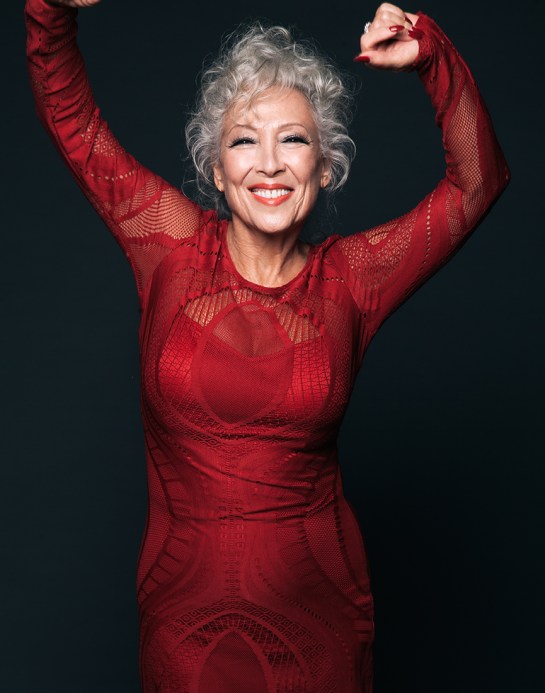
Jazz singer June Garber shot by Irem Harnak

“She is an amazing jazz singer, great performer with so much charisma, elegance and energy. I find it hard to get that kind of energy from the 16 year old models I shoot,” admitted Harnak about shooting Garber.

With such a wide variety of subjects, the through line that connects all of Irem Harnak’s work is the eye-catching creativity she brings to the table and the way she manages to bring out the  unique personality of each of her subjects in every shot.

Although she has spent the last decade in Canada, Harnak was raised in Istanbul, Turkey, a thriving city that she described in an interview with Yes Supply Collective as: a crazy, beautiful city with layers upon layers of civilization and history. It’s a place where everything has a voice, everything talks, day and night. The waves of the sea, the ferries going east and west, the seagulls, the breeze, the cars honking, people rushing from one street to another simultaneously talking to each other, telling each other stories day and night.

Anyone who’s had the chance to check out some of Harnak’s breathtaking and emotive photography will immediately see how her early beginnings in a visual inspiring place such as Istanbul has impacted her work.

Irem Harnak
Jenna Earle shot by Irem Harnak for Kenton Magazine

While Harnak’s shots of famous models such as Carly Moore, Jenna Earle, Emma Génier and Robbie Beeser have put her work in the spotlight and made her a sought after fashion photographer, she’s also managed to successfully translate her skills as a photographer into the film world.

Harnak says, “I have always been inspired by cinema, that was one of the things that pushed me to become a photographer. Being a photographer one understands the lighting, the framing, how to execute a visual language in one or more frames. When you are a cinematographer, you need to do everything a photographer is doing to create a unique shot, but bear in mind that whatever you are framing is a continuous action not a moment frozen in time.”

As the cinematographer of the films “Personal Space,” “Living with Strangers” and “I Am You,” Harnak has proven her ability to move from shooting beautiful stills to creating moving imagery that effectively tells a narrative story.

The feature film “Personal Space” follows Sid, played by James McDougall (“The ABCs of Death 2”), a down in the dumps twenty-something guy trying to move past his recent breakup with Karri, played by Amelia Macisaac from the 2015 comedy “The Spirit of 39B.”

A self-proclaimed anti-love story, “Personal Space” is one of the few films out there that truthfully depicts what it’s like when the passion fades from a relationship, the uncomfortable phase that follows when two lovers have no choice other than to separate and the unglamourous depressive period that follows a break up. The way Harnak chose to capture the shots throughout the film create an authentic portrayal of real life, without all of the escapist fairytales that most films rely on.

About shooting “Personal Space,” Harnak explains, “I was working in really tight spaces, I was literally in the actors’ personal spaces, I had to light the space with little lights and rely on bounces, and reflectors. It depicted the feeling of loneliness and being lost that we were trying to get across.”

Just like real life, “Personal Space” is often awkward to watch, for example, the many times Sid tells Karri he wants to talk but has nothing to say. Overall the film gives viewers an accurate slice of live view into a real breakup, and Harnak’s cinematography nails the mark the whole way through.

While Harnak received praise for her cinematic work on “Personal Space” and “Living with Strangers,” her work on “I Am You” is what has really brought her unparalleled talent as a cinematographer into the spotlight.

“I Am You,” which debuted at Toronto’s Kaleidoscope interactive art crawl, is more than a movie, it’s an innovative step in using virtual reality technology to create a film. The film follows a young couple who discover a new VR app, which allows them to swap bodies and experience life as the other; and, as the viewers watch the film from the characters’ perspectives, it’s as if they too have been transported into the film.

About her work on “I Am You,” Harnak explains, “I shot the traditional part of the film. With the framing I set up, I was trying to describe the alienation, disconnectedness the couple was feeling towards each other. I placed the camera at a considerable distance and used a bit of an unconventional frame cropping to make the viewer feel unease.”

Produced by Cinehackers, “I Am You” has garnered an overwhelmingly positive response with Vice writing: Cinehackers had created a way to let virtual reality users feel like they were in a first-person perspective movie, kind of like Being John Malkovich… And Toronto Film Scene writing: ‘I Am You’ is an amazing piece of work in VR filmmaking. An intimacy enveloped me that I had never felt before while watching a film.

Although photographer Irem Harnak has clearly cut out an indelible mark for herself as a fashion photographer, her work as a cinematographer is definitely worth taking note off; and frankly, we can’t wait to see what she comes up with next!

“Rollin’ with the Nines” Reveals Anthony Warren’s Flare for Action

Actor Anthony Warren
Actor Anthony Warren shot by Will Tudor

There’s a scene in the hit film “Rollin’ with the Nines” where Anthony Warren, playing the Jamaican drug dealer Karnage, stabs an informant trying to buy drugs. Warren’s performance is so believable and his Jamaican patois so on point that anyone could be forgiven for thinking they were watching a documentary about crime on the island nation. Upon meeting the successful British actor however, it’s clear that the scene was very much a reflection of his impressive acting talent. Warren is a charming and imposing figure all the same, representing the ideal combination for leading men in the world of film.

Anthony’s ability to jump into distinctive roles that prove to be memorable and game-changing for any film of which he takes part is making him known in the industry. He tells us that the aforementioned scene in particular was “so violently gross [to film] but it was fun.” If anything, the London native was so convincing to his co-stars on the set of “Rollin’ with the Nines” as a menacing drug dealer that “Eastenders” star Terry Stone felt compelled to literally hit Warren in the head with a frying pan in a scene where he and his buddies try to swindle Warren’s antagonist. It hurt, according to Warren, but he swears it was an accident.

Anthony Warren’s hugely successful career began over 20 years ago, in a more humble fashion than compared to his current position of fortune. His work in “Rollin’ with the Nines” marked the beginning of his dominance in the action genre that began simultaneously over a decade ago with his critical role in “Control” opposite Academy-Award nominee Willem Dafoe (“Spiderman,” “The Aviator”), and “Fast and Furious” and “Avatar” heroine Michelle Rodriguez. Leading and starring roles in similar projects have continued, and when watching his impactful performances in films like “Rollin’ with the Nines” and “Control,” it’s clear why Warren hasn’t lived the typical life of the struggling artist.

While many actors take on work whenever they’re hired, Warren’s sought after stature in the industry means he needn’t be concerned with just taking on any project. If anything, his filmography proves his careful selectiveness and irreplaceable position within the acting field.

The truthfulness of Warren’s leading performances in other genre films like “The Deaths of Ian Stone,” opposite “Under the Dome” and “Bates Motel” star Mike Vogel, and as Capt. Naish in the Wesley Snipes (“Blade,” “Passenger 57”) and William Hope (“Aliens, “Captain America,” “Sherlock Holmes”) feature film “The Marksman,” are all proof of Warren having firmly found his own place in a world characterized by high-standards, loyal fans and blockbuster thrills.

rolling-with-nines
“Rollin’ with the Nines” film poster

“Rollin’ with the Nines” in particular has been a thrilling highlight for Anthony, notably so for representing his collaboration with successful director Julian Gilby who also directed Will Poulter (Oscar-Winner “The Revenant”, “We’re the Millers”) and Emma Rigby (ABC hit “Once Upon a Time in Wonderland”) in the 2014 hit-film “Plastic.” It further reinforced his growing profile with action films shot in the UK and his association with the music industry, as “Rollin’ with the Nines” concerns small-time drug dealers releasing their music in urban London.

And therein lies part of Warren’s truly exceptional talent – he has managed to traverse genres effortlessly. In his case (and maybe for this decade) action and musical theatre specifically. Alongside his key roles in action films “The Contract” with Academy Award winner Morgan Freeman (“Driving Miss Daisy,” “The Dark Knight”), Warren’s classical singing training and skill on stage landed him a leading role in Opera North’s Rodgers and Hammerstein production of “Carousel,” directed by Jo Davies, and “Brashana O”, directed by Geoffrey Creswell.

In “Brashana O”, a story based on the legendary rolling calf that forms part of Jamaica’s folklore, Warren wowed audiences with his portrayal of Barker. His connection to Jamaica gave the production a refined sense of integrity, helping to sustain the belief that the Rolling Calf is really a ‘duppy’ (ghost) that has the ability the change, if and when necessary, into other animals. Warren’s performance was easily considered as both impactful and humorous all at the same time. His role as Heavenly Goggin in “Carousel,” a more traditional musical, was an important one that esteemed reviewer Geoffrey Mogridge noted as “mysterious,” and set the scene for the protagonist’s confrontation with the production’s antagonist.

One could say that Anthony Warren is something of a ‘jack-of-all-trades.’ But his success in the different areas of the acting field prove that he is certainly not a ‘master-of-none.’ We look forward to seeing him in many more blockbusters (hopefully action movies, and more musicals) for years to come.


Diana Chao: A Creative and Thought-Provoking Director on the Rise

Originally from Taipei, Taiwan, Diana Chao is a highly successful, 32-year-old, Los Angeles-based director. After obtaining her MFA in Film Production from USC’s School of Cinematic Arts in 2013, Chao continues to direct shorts, commercials, and features professionally, both locally and abroad.

“I was first hired as a director in 2011 for Violence in the Closet in Taiwan,” Chao said. “In 2013, instead of directing a school thesis film, I decided to do The Restoration as an independent project in which professional crew were on board, where I could immerse myself in telling the story without supervision. I launched a Kickstarter campaign to raise funds for making the film. Upon its completion and recognition for festivals, I have had the pleasure to be hired as director for more projects.”

therestoration_03
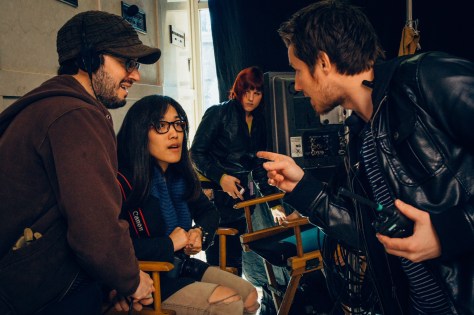
Diana Chao on the set of The Restoration 

For Chao and her career, this achievement was just the first of many.

The Restoration is a story that focuses on our desire to say goodbye. Inspired by an event that occurred in Taiwan in 2008, it follows Sean, a young restoration apprentice, who learns about closure and his feelings toward a family member’s departure while working on a project with an experienced restorative artist named Joanna. Together, their skills in preparing a corpse for its transition from the present are challenged by the extensive damage caused to the body. The film stars John-Scott Horton, Katie Savoy and Jason Caceres.

Chao first wrote the script back in 2010, where it was short-listed twice for a USC production class. “I pitched it the first time and had meetings with various directors the second, but ultimately they had their own visions about the project. Jeff – my classmate and trusted friend as well as the editor of The Restoration – encouraged me to make the film myself. With his support and encouragement, little by little, The Restoration storyline evolved into its current version,” commented Chao.

The short film was beautifully shot by the award-winning Cinematographer, Will Jobe. He and Chao initially met at USC where they were classmates and both received their MFA degrees in Film Production. Jobe’s work has screened at South by Southwest, Slamdance, and Cannes, his clients including well-known names such as ESPN, Hallmark and Subway Sandwiches, to name a few.

“Diana was the principal creative force behind The Restoration,” Jobe praised. “She was meticulous in the planning of her vision for the film and coordinated with the heads of each department to ensure its proper execution. I remember in the many preproduction meetings how Diana exposed me to a variety of visual references that I had never seen before. I discovered the work of both Easter and Western directors and cinematographers that exhibited fresh aesthetics that differed from the Hollywood norm. It was obvious to me that Diana had a keen academic understanding of film history, but was also well versed in many different genres and aesthetics of modern independent and international cinema. I feel that The Restoration was only a first step in seeing Diana’s true potential.”

therestoration_01
Diana Chao and the crew of The Restoration

The Restoration was the independent project Chao directed in which she had full control. Thanks to her training and education from USC, Chao had acquired a full understanding of how production works, as well as the role of every individual on set. Elaborating on this, Chao said, “Production is teamwork with hierarchy. As a director, it’s crucial to do my job and let the team do theirs. I was passionate about making The Restoration. I don’t necessarily know the technical details of how to execute each person’s job, but as long as I was clear about my vision, my team wasn’t confused about how to help me make the film.”

Chao wound up receiving much praise and recognition for her film, including an award for Best Original Score from the 2015 Long Island International Film Expo and a Merit of Cinematography from the 2015 Rochester International Short Film Festival.

In April of 2012, Chao was asked to document the production of the feature film Finding Mr. Right in New York City, a US-China collaboration. Chao acted as the director of the film’s promotional materials and was therefore given the challenging responsibilities of conducting interviews, editing footage, and bridging communication between three main parties: the production company, the promotion company, and the main cast, directors, and their agents and assistants.

According to CEO Lisa Chen, who collaborated with Edko Films on Finding Mr. Right and speaks very highly of Chao, creating the promotional material is the, “Single most important tool for a film’s publicity. Great promotional material can get you into festivals, boost your crowdfunding, and even land you a distribution deal.”


findingmrright_01
Diana Chao working on Finding Mr. Right

From a commercial standpoint, Finding Mr. Right grossed the U.S. equivalent of $84.4 million at the box office. Additionally, the film won 2 China Film Director’s Guild Awards for Best Screenplay and Best Actress, was nominated in the same awards show for Best Director and Best Picture, took home a win at the 2013 Golden Phoenix Awards, and received 2 nominations at the Hong Kong Film Awards in 2014.

“We fully trusted Diana as the director for our promotional material and the footage that she made was exceptional and used for marketing and promotion throughout China. Due to Diana’s prowess as a bilingual filmmaker, Diana was able to bridge the gap between the Chinese production team and the local freelance filmmakers. Her work provided an easy way to get the word out about the production with her concise, creative, and impressive directional style, which also influenced the entire production as a whole,” said Chen.

It is evident that Chao excelled in generating extraordinary press materials for the film, her efforts playing a vital role in its ultimate viewership and success. Her work has a tendency to reach and inspire wide audiences in every instance, as also demonstrated by her work on the 2011 short film Violence in the Closet.

Violence in the Closet is an eight-minute short film and Public Service Announcement (PSA) that brings awareness to domestic violence among the LGBT community. The film tells the story of a 30-year-old lesbian, WenWen, undertaking multiple pressures in life and arising conflicts between her and her girlfriend. “It was meant for promoting the amendment of the Domestic Violence Prevention Act and letting the LGBT community know that homosexual couples, partners, and roommates are also under protection of the law,” Chao further explained.

Due to budget limits and time constraints, Violence in the Closet was shot over two nights and finished within one week in order to meet the deadline of the annual fundraiser it was intended to screen at. “Because of the NPO’s (Non-profit Organization) budget limitations and of Taiwanese actors’ hesitation to be cast for lesbian roles, we ended up casting non- actors who are lesbians,” Chao added. This route came with a few challenges when it came to directing, but nevertheless, Chao overcame them and prevailed.

violenceinthecloset_03
Diana Chao directing Violence in the Closet

“There’s a set of languages a director uses when working with professional actors,” she went on to describe. “Non-actors don’t really take those directions. I found method acting helpful – it doesn’t require actors to become the characters, which is difficult for non-actors. Instead, it helps actors find the expressive emotions that they share with the characters. By walking them through the emotional beats the characters had in the script, I was able to overcome that challenge.”

Chao performed the service of directing the project for free, out of the grace of her heart, and for the betterment and expansion of the Taiwan Tongzhi Hotline Association.

Originally founded in 1998, the Taiwan Tongzhi Hotline Association is a non-profit organization aimed at providing a space for acceptant and empathy in the LGBT community. It is now the oldest and the largest, lesbian, gay, bisexual and transgender organization in Taiwan.

Violence in the Closet was released at their 2011 annual fundraiser, Taipei Hotline events, and online in an effort to help raise awareness and funds for the organization. Chao’s work helped the Taiwan Tongzhi Hotline Association earn a total of $103,722 in donations.

Jennifer Hsin Chieh Lu, the Taiwan Tongzhi Hotline Association’s Director of Public Affairs, stated that Chao’s generosity provided them with, “A rare instance where we were able to engage an extraordinary filmmaker and director for the betterment of our cause, and thus, the betterment of our society. Violence in the Closet was highly influential, important, and touching to many viewers. We needed to work with a remarkable director who understood its sensitivity and was able to deliver a powerfully striking, unforgettable message. Without a doubt, Diana Chao achieved to direct such a powerful short film for us and was able to successfully send the message to the audience.”


For more information on Diana Chao, please visit:
http://www.imdb.com/name/nm6371027/
 https://dianachaos.com/

For The Restoration, please visit: https://vimeo.com/121533655
For Finding Mr. Right, please visit: https://www.youtube.com/user/edkofilms
For Violence In the Closet, please visit: https://youtu.be/MXfVRGk3kSg


Young Canadian actor Kyle Meagher talks about his role in new film “The Big Crunch”

1v4a7030
Actor Kyle Meagher 

Many people spend their lives working in a job that brings them little happiness. It takes many years to figure out what they are meant to do. Those graduating high school face a decision as to how they want to spend their lives, and few that age can figure it out. This is where Kyle Meagher is the exception. While growing up in Ottawa, it was evident what he was meant to do, and he started doing at the age of ten. Now, four years later, Meagher stands among Canada’s best young actors.

Audiences have had the pleasure of watching Meagher in an assortment of national commercials, web campaigns, award-winning television programs, and feature films. And even with a successful career under his belt by his teens, he has no plans on slowing down. This past year, he was able to secure a role in the short film The Big Crunch, alongside Peter DuCunha (12 Monkeys), Jennifer Robertson (Schitt’s Creek), and Chris Gibbs (The BFG). He also got to work with his friend Sam Ashe Arnold (The Adventure Club).

“This was a cool short film to work on because they added a bunch of special effects and used a new, very expensive camera that helped make the special effects possible. I was really excited to see what it would turn out to look like,” said Meagher.

The Big Crunch, by Inflo Films, is produced by Harry Cherniak, and written and directed by Dusty Mancinelli. Meagher was excited to work alongside them, as he had heard of their great reputation of making award-winning films. It looks like The Big Crunch will follow the same trend, as it is already making its way to many film festivals.

“I love hearing about the festivals the film is going to and seeing the press about it. Harry and Dusty are great film makers and they deserve the recognition for the amazing work they do,” said Meagher.

The film follows 12-year-old August (DaCunha), who suffers an existential crisis about his place in the world after learning the universe will one day collapse in an epic Big Crunch. Nothing can shake August out of his depressive state, not even celebrating his birthday six months early. But when August is accidentally electrocuted after changing a light bulb, he has a magnificent cosmic experience. During an intense game of dodgeball at school, August suddenly unearths his own magical powers and goes on an extraordinary adventure of self-discovery. With his newfound understanding of the universe, August stands up to his bully and goes after the girl of his dreams.

“In this film, it was a great build up to a climax where August kisses the girl he has been admiring. It’s amazing to watch the character go from a very forlorn and sad child to one that sees the world in a completely new way. The scenes were fun to shoot, we spent some time outdoors and running around a school,” said Meagher.

The film made its world debut at the Atlantic Film Festival in Halifax in September, and quickly headed to the Edmonton International Film Festival right afterwards. Audiences get to see Meagher play a role completely unlike himself: a bully. He and his friends are known as the “Goons” and bully August throughout the film.

“I am totally opposite to the bully, but I can relate to the role because I have been bullied before myself, and I simply channel what I’ve seen into a character,” said Meagher.

Throughout his career, Meagher has played the character of a bully many times. His experience makes his performance not only believable, but outstanding. However, those he works with find it interesting to watch him take on roles that are so different to his real-life personality.

“Kyle’s a really great guy, so it’s fun to see him play such a jerk,” said Sam Ashe Arnold, who played Elvis, August’s archenemy in the film. “Kyle is funny and nice to everyone, and he’s always professional and well prepared. That’s pretty much exactly the kind of person you hope to get cast with. He’s a great actor partly because he has such an expressive face, with big eyes and a big smile, but it’s mostly because he’s smart and he really listens and takes direction,” said Sam Ashe Arnold.

Arnold played the main bully in the film, and had worked with Meagher previously, but it was on this production that they truly became friends. They are both from Ottawa, so they attend auditions together, and hope to work together again soon.

“Sam and I are with the same talent agency and we spend time together so it was neat to actually get to work with him on set,” said Meagher. “I also met Peter DuCuhna for the first time who is a great actor that has a lot of experience.”

Despite having a lot of experience himself, the role also provided a unique learning experience for Meagher.

“There was a stuntman who taught Peter how to jump out the window for a scene – and it was the first time I had been with a stuntman on set,” he concluded. “It opened my eyes a bit more about safety and was interesting to see what they teach!”

Audiences will have the opportunity to see The Big Crunch later this year. Bell Media will be putting it on the BravoFact website.


Actor Andrew Searles talks creating a character in film Sharkboy

andrew-2
Actor Andrew Searles

Andrew Searles is funny, there is no doubt about it. The actor and stand-up comedian knows how to deliver a line and leave audiences in stiches. He is known across his home country of Canada for his comedic talents, and whether on stage or screen, he captivates audiences.

When working on the film Sharkboy, Searles’ natural comedic talents shine through. He plays Sundown, a character who was created after the film was written, specifically for him. The role required a lot of improvising, and natural comedic talents. Luckily, that is Searles’ specialty.

“I really had fun and enjoyed playing the character of Sundown. The character was not originally part of the script, but the director liked me so much that he wrote me into the script as one of the gang members. I was instructed, because I originally didn’t have any written lines, to improvise and go along with the scene. As a result, I would often repeat the last word said by anyone in the scene, for comedic effect,” said Searles.

Sharkboy tells the story of Francis, a half-man, half-shark, and the events surrounding his arrival at a new high school. The “Sharkboy” has a difficult time adapting to the high school, as he is bullied by Scott and his gang. Scott’s girlfriend is caught by the eye of Sharkboy, but not before Scott catches him staring, which leads to a violent altercation for Sharkboy. When Scott challenges Sharkboy to a wrestling match during their gym class, Sharkboy eats Scott, and immediately becomes not only the new leader of the gang, but the coolest kid in school. Now Sharkboy is styling and winning awards and the hearts of his fellow students, along with the heart of the newly single, Scott’s ex-girlfriend. The film is based on the myth that the band Led Zeppelin once defiled a groupie with a shark.

“From the breakdown of the film, it seemed like a type of awkward, twisted comedy, and I was eager to sign on and be a part of this, especially when they explained what the “Sharkboy” character was. I think the title alone was enough to sell me on this,” said Searles.

sharkboy
Still from Sharkboy

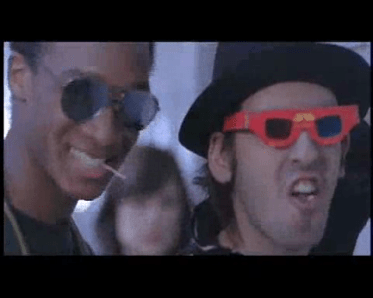
Sundown is one of the gang members lead by the antagonist Scott. He is in almost every scene, and turns into one of Sharkboys friends. Part of what makes the character so funny is his look, which was entirely created by Searles. Sundown looks like a member of an ‘80s gang, donning a high-top, California State Trooper-style reflective sunglasses, and a box of toothpicks. Searles was inspired by the iconic character of Mr. Bean, where Rowan Atkinson created a classic icon who did not speak, but was incredibly funny.

“I felt with such a unique looking character such as mine, the less he said on screen, the more of an impact he would have, and based on the reactions of people who have seen the movie, with my characters unique look, I felt I accomplished just that. I’m very proud of myself to this day for portraying a comedic character that said so little but stood out on screen,” said Searles. “I liked the fact that I was given free will with the character. I was able to make it my own and craft it exactly how I want to do it. In most cases, an actor is given a breakdown or guidelines of what the character is, but in my case there were no restrictions or guidelines, so it felt great to really create something on my own.”

Pat Kiley, the director of the film, loved Searles’ look for the character, and he effectively named the character “Sundown” after the striking similarity to the Top Gun character of the same name.

sharkboy-2
Still from Sharkboy.

“Andrew created his own retro style for the character and we loved his angle and his approach to the character as it fit perfectly with the story. I loved how even though his character had few to no lines in a scene, his character spoke volumes on the screen while saying so little. He ended up becoming one of the crew’s favorite characters because of his hilarious look and demeanor whenever he was on screen. Even at the film premiere, the audiences loved him too. Andrew not only brought life to a character, but he did it with so little and he brought out so much out of it. I look forward to working with him again one day. He did spectacular job and I wish him all the best in his career. He is definitely an incredible actor whose character began with nothing and made it huge and a fan favorite on screen,” said Kiley.

Creating a character for the film, which would be a challenge for many of the most seasoned actors, was a breeze for Searles. His experience in improvising and stand-up comedy made it easy to think on the spot.

“I would watch and listen attentively to the other characters lines. After a run-through and rehearsal, I would decide what I would say and when to say it, to keep the rhythm and pacing of the scene. After figuring out what I would say before the cameras started rolling, I would let the other actors know that I would be saying something at a certain point in the dialogue when nobody would say anything. Therefore, we all knew when I would come in and say my line, without stepping on another characters line,” said Searles.

Sharkboy premiered at the 2004 ‘Comedia Festival’ gala as part of the Just for Laughs comedy festival in Montreal. The film was also screened at the Austin Film Festival.

You can watch Searles as the audience favorite Sundown in Sharkboy on FunnyorDie here.

THE INCREDIBLE VOYAGE OF JIPING LIU

By Kelly James


A Graphic Designer has to look at the world differently. If you’ve ever stopped to truly examine their work, you’ll recognize that they take what most of us see as mundane and are able to capture the excitement, beauty, and originality of almost any action or object. They “turn up the volume and color” in our world, often without sound or pigmentation. They allow us to see others and ourselves as we’d like to be seen. The Graphic Designers who practice their vocation in the film industry have a number of tasks and opportunities before them but essentially, they enable visionary filmmakers to manifest the beginning stages of their ideas. Whether by means of storyboards, posters, or any number of creations that the Graphic Designer brings forth, their perspective can be the first or the last images that the public and filmmakers themselves retain about a particular production. Jiping Liu has worked in a variety of genres and cultures as a Graphic Artist with resounding success and recognition. In particular, she is known for getting inside the productions she works on to see how the professionals in the film industry work in order to more accurately and artistically create the images she is praised for. When you know more about Jiping’s background, you begin to understand that her perspective and talent is the product of an artist who has always pursued something bigger.

Jiping always knew what she wanted in life, to be an artist. From the earliest days in her hometown of Shijiazhuang city, China and later when she moved to Beijing…it was always about art. Comics, cartoons, painting…all of these were valid artistic expressions to a young Liu. She recalls her first compulsion to direct her career path to graphic design stating, “I’m pretty sure I decided to become a graphic designer rather than a painter during the first summer holiday in Beijing Jiaotong University. I got an internship offer from an international company. I remember the company’s creative director was sick for two weeks, so I got a chance to work on company’s ongoing APP design called ‘Life Circle.’ I was so excited to work on real projects and they trusted me very much, letting me try to design the ICON and opening page for the APP. It was just a try, but I took it very seriously. To my surprise, the head of company picked my ICON design. In the end, this APP was available to come out on market and many people liked to download and install it. This was my first time feeling that graphic design is graceful and makes people’s life easier, even beautiful.” During Jiping’s third year at University she received an offer from Tencent (one of the largest Internet companies and largest gaming company in the world) to work as a graphic designer. Her work for Tencent included working on several big budget events, designing posters, books, and advertisements for each event. At that time, Liu opened her own personal design shop online. The artist she was already became fused with the modern day opportunities she was being given.

Realizing that her artistic talent and sensibilities could be utilized among a variety of formats, Jiping became interested in the opportunities which the film industry allowed. Serving as graphic designer for the horror film “Kumal”, Liu’s work became visible at such high profile events as the 70th Cannes Film Festival, the Los Angeles Independent Film Festival, and many others. Writer and director Jun Xia had seen Jiping’s work in another film at a screening in Warner Bros Studio (She gives Me Sight) which was graphic designed by Liu. He hired her to be the graphic designer on his film “Emily” which became a multiple award winner

Creating the title design of “Sea of Mirrors”, Jiping chose to use mellow fonts to represent the delicate and beautiful female form of the film’s lead character juxtaposed against sharp edges and corners to represent the darker elements within the film’s story. “Sea of Mirrors” director Thomas Lim says, “Jiping Liu is a graphic designer with extraordinary creativity and skill. Her designs are amongst the best and most unique I’ve seen and her talents are right up there with the best.”

One of Liu’s favorite projects was the work she did for the film “Locked.” The film contains numerous gun battles. Liping used an illustrator style design poster for “Locked.” The colors of the characters on the poster are the same costume color they wore in the movie. She tells, “The size of the budget, big or small, for a film is not the most influential when it comes to design quality. Less can very often be more. More is not always a good thing, big budgets allow you to choose easier and work faster but I find that with a small budget I will spend time to find a way to get the art to work. If you have the skill, you can create quality. Whatever spurs your creativity and brings it out of you is the best.”

The future is not only bright for this graphic designer, it’s also busy. Liu is currently working on a number of projects for Alpha Pictures Inc. Frank Antonelli sought Jiping out and hired her to be the lead graphic designer on three very important upcoming productions; Bee, Armor Hero and Requiem Street. BEE, Armor Hero and Requiem Street were the top 3 popular comics and animations in China. Alpha Pictures Inc. is now developing and adapting these three animations to live-action/global feature films. BEE has 1 billion views on u17.com, a six-episode animated web series released in China and Japan and an action figure line released in 2015. The Requiem Street comic has been published since 2012 and has 2.2 billion views on U17.com. Number 1 Chinese comic in 2016 and twenty-four-episode animated web series released. Requiem Street also has a live-action TV series in production. Armor Hero is based on the top selling toys, Armor Hero is a series of characters on which more than 200 TV episodes and on which two feature films are based. In its eight-year history, Armor Hero has attracted 400 million fans and garnered a 4.8 billion accumulated viewership through video portals in China. The brand generates more than 600 million RMB in toy retail sales per year. The massive popularity and built in audience interest of these three sotrylines bodes extremely well for anticipated box office enthusiasm and returns.

Of all the talents that Liu possesses, the most beneficial may not be the most obvious. As someone who has spent time in both the US and China, as well as possessing an artist’s eye for the film industry, Liu is perfectly suited to further establish the bonds that have become mutually beneficial to both locations. The differences between these two cultures is something which Jiping has always found attractive. She enjoys the experience being caught between the two. She admits, “I received a very good job offer from China last year but I gave it up.

I believe the future of film and TV will be international and global. Nowadays, many Chinese production companies are opening branch offices in Hollywood; they want to corporate and step into Hollywood films. It’s a big trend for the modern film industry. Artists who have different cultural background, art style, and knowledge will be in need. People always say American films are top, to make these films keep shinning there needs to be different cultural elements. Movies play for everyone no matter where you located. That makes me interested in being a Chinese graphic designer in the US, because I want to contribute to this Chinese and American corporation.”

Screen Shot 2017-06-04 at 4.58.36 PM