Category Archives: Reviews, Interviews & Features!

NOT YOUR TYPICAL FUNNY MAN: JAMES PRESTON ROGERS

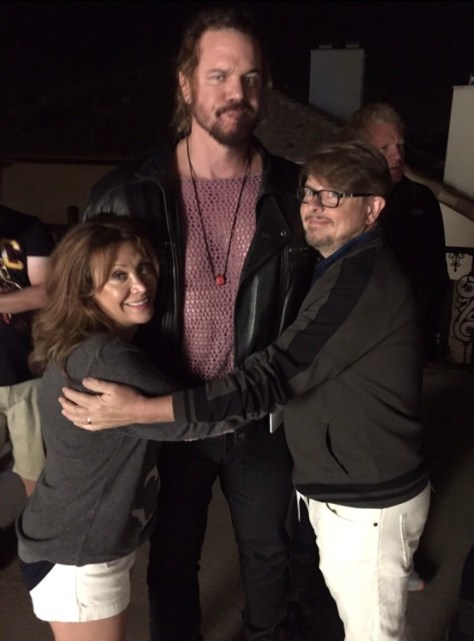
Actor James Preston Rogers is tight lipped about the plot details of the upcoming 2018 release Benjamin (Darius Films). What he is happy to speak about is his enjoyment of being in this film cast alongside so many comedic heavyweights. Rogers is so often noticed and cast for action roles (with a commanding physical presence of 280 lbs. and over six and a half feet tall) that displaying his comedic abilities alongside Kevin Pollak, Dave Foley, Rob Corddry, Peri Gilpin, Cheri Oteri, and numerous others was a joyful difference for him. His appearance as Ulf, a Russian semi-pro hockey player allowed James to stay close to the accent he had developed for the “Siberian” in “Frontier” (on Netflix) playing the nemesis of Jason Momoa’s lead character. The accent is as close as James gets in this film to any aspect of the melee that the Siberian or the combative aspect of Ulf’s hockey career in this comedic role. The inference of Roger’s commanding stature might be the premise of a fish out of water but James takes his place evenly matched alongside so many recognizable faces in the comedic acting world. As director and costar of Benjamin Bob Saget states, “Simply put, James is impressive. His comedy talent is obvious. He understood the role of Ulf and added great depth to it. It would have been easy to present the character as one dimensional but James portrayed Ulf as sincere, deep, and of course with the imperfections that make real people so funny. It was a pleasure to work with him and we were lucky to have him in the cast.”
Benjamin pic 5

Benjamin is the title of the film as well as the character which the story focuses upon. A teen who has decided to delve into drug use, a group of family and friends hold an intervention to dissuade him. During the act of revealing the skeletons in their own closets (in hopes of eliciting a similar response from Benjamin) these individuals all come to realize how they are perhaps living more chaotic lives than the young man they came to help. Rogers appears as the Russian hockey player/boyfriend of Benjamin’s mother Marley, played by Peri Gilpin (perhaps best known as Roz from TV’s “Fraiser”). ULF comes in as Marley’s boyfriend very supportive of her and her situation. Throughout the course of the story ULF realize that he doesn’t fit into this new world he has embarked on, and need to focus more on himself to make his dreams a reality. English is Ulf’s second language. He really loves hockey and Marley and will do anything for either of them as the wild side of the sport and this woman fulfill a part of him. Amongst all the other adults who appeal to Benjamin, Ulf is the character who is likely the most unlike them and therefore has an unexpected connection with the perspective of Benjamin.

Appearing as Ulf is the second time recently that James has appeared as a Russian (the first being in “Frontier”). The language and accent are nearly second nature to this Canadian born actor who spent his childhood and early adult years amongst a variety of cultures. His childhood friends in Toronto were German, Irish, English, Scottish, and originated from many other parts of the world. This was early training for his ears, training that Rogers put to good use in his acting career. In regards to his role in Benjamin, James describes, “The advantage I have over Russian actors is that English is my first language. You need to know that the script is written in English and is for an English audience looking for a Russian accent. It can be difficult for a Russian actor who learned English as a second language to hit all of the nuances of the jokes the writer is looking for. I’m sure it would be the same for me if I were in a Russian language film. Sometimes it’s about what you don’t say and let the space be taken up for the audience to complete the joke in their own mind. This comprehension gives me an advantage and I usually book these kinds of roles over the Russian actors. Like almost anything, you need to know your audience. If you put the accents on too heavy, you will lose your audience. You need to put on just enough and know the comedic timing for the joke to get across.”

Benjamin pic 1

Being cast alongside so many famous comedic actors might seem intimidating, and James admits that it was at first. However, the process became so enjoyable and satisfying that any insecurities took an immediate backseat to the experience. Rogers tells that the scripted and non-scripted jokes were plentiful and the conversations off camera were intelligent and enlightening; proof that like James himself, his costars are far from one dimensional. Rogers feels drawn to roles that (similar to career courses of larger actors like Dwayne Johnson and Jason Momoa) dispel the idea that an actor who is cast in action roles does not possess the ability to be equally gifted in comedy or drama. He confirms, “Just because are tall or in good physical shape doesn’t mean that we don’t have life experiences and emotions that equip us to communicate through the camera and onto an audience. Most well-known actors get painted with one brush and it’s very rare that we get to color outside the lines. I love seeing a comedic actor cast in a dramatic role and present another side of themselves. My father was hilarious and I think that part of that comedy gene exists in me. When I was in 10th or 11th grade we’d have these things called ‘cut-fests’ at school. You’d square off with someone and trade insults. People would cut class just to watch. It was all for laughs. Between my father and the cut-fest I was working on my comedy timing through my entire childhood, I just grew into being a big guy. Benjamin has given me the chance to show that training and the fact that I’m standing alongside some of the best comedic actors in the present day entertainment industry is beyond exciting.” James Preston Rogers has taken his rightful place as the physically and comedically impressive gentleman alongside his talented cohorts and can be seen doing so in Benjamin.

FLIPPING THE SCRIPT WITH ROBERTO SAIEH

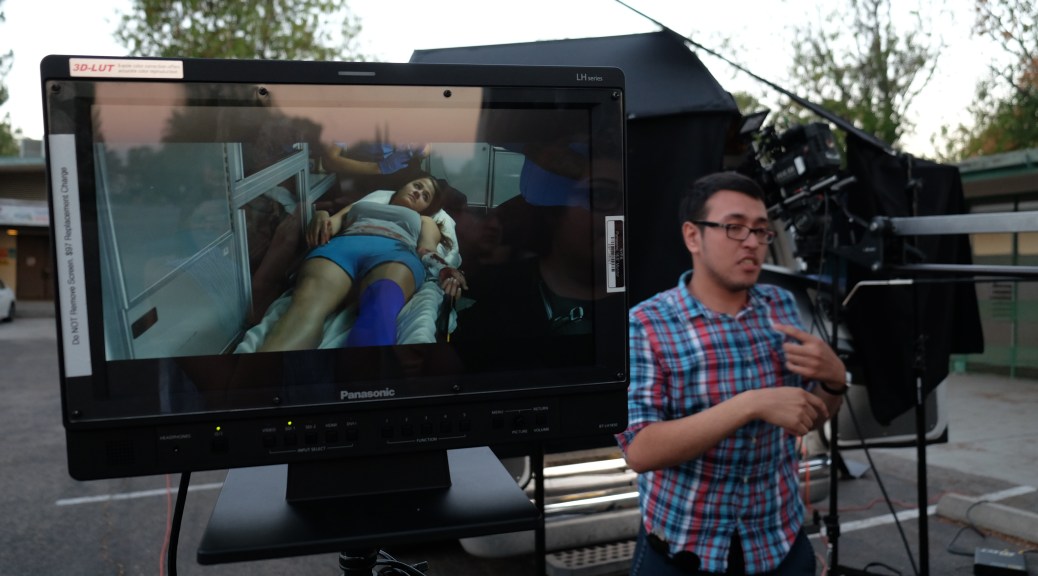
Honesty is one of the scariest things in our lives. At the same time, there can be no growth without it. One cannot move forward until acceptance of reality has occurred. This is both the core of the story of the film Asia A as well as the reason that director Andrew Reid worked with screenwriter Roberto Saieh on the project. Saieh has a talent for delivering a realistic perspective rather than the typical sanguine escapism which much of the industry is known for. While there is a time and place for both, the blunt actuality of Asia A (the title is derived from the American Spinal Injury Association classification of “A” for a person with no motor or sensory function preserved in the sacral segments S4-S5) causes it to stand out. Reid shares a strong connection to the storyline of the main character Marquise which made the film very personal for him. This makes it even more impressive that the director credits Roberto with flipping the story upside down in their initial meeting, a sure sign to him that this was the perfect screenwriter to help him create the intensity and realism that he demanded.

Asia A is the story of Marquise (played by London Brown of HBO’s “Ballers”), an athlete who has recently suffered a spinal cord injury which has changed his life dramatically. Without knowing whether this will be a lifelong change or a temporary one, Marquise is forced to deal with the uncertainty of his future and what he thinks it will look like. While the core of the idea may not be completely unique, the way in which the story is told is not the norm. This is not a film about events but rather about the characters and how their relationships are affected. The main character’s interaction with his (recent ex) girlfriend [Camilla] and his older hospital roommate [Noah, played by Emmy winner Pruitt Taylor Vince] present him with the choices of letting the actions of others determine his future or doing so for himself, during a very vulnerable and painful part of his life. Reid explains why he pursued Saieh to write the script stating, “Roberto’s creativity is what makes him unique from other writers. His goal is to create truly authentic stories that resonate with audiences. Storytelling is art, entertainment, and emotion all wrapped into one package and Roberto is a true storyteller. What ensures his success is his creativity and work ethic, which are unparalleled. Talent will get you into the room but it’s hard work that keeps you there.”

Roberto Sy-8914.jpg

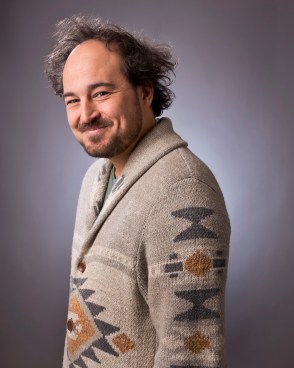
An extremely benevolent impact of Roberto’s work in the eyes of the film’s director is that he flipped many of the key relationships in the film and by doing so changed the emotional kaleidoscope of it. A few expertly made adjustments completely transformed the way that the audience and even Reid was witnessing the characters and events. While most writers would fixate on what happened to Marquise, this writer focused on his response to them and those around him. Saieh came to this perspective by an unexpected association as he tells, “It occurred to me that Marquise, the main character, had to grieve the life he once had in order to accept the one before him. Using that as a starting point, I loosely modeled his journey based on the five stages of grief: Denial, Anger, Bargaining, Depression, & Acceptance; taking each as inspiration. It’s impossible for me to know what it feels like to be an Asia A patient but I have experienced different kinds of loss in my life. It is that sympathetic emotion that I overlaid onto the story and used to shape Marquise’s journey. I firmly believe that no matter what you’re writing about, as long as the emotional honesty is intact it will ring true.”

Although the injury happened directly to Marquise, the experience affects all of those around him and particularly those closest to him. In the original script, Noah is the hospital roommate of Marquise and becomes a protector to him. Wanting to present something with an inverse correlation to the norm, Roberto wrote Noah as crass and irreverent with an almost forced cheerfulness. Noah’s deceased wife pitied him and he used this as a crutch to combat the depression and anger of his situation. A diabetic, Noah is eating himself towards death and has already endured two leg amputations. Rather than a wise mentor, Noah becomes a textbook example of who Marquise does not want to become. Saieh describes, “To me, characterizing Noah this way seemed like a truer version of how people are lacking self-awareness and are self-victimizing while at the same time offering a harder-hitting narrative. I didn’t want to shy away from exploring the darker side of the themes. This isn’t the story of someone who successfully went through a similar experience and is now mentoring someone else through it. It’s the story of someone [Noah] who couldn’t do what life is asking of Marquise now.”

Further driving this point and doing so painfully for the film’s protagonist is the fact that his ex-girlfriend Camilla pursues what she believes to be the right thing in reuniting with Marquise. While the comfort of her support could be a band aid, Marquise is constantly confronted with the choices Noah has made and whether or not to face his difficulties alone but with honesty.

Roberto Sy-9225

Roberto began his writing career with Indie Dramas and desires to take this indie sensibility and attention to “character” that defined this early work to summer blockbusters and genre films. His fascination with romantic dramas comes from his belief that some of the worst wounds you can receive can be self-inflicted, which can seem even worse when they’re the right choice. This is perfectly stated in Asia A when Marquise rebukes Camilla’s offer in a self-aware understanding that her feelings resemble pity more than love. It’s a concept Roberto feels presents itself often in our lives. He remarks, “It’s a matter of digging into personal experience and those situations where you know a relationship is over but you also know it’s going to be up to you to end it because the other person, for whatever reason, isn’t willing to step up. Having the strength to self-inflict a necessary wound because it’s the only way to save yourself seems to be a recurring theme in some of my work; letting someone go, someone that you love to death, because they’re not right for you or because you know they will be your downfall. It wasn’t that much different writing Marquise in this situation, regardless of his status as a spinal cord injury patient.”

THE SOUND OF THE GRANDMASTER: JIFU LI

The human experience is diverse and complicated. There are layers upon layers of emotions that make up the life of every individual on the planet regardless of their experiences and their point of origin. This complexity can sometimes go unnoticed in the din of so many people. The beauty that makes up each person’s life is a story in itself. This concept goes overlooked by many but is always present in the mind of Jifu Li. As a Sound Editor, Jifu spends his time ensuring that the voices and sounds present in a film weave in and out of presence in the story as the filmmakers see fit. One might not think of sound in terms of color but it is precisely this perspective that allows a contouring of the experience by the audience. Jifu uses his talents in a wide variety of films ranging from Oscar nominated to independent productions, proving that those of great talent seeks to collaborate with great storytellers regardless of the price tag…because that’s what they must do as committed artists.

Creating any film is a massive endeavor. The Oscar-nominated feature film The Grandmaster was almost hyperbolically so. The footage was extensive, twelve reels by the time that Jifu began his work. The production’s shooting cycle had lasted four years. Li’s previous work on five films had convinced Wu Ling (general manager of the China film post Company) that Jifu’s talent and propensity to work long hours without complaint made him ideal for the position. The Grandmaster is the story of the martial-arts master Ip Man, the man who trained Bruce Lee. While it’s a gripping drama, the film is an obvious action story as well. The picture editing and audio editing of the film were done synchronously, which meant that getting the final frame version in perfect sync was an intimidating proposition. Altogether there were fifteen versions of the film. If an action scene changed, all of the effects and Group ADR required recutting by hand, sometimes even redesigning or rerecording.  Describing what he does in a very literal sense, Jifu states, “If you cut from a punch to a slow motion reaction, the sound pacing should be fast to slow. I might add in some ‘Bass Drops.’ The hit should appear to the audience as it ‘feels’ to the characters, like you can hear the fist beat from the skin to the bones, all the texture and details. What happened a lot in The Grandmaster is that they would then change it on the other side; cut to the fighter’s slow-motion movement first, and suddenly speed up, hitting the others person’s face. The sound design will then change a lot. Sometimes there were voices and sometimes just music and sound effects. There are so many of these sonic aspects in modern films and in particular action films. My job is to make sure these subtleties are executed perfectly and to the desire of the director. It can be arduous but it’s always gratifying.”

A consummate professional like Jifu was necessary for The Grandmaster due to one technique which was employed during filming for the benefit of the action sequences. In this film (as in many action films) the director used music to aid in the fight sequences. This type of choreography is always about timing and music greatly aids in this. Quite often, the music used during filming is not the same that is used in the final edit (sometimes the music is altogether discarded). This results in extensive ADR (automated dialogue replacement). Even beyond the main characters, Li worked extensively on Walla Editing (the background character voices), Wild Tracks (sound effects which are recorded on location by the production sound mixer and then later edited for use), and Foley.

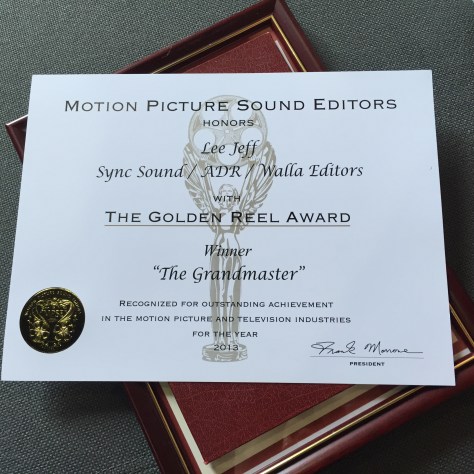
The Grandmaster is a beautiful film, visually and audibly. In addition to its 2014 Academy Award-nomination, it also received the Best film at the (2014) Asian Film Awards, Best Film at the (2014) Hong Kong Film Awards, as well as a Golden Horse Film Festival Audience Choice Award & Best Feature Film nomination. Most meaningful to Jifu was the Golden Reel Award for Best Sound Editing in Foreign Feature Film that acknowledged his skill on The Grandmaster and which he credits for inspiring him to continue to excel in the profession.

Though he enjoys the challenge of a huge budget feature film, Li also welcomes the opportunity of smaller films and the methodology they require. His work in Editing for the film “Love is Color Blind” helped to create the mood for a very different type of adversity and combat between the film’s main characters. The film, which won a host of awards at the London IFF 2017 and the Los Angeles Cinema Festival of Hollywood, is the story of an American woman who adopts an orphan from China and has brought it back to the United States. With adolescent rebellion, the child begins to gradually question the authority of her mother. Teen angst ensues and a rift is created between child and parent. As life educates the daughter, she prepares to sincerely apologize to her mother at her 18-year-old birthday party but the mother faints from weakness due to late stages of cancer. At the last moment of life, the mother and daughter finally understand each other.

Jifu had extensive conversation with director Liu Jiaqi about the emotional shading of the tone she wanted in the film. In creating the sound design for “Love is Color Blind” he used Avid Media Composer  and Protools HD. The program creates sound Design effects and allows them to be categorized and moved around as per the director’s desire for subtle differences. These type of modern tools are equally applicable in major studio films or smaller indie productions. It’s a fact of the modern filmmaking era that both the tools and the skilled professional like Jifu who use them often work in both situations. The key factors in either are talent and hard work, something which Li is always mindful of. He reveals, “I remember when I worked for Kar Wai Wong the director and he told me an idiom which inspires me to this day. Everyone knows that the most valuable part of a toad is the toad oil but do you know how the toad oil is produced? The toad is placed under a light and is scorched by the light. It produces this oil, a process which takes about twenty hours. When I heard this, I thought ‘sometimes inspiration comes from dogged pursuit.’ The best thing/essence occurs at the moment when you feel you reach your limit and want to give up. If you persist, you might be surprised by your achievement. This is what keeps me working as hard as I possibly can.”The Grandmaster -MPSE best sound editing

Ismaël Lotz on the honor of working alongside his childhood idols

IL05
Ismaël Lotz

When Ismaël Lotz looks back on his inspiration to pursue a career as a Director of Photography, Lotz recounts a unique combination of motivators. He recalls watching television and films with his father as a child. In fact, at the mere age of 7, Lotz saw E.T., and it was his first time seeing a film on the big screen. He was left in complete and utter awe, eager to see many more films just like it. After E.T., came films like Indiana Jones and Back to the Future. Eventually, he began experimenting with photographs and with shooting film on an 8mm camera. Even at a young age, he was confident that he could build a future out of his passion. His fascination with telling these gripping stories through different lighting techniques, filming methods, and sound styles opened an endless amount of possibilities and creative outlets for him to channel his artistry. He promised himself that one day, he would produce films that audiences would love the way he loved films like Back to the Future. Little did he know, he would one day work with the actors who crafted these stories before his eyes; however, today, instead of being his idols, these actors are also his equals.

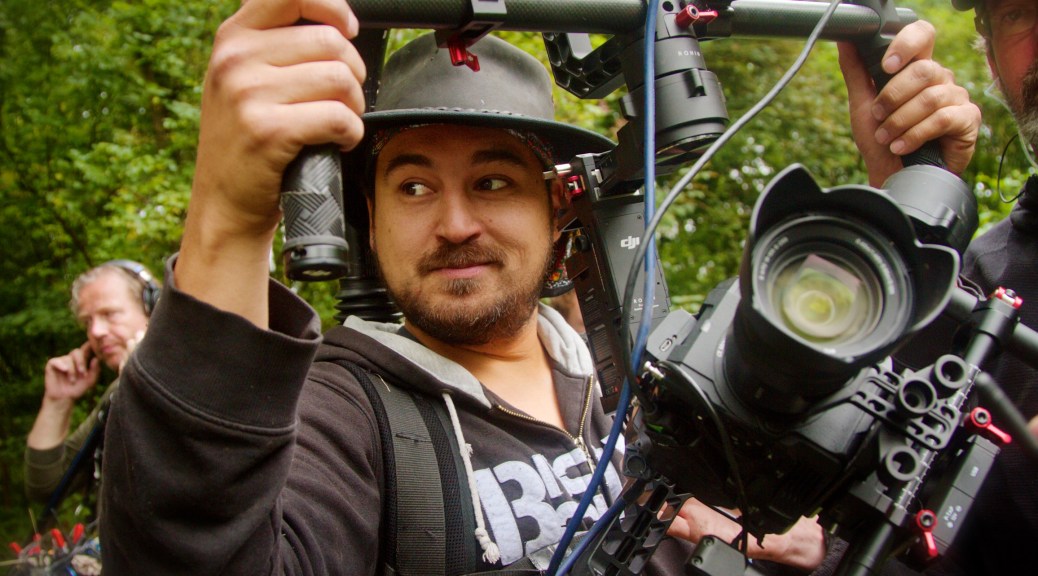
Over the course of his career, Lotz has built himself into a highly sought-after Director of Photography in the arts and entertainment industry. His creative process typically begins when he assesses the story of a script and determines which style of film would best suit its inherent messages, moods, emotions, and atmospheres. Once he develops a vision for the script, he works tirelessly to ensure that he brings it to life in such a way that honors every element of the writer’s vision. Lotz distinguishes himself by his ability to capture every detail of a storyline, no matter how large or small. In his free time, he researches and experiments different filming techniques used by other directors of photography to master new techniques and broaden his range of abilities in order to enhance his skill set for the better of his future projects. In fact, in 2016, he had the unique opportunity to test his hand at filming a documentary called I Am Famous, featuring the life of Tom Wilson.

After he developed the idea of I Am Famous, Lotz was extremely excited about the opportunity to work with an actor that he had admired and idolized ever since he was a child. Wilson, who played the infamous role of Biff in Back to the Future, built an entertaining comedy reel out of his experiences after Back to the Future stormed the film industry. His role was so well known and vehemently disliked by audiences across the globe that he became accustomed to strangers approaching him and saying, “I hate you!” For I Am Famous, Lotz was not only the Director of Photography, but also the film’s sole director and editor. His personal approach to shooting the documentary allowed him to unveil Wilson’s true self. Being able to get to know one of the actors who inspired Lotz to become a Director of Photography was an opportunity unlike anything else he had ever encountered. He worked tirelessly to ensure that the final product of the project was nothing short of perfect.

“The way I create documentaries is very close and personal. I think the closer you can get to your subject, the more honest and real you can present them in your film. I like getting close to my subject on an intellectual level, but also with my camera. The result of I Am Famous was more than I could have ever dreamt. It turned out to be very successful,” told Lotz.

On the other side of the camera, Wilson was extremely humbled by the project. He doesn’t often allow for filmmakers to tap into his personal journeys; however, he felt that he could trust Lotz to portray him in an honest, organic light. He developed a confidence in Lotz that allowed him to feel at ease on camera and that allowed Lotz to challenge him to open himself up before his audience. When Wilson agreed to the project, he had no idea that he would be so moved by the final product and he felt that it was a distinct pleasure to be able to experience working with such a well-established Director of Photography.

“Working with Ismaël was a pleasure, as he is kind, easy to collaborate with, and keeps his humanity of the utmost importance – which is sometimes a rarity in filmmaking. His friendly demeanor makes a fine foundation for his skills as a cinematographer and director who gets things done. His knowledge of the technical demands that underlie the complex technologies of filmmaking are at the highest professional level and he has proven that with a long list of impressive professional work. In my almost forty years of filmmaking, I must say that Ismaël combines the essential ingredients for a successful filmmaker; a high level of technical skill, a deep commitment to the art of cinematography, and the personal character that makes for a solid and lasting success,” noted Wilson.

I Am Famous premiered in 2017 on ShortCutz Festival in Amsterdam. It went on to screen successfully at a number of subsequent film festivals such as the Miami Independent Film Festival, the Los Angeles Film Awards, New York Film Awards, Hollywood International Independent Documentary Awards, and many more. Knowing the film has done this well so early on in its screening life is a testament to Lotz’ prowess as a Director of Photography. He is motivated to explore the possibility of creating a follow up film.

For anyone aspiring to follow in Lotz’ footsteps, he cautions them to remain honest to themselves and to their environment. He understands that in his field, it is imperative to create as much as possible. With that, will come mistakes and ultimately, learning opportunities. By watching the work of other cinematographers, you can learn new techniques and gain an appreciation for all of the different styles present in the industry. The learning never stops and maybe one day, up-and-coming cinematographers will get to work with their idols and perfect their craft as Lotz has done in his remarkable career.

From High Tension Thrillers to Cutting Edge Emotional Dramas, Actress Daniela Junko’s Range Continues to Impress

13679894_578545459386_4253432136214602630_o
Actress Daniela Junko

When an actor brings a character to life on screen with such seamless believability, we’re sometimes led to wonder– is this character really just a natural extension of the actor’s off screen self? It’s when we see actors take on characters that are the polar opposite from one another and still deliver that same flawless authenticity (those such as Charlize Theron in “Monster” compared to “The Legend of Bagger Vance,” Jennifer Lawrence in “The Hunger Games” series compared to “Silver Linings Playbook” and Denzel Washington in “Training Day” compared to “The Magnificent Seven,” to name a few), that is when we know the true strength of an actor’s craft. One such actor who boasts an undeniably impressive range that places her in the upper echelon of the world’s most skilled actors is Daniela Junko.

Tall, exotic and beautiful, Daniela Junko’s look gives her the coveted ability to easily portray leading ladies on screen ranging from the femme fatale to the damsel in distress and everything in between. Her physical attributes aside, it is what she brings to the table in terms of talent that has really made her a powerhouse in the industry.

Over the years Junko, who is originally from Brazil, has become known for her starring roles in films such as Frank Lopez’s (“Tangerine Sky”) award-winning crime drama “Three Kings Down,” the twisted thriller films “I Am Tommy Talbot” and “The Incision” with Delpaneaux Wills from the two-time Golden Globe Award winning series “American Crime Story,” the hit feature film “Rough Mix” with Asian Television Award winners Kay Tong Lim and Rebecca Lim, and most recently the emotional drama “Alone,” which screened at the Cannes Film Festival earlier this year.

When asked what drives her as an actress, Junko explained, “As funny as it may sound, humans. We are such beautiful and complex creatures, even if we were capable of living for hundreds of years we would still not go through all the emotions and experiences that life has to present us with. To be able to study, understand and portray those different emotions, perhaps even help someone open their mind is a gift.”

From her body of work it is easy to see Junko’s interest, aptitude and dedication to discovering and experiencing the wide spectrum of emotional responses available and the many ways each individual character’s past experiences frame those responses.   

Two of Junko’s projects that really shine a light on her inimitable capacity to bring two completely different characters in two totally different genres to life are the films “Alone” and “The Incision.”

In Tekin Girgin’s thrilling crime drama “The Incision,” which centers on an organ trafficking ring led by an unscrupulous entrepreneur looking to expand his business, Junko gave a chilling  performance as Jessica, the point person who leads potential victims (or ‘organ donors’ as her character might refer to them) into situations where they are drugged and operated on. The leading lady of the film, Junko carefully imbues Jessica with multiple layers that make her intriguing and scathing simultaneously. The way she initially comes across, mesmerizing victims with her beauty and appearing affable and trustworthy, to her true essence as an evil power hungry woman with no identifiable value for human life, Junko’s performance on screen is difficult to peel our eyes away from as we wonder what her character is going to do next.

Whereas “The Incision” proved Junko’s flare for playing the villain, her role in the 2017 drama “Alone” directed by Angelo Perrino (“Dirty Spaghetti,” “The Lost Samurai”) revealed the actress in a very different light.

Riddled with vulnerability and emotional turmoil, her performance as Emma, a beautiful woman struggling to cope with debilitating depression, earned Junko a prestigious Best Actress Award nomination at the Madrid International Film Festival– and to anyone who’s seen the film, it comes as no surprise.

Starring opposite Swell Soubra, who is known for his work on the multi-award winning film “Lost Angels” and plays Emma’s boyfriend in “Alone,” Daniella powerfully depicts the paralyzing struggles those diagnosed with clinical depression face on an everyday basis. The on screen chemistry between Soubra and Junko is evident throughout the film, which is understandable considering their a couple off screen as well.

I love working with [Daniela], she is a tireless worker who demands the most from herself and everyone around her and she’s always great to be around. She is an incredible actress and storyteller,” explained “Alone” director Angelo Perrino. “The whole film would not exist without her… She is the film.”

Incapable of being typecast, Daniela Junko is one actress who has managed to defy all genre limitations and pre-existing expectations concerning the kinds of characters she takes on. Up next for Junko is the film “Killer Issues,” which will be directed by Jonathan Cocco (“Abduction,” “Twice Blessed”) and is expected to begin filming in 2018.

Saudi Arabia’s Talha Bin Abdulrahman is director extraordinaire

As a child, growing up in Riyadh, Saudi Arabia, Talha Bin Abdulrahman’s father used to rent movies and watch them with his family. This quality time together meant even more for the oldest brother, as he was enthralled by the films in a different way than the rest of his family. Bin Abdulrahman knew then that he was meant to be a filmmaker, and has spent his life making that dream a reality.

Now, as a director, Bin Abdulrahman does exactly what he always dreamed of. He creates all new worlds, and sees his job as gathering all the pieces of a puzzle and putting them together just right. This viewpoint is that of a perfectionist, which is exactly what Bin Abdulrahman is when it comes to filmmaking. His newest film, The Scapegoat, is a telling tale of a writer going through a rough spot, and is expected to be a strong contender at many of the world’s most prestigious film festivals. This is no different than his previous work. His comedic musical Film School Musical is an award-winning look at the difficulties a young filmmaker can go through, and his feature Viral Night, although still in pre-production, is a thriller that audiences can already look forward to.

“The rush of being on set, there’s nothing quite like it. You get to see performances of talented people giving you their best with what they were given, even when things go south there’s always some kind of silver lining or a lesson to be learned so you avoid it in future situations,” said Bin Abdulrahman.

One of the director’s favorite films to work on was the 2015 dramatic thriller Served Cold. Honoring television shows like Breaking Bad and Better Call Saul, Bin Abdulrahman wanted to tell a story about the drug world, showing that there is no clear-cut black and white in this world. Therefore, Served Cold is about a former drug lord who is sentenced to life in prison after killing an undercover cop. With the help of his shady attorney, he has to take desperate measures in order to be with his teenage daughter.

“There is a lot of interesting grey areas to discover and I wanted this project to shed some light on that theme. It’s essentially a cold revenge story about a criminal lawyer who poisons one of his clients who was sentenced to do a life sentence for illegal drug trafficking and killing the undercover DEA agent, who is also the lawyer’s father by adoption. This scheme doesn’t go as planned,” said Bin Abdulrahman. “Revenge stories can be very emotionally engaging and it’s a good way to see the characters faced with their worst nightmare, the rage behind the revenge fuels the whole story and it’s satisfying for the audience to go through this emotional journey.”

Bin Abdulrahman’s vision for the film was achieved when it won the “Audience Choice” at the SFA awards in January 2015, which was being held at the same time and place as the Sundance Film Festival. The film’s rights were then sold to ShortsHD, an international cable channel, where it was such a hit with audiences that it has aired twelve times during 2015.

“It feels very rewarding to be validated by awards and audience reactions. I think to myself that I must be headed on the right direction. It feels reassuring after five months of work to know that it wasn’t for nothing and it boosts you to move on to your next project,” said Bin Abdulrahman.

After writing the script himself and self-financing the production with his producer, Bin Abdulrahman made the decision to also direct the film. After finding the right cinematographer, the project took off. Immediately, Bin Abdulrahman became committed to telling the story of Served Cold with a specific vision in mind. He knew the look and feel that was appropriate for the genre and worked hard to bring the script to life. The story is very moody and has layers of dark tones, so maintaining that feeling depended a lot on the actors and how realistic their performances were, so as the director, Bin Abdulrahman strived to get the best out of his cast, and his efforts paid off. It gave him quite a lesson on finding the best way to get his actors in the mood and to get them be very serious, as all of the scenes were extremely intense. Throughout filming, the director strived to be fully harmonious with his crew, and he succeeded.

“Working with Talha is a blessing. He comes to set extremely prepared, knows what he wants and is very easy to work with. I enjoy working with directors like Talha who makes a producer’s life easier,” said Maan B., the Producer of Served Cold. “Talha is a very talented, creative, and visionary director. I experienced it on set with him; we came to set one day with something we have long prepared for, but something did not work, so Talha came up with a better idea on the spot and we continued with our day without losing money. That’s the kind of directors I like. He’s not married to his ideas. He’s open to suggestions and anything else that will help the project for the better.”

Bin Abdulrahman knows just how to bring the best out of those he works with, and the best out of himself. It is what makes him such an in-demand director, and why he will continue to have such a prosperous career.

Tooba Rezaei experiences the magic of touching hearts through ‘A Sweet Dream’

A-sweet-dream-poster-small
A Sweet Dream film poster

One of the most unique joys of being an artist is knowing that your work evokes raw, human emotions within those around you. Visual arts have the ability to transcend the mundane aspects of human life and to push people to explore themselves and the world around them. Over time, art has created change. It has inspired and influenced. It has created chaos and disruption, and it has birthed a community of dreamers, and creators. It has produced renowned artists like Tooba Rezaei, whose passion has allowed her to touch the lives of several different people throughout her career. For Rezaei, the true joy of her craft comes from the platform it gives her to make people feel things that they may not otherwise have the chance to feel. She gets to tell stories and to motivate her audiences to dream without limits.

When Rezaei was a child, she would immerse herself in cartoon television shows. When each show ended, she would take her pen and paper and challenge herself to draw all of her favorite characters. She was energized by the feeling of her pencils exploring the paper and loved the creating things that hadn’t otherwise existed. As she grew up, she continued to test her skills against various mediums and art forms within the field of visual arts. This led her to discover the wonderful world of animation, a world in which she feels that she belongs. She has a natural affinity for bringing her drawings to life via animation and loves the dynamics that the motion brings to her artwork. As an animator, Rezaei has created a number of well-known animations, such as her original animation, A Sweet Dream. Prior to creating A Sweet Dream, however, Rezaei experienced her first sense of impacting the lives of others through her artwork with her animations for the game SilverFit.

SilverFit was a game designed specifically for use by an older demographic. Essentially, it is a virtual therapy system to be used to train gross motor skills and ADL tasks during rehabilitation sessions. The game presents the necessary exercises for elderly individuals to follow along with and keep their muscles working accordingly. Since its inception, the game received great success and is now used by over 20,000 individuals a week. As SilverFit’s first designer, Rezaei acted as the background designer, background painter, character designer, and character animator. She designed a wide variety of different games, each based on the use of different motor skills to suit the game’s intended audience. In working for SilverFit, Rezaei got a taste of what it felt like to know that her work would directly aid in helping improve the health of its target audience. It gave Rezaei’s art a meaningful sense of purpose and she was addicted to the high of helping those around her. SilverFit’s founder and managing director, Maaike Dekkers-Duijts, was blessed to have Rezaei on board for the project. Her talents exceeded far beyond simply animating.

“Her animations really seem to come alive. They really ‘touch’ you. She is a great artist, creating extraordinarily beautiful animations. She is so artistic and has exceptional talent,” regarded Dekkers-Duijts.

After the success of Silverfit, Rezaei then extended her talents to the children’s show Parparook for Persian Gulf TV. Parparook (meaning ‘Pinwheel’ in the South of Iran) is a special program that is produced and distributed in Kahlije Fars IRIB (Islamis Repablic of Iran Broadcasting, also known as Persian Gulf). Rezaei wrote, directed, designed, painted and animated all the characters and all the objects on the background of Parparook, creating everything from scratch and differentiating her shorts from everything on the show. The producer and manager of the program were so happy with results that years later they used some of Rezaei’s work for other kid’s television programs as well.

Knowing that she had always wanted to create her own animated story, she knew that in order for it to be truly worth her while, she would need to give it an element of social influence. She wanted to do more than just entertain, and out of this determination, A Sweet Dream was born. A Sweet Dream can be described as a bittersweet, allegorical look at the desires of a little girl who wants the world to see her talents shine through her difficult life circumstances. Not only did Rezaei animate this project from start to finish, she also wrote and directed the storyline. To fit with the animated short’s premise, Rezaei felt it fitting to use a simple, two dimensional, flat design. In fact, she felt that the simplicity of the drawings was imperative to the overall mood she was attempting to portray. She wanted it to seem as if the little girl could’ve drawn the lines and shapes herself, making her world easier to relate to for her audience. Rezaei then added a second element to her design concept by showcasing the little girl’s reality through dark blue tones and contrasting it with her dream state, which Rezaei colored in golden tones.

“In her dream world, forms are curvaceous and delicate. There is dance and movement and inspiration. However, in reality, she is in an orphanage and the forms of the beds and the room are sharp and straight with harsh angles, alluding to her real-life struggles and difficulties,” said Rezaei.

Rezaei hoped that A Sweet Dream would challenge her audience to question their own harsh realities and evaluate them against their own hopes and dreams. She wanted them to think about how they would react if they were in the little girl’s shoes. Would their dreams be squandered by their reality? According to Rezaei, if we don’t push ourselves to understand the lives of others, we can never truly improve our society as a whole and make our collective world a better place. She felt as though A Sweet Dream helped to remind her why she does the work that she does. Seeing her audiences shed tears over her story solidified the reality that this is exactly what she wants to be doing and that she had succeeded in her efforts to make them stop and think about the consequences of their actions.

After screening at a number of different film festivals, A Sweet Dream even went on to win Best Animation at the Los Angeles CineFest, as well as Finalist in Animation Short at both the International Film Awards in Berlin, Germany, as well as at Constatine’s Gold Coin Festival in Serbia. If you wish to experience the magic, watch A Sweet Dream for yourself and you won’t be disappointed.


Image by Tooba Rezaei, captured from ‘A Sweet Dream’

Actor Profile: Australia’s Madalein Jackson

Madalein Jackson
Australian actress Madalein Jackson

Hailing from Newcastle, Australia actress Madalein Jackson first took to the stages at the age of 7. Performing in multiple theatre productions over the course of her childhood and teenage years, Jackson realized early on that acting was a passion she had to follow.

“I find acting to be extremely cathartic; it’s such a great outlet for expressing yourself.  Acting has always been a weird obsession for me that has sometimes been difficult to make sense of… There is also nothing like the rush of performing, I cannot think of anything else that compares to the feeling,” explains Jackson.

One of the aspects of Jackson’s talent that has made her such a dynamic asset to the theatre productions she’s starred in to date is her remarkable singing voice. Early on in her career Jackson’s voice landed her a coveted spot in Newcastle’s Hunter Singers choir, with which she travelled and performed across both Australia and Europe.

“Being a member of Hunter Singers improved my singing technique immensely… we were constantly learning and performing new repertoire, helping me to develop fast learning and excellent sight-reading skills, both of which are extremely beneficial in the musical theatre world.” explains Jackson about being selected to sing for one Australia’s premiere vocal groups.

“I was lucky enough to be part of the European tour to Austria, England and Wales, as well as competing at the Llangollen International Eisteddfod and being part of premiere performances of commissioned works by renowned Australian composers Stephen Leek, Paul Jarman and Gordon Hamilton.”

Jackson’s seasoned skill as an actress coupled with her powerful singing voice has made here a natural choice for leading roles in an impressive list of esteemed productions in Australia, such as “Urinetown,” “Seussical,” “Pride & Prejudice,” “Les Miserables,” “Animal Farm,” “Bugsy Malone,” “Charlie and the Chocolate Factory” and “Our Day Out.”

One of her most memorable performances, and one that definitely struck a chord with audiences, was her performance in the hit musical “Seussical” where she took on the starring role of Gertrude McFuzz.

“My favourite part of ‘Seussical’ is absolutely the music. It has such well-written, catchy songs, and we had an amazing cast and band who did such an incredible job bringing the music to life,” admits Jackson.

The play pulls together characters from Dr. Seuss’s most famous books, mainly those from “Horton Hears a Who!,” “Horton Hatches the Egg” and “Miss Gertrude McFuzz.” When Horton the Elephant hears a sound coming from a speck of dust he is convinced that there must be someone in it– so he places it on a clover and guards it; meanwhile the surrounding community led by the villain Sour Kangaroo go to town mocking Horton without mercy, all but Gertrude McFuzz. A shy and insecure ‘bird-girl,’ Jackson’s character Gertrude McFuzz is overwhelmingly in love with Horton, but fearing he won’t notice her because of her puny tail, she goes to the doctor who prescribes her pills to take to make her tail grow. Thrilled by the immediate results, Gertrude quickly overdoses on the pills, which lead her tail to grow to an enormous length.

Jackson’s ability to bring to life such an awkward and fantastical character on stage while singing all of the dialogue was tantamount to the success of “Seussical” in Australia.

When asked how she feels on stage, Jackson said, “It’s a combination of overwhelming euphoria and varying degrees of nervousness. It is exciting, nerve-wracking and exhilarating. It’s like jumping out of a plane without a parachute! A great audience will feed you energy and contribute to the highest high there is.”

Over the years Jackson wowed countless audiences with her capacity as an actress on stage, and in 2012 she made the cross over to the film and television. Her first role on screen was on none other than four-time Golden Globe Award winning series “Glee,” which she followed up with a featured role on the Golden Globe Award winning series “Enlightened” with Laura Dern (“Jurassic Park,” “The Fault in Our Stars”). In 2013 Jackson took on a key role as Miss Merryweather’s Assistant in the film “Wiener Dog Nationals” where she acted alongside Golden Globe nominee Morgan Fairchild (“Life’s a Beach,” “The Bold and the Beautiful”) and Jason London (“The Man in the Moon,” “Jason and the Argonauts”).

From the stage to the screen actress Madalein Jackson has created a dazzling repertoire of work that reveals the dynamic nature of her craft and we’re sure we’ll be seeing a whole lot more from her as time goes on.


“IF” HONESTY IS BEAUTY

Director Nikki Ormerod wanted to use her background in still photography as an inspiration for the film “If” which celebrated the differences in human beings. She wanted the most basic of presentations in order to focus all attention upon the individuals presented onscreen. She had long desired to work with cinematographer Stuart Campbell and was pleased when he consented. The resulting film was an official selection of the Ottawa Film Festival (2016) and earned Campbell a nomination for Best Dramatic Cinematography from the Canadian Society of Cinematographers. The most fitting description for the film would be classic. “If” is streamlined and yet possesses a massive emotional impact. If (no pun intended) the desire of Ormerod and Campbell was to exhibit the corporal form and communicate the essence of our connective substance, goal soundly achieved!

Most directors hope to capture a performance that is believable. In her film “If” Ormerod wanted to simply capture the beauty and complexity of what is already in existence. The desire was to manifest a “filmic version” of the type of photography that interested her most. The soul of the individuals onscreen should be visible and instantly relatable to the audience. Nikki knew Stuart’s work and knew that he understood how to capture the correct moments to exhibit this. She confirms, “Stuart elevated the film to levels of quality I had never thought possible. ‘If’ is a very simple film that centers purely on showing the faces of a variety of individuals from different walks of life. Considering the static nature of the shots, it was necessary to have a cinematographer that could think beyond just shooting beautiful photography and instead capture thoughtful, conceptual, and cinematic imagery that delved much deeper, which is exactly why Stuart was the only man for the job. Based on my initial idea, Stuart brilliantly introduced the idea of incorporating slow motion shots and poetic narration to the film to help support the idea and visuals, which I must say was a stroke of pure genius. The slow motion shots and use of black and white photography created strong rhythmic and timeless imagery.”

bts_3

Working together, director and cinematographer created a visual statement which communicates a unifying vision of community; one which literally shows how we are all the same regardless of age, sex, race, religion, and other factors…because we all feel the same emotions. The Rudyard Kipling poem supplies the verbiage which tells this but the imagery packs the punch of this idea. Within mere seconds of viewing those onscreen, one can see the same desires, hopes, and motivation in an outwardly eclectic yet inwardly cohesive group.

The sincerity and simple beauty of Nikki’s idea for the film spoke so loudly to Campbell that he offered up a streamlined and simple approach to the camera’s view. In its singular manner, the cinematography of “If” established the ability of the audience to focus on the individuals seen on the screen rather than a variety of framing, lenses, and other technical processes that Stuart could have used. There’s no shortage of technology available to use on a film these days. Drones, Go Pros, and other technological gadgets enable a cinematographer to create a myriad of different looks for their work. Stuart explains, “Some prefer to have a lot of toys at their disposal so they have options while they’re shooting. I prefer to figure out what needs to be done and focus in on that and get the gear that is needed. Different jobs have different needs. Some jobs you really do need to have two, three, four cameras around because that’s what’s appropriate for the job and what you need to cover. Personally, I love one camera jobs because it allows me to shoot everything the way that I think it needs to be shot. Controlling? Maybe, but everyone is different and everyone sees the world differently. Someone else may not shoot something the same way I would. And sometimes things come up where you need to adjust and roll with what’s happening. There’s no guarantee that someone else will react the same way.”

bts_7

There’s something to the idea that a great cinematographer gets inside the brain of the director they are working with. If the cinematographer is the eyes of the project, the director is most certainly the mind and heart of it. Campbell contributed more than just the images seen in “If” because he “got” Ormerod. Nikki’s original idea was to have music, vague & droning instrumental tracks to accompany the people seen onscreen but after prompting from Stuart and some research, the Kipling poem was added and gave a whole new dimension to the film. That poem was written for Kipling’s son as a piece of paternal advice. It gives general conditions to succeed in achieving a happy & beautiful life. If everyone lived by similar “rules” the world would be a much different place, and potentially a much happier one.

One very obvious and complementary part of Campbell’s contributions to “If” is the use of slow motion. The gravitas of the imagery in the film, coupled with the poem by Rudyard Kipling, are enhanced by the calculated lethargy of the movements seen in the film as a result of this. This grants the viewer the ability to hang on every person, every frame, every emotion, fully supporting the idea and experiment of a “moving photograph”, as was the director’s original desire. Stuart confirms, “The slow motion was a very clear way to allow the viewer to really take in the emotion that the subject was giving out. Like a photograph, the longer you have to sit with something, the more story comes out of it. It was an opportunity to let the viewer take their time and experience the visuals along with what was being said in the poem. The film is an emotional piece and sometimes it’s best to just take your time with things. Using slow motion also gave us an opportunity to make some emotions mean more by speeding them up or picking a speed somewhere in between. Shooting in slow motion just gives you options and lets you bring some more drama to what you’re shooting (sometimes).”

bts_2

Stuart Campbell is known for getting amazing results with an often very basic camera set up. While he is quite comfortable with the updates that technology’s cutting edge offers up, it’s because this cinematographer is so committed to story and connecting with the essence of a production that he often uses a very limited set of tools for himself. It’s via this “primary” approach that Campbell feels he is able to more sincerely communicate the essential ideas that the storyteller wishes to impart. It’s Stuart Campbell’s contention that more tools do not make one more skilled, rather it’s by using the tools you have when they are called upon that empowers one to honestly communicate the essential idea of any story.

The Character Actor Swell Soubra

Actor Swell Soubra
Actor Swell Soubra shot by Joshua Shelton

Hailing from Geneva, Switzerland actor Swell Soubra has become known for his roles in a plethora of high profile film and television productions such as Stan Harrington’s (“The Practice,” “The Insomniac”) multi-award winning film drama “Lost Angels,” which took home a whopping seven awards from the Indie Fest USA International Film Festival, Frank Perry Lopez’s (“Tangerine Sky”) dramatic crime film “Three Kings Down” with award-winning actor Marcos Gracia (“Black Jacks”) and most recently, the sci-fi action series “The Last Ship.”

While Swell quickly made a name for himself in the industry as a dynamically talented actor who can breathe life into virtually any character, his professional adult life began in a field that many would consider the polar opposite of the arts– banking.

“I used to be a Swiss private banker,” recalls Swell. “But then I did a commercial for Pepsi Switzerland, which was my first step into the acting world and I loved it. I was surprised that it was actually a job.”

That transformative step, one that has taken Swell on a journey far away from the 9 to 5 and one that ultimately led him to relocate to Hollywood, happened in 2011. Since then, Swell’s career has unfolded at an impressive pace with the now internationally sought after actor being called in for a variety of roles across genres.

The Last SHip

Swell was recently tapped to play a key role in the hit series “The Last Ship.” Created by Primetime Emmy Award nominee Hank Steinberg (“The Nine”) and Steven Kane (“The Closer,” “American Dad!”), “The Last Ship” follows the crew of a naval destroyer who are forced to consider the reality of a new existence on earth when an unexplained pandemic wipes out most of earth’s population.

Acting alongside Adam Baldwin (“Full Metal Jacket,” “Independence Day”), People’s Choice Award nominee Eric Dane (“Grey’s Anatomy,” “Marley & Me”) and Bridget Regan (“Jane the Virgin”), Swell Soubra comes into the series in the premiere of season 4 directed by Paul Holahan (“The Man in the High Castle”), which aired in August. Kicking off the season with a bang, the episode follows the crew of the Nathan James ship as they traverse the globe in search of a precious seed that could save the world. Swell comes in as a businessman in Morocco who is connected to the black market sales organization in charge of selling the seed. Swell’s critical performance not only showcased his rare capacity as an actor and on screen magnetism, but the role also required him to converse in both French and English, something few actors can believably achieve.

Nominated for the prestigious Saturn Award in 2015 and 2016 by the Academy of Science Fiction, Fantasy & Horror Films, USA, “The Last Ship,” which airs on TNT, proved to be a powerful first foray into primetime television for Swell.

Swell explains, “Playing that character was an amazing experience because of the setup. Mixing languages on set was quite fun and I enjoyed being with such a great cast… It was a wonderful experience because Warner Bros., the production company, invested a lot of money in terms of the action scenes. Working with such a versatile director who worked on so many huge TV series was quite an experience.”

Over the past six years Swell Soubra has been tapped to play a wide range of characters including everything from a man struggling with depression in the film “Alone,” which screened at the renowned Cannes Film Festival earlier this year, to a transgendered serial killer in the film “I Am Tommy Talbot.” One of the things that sets Swell apart from most other actors in the industry is the fact that he is a versatile character actor. He starred in the films “Three Kings Down,” and award-winning director Tekin Girgin’s (“Mayweather Experience Documentary,” “Here’s Johnny”) dramatic crime film “The Incision,”

Up next for Swell is the dramatic thriller film “Killer Issues” from award-winning director Jonathan Cocco ( “The Max It Show” ).