Creating art about art can be a tricky thing. Making a music video that accurately reflects the emotion and integrity of the music is not easy. Directing them in a style that conveys the meaning of the song is art itself, and very different than directing a television program or film. Mariana Wahrhaftig knows this well.
Wahrhaftig is extremely versatile. Not only has she worked with many rising artists on music videos, and ventured into the world of video games. Fans of the games can be extremely critical of the score that accompanies it, and Wahrhaftig, being a fan herself, knows how to deliver.
Wahrhaftig’s lifelong appreciation of music and film have shaped her talents in the combination of the two, which is expressed in the interview below.
In the last year, Wahrhaftig had the opportunity to direct and produce music videos with musical talents such as Chandler Juliet and RVLS, as well as produced The Legend of Zelda: Symphony of the Goddesses third season, working with the world renown gaming franchise Nintendo.
Wahrhaftig is a name to look out for, and you can find out more by reading our exclusive interview.
Where are you from? When and how did you get into producing and directing music videos?
MW: I was born and raised in Curitiba, in Brazil. Growing up. I used to love watching music videos on MTV, it was the perfect way to learn about who the people behind the music were. I moved to Canada when I was 16 to pursue my studies and career in film and video, and the first job I got was as working on a music video for Eric Speed, a violin player. And after that I was hooked. I worked with the same director for a while until I moved to Los Angeles when I started directing and producing them. I love everything about them, the productions are short, fun and you get to be creative with what you do.
Can you tell us a little bit about the projects you’ve done?
MW: My first video as director/producer was for the band RVLS, and a few others were for Chandler Juliet. Before I moved on to work at The Legend of Zelda: Symphony of the Goddesses, where I was a producer for season three, where I got to work with another passion of mine: video games.
What makes you pick one project over another?
MW: I try to work with things that I’m interested on, because that’s how I know I’ll give my best work. I like the artists I worked with, I enjoy their music, and that way I feel confident that I am able to put out a good piece of work. With Zelda it was no different. I grew up playing the Majora’s Mask game, I had the game’s soundtrack and arrangement album by Koji Kondo, the composer, and so to have the opportunity to create a piece that encompasses the feeling of the game, and have it approved by Mr. Kondo himself is truly something I’ll keep in my heart for the rest of my life.
What is your favorite project you have worked on, and why?
MW: I love every project I worked on, I get attached to them on personal level. But producing the Zelda symphony was special to me. I got to produce the new musical arrangement and video from the Majora’s Mask game, which is a dream come true. I also got to write the script and direction for the videos that we recorded with the Zelda creators themselves. I wrote something for my childhood idols! I don’t think I can top that off!
What would you consider your strongest qualities in your field?
MW: My wild imagination? (laughs). I like to push things beyond what’s normally possible, and so it does help a lot. On my first video, A Get Away Plan for RVLS, I don’t think any of the band members knew what they were in for when we started. They told me their idea, what they wanted to do for the video, and what was originally supposed to be a confetti fight in a desert turned into a giant confetti party at the Sepulveda dam – complete with confetti guns! It was really cool for me take their idea and go crazy with it. I’d say they were very happy with the end result.
Who have you worked with that has inspired you and why?
MW: Both RVLS and Chandler Juliet are phenomenal artists that I have a lot of respect for. But I think what had a great impact in my career was the music video director I worked with in Canada – Pierre-Luc Bucher. He was the person that took a risk in hiring someone new to the industry as his production manager and assistant director, and he respected me in my position to do my job. Having someone believe in you at the beginning goes a long way to that person’s career, and I’m thankful for having that.
What projects are you currently working on or have coming up?
MW: Chandler and I are putting the last touches on her upcoming video The World’s Not Ending and we’re pretty excited to release it. I also will be running a video competition for an NGO on water awareness, which I’m really excited about.
What are your plans for the future?
MW: Hopefully more music, video games, and music videos. I can’t have enough of it in my life. I hope I get to do more projects and collaborate with some awesome artists.
Why music videos instead of films or television programs?
MW: It’s the perfect place for me to work with my passions. I get to mix music with visual productions, and I love everything about that. It’s also the fact that the productions are so short, that you have the flexibility to constantly do different projects, and work with different artists. It’s the perfect balance!
Media production expert thrives in producing high-rated television shows
Daniel Ariano is a seasoned television and film producer with over eight years of industry experience. His extensive list of credits includes hits such as “Ídolos” (Brazilian “American Idol”), “TUF Brasil” (Brazilian “The Ultimate Fighter”) and most recently, “O Aprendiz” (Brazilian “The Apprentice”).
Led by two different hosts over the course of its ten season run, “O Aprendiz” was a Brazilian, business reality show where candidates competed for a contract in a specific that would last at least one year, paid by the program’s sponsor. Competitors were divided into two teams where they were asked to complete a series of tasks that were then judged by the presenter and a panel of counselors.
A natural born leader, Ariano climbed up the latter upwards from his very first position on the show, moving from Production Assistant to Production Coordinator over a span of four seasons. Ariano was a part of seasons 7, 8, 9, and 10 of “O Aprendiz,” his responsibilities varying and increasing as the years progressed.
Prior to his work on “O Aprendiz,” Ariano gained experience with reality television via producing season 4 of “Ídolos,” Brazila’s version of America’s famed show, “American Idol.” His talents caught the attention of director Fernando Viudez, who later connected Ariano to “O Aprendiz.”
Speaking of their collaborations, Viudez provided, “I first met Daniel on the “Ídolos” production. Our crew was big, but Daniel was young and thirsty, and had a way of looking at television production like no one I’d ever met before. I invited him to be a part of “O Aprendiz” and, there, he surprised me even more. He is a leader, and he brought his intelligence and added to an already good TV show, making it great.”
The types of contestants involved and the overall theme of “O Aprendiz” that Ariano worked on varied from season to season. The 7th season followed college students, the 8th entrepreneurs, the 9th welcomed back the show’s original host, Roberto Justus, and the 10th showcased well-known celebrities. “Working on “The Apprentice” was a real challenge for me. I think it’s the most real TV show out there among all other reality TV. You give the contestants a task, and they can do and go wherever they want in order to complete it, so you have to be ready for every kind of situation,” Ariano said regarding his experience.
On the flip side of challenging, the production provided Ariano with luxury of traveling all over the world for his work as a result of his stellar communication skills and problem solving abilities. “Besides traveling all over Brazil, the show was shot in Turkey, Colombia, Orlando, Washington D.C., Italy, and South Africa, to name a few places. On top of location scouting and taking care of legal authorizations, my responsibilities were to follow all of the contestants during each of the tasks, make sure that the history was being told properly and that the logistics between the production crew were always 100%,” Ariano commented.
That being said, the perks of getting to travel for work didn’t come without challenges. “From dealing with flat tires to international travel arrangements for 60+ people, I faced it all,” Ariano admitted. “Traveling is fun when you’re on vacation, but when you travel for work, your mind never rests.”
With it’s multiple, demanding components, even Viudez agreed that working on “O Aprendiz,” “Is a challenge like no other. We chose every member of the production carefully. We have an inside joke that goes, “To be a good producer for The Apprentice, you can’t eat, sleep or sit.” However, joke aside, it’s hard. It’s really hard. And people like Daniel make it easy. He has a light way of dealing with hard situations, and that just makes everyone calmer. At his first season, he was a great producer. By his fourth, he was necessary for the show. Plus, if you enjoy the people you spend the majority of your day with, you will enjoy your work.”
Contestants over the four seasons of “O Aprendiz” ranged from everyday college students and businessmen, to musicians, actors, TV hosts, models, and athletes. For the first six seasons, businessman and TV personality Roberto Justus hosted the show, while entrepreneur, university professor and politician Joao Doria Jr. presented the latter end.
“My favorite episode was from the first season I worked on, the “semifinal” episode,” Ariano said. “It took place in Italy, and on that episode I had to go on camera and disqualify a contestant, Gabriela Gaspari da Costa, because she had broken a rule. The task was to get from one point in Italy to another point, in a different city, without money and without asking for it or for a ride. What you could do was find some work and get paid to do it. Contestants had 48 hours to complete that. What Gabriela did, was ask for a ride and ask for money to buy a train ticket. Since I was the one following her with a hidden camera, I had to disqualify her.”
In the final season of “O Aprendiz” involving celebrity contestants, every icon represented a single charity. The winning participant was volleyball player Ana Moser, who raised 828,000 reais (translated to something around $400,000) for her charity. “It’s always more satisfying when you know your work is going to help someone in need,” said Ariano of the matter. “It wasn’t about the audience, it was about doing the right thing. I gave so much of my life to this show, and knowing that charities benefitted from it made my time and work that much more worth it.”
Ariano stated, “There’s a saying among producers from The Apprentice that goes, “If you can produce The Apprentice, you can produce anything on TV.” And it’s so true. The show puts you on the spotlight constantly, and everyday is a new experience. Just when you think you’ve seen it all, something brand new is thrown at you, and being able to live through that makes you grow as a person and as a professional.”
Game designer/producer Zi Li has been the brains behind many leading titles in today’s marketplace.
We recently had the opportunity to sit down and visit with Zi Li, a revered game designer and producer who has helped deliver award-winning titles including “Dissonance,” “Paralect,” “MiraLab,” “Dungeon Crash” and “Epic Knights.” Shining in both PC and mobile platforms, Li has also engaged her talents for the award-winning “Leviathan” virtual reality project and for the short films, “The Birthday Girl” and “Fly.”
Li, a Guangdong, China native, has a well-founded background for the field. She received a Bachelor of Engineering degree in Digital Media from Beijing University of Posts and Telecommunications, and a Master of Fine Arts degree in Interactive Media & Games from the University of Southern California.
Dispatching her design brilliance, Li has been instrumental in the development, design and execution of cognitive puzzle games, fantasy RPGs and adventure games. She works with Firefly Games Inc., that operates offices in both Shanghai and Los Angeles, and had prior stints with Digital Domain 3.0 Inc., Floor 84 Game Studio and Ericsson Communications.
Li has constructed a standout career with a formula comprised of artistic creativity, engineering ingenuity and a command of computer programming and design principals. We are excited to share her story below in our exclusive interview!
What was it like to grow up and live in Guangdong?
ZL: To be honest it was kind of boring. I grew up in a middle city. Its economy is okay to maintain people’s basic needs. But we don’t have much to do. People are very chilled and always have morning tea, afternoon tea and night tea. Being chilled and relaxed is not in my nature. I always want to go to other places and see what is exciting and creative. I guess that’s why I am here making games.
What games did you grow up playing?
ZL: I did not grow up playing games. My parents were very strict when I was young. They don’t allow me to access to anything that could make me feel addictive. I was learning painting and into manga when I was a child. I always wanted to do art.
Unlike a lot of game developers, I didn’t fall in love with games first. I have particular types of games I like. I love visual art and engineer first and then found games that express meanings and allow me to feel smart when I am playing are very attractive. That’s why I get into game industry.
What drove you to pursue a career in game design?
ZL: I would say I’m driven by the idea of communicating thoughts through art pieces. For me game is art. Game designers are the same as other artists.
I was good at science related fields when I was a kid. I thought my ability is enough support me to become an engineer in the future. On the other hand, I spent more than 6 years studying paintings until high school. I always thought I could become a part time artist. I did an animation later. I found that doesn’t satisfy my needs of expressing my engineering mindset.
Later, I got clearer that in the field that science intersects with art is what I’m really passionate about.
For me, games is a media that allows both science and art collapse together.
What is your favorite game genre?
ZL: Puzzle. I like games that can make me think and use my logic.
What are your top three favorite games all-time?
ZL: Braid, Machinarium, Windosill.
How would you describe your job as a game designer and producer?
ZL: My job includes a wide range of tasks. As a producer, I work with different teams and communicate with each team about their perspective of the game. Also, because I’m a game designer, I also work on game design decisions and help with correcting the game development direction.
What does it take to be a successful game designer?
ZL: I think a good game designer should be innovative, open-minded, and passionate. Other skills will come along as long as the game designer knows what he or she wants.
How did your academic career help shape your professional career?
ZL: I got an engineering degree in Digital Media. We learned lots of basic knowledge about films, animation and games. I learned how to program and work on cinematic pieces during my study in the Digital Media Department. I found my passion in films and games by trying out various media.
Then I went to graduate school for Interactive Media and Games. I was majoring in game design. I knew that this program is not only limited in traditional games. It matches what I want out of games. So I started as a game design student in the industry and gradually figured out my strength. I was involved in various games projects and learned different skills, like design methodology, cinematic expression and so on. They definitely help me to become a game designer and producer.
“Dissonance,” for PC, won the Indie Prize and the Experimental Game Showcase at the Out of Index Festival. Tell us a little bit about it.
ZL: Dissonance is a puzzle-adventure game developed by Team Dissonance. I created Dissonance as a bridge between puzzle games and a psychology concept cognitive dissonance. It started as my personal project. With six months development, the team has expanded to over 10 people. The developers transmitted the psychological concept cognitive dissonance into the core mechanics of game to make it more than just a puzzle game.
What place do puzzle and psychology games have in today’s gaming market?
ZL: Puzzle games are always popular. But I don’t see many games combining puzzle and psychology together. I think as one of the art media, comparing to other media, video games are still new and have lots of potential. Hopefully it will be growing and explored the usage in different areas.
The fantasy RPG – “Dungeon Crash” – has over one million downloads for Android and Apple. How would you describe the game and what’s made it such a success?
ZL: Dungeon Crash is a fun and adorable game which has playful battles accompanied by strategic role-playing elements.
The gameplay is deep and fun. Players always have the next goal in the game. The main goal of the game is to collect the best team of warriors, mages and healers. When a player is trying to work towards the main goal, he or she can balances other elements like gear, upgrade system, guild and so on. There are numerous things a player can do. Each person has their unique way to get close to the goal. Also they can show off their progress through fight against other players to get to the top position on the leaderboard.
Share with us a little on your background in art and how that’s helped shape you as a game designer.
ZL: At the place I grew up, my life contains 3 major activities: taking regular classes, painting and notebook shopping in bookstores (I collected notebooks when I was younger). Like I mentioned earlier, I spent 6 years studying painting. Also, my dad loves poets and calligraphy. He loves sharing them with me. I think this type of environment helps to build my aesthetic standards, creativity and cultivates my passion in arts.
I do think game design is a pretty flexible area. A lot of times, game designers need to make decisions with their aesthetic and design sense. Those things are very abstract and hard to grow in a short term. I’m glad that I grew up with practicing my aesthetic consciousness.
You contributed to the art that’s featured in the PC game, “Paralect.” What is the premise of “Paralect” and how did you enjoy working as an artist for the game?
ZL: Paralect is a 2D platformer that uses gameplay, visuals and narrative to tell a personal story of cultural un-rooting. It explores the paradigm shifts caused by culture shock and adaptation and investigates how those transformations affect one’s vision of people, their environment, the place you initially came from and, most importantly, the place you wish to call home. It is a story and a world inspired by the creative director Loan Verneau.
I had great time working Paralect. I like the concept a lot. I think the protagonist reminds me a lot of myself. I feel attached to the character. The game is programmed with C++, so all the art asset needs to be designed carefully. Loan and I spent time together figuring out how to interpret the design through programmed visual elements. It is great that I got to apply what I know into the game and learning new ways to express ideas in games at the same time. It also helps me to grow and build up experience to make my independent games.
“MiraLab” went on to win the Gold Award in the Education Category at the Serious Play Conference. Was the educational aspect a motivator for the Miralab team in creating the “MiraLab” concept?
ZL: The world in Miralab is a media arts world and accompanying design methodology that emerged out of a multi-faceted exploration of a naturally occurring biological process: the lifecycle of Turritopsis dohrnii, the immortal jellyfish. The biological structure acts as a contextual framing, research prompt, and unifying theme that generates multiple interdisciplinary arts and science media explorations. It foregrounds knowledge and outcomes associated with arts and design practice experimentation within the realm of interdisciplinary arts science research. It asserts how the unique potential arts practice engagement contributes to interdisciplinary learning. This abstract briefly describes each mode of exploration and contextualizes it within a larger poetic science methodology. It considers this methodology’s contribution to a new understanding of interdisciplinary arts science research centered in transmedia design principles.
That said, the “Leviathan” project you worked on implements some VR along with other components. What’s “Leviathan” all about?
ZL: The Leviathan project, based on Scott Westerfeld’s Leviathan trilogy, takes place in 1895, 20 years prior to the source material. In Westerfeld’s story, World War I is reimagined with bioengineered fabricated animals replacing technology and facing off against large mechanical robots. While the books focus on the tension of war, the Leviathan Project emphasizes the experimental exploration in the concept of fabrication. By taking place earlier than the series, the project builds a world of wonder and amazement for the unknown and the unexpected possibilities that can suddenly arise.
“Leviathan” received the New Frontier Project award at the Sundance Film Festival and was featured at CES in Las Vegas. What were the responses and feedback you guys got on the project?
ZL: Players are amazed by what Leviathan offers. In the Leviathan project, we adapt the techniques that can track the player position in a room. So what players need to do is put on the headset and walk around in the room. It is simple and intuitive.
They love that they can walk around in the Leviathan world and observe the world and the stories as an officer. They can get immersive experience while creating their own version of story.
What opportunities does your role as producer allow for at Firefly Games?
ZL: As a producer, I get the chance of communicating with each team and overseeing the project I’m responsible for. Also, I have been communicating with other producers from other projects to share our experiences and tools. I have lots of practice in project management, negotiation and various problem-solving skills.
What can gamers expect to get from Firefly releases?
ZL: Firefly Games focuses on the games that are intuitive and fun for mobile gamers. We have three games out there and are developing more games. Hopefully players can find that our games are fun and relaxing.
What are some of your hobbies outside of the gaming realm?
ZL: I like reading books and watching animated films. These two media can always offer me endless inspiration. Currently, I’m reading a book called The Hero with a Thousand Faces.
What types of games are you looking forward to designing and producing in the future?
ZL: As an artist, I hope one day I can make a game that offers players a unique experience in a way that they reach part of the mind they have never explored before. I always have fun knowing myself and learning about myself. I find it fascinating that a lot of us don’t know ourselves very well. And a lot of art pieces help us. For example, the pilot in The Little Prince does help me to see that I’m just like him. He wants to be a painter, not a pilot. And I’m a person who always wants to be an artist instead of an engineer. I hope people can try the game and then say ‘This game is affecting me. I never knew that I’m a person like that.’
Rex Alan McMillan and Katie Lee (right) star in Katie Micay’s “Limited Engagement.”
It’s a romantic comedy about a woman who always finds herself the bridesmaid, but never the bride.
It was shot on real film without sync sound, tells a visual story without dialogue and features a professionally trained dog named Chachi who incidentally drives the plot.
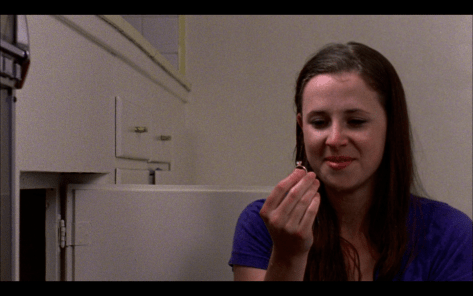
For writer-producer Katie Micay, “Limited Engagement” is a testament to her exceptional filmmaking forte. The story follows Kate, an unmarried, perpetual bridesmaid and hopeless romantic. Kate is ecstatic to find an engagement ring in her boyfriend, Ian’s, pocket. But to her dismay, the ring goes missing and in a panic, Kate turns her house upside down to find the ring before Ian notices.
The two-person short stars Katie Lee (“10 Days of Rain”) in the role of Kate and Rex Alan McMillan (“Alice Agonistes”) as Ian.
“In just a few short minutes, this film takes you on a roller coaster of emotion,” Lee said. “There is a clear conflict which everyone can relate. The story finishes with a resolution that not only gives a sense of relief, but also reminds you to laugh at yourself because in life everything works itself out one way or another in the end.”
Micay aimed to craft a story with a self-deprecating and witty sense of humor. “While writing this, I pulled a lot from one of my friendships,” she said. “I am extremely sarcastic in real life and my good friend was extremely literal. It never ceased to amuse me how many times she would fall for my sarcasm.”
“Limited Engagement” is an exercise in creativity that demonstrates Micay’s screenwriting inventiveness. The entire story is put in front of the camera and is conveyed by the characters’ viewable actions. It’s entirely absent of expository dialogue and the achievement befalls only the best screenwriters.
“I actually love creating stories without dialogue because it pushes you to really tell a story visually,” said Micay, a Vancouver native. “These days a lot of films over explain, but the audience often prefers to put the pieces together on their own.”
Said Lee, “The script seemed really fun and quirky and I’m all about quirky. Plus, the idea that it was a silent, slapstick style comedy was very appealing to me because as an actor there is such a fun physical exploration to the characters.”
Growing up, Micay absorbed influence from shows such as “Friends” and subscribes to the writing convention that situational comedy is driven by strong characters. So is the case with “Limited Engagement,” where she created a dynamic leading female that carries the story in many scenes all by herself, all the while executing the needed comedic, situational mishaps.
“The audience really stays with Kate and goes through the struggle with her. You feel her pain and her happiness,” Micay said.
The character had familiar feelings for Lee and also hit close to home. She said the best part of acting in the role was “how relatable Kate is to most women. I was going on four years in my own personal relationship and was watching friends settle down left and right. Making Kate relatable and likeable gives the audience the ability to sympathize with her and also want to follow along on her journey to see what happens.”
From a producer’s standpoint, Micay was charged the task of finding a dog that would play an integral role. Kate’s plight within the story is incited to a peak when her dog accidentally swallows her ring. Kate discovers its whereabouts using a metal detector and winds up getting it back using a laxative.
“It could happen to anyone and likely something similar has happened,” Lee said. “You can’t help but laugh because everyone knows.”
Micay says implementing the dog, Chachi, was the biggest challenge to the production. “Even though he is a professionally trained entertainment animal, it was still much harder than a human,” she said. “We had him on set one day and had to get everything we needed in a very short period of time.”
Casting the human actors, on the other hand, was a different experience. “When casting, we needed people who were very expressive, but natural at the same time. Both Katie and Rex auditioned and it was clear that they were very talented,” said Micay. “They were both a great joy to work with. They really wanted to collaborate and help my vision reach the screen.”
Micay is known for her previous writing and producing of “Flirt,” a Reality Bytes Film Festival Official Selection, “My So Called Family,” that was an Official Selection at the Bel Air Film Festival and “The Firefly Girls,” which screened this month at the Sonoma International Film Festival.
“Limited Engagement” achieved critical acclaim as it received an Award of Merit at the Women’s Independent Film Festival. It was also an Official Selection at the Los Angeles Women’s International Film Festival.
The 2012 film was dedicated to Micay’s great aunt, Clara Nelson. “She passed away before I made “My So Called Family,” which is loosely based off the week she died. She was a stand-up comedian that loved to tell a good dirty joke. She just loved life and family. When I moved to Los Angeles, she really helped make it home for me.”
Virtual Reality Group MightyVR, Momentum Entertainment and Sports Network, Interpix, Inc. and Replay Collective are pleased to announce the production of “The Most Dangerous Women in Hollywood,” an unprecedented 360 degree virtual reality movie and game series.
Viewers journey on a fully immersive experience by wearing a headset that allows the virtual reality experience of trying out jets, sports cars and choosing one of “The Most Dangerous Women in Hollywood” to join up with and get away from the bad guys. Headset options range from high end models such as the Oculus to a $20 Google Cardboard set.
“We believe the entertainment industry is on the verge on a complete shift in media consumption because of virtual reality and, soon, augmented reality,” said Replay Collective producer Siddharth Ganji. “As storytellers, we are always looking at how technology will shape storytelling, and there is no doubt that VR is the next big evolution in this arena.”
The exciting new project is dedicated to all of the daring stunt actresses who provide audiences with an array of thrills including flying military planes, racing sports cars and more.
Dallas Santana is directing the project, which is scheduling to film this month in Las Vegas. He is the creator, director and producer of “Destination X Hawaii,” “Destination X California” and “Destination X Puerto Rico.”
Starring in “The Most Dangerous Women in Hollywood” are the selectable and delectable Olga Safari, a model and actress known for her role in Thomas J. Churchill’s “Check Point,” Jennifer Irene Gonzalez, an FHM cover girl and former Miss Taiwan, Tara Rice, a model and actress who has appeared in “Piranha 3D,” “Austin Powers in Goldmember” and “Entourage,” and Michelle Watterson, a leading MMA fighter and model.
Producing the project along with Ganji are Replay Collective’s achieved line producer Varun Verma and producer Raghav Murali. Replay Collective produces engagement-driven content and is known for producing viral YouTube videos for artists such as Trisha Paytas and Ricky Dillon.
“With MightyVR, we are working on an action-oriented, interactive short. You choose a character and make consecutive decisions in an effort to “stay alive,’” Verma said.
Murali explained, “Virtual reality takes consumer engagement to the next level. Rather than just feel involved, consumers can in essence attend events minus their actual physical presence.”
In tandem with the movie and game series, the new initiative includes a 360 degree video, an HD short video, a companion picture book and e-book.
“The Most Dangerous Women in Hollywood” will be released on MightyVR’s distribution platform as an app that may be purchased. It will be also be available online, for smartphones and its book releases will be sold by Amazon.com and Borders.com.
Filming VR of course requires a specialized approach to production. The end result is a product that is entirely VR. “We have a special GoPro rig provided by MightyVR that we will be using. It’s an interesting approach to production where we have to pre-light everything in such a way that we don’t see any stands or lights,” said Ganji. “When the shooting takes place, everyone needs to disappear from set, and it will only be the performing talent performing the action.”
Murali noted that most virtual reality camera rigs are created using multiple cameras such as the GoPro, which are fitted and film in a way where images overlap. “The stitching of these images creates the three dimensional 360-degree effect,” he said. “Most VR software requires the stitching to be done in post, but there is also software being developed that allows real time stitching, enabling filmmakers to watch their content in real-time.
A VR-focused, immersive production means there is no fourth wall to hide behind during filming. “No crew or equipment should be seen by the camera. This requires lots of rehearsal and planning, making it a rather different experience to traditional filmmaking,” said Verma.
Ganji, from Mumbai, India, sees this dynamic new technology as having many valuable, inventive uses. “A strong benchmark for what is coming is to look at the video game industry and how immersive and interactive those games/worlds have become,” he said. “On the flip side, I have a 79 year-old grandmother who has never visited me in the U.S., and probably won’t be able to because of health issues. I’d love to be able to visit her, pull out my phone and let her experience her own journey of wonderment as she literally walks down the Santa Monica beach. The possibilities for technology are so vast, but what this boils down to is finding a human connection to the content.”
That human connection could also expand to immersive training materials for a variety of industries.
Said Ganjji, “Imagine you’re a newly-hired electrician and your company is training you. I see VR eventually entering into entirely non-entertainment related industries as a tool for training. Look at how many companies are gamifying their businesses now to increase employee productivity. VR completely aligns with that goal, and, I believe, will have huge market potential for hiring and attracting young generations.”
The technology is also one that presents an alternative to 3D. “I think VR is next level 3D,” Murali said. “Rather than simply being shown a world from one perspective in 3D, one gets to experience the VR world in full 3D.”
When asked, most filmmakers will agree that maintaining creative control of a production is one of the most highly prized opportunities in any project. However, directors must often sacrifice that sovereignty when seeking financial backing. Investors frequently assume the role of producers, and leave the visionary with little power over their own original creation. Carlisle Antonio has successfully evaded that pitfall by producing every project he’s directed in his illustrious career.
Carlisle is an innovative artist as well as an adept businessman, and as the CEO of the Red Man Films production company he has proven his aptitude for both time and time again. The son of a “Navy man,” Carlisle was raised in Europe but spent much of his life in far-flung locales around the globe. That worldly experience, combined with his strong ties to his Native American heritage, sparked Antonio’s imagination and passion for storytelling and helped inspire some of his most acclaimed productions.
“I have a diverse background; my roots reside within an indigenous form of storytelling, and I feel this lends itself to a different style of creativity,” Carlisle said of his diverse influences, which include “European cinema to indigenous American, Latin and Brazilian art forms.”
He is particularly renowned for his work producing and directing a wide array of documentaries, which range from awe-inspiring and majestic to gripping and emotional in subject. Carlisle wrote, directed and produced the 2008 feature documentary “Coloring the Media” in partnership with the BBC. The documentary details the film industry’s long, shameful history of using dehumanizing stereotypes when portraying Native Americans.
“Coloring the Media” won a Millennium Award and was a hit success with viewers during its worldwide festival tour. It featured Sundance Film Festival founder, actor and Academy Award-winning director Robert Redford (“Ordinary People,” “Butch Cassidy and the Sundance Kid”), as well as the late John Trudell, a legendary artist, poet and prominent Native American activist. The film was bold and concise in its message, and as with many of Antonio’s productions, had a lasting impact on audiences and critics.
Carlisle’s work often centers on Native American culture and heritage, as well as on the lands that indigenous peoples called home for millennia. While working with the Alaskan National Park Service, he produced, filmed and directed three films aimed at promoting tourism by showcasing the raw beauty of the vast expanse of forest, mountain and glacier-covered Alaskan landscape. The films, “Walking the Wild,” “Bear Country” and “Under the Borealis,” offer viewers an informative peek into the gorgeous Alaskan parks. With stunning cinematography, the films teach potential visitors about native plants and wildlife, as well as ways to ensure safe visits to the remote and isolated wilderness.
As a filmmaker, Carlisle knows the value of his medium as a way to inform audiences and advocate for change. He is currently using this platform to give a voice to Native American victims of suicide with his upcoming film “Walking the Line.” Despite having the highest suicide rate of any group in the Western Hemisphere, Native American tribes are often unwilling to discuss the epidemic. Carlisle is determined to expose this tragic cycle, and plans to begin shooting “Walking the Line” later this year.
“I feel that by giving a voice to the dead, they may just be able to help the living, and perhaps help the grieving families and loved ones left behind,” Carlisle said, describing his passion for the project. “It could also help another young person living on the edge, or someone contemplating suicide as the only alternative. Film in any medium has the power to change and affect people’s lives.”
Filmmakers are perhaps the most powerful agents of social reform. By putting a spotlight on issues that are too often underreported, they can enlighten audiences and inspire action. As the CEO of his own production company, Carlisle has the rare and enviable creative advantage of being the writer, director and producer of his own projects. That level of control is critical when the subject matter deals with issues as monumentally important as those in Carlisle’s work. Anyone who has seen one of his productions can attest to the fact that Carlisle’s gift for filmmaking can open eyes, move hearts and change the world; and as he embarks on several upcoming projects, it’s a guarantee that he will he continue to do just that.
Actor Dylan Walsh (left), writer Thomas Pound (center) & executive producer Erin Haskett (right) on set of the multi-award winning series “Motive”
Since breaking onto the scene in 2008 with a win as Best Writer at the Vancouver 48 Hour Film Festival, Thomas Pound has written, created, and produced some of the most groundbreaking TV series and films to date.
Tenacity and persistence are vital to make it as a working writer and/or producer in the entertainment industry, and Pound has certainly exhibited both qualities in droves with the projects he’s brought to the screen. In the early stages of his career, immersing himself in the writing process and building experience were his primary goals, something he achieved in 2008 with Universal’s third installment of the cult classic Slap Shot, Slap Shot 3: The Junior League.
In 2010, Pound went on to write, direct, and produce the film The Wilderness Within, which earned him a Silver Ace Award the following year at the Las Vegas Film Festival.
On a hot streak, there was no stopping Pound as he continued to write feature films including Anomalies, The Cold, and Nextworld until he landed his first television series Motive. Working with an established writer and executive producer like Dennis Heaton (Fido, Call Me Fitz) helped give Pound the confidence to evolve his craft and provided audience members with a deeper look into the show’s main characters, and by dong so Pound, and the Motive team, received a Canadian Screen Award’s nomination for Best Dramatic Series in 2014.
Following ABC’s Motive, Pound took on the hefty task of re-writing and executive producing the horror film Torment, with only six weeks before shooting. He ended up doing major rewrites on the script and eventually came up with a new story and screenplay in just three days, which is a major feat, and one that Pound claims he will never attempt again but definitely well worth it since the film premiered at Los Angeles Screamfest.
The next couple of years proved to be very busy yet successful ones for the Calgary, Alberta native as Pound went on to write, create, and produce his most challenging TV series to date, Rookie Blue. On Rookie Blue, Pound acted as executive story editor in addition to his usual duties as a writer.
He is currently in the process of developing two new one hour drama series for Canadian TV: The Brick and The Faculty. Both shows are currently in production and are slated for a 2016 release date.
To find out more about the multitalented screenwriter and producer, check out the interview below and visit his IMDB page at http://www.imdb.com/name/nm3281909/
Where are you from and what was it like growing up there?
TP: I grew up in Calgary, Alberta, Canada. It was like growing up in a giant small town. The people there are salt of the earth and humble. The town is victim to subzero winters and urban sprawl, which has resulted in the people bonding much tighter and becoming much warmer than many other cities I’ve spent time in. At the time, I likely would have said the town was too quiet and too wholesome. Only since leaving have I realized the rest of the world could use a little more wholesome.
How have your early experiences influenced some of the work you create today?
TP: Everything I create today goes back to my roots. Growing up in the prairies instilled a strong sense of community, family, and wholesome living. The Brick started as a love letter to the prairies. Witnessing a small town I would spend summers in, Brooks Alberta, become hit with big box-stores and chain corporations changed the simple small town memories I had from childhood. This town was no longer what I remembered. Knowing the people from that small town and their polarizing opinions on what this means for their way of life, it was an easy creative leap to build a fictional world using this prairie touchstone. Peppering in the organized crime elements was creative freedom and no reflection of Brooks Alberta to my knowledge. The Brick became my attempt to reclaim the small Alberta town I remember fondly spending summers at the lake in.
When and how did you get into the industry as a screenwriter?
TP: I moved to Vancouver, BC immediately after high school to attend Vancouver Film School and study Film Production. I started writing feature screenplays on my own time, trying to better understand story and how to manipulate it. It was the series Lost which sparked my interest in television. I also worked in the industry as an assistant in every capacity for four years following film school.
Relocating to Toronto, Ontario was the first step towards making a concentrated focus to write full time. The few working writers I did know lived there and the executives who could hire me had offices there, so I had to move. There’s something to be said about persistence, because that’s all I shelled out for two years. Writing spec script after spec script, I knocked on doors of producers, agents, broadcasters, to learn who was being read and what projects were coming up. Eventually, pilots I wrote found homes: Anomalies was first sold to Gearshift films, and a short while later The Faculty found its home at The Nightingale Company. The relationship with Gearshift Films presented an opportunity to co-writer and executive produce a horror film they had in the works, which turned out to be Torment. Through the effort of simply trying to meet people, I suddenly had a produced feature under my belt. That same year, I was hired on as a writer for the CTV series Motive, and where I was able to co-write my first produced hour of television with Dennis Heaton. After that year with Torment and Motive, I felt comfortable introducing myself to strangers as a writer.
What kind of audience do you generally write for, and why are you passionate about writing stories for this audience?
TP: I try to write stories anyone can enjoy. I’ve always enjoyed commercial feature films and television, and enjoy delivering material which can reach the widest audience possible. That being said, every story I write has to have a human heart, an emotional anchor anyone can relate with or connect to. Whether it’s a sweeping science fiction epic or an ensemble character drama, I strive to find the heart at the core of every story, giving the audience something tangible to latch onto and pull them into the piece. I approach every story I write with the same simple question: “What would I want to feel?” The answer can be excitement, of heartbreak, or inspiration, but it always comes from a place within of what I want to feel. If I can tap into that emotion, I hope it is translated on the page and the audience feels that same sensation. That’s the beauty of television and film, the journey and triggering of emotions to audiences all over the world.
Can you tell us a little bit about some of the projects you’ve written for film and television?
TP: I was fortunate to be brought onto the horror film Torment when it was very close to start filming. There was a script, which was to be shot in six weeks, and it needed a lot of work done on the project. I was inspired by what the filmmaker, Jordan Barker, wanted to do with the film, but the existing script didn’t provide. We met in his office on a Wednesday and spent two days locked away reworking the entire story from page one. Once we had a new story and shape for the film we wanted to make, I went away and wrote the first draft of the screenplay in three days. The quick turnaround is not common, nor would I attempt or offer it again. However, with the deadline of filming starting within weeks, we needed a script to work off of. We were rewriting large chunks of the story as the weeks wore down to the start of principal photography, often turning around entire new drafts of the script within a day or two. It was an intense process, which left me feeling like my head was spinning. When filming finally began, I recall standing on set in awe. This was my first ever produced script, and dozens of people were committing incredible effort and time to make it real. I imagined a car blowing up and typed it on my computer in my tiny apartment, and now I was on location watching the flames grow and feeling the wave of heat from the vehicle engulfed in flames. Those lost weekends and evenings were worth it. Torment was my first produced film, which I also executive produced. It confirmed what I already knew: I’m in this for life.
Motive was the first series I ever wrote for. When I moved away from Vancouver to Toronto in pursuit of a writing career, I told friends I’d return one day with a show. The joke amongst us is that I had to move to Toronto to get a job in Vancouver. Low and behold, some years later, it finally happened. Working under Dennis Heaton on Motive was invaluable. He let me hit the ground running, co-writing my first episode of broadcast television with him: “Kiss of Death”. This was another case of being under the pressure of schedule. We spent weekends locked away together working out the beats of our story, a similar experience to Torment. We wanted to do something different with the show and take a deeper look into our killer’s point of view, experiencing his own hallucinations when we learn he’s been poisoned. This seems like an easy task, however, the show had never done something like this and with Dennis’ leadership, we were able to craft a story, which sold the emotion of the moment, bringing it to screen.
On my second year, I was able to write an episode I’m deeply proud of – “The Glass House”. The idea of this episode had been brewing since my first year on Motive. It started with a very simple emotional anchor “A Father trying to get his daughter back”. I didn’t know the story, I didn’t know the character, all I knew was the core emotional drive, and it was what I constantly went back to in crafting the story. I was given tremendous freedom on Motive to tell the story I wanted. I believe this came from always servicing the emotion of the story first.
You’ve also produced some of these projects, is that correct? Can you tell us a little bit about the projects you’ve both written and produced and how tackling both jobs draws upon your different skill sets?
TP: With Torment, I was also the executive producer on the film. In writing, you rely on the ether of imagination, allowing the story and characters take you wherever they need to go. As we were counting down to the start of shooting on Torment, my role as producer on the project involved constant collaboration with the production. If we lost a location, I would have to find a creative solution in the screenplay to make the new one work. I would work closely with every department to develop the ideas of how a particular action sequence would play out, knowing they wouldn’t get the new script for several days, but they still needed to move forward in prep. It was a constant juggling of guiding production concerns as the script changed and vice versa. You have to be malleable and see how things can shift if circumstances change on a film. Things will seldom go how you planned on a film, writing and producing to those changes is an essential skill set.
Do you prefer to produce the projects you write?
TP: When given the opportunity, I prefer to produce the projects I write. I love the entire process of putting a television or feature project together. I have tremendous admiration of every department that it takes to pull off such an incredible feat. By producing the project I write, it gives me a chance to work as closely as possible with every department and collaborate our ideas. Producing something you write gives you, and the entire team, the opportunity to have constant transparency as to why a particular action or moment plays out a specific way. While production issues will arise, as the writer and producer, I can offer creative solutions, which maintain the sanctity of the story, yet allow us to film what needs to be filmed.
You’ve also been called in as a story editor on projects like the TV series Rookie Blue, and Motive—can you tell us about how your role as the story editor on these projects differ from others where you have been the main writer? How much influence do you have over the story in these cases?
TP: The difference between being the main writer and a story editor is that as a story editor, it is your job to fulfill the show runner’s vision of the show. On Motive, I would have countless meetings with Dennis Heaton to fully understand the big picture story he wanted to tell in the series. Once I understood his intentions, I would be able to craft my writing and my episodes to facilitate that particular vision. The same can be said for Rookie Blue, where I can bring my ideas to the table, but they ultimately must facilitate what the show runner wants to do with the characters. It’s a vital role in aiding to bring the voice of the series to the surface as easily as possible. I have a great deal of influence on the stories in these cases; however it’s an incredibly collaborative process. I may bring my seed of an idea to the show runner, and it may inspire him to take the story in a new direction. Together, we will arrive at an entirely new story. It’s still my job to write it, and it was birthed through collaboration, however as long as it serves the show, it is fulfilling its purpose.
From your perspective as screenwriter, what are some of the differences between writing for television and writing a screenplay for a film?
TP: One of the greatest differences between writing for television and writing for film is the pace. Television is a marathon. As soon as the gun fires and you’re off to the races, you’re cranking out story after story with the writing team and shooting a new episode every eight business days. It’s easy to drop the ball, but it’s an incredibly rewarding journey, which can create incredible partnerships with your colleagues. Feature films are much slower to produce and thus the writing can take quite a while as well. In features, you’re ideally writing about the characters most interesting day in his entire life. In television, every day has to be the characters most interesting day. You can concentrate a core theme or message much more succinctly in film; however you can build much broader and complex worlds in television.
Do you have a preference for one or other?
TP: I prefer the collaboration of television, writing with a team and building an entire world on a television landscape. However, I do love the intimacy of writing a personal screenplay and shepherding it through production on your own. I prefer whichever story idea more personally resonates with my soul.
What made you choose to participate in the projects you’ve done over the course of your career?
TP: In many ways, the project chose me. I have had the luxury of knowing talented individuals in film and television, and as soon as the windows opened to work together on their projects I leaped at the opportunity. For Motive, it was an incredible chance to work with Dennis Heaton, and join a show that expertly delves into the psychology of what drives an average person to become a murderer. I love studying psychology and this was a chance to look at the human condition on a deeper level. With Rookie Blue, the opportunity came to join the team of an already established series which I was a fan of. I believe writing should always be a fun experience, even when you’re writing about dark stories. Rookie Blue was an opportunity to play with wonderful relationship dynamics and romances on screen which I hadn’t done before. It became a wonderful experience which sought me out.
What have been a few of your favorite projects so far and why?
TP:Motive truly gave me my first opportunity in television. For that, I will always look back fondly on the project. I have remained near and dear to many of my colleagues on that series and became a part of a series I am incredibly proud of. Torment was a project which turned out far better than I could have imagined, through an experience that was incredibly draining and intense. I never imagined it would premiere in Los Angeles Screamfest, or be sold internationally in theaters. For this, I walked away with a tremendous amount of pride for what we accomplished together.
What has been your most challenging project and why?
TP: The most challenging project to date was Torment, primarily because of the timeline to write the entire screenplay when we were only several weeks out from filming. It was a real “sink or swim” scenario in many ways. With new information of casting issues, location changes, schedule shifts, coming in every day, the script was a constant moving target, at times to an overwhelming extent. In the end, we brought it together in a wonderful way and I have walked away with pride for what we did. It was a great lesson that the most challenging experiences can also be the most rewarding.
Can you tell us about some of the awards you’ve received over the course of your career and what you won them for?
TP: I was fortunate to win the Silver Ace Award from the Las Vegas Film Festival in 2011 for writing and directing my short film The Wilderness Within. It was a gratifying achievement for a project I solely wrote, directed, and produced on my own. I was also a part of the Motive team when we were nominated for the Canadian Screen Award for Best Dramatic Series in 2014. Seeing the season I worked on being honored with a nomination was a tremendous achievement.
Out of all of your awards so far, which one has meant the most to you personally?
TP: The Silver Ace Award means the world to me as it was the first award I received for bringing together a project that only exists because of the kind efforts of those who believed in me. I believe it’s important to remember where you started out, and this award embodies the person I was before ever getting the chance to make movies or television.
What projects do you have coming up?
TP: I have been currently developing two new series for broadcasters in Canada. The Brick is a one hour drama for TMN with Bell Media, geared to be one of their first original cable one hour dramas. It is a series about a fictional small prairie town, simple and untouched by big box stores of today, and what happens when a major city crime organization aims to turn this town into their new home base, and how the hardware store owner decided to take a stand. He’ll create his own mob to fight the big city mob. I have been developing this project with Bell Media and Pier 21 in Toronto since the summer of 2015, and aim to have an announcement early 2016 on the predicted release.
I am also continuing to develop The Faculty, a one hour drama series for Shaw Cable. The series is about life following a school shooting in a small prairie town, and how the faculty members return to work and strive to pick the pieces up and transcend tragedy through hope. We have been developing the series for a year, and aim to bring it out into American markets in early 2016.
As a screenwriter, where do you get your inspiration for the projects you create?
TP: As a screenwriter, I take as much inspiration as possible from my own life. Whether it be a particular experience or a specific relationship in my life, I always start inwards. If I can connect with a specific emotion I feel in relation to a story I would like to tell, I can build a script from there. I am always able to return to that place within me where it originated from. It’s as close to a “method’ approach to writing as one can get.
What do you hope to achieve with the projects you create?
TP: Ultimately, I simply want my audience to connect with the projects I create. If they are able to connect and feel the specific emotion I felt when writing it, that’s a pretty incredible journey. In anything I create, I hope there is always a personal honesty and deep truth which resonates to anyone, no matter what their background.
Why are you passionate about working as a screenwriter?
TP: I believe stories unite mankind. Films and television travel all around the world and leave immense cultural wakes, and soaring ripple affects through time. Stories challenge the way we think and how we communicate. Films and television have the ability to bring honesty and truth to an audience who may shy away or be unaware of it in their own lives. At the simple core of it, a story can help them escape and relive the sense of wonder we’ve all had at one point in our lives. My passion for screenwriting comes directly from the drive to share the wonder I have for the human experience. If I can find a way to share those stories in an entertaining way, then I’ve done my job.
Do you think you’ll stick to writing TV shows or is there another area of screenwriting you’d like to explore?
TP: I’ll absolutely stick to writing television, however I’d love to expand on the breadth of the TV I work with. I would love to be writing multiple television series as well as feature films at the same time. Of course I can only write so much, but the passion and ability to work with other writers, and find the stories they’re passionate about drives me. I’d love to explore an avenue of producing other material and using my experience to bring it to the screen and share their stories.
Producer Richard Moore has been responsible for some of the most thought-provoking films, powerful documentaries and successful advertising campaigns of our time. He got his start while still in high school, has spearheaded hugely profitable production companies, and has worked with award-winning directors and multi-billion dollar corporations. Through all of it, he has maintained a level of professionalism and natural talent, which have allowed him to maintain stringent standards when choosing all of his projects.
The roots of Moore’s drive and determination can be seen in the beginnings of his career, when at just 19 he personally organized the funding of a full-scale Universal Records music video production for all-girl band The Saturdays. In addition to overseeing budgeting and set building, Moore was tasked with hiring and managing more than 70 cast and crew members.
“This was my real introduction to what it to took to be a producer,” Moore said. “With managing pressure, dealing with a lot of people in different positions and different environments, while simultaneously supporting your director and helping him or her to achieve their creative vision.”
Moore served as the senior producer at Big Balls Films, the company behind the wildly popular Copa90 YouTube channel. Funded through an investment by Google, Copa90 quickly became the most successful sports YouTube channel in Europe, in no small part because of Moore’s prowess as its head of production. Geared toward the much sought-after 12-to-30 year old audience, Moore was in charge of courting advertisers for the channel, which received a hefty annual operating budget from Google.
“For Copa90, I was responsible for the launch and channel management, with an annual budget of $3 million to spend on programming,” said Moore, describing his critical role in the project.
“I, alongside the creative team at the channel, was key in pitching, selling and executing brand-integrated shows while also building our original slate of programs, which we would then sell to third party platforms.”
Among Moore’s other notable advertising productions are campaigns for clients including the financial services group HSBC and Mexican tequila giant el Jimador.
Working with the cross-platform production company Unit9, Moore produced the #ispossible campaign for HSBC, a London-based international banking and financial services company. The campaign consisted of three commercials, each of which follows a young entrepreneur who found success through the backing and guidance of HSBC.
“The campaign documents [the entrepreneurs] as they reveal the people that helped them realize their ambitions and explain how to achieve yours through inspiration and mentorship,” he said.
Also while working with Unit9, Moore produced the “Mexology” campaign for el Jimador tequila. Moore, who admits that a huge factor for him in choosing a project has to do with his impression of the director, was personally requested by the director of the “Mexology” campaign, Martin Stirling. Moore had previously worked with Stirling on the Most Shocking Second A Day campaign for the Save the Children Fund, so when Moore was contacted by Stirling for the “Mexology” campaign, he promptly accepted.
“I worked with the recent Cannes Gold Lion-winning director Martin Stirling, who specifically requested me on the project due to my background and experience in documentary-style films and as someone who has the ability to manage global clients in a very high-pressured and time-sensitive environment,” Moore said.
The campaign took an innovative approach through its examination of Mexican culture in America, which ultimately promoted el Jimador’s trademark laid-back appeal to youthful consumers, which comprise the company’s target audience.
“Mexology was a commercial campaign for el Jimador tequila about four artists who were challenged to collaborate on the creation of an event that embraced the Mexican spirit of enjoying life,” Moore said. “They were tasked with re-imagining the legendary Michigan Building, an abandoned theatre in Detroit, without a script, storyline and within 48 hours.”
As a major player in the production field, Moore’s name drew the attention of Virgin Group founder Sir Richard Branson himself. When Sir Branson’s mother Eve began a project to assist women in North Africa, Branson reached out to Moore to produce a film about the charitable endeavor on behalf of Virgin Unite.
“When we arrived at Eve’s house, she asked us within the first 10 minutes of our meeting if we wanted to help her ship a herd of cashmere goats from England to North Africa to help bring stability to women in the region through creating jobs in the textile trade, specifically in the Atlas Mountains of Morocco,” recalled Moore. “It sounded so far-fetched and bizarre that we had to do it, and two weeks later we were filming with her and her beloved goats in Africa.”
With such a wide array of projects, encompassing everything from advertising and sports media to music videos and charitable works – not to mention his extensive work as a producer for film and television – Moore has shown himself to be a leader in an incredibly competitive field, and we look forward to what he has in store for us next.
A photo Arturo Nesci took of his brother Domenico Nesci in the early 1900s
Film has been a passion of millions of people all over the world for more than a century. But for Italian producer Filippo Nesci, film is much more than just a passion. It’s a birthright.
Nesci’s family history with film goes back to the early 1900s when his great grandfather, the Baron Arturo Nesci, was a photography enthusiast.
A generation later, Nesci’s grandfather, Michele Nesci, established himself as a filmmaker, photographer and finally, a film professor at the prestigious Roberto Rossellini Film School of Rome. While Filippo Nesci’s father, Domenico Nesci M.D., took a different path, becoming a creative psychiatrist and psychoanalyst, Domenico was also heavily influence by film; and, in the last decade he has incorporated the medium into a innovative creative psychotherapy training that he invented for medical students known as “The Workshop Movies and Dreams.”
After helping his father make a documentary for the Italian online scientific journal of psychotherapy “Doppio Sogno” several years ago, Filippo Nesci was hooked on the filmmaking process, and his innate skill in the industry immediately propelled him on the track to becoming a producer.
Domenico Nesci (left), Filippo Nesci (center), & Professor Dominique Scarfone (right) after presenting a workshop on multimedia psychotherapy at the IPA Congress in Boston on Jul7 23, 2015.
Nesci’s breakout production was the music video for singer-songwriter Meg Myers haunting, beautiful, tour de force Monster. The video garnered more than 1 million views on YouTube despite Myers not being attached to a label or a publicist at the time of its production, which was an impressive feat for Filippo Nesci to pull off.
“It was organizing, planning and getting everything for the director (Abram Pineda-Fisher) in order to make his vision come true,” Nesci said.
Pineda-Fisher’s vision included a night scene in a forest that involved Myers being soaked in buckets of cold water. During the filming of that scene, Nesci went above and beyond the typical call of duty for a producer as he assisted his crew with keeping Myers as comfortable as possible during the challenging shoot.
“I was very impressed with the commitment she had for her first big music video,” Nesci said.
Myers has since signed with major label Atlantic Records, thanks in part to the organic success of the Monster video that Nesci produced. Atlantic Records is part of Warner Music Group, one of the “big three” recording companies and one of the largest and most successful labels in the world.
Nesci parlayed the success of Monster into more music videos, including 80s Fitness by British electronic music production duo KOAN Sound. The video featured an elaborate production of two fitness enthusiast teams who used a combination of parkour and martial arts to whimsically compete to the death in front of intricate, beautifully designed background sets that were created from miniatures.
“This was an extremely ambitious production considering this music video had a very limited budget,” Nesci said.
Nesci went out and covered vital expenses such as food, production design and additional staff that kept the production going. He even found two production designers to build a small gym on set, and scheduled the transportation, construction and overall management of the gym’s creation.
“The results were an amazing music video, and an extremely happy artist crew and record label,” Nesci said. “The director (Tim Hendrix) kept getting more work thanks to the success of the video.”
80s Fitness went on to win Best International Video at the 2013 FirstGlance Film Festival, a 2013 Jury Award for Best Music Video at the National Film Festival for Talented Youth, and a College Emmy.
Another Nesci production, the film Wrecks and Violins, also took home multiple awards. The story of a disoriented teenager who needed to overcome a stranger’s bizarre torment with nothing more than a violin and a monkey-suited comrade earned the Golden Ace Award at the Las Vegas Film Festival and was a 2012 NFFTY Audience Award Winner.
Nesci used his innate people skills to create a light and relaxed atmosphere throughout the film’s entire production process which was vital to the project finishing on time and within budget. His most remarkable accomplishment during the film’s production was when he used his diplomatic talents to obtain a permit to film a key scene in the parking lot of the Rose Bowl in Pasadena without spending a dime.
“(It was) not easy to get,” Nesci said. “It required all my unique communication skills.”
But perhaps the most impressive of Nesci’s production feats was when he found a white alpaca for a commercial for the Scotch whiskey distillery Lagavulin. The commercial’s director specifically wanted a white alpaca and a field in which to film the South American llama lookalike. Nesci found not only a white alpaca, but an entire alpaca farm.
“I found him the exact alpaca he wanted, and I also found other different ones that we later filmed just to have more options in post-production,” Nesci said.
The find paid off for Nesci and Lagavulin as the commercial won a 2014 Clio Award.
Nesci has already build an impressive resume of award-winning projects such as films, music videos and commercials, and will no doubt add many more to it in the future.
Documentary series producer Tone Innset has been wildly successful as the creative force behind some of Norway’s best reality television shows. For the past five years she has continued to produce the kind of work that glues audiences to their TVs with the captivating and often intimate personal accounts of those whom she presents with the honed expertise of a storyteller.
As Norway’s top showrunner in the docuseries genre, Innset has produced more than 160 episodes of an array of titles, including 118 episodes spanning 12 seasons of Unge Mødre, the Norwegian version of MTV’s Teen Mom. Much like its American counterpart, the show gives viewers a glimpse into the lives of young women and teens who are either pregnant or have given birth as they deal with the day-to-day blessings and adversities of their newfound family lives.
Filming a show like Unge Mødre comes with its own difficulties, which is one area where Innset’s knowledge and expertise prove how valuable an asset she is to the entire production.
“These are young adults and teenagers with a lot of responsibility on their hands and a lot on their plate,” Innset said. “You also have to remember that in these kinds of series you follow someone’s life, and the most interesting things in a person’s life doesn’t necessarily happen between nine and five.”
Innset was also the producer of 12 episodes of Charterfeber aka Charter Fever, a series that follows a group of real-life Norwegian vacationers as they travel to exotic locales in southern Europe. The show documents their lives as they prepare for the trip, their time on holiday and their return home at the end of the journey.
“I loved that because it was really funny,” Innset said. “You know Scandinavians love to escape the cold weather and go to southern Europe to have fun… We filmed for two months on the Spanish island of Gran Canaria. It’s a humorous and edgy series, and a lot of people relate to the characters and have a laugh.”
Her intense hands-on work on Charterfeber made the show’s 2013 premiere the highest-rated premiere on the TV3 Norway channel in four years. Charterfeber’s widespread popularity garnered the series a nomination for the prestigious Gullruten Norwegian Television Award. The show is also known for having helped launch the career of one of Norway’s hottest celebrities, Svein Tore Ostvik.
Innset’s latest project is the second season of the food series Norges Grillmester aka Norway Grill Master, a star-studded cooking show, which sees contestants facing off through challenges to be named the titular Grill Master. The popular docuseries is hosted by Norway’s golden boy, actor Stig Henrik Hoff (The Thing, Into The White, Lilyhammer), and world-renowned chef Jonas Lundgren.
As a producer with a reputation for being someone who is always on-call and prepared to handle any curve ball in order to keep a production running smoothly, Innset was quick to respond when logistical complications threatened the filming process of Norges Grillmester. After an unforeseeable obstacle arose where a massive tent that had been specially designed as the set for one of the episodes was erected without all of the necessary pieces, it was Innset who came to the rescue.
“Well, on Thursday, we saw that a quarter of the floor in the tent was missing; it never got delivered, and that kind of flooring was very hard to come by,” explained Innset. “Somehow we miraculously managed to find a place where we could get a material similar to the floor we already had, so we painted it to look the same and it all worked out.”
This is only one out of hundreds of examples of the way Innset’s quick thinking and experience has helped to keep one of her productions on track. This particular season of Norges Grillmester premiered April 13 in Norway, and has been an exciting ride with unpredictable twists and turns from contestants Per Thorvald Thorgesen and Terje Inngjerdingen dropping out for health reasons to Sylvia and Luis Vavik winning the title earlier this month.
Innset is also working on the next season of Unge Mødre, which is set to premiere this fall. Her passion for the documentary series genre, which has made her a prolific name in the field and shines in the quality of her productions, stems from a human-interest perspective.
“I strongly believe that when people feel that they are seen and heard they feel a kind of ownership over the project, and when you feel ownership you put a lot more energy into it,” she said. “I have a great passion and love for telling stories, and I am a curious people person.”
International Entertainment, and the Talents that Leave us Buzzing….






 internationalfilmreview
