Category Archives: Producer

JOHN ALBANIS BECOMES A GLOBAL SENSATION WITH HECTOR AND THE SEARCH FOR HAPPINESS

There are times when you hear about someone taking on a task so difficult, so trying, that you wonder, “Why would you put yourself through this?” Mind you, we’re not talking 127 Hours/James Franco difficult. The film Hector and the Search for Happiness (starring Simon Pegg as Hector) is truly a global experience in terms of the action on the screen and the filmmakers journey to create it. A virtually army of professionals (numbering nearly 600) shot on four different continents, dealing with differing time zones, languages, and currencies to create this masterpiece. To coordinate as well as lend creativity required a very special producer, which is exactly what John Albanis defines. The film’s director, Peter Chelsom, brought John onto this project because of his practically inhuman ability to coordinate and facilitate, all while lending an artistic eye. In order to keep the integrity of the script, a number of producers contributed financially to the film while Albanis’s role was to be the “boots on the ground” in charge. Attesting to the accomplishment of the film’s intact vision are the many awards and nominations it received. These include: 2015 nominated for a Canadian Screen Award, 2015 Leo Awards – nominated Best Motion Picture, nominated Best Production Design in a Motion Picture, nominated Best Musical Score in a Motion Picture, and many others (including a win “Jury Prize” for Peter Chelsom at the Monte-Carlo Comedy Film Festival and a win for Best Foreign Comedy Trailer by the Golden Trailer Awards). A truly stellar cast including: Simon Pegg, Rosamund Pike, Toni Collette, Stellan Skarsgard, Christopher Plummer, Jean Reno, and others was required to deliver incredible performances. Peter Chelsom was required to direct and guide the performances while Kolja Brandt captured them on camera. All of this would have been for naught if John Albanis had not set the table perfectly for all of these artists…and the table required was massive!

When Chelsom requested Albanis to join the film as a producer, it was primarily because of their successful work history (the two have worked together on multiple feature films). When you are about to spend a year of your life biting off more than you can chew, you want someone you trust sitting next to you chewing even faster than yourself. Proving that he was much more than a coordinator or purse string guardian, the relationship between John and Peter would be based on encouraging and advising creatively. Albanis notes, “I had a history of working with Peter and by this point, we’d also become close friends. I wanted Peter to bring more of his personal artistry into this film. I’m a huge fan of his early two films, which were European indies: Hear My Song and Funny Bones. His direction is masterful in those films because the tone is so unique to him. The films he’s made in Hollywood are also fantastic (and certainly financially successful), but they didn’t showcase everything that Peter was capable of achieving. For Hector, Peter needed to get back to his roots and be more creative. This mandate spilled into every decision we made. A lot of the more creative aspects of the film were brainstormed between us early on. A good example of this is the treatment of Hector’s travel journal, which we decided to animate because it afforded us some wonderful thematic and editorial transitional opportunities.”

It’s impossible to separate the diversity of stories in Hector and the Search for Happiness from the diverse situations in which the production was placed to create it. The essence of the story is that Hector (Simon Pegg) is a psychiatrist who feels disillusioned by the mundane nature of his life and emotional experience. On a quest for his own happiness, he seeks out what it is that cultivates this emotion in others. He travels the planet, interacting with and experiencing lifestyles and people completely unlike himself…only to discover that the source of happiness was always with him. The filmmakers were insistent on not using soundstage trickery to “resemble” the feel of each location, meaning that the production travelled to each location, spanning the planet with John Albanis leading the charge. Because he was in charge of scouting locations, this meant that John travelled the globe twice for this film. He explains, “We felt it was crucial to the film’s success to physically go to each country to follow Hector’s journey. And yes…we all wanted to prove it could be done. Hector was an extremely ambitious project with a modest budget — yet we still managed to film across 7 countries and 4 continents including: Vancouver (Canada), London (UK), Johannesburg (S. Africa), Shanghai (China), Los Angeles (USA), Ledakh (India), and Germany. From the very beginning, we viewed it as four indie films that made up one larger story.” A larger studio may have requested a different tone for the film so, rather than rob it of its heart…multiple entities were called upon to aid a financial hand to the artistic integrity. Ultimately, London’s Bankside Films understood the filmmakers vision and agreed with it.

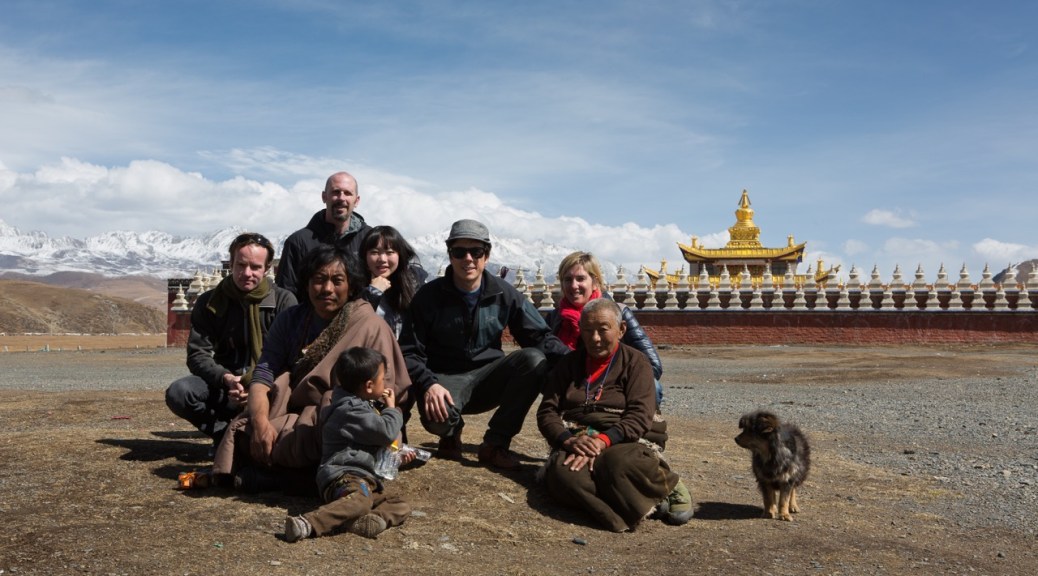
Travelling to exotic destinations with world famous actors may seem glamorous, and it is at times. Producing is a demanding job that requires a clear head and split second decisions at times, especially when in foreign lands. Sometimes the situation calls for a calm demeanor in the most troubling of circumstances. Relating a particularly unsettling experience during the filming of Hector and the Search for Happiness, Albanis recalls, “There’s a section in the film where Hector travels to a Tibetan monastery. We were originally going to film the monastery sequence in rural China. During my initial scout, I sourced the most beautiful monastery in the remote Kangding, Sichuan region of China, which we’d planned to shoot immediately after Shanghai. However, upon arriving at the location, there was unrest between the local monks and the Chinese military police (unrelated to us), so we could no longer film there. This was disastrous for the film and a horrible way to end the production. We went on a hiatus for a few months to game plan how (and where) we were going to film the monastery sequence, which was pivotal to the story. Ultimately, we discovered similar-looking monasteries in Ledakh, India. However, by this time, due to budgetary restraints and cast availability, we were unable to get our entire crew to India. So we decided that I would go to India to produce and direct all of our wide exterior shots, working with a 100% Indian crew and casting a double for Hector (Simon Pegg). I then met back with the rest of the crew along with our cast in the Bavarian Alps in Germany to shoot the interiors, mid-shots, and close-up shots. Coordinating how these shots worked together was quite complicated and each shot had to be precise and storyboarded in great detail.”

IMG_6102

Hector and the Search for Happiness is a warm and tender film yet; it is also uncomfortable. What happens to Hector and those around him is sometimes joyful and affirming and sometimes frightening and unsettling. The adage, “It’s about the journey, not the destination” is accurate and somehow too simplistic to convey the tempering which we humans need to be forged into thankful creations. If the experience solidifies a sense of self, then John Albanis might be the most actualized producer in the film industry today as a result of Hector and the Search for Happiness.
Director and Producer Ron Grebler talks living his dream and captivating audiences

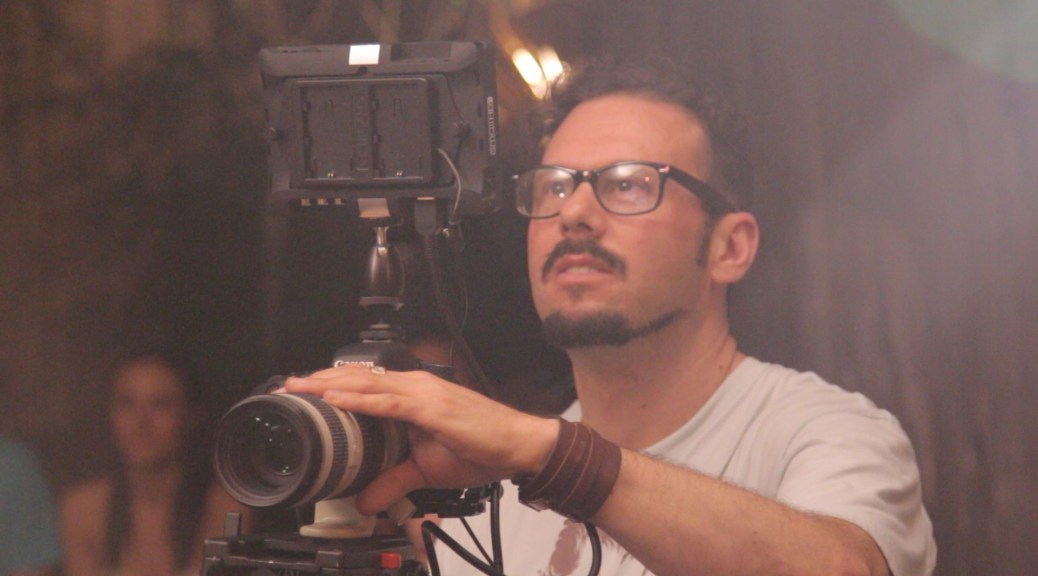
Ever since Ron Grebler was a child, he knew he wanted to direct for the big and small screen. Growing up in Toronto, Canada, he loved watching movies. He always enjoyed being transported to a new world through a film, with each image impacting his emotions. When he would watch, he felt fully engaged, and knew from early on that he wanted to be a cinematic storyteller. Now, he is a top Director and Producer in Canada.

While working with AXE and “Canada’s MTV’s MuchMusic”, Grebler helped take a revolutionary advertisement to the next level. Promoting AXE Hair Products, Grebler produced and directed a series of branded videos for the network’s “Spring Break Special.” The first of its kind on the network, three segments were seamlessly integrated into the hugely successful special to look like programming, not commercials.

“It was flattering to be chosen to work on a new concept of content with such an entertaining and iconic brand. As a commercial and branded content producer and director, it’s a rare opportunity to be asked to launch a new product for a successful brand. AXE was known for its body sprays and very entertaining commercial spots. When they were launching their first line of hair care products it was hard not to jump at the opportunity,” said Grebler.

What made the project fun for Grebler was the “hidden camera” aspect of the commercial. Part of the videos featured the main talent of the commercial asking vacationers questions about his hair, and the unsuspecting vacationers were unaware they were being filmed. This created a fun energy that was maintained throughout the three videos.

“It’s easy to work with Ron. He genuinely loves the craft of producing and directing and wants to put as much as possible into every commercial. We continually chose Ron because of his reliability, professionalism and his creative style. He was a ‘one stop shop’ for production, and we were confident that the final product would be engaging and of high quality. He has a producer/director’s ‘personality’. He’s creative and quick thinking, clear-headed, and dedicated to crafting the best programming possible with the budgets he’s given,” said Randall Graham, the Creative Director of Brand Partnerships and Commercial Production at Bell Media.

The campaign went on to be a large success for both AXE and MuchMusic. Despite the challenges that arose from shooting in Cancun, Mexico, the most popular Spring Break vacation destination, Grebler rose to the occasion. Without him, the campaign could not have achieved what it did.

“Working with Ron is often a fast paced and well thought out environment. Ron is always determined to exceed the expectations of his clients which often means maximizing every available minute. Being in a foreign country with limited tools at our disposal outside of what we brought allowed Ron and crew to think and operate outside of the box yet maintain high standards of production. Working with Ron is, at its core a job but also a classroom. Ron is a vast vault of production and creative knowledge which he is happy and eager to share. In all my years of knowing Ron, he’s always had the mentality that learning never stops and teaching others is always an available opportunity. Ron is always encouraging, positive and motivational on set which makes the complicated and sometimes unpredictable production days not just manageable but fun as well,” said KJ Fuhrman, the Production Coordinator of the campaign.

Grebler is known for his outstanding and memorable commercials. In addition to the AXE campaign with Much, he recently worked on a group of national  commercials for Belair Direct. The campaign was seen by millions of viewers across Canada and was highly successful for both Belair Direct and Grebler.

“Working on a commercial of this magnitude was a lot like juggling 300 hundred balls at once. There were so many little details, all time-oriented and interconnected, and if one falls, the others fall too. It was crazy but it was fun,” said Grebler. “There’s also that satisfying feeling of turning on the TV and seeing the spot I worked on for 3 months appear on different major networks. It’s also cute when my mom and dad call me to say they saw my spot on TV.”

Working with FUJI, Grebler reached an even bigger audience than Canada, as his advertisements were seen all around the world. Working as the director for the campaign, Grebler created two separate commercials, one for national television, and the other for internet use.

“It was an intense, short project that necessitated a lot of focus and particular attention to detail. I was strongly involved in the pre-production and production design, especially when it came to sourcing props and building sets. I was very hands on because for both the agency and client, the overall look of the set was extremely important. Since the concept included having a hand built craft to be used as a ‘hero’ prop, I specifically chose the artist to construct it and oversaw and approved the construction and color scheme,” said Grebler.

The decisions that Grebler made for the commercials led them to be immensely successful. FUJI then decided to launch the commercials in Japan, and are considering a roll out to other international markets.

Ron brings a fresh creative perspective as well as a lot of focused energy, enthusiasm and organization to every project. He has a depth of experience across many different brand categories and demographics and knows how to make every video unique, visually appealing and successful in its goal. He excels at translating the agency creative and client brief and crafting it into engaging video content that will keep consumers and audiences tuned in … and that’s the whole point of a commercial,” said Rebecca Hamilton, Chief Executive Officer Fish Out of Water Design, the agency that created the commercials.

Grebler’s reputation of being extremely thorough while working extremely quickly make him extremely sought-after not only in Canada, but internationally as well. He is truly exceptional at what he does, and his passion for what he does shows in every project he works on.

You can watch the FUJI commercials here.


ZHEN LI PRODUCES BRILLIANCE WITH WIT IN “GENGHIS KHAN CONQUERS THE MOON”

Genghis Khan photo for press articles 1

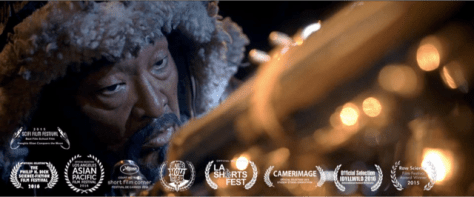
Genghis Kahn Conquers the Moon. The title of this film sounds…well, eccentric. Even its producer Zhen Li admits to being uncomfortable at first with the title and premise. He comments, “At the beginning, I though the idea was a bit bizarre, then I decided it was wacky instead of bizarre. It’s very bold to do a project about a well-known historic figure doing something against the historical fact. However, after reading the script and understanding what the metaphor implies, I abruptly changed this opinion. The story is special and unique with wit, humor, and intellectual sarcasm.” You don’t have to take the word of Li though; the achievements and recognitions of this film speak volumes. Genghis Kahn Conquers the Moon was an official selection at the Cannes Film Festival (France) 2016 (Short Film Corner), Sci-Fi Film Festival (Australia) 2015, Camerimage International Film Festival (Poland) 2016, The London International Festival of Science Fiction and Fantastic Films 2016, Los Angeles Independent Film Festival Awards 2015, Taipei Film Festival (台北電影節) 2017 Nominated for Best Short Film, Los Angeles Independent Film Festival Awards 2015 [Best Actor], and a 20th Century Fox Visual Effects Fellowship 2015 Recipient, and countless others too numerous to list. This diverse list of accolades attests to both the exceptional story and production as well as its universal appeal to different cultures spanning the globe. Celebrated actors James Hong and Cary-Hiroyuki Tagawa perform as the two main characters (Kahn and the wizard) in this film and bring the weight of their impressive Hollywood resumes to this production. Zhen Li’s confident and experienced presence is felt in every aspect of this film from the performers onscreen to its presence on the film festival circuit.

  There is no denying that VFX has created a situation in modern cinema that takes any idea a filmmaker might have and manifests astonishingly believable imagery. This eliminates the need for the viewer to suspend their belief as a courtesy to the storyline; the actions are clearly visible and believable for all to see. One bit of reality that VFX has not suspended is the truth that budgets still exist in filmmaking and it is the role of the producer to figure out what fits into the financial constraints and what does not. Because the premise for Genghis Kahn Conquers the Moon was finalized pre-budget, Zhen Li was faced with a great idea and cast but in need of ways to pay for this. Utilizing crowd funding, studio sponsorship, and other sources, Li created a plan and budget that would allow the film to possess the desired production value. The impressive look of this film allows one to easily understand that the VFX budget was both sizable and well worth it.

Revealing the evolution of his approach, Zhen states, “Our original plan was to shoot scenes in Death Valley with the spectacular landscape of an apocalypse. After some research, we found it will be over 130 degrees Fahrenheit and thus impossible for us to shoot there.  We luckily found Lucern Dry Lake which has a similar look to our vision. It was still extremely hot in summer, as there was no cloud and trees, only with direct sunlight. We rented 4 RVs and had huge fans blowing cool air off of giant ice cubes to cool down the crew.”

While this took care of the Earth scenes, the moon was the actual VFX challenge. Rather than constructing a large scale lunar surface, Li had a miniature of the moon’s topography built with a gradually-changing scale ratio. Scenes were shot on a green stage with the moon’s surface as a plate. These were then composited together in post-production. VFX supervisor Gene Warren III (whose credits include: Hellboy, The Expendables, Resident Evil: Apocalypse, Underworld, The Simpsons) professes, “Genghis Kahn Conquers the Moon is an ambitious project of impressive imagination and great execution. As a producer, Zhen Li did an incredibly amazing job, which allowed us to be able to make Khan land on the Moon.” When a film has a premise that is asking a lot of the audience, the images are often the tipping point for them to invest completely in the story.


It should go without stating that what is paramount to every production is the incredible performances of the actors. For Genghis Kahn Conquers the Moon, Li procured a cast of minuscule size but immense impact. Most notably of these were Cary-Hiroyuki Tagawa (as Kahn) and James Hong (as the wizard). The credits of these two actors spans many of the most beloved films and TV productions of the past thirty to forty years. The gravitas and levity that they brought to this film is evident from the moment they first appear on the screen. Zhen discovered that this is well founded. He notes, “They are both so established and recognizable from their many Hollywood large-scale studio productions; even so, they like to work with younger filmmakers who tell unique stories and experiment with different styles of performance. Working with these experienced actors, their devotion and enthusiasm touched me. Cary-Hiroyuki Tagawa had to wear the Genghis Khan costume including the helm, armors, and leather boots. The costume was more than 20 pounds and he was wearing it in the insanely hot weather. He was sweating like a fountain but he never once complained. He kept working until the sweat ruined his makeup and then we would have to re-do it. The improvisation between these two lead actors brought a great deal to the film.”

  Genghis Kahn Conquers the Moon was an official selection at the Cannes Film Festival; a festival so notable and respected that even those with no knowledge of the film community understand what an achievement and honor it is to have your film selected to appear there. Cannes is more than just recognition; it opens a window of opportunities to both show films and see films from the most talented filmmakers all over the world. It is a community of the upper echelon and provides inspiration and a springboard to future projects. While in attendance at Cannes to support Genghis Kahn Conquers the Moon, Li’s film attracted crowds and garnered him invitations to some of his favorite directors’ screenings, such as:  Woody Allen’s Café Society, Pedro Almodovar’s JULIETA, Asghar Farhadi’s The Salesman, Park Chan-wook’s The Handmaiden, Paul Verhoeven’s ELLE, Maren Ade’s Toni Erdmann, ken Loach’s I, Daniel Blake, and many other internationally lauded productions.

Perhaps the highest indicator of the quality of your work comes not from the critics or the box office but rather, those whom you work with in the industry. James Hong (Daytime Emmy Award-Winner and Genghis Kahn in this film) states, “It’s great to work with this young talented producer. Zhen Li will soon be known as the driving force in the film industry.”


XIANG NAN GONG ENABLES THE PRODUCTIONS THAT TELL THE STORIES OF CHINA TO THE WORLD

IMG_4375

It has been said that everyone has a story. In the world of television and film production, writers and directors are considered to be the creators of these stories. While this may be true, without the mastery of a technical director and producer…none of these tales would ever reach an audience. Having a vision is a very different thing from having the skills and knowledge to manifest it. Xiang Nan Gong has served this role for decades at Shandong Radio and Television, earning him the status as one of China’s most respected professionals in this field. During his time with Shandong he oversaw the multiple technical facets in the creation of documentary and scripted series. From massive scale variety shows to location documentary series which told the history of the Chinese people, Gong designed and facilitated lighting, staging, sound, and a myriad of other components which are essential to delivering the filmmakers vision. Xiang Nan might be the least well-known member the production team but he is definitely the most vital.

As with all cultures, the Chinese people are interested in the history of their ancestors and land. A country of such immense size and variety of inhabitants has many stories to tell. “The Story of Yili River” is a documentary depicting the Yili River from the perspective of the cheerful running water line.  It explores the Yili river people’s folk customs, rich life, and delicacy. Gong focused on his expertise as a recording engineer for this production, recording and placing the authentic music of the inhabitants of this region to tell the folk customs of the people on both sides of the Yili River.

Xiang Nan worked closely with the director and a small team of professionals in the studio to create and recreate the sounds of the Yimeng People for the “Shandong Report.” Layering a series of sounds and sound patterns, Gong created the sound design with a mixture of authentic music, location recordings, and studio sonics which depicted the hard lives of these people. This village is surrounded by high mountains and steep cliffs, streams, and other harsh natural environmental factors. To properly recreate and communicate what these inhabitants experience required a consummate expert like Xiang Nan.

As technical director and producer on Shandong’s “Sun Bin Military Strategist”, Gong aided this production which tells of a man who also lived through a difficult situation but persevered and elevated himself to the level of great respect. Famous for receiving the punishment of face tattooing and having his knee caps removed, Sun Bin later became one of the most respected and trusted strategist of his country’s era. While remarking that his difficulties were nothing compared to Sun Bin’s, Xiang Nan concedes that the equipment of the 90s which he used was less than desirable for this thirteen-episode historical series. He tells, “Historical dramas are grand in scale with many layers of sound. This is what makes it so believable to the viewer. While your conscious mind may not notice it, something in your unconscious tells you that you are really there amidst these battle scenes and different locations due to the small details. Today’s state of the art technology makes the process much less cumbersome but back when we made this series, it took many hours to achieve what can happen in minutes now. Regardless, the finished product is what is important and ‘Sun Bin Military Strategist’ was very well received and popular.”

Another of Gong’s productions, “44 Notes” received international and domestic acclaim. “44 Notes” won the first prize from the State Council Information Office and the Ministry of radio and television, the “Golden Bridge Award” in the United States, Japan, Germany, Taiwan, Hong Kong and other countries and regions, and was adapted for television drama production at the center in Beijing. This documentary shows the bicycling trip of teacher Du Xiangjun and forty- four of his students (of the Zibo Normal School in the Shandong Province) as they made their way to the capitol to perform a concert. Along the way, they sing and experience a number of hardships on their journey. Half way between reality TV and unscripted drama, “44 Notes” called upon Gong to be prepared for an unlimited amount of variables that could affect the filming and recording of this production. Its international acclaim is a testament to his expertise on this project.

As a loving husband and proud father of a daughter, Xiang Nan was especially happy to assume the duties of technical director and producer of Shandong’s “The Charm of Women.”

The program is the first female Chinese series about female characters with outstanding contributions from all walks of life. It introduces the work, study, life, and successful careers of each woman. Shot in documentary style, Gong took particular care to oversee the lighting and sound to present these women with the respect and admiration which their achievements deserve. While certainly not the most famous subjects of the many productions he has overseen, Xiang Nan professes that they are among the most important because they serve as an example to current and future generations like his daughter, exhibiting the great importance and impact that Chinese women have on their families and society.

As the professional who literally “sets the stage” and supplies the sounds on a wide variety of productions, telling the stories of China’s past and present; with international award-winning productions to his credit, the respect of his industry, and a long history at Shandong Radio and Television, Xiang Nan Gong is among the elite technical directors and producers who continues to bring new ideas to an ever expanding production community.

Chinese Producer Yuxiao Wang Solidifies her Name in Hollywood

Producer Yuxiao Wang

As international partnerships between China and the U.S. continue to rise, filmmakers in Hollywood are in need of more Chinese producers who are able to liaise between the differing audiences within the U.S. and China.

“Chinese film history has evolved very differently from Hollywood. If you want to make films for the Chinese market, you need to understand that history as well as the different genres and aesthetics that work in China. What works in terms of narrative with Chinese audiences is not always the same as works in other markets. It’s essential if you want to make a film for the Chinese market to have somebody that really understands the Chinese film world, culture, aesthetics and censorship in China. So it makes perfect sense to have a Chinese producer on board,” explains Michael Berry, Professor of Contemporary Chinese Cultural Studies at UCLA and the author of Speaking in Images: Interviews with Contemporary Chinese Filmmakers, and Boiling the Sea: Hou Hsiao-hsien’s Memories of Shadows and Light.

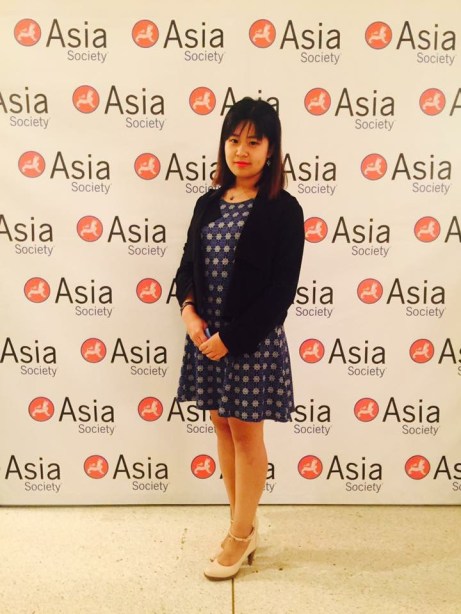
One such producer who has been sought after by productions within China, the U.S. and co-productions between the two, is Yuxiao Wang. Over the past few years, Wang has produced an impressive list of films, television series and commercials that have aired in both countries.

Wang has become known throughout the industry for her work as the producer of the films “Harmonica,” “Locked,” “She Gives Me Sight,” “Wasteland Walker,” “Dustin & Toilet,” “Successor of the Southern Star,” “Los Angeles Kidnapping” and more. She also produced the series “West Journey,” which was shot in the U.S. but is geared towards a predominantly Asian audience. The series takes viewers around Los Angeles and across the country on Route 66 with featured guests such as NBA star Shaquille O’Neal and Metta World Peace.

“Since most of the crew traveled from China, I was the only local person who helped them with shooting. It was tough persuading different location owners to agree to let us shoot, but I managed to make it happen,” explains Wang about producing the series “West Journey.”

It’s clear to see through her past work as a producer that Wang knows how to pick award winning projects. The war drama “Harmonica” took home the Grand Prize from the Carnegie Mellon Film Festival and was awarded at the Los Angeles International Underground Film Festival, the dramatic crime film “Locked” earned several awards from the Los Angeles International Underground Film Festival, including two Best Actor awards, the Best Film Award and the award for Best Narrative Short, and the film “She Gives Me Sight” garnered several awards at Hollywood Boulevard Film Festival, Hollywood International Moving Pictures Film Festival, Direct Short Online Film Festival and the LA Underground Film Festival.

In addition to her cross-cultural experience, Wang’s extraordinary ability to find the perfect people to head each department on a production, find locations that fit both the story and budget, and pitch the project in a way that effectively gets each production the funding it needs to not only be completed, but gain distribution on an international scale, have made her a highly sought after Chinese producer in the Hollywood film industry today.  

The story of what led Yuxiao Wang to become a producer is both ironic, and telling as to the kind of tools she brings to the table. As a transfer student in Japan, before she became a producer herself, Wang was involved in the production of a film where a mishap with one of the grips happened on set, and what followed was a little out of the ordinary.

Wang recalls “The Japanese mafia came and threatened to destroy our camera, the producer, at that time, went up and tried to settle things and find a solution to the problem. That was the first time I noticed the importance of a producer, they are always ready to solve any problem.”

Like any producer, Wang has undoubtedly encountered her share of problems on the productions she’s produced, however her quick problem solving skills and ability to think outside of the box have come in handy every step of the way.

Talentik
Film Poster for Talentik

Sky Culture Entertainment hired Wang last year as a producer on the new sci-fi feature film “Talentik” starring California Women’s Film Festival Award winner Lee Chen (“Veep,” “Girl Meets World,” “Before I Got Famous”), Nick Culbertson (“Ahimsa,” “Julie and Her Friends”), Edward L. Green (“Savageland,” “First Timers”) and Jessica Treska (“Broken Pines,” “Silver Lining”). The film, which was released in China in February through the popular internet platform Sohu, quickly gained traction with audiences and garnered upwards of nine million views. While working on “Talentik” Wang was also busy producing the upcoming sci-fi feature film “Rift” from One All Entertainment.

“Rift” is yet another film that Wang was heavily involved with from the beginning of production, which was shot in the U.S., but made for Chinese audiences. The film, which is slated to be released in China within the next few months, includes a cast of both American and Chinese actors and revolves around a Chinese astrophysicist who is caught between two parallel universes. The film stars Asians On Film Festival Award winner Jack Yang from the films “Seven Pounds” starring two-time Oscar Award nominee Will Smith and “American Ultra” starring Oscar Award nominee Jesse Eisenberg and Kristen Stewart, Greg Depetro from the Platinum Reel Award winning film “For All That We Are” and the IIFC Award winning film “Abducted.” and award-winning actor Allen Theosky Rowe from the series “Hawaii Five-0” and “Far Cry 4: Fallen Country.”

Wang’s skill at creating a bridge of communication where language and cultural differences were concerned, as well as raising funding and solidifying shooting locations across Los Angeles were all integral to turning the film “Rift” into a reality– as they have been for all of the projects she’s produced to date.

As the film industries between China and the U.S. continue to join forces, having multi-talented producers like Yuxiao Wang who are well-versed in both cultures has become increasingly important.


Ask an expert: A “how to” of line producing

Esi 1
Line Producer Esi Conway

I am Esi Conway, and throughout my years of being a line producer, I have worked hard to become recognized as one of the best at what I do. As a line producer, I build teams who can pull together to make great television shows. I am often one of the first people on the team.  I usually start off with a budget, schedules and deadlines. I then build teams, find locations, and book the crews. Going around the world, I have worked on some of the world’s most well-known television shows, for networks such as MTV, HGTV, BBC, Animal Planet, and more.

To be a successful line producer, you must be organized, disciplined, and have an in-depth knowledge of scheduling and budgeting, as well as an understanding of the technical accepts of TV making. On a day-to-day basis, you plan and schedule to get ahead of the project and forecast the needs of the team. You also trouble shoot any problems that arise. To succeed as a line producer, you need exceptional communication and diplomacy skills about to balance editorial expectations with the financial constraints of the budget. Here are my quick tips to getting into the industry and staying in the industry:

Getting into the industry

When I started out, nepotism was the name of the game. To get a start in the industry, you had to know someone working in TV. I had no such contacts, so I got a friend who studied design to make a cool eye catching resume and cover letter and sent it to every production company listed in the TV directory called “’the knowledge.’ I was given a few weeks work as an office PA, and that’s where I got my break. Thankfully, now there are sites you can go to where they advertise starting positions in TV.

Build relationships with your team

Gain an understanding of what each role does and the challenges they face as this will help you when it comes to problem solving.

Be flexible in your approach to problem solving

Editorial teams are constantly trying to squeeze more out of a budget. Listen to the idea and think is there a way to balance this request with the budget. Ask yourself “where might you be able to save to give them some of their additional requests?”

Be approachable

It is important that you know what’s going on in the project, so it’s important that you are approachable so that people come to you with ideas, issues, progress reports, and everything else.

Stay in contact with contractors

Be the connector person. In this role, it is important to have a great list of contacts with a proven track record in each area so that you can build teams for various projects. Who can pull together to produce hit shows?

Remember the working hours

Filmmaking and television don’t allow for the 9-5, so it is often hard for those with families to maintain their positions at companies. You must be prepared to put in the hours, whether it be the weekend, or holidays to get the project completed.

Take a minute to enjoy the moment

Once you get your foot in the door, it’s important that you maintain your enthusiasm and commitment. As it is a project based industry, you need to maintain your standards so that people want to employ you again. If you can do this, it can be very rewarding. I have worked with some top names in the industry, on television shows watched by millions. Although the hours are long, it doesn’t feel like work as the excitement from the team and the project carry you through. From being on a safari shoot in South Africa, to shooting in the favelas in Brazil, to filming with the Queen in Malaysia, there is never a dull moment.

ROTH REVEALS “TRUE NEW YORK”

When you open a puzzle box you find many disjunct pieces. While they have their own individual identity, when properly assembled, they reveal a full and descriptive image. This description applies to the documentary film anthology True New York. NYC is often referred to as the world’s greatest city. It might be American bravado bestowing this moniker but there’s no denying New York’s international appeal. Writer and director Jordan Roth hails from Canada but admits to harboring romanticism for New York City, which led to his immediate acceptance of Jeremy Workman’s invitation to become part of this Wheelhouse Creative production. True New York is a series of documentaries which, viewed together, reveals what we have always subconsciously understood; the charm and strength of New York City is found in its differences. Quite possibly more than any US city, New York is seen as the true American template; one in which different people and stories enrich each other’s lives…as these films enrich and inspire the audience.

Workman had seen Jordan Roth’s documentary film, entitled C Rock, about a Bronx rite of passage and was convinced that its creator understood the sentiment of what he was hoping to exhibit in True New York. Jeremy confirms, “It was a pleasure working with Jordan on True New York. He’s a great talent. We look forward to working with him further as his career progresses.” Jordan relates, “I think what actually makes True New York interesting and strong is that these are stories that all feel very human. They feel distinct to New York and these people all feel like New York characters, but even more…we’re connecting to their personal stories.

Asked about what he thinks is the New York experience, Jordan answers, “I think it’s about community. When you live in a great city like New York, on some level you feel a sense of pride and a sense of being a part of something. That might be corny but I think it’s true. You’re a part of the whole mess of the city. There’s an energy that comes from different types of people, from everywhere in the world, from vastly different backgrounds, all crammed together and trying to live in this space.”

True New York displays a variety of characters in the anthology. Taxi Garage (by Joshua Z Weinstein) is the story of a Queens taxi depot and follows Johnnie “Spider” Footman, a colorful octogenarian who is New York’s oldest taxi driver. Spider is a fascinating, sweet, funny guy who is surrounded by many other colorful characters. This story portrays more joy than one might presume. Jeremy Workman’s One Track Mind reveals the amazing story of Philip Coppola, who has devoted four decades to cataloging every station in the New York City subway system. Coppola is obsessive and seems odd at first but as the story delves into his life’s work, something beautiful and impressive is revealed. Sam Cullman and Benjamin Rosen’s Black Cherokee focuses on Otis Houston Jr., a self-taught artist from Harlem who performs along Manhattan’s FDR Drive. Many might have driven by Otis working on the road and have missed the experience of witnessing a true modern artist. A Son’s Sacrifice follows a 27-year-old who confronts his mixed Bangladeshi-Puerto Rican heritage and tries to gain acceptance from his father’s conservative community in this film by Yoni Brook. Finally, C-Rock (by Roth) explores a group of Bronx kids who leap off a 100-foot tall cliff into the Harlem River, a dangerous rite of passage going back generations. These five stories from completely different walks of life are relatable in their characters’ struggles and endeavors. The emotional element they all reveal is universal and deeply human. We meet people all trying to  make it through another day and better their situation in some small way.

Fans of documentary films are steadily increasing. While scripted movies are valued for their characters in exceptional circumstances, documentaries reveal the exceptional everyday people who may otherwise go unnoticed. The protagonists of documentaries are complex because they are real, possessing flaws. What initially drew Jordan to True New York was the potential of a venue for the kind of stories that the film market doesn’t typically allow to be seen. Only by seeking this paradigm shift will filmmakers bring fresh ideas and stories to the public.

When asked what he loves about New York, Roth notes, “Again, there’s a sense of community. I don’t really mean that it’s this sense that everyone is arm and arm and loving each other. It’s just that everyone is here in this place, together. There are people living here from everywhere in the world, all different cultures and backgrounds, all pushed together. There’s an energy I feel when I’m walking around in New York that is completely unique. I also love how accessible everything feels in the city, being able to hop on the train and get pretty much anywhere. I love the history and the cultural richness of the city.” He adds, “I also love the food. “

As a Canadian, Roth feels fortunate to work in the United States and call it home for now. “I feel strongly Canadian, but I love this country and care about it. I’m even an American history dork. I studied American history in school. I also know I’m just very lucky to live in the U.S. and pursue my work here.”

Joran screenshot


“FADED IMAGE REVEALS A VULNERABLE & GIVING TROY GREENWOOD

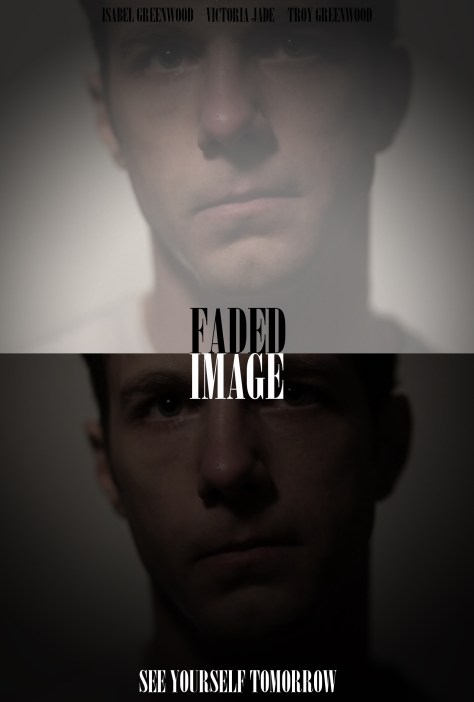
Troy Greenwood has many talents; producer, writer, actor, etc. While he may not truly accept it, poet and artist should be mentioned in the same breath. His film Faded Image is as vulnerable, heart-wrenching, and inspiring as any of the great poems of literature. The film seeks to reveal, relate, and give respite to those who experience or come into contact with those who experience depression. The public’s understanding and acceptance of the validity and presence of mental health has grown considerably in the last decade, often as a benefit of the work of artists like Greenwood who help others to peer into the invisible “virus” that effects and overwhelms our fellow citizens and family members, often directly in front of us. Faded Image was an official selection at the Covellite Film Festival as well as the Bare Bones festival 2017. As someone who has dealt with the challenges in his personal life like clinical depression and leukemia, Troy is able to communicate the internal perspective that so many silent individuals struggle with on a daily basis. Because he is a lauded and respected member of the film community, Greenwood is able to present these feelings in a way that makes them palpable to a wide audience. Good films allow us to “see” the emotions on the screen, great ones allow us to “feel” them; and Faded Image is a great film. The two drastically different scenes relate the mental state and the ability of all individuals to choose which of these to gravitate towards. As the dialogue of Faded Image states, “Find shelter in the simplest of things that bring us joy. Dance, cry, sing, laugh…even when it hurts and know that you are never alone.” Poetry. Hope. Art.

To suggest that Faded Image is a life-long endeavor is completely accurate. The writing of the script has been a decades long process for Greenwood. While the majority of those who battle depression avoid the help that could be given them due to some antiquated sense of inferiority or shame, it takes an artist like Troy to run headfirst into the fray and reveal the most personal and vulnerable parts of himself. This is partly due to a desire to help and inform others and also as a self-enacted form of therapy. Therapy happens in stages and can sometimes take a lifetime to achieve the progress necessary to cope. Greenwood began creating the script for Faded Image two decades ago. He reveals, “I wrote the first half of the script during my teens when I was first diagnosed with chronic depression. Battling through dark times and dark thoughts it can almost feel like you’re detached from yourself, unable to feel, and the dialogue of the first half of the script came out of a piece I wrote talking to myself as an outsider about the way it feels to be at the end of your rope – suicidal. I then thought about what I might say to myself in those darkest of moments to get myself through, and that formed the first incarnation of the script, nearly 20 years ago. I returned to the piece at numerous points throughout my career, tinkering with the script, mostly updating or revising the second half of the script, and how my thoughts had changed about what I might choose to say to myself to get through. It wasn’t until I started collaborating with Film Acting Fight Club that the idea came back in earnest to film this project. It had been several years since I looked at the script but I brought it in to the group for a reading. The feedback I got from the group was great, and I went about rewriting a draft of the script.” The first half of the film, which was written in Troy’s teen years, takes place in a bathroom. It depicts a teen contemplating, and to some point, attempting his own suicide. It is painful to watch. The lack of color translates the lack of interest and stimulation that someone suffering from depression receives from the world. This myopic outlook is unavoidable in the same way that someone dealing with pneumonia cannot resist a cough. The second half of the film depicts the same person, now an adult who has persevered and now possesses the wisdom and ability to speak to his younger self about the trials he has faced. The man’s age has also taught him the ability to do that most difficult thing, take one’s own advice. The setting for this second half of the film is a summer’s day surrounded by color and light…and hope. A young girl plays in the park, alluding to the hope that blooms in the future.

14663_889580108396_908312593_n

If writing this script was the act of writing a speech, filming and releasing it was the equivalent of reading the speech aloud at the city square. Troy confirms that the technical part of filming came with its challenges as well. He notes, “I knew the constraints of an enclosed space [bathroom scenes] would make it nearly impossible to get the angles I needed to bring my vision to life, so we built a set and shot the first half of the project during the winter. After finishing the first half, the second portion was much easier as it just required waiting for the weather to clear in order to shoot in the summer. The sunny park and the winter indoors are obvious metaphors for the winter and summer of our lives and proved incredibly apt. The finished piece has been very well received. It is my desire to donate the film to health and support groups as an educational and/or promotional tool for discussing the issue of depression. Too often, we struggle in silence, and I would hope this film might shed some light on that and at least open up some conversation about an issue that I think affects a lot more of us then we admit.”

The entire film is a voice over monologue, which lends itself to the idea of the viewer being inside the mental perspective of Faded Image’s main character. This facet also makes the cinematography more vital than normal. Troy is adamant that the talent of his DP Chris Bragg helped him to so accurately portray what depression (and the release from it) feels like. Bragg comments, “Faded Image was a unique and interesting project to work on. It was clear that Troy had spent a long time with the idea and script to know exactly what was needed. The bathroom set was painstakingly built to allow for specific angles and it really opened up possibilities for me as the cinematographer, like the tight close-up over the sink, or the slow move up and around his shoulder. The final piece is a raw and engaging piece that grips you and leaves you pondering it well after viewing.”

Faded Image contains many possible motives. It can entertain, inspire, inform, help…the specific reasons are not completely obvious. This is an unexpectedly endearing quality for a film. Void of outcome attachment, the audience is able to take something personal from the production. Greenwood relates, “Inspiring people can drive people to create change in the world (that is a help), and films that help are often sources of inspiration for people. If anything, I’d say in all of my work my aim is get people to see things from different perspectives, to offer insight perhaps into why someone acts a certain way or question what ‘equality’ or ‘justice’ or ‘truth’ means and in doing so get my audience to investigate their own views on various subjects. I guess the best way to put that would be to say, my goal in all my work is to investigate and illuminate humanity.”

PosterArt27x40 (2)

China and U.S. Film Markets Produce Partnerships

1456678_661971550491817_828000412_n
Producer Bochen Zhang shot by Sara Bezdrob


Last month, Chinese-based film companies Huahua Media and Shanghai Film Co. announced a $1 billion deal with Paramount. It comes one year after China media conglomerate Dalian Wanda Group purchased Legendary Entertainment for $3.5 billion. The trend for major Hollywood-China partnerships is growing, with large future investments promised as China is set to surpass the U.S. in box office receipts later this year.

“Chinese moviegoers are hungry for content,” said Hollywood-based Producer Bochen Zhang, originally from Tangshan, China. She grew up watching American movies like The Lion King and Titanic.

Zhang is typical of the artists and filmmakers who are now in demand as international partnerships drive the film industry. Zhang began her career in China working in commercial production for brands like MasterCard, VW and Procter & Gamble before entering the world of creative production.

“I started to become restless with the kinds of production we were doing,” said Zhang. “When I learned how important characters and storytelling were to every kind of media, that changed everything for me.”

When she won an award for her production work on the multi-award winning short film, A Part Apart, Zhang knew she wanted to move to Hollywood to gain the expertise and connections to be a part of the Hollywood-China film boom.

While Zhang was learning the ins and outs of the digital and film business, China’s influence in the world market grew. China became the worlds #2 film market in 2012, just ahead of Japan. Since then, China has added 10 new screens a day and has seen a 34% jump in box office revenues, according to a report last year from IHS Markit.

“Chinese audiences love American films, but they are ready to produce their own extraordinary content, too,” said Zhang.

Like many young filmmakers from China, Zhang came to Hollywood, first earning her MFA at the American Film Institute and later producing films lauded on the international film festival circuit. She helped produce Unremarkable, which was shortlisted for a prestigious BAFTA Award and Wonderland, which earned a “Jury Award” at UCLA’s MFA Director’s Spotlight, Zhang earned a “Best Producer” nomination by the TMC London Film Festival for her work on The Strangeness of Coming Home, a story of an American war veteran.

Zhang is now poised to be part of the estimated billions in digital partnerships between China and U.S.-based productions. “Chinese people have become a sophisticated audience,” said Zhang. “Digital content is a natural extension of that phenomenon.”

Late last year, Zhang helped to produce On Pilgrimage in a Jeep, a four-episode web series celebrating Jeep’s 75th anniversary. She led the production team from China across the U.S. on an off-road excursion through terrain like the Rubicon Trail in California.

The series was produced by The Bag Ladies Productions (Shanghai, Hong Kong and Bangkok) for the NYSE listed Chinese interactive auto platform, Autohome.com.cn. The site draws more than 93 million viewers per month. On Pilgrimage in a Jeep episodes garnered over 8.83 million views on the Auto Home site, and also streams on iQiYi, the largest online video platform in China, with more than 219 million users.

“I think the U.S. is still very aspirational for China. At the same time, China has built the capacity, technology and expertise to take on a bigger role in production partnerships,” says Zhang. “Being in the middle of that intersection is the reason I came to Hollywood.”

This year Zhang produced the concept film Virtual High starring Kylee Russell (Mississippi Damned, Jump In!) and Chelsea Zhang (Andi Mack, The Cheerleader Murders). Directed by Alexander Berman (App, Songs From The Tundra) and Camille Stochitch (Maria Bonita, Interstate), Virtual High is the story of teen adventures in a virtual high school.  

Last August, Disney Channel premiered Virtual High on their YouTube Channel, which has nearly one million subscribers. It earned more than 100,000 views upon its release. Disney Channel approved the concept and is now developing it into a digital series.  

Zhang is working to develop several independent films, currently in pre-production, in addition to a project with Netflix, Ultimate BeastMaster, that is a partnership with the U.S., China and four other countries. “With any project, my goal is to bridge this cultural gap that divides so many of us,” said Zhang. “The way I think that happens is through characters and stories, because that’s what connects all of us.”  

Zhang is a Hollywood-based producer and has guest lectured at American Film Institute and University of New Orleans.


Michelle Solomon produces upcoming film Sunny Side Up

headshot-1-ms
Michelle Solomon is both a producer and graphic designer.

Approximately 17% of Canadians are registered as organ and tissue donors. Every 10 minutes another name is added to the national organ transplant waiting list in America. One person can save eight lives. However, many people are desensitized to stats and numbers. They respond better to stories. Producer Michelle Solomon hopes to shed light on this issue by sharing the film Sunny Side Up.

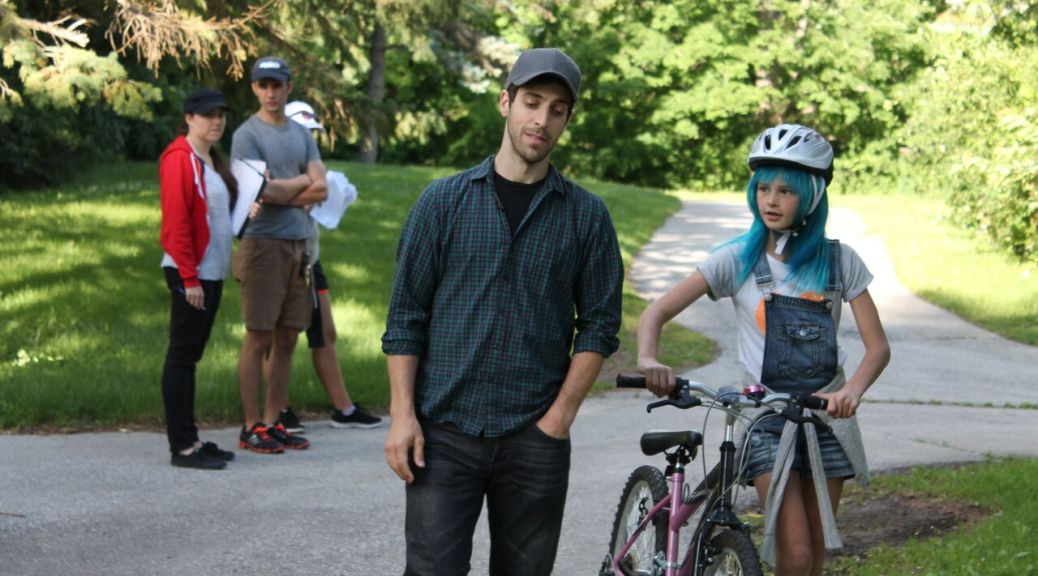
The film tells the story of Marc, who after receiving a corneal transplant unexpectedly befriends a witty, blue-haired girl named Sunny. She helps him see his potential for a happier life.

Sunny Side Up is a chance to show the real-life impact a donor could have. Hopefully, it inspires people to sign up as organ and tissue donors,” said Solomon. “It is a story that tackles the importance of organ donation and showcases the impact one person could make. This beautiful short film is an abstract look into how one can see the beauty in life despite great adversity.”

The film features a young star on the rise, Peyton Kennedy, as the title character Sunny. Her credits range from leads in television series to feature films, like the Netflix series Between, Emmy award-winning Odd Squad, Killjoys, and Murdoch Mysteries. In addition, she has starred in critically acclaimed films American Fable (across House of Lies’ Richard Schiff and The Fosters’ Gavin MacIntosh), Lavender (with Justin Long), and upcoming Telefilm micro-budget feature Cardinal. She worked alongside the film’s other lead Marc, played by David Reale. David has appeared across both film and television, with credits in Suits, Minority Report, Beauty and the Beast to the Canadian Screen Award winner Bang, Bang, Baby, Ben’s At Home, and, Glen Coco in Mean Girls.

“It was fun and very much a collaborative work environment. We received much support from the community in which we were filming. In the end, our financing was a bit of a Frankenstein between our sponsors, investors, and donations. This resulted in the film feeling “bigger” than us, as we had others equally invested in the project,” said Solomon.

Solomon describes the inspiration for the film beginning with the creation of the title character Sunny. Simultaneously, the writer, Simon Paluck, saw a Facebook post from a friend addressing the twenty-year anniversary of his kidney transplant and how thankful he was for his donor.

“How death in one person could mean life in another was a stimulating relationship worth exploring. Especially if the transplant recipient feels unworthy of the organ donation,” said Solomon.

One of Solomon’s greatest strengths as a producer is her savviness. She instinctively understands who to partner with, where to distribute funds, and where films should be submitted to get the greatest recognitions. Kelly Kiernan, a Producer of Creative Design and Development at DreamWorks Animation, mentored with Solomon during the film and realized her talent.

Sunny Side Up is developing partnerships with nonprofit organizations. The film is set to enter Tribeca Film Festival and South by Southwest in Austin, Texas. Michelle’s passion for TV and film, combined with her relentless work ethic and drive, led to Sunny Side Up being a hugely impactful film with great performances. I can’t wait to see it’s continued success in the field, and of course Michelle’s continued success as well,” said Kiernan.

Solomon and the film’s writer Simon Paluck run the production company Picosphere Inc. in Toronto, and together have worked on many projects including the award-winning films Emma and Chalk Dust.

“The biggest challenge of Sunny Side Up was shooting the entire thing in three consecutive days with the majority of the shoot being outdoors. Time was never on our side but we overcame it by immediately dealing with problems as they came up and constantly communicating with everyone,” said Solomon.

In addition to being an award-winning film producer, Solomon is internationally recognized for her work in graphic design. She revitalized the Ace Building Materials brand and will be launching her own social shopping app Adoorn early next year. In addition to all of this, she is proud to be a successful producer.

“I absolutely love assembling a group of hard working, talented individuals and seeing everyone work together for a common goal. There are few environments where you really depend on your peers’ skills, and producing is one of them,” she concluded.