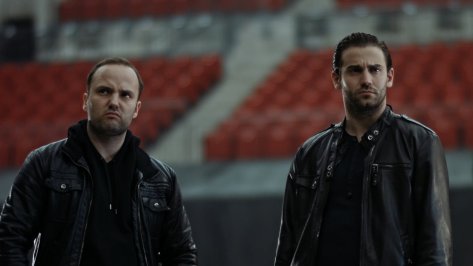
Category Archives: Intetnational Films

EYE DROPS – AVNER MAYER SHOWS A KINDER WORLD

When art is malevolent it is divisive, seeking to focus society on what “others” are doing to make your life worse. When it is mediocre, it serves little purpose at all. But, when art is at its best, it gathers all peoples in and draws their inherent goodness out of them. The creators of art are no different than every other segment of society in the fact that they must daily choose to use their abilities to draw us closer to each other or tear us apart. The WATER Project seeks to cultivate the former. Also known as the Israeli-Palestinian Cinematic Project, this endeavor saw ten Israeli and Palestinian directors embark on a journey to create films, fiction or documentary inspired by water. Under the belief that water symbolizes the source of possibilities at the primal core of all things, these filmmakers took part in joint meetings in Tel-Aviv presenting their ideas to one another. Produced with full creative freedom with mixed crews of Palestinians and Israelis, these films reflected the personal and courageous perspectives of both sides view of reality. The film Eye Drops was part of the WATER project which was screened at more than 20 Festivals around the world, receiving significant press attention. The project premiere was at the Prestigious Venice international film festival as the opening film of the “Critic week” program. The WATER project received an Amnesty award for its effort to bring Palestinian and Israelis closer. Eye Drops is a reaffirming vision of the ability of all people to see beyond their differences, particularly in a subject matter as provocative as this one. The film received global attention at festivals including the: Tertio Millennio Film Festival (Italy), Stockholm International Film Festival, Busan International Film Festival (South Korea), New Middle East Cinema film festival in Philadelphia, and many others. The look that Cinematographer (Israel born) Avner Mayer created depicts both the despair and hope of the people and this land. Overcoming the almost instinctual reaction of this land’s natives and the world’s view of it, Meyer’s imagery and design enables the audience to see the humanity underlying it all.

It’s easy to make assumptions about someone without getting to truly know them as an individual. That can be applied to the viewing audience of a news program, a film, or even a neighbor. In Eye Drops, Mohammad Bakri lives with his two sons (Saleh and Ziad) in a small flat in Tel Aviv. Their neighbor Sarah (played by Rona Zilberman) is a Holocaust survivor who asks them to assist her with her eye-drop medication. A unique and mysterious connection grows among them. The movie is about compassion and the ability to get along in spite of differences in religion and race. The filmmakers approach to the composition was to create a feeling of empathy. In order to convey this, the movie is almost always shot at the eye level of the characters. The hope for this was to allow viewers to see through the character’s eyes and souls. Many of the shots include the entire cast in order to create a feeling of unity. Exterior shots were designed to be cold and intimidating, almost as a mirror to the political climate in Israel at that point during the second Intifada (https://en.wikipedia.org/wiki/Second_Intifada). In contrast, the houses are portrayed as places of great warmth in hopes of showing the love and compassion hiding inside this political climate. All that is need is to go into someone’s home and talk with them in order to find real, warm human beings.
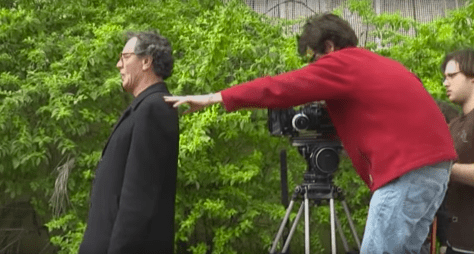
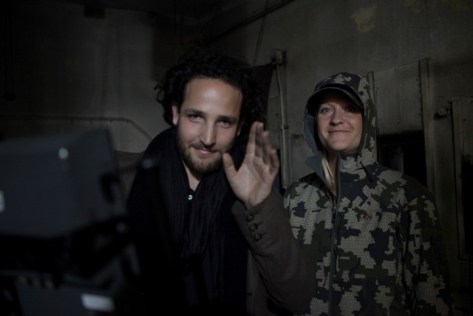
eye-drops-with-directoractor-mohammad-bakri

It was Mayer’s task to create these emotional vignettes for Eye Drops. Mohammad Bakri (director/writer/actor) needed a highly skilled professional behind the camera who not only understood how to help him capture the story but to also understood the people and emotions that motivated them. Designing everything from the lighting to the framing of the shot necessitated a professional and emotional eye. Avner communicates, “As a DP I feel my work is always to translate the director’s vision into images. A lot of the preproduction process for me concentrates in creating the visual bible of the movie. When you work with new filmmakers, there are two main problems. First of all, their visual lexicon is not always clear; meaning you need to find a common language to talk about images. That’s always hard but it seems to be smoother with more experienced filmmakers. The second issue regards logistics and the amount of time needed to achieve some effects. It’s much easier to talk about shots than actually to perform them on set. It’s important that the director will realize what is possible to do and what’s not inside the budget and time constraints, prioritizing the important story beats. People don’t often realize that this is a lot of what my job entails. Mohammed is well known and respected in the Israel film community so it was a pleasure to work with him and it was much easier than working with a ‘new’ director…but there are always challenges. Mohammed wanted to shoot in the actual real locations. It was a blessing and a curse as a DP. The locations had a lot of charm and were very photogenic but the big minus was regarding space. This was mostly in regards to the house, which was a little too small. We were limited in our options with that space. In the end we found creative solutions and solved that issue.”

Eye Drops received voluminous praise and accolades from the community and critics. One of the most vocal fans of Mayer’s work on the film came from its creator. The fact that Mohammad was also the lead actor in the Eye Drops made Avner much more aware of the acting. Normally this cinematographer focuses on the visual side of the imagery; did the characters land in the right place? Is the lighting precise? Etc. Bakri praises Avner’s work and awareness declaring, “I honestly couldn’t have done this movie without Avner’s Support. It was my first narrative film, and coming into the movie there were a lot of elements I didn’t expect. Avner was my right hand, helping me in planning the scene blocking and shot selection. We were on a tight schedule and Avner got us there in time. I really think Avner is a real talent! He’s very committed to his work, he communicates well, and his visual perception and imagery is stunning! I’m never surprised to hear that he’s doing well in the industry, he deserves it!”

eye-drops-head-shot-diffrent-project

The climax of the film is when Sarah’s eyes are finally well enough to make out the faces of her helpers. She sees that they are in fact the individuals who she would have avoided if she had seen with her vision rather than with her heart. Eye Drops makes a profound statement that will hopefully predict the future.

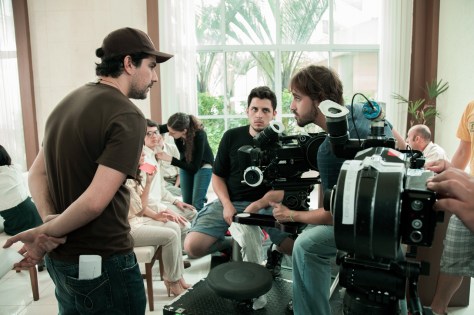


JEAN PAULO LASMAR CREATES ART FROM AN UNCOMFORTABLE LIVING SCENARIO

Brazilian Jean Paulo Lasmar is most commonly recognized as a Producer & DP but storyteller is probably the most accurate description of him. Director of Photography or Producer are the most easily labeled tools which he utilizes but that says more about our attempt to place a label on him than it does the actual way in which he creates. Consider the fact that he spent some time in Panama and Indonesia observing the people, their surroundings, their interactions… producing documentaries to tell their stories. From this he moved on to Latin America, the UK, South America, West Sumatra, and eventually the US. In his travels he simultaneously also pursued his love of photography, capturing the visual personalities of the people and places he encountered. Lasmar has spent his life thus far seeking out the less obvious and too often overlooked tales hidden in those not so celebrated. It is his perspective that there are far more interesting stories than the ones that often repackaged and repeated to the audience. While he employs the skills that are tried and true, Jean Paulo’s true talent lies in his ability (a benefit of his love of photography) in recognizing the beauty that is found yet masked by a veneer of the mundane. His film O Condominio (The Condominium, as writer/producer/director) came about as a result of his experience living in Sao Paulo, Brazil. While O Condominio is a film that was conceived and created by Lasmar, he has lent his talents to numerous award-winning films such as: Looking at the Stars (Documentary Winner of a Student Academy Award in 2015), the live action animated Mosquito: The Bite of Passage (2016 Telly Award Winner), Surviving a Funeral (screened at the 2014 Cannes Film Festival), and numerous others. While these films and his work have received copious accolades, Lasmar’s films are recognizable by the introspection of normal people and the unexpected complexity of their lives and situations.

o-condominio_1461

Anyone who has spent some time in communal (esque) living spaces understands the bargain and sense of unease that exists in this lifestyle. Jean Paulo has known little else. He confirms, “The world I was creating in this film is very familiar to me. São Paulo is a vertical metropolis with thousands of resident buildings all over the city. I lived in three apartment complexes before I decided to write the story.” The inspiration to make O Condminio came at a time when he was not only living in an apartment but also when Lasmar was preparing to make another film. He recalls, “I had the rights to write and direct my version of a short story called ‘The Bird’ written by the famous Brazilian writer Regina Drummond. It is a story about euthanasia. It’s a very interesting and heart-wrenching story. Things weren’t falling into place as I had wanted and my wife Silvia took me to lunch, just to get out of the house. She literally dragged me out of the house. We stepped inside the elevator and there was a note on the wall. There was a group meeting happening soon to decide many items related to the building’s welfare and maintenance. Right then and there I saw the story; the characters, conflicts, who would approve, who would not. These group meetings are hell. They are chaotic. People really transform themselves in these situations and some really stand out as great leaders. We came back from lunch and I wrote twelve pages. I had been looking for some grand statement for a film and there was a great idea being served up to me.”

O Condominio is a satire about living together. The plot centers around the intense routine of a family man who becomes the building manager of a problematic apartment complex. Estevan (the protagonist)’s job is to take care of the building but he is also a family man. He needs to provide for his family. There more involved he becomes with the problems of the apartment complex, the less time he spends with his wife and kids. These opposing forces drive his internal conflict. Nestor, one of the problematic residents, wants to bring him down. The story becomes political; there’s a dispute for power. It’s a metaphor of a city, a state, and/or a country. There is the side which controls the system and there is the opposite side. Estevan ultimately has to make the decision of whether he should take care of his family or sacrifice his role as a family man for the sake of the others. He chooses his family but the power wheel is cyclical and will never end. It is a constant in human behavior. There is sarcasm in the aftermath of the events. Estevan becomes the opposition and he won’t be silenced. This conflict is analogous to our interaction with others as well as our own internal conflict. It’s a factor that Lasmar contends with in his multiple roles behind the camera. Writer/director Suzana Amaral relates to this as well. Amaral has been recognized for her films at the Berlin International Film Festival, the Havana Film Festival, The Moscow International Film Festival, the Cartagena Film Festival, and countless others. About Jean Paulo’s work, she comments, “Jean Paulo is a superb filmmaker whose capabilities behind the scenes are only rivaled by the glowing reception his work frequently receives. Jean Paulo has consistently earned widespread admiration and respect for his work. His accomplishments are evidence of the vast range of his work, as his talents span medium and mode.” One of the greatest difficulties with someone as talented as Lasmar is delegating when circumstances require. However, this is what enables the process of film production and allows for opportunities in the community. It also results in achievements such as O Condominio’s Official Selection at the 2012 Mostra Brasil Brasilianische Filmschau, in Munich, Germany. Jean Paulo concedes, “With my previous directing experience in O Outro Jorge, I felt like I paid too much attention to the frame, the composition, the light, and the camera movements. I should have focused more on the story and directing the actors. In O Condominio, as a writer/director and producer, I choose to do just that; focusing on the story and directing actors. I really prepared myself to do it. I studied directing actors with Fatima Toledo, one of the most talented actor’s coaches in Brazil. I also worked with Suzana Amaral. She is a great author and director who really knows how to direct her actors. I knew I had to trust my DP; to let him do his work. I tell you, it’s very difficult to do that when you are a cinematographer. Gabriel Morais is a fantastic cinematographer. He is young and very talented. He understood quickly what I wanted, and I finally let go and focused on my tasks. I also stepped down from editing, which is something that I usually do in my films. I wanted to collaborate and I wanted my crew to feel that their work was in this film. I also believed there can be a middle ground in terms of getting involved in the work of the other departments, after all the director is the maestro and it’s his vision. I just wanted to focus on the story and the performances. Nowadays, I work a lot closer with my collaborators, that’s how it should be.”

o-condominio_1784

This is the lesson of both the film O Condominio and the filmmaker; learn how to work together for the good of all and, if possible, nurture the talents of others. When people are invested, whether in their personal life or their professional one, it is difficult to accept that things can never be done in the exact manner you would pursue…but the sense of achieving success together will likely be the most beneficial to all. Art imitates life and life can be enriched by art. This symbiotic relationship exists because of artists like Jean Paulo Lasmar; those who create and allow others to be a part of the successful results.

PRODUCER BEATRICE VON SCHWERIN ENABLES “ALL THESE VOICES”

­­­­    There have been many, many films about World War II. With subject matter as prolific as this it is difficult to find a new angle. The film All These Voices is one of the few films to achieve this goal. The film’s producer Beatrice von Schwerin understood this when the opportunity came her way. While history informs us about the events, the arts enable us to comprehend the lessons learned as well as to take on the emotional quotient of these events. It is often true that the perspective of a war is viewed differently based on your geography. It is this fact that helps to make von Schwerin the perfect person to oversee the making of All These Voices. In addition to her excellence as a producer, Beatrice hails from Europe; giving her an ideal perspective to produce this Hollywood film. A member of Swedish nobility and possessing a resume of celebrated European film work, this producer brings many obvious talents…as well as a few less obvious ones. All These Voices struck a resonant chord. The award-winning film was screened at a wide variety of festivals including; AFI Film Fest (Los Angeles, CA), Carmel Film Festival (Carmel, CA), American Film Festival (Wroclaw, Poland), LA Polish Film Festival (Los Angeles, CA) ICARO Festival International de Cine (Guatemala) Las Vegas Film Festival (Las Vegas, NV – Winner Best International Short), 24 FPS International Short Film Festival (Abilene, TX), Kino Otok Isola Cinema Festival (Izola and Ljubljana, Slovenia), LA Jewish Film Festival (Los Angeles, CA), Resistance Film Festival (Tehran, Iran), Southway Film Festival (Mykolaiyy, Ukraine), Centre Des Arts (Geneva, Switzerland – Special Screening and Lecture), European Student Film Festival (Geneva, Switzerland – Special Screening and Lecture), Newport Beach Film Festival (Newport, CA), FIC Autor Film Festival  (Guadalajara, Jalisco, Mexico), Washington DC Jewish Film Festival (Washington DC, MA), Woods Hole Film Festival (Woods Hole, MA). It’s important to view this list as a whole to understand that All These Voices had such a major appeal to so many different sections of the world population. Based on the locations of these screenings, we can easily assume that regardless of cultural, economic, or religious affiliation, these audiences were intrigued and attentive to the film’s message. This is proof that films which don’t involve CGI or superheroes can have mass appeal to audiences with many varied lifestyles. The fact that Beatrice was able to produce this film on a minor fraction of the average Hollywood budget is a major achievement for any production these days.

atv31zacharylanoue

All These Voices is highly unique in the way that the story is presented. The film takes place in the days following the end of World War II. A young SS officer has sought out refuge by hiding in an abandoned Polish theater. A theater troupe of survivors enters to celebrate the end of the war. Having camouflaged his identity, and remaining mute so as not to reveal his native German tongue, the soldier joins the survivors in a vibrant celebration. As he witnesses the expression of their painful past, he is forced to come to terms with his complicity in their grief. It’s an idea that seems quite possible to have occurred in post WWII Europe. Multiplying the ease with which the audience can accept the story is the location. Nothing could be as appropriate as watching a film in a theater while the action takes place in a theater. Of course, with the events taking place in 1945 Poland, the surroundings needed to reflect that era. Beatrice chose the Roxie Theater in Downtown Los Angeles. Hollywood continually proves that its ability to be malleable is one of its greatest assets. This attribute, in addition to the talented community, is what has interested von Schwerin in possibly pursuing a residency in LA even though she has already experienced great success as a producer in Europe. She concedes, “Hollywood has always been the center of film; I don’t think that that will ever change. The film industry has been active here for over 100 years. The major studios are still located in and around Hollywood. It falls naturally that once a center for any type of industry is built, it stays there. I am actually looking forward to the day when I am part of a movie that will shoot its full production days in Los Angeles; it would be wonderful, to be closer to home.  I know that the shorter commute home would be nice [laughs].”

atv1arkashastevenson

The production All These Voices took on some highly difficult tasks, not the least of which was the presentation of its theme. Making sure that the story was told in a proper and respectful way was the greatest challenge. The Holocaust and the effect that it has had on people is a very important story to tell.  Beatrice reveals that she gained some new knowledge from her director and multiple-productions collaborator David Henry Gerson. She notes, “I had what I thought was good knowledge about the Holocaust and its effect on people. However, working with David Henry Gerson helped me to get a stronger sense of it. Seeing it from David’s point of view, he has family that lived through the holocaust, and hearing his stories together with their stories has opened my understanding. None of my direct family has ever lived through such a trauma, so this has definitely helped me understand in more detail what the survivors had gone through.” It is obvious that Gerson was appreciative of von Schwerin’s attention and care of the subject matter as well as her producing skills as he comments, “Beatrice cares deeply about protecting and supporting the creative vision of the film. Working with her on All These Voices made this more apparent to me than ever before. She is an utmost professional, who inspires greatness and action in her crews and those working with her. Everyone performs their best having Beatrice around as a producer. Regardless of whether it was with myself as the director of any other member of the cast and crew, she listened carefully, assessed scenarios swiftly and effectively, and always, always, always was 110% prepared. Her intelligence governs all of her decisions. She has a rare ability as a leader and is a great force of positivity, effectiveness, and inventiveness. Making this film without her would be inconceivable.” The film’s writer, Brennan Elisabeth Peters echoes this sentiment stating, “As the screenwriter on All These Voices, having a producer as capable as Beatrice supporting my vision was crucial to its development and execution. As an artist, an important part of my process is thinking in terms of possibilities rather than limitations, especially on the script level. Unfortunately, due to the nature of filmmaking as a particularly logistically challenging and collaborative art form, this is not always possible. On other projects, I frequently feel the need to hone my vision and rein in expectations based on the limitations of my collaborators. However, with Beatrice on All These Voices, I truly felt free and uninhibited to write a script that was ambitious, gratifying, and, ultimately, award-winning. That was due in large part to my faith and trust in Beatrice as a producer.” One of the most difficult obstacles for the film is probably unnoticed by the majority of American audiences. All These Voices is extremely detailed in its recreation of the era and location of the events taking place…even down to the language being spoken. As producer, von Schwerin had to be involved in just about every aspect of the film production. This meant making sure that the dialogue was spoken correctly and believably. Beatrice states, “The cast on ATV were a very special bunch. Seeing that the film is all in Polish and German, probably the hardest part was making sure that the dialogue and pronunciation was correct. Parts of our cast were born and raised in Poland and some were not. Our film was seen all over the world, including places where Polish and German are the native languages; this required us to be painstakingly critical of the language in order to be authentic. I’m really proud that we were able to achieve this goal so well.”

It’s hard to imagine a young Beatrice von Schwerin roaming the grounds of her family’s castle in Sweden and then maturing into this commanding presence on set. How many of us would leave a comfortable life of adulation and nobility in order to face challenges day after day on a production? Beatrice conveys this commitment best in her own words declaring, “Producing is never an easy job, if it were easy, I would probably not be working as a producer. I need a proper challenge and producing gives me that challenge. When I moved to LA I promised myself that once I stop smiling when I see the Hollywood sign, I would quit my job and move back to Scandinavia. I am still smiling.”


atv66arkashastevenson

SEBASTIAN SACCO’S PERFORMANCE IN “NO PLACE” IS EERILY SIMILAR TO PRESENT DAY SCENARIOS

Imagination can be wonderful but it can also make things harder for us in the real world. That statement might contradict what most of us think about imagination. Escapism can be a beneficial tool, right? Most of the time it is, but consider the predicament of Writer/Director Joe Beverly, a celebrated filmmaker who had written a deep and intense character driven piece called No Place (the film would go on to be screened at the Forum Film Festival and win ‘Best Short’ and ‘Best Screenplay’). The central character, William Aims, would need to communicate his inner turmoil without words as often as with. Aims is such a strong force in the story that casting anyone less charismatic or “alpha male” as the character would cause the story to “lose its teeth.” Luckily for Beverly, young British actor Sebastian Sacco was seeking an intensely dramatic role. Joe Beverly declares, “I needed to cast an exceptionally strong actor to successfully execute what I had written in the script. I was extremely lucky to find Sebastian and, when he auditioned, I knew almost instantly that he was the absolute perfect choice to essay the role of William. He has an uncanny ability to communicate without speaking or even moving much, a gift which only the very best actors possess, and which he put on full display in No Place. His performance went beyond what I had even hoped for and truly made the film a special tour de force about the cult of money and how it can topple lives. There is no way the film would have been possible without Sebastian’s stunning performance and everyone who has seen it has been floored by his portrayal of William.” The film’s star states that the reason for his being cast is likely due to a combination of acting and inherent character traits as he sates, “I’m an extremely moral person and will speak up if I think something is wrong. I think it was this trait which Joe saw in me. In my opinion, a strong actor is someone who isn’t scared to go there, to look ridiculous, to fail in front of people and to keep trying. That’s a strong actor. I think what Joe meant was that I was capable of holding the audience’s attention. I take it as quite a compliment that Joe saw that in me.”

no-place4

No Place is unsettling in how contemporary and possible it seems. The plot depicts a scenario in which England has seen a political, economic, and social change. The government has fallen, the banks have crashed, and the old system has fallen into the hands of three remaining corporations. These three corporations are now ruled by the Bank of Britain, posing as three separate organizations that still give the public an opportunity to vote. Young economist Will Aim’s (Sebastian Sacco) works his way to the top of the system, eventually working alongside Tony Darwin (Paul Dewdney) who is the final over seer of Britain’s future. Will’s moral compass and girlfriend, Skylar (Danielle Norman) rejects the new system, seeing the bigger picture, she tries to open Will’s eyes. He slowly begins to uncover the truth that Skylar saw all along and, with Skylar by his side, Will has a life changing decision to make; one which is harder than he ever expected. As inspiration for Aims, Sebastian reverted back to an earlier time and emotional state of mind which he had experienced. He remarks, “I went back to my private school days. Trying to impress people in that world. It’s all about how you talk, dress, posture eat; everything is judged and weighed up. If you can do it all the ‘right way’ then you’re part of the club. That sense of constant self-awareness and trying to look and act a certain way but never above your station was important to me. Will was very straight edged. He rose to his position so quickly because he was smart, not because he was imposing or a risk taker. In my own private school days, I thought some people were rich because they were smatter and harder working than others. I believed in these ridicules lies. The truth is most people are stuck and trapped by their circumstances. I’ve been as ignorant and blind as Will was and I’ve come out the other side. So I understood his journey.

The film was well received by critics, the film community, and the public; no doubt due to the intense performances which Sacco and his supporting cast delivered as well as the timely subject matter. Sebastian reveals that he is somewhat conflicted about these recognitions as he remarks, “It was amazing to hear it won awards. Joe called me straight away to let me know. I’m always very hard on my performance and wasn’t happy with it, so to hear that it had won two awards…I couldn’t have been too bad. I think awards are pointless in many ways. Arts are about expression. Not all expression is nice. A lot of awards are like a popularity contest. I think as long as you don’t make films with awards in mind, staying true to the original idea and express it in the strongest way possible to that truth…then if someone wants to give you an award for that, I feel that is good. The best reward is just making the film. When that happens, my entire life just stops. It is fulfilling and draining simultaneously. When you finish, you have this piece of art that you have all worked together to create. You have this thing that existed in your collective minds and you made it materialize, then you send it out for others to experience. Now that is an award!”


no-place5

HUGO SHIH BRINGS THE SECRET INGREDIENT TO “PRESSURE-MAN”

From the first frame and song of Pressure-Man (writer/director Kai Kuei-Chieh Hsu’s musical comedy) you instantly recognize the color of John Potter’s suit and tie as prominently as his singing. This is by design. The theatrical, somewhat fanciful approach is designed to place the viewer into accepting the “sleepwalking” lifestyle that the main character John is immersed in. The colors are over the top on purpose. The color makes a subliminal impact, it’s the reason that the filmmakers approached colorist Hugo Shih to use his expertise on Pressure-Man. Even the scene over the closing credits shows the wild color schemes Shih can use to great effect. The heart of the film is intact regardless of the color, but it is the talent which Hugo brings that truly gives this film the character to make it stand out as unique. Among its many recognitions were: 2016 American Movie Award (Best Production / Art Direction (Winner), 2016 Praxis Film Festival (Audience Awards), & Official Selection of the 2015 Los Angeles International Film Festival Awards (Winner – Best Comedy/Dramedy). In hopes of understanding why Kai Hsu and this production were so intent on having Shih work on Pressure-Man as the colorist, we spoke with him in order to understand his role and the essential parts of his vocation. Because the film is so stylized in terms of its use of color, it is a perfect example of what a colorist is capable of doing in modern cinema.

In current American society, Pressure-Man is the norm. This film is about an accountant who is so tied to his job that he doesn’t take the time to participate in actual life with his family. The idea of living to work rather than working to live is ingrained into the life of many in the US. Pressure-Man is as subtle as a sledgehammer, which is exactly what is needed to wake the main character John (and many of us) from this enslavement. In pursuing the dream, we forget to live the dream, which is exactly what Hsu is saying in this film…about everyone, not simply those in the film. To create such an altered state, Hsu worked closely with Hugo in creating the approach he wanted for a color scheme.

From the opening scene, Shih’s handy work is evident. As Pressure-Man introduces himself and the film in song, his brightly colored suit and bow tie grab the viewer’s attention as a spotlight illuminates him. The director wanted everything but the Pressure-Man hidden so Hugo added a lot of mask, covering everything else and tracked the actor, so that the mask would follow with him. It’s a technique which the viewer doesn’t notice but focuses the attention right where the filmmaker desires it to be. Even the transition from the opening song into the action of the film required Hugo’s expertise. Shih explains, “There was one shot we worked on very long time, which is the shot when Pressure-man stops dancing and starts to introduce us to the main character and the idea of the story. The Director wanted the lighting to look like he was using dimmer. It was difficult because it wasn’t shot this way. I needed to add the dimmer effect myself. In order to achieve this, I brought down everything at the background but the Pressure-man. Secondly, I key framed the background to gradually light it up, but without effect on the Pressure-man. Sometimes the director wanted it as dark as possible, but without losing any of the detail. Thus, the director and I were looking for a balanced light that we could both be happy about. I like working with directors that have specific ideas and requirements. Even though their requests might be difficult, we can build a style of communication. I know how to achieve many things as a colorist but if I learn how to communicate better and more easily with the directors and cinematographers I work with, I will work more and we will all enjoy the process.” Describing another shot in the film, Shih states, “There is a shot in which the Pressure-man is in the bathtub with father. When I graded this scene, the director asked me to make it look like the actors were in their own little world. I made the spotlight stronger, and used two shapes to mask out the sides to be dark. Then I added overall blur to simulate the steam because I want to make more feeling of taking shower. There was also a scene in which the father has a nightmare. He dreams that every member of his family has become a ‘Pressure- Man’. This was composed of multiple green screen shots. Because we have a rushing to meet our deadline, I decided to do compositing in a color grading software. Before I was able to do that, I had to do a perfect color balancing so that I could get a clean key and make a proper composition. It isn’t exciting to hear about but the finished product really made the director excited.”

pressure-man_before-l

pressure-man_after-l

A common misconception about the colorist job on a film is that they only deal with grades and tones of color. Because of the work they do and its effect on the action taking place in the frame, they often control how the lighting feels on film as well as the color. Because the colorist almost always performs their work after the filming has taken place, it is important that they work closely with the director and have a strong sense of why the lighting was established on set during filming. Just as with the actors, the environment in which the colorist performs his/her work is crucial to achieving the proper effect. The working environment of a colorist is very different from other positions on a production. During a color session, the room must be totally dark. There only light which can be turned on is a 6500 daylight lamp because it will adjust to the colorist’s eyes once they go out of the room and come back in. Also, the room must be 18% Gray (which is a neutral color and won’t reflect any colors to influence the eyes of the colorist towards the image). A colorists’ room also requires specialized equipment to aid in the color grade process, making things efficient and accurate. Hugo Shih’s work in Pressure-Man highlights the impact of the role of a colorist in modern film. While many audiences may not understand the substantial amount of time required and the valuable expertise that Hugo possesses; the look of the film stands as proof that his contributions create a unique and artistic experience.


PRODUCER BRIAN MANCINI BRINGS LOVE AND LAUGHTER TO A TENSE TOPIC

One of the most positive aspects about the Arts and specifically film, is that it allows us to step into the experiences and thoughts of others. Film often makes the impossible transition from sympathy to empathy, in a very safe way. Rita Mahtoubian Is Not A Terrorist is a film which approaches a very prevalent and modern situation. The filmmakers have chosen a very unusual approach in the presentation of their idea; a romantic comedy. It’s not the usual approach for this subject matter and Brain Mancini is not the typical producer. With films like; A Meditation, Dryland, Star-O, and others to his Producer credits, Mancini has enabled many diverse films to be created for the public’s viewing. With Rita Mahtoubian Is Not A Terrorist, Brian was attracted to a number of aspect of this film. His litmus test is always, “Would I want to see this movie?” and it was a resounding “YES!” for him.  Ultimately, Mancini states that what confirms his decision to work on a project is if he believes in the story being told. Rita Mahtoubian Is Not A Terrorist is a film which challenges the idea of stereotyping others in our modern age and tells us as much about ourselves as it does about those whom we might be unfamiliar with, as well as engaging us to question the reasons behind our thoughts. That probably sounds like a lofty status for a Rom-Com if you haven’t seen the film. The use of this genre to tackle the idea at its core, as well as some very interesting approaches to filming, removes a great deal of negativity out of the film, allowing the audience to focus on their own individual perception rather than a mob mentality.

Rita Mahtoubian Is Not A Terrorist garnered a nomination at both the 2015 Tribeca Film Festival and the Casting Society of America, USA. Being recognized by perhaps the most famous New York film festival as well as the professional community which seeks diversity in casting is the kind of outstanding achievement that lets Mancini know that he is striking a resonant chord with this film. His fellow producer Roja Gashtili (known for her work on Morgan Spurlock’s A DAY IN THE LIFE, MTV’s EXILED ,SATURDAY NIGHT LIVE: IN THE 90s) refers to Brian as “a magician!” Assembling the components (crew, cast, logistics, finances) needed to make a film which deals with people fears, prejudices, and matters of the heart, would certainly take some sort of magic to manifest. Rita Mahtoubian Is Not A Terrorist is really the story of someone who is being treated as an outsider even though they’ve spent their entire life in the US. When Iranian-born Rita sets out to change her life from ordinary to extraordinary, she accidentally captures the attention of Homeland Security. The film is a satirical comedy about romance and trying to be a better person. For example, when Rita attempts to make some friends by hosting a dinner party, it just so happens that she’s also acquiring the same household materials that could be used to make explosives. With her Iranian background, she gets flagged as a possible threat to public safety. Mancini states, “In the film we do critique the close-minded attitude that anyone of Middle Eastern decent must be a terrorist but the film’s intent is to show how that’s not the case. Rita Mahtoubian moved to America as a child and grew up American. It’s a subject that can be relatable not only for Americans but for all immigrants in any country. It’s all about not believing in stereotypes and actually seeing who people really are. The film is really romantic comedy about an FBI agent falling for the person he’s investigating. Most people found it to be heartwarming with a good message of how absurd it could be to judge someone solely on their family’s background and ethnicity.”

Brian and his production team came up with one very interesting approach which solved two hurdles for their film. He explains, “We shot “Rita” in Los Angeles as most of the script was written with specifically LA in mind. Early in development we had discussed the idea of shooting abroad as we had several scenes located in the Middle East. The creative way around this was when we decided to build miniatures and shoot all of those scenes in that style. Our main goal was to not sacrifice the story for any amount of money. We would often ask each other ‘How can we creatively get this same feeling that’s written in the script?’ Being able to shoot on a stage and creating the miniature sets gave us the capability of shooting a desert scene in the morning and then moving to steel mill only a few hours later.” Creative producing resulted in time and money saved, which could be channeled into other aspects of the film.

This production which has such an unusual approach to a timely situation, has been enormously accepted and appreciated by audiences. Brian feels that this validates his motivation to be involved in the core message of Rita Mahtoubian Is Not A Terrorist. His role as producer necessitates his involvement from pre to post production, which means Mancini puts a lot of time, effort, and heart into the films he helps to create. He comments, “The grand consensus is that the film is well liked by the mass audiences. I feel that because people can relate to the characters, it gets them invested. The humor successfully releases the tension when needed and helps audiences stay inside this world that we created. I hope that people see this movie and take a moment to think about our overall message. The feedback we’ve been getting from the film is that people understand and enjoy the message. Additionally, they enjoy the choices in our visual storytelling. The miniatures successfully capture audience’s imagination and the ending when the Agent walks through the explosion site into a heart shaped hole creates a warm and fuzzy feeling.” While Brian Mancini has no aspirations to the stardom and celebrity that drives many, he is always striving for the films he takes part in and believes in making. It’s about both the story and the art of telling the story for this producer. He confesses that there are so many possible ways to portray these tales…and he is eager to experience as many as possible in his career.


MIGUEL RIVAS: THE FUNNIEST EXECUTIVE PRODUCER YOU’VE NEVER MET

Being an Executive Producer (EP) is in many ways similar to being a UFC fighter. You put in an insane amount of hours preparing for the microscopic amount of time that the audience actually witnesses the entertainment which you create. You must predict the action which will take place in your mind, envisioning it months or years before it ever takes place. You choose the team of professionals who will hopefully insure your success. Not to be forgotten, you often feel as if you have had every ounce of energy kicked out of you before it is all over. If it sounds hyperbolic to you, a conversation with Miguel Rivas may alleviate this uncertainty. Rivas is well known in his native Canada (the US is now paying a great deal of attention to him) for his writing and acting abilities but, unknown to the public en masse, he has been the EP overseeing many of the productions for which he has become famous. The combination of writing and acting has given him an overview of what is needed and naturally steered him towards the role of EP.

Many often refer to the role of EP as an honorary title given to marquee name actors and actresses to placate these celebrities. While that may exist in some parts of the entertainment world, this scenario has no presence in Canada’s TV and film industry or Miguel’s experiences. Many times, Rivas has been asked to take on this task as someone who has the understanding of what the production needs as a whole. He states, “Being executive producer means ultimate control, but also maximum stress. The whole project rises or sinks based on how you put it together. That means primarily, finding the right people to work with. On ‘Japan’ and ‘Wanda’ (two of the films by comedy troupe Tony Ho), it was paramount to find people who understood our sensibilities as a group. As EP, you have to organize everything and keep multiple plates spinning at once. Independent films can be hard to fund; finding money and support for our voice was the single most important part of being EP on these projects. Once that was in place, it was just about doing every task, however large or menial, with an eye on making the best film you possibly can.” Tony Ho is one of the most established and lauded Canadian comedy groups to perform both live and on film. With a signature dark comedy style, they appeal to a wide audience by tackling the highly stressful situations that many of us face, or hope to never face. Japan won the Grand Prize for best film at the Laugh Sabbath Film Fest at NXNE, while Wanda was also recognized at the same Film Fest. Both films present the stresses that modern professions and love lives have on the average person, with ridiculous…sometimes fatal outcomes. Tony Ho’s Roger Bainbridge (Nolan in Japan) confirms the importance of Miguel as EP for the film, stating, “I was really fortunate to have Miguel as an executive producer on Japan with me.  Most Tony Ho films feature just the three of us and maybe 1 or 2 more people but Japan required a large cast and many locations over different days.  Miguel did a great job of finding the right people for the job, making sure they were paid well, organizing their schedules, and arranging the shoot days so that we could use the extras efficiently without wasting anyone’s time. Miguel was also key in finding our shoot locations.  He did a great job in writing the script for Japan, but the humor comes from the fast pace of the story. We needed lots of locations to make the script work. Miguel used his connections to get us locations that would fit our script and budget.  That was the beauty of having Miguel as both writer and executive producer, he turned a complicated script into an easy shoot.  We didn’t have to compromise.” Adam Niebergall plays Marty (the recipient of some opportunistic nepotism) in Japan and reinforces Bainbridge’s take on Miguel’s abilities and expertise on Japan. Adam comments, “You can tell Miguel really loves making movies because he’s so calm about it all the time.  On Japan there were lots of different people involved; extras, cameramen, transportation people, etc.  Everyone went to Miguel to ask questions.  He was the one who communicated with everyone, either in person or by phone/text, and everyone trusted what he said. Strong leadership is important on film projects and Miguel inspires confidence in everyone involved. Plus, he’s always nice about it.  He never yells at anyone.  He’s always more than happy to answer anyone’s questions.  You can tell he’s thankful to everyone for helping to make the movie. He knows what he wants to do and accomplish and how to bring out the best in everyone’s work.” Daniel Beirne, the director of Wanda, reiterates, “he had no problem switching from his “actor/writer hat” to his “executive producer” hat.  He was respectful of the crew we had there and made sure everyone was ok to keep working or asked if we should take a break.  I love working with Miguel because he treats the set as a collective project; even though he was writer, actor and executive producer, everyone was equally important.”

10255555_520722664706823_6290233571219387158_n

As proof that he is no one-trick-pony, Miguel has applied this same template to music videos for a variety of modern artists. Alt Altman is the solo Toronto musician, Digits. Having toured all over the world, he’s released several successful international singles and albums under various monikers. He’s been shortlisted for the prestigious PRISM prize. Digits sought out Bainbridge because of the multiple strengths that he could bring to a production. The video for “Street Violence” (Named one of the Top 5 videos of the year by Exclaim!, featured on VICE, and MuchMusic) is an epic tale of the downfall of society and one couple’s attempts to evade the gangs who rule the streets. While the gang monikers are often comedic, the action which takes place and the anger that is vented on individuals throughout the course of the video, carries a sobering impact. Digits declares, “It’s Hard not to have only great things to say about Miguel. The cast and crew that he assembled, the storyline, the costumes, and the fact that it was finished in a matter of days…I’m so pleased with the video and the response it has gotten!” Jay McCarrol is a member of the hugely successful band Brave Shores, whose pop song “Never Come Down” was a huge hit. Jay is also one of the minds behind the web series Nirvana: The Band The Show, which had a large premier at TIFF. Rivas produced two videos for Brave Shores, “Never Come Down” (which has amassed nearly 700 thousand views on YouTube and was featured on Silent Shout, MuchMusic and VICE) and “More Like You.” McCarrol refers to Miguel noting, “As an artist, it’s important to have a professional who will listen to your ideas; Miguel is that kind of artist.  He made sure Stef (Stefanie McCarrol, sister/bandmate) and I were comfortable with the concepts and took our ideas into consideration during the early phase. I like that he was flexible and fun.  He is the best to work with. He also knew how, as producer, to stretch a dollar, which believe me, is needed with music videos.” While “Never Come Down” is upbeat in tone and comedic in action, “More Like You” is somber and introspective in terms of the music as well as the visuals that accompany it in the video. Rivas comments, “The music videos were slightly different as funding was secured beforehand and the task then focuses a little tighter. A major duty when acting as EP is making sure everyone at all levels of the project is happy and involved in the right way. For the Brave Shores music videos, I was the liaison between our projects and Universal Music as well as the band. You have to be level headed and a little political to make sure everything gets done in a way you’re happy with. It can be doubly difficult to occupy other roles (writer, actor, director) while acting as EP, but it offers an ability to control and lead things in a way that I find very satisfying.”

302248_10150274190923175_5676492_n

Perhaps what stands out most when considering all the aspects and talents of Miguel Rivas is that he is foremost a conduit for himself as well as others to communicate a story. He might be involved in creating lines, delivering lines, or finding the right people to finance the microphone that captures the lines which someone else is speaking; whatever the vehicle of delivery, Miguel is somewhere in there grinding away because he believes in the art of telling a great story.

emma-and-miguel-1


PUSHING HER ARTISTRY TO NEW PLACES: BINBIN MA

A good artist is someone who invests a great deal of their life into mastering the skills needed to communicate their vision. The recipe doesn’t end there. They are driven and inspired by the work of others, sometimes through the previous work of others and sometimes due to the collaborative effort in which they take part. This “inspiring and receiving” cycle is the creative representation of Ourboros. Without it, the Arts would become stale. It contains all the essential elements of a good artist. Greatness is similar to this but contains one extra and paramount facet; the willingness to try things that are uncomfortable, the desire to take chances by traversing into unknown areas with the understanding that failure is a distinct possibility. Only by testing our limitations can we expand beyond them. If one’s desire is to recreate perfect art, being good is more than substantial, but if one desires greatness…well, it is a good idea to get comfortable with the idea of being uncomfortable. This idea could be considered artistic CrossFit. Binbin Ma understands this concept. As a story board artist and graphic designer on many successful and lauded films, Ma has used her artistic abilities to enable directors and cinematographers to conceptualize, materialize on paper, and communicate their collective vison to the cast and film crew. She has become a sought-after artist due to her abilities on paper as well as her insight into tailoring her images to the specific filmmakers she works with. Binbin has brought her skills to award winning films such as; Robots & Cowboys, Stand Up, & the heart-wrenching and inspiring Happy Tree. In striving for greatness, Ma has tested herself in both new avenues as well as thought provoking subject matter.  The challenges which she takes on in an attempt to grow as a consummate storyboard artist and graphic designer testify that Ma is a professional who wants to break new ground in her own field by understanding the inner workings of her peers and coworkers.

For the film Nothing But Her, Ma took on the Herculean task of not only Storyboard Artist and Graphic Designer but also Writer, Director, and Editor. The film was her attempt to step into the shoes of those she so often works with while also expressing a creative vision of her own. Nothing But Her is the story of a man (Jim) who observes his father’s Alzheimer condition worsen, a condition which puts Jim’s wife in danger at one point. This places Jim in a very uncomfortable and difficult situation. Binbin took on this film and its heavy subject matter as a way to see the different sides of telling such an emotionally demanding story. The idea came from her personal/cultural inspirations. Ma reveals, “It was my second year after leaving my home. I was homesick. In China, we have an old saying “child doesn’t travel if parents are still alive”. In our culture, Chinese think filial piety is the highest priority of all. Family vs. self-development has inspired me to ask ‘What if a young man had to choose between his Alzheimer’s family member and a pregnant wife.’ Making this film was a great experience for me. My skills as a storyboard artist and graphic designer saw immediate improvement after this experience. It was such a great way to learn and improve.” Because of her perspective as an artist over the course of her career, Nothing But Her displayed Binbin’s signature framing and composition. The film was received quite well with appearances in 2016 at Cannes, the Hollywood International Moving Pictures Film Festival, and the Los Angles Independent Film Festival Awards.13230081_1771490419754121_8139202580389125002_n

Cinematographer Xuexue Pan (credits includes the critically acclaimed family drama The Key, the widely celebrated film Dancer from Picture, and the fan-favorite horror film Depth, to name only a few) states, “Ms. Ma is a storyboard artist of the highest caliber. She performed several leading roles for the critically acclaimed film Nothing But Her, but in addition, she has established herself as an enormously accomplished storyboard artist of the highest regard within her field. Her prowess is unparalleled in the industry. Her achievements in the industry have cemented her as a creative force to be reckoned with. Binbin’s achievements not only establish her as one of the most outstanding and accomplished storyboard artists in her field, they also qualify her as a genuinely one of a kind storyboard artist and graphic designer.”

There is a good reason that the Boston LGBT Film Festival nominated the film The Ex Factor for the Audience Choice award in 2016. While this community has gained many legal rights in modern US society, they are still challenged with being viewed with the same level of emotional validation and “normalcy” of other couples and relationships. One of the reasons (and intent) of the filmmakers to hire Binbin as the Storyboard Artist for The Ex Factor was a desire to portray the characters and action of the film in a romantic tone with use of images and lighting; Ma was the first step in creating this. Using headshots of the actors and meeting with director Chantal Le Hunte to discuss the mood served to inform Binbin of the “vibe” which was paramount to placing the audience in the desired emotional environment. Le Hunte declares, “Ms. Ma’s unparalleled talent for our film was such an integral element to the overall production of the film that I have no reservations in attributing her with our enormous critical acclaim. The Ex Factor was nominated for the Audience Choice Award for Best Short Film from the critically acclaimed Boston LGBT Film Festival, and received Official Selections from the Los Angeles CineFest, the Indie Night Film Festival, and the California Women’s Film Festival, to name a short few. After only one meeting about the images we needed for our film, she completed the storyboards in a way that allowed me to perfectly communicate my ideas to the cast and crew, thereby making our filming process successful and enjoyable. The accolades we received are directly attributable to the work that Binbin did on The Ex Effect.”

These two films are proof of a professional who, while still at a young age, has amassed an impressive list of credentials and yet always strives to learn and grow as an artist. Binbin Ma is a team player who is also a gifted artist, always ready to lend her talents to the ideas of others in order to create the films which allow us all to view the joys and hardships of others…while hopefully being inspired by their journey.


A GUIDE TO PROPER AND IMPROPER VIEWING OF JAPAN

Artists are dangerous; not in a “hold you at gunpoint demanding your wallet or your life” kind of way but rather, they can be highly intelligent people who use their talent to sway both individual and mass opinion/sensibilities. If you upset a writer, they can compose something that addresses you in a subversive way. An actor might deliver the lines in a subliminal tone, guiding you to a feeling that might differ from what is instinctual for you. All that is needed is an Executive Producer to enable them to make it all happen. Combine all three of these with a slightly sarcastic comedic wit and timing and you’ll get Roger Bainbridge…the most interstin…err, dangerous man on Earth…well, at least in Canadian entertainment. Comedians and comic actors get away with saying and displaying some truly awful things by delivering them in a way that shines a light on their ridiculousness. Case in point; Bainbridge had seen many of his friends taken advantage of as unpaid interns. Not only did these people not receive monetary compensation for their toil but, they were quite often not treated with respect. As a writer and an actor with the resources to green light a film, Roger used his role as a part of the Canadian comedy group Tony Ho to create, produce, and present Japan. The film reveals the politics and disrespect (in a very funny way) of the modern office template.

Roger Bainbridge has worn a lot of hats in his career; writer, actor, music video director, executive producer, but he is most commonly associated with Tony Ho (the aforementioned Canadian comedy group). Tony Ho enjoys tackling ideas like threesomes (Wanda), dysfunctional family dynamics laced with time travel (Time), etc. No subject seems to eclectic for Tony Ho. Bainbridge was inspired to write Japan based on the shared office experience many of us have. He explains, “The impetus for writing Japan was seeing a lot of my friends being forced to take unpaid internships at places that really should have been paying them, and seeing how messed up the job market was at the time for people just getting out of school. From there I just thought about what might spurn a change of heart in someone in charge of the hiring. I worked briefly in an office where we did subtitling, so it wasn’t a really traditional office. Everyone had headphones on, pretty cut off from everyone else. No one really spoke to each other, it was all done through e­mail. So I guess I was just left with an impression of people being timid to go talk to anyone, which creates this awkward tension, and tension is really at the heart of comedy.” As the writer of Japan, Roger had the inspiration and the skill to conceive the notes of his comedic sonata and as the EP he could find and reserve the concert hall, he simply needed to proper “musicians” to perform the piece with the delivery and skill that would inspire his trust.

Tony Ho has been creating comedy for over a decade. You don’t stay in any relationship that long unless you have a deep caring and trust of the other(s) involved. Once he had conceived the idea for Japan and written the lines, Bainbridge immediately understood that Tony Ho were the best performers suited to make the film. The trio of Tony Ho has spent more than a decade creating and performing together both live and on screen. Roger refers to Adam Niebergall and Miguel Rivas as two of the funniest and most interesting performers he has ever worked with. Niebergall diverts praise to Bainbridge stating, “He’s a ‘taste maker’ and he’s incredibly compelling. I’ve spent a decade or so working with him in comedy and I still can’t ever see it coming. I’m amazed by Roger’s Vision. He has an unwavering integrity with his comedy. His work is so good because he is always asking himself what he would want to watch and he would never bother making anything that doesn’t pass that test. I think a lot of people write things with the mentality “Oh, this would be good; people are talking about this right now.” and a lot of times that type of thing can come off flat. You can tell when a comedy writer isn’t obsessed with her/his subject matter. Roger knows what he wants to say as a writer and for me that’s always much more compelling to pay attention to. He’s always one step ahead. He thrives on making people think about themselves and it really motivates his work.”

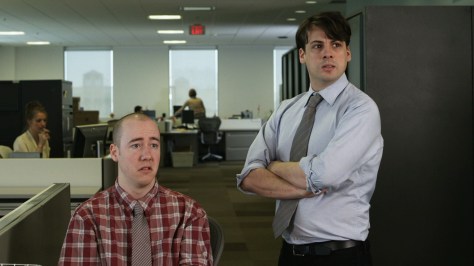
two

With the writing of Japan completed and Tony Ho set to star in the film, Roger’s job as EP meant he would acquire the production team that would capture the action of Japan. Henry Sansom was the professional that Bainbridge entrusted to be seated behind the camera. DOP Sansom echoes Adam Niebergall’s sentiments, declaring,” In my experience, Roger Bainbridge is one of the most talented and disciplined minds in comedy in Toronto.   Not only an incredible actor dedicated to craft and context, he is a star writer of subtlety, relevance, and boldness. Without seeming too fellating, if there was only one artist I could work with for the rest of my career, and know that every project was able to reach the highest standard, that would be Roger Bainbridge.” Inspiring confidence in others is the template of Roger’s career, a worthy attribute for someone whom both creates and enables the filmmaking process. The fact that he is so adept at creating the storylines and situations that take place on camera might divert one’s attention from the fact that Bainbridge is such a respected an accomplished actor. A viewing of his many diverse roles and the temperament of his characters serves as a confirmation that he is truly in his element in front of the camera.

sing

Roger reveals the tone that he wanted for the action on film as he communicates, “In making Japan, we knew we were really pushing ourselves to make something more relatable in tone of comedy, pace, and look, so it was nice to have it be received so well by people who

have seen it. Our stuff can tend to be a bit more challenging, so this was a test to see if we could dip a toe in something a little more mainstream, and people seem to like it.” Centering on the stereotype that the Japanese culture is focused on workplace competition and Karaoke leads Miguel’s character to force Roger and Adam to compete in a sing-off with the winner being awarded a paid position for the company. While Sophie B Hawkins “I Wish I Was Your Lover” has never been so amusing, it’s the flashbacks and narration that empower the performances to have deeper laughs than simply the action might elicit on their own. Japan has a greater level of complexity in terms of the number of sets and number of cast members involved than many of the Tony Ho productions. There is a trait that enables Japan and the theme to be irreverent to the stereotypes that the general public often feels comfortable buying into. Bainbridge agrees, “I think Canadians have a unique take on comedy because we have the benefit of being influenced by both American and British comedy. The British style can be a great deal more subtle and satirical and American stuff can be so in-your-face and broad and angry. I think we have the ability to marry those two influences in an interesting way. I have never been to Japan, and that’s deliberately part of the humor of the piece for me. I like it when people feel like they completely understand a place by just gleaning bits and pieces of their culture as it’s been distorted through media. The larger joke is that these are ideas people may hold about Japan while not actually knowing anything about the place.” Bainbridge is currently in development for TV productions with Tony Ho. With successful comedy albums, his involvement heading films and music videos, Roger Bainbridge is equipped to bring the full package to the home viewing public.

Multicultural Roots Help Actor Ashley Tabatabai Take on Diverse Characters on Screen

Ashley Tabatabai
Ashley Tabatabai shot by Adam Lyons


International actor Ashley Tabatabai has benefitted immensely from his worldly background and time spent in an array of countries, surrounded by exotic and varied cultures, languages and people. Born in the UK to parents of English, German and Iranian descent, he was raised in Spain, and picked up an American accent during his years in International school. All of this lends to Tabatabai’s mysterious aura   enhanced by a grasp of dialects which make him an invaluable asset for casting directors. But it’s his raw talent as a performer that forms the keystone in the illustrious career he’s built for himself.

Tabatabai has been extremely active in the industry for years. First and foremost he is an actor, delivering powerful performances in several television series including “Color Me Grey” and “Have I Been Here Before?,” as well as in films such as “Digital You,” “Louis: Lost In Motion,” and the upcoming drama “Falsified.” His love of acting, however, stems from his passion for storytelling. That’s why the extensive list of credits he’s accumulated includes not only his myriad roles as an actor, but also his work as a writer and producer on an array of acclaimed projects.

“I operate on two fronts. One as an actor, auditioning for and booking great roles, and the other as a storyteller and producer who creates his own content. I believe the two to go hand in hand,” Tabatabai said. “I’m a huge advocate of creating original work and telling your own  stories.”

Last year Tabatabai assumed the role of undercover cop Johnny Clemence in the first episode of the upcoming series “Color Me Grey.” Surrounded by mobsters and in too deep to get out, the constant risk that Johnny will be found out grows more and more imminent. As the suspense grows to a crescendo, viewers will find themselves glued to the edge of their seats. Though everyone in this series leads a double life, this is especially true for Johnny.


Ashley Tabatabai "Color Me Grey"
Scott Michael Wagstaff (left) & Ashley Tabatabai (right) in “Color Me Grey” shot by Adam Lyons


“Johnny is a really enigmatic character, quietly observant and always processing and calculating,” Tabatabai said. “This is a guy who has gone undercover to infiltrate a criminal organization, whose own members lead double lives to help do their underhand business. So in essence Johnny is operating multiple covers at all times.”

Another of Tabatabai’s films, the early 20th century period piece “Louis Lost In Motion,” blew audiences away in 2014 with its imaginative approach to storytelling. Filled with intrigue and mystery, the film focuses on two key figures in early filmmaking — Louis Le Prince and Thomas Edison.

“[This] is a film based on the conspiracy theory around Louis Le Prince, who is famed as the first person to ever record moving images on his single-lens camera. He mysteriously vanished after boarding a train, before ever getting to patent his invention,” Tabatabai said. “To this day, no one knows what happened to him or why.”

Often, it is particularly difficult for actors to play real people, contemporary or historical. When the opportunity to arose for Tabatabai to do so, he jumped at the chance.

“The period costume as well as hair and makeup really helped me to drop into the body of the character. Being immersed in the actual locations where he actually spent time was a great way to picture what his experience might have been like,” he said. “There is always a sense of pressure involved when portraying a real person, especially someone as iconic as this.”

Check out the trailer for “Louis Lost in Motion” below:

Most recently, Tabatabai stars as Javier Baena in “Falsified,” an upcoming film about the reunion between a father and the son who was stolen from him at birth. Tabatabai also wrote and produced the film, which is based on a frighteningly real epidemic of infant thefts that occurred over the course of 50 years.

“It’s very much about the dynamic between a parent and child, and in particular a father and son,” Tabatabai said, describing the stirring drama. “On another level I feel it’s important to raise awareness of the scandal that happened in Spain.”

The vast range of roles he’s portrayed speaks volumes to his talent and reputation as an actor. Eager audiences can catch Ashley Tabatabai in “Falsified” later this year, and in the upcoming film “Digital You,” which is set for release in 2017.