International actor Ashley Tabatabai has benefitted immensely from his worldly background and time spent in an array of countries, surrounded by exotic and varied cultures, languages and people. Born in the UK to parents of English, German and Iranian descent, he was raised in Spain, and picked up an American accent during his years in International school. All of this lends to Tabatabai’s mysterious aura enhanced by a grasp of dialects which make him an invaluable asset for casting directors. But it’s his raw talent as a performer that forms the keystone in the illustrious career he’s built for himself.
Tabatabai has been extremely active in the industry for years. First and foremost he is an actor, delivering powerful performances in several television series including “Color Me Grey” and “Have I Been Here Before?,” as well as in films such as “Digital You,” “Louis: Lost In Motion,” and the upcoming drama “Falsified.” His love of acting, however, stems from his passion for storytelling. That’s why the extensive list of credits he’s accumulated includes not only his myriad roles as an actor, but also his work as a writer and producer on an array of acclaimed projects.
“I operate on two fronts. One as an actor, auditioning for and booking great roles, and the other as a storyteller and producer who creates his own content. I believe the two to go hand in hand,” Tabatabai said. “I’m a huge advocate of creating original work and telling your own stories.”
Last year Tabatabai assumed the role of undercover cop Johnny Clemence in the first episode of the upcoming series “Color Me Grey.” Surrounded by mobsters and in too deep to get out, the constant risk that Johnny will be found out grows more and more imminent. As the suspense grows to a crescendo, viewers will find themselves glued to the edge of their seats. Though everyone in this series leads a double life, this is especially true for Johnny.
Scott Michael Wagstaff (left) & Ashley Tabatabai (right) in “Color Me Grey” shot by Adam Lyons
“Johnny is a really enigmatic character, quietly observant and always processing and calculating,” Tabatabai said. “This is a guy who has gone undercover to infiltrate a criminal organization, whose own members lead double lives to help do their underhand business. So in essence Johnny is operating multiple covers at all times.”
Another of Tabatabai’s films, the early 20th century period piece “Louis Lost In Motion,” blew audiences away in 2014 with its imaginative approach to storytelling. Filled with intrigue and mystery, the film focuses on two key figures in early filmmaking — Louis Le Prince and Thomas Edison.
“[This] is a film based on the conspiracy theory around Louis Le Prince, who is famed as the first person to ever record moving images on his single-lens camera. He mysteriously vanished after boarding a train, before ever getting to patent his invention,” Tabatabai said. “To this day, no one knows what happened to him or why.”
Often, it is particularly difficult for actors to play real people, contemporary or historical. When the opportunity to arose for Tabatabai to do so, he jumped at the chance.
“The period costume as well as hair and makeup really helped me to drop into the body of the character. Being immersed in the actual locations where he actually spent time was a great way to picture what his experience might have been like,” he said. “There is always a sense of pressure involved when portraying a real person, especially someone as iconic as this.”
Check out the trailer for “Louis Lost in Motion” below:
Most recently, Tabatabai stars as Javier Baena in “Falsified,” an upcoming film about the reunion between a father and the son who was stolen from him at birth. Tabatabai also wrote and produced the film, which is based on a frighteningly real epidemic of infant thefts that occurred over the course of 50 years.
“It’s very much about the dynamic between a parent and child, and in particular a father and son,” Tabatabai said, describing the stirring drama. “On another level I feel it’s important to raise awareness of the scandal that happened in Spain.”
The vast range of roles he’s portrayed speaks volumes to his talent and reputation as an actor. Eager audiences can catch Ashley Tabatabai in “Falsified” later this year, and in the upcoming film “Digital You,” which is set for release in 2017.
For a director to let go of the reigns and trust a set designer without the nagging impulse to micromanage is a sign of true excellence on the part of the decorator. That’s at least the sentiment expressed by most every director who has worked with seasoned set decorator, Nancy Niksic.
Niksic, owner of a most impressive roster of achievements, just wrapped working alongside acclaimed film director and screenwriter, Azazel Jacobs (“Terri,” “Momma’s Man,” and “The Good Times Kid”) who raved about her invaluable work. “Nancy Niksic worked as my set decorator, and possess an exceptional ability to find unique and fitting set pieces, then decorates the set with a realism that adds to the character development. Nancy has true artistic talent and is an asset to work with. She understands my vision, which is incredibly beneficial to me as a director and to the success of my shoot.”
Nancy Niksic is one of today’s premier set decorators who has crafted the look of many TV, film and commercial sets.
With 24 years of experience under her tool belt, Nancy has seen a variety of TV, film and commercial sets to visual perfection as set designer and decorator. Niksic’s versatility and adaptability are part and parcel of what has earned her keep amongst the greatest in the entertainment industry — including the Canadian “Amazing Race.” Niksic worked as the art director on the 1st season of the “Amazing Race,” and as production designer on the 2nd and 3rd seasons.
Niksic is the ultimate multitasker on set, with a strong comedy leaning as her niche. “ I look at it as an opportunity to have fun and really expand my creativity” says Niksic about her comedic set decorating sensibilities. “I’ve alway been super passionate about this niche market, especially the quirkiness and how odd some pieces have to be. Being a set decorator is all about contributing, and that takes understanding the joke and the tone and the subtleties of comedy. To make comedy work, there’s a tricky balance, knowing when to be understated and when to go big and in your face.”
Niksic nails the unassuming, keeping the audience unaware of the set decor, but at the same time having the pieces contribute to the comedic tone. “The audience won’t be able to put their finger on why it’s working, but it does. Directors like that I understand this. I love to scour the city for the perfect pieces,” adds Niksic.
Her comedic touch garnered her work on two seasons of “The Jon Dore Television Show” on The Comedy Network, as well as the short film “The Truth About Head” directed by Dale Heslip, which won several awards at Cannes.
Niksic recently worked on content for the comedy webseries by Sarah Silverman, Michael Cera, Tim & Eric, and Reggie Watts called “JASH.” The content produced by cofounder Daniel Kellison (original executive producer for “Jimmy Kimmel Live”), was about three CIA agents living in horrible quarters in Aleppo, Syria, so the set had to look believable. “I had to make it look real, while also finding space to add comedic elements,” said Niksic. “I collaborated with the directors on the nuances of the set, trying to play it so the audience gets a real feel for the environment, while also putting in elements to accent the comedy.”
What sets Niksic apart from her competitors is that she is not limited to the entertainment realm alone. Niksic handled the decor and design as well as the styling of a renowned rock & roll inspired hair salon in Toronto called “Grateful Head” [pictured below]. She truly does it all. Whereas most designers who work in film wouldn’t normally venture in this space, Niksic will not turn down creative work, making her one of the most multifaceted designers in the game.
Nancy Niksic is a set designer extraordinaire, willing to work in any creative environment necessary. She knows what she, the audience and director/client want, and she stops at nothing to get it.
For Niksic, it’s about quickly understanding the director and the direction, and about establishing immediate trust while shouldering some of the weight the director carries. Her evolved sense of humor certainly comes in handy on any kind of set, keeping the list of opportunities running endlessly.
When we are moved by a film, or encounter a new television series that sparks our attention and earns our love, few of us consider the long list of people behind the scenes that are responsible for making the project great; and why would we, after all the point of both mediums is to help us get lost in the story.
Regardless of whether we recognize the jaw-dropping level of collaboration that goes into a production or not, it still remains that hundreds of crew members band together to work long hours to bring our favorite projects to the screen, and film electrician and camera operator Ekaterina Doldjeva is one of them.
As the on set electrician, Doldjeva’s work requires her to take on a multitude of responsibilities from communicating with the cinematographer to determine what lighting they want in to order achieve the desired mood in a scene, to setting up the lights and deciding on their placement, as well as cuing the lights at the right time. Each and every one of her decisions has a pivotal effect on the final outcome of a production.
Doldjeva explains, “For me, every time I am lighting a set, it feels like I am painting with light… I have always believed that people tend to remember how a movie made them feel more than anything else. So, understanding and being able to control light is crucial in order to tell any story.”
One thing that makes Doldjeva a special force in the industry is the fact that she is also a skilled camera operator. When it comes to working as a camerawoman on set, Doldjeva’s work entails much more than simply pointing a camera. She has to maintain the composition of the shot and know what camera angles to shoot and when to move, all the while being conscious of the actors and set to ensure that everything that needs to be in the shot is– and that nothing that isn’t supposed to be in the shot accidentally makes it in.
While Doldjeva works grueling hours behind the scenes to bring magical stories to life for the audience to enjoy and rarely gets the recognition she deserves from the public, she doesn’t work in film for the fame, she works in the industry because she loves contributing her creative efforts to visual storytelling; and to her team behind the scenes, she is worth her weight in gold.
Finding a quick, resourceful and energetic electrician that the cinematographer can trust is rare, and that is one of the reasons why Doldjeva is such a sought after gem in the industry.
Serving as the electrician on the Primetime Emmy Award winning and Golden Globe nominated series “Shameless,” the Netflix original series “Sense8,” NBC’s “Chicago Med,” and “Chicago P.D.” starring Sophia Bush (“One Tree Hill,” “Partners”) has kept Ekaterina Doldjeva busy working nonstop for the majority of 2016 so far; and she shows no signs of slowing down.
She is currently working as the electrician on the comedy feature film “Office Christmas Party” starring Golden Globe Award winner Jennifer Aniston (“Friends,” “Horrible Bosses”) and Olivia Munn (“X-Men: Apocalypse,” “Zoolander 2”), the drama film “American Express” starring Oscar Award winner Charlize Theron (“Monster,” “Mad Max: Fury Road”) and the upcoming dramatic series “A.P.B.” starring Ralph Abbas (“Chicago Fire”) and Olivia Bird (“Empire”).
One of the qualities Doldjeva has to her advantage that few others do is the fact that she can easily transition across various roles in the field. While she works most consistently as an electrician on set, she has paid her dues and honed her skills as a grip and cinematographer as well. She was the grip on the romantic biographical feature film “Southside with You,” which earned a nomination for the Grand Jury Prize at the prestigious Sundance Film Festival, as well as the cinematographer and editor on the film “Heirloom.”
To find out what it takes to work as an on set electrician and camera operator in the highly competitive film world, make sure to check out our interview with Ekaterina Doldjeva below!
Hey Ekaterina, thanks for joining us! Can you start of by telling us where you are from?
ED: Absolutely! I am from a small town called Panagyurishte in Bulgaria. It is a patriotic town with a significant historical value. I lived there as a kid, then, I transferred for high school to the capital of Bulgaria, Sofia. Being thirteen years old, I had to learn to live by myself, which helped me grow and form as a person at an early age.
What was it like growing up their?
ED: Growing up in Bulgaria was a happy adventure. Many kids would gather daily and play soccer, tennis, basketball, volleyball, etc, until the sun goes down. We would go on trips and walk or bike around historical monuments in the woods. The nature is gorgeous everywhere in Bulgaria. There are various forests, lakes, rivers, caves and national parks all around the country. Hiking was another common thing to do either with groups of people or with family. We studied Bulgarian history along with international history and geography. This made me decide to study abroad, and travel as much as I can, so I can see different parts of the world and learn their culture and history.
When did you first realize you wanted to work in the film industry?
ED: I would say when I was in high school. My major had a main focus on computer science, math, and physics with an emphasis on English language. But I was interested in visual effects and animation and graphic design primarily at the time. I would look at the lighting style of a certain painting and try to create an image thinking about how to light it on the computer and make it seem real and alive for whatever project I was working on. Right after high school, I enrolled in a college in Los Angeles and started taking editing, camera operating, lighting and film history classes. My interests in visual storytelling became clearer, pointing me to the career path I chose to do today.
What was the first job you landed in the industry?
ED: One of my first jobs on a professional level was “Chicago Fire” TV series, but I did numerous short films, independent features and events before that as well. I started working on big productions my last year of college which was a huge accomplishment for me.
What was it like working on that production?
ED: “Chicago Fire” and other projects like “Betrayal,” “Chicago PD,” “The Other One,” “Empire,” “Shameless” and “Sense8,” were productions where I used all the knowledge I learned in college. At the same time, there was etiquette, which is crucially important behind the scenes. It is breathtaking to see how a certain scene is done especially on a show like “Chicago Fire.” Most scenes include lighting buildings on fire and heavy stunt work, but helping and contributing to create those scenes and afterwards see it on TV when the episode comes out, it repays for all the hard work I have done. I feel grateful that I am able to be apart of the crew at such a high level. Another interesting factor on working on this production as well every other one is that some of my bosses are Academy Award winners. They have done so many great movies and TV shows and working with them, seeing the decisions they make for a certain scene or a shot is always the most amazing part of my job.
What came first for you, working as a camera operator or electrician?
ED: I think that both jobs are equally important, but the reason I thrive to be a better and better electrician is to eventually become a cinematographer. Lighting is a crucial part of telling a visual story. For me, every time I am lighting a set, it feels like I am painting with light. However, being a camera operator is a true passion of mine. In order to be a cinematographer you have to be able to translate words from the script into visuals. There is way more into it, but I would say that one couldn’t work without the other.
How did one lead to the other?
ED: I realized that you couldn’t just point a camera and shoot something and expect it to look on a professional level. I started to research different lighting styles and how to create a certain look, mood and the atmosphere in a scene. I have always believed that people tend to remember how a movie made them feel more than anything else. So, understanding and being able to control light is crucial in order to tell any story.
Can you break down an average day for you when you’re working on set as a camera operator?
ED: Working as a camera operator involves constant communication with the cinematographer and the actors. The camera operator has to be cautious of the actors’ rehearsals, camera movements, lights and flares and anything else that may help or ruin the shot. Often, I have to fix problems and find solutions on the go. For example, it’s my responsibility to see if the shot comes out sharp. Also, I have to look for any unwanted equipment or props in the shot. Another important factor is talking to the actors either about their position in front of the camera or even anyone looking straight into the lens. This may seem insignificant, but scenes with more actors and extras requires that extra attention of detail. In other words, I am the eyes and ears of the cinematographer. I would say that communication and teamwork is essential throughout the day.
How about as an electrician?
ED: When I work as an electrician I see the shots and the scenes in a different way. Once the camera is set, then lighting begins. I often think ahead what the next set up will be in terms of lights, power and equipment. It’s very important to be quick, safe and efficient when you are lighting a scene. Every time we use big sources of light, you don’t want to blind anyone or set a light in an unsafe position. Weather condition is a key when we are shooting on location, so it would be my responsibility to make everything work in any circumstances. Teamwork is essential for an electrician. We often have to separate what we do, so we stay more efficient and productive.
What are some of the challenges you’ve faced in your position during a production? How did you overcome them?
ED: I think the most common challenge I face with most days is doing lighting cues. It could be as simple as a character entering a room and flipping a switch to turn on or off the light to flickering lights and thunderstorm effects, flashlights, TV screen effect, fire etc. It’s not uncommon to do a movement or an effect in a shot that is not in the script, so when this happens, I have to improvise and come up with a quick solution and see how as a team we can make it work, so we don’t slow down the production. This makes our crew look good in front of our bosses and especially the producers. I would say that I learned to overcome those challenges easily within every production that I have worked on since I meet different crews and bosses that have different ways of doing their job. This absolutely helps expand my knowledge and builds up my skill set.
Can you tell us about some of the productions you’ve worked on and what job you were doing?
ED: The past year I did a few very interesting projects such as the films “Office Christmas Party” and “American Express,” as well as the television series “The Exorcist,” “Shameless” and “Empire.”
“Office Christmas Party” is a comedy starring Jennifer Aniston, Jason Bateman and Kate McKinnon. The story is about a branch manager who throws an epic Christmas party in order to land a big client, so his branch doesn’t get shut down. Some of the scenes were shot in downtown Chicago and we had a pretty big crew, more than usual. Throughout the day, we experiences short blizzards, rain and clear skies, all within 30 mins. A rapid weather change like this is never good for a lighting set up. So, at times, I had to separate from the crew and follow the weather every 10 mins, so I can tell the gaffer if there will be a lighting change. We had lights on every intersection around the square we were shooting at, inside buildings, along trees etc. so I had to be close to a certain section and decrease or increase the amount of light on all lights every time the sun changes and let everyone know, so they can tell production. This was crucial for lighting continuity within every shot and scene.
Another project I did was called “American Express” starring Academy Award winner Charlize Theron, Amanda Seyfried and Joel Edgerton. On this project, I had the chance to work with a female cinematographer for the first time. She was specific in her choices of light and camera composition. Every time I had to set up a light whether on a ceiling or hidden around wall, most of the time it was my choice of placement. Because of my choices with the amount of light and shaping the light every time we set up, I got to be the photo stills gaffer for the feature film. In other words, we had photo sessions where I was in charge of the lighting set ups. A similar thing happened on the Fox pilot “The Exorcist” starring Academy Award winner Geena Davis. Since this series is a thriller, we had various lighting effects every day. I did all of the lighting cues at almost every location we shot at. For example, I had to simulate power going down on construction workers inside a church at a specific moment when the actors were passing by. Every time, timing was crucial especially when I had to repeat the same effect a couple of times in a row.
But, the Golden Globe nominated series “Shameless” and “Empire” were absolutely different from the three projects I just mentioned. “Shameless” has minimal lighting when the production comes to shoot in Chicago. I usually have to set up one or two lights but I have to avoid making them look artificial. “Empire” is absolutely the opposite of “Shameless” and maybe everything else I have ever done, because this is a drama TV series that has musical performances. So, I often had to navigate a spotlight and follow the singer across the stage. We had to set up lights for the shot but also, for the stage. Sometimes there will be a long shot where the performance might get interrupted; the singer would go off stage, or dance etc. A small mistake on a giant production like this could be inexcusable. I was electrician on all of these projects and it was important for me to be focused and quick in every decision I made.
What has been your favorite project so far?
ED: This is a hard question to answer because I’ve enjoyed all of the projects I have done. However, if I had to pick one to be my favorite it would be “Sense8.” It is a Netflix original made by Lilly and Lana Wachowski. Some of their work include “Matrix trilogy,” “V for Vendetta,” “Speed Racer,” “Cloud Atlas” and “Jupiter Ascending.”
On “Sense8,” I had the chance to work with Academy Award winner cinematographer John Toll, whose credits include “Braveheart,” “The Last Samurai,” “Iron Man 3,” “The Thin Red Line,” “Almost Famous,” “Vanilla Sky” and “Legends of the Fall.” He is one of my favorite cinematographers, I even studied his work while I was in college. I see him as a mentor and someone to look up to in terms of telling a visual story and becoming a better cinematographer. Having the chance to be apart of his crew and work directly for him is something I never thought would happen. Some of the techniques he used on set, whether setting up a shot or solving a lighting problem, even the way he communicated with the crew, was something I hadn’t encountered on set before. I think what I loved most about this project was the pace and the way the directors and the cinematographer perceived each scene and communicated to the actors.
What would you say your strongest qualities are in your field?
ED: Some of the strongest qualities I have are problem solving, I am quick and efficient, but safe, creative and absolutely reliable, and I am a team player. Working in the lighting department requires me to not only be knowledgeable of the equipment we use along with all the new updates and what new technology has to offer, but also, being able to use it properly. I think that those qualities helped me understand the professionalism behind the scenes and quickly establish my career path.
Can you tell us about the different types of lighting that you use for a scene to create a certain mood or atmosphere?
ED: Well, this really depends on the story, the director and the cinematographer. Some cinematographers prefer big sources of light that can be cut, diffused and shaped once set and others the smallest possible use of light possible. In the same way, I have worked with cinematographers who love the use of LEDs. An important factor of creating a certain mood or atmosphere in a scene is what the project is about. The contrast ratio defines the feel or the mood of the scene. For example, comedies tend to use a 2:1 ratio where if we look at the shadows in a certain shot they are almost non-existent. However, in thrillers there is lots of harsh lighting with deep, dark shadows that create a spooky feeling to enhance the surprise moment. On the other hand, in the case of a low light, high contrast ratio scenario or the other way around, the choice of the certain lights comes with the preferences of the cinematographer and the gaffer.
Earlier this year you were invited to judge the 2016 Fandependent Film Festival in Chicago, what was it like judging the festival?
ED: It was an interesting experience to judge versus having my movie being the one judged. Also, my comments had to be on point since this would help decide the winner of the festival. I can say that this was an overwhelming experience since I had a lot of responsibility on my shoulders but at the same time, I enjoyed giving an in-depth evaluation about each project.
What were some of the things you looked for when judging the films that screened at the festival?
ED: I would always start from the overall story whether or not it works or the plot makes sense. Next, I would focus on the acting and how each character carries the dialog or the story itself. Of course, I would focus on my field looking at the cinematography and lighting of the film and how everything relates to the story.
Can you tell us about some of the projects you are currently working on and what you are doing?
ED: Currently, I am working on “Sense8.” We have been shooting in various location houses where one of my main responsibility is to link all the LED panels we set to a dimmer board, so the gaffer would be able to quickly control the levels on each light throughout the shots. There are many issues that can come up doing this; so troubleshooting has been a major responsibility during this show.
At the end of the day, what is it that you love about your job?
ED: It encompasses creativity, technical knowledge and etiquette. Collaborating with so many people and various departments in order to create the final product repays at the end of the day especially when you see your name in the credits in the theatre or on TV later on. I wouldn’t change what I do for any other job.
What do you hope to achieve in your career?
ED: I would say my long-term goal is to work as a cinematographer and shoot feature films at an Academy level. For now, I am glad that I am able to work on such high profile productions and expand my knowledge with each project that I do.
The Los Angeles-based actress, Jaclyn Fleming, is a woman of immeasurable skill and talent. She’s the kind of person who’s been a performer since the day she could walk, and has now acted professionally for nine successful years.
After graduating from the renowned Second City Toronto, Fleming recently relocated from Canada to California in October of 2013, where she’s since worked on a number of shows. Her past and present credits span numerous media outlets and platforms, her most current work including heavy involvement with Tennessee Williams Improvised, The Second City Hollywood’s “Bubbelplast” and “Milk Tooth,” and Impro Studio Theatre’s “The Gauntlet” and “Netflix with Matt and Jack,” to name a few.
“I became involved with Impro Studios upon recommendation from Producer/Stage Manager Matthew Pitner,” Fleming said. The pair had previously studied at Upright Citizens Brigade (UCB) together for improv acting, along with Paul Vonasek. “We had all come from a background of narrative and genre based improv and immediately felt a kinship.”
Fleming auditioned to be a part of an ongoing study for Tennessee Williams and an in-depth acting technique taught by the highly talented Brian Lohmann. From there, she relished the opportunity of doing several runs of Tennessee Williams Improvised, and has subsequently performed in the style for several independent shows at the Studio Theatre.
“The Gauntlet” and “Netflix with Matt and Jack” are two continuing shows that Fleming stars in at Impro Studio Theatre regularly. Produced by Matthew Pitner, “The Gauntlet” challenges Impro Main Company members to perform through a gauntlet of genres with performers from the studio.
“Jaclyn is truly a master of her craft,” Pitner recalled fondly of the performer. “As the nature of much of our work at theatre is transitory by nature, it is all the more reason why individuals like Jaclyn are so vitally important to the world. Her performances are highly praised by the community and inspire more support for the theatre as a whole, ranging from an increase in patrons to new students. The ways in which she has grown further confirms my belief that she belongs on the stage and screen and will have continued longevity throughout her career as an artist.”
Additionally, “Netflix with Matt and Jack” is an Impro Studio Theatre monthly show where Fleming and Pitner also come together in collaboration. “This show is raw and vulnerable for performers and audiences alike,” Fleming explained. “It is centered around building deep, emotionally-grounded relationships, all in the comforts of a faux apartment, while we watch Netflix. What comes out of it is moving and hilarious.”
Similar to her improv work with Impro Studio Theatre, Fleming has served as a valuable member of The Second City Hollywood since 2014. In 2015, Fleming was hand picked by Director, Writer, Actor, and Producer Dave Colan to be a part of Second City’s “Milk Tooth,” an ensemble made up of eight cast members who performed each Friday night.
“Jaclyn acted as a vital member and contributed beyond the regular expectations of the cast requirements,” said Colan of Fleming’s talents. “She brings depth, presence and life to the stage every time she performs.”
The cast rehearsed weekly, spending multiple hours building a solid ensemble that never failed to exceed audience’s expectations. After having been a part of ensemble driven performing in Toronto, Fleming’s move to The Second City Hollywood was a natural progression that led to an increase in viewership from outside theaters as well as the opportunity to perform in various festivals in the LA-area.
“I’ve been fortunate to have been asked to do “Cake Batter’s Funny Women Festival, which runs annually,” Fleming said. “The festival focuses specifically on women in comedy, in various categories.” Moreover, Fleming’s dabbled with musical improv as a part of “One Night Only” on several occasions, as well as participate as a frequent performer of the Venice Art Crawl, which takes place in Venice Beach, California a few times a year.
Post “Milk Tooth,” Fleming continued performing with The Second City Hollywood in her latest hit show “Bubbelplast,” produced by Celeste Pechous. Like “Milk Tooth,” “Bubbelplast” is also comprised of a hand picked, eight-person ensemble (Jaclyn Fleming, Molly Donnelly, Maya Gwynn, Jacob Sorling, Joshua Dickinson, Paul Heredia, David Anthony Luna, and Cassie Townsend) and includes a night of hilarious, Long Form improv at every show.
Together, the eight rehearse weekly where they are given the freedom to create. “We have some of the most energetic and physicals shows and rehearsals,” Fleming explained. “Working with the others within the ensemble constantly allows for me to grow. Each one of them has such a unique and amazing way of bringing life to the stage. I get to take lessons not only from what Celeste provides us as a director, but every time I watch each of them do something. Working in an ensemble reminds me that we are all in this together. It allows for me to let go and relinquish the need to be ‘perfect.’”
This encouraging space and experience has permitted Fleming to evolve and showcase her sought after talents, where she’s ultimately received a large amount of praise and recognition for her work. “‘Bubbelplast’ has allowed me to clearly show audiences my adeptness within the realms of physical comedy, musical improv and in-depth character work. I have received many compliments for bringing professionalism, my attention to detail, genuine emotional connection, and grounded performing to each show I am a part of,” Fleming stated. Not only has Fleming achieved recognition within the theatre community around Hollywood, her exposure via The Second City Hollywood has sparked the attention of several well-known directors who have pursued efforts of collaboration.
Currently, Fleming is in the process of diving into a bit of a different realm of comedic theatre acting. Set to begin production this summer is “Ginger Snaps,” a One Woman Show directed by Jamie Janek and staring Fleming. The show is a 50-minute staged comedic sketch play that tells the story of one Ginger and her life adventures thus far.
“I am so excited to be working on all of these projects,” said Fleming, elated. “I am getting the opportunity to work with some of the most gifted people in the country and to hone in on my skills as a performer. I am excited for what is to come of all of these endeavors and to see where they take me.”
Game designer/producer Zi Li has been the brains behind many leading titles in today’s marketplace.
We recently had the opportunity to sit down and visit with Zi Li, a revered game designer and producer who has helped deliver award-winning titles including “Dissonance,” “Paralect,” “MiraLab,” “Dungeon Crash” and “Epic Knights.” Shining in both PC and mobile platforms, Li has also engaged her talents for the award-winning “Leviathan” virtual reality project and for the short films, “The Birthday Girl” and “Fly.”
Li, a Guangdong, China native, has a well-founded background for the field. She received a Bachelor of Engineering degree in Digital Media from Beijing University of Posts and Telecommunications, and a Master of Fine Arts degree in Interactive Media & Games from the University of Southern California.
Dispatching her design brilliance, Li has been instrumental in the development, design and execution of cognitive puzzle games, fantasy RPGs and adventure games. She works with Firefly Games Inc., that operates offices in both Shanghai and Los Angeles, and had prior stints with Digital Domain 3.0 Inc., Floor 84 Game Studio and Ericsson Communications.
Li has constructed a standout career with a formula comprised of artistic creativity, engineering ingenuity and a command of computer programming and design principals. We are excited to share her story below in our exclusive interview!
What was it like to grow up and live in Guangdong?
ZL: To be honest it was kind of boring. I grew up in a middle city. Its economy is okay to maintain people’s basic needs. But we don’t have much to do. People are very chilled and always have morning tea, afternoon tea and night tea. Being chilled and relaxed is not in my nature. I always want to go to other places and see what is exciting and creative. I guess that’s why I am here making games.
What games did you grow up playing?
ZL: I did not grow up playing games. My parents were very strict when I was young. They don’t allow me to access to anything that could make me feel addictive. I was learning painting and into manga when I was a child. I always wanted to do art.
Unlike a lot of game developers, I didn’t fall in love with games first. I have particular types of games I like. I love visual art and engineer first and then found games that express meanings and allow me to feel smart when I am playing are very attractive. That’s why I get into game industry.
What drove you to pursue a career in game design?
ZL: I would say I’m driven by the idea of communicating thoughts through art pieces. For me game is art. Game designers are the same as other artists.
I was good at science related fields when I was a kid. I thought my ability is enough support me to become an engineer in the future. On the other hand, I spent more than 6 years studying paintings until high school. I always thought I could become a part time artist. I did an animation later. I found that doesn’t satisfy my needs of expressing my engineering mindset.
Later, I got clearer that in the field that science intersects with art is what I’m really passionate about.
For me, games is a media that allows both science and art collapse together.
What is your favorite game genre?
ZL: Puzzle. I like games that can make me think and use my logic.
What are your top three favorite games all-time?
ZL: Braid, Machinarium, Windosill.
How would you describe your job as a game designer and producer?
ZL: My job includes a wide range of tasks. As a producer, I work with different teams and communicate with each team about their perspective of the game. Also, because I’m a game designer, I also work on game design decisions and help with correcting the game development direction.
What does it take to be a successful game designer?
ZL: I think a good game designer should be innovative, open-minded, and passionate. Other skills will come along as long as the game designer knows what he or she wants.
How did your academic career help shape your professional career?
ZL: I got an engineering degree in Digital Media. We learned lots of basic knowledge about films, animation and games. I learned how to program and work on cinematic pieces during my study in the Digital Media Department. I found my passion in films and games by trying out various media.
Then I went to graduate school for Interactive Media and Games. I was majoring in game design. I knew that this program is not only limited in traditional games. It matches what I want out of games. So I started as a game design student in the industry and gradually figured out my strength. I was involved in various games projects and learned different skills, like design methodology, cinematic expression and so on. They definitely help me to become a game designer and producer.
“Dissonance,” for PC, won the Indie Prize and the Experimental Game Showcase at the Out of Index Festival. Tell us a little bit about it.
ZL: Dissonance is a puzzle-adventure game developed by Team Dissonance. I created Dissonance as a bridge between puzzle games and a psychology concept cognitive dissonance. It started as my personal project. With six months development, the team has expanded to over 10 people. The developers transmitted the psychological concept cognitive dissonance into the core mechanics of game to make it more than just a puzzle game.
What place do puzzle and psychology games have in today’s gaming market?
ZL: Puzzle games are always popular. But I don’t see many games combining puzzle and psychology together. I think as one of the art media, comparing to other media, video games are still new and have lots of potential. Hopefully it will be growing and explored the usage in different areas.
The fantasy RPG – “Dungeon Crash” – has over one million downloads for Android and Apple. How would you describe the game and what’s made it such a success?
ZL: Dungeon Crash is a fun and adorable game which has playful battles accompanied by strategic role-playing elements.
The gameplay is deep and fun. Players always have the next goal in the game. The main goal of the game is to collect the best team of warriors, mages and healers. When a player is trying to work towards the main goal, he or she can balances other elements like gear, upgrade system, guild and so on. There are numerous things a player can do. Each person has their unique way to get close to the goal. Also they can show off their progress through fight against other players to get to the top position on the leaderboard.
Share with us a little on your background in art and how that’s helped shape you as a game designer.
ZL: At the place I grew up, my life contains 3 major activities: taking regular classes, painting and notebook shopping in bookstores (I collected notebooks when I was younger). Like I mentioned earlier, I spent 6 years studying painting. Also, my dad loves poets and calligraphy. He loves sharing them with me. I think this type of environment helps to build my aesthetic standards, creativity and cultivates my passion in arts.
I do think game design is a pretty flexible area. A lot of times, game designers need to make decisions with their aesthetic and design sense. Those things are very abstract and hard to grow in a short term. I’m glad that I grew up with practicing my aesthetic consciousness.
You contributed to the art that’s featured in the PC game, “Paralect.” What is the premise of “Paralect” and how did you enjoy working as an artist for the game?
ZL: Paralect is a 2D platformer that uses gameplay, visuals and narrative to tell a personal story of cultural un-rooting. It explores the paradigm shifts caused by culture shock and adaptation and investigates how those transformations affect one’s vision of people, their environment, the place you initially came from and, most importantly, the place you wish to call home. It is a story and a world inspired by the creative director Loan Verneau.
I had great time working Paralect. I like the concept a lot. I think the protagonist reminds me a lot of myself. I feel attached to the character. The game is programmed with C++, so all the art asset needs to be designed carefully. Loan and I spent time together figuring out how to interpret the design through programmed visual elements. It is great that I got to apply what I know into the game and learning new ways to express ideas in games at the same time. It also helps me to grow and build up experience to make my independent games.
“MiraLab” went on to win the Gold Award in the Education Category at the Serious Play Conference. Was the educational aspect a motivator for the Miralab team in creating the “MiraLab” concept?
ZL: The world in Miralab is a media arts world and accompanying design methodology that emerged out of a multi-faceted exploration of a naturally occurring biological process: the lifecycle of Turritopsis dohrnii, the immortal jellyfish. The biological structure acts as a contextual framing, research prompt, and unifying theme that generates multiple interdisciplinary arts and science media explorations. It foregrounds knowledge and outcomes associated with arts and design practice experimentation within the realm of interdisciplinary arts science research. It asserts how the unique potential arts practice engagement contributes to interdisciplinary learning. This abstract briefly describes each mode of exploration and contextualizes it within a larger poetic science methodology. It considers this methodology’s contribution to a new understanding of interdisciplinary arts science research centered in transmedia design principles.
That said, the “Leviathan” project you worked on implements some VR along with other components. What’s “Leviathan” all about?
ZL: The Leviathan project, based on Scott Westerfeld’s Leviathan trilogy, takes place in 1895, 20 years prior to the source material. In Westerfeld’s story, World War I is reimagined with bioengineered fabricated animals replacing technology and facing off against large mechanical robots. While the books focus on the tension of war, the Leviathan Project emphasizes the experimental exploration in the concept of fabrication. By taking place earlier than the series, the project builds a world of wonder and amazement for the unknown and the unexpected possibilities that can suddenly arise.
“Leviathan” received the New Frontier Project award at the Sundance Film Festival and was featured at CES in Las Vegas. What were the responses and feedback you guys got on the project?
ZL: Players are amazed by what Leviathan offers. In the Leviathan project, we adapt the techniques that can track the player position in a room. So what players need to do is put on the headset and walk around in the room. It is simple and intuitive.
They love that they can walk around in the Leviathan world and observe the world and the stories as an officer. They can get immersive experience while creating their own version of story.
What opportunities does your role as producer allow for at Firefly Games?
ZL: As a producer, I get the chance of communicating with each team and overseeing the project I’m responsible for. Also, I have been communicating with other producers from other projects to share our experiences and tools. I have lots of practice in project management, negotiation and various problem-solving skills.
What can gamers expect to get from Firefly releases?
ZL: Firefly Games focuses on the games that are intuitive and fun for mobile gamers. We have three games out there and are developing more games. Hopefully players can find that our games are fun and relaxing.
What are some of your hobbies outside of the gaming realm?
ZL: I like reading books and watching animated films. These two media can always offer me endless inspiration. Currently, I’m reading a book called The Hero with a Thousand Faces.
What types of games are you looking forward to designing and producing in the future?
ZL: As an artist, I hope one day I can make a game that offers players a unique experience in a way that they reach part of the mind they have never explored before. I always have fun knowing myself and learning about myself. I find it fascinating that a lot of us don’t know ourselves very well. And a lot of art pieces help us. For example, the pilot in The Little Prince does help me to see that I’m just like him. He wants to be a painter, not a pilot. And I’m a person who always wants to be an artist instead of an engineer. I hope people can try the game and then say ‘This game is affecting me. I never knew that I’m a person like that.’
Veronica Li brings the sound design to director Alexandre Peralta’s “Looking at the Stars.”
The award-winning sound designer Veronica Li has proven herself as a talented and invaluable individual when it comes to the art of storytelling through sound. Her knack for effectively enhancing a film with her sound work is showcased throughout her most recent success, the short film, “Looking at the Stars,” written and directed by Alexandre Peralta.
Originally from Changchun, China, Li was first introduced to her craft while attending school at the University of Southern California (USC), where the art of creating sound design initially sparked her interests. “I remember when I first started doing sound design, there was a scene where a woman walked out of a hospital very upset, and my professor told me that I should make the sliding door close behind her sound like a sigh,” Li recalled. “That was the moment I fell in love with sound.”
Li’s time at USC provided her with many opportunities to collaborate on several strong, student projects. One of her earliest works titled “STAND,” consisted of a documentary about Krump Dancers in Southern LA. “It was very successful at several film festivals, and also won the Outstanding Achievement in Sound Award at the First Film Festival,” Li said.
By way of excellent recommendations, Peralta connected with Li after making contact with her during his search for a post-production sound designer for “Looking at the Stars.” Even before seeing the project, Li was enthralled by the story on its own, and also noted it as a great opportunity for sound design. “When Alex showed me the first cut, I was so moved by it,” said Li. “I loved the characters, their stories and the look of the film and thought, ‘I have to work on this project.’”
The film takes place in São Paul, Brazil, and follows the lives of extraordinary ballerinas who attend Fernanda Bianchini Ballet Association for the Blind, the world’s only ballet school for the blind. Peralta, a Brazil native, read about the ballet school one day in a magazine. After reading up on the school, Peralta said, “I realized that I lived two blocks away and would walk by the school almost everyday. Everything started out as a curiosity; I wanted to know how they were able to teach something so technical and visual like ballet to visually impaired people. When I visited the ballet school for the first time, I was even more fascinated. It was a lively and inspiring place, and I learned that ballet played and even bigger role in these girl’s lives. I needed to tell some of their stories.”
“Looking at the Stars” was aimed at inspiring a visually impaired audience, ultimately making it so that having, “A great sound design was almost more important than having a beautiful picture,” Peralta said. From the beginning, he knew that having a sound designer who understood this idea and possessed a unique talent would be essential in ensuring the film’s success. “We wanted it [the sound] to be immersive and poetic like the images that we captured. Veronica brought even more than what I expected. It became a much better movie after her amazing work.”
Li sound designed the short on her own with the help of two Foley artists. Said artists aided in capturing mainly dance moves, footsteps and other various close touching sounds.
The majority of the editing process took place over a holiday break when Peralta and Li were apart from one another, Li in China and Peralta in Brazil. “We thought the distance might create some communication issues, but it actually went very smoothly,” Li commented. “I sent him every path and he would give me clear feedback. He was also always very helpful with anything I requested of him, like recording more ADR or helping me gather Brazilian ambient sounds.”
Despite the extensiveness of the project, the team was given the same amount of time as other USC student thesis films to complete the mixing of “Looking at the Stars.” However, unlike the other student theses, Li had three different versions of the short film to mix. “It was very challenging just to get the work done,” Li said. The final product included the completion and delivery of a normal mix, a mix with English description for blind audiences and one with Portuguese description for the Brazilian release. “I’d never mixed a film with audio description before, and in order to fit the description, we had to adjust a lot of our original dialogue and sound design,” Li explained.
While perfecting the sound design for “Looking at the Stars” came with challenges, the project also allowed Li to showcase specific skills in addition to acquiring new ones. Not only did the short feature Li’s dialogue editing abilities, it also provided her ample opportunity to implement her own unique creative design.
“The sound design of the film is subtle and very effective emotionally,” Peralta explained. “You are not necessarily aware of the sound work, but you can feel it, and that’s how good sound design should be. I really like the little details that came from Veronica’s work; some of the memorable moments are in the dance sequences. When we were picture editing these sequences, they used to be like music videos. After the sound work, they became much more emotional and you could feel them in a totally different way.”
The short was awarded the Documentary Gold Award in the 42nd Student Academy Awards, one grand achievement out of many for Li. Regarding the award, Li said, “Winning the Gold Award means the project is a great film as a whole, including all aspects of filmmaking. The Student Academy Awards is one of the biggest student film awards in the world. Being a part of a team whose project won a Student Academy Award is definitely a great honor for me.”
While Peralta and Li were new to collaborating with one another prior to “Looking at the Stars,” their partnership will continue to grow throughout a second rendition of the short, as a feature film version of “Looking at the Stars” is currently in the works. “I felt the short was like a simple melody where we just follow the arc as it builds up to the end climax. The feature is more like a polyphony where we have to balance several different melodies and make them work well with one another,” said Li. This new interpretation will introduce another main character, while the stories of the short’s current characters will undergo an increase in complexity.
The release date of the feature version of “Looking at the Stars” is still to be determined, however, the post-production sound mixing is set to begin in April of 2016.
When it came to Li’s contributions to the short style of “Looking at the Stars,” Peralta commented, “I can say that there was a movie before and after sound design. She definitely took the movie to another level. I am so glad we are working together again on the feature version of “Looking at the Stars.””
DD8, a creative, full-service company specializing in design, producing, directing, shooting and post-production, was commissioned for the rebrand of Australia’s premier sports network – Fox Sports Australia. The network includes six sports channels, a news network, sports apps and digital channels.
The catalyst for the rebranding was a series of new original “I Am” promotional video spots. Chief among the creatives behind the rebrand was visionary director Luke Farquhar, who was then a director for Fox Sports.
The Sydney based director is known for his poignant and highly stylized spots that blend together an impressive concoction of abstract imagery, strong characterization and world class storytelling.
Jean-Christophe Danoy is the acting CCO for Fox Sports Australia and he founded DD8 with Adam Duncombe and Susie Riddell. DD8 has ushered in its expansion with offices in Sydney, Singapore and Vietnam, and Danoy said, “Luke is different from the pack. Everyone in the office wishes they could do what he does. He is somehow freer – uncomplicated – and very different from any other director I’ve come across. He’s the cool one in any room. And he’s always right on brand.”
Farquhar has directed many commercials, spots, promos and branded content including for Channel [V] Australia’s music video show, “The Riff.” Farquhar has directed compelling spots for the Grammy nominated rapper ASAP Rocky, the UFC, Land Rover, Billabong, Schweppes, the Brit Music Awards and more.
“I like my spots to stand out from the rest,” Farquhar said, “so I always tried to push the envelope when coming up with the creative.”
For Fox Sports, Farquhar directed the “I Am Surfing” promo last March, which features surfers Noa Deane, Kelly Slater, Kolohe Andino, Gabriel Medina, Matt Wilkinson, Tyler Wright and others. Shooting commenced at the Australian Open of Surfing in Manly, New South Wales, Australia, and at Queensland, Australia’s Gold Coast.
“Because of my surfing background, it felt like the natural thing to do from Fox Sports’ perspective to put me in charge of the surfing re-brand, and all things that come under the Extreme Sports banner,” said Farquhar.
Set to the Ramones cover, “Beat in the Brat,” the surf promo is a 45-second rock and roll-like blitzkrieg that captures the spirit of the Australian surf scene both in and out of the water.
“I Am Surfing” received a lot of great responses, especially within the surfing communities,” Farquhar said.
Another component of the “I Am” rebranding campaign showcased Farquhar’s directing of personal narratives of acclaimed athletes such as boxer Jeff Hornet, surfer Mick Fanning, MMA star Ronda Rousey and Australian footballer Callan Ward.
“Luke’s not by fazed by fame. He can mix with anyone, and he gets a good relationship going with the talent,” said Danoy. “He’s a sports person himself and he gets them and they get him. He’s incredibly perceptive and really gets something unique from the talent. It’s in his personality. Luke has a great personality and unique perception and vision. He engages people and gets something out of them that they haven’t ever given before. He enables them to discover different parts of themselves. And they in turn enjoy the experience.”
The inspirational spots feature voiceover narration of the athletes who detail their personal stories of triumph.
“Luke gets the essence of the person,” Danoy said. “He tends not to go for the middle ground – he gets the darker or the lighter side. He gets the side that you don’t usually get to see. And he tells a story simply and clearly in a visual and emotive manner.”
Within the spots, Hornet recalls his journey to boxing and explains how he was picked on in high school, which motivated him to become a fighter.
Fanning, who survived an infamous shark attack last year, shares his wisdom on overcoming adversity, improving as a person and believing in your chosen course. “Dealing with mother nature, you never know what’s going to get thrown at you and things can turn around so quickly,” he says in the spot.
“After his nearly fatal shark attack in South Africa, Mick Fanning became not only the most popular surfer on the planet, but one of the most wanted people on the planet,” said Farquhar. “Our creative had to be different, original and worth his time.
“Being from the Gold Coast also, I knew where Mick would be and worked out my creative there. Instead of doing a “wham bam” in your face spot, I wanted to slow it down and strip it back. Mick agreed and went to work. A few days later, the job was done and got the tick of approval from Mick. Mick is a true pleasure to work with and created a very smooth work flow because of his laid back ‘yes’ attitude.”
In Rousey’s spot, she shares her story of working three jobs to make ends meet, while training full-time, and pursuing her goal of becoming not just one of the greatest women’s fighters, but one of the greatest fighters of all time.
Ward is the co-captain of the Greater Western Sydney Giants, of the Australian Football League, and in his spot, Ward explains the “Captain’s Curse,” which is the need for extreme mental toughness in conjunction with physical toughness.
Cinematographer Tom Punch worked with Farquhar on “I Am Callan Ward,” on The Riff spot, “New Blood” and on Farquhar’s Land Rover Discovery spot.
“Luke approaches directing in an original way,” he said. “It is refreshing and I think gets the best out of people. He is in it for the love, not the money. His approach is very unique. He has taught himself to tell stories in a very obscure way. He takes risks that others wouldn’t and this makes working with him exciting! Whether it’s the narrative, or concert he wants to get across, I feel that only Luke knows what the outcome of his work will be. He leaves me in suspense until I see the final cut and each time I’m always blown away.”
Other “I Am” spots Farquhar directed included “I Am a Fanatic,” which shows the euphoria experienced by two female Australian football fans riding in a car, screaming and celebrating the thrill of victory, as well as “I Am UFC,” a gritty ad focused on the training of male and female fighters.
The “I Am” rebrand also featured spots centered on other Australian sports franchises and figures such as Melbourne Victory, La Liga, Greg Inglis, Kim Ravaillion, Tim Cahill, Scott Pendlebury, Jack Miller, Israel Folau and more.
“Overall, the “I Am” rebrand has collected multiple awards with the help of myself and other directors under the guidance of the creative director, Jean-Christophe Danoy,” said Farquhar, who is eyeing further DD8 expansion with Danoy into the U.S market.
Turkey’s 50th Anniversary Koka-Kola ad campaign features the outstanding talents of art director M. Cagri Kara
The accomplished art director, M. Cagri Kara, has established himself as a valuable talent in the advertising industry, and is known for his brilliant, visually stunning work with brands such as Audi, Lamborghini, Frito-Lay, FOX Television, Yamaha and Coca-Cola.
Kara’s art direction was on full impressive display with an ad campaign celebrating the Coca-Cola Company’s 50th Anniversary in Turkey.
The campaign advertised the global beverage corporation, which was founded in Georgia in 1892, and was aimed at representing the special Turkish way of optimism. The prints changed the spelling and logotype of the iconic soft drink to Koka-Kola to befit the brand’s pronunciation and spelling to Turkey’s vernacular.
The campaign’s theme encompasses security, positive tolerance and the healthy concept of living in the moment opposed to remaining stuck in the past. The ideas of optimism were linked with the Cocoa-Cola philosophy of promoting happiness, and ultimately reached the targeted Turkish audience with great success.
“The campaign’s message was clear. I didn’t want to use too many graphic elements for the print version, or in the television commercial,” said Kara. “Instead, we opted to use optimistic Turkish words that were positive, clear and strong, as in the word ‘mutluluk,’ which means ‘happiness’ in Turkish.”
KARPAT, a leading independent advertising agency in Istanbul, produced the campaign. KARPAT’s Creative Chairman, Karpat Polat, said, “Cagri was undeniably a lead contributor to the success of our company and in particular, the Coca-Cola 50th Anniversary commercial campaign.”
Prior to hiring Kara at KARPAT, the pair worked together at DDB&Co. Istanbul Group, where Polat served as President and Chief Creative Officer, and Kara, as an art director.
“From the inception of the Coca-Cola project to its completion, he [Kara] was fully attentive and engaged throughout the process, producing fantastic results day after day that led the campaign to wide acclaim and roaring success,” Polat stated.
The Coca-Cola advertisements were shown on live TV and spanned billboards, bus shelter ads and print ads featured in many magazines, each emphasizing Coca-Cola’s trademark and their stand-out color, red.
“Coca-Cola’s red is already a pretty strong reminder for the brand,” Kara said. “Because of method, our point became very clear. Instead of being overly descriptive, we only used Coca-Cola’s iconic red, their very recognizable cans with the letter ‘K,’ and the positive, optimistic words to work for us. In this case, less was very much more.”
Kara’s work on the Coca-Cola 50th Anniversary campaign was immediately well received, earning him the distinguished 2014 Crystal Apple Award for Best Integrated Campaign for his work.
Regarding this achievement, Polat explained, “This is an enormous honor, even for an art director of Cagri’s caliber. I can positively state that we could never have achieved this without his leading expertise and creative vision.”
In addition to Kara’s success with the Coca-Cola campaign, the prestigious art director has also been awarded a Crystal Apple Award for Most Creative Social Media Campaign for his work with the cosmetic brand Polisan, and the Cannes Lions Bronze Award from Finansbank’s “Evolution,” a 2013 Cannes Finalist.
“As his multitude of impressive credits clearly indicates, M. Cagri Kara is among the most sought after and prolific art directors working today. His aptitude for visual design and aesthetics is second to none, and his instincts for delivering the best work possible for a given project position him as a formidable talent nationally and internationally,” Polat said.
Born in the UK and raised in Milan, Italy, 23-year-old Axel Swan is one fashion model whose pouty lips and bad boy style exudes the kind of sex appeal that transcends cultural boundaries. Being brought up in what is arguably the high fashion capital of the world, it’s not surprising that Axel was scouted by a plethora of agents who hoped to represent him in his teens; but at that time he had other things on his mind– like art, music and roaming the streets of Italy on his moped. The now sought after model admits that he just needed to grow up a little before he was ready to give the fashion world a try; but once he did, there was no turning back.
Currently signed to Two Management in the states and Uniko Models in Barcelona, Axel’s edgy rocker look has led major fashion companies around the world to consistently book him to be the face of their campaigns. Besides his outward appearance, which is undeniably a challenge to peel your eyes away from, what makes Axel so special in front of the camera is the fact that there is a sweet air of innocence to his personality that radiates from his photos and creates a beautiful dichotomy. To put it simply, Axel Swan is one mesmerizing model.
Some of his most recognizable campaigns and editorials to date include shooting for Junya Watanabe & Loewe’s collaborative collection, Barbara Sanchez-Kane’s “Catch as a Catch Can” collection, Urban Tribe’s “Sub Urban” collection, Hells Bells, Cult Shoes, Cotton Club and others. Axel also recently shot a campaign for Coca-Cola, which will be released later this year.
Axel was not only featured in leading men’s magazine GQ (Italy) as one of the main models in the campaign for the Junya & Loewe collection, but he was also featured in the collection’s fashion video, which was shot by Andrea Olivo and went viral in 2013. The video garnered Axel, the other models and the company a lot of attention when it was included on The Fashionisto, GQ Italia’s website and many other high profile outlets.
In addition to helping put many brands on the map in the eyes of fashion consumers, Axel has also taken his place in front of the camera shooting editorials for purely artistic purposes, like the 10-shot solo editorial he did for Papercut Magazine’s “Shiele Reloaded” spread. The photo collection, which was inspired by the work of iconic Austrian expressionist Egon Schiele, reflects Axel’s astonishing versatility and capacity for bringing intense emotions and characters to life.
To find out more about Axel Swan make sure to check out our interview below!
Can you tell us a little bit about yourself?
AS: My name is Axel Swan Maldini, I’m 23. I was born in a small town close to Manchester in the UK in July 1992. My mother was modelling in Milan at the time and my dad started working in a bank while he was promoting at one of Milan’s biggest nightclubs, and so they moved back to Italy when I was just 2 years old. I attended Italian schools, and I recently got my bachelors degree in fine arts at the Academy of Fine Arts of Brera.
I’ve always been really into music and skateboarding. I picked up the bass guitar at the age of 15 back when I was a punk, probably one of the few ones in Milano, Italy. All I was doing was putting soap in my hair and sewing patches of the bands I liked on my jeans and putting together some great distorted tunes with my friends. When I realised music wasn’t just about screaming and distortion I decided to attend a music school where I studied bass guitar for more than five years. In 2011 I started a band called ØJNE. We toured Europe a few times and released three vinyls.
About modeling.. I remember I was scouted by a tall young ginger haired man, on a warm day of the Italian Autumn, during my punk times. I was sitting in a corner next to a shopping mall having a beer and listening to my favourite noise, and the young lad come close to me and he smiles asking me if I could please open for a fashion show that I would have been perfect for, and that he would bring me to Elite afterwards so they could represent me.
The only thing I could do at the time was tell him to get lost… I refused his offer and wouldn’t take his business card. I just probably needed some time to figure things out and maybe grow up. Yeah I was a punk, but I was only 15. I got into modelling few years later at the age of 21.
How did you get into the industry?
AS: I remember meeting my ex-booker at a bar and we exchanged numbers. And then I received her call a couple of months later while I was driving my moped. She said a client really wanted to meet me so I accepted, and became a part of the agency.
What do you enjoy about working in the industry?
AS: Growing up I was always really shy and introverted, and I thought the industry was the right place to force myself to show my personality to others, as well as meet many talented individuals. I managed to improve my personality and kicked away most of my shyness!
Also I’m very fascinated by what happens behind the camera, and it’s really interesting to try and understand how another person sees you and what role they give you to interpret. Being the “object” of a creative process can only improve my skill as a graphic designer, as well as train my eyes and develop further awareness in my artistic choices.
On top of that clothes are always really, really nice. Also it’s a great opportunity to understand something more about fashion design, fabrics textures and all that comes with it!
What agencies are you with?
AS: TWO management – Los Angeles Uniko – Barcelona
What are some of your favorite brands and why do you love them?
AS: I don’t have any favourite brands and I don’t love any one in particular. I used to be really into Rick Owens (I still am, except for the fact that billions of people started to dress with copies of the real clothes without really seeming to understand why) and all the high end brands related to it… I still think the atmosphere they recreated, it’s something unique and has taken a lot from a few different cultures and background and they put them together with a dark “goth” attitude.
On top of that there’s alway a meticulous attention to the details of the fabrics and textures. Recently I re-discovered the Scandinavian touch to fashion, which is always extremely clean and minimalistic.
How has working as a model affected your style?
AS: I don’t think working as a model has affected the way I dress. Obviously at times you need to dress accordingly to fit the client you’re going to meet, but I always do it with my own touch and taste.
I’ve always been extremely sure that in a way what you wear expresses yourself and in some ways some of your personality. I’d say music has affected my style more, as well as my mood and my growth.
I rarely wear clothes that I bought a year before or more, because being still quite young, I feel they don’t represent me anymore or they represent non-updated version of myself; and they could also remind me of periods of my life that can be either good or bad, but still in the past.
Who are some of your go-to style inspirations?
AS: Love to mix and match. It could be a punk, a skater, another model, anyone could make me think of something new and different to put on.
Do you ever feel like you are two separate people, one when you’re in front of the camera, and a different one when you’re not working?
AS: Not really. Though I have to say that I mostly get picked to be the badass boy with tattoos and in “real life” I’m definitely not the one to be tough and cocky. I think one of the most interesting parts of being a model is learning to interpret the role they give you during a shoot or a movie and try your best to feel that way in front of the camera.
Can you list some of your clients, as well as the campaigns you have shot for them?
AS: I shot a multi-platform campaign for GQ Italy x Junya Watanabe x Loewe where the editorial shots were featured in the magazine, as well as GQ’s online platform and I also shot a video for them, which was featured on Highsnobiety and The Fashionisto.
I’ve shot campaigns for Rebel Root that were featured on billboards and in the papers in Barcelona, Spain, Cult Shoes and Evin Beachwear in Italy, as well as Catherinelle Bags and the campaign for Urban Tribe’s Sub Urban Collection.
AS: I’ve done a bit of everything from walking the runway and shooting high fashion editorials to commercial work and bathing suit ads, but so far I’ve done editorials more than anything else.
What is your favorite job you’ve done as a model?
AS: I’ve really enjoyed doing them all to be honest. The one I liked most was probably shooting for Fucking Young, it was fun messing around with a painted face and some Lucha Libre pieces.
Axel Swan shot by Szilveszter Mako
What would you say your standout characteristics/physical features are in the modeling world?
AS: I’m really skinny and long, got a bunch of tattoos but mostly concentrated on my left arm and my legs. Got some quite high cheekbones but not so edgy of a face. I can look a bit more commercial when I have a bit of a beard.
Who have been some of your favorite photographers to work with and why?
AS: Szilveszter Mako. I shot with him for Fucking Young! andLui Magazine. I’m really into his surreal approach to photography– the atmosphere he manages to reproduce in his pictures definitely recalls his background and where he comes from. He has a really cold touch and the geometries in his pictures as well as the framing is something unusual. He definitely has a great eye.
Andrea Olivo . I shot with him for GQ. His style reminded me a bit of Terry Richardson, the shots were really simple and the atmosphere was more than laid back. The focus was just on the attitude of the models.
What would you say your strongest qualities as a model are?
AS: I think being myself has always worked pretty well. Apart from the way I look, which is very contradicting compared to who I am (people always expect me to be the badass junkie but I’m very sweet and easy going), I think having loads of passions and interests helps me get along with pretty much everyone in the industry and there’s always a lot to share about something. I’m very professional, I always do the best I can do, and I’m easy to work with.
Can you list some of the people you’ve worked with that our readers might know?
AS: Andrea Olivo, Catrinel Marlon, Francesco Chiappetta, Krizia Robustella, Szileszter Mako, Juny Watanabe x Loewe, Federico Garibaldi, Evin Beachwer, and Settimio Benedusi to name a few.
As a model, what are your plans for the future?
AS: Work as much as I can and discover as many markets as possible.
What do you hope to achieve in your career as a model?
AS: A couple of those big billboards wouldn’t hurt, must be a weird feeling seeing yourself printed that big! I would probably crash my moped If I saw myself that big while i was riding around town. Apart from that, I’d love to work with designers I’ve always admired and get to know who’s behind the “big name.”
What is it about modeling that you love?
AS: Modeling is a great way to get to know great and talented creative people and gives you the possibility to see places and travel more.
We recently had the chance to sit down and visit with the talented, lovely actress Zoe Cleland, who film and TV audiences would recognize from her stand-out character portrayals in “How to Plan an Orgy in a Small Town,” “Murdoch Mysteries,” “Saving Hope,” “Pay Up,” “Reign” and others.
A Toronto native, Cleland first starred on the stage before hitting the screen. She booked her debut TV role when she was just 15 and became the youngest actor to ever attend the National Theatre School of Canada.
Cleland has acted alongside famed talents such as Lauren Holly and Megan Follows, and has appeared in roles ranging from comedy to period drama to medical drama and more.
She’s been in the trenches on many productions. We’ve put the spotlight on Zoe, who shared this exclusive question and answer session that reveals just what it’s like to work nowadays as a film and TV actress. We think Zoe’s awesome and invite you to find out her story below!
When you read scripts and discover characters, what qualities do you look for and what aspects attract you to a role?
ZC: I’m attracted to all kinds of characters for lots of different reasons. Great writing has a huge impact on what I want to be a part of. I think if the writing is good, it usually means there’s a level of depth to the characters and the story that is super exciting to mine as an actor. I’m also drawn to roles that I feel will illuminate some aspect of the human experience that I feel needs to be looked at, that will benefit people to empathize with…and then sometimes it’s purely selfish in that a character might be fun to play or might have an aspect that I want to explore for my own understanding or personal development. It all depends! I rely a lot on my intuition.
You booked your first role at the age of 15 when you guest starred as Eva Rookwood on “Murdoch Mysteries.” How did this character tie into the episode and what was the experience like being on a television set for the first time?
ZC: Yeah, so I played Eva Rookwood, a British orphan who gets adopted into a well-to-do Canadian family, only to be abused by her stepfather. He ends up getting murdered and the episode revolves around solving that crime…won’t give too much away but the crime is a result of the abuse that was going on.
I remember the experience being totally thrilling and terrifying at the same time. Up to that point, I had mostly worked on stage so I really didn’t know much about working with the camera. So the experience was very very new for me. I was so excited to be on set, though, and I remember being completely entranced with how much detail went into to building each room…I remember looking at the books on the bookshelves and how much thought had been put into what they were, even though they probably would never be seen by the camera. I wasn’t used to being immersed on a set in such a realistic way and I thought I had landed in heaven.
You returned to “Murdoch Mysteries” in the role of Joanne Perly in an episode that aired earlier this year. How was this character involved in advancing the story and did you ever anticipate returning to the series?
ZC: I never anticipated going back; I just assumed that would be it for that show but apparently not! I can’t say too much about Joanne Perly without giving too much away, but I will say that she appears to be a sweet young mother but is actually something else underneath. She ends up being an intricate part of the episode, which revolves around a bank robbery. Her baby also goes on to be adopted by the Murdochs, which was a new kind of plotline for the show.
Last year you made your feature film debut in Jeremy Lalonde’s comedy, “How to Plan an Orgy in a Small Town,” a project just a little different from “Murdoch Mysteries.” What was your experience playing Young Cassie?
ZC: My experience doing that film was really wonderful, it was a great set to be on and it was so exciting to be playing the leading character in the opening act. I had to have a different relationship with the camera than I’d ever had before, because the emotional heart of the opening of the film rested on me…because of that I learned a lot.
What was it like acting alongside Lauren Holly in the film?
ZC: It was great; Lauren is really lovely and very generous.
Did you learn or absorb anything from working with her?
ZC: I did, I learned a lot just from watching her work and also from talking to her, we had a lot of time to chat in between takes and she was really open about her life in the industry, so I absorbed a lot from that.
Did the topic of “Dumb & Dumber” or Jim Carrey ever arise?
ZC: Haha no, I’ve never actually seen the movie.
What are the characteristics a great actress possesses?
ZC: Great question! I think the ability to empathize is probably near the top, because without that there would be no acting. Apart from that, I’m going to say openness, vulnerability, bravery and imagination.
How do you try to incorporate those qualities into your own acting?
ZC: I just try to be honest with myself about whether I really feel I’m being true to a character and/or situation…whether I’m going as far as I can into whatever reality I am portraying. I think if I am I will exhibit these qualities by default.
What is one thing that people would never suspect about being a film and television actress?
ZC: I think people tend to have ideas about film and TV acting that it is a really glamorous job…and that somehow the actors are the most important part of the whole production. In reality it is really a collaborative thing, there is so much work that goes into film from so many different people and it is truly a team effort. That’s one of the things I love about it. It also really isn’t as glamorous as people think, there’s a lot of waiting around and it takes a lot of passion and stamina to continue to be present in the work.
What’s surprised you the most or surpassed expectations about working in the industry?
ZC: I think in a way the most stunning thing about the film industry is that it even exists at all. When you realize how much work and drive it takes from so many people working together to do a project, it’s really amazing how much great work gets produced. There’s such a magical element to the film industry and it’s incredible how many people have the passion to come together to make it happen.
What’s been your single most difficult day on set?
ZC: I had one day on “Reign” when they didn’t get to my scene till about 3 in the morning, so the whole day was waiting in my trailer, and then trying not to fall asleep. That was difficult purely physically because it was challenging to stay alert enough to do my best work.
What has been the most rewarding role you’ve played thus far in your career?
ZC: I was in a production of “Three Sisters” by Anton Chekhov in theatre school that really changed my whole approach to acting, and actually made me want to go into film. I played Irina, one of the sisters, and I don’t know if I’ve ever dove more into a part than I did with her. I just got totally lost in her and her story. We had a director who really encouraged smaller, more naturalistic acting and it made me realize how much I loved that kind of intimate work.
Continuing on the theatre theme, you attended the National Theatre School of Canada. How does that training bode well for your portrayals in film and television?
ZC: I think my training at NTS taught me a lot about myself…that has been incredibly valuable to me on many levels. The lessons that I learned about myself there made me really know who I am and how my mind and heart work, which is so necessary to act. The school also had a really strong emphasis on building stamina when I was there and that has also served me well.
What was the best part of acting in the comedy series, “Guidance,” alongside Rob Baker?
ZC: The best part of the experience was actually working with Rob, acting in those scenes with him was like being in a verbal fencing match. It was just so much fun.
You played Odette in two episodes of The CW’s award-winning period drama, “Reign.” Tell us a little about Odette.
ZC: Odette is an unfortunate maid who gets involved in a lot of intrigue that she would rather stay out of. Because she is lower class, she is in some ways not part of the world of “Reign” in the same way that everyone else is. It was fun playing her because she is a bit of a deer in the headlights…someone really powerless who has to live day to day surrounded by a lot of danger in the world of the French court.
What’s the best part of acting in a big period piece? Is it the costumes, set pieces, the transformative nature of the production or something else?
ZC: I have always had an obsession with period pieces, so acting in them is really a dream come true for me. It’s kind of the ultimate playground for my imagination, because when you are in a period piece it really is like stepping back in time. You are totally transported into another reality in a way that you aren’t when you are in something modern.
What was it like acting with Megan Follows in “Reign”?
ZC: It was wonderful acting with her, she has such a strong presence and she is so focused.
You switched gears last year and acted in the role of Brianna Pierre in the acclaimed medical drama, “Saving Hope.” How valuable is the range of an actress who goes from comedy to period drama to medical drama and more?
ZC: I think it’s valuable for sure, but to be honest I try not to think of each project as being that different from the next. It feels the most authentic to me to approach every character the same way, whether it’s a comedy or a drama. I think that’s what usually gets the best work out of me, when I’m more focused on the character and their situation, rather than trying to fit into a “style.”
How would you describe your character, Shawna, in Craig Macnaughton’s comedy series, “Pay Up”?
ZC: I would describe her as a teenage girl who is trying to assert her power in a situation in which she feels powerless. She is an only child of recently divorced parents, and she is tying to stay connected to both of them…and to keep a feeling of security around her. Unfortunately, she doesn’t know how to do this in a way that will really serve her, so she ends up basically playing her parents off each other in order to get them to buy her things.
In “Pay Up,” Richard Lett plays a debt collector named Jack. Is Jack a guy you’d not want to cross or is he living on reputation?
ZC: I would say Jack has more bark then bite, if he even has much bark at all. He struggles a lot to assert his power over the people he is trying to collect money from, and that’s where the funny parts come in.
What are some go-to hobbies or activities when you’re not on set?
ZC: I meditate a lot, and I would say I have a pretty active spiritual life, so that’s something that I commit a lot of myself to…I also watch a LOT of movies. I also like to write and paint, but I’d like to be a bit more disciplined with myself about doing those things regularly.
Who is on your short list for fellow actors or filmmakers you’d like to work with in the future?
ZC: There’s so many! And it really changes from day to day. Lately I’ve been really getting into the work of Jane Campion. I love what she does. I’ve also been going on a Tom Hardy spree on Netflix…I have an insane crush on him in every way, and I think he’s an incredibly magnetic and dynamic actor.
International Entertainment, and the Talents that Leave us Buzzing….

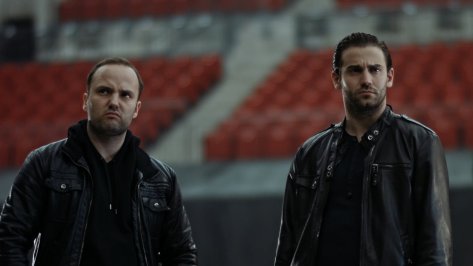
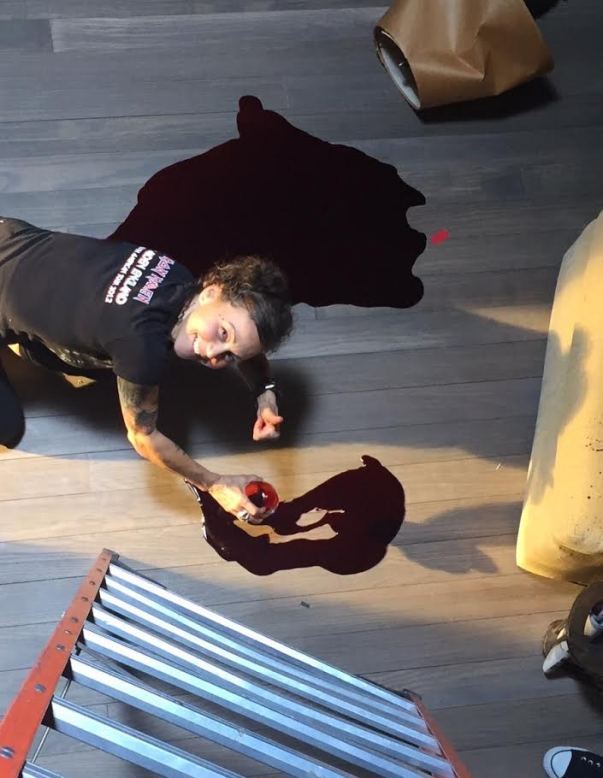
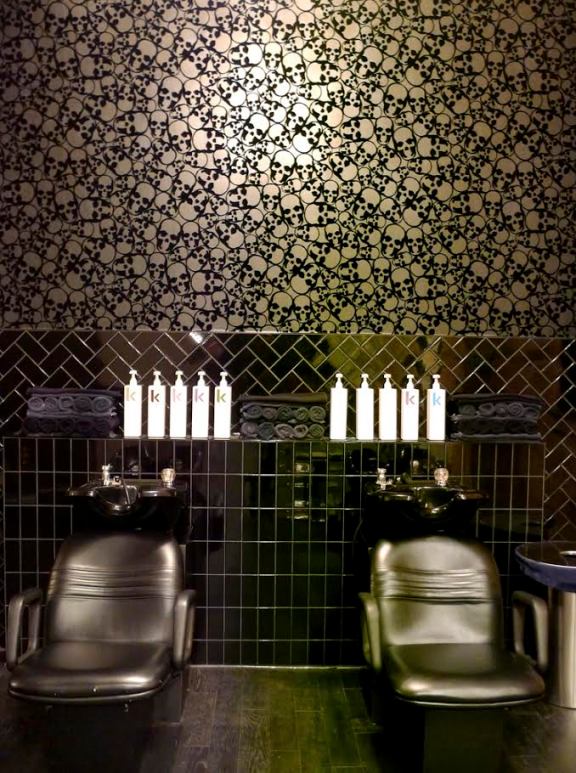





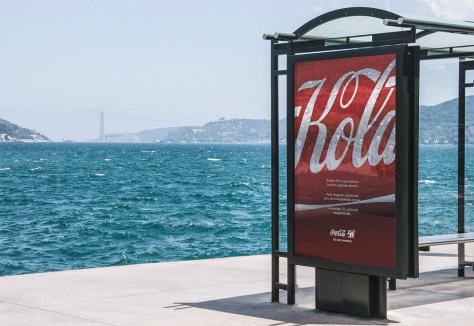
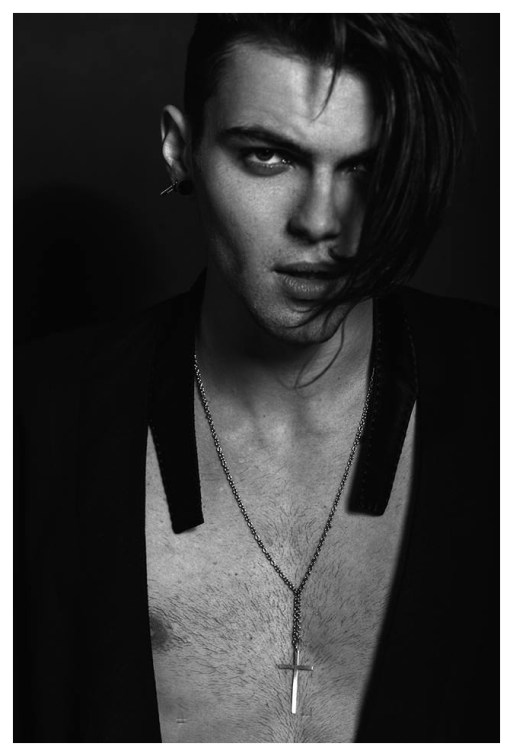


 internationalfilmreview