
Category Archives: international Talent

ALEXANDRA HARRIS HAS AND DOES NOT HAVE “MISSED CONNECTIONS”

Alexandra Harris - Missed Connections 2

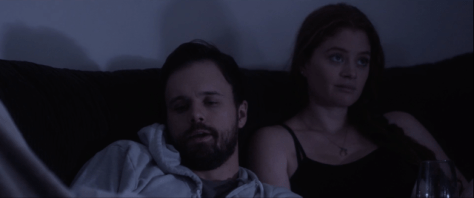
Sometimes when things go wrong it can be very right. Consider Alexandra Harris. By all accounts people who know her consider her to be very positive and upbeat. There’s no implication of a duplicitous nature in regards to Harris but, opposites can play very well in cinema. As an acclaimed actress in a wide variety of productions, she exhibits all of the acting skill of the notable peers in her industry. The filmmakers of Missed Connections wanted to use Alexandra’s inherent goodness to drive a less amiable character in this production. Missed Connections is a Zero Film Festival Award-winner and was screened at esteemed events like the Raindance Film Festival and Cannes Film Festival. The protagonist of the film is Jamie (played by Joseph Cappellazzi), a man who gets ruthlessly dumped by his girlfriend Sophie (played by Harris). The fallout and aftermath leave him incredibly heartbroken and bitter. In an attempt to get back at the world (and to satiate his friends who tell him to start dating) he begins responding to the “Missed Connections” section of the paper, showing up to dates pretending to be the desired person…with less than fantastic results. Through this process, Jamie actually meets a girl he likes, Emma (played by Rebecca Perfect), and then has to come clean about what he’s done. Even more conflict arises when Jamie must decide whether he’s going to keep trying to get back together with Sophie or move on with someone new.

As Sophie, Jamie ex-girlfriend, Harris is cold but not completely unrelatable. Jamie has some maturing to do and the inherent likability which Alexandra possesses makes the audience question whether some of the blame falls upon his shoulders. It’s precisely because of this quality that Rory O’Donnell (casting director on Missed Connections) was adamant that Alexandra would bring depth to the character of Sophie. O’Donnell professes, “I knew she’d be a great fit. Here we were in London, with all these serious Brits and this bright bubbly American (yes, yes, I know she’s Canadian) came bouncing in and just sort of blew us all away. As a casting director, that’s what you hope for. She’s just very, very good, and very easy to work with. It’s quite simple really. She doesn’t make the production about herself and is able to roll with whatever punches may come her way.”

   Sophie has left Jamie bitter and heartbroken but instead of taking responsibility for his part in the failed relationship, he goes about trying to blame other people. Understanding that her portrayal could easily sway the view of Sophie in the eyes of the audience, Harris took care to present her as someone whom the audience could project their own ideas onto. She relates, “I saw Sophie as one of those girls with a five-year plan. The type of girl who knew where she wanted to be and was constantly evaluating herself and those around her to make sure she was on her way to achieving it. There’s nothing wrong with that but I think sometimes it makes people less flexible with the those who are in their lives. Sophie would describe herself as ‘career oriented’ for sure.”

While her performance is magnetic in Missed Connections, there were a few substantial hurdles for ALexandra to overcome in being cast for the film. It seemed highly unlikely that she would be Sophie in this production. Chris Presswell (writer and director of Missed Connections) confirms, When Rory O’Donnell (our casting director) read the script, he thought Alexandra would be great for Jamie’s love interest (Emma), however, I wanted to keep the cast British as it was supposed to be a British comedy. When Alexandra came in for a read through, I knew I wanted her in the film somehow. She’s such a talented actor, and also a genuinely good and decent person; the perfect combination. Rather than Emma, I liked the idea of her for Sophie (Jamie’s ex-girlfriend) because I knew she’d bring some vulnerability and depth to her. While Sophie’s technically the bad guy of the story, it’s boring if the audience flat out hates her; casting Alexandra was the perfect solution to that. It’s pretty hard to hate her. She’s also very fun to have on set and all that positivity was needed when shooting during the British winter as it gets dark at 4pm!”

To hear Harris tell it, the audition wasn’t as much of a cinch as the director implies. It is a testament to her abilities that an early misstep during the audition did not derail Presswell’s desire to use her in the film. It’s often said that bad choices lead to great stories and this aptly applies to Alexandra’s initial choice in the audition. Ever self-effacing, she reveals, “When I was called in, it was for Jamie’s love interest, Emma. Rory had told me it was supposed to be a British dark comedy, so I thought ‘Right, I’ll be British then.’ Keep in mind, I had only been living in the UK for about 6 months and was still under the impression that all British people sounded like Hugh Grant. I’d also never performed with a British accent (I played an American in The Last Man, which Rory had cast me in pretty much as soon as I arrived in the UK). I went in and did THE WORST British accent. It was cringe worthy. Chris was so polite and kept a straight face but I remember Rory just looking horrified. He was nice enough to take me aside and say gently ‘Why don’t you try it with your American accent.’ which I then did. I immediately felt the energy in the room change. Both Chris and Rory relaxed a lot! That experience is something that the two of them still tease me about to this day. The positive result was that I started taking accent work seriously, studying with a teacher and performing as a Brit towards the end of my time living there. I remember being so proud to invite Chris to my performance of ‘The Cherry Orchard’ where I was playing a British Charlotta and afterwards I questioned him and he just looked at me and said “Well, Alex, I’ll give it to you, for a second I thought you were British, but I’ll never forget your Emma”. It’s true what they say, first impressions are real!”

Missed Connections was Alexandra’s first time shooting in London and second time filming in the UK. Her first British film, The Last Man, was shot in the woods outside of London in Essex. Filming in London proper is a much different experience than in Essex, her Canadian homeland, or even Hollywood. The Brits are some of the best actors in the world and Harris took every advantage to soak up the experience of the unique British approach. UK productions are more grass roots and unpolished compared to other film centers, on purpose. The feeling on UK shoots of “we’re all in this together” permeates all levels of production. This lack of hierarchy was something to which Harris was unaccustomed but welcomed. This however does not mean that it was any less challenging. The actress notes, “Chris [Presswell] is soooo British. When I say that, I mean that he doesn’t’t suffer fools and really doesn’t overpraise. When he offers a compliment, it’s genuine and it means a lot. We were on the same page from the beginning so we didn’t’t have to talk about the character too much. I would say ‘I’ve been that girlfriend’ and he would say ‘I’ve dated that girl’ so we knew where to go from there. We knew we didn’t want Sophie to be a bitch but rather someone who was at their ropes end.”

The short days and the brutal London winter temperature were unsuccessful in squelching Alexandra’s well-known positivity. Through her performance and a shrewd stroke of casting, she presented Sophie as an emotionally complex character. What might have originally been a secondary antagonist for this film became a stand-out character which captivated audiences. Mentioning how being different was a prominent facet of her character and her involvement in Missed Connections, Harris recalls, “It became the running joke on set that I had to be called the ‘evil American’ because Canadian’s can’t be mean; however, I think my character proved them wrong.”

Alexandra Harris - Missed connections 1.jpg

VISHNU PERUMAL: EXPERIMENTING WITH EDITING

Vishnu Perumal loves editing. In fact, he loves it so much that he is constantly challenging himself. Yes, he challenges himself to do better and better work on each project but it goes much further than this. He is constantly seeking out new ways of using editing in a production. He is vigilant is this approach. Sometimes a unique idea comes from pondering and sometimes simply by coincidence. You have to keep your eyes open in order to spot your opportunity and Perumal has his eyes wide open. The old adage “Luck is what happens when preparation meets opportunity” aptly applies to Perumal as he is constantly in search of differing ways to force himself to think outside the norm and how both he and the community view the role of an editor. Because of this, he often uses his work on smaller film productions to create an approach that he can access for larger ones. For this professional who has numerous award-winning productions vetting his abilities, complacency is a dirty word.

Something as mundane as listening to a friend describe a time when she accidentally hit the no tip button on her phone after getting a Lyft ride home sparked an idea for Vishnu. The discussion evolved into a debate on the virtues of tipping. Recognizing a universally relatable experience, Perumal decided to approach some of his fellow filmmakers and use it as a challenge to create a one-minute short. Vishnu would take a short story and condense it to a two act structure like that of a joke: setup and punchline. This was presented to a number of festivals that had a category for one minute films (like the Miami Short Film Festival). The film, titled Tipping Point, was a hit and proved that sometimes smaller is better.

The action of Tipping Point starts at a restaurant with a man and a woman in mid-conversation about the virtues of tipping. The man explains that he rarely tips, to which the woman begins to lecture him on the importance of tipping. The man begins to throw out scenarios on which no tipping may be fair, and mentions an outlandish one involving a horrible Lyft ride. Unbeknownst   to him, she had experienced that exact same scenario and in the end reveals to have accidentally pressed the no tip button after sneezing. Comedy, conflict, and a surprise reveal at the end…all within one minute! The impact of the performances cannot be communicated (a trait it shares with full length feature films) by a simple description; yet, what stands out here is the idea that Perumal is on a staunch search for ways to hone his craft.

Vishnu confirms that even in a film this, being succinct is a virtue. He states, “Brevity is a useful tool in editing short films, especially comedic ones. As in “Sexcapades” [the award-winning series on which Vishnu served as editor], brevity was used in this film to cut out all unimportant aspects, lines, moments, etc. When a film is stripped clean of all the fat and the spine of the narrative is laid bare, it becomes easier to add on moments and embellishments. Unlike “Sexcapades,” this film did not have the luxury of adding awkward moments. It was solely focused on getting the joke out as cleanly and efficiently as possible.” In a revealing statement about his constant quest for improvement, Perumal mentions, “If the story and concept of a film is simple and straightforward enough, you will be able to cut that down to however short you want it to be. Thinking back now, I may have been able to trim this one-minute cut to an even shorter 30 second cut.  This film was a really positive experience in my editing techniques and ability to focus on brevity. It has helped me identify how to trim the fat when editing pieces that seem too long winded or excessive.”

In a much darker subject matter, Vishnu utilized his talent on The Devil I Know. Inspired by a Jim Jones video (the infamous cult leader how led his followers of the People’s Temple to a mass suicide in Jonestown, Guyana) the film saw Perumal using his editing skills to present the life of Jones in an anachronous order. In an approach similar to “found footage” the whole aspect and style of editing was instrumental in underlining the plot of this film. The result was a visually challenging story with an engaging narrative, leaving audiences mesmerized.

The film begins with the preacher amongst his congregation in the beginning of his sermon. As the sermon ramps up we witness cuts to a later point in his life where he meets up with a woman from the street. The two leave to an undisclosed location and make love. It is revealed (when the action returns to the original setting) that the woman is actually one of his congregation members. When the woman attempts to leave, the preacher won’t let her. As she fights back, the preacher becomes violent and strangles her to death. As the preacher stands over her body, the words from his sermon play in the background.

Vishnu comments, “The intention was to juxtapose the preacher’s private life with his public life, creating an initial sense of confusion for the audience. I wanted the audience to look through this initial sense of confusion and come to realize and identify what it is they are watching. By presenting the events out of chronological order, I also wanted to emulate the message that things aren’t always what they seem as well as the main character’s duplicity. Having the film told out of order also enabled a significant reveal of the female character as one of the congregation members.”

For those who wish to excel and succeed, constant self-assessment is a requirement. The professionals who are very good are challenged by the industry; those who are great challenge themselves and the industry. It is apparent which side of this Vishnu Perumal resides on.

Art Director/Motion Graphics Designer Ilya Tselyutin’s Innovative 3D Revolution

Art Director/Motion Graphics Designer Ilya Tselyutin specializes in a field of media technology so advanced that it almost seems he’s straddling a unique cusp between day to day creative facts and out of this world science fiction. Already recognized as a master in his field—a fast moving discipline that combines graphic design and animation in motion picture title sequences and television commercials—Tselyutin also excels in the exotic field of spatial augmented reality.

“This is also known as projection mapping, video mapping and 3D mapping,” Tselyutin said. “One of the earliest public displays of projections onto 3D objects was Disneyland’s Haunted Mansion ride back in 1969, but it wasn’t until the early 2000’s, when more advanced tools and software became available, that artists began using projection mapping in artwork.”

“It is a special technology used to display moving objects on various surface as a video projection, so, for instance, an entire building can be turned into a multimedia installation and become a part of a compelling story.”

The California based Tselyutin’s singular palette of skills, both as a creative artist and technical innovator, made him particularly well suited to explore this territory, a long-standing interest which he first he became involved with as a university student back in his native Russia. His fascination with 3D graphics, animation and design coincided with formal training in computer science and provided an ideal confluence for opportunity when the technology first arrived in the country in 2009.

“I was working at Channel One Russia as a broadcast designer,” Tselyutin said. “I was constantly exploring other areas of 3D motion graphics and the ways it can be implemented. And when I heard the Radugadesign agency was looking for 3D professionals to work on something that was quite new and challenging I was eager to try it.”

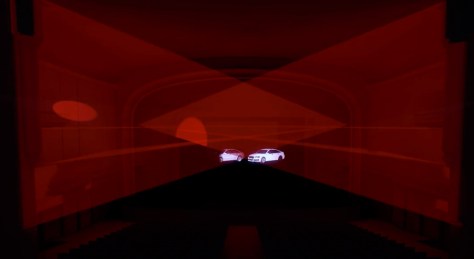
Audi-3.jpgAudi-2.jpgThe Moscow agency was the perfect new professional home for the talented, ambitious Tselyutin, and he quickly distinguished himself in the vital new field. “I saw great potential in this and left my job at the TV channel to focus solely on 3D mapping and augmented reality,” he said. “And 3D mapping technology was unheard of in Russia when we created the first car projection show for Audi in the country.”
Created for the 2011 Audi Car Design Awards the spot featured graphics that changed the colors and tires of a 3D car model and established Tselyutin as a fast-rising 3D sensation (see it here). “I took part in all of the 3D mapping projects while working at Radugadesign,” Tselyutin said. “We worked on commercial projection shows for such clients as Audi, Samsung, some national mobile operators and many others.”

 Tselyutin’s dedication and groundbreaking achievements benefitted everyone involved. “Working with Ilya was always a very pleasant experience,” Ivan Nefedkin, Radugadesign founder-CEO, said. “He was one of very few professionals in Russia who completely understood the specifics of 3D augmented reality. There was no really a university degree for what we did, so there were only a few people who could do the job. He always went extra mile to support our team by overtaking the hardest tasks to make sure the project is delivered on time—on the Audi projection show, he would stay up working all night. Ilya played a critical role in establishing Radugadesign as one of the country’s leading media agencies.”

Tselyutin’s professional reputation as an innovator and visionary quickly spread throughout the international media world. “Right after we produced that first car projection show, many agencies in Russia and abroad started implementing the same technology,” Tselyutin said. “I was invited to produce a projection show by the National Institute of Technology Kartanaka, Mangalore, India, who were quite impressed by what we were doing in Russia. I began receiving many offers from all over the world, and decided to move abroad.”

Currently residing in Hollywood, where he serves as Art Director/Motion Graphics Designer at the prestigious Trioka agency, Tselyutin is still breaking new ground, always expanding and elevating his technique. “Working on those challenging projects helped me master a great variety of new skills,” he said. “The most important knowledge I gained was learning how to successfully generate dynamic visual effects on static footage for a completely immersive effect. This proved to be very useful later on in my career,

Taken with an already impressive roster of achievements, the influential Tselyutin’s future potential is limitless.

“Ilya has a unique set of skills,” Nefedkin said. “From the advanced technical knowledge he acquired studying computer programming to his outstanding graphic design skills—he always came up with new creative ideas, challenged himself and the whole team, and pushed the boundaries of what was possible. Our clients loved it. He never ceased to amaze us with his both creative mindset and perfect technical execution.”


ZHEN LI PRODUCES BRILLIANCE WITH WIT IN “GENGHIS KHAN CONQUERS THE MOON”

Genghis Khan photo for press articles 1

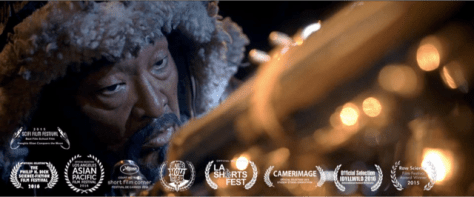
Genghis Kahn Conquers the Moon. The title of this film sounds…well, eccentric. Even its producer Zhen Li admits to being uncomfortable at first with the title and premise. He comments, “At the beginning, I though the idea was a bit bizarre, then I decided it was wacky instead of bizarre. It’s very bold to do a project about a well-known historic figure doing something against the historical fact. However, after reading the script and understanding what the metaphor implies, I abruptly changed this opinion. The story is special and unique with wit, humor, and intellectual sarcasm.” You don’t have to take the word of Li though; the achievements and recognitions of this film speak volumes. Genghis Kahn Conquers the Moon was an official selection at the Cannes Film Festival (France) 2016 (Short Film Corner), Sci-Fi Film Festival (Australia) 2015, Camerimage International Film Festival (Poland) 2016, The London International Festival of Science Fiction and Fantastic Films 2016, Los Angeles Independent Film Festival Awards 2015, Taipei Film Festival (台北電影節) 2017 Nominated for Best Short Film, Los Angeles Independent Film Festival Awards 2015 [Best Actor], and a 20th Century Fox Visual Effects Fellowship 2015 Recipient, and countless others too numerous to list. This diverse list of accolades attests to both the exceptional story and production as well as its universal appeal to different cultures spanning the globe. Celebrated actors James Hong and Cary-Hiroyuki Tagawa perform as the two main characters (Kahn and the wizard) in this film and bring the weight of their impressive Hollywood resumes to this production. Zhen Li’s confident and experienced presence is felt in every aspect of this film from the performers onscreen to its presence on the film festival circuit.

  There is no denying that VFX has created a situation in modern cinema that takes any idea a filmmaker might have and manifests astonishingly believable imagery. This eliminates the need for the viewer to suspend their belief as a courtesy to the storyline; the actions are clearly visible and believable for all to see. One bit of reality that VFX has not suspended is the truth that budgets still exist in filmmaking and it is the role of the producer to figure out what fits into the financial constraints and what does not. Because the premise for Genghis Kahn Conquers the Moon was finalized pre-budget, Zhen Li was faced with a great idea and cast but in need of ways to pay for this. Utilizing crowd funding, studio sponsorship, and other sources, Li created a plan and budget that would allow the film to possess the desired production value. The impressive look of this film allows one to easily understand that the VFX budget was both sizable and well worth it.

Revealing the evolution of his approach, Zhen states, “Our original plan was to shoot scenes in Death Valley with the spectacular landscape of an apocalypse. After some research, we found it will be over 130 degrees Fahrenheit and thus impossible for us to shoot there.  We luckily found Lucern Dry Lake which has a similar look to our vision. It was still extremely hot in summer, as there was no cloud and trees, only with direct sunlight. We rented 4 RVs and had huge fans blowing cool air off of giant ice cubes to cool down the crew.”

While this took care of the Earth scenes, the moon was the actual VFX challenge. Rather than constructing a large scale lunar surface, Li had a miniature of the moon’s topography built with a gradually-changing scale ratio. Scenes were shot on a green stage with the moon’s surface as a plate. These were then composited together in post-production. VFX supervisor Gene Warren III (whose credits include: Hellboy, The Expendables, Resident Evil: Apocalypse, Underworld, The Simpsons) professes, “Genghis Kahn Conquers the Moon is an ambitious project of impressive imagination and great execution. As a producer, Zhen Li did an incredibly amazing job, which allowed us to be able to make Khan land on the Moon.” When a film has a premise that is asking a lot of the audience, the images are often the tipping point for them to invest completely in the story.


It should go without stating that what is paramount to every production is the incredible performances of the actors. For Genghis Kahn Conquers the Moon, Li procured a cast of minuscule size but immense impact. Most notably of these were Cary-Hiroyuki Tagawa (as Kahn) and James Hong (as the wizard). The credits of these two actors spans many of the most beloved films and TV productions of the past thirty to forty years. The gravitas and levity that they brought to this film is evident from the moment they first appear on the screen. Zhen discovered that this is well founded. He notes, “They are both so established and recognizable from their many Hollywood large-scale studio productions; even so, they like to work with younger filmmakers who tell unique stories and experiment with different styles of performance. Working with these experienced actors, their devotion and enthusiasm touched me. Cary-Hiroyuki Tagawa had to wear the Genghis Khan costume including the helm, armors, and leather boots. The costume was more than 20 pounds and he was wearing it in the insanely hot weather. He was sweating like a fountain but he never once complained. He kept working until the sweat ruined his makeup and then we would have to re-do it. The improvisation between these two lead actors brought a great deal to the film.”

  Genghis Kahn Conquers the Moon was an official selection at the Cannes Film Festival; a festival so notable and respected that even those with no knowledge of the film community understand what an achievement and honor it is to have your film selected to appear there. Cannes is more than just recognition; it opens a window of opportunities to both show films and see films from the most talented filmmakers all over the world. It is a community of the upper echelon and provides inspiration and a springboard to future projects. While in attendance at Cannes to support Genghis Kahn Conquers the Moon, Li’s film attracted crowds and garnered him invitations to some of his favorite directors’ screenings, such as:  Woody Allen’s Café Society, Pedro Almodovar’s JULIETA, Asghar Farhadi’s The Salesman, Park Chan-wook’s The Handmaiden, Paul Verhoeven’s ELLE, Maren Ade’s Toni Erdmann, ken Loach’s I, Daniel Blake, and many other internationally lauded productions.

Perhaps the highest indicator of the quality of your work comes not from the critics or the box office but rather, those whom you work with in the industry. James Hong (Daytime Emmy Award-Winner and Genghis Kahn in this film) states, “It’s great to work with this young talented producer. Zhen Li will soon be known as the driving force in the film industry.”


A THOUSAND CRANES: SCORING GENERATIONS OF LOVE WITH EIKO JIN

Eiko Jin-4

Music is the connective tissue of people throughout distance and time. When you hear music you will likely immediately have an image of people and places based on its character. Whether it is a person wearing a white wig conducting a symphony in Vienna in the 1700’s, indigenous tribe members in a drum circle of the 1800’s, or a punk rocker of the past 30 years, the sounds we hear imply a great deal. It tells us about the people but it can also tell us about the state of their heart, as it does in the short film “A Thousand Cranes.” This film about love and reincarnation had some very specific musical requirements which led the filmmakers to composer Eiko Jin. The composer’s lauded work on such productions as “The Last Page”, “My Sweet Prince”, “Humor Me”, have garnered acclaim for her but it was her cultural expertise which sealed the deal for her as the provider of the musical character and accent of this film. Key to the film is the ability of this sonic backdrop to connect the lives of different characters in different periods of time. The two constant threads in “A Thousand Cranes” are enduring love and the compositions of Eiko Jin.

Director Leonard Chan had been searching for a music composer and experiencing great difficulty finding a professional who had the expertise in traditional Chinese instrumentation and culture to give the proper validity to “A Thousand Cranes.” In the same manner that he would cast an actor for a role, he was much more discerning in terms of hiring a composer to create the music for this film because of the different time periods presented in the film. It wasn’t Jin’s work for traditional films which convinced him but rather the music pieces she created for the Silk Road(Dunhuang) International Cultural Expo in 2016. The project focuses on ethnic music pieces which each represented a different city on the silk road. The nucleus of “A Thousand Cranes” is a love story that begins in ancient China. Eiko’s talent, cultural background, and multilingual abilities (she speaks English, Mandarin, and Cantonese) made her the ideal choice for this film. Chan declares, “Eiko Yichen Jin is a great collaborator. Meeting Eiko is a blessing because she aided in the sound effects, dialogue, and music composition for the film. These three categories were a challenge for me because I could not find someone experienced and talented enough to tackle this project. It included the use of playing Chinese instruments such as the guzheng, an instrument with over 2,500 years of history. Finding a music composer who knew how to play such an instrument was not easy. Having already spoken to some other composers, I was so happy and fortunate to have met her. Eiko introduced me to how music can have character and how sound effects create another layer in a film. What captivated me was the diverse and revolutionary way she described music and used sound in her film. What I learned from her added value to my not just my short film but also to my own filmmaking as well.”

The film is a story about enduring love and the ability of reincarnation to sustain it. A Chinese princess falls in love with a common man. Society’s rules forbid them to be together. The young man sacrifices himself protecting the princess but first tells her, “I’ll meet you in the next life and all the coming ones. No matter how my outlook changes, my soul and my heart will not. I will find you.” The second scenario of the couple is in San Francisco finds a wife stricken with Alzheimer’s and losing her memory. Distressed, she states to her husband, “The doctor told me I’ll lose my memory. Aren’t you afraid?” The husband calmly responds, “As long as we are together everything will be okay.” The final part of this series depicts a young boy and girl on a playground. The boy finds paper cranes on the ground and the little girl asks him about them. In both of the prior parts of the story, the cranes are also seen. These artistic presentations of the couple’s timeless connection are the yin to the yang of Eiko’s compositions. The paper cranes bring the couple together just as the music connects the viewer to their timeless story.

The film’s director had provided Jin with reference music to give her an idea of the mood he wanted to create but it was her job to bring an authentic Chinese sound and instrumentation to the actual score of the film. The composer carefully reviewed the film to discern the connective tissue. Even though the film was comprised of three separate stories, she didn’t want it to appear to be three independent stories. Similar to the way Leonard used the paper crane to communicate that all these stories take place between the same two souls, Eiko used the theme melody line to connect them. The composer created a theme similar to a suite with slight variations. Eiko explains her preferences for instrumentation and the ideas it communicates stating, “Usually I will set up different personalities for different instruments. Sometimes even the same instrument will have two different personalities in different pitches/ranges. For example, I always think of harp as an elegant lady. She’s very emotional but also perfect for horror films with a screaming high pitch. Violin/viola are sisters while cello is a mom & bass is a dad. Violin is more positive and vivid. Cello holds the note for harmony, bass plays a not too obvious audible note but it’s the fundamental of the whole story. Piano is usually used for very emotional situations. In this situation, I chose piano as the only instrument for the second story. It’s very sad that this couple who are deeply in love are being separated by disease. Music has the ability to express all the unspoken words, especially when this elderly wife begins to forget her husband. That’s very hopeless and helpless. Without saying anything, I leave all the work to the piano, adjusted and turned the main theme to a piano version.

Eiko Jin-8

Perhaps the most striking and important part of Eiko’s contribution is her expertise in playing and writing for the guzheng. This Chinese style harp which looks like a wooden box with strings is performed with fake nails. Similar in sound to the Japanese koto, its sound is fragile but very powerful and emotional. The guzheng’s cultural character and wide emotional range made it ideal for the film. Jin describes, “It could be powerful with a fast tempo or very light with a glimmering feeling sound with a slower tempo. It’s really good and popular to be used to describe the glimmering lake or water. By pressing on the string it easily gives a bending sound. No matter what kind of words that I use to describe it, each person will have their own feelings about this instrument’s sound. There’s something that speaks to everyone with the guzheng. I know that if someday I write the music for a kung fu film, I’ll definitely use guzheng for a fight scene.” This type of forward and creative thinking is what leads Leonard Chan and numerous other filmmakers to enlist Eiko Jin to augment their stories and propel them to greater heights.

XIANG NAN GONG ENABLES THE PRODUCTIONS THAT TELL THE STORIES OF CHINA TO THE WORLD

IMG_4375

It has been said that everyone has a story. In the world of television and film production, writers and directors are considered to be the creators of these stories. While this may be true, without the mastery of a technical director and producer…none of these tales would ever reach an audience. Having a vision is a very different thing from having the skills and knowledge to manifest it. Xiang Nan Gong has served this role for decades at Shandong Radio and Television, earning him the status as one of China’s most respected professionals in this field. During his time with Shandong he oversaw the multiple technical facets in the creation of documentary and scripted series. From massive scale variety shows to location documentary series which told the history of the Chinese people, Gong designed and facilitated lighting, staging, sound, and a myriad of other components which are essential to delivering the filmmakers vision. Xiang Nan might be the least well-known member the production team but he is definitely the most vital.

As with all cultures, the Chinese people are interested in the history of their ancestors and land. A country of such immense size and variety of inhabitants has many stories to tell. “The Story of Yili River” is a documentary depicting the Yili River from the perspective of the cheerful running water line.  It explores the Yili river people’s folk customs, rich life, and delicacy. Gong focused on his expertise as a recording engineer for this production, recording and placing the authentic music of the inhabitants of this region to tell the folk customs of the people on both sides of the Yili River.

Xiang Nan worked closely with the director and a small team of professionals in the studio to create and recreate the sounds of the Yimeng People for the “Shandong Report.” Layering a series of sounds and sound patterns, Gong created the sound design with a mixture of authentic music, location recordings, and studio sonics which depicted the hard lives of these people. This village is surrounded by high mountains and steep cliffs, streams, and other harsh natural environmental factors. To properly recreate and communicate what these inhabitants experience required a consummate expert like Xiang Nan.

As technical director and producer on Shandong’s “Sun Bin Military Strategist”, Gong aided this production which tells of a man who also lived through a difficult situation but persevered and elevated himself to the level of great respect. Famous for receiving the punishment of face tattooing and having his knee caps removed, Sun Bin later became one of the most respected and trusted strategist of his country’s era. While remarking that his difficulties were nothing compared to Sun Bin’s, Xiang Nan concedes that the equipment of the 90s which he used was less than desirable for this thirteen-episode historical series. He tells, “Historical dramas are grand in scale with many layers of sound. This is what makes it so believable to the viewer. While your conscious mind may not notice it, something in your unconscious tells you that you are really there amidst these battle scenes and different locations due to the small details. Today’s state of the art technology makes the process much less cumbersome but back when we made this series, it took many hours to achieve what can happen in minutes now. Regardless, the finished product is what is important and ‘Sun Bin Military Strategist’ was very well received and popular.”

Another of Gong’s productions, “44 Notes” received international and domestic acclaim. “44 Notes” won the first prize from the State Council Information Office and the Ministry of radio and television, the “Golden Bridge Award” in the United States, Japan, Germany, Taiwan, Hong Kong and other countries and regions, and was adapted for television drama production at the center in Beijing. This documentary shows the bicycling trip of teacher Du Xiangjun and forty- four of his students (of the Zibo Normal School in the Shandong Province) as they made their way to the capitol to perform a concert. Along the way, they sing and experience a number of hardships on their journey. Half way between reality TV and unscripted drama, “44 Notes” called upon Gong to be prepared for an unlimited amount of variables that could affect the filming and recording of this production. Its international acclaim is a testament to his expertise on this project.

As a loving husband and proud father of a daughter, Xiang Nan was especially happy to assume the duties of technical director and producer of Shandong’s “The Charm of Women.”

The program is the first female Chinese series about female characters with outstanding contributions from all walks of life. It introduces the work, study, life, and successful careers of each woman. Shot in documentary style, Gong took particular care to oversee the lighting and sound to present these women with the respect and admiration which their achievements deserve. While certainly not the most famous subjects of the many productions he has overseen, Xiang Nan professes that they are among the most important because they serve as an example to current and future generations like his daughter, exhibiting the great importance and impact that Chinese women have on their families and society.

As the professional who literally “sets the stage” and supplies the sounds on a wide variety of productions, telling the stories of China’s past and present; with international award-winning productions to his credit, the respect of his industry, and a long history at Shandong Radio and Television, Xiang Nan Gong is among the elite technical directors and producers who continues to bring new ideas to an ever expanding production community.

EVA YE IS CALM, COOL, AND COLLECTED FOR WARM SMOOTH MEAN

10178115_10152071663201519_6690902688629142441_n

Conflict is a deeply embedded part of our lives; no question. It’s ironic that in an attempt to escape the day to day difficulties which we experience, we often find escape by watching the problems of fictional characters in films. Most of us are oblivious to the fact that the filmmakers who grant us this means of solace experience an ample amount of conflict themselves in their endeavors. Cinematographer Eva Ye experiences conflict constantly with her involvement in films. It might be hazardous conditions, inclement weather, differing opinions on set, and others factors. The main difference is that when Eva deals with these factors, budgets and artistic expression hang in the balance. Ye has a reputation for keeping a cool head while getting the desired shot. For anyone who has even been on set during a production, that’s much easier said than done. Whether she is the DP on a TV production, music video, film, or any manner of creative filmmaking, Eva’s small size holds big ideas and large talent. Come to think of it, she’s a bit of a contradiction herself with so much talent inside a small container.

Ye’s work on the film Warm Smooth Mean (Official Selection of First Look Film Festival) has received great praise. This film with its surprising reveal near the end is full of mystery and tension. Warm Smooth Mean follows Hunter Nelson, a young man troubled by the suicide of his father River Nelson. River was the singer of a legendary country duo named Silent Station. When Hunter receives a royalty check from his father’s work, he travels to a small town to give the check back to his father’s former bandmate Jerry Lee McCoy…and to search for the answers behind River’s untimely passing years ago.

Jess Maldaner (director of Warm Smooth Mean) and Eva worked extensively in preproduction to make their plan for the film. Past experience had taught them that having the film specifically and painstakingly planned out would benefit them later. While the industry has been around long enough to make it difficult to create a truly “original” premise, the look and stylized quality of a film can often set it apart. The first part of the film takes place in Oklahoma and the lighting appears soft, mellow, and yet somewhat cold as Hunter begins his journey. As the film goes on, the secret reveals, the fight ensues, and the filmmakers begin to use more harsh and warm light to construct the scene, which heightens the stakes.

Ye’s work is center stage in perhaps the most climactic scene of the entire film. She describes, “Because of my dance background, my strong ability to operate a handheld camera is something that makes a lot of sense to me. I’m not a strong person. I’m actually quite petite compared to a lot of operators, standing at 5’4” and 110 lbs. To be able to move a camera with my hand quite intuitively is something I’ve learned through years of dancing. The rehearsing was definitely crucial in achieving this shot. We spent almost the whole night shooting this scene. There were at least 10-15 times of me moving with the actors without the camera to test out camera positions. When it came to the actual shooting, I knew exactly where I needed to go. There were people spotting me from behind in case I ran into something when I was backing up. I backed up with the actor coming towards me and stopped when he stopped. I pushed in when he got a hit in the face and fell backwards. It all worked out really naturally. Planning and rehearsing was the core of getting the scene right.” Director Jess Maldaner augments this description stating, “Eva’s handheld camera operation in this crucial fight scene was flawless! Her creative instincts allowed her to deliver the perfect amount of camera movement in the shots to create a high level of tension for the viewing audience. Eva’s work was paramount to the final look and emotional effectiveness of Warm Smooth Mean. Her technical skills coupled with her understanding of how to convey an emotional experience visually was a huge asset to the final film. She is a master of camera movement. She is also that rare exceptionally talented artist who is completely free of ego. ”

Sometimes your talent is welcomed, other times it requires some convincing when opinions differ. While filming one of the opening scenes which required some very smooth and stable camera work, the production found themselves without a car mount for the camera. While Maldaner was convinced of the need for green screen to achieve the look for the shot (taking place on a bumpy stretch of highway in Palmdale), Eva was convinced that the quickly disappearing sunlight would not accommodate this. Arbitration was in process and Ye held to the fact that her abilities and ideas would get the desired effect with greater expediency…which it did. The finished scene shows a steady shot with the blurred flat desert outside the window. Conflict averted, artistic vision intact.

Part psychosexual thriller, part art-house film, Shen is a unique portrait of desire and domination in their most cerebral and bodily manifestations. Conflict abounds in the storyline and the imagery Eva produced for this film propels it. Shen’s life is irreversibly altered when she discovers an anonymous artist has drawn her in an erotic position. After a series of strange occurrences, Shen realizes this man is drawing her future. Though her obsession with him begins as a mere daydream, his continual re-appearance starts to make her question what is real and what is hallucination. Meanwhile, her relationship with her fiancé takes a turn for the worse as he suspects she is fantasizing about someone else. His desire to control her reaches a fever pitch after he invades her journal and uncovers her disturbing secrets.

Writers Jace Casey (also the director of Shen) and Abigail Flowers understood that they needed an exceptional DP to create the mood and look which the storyline evoked. Ye’s reel had suspense, romance, thrillers, drama, & music videos. The style of shots and feeling delivered in Eva’s camera language clicked with theirs. While Casey had a plethora of experience in theater and as an actor, having an accomplished cinematographer like Ye greatly aided his process for this film. Eva recalls one scene in particular in which she was able to use her abilities to aid her director recalling, “On set, we maintained communication and respect for each other constantly. There was one occasion when we needed to take a shot of the downstairs swimming pool through the point of view of the actor standing at the 30th floor apartment window. In Jace’s mind, he knew that’s what he wanted but he was unsure if the focal length of the lens, the height of the camera, and the tilt-down angle of the lens barrel were appropriate to convey the action. He was on the verge of eliminating the shot. My experience and knowledge of such shooting situation helped Jace to understand how we could achieve this particular shot, which turned out just the way he wanted if not better. I think it is the understanding of the fine line between a creative collaborator and a loyal supporter of his original vision that made us work so well together.”

The fruit of that cooperation among the two resulted in a film whose achievements include: Harlem International Film Festival “Top Short” (2016), Tampa Bay Underground Film Festival “Best Escapism Film” (2016), and Official selection of Studio City Film Festival, Laughlin International Film Festival, & Monarch Film Festival (2016).

While there are so many talented filmmakers in the industry these days, ability alone is not the deciding factor in regards to who other professionals choose to work with. Many times it is the proper combination of expertise, artistic vison, and temperament that win out. Eva agrees, “My ability to always find the right angle makes me incredibly versatile, yet I am also very strong and firm with my suggestions. I know what I want, yet am willing to consider alternative options. That is a courtesy I always offer to my fellow filmmakers as well. The willingness to listen to others while believing in yourself is an asset. I’d like to think that my calm presence on set helps create a balanced, mindful atmosphere for shooting. Even when things may not be going right, you should always find a way to stay focused, remain positive, and strategize.”


YVETTE GREGORY IS WINE TASTING

WineTastingScreenGrab1

While actress Yvette Gregory looks like Beatriz Jones, the character she plays in the Eros Panhellenios 2017 film Wine Tasting, the dichotomy is clear when you study each woman. It’s even more clear for the woman who becomes the other. The two may share some history with wine, Gregory’s family has a vineyard (Hentley Farm in South Australia) and Jones is in a relationship with a sommelier, but that’s close to the only intersection for these two. While Beatriz is a bit “tightly wound”, Yvette has been an artist seeking out challenges since her days as a child on set in her homeland of Australia. It’s ironic that it takes someone as free spirited as Gregory to convincingly portray the constrained Jones. It’s just one aspect in a series of counter intuitive preconceptions you might make about Gregory…which you’ll soon learn to realign.

Having already experienced a highly successful acting career in Australia and enjoying a comfortable living would be enough for most of us but for Gregory there is always a new mountain to climb. Entertainment is in her DNA (her mother was a model) and she was in front of the camera while still in her single digits. Acting was as everyday as…well, everyday life. While notoriety and financial compensation is the definition of success for most people, new challenges and the pursuit of her craft are paramount for Yvette. Leaving her stable and successful acting career, family, and friends in Australia; this actress headed to Los Angeles in search of success in Hollywood.

The pursuit of success and the conflict it can cause is the theme of Wine Tasting in which Gregory portrayed Beatriz Jones, the girlfriend of aspiring Sommelier Ed Tate (played by Josh Thrower). Wine Tasting follows four men who have struggled and sacrificed vast swaths of their personal and professional lives to become professional wine tasters. When all but one of them passes the incredibly difficult sommelier certification test, the ensuing conflict threatens to tear their close-knit group apart. Yvette’s character is one of the men’s girlfriends, and throughout the film she struggles to maintain their relationship as his wine-tasting obsession becomes overwhelming. Wine Tasting’s Award Winning script by Justin Samuels has won awards at Film Festivals including: the Beverly Hills Film Festival, Sunscreen Film Festival, Evolution and Mallorca International Film Festival, and is an Official Selection to the San Rafael Film Festival. The theme of success, community, and conflict is not foreign to Yvette or her chosen profession. She comments, “Of course we all have that little green monster inside of us. I would say it’s probably even more prevalent in the entertainment Industry. Everyone has their own path and if you stay in line long enough, your turn will eventually come. I have friends who have found success back home and in Hollywood very quickly and others who have hustled for decades. I know my biggest character defect is when I start to compare myself to someone else. It’s good to take a step back, look at what you have accomplished and find gratitude for everything you have achieved so far. The main difference is if you recognize these things in yourself or if you impulsively act on them. One of the great things about acting is that you do a lot of introspection, which allows you to not just react without thinking.” Gregory is much more actualized than the main characters of Wine Tasting who are sometimes defined by the situations that occur in their lives.

Yvette’s role as adult escort Stephanie in Amazon’s “Private Sales” couldn’t be further from herself or Beatriz but the role gave the actress a great deal of exposure, leading to opportunities such as her role in Wine Tasting. While “lady of the evening” may not cause you to think “girlfriend”, the producers of Wine Tasting recognized something in the portrayal that worked exceedingly well. Gregory agrees, “I think my role in ‘Private Sales’ played a big a part in this casting even though Beatriz who I was cast as in Wine Tasting couldn’t be any more different than the role I played in ‘Private Sales’! Beatriz is totally reserved and a bit of a prude with jealousy and trust issues about her boyfriend. I think I pull off the pretty nerd look and that’s Beatriz’ vibe, which helped casting decipher the role for me pretty quickly. Beatriz is a bit conservative and reserved but isn’t afraid to tell it how it is when it gets to the breaking point. She really loves Ed but is torn because he slowly becomes more and more distant, showing little respect for her time. Relationships are hard at the best of times but, when a relationship is new and other commitments seem to become more important, it really tests the trust and stability of the relationship. Beatriz is intelligent, articulate and loving but she is also a little emotionally immature. They both have a lot of growing up to do.”

The conflict that comes from a lack of time is not restricted to relationships and their love. Yvette was cast as Beatriz almost as filming was set to start. Even when you love what you do, a cramped timeline can lead to anxiety. Inevitable last minute changes occur, as in all productions, but the time afforded most actors to truly and deeply understand their character was significantly reduced for this actress…not that you would ever know it. Wine Tasting’s director, Josh Miller, declares, “Yvette is an exceptional actress with everything a director could want from a performer. Her ability to adapt to changes in the material is remarkable, and her talent for improvisation is second to none. Yvette was one of Wine Tasting’s most valuable assets.” You won’t hear any complaining about the twelve plus hour shooting days or lack of prep time from Gregory who is fully aware that she is living out her dream. Even though dreams don’t come easy, they do come with perks. Yvette remarks, “Shooting at the famous Saban Theater in Beverly Hills was a special treat. With all the history of the great actors who have performed there, it demanded excellence of all of us. If I were to be honest, that’s the reason I left behind what I had already achieved in Australia. I wanted to be working in a new setting that demanded excellence from me. Travelling to Hollywood to work alongside those who I perceived to be at the upper echelon of the industry, that’s what success means to me…and it feels pretty great.”

WineTastingScreenGrab2

MACBETH’S MODERN COOL LOOK, COURTESY OF AWARD-WINNER JANE JOHNSTON

Only the brave (sometimes the foolish) fear to tread upon the hallowed ground known as Shakespeare. For centuries the works of the playwright have been treated as gospel for actors and all those involved in their production. Their rhythm and essence of these storylines have been the base and inspiration for much of modern cinema and theater. While the stories have been retold in their basic original form in film, on seldom occasion they have been reimagined. Such was the case with Geoffrey Wright’s Macbeth starring Sam Worthington in the title role, produced exactly 400 years (to the year) from what is considered the play’s original premier. Set in modern day Melbourne, this Australian production of Macbeth is a gangland interpretation. In a congruent fashion, Worthington (as Macbeth) is convinced by his drug addled wife to seize his destiny and assume power by killing his close friend Duncan, setting into play a domino effect of tragic events. This modern interpretation of a classic called for slick cars and suits while also wanting to give a nod to Scottish themes and touches of a more historic Macbeth. The film’s design has pops of color throughout the tones of greys and blacks. Once he became King, Macbeth owns his look donning color and texture. By the end of the film he is battling for his life in a more military garb. When a tale is as well-known and loved as Macbeth, the audience knows what to expect, just not the accent it will be presented with. It was paramount for this presentation of Macbeth to visually be set apart and above all others. To great means this was achieved through the talent and artistry of costume designer Jane Johnston. She readily admits to being terrified going into the production but her plan was to bite off small chunks and manage these bite sized pieces. The plan worked to the delight of Johnston, the filmmakers, the audience, and critics. The film’s director Geoffrey Wright professes, “I very purposefully sought out Jane Johnston to create the costumes and look of Macbeth. Her resulting vision of combining old world styles with modern fabrics was instrumental to its themes and moods. From a visual-textural point of view it remains the richest and most complex film I’ve directed and I was thrilled by Johnston’s planning, communication, and execution of craft. Johnston’s work was especially impressive in enhancing the character portrayed by the star, Sam Worthington, whose next film was as the lead in the biggest budgeted and most profitable film (up to that time) ever made – ‘Avatar’ by legendary director, James Cameron. Cameron’s company was impressed by Worthington’s impact in Macbeth and Johnston’s work was a critical part of the reason for that assessment. Worthington had never previously looked as good as he did in Macbeth. His elevation to an international star was made certain and Johnston received an AFI award, the highest Australian accolade possible, for her accomplishment.”

sam 3
lachyvic3

sam&vic

Jane’s very tried and true process involves reading and dissecting the script and coming up with tear-sheets to piece together her thoughts for looks. Meetings with producers, the director, etc. follows as a cohesive form evolves for each character. It’s essential to have conversations with the hair and makeup departments to see what they are thinking. Taking advantage of the city’s location itself, Johnston notes, “Melbourne has some interesting public art and some great locations which I think that added to the production design value but as far as costumes were concerned I think the fact that we were shooting in winter definitely added to the look. Needless to say, we would have made a very different film had we shot in Sydney. Melbourne is also known for its fashion and I tried to use interesting Melbourne designers whenever I could and mix them up with pieces of vintage clothing. There was one particular men’s label called Calibre who were incredibly helpful. I also found some really obscure independent fashion and jewelry makers whose products I incorporated into the designs.” She continues, “I remember sitting in my car outside a bar in Sydney with Sam Worthington ‘doing my pitch’ and hoping that he could see it too. Thankfully he was totally on board and excited by the character. I think it was one of those times that the look and clothes helped the actor feel grounded, and helped them see who they were. I started having fittings and our ideas evolved. Once we felt we had our character, I could develop it further and add certain touches or details to the point where I knew it was right.”

This Film Finance production of Macbeth received six nominations and two wins, one of which was Johnston’s Australian Film Institute (AFI) Award for Best Costume Design. The AFI Award is the highest honor in Australia and a massive achievement for anyone involved in the film industry. Describing the experience, Johnston recalls, “The event went over two nights with the first night being the technicians’ awards, which was our night. The second night was the more glamorous red carpet event where the actors turned up. The experience itself was quite surreal. A lot of people around me felt quite confident for the production designer and myself but you never know. David’s award (David McKay won Best Production Design for Macbeth) was called out first and he made his speech and then costumes were announced and I think I really stopped hearing anything in that moment! I gave my speech and thanked my fabulous team and met David out the back to have our photos taken. Then of course we celebrated! I think that the film overall had a strong impact; it was visual, had a great soundtrack, and it really hadn’t been attempted on this sort of budget before. The production design and the costumes worked really well together and I believe that helps for a film to receive recognition. I put Sam Worthington in a suit and that hadn’t been done before! I also put him in a kilt. I think it was a stylish looking film and it happened to stand out amongst the other films of that year.” Proof that with talent and quality material, you can excite and expose different generations to the most classical of stories.

_VIC6667

Animator and designer Cynthia Larenas talks working with eBay and music legend Egyptian Lover

CynthiaLarenas_1
Designer and Animator Cynthia Larenas

Despite working all around the world, Cynthia Larenas’ upbringing is very important to her. She was born in Quito Ecuador, and moved to Australia at the age of four. Growing up in Adelaide, she still stuck to her Spanish roots and is completely bilingual. Her heritage is something that she wants to keep alive while travelling for her work.

Larenas is a designer and animator, working for large companies and small businesses to create apps, videos, print designs, and much more. Her extreme versatility lends it hands to many mediums, and she has worked with some of the biggest brands in the world, including eBay.

“I wanted to work at eBay because I thought it would be a great opportunity to learn new things, to challenge myself, and experience working at a large company. I wanted to undertake the rebranding projects because I thought it was a fun and exciting opportunity to produce work that would be seen at such a huge scale,” said Larenas.

As only one of two in-house designers for eBay Australia and New Zealand, Larenas’ responsibilities included rebranding Group Deal, Flash Sale and Fashion Gallery creative, and leading the design of eBay’s fashion Gallery brand towards a more Gen Y demographic. She created eDM design and build, was involved in casting, photo and design direction of external agencies, created promotional material for in-house employee engagement campaigns, and did animation work for eBay’s 2013 Christmas Campaign. Her work was featured on the homepage of eBay Australia and New Zealand every day for a year.

“It was great to work at eBay and I got to learn a lot, particularly what is involved to run and maintain the creative on such a big website. It was also fun seeing what you had worked on up on the website and seeing that the hard work you were doing were converting to sales. It’s been the best place where I have been able to get direct results of my creative,” she said.

While working with eBay, Larenas had the ability to measure her work, test mobile placements, pitch ideas, and challenge herself. For the Fashion Gallery rebranding project, the aim was to attract a more Gen Y audience to the gallery. This meant she got to research and create some fun pieces that brought something different to the eBay site, directly contributing to their sales and growth.

“It was really cool to see. I remember I was subscribed to eBay eDMs before I worked there, and shortly after I started, I received an email as I normally did, however this time I saw my work on there being shared out to me. It was a funny and proud moment in my career,” said Larenas.

Larenas’ work continued to impress with the different companies she worked for. While working as an animator with Electric Studios, she helped on campaigns for Bosistos, Old Spice, and Jack Daniels. She also was a Creative Director, Designer, and Animator for Nectar + Co, and Designer at Imano, where she helped shape Ray-Ban’s app “Never Hide” during that time.

“I love that I get to make things look good and have then opportunity to influence the world around me,” said Larenas.

Continuing with this trend, Larenas worked with the American musician, vocalist, producer and DJ, Egyptian Lover. He was an important part of the L.A. dance music and rap scene in the early 1980s. He is widely known as being ‘The King’ of the Roland-TR 808. For the release of his song “Into the Future”, Larenas and Carl Jiorjio were asked to create an animated music video for it. Jiorjio and Larenas have worked together on a few different promotional animations and music videos for artists in the UK and US, but the most notable was for Egyptian Lover last year.

“Cynthia is one of the most dedicated and hardworking individuals I have worked with. For as long as I have known her she has always been working hard on different projects that have been keeping her busy in the creative industry. What I like most about working with Cynthia is her ability to push herself when it comes to a project, often studying to expand her skill set and knowledge for the greater good of the projects she undertakes. I’ve also admired her fearlessness when it comes to design or animation challenges, always pushing to provide creative and powerful solutions. She is motivated by pressure and never turns down a job because it’s too hard. I have witnessed her time and time again take up challenges, learn new programs and techniques that exceed clients’ expectations. Her all-round knowledge and broad range of skills are rare in the design world these days,” said Jiorjio.

“Having worked all around the world has helped her not only to understand different cultures and approaches, but it has also resulted in her applying a professional and easy to work with ethic. I have never seen her become defeated by a job and have recommended her highly throughout my career,” he continued.

Jiorjio served as creative guidance and did the final editing of the clip. As the two of them were fully responsible for the music video, from concepts to storyboards, to animation and final editing, it meant they had complete creative freedom to explore our imaginations as far as they wanted.

“Working on the Egyptian Lover video was rewarding, challenging, fun and one of my favorite projects to date,” said Larenas. “I love collaborating with musicians or other artists because I get to work with really talented creative people that push me to do better.”

Her tasks involved art direction, storyboarding, compositing, 2D and 3D animation and illustration. Although the video was released only a couple of months ago, it has received an extremely positive response. It already has over 8,500 hits on YouTube and was shown on LA television station Link TV which reaches 33.7 million US homes and 6.7 million regular viewers. None of this could have been possible without Larenas’ dedication to the project.

 “Making this clip for Egyptian Lover was also humbling as he is a pioneer in electronic music, with thousands of adoring fans across the world,” said Larenas. “Although it was a massive task, that spanned over a year, it was extremely rewarding when it was finished.”

Larenas’ extraordinary talent is evident to all those that saw the Egyptian Lover music video, and all of her other work. With such innate talent, there is no doubt as to why she is so respected in the industry, and considered one of the best at what she does.