To say that actor Michelle Alexander is versatile would be a thundering understatement. While the Vancouver Island-born performer is best known for her role as serial killer Alison on the innovative horror anthology series Darknet, Alexander’s current small screen incarnation, as Tess on web series Overachieving Underdogs, plays at the opposite end of the spectrum—it’s a fast, funny comedy centered on two young women living in Toronto—but for Alexander, the transition was simple.
““Both genres need to be 110% believable and authentic,” she said. “If a viewer can smell a ‘funny moment’ is being played for the joke rather than fulfilling the circumstances of that character, it feels false.”
Alexander’s keen grasp on the emotional mechanics of performance are impressive, and provide a fascinating insight in the actor’s modus operandi. “In terms of preparation, the two genres are not as different as people think,” Alexander said. “Drama is a tragedy with irrevocable consequences—death, heartbreak, loss. But comedy is tragedy without those consequences—your pants fall down in public; you fart during grace at your in-laws’ dinner party. The trick is to give the ‘comic circumstances’ as much importance as you would a dramatic tragedy. The comedy is there for the viewer, but the actor has to be invested in the circumstance.”
In Overachieving Underdogs, Alexander makes it look easy, and the results are hilarious. With equally gifted co-star, Sophia Fabiilli, the pair’s zany impulses, emotional vulnerability and unpredictable gags are deftly realized, and run the full comic route, from physical slapstick to razor sharp repartee
Together, the two make a formidable team. “Sophia is amazing,” Alexander said. “Everybody say that we have an onscreen chemistry that is rare. The series is all about our characters, Tess and Polly, individually as well as their relationship, so we share a lot of screen time. We know how to feed each other in the moment and riff on a joke together. Plus, like me, she’s determined to get an authentic funny moment rather than a ‘cheap funny moment’. We push each other to go further, to take bigger risks, to make each moment as funny and full as it can possibly be. She’s a joy to be on set with.”
The pairing has created a volatile, endearing and evident bond that provides a solid foundation for wild comic escapades, from irony laden observations on contemporary life to the pitfalls of dating and the unexpected twists which the two women face, as Alexander said, when “going after the dreams they never knew they wanted.”
“In terms of comedic performance, Sophia and I shine most in scripted comedy, rather than stand-up or sketch,” Alexander said. “Following on the success of series like Broad City and Garfunkel and Oates, we decided to put those skills to the test.”
“It’s been pure fun,” Alexander said. “The pilot shoot was peopled by highly skilled professionals both in-front of and behind the camera. We all believe so much in the potential of the series that we all brought our best work to the pilot. The set designer even made a “Tess and Polly shrine” in Tess’ apartment. I’m not sure if you ever see it on camera, but it’s a metaphor for how every tiny detail was attended to and cared for. “
Alexander also generates enthusiasm among her colleagues. “Michelle brings a great energy to set, always prepared, focused on the end game, willing to take risks,” director Patrick Hodgson said. “Directing her on Overachieving Underdogs was a fantastic experience. Her bright energy carried over to the crew and made for a genuinely fun time on the show. When we reached moments of conflict, or struggled with a scene, we put our heads together and worked out a solution that worked for both of us. No drama, no ego. She is a diligent, committed performer, who is keen to collaborate with her scene partners and director, always early to set and eager to make sure the cast and crew were all taken care of.”
The series’ wit and charm have an empathic appeal that’s bound to reach a larger audience. “We are currently in talks with some Canadian networks, one in Europe and one in the US, to produce a full 13-episode season of the show,” Alexander said. “And we’ve been overwhelmed by the popular response. Publications, both in Canada and the US, wanted to write about it, women from as far away as the UK tweeted at us that they “felt like you are making this series for me.”
The show’s success lies with Tess and Polly’s—and Alexander and Fabiilli’s—personal relatability, a genuine emotional quality that can’t be manufactured, but is instantly recognizable. As Alexander said, “Once Sophia and I, dressed as Tess and Polly, did a promo stunt in downtown Toronto during rush hour. We had two girls shout from the streetcar, ‘I’m a TESS!’ and ‘I’m a POLLY!’”
Orion Lee seems to have it all and yet, by looking at his history it seems that he can’t rest. This world traveler was born in Hong Kong but has resided in Zurich, Australia, Malaysia, London, and is steadily moving towards the US. While working in finance, he took an acting class to try something new and soon discovered that he not only enjoyed it but, was quite good at it. After relocating to study (and graduate in 2009) from the London Academy of Music and Dramatic Arts, he quickly began a career in television and film. Among many others, his film credits include; Fury (the 2014 war film starring Brad Pitt & Shia LaBeouf with 19 nominations and five awards including the USA National Board of Review win for Best Ensemble, grossing $208 MM worldwide), Skyfall (with 108 nominations and 71 wins including two Oscars, grossing $1.1 Billion worldwide), and many others. His roles range from military action characters to elderly Math instructors, exhibiting a wide range of personalities and physicality. Lee is an actor who is highly charismatic on camera but who sometimes opts for the more subtle aspects of a character in order to truly take on their visage. As a classically trained actor, Orion appreciates the challenges of the diverse spectrum of opportunities which he has been able to engage in his career. Two of his roles, Deng Loashi in A Brilliant Young Mind and Anderson in The Expert, perfectly present how this actor can take one idea and present completely incongruent performances.
Orion Lee’s performance as Deng Laoshi in A Brilliant Young Mind is one that allows him to set aside his marquee attractiveness and make a drastic physical transformation. Lee’s performance is somewhat heart wrenching for viewers as they witness a character who is both noble and yet has been passed over by some of life’s base rewards. Orion describes his character stating, “Deng is a man who has devoted his life to his career in math and teaching. He finds himself in a situation where he is unmarried and missing a family life so he overcompensates in his protectiveness of his niece and wanting her to succeed. I appreciate Deng’s loneliness and caring for family as well as his devotion to math and teaching. He works hard to improve his students’ lives and takes pride in heading the top team in the Math Olympiad.”
Lee used his own personal experience of growing up in an East Asian culture while living in a Western country to interpret and communicate the essence of Deng Laoshi. Playing a much older man with a similar yet different cultural experience from his own, Lee discussed ideas with wardrobe and makeup to arrive at a physical appearance that is completely transformative and unrecognizable. Orion confirms, “Changing the tempo, posture, movement and voice accent of my usual self allowed me to create a character who embodies this pride at the purity of math and teaching together with a parental over protectiveness. Conversations with hair and makeup and costuming completed the characters aging process. Deng has a certain lack of modern style due to age and growing up in Communist China. I’m proud of the creation of a character which is different from myself yet completely believable and natural on screen. This was exemplified by the fact that Alex Lawther, one of the actors in this film, introduced himself to me twice: once when I was myself (Orion Lee) and once when I was Deng the character before realizing he had already met me.”
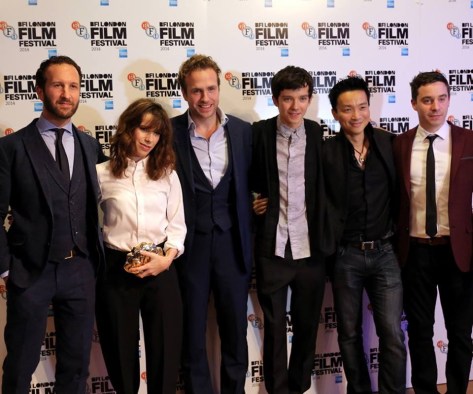
A Brilliant Young Mind is a story about Math competitions but the actual subtext is about overcoming your own fears. The film was quite successful, with multiple nominations from the British Independent Film Awards, the London Critics Circle Film Awards, the Seattle International Film Festival, and wins at the Tallinn Black Nights Film Festival as well as the Palm Beach International Film Festival (winning Best Film). The story of an awkward teenage math prodigy who competes at an International Mathematics Olympiad resonates with anyone who has felt insecure and somewhat out of place, unaware of their own true strength.
The filming locations, split between the UK and Taiwan afforded A Brilliant Young Mind’s cast some fun and interesting opportunities. Orion recalls, “Part of the film was set in Taipei and the cast had a brilliant time visiting Taiwan and bonding over exploring a new city. Finding a noodle restaurant where the meals cost £2 and checking out the night markets (including eating novelty pastry’s shaped as genitalia!).”
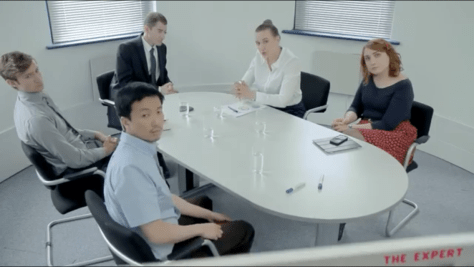
A Diametric presentation of a similar character to Deng Laoshi would be that of Anderson in The Expert. In this film, Orion plays a man who might have a similar uncomfortability with others like Deng, but the delivery is with humor and relatability rather than a serious tone. Lee was heavily involved in The Expert early on. He explains, “The script was originally tested at a showcase for new work called the Constellation Creatives CoLab. The director altered the script to suit a stage version and we tested the material in front of a live audience before doing a final draft of the script and then shooting it.Constellation Creatives is a collective I founded of film, theatre, and television professionals. The Constellation Creatives CoLab is a not for profit showcase of work in film, theatre, and television in collaboration with and held at the private members club, The Hospital Club. The Hospital Club was founded by Microsoft co-founder Paul Allen through his investment company Vulcan Inc. and Dave Stewart (formerly of the band Eurythmics)/producer and Founder of Weapons of Mass Entertainment).
The Hospital Club’s main ethos is to support the creative industries by providing an inspiring environment that actively encourages its members to create, connect and collaborate. Members include designers, writers, creative entrepreneurs, performers, producers, musicians and film makers.”
Lee plays the lead role of Anderson, the resident expert at a company which produces geometric shapes for its clients. Rather than a tale centered on events and a climactic resolution, The Expert is a study on how certain professionals find themselves challenged to communicate and relate to others. The genius of The Expert is that many groups of professionals of varied vocations see themselves as Anderson. It was the comedic aspect of this storyline and role that enticed Orion to become involved. He comments, “The fun and challenging part of the role was to create a character whose responses and reactions are believable and yet funny: to tread the line of reality and comedy. Also Anderson needed to be someone that people recognized and related to. I learned a lot from being involved in The Expert; collaborating with the director to develop the script and source the actors for the other parts was a fun process and expanded my skill set in the industry. More than ever, I understand the importance of working with an excellent cast…working off them and with them to create the action and reaction of comedy.”
Orion Lee is an actor who seeks out varied roles to expand his character study. His extensive background in theater has empowered him with a perspective which respects the craft while he uses the vehicle of film and tv to reach a wide audience. He takes a traditional approach to performance in a modern society. With a multicultural background and a passport full of experiences, he endeavors to pursue new avenues to add colors to an already ample palette.
International actor Ashley Tabatabai has benefitted immensely from his worldly background and time spent in an array of countries, surrounded by exotic and varied cultures, languages and people. Born in the UK to parents of English, German and Iranian descent, he was raised in Spain, and picked up an American accent during his years in International school. All of this lends to Tabatabai’s mysterious aura enhanced by a grasp of dialects which make him an invaluable asset for casting directors. But it’s his raw talent as a performer that forms the keystone in the illustrious career he’s built for himself.
Tabatabai has been extremely active in the industry for years. First and foremost he is an actor, delivering powerful performances in several television series including “Color Me Grey” and “Have I Been Here Before?,” as well as in films such as “Digital You,” “Louis: Lost In Motion,” and the upcoming drama “Falsified.” His love of acting, however, stems from his passion for storytelling. That’s why the extensive list of credits he’s accumulated includes not only his myriad roles as an actor, but also his work as a writer and producer on an array of acclaimed projects.
“I operate on two fronts. One as an actor, auditioning for and booking great roles, and the other as a storyteller and producer who creates his own content. I believe the two to go hand in hand,” Tabatabai said. “I’m a huge advocate of creating original work and telling your own stories.”
Last year Tabatabai assumed the role of undercover cop Johnny Clemence in the first episode of the upcoming series “Color Me Grey.” Surrounded by mobsters and in too deep to get out, the constant risk that Johnny will be found out grows more and more imminent. As the suspense grows to a crescendo, viewers will find themselves glued to the edge of their seats. Though everyone in this series leads a double life, this is especially true for Johnny.
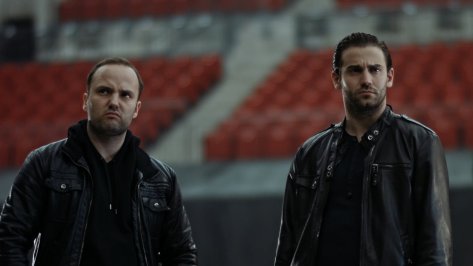
Scott Michael Wagstaff (left) & Ashley Tabatabai (right) in “Color Me Grey” shot by Adam Lyons
“Johnny is a really enigmatic character, quietly observant and always processing and calculating,” Tabatabai said. “This is a guy who has gone undercover to infiltrate a criminal organization, whose own members lead double lives to help do their underhand business. So in essence Johnny is operating multiple covers at all times.”
Another of Tabatabai’s films, the early 20th century period piece “Louis Lost In Motion,” blew audiences away in 2014 with its imaginative approach to storytelling. Filled with intrigue and mystery, the film focuses on two key figures in early filmmaking — Louis Le Prince and Thomas Edison.
“[This] is a film based on the conspiracy theory around Louis Le Prince, who is famed as the first person to ever record moving images on his single-lens camera. He mysteriously vanished after boarding a train, before ever getting to patent his invention,” Tabatabai said. “To this day, no one knows what happened to him or why.”
Often, it is particularly difficult for actors to play real people, contemporary or historical. When the opportunity to arose for Tabatabai to do so, he jumped at the chance.
“The period costume as well as hair and makeup really helped me to drop into the body of the character. Being immersed in the actual locations where he actually spent time was a great way to picture what his experience might have been like,” he said. “There is always a sense of pressure involved when portraying a real person, especially someone as iconic as this.”
Check out the trailer for “Louis Lost in Motion” below:
Most recently, Tabatabai stars as Javier Baena in “Falsified,” an upcoming film about the reunion between a father and the son who was stolen from him at birth. Tabatabai also wrote and produced the film, which is based on a frighteningly real epidemic of infant thefts that occurred over the course of 50 years.
“It’s very much about the dynamic between a parent and child, and in particular a father and son,” Tabatabai said, describing the stirring drama. “On another level I feel it’s important to raise awareness of the scandal that happened in Spain.”
The vast range of roles he’s portrayed speaks volumes to his talent and reputation as an actor. Eager audiences can catch Ashley Tabatabai in “Falsified” later this year, and in the upcoming film “Digital You,” which is set for release in 2017.
Everyone knows that person; the one who goes on vacation and returns with an affect. It might be a foreign accent or a way of dressing, possibly even eating patterns or mannerisms. The trait is off-putting to most of us. It can however, be a source of amusement as in the film JAPAN. The film is the brainchild of Canadian comedy group Tony Ho. One of JAPAN’s stars is the affable and amusing Adam Niebergall. Adam plays Marty, a character that all of us know. Niebergall’s performance, along with that of Roger Bainbridge [Nolan] and Miguel Rivas [Pat Dunkling], remind us of the interplay amongst a key group of great comic actors. Whether watching Laurel & Hardy, The Three Stooges, the Marx Brothers, or modern teams like Adam Sandler and Kevin Hart, the joy is always in witnessing their overcompensation towards the mundane and reminding us to laugh at the reflection of ourselves. Comedic greats allow us to remove the weight of things off our shoulders no matter what the setting. Niebergall and his costars fully achieve this goal in a hilarious take on office politics and the idea that the Rolling Stones expressed, “You can’t always get what you want but if you try sometime you find you get what you need.”
Any fan of either the British or American versions of TV’s The Office will readily be amused by JAPAN. An overly eager, somewhat politically incorrect boss like Pat Dunkling will seem incredibly familiar to fans of either show. Pat is not derivative of David Brent or Michael Scott but he is an archetype of this manner. He is overly exuberant and we get the feeling that he very easily falls in and out of love with anything that he can take on as a persona to make himself more interesting, often to the discomfort of those around him. When Dunkling returns from holiday in Japan, he decides that he will have two interns compete for a paid position with the company via a karaoke battle. Rivas’s performance as Dunkling is well contained and not over the top, which is difficult considering his Japanese stereotype infused wardrobe, hair, and makeup. The true belly laughs are delivered courtesy of Marty and Nolan. While preparing for the competition, we see both men have a glimpse of their past as well as their future. The hyperbolic visions of both are there to tell us how we all invest a little too much of ourselves in every small event that occurs, or at least the ones we have deemed to be truly important.
Niebergall has shown a wide range in films, although all have comedy at their core. In films like WANDA he plays a man who is at times threatening and quick to become violent; passionate and somewhat menacing. In Dissection it was fear; in Giordano it was desperation, but Marty in this film is a genuinely likeable and harmless guy. Viewer’s get the sense that Marty wants to do well but doesn’t want to step on anyone’s toes in the process…unless he is pushed, which happens in JAPAN. Niebergall (who won a Canadian Comedy Award in 2015) describes his character stating, “Marty is an unmotivated, classic privileged white male. He’s 25 years old and he’s never had anything to be afraid of except for maybe hard work. He comes from a long line of very successful men and he represents the apple that really did actually fall pretty far away from the tree, if trees could throw apples instead of dropping them. However, when Marty’s sedentary bubble is burst by Pat Dunkling’s offer of a potential promotion he is suddenly willing to put his all into winning the competition. He feels he can make up for his whole life by trying hard for the first time in this moment. He’s a great character because he reminds me of myself and a lot of people I know who don’t really know or appreciate how good they have it sometimes.” Marty shows us that he is willing to do things he would not normally do because of his fear of failure. This includes copying Nolan’s choice of a Sophie B Hawkins song for the Karaoke battle as well as a hilarious attempt at a very uncomfortable lap dance in the work place. As with other Tony Ho films, it is the chemistry even more than the premise of the film which makes it so amusing and entertaining. Miguel Rivas [Dunkling] gives a large amount of credit for JAPAN’s success to Adam’s approach and improvising commenting, “I had a blast working on Japan with Adam and I love working with him in general. He’s super creative, energetic, and really odd in all the best possible ways. I just love his choices. I remember a point in the movie when his character (Marty) gets embarrassed so Adam stuck his whole torso in a filing cabinet drawer like an ostrich would do in order to hide. That’s such a funny way to express his shame. He’s great at adding stuff like that; stuff that isn’t already in the script. Sometimes he would do even more subtle things, like the way he wears his tie just a bit too short. It all comes together to round out a really weird, funny character. He has a really vibrant personality and it shows in his work. And his singing?? Those high notes!?? I think I remember the main reason we used Sophie B. Hawkins in the Karaoke competition was because Adam would go around singing “DamnI Wish I Was Your Lover” all the time as if it were a normal thing to do. Then we thought it would be so funny if both songs were by Sophie B. Hawkins so we chose “As I Lay Me Down” for Roger.” Roger Bainbridge confirms, “Working with Adam on the movie Japan was awesome. His voice was crucial for the piece, because he’s excellent at playing sweet, confused oddballs. He completely nailed the Marty character, this child struggling to be a grown up. His performance helped to set the tone for the entire film. Japan was one we never seemed to stop writing. Adam came up with some of my favorites, like having the misinformed Pat Dunkling character thinking that ‘massages in Japan are just sex’. We had to cut one of his favorites from the movie about Marty and Nolan venturing a guess that ‘Saki’ was ‘soccer for babies.’
No spoilers here. Adam’s character Marty both does and does not win, you’ll have to go see JAPAN to truly understand. The film’s conclusion is not what the viewer takes away for the experience, rather it is Adams’s performance as Marty that endears you and causes you to hope for his success in spite of himself. It is easy to see the adult that is struggling to break through Adam’s stunted emotional growth. It’s the characteristic that Niebergall most enjoys about Marty. He reveals, “You can’t amuse someone if you can’t amuse yourself. I think the more personal you can make your comedy the funnier it will be. The best comedy often bares some horrible secret. If it draws people in because they are surprised to relate to something or it wakes someone up to how great it is that all people have something strange about them, it creates a feeling of sharing.”
The Canadian film I Saw You is about the unexpected results when one is thrown suddenly into a situation and doesn’t know how to handle things. Specifically, the story is about a young man (know in the film simply as “boy”) who falls in love at first sight. He makes a plan, somewhat spontaneously and proceeds forward, determined to create something wonderful from his passion from his new found feelings of love. The circumstances may be different but the spontaneous nature of the film’s message resonates with its cinematographer Peter Hadfield. The independent film organization Cineworks paired up artists to create collaborative visual art pieces. The lead actor, Ashley Andel, and Mina Shum (director, writer, and producer) were paired up to make a film. One of the curators at Cineworks suggested Peter to Mina as an accomplished cinematographer who worked well in high pressure situations. Without ever having met or worked together, the two began building the visual schematic that would present the film’s storyline.
Peter Hadfield is a Canadian cinematographer who is more accustomed to working with projects that have a larger than life appearance. Projects like Harrison x and Clairmont the Second’s “It’s Okay, I Promise” with its fast movement, or the heavy adrenaline infused TV series Ice Pilots NWT (on which he worked as an editor) are more indicative of some of Hadfield’s fast movement work but Peter is always looking for a challenge as well as a way to expand his palette as a cinematographer; which made him eager to work with Mina Shum on I Saw You. Mina Shum is a highly respected and award-winning director, writer, and producer whose credits include (among others) Double Happiness (for which she was awarded the Wolfgang Staudte Award at the Berlin Film Festival, Best Feature Film at the Torino Festival of Young Cinema, Best Canadian Feature Film at the Toronto International Film Festival as well as multiple nominations for other films) who quickly signed on Hadfield as the cinematographer for ISaw You after meeting with him. The film called for a much more intimate feel than much of Peter’s prior work but his vision for the shots persuaded Shum; a decision she is happy to confirm was the correct one. Shum comments, “Peter’s personality is strongly displayed in his work. He is intelligent, conscientious, caring, and talented! Peter brought a unique sensitivity to the film. He has a great eye, and a strong work ethic, and most importantly for all artists: vision. His experience was a major asset to the production. When I needed advice, his perspective was always sound. His work was so strong that I was happy to include him on another production, Ninth Floor which is a feature documentary.”
I Saw You was an Official Selection of the Vancouver Film Festival, an achievement that was especially meaningful to Hadfield as the film was such a deviation from his usual large scale work. The boy, who falls in love at first sight with a girl, places an ad in the local paper stating “I saw you.” The action continues over seven days as the boy waits for a call from the girl. He unexpectedly becomes part of a community with three Chinese women who frequent the park near him. Hadfield wanted to capture the emotion and heartache of the boy by the way the shots were framed. He explains, “Most of the film takes place inside an apartment. The use of walls, doorways, and the ceiling became instrumental for metaphor in the frame. I would fill half the frame with a wall to make Boy feel claustrophobic, or frame him in the kitchen through the doorway to make him feel stuck in his situation. I used unconventional and awkward framing, excluding parts of the boy’s face from the frame to make his discomfort more apparent. Towards the end of the film the framing becomes more conventional as Boy’s experience becomes brighter, until we see a full shot of the boy when he bumps into the girl again.” Lighting is a part of cinematography that Peter is especially interested in and recognized for his mastery. Director Scott Cudmore (who used Hadfield as his cinematographer on the “It’s Okay, I promise” seven minute opus music video by Harrison x and Clairmont the Second) notes that, “I am always thrilled with Peter’s understanding of composition and light. It inspires me as a director and always makes me want to work with him again.” Hadfield confirms his preoccupation with this aspect of his job noting, “One of the largest challenges for I Saw You was shooting in a cramped apartment without much space for lights, not to mention the camera. Using practical lights in the frame as well as sculpting available light became essential to light Boy (the film’s main character). A fun challenge! Mina Shum was very flexible and collaborative. When I made bolder suggestions she was totally game to use them. My favorite part was shooting inside the apartment at night. It made for so many opportunities to light the apartment in interesting ways and create interesting frames. Since ninety percent of the film took place in one small apartment, we had to get very creative in finding new angles.”
Peter is continually searching out new ways of approaching his craft and challenging himself. Utilizing his availability to other filmmakers and even investigating things as mundane as podcasts to increase his awareness of all emerging approaches, Hadfield is constantly improving himself. The aforementioned director Scott Cudmore recognizes this attribute in Peter and is currently making use of him again on the upcoming video “Needs” for the band Odonis. Peter reveals, “The music video has a very loose narrative of a corporation developing Artificial Intelligence, the AI becoming out of control and the corporation reacting to the problems than ensue. Long camera zooms and intense color, inspired by Dario Argento’s Suspiria and Francis Ford Coppola’s One From The Heart are present throughout the video. The vivid color palette and ominous, constantly zooming lens makes for a very dark and dramatic video. I was stepping out of my comfort zone on this one. I usually prefer to light naturally, or use available light. I poured over different images from both photographers and cinematographers, trying to discern how the artists I respect achieve a look similar to what I was going for. I love being forced to grow as a cinematographer; both myself and those I work with end up with a better product if I am stretched beyond my current limits.”
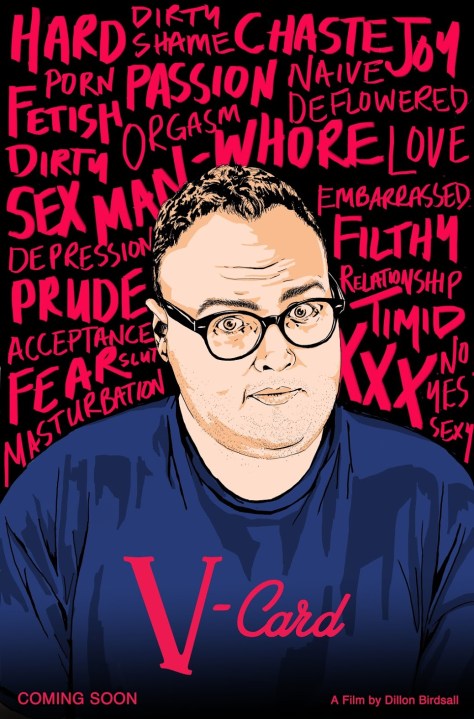
Technology has brought the entire world closer. Social media such as Instagram, Snapchat, and Facebook have given a global platform to anyone who desires it. What one gains in exposure, you lose in privacy. The generational difference of opinion on this is vast. Older generations are wary while younger generations don’t even think about an idea as archaic as privacy. It’s certain that different ages and different cultures feel differently about discussing the topic of sex. V-Card the Film is a perfect example of how society’s discussion of the subject has changed. The film’s editor Luiz Henrique Schiel Gigolotti understood that he needed to be as precise as a surgeon to navigate the subject matter of which could both attract or offend differing viewers. The duplicity was challenging for Luiz as he wanted the artist’s message to ring true while still representing the humor and real social stigma associated with the main character Dillon’s situation. The proper editing can completely change the audience’s decision to respect or feel pity for the protagonist.
V-Card is the story of Dillon, a twenty-three year old virgin. Dillon has been trying but things haven’t worked out as planned. Depending on your cultural and religious background you might be offended or intrigued by his story. Luiz’s job as an editor is to help the filmmakers find that middle ground that interests everyone without turning them away. Dillon is a likeable, early 20’s New Yorker with a job, friends, & the things that most of us desire. Dillon is the film’s proxy for all of us to examine how we feel about virginity. The question put to the audience is whether we make our own decision about when we lose it or if we feel pressured by society to make it occur within a certain time frame in order to feel “normal.” The documentary examines Dillon’s life and feelings as well as those of random interviewees (and some scheduled ones) from many different cultural, racial, sexual, and social backgrounds. The star and writer of V-Card is Dillon Birdsall. When Dillon approached Luizto be the film’s editor, he was eager to accept. Gigolotti recalls, “When Dillon asked me to edit V-Card, I didn’t think twice about jumping into this project. The challenges of editing a feature documentary are something that I really get excited about, even more so with a film like this that so openly discusses a subject that many people are still uncomfortable talking about on a personal level.”
Editing is sometimes thankless. When it is done poorly, the audience is aware of it and a film seems cluttered and cumbersome. When editing is highly professional, you become lost in the story and don’t notice the skillful editing. An editor’s job is not for those who require constant praise. Still, editors are just as much a part of the creative process as the cinematographer, director, and others involved in filmmaking due to the fact that they have the ability to enhance the emotional impact the audience feels towards the action on screen. In a film like V-Card the emotions are varied and the different people involved in the discussion are very numerous. Once the actual filming has taken place, it’s Luiz’s job to connect the audience with Dillon and his interviewees, even when they sometimes only appear for seconds. Jamaal Green is the director (nominated at the Martha’s Vineyard African American Film Festival in 2014 for Chronicles of a Profiler) of V-Card the Film and the person who most closely works with Luiz on the tone set by the film. Jamal praises Gigolotti’s work stating, “Luiz is a vital asset to any film. He has become my go to person for editing and ‘After Effects.’ I can think of three specific projects we worked on in which his abilities took the films to a higher level. A good editor can present what you have and make it work, but a great editor will make what you have filmed look even better. That’s what Luiz has done with V-Card. He is an amazing artist and a pleasure to work with.”
In terms of his involvement in V-Card, there were some obvious challenges and other, less expected ones for Gigolotti. He explains, “Editing V-Card was a huge challenge in my career. When we talk about virginity or sexuality, there is always some concern to not offend the person we are talking to. In this specific case, I needed to make sure that the edit and the graphics are not offensive to the audience.” Far from offensive, thanks in large part to Luiz’s editing, V-Card achieves a heartfelt tone. Rather than leading the viewer to any judgment of Dillon, we are warmly invited to question our own experiences and how we perceive others who may have had radically different entrees into the world of human sexuality. The subject matter of the film could have taken several different and more highly salacious slants but Gigolotti worked with Dillon and Jamaal to place the topic in a nicely gift wrapped present with a colorful bow on top. That colorful bow was realized in the formatting of animation sequences. Luiz’s skill at combining real life footage and animation is a primary reason that he was asked to edit V-Card the Film. Dillon Birdsall, writer and star of V-Card the Film comments, “The main reason I hired Luiz for the film is because he is a fantastic editor, especially when it comes to after FX and animations. When we first seriously considered the idea of intermingling animation to the film, it was Luiz’s ideas and expertise that enabled us to successfully achieve the results we wanted. We needed a light heartedness that wasn’t gimmicky and also wouldn’t take you too far away from the storyline. He has been a vital part of the documentary and brings a ton of great ideas and enthusiasm to the project. I’ve known him for a little over two years now and I’ve become a huge fan of his work. I feel very lucky to have worked with him and I definitely hope to do so again.”
In addition to another documentary currently in production (Luiz admits to being smitten with this approach to telling a story), advertisements, and other films; Gigolotti has most recently been editing for Martha Stewart’s Living. The diversity and amount of work he finds in New York these days reaffirms his decision to move from Brazil to work in the US as an editor. He recognizes, “There are so many great artists, directors, and all around professionals in the industry here in the US. It seems like I am challenged everyday by people who only want the best. That’s what I always have wanted to be a part of, a community committed to always bringing their best.”
Nick Fulton has deftly parlayed his personal interest in pop music into a successful career as a professional writer. The New Zealand-born Fulton’s concise, insightful style, impeccable taste and natural affinity for his subject have enabled him to go, in a decade’s time, from startup blogger to internationally recognized voice. His groundbreaking Einstein Music Journal was one of the first web presences in the remote island nation and virtually introduced the music blog format there.
For Fulton, it came together almost by chance. “I started writing after a friend encouraged me to start a blog,” he said. “In 2004 very few people in New Zealand were blogging, so it was pretty exciting to enter that space. It also meant that the people I connected with online were mostly outside my local community. I made friends and connected with other writers in Sydney, Los Angeles and London.
“Around that time I tried to connect with a couple of print publications that were based in Auckland, which is where all the major publications in New Zealand are based,” Fulton said. “But I was living in Wellington and struggled to find my way in. As a result, I started writing more frequently on my blog, which later evolved into Einstein Music Journal (EMJ). I got another writer on board and used Myspace to reach out to bands and music blogs in other countries. Before long we had a steady readership, and when we eventually launched Einstein Music Journal in 2006 we were able to throw a massive party and sell out one of Auckland’s best live music venues.”
“We operated slightly differently to the traditional music media,” Fulton said. “We didn’t always go through conventional channels to secure a story. We quickly gained a reputation for being bold and enthusiastic, and many publicists and record labels responded well to us. On several occasions we managed to secure stories that much bigger publications and other established writers in New Zealand missed out on.”
From this somewhat cheeky Do-It-Yourself start, Fulton, thanks to a reputation which was gaining respect and admiration beyond New Zealand, found respectability being thrust upon him and soon eschewed such pop guerilla tactics.
“My biggest achievement is finding an audience for my writing outside of New Zealand,” Fulton said. “With EMJ, I had regular readers in New York. LA and Australia. More recently I’ve worked with influential writers like Jessica Hopper, Cuepoint’s Jonathan Shecter and co-authored a column with hip hop writer Michael ‘DJ’ Pizzo. Being personally asked by Shecter to contribute to his publication was such an honor, and one that I will never forget. He wrote to me after I self-published an article on Medium, asking if he could republish my story on Cuepoint and if I’d be willing to join him as a writer and editor there.”
This natural momentum has served the writer well, and Fulton’s aim is always true—his 2015 Pitchfork magazine editorial “It’s Time to Put Our Cameras Away” (which called for a cessation of fan cellphone recording at concerts) not only inspired a contrarian clickbait response from venerable NYC weekly the Village Voice, it coincided with the practical use at numerous music and comedy performances of a variety anti-cell phone technology, a practice that is steadily growing.
“I like writing about a potential trend, or an unusual observation,” Fulton said. “My Pitchfork Op-Ed started a healthy debate online and had an overwhelmingly positive response. Pitchfork‘s Facebook and Twitter received a lot of comments, mostly agreeing with me, which was good. The only real dissent was shown by that writer at the Voice, who penned a response telling people to keep doing whatever they wanted. I think he thought I was being too politically correct.”
With a kaleidoscopic range of subjects from world class pop superstars to offbeat independents like Italian noise rockers Father Murphy, offbeat New York hip-hop group Das Racist, New Zealand filmmaker-music video director Simon Ward or a behind the scenes piece of music studio production Fulton’s analytical easy going methodology always holds the reader
“Nick’s a great guy and a great writer,” broadcaster David Klein said. “EMJ was one of the key music blogs in the country, and one that was a real defining authority. We met when he was a guest on a radio show I hosted. It was awesome to have Nick onboard, he always presented interesting new music, and could speak about it with a good understanding of trends, composition, and just the way music appeals to you at an emotional level. I’d trust Nick’s taste, and the quality of his writing is what has made him so successful. And he is always expanding his range –I just read something about music studio production he’d written a few weeks ago, and it was great.”
Now an almost ubiquitous figure in the local music scene, Fulton’s achievements and variety of outlets continue to grow.
“Being viewed by the public as an expert in my field is one the highest honors,” Fulton said. “I’m proud of the times I was invited on to radio shows, to comment publicly about a trend in music or share my thoughts on a popular band. Now my goal is to become a trusted voice outside of New Zealand and Australia. I’d like to immerse myself in the American music scene for a while and soak up as much knowledge as possible. I got a taste of it all when I visited in 2012, but there’s still so much to discover and write about.”
Fulton’s elegant yet hard charging style has taken him far, but the writer is just now really coming into his own, and this success is very easily explained.
“Working with Nick was great,“ editor Katy Hall said. “He’s the kind of writer you hope will stumble into your inbox at some point but rarely does. He’s personable, professional, knows how to stick to a deadline, and most importantly, he always delivered really high-quality work. It was engaging, tailored to the publication’s tone and needed no editing. I don’t want this to sound cheesy or overhyped; it was just the reality of working with a great writer.”
For a director to let go of the reigns and trust a set designer without the nagging impulse to micromanage is a sign of true excellence on the part of the decorator. That’s at least the sentiment expressed by most every director who has worked with seasoned set decorator, Nancy Niksic.
Niksic, owner of a most impressive roster of achievements, just wrapped working alongside acclaimed film director and screenwriter, Azazel Jacobs (“Terri,” “Momma’s Man,” and “The Good Times Kid”) who raved about her invaluable work. “Nancy Niksic worked as my set decorator, and possess an exceptional ability to find unique and fitting set pieces, then decorates the set with a realism that adds to the character development. Nancy has true artistic talent and is an asset to work with. She understands my vision, which is incredibly beneficial to me as a director and to the success of my shoot.”
Nancy Niksic is one of today’s premier set decorators who has crafted the look of many TV, film and commercial sets.
With 24 years of experience under her tool belt, Nancy has seen a variety of TV, film and commercial sets to visual perfection as set designer and decorator. Niksic’s versatility and adaptability are part and parcel of what has earned her keep amongst the greatest in the entertainment industry — including the Canadian “Amazing Race.” Niksic worked as the art director on the 1st season of the “Amazing Race,” and as production designer on the 2nd and 3rd seasons.
Niksic is the ultimate multitasker on set, with a strong comedy leaning as her niche. “ I look at it as an opportunity to have fun and really expand my creativity” says Niksic about her comedic set decorating sensibilities. “I’ve alway been super passionate about this niche market, especially the quirkiness and how odd some pieces have to be. Being a set decorator is all about contributing, and that takes understanding the joke and the tone and the subtleties of comedy. To make comedy work, there’s a tricky balance, knowing when to be understated and when to go big and in your face.”
Niksic nails the unassuming, keeping the audience unaware of the set decor, but at the same time having the pieces contribute to the comedic tone. “The audience won’t be able to put their finger on why it’s working, but it does. Directors like that I understand this. I love to scour the city for the perfect pieces,” adds Niksic.
Her comedic touch garnered her work on two seasons of “The Jon Dore Television Show” on The Comedy Network, as well as the short film “The Truth About Head” directed by Dale Heslip, which won several awards at Cannes.
Niksic recently worked on content for the comedy webseries by Sarah Silverman, Michael Cera, Tim & Eric, and Reggie Watts called “JASH.” The content produced by cofounder Daniel Kellison (original executive producer for “Jimmy Kimmel Live”), was about three CIA agents living in horrible quarters in Aleppo, Syria, so the set had to look believable. “I had to make it look real, while also finding space to add comedic elements,” said Niksic. “I collaborated with the directors on the nuances of the set, trying to play it so the audience gets a real feel for the environment, while also putting in elements to accent the comedy.”
What sets Niksic apart from her competitors is that she is not limited to the entertainment realm alone. Niksic handled the decor and design as well as the styling of a renowned rock & roll inspired hair salon in Toronto called “Grateful Head” [pictured below]. She truly does it all. Whereas most designers who work in film wouldn’t normally venture in this space, Niksic will not turn down creative work, making her one of the most multifaceted designers in the game.
Nancy Niksic is a set designer extraordinaire, willing to work in any creative environment necessary. She knows what she, the audience and director/client want, and she stops at nothing to get it.
For Niksic, it’s about quickly understanding the director and the direction, and about establishing immediate trust while shouldering some of the weight the director carries. Her evolved sense of humor certainly comes in handy on any kind of set, keeping the list of opportunities running endlessly.
Even at the start of his career as an editor back home in India, Shayar Bhansali was making innovative contributions to the entertainment industry with his work. The now multi-award winning film editor began his career as the visual media editor for The Big Indian Picture, India’s premiere online cinema magazine. Whereas most of India’s prior entertainment outlets focused on Bollywood fluff, The Big Indian Picture offered audiences a serious look at the world of Indian film; and the videos Bhansali edited for the outlet earned the magazine national attention.
Bhansali recalls, “I worked with the producers to edit interview segments, and these interviews turned out to be so genre-defining that they became the first ever web-produced content to air on national television on NDTV Prime.”
After getting his feet wet as an editor in India, Bhansali moved to Los Angeles to complete his master’s at the world renowned American Film Institute. Once in the states, he dove in with full force creating a reputation for himself as an exponentially talented editor in the narrative film world. Some of his recent work includes Cusi Cram’s award-winning dramatic comedy “Wild & Precious,” which earned the Best Narrative Award from the NYLA International Film Festival, Mattson Tomlin’s family drama “Persuasion” and Stefan Kubicki’s “Against Night.”
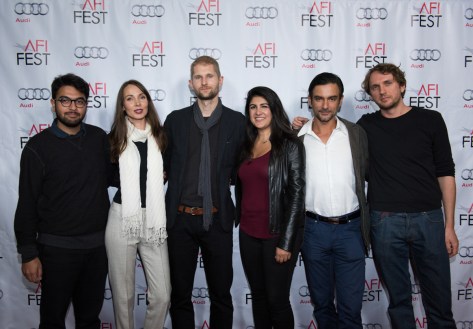
“Against Night” film crew and talent from left to right: Shayar Bhansali, Elena Caruso, Stefan Kubicki, Saba Zerehi, Konstantin Lavysh, Lucas Lechowski at AFI Fest presented by Audi. (Photo courtesy of AFI)
In addition to winning awards at the USA Film Festival, Woodstock Film Festival, Ojai Film Festival, as well as being nominated for several more from the American Society of Cinematographers and Guam International Film Festival, Kubicki’s drama “Against Night” also earned Bhansali international recognition for his work. Delicately weaving together the story of a cosmonaut who struggles to deal with the haunting memory of the loss of his wife and young daughter, Bhansali’s work on the film earned the Festival Prize for Best Editing at the Kolkata International Film Festival in India and the June Award for Best Editing from the Los Angeles Independent Film Festival Awards in the US.
For Bhansali, the art of editing is all about striking a balance between the director’s vision and what his creative voice believes is best for the story.
“I find editing to be humbling and empowering at the same time – you’re constantly making decisions about the way in which a story unfolds, but you do this within the context of the director’s vision,” he explains. “This balance of finding my own expression and balancing it with the larger creative arc is what drew me into the world of filmmaking, and editing became a way of life before I knew it.”
One of the many unique aspects of Bhansali’s gift as an editor is his ability to adapt to the needs of a project and use his creativity to solve potential problems in a way that allows the production to flow seamlessly. His work as the editor on Tomlin’s 2014 film “Persuasion” speaks leagues to why these traits are such a vital asset to any production. “Persuasion” focuses on a father’s process of coming to grips with his son’s unnatural gift for controlling people’s behavior with David Kopelev (“The Escort,” “Heritage”) starring as the son and Gregory Linington (“Indigo,” “Dune”) as the father. Early in the developing story there is a scene where Kopelev’s character has a face off with a bear, an event that instills in the father the startling awareness of how truly powerful his son is.
Bhansali recalls, “Mattson was convinced that the only way to portray this scene in a realistic sense would be to shoot it with a real bear. Given that the child actor was only 7 years old, we had to come up with a way to use a motion controlled camera rig to shoot separate plates with the bear and child, and combine them in post production with the help of visual effects supervisor Mike Pappa.”
To ensure that the production captured the two separate shots in a way that would make it possible for Bhansali to seamlessly combine them in post, the visionary editor actually spent quite a bit of time on set during those shoot days providing quick mock-ups to show the team what the scenes would like. When most of us think of a film editor we imagine them tied to their desk spending hours upon hours cutting and sewing footage together; and while that’s mostly true, having an editor like Shayar Bhansali on set can mean the difference between saving time and money or having to go back and do those dreaded reshoots.
“This level of involvement is becoming more common for an editor and when done efficiently, I find it can be an irreplaceable tool for the director and production crew,” admits Bhansali.
Much of what drives Bhansali’s work as an editor is the inherent power that comes with job to change and shape the story; he enjoys the laborious and highly creative process of sifting through hours of fragmented pieces of footage, fusing the perfect shots into fluid scenes and purposefully forming a coherent whole that will impact viewers.
He explains, “I like the process through which we rewrite the story with editing, the power to manipulate and curate the emotions of our audience with every decision we make. I’ve always been drawn to the inner workings of a film, understanding how structure and scene construction influences the way we relate to characters and story – and editing for me gives me the opportunity to do this every day with every project I work on.”
From his work as the editor of the interview series “Tete-a-Tete” broadcast on NDTV to the powerful stories he crafted as the editor of the films “Loveland,” “La Bella,” “Persuasion,” “Against Night,” “Zoya” and “Wild & Precious,” Bhansali has amassed an impressive repertoire of work that spans several mediums and practically every genres.
Up next for Shayar Bhansali is the film “Rene” starring multi-award winning actor Xander Berkeley (“Taken,” “Airforce One,” “Justified”), and the film “Shinje,” which is in preproduction and will be directed by Stefan Kubicki.
When we are moved by a film, or encounter a new television series that sparks our attention and earns our love, few of us consider the long list of people behind the scenes that are responsible for making the project great; and why would we, after all the point of both mediums is to help us get lost in the story.
Regardless of whether we recognize the jaw-dropping level of collaboration that goes into a production or not, it still remains that hundreds of crew members band together to work long hours to bring our favorite projects to the screen, and film electrician and camera operator Ekaterina Doldjeva is one of them.
As the on set electrician, Doldjeva’s work requires her to take on a multitude of responsibilities from communicating with the cinematographer to determine what lighting they want in to order achieve the desired mood in a scene, to setting up the lights and deciding on their placement, as well as cuing the lights at the right time. Each and every one of her decisions has a pivotal effect on the final outcome of a production.
Doldjeva explains, “For me, every time I am lighting a set, it feels like I am painting with light… I have always believed that people tend to remember how a movie made them feel more than anything else. So, understanding and being able to control light is crucial in order to tell any story.”
One thing that makes Doldjeva a special force in the industry is the fact that she is also a skilled camera operator. When it comes to working as a camerawoman on set, Doldjeva’s work entails much more than simply pointing a camera. She has to maintain the composition of the shot and know what camera angles to shoot and when to move, all the while being conscious of the actors and set to ensure that everything that needs to be in the shot is– and that nothing that isn’t supposed to be in the shot accidentally makes it in.
While Doldjeva works grueling hours behind the scenes to bring magical stories to life for the audience to enjoy and rarely gets the recognition she deserves from the public, she doesn’t work in film for the fame, she works in the industry because she loves contributing her creative efforts to visual storytelling; and to her team behind the scenes, she is worth her weight in gold.
Finding a quick, resourceful and energetic electrician that the cinematographer can trust is rare, and that is one of the reasons why Doldjeva is such a sought after gem in the industry.
Serving as the electrician on the Primetime Emmy Award winning and Golden Globe nominated series “Shameless,” the Netflix original series “Sense8,” NBC’s “Chicago Med,” and “Chicago P.D.” starring Sophia Bush (“One Tree Hill,” “Partners”) has kept Ekaterina Doldjeva busy working nonstop for the majority of 2016 so far; and she shows no signs of slowing down.
She is currently working as the electrician on the comedy feature film “Office Christmas Party” starring Golden Globe Award winner Jennifer Aniston (“Friends,” “Horrible Bosses”) and Olivia Munn (“X-Men: Apocalypse,” “Zoolander 2”), the drama film “American Express” starring Oscar Award winner Charlize Theron (“Monster,” “Mad Max: Fury Road”) and the upcoming dramatic series “A.P.B.” starring Ralph Abbas (“Chicago Fire”) and Olivia Bird (“Empire”).
One of the qualities Doldjeva has to her advantage that few others do is the fact that she can easily transition across various roles in the field. While she works most consistently as an electrician on set, she has paid her dues and honed her skills as a grip and cinematographer as well. She was the grip on the romantic biographical feature film “Southside with You,” which earned a nomination for the Grand Jury Prize at the prestigious Sundance Film Festival, as well as the cinematographer and editor on the film “Heirloom.”
To find out what it takes to work as an on set electrician and camera operator in the highly competitive film world, make sure to check out our interview with Ekaterina Doldjeva below!
Hey Ekaterina, thanks for joining us! Can you start of by telling us where you are from?
ED: Absolutely! I am from a small town called Panagyurishte in Bulgaria. It is a patriotic town with a significant historical value. I lived there as a kid, then, I transferred for high school to the capital of Bulgaria, Sofia. Being thirteen years old, I had to learn to live by myself, which helped me grow and form as a person at an early age.
What was it like growing up their?
ED: Growing up in Bulgaria was a happy adventure. Many kids would gather daily and play soccer, tennis, basketball, volleyball, etc, until the sun goes down. We would go on trips and walk or bike around historical monuments in the woods. The nature is gorgeous everywhere in Bulgaria. There are various forests, lakes, rivers, caves and national parks all around the country. Hiking was another common thing to do either with groups of people or with family. We studied Bulgarian history along with international history and geography. This made me decide to study abroad, and travel as much as I can, so I can see different parts of the world and learn their culture and history.
When did you first realize you wanted to work in the film industry?
ED: I would say when I was in high school. My major had a main focus on computer science, math, and physics with an emphasis on English language. But I was interested in visual effects and animation and graphic design primarily at the time. I would look at the lighting style of a certain painting and try to create an image thinking about how to light it on the computer and make it seem real and alive for whatever project I was working on. Right after high school, I enrolled in a college in Los Angeles and started taking editing, camera operating, lighting and film history classes. My interests in visual storytelling became clearer, pointing me to the career path I chose to do today.
What was the first job you landed in the industry?
ED: One of my first jobs on a professional level was “Chicago Fire” TV series, but I did numerous short films, independent features and events before that as well. I started working on big productions my last year of college which was a huge accomplishment for me.
What was it like working on that production?
ED: “Chicago Fire” and other projects like “Betrayal,” “Chicago PD,” “The Other One,” “Empire,” “Shameless” and “Sense8,” were productions where I used all the knowledge I learned in college. At the same time, there was etiquette, which is crucially important behind the scenes. It is breathtaking to see how a certain scene is done especially on a show like “Chicago Fire.” Most scenes include lighting buildings on fire and heavy stunt work, but helping and contributing to create those scenes and afterwards see it on TV when the episode comes out, it repays for all the hard work I have done. I feel grateful that I am able to be apart of the crew at such a high level. Another interesting factor on working on this production as well every other one is that some of my bosses are Academy Award winners. They have done so many great movies and TV shows and working with them, seeing the decisions they make for a certain scene or a shot is always the most amazing part of my job.
What came first for you, working as a camera operator or electrician?
ED: I think that both jobs are equally important, but the reason I thrive to be a better and better electrician is to eventually become a cinematographer. Lighting is a crucial part of telling a visual story. For me, every time I am lighting a set, it feels like I am painting with light. However, being a camera operator is a true passion of mine. In order to be a cinematographer you have to be able to translate words from the script into visuals. There is way more into it, but I would say that one couldn’t work without the other.
How did one lead to the other?
ED: I realized that you couldn’t just point a camera and shoot something and expect it to look on a professional level. I started to research different lighting styles and how to create a certain look, mood and the atmosphere in a scene. I have always believed that people tend to remember how a movie made them feel more than anything else. So, understanding and being able to control light is crucial in order to tell any story.
Can you break down an average day for you when you’re working on set as a camera operator?
ED: Working as a camera operator involves constant communication with the cinematographer and the actors. The camera operator has to be cautious of the actors’ rehearsals, camera movements, lights and flares and anything else that may help or ruin the shot. Often, I have to fix problems and find solutions on the go. For example, it’s my responsibility to see if the shot comes out sharp. Also, I have to look for any unwanted equipment or props in the shot. Another important factor is talking to the actors either about their position in front of the camera or even anyone looking straight into the lens. This may seem insignificant, but scenes with more actors and extras requires that extra attention of detail. In other words, I am the eyes and ears of the cinematographer. I would say that communication and teamwork is essential throughout the day.
How about as an electrician?
ED: When I work as an electrician I see the shots and the scenes in a different way. Once the camera is set, then lighting begins. I often think ahead what the next set up will be in terms of lights, power and equipment. It’s very important to be quick, safe and efficient when you are lighting a scene. Every time we use big sources of light, you don’t want to blind anyone or set a light in an unsafe position. Weather condition is a key when we are shooting on location, so it would be my responsibility to make everything work in any circumstances. Teamwork is essential for an electrician. We often have to separate what we do, so we stay more efficient and productive.
What are some of the challenges you’ve faced in your position during a production? How did you overcome them?
ED: I think the most common challenge I face with most days is doing lighting cues. It could be as simple as a character entering a room and flipping a switch to turn on or off the light to flickering lights and thunderstorm effects, flashlights, TV screen effect, fire etc. It’s not uncommon to do a movement or an effect in a shot that is not in the script, so when this happens, I have to improvise and come up with a quick solution and see how as a team we can make it work, so we don’t slow down the production. This makes our crew look good in front of our bosses and especially the producers. I would say that I learned to overcome those challenges easily within every production that I have worked on since I meet different crews and bosses that have different ways of doing their job. This absolutely helps expand my knowledge and builds up my skill set.
Can you tell us about some of the productions you’ve worked on and what job you were doing?
ED: The past year I did a few very interesting projects such as the films “Office Christmas Party” and “American Express,” as well as the television series “The Exorcist,” “Shameless” and “Empire.”
“Office Christmas Party” is a comedy starring Jennifer Aniston, Jason Bateman and Kate McKinnon. The story is about a branch manager who throws an epic Christmas party in order to land a big client, so his branch doesn’t get shut down. Some of the scenes were shot in downtown Chicago and we had a pretty big crew, more than usual. Throughout the day, we experiences short blizzards, rain and clear skies, all within 30 mins. A rapid weather change like this is never good for a lighting set up. So, at times, I had to separate from the crew and follow the weather every 10 mins, so I can tell the gaffer if there will be a lighting change. We had lights on every intersection around the square we were shooting at, inside buildings, along trees etc. so I had to be close to a certain section and decrease or increase the amount of light on all lights every time the sun changes and let everyone know, so they can tell production. This was crucial for lighting continuity within every shot and scene.
Another project I did was called “American Express” starring Academy Award winner Charlize Theron, Amanda Seyfried and Joel Edgerton. On this project, I had the chance to work with a female cinematographer for the first time. She was specific in her choices of light and camera composition. Every time I had to set up a light whether on a ceiling or hidden around wall, most of the time it was my choice of placement. Because of my choices with the amount of light and shaping the light every time we set up, I got to be the photo stills gaffer for the feature film. In other words, we had photo sessions where I was in charge of the lighting set ups. A similar thing happened on the Fox pilot “The Exorcist” starring Academy Award winner Geena Davis. Since this series is a thriller, we had various lighting effects every day. I did all of the lighting cues at almost every location we shot at. For example, I had to simulate power going down on construction workers inside a church at a specific moment when the actors were passing by. Every time, timing was crucial especially when I had to repeat the same effect a couple of times in a row.
But, the Golden Globe nominated series “Shameless” and “Empire” were absolutely different from the three projects I just mentioned. “Shameless” has minimal lighting when the production comes to shoot in Chicago. I usually have to set up one or two lights but I have to avoid making them look artificial. “Empire” is absolutely the opposite of “Shameless” and maybe everything else I have ever done, because this is a drama TV series that has musical performances. So, I often had to navigate a spotlight and follow the singer across the stage. We had to set up lights for the shot but also, for the stage. Sometimes there will be a long shot where the performance might get interrupted; the singer would go off stage, or dance etc. A small mistake on a giant production like this could be inexcusable. I was electrician on all of these projects and it was important for me to be focused and quick in every decision I made.
What has been your favorite project so far?
ED: This is a hard question to answer because I’ve enjoyed all of the projects I have done. However, if I had to pick one to be my favorite it would be “Sense8.” It is a Netflix original made by Lilly and Lana Wachowski. Some of their work include “Matrix trilogy,” “V for Vendetta,” “Speed Racer,” “Cloud Atlas” and “Jupiter Ascending.”
On “Sense8,” I had the chance to work with Academy Award winner cinematographer John Toll, whose credits include “Braveheart,” “The Last Samurai,” “Iron Man 3,” “The Thin Red Line,” “Almost Famous,” “Vanilla Sky” and “Legends of the Fall.” He is one of my favorite cinematographers, I even studied his work while I was in college. I see him as a mentor and someone to look up to in terms of telling a visual story and becoming a better cinematographer. Having the chance to be apart of his crew and work directly for him is something I never thought would happen. Some of the techniques he used on set, whether setting up a shot or solving a lighting problem, even the way he communicated with the crew, was something I hadn’t encountered on set before. I think what I loved most about this project was the pace and the way the directors and the cinematographer perceived each scene and communicated to the actors.
What would you say your strongest qualities are in your field?
ED: Some of the strongest qualities I have are problem solving, I am quick and efficient, but safe, creative and absolutely reliable, and I am a team player. Working in the lighting department requires me to not only be knowledgeable of the equipment we use along with all the new updates and what new technology has to offer, but also, being able to use it properly. I think that those qualities helped me understand the professionalism behind the scenes and quickly establish my career path.
Can you tell us about the different types of lighting that you use for a scene to create a certain mood or atmosphere?
ED: Well, this really depends on the story, the director and the cinematographer. Some cinematographers prefer big sources of light that can be cut, diffused and shaped once set and others the smallest possible use of light possible. In the same way, I have worked with cinematographers who love the use of LEDs. An important factor of creating a certain mood or atmosphere in a scene is what the project is about. The contrast ratio defines the feel or the mood of the scene. For example, comedies tend to use a 2:1 ratio where if we look at the shadows in a certain shot they are almost non-existent. However, in thrillers there is lots of harsh lighting with deep, dark shadows that create a spooky feeling to enhance the surprise moment. On the other hand, in the case of a low light, high contrast ratio scenario or the other way around, the choice of the certain lights comes with the preferences of the cinematographer and the gaffer.
Earlier this year you were invited to judge the 2016 Fandependent Film Festival in Chicago, what was it like judging the festival?
ED: It was an interesting experience to judge versus having my movie being the one judged. Also, my comments had to be on point since this would help decide the winner of the festival. I can say that this was an overwhelming experience since I had a lot of responsibility on my shoulders but at the same time, I enjoyed giving an in-depth evaluation about each project.
What were some of the things you looked for when judging the films that screened at the festival?
ED: I would always start from the overall story whether or not it works or the plot makes sense. Next, I would focus on the acting and how each character carries the dialog or the story itself. Of course, I would focus on my field looking at the cinematography and lighting of the film and how everything relates to the story.
Can you tell us about some of the projects you are currently working on and what you are doing?
ED: Currently, I am working on “Sense8.” We have been shooting in various location houses where one of my main responsibility is to link all the LED panels we set to a dimmer board, so the gaffer would be able to quickly control the levels on each light throughout the shots. There are many issues that can come up doing this; so troubleshooting has been a major responsibility during this show.
At the end of the day, what is it that you love about your job?
ED: It encompasses creativity, technical knowledge and etiquette. Collaborating with so many people and various departments in order to create the final product repays at the end of the day especially when you see your name in the credits in the theatre or on TV later on. I wouldn’t change what I do for any other job.
What do you hope to achieve in your career?
ED: I would say my long-term goal is to work as a cinematographer and shoot feature films at an Academy level. For now, I am glad that I am able to work on such high profile productions and expand my knowledge with each project that I do.
International Entertainment, and the Talents that Leave us Buzzing….










 internationalfilmreview