All posts by pressva

Producer Elena Ioulianou working with Milk and Honey Films all over the world

Elena Ioulianou is a Greek South African. She was born and raised in Johannesburg, South Africa. Like many of us, she had a dream. It may not have seemed practical to her parents, who encouraged her to pursue a business degree, but despite this, she never gave up on it. She always loved performing and filmmaking from a young age. Now, she is an internationally successful producer with Milk and Honey films and Milk and Honey Pictures.

Throughout her school career, Ioulianou was very involved with drama and performing arts. She performed in every school play and loved being on stage. Her passion to perform was very evident. When she finished high school, her parents advised her to obtain a degree before pursuing anything arts related.

“I have no doubt that my parents believed it was a phase and that it would eventually pass, at least they hoped,” she said.

A phase it was not. Ioulianou attained her Bachelor of Commerce in Economics and Econometrics at the University of Johannesburg, but she knew her passion still was with filmmaking. She then chose to attend Reel Edge Film Academy, and her life changed.

“During the course of my first year I fell in love with ‘behind the camera’ work. Every minuscule technical detail and little creative elements became my whole world,” she said.

During the course of my studies she became more and more enthralled by the business side of film, and realized her future was in producing.

“I never thought I would use the financial side of my econometrics degree but turns out it came in handy,” she said. “My dream career was now vivid and complete. I was going to be a financial and creative producer.”

elena_9976Success has since followed Ioulianou. She worked on major South African campaigns for 1:Face Watch, the electoral IEC Cool Campaign, and the human trafficking PSA Ruby’s Story. She has worked on commercials for Land Rover and many more. Early in her career she worked on the series The Message. She also worked on the PR of the film Little One, which went on to be the South African selection to be nominated for an Academy Award, and recently worked on a film with Studio 4 with Oscar-nominee James Franco. Now, she is a producer with Milk and Honey Films in the United States.

“Elena has a background in financial analysis. This combined with her unique international network throughout LA and South Africa makes her a formidable asset to any production,” said Tomas Krejci, the CEO of Milk and Honey Films. “When I learned she was interested in coming to Los Angeles, we discussed what she had done. Her extensive experience in feature films and commercials in South Africa is impressive and that caught my eye. She clearly understands the very complicated ins and outs of production budgets on wide-reaching scale.”

Milk and Honey Films and Milk and Honey Pictures is a global production company which provides services for commercials, feature films, TV series and content creation. Ioulianou will be working on many commercials with them that are in pipeline, as well as two television series and three feature films. She will be very busy.

“I have a long way to go and there is still so much I still have to learn. My biggest challenge is trying to remain patient with myself while building my career. It’s not easy, I try as best as I can to learn from and absorb whatever guidance industry professionals are prepared to give me and then I actively take strategic steps towards reaching my goals,” she said.

Ioulianou has relocated to Los Angeles to work with Milk and Honey. However, they will be opening up a Cape Town South Africa branch, which she will be heading along with the Los Angeles Branch.

“What attracted me most to this career path is my belief that film can express anything. It is a secondary reality that can move one emotionally and open one’s eyes to new ideas, exposing the viewer to a different perspective on life. Film is like most forms of art; first and foremost, it is about expression. It is a collaboration of creative ideas and technology to create the finished product that will captivate others. I can think of nothing more exciting than that,” she concluded. “For me, a producer is the heart of any production.”


DRAMA ON A DESOLATE ISLE WITH GRIVAS KOPTI

UK based Naked Entertainment is the producer of a new reality show titled Stripped and Stranded, commissioned by Channel 5. This factual-entertainment series is not about unclad individuals on a desert island but rather, it shows multi-generational families attempting to complete challenges while relying on each other for support and survival. The real goal of the show is to present all viewers with someone whom they can relate to regardless of what age and background they come from. Even more importantly, the show wants to reveal that we all struggle with relating to someone in our own family and should not discount their potential contributions to our life. One of the great things about reality TV is that it allows the public to see “regular” people, representative of all walks of life. We wanted to find out more about the contestants and the programs itself, so we approached leading casting producer Grivas Kopti. As the person at the heart of finding, researching, and presenting the family members on Stripped and Stranded, Grivas has a perspective unique to all others involved. Mike Warner, Senior Executive Producer at Naked Entertainment sought out Kopti because, in his own words, “He is undoubtedly one of the industry’s most prominent associate producers, and I am positive that he is among the most elite in his field. Mr. Kopti’s involvement on many celebrated and nationally distributed programs is an excellent example of the undeniable success that Grivas brings when he performs the leading role of associate producer.”

Stripped and Stranded was filmed in Panama but the process began in England with casting. The goal of the show was to find families with multiple generations. This meant that normal social media blasts would not work as many of the older generations are not as tech-savvy and tech-conscious. Online forums, newspapers, as well as social media were used to attract interested applicants. Following extensive interviews, Kopti worked with an editor to create 1:30sec Skype audition tapes which were then used to decide which four families would offer the most interest as well as the greatest potential for growth. For those unfamiliar with the role of leading casting producer, Grivas found the applicants, screened them, produced pitch tapes, produced and oversaw all legal paperwork for applicants (on a survival series!), and wrote extensive family biographies which are key in shaping the narrative of each episode. Essentially, Kopti performed as interviewer, legal advisor, film producer and editor, and journalist…all before the show began filming!

Grivas has an extensive and highly successful career in casting. He has been in charge of finding the “right” people for reality shows like; Tattoo Fixers on Holiday, Celebs Go Dating, Naked Attraction, Couples Come Dine with Me, and numerous others. As someone who has always been able to talk and connect with strangers, his natural talent resonates well in the TV industry. His desire to focus on Reality TV is centered around the diversity that it depicts in society. He states, “There is always a magical element to seeing faces on TV that you don’t usually see or wouldn’t expect to see; especially in a show like this one, where we really delve into people’s lives and dysfunction. That’s one of the biggest takeaways for the viewers, insight into communities and homes you don’t see too often.

  The challenge of Reality TV shows like Stripped and Stranded is to show real people in a way that we can all relate. However, most of us don’t find ourselves stranded on a desert island, fighting for survival. The subtext of the show, and its true goal is to depict how family members relate to each other when times are good and bad. The producers hope that, in seeing the drama and struggles exhibited on-screen, viewers will not only discuss, but also learn from the challenges which the contestants endure. Grivas feels confident that all viewers will find something relatable, as did he, revealing, “One of the families was unable to communicate effectively and make decisions simply because most, if not all members, are extremely headstrong, proud and constantly talk (scream!) over each other. I come from a feisty Greek family, so that explains a bit there. You definitely know when we are home; as do our neighbors.”

Stripped and Stranded could be considered “extreme” family therapy. The families learned a great deal (good and bad) about their own feelings as well as those of their family members when confronted with dire circumstances. Just as in counseling, participants were faced with uncomfortable thoughts and history in order to move ahead and grow. Kopti confirms, “After carrying out in-depth research, we concluded that, when faced with challenges and obstacles to overcome collectively, people in disagreement are more likely to put their differences to one side to overcome the hurdles they are faced with. We wanted to put that to the test and see what happens when families who are in some sort of crisis are stripped of their technology and other modern comforts and left on a deserted island for an amount of time to fend for themselves. What took me by surprise, even after extensive casting interviews and from meeting our contributor’s prior to filming, was just how much the families had not communicated amongst themselves. There were a lot of stones unturned and things never said. As families, we want to avoid things instead of dealing with them – which is so detrimental to a family’s dynamic and bond in the long run. Ultimately, from an editorial perspective, we wanted to achieve some resolution and peace at the end of each episode/story. We were hoping to say that when we take away every day distractions and modern comforts from people, we can actually instigate healthier communication and positive, healthy relationships.”

The filming location for the show is Panama. The crew obviously needed open and remote locations as the “stripped” part of the show’s title refers to being stripped of modern conveniences. The natural aesthetics of Panama produced a pleasant backdrop dichotomous to the tense action. Grivas relates, “It’s beautiful landscape. It’s paradise. For a show of this scale, as Stripped and Stranded was, we need to ensure we have an elaborate space, so Panama seemed perfect. It has many different sides to it. Obviously you have Panama City, then you have the beautiful islands. Both were great as a backdrop for the show. It wasn’t only the cast that was at risk for this production. Most of the crew was petrified of exotic spiders and snakes; you can only prepare so much for those kind of things. I think education is key, more than anything, to know how to best handle a potential encounter with a dangerous species.

  Stripped and Stranded has yet to air which means you won’t find any spoilers here. Only the participants and the producers know the actual outcome. While much of Kopti’s work has focused on individuals relating to other individuals, he finds the familial aspect of Stripped and Stranded to be very rewarding and complex. Grivas confirms, “Every generation will have something to say and things they want to change, that’s just natural. Parents want the best for their children, but need to accept that that it’s not necessarily what they had in mind for them. And I think that’s okay. It’s certainly something I battle over with my parents.Stripped and Stranded will soon air on UK’s Channel 5.

grivas-at-a-networking-event

Mike Goral went from radio DJ to voice actor extraordinaire

mike-goral
Mike Goral is a voice actor from Oakville, Ontario

Imagine having only your voice, with no gestures or expressions, to convey every emotion you wish to release. Imagine these emotions are not what you are truly feeling, but you have to express them anyways. Imagine doing this, completely isolated in a dark room.

That is what voice actors do on a daily basis. They have very little stimuli: there is no scenery to pull from, no props to use, no actors sharing the scene to work with. They have to trust their abilities completely, and use only one tool to do this. It takes a specific talent to excel in such a field, and that is exactly what Canadian voice actor Mike Goral is.

Goral has many achievements in his years as a voice actor, with an extensive resume. He has worked with networks such as HGTV, ESPN, Cartoon Network, Discovery Channel, DIY Network, and many more. Despite his success, he remains humble.

“I’m very fortunate,” he said. “I enjoy working for myself. It’s very rewarding. No two days are the same. I love all my clients. I get to work with wonderful people from all over the world, and I have many loyal clients who have worked with me for several years. Nothing beats working with nice people every day.”

Goral has been a voice actor for over twenty years. Back in the early 90’s, he started working at a local radio station in Burlington, Ontario, a neighboring city to where he grew up. He had always wanted to be a radio DJ, but found it wasn’t quite what he wanted.

“I finally got my shot at being a radio personality. Once I got a taste, I realized I didn’t really enjoy it, so I started hanging around the production room, and watching what the commercial producers did. This fascinated me almost instantly,” he explained.

This experience proved to be an excellent learning opportunity for Goral, and he eventually began producing commercials. Although, as it was early in his career, he wasn’t allowed to voice the commercials himself.

“The bosses wouldn’t let me, so I had to get whatever DJ was on the air at the time to voice the commercial for me. Well, it turned out one day that the usual DJ scheduled called in sick, and the department needed a male voice to do a local nightclub commercial,” said Goral. “I got my big chance. The rest is history.”

That it is. Since that time, Goral relocated to Los Angeles, and now Scottsdale, and has done voice work for commercials, video games, documentaries, and television programs.

He recently worked with Spirit Communications as they promoted their introduction of their Gigabit service for broadband and OAJ, which is the Jacksonville Regional Airport out of Jacksonville NC.  For this, he worked alongside producer John Peace. They had worked together previously on countless automotive campaigns, and various other parts.

“Mike is a very enthusiastic and reliable voice talent. He’s always a pleasure with which to work. His work ethic is very high and he completes projects quickly so that we may meet our clients’ deadlines and expectations,” said Peace. “There are many qualities that earn Mike the title of talented voice actor.  Versatile, Flexible, easily directed. Also, Mike will work within the client’s budget, which opens up the door to more for more exposure and the opportunity to make the most of his fiscal potential by working in volume. Mike has never declined a project because he ‘didn’t feel right for the job’. He’s eager to tackle anything.”

Goral really does enjoy his job, and wants to go for any project. He auditions on a daily basis, and overcomes any challenges presented to him, including the feeling of solitude that comes from working in a room alone on a daily basis.

“I have many great colleagues, but I don’t see them every day. It’s fun to get together with them when it’s possible. Many of them share that feeling of isolation. That’s why seeing old friends at industry conferences and agency parties is so much fun,” he said.

Even though being alone for extended periods may be difficult, Goral says it is worth it. He has been a professional voice actor for a long time, and has no plans of slowing down. Hearing his voice through the speakers of the small screen is a good high.

“What’s the highlight of my career?” he concluded. “Hearing myself on a commercial on a major network during an NFL game.”

Cinematographer Guillermo Garza’s work on Alguien Mas hits Netflix

Guillermo Garza is no stranger to success. In both his native country of Mexico as well as internationally, he has been recognized as an extraordinary cinematographer.

In 2013, Garza shot the television program Alguien Mas, which premiered on Canal Once TV and has now made its way to Netflix Latin America. Viewers now can see the character of Arturo Meyer, a young architect who is dumped by his girlfriend Irene Cardenas, while both were studying in London. This destroyed his life and turned it upside-down. Upon returning to Mexico, Arturo not only decides to avoid any formal relationship but gradually discovers that he no longer fits in anywhere. His friends have formed their own families. His work begins to seem boring, routine and uninspiring, with no opportunity to express his true desires. Above all, getting over Irene is not so easy, especially when she returns to his life remorseful and determined not to lose him again.

“This was a very interesting project to work on because it meant taking over the cinematography of three episodes in an independent television series, which is a very new format for TV in Mexico,” said Garza. “I had to give it a cinematic aesthetic with very limited resources.”

The series was produced by Canana production company owned by Mexican actors Diego Luna and Gael Garcia who were executive producers on the show and whose recognition allowed for the series to have an independent and original feel even though it was released for mainstream TV.

“I liked the challenge of working within the constraints of a pre-established cinematographic style. You’re working on a story that has already had other cinematographers and respecting the original vision of the series, but actually giving it my own voice and finding new and creative ways to give life to the scenes,” explained Garza. “Collaboration and a good working relationship with the director are a vital part of the positive result of a production. Being able to maintain a high quality cinematography in a project with limited time and resources is something that requires a great deal of experience.”

He definitely has the experience. Garza previously was the cinematographer on the film Flores Para El Soldado, which won the Mexican Academy Award for Best Documentary Feature a few years before. It premiered at the 2010 Monterrey International Film Festival winning best regional feature film.

Flores Para el Soldado tells the story of a young man´s search for information regarding the tomb of Edmond William Quear Jr., a World War II American Veteran who died mysteriously on June 3, 1946 in Monterrey, Mexico.  A family tradition was started by the young man´s mother twenty years before, consisting of laying flowers at the unknown soldier´s lonely grave every week as she visited her own mother’s tomb, which was beside the American’s in the Mexican cemetery. After a Google search of the soldier’s name, the young man finds some of the relatives of the soldier and begins a journey across different countries retracing the steps of the soldier to uncover why this American man´s tomb lay abandoned in a Mexican cemetery next to his own grandmother. He finds a heart- warming story of honor, tradition, cultural approaches towards death, love and loss.

“Working on Flores was a very interesting experience because this was a documentary film and we were figuring out where the story was going as we were shooting it,” said Garza. “We would follow storylines that would take us to very interesting and personal places.”

Garza worked with Daniel Galo, who was a co-director and producer on the project, and Ivan Garcia H., the other co-director, who believes the film would not have achieved the success it did without Garza.

“It was a pleasure to witness Guillermo´s creative process. The way in which he sees and understands light and knows the perfect frame in which to shoot each sequence, his skillful use of natural light to capture the very essence of the characters involved in the interviews, he has a superb problem solving skills that proved very useful in moments of haste and always maintaining the planned visual aesthetics,” said Garcia H. I can tell you first hand that his style, creativity, experience and all he has to offer take any project he is involved in to a great level. Besides being a great professional, Guillermo is an excellent person, mentor and friend.”

The film was Garza’s first feature out of film school, and was a new experience for him at the time, especially never having worked on a documentary.

“I learned to be quick to be able to capture fleeting moments with the camera because sometimes you never get the chance to shoot something twice,” he said. “But mostly, I learned that the most important thing is the story, and that you have to be aware of the subtleties of character that are revealed in the environments where people live.”

COMPOSER JAMES MCWILLIAM CREATES A DISTURBING & BEAUTIFUL WORLD IN THE PATROL

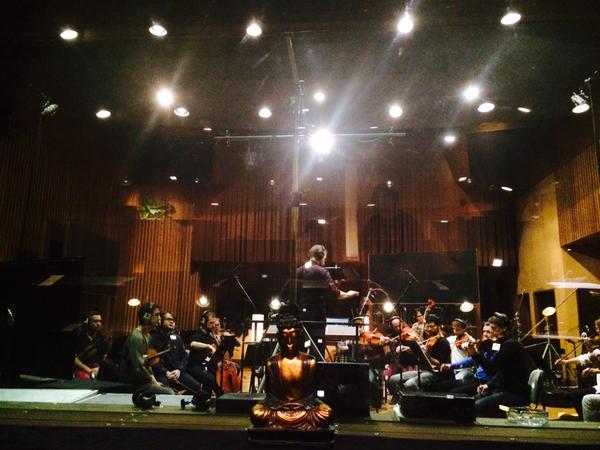
Being an artist is just like being an iceberg. If that doesn’t make sense to you, it likely means that you have never pursued a career in the Arts. The public witnesses about 5-10 percent of the work that you have done to get to the point in which they are actually aware of you. Anyone who thinks an artist is a slacker trying to avoid “honest work” is completely unaware of the years, even decades, of training accumulated just to be able to perform to best of your abilities. Athletes are the closest to this template and their physical forms give evidence to their toil. You won’t necessarily see a six pack on a painter or a cinematographer. Artists often work together to create works that are designed to move a mass audience. When Director/Writer/Producer Tom Petch wanted a film score for his award-winning film The Patrol, he enlisted James McWilliam as a composer. The result was a highly original and unique score which sounds both mechanical and organic. With sounds that are at times indiscernible and sometimes beautifully organic, McWilliam’s compositions (along with composer Nick Crofts) were created with the intention of being very prominent in the film to give the audience the uncomfortable feeling of being in a war. The Patrol was nominated for the Radiance award at the British Independent Film Festival and won the Jury Prize at the Raindance Film Festival, attesting to the achievement of this goal.

Filmmaker Tom Petch is a veteran. With The Patrol, he wanted the audience to understand what he and other veterans had felt in their experiences as a soldier. The film follows a patrol of soldiers in Afghanistan in 2006 tasked with keeping territory out of the hands of the Taliban and providing support to the Afghan National Army.  Rather than focusing on the war itself the film delves into the internal psyche of the individual men, and as the soldiers become disillusioned with their roles in the war asresources become stretched the authority that was, until that point the only thing holding them together, begins to unravel. The original plan to use music from a number of different artists was scrapped in order to create a highly original audio landscape which would be created by McWilliam. Petch was clear from the first conversations that he required some unorthodox compositions. Rather than a score which causes the viewer to feel for the soldiers, Petch wanted music that placed the audience into a state of similar sensation as these combatants. McWilliam states, “From the outset it was clear that Tom Petch didn’t want a conventional score.  He wanted to avoid the usual ‘trappings’ that came with a war movie set in the middle east such as Arabic wind and vocal parts mixed with emotive strings and orchestra that have become so common place in film & TV.  He wanted a score that reflected the alien like landscape the soldiers found themselves in and, in a musical way, mimicked the sounds of warfare.  It was important to him that the score reflect the emotions felt by the soldiers such as fear, anger, and isolation.  To achieve this, I knew I had to approach the compositional process in an unusual manner and cast off any preconceptions of what a war film should sound like.  An important point that Tom mentioned was that he wanted the score to develop along with the film moving from ‘ugly’ mechanical sounds at the beginning of the film and slowly transitioning into more ‘human’ recognizable sounds with the introduction of melody as the film develops and we come to understand the soldiers and their lives.”  

   The instrumentation for the later part of the film was much easier for McWilliam to envision but the “ugly” sounds required a lot of experimentation. Communication from Petch to McWilliam brought the ideas into focus and create the proper unpleasant audioscape. As a composer, conductor, and orchestrator, McWilliam has worked on films Exorcist Diaries, Crimson Peak (by Guillermo Del Toro, $73MM Worldwide), and Harry Potter and the Goblet of Fire ($892MM Worldwide) and others in locations like Paris, London, and Macedonia. In creating the unusual music for The Patrol he leaned back on his early pop-musician aspirations with a modern twist. In his early days, James studied piano and drums. In his search for interesting yet uncomfortable ‘noises’ for The Patrol he used a bit of rock/experimental influence. The composer reveals, “A lot of our primary sounds came from a £30 guitar I bought which I then unceremoniously scraped, banged and smashed, mixed with lots of effects and then chopped up into useable bits of audio.  Along with sounds that Nick had created, we had our palette and we really felt that we’d made a sound world that couldn’t be for any film other than The Patrol.  Nick and I decided which scenes to work on and we talked about how the score was to develop as Tom had asked, starting with hard, mechanical, distorted sounds inducing unease and tension and then moving towards a softer more human sound with hints of melody entering into the score as we learn more about the individuals involved. Along with my composing partner, Nick Crofts, we created some pretty ugly sounds, alongside some very beautiful ones, and how we introduced these sounds into the film and layered them up to create intensity at key moments was important. For example, the beginning of the film begins with a wildly distorted guitar accompanied by pulsing low synths, this has the deliberate intention of dropping the viewer straight into the hell that is warfare in the Helmand Province.  Later on in the film shortly after one of the main characters dies (Taff) we get a glimmer of something you could call a melody, played on piano.  This point signifies a change in the film and the music. 

As anyone who has worked on a film can tell you, the Director is the person in charge who has the understanding of the tone of a film and will lead others to complement his/her vision. While some members of a production try to interpret a Director’s vision, others feel that their role as an artist is to present their ideas in an emotional way. Tom Petch clearly communicated his opinion of what the score to his film should be like; McWilliam took this advice but channeled in through personal sensibilities. James notes, “I think that as a film composer you are a filmmaker just like everyone else and it is your job to do offer a perspective on what you are seeing based on your knowledge and experiences.  It can be an incredibly difficult job under very stressful conditions and whether it’s composer; orchestrator or programmer you must be able to understand the needs of the director and help deliver a score that is right for the film. The composer is in quite a unique position as they’re often one of the first people outside of the closed circle of director, producer and editor, to see a full edit; this means they are one of the first to react to what they see on screen and this materializes in the form of music.  Given how long everyone else has had to form his or her opinions on the film, what the composer does next can be a crucial moment.  It can be a very difficult position to be in and this is where the real skill of being a film composer comes to the fore.  Will the composer see the film the same way as the director and or producer have been seeing it from the first day they began work on it?  Perhaps the composer has a different take on it that moves the film into an entirely new direction that no one else had thought of, this is the power that music can have on a film.”

The fact that Petch was not only Writer/Director/Producer of The Patrol but also a veteran required unmistakable aim from McWilliam’s score. James was immensely successful in his creation as Petch declares, “James’ score for The Patrol was outstanding. He developed the music for the film having really grasped the story, the film’s idea of isolation, and the brief I gave him for the movie. His score had an ethereal quality which lifted the imagery and definitely contributed to the film winning the UKs leading independent film festival, Raindance. James’ ability to work with a directors’ vision and turn it into his own work, while never baulking at the challenges, and understanding of the collaborative process is essential to successfully scoring a feature film. These qualities led to the great success of his score and thus our film.” The score in The Patrol leads the viewer on a disturbing trip which is used to translate the individual’s perspective and emotional state in a time of war. The film’s music stands by itself as a work of art that, when combined with the film, speaks to the humanity of those found in a circumstance which attempts to separate them from that same humanity. James McWilliam has succeeded as part of a production team in communicating the story of the dissipation of the team on-screen; helping us all to see that war is never pleasant for anyone.

jim-7

Sound designer Cindy Takehara discusses Suciedad Ltda.’s success and new Remnants film

Cindy Takehara is a Japanese sound designer who loves what she does. And she is good at what she does.

Takehara realized she could have a successful career in sound design working on the film Suciedad Ltda. The film develops in a retro-futuristic world ruled by the monotony of the industry, where there is only one purpose in life: to live to work. The characters have been immersed in the everyday dullness inside the factory, when they face an unexpected change caused by one of them breaking the work routine. Their fate changes dramatically, and leads them to re-discover something they had long forgotten, the best human qualities: rationality, art, and love.

Takehara’s job as the sound designer for the was to create every single sound from scratch, without using any sound effects library. She did Foley recording, music recording and music composition, and re-recording mixing in a 5.1 surround sound system.

“Both the director, Andres Tudela, and I agreed that in the film it was crucial for it to create its own sonic print, taking into account that we are creating a fictional world, and these sonic elements will bring the story to life,” said Takehara.

The film went to the Short Film Corner at Cannes Film Festival in 2012. It continued on to the Mostra Latino Americana de Animação A Caverna in Brazil of that same year, as well as the International Festival of the New Latin Cinema – Habana Film Festival in Cuba. The next year, it went to the Udigrudi World Animation Convention – Mostra MUMIA in Brazil, the Ibero-American Short Film Festival -FIBABC in Spain, and the Bogoshorts Film Festival in Bogota, Colombia.

“Cindy knows what she’s capable of, but always stays humble. She’s really good at listening and suggesting ideas without imposing it. She’s a real team player,” said Tudela. “She is a visionary sound designer who can bring any fantasy world come to life. She did a great job on creating the soundscape for Suciedad Ltda. Without her creativity and skills, we wouldn’t have been able to make the animation happen.”

Tudela and Takehara met while in college at the Pontificia Universidad Javeriana in Bogotá, Colombia. Tudela recognized her talent immediately and invited her to take part in the project.

“Andres was the writer, animator and director on this animation, and he had very clear what he wanted regarding sound, but also he was very open to our suggestions. With the collaboration of the talented musician, Daniel Casas, we were able to build this imaginary world of Suciedad Ltda.,” said Takehara.

Takehara says she liked working on the film because of the aesthetic of the animation, and its strong view criticizing and depicting the dehumanization during the industrial revolution and modern everyday life.

3-field-recording-with-dpa-5100-mobile-surround-micrphone-at-sequoia-national-park
Takehara shooting at Sequoia National Park

“This format of animation gave me a freedom to express artistically using sound and music. No narrator was included and very minimal dialogue in this animation. The story and emotion was told only via picture, sound effects and music,” she said.

During the production phase, Takehara visited many places looking for any sound that could be useful for the short film; collecting different sounds to make a unique sound library specifically recorded for this animation. To create an industrial environment sound, she did some field recording of few workshops located in Bogota city and was able to record a couple of cooling engines, drills and bandsaw, and then added some layers of metallic hits to recreate the sound of people working in a factory.

The music soundtrack was composed, arranged and performed by Takehara and another sound designer. They implemented extended techniques on instruments such as piano, glockenspiel, and cymbals. Later, those sounds were sampled and used in a music sequencer.

“For the editing process, we took advantage of digital audio processing to convert the recorded sound effects into a completely new sound. The mix was made looking to engage the audience to the story,” she described. “I learned as a young sound designer that the power of music and sound is an important factor of storytelling.”

This knowledge aided Takehara on her work on the more recent film Remnants, which tells the story of an elderly successful writer struggles to reveal his dark and troubled past while suffering from Alzheimer’s. The film premiered during Endless Mountains Film Festival in Pennsylvania last month.

Takehara jumped at the opportunity to work on the film alongside award-winning cinematographer and AFI alumni, Justin Hong.

“It was my first time working with this crew, and it had several challenging scenarios and locations. It was extremely cold, we shot in the Angeles National Forest during Winter,” she said. “But overall it was a great production with some talented young actors.”

The performances, which Takehara herself describes as outstanding, received recognition at the festival. They were nominated for best actor and supporting actor and actress.

“It is such great script written by Al Plancher, a true storyteller. He was a pleasure to work with. He had very clear his vision for this film, and never hesitated to ask me any inquiries regarding sound during the production. And being in the forest allowed such beautiful cinematography by Justin Hong, who I have worked with previously,” said Takehara. “The whole crew displayed extraordinary professionalism.”

This film is a narrative drama with a lot of dialogue involved between the characters. There were a lot of movements with the actors that Takehara had to manage by changing the microphone position in order to get less clothing noises.

“There was a chasing scene where it was hard to get the cleanest dialogue due to harsh running movement, so we recorded several wild lines, giving better options to choose for the editor during the post production process,” she explained. “We also recorded not only the dialogue, but also several ambiences of the location and other sound effects that was useful to record on set.”

The film’s tagline is “always remember your future” and it looks like with Takehara’s abilities, she has a bright one to look forward to.

Camera Specialist Michaela Angelique embraces her inner “geek”

Michaela Angelique is proud to be a geek. In fact, she has made a career out of it.

Angelique is a camera department specialist for film and television, and has always had a “nerdy” love for cameras that has paid off in her later life.

“Cameras are changing every year,” she said. “They always release new cameras each year, and I am not talking about still cameras, I am talking about motion pictures.”

Angelique, who is from Jakarta, Indonesia, has been having success in Hollywood behind the camera. She has worked with Snoop Dogg, Melissa McCarthy, Jake Gyllenhaal, Julianne Hough, Will Ferrell, Amy Poehler, John Hawkes, Michael Kelly, Dick Van Dyke, Ioan Gruffudd, Vanessa Hudgens, and Mariah Carey, to name a few.

She recently worked on the film Kiss Kiss Fingerbang starring Buck Henry (The Graduate), Kate Lyn Sheil (House of Cards) and the late Anton Yelchin (Star Trek). The film was written and directed by Gillian Wallace Horvat. The film is about a young, sweet doctor discovers his dark side when he discovers his girlfriend’s hidden passion, which the title alludes to.  The film premiered at Beyond Fest at the Egyptian Theater last October, and has since been in many other film festivals and competitions.

“Working on Kiss Kiss Fingerbang was a lot of fun. There are not many movies that describe this kind of story. I found it very genuine and odd and sweet, funny, and quirky.” said Angelique. “What I really can remember is working with Anton. He was such a great actor. He was a true professional to work with.”

Angelique also worked closely with Olivia Kuan, the directory of photography on the film.

“We had fun amazing time together. Olivia is always great to work with,” said Angelique.

The two have worked together in the past, and it was Kuan who recruited her to work on Kiss Kiss Fingerbang after being impressed with her talent in the past.

“Michaela is always my first call when I have a film coming up. She is always eager to work with me to make the movie as good as it can be. Her demeanor is poised and confident when she is on set. She collaborates well with the actors, producers, and all other departments. To the other people in her department, she is a firm but fair leader. She keeps all the gears moving as she manages her crew without losing her cool. All her ideas are intuitive to story and the visual telling of it. When she offers them, she does so respectfully,” said Kuan. “Her technical knowledge is invaluable to me and I can trust her fully with caring for the equipment. But most importantly, she is an excellent focus puller. She is easily the best in my roster. A movie with out of focus shots risks failure, but this is not a risk I feel I have to take if Michaela is on board. She is a perfectionist. If anything feels even minutely wrong with the timing or look of a shot, she will speak up to ensure we can get it right.”

Pulling focus is a term all not may be familiar with, but it is one of Angelique’s specialties and contributes to her many achievements.

“People don’t know sometimes that when the shot has two actors where one actor looks soft and another one looks sharp, it’s actually the job of the first camera assistant. They pull the focus to anything and anyone that needs to be sharp,” she described. “The camera does not move itself. That’s my job.”

And it’s no easy job. Angelique has to change lenses, filters, and carry around the camera, which is no small feat, as a camera weighs between forty and sixty pounds. I always try to get a prep day from production so I know that what cameras and gears that can fit into it together.

“I am in charge of changing all the settings and all the gears on the camera and accessories that fits into specific situation,” she said.

Angelique enjoys every aspect of her job, which is everybody’s goal.

“I love my job,” she concluded. “It is always different, each set is different, and working with either the same people or new people is always awesome and interesting.”


CHERNYSH SHOWS HIS DARKER SIDE IN MULE

caleb-chernysh1

In 1984, a film buff who was working at a video store in Manhattan Beach, California wrote a script with a friend. Three years later, that same video store employee would turn that script into a film. The budget was a miniscule $5,000 but that film (My Best Friend’s Birthday) and the screenplay would become the basis for the film True Romance. Quentin Tarantino and his story have inspired legions of filmmakers and their work; filmmakers like Angus Bell Young. This Director/Writer/Producer and his award-winning film Mule are exactly the kind of gritty black drama/comedy that Tarantino is so fond of in his productions. There is something sad and funny about the foibles of humanity and their shortcomings. You can choose to cry or laugh and these filmmakers want to laugh. These filmmakers need a particular type of actor for their productions; someone whom audiences can both admire and hate. Very often they embody the anti-hero. Quentin’s films have given actors like Harvey Keitel, Steve Buscemi, and Michael Madsen the opportunity to play previously unexplored areas of their abilities and given light to the depth of their range. In Young’s Mule, he provided the same opportunity to Australian actor Caleb Chernysh. Mule won the Certificate of Excellence at the Dada Saheb Phalke Film Festival. It’s highly unusual for a foreign film to be recognized with the Certificate of Excellence at this festival; it’s an achievement which is a testament to Chernysh and the entire production.

Caleb plays Martin in Mule. Martin is not the kind of man who is destined for success or even making the most of his opportunities. In fact, he’s not even the kind of guy that Caleb would want to hang around with or befriend in real life even though the actor feels sorry for him. Martin is a “Fryboy” at a local takeaway, not that there is anything wrong with that…it’s an honest living. What is not so honest or endearing is the fact that Martin only does this job as a way of allowing him to eek by some type of earnings and focus on his heroin addiction. Sadly, this situation is the way in which many addicts struggle for as long as they can hold their lives together with some sense of normalcy. To inspire him for the role, Chernysh turned to the performance of one of today’s most celebrated actors and an early role of his. Caleb confirms, “I watched Leonardo DiCaprio in the Basketball Diaries. It’s one of my favorite movies from Leo. I emulated his character’s drug addiction traits, and used it in my performance. His character in the movie has so much potential and yet he is throwing it all away. It’s the kind of story and performance that makes you upset because you can see how everything is controlling him.” This 1995 movie, based on the book of the same title from the 1960’s and published in the 1970’s displays how this story is timeless…being found just as relevant in the mid 2010’s.

Chernysh (known for his film roles in Fractured, The Gap, Life Lesson, and TV shows like Quite Frankly) is proud of Mule’s recognition and his part in it. Caleb’s performance as Martin is frustrating, depressing, angering, and comical. That’s quite a range for one film and one actor. Martin is a lonely man, working as a burger chef. Because of his heroin addiction, he has a debt to his dealer “Frenchy.” Typically, Martin dodges Frenchy because he owes her money but after shooting up, he loses his inhibitions and finds her at her trading location…which is when things start to go wrong. Caleb describes Martin stating, “He’s a loner who has basically lost hope for life and only lives for heroin. I don’t do drugs or associate with people who do, so I couldn’t really use that knowledge to help me understand Martin. One thing everyone has experienced is pain. Heroin is really just a way to avoid that pain, whether it be a bad experience, a sense of loss, or even physical pain. It’s an overwhelming loss of hope that things will improve. Channeling that feeling helps you to feel what motivates a drug addict.”

The experience of making Mule was unusual for Chernysh in just about every way, including the casting audition. He recalls, “Angus posted an audition notice on Starnow. I applied for the role of Martin and he sent me a script. We had an initial meeting in a coffee shop, which, at first, I found unusual as I’m used to an audition room. After talking to each other about the script, I was given the part on the spot. Angus is an amazing guy to work for and I can’t wait to work with him again. He is very edgy and also very funny. When I read the script the first time, I was certain that the writer was influenced by Quentin Tarantino. We all know with Quentin’s movies ..its mainly crime/comedy. I saw the dark humor that Angus was trying to portray, and that’s why I was cast…because I understood the script. I think that is one of the things that people don’t always consider. Filmmakers want a great performance but they really need someone who understands the way in which they are trying to communicate the story. That perspective or reference point is so important.” Mule’s director/writer/editor Angus Bell Young agrees with Caleb commenting, “Caleb’s resume came to me whilst I was casting for Mule and I noticed he studied at the Actor’s Centre, which is the same school that Hugh Jackman attended. That impressed me, along with his credits, and I decided to meet him. I met him at a café and had a chat about the character and gave him the part straight away. I wanted the character Martin to also be a comic relief in this project, which meant I needed an actor who understood the character and their place in the story arc. During the shoot he went above and beyond. I added some scenes on the spot and some new directions throughout the shoot, and Caleb had no trouble keeping up and delivering the exact type of performance I needed.”

Technology and the public’s support of Indie films has made productions like this award-winning film possible with smaller production teams. The art of storytelling and the means by which high quality presentation meets intriguing and compelling storylines has become much more commonplace than ever before, resulting in great films and entertainment for the viewing public. Caleb Chernysh agrees, noting, “You get to know each crew member during breaks when it’s a small production. Sometimes in larger production, you don’t get to have the same personal relationships as you do with the smaller ones. With independent productions, you are part of a family and the film is everyone’s baby.”

Exclusive Q&A With “Love By Chance” Talent Vishal Arora

“Love By Chance” star Vishal Arora has been appearing in stage plays, music videos and television series’ for several years. Much of Arora’s work has appeared on India’s well-known channel Bindass, a famous youth channel known for programs targeting the country’s younger generation.

Recently, Arora played the character of a Customer Care Executive on one of Bindass’s hit television series titled “Love By Chance.” Just this week, I had the chance to sit down with Arora and discuss the details of his character’s storyline within the episode, all outlined in our exciting interview below.

kl1_1633

Currently, you’re living in Los Angeles, California. Where were you born and raised?
VA: I was born and raised in Ambala Cantt, Haryana north part of India. After completing my bachelor’s degree in computers, I moved to Mumbai where I started my acting career. I did theatre in the beginning and began getting work in TV Serials a year after. Since then, for the past four years, I have been working TV, music videos and commercial jobs.

For how many years have you been acting? Where did you initially get your start?
VA: It’s been 5 years now since I started initially. I began with theatre roles and from there began booking commercial projects.

Who and what inspired your acting career early on?
VA: My love of acting stems from my childhood; I love to live different lives, which is possible through this art form. In my school days I performed on stage. Whenever I perform on stage, it gives me a type of freedom we mostly don’t get in real life because of society rules and regulation in addition to rituals in my country. When I act, I’m living my dream. When I was younger, the stage was a great platform to begin with. From there, once you get started professionally, getting work helps you make a name for yourself and your family, which is exciting when you have the whole world watching your work.

“Love By Chance” is an episodic show that airs on Bindass TV where you played the character of a Customer Care Executive. What more can you tell me about the show’s plot? More so, what can you tell me about your character?
VA: It’s a fun filled story about a character named Joshi meeting a character named Ishita one day at work. My character and Joshi work for a glue manufacturing company. He is a door-to-door salesman for this brand glue and I work in the customer care back office called Lo Chipak Gaya where we work together. It is his 31st day at work and he has failed to meet the monthly sales target. He is under great pressure to perform. That’s when he steps out for some hard selling and meets Ishita. As soon as Ishita buys the glue – Joshi asks for a high five. Accidentally, some glue had gotten on to their hands as the glue bottles were faulty and then he calls me for a solution because I am his close friend and always he relies on me to solve his problems. Their hands get glued together and Ishita has a whole day of tasks planned ahead. From being an irritating sales man stuck with her to solving her problems throughout the day, Joshi eventually gets fired, but my character still motivates him while he’s leaving. In the end, Joshi charms his way to Ishita’s heart and they both decide to give a relationship a chance.

How did you initially become connected to the show? Did you have to audition for the role?
VA: I initially got connected through a casting director whom I had auditioned for with some other role. He sent me to this particular role, which was dependent on the character requirements.

What was the audition process like?
VA: Since I auditioned for something else that was also an episodic show, the process was fairly unique. I was given a script to perform and it took 1 hour for the whole process to conclude. Then, after few days, I got a call for “Love By Chance.” I was a bit surprised because I wasn’t expecting it at all.

Who are some of the other actors you collaborated with on “Love By Chance?” What was it like working with them?
VA: Joshi who is played by Rahul Sharma, and Ishita who is played by Huzan Mevawalla. It was fun working with them we had a good time on set. We got to know one another while working together. It was a great experience and we had many fun moments while shooting.

Can you tell me about a favorite memory or experience from the time you spent working on “Love By Chance?”
VA: It was when I was shooting for my particular scene where I had to act over the top like grandma’s do in Indian daily soaps. It was fun for everyone watching me doing that and was good experience for me to be able to play around and act so dramatically.

How would you say that “Love By Chance” allowed you to showcase your talents as an actor?
VA: It is always a good way to explore your skills and showcase your talents whenever I played characters like this the one I played on “Love By Chance.” My character was dramatic and over the top, which is totally different from how I am in my personal life. It gave me a means of showcasing my skills by being totally different from who I am in real life.

What’s next for you in the world of entertainment? What are your future career goals and aspirations?
VA: I am looking forward to working in film and TV in Hollywood because it’s a platform where I can really showcase my skills and also explore the things I’ve always wished to do with my acting. This type of art is unimaginable and everyday I explore something new personally. It’s a process, which can never end; it just gets better by working more everyday. My goals are to just do good work and entertain people with my skills and when I make someone laugh, that gives inspiration that I am doing something unique in life. It makes me feel like I am living for myself.


For more information on Vishal Arora, please visit: vishal-arora.branded.me

XIAO SUN IS RISING ON A VARIETY OF FILMS

img_9834

Americans are somewhat spoiled by the fact that Hollywood is the default epicenter of the global movie industry. The UK, China, India, and other places around the world have thriving movie studios producing fine films but Hollywood has the infrastructure which has been in place for more than a century. This gives the city an ample head start. Many actors set their sights on Hollywood as it gives a global platform to the talented members of the film community. Although Hollywood doesn’t create the artistic light, it can project it to all reaches of the planet. The most successful actors possess talent, charisma, and global appeal. This is exactly how one can describe actress Xiao Sun. This Chinese born and raised, moved to Canada, trilingual, dancer, model, and actress is complex and captivating on camera. Although Americans may not recognize Sun as quickly as Canadians, there is something very familiar about her. She worked on X-Men Days of Future Past (grossing 723MM worldwide, 2015 Oscar nominee and multiple award-winning), and TV shows like Being Human (multiple nominations and a win for ASCAP’s Top Television Series) but her roles in both English and French speaking films in her Canadian homeland have made her a household name in the North.

img_9844

In her first ever audition for film or tv, Xiao was cast in the supporting role of Boon-Mae in the comedy film Fatal. Beyond the pressure of being in a feature film, Sun was required to act the part speaking her third language of French (Fatal is an entirely French spoken film). Also playing against Xiao’s nature is Boon Mae’s superficial and jealous character. Being cast so soon after moving from China to Montreal created a whirlwind for Sun, who soon found her comfort at ease on set. She recalls, “I had just moved to Montreal from China with my parents. My French was not very good yet so it was very challenging. My co-actors, Michaël Youn and Tony Tarba were very nice and helpful to me. They’re both big stars in France. They always gave 100% on set; rehearsing scenes with me, giving me tips on acting and my character development. It made me feel very comfortable and relaxed. Sometimes they’d throw me a slang word and I had no idea what it meant or I thought it was something else, but my expression and sincerity would make them laugh. We did have tons of fun in spite of the long shoots every day.” Fatal was distributed by Universal Pictures International & Remstar Films and was a box office success which endears Xiao to fans with the cult following that has led to its ubiquity in France.

A stark contrast thematically, as well as her role she played, was the movie Anna. This critically acclaimed movie about human trafficking was an official selection at Busan International Film Festival in South Korea in 2015 (the location of the world premiere), an official selection at Singapore International film festival, and nominated for a Canadian Screen Award. The film’s Director was so taken with her performance as a tough mafia guard that the character’s name was changed to Xiao. The award-winning Charles-Olivier Michaud directed Sun in Anna and declares, “Anna is a film about a photojournalist who travels to Bangkok to pursue investigations for a news story on human trafficking being carried out by the Triads, and is kidnapped by Asian gangsters and subjected to the same abuse she has investigated. Xiao played the leading role of “Xiao,” a fierce member of a mafia group in Montreal that Anna has to go through in order to get to the person with the criminal evidence of the mafia leaders that abused her in Bangkok. Xiao performed this role with amazing character commitment and zeal, and truly brought the character to life in the fierce way that it needed. She applied such great energy and emotion into her dialogue and expressions that kept the film momentous and suspenseful. Xiao embodied the character amazingly with every scene on camera, adding intensity to this tragic story. She was truly leading to the production. Xiao was such an excellent actor in my film that I cast her in another leading role in my new upcoming television series Premonitions.” Xiao’s portrayal as her namesake was moving to the film’s director and audience alike but it was the subject matter which moved this actress as she reveals, “Human trafficking actually exists in every country, not just less developed countries or areas. It happens not just to women, but also men and children. The awful way that these victims have been treated is something that I could have never imagined and no one should have to experience.”

Summer of 2016 saw Xiao returning to French film in Les 3 P’tits Cochons 2, leading at the box office for local Canadian films. The film is the sequel to the successful film from nine years ago. In Les 3 P’tits Cochons, Sun plays opposite French film star Paul Doucet (Remi) as his love interest Mikou. Mikou is stunning, sexy, and wealthy. It was an opportunity to play a strong woman who is every bit a match for her male counterpart. Sun confirms that she enjoyed the chance to work with the much respected and award-winning Doucet. Although the experience was fun, that doesn’t mean it was necessarily easy. Xiao recalls one unexpected scenario,” You can’t plan for emergency situations. During filming of one of the airport scenes, there was an emergency landing. We had to finish an important scene in 30 minutes; one which was scheduled to last a few hours. Everyone on set rallied and my co-actor Paul Doucet and I were focused to get what the director wanted in the first take of each angle. We managed to finish the scene before the emergency landing of the plane. That is not something that you prepare for in an acting class.” The film’s award-winning director Jean-Francois Pouliot reinforces the idea that Sun’s presence in the film had great impact by noting, “It was only after the premier of Les 3 P’tits Chochons 2, that I realized what a lasting impression the opening scene left on the audience and that is mainly because of Xiao.  She has an incredible screen presence that set the tone for the rest of the movie and helped to elevate it to another level.”

img_9833

Xiao is tight lipped about her upcoming film role which has her acting opposite two Oscar winners but she is happy to discuss the film Tidal Waves in which she plays Riley. Tidal Waves is the story of a young dancer’s struggle with scoliosis. Her history as a dancer makes this a very personal film which she is quite proud of doing. With a wide variety of roles, Xiao Sun is exactly the type of positive yet driven actress that audiences will be seeing more and more of as she appears in more and more international films.