All posts by pressva

Ilya Tselyutin masters multi-tasking for television spot in Russia

Ilya Tselyutin has had an outstanding career as a senior motion graphics designer. He has learned from many talented professionals from all over the world including Konstantin Ernst, CEO of the Channel One Russia and the director of the 2014 Winter Olympics opening. He has worked with famous personalities from different industries, such as Formula One Champion and Tibor Pleiss, an NBA player. He has represented brands such as Lufthansa, BMW, Mercedes-Benz, Porsche, Audi and many more.

The 20th Anniversary of Internet in Russia was celebrated during 6 months with the major concert on April 7th, 2014 at Arena Moscow featuring an array of famous musical groups and musicians. The show started with a video streaming of the Russian Prime Minister giving a speech on the anniversary, followed by the concert alternated with the short reels with the TV pack identity we designed. The event was attended by a total of 2,500 people including major Internet business entrepreneurs and state officials.

Part of this included a promotional TV show spot dedicated to the 20th Anniversary of Internet in Russia. As a Leader Designer on this project, Tselyutin developed the concept, the opening title sequence, bumpers, lower third and a 30 second promotion using design elements typical to the past decades.

“It was really interesting to work on the project for your home country in collaboration with designers from Germany and Argentina,” said Tselyutin, being from Russia himself. “This kind of mixture helped us to create something completely unique for the Russian TV market. It’s a minimalistic, bold and yet clean brand identity.”

Stephanie Helou, currently the Design Manager at Unilever Germany Productions, and former Brand Consultant & Managing Designer at Vision Unltd, worked alongside Tselyutin for the project with the company Creative Worx GmbH. She describes him as Creative Worx GmbH’s most experienced designer and was trusted with directing projects that required both creative and advanced technical skills.

“As a Brand Consultant I worked closely with Ilya on many projects including the TV show pack for the 20th Anniversary of Internet in Russia. Having made an extensive research Ilya took an unusual approach to design and created a minimalistic and clean concept that was rather different from other TV packs we produced,” said Helou. “A remarkable combination of bold vibrant colors and animated geometrical figures made this spot stand out among all other TV commercials on Russian television. Ilya showed his strong leadership skills by guiding this project from its inception to completion as a conceptor, designer and animator. This was a truly enjoyable project and Ilya once again proved to be a highly skilled professional with a non-standard thinking.”

Together, Helou and Tselyutin were invited to give a speech about their work for the TV show pack for the 20th Anniversary of Internet in Russia at a Behance Dribble NRW Community event in Dusseldorf, Germany, where they presented design, concept and a making-of.

“Stephanie is an incredible source of ideas. From the very beginning she suggested doing something creative and new for the Russian TV market and set us up on the right course of actions. Also, as a brand consultant she supervised the process of following the brand guidelines to make sure all of the products including printed and digital were consistent,” said Tselyutin.

The project did present some challenges. Working in a refined schedule is always a challenge in the industry, but Tselyutin had to also work with another country remotely. This presented languages barriers, time differences, and communication difficulties, and gave him the additional role of translator. Despite this, he says the design industry is constantly evolving and it is important to maintain certain level of workmanship and live up to clients’ expectations. To continue improving despite his successes, Tselyutin frequently agrees to work on projects that he knows require some set of techniques he does not have a complete mastery of.

“I learned how to handle an international team on a project where I acted in both administrative and creative roles. I needed to take care of communication in one country and control the design process in another,” Tselyutin described. “I guess I mastered my multitasking skills.”

In the future, Tselyutin aims to keep evolving as a creative director and take on a managerial role in the creative process, especially on projects similar to this.

“I liked the idea itself – present the history of the Internet in Russia. Loved working with bright bold colors and mix them with clean and minimalistic geometric objects,” he concluded. “Overall, this was a very pleasant design project.”

Larissa Giampaoli takes advantage of changing music industry

It takes a lot of people to create a great album. When you are driving in the car with the windows down, listening to a favorite song, it isn’t just the voice of the lead singer, the sticks of the drummer, or the guitar solo that gets your head moving. Larissa Giampaoli knows this better than most, as she has been involved in the music industry since the age of 16, and now has a successful career as a creative producer for many of her favorite rock bands.

Growing up in the culturally rich city of São Paulo, Brazil, Giampaoli moved to Los Angeles and graduated in Music Business from the University of California. She was then hired as a day-to-day manager at one of the most prestigious boutique management firms in the metal music industry, and has since then been working to improve the careers of household Grammy award winners while applying her most creative ideas and business skills into helping to develop the new idols of tomorrow.

“Being able to work with my passion is priceless. Music has got me where I am today, and it is the reason why I am away from home. It’s an absolute privilege to be working with so many talented individuals,” she said.

Giampaoli has not only adapted, but she has also taken advantage of the changing industry. Technology has been changing the music business. It is no longer what we all used to know.

“From 1999 to 2016, album sales would drop every year. Although Napster had a short life, it revolutionized the way we share and listen to songs forever. Now we have many different ways to consume music, from YouTube to subscription services like Apple Music and Spotify,” said Giampaoli.

This revolution in the industry is why the role of creative producer has become so pivotal for the success of artists and bands. Social media allows fans to connect to their favorite musicians like never before. Getting a tweet back from an artist makes someone’s entire year. Giampaoli manages new media, day-to-day operations for the band, and runs tours.

“I am able to combine the artists vision with management goals in a global perspective,” she said.

Giampaoli’s ambition has always been her greatest asset. While growing up in Brazil, she put herself ahead of the crowd by learning to be completely fluent in the English language. This allowed her to network with bands touring in Brazil, by having an English speaking guide to help them navigate. At 18, she realized the potential this had, and opened her first business, an online store that brought to Brazil the latest American fashion trends. Even at a young age, she knew the importance of the internet.

“I have a love for music and business,” she said. “My goal is to keep working with bands I believe in, and help push their careers to the next level.”

Giampaoli has already begun not only achieving, but far surpassing this goal. She has worked with bands such as Slayer, Mastodon, Gojira, Ghost, Bjork, Oasis, Arctic Monkeys, The Killers, Fall Out Boy, The Used, Story of the Year, Funeral For a Friend, and many others. She also worked with the band We Came as Romans with the band’s former manager Adam Mott.

“Larissa is a forward thinking person, that helped me tremendously with the band’s social media content, marketing for their records and overall big picture thinking. She was always prompt with her answers and a true asset to everything I do with the Rick Sales Entertainment Group,” said Mott. “Larissa is a great asset to our team and she always shares her opinion on every issue and it helps me think outside of the box on trying to grow our bands to the next level. I think she is a valuable asset for our company and any organization to help grow/market their artist.”

“The We Came as Romans self-titled album has sold fifty thousand copies as of July 2016, a massive testament to the incredible efforts Larissa has made in reaching our fans, and was praised by numerous high profile music publications including Alternative Press, Rolling Stone Magazine, and Outburn Magazine, to name a few. I am sure that we would not have celebrated the same overwhelming response following the release of the album had Larissa not helmed these crucial responsibilities as the leading creative producer,” Mott continued.

Despite already achieving international success, Giampaoli keeps looking ahead.

“Personally, I am very excited about the years to come,” she concluded. “I grew up in this new world, and I foresee a bright future.”

STEPPING AWAY FROM THE ROCK WORLD TO STEP INTO THE FILM WORLD: KIERAN KIELY

There are people in the world who are destined to succeed. No matter what circumstances they are involved with, their inherent ability surfaces. For those who are fond of the adage, “lightning never strikes twice” they mistakenly forget about the lightning rod. Kieran Kiely is a musical lightning rod. While many musicians struggle for their entire lives to get “one shot” (to quote Eminem), Kieran has credits which include multiple globally popular artists. While spending his youth touring the world and recording with these artists, he now makes his home in Los Angeles; it’s a long way from the other side of the Atlantic where Kiely grew up and started his journey in music. Now he is a long way from the huge concert stage as he finds himself on a different musical journey. Although he has had experience for many years as a composer, Kieran is now focused on creating music in the seminal location of film…Hollywood. Kiely is proving that he is a source of authentic and imaginative music, regardless of the presentation or format of said music.

The first phase of Kieran’s musical life reads like a movie itself. Until recently, he spent his entire life recording and touring with the artist that are household names. Dave Stewart (of the Eurythmics), Stevie Nicks, Sinead O’Connor, Shane McGowan, The Corrs, and many others have enlisted Kiely to be a part of creating the music that their fans adore. While Kieran is respected among the elite of the rock world as a consummate musician, it is often his mastery and authenticity of the traditional Irish sound for which he is known. It is this same characteristic that led filmmaker Tommy Reid to hire Kiely to compose the music for his film Danny Greene: The Rise and Fall of the Irishman. This film is a documentary about Irish mobster Danny Greene, famed in the late 60’s as a key member of the mob war which led to the dissolution of the Cleveland, Ohio mafia. The film includes interviews with Greene’s family as well as government officials and Cleveland Police Enforcement. Reid wanted to go to primary sources to communicate the story directly from those involved and he wanted the music to be just as authentic. Reid declares, “A good film score not only compliments a story but also helps it rise to greater dramatic heights, and Kieran’s expertise as a composer did exactly that. You’d be hard pressed to find an Irish musician/composer who has experienced as much success as Kieran. He occupies a space among the top percentage of his peers.” Kieran admits, “Tommy didn’t want a Hollywood version of Irish music but he wasn’t looking for traditional scoring either. It was very collaborative. Tommy had a long standing relationship with Composer Greg Morgenstein on his Films and Greg collaborated with me along with Adrien Van Vessel. Tommy provided a locked picture, so we could get to work. Very early on it became immediately obvious from Tommy’s feedback, that what I was doing was going to work. We had a spotting session to decide where the music was needed but the only other real direction I was given was to make the music authentic.”

Kiely approached the film in a very nontraditional way as a composer. With a locked picture available, he was able to watch the entire film to gain a sense of the emotional qualities that his composition would aid. Although he was unfamiliar with the Danny Greene story, Reid’s film gave Kiely all of the information and inspiration he needed. He recalls, “Having watched the Film, I immediately felt like the music needed to be tough. I chose a dark tone on the Accordion for the main source of pad type chords, with a driving detuned Bodhran (Irish Frame Drum) for a pulsing rhythm and Ethnic Irish Flutes for melodic elements. These three instruments made up the main palate of the score. Once I had laid down these initial ideas, I would add more instruments where needed. When I wanted it really big, I would Orchestrate it. Referring back to Tommy’s note about the music being authentic, and having used some fake Orchestral samples on some of the cues…I decided it needed to be performed by real players, so I Orchestrated the parts and we recorded them with live musicians.” The music which Kiely composed and orchestrated for Danny Greene: The Rise and Fall of the Irishman emphasizes the intensity and emotion of this tale, yet it also stands as a work of art in itself; a flavor of the Irish sentiment that Greene and all those who hold a place in their hearts for the culture of Ireland. As the music inspires audiences, it also inspires other artist…in this case leading them to seek out Kiely.

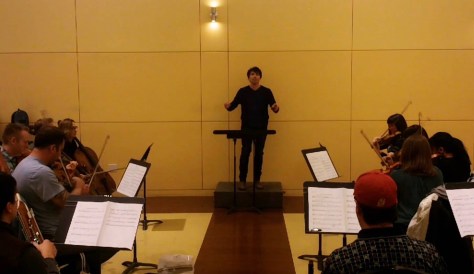
conducting

More recently, Kieran has been working with award-winning composer Tyler Bates, in the role as orchestrator. Bates is known for his work on films such as: 300, Guardians of the Galaxy, Watchmen, and Sucker Punch, to name just a few. Kieran is working on upcoming films Guardians of the Galaxy 2 and Deadpool 2. As a recording and touring musician who has experienced the thrill of performing for massive audiences, Kiely is embracing the thrill of this new avenue for his talents. He notes, “I do enjoy Orchestrating. I have always loved the sound of an Orchestra and getting to do this sort of work is a pure joy. It’s a pretty steep learning curve. You have to be an expert in music notation and really understand the inner workings of an Orchestra, but’s it’s really rewarding when you attend a session and hear your orchestrations being played. I am Orchestrating on NBC’s Timeless TV Show. We work with Emmy nominated Composer Robert Duncan to Orchestrate his music weekly for the show. It’s a pretty fast turnaround, we have about two days to Orchestrate each episode with about 30 minutes of music per show.” In the case of Kieran Kiely it seems to be nature and nurture rather than one or the other. This consummate musician has conquered the world of rock as a sought after sideman and performer; now he has thrown himself into embracing the composition, orchestration, and conducting of large ensembles to create the moods that effect millions (if not billions) of film and television audiences. The one constant throughout his career is his pursuit of his love affair with music, regardless of the way he presents it.

Jinming Zhao Stands Up as extraordinary producer

When Jinming Zhao began making the film Stand Up, she knew she would be making a film that inspired audiences. What she didn’t know was that making the film would inspire herself and her confidence in her abilities as a producer as well.

Stand Up is the story of a quiet teenage girl who has trouble processing her emotions at her beloved grandfather’s funeral, until her evil father comes for the heritage. The idea for the film came from Zhao, who was convinced to make it perfect.

“It was really good experience,” she said. “It’s nice to get the chance to collaborate with so many talented people.”

The film has been making waves across film festivals. It won Best Film of the Month at the Director Short Online Film Festival. It is an official selection in the Short Stop International Film Festival, Access Code Short Film Festival, and Love International Film Festival, and was nominated for Best Film of the Inspired Faith Film Festival where it won the Excellence Award. In the Top Shorts Film Festival, it received Audience Awards, and it won the Award of Recognition at the Hollywood International Moving Picture Film Festival.

“It’s amazing,” said Zhao when describing what it was like to when the first Audience Award. “When I got a trophy for the first time, I sent my mom a picture, and she said she was proud of me. That’s a moment I’ll never forget.”

The awards were well deserved. Zhao had to work harder than most to achieve what she did, and overcame the challenge of being stereotyped against while producing the film.

“I found a perfect house with reasonable price but when I talked with the owner for the first time, she didn’t want to talk about it at all, and she thought I didn’t look like a producer at all, because I’m an Asian small girl. She didn’t treat me seriously. I was hurt by that experience, but I didn’t give up because I wanted the house,” she said.

Zhao was relentless, and went back to the house a second time, with more confidence and a prepared statement. The visit secured the location with no issues.

“I told myself that I’m an independent, talented, smart, and strong woman, and there’s nothing I need to be afraid of,” she said.

This sentiment resonates with whoever she works with, as Zhao is recognized as a truly talented producer amongst collegues. Guannan Li, who worked with Zhao on Stand Up, attributes the quality of the film to Zhao.

“I am certain that without Jinming’s irreplaceable talents as a producer, the film would not have maintained such a high quality. She is a creative and talented producer, and we were entirely fortunate to have included her on the film,” said Li.

The two had prior success while working on the horror film Emily back in 2014. The film won Best Horror at the Los Angeles Independent Film Festival, Best Horror Short Film at the Hollywood Horror Festival, and Best Short Film at Mad Town Horror 2015. It was an official selection at the London Digital Film Festival 2015, the Fill Bloom Film Festival 2015, the Hollywood Horror Fest of Shorts 2015, the BigHouse Invitational Year One 2015, the Fort Lauderdale International Film Festival 2015, the International New York Film Festival 2015, the Horror Short Video Contest 2015, the Los Angeles Short Film Festival 2016, and finally the HollyShorts Film Festival 2016.

Zhao also worked with director Jun Xia on Emily, who approached her about working on the film.

“She is a creative powerhouse that we were very fortunate to include on our film, and I wholly attribute much of our success to her leading contributions,” said Xia.

Zhao had never worked on a horror film prior to Emily, and when she first read the script she was hesitant to accept the role of producer. However, the opportunity to work with Xia changed her mind.

“We worked on the script together and came up with a great story,” she said.

The success that Emily received prepared Zhao for a future full of success, but working on Stand Up gave her something even more valuable for her producing career.

“I learned that if I want other people to respect me, I have to respect myself first. I understand that to be as a foreigner would face more problems than local people do, but I have confidence and capability to overcome them,” she concluded.

PRODUCER BRIAN MANCINI BRINGS LOVE AND LAUGHTER TO A TENSE TOPIC

One of the most positive aspects about the Arts and specifically film, is that it allows us to step into the experiences and thoughts of others. Film often makes the impossible transition from sympathy to empathy, in a very safe way. Rita Mahtoubian Is Not A Terrorist is a film which approaches a very prevalent and modern situation. The filmmakers have chosen a very unusual approach in the presentation of their idea; a romantic comedy. It’s not the usual approach for this subject matter and Brain Mancini is not the typical producer. With films like; A Meditation, Dryland, Star-O, and others to his Producer credits, Mancini has enabled many diverse films to be created for the public’s viewing. With Rita Mahtoubian Is Not A Terrorist, Brian was attracted to a number of aspect of this film. His litmus test is always, “Would I want to see this movie?” and it was a resounding “YES!” for him.  Ultimately, Mancini states that what confirms his decision to work on a project is if he believes in the story being told. Rita Mahtoubian Is Not A Terrorist is a film which challenges the idea of stereotyping others in our modern age and tells us as much about ourselves as it does about those whom we might be unfamiliar with, as well as engaging us to question the reasons behind our thoughts. That probably sounds like a lofty status for a Rom-Com if you haven’t seen the film. The use of this genre to tackle the idea at its core, as well as some very interesting approaches to filming, removes a great deal of negativity out of the film, allowing the audience to focus on their own individual perception rather than a mob mentality.

Rita Mahtoubian Is Not A Terrorist garnered a nomination at both the 2015 Tribeca Film Festival and the Casting Society of America, USA. Being recognized by perhaps the most famous New York film festival as well as the professional community which seeks diversity in casting is the kind of outstanding achievement that lets Mancini know that he is striking a resonant chord with this film. His fellow producer Roja Gashtili (known for her work on Morgan Spurlock’s A DAY IN THE LIFE, MTV’s EXILED ,SATURDAY NIGHT LIVE: IN THE 90s) refers to Brian as “a magician!” Assembling the components (crew, cast, logistics, finances) needed to make a film which deals with people fears, prejudices, and matters of the heart, would certainly take some sort of magic to manifest. Rita Mahtoubian Is Not A Terrorist is really the story of someone who is being treated as an outsider even though they’ve spent their entire life in the US. When Iranian-born Rita sets out to change her life from ordinary to extraordinary, she accidentally captures the attention of Homeland Security. The film is a satirical comedy about romance and trying to be a better person. For example, when Rita attempts to make some friends by hosting a dinner party, it just so happens that she’s also acquiring the same household materials that could be used to make explosives. With her Iranian background, she gets flagged as a possible threat to public safety. Mancini states, “In the film we do critique the close-minded attitude that anyone of Middle Eastern decent must be a terrorist but the film’s intent is to show how that’s not the case. Rita Mahtoubian moved to America as a child and grew up American. It’s a subject that can be relatable not only for Americans but for all immigrants in any country. It’s all about not believing in stereotypes and actually seeing who people really are. The film is really romantic comedy about an FBI agent falling for the person he’s investigating. Most people found it to be heartwarming with a good message of how absurd it could be to judge someone solely on their family’s background and ethnicity.”

Brian and his production team came up with one very interesting approach which solved two hurdles for their film. He explains, “We shot “Rita” in Los Angeles as most of the script was written with specifically LA in mind. Early in development we had discussed the idea of shooting abroad as we had several scenes located in the Middle East. The creative way around this was when we decided to build miniatures and shoot all of those scenes in that style. Our main goal was to not sacrifice the story for any amount of money. We would often ask each other ‘How can we creatively get this same feeling that’s written in the script?’ Being able to shoot on a stage and creating the miniature sets gave us the capability of shooting a desert scene in the morning and then moving to steel mill only a few hours later.” Creative producing resulted in time and money saved, which could be channeled into other aspects of the film.

This production which has such an unusual approach to a timely situation, has been enormously accepted and appreciated by audiences. Brian feels that this validates his motivation to be involved in the core message of Rita Mahtoubian Is Not A Terrorist. His role as producer necessitates his involvement from pre to post production, which means Mancini puts a lot of time, effort, and heart into the films he helps to create. He comments, “The grand consensus is that the film is well liked by the mass audiences. I feel that because people can relate to the characters, it gets them invested. The humor successfully releases the tension when needed and helps audiences stay inside this world that we created. I hope that people see this movie and take a moment to think about our overall message. The feedback we’ve been getting from the film is that people understand and enjoy the message. Additionally, they enjoy the choices in our visual storytelling. The miniatures successfully capture audience’s imagination and the ending when the Agent walks through the explosion site into a heart shaped hole creates a warm and fuzzy feeling.” While Brian Mancini has no aspirations to the stardom and celebrity that drives many, he is always striving for the films he takes part in and believes in making. It’s about both the story and the art of telling the story for this producer. He confesses that there are so many possible ways to portray these tales…and he is eager to experience as many as possible in his career.


MIGUEL RIVAS: THE FUNNIEST EXECUTIVE PRODUCER YOU’VE NEVER MET

Being an Executive Producer (EP) is in many ways similar to being a UFC fighter. You put in an insane amount of hours preparing for the microscopic amount of time that the audience actually witnesses the entertainment which you create. You must predict the action which will take place in your mind, envisioning it months or years before it ever takes place. You choose the team of professionals who will hopefully insure your success. Not to be forgotten, you often feel as if you have had every ounce of energy kicked out of you before it is all over. If it sounds hyperbolic to you, a conversation with Miguel Rivas may alleviate this uncertainty. Rivas is well known in his native Canada (the US is now paying a great deal of attention to him) for his writing and acting abilities but, unknown to the public en masse, he has been the EP overseeing many of the productions for which he has become famous. The combination of writing and acting has given him an overview of what is needed and naturally steered him towards the role of EP.

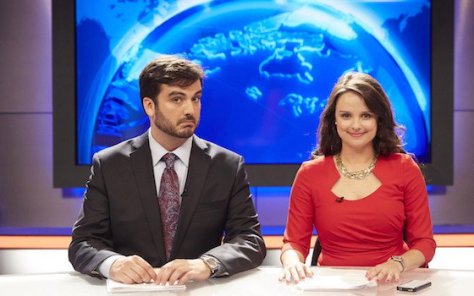
Many often refer to the role of EP as an honorary title given to marquee name actors and actresses to placate these celebrities. While that may exist in some parts of the entertainment world, this scenario has no presence in Canada’s TV and film industry or Miguel’s experiences. Many times, Rivas has been asked to take on this task as someone who has the understanding of what the production needs as a whole. He states, “Being executive producer means ultimate control, but also maximum stress. The whole project rises or sinks based on how you put it together. That means primarily, finding the right people to work with. On ‘Japan’ and ‘Wanda’ (two of the films by comedy troupe Tony Ho), it was paramount to find people who understood our sensibilities as a group. As EP, you have to organize everything and keep multiple plates spinning at once. Independent films can be hard to fund; finding money and support for our voice was the single most important part of being EP on these projects. Once that was in place, it was just about doing every task, however large or menial, with an eye on making the best film you possibly can.” Tony Ho is one of the most established and lauded Canadian comedy groups to perform both live and on film. With a signature dark comedy style, they appeal to a wide audience by tackling the highly stressful situations that many of us face, or hope to never face. Japan won the Grand Prize for best film at the Laugh Sabbath Film Fest at NXNE, while Wanda was also recognized at the same Film Fest. Both films present the stresses that modern professions and love lives have on the average person, with ridiculous…sometimes fatal outcomes. Tony Ho’s Roger Bainbridge (Nolan in Japan) confirms the importance of Miguel as EP for the film, stating, “I was really fortunate to have Miguel as an executive producer on Japan with me.  Most Tony Ho films feature just the three of us and maybe 1 or 2 more people but Japan required a large cast and many locations over different days.  Miguel did a great job of finding the right people for the job, making sure they were paid well, organizing their schedules, and arranging the shoot days so that we could use the extras efficiently without wasting anyone’s time. Miguel was also key in finding our shoot locations.  He did a great job in writing the script for Japan, but the humor comes from the fast pace of the story. We needed lots of locations to make the script work. Miguel used his connections to get us locations that would fit our script and budget.  That was the beauty of having Miguel as both writer and executive producer, he turned a complicated script into an easy shoot.  We didn’t have to compromise.” Adam Niebergall plays Marty (the recipient of some opportunistic nepotism) in Japan and reinforces Bainbridge’s take on Miguel’s abilities and expertise on Japan. Adam comments, “You can tell Miguel really loves making movies because he’s so calm about it all the time.  On Japan there were lots of different people involved; extras, cameramen, transportation people, etc.  Everyone went to Miguel to ask questions.  He was the one who communicated with everyone, either in person or by phone/text, and everyone trusted what he said. Strong leadership is important on film projects and Miguel inspires confidence in everyone involved. Plus, he’s always nice about it.  He never yells at anyone.  He’s always more than happy to answer anyone’s questions.  You can tell he’s thankful to everyone for helping to make the movie. He knows what he wants to do and accomplish and how to bring out the best in everyone’s work.” Daniel Beirne, the director of Wanda, reiterates, “he had no problem switching from his “actor/writer hat” to his “executive producer” hat.  He was respectful of the crew we had there and made sure everyone was ok to keep working or asked if we should take a break.  I love working with Miguel because he treats the set as a collective project; even though he was writer, actor and executive producer, everyone was equally important.”

10255555_520722664706823_6290233571219387158_n

As proof that he is no one-trick-pony, Miguel has applied this same template to music videos for a variety of modern artists. Alt Altman is the solo Toronto musician, Digits. Having toured all over the world, he’s released several successful international singles and albums under various monikers. He’s been shortlisted for the prestigious PRISM prize. Digits sought out Bainbridge because of the multiple strengths that he could bring to a production. The video for “Street Violence” (Named one of the Top 5 videos of the year by Exclaim!, featured on VICE, and MuchMusic) is an epic tale of the downfall of society and one couple’s attempts to evade the gangs who rule the streets. While the gang monikers are often comedic, the action which takes place and the anger that is vented on individuals throughout the course of the video, carries a sobering impact. Digits declares, “It’s Hard not to have only great things to say about Miguel. The cast and crew that he assembled, the storyline, the costumes, and the fact that it was finished in a matter of days…I’m so pleased with the video and the response it has gotten!” Jay McCarrol is a member of the hugely successful band Brave Shores, whose pop song “Never Come Down” was a huge hit. Jay is also one of the minds behind the web series Nirvana: The Band The Show, which had a large premier at TIFF. Rivas produced two videos for Brave Shores, “Never Come Down” (which has amassed nearly 700 thousand views on YouTube and was featured on Silent Shout, MuchMusic and VICE) and “More Like You.” McCarrol refers to Miguel noting, “As an artist, it’s important to have a professional who will listen to your ideas; Miguel is that kind of artist.  He made sure Stef (Stefanie McCarrol, sister/bandmate) and I were comfortable with the concepts and took our ideas into consideration during the early phase. I like that he was flexible and fun.  He is the best to work with. He also knew how, as producer, to stretch a dollar, which believe me, is needed with music videos.” While “Never Come Down” is upbeat in tone and comedic in action, “More Like You” is somber and introspective in terms of the music as well as the visuals that accompany it in the video. Rivas comments, “The music videos were slightly different as funding was secured beforehand and the task then focuses a little tighter. A major duty when acting as EP is making sure everyone at all levels of the project is happy and involved in the right way. For the Brave Shores music videos, I was the liaison between our projects and Universal Music as well as the band. You have to be level headed and a little political to make sure everything gets done in a way you’re happy with. It can be doubly difficult to occupy other roles (writer, actor, director) while acting as EP, but it offers an ability to control and lead things in a way that I find very satisfying.”

302248_10150274190923175_5676492_n

Perhaps what stands out most when considering all the aspects and talents of Miguel Rivas is that he is foremost a conduit for himself as well as others to communicate a story. He might be involved in creating lines, delivering lines, or finding the right people to finance the microphone that captures the lines which someone else is speaking; whatever the vehicle of delivery, Miguel is somewhere in there grinding away because he believes in the art of telling a great story.

emma-and-miguel-1


PUSHING HER ARTISTRY TO NEW PLACES: BINBIN MA

A good artist is someone who invests a great deal of their life into mastering the skills needed to communicate their vision. The recipe doesn’t end there. They are driven and inspired by the work of others, sometimes through the previous work of others and sometimes due to the collaborative effort in which they take part. This “inspiring and receiving” cycle is the creative representation of Ourboros. Without it, the Arts would become stale. It contains all the essential elements of a good artist. Greatness is similar to this but contains one extra and paramount facet; the willingness to try things that are uncomfortable, the desire to take chances by traversing into unknown areas with the understanding that failure is a distinct possibility. Only by testing our limitations can we expand beyond them. If one’s desire is to recreate perfect art, being good is more than substantial, but if one desires greatness…well, it is a good idea to get comfortable with the idea of being uncomfortable. This idea could be considered artistic CrossFit. Binbin Ma understands this concept. As a story board artist and graphic designer on many successful and lauded films, Ma has used her artistic abilities to enable directors and cinematographers to conceptualize, materialize on paper, and communicate their collective vison to the cast and film crew. She has become a sought-after artist due to her abilities on paper as well as her insight into tailoring her images to the specific filmmakers she works with. Binbin has brought her skills to award winning films such as; Robots & Cowboys, Stand Up, & the heart-wrenching and inspiring Happy Tree. In striving for greatness, Ma has tested herself in both new avenues as well as thought provoking subject matter.  The challenges which she takes on in an attempt to grow as a consummate storyboard artist and graphic designer testify that Ma is a professional who wants to break new ground in her own field by understanding the inner workings of her peers and coworkers.

For the film Nothing But Her, Ma took on the Herculean task of not only Storyboard Artist and Graphic Designer but also Writer, Director, and Editor. The film was her attempt to step into the shoes of those she so often works with while also expressing a creative vision of her own. Nothing But Her is the story of a man (Jim) who observes his father’s Alzheimer condition worsen, a condition which puts Jim’s wife in danger at one point. This places Jim in a very uncomfortable and difficult situation. Binbin took on this film and its heavy subject matter as a way to see the different sides of telling such an emotionally demanding story. The idea came from her personal/cultural inspirations. Ma reveals, “It was my second year after leaving my home. I was homesick. In China, we have an old saying “child doesn’t travel if parents are still alive”. In our culture, Chinese think filial piety is the highest priority of all. Family vs. self-development has inspired me to ask ‘What if a young man had to choose between his Alzheimer’s family member and a pregnant wife.’ Making this film was a great experience for me. My skills as a storyboard artist and graphic designer saw immediate improvement after this experience. It was such a great way to learn and improve.” Because of her perspective as an artist over the course of her career, Nothing But Her displayed Binbin’s signature framing and composition. The film was received quite well with appearances in 2016 at Cannes, the Hollywood International Moving Pictures Film Festival, and the Los Angles Independent Film Festival Awards.13230081_1771490419754121_8139202580389125002_n

Cinematographer Xuexue Pan (credits includes the critically acclaimed family drama The Key, the widely celebrated film Dancer from Picture, and the fan-favorite horror film Depth, to name only a few) states, “Ms. Ma is a storyboard artist of the highest caliber. She performed several leading roles for the critically acclaimed film Nothing But Her, but in addition, she has established herself as an enormously accomplished storyboard artist of the highest regard within her field. Her prowess is unparalleled in the industry. Her achievements in the industry have cemented her as a creative force to be reckoned with. Binbin’s achievements not only establish her as one of the most outstanding and accomplished storyboard artists in her field, they also qualify her as a genuinely one of a kind storyboard artist and graphic designer.”

There is a good reason that the Boston LGBT Film Festival nominated the film The Ex Factor for the Audience Choice award in 2016. While this community has gained many legal rights in modern US society, they are still challenged with being viewed with the same level of emotional validation and “normalcy” of other couples and relationships. One of the reasons (and intent) of the filmmakers to hire Binbin as the Storyboard Artist for The Ex Factor was a desire to portray the characters and action of the film in a romantic tone with use of images and lighting; Ma was the first step in creating this. Using headshots of the actors and meeting with director Chantal Le Hunte to discuss the mood served to inform Binbin of the “vibe” which was paramount to placing the audience in the desired emotional environment. Le Hunte declares, “Ms. Ma’s unparalleled talent for our film was such an integral element to the overall production of the film that I have no reservations in attributing her with our enormous critical acclaim. The Ex Factor was nominated for the Audience Choice Award for Best Short Film from the critically acclaimed Boston LGBT Film Festival, and received Official Selections from the Los Angeles CineFest, the Indie Night Film Festival, and the California Women’s Film Festival, to name a short few. After only one meeting about the images we needed for our film, she completed the storyboards in a way that allowed me to perfectly communicate my ideas to the cast and crew, thereby making our filming process successful and enjoyable. The accolades we received are directly attributable to the work that Binbin did on The Ex Effect.”

These two films are proof of a professional who, while still at a young age, has amassed an impressive list of credentials and yet always strives to learn and grow as an artist. Binbin Ma is a team player who is also a gifted artist, always ready to lend her talents to the ideas of others in order to create the films which allow us all to view the joys and hardships of others…while hopefully being inspired by their journey.


MARI LAPPALAINEN BRINGS AUTHENTICITY TO A FRIGHTENING FILM

Masters of any field are not born, they are made. However, some individuals possess attributes which cause them to be ahead of the crowd. Those who are leaders in their field have become so because they recognize there is always another way to hone and define their abilities. Mari Lappalainen is this type of professional. Although she has many films and television productions to her credit, Gehenna: Where Death Lives was her first horror film as Production Designer. Director Hiroshi Katagiri recognized her talent as well as the opportunity for her to experience a new genre of film, partly due to his own experience. The film is also Katagiri’s directorial debut, which meant he took care to insulate himself with a crew he completely trusted. Lappalainen is known for her work as an Art Director on films such as: Danny Boy, Share, Awaken, and others but has been working increasingly as a Production Designer crafting the look of a film early on. Katagiri is lauded for his special effects makeup career (working with Steven Spielberg on Jurassic Park, A.I., and War of the Worlds as well as films with Rob Marshal, Guillermo del Toro, Sam Raimi, and others). There was a kinship shared between Lappalainen and Katagiri as talent recognized talent. With Gehenna, the results were entertaining, chilling, and culture blending. A great deal of this is a result of the look of the aesthetics of the film which Mari and Hiroshi worked so hard to create.

Gehenna is the story of a group of American real estate developers who travel to Saipan to scout land on which to build their next hotel resort. Unknown to the group, the area is sacred land that had been cursed centuries ago. They cross paths with an old Japanese WW2 bunker and enter to see if this will be an issue for their development. Soon, the door gets shut and the team is at the mercy of the curse; a curse which states that the last one alive loses and must face eternity alone in the dark. Although the film’s setting is on this Pacific island, the actual filming took place in Los Angeles. Director Hiroshi Katagiri is a stickler for authenticity. This meant that he took Lappalainen, as well as the Cinematographer, and Line Producer on a trip to Saipan to get a feel for how the set should be. Mari recalls, “The story was set in Saipan, on a small island across the world with significant WW2 memories. To get the feel of Saipan, their history of the war, and get accurate references for our Japanese bunker set to be built in Los Angeles, we flew to Saipan in early September. We scouted our filming locations there and photographed old war time bunkers and materials/finishes for reference. As almost everything in prop and set dressing wise was Japanese, I spent a few days in Tokyo to look for our hero props and set dressing references from museums and archives of the war period.”

As Production Designer, Lappalainen used some modern tools to give Hiroshi and the crew the most realistic sense of what the set should look like. Mari comments, “For Gehenna, I did the 3D modeling myself, adding textures to the model to show the director what we would be expecting and helped him to develop ideas for the storyboards and imagine the blocking for the action. It took a lot of research, especially for the small details as it was a Japanese WW2 bunker. There were no standing sets in Los Angeles like this so we had to create if from scratch. We looked at Japanese war movies and went to museums to learn about Japan at this time.”

Mari took great care to study the script for Gehenna, breaking down the script to understand the needs of the film in terms of visual language and character. Her trip to Japanese museums gave her a complete understanding of how the troops quarters were organized as well as the psychological and emotional “vibe” of the space; an element key to the actors and the audience getting a sense of the surroundings.

Gehenna: Where Death Lives was an obvious success as its inclusion in so many well-known festivals attests. Gehenna was selected to The New York City International Film Festival (NYCIFF), the Bram Stoker International Film Festival 2016 (UK Premiere), A Night of Horror film festival in Australia, and LA’s Shriekfest. Katagiri states, “Gehenna is a biblical term for a horribly evil place, and Saipan was the site of the heaviest fighting of WWII. To keep my vision, the look of the film needed to communicate this with the surroundings in an unspoken way; Mari Lappalainen made this happen flawlessly. She perfectly achieved creating the setting I imagined.” Lappalainen’s foray into horror films proves that her consummate abilities as a Production Designer translate from genre to genre. Being vetted by a recognized leader in the horror, fantasy, and sci-fi genres like Hiroshi Katagari is certain to bring Mari continued work. Whether in a romance, drama, comedy, or horror film, Mari will be bringing her self-demanding work ethic to the positive reviews of filmmakers and audiences alike.

gehenna-mari-dani

Director Ben Bhatia goes on holiday with Channel 4’s Tattoo Fixers

Everyone seems to have a bad tattoo story. Whether it is their own, someone they know, or something they have seen, they make for great cringe-worthy yet fun stories to tell amongst friends. Most people learn creative ways to hide those tattoos they don’t want people to see, some people decide to get them removed, but some people turn a bad tattoo into one they love. That is where the UK television program Tattoo Fixers comes into play.

The show has been a runaway success for Channel 4 in the United Kingdom. The format of the show is a split studio and location format. People apply to be on the show because they have a tattoo disaster that they want to fix. Examples of these tattoos can be anything from the name of an ex-partner, to an embarrassing drunken tattoo. They visit a tattoo parlour to get the tattoo corrected into something they would prefer. During their consultation, a video of their backstory is shown. They then go into the tattooing room to have their tattoo corrected. The big finish is then the reveal of what their new tattoo looks like and their reaction.

Director and producer Ben Bhatia worked on a special edition of the program, Tattoo Fixers on Holiday, which premiered this summer. He had the responsibility to produce the backstories video for the contributors on the show. This would either tell the story of their life or how they obtained the said tattoo. A vital task, because if viewers aren’t hooked by the back story of the person they are watching, they change the channel.

“I loved being able to flex my creative muscles and have the flexibility to devise, write and shape the script,” said Bhatia. “I shot, produced and directed the clips. This was an awesome opportunity for me.”

The ‘Holiday’ spin-off was something new for the show as it takes the series out of its normal studio setting and would take the cast members to a foreign holiday resort and would fly contributors over from the UK. This was unchartered territory for the show, but was an instant success with the help of Bhatia.

“Ben was highly recommended by many of my peers in the industry. Because of this, we knew he would be the perfect fit and we were keen to invite him to become a part of our successful series. Within his career he has established himself to be a well-respected and forward thinking director and producer, and has a very bright future ahead,” said Matt J Smith, the executive producer for Studio Lambert, who is responsible for the show.

“Ben is a real pleasure to work with, he has a natural creative and visual flair, he is an outstanding communicator, he works exceptionally well as both leader and part of a team,” continued Smith. “Ben could be nothing but the brightest of assets to any company or production.”

As well as working with Smith, Bhatia also worked with Tim Harcourt, both of whom are extremely well established veterans in the UK television industry. They have developed many television shows in the UK, including Gogglebox, which has become such a big hit as a format it has spawned regional versions all over the world.

Despite having never worked with Studio Lambert before, Bhatia’s work was so impressive that he was asked to edit and produce an entire episode, giving him full control. With this, he had the opportunity to learn how to use an entirely new camera.

“Due to the small amount of time to get accustomed to the camera, I had to hit the ground running. Luckily I was quick to adapt and it has become a skill that I have used elsewhere ever since,” said Bhatia.

Using a new tool wasn’t the only obstacle to overcome to ensure success. The time constraints on making the bio clips meant Bhatia had to think quickly.

“I personally feel like I work best under pressure, so when I saw the final product that was transmitted, I was very happy and felt like I had achieved a lot,” he said. “I also enjoy reading twitter posts about the show and seeing how well received the episodes and stories have been.”

It is impossible to complain, as the project was shot on the beautiful Greek Island of Crete. Bhatia got to experience the scenery while working alongside some major players of British television.

“This was a fun project to work on,” he concluded. “Having the ability to lead a team to shoot that would creatively tell the contributors backstory and using a wealth of exciting technology was something I really enjoyed being a part of.”

You can watch episodes of Tattoo Fixers on Holiday here.

A GUIDE TO PROPER AND IMPROPER VIEWING OF JAPAN

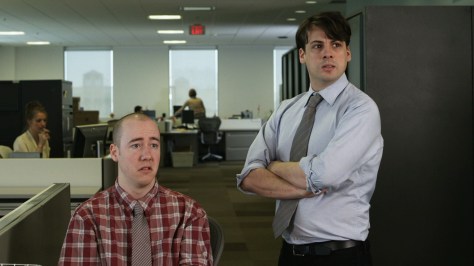
Artists are dangerous; not in a “hold you at gunpoint demanding your wallet or your life” kind of way but rather, they can be highly intelligent people who use their talent to sway both individual and mass opinion/sensibilities. If you upset a writer, they can compose something that addresses you in a subversive way. An actor might deliver the lines in a subliminal tone, guiding you to a feeling that might differ from what is instinctual for you. All that is needed is an Executive Producer to enable them to make it all happen. Combine all three of these with a slightly sarcastic comedic wit and timing and you’ll get Roger Bainbridge…the most interstin…err, dangerous man on Earth…well, at least in Canadian entertainment. Comedians and comic actors get away with saying and displaying some truly awful things by delivering them in a way that shines a light on their ridiculousness. Case in point; Bainbridge had seen many of his friends taken advantage of as unpaid interns. Not only did these people not receive monetary compensation for their toil but, they were quite often not treated with respect. As a writer and an actor with the resources to green light a film, Roger used his role as a part of the Canadian comedy group Tony Ho to create, produce, and present Japan. The film reveals the politics and disrespect (in a very funny way) of the modern office template.

Roger Bainbridge has worn a lot of hats in his career; writer, actor, music video director, executive producer, but he is most commonly associated with Tony Ho (the aforementioned Canadian comedy group). Tony Ho enjoys tackling ideas like threesomes (Wanda), dysfunctional family dynamics laced with time travel (Time), etc. No subject seems to eclectic for Tony Ho. Bainbridge was inspired to write Japan based on the shared office experience many of us have. He explains, “The impetus for writing Japan was seeing a lot of my friends being forced to take unpaid internships at places that really should have been paying them, and seeing how messed up the job market was at the time for people just getting out of school. From there I just thought about what might spurn a change of heart in someone in charge of the hiring. I worked briefly in an office where we did subtitling, so it wasn’t a really traditional office. Everyone had headphones on, pretty cut off from everyone else. No one really spoke to each other, it was all done through e­mail. So I guess I was just left with an impression of people being timid to go talk to anyone, which creates this awkward tension, and tension is really at the heart of comedy.” As the writer of Japan, Roger had the inspiration and the skill to conceive the notes of his comedic sonata and as the EP he could find and reserve the concert hall, he simply needed to proper “musicians” to perform the piece with the delivery and skill that would inspire his trust.

Tony Ho has been creating comedy for over a decade. You don’t stay in any relationship that long unless you have a deep caring and trust of the other(s) involved. Once he had conceived the idea for Japan and written the lines, Bainbridge immediately understood that Tony Ho were the best performers suited to make the film. The trio of Tony Ho has spent more than a decade creating and performing together both live and on screen. Roger refers to Adam Niebergall and Miguel Rivas as two of the funniest and most interesting performers he has ever worked with. Niebergall diverts praise to Bainbridge stating, “He’s a ‘taste maker’ and he’s incredibly compelling. I’ve spent a decade or so working with him in comedy and I still can’t ever see it coming. I’m amazed by Roger’s Vision. He has an unwavering integrity with his comedy. His work is so good because he is always asking himself what he would want to watch and he would never bother making anything that doesn’t pass that test. I think a lot of people write things with the mentality “Oh, this would be good; people are talking about this right now.” and a lot of times that type of thing can come off flat. You can tell when a comedy writer isn’t obsessed with her/his subject matter. Roger knows what he wants to say as a writer and for me that’s always much more compelling to pay attention to. He’s always one step ahead. He thrives on making people think about themselves and it really motivates his work.”

two

With the writing of Japan completed and Tony Ho set to star in the film, Roger’s job as EP meant he would acquire the production team that would capture the action of Japan. Henry Sansom was the professional that Bainbridge entrusted to be seated behind the camera. DOP Sansom echoes Adam Niebergall’s sentiments, declaring,” In my experience, Roger Bainbridge is one of the most talented and disciplined minds in comedy in Toronto.   Not only an incredible actor dedicated to craft and context, he is a star writer of subtlety, relevance, and boldness. Without seeming too fellating, if there was only one artist I could work with for the rest of my career, and know that every project was able to reach the highest standard, that would be Roger Bainbridge.” Inspiring confidence in others is the template of Roger’s career, a worthy attribute for someone whom both creates and enables the filmmaking process. The fact that he is so adept at creating the storylines and situations that take place on camera might divert one’s attention from the fact that Bainbridge is such a respected an accomplished actor. A viewing of his many diverse roles and the temperament of his characters serves as a confirmation that he is truly in his element in front of the camera.

sing

Roger reveals the tone that he wanted for the action on film as he communicates, “In making Japan, we knew we were really pushing ourselves to make something more relatable in tone of comedy, pace, and look, so it was nice to have it be received so well by people who

have seen it. Our stuff can tend to be a bit more challenging, so this was a test to see if we could dip a toe in something a little more mainstream, and people seem to like it.” Centering on the stereotype that the Japanese culture is focused on workplace competition and Karaoke leads Miguel’s character to force Roger and Adam to compete in a sing-off with the winner being awarded a paid position for the company. While Sophie B Hawkins “I Wish I Was Your Lover” has never been so amusing, it’s the flashbacks and narration that empower the performances to have deeper laughs than simply the action might elicit on their own. Japan has a greater level of complexity in terms of the number of sets and number of cast members involved than many of the Tony Ho productions. There is a trait that enables Japan and the theme to be irreverent to the stereotypes that the general public often feels comfortable buying into. Bainbridge agrees, “I think Canadians have a unique take on comedy because we have the benefit of being influenced by both American and British comedy. The British style can be a great deal more subtle and satirical and American stuff can be so in-your-face and broad and angry. I think we have the ability to marry those two influences in an interesting way. I have never been to Japan, and that’s deliberately part of the humor of the piece for me. I like it when people feel like they completely understand a place by just gleaning bits and pieces of their culture as it’s been distorted through media. The larger joke is that these are ideas people may hold about Japan while not actually knowing anything about the place.” Bainbridge is currently in development for TV productions with Tony Ho. With successful comedy albums, his involvement heading films and music videos, Roger Bainbridge is equipped to bring the full package to the home viewing public.